




Abstract
Noting the lack of in-depth insights into the role of emotions and the malleability of affective dispositions for career development, the current research adopts a single case study approach, involving an employment initiative, to elicit conscious and unconscious emotions and beliefs of participants who are not in employment, education, or training (NEETs). Using Zaltman metaphor elicitation technique (ZMET), which involves in-depth, semi-structured interviews and images, the authors determine that comfort emotions represent necessary conditions, acting as filters that alter mental representations of the world, evoke a process of perspective transformation, and ultimately induce new beliefs and individual emancipation. This research contributes to career development literature and redefines career helpers as agents of change who should recognize and harness emotions for assisting NEETs who must navigate complex, unique career environments.
Keywords
Introduction
Mental Models
People’s traits and emotions largely determine their beliefs, such that affect can influence cognition (Forgas, 2023). Thus, mental models, which refer to explanations of a person’s own thought process, comprise both cognitive (beliefs) and affective components (Christensen & Olson, 2002). Within the latter group, we find affective states (emotions) and dispositions (traits, moods) that are only recently becoming the focus of empirical research (Forgas, 2023). Mental models also have been widely explored in cognitive psychology literature and related disciplines such as linguistics, anthropology, and philosophy. Researchers in these different fields agree on several attributes of mental models (Gentner & Stevens, 2014). First, they are incomplete and parsimonious as they provide a simplified representation of reality. Second, they are boundaryless in the sense that people use them to explain causal effect mechanisms across domains. Third, dynamic, unstable mental models evolve over time and adapt to different situations and changing circumstances through learning (Gentner & Stevens, 2014; Jones et al., 2011). This last characteristic makes them particularly interesting for career development research, especially in relation to career uncertainty (Allan et al., 2021; Lechner et al., 2016).
As Mezirow (1978) establishes, most adults confront disorienting dilemmas, such as job loss or graduation from university, at some point in their lives, which threaten their sense of coherence and continuity and evoke edge emotions that emerge at the borders of people’s comfort zones (Mälkki, 2019). Unlike apparently close notions within the career domain, such as career indecision (i.e., the “emergence of problems during the career decision-making process,” Fabio et al., 2013 p. 43), Mezirow’s concept of disorienting dilemmas refers, more broadly, to challenges or crises, with some being more dramatic than others. Disorienting dilemmas cannot be handled by existing mental models or a meaning perceptive that is rooted in past experiences and informed by economic, social, occupational, and educational systems. Disorienting dilemmas are conceptualized as catalysts for change because they require a reordering of reality that Mezirow (1978) refers to as ‘perspective transformation,’ which features both critical reflexivity and emotional flexibility and generally requires assistance from a mentor or coach. The process following this transformation, namely ‘individual emancipation,’ results in novel courses of action (Mezirow, 1991). Such considerations imply that a mental model approach, which accounts for the role of both cognition and affect, might offer insights into the function of emotions in career development settings.
Despite the acknowledged entanglement and mutual co-dependence of emotion and reason (Slaby & Scheve, 2019), cognitive variables dominate career development research (Hartung, 2011; Hirschi & Koen, 2021; Kidd, 1998; 2004; Kim & Lee, 2022). Recent literature emphasizes the need to investigate the role of emotions among job-seekers (Bonaccio et al., 2014) such as those among young people ‘Not in Education, Employment, or Training’ (NEETs), whose experiences have been described as ‘a bit of a roller coaster’ (Wanberg et al., 2010). Brown and Lent (2019) lament the lack of insights into the malleability of affective dispositions within career management research and, on a related note, Taggar & Kuron (2016) suggest that future studies in vocational behavior should explore strategies to overcome negative affect-laden subjective experiences such as perception of injustice.
In an attempt to establish new, in-depth insights into the malleability of affective dispositions for career development research (Brown & Lent, 2019), we consider a specific employment initiative for NEETs and, from an explanatory perspective, ask: How does an employment initiative change NEETs’ mental models? In seeking answers to this research question, our study aims to bring emotions to the foreground by examining how an employment initiative can shape NEETs’ mental models. Firstly, we provide an overview of the conceptual background. After that, we describe our methodology and present a model of the role of emotions in shaping new beliefs in the context of a specific employment initiative for NEETs. Our findings in turn establish a foundation for further studies in this space. From a practical point of view, the findings also can inform efforts to create effective strategies to overcome negative feelings associated with unemployment and job searches.
Social Cognitive Career Theory as Foundation for Inquiry
The Social Cognitive Model of Career Self-Management (SCCT-CSM; Lent & Brown, 2013), which attempts to explain how individuals engage in adaptive career behaviors and adjust to professional challenges, postulates that affect and cognition influence individual perceptions of abilities and thus how people acquire, organize, and use mental models. In addition, SCCT-CSM emphasizes the concept of self-efficacy, defined as a person’s belief in her or his own ability to undertake crucial tasks to reach particular goals. Self-efficacy influences outcome expectations, personal goals, and actions and is shaped by four information sources: mastery experience, vicarious experience, verbal or social persuasion, and physiological and affective states. Then SCCT-CSM proposes that self-efficacy beliefs are fostered by positive emotions and hampered by negative affective states (Bandura, 1977), in line with its broader prediction that negative emotions (e.g., performance anxiety, uncertainty) are obstacles to learning, whereas positive emotions (e.g., hope) increase a person’s self-efficacy. Bandura (1989), borrowing from affective priming theory (Bower, 1983), predicts that episodes of success and failure get stored in people’s memories, together with the emotions that accompanied them. A negative mood activates an associated set of failure memories, which then represent the basis for how people judge their abilities in any given situation.
Several applications of SCCT confirm this link, as when Rottinghaus et al. (2009) identify a positive correlation between positive affect and self-efficacy among university students. Affect is also essential for career decision-making, such that significant positive relationships emerge between positive affectivity and career self-efficacy (Hammond et al., 2010; Park et al., 2018) and between affective commitment and career self-efficacy (Conklin et al., 2013). Positive affect specifically influences job search clarity and, subsequently, job search self-efficacy (Côté et al., 2006). Larson and Borgen (2006) cite a link between personality traits and vocational self-efficacy, while Sheu et al. (2017) identify that extraversion positively correlates to self-efficacy.
Although extant studies that leverage the SCCT framework offer clear evidence that positive affectivity leads to higher self-efficacy beliefs, they have not specified the mechanisms by which the change happens. A narrow operational focus tends to characterize extant literature (Kidd, 2004) and career self-management (Hirschi & Koen, 2021), such that quantitative studies administer scales that tend to reduce affect to a few measurable constructs and exclude other, poorly understood dimensions or emotions. 1 Moreover, all the preceding studies and most of the existing inquiries rely on college and university student samples (Sheu & Bordon, 2017). Therefore, SCCT-CSM would profit from extending the range of groups under study (Lent & Brown, 2019) as the affective states experienced by other populations, including NEETs or disadvantaged groups, might differ substantially from those of students who already are socially included in mainstream formal education.
Employment Initiatives and NEETs Affective Components
A range of heterogenous conditions rank NEETs among the most vulnerable social groups. Several concomitant aggravating factors – including poor family background, disability, low education, immigrant status, long-term unemployment and unfavorable labor market context – contribute to shifting young people into the NEET status after they completed their studies (Caroleo et al., 2020). Considering the harmful effects that unemployment can have on young people’s psychological and emotional development (Maguire, 2015), the social and labor market integration of young people has become a policy priority for OECD governments (OECD, 2022). Yet a recent systematic review of (re)engagement interventions for NEETs (Mawn et al., 2017) reveals scarce rigorous evaluations (Jonsson & Goicolea, 2020). Instead, extant literature tests whether interventions can move NEETs into employment, education, or training, without painting a nuanced, detailed picture of the mechanisms underlying this change.
Nor do we find investigations of if and how employment initiatives (EI) influence variables that reflect people’s affective components. Matsuba et al. (2008) report on the positive outcomes of employment training for at-risk youth on several measures of psychological well-being, such as self-esteem, loneliness, and satisfaction with life. Some mixed-method and qualitative research proposes more nuanced accounts of EI’s impact on youth, such as Seddon et al.’s (2013) description of how a work-integrated social enterprise intervention for NEETs increased their confidence, motivation, ability to imagine positive work futures, and positive emotions. Grist and Cheetham (2011) describe a 44-week volunteering program for NEETs that changed their attitudes and capabilities, including their confidence to navigate work and social environments, ability to empathize, and sense of being able to influence their future. Finally, Jonsson and Goicolea (2020) outline how two (re)engagement interventions increased youth well-being by emphasizing feel-good factors, an essential pursuit for the initiatives’ developers.
Thus, we acknowledge the valuable insights provided by prior research but also note some gaps in the career development research domain. First, even when researchers have investigated variables and dimensions related to affect, it is not central to their research. Although career uncertainty is a central topic in career counseling (Xu & Bhang, 2019) and has been extensively researched in vocational psychology (Priyashantha et al., 2023), previous literature almost exclusively features students samples (Xu & Bhang, 2019). To the best of our knowledge, no study has directly investigated the potential impact of an EI on the emotions (e.g., uncertainty) experienced by disadvantaged groups (Brown & Lent, 2019). Second, affective components are partly latent (Mühlhoff, 2019): They operate at implicit levels and escape awareness (Brief et al., 1995), thus opening up new avenues for the use of nontraditional data sources such as narratives, photographs, artifacts or nonverbal interactions (Bansal et al., 2011). However, the reviewed studies do not directly consider unconscious affective components, leaving latent emotions relatively unexplored.
Because studies examining cognitive variables dominate career development research, scarce understanding exists of the role of emotions. With its narrow operational focus and exclusive use of student samples, research exploring the effect of EIs on other segments of the population, including disadvantaged groups, is lacking. Additionally, current work omits latent emotions. These might be particularly relevant in rapidly changing socio-cultural and economic conditions, seemingly due to the methodological difficulties associated with eliciting unconscious affective components. Against this background, our research aims to bring latent emotions into the foreground by examining how an employment initiative can shape NEETs affective components and their beliefs.
Methods
To answer our research question, we build on an embedded single case study (Yin, 2013). The latter concerns an EI for NEETs implemented by an Italian organization, where, within the single case study, attention is given to its sub-units of analysis (i.e., the participants). We elicit their conscious and unconscious perceptions of the initiative using Zaltman metaphor elicitation technique (ZMET, Zaltman & Coulter, 1995), such that we rely on images to elicit participants’ deep-rooted cognitive (beliefs) and affective (emotions) components and thus their mental models (Christensen & Olson, 2002). Given the primarily commercial application of ZMET but the relatively scarce use of the technique in academia, it is no surprise that its theoretical underpinnings remain implicit and, consequently, somewhat unclear. As suggested by Barner (2011) when introducing visual metaphors to assist individuals during career transitions, ZMET could be situated within interpretative and constructivist philosophical traditions because it relies on mental models through a subjective search for meaning and understanding of participants’ subjective experiences. Although in academia ZMET has been used almost exclusively by marketing researchers, recent studies gave evidence of its benefits when applied to the psychology/management field (Prince & Forr, 2021; Schneider & Sting, 2020). We explain ZMET in more detail in the data collection section.
Research Setting
Context
The selected EI is part of a transnational partnership project entitled Young Entrepreneurs Succeed! (YES!, www.youngentrepreneurssucceed.com) financed by the EEA and Norway Grants Fund for Youth Employment. Over a period of 5 years, the YES! project aims to activate NEETs under 30 in four European countries (Greece, Italy, Poland, and Spain) by supporting youth employment and entrepreneurship. Within the YES! transnational partnership, a private organization specializing in microfinance services for entrepreneurs implements the project in Italy. Participants have been engaged in the EI through direct outreach activities (i.e., social media promotion and public events) and by building synergies with other Italian private and public entities (i.e., job agencies) operating in the career development sector with similar target groups. The trainers, coaches, and mentors (10 in total) are either employees or external collaborators of the organization with extensive experience in business support and career guidance. Overall, participants in the initiative, especially women and people of the age group 25–29 years old, reported an improved economic situation.
The EI consists of a direct multicomponent intervention (training, coaching, and mentoring) aimed at boosting NEETs’ self-efficacy by focusing on soft-skills development, with the ultimate objective of supporting their (re)entry into the labor market. Being multicomponent and featuring direct contact with the population (Mawn et al., 2017), the EI represents a common case (Yin, 2013) that captures the characteristics of typical employment initiatives targeting NEETs. The group training component involves 20–40-hour courses on various topics, including basic financial education and career guidance, entrepreneurship, digital marketing, and advanced Excel. Optional individual support services are also offered to the participants. These can be accessed during the training course (before its completion) or later on. In practice, however, all participants in the employment initiative that opt for the individual support services do so only after the conclusion of the training.
These optional services can take the form of (a) one-on-one coaching as individual technical support for the development of material and documentation useful for insertion into the world of work (CV, cover letter) or for business start-up creation (business model, business plan) and (b) one-on-one mentoring as individual accompaniment and monitoring (situation recap, progress monitoring, sharing of ideas and joint work on relational and soft skills). The coaching and mentoring meetings often occur in a nonlinear fashion and can overlap. However, with its progress monitoring function, mentoring tends to continue for longer periods than the technical coaching services. On average, participants receive 3 hours of coaching and 9 hours of mentoring. Coaches and mentors may be the same person or not, depending on the specific needs of the participant.
Research Team
There are three authors for the current study. The positionality of each is essential to understand how this work was conceptualized and conducted. The primary author or field researcher, who led the data collection and analysis processes, specializes in qualitative methods and is a native Italian speaker. As this research investigates the implementation of the YES! project in Italy, study participants could talk to the field researcher in Italian. This allowed the study participants to feel comfortable expressing their thoughts and feelings with an interviewer representing their own linguistic community, as Cornelissen et al. (2008) recommended. The field researcher has been working as an academic and practitioner within the career management field for over 4 years. The second author or outsider is a professor focusing on mission-oriented management research with a micro-level focus, i.e. on individuals. The outsider’s work concentrates on theory-based empirical research projects, often applying qualitative methods that rely on a constructivist, interpretative stance. In this study, the outsider maintained enough distance from the field to allow for abstraction (Gioia et al., 2013), counseled the research team throughout the research process and acted as a sparring partner. The final author or insider is the EI manager, a practitioner with more than 6 years of experience in career services for underserved youth, who selected the sample, acted as a second coder and informed the interpretation of the findings. While none of the authors have experienced unemployment or inactivity in the first person, these different levels of engagement allowed them to view NEETs and the results of this study from diverse perspectives that, taken together, yield valuable insights.
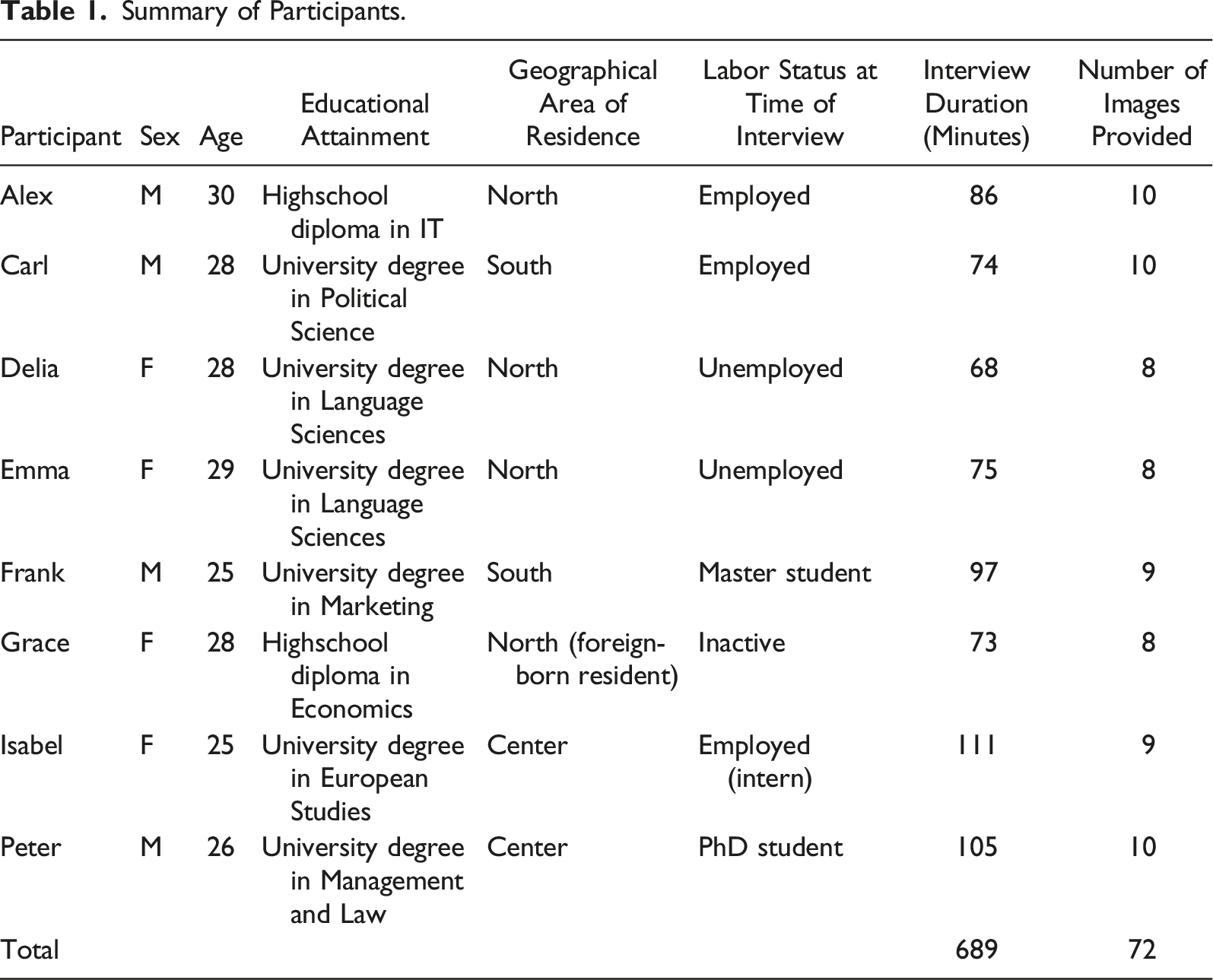
Having a member of the research team who was highly involved with the EI at the center of this work facilitated participant recruitment. We viewed access to fieldwork as relational and, accordingly, the insider developed rapport with the participants in the EI and selected people that may open up and talk frankly and freely (Feldman et al., 2003). Additionally, to achieve heterogeneity in the sample (Schneider & Sting, 2020), the insider also ensured that participants varied in their gender, educational background, geographical area of residence within the country, and current labor status. Through this process, 12 participants were selected out of 106 and offered a 20 Euro voucher for participating; eight agreed to take part in this study. The four potential participants who declined expressed their unwillingness to disclose personal information, inability to devote time to the study or became simply unreachable. This is not entirely surprising with a social group that has been generally deemed difficult to “find and get hold of” (Jonsson & Goicolea, 2020, p. 4).
Participants
Summary of Participants.
Data Collection
As their name suggests, mental models appear within the mind, so it is extremely challenging to research these internal representations (Jones et al., 2011). A promising approach relies on metaphors, which help people comprehend the world that surrounds them (Cornelissen et al., 2008) and can shed light on both cognitive and affective components of mental models. That is, “conceptual metaphors serve as part of the unconscious conceptual foundation for everyday thought” (Gibbs & Franks, 2002, p. 161), such that they underlie everyday cognition rather than being merely a feature of language (Lackoff & Johnson, 1980). Moreover, metaphors can elicit unconscious, tacit content (Zaltman, 1997) and provide insights into hidden feelings (Cazal & Inns, 1998) by “making unconscious experiences progressively more conscious and communicable” (Zaltman, 1997; p. 425), as proven by seminal work in psychotherapy (Kopp, 1995). Yet Mulvey and Kavalam (2010) warn of a ‘depth deficit’ linked to the use of traditional data sources, such as interviews, when used to elicit metaphors. Because metaphors occur beyond language and discourse, they likely are represented in more than one mode simultaneously (Cornelissen et al., 2008). Therefore, even if language has a crucial mediating function in the creation or expression of metaphors (Cornelissen et al., 2008), multimodal perspectives, including pictorial, artifactual, or sonic modes, are required to achieve appropriate depth (Heracleous & Jacobs, 2008).
Against this background, we elicit participants’ conscious and unconscious perceptions of the employment initiative through ZMET, a hybrid methodology that leverages in-depth, semi-structured interviews with images. It thus departs from traditional interviews that exclusively involve words. Using images as stimuli helps overcome some issues of traditional qualitative approaches, such as participants’ inability to communicate intricate perceptions and experiences verbally (Barner, 2011). It also enhances the length and richness of interviews (Glaw et al., 2017) and moves beyond basic emotions that might change quickly (Zaltman & Coulter, 1995). Finally, ZMET puts participants in control of the interview, because they select the images. Noting Bonaccio et al.’s (2014, p. 238) recognition that the “experience of emotions is a highly individualized one,” participants should be free to express this experience in their own way, rather than being forced to match preconceived frameworks.
One week before the in-depth interview, we provided the participants with a written briefing via email, which contained a statement informing all participants about the nature of the research project and voluntary participation, explaining that data remained confidential (i.e., only accessible by the research team) throughout the study, any potential publication would feature the use of pseudonymous or fake identifiers, and the interview would be recorded. The briefing also included requests that they complete a short questionnaire with four demographic questions, then select eight to 10 images that represented their thoughts and feelings about the employment initiative. The briefing specified that participants could choose any kind of image, including their drawings or photos, images from the Internet, magazines, or newspapers, as long as they reflect their thoughts and feelings, not someone else’s. The images had to be shared with the field researcher before the day of the interview. Following the ZMET approach, the interviews then revolved around the images chosen by the participants, along seven steps (adapted from Zaltman, 2003; Zaltman & Coulter, 1995): 1. Storytelling: Participants describe the images and why they chose them, using a means-end laddering technique, such that the interviewer forces an apparently straightforward response to a question to uncover subconscious motives. 2. Missed images: Participants indicate any thoughts or feelings about the initiative for which they were unable to find an image. 3. Most representative picture: Participants identify which image best represents their thoughts and feelings about the initiative and why. 4. Meaningful piles: Participants divide the images into groups and label each group. 5. Expanding the frame: Participants expand the outer parts of two images by describing what they see beyond the frame. 6. Sensory metaphors: Participants describe the sounds, smells, tastes, or sensory touch of three images and how they relate to their thoughts and feelings about the initiative. 7. Vignette: Finally, participants create and narrate a story using the images.
The field researcher conducted eight ZMET interviews with the participants between July 2021 and April 2022, in line with Zaltman’s (1997) recommendation that four or five participants generate all the constructs in a ZMET study. The interviews took place via virtual meeting (i.e., Zoom), were all conducted in Italian, lasted an average of 86 minutes, and were recorded (upon approval) and transcribed. All participants were reminded about the possibility to opt out of the study at any point in time at the beginning of the interview.
Data Analysis
Led by the field researcher, we analyzed the data in four phases using metaphor analysis (Quinn, 2005; Todd & Harrison, 2008). While deliberately keeping distance from data collection, the outsider acted as a sparring partner throughout the data analysis process. More specifically, the outsider constantly questioned the field researcher’s and the insider’s codings and interpretations.
Identifying
First, we transposed the transcripts of the eight interviews and the 72 images collected in total into MAXQDA. As Todd and Harrison (2008) recommend, we initially looked for all metaphors we could find in the data, whether expressed through images or explained through words, along with metaphors that did not have a corresponding image because the participants naturally expressed them in conversation. We define metaphors as all phrases “which cannot be literally applied to the referents in the world evoked by the text” (Steen, 1999, p. 61) and use them as the units of analysis. At this point, for each metaphor, we coded for the concept they represented (e.g., uncertainty). This process resulted in the identification 12 concepts (i.e., uncertainty, inadequacy, pressure, injustice, empathy, satisfaction, hope, sense of community, perspective transformation, self-efficacy, growth mindset, individual emancipation). Next, we coded for the metaphors’ temporality (e.g., if the participants used the metaphor to express a concept relevant before they joined the EI or during/after). This led to the identification of two additional concepts (i.e., disorienting dilemma and employment initiative). While some concepts were deductively derived from the literature we reviewed (e.g., perspective transformation), others (e.g., injustice) emerged inductively from the data.
Grouping
Second, we grouped the identified concepts into three theoretically predefined categories: ‘processes,’ ‘affective components (which include the sub-categories edge and comfort emotions),’ and ‘cognitive components or new beliefs.’ According to Quinn (2005), relying primarily on metaphor analysis is beneficial, in that metaphors are frequent, salient, and comprehensive, so they likely cover all aspects of the phenomenon under study. Perhaps not surprisingly, all 100 coded metaphors, representing 14 concepts, can be assigned to the three categories. For example, in his interview, Frank employs the metaphor of being stuck in a prison to express the concept of uncertainty, which we assign to the category of affective components (comfort emotions). A list of concepts and categories, illustrated using exemplary metaphors is available in the Supplemental Material. The first six steps of the ZMET interview facilitated our work in this phase, because they provided participants with techniques to explain, name, group, prioritize, and extend concepts represented by the images they had selected.
Interconnecting
Third, we performed within-unit analysis by building metaphorical relationships at the individual level, a process that “involves interpreting from your identifications which relationships are dominant” (Todd & Harrison, 2008, p. 487). Quinn (2005) recommends locating and identifying instances of reasoning within the text, that is, passages in which the participant expresses causality and links different concepts together, often in fragmented, not well-formed sentences. For example, Peter clearly links two images he had chosen, and explains “I really like this image comparing the diver man to the whale. And this is the one that I find closest to what I had in mind…. So, it links directly to the image we talked about earlier [about pressure]: through comparing myself to others, I feel pressure, hence I scale down.” Step 7 of the interview was particularly helpful in this process, because participants tended to summarize the links between concepts in a rather orderly way. We represent the interconnections figuratively in a mind map for each participant (Zaltman, 2003), as are available in the Supplemental Material.
Comparing and checking
Fourth, we performed cross-unit analysis by comparing and contrasting the mind maps of the eight participants, reviewing similarities and differences in search of explanatory mechanisms (Bunge, 1997; 2004). Thus, we can classify the participants into two broad groups and assess their differences and similarities. The first author (field researcher) coded all eight transcripts and then functioned like a ‘codebook editor’ (Weston et al., 2001), after reviewing the complete set of interview concepts and categories. Subsequently, we checked the codes for accuracy and reliability. The insider coded a sample set of three transcripts and met with the field researcher to compare their separate codings of the same data. Any discrepancies were discussed to reach an agreement, and we used group consensus to produce the final codebook.
Findings
Figure 1 summarizes our findings and displays how an employment initiative can change NEETs’ mental models. The model features three categories: (1) processes (disorienting dilemma, employment initiative, perspective transformation, and individual emancipation), (2) affective components (edge and comfort emotions), and (3) cognitive components or new beliefs. First, we introduce the different disorienting dilemmas prompting all participants to join the EI. At this stage, edge emotions or negative affective components characterize their mental models. Second, we describe how the EI can evoke comfort emotions or positive affective components that lead to a perspective transformation process. The latter results in adopting new beliefs (i.e., self-efficacy and a growth mindset) and results in an individual emancipation process. We also present and compare two groups of participants, perspective changers and perspective keepers, and depict the conditions of and possible barriers to perspective transformation. In discussing different elements of the model, we consider how they relate and support our explanations using textual and image-based interview evidence. Model of change in NEETs’ mental models due to an EI.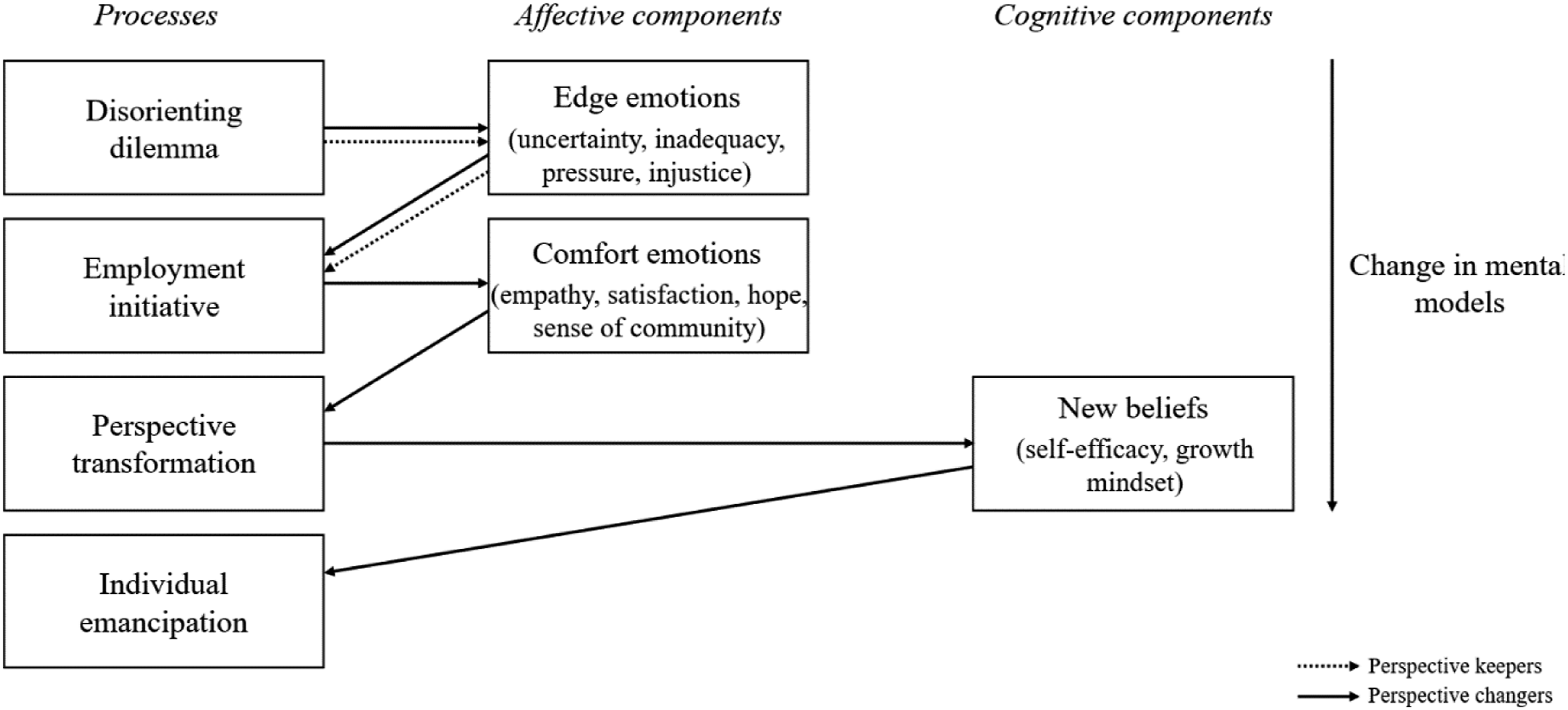
Edge Emotions Originating From a Disorienting Dilemma
Joining the EI often represented a reaction to feeling outside a comfort zone. For half of the study’s participants (Carl, Frank, Isabel, and Peter) 2 , disorienting dilemmas arose after graduation, when they did not have a job lined up, and their friendships and social life changed suddenly. Two participants (Delia and Emma) joined the EI after a job loss, which prompted sudden changes in lifestyle and second thoughts about the future. One participant (Alex) struggled with a career change when the reality was not what he expected. Finally, for one of the participants (Grace), a maternity leave involved a forced break that made her realize the jobs she previously held were not making her happy. The coronavirus outbreak magnified the anxiety and distress of these transitions; several interviewees emerged from their university, job loss, or old occupations just as businesses were dramatically downsizing. Edge emotions, i.e. negative affective components including uncertainty, inadequacy, pressure, and injustice were present to different degrees in all eight interviews, signifying that all participants had experienced some disorienting dilemma before starting the EI.
Uncertainty
The feeling of not knowing what to do or being able to decide their future was an overwhelming emotion shared by all eight participants (Alex, Carl, Delia, Emma, Frank, Grace, Isabel, and Peter). Spatial and journey metaphors, such as roads, paths, and crossroads, were common terms that participants used to express their feelings of uncertainty. These journeys often appear negative; participants referred to winding roads travelled in the dark without a guide or thick fog hiding the final destination. For example, Delia explains (Figure 2): “My life is at a crossroads ... maybe a crossroads between my past and my future? In the sense that I could stay in the tourism field and remain connected to my past or jump right into a new path and reinvent myself.” Image n. 5, Delia.
3

Other participants described unusual landscapes, such as the interior of a spaceship or the lunar surface, characterized by unfamiliarity and eeriness. Isabel refers to a picture of the moon rising over the Italian countryside that she took during a walk (Figure 3) and notes: “I felt like I was on another planet, the Moon, but I was actually at home. The Moon because I was a bit lost … not really knowing how to run your life, so I would call it uncertainty, a feeling of being estranged.” Image n. 1, Isabel.
Finally, a sense of uncertainty prompted metaphors related to immobility and descriptions of being stuck at in prison, in chains, or in a limbo, as Frank illustrates while referring to a black-and-white picture of a man in prison (Figure 4): “This image represents the feeling of being caged due to a sense of uncertainty … where the only noise are my thoughts of breaking out, discouragement and distrust.” Image n. 7, Frank.
Later in the interview, Frank described holding the keys to continue the journey but being unsure about which door to open, thus emphasizing the uncertainty caused by the disorienting dilemma.
Inadequacy
A second notable edge emotion reported by five of the eight participants (Carl, Emma, Frank, Isabel, and Peter) was the feeling of being not good enough. Unlike uncertainty, this emotion was not so much about not knowing what to do but instead lacking the skills required for some purpose at the moment of joining the EI. The participants used a variety of metaphors to discount their value and explain their sense of being a fraud, as when Carl received invitations to job interviews: “I always felt a little bit with impostor syndrome.” Inadequacy was also expressed through metaphorical comparisons with others, in which they lagged behind in the job market and felt like a burned match (Figure 5), as Peter explains: “It was sad because I graduated with honors and so I thought ‘Well, I did everything I had to do to get a top job and try to have a comfortable life’ instead the strong feeling was ‘Jeez! I still haven’t found a place in this society? What am I doing?’ because I compared myself to the other people.... I understood that I wasn’t ‘special’ anymore. Basically, I was comparing myself to so many other matches that were, you know... ‘ready’. And instead I was kind of... I was already ‘burned.’ It was just that I was a couple of years older or maybe that the other people had experience abroad.” Image n. 7, Peter.
Pressure
The feeling of being pressed by a stressful situation was reported by half of the young adults (Alex, Emma, Frank, and Peter) interviewed. The most common metaphors used to communicate pressure were images and expressions depicting time pieces, such as ticking clocks and hourglasses. One participant represented pressure using as glass-encased rose, as featured in the Beauty and the Beast story, whose falling petals convey the inexorable passage of time. This group of metaphors often reflects a broad societal expectation in Italy that, once people have reached 30 years of age, they should have a safe job, marriage, and children. Descriptions of this pressure reflect participants’ feelings that if they did not conform to age-based milestones, they would contradict social norms and expectations embedded in their mental models, as Emma explains (Figure 6): “I chose this image because I’m about to turn 30 and perhaps, especially in Italy, we tend to think that 30 is the end of useful life ... what’s done is done.… It [this idea] comes from both the media and the people you’re in contact with. The main question I hear these days is, ‘So, what about a job and a boyfriend?’” Image n. 6, Emma.
On a related note, the employment initiative itself was often seen as the last resort or the moment when “the fun and games are over,” as Frank put it. This view contributed to even more pressure. For example, Alex reports what one of the coaches suggested to him: “He gave me a beautiful analogy of how the one bullet in my gun corresponds to my last shot. I can’t expect to get ahead by doing training after training, I must find a job opportunity and move on.”
Finally, participants expressed pressure using competition metaphors, emphasizing the attention-seeking behaviors and pressure coming from peers in the EI itself. As Peter explains, “many of the participants are effectively your competitors on the job market.” Pressure became exacerbated by a sense of inadequacy. Peter thus describe his chosen image of a young crowd (Figure 7) as follows: “In this picture.... You hear the sound of people who are pressed and huddling together, quickly leaning out. Everybody makes an effort to stand out in the picture, there’s no one hiding. And even in the [training] course, because you do it for you and not because the doctor told you to, there’s this desire to stand out.” Image n. 1, Peter.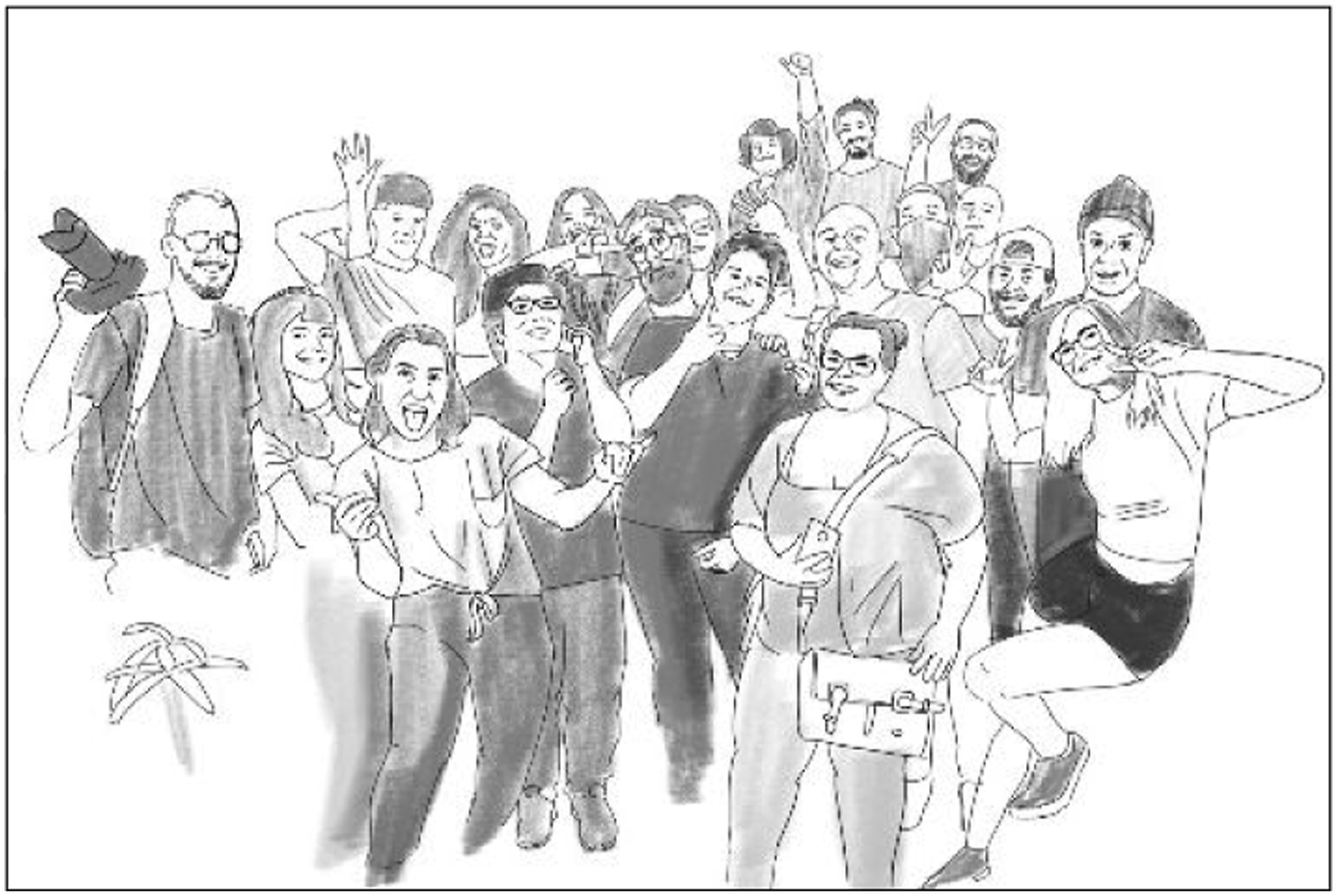
Injustice
Two of the eight participants (Alex and Delia) reported feeling a lack of fairness or justice, based on their impression of being labeled or having a label attached, by society in general and potential employers more specifically. This negative emotion often accompanied pressure. For example, Delia cites gender bias during job interviews when potential employers asked whether she was married or intended to become pregnant. Alex uses the even stronger metaphor of livestock branding to signify his difficulties in changing professional fields after several years in the fast-food industry: “It’s just like a brand or stamp…, just like the one they use on those poor cows. So, you aren’t a virgin anymore and you’ve got difficulties in getting back into the labor market again in a different field than what you’ve been working until that moment.”
When questioned about their reactions to those injustices, both respondents refer to a sensed inability to get rid of labels that society and employers had assigned them. Delia asserts that she is in a no-win situation, because refusing to answer the employer’s questions might lead her to sabotage the entire job interview, but answering honestly might lower her chances of getting the job. Alex admits accepting the label that had been assigned to him.
Comfort Emotions Arising From the Employment Initiative
Positive affective components, including empathy, satisfaction, hope, and a sense of community appear to varying degrees in six of the eight interviews. Although the EI we study was not emotion-focused, all of its components constitute the root of the comfort emotions described by the six participants. For example, participation in the training courses made participants feel like part of a group, in contrast with a sense of undergoing a critical life transition alone. The support services and empathic relationship established with a coach or mentor also helped participants define a career direction and find purpose in the labor market.
Empathy
This comfort emotion, reported by three participants (Emma, Frank, and Peter), implied they felt connected and seen by the coach or mentor, with the impression that this coach or mentor felt equally connected. Within this relational field, they could take important steps toward perspective transformation, as we discuss later in this manuscript. This positive emotion emerged in the coaching and mentoring components of the intervention when participants saw the coach or mentor share personal experiences or make an explicit effort to imagine how they would feel or act in the same situation, or when follow-up phone calls by the coach or mentor extended beyond the initiative duration. Participants experienced empathy on a continuum, from simple gratitude to deeper emotions and friendship, and they expressed it using pictures of notable mentoring relationships, mirrors, and pop culture symbols (Figure 8). Frank explains why he chose an image depicting the character Woody from Toy Story: “Within the cartoon, Woody is the symbol of friendship … I put it side by side with the friendship that I have with [name of the mentor]. After the coaching and mentoring path, it didn’t end there because [name of the mentor] became interested in me and I became interested in him and we continued to talk and care; the relationship goes on to this day.” Image n. 9, Frank.
Satisfaction
Feeling gratified and pleased about the act of completing the different steps of the employment initiative often reflected a sense of an accomplished target. This positive emotion emerged in the training component of the intervention. Managing a busy schedule and being awarded a certificate of attendance that could be added to their CV were often mentioned by participants in connection with feelings of satisfaction. Three participants (Grace, Isabel, and Peter) expressed this positive affective component by selecting and later describing pictures of busy men and women, often multitasking at desks; a ladder; and a shop that was only temporarily closed. Grace chose instead a photo of a woman’s head depicted above a calm sea (Figure 9), explaining: “There, you see? This [head] is my mental health. After the [training] course I was dead tired, however, I was calm and satisfied, more peaceful. And now the thing is that yes, I’m not working but I’m training. I’m doing something that will help me have a job I like, a job that satisfies me. That gives me peace of mind even though I’m on a temporary break.” Image n. 4, Grace.
Hope
Two participants (Carl and Peter) reported feeling positive about securing a successful and fulfilling future after joining the EI. This positive expectation of professional goal attainment in the job market emerged from the training, coaching, and mentoring services received. More specifically, participants’ feeling of hope appeared in relation to their self-initiated training activities and their trust in engaging and empathetic professionals (trainers, coaches, and mentors). Participants chose to represent this positive affective component using visual metaphors of a rainbow, a young child on the first day of school, a clear sea, and a lifebelt. Peter explains how he felt during the employment initiative: “The life preserver came to mind, … because in such a dark time there was someone to extend a hand to you, that’s hope. I mean, the idea of an NGO on duty coming by and pulling you up from the stormy sea.”
Sense of Community
By joining the EI, two participants (Emma and Peter) recognized that their disorienting dilemma and related uncertainty represented shared situations. This positive emotion emerged in the training component of the intervention when participants were given the chance to easily interact with each other through various online tools (i.e., chat rooms, instant messaging groups). The sense of community was particularly felt by participants who undertook the EI during the initial phases of the coronavirus outbreak and lockdown in 2020. They used diverse metaphors to express this feeling, including pictures of cheerful crowds, people operating gears of machinery together (Figure 10), or drawings of interconnected elements. As Emma describes one of her chosen pictures: “There are various men operating gears and I think it’s different from the classic puzzle image because each little man does his part to contribute to the total, however each and [every] one of them is a complete piece in itself compared to the puzzle, which might give the idea that you’re a piece that is missing something. Here … I see that they all share a goal, it gave me a sense of community.… I found that my situation was quite common. I realized that I wasn’t the only one.” Image n. 1, Emma.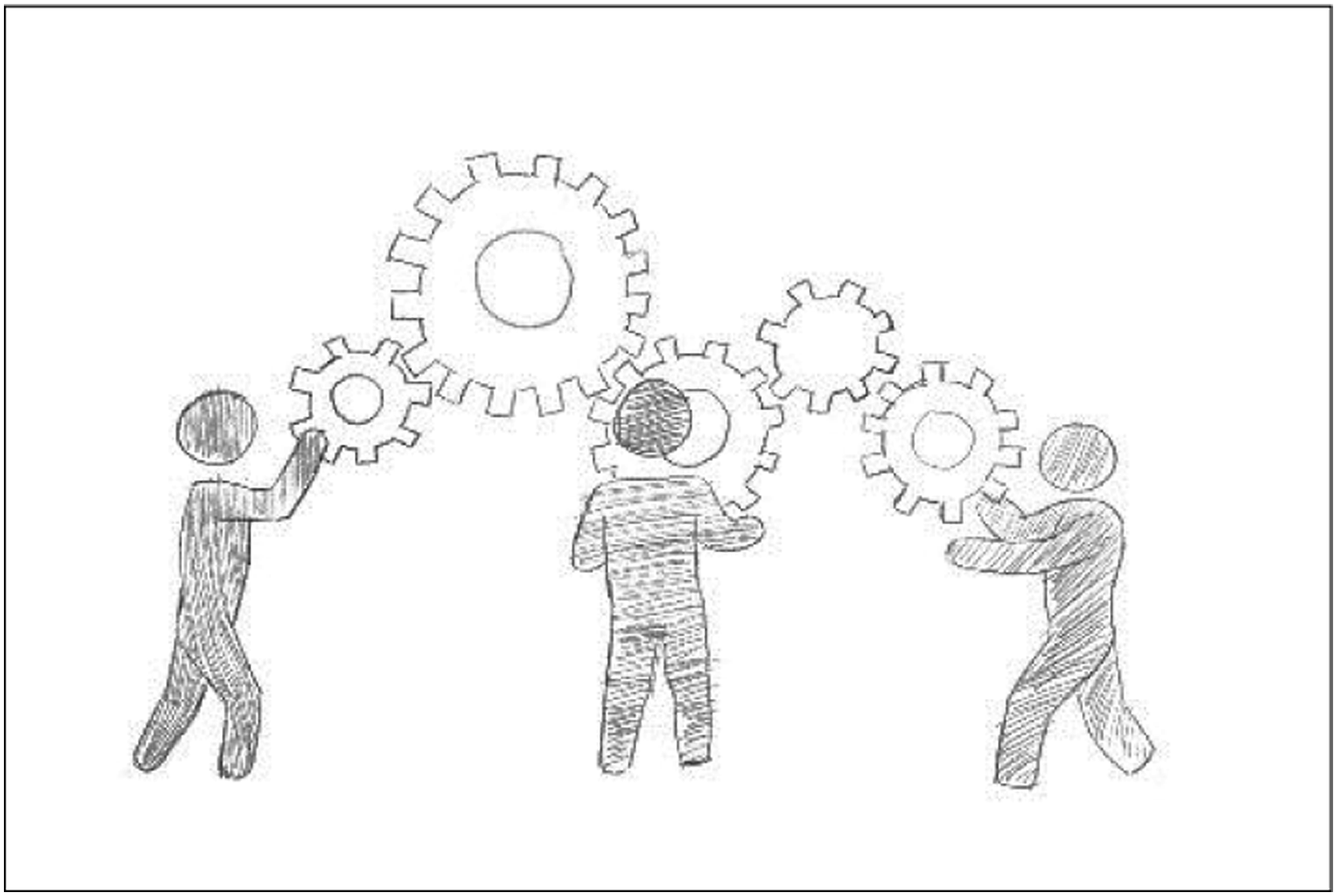
Adopting new beliefs through perspective transformation
A crucial finding from the memos created during the early stages of coding showed that some participants referred to a process we labeled perspective transformation, adopting Mezirow’s (1978, p. 100) term for a “structural change in the way we see ourselves and our relationships.” We use the term perspective changers to refer to those participants who undertook perspective transformation during the EI. Their accounts are characterized by comfort emotions, the adoption of new beliefs about the self and the world around them, and individual emancipation. In contrast, the EI did not trigger changes in perspective keepers’ mental models. They never report positive affective components nor refer to new beliefs and individual emancipation. In describing both types of participants in the following sections, we explain the conditions that enabled and the barriers that hampered the process of perspective transformation.
Perspective Changers
Six participants underwent the process of perspective transformation: Carl, Emma, Frank, Grace, Isabel, and Peter. The training courses, coaching, or mentoring helped these participants reflect on themselves, resulting in a newfound self-awareness. This, in turn, led to a structural change in how participants perceive themselves and their relationships (i.e., perspective transformation). Notably, perspective changers perceive a lack of external expectations from others, indicating a shift towards an internal locus of control (i.e., new beliefs). For Isabel, Carl, and Peter, the EI uncovered their limits and also showed them ways to overcome them. For example, Carl describes Figure 11 by noting: “It’s a picture of the Earth from above. That is, I saw things from a different perspective, because before the [training] course, I had expectations. I was hopeful about this new beginning.... I didn’t know, though.... I remember that year I was applying a lot in the area of communication and ... I didn’t realize before that I didn’t have the required expertise. Now I understand it, but before then I didn’t.” Image n. 3, Carl.
For Emma, Frank, and Grace, the process of perspective transformation revealed their strengths and a new awareness of their abilities and skills. Grace comments on the picture she selected (Figure 12) by saying: “I chose it because in my whole life, since I have been in Italy, before I started training, I was content with what I was doing.... However, in my heart I wasn’t satisfied with it and I wasn’t happy. When I started wanting more and looking for a better job, I talked to my friend ... and especially after my daughter was born, she [my friend] would tell me ‘You won’t be able to do it, you’ll see.’ Instead this feeling changed once I started the [training] course.” Image n. 3, Grace.
Perspective changers’ accounts often start with feelings outside the comfort zone expressed through edge emotions. As these metaphors for perspective transformation already show partly, the EI-triggered process of perspective transformation led to new beliefs. For instance, reaching milestones and incremental goals within the EI (e.g., being awarded a certificate) supports the development of satisfaction. The latter counteracts feelings of inadequacy and enables the participants to change their perspective about their capabilities, thus increasing self-efficacy beliefs and cultivating a growth mindset. Similarly, participants’ sense of community increased when they realized that their disorienting dilemma and associated uncertainty mirrored common circumstances among many other young people. This reduced their feelings of pressure and inadequacy and allowed them to alter their perspective, boosting their self-efficacy beliefs and encouraging a growth mindset. Self-efficacy refers to new beliefs that all participants in this group adopt regarding their abilities and capacity to perform tasks to reach specific professional goals. A growth mindset instead refers to a belief in improvement through learning. Half of the perspective changers (Frank, Isabel, and Peter) mentioned seeing their efforts within the EI as a pathway to mastery and noted their willingness to seek out new challenges in the near future. For example, Frank explains, in reference to two images of ladders (Figure 13 and 14): “What these images convey to me is the need to store but more importantly understand because it’s not just a sum of content. So, I’ve come to understand that I also need to acquire certain soft skills in the future.… I became aware that there was a lot to be done, and the employment initiative was just the bottom step, the starting point.” Image n. 4, Frank. Image n. 6, Frank.

Perspective Keepers
Two participants did not undergo the process of perspective transformation: Delia and Alex. The training courses, coaching, and mentoring services did not prompt new self-awareness or new beliefs. Although all participants reported a disorienting dilemma and related edge emotions during the interviews, it is notable that only these two perspective keepers described feelings of injustice. In contrast with perspective changers, they seem to have an external locus of control and believe they have little power over their own likelihood of reaching specific professional goals.
Another distinguishing feature of perspective keepers’ accounts was the absence of comfort emotions, as emphasized by several counter-metaphors within their accounts. That is, the perspective keepers tended to emphasize what could have happened during the EI but did not, as when Alex explains an image depicting the professional tennis player Serena Williams and her father (Figure 15): “Maybe this represents envy, although it’s not nice to say. I would have liked to have had that kind of guidance, though.” Image n. 4, Alex.
On a similar note, Delia uses the metaphor of a light bulb (Figure 16), a common symbol of sudden insight or flash of understanding, to express contrarily how the EI did not lead to perspective transformation: “The image is very confused, just like me. The [training] course could have been a light bulb, but I’m still at the crossroads. I always kind of stayed there. It didn’t really give me the direction I expected.” Image n. 7, Delia.
Achieving Individual Emancipation
As we further analyzed metaphors of perspective transformation among perspective changers, we identified individual emancipation as a last process, emerging from participants’ changed mental models. Our analysis shows that perspective transformation helped participants escape affective and cognitive constraints and plan future actions. Evidence of individual emancipation came from accounts in which perspective changers employ metaphors to express relief and freedom, a new sense of autonomy, and self-empowerment, with both visual and sensory metaphors such as a pair of keys, the smell of the sea, the snipping sound produced by scissors, yoga positions, and other sports. For example, Carl explains the liberating feeling of a windsurfer pushed by the wind (Figure 17), noting that through the EI, “I had conquered my fears and I felt free, ready to start something new, and move forward, to be pushed by this new idea.” Image n. 6, Carl.
Discussion
As noted at the outset of this work, this study has sought to bring latent emotions into the foreground by examining how an employment initiative can shape NEETs affective components and their beliefs. Our model reveals that edge emotions originate from a disorienting dilemma and characterize participants’ mental models at the very moment they start or shortly after they join the EI. It further describes how the comfort emotions experienced by some participants (i.e., perspective changers) can trigger a process of perspective transformation, which results in the development of new beliefs and individual emancipation. Thus, comfort emotions appear necessary, such that they function as powerful filters that alter mental representations of the world.
For perspective changers, the EI removed or at least reduced negative emotional filters, thus moving participants into a comfort zone where their perspective transformation eventually could take place. We accordingly assert that comfort emotions are necessary conditions of perspective transformation, such that changed beliefs may happen only if people can interpret the world around them through meaning perspectives, characterized by positive affective components. Without them, participants would keep interpreting information, even that received from the EI, according to the edge emotions that pervade their mental models (i.e., perspective keepers). A feeling of injustice represents an additional burden that impedes perspective keepers from acquiring control over the situation that they at least partly attribute to external forces outside their control.
Theoretical Implications
Our first contribution is to general career development literature. Our study reveals four edge emotions (uncertainty, inadequacy, pressure, and injustice) that characterize young people in the midst of a life transition. On the one hand, our results demonstrate the central role of uncertainty in vocational psychology (Priyashantha et al., 2023), being the only affective component characterizing the entire group of participants. On the other hand, in line with recent literature (Taggar & Kuron, 2016), our work highlights the significance of other relatively under-examined emotions such as the perception of injustice, an affect-laden subjective experience that can only be found in the group of perspective keepers. Moreover, four positive emotions (sense of community, empathy, hope, and satisfaction) stem directly from concrete activities across various components of the EI.
Notably, our findings uncover 10 emotions that are not present in the widely used PANAS questionnaire. Along similar lines, latent emotions have remained relatively unexplored, but by employing ZMET, we elicit participants’ unconscious perceptions of the initiative, gain insights into their hidden feelings (Cazal & Inns, 1998), expose affective components that are partly latent (Mühlhoff, 2019), and develop an exhaustive picture of NEETs’ mental models. Our results can inform new scale development efforts, which should include the emotions uncovered by this study as relevant to NEETs and other marginalized groups. Whereas previous studies have not investigated explicitly how an EI can determine the emotions experienced by disadvantaged groups (Brown & Lent, 2019), we propose a model of change focused on NEETs’ mental models and thus put this relatively disadvantaged group center stage.
Our second contribution is to SCCT-CSM. Applying Mezirow’s views to the career development domain lends novel insights. We shed light on the explanatory mechanisms that link affect to self-efficacy by showing that comfort emotions lead to increased self-efficacy beliefs through perspective transformation. Although our investigation specifically focuses on how self-efficacy is formed via affective states, it does not exclude the possible interplay of the other three information sources (i.e., mastery experience, vicarious experience, and verbal or social persuasion). From our data, we identified several concepts that align with the SCCT-CSM framework. More specifically, in adopting a growth mindset, perspective changers set personal goals, namely intentions to engage in learning activities for improvement. Tapping into individual emancipation includes novel goals-directed actions free from past affective and cognitive constraints. Finally, hope, one of the four identified comfort emotions, mirrors positive outcome expectations.
Additionally, integrating Mezirow’s perspective within SCCT-CSM shifts attention from the assessment of positive and negative affect, a primary focus of the prior work within social cognitive career theory, to the malleability of affective dispositions (Brown & Lent, 2019). Mezirow (1978) suggests that perspective transformation starts with emotional flexibility. Our data also match Mezirow’s (1978) proposition that perspective transformation can be sustained by a coach or mentor whose empathy helps participants realize that their perspective is not the only one, which constitutes a condition for breakthrough moments. Accordingly, perspective changers assess their situation according to positive affective components rather than the edge emotions that characterize their mental models when they join the EI. Our research shows how concrete activities across various components of the EI (i.e., training, coaching, and mentoring) can help NEETs embrace comfort emotions. This may happen as long as the negative affective dispositions they had when they joined the EI are perceived as a result of their actions rather than attributable to forces outside their control.
Limitations and Further Research
First, our investigation centers on a single EI targeting NEETs. We extensively described the case to help readers assess contextual congruence. Still, the conclusions are not generalizable empirically, and we leave generalization judgments for efforts that apply our model and findings to different situations (Kennedy, 1979). Also, the sample selected reflects some characteristics typical of Italian society which might not be found in other countries. More specifically, Italy has the highest NEET rate among graduates in the EU after Greece (Eurostat, 2022). This is because – even for young people holding a degree – the Italian school-to-work transition is remarkably slow (Pastore et al., 2022) and there is a high share of mismatched graduates in most humanities and social sciences degrees (Caroleo & Pastore, 2018). To determine whether the results of our study hold true across a variety of populations, researchers may replicate our study using other samples. Additionally, even though we were able to draw conclusions about the temporal evolution of participants’ mental models, we only gathered the data at one point in time. We recommend that future research employ longitudinal methods, such as ethnography or diaries.
Second, our focus on selecting participants willing to talk frankly and freely might have impacted our study by resulting in a biased sample of young people with similar personality traits, such as extroversion, a characteristic that could lead to different experiences within the EI. Additionally, the employment status of participants at the moment of the interview might have affected their appreciation of the EI itself. We coped with this issue by ensuring a heterogenous sample which included participants with a diverse employment status. To further minimize selection biases, we recommend that future qualitative studies apply purposive sampling taking into consideration further criteria besides employment status.
Finally, we intuitively posited that just as marketers can use ZMET to tailor their brand-positioning strategies, career researchers could benefit from this technique to identify (latent) emotions. However, as pointed out by previous research (Barner, 2011), asking participants to draw or bring their images to the interview may intimidate them, considering the challenging reflexivity task of selecting images that convey thoughts and feelings. This might be especially true for more vulnerable social groups (e.g., NEETs). We experienced the issue first-hand when at least two participants in the study asked several times for validation of the images selected before the interview, fearing they were not ‘good enough.’ Departing from ZMET, as the technique traditionally deals with consumers, we suggest using ready-made metaphorical images instead as an alternative for dealing with especially disadvantaged and economically marginalized groups in career studies.
Implications for Practice
A traditional view of career development as a cognitive process dominates not just research but also career services provision (Hartung, 2011; Kim & Lee, 2022). Our conceptual model (Figure 1), by emphasizing the essential role of affect, should help career advisors, employment services, and guidance counselors gain new insights into NEETs’ mental models, as well as evidence that they should plan for working with emotions in their career-helping efforts. Given the importance of perspective transformation and its consequences, we also illuminate some key conditions that enable it. Comfort emotions are necessary for perspective transformation, in that participants can change their beliefs only if they can interpret the situation and world around them through meaning perspectives characterized by positive affective components. Therefore, the goal for career helpers should be removing, or at least reducing, negative emotional filters.
To do so, Magnusson (2021) recommends (1) naming edge emotions through reflecting or asking questions to make sure it does not become a hidden barrier, (2) exploring the impact the negative emotion has on EI participants, and (3) harnessing edge emotions. However, as previous literature demonstrated (Taggar & Kuron, 2016), our findings suggest that the negative affective dispositions the EI participants attribute to external forces (e.g., injustice) may require more targeted efforts. Career helpers also should nurture comfort emotions. Our study highlighted concrete activities linked to the four comfort emotions we uncovered. For instance, trainers, coaches, or mentors could support EI participants develop a sense of community by creating opportunities to interact easily with each other or achieve satisfaction by awarding certificates. They also can sustain the process of perspective transformation by developing a caring working alliance, based on empathy.
The broader career development system, including educators and policymakers, also can benefit from our findings in their efforts to support disadvantaged and economically marginalized groups (e.g., NEETs). Whereas the focus of career development has tended to be on helping clients gather knowledge they could leverage to make good professional decisions (Blustein, 2017), our study demonstrates that for many people, other problems need to be resolved before they can adopt such cognitive techniques effectively. Understanding the experience of NEETs sheds light on the essential role of affect in helping or hindering job search processes. Ultimately, this knowledge should help clear space for working with emotions when designing EI, especially in conditions marked by substantial career uncertainty (Allan et al., 2021; Lechner et al., 2016).
Conclusion
According to our research, the intervention at the center of our case study removed or at least decreased negative emotional filters for some participants, helping them feel good. Consequently, the process of perspective transformation could take place, eventually leading to new beliefs and individual emancipation. Comfort emotions emerge as crucial prerequisites, operating as potent filters that change the way people see the world. Accordingly, rather than providers of information, career helpers become agents of change who should recognize and harness the significant role of emotions in assisting clients who navigate increasingly complex and unique career environments.
Supplemental Material
Supplemental Material - Metaphors in Career Development: Using ZMET to Explore How an Employment Initiative Changes NEETs’ Mental Models
Supplemental Material for Metaphors in Career Development: Using ZMET to Explore How an Employment Initiative Changes NEETs’ Mental Models by Giulia Parola, Julia Thaler, and Matteo Solivo in Journal of Career Assessment
Footnotes
Declaration of Conflicting Interests
The author(s) declared no potential conflicts of interest with respect to the research, authorship, and/or publication of this article.
Funding
The author(s) disclosed receipt of the following financial support for the research, authorship, and/or publication of this article: This work was supported by the Iceland, Liechtenstein, and Norway through the EEA and Norway Grants Fund for Youth Employment.

Supplemental Material
Supplemental material for this article is available online.
Notes
References
Supplementary Material
Please find the following supplemental material available below.
For Open Access articles published under a Creative Commons License, all supplemental material carries the same license as the article it is associated with.
For non-Open Access articles published, all supplemental material carries a non-exclusive license, and permission requests for re-use of supplemental material or any part of supplemental material shall be sent directly to the copyright owner as specified in the copyright notice associated with the article.
