




Abstract
This study aimed to identify trajectories of change in client career decision difficulties during a manualized career counseling intervention and examine the role of counselor adherence, working alliance, and personality traits in predicting these trajectories. Participants were 257 individuals who received an average of 7.79 career counseling sessions at a university career services center. Using growth mixture modeling, four class-trajectories were identified. Clients in class 1 had a moderate level of decision difficulties at the beginning of counseling while clients in classes 2, 3 and 4 had moderate-salient initial levels of difficulties. Clients in classes 1 and 2 experienced a very large reduction of their decision difficulties during counseling and left the process with negligible levels of difficulties. Clients in class 3 saw a large reduction of their decision difficulties during counseling and left the process with moderate levels of difficulties. Clients in class 4 did not experience change and left the process with moderate-salient levels of difficulties. Counselor adherence to the intervention manual significantly contributed to discriminate between clients from class 4 and clients from classes 1, 2 and 3. Client level of neuroticism significantly contributed to distinguish clients belonging to class 4 from clients belonging to class 1.
Keywords
Introduction
At different moments during their lifetime, people must make decisions about their career (Lent & Brown, 2020). There are various types of career decisions such as “choosing a field of study or training, selecting a job, moving from one to another, and when and how to retire” (Gati & Kulcsár, 2021, p. 2). The importance of these career decisions has been extensively highlighted in the last years in view of their long-term consequences on a person’s personal, economic, and occupational satisfaction (Gati & Levin, 2015; Gati & Tal, 2008; Levin et al., 2020; Slaten & Baskin, 2014). Due to the importance and the complexity of the career decision-making process (Babarović & Šverko, 2019), many people consult in individual career counseling seeking help in dealing with career decision difficulties (Di Fabio & Bernaud, 2008; Gati & Levin, 2015).
Meta-analyses (Brown & Ryan Krane, 2000; Oliver & Spokane, 1988; Ryan Krane, 1999; Spokane & Oliver, 1983; Whiston et al., 1998; Whiston et al., 2017) conducted in the past decades demonstrate that individual career counseling leads to a significant decrease in clients’ career decision difficulties with moderate to large effect sizes (ds ranging between 0.41 and 1.08). Although previous research supports the effectiveness of individual career counseling on career decision difficulties, this broad range of effect sizes suggests that individual career counseling may lead to various degrees of change across clients (Heppner & Heppner, 2003; Milot-Lapointe, Le Corff, & Arifoulline, 2021). In a series of meta-analyses of 62 career intervention studies including 7725 participants, Ryan Krane (1999) observed that the variability in career choice interventions effectiveness is in large part explained by the components of the interventions. She found that specific intervention components accounted for between 2% to 38% of the unique variance in effect-size in career decision outcomes over and above the variance accounted for by study characteristics, methodological characteristics, participant characteristics, and intervention format (individual counseling, group counseling, or class-based). Five intervention components significantly contributed to effect size-variability: written exercises, individualized interpretation and feedback, occupational information, modeling, and attention to building support.
Subsequently, Brown and Ryan Krane (2000) found that not only these five intervention components were individually effective, but also that their combination lead to better career decision outcomes than each of them individually (Brown et al., 2003). Their results indicate that career choice interventions (regardless of intervention format) that include none of these five intervention components (but could include “non-critical intervention components”) yielded an average effect size of .22, while career choice interventions that included one, two or three critical intervention components yielded average effect sizes of 0.45, 0.61, and 0.99, respectively (no study employed more than three of these components).
Given the importance of the critical intervention components identified by Ryan Krane in career counseling effectiveness, researchers have developed and assessed the effects of standardized individual career counseling interventions in which these components were incorporated. Masdonati et al. (2014, 2009) assessed the effects of a four to five one-hour individual career counseling sessions intervention carried-out by counselors-in-training. The intervention was based on a structure similar (Perdrix et al., 2012) to the stages of the prescreening, in-dept exploration, choice (PIC) model of career decision (Gati & Asher, 2001). Results of both studies indicated a large reduction (effect sizes are η2 = 0.19 and d = 0.98, respectively) of the overall level of career decision difficulties between the end of the first and of the last counseling session. Similarly, Leuty et al. (2015) assessed the effects of a standardized Cognitive Information Processing (CIP; Sampson et al., 1999) individual career counseling intervention delivered by counselors-in-training. Following the five career counseling sessions, clients reported very large decreases in dysfunctional career decision thoughts (η2 = 0.54) as well as very large increases in career decision-making self-efficacy (η2 = 0.68).
These results are positive because they suggest that standardized career counseling sessions (based on PIC or CIP approach) in which critical components are incorporated have large or very large mean effects sizes. However, although these studies made a substantial contribution to the field, it is not possible to ascertain that the effect they reported are attributable to the components of the interventions delivered (e.g., specific components of CIP approach, or Ryan Krane’s critical components). Indeed, although the authors offered a detailed description of the career counseling intervention, they did not use procedures (e.g., self-reported adherence to the intervention manual) to assess the extent to which counselors implemented the intervention components as expected. In a series of recommendations for career counseling research, Whiston (2021) called for the development of more career counseling intervention manuals and argued that researchers must demonstrate that the intervention delivered by counselors is consistent with how it was designed to be implemented.
Another limitation of previous studies is that they examined only mean pre-post levels of change, while some recent studies (Covali et al., 2011; Milot-Lapointe et al., 2016, 2019) suggested that there are different levels of change among clients during individual career counseling sessions. In that regard, several researchers (Frankfurt et al., 2016; Heppner & Heppner, 2003; Milot-Lapointe, Le Corff, & Arifoulline, 2021; Whiston et al., 2016) called for the use of more sophisticated statistical modeling procedures in the investigation of the process of change in career counseling. Frankfurt et al. (2016) and Milot-Lapointe, Le Corff, and Arifoulline (2021) suggested the use of repeated measures designs and structural equation modeling analyses (e.g. growth mixture modeling) to identify different trajectories of change among clients (e.g., a subgroup of clients who experienced positive change and a subgroup of clients who did not respond well to counseling) and explore potential predictors of these trajectories. Indeed, different characteristics, such as clients’ personality traits (Stauffer et al., 2013) could contribute to explain the differential effect of individual career counseling. Milot-Lapointe, Le Corff, and Arifoulline (2021) also suggested that researchers include all important empirically supported predictors of career counseling effectiveness in a same statistical model to test whether each of them explains unique variance. In terms of predictors, they proposed to investigate the role of the intervention components used by counselors, working alliance and client personality traits because of the strong empirical support these variables received.
In view of the above, this study aimed to identify trajectories of change in client career decision difficulties during a manualized individual career counseling intervention based on the CIP approach and the PIC model. These two theoretical backgrounds were chosen for the development of the manualized intervention in order to build on the findings of previous studies (Leuty et al., 2015; Masdonati et al., 2009, 2014; Perdrix et al., 2012) that examined the effectiveness of standardized individual career counseling interventions (based on CIP or PIC) on career decision difficulties. It also aimed to examine the role of counselor adherence to the components specified in the intervention manual, working alliance, and client personality traits in predicting these trajectories. In the following sections, we explain the rationale that supports the potential contribution of these three variables to career counseling effectiveness
Counselor Adherence
Counselor adherence refers to the extent to which a counselor used the intervention components of a particular counseling model at the moments prescribed by the intervention manual (Serfaty et al., 2020). In intervention research, counselors may implement all, some or none of the intervention components specified in the intervention manual (Perepletchikova, 2011). Assessing counselor adherence to an intervention manual is important as it enables to determine whether levels of adherence relate to counseling outcomes. Since the publication of Ryan Krane’s (1999) and Brown and Ryan Krane’s (2000) findings, some studies (McClair, 2010; Milot-Lapointe et al., 2018; Whiston et al., 2017) have demonstrated that career counseling effects are higher when critical intervention components are included into them, especially written exercises, individualized feedbacks and occupational information which have been successfully replicated in each of these studies. Consequently, including these components in an intervention manual appears important to optimise career counseling effectiveness. However, other components should be included. Indeed, according to Brown et al. (2003), it can be hypothesized that many intervention components could “provide essential building blocks upon which the “critical” components work” (p. 425). For example, they suggested that it would probably not be possible “to use occupational information or establish future written goals without the self-understanding that is provided by self-reported inventories and other activities designed to help clients clarify their interests, talents, and values” (p. 425).
For these reasons, in studies that aim to test the association between counselor adherence and individual career counseling outcomes, it appears important to examine the combined effects of all of the components of the intervention manual. Indeed, previous studies (Leuty et al., 2015; Milot-Lapointe et al., 2018; Masdonati et al., 2009; 2014) that found large effects sizes for Ryan Krane’s critical intervention components assessed intervention that also included components specific to the CIP approach or the PIC model, which suggest that several intervention components may work together in producing client changes in career decision difficulties.
Thereby, we hypothesize that the level of counselor adherence to an intervention manual based on the CIP approach and the PIC model which includes, but is not limited to, the critical intervention components will be associated with more positive trajectories of change in client career decision difficulties.
Working Alliance
Working alliance was defined by Bordin (1979) as a mutual collaboration between the client and the counselor based on the development of an emotional bond as well as a shared commitment to the goals and tasks of the intervention. In this pan-theoretical conceptualization, working alliance is considered as a factor that is not specific to a counselor theoretical approach (Horvath & Luborsky, 1993). Establishing a working alliance is a key aspect and one of the first steps of individual career counseling (Gysbers et al., 2014), including in standardized interventions such as the CIP approach (Sampson et al., 2020). A central concern emerging from the literature pertains to the role that working alliance plays in individual career counseling effectiveness (Milot-Lapointe et al., 2018). In a meta-analytic investigation of 18 studies of the association between working alliance and outcomes of individual career counseling, Milot-Lapointe, Le Corff, and Arifoulline (2021) found a direct moderate association (r = 0.28) between alliance and career outcomes (k = 11). As stated by the authors, a limitation of this result is that no other predictors were included in the statistical model. To our knowledge, only one study combined other predictors and working alliance in a same statistical model. Milot-Lapointe et al. (2018) found that working alliance was not statistically associated with client change in career decision difficulties when intervention components used by the counselors were also included. Rather, they found that working alliance significantly moderated the effect of two critical intervention components on the change in career decision difficulties. This result supports the idea according to which working alliance might be a facilitator of intervention components rather than a specific intervention that has a direct effect on individual career counseling outcomes.
Following this idea, we hypothesize that working alliance will moderate the association between counselor adherence to intervention manual and trajectories of change in client career decision difficulties.
Personality Traits
Personality traits can be consensually defined as dispositional constructs that “are the relatively enduring patterns of thoughts, feelings, and behaviors that reflect a tendency to respond in certain ways under certain circumstances” (Roberts, 2009, p. 140). Currently, the most prominent model of personality traits is the Big Five (Goldberg, 1993), according to which human personality traits can me summarized into five broad dimensions.
Among these traits, conscientiousness (industrious, achiever, organised, reliable vs. indolent, laissez-faire, undependable) has been hypothesized as a protective factor to career decision-making while neuroticism (propensity to negative emotions such as anxiety, depression, anger, impulsivity vs. emotional stability) is seen as a potential barrier (Stauffer et al., 2013). As conceptualized by the CIP approach and the PIC model, the career counseling process require clients to engage in several cognitive career decision-makings tasks (e.g., collecting and organizing information about the self or career options) and homework assignments (e.g., written exercises). Although these approaches posit that theses tasks can be learned throughout the career counseling process (Sampson et al., 2020), one could argue that they could be easier to accomplish for individuals who have a dispositional propension to highly engage themselves in career decision-making tasks (as indicated by conscientiousness) and more difficult for individuals who tend to exhibit higher levels of stress or anxious thoughts regarding these tasks.
Studies that examined these hypotheses suggest that individual career counseling is less effective for clients with higher levels of neuroticism and more effective for clients with high levels of conscientiousness, while other traits were not found to significantly predict outcomes. Massoudi et al. (2008) found a moderate association (r = 0.28) between client level of neuroticism and their level of career decision difficulties at the end of career counseling, while conscientiousness was highly associated (r = −0.52) with client difficulties at the end of the intervention. Stauffer et al. (2013) found that client levels of neuroticism and conscientiousness respectively explained 4% and 2% of the variance in their lack of readiness at the end of counseling, after controlling for their baseline level of readiness and demographic characteristics.
Based on these results, we hypothesize that lower level of neuroticism and higher level of conscientiousness will be associated with more positive trajectories of change in client career decision difficulties.
Method
Participants
Clients
This study included 257 French-Canadian individuals from the community (186 women, 71 men; no client identified as trans, non-binary, or to another gender) aged between 15 and 59 years (M = 32.07; SD = 10.61) who voluntarily sought individual career counseling at a university career counseling services center. Almost all clients were born in Canada (97%). Among the 257 clients, 77% were workers (53% employed full time, 21% employed part time and 3% were entrepreneurs), 8% were unemployed, and 15% were high school, college, undergraduate or graduate students. All clients reported that making a good career decision was their main career counseling goal. Employed and unemployed clients reported that they were deliberating about making a career change (e.g., moving from a field to another). Student clients reported that they were deliberating about choosing an educational program to pursue in the next year.
Counselors
The counselors (109 women and 15 men; no counselor identified to another gender) were students participating in an individual career counseling practicum as part of their master’s degree in vocational guidance curriculum. Counselors were aged between 21 and 46 years (M = 27.51; SD = 4.82) at the time of the study. Almost all counselors (95%) were born in Canada. All counselors had completed between two and four individual career counseling method courses, two courses on career development theories, three courses in psychometric assessment, and two courses in career information and communication in their undergraduate degree. Counselors saw an average of 2.07 clients in this study (Min = 1; Max = 3; SD = 0.81).
Intervention Manual
An integrative cognitive model in individual career counseling was taught in the career counseling practicum and used by the counselors-in-training. The practicum was 45 hours of class time during which counselors were taught the phases and steps of the career counseling model using case studies, intervention videos, demonstrations, and practicing counseling simulations. The philosophical stance of the model stems from the CIP approach in career counseling (Bullock-Yowell et al., 2015), which is one of the most studied and empirically supported career counseling intervention (Brown, 2015; Kronholz & Osborn, 2022). The individual career counseling model taught in the practicum is a goal-oriented and problem-focused approach that aims to help individuals make informed career decisions, and improve problem-solving and decision-making skills that they can use for future career decisions. In line with CIP, the career counseling intervention emphasizes on deliberative cognitive processing and on dysfunctional career thoughts and heuristics that interfere with career problem solving and with the quality of the decision-making process. It also takes into account the « complexity of family, social, economic and organisational factors that influence an individual’s career development » (Bullock-Yowell et al., 2015, p. 270). To guide clients in the different steps of the career decision-making process, the intervention follows the PIC model of career decision, which is a dynamic, systematic and analytical-processing 3-stage model that is compatible with the human natural intuitive way of thinking and limited cognitive information processing capability (Gati & Asher, 2001). The career counseling intervention also integrates the four critical intervention components in reducing career decision difficulties identified in Milot-Lapointe et al. (2018) study conducted in the specific context of individual career counseling. Additionally, counselors were taught to emphasize on the working alliance from the beginning of the career counseling process until the end. They also received training on how to provide emotional support as some clients might need this type of support (e.g., when experiencing psychological distress) (Gysbers et al., 2014). However, provision of emotional support was not formally included in the intervention manual because a certain proportion of career counseling clients do not experience emotional difficulties (Milot-Lapointe, Le Corff, & Savard, 2021; Multon et al., 2001, 2007; Rochlen et al., 2004) and may not need this type of support. Counselors were thus encouraged to provide emotional support only if they judged that their client needed it. The intervention comprised eight 1-hr sessions, which are described below.
Session 1
The first session is an evaluation session of the client’s goals and problems using a series of questions that aim to explore their view of their situation. The counselor seeks to identify the client’s career decision difficulties and coping strategies, dysfunctional career thoughts and beliefs, and obstacles in achieving their career goals. After gathering relevant client information, the counselor explains the steps to a good career decision and introduces the intervention plan, which contains tasks and goals for each session. At the end of the first session, the counselor assigns as homework a written exercise that aims to increase client self-knowledge, which is a critical component of career interventions (Brown & Ryan Krane, 2000; Whiston et al., 2017).
Session 2
The second session focuses on increasing the client’s self-knowledge (i.e., interests, values, personality traits, abilities) using the written exercise that has been completed as homework. Interests, values, abilities, and personality traits are reviewed by asking the client to talk about different situations or events that support their view of themself. During this discussion, a worksheet is used to collaboratively identify the aspects (i.e., interests, values, etc) that appear to characterise the client the most. At the end of the session, the counselor and the client collaboratively decide which standardized inventory (e.g., Strong Interest Inventory) might best suit the client’s needs for self-clarification. Then, the counselor briefly introduces the theoretical background of the inventory (e.g., Holland typology).
Session 3
During this session, the client completes the inventory.
Session 4
The counselor provides individualized feedback on test results, which is a critical component of career interventions (Brown & Ryan Krane, 2000). In the aim of establishing a clearer picture of the client, relevant data from the test (e.g., interests, traits) are added to the worksheet that was used during session 2. As homework, the client identifies the aspects (e.g., interests, values) that appear to characterize them the most among those listed on the worksheet in the aim of clarifying their vocational identity.
Sessions 5–8
Session 5 to 8 involve the use of the PIC in the aim to make the career decision (e.g., choosing a field of study, moving from a job to another) that best suit the client’s identity in terms of interests, values, personality traits, and abilities. In session five, the counselor explains the rational behind the systematic procedure of the PIC and discusses the importance of dismantling dysfunctional career thoughts and beliefs that can impede the career decision-making process. At each stage of the PIC, the counselor provides relevant career information (another critical component; Brown & Ryan Krane, 2000; Milot-Lapointe et al., 2018) to the client and ensure that they hold functional career thoughts and beliefs to facilitate information processing. In the first stage of the PIC, prescreening, the counselor helps the client to rank by importance the aspects that characterize them the most among the aspects listed on the worksheet (sessions 2 and 4). The counselor also helps the client in defining a range of compromise for each aspect (e.g., be willing to enroll in a 4-year study program maximum). Career options are compared with the client’s range of compromise for each aspect using one aspect at a time (beginning by the most important aspect), and career options whose characteristics are incompatible with the client’s range of compromise are eliminated (sequential elimination; Gati, 1986). This process stops when the number of potential career options is manageable (between 2 and 7 options) for further in-dept exploration of the promising options. In the second stage of the PIC, in-dept exploration, the client collects additional information on each of the promising career options outside of sessions (usually after session 5 in the current model). In session 6, the quality of the career information collected on each promising career option is examined and, if needed, additional information is collected after the session. Sessions 7 and 8 aim to choose the most suitable career option (and additional second-best career options, if necessary) considering the client’s identity and constraints. The promising career options are compared using a written exercise (critical component; Brown & Ryan Krane, 2000; Brown et al., 2003; Milot-Lapointe et al., 2018). Once the most suitable alternative is identified, the counselor provides feedback on the choice envisaged in reviewing the quality of the decision process (critical component; Milot-Lapointe et al., 2018). Finally, client’s goals and means to deal with potential obstacles are written and incorporated into a plan of action to foster the implementation of the decision (critical component; Brown & Ryan Krane, 2000; Milot-Lapointe et al., 2018).
Measures
Sociodemographic
A sociodemographic questionnaire asked clients about their age, gender, occupation (e.g., worker, student), employment status (e.g., employed, part-time employed), country of birth and mental health disorder diagnostic (e.g., anxiety disorder). They were also asked if they participate to psychotherapy sessions alongside their career counseling process.
Career Decision Difficulties
To assess clients’ overall level of career decision-making difficulties, the French version (Rossier et al., 2021) of the Career Decision Difficulties Questionnaire (CDDQ; Gati et al., 1996) was used. The CDDQ includes 32 Likert-type items each representing a single difficulty individuals may have in making career decisions. The questionnaire measures three categories of decision difficulties: lack of readiness, lack of information, and inconsistent information. Internal consistency (α = 0.92 for the total scale) and construct validity of the CDDQ have been empirically established in a French sample (Rossier et al., 2021). In the present study, the Cronbach alpha for the total scale was .90.
Working Alliance
Working alliance was assessed using the French version (Corbière et al., 2006) of the short-form of the Working Alliance Inventory (SF-WAI; Horvath & Greenberg, 1989). This short version includes 12 items that are divided into three subscales: agreement about goals, agreement about tasks, and quality of the bond between the client and the counselor. Clients were asked to rate the quality of the working alliance at the end of each counseling session on a 7-point Likert-type scale. Considering that working alliance was found to significantly predict career counseling outcomes at different moments in the process (first session, mid or at termination of the counseling service) in a previous meta-analysis (Milot-Lapointe, Le Corff, & Arifoulline, 2021), the average score at all times of assessment was used as an estimate of working alliance. Internal consistency (α = 0.91 for the total scale) and construct validity of the SF-WAI have been empirically supported in a French-Canadian sample (Milot-Lapointe, Le Corff, & Savard, 2020). In the present study, internal consistency for the total scale was 0.92.
Personality Traits
The Conscientiousness and Neuroticism dimensions of the Big Five were assessed with the French version (Plaisant et al., 2005) of the Big Five Inventory (BFI; John et al., 1991). The BFI includes 44 Likert-type self-descriptive items; the Neuroticism scale includes 8 items while the Conscientiousness scale includes 9 items. Cronbach alphas were 0.80 and 0.79 in a French sample and 0.86 and 0.79 in the present study for, respectively, the Neuroticism and Conscientiousness scales. A factor analysis supported the five-factor structure of the BFI in a sample of French university students (Plaisant et al., 2010).
Counselor Adherence
To assess counselor adherence, a self-rated career counseling components check list (SRCCCCL), which contains 20 components, was developed for the current study. The SRCCCCL is a counselor self-reported measure of adherence to the intervention manual described above. This pragmatic approach measure of adherence has been successfully used in previous career counseling studies (e.g., McClair, 2010; Milot-Lapointe et al., 2018, 2020a) and has several advantages as it enables more data to be collected at a lower cost without be concerned about confidentiality (e.g., compared to direct observation) (Serfaty et al., 2020).
In line with the intervention manual, we identified the core components prescribed at each session in the delivery of the intervention. As can be seen in the Appendix, the SRCCCCL comprises three subscales: Assessment of client situation (five components), clarification of the self (seven components), and prescreening, in-dept exploration, choice (PIC; eight components). Career counselors had to report the components that were used during each career counseling session immediately at the end of each session. This scale uses a dichotomous (yes, no) response format. For the Assessment of client situation subscale, the maximum score is five (if a counselor used all components during the first session) and the minimum score is 0 (if a counselor used non of the components in the check list); for the Clarification of the self subscale, the maximum score is seven (if a counselor used at least once each component during sessions 2, 3 or 4) and the minimum is 0 (if a counselor did not use at least once any of the components during session 2, 3 or 4); for the PIC subscale, the maximum score is eight (if a counselor used at least once each component during sessions 5–8) and the minimum is 0 (if a counselor did not use at least once any of the components during sessions 5–8). The total scale was used in this study (the sum of the three subscales scores). The maximum possible score for counselor adherence is 20 and the minimum is 0. Internal consistency (α) was 0.83 for the total scale.
Potential Confounding Variable
As discussed earlier, counselors received training on how and when to provide emotional support since some clients might need this type of support (Gysbers et al., 2014). Emotional support provided to clients needs to be assessed and controlled statistically to ensure that we do not erroneously attribute effects to our independent variables (counselor adherence, working alliance and personality traits) that should be attributed to this variable. Emotional support provided by counselors was assessed using a self-reported item from the Career intervention components scale (Milot-Lapointe et al., 2018). At the end of each career counseling session, counselors had to report if emotional support was provided to client using a dichotomous (yes, no) response format. A composite score was obtained by summing the number of sessions in which emotional support was provided during the counseling process.
Procedure
The protocol of this study has been approved by the ethical committee of the authors’ institution and conducted in accordance with APA ethical standards. All clients requesting individual career counseling in a university career counseling services center during a 2.5-years period were invited to participate in this project. Study participation was voluntary and not a prerequisite for receiving services. Less than 1% of clients receiving services refused to participate in this study. The vast majority of the individual career counseling processes (n = 191) were conducted during the 2020-2022 pandemic while the others occurred few months before March 2020. All career counseling processes were delivered in-person. During the pandemic, counselors and clients had to conform to Québec public health measures (hand disinfection, 2-m social distancing, and wearing a mask or being separated by a plexiglass when social distancing was not possible) to limit the spread of Covid-19. Each client participated in a minimum of 6 and a maximum of 8 sessions in accordance with their needs. The mean number of sessions was 7.79, which is similar to the number of 8 recommended in the intervention manual. Clients were asked to complete the BFI 1 week before their first career counseling session. They completed the CDDQ immediately before each counseling session and 1 week after the last session. They also completed the SF-WAI immediately after the end of each session. Career counselors completed the SRCCCCL immediately after the end of each session. To avoid bias in client responding, counselors were not present when clients completed the questionnaires.
Data Analyses
All analyses were conducted with Mplus 8.8 (Muthén & Muthén, 1998–2018) using full information maximum likelihood to handle missing data (Geiser, 2021). First, growth mixture modeling (GMM) was conducted to identify trajectories of change in client career decision difficulties during the course of individual career counseling. CDDQ scores at each counseling session and 1 week after the last session were included in the model (maximum of nine time points in total). To identify the optimal number of trajectories, 18 models (six linear, six quadratic and six cubic models) were computed by increasing the number of trajectories with each run until the most meaningful classification of clients in trajectories was ascertained. Growth parameters were freely estimated within the classes of trajectories and constrained to be equal across classes of trajectories (Wickrama et al., 2016). The Akaike Information Criterion (AIC), the Bayesian Information Criterion (BIC), and the sample size adjusted BIC (BICssa) were examined to compare the fit of each model (Nylund et al., 2007). Smallest values on these indices indicated the best-fitting model. The Vuong-Lo-Mendell-Rubin likelihood difference test of model fit (VLMR) and the bootstrapped likelihood ratio test (BLRT) were also used to compare the fit of each model with the model with one less profile; a significant (p < .05) result indicates that the model with an additional trajectory has a better fit to the data. Entropy values and average posterior probabilities were also examined. Entropy values around 0.40, 0.60, and 0.80 represent low, moderate and high trajectories separation, respectively (Clark & Muthén, 2009), and high probabilities indicate that the trajectories are likely to be distinct from each other (Wickrama et al., 2016). Second, potential confounding variables (provision of emotional support, age, gender, number of sessions, mental health disorders, country of birth psychotherapist consultation, total number of components experienced) were explored in relation to the trajectories of change using analysis of variance (ANOVA) and chi-square (x2) tests. Third, H1, H2, and H3 were tested with a multiple logistic regression.
Results
Preliminary Result
A paired-sample t-test was performed in order to identify pre–post change in career decision difficulties and allowing comparisons with previous findings. The analysis indicated that the overall level of career decision difficulties significantly decreased (t (233) = 25.56, p < .001) during individual career counseling, and observed effect size was very large (d = 1.67; η2 = 0.74). These effect sizes were very similar across the 3 years of data collection (year 1: d = 1.68, η2 = 0.74; year 2: d = 1.71, η2 = 0.75; year 3: d = 1.64; η2 = 0.73) suggesting that the outcomes of the individual career counseling processes conducted in the current study have not been affected by the evolving context of the pandemic.
Trajectories of Change in Career Decision Difficulties
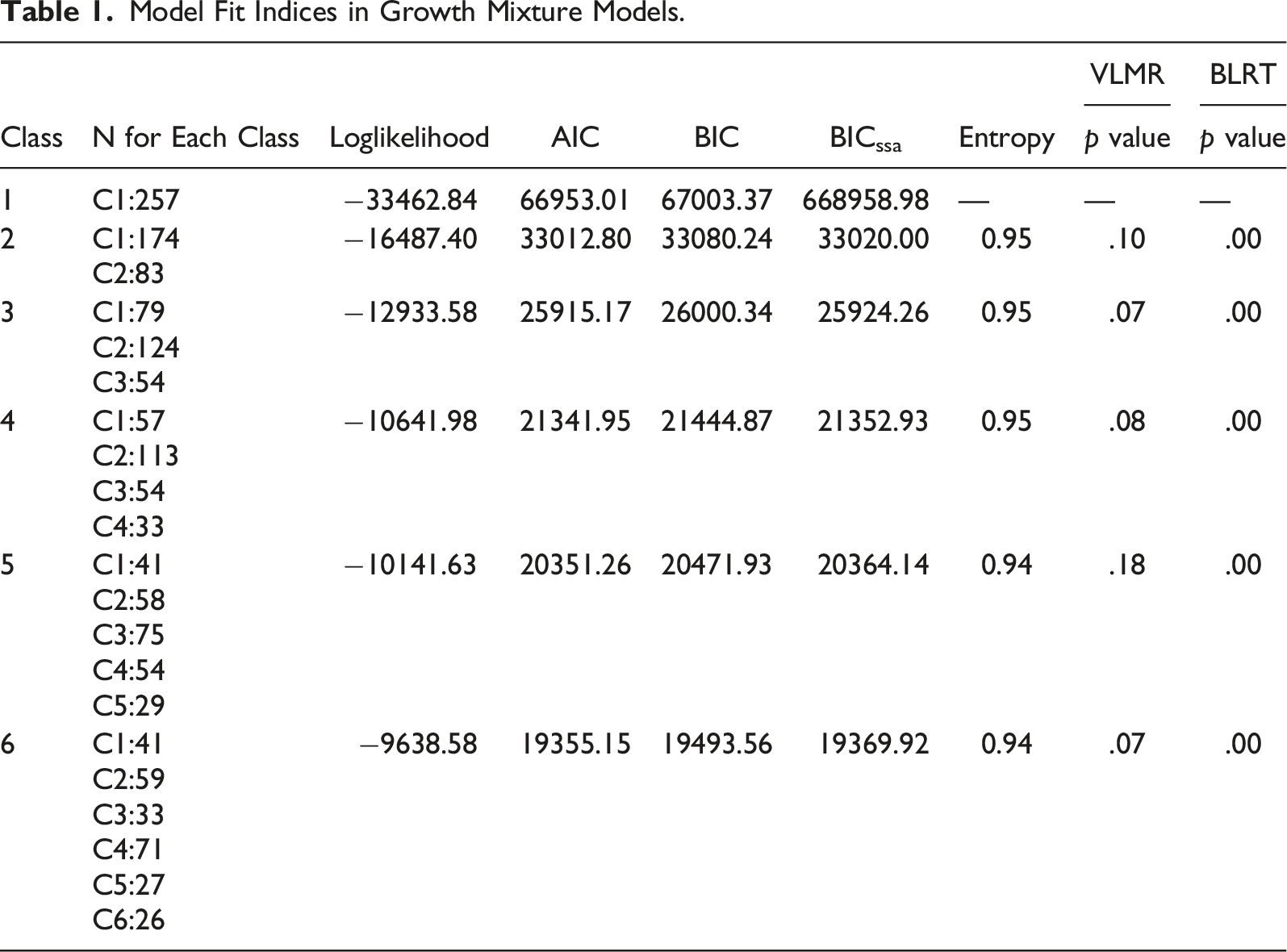
Model Fit Indices in Growth Mixture Models.
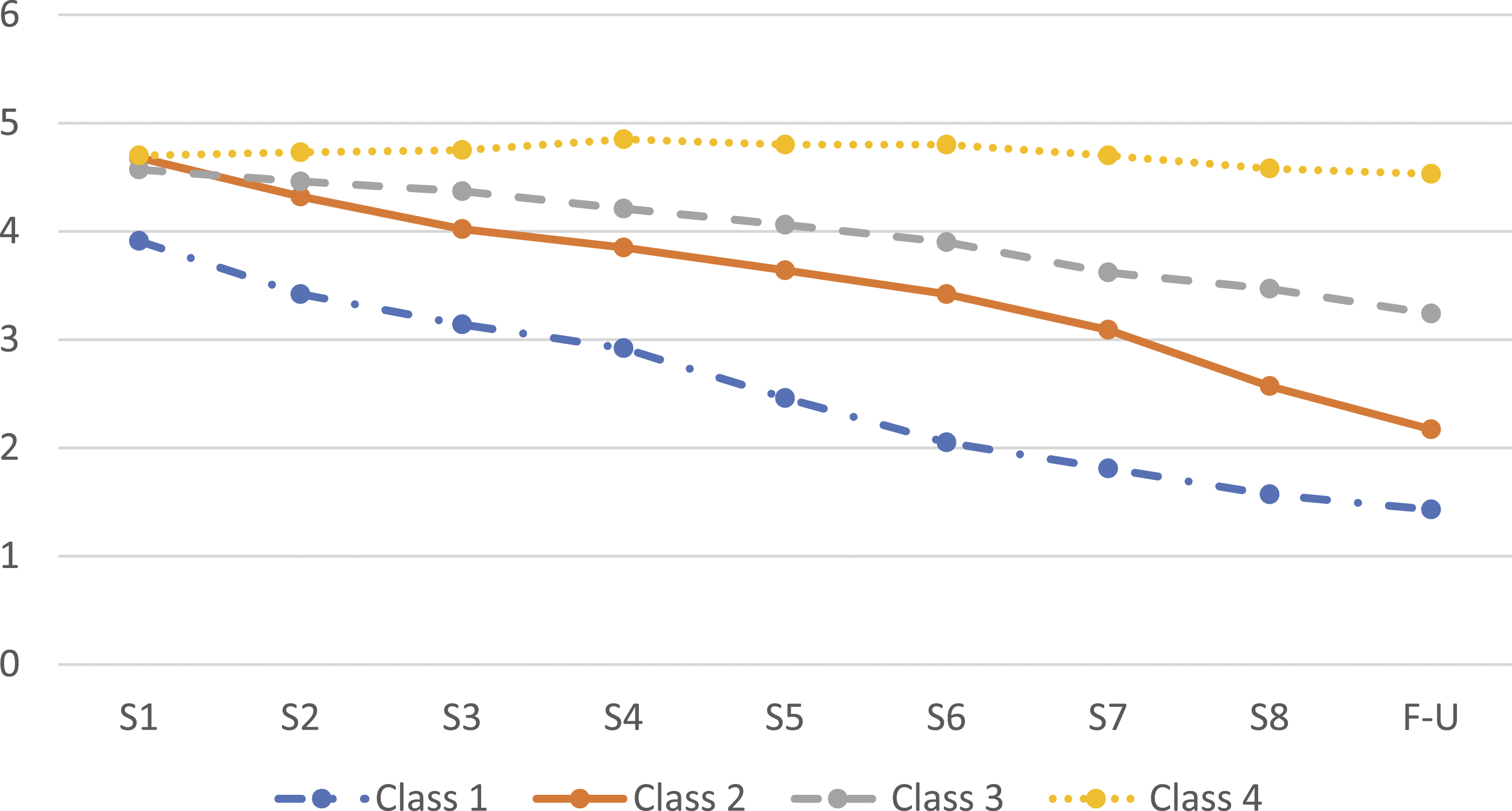
Trajectories of change in client career decision difficulties.
Clients in classes 2, 3 and 4 had an initial level of career decision difficulties in the moderate range (score of 3–5) but were labeled as “Moderate-Salient” since their initial level of difficulties almost exceed 5 and were significantly higher (p < .001) than those of clients in class 1. More specifically, clients in class 2 (n = 113; 44% of the sample) were labeled “Moderate-Salient initial difficulties/Very large change” since they were characterized by a moderate-salient level of career decision difficulties at beginning of counseling and by a high decrease (b = −0.25, p < .001, d = 2.68, η2 = 0.88) of their career decision difficulties during the process. This effect was also considered a very large change because it was significantly higher (p < .001) than the large effect size observed for clients in class 3. They also left career counseling with a negligible level of career decision difficulties.
Class 3 was labeled “Moderate-Salient initial difficulties/Large change”. Clients in class 3 (n = 54; 21% of the sample) had a moderate-salient level of career decision difficulties at intake and experienced a large reduction (b = −0.15, p < .001, d = 1.30, η2 = 0.63) of their career decision difficulties during career counseling according to Cohen’s criteria. This level of change was considered a large change according to Cohen’s (1988) conventions, but it was significantly lower than the changes observed for clients from classes 1 and 2. They also left counseling with a moderate level of career decision difficulties.
Finally, class 4 was labeled “Moderate-Salient difficulties/No significant change”. Class 4 (n = 33) comprised 13% of clients in the sample and was characterized by a moderate-salient level of career decision difficulties at intake and by no clinical change (b = −0.006, p > .05, d = 0.28, η2 = 0.08) in career decision difficulties during the career counseling process. Moreover, they still had a moderate-salient level of career decision difficulties at the end of the career counseling process.
Testing for Potential Predictors of Class Trajectory Membership
Client Characteristics and Descriptive Results for Potential Predictor Variables by Trajectory Class.
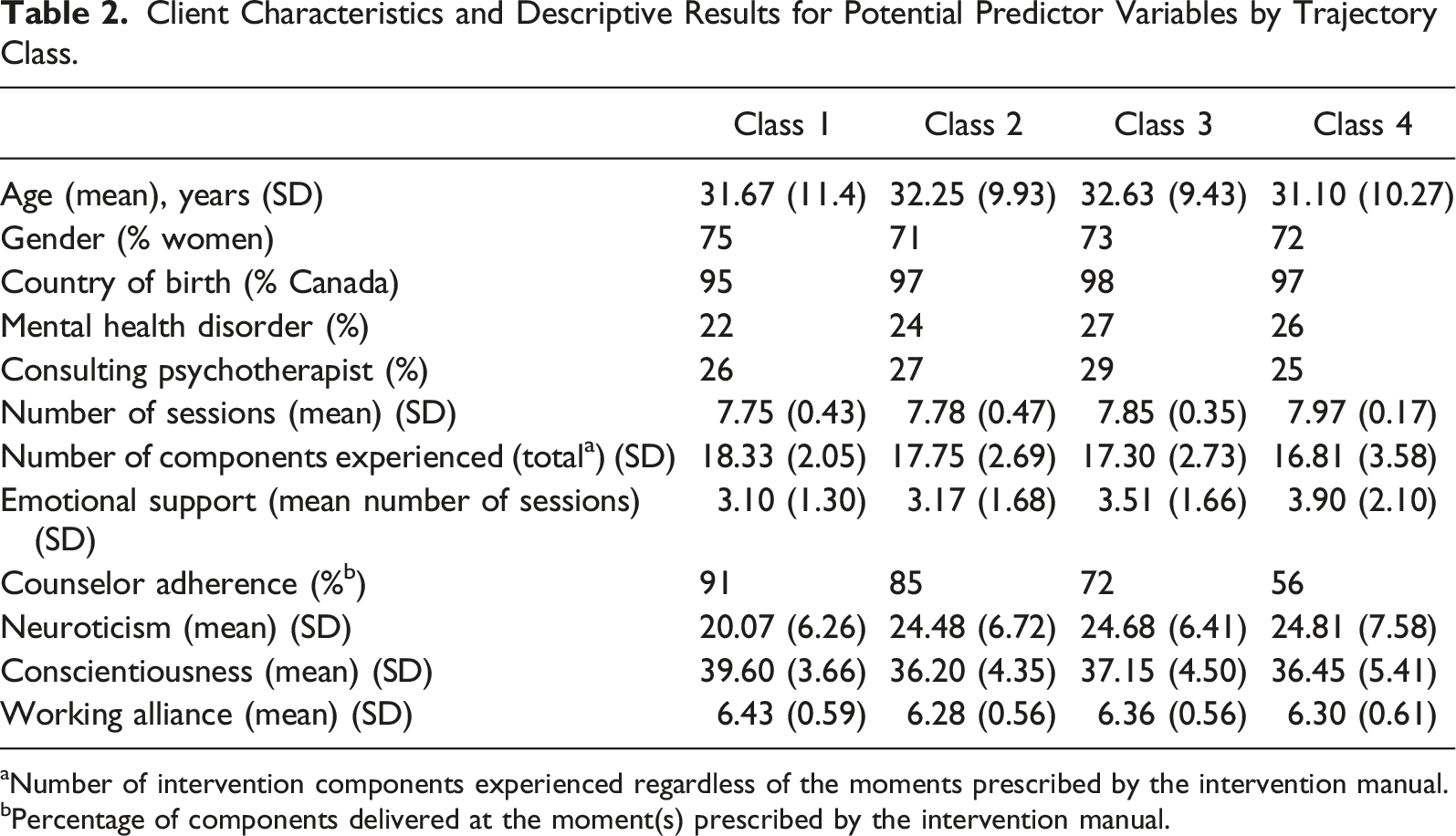
aNumber of intervention components experienced regardless of the moments prescribed by the intervention manual.
bPercentage of components delivered at the moment(s) prescribed by the intervention manual.
Multinomial Multiple Logistic Regression Predicting Class Trajectory Membership From Counselor Adherence, Working Alliance and Personality Traits.
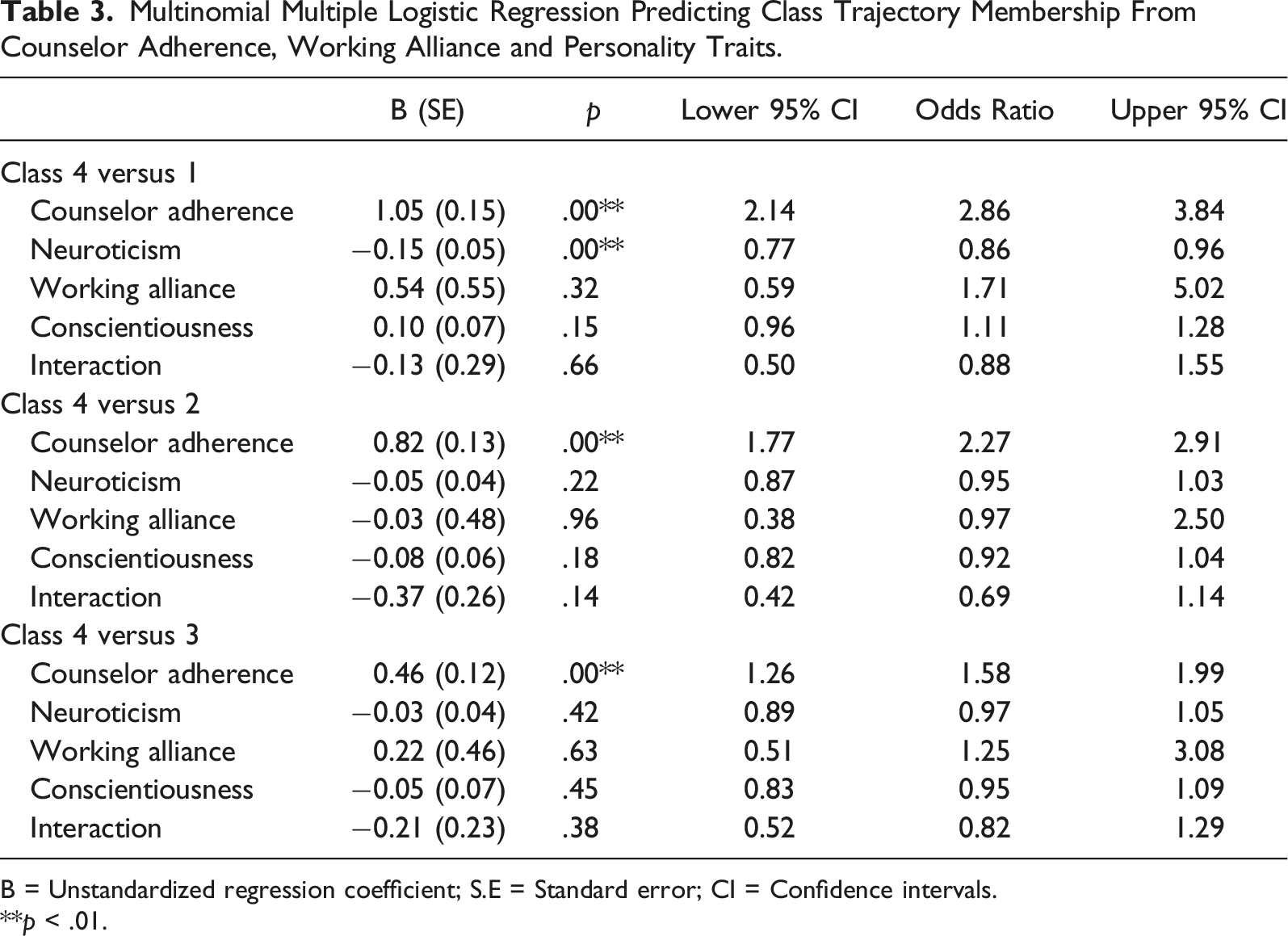
B = Unstandardized regression coefficient; S.E = Standard error; CI = Confidence intervals.
**p < .01.
The resulting logistic regression model was statistically significant [χ 2 = 169.31, p < .01 pseudo R2 (Nagelkerke) = 0.55] (Smith & McKenna, 2013). Parameters presented in Table 3 show that counselor adherence significantly contributed to discriminate between clients from class 4 (Moderate-Salient initial difficulties/No significant change) and clients from classes 1 (Moderate initial difficulties/Very large change; B = 1.05, p < .001), 2 (Moderate-Salient initial difficulties/Very large change; B = 0.82, p < .001) and 3 (Moderate-Salient initial difficulties/Large change; B = 0.46, p < .001). Compared to clients from class 4, the odds ratios indicate that for every one-unit increase (or 5% increase) in counselor adherence, clients were 2.86 times more likely to belong to class 1, 2.27 times to class 2, and 1.58 time to class 3. Each one-point increase on the neuroticism scale significantly (B = −0.15, p < .01) reduced by 1.16 time the likelihood of belonging to class 1 compared to class 4. Working alliance and conscientiousness as well as the interaction term between counselor adherence and working alliance did not significantly contribute to distinguish client belonging to class 4 from clients belonging to other classes. H1 was thus supported while H2 was not supported and H3 was partially supported.
Discussion
As career counselors, it is important to aim for our career counseling interventions to benefit all clients (Whiston et al., 2016). Although previous studies found a large decrease in career decision difficulties of clients who participated to standardized individual career counseling sessions, researchers (Frankfurt et al., 2016; Heppner & Heppner, 2003; Milot-Lapointe, Le Corff, & Arifoulline, 2021; Whiston et al., 2016) called for the use of more sophisticated statistical modeling procedures (e.g., structural equation modeling analyses) in the investigation of the process of career counseling. In view of the above, the first aim of this study was to identify trajectories of change in client career decision difficulties during a manualized individual career counseling intervention based on the CIP approach, the PIC model and critical intervention components.
Using GMM, we identified four distinct classes of trajectories regarding clients initial level of career decision difficulties or their average rate of change. The trajectories identified in the current study are encouraging for the field because they show that a large proportion (87%) of clients who participated in individual career counseling sessions experienced large (class 3) or very large (classes 1 and 2) positive changes. As the vast majority of the career counseling processes were conducted during the 2020-2022 pandemic, these positives effects also highlight the utility of individual career counseling in reducing career decision difficulties in times of crisis where many individuals have lost their job or have had to redefine their way of living.
However, the trajectories identified in the current study also suggest that individual career counseling does not always lead to optimal changes since clients from class 4 did not experience significant change and clients from class 3 saw their level of career decision difficulties decrease only half as much as clients from classes 1 and 2. In addition, while clients from classes 1 and 2 left the career counseling process with negligible levels of career decision difficulties, clients from classes 3 and 4 had still moderate or salient levels of difficulties at the end of counseling. According to Milot-Lapointe, Le Corff, and Savard (2021), career decision difficulties of all clients should be as low as possible at the end of individual career counseling in order to foster satisfaction with career decision. Therefore, from a clinical viewpoint, the changes experienced by clients belonging to classes 1 and 2 may be characterised as optimal (because they experienced very large change and left the process with negligible difficulties), while the change experienced by clients in class 3 may be considered positive but non optimal (because they experienced large change but did not leave the process with negligible level of difficulties).
In order to identify what lead to more effective individual career counseling interventions, the second aim of this study was to examine the role of counselor adherence, working alliance, and client personality traits in predicting client trajectories of change. In line with our first hypothesis, results showed that a higher level of counselor adherence to the specific components of the intervention manual significantly increased the probabilities of clients belonging to class 1, 2, or 3 as compared to class 4.
These results provide insights about the level of counselor adherence to an intervention manual that might be required to foster positive trajectories of change in career decision difficulties. Indeed, results showed that career counseling sessions in which clients from classes 1 and 2 participated were characterized by a very high degree of counselor adherence (91% and 85%, respectively) to specific components of the intervention manual developed in the current study. Concerning clients from class 3, although a relatively high degree of counselor adherence (72%) was observed during career counseling sessions, our results suggest that this degree was not sufficient to allow them reach optimal changes. Regarding clients from class 4, the counselors adhered to half (56%) of the components of the intervention manual, which appears not sufficient in view of the absence of clinical gains made by clients in this class.
Concerning our second hypothesis, working alliance did not moderate the association between counselor adherence and client trajectories. While the non-significant direct effect of working alliance on client trajectories when combined with counselor adherence in a same model is consistent with Milot-Lapointe et al.’s (2018) findings, the non-significant moderator effect of working alliance conflicts partially with their results. Indeed, Milot-Lapointe et al. (2018) found that working alliance significantly moderated the effect of two (written exercises-in-session and feedback on choice envisaged) of the four critical intervention components (occupational information-in session and dealing with career-related barriers) on career decision difficulties.
It is unclear why working alliance did not significantly contribute to career counseling effectiveness in the current study. Indeed, this finding appear surprising considering a recent meta-analysis by Milot-Lapointe, Le Corff, and Arifoulline (2021) showed a robust significant modest association between working alliance and career outcomes, whose effect size (r = 0.28) was similar to the effect found in psychotherapy. A possible explanation for this discrepancy might be the high mean level of working alliance observed in this study which may have caused a ceiling effect.An alternative explanation might be the inclusion of client levels of neuroticism and conscientiousness (third hypothesis) in the statistical model, which are related both to working alliance and career counseling effects on career decision difficulties in previous studies (Massoudi et al., 2008; Stauffer et al., 2013). Finally, another explanation might be that Milot-Lapointe et al.’s meta-analytic conclusions were mainly based on the association between alliance and career outcomes at the end of individual career counseling, while in the current study we were interested in changes occurring during the process. Considerably less studies have investigated the association between working alliance and changes occurring during the process of individual career counseling, which suggest that more research will be needed in order to draw more robust conclusions.
Regarding our third hypothesis, results showed that lower levels of neuroticism significantly increase the probabilities that clients belong to class 1 compared to class 4. Interestingly, lower levels of neuroticism did not increase the probabilities that client belong to class 2 or 3 when compared to class 4. These results suggest that neuroticism may be a predictor of client initial level of difficulties but not a predictor of change during individual career counseling. This conclusion appears consistent with Stauffer et al.’s (2013) findings showing that neuroticism was more related to the initial level of career decision difficulties (B = 0.30) than to change in career decision difficulties (B = 0.20 and 0.06 for lack of readiness and total career decision difficulties, respectively).
Although similar results (but with effect sizes slightly lower) were obtained for conscientiousness by Stauffer et al. (2013), this variable did not significantly contribute to distinguish clients belonging to class 4 from clients belonging to other classes in this study. A possible explanation is that the highly structured nature of the intervention model used in this study may have compensated for the lack of achievement-striving, organisation, and reliability in clients with lower levels of conscientiousness. Additionally, the relatively long processes in the present study (averaging close to 8 sessions) may have benefited clients with lower conscientiousness (again, a compensation effect), while shorter career counseling processes (as in Stauffer et al., 2013) may have benefited more to clients that are more prone to engage conscientiously in the processes (e.g., putting more time and effort in between-session homework and reflection) and make the most out of the short time they have with their counselor.
Implications for Practice
The current study provides findings that inform career counselors about effective career counseling interventions on career decision difficulties. Firstly, our results highlight the potential value of manualized individualized career counseling interventions based on the CIP approach, the PIC model and critical intervention components in reducing client career decision difficulties, as showed by the large proportion of clients (87%) who experienced large or very large changes during counseling. Secondly, in the context of interventions carried-out by counselors having limited previous career counseling experience, results of this study suggest that a high level of counselor adherence to the intervention manual is important to produce large or very large clinical change in clients career decision difficulties. Contrastingly, counselor adherence to only half of intervention components (at the moments prescribed by the intervention manual) of the intervention manual led to no significant change in clients from class 4.
However, it is important to not misinterpret our findings regarding the importance of counselor adherence for career counseling practice. Indeed, considering that counselors in this study had limited prior career counseling experience, we do not know if counselor adherence to an intervention manual would be as important among experienced counselors. Moreover, although the manual developed in the current study prescribed moments (e.g., session 6–8) where specific intervention components (e.g. provision of information about career options) should be used by counselors, ours results do not mean that counselors can not use these intervention components at other moments in the process. Indeed, keeping this example in mind, our intervention manual suggests that it is necessary that counselors provide information about career options during the use of the PIC model (sessions 5–8) but career information could be provided at other moments of the career counseling process (e.g., at the first session) if it is deemed helpful for the client.
Limitations
Results of this study should be considered in light of its limitations. Although a large proportion of clients in this study experienced positive changes in career decision difficulties, our research design did not include a control group, which means that the changes observed might be, at least partially, attributable to participant maturation. Because not offering individual career counseling sessions to clients requesting services in our clinic would have been unethical, creative methods for implementing a control group will have to be considered in future research.
Another limitation of this study is that individual career counseling interventions were carried out by counselors-in-training in a context that differs from the context in which experienced career counselors work. For this reason, we do not know if the same effects would be observed in more natural settings where career counseling is often shorter (e.g. three to four sessions compared to six to eight in the current study).
Finally, another potential limitation is that adherence to the intervention manual was self-reported by counselors at the end of each session (as it was the case in previous studies in individual career counseling; McClair, 2010; Milot-Lapointe et al., 2018, 2020a). An alternative to counselor self-report would have been direct observations of sessions, which would not have been without disadvantages (cost, time, confidentiality, implementation in natural settings, and sample size). Moreover, a recent study on cognitive therapy showed high therapist-rater agreement on components of an intervention manual similar to the one developed in the current study (Serfaty et al., 2020).
Conclusion
Despite the above-mentioned limitations, the current study contributes to meeting the need to develop effective manualized career counseling interventions on career decision difficulties using a design allowing researchers to demonstrate the extent to which the interventions were implemented as intended (Whiston, 2021). This study also makes a novel contribution to the career counseling literature by using GMM to identify distinct clients trajectories and predictors of these trajectories. This study also met the need to include both client (i.e., client personality) and process (intervention component and working alliance) factors in a same statistical model aiming at predicting individual career counseling effectiveness.
Finally, we concur with previous claims (Heppner & Heppner, 2003; Milot-Lapointe, Le Corff, & Savard, 2021; Whiston & Rose, 2015; Whiston et al., 2016) that more research on the effectiveness of individual career counseling is needed. In line with the aims of this study, further research might assess counselor competence in treatment delivery (Serfaty et al., 2020) to get a broader view on the extent to which the intervention was delivered as intended. Moreover, future studies could focus on the role of counselors’ variables and on forms of implementation of interventions that maximize client change in the context of career counseling processes carried-out by experienced counselors who work in natural settings. Finally, assessment of the long-term effectiveness of manualized individual career counseling interventions and the use of self-adjustment outcomes (e.g., career adaptability) might also be considered in future studies.
Footnotes
Declaration of Conflicting Interests
The author(s) declared no potential conflicts of interest with respect to the research, authorship, and/or publication of this article.
Funding
The author(s) disclosed receipt of the following financial support for the research, authorship, and/or publication of this article: This study is supported by Fonds de Recherche du Québec-Société et Culture.

Appendix
Counselor Adherence to Intervention Manual.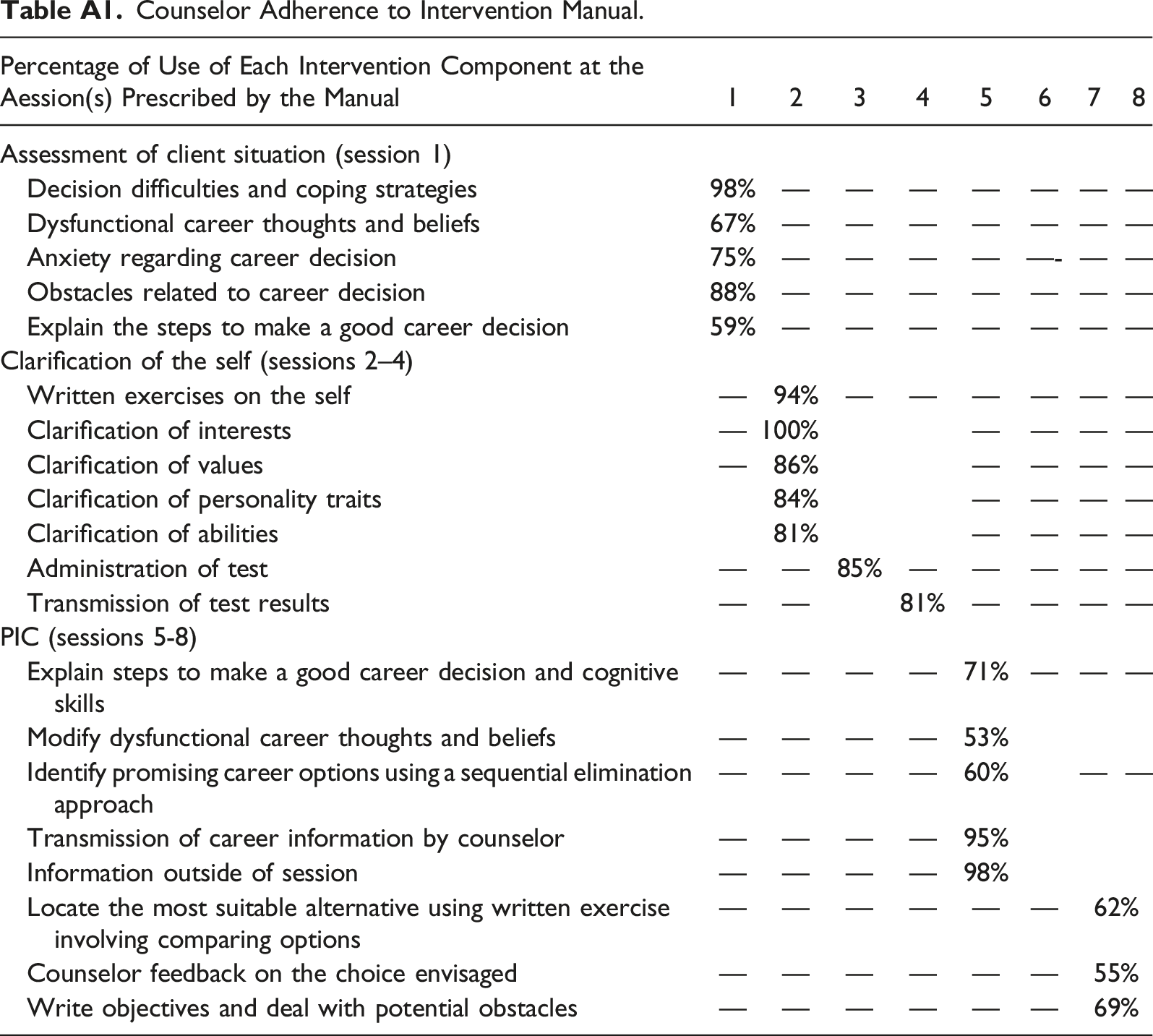
Percentage of Use of Each Intervention Component at the Aession(s) Prescribed by the Manual
1
2
3
4
5
6
7
8
Assessment of client situation (session 1)
Decision difficulties and coping strategies
98%
—
—
—
—
—
—
—
Dysfunctional career thoughts and beliefs
67%
—
—
—
—
—
—
—
Anxiety regarding career decision
75%
—
—
—
—
—-
—
—
Obstacles related to career decision
88%
—
—
—
—
—
—
—
Explain the steps to make a good career decision
59%
—
—
—
—
—
—
—
Clarification of the self (sessions 2–4)
Written exercises on the self
—
94%
—
—
—
—
—
—
Clarification of interests
—
100%
—
—
—
—
Clarification of values
—
86%
—
—
—
—
Clarification of personality traits
84%
—
—
—
—
Clarification of abilities
81%
—
—
—
—
Administration of test
—
—
85%
—
—
—
—
—
Transmission of test results
—
—
81%
—
—
—
—
PIC (sessions 5-8)
Explain steps to make a good career decision and cognitive skills
—
—
—
—
71%
—
—
—
Modify dysfunctional career thoughts and beliefs
—
—
—
—
53%
Identify promising career options using a sequential elimination approach
—
—
—
—
60%
—
—
Transmission of career information by counselor
—
—
—
—
95%
Information outside of session
—
—
—
—
98%
Locate the most suitable alternative using written exercise involving comparing options
—
—
—
—
—
—
62%
Counselor feedback on the choice envisaged
—
—
—
—
—
—
55%
Write objectives and deal with potential obstacles
—
—
—
—
—
—
69%