




Abstract
Self-reports on the HEXACO-PI-R scales were examined in relation to academic majors in post-secondary education (N > 73,000). Openness to Experience showed the largest mean differences across academic major areas, with the Visual/Performing Arts and Humanities areas averaging higher and Health Sciences and Business/Commerce averaging lower. Emotionality showed the second largest differences, with the Engineering and Physical Sciences/Math areas averaging lower and Visual/Performing Arts averaging higher; these differences in Emotionality became smaller in within-sex analyses. In addition, Extraversion tended to be higher for Business/Commerce and lower for Physical Sciences/Math, while Honesty-Humility was lower for Business/Commerce. The facet-level analyses provided additional detail, as facet scales in the same domain sometimes showed considerably different means within a given academic major area. In one case, Visual/Performing Art majors averaged lower in Prudence, but higher in Perfectionism, even though both facets belong to the Conscientiousness domain.
Vocational psychologists have long suggested that personality can predict career choice, career aspirations, and career interests (Holland, 1997; Tokar & Swanson, 1995), and this idea has generally received empirical support (see Tokar et al., 1998). Similarly, many researchers have also examined the links between personality characteristics and academic major choice (e.g., Ng et al., 2012). Many of those studies adopted the Big Five model as an organizing framework to examine personality differences across academic majors (e.g., Clariana, 2013; Lievens et al., 2002). They have shown that each of the Big Five personality factors can indeed distinguish people in certain academic majors from people in others. Understanding such associations is of practical importance given that a suboptimal choice of academic major often leads to financial and opportunity costs as well as academic dissatisfaction. The purpose of the present research is to revisit the link between personality and academic majors using the six-dimensional HEXACO model of personality structure.
Vedel (2016) undertook the challenging task of synthesizing the results of previous studies examining differences in personality across academic majors. Vedel reported on group differences (in Cohen’s d) in the Big Five factors for each pair of academic majors examined in previous research (e.g., Business vs. Humanities). Due to the head-to-head comparisons involving various pairs of majors, it is somewhat difficult to characterize each academic major in terms of the overall levels of the Big Five personality factors. Nevertheless, the results of the systematic review revealed that persons in certain academic majors can be characterized by lower or higher levels of some factors. For example, students in Arts, Humanities, and Social Sciences tended to score higher on Openness to Experience than did students in other fields. Furthermore, it appears that students in Arts and Humanities tended to be higher on Neuroticism and lower on Conscientiousness than did students in other majors. The review also revealed that some personality factors (e.g., Openness to Experience) appear to matter more than other personality factors in influencing people’s academic major choice (see also Vedel et al., 2015).
Although the previous studies included in Vedel’s (2016) review have provided a useful insight about the “personality” of academic majors, there are a number of ways in which we can improve our understanding about this issue. First, in the present research we examined personality differences across academic majors using the HEXACO model. This framework has features distinguishing it from the Big Five model, some of which are potentially relevant to the choice of academic major. Second, previous studies have focused primarily on the broad factor-level personality variables, and have usually not examined specific narrow facet-level traits. In the present research, the “personality” of academic majors is described at both levels of personality assessment, providing new insights into the typical personality profiles of students in various academic majors. Third, previous studies have been based on modest sample sizes for each academic major area, but the results of the present research were based on at least a few thousand respondents for each academic major area, with the total sample size of over 70,000 participants. Below, we discuss each of these features.
The HEXACO Model of Personality Structure
The HEXACO model of personality structure posits that human personality traits can best be summarized by the six broadly orthogonal personality dimensions of Honesty-Humility, Emotionality, eXtraversion, Agreeableness, Conscientiousness, and Openness to Experience (Ashton & Lee, 2007). The six personality factors in the model originate from lexical studies of personality structure, which involve factor analyses of ratings on a comprehensive set of personality-descriptive adjectives. Although it was once believed that Big-Five-like factors best represent the structure of lexical personality variable sets in various languages, subsequent in-depth analyses of the same studies revealed that six factors, not just five, have emerged with consistency (Lee & Ashton, 2008). The latter discovery led to the development of the six-dimensional HEXACO model and inventory, which is now widely used in personality research across many different fields of psychology. Interested readers can refer to a number of large-scale meta-analyses (e.g., Howard & Van Zandt, 2020; Zettler et al., 2020) for the nomological net of the HEXACO variables and refer to some of the recent reviews (e.g., Ashton & Lee, 2020) for theoretical and empirical debates surrounding the model. Finally, readers can refer to Lee and Ashton (2018) for construct validity evidence of the HEXACO Personality Inventory—Revised (HEXACO-PI-R). At least one study has previously reported the mean levels of the six HEXACO factors for some academic major groups (Arts/Humanities, Business, Science, and Helping/Child; see Pozzebon et al., 2014). The results of that study showed that students in these academic major groups differed in some factors, but these results were based on modest sample sizes for each group (Ns ranging from 28 to 96). For that reason, another study examining the relationship between academic major choice and the HEXACO personality factors is warranted. Below we provide a brief outline of the HEXACO model, focusing on some of its primary differences from the Big Five model.
Of the six HEXACO factors, Extraversion, Conscientiousness, and Openness to Experience are nearly isomorphic to the same-named factors in the Big Five model. Most of the findings involving these three personality factors in the Big Five literature could generalize well to the corresponding three factors of the HEXACO model. The other three factors in the HEXACO model (Honesty-Humility, Emotionality, and Agreeableness) represent a reorganization of the variance involving Big Five Agreeableness and Neuroticism, while also incorporating some new variance not included in that model (see Ashton et al., 2014). Here we further discuss two of those three personality factors because they could provide additional insights about personality differences across academic majors.
Honesty-Humility
This personality factor is characterized by such content as sincerity and modesty on the high pole and greed and exploitation on the low pole. This factor has been found to be closely related to prosocial behaviors (Thielmann et al., 2020; Van Doesum et al., 2020) and (negatively) to antisocial and cheating behaviors (Heck et al., 2018; Pletzer et al., 2019). Most of the Big Five measures have been found to capture only a modest fraction of Honesty-Humility variance (see Ashton & Lee, 2018; but note the somewhat higher proportion of variance for the NEO-PI-R, in Ashton & Lee, 2018, and in Gaughan et al., 2012).
Arguably, some of the important goals in pursuing post-secondary education are extrinsic ones, such as financial success and social recognition. Such extrinsic life aspiration goals have been found to strongly correlate with (low) Honesty-Humility (Visser & Pozzebon, 2013). Moreover, Honesty-Humility is a personality dimension showing a close relationship to one of Schwartz’s (1992) two broad value dimensions, namely Self-transcendence versus Self-enhancement (Lee et al., 2009), the latter pole of which indicates people’s values emphasizing personal extrinsic accomplishments (e.g., money, power, and social status). Finally, McKay and Tokar (2012) found that, among the personality variables of the HEXACO and Big Five models, Honesty-Humility showed the strongest correlation (a negative correlation) with Holland’s Enterprising interests. This area of occupational interest involves business activities and leadership, which can potentially provide a more direct route to the extrinsic goals of money and status than can other occupational activities. Taken together, these findings would suggest that the academic major area of Business might include a larger proportion of students low in Honesty-Humility than would other academic major areas. Consistent with this suggestion, Vedel and Thomsen (2017) found that students in Business/Economics tended to show higher scores on the “dark triad” variables, which consist of three socially aversive personality traits, namely Machiavellianism, Psychopathy, and Narcissism (Jones & Paulhus, 2014). Previous studies have shown that the common core of the dark triad variables is highly saturated with (low) Honesty-Humility (Hodson et al., 2018). In Pozzebon et al.’s (2014) study, the Business major group also showed a considerably lower mean for Honesty-Humility than did the Arts/Humanities, Science, and Helping/Child major groups.
Emotionality
In the HEXACO-PI-R (e.g., Lee & Ashton, 2018), Emotionality is characterized by facets named anxiety, fearfulness, dependency, and sentimentality. Among the HEXACO factors, Emotionality shows the largest sex difference (≈1 standard deviation unit), and this difference is substantially greater than that in any of the Big Five factors (Lee & Ashton, 2020).1,2 The fact that HEXACO Emotionality seems to be associated with femininity versus masculinity of personality suggests that Emotionality may be of particular relevance to career and academic major choice, given the long-known link between the femininity versus masculinity dimension and vocational interests. For example, the two broad dimensions underlying the RIASEC interests are “People” versus “Things” interests and “Data” versus “Ideas” interests, and the former dimension has shown large gender differences (Lippa, 2008). In McKay and Tokar’s (2012) study, (low) Emotionality was the best predictor of “Realistic” interests (which define the “Things” pole of the People-versus-Things dimension) among the factor-level scales included in both HEXACO and Big Five models.
Before leaving this section, we should comment on the remaining factor in this group, namely Agreeableness. Whereas Big Five Agreeableness is strongly defined by the trait of altruism, that trait represents a blend of HEXACO Agreeableness, Emotionality, and Honesty-Humility. HEXACO Agreeableness is characterized by such traits as gentleness and forgivingness versus hostility and stubbornness. We expect HEXACO Agreeableness to be less relevant to career or major choice than would most other HEXACO personality factors.
Facet-Level Investigation
Although some of the studies reviewed by Vedel (2016) included measures of facet-level traits within each of the Big Five factors (e.g., De Fruyt & Mervielde, 1996; Lievens et al., 2002), very few studies have reported personality differences in specific facet-level scales across academic major groups.
Previous studies have supported the idea that personality traits measured at the facet level can sometimes provide a better prediction of certain criteria than can personality traits assessed at the factor level (Ashton & Lee, 2019; Entringer et al., 2021; Lee et al., 2018; see McCrae & Mõttus, 2019, for a similar finding found at the item level). However, the importance of the facet-level assessment goes beyond the improved prediction of certain outcome variables. For example, Ashton and Lee (2019) have recently reported relatively strong links of certain facet-level personality traits to religiousness. Specifically, Fairness in the Honesty-Humility domain and Forgivingness of the Agreeableness domain showed noticeably strong associations with religiosity, while the remaining facets in those two domains showed only minimal relationships with religiosity. Ashton and Lee suggested that such findings might be better explained by assuming the causal effects of religious teachings on those personality traits. As such, investigating a given phenomenon with the lens of facet-level personality scales could reveal some insights that had not been revealed by studies focusing exclusively on factor-level personality scales (see also McCrae, 2015).
Moreover, it is possible that some facet-level traits within the same domain may show sizable relationships with a certain criterion in opposite directions. When this happens (although it may be rare), the association between the criterion and the domain factor would appear to be very weak, effectively hiding some potentially interesting relations at the facet level. In a study of sex differences in the HEXACO variables, Lee and Ashton (2020) found that one domain factor, namely Openness to Experience, showed a rather weak sex difference overall, but that two personality facets within that factor showed opposing, but appreciably large, sex differences. Specifically, women scored higher in Aesthetic Appreciation but lower in Inquisitiveness than men, effectively canceling out the difference at the factor level (see McCrae, 2015, for a similar result involving facets of Openness as assessed by the NEO inventories).
At least one study in the Big Five literature has examined the personality of academic majors at the level of facets (De Fruyt & Mervielde, 1996). In this study, those authors reported the mean levels of the NEO-PI-R factor scales (Costa & McCrae, 1992) for eight different academic major groups. In addition, the authors conducted a linear discriminant function analysis separately for the five NEO-PI-R factor scales and for the 30 NEO-PI-R associated facet scales. These analyses showed that the equation involving the facet scales outperformed that involving the factor scales to a considerable extent in predicting academic group membership. However, this study did not provide in-depth analyses as to how students in those academic major groups differ at the level of personality facet constructs. In the present research, we fill this gap by providing the mean facet-level personality profiles of academic majors, but we do so by using facets from the HEXACO-PI-R.
Present Research
In the present research, we examine personality traits at both factor and facet levels. By doing this, we try to determine whether a factor-level difference observed in a certain academic major group primarily reflects the common variance of the factor or the unique variance carried by some of its associated facet scales. Even when there are only small factor-level differences across academic majors, we examine facet-level scales to determine whether the above-mentioned “canceling” effects are taking place at the facet level.
We investigated personality differences across academic majors using global data collected from the online platform of the HEXACO-PI-R (http://hexaco.org) in the years 2014, 2015, and 2016. Participants in the dataset visited the site voluntarily for self-exploration purposes. One obvious strength of the present data is that the sample size (N > 73,000) is substantially larger than those of previous studies investigating personality and academic majors. In addition, because participants voluntarily visited the website for self-exploration purposes, the distribution of participants across academic majors should broadly resemble the naturally occurring distribution. In this report, we describe each academic major group in terms of the extent to which its personality scale means are higher or lower than the grand mean obtained from the total sample.
Method
Participants and Procedures
The HEXACO-PI-R online platform (http://hexaco.org) has been operational since October of 2014, and the present dataset spans the period from October 2014 to April 2016, during which the optional question about academic majors was included. All the participants provided anonymous responses to the HEXACO-100 items and to a number of optional demographic questions with the expectation to receive their HEXACO personality feedback for self-exploration. A small number of participants (≈1%) failed to pass the screening criteria that were designed to detect non-purposeful responses to the HEXACO-PI-R items, and we excluded these respondents (see Lee & Ashton, 2018 for details). Of 102,666 respondents who completed the HEXACO-100 and the optional academic major question, we included only those who are currently or were previously students in college or university (N = 73,385). Around 83% of those participants reported having graduated, and the remaining participants were attending a college or university at the time of data collection.
The mean age was 34.4 years (SD = 13.6) and 50.5% were men. Participants came from various countries 3 , but participants from the US and UK accounted for more than 60% of the total sample (N = 25,161 and 19,119, respectively). The continental distribution of the participants is as follows: 614 African, 4793 Asian, 31,195 North American, 29,749 European, 4558 Oceanian, 609 Latin American, and 1554 participants whose continent and nationality are unknown.
Measures
Mean Ages, Gender Ratios, and Personality Means (Standard Deviations) by Academic Major Groups.
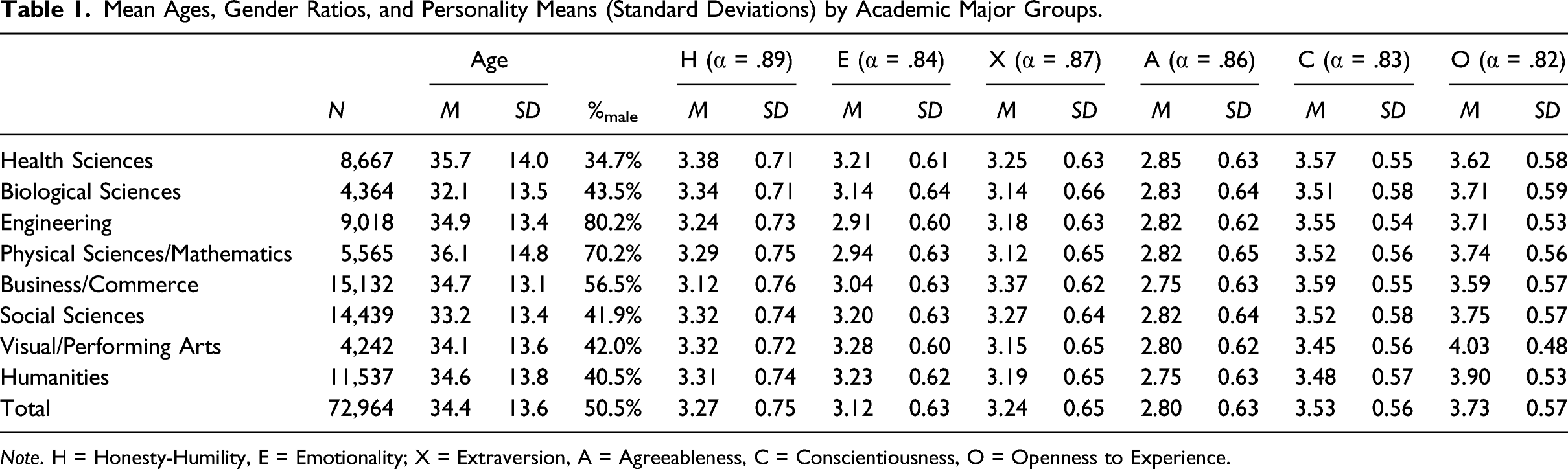
Note. H = Honesty-Humility, E = Emotionality; X = Extraversion, A = Agreeableness, C = Conscientiousness, O = Openness to Experience.
The information about academic majors was obtained from the following optional question. If you completed or are currently attending a post-secondary education, which of the fields best describes your major area of study? (1) Health Sciences, (2) Biological Sciences (other than health), (3) Engineering, (4) Physical Sciences/Mathematics, (5) Business/Commerce, (6) Social Sciences, (7) Visual and performing arts, (8) Humanities (other than visual and performing arts), (9) Not applicable, (10) Prefer not to answer.
Table 1 shows the sample size, mean age, and gender composition for each academic major.
Analyses
As seen in Table 1, there is small variation in age means across academic majors. Given some modest age effects on the levels of certain personality traits (Ashton & Lee, 2016), we first computed age-corrected standardized scores for each personality variable. We computed “standardized” scores (i.e., z-scores) because a group mean standardized score would indicate how far a certain major group is above or below the grand mean in standard deviation units for a given personality variable.
In addition, given that some of the personality factors show non-trivial sex differences, and that there is a substantial gender composition imbalance for some academic major groups, we also examined personality differences across majors within each gender.
Results
Means of the Six HEXACO Factor Scales (in SD units) by Academic Major Groups.
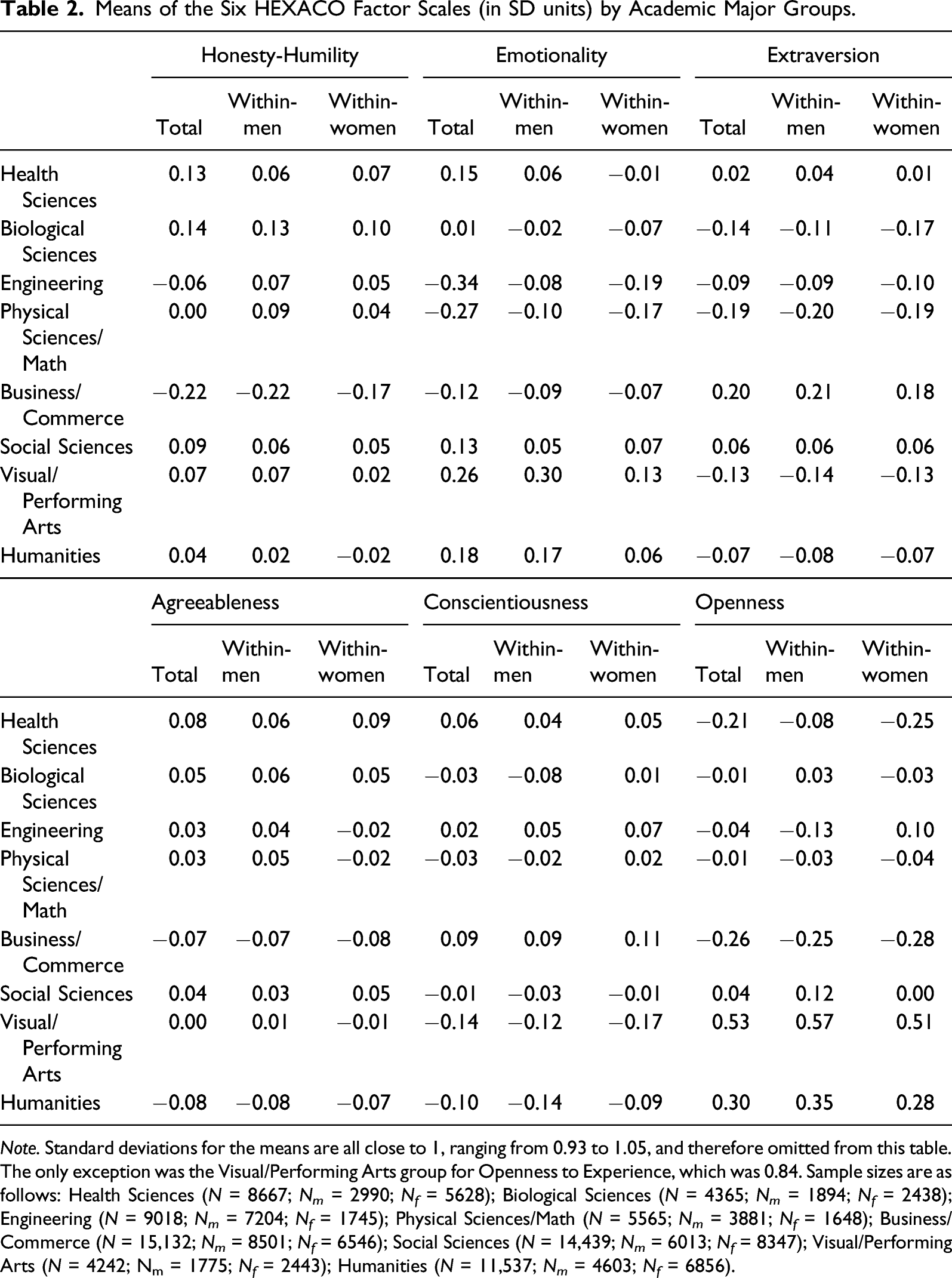
Note. Standard deviations for the means are all close to 1, ranging from 0.93 to 1.05, and therefore omitted from this table. The only exception was the Visual/Performing Arts group for Openness to Experience, which was 0.84. Sample sizes are as follows: Health Sciences (N = 8667; N m = 2990; N f = 5628); Biological Sciences (N = 4365; N m = 1894; N f = 2438); Engineering (N = 9018; N m = 7204; N f = 1745); Physical Sciences/Math (N = 5565; N m = 3881; N f = 1648); Business/Commerce (N = 15,132; N m = 8501; N f = 6546); Social Sciences (N = 14,439; N m = 6013; N f = 8347); Visual/Performing Arts (N = 4242; Nm = 1775; N f = 2443); Humanities (N = 11,537; N m = 4603; N f = 6856).
It is useful to consider Bosco et al.’s (2015) effect size benchmarks to put our “cutoff” effect size (i.e., |
We also show the age-corrected mean scores in Table 2 separately for each sex on all of the six HEXACO factor scales for each academic major group after standardizing the scores within each sex. We mention those within-sex results only when they show some differences from those of the combined-sex sample.
Honesty-Humility and its Associated Facets
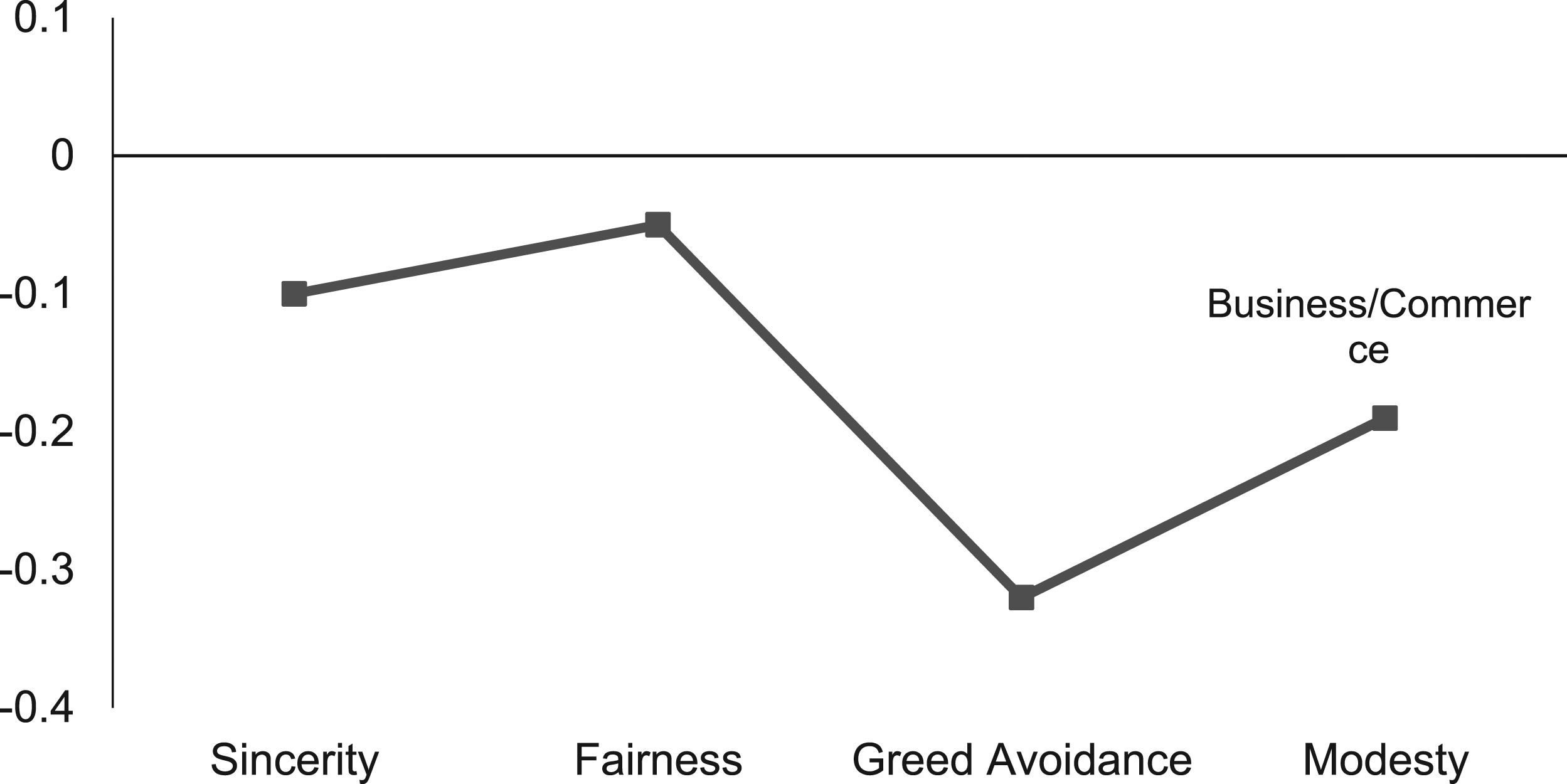
With respect to Honesty-Humility (Figure 1(a)), persons in Business/Commerce tended to score lower than the grand mean ( Standardized means of the HEXACO factors by academic major groups. For within-men and within-women analyses, the personality scale scores were standardized within each gender. HS = Health Sciences; BS = Biological Sciences; ENG = Engineering; PS/MT = Physical Sciences/Math; B/COM = Business/Commerce; SS = Social Sciences; VA = Visual/Performing Arts; HM = Humanities. (a) Honesty-Humility. (b) Emotionality. (c) Extraversion. (d) Agreeableness. (e) Conscientiousness. (f) Openness to Experience. Standardized means of the Honesty-Humility facets for the Business/Commerce group.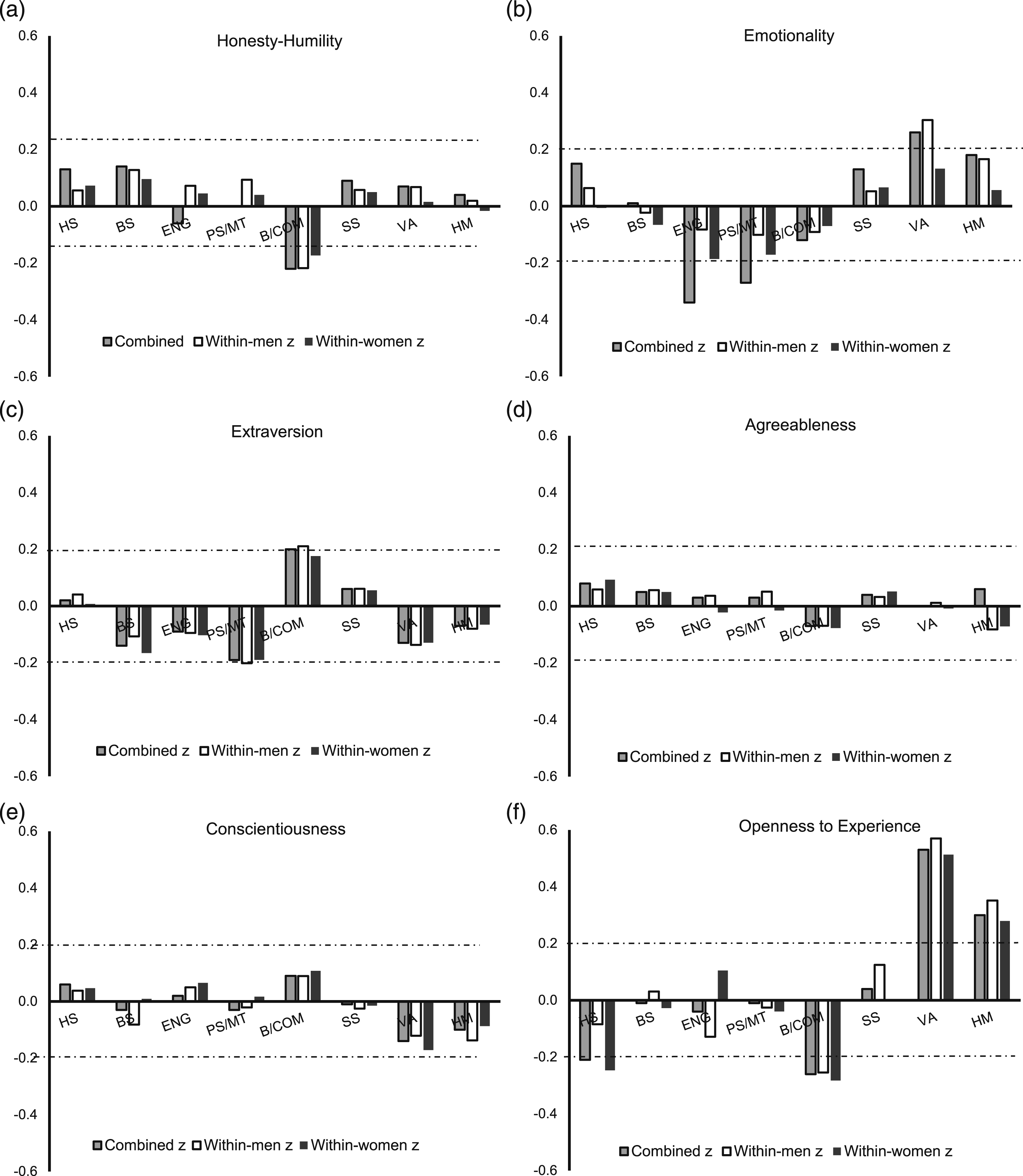
Emotionality and its Associated Facets
As shown in Figure 1(b), persons in Engineering and in Physical Sciences/Math scored lower in Emotionality relative to the grand mean (
Figure 3 shows the Emotionality facet-level results for the two academic groups. For the Engineering group, all of the facets in Emotionality showed a similar level of means, ranging from −0.22 (Anxiety) to −0.27 (Fearfulness). With respect to the Physical Sciences/Math group, the Standardized means of the Emotionality facets for the Physical Sciences/Math, Engineering, and Visual/Performing Arts groups.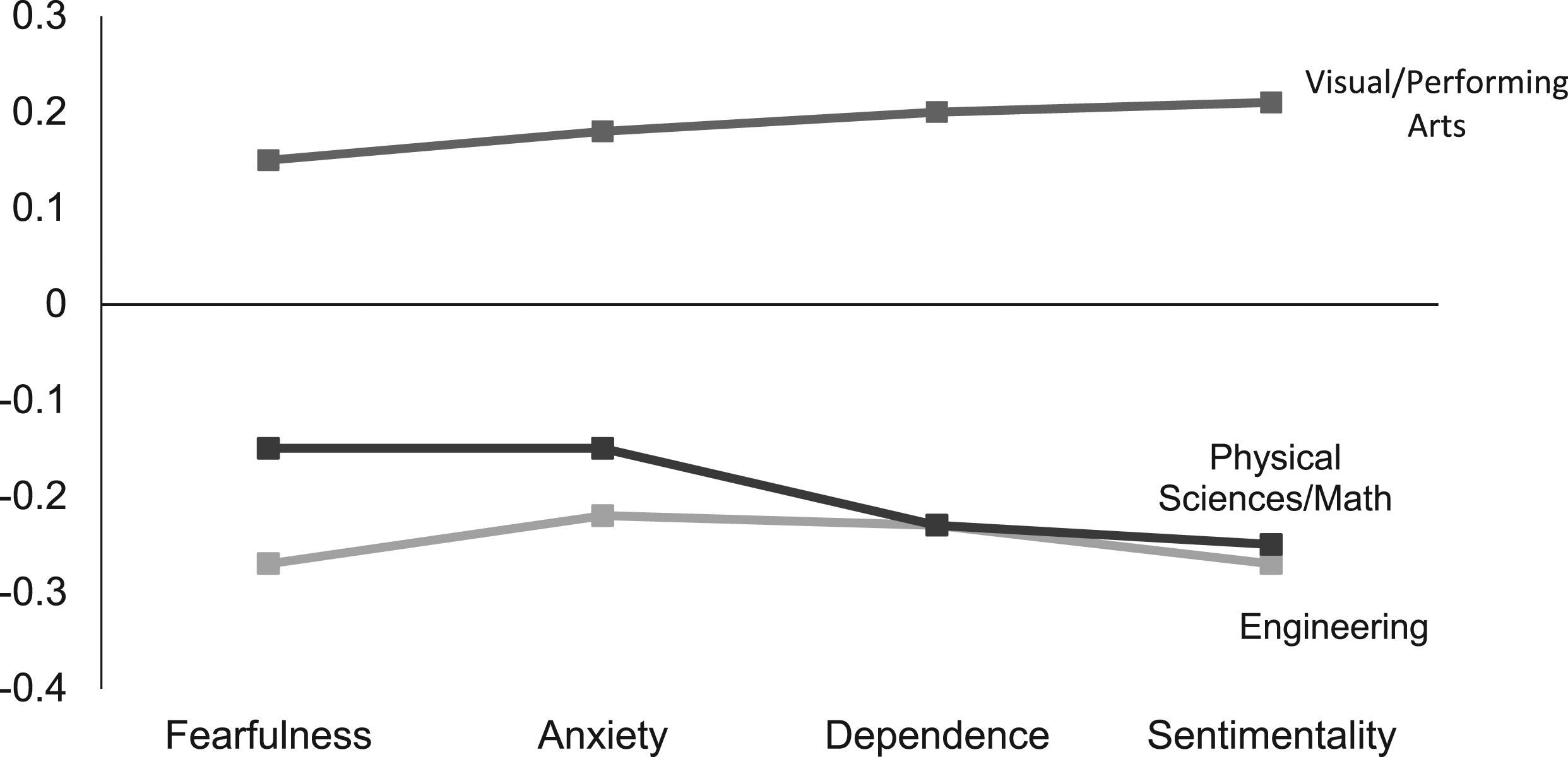
Persons in Visual/Performing Arts scored almost a third of one standard deviation unit above the grand mean in Emotionality (
Extraversion and its Associated Facets
Two academic major groups stood out for this personality factor (see Figures 1(c) and 4). People in Physical Sciences/Math scored lower than did people in other fields ( Standardized means of the Extraversion facets for the Business/Commerce and Physical Sciences/Math groups.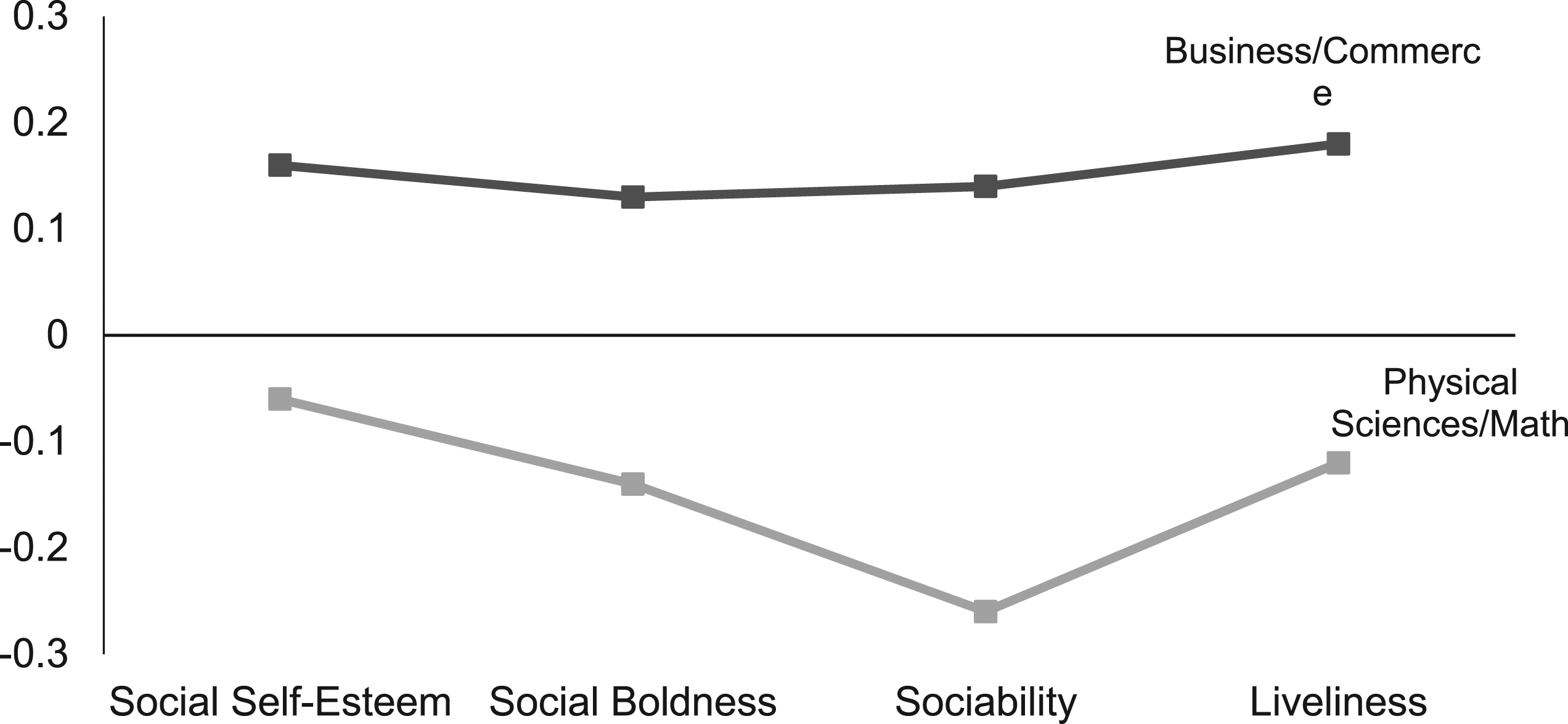
Agreeableness and its Associated Facets
As seen in Figure 1(d), no academic major group showed particularly low or high means for this personality factor and its associated facets.
Conscientiousness and its Associated Facets
As with Agreeableness, no academic group showed an absolute mean score of 0.20 or higher for this personality factor (Figure 1(e)). One interesting observation at the facet level is that persons in Visual/Performing Arts showed a considerably lower-than-average level for Prudence ( Standardized means of the Conscientiousness facets for the Visual/Performing Arts group.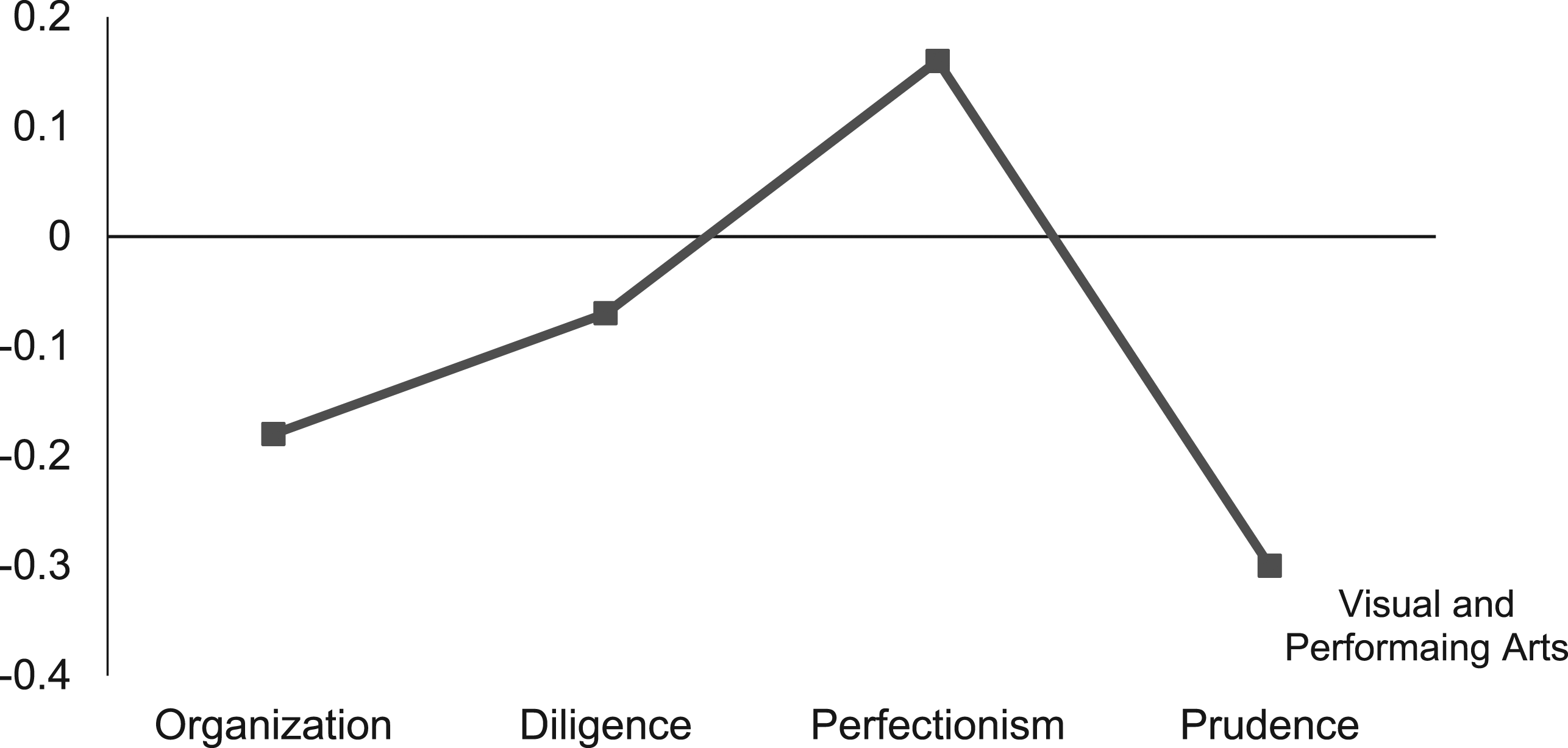
Openness to Experience and its Associated Facets
At the factor level (Figure 1(f)), Visual/Performing Arts showed a very high mean relative to the grand mean (
Findings at the facet-level scales were found to be quite complex (see Figure 6). For the Visual/Performing Arts group, Inquisitiveness (e.g., intellectual curiosity) showed a mean that was actually slightly lower than the grand mean ( Standardized means of the Openness facets for the Visual/Performing Arts, Humanities, Business/Commerce, and Health Sciences groups.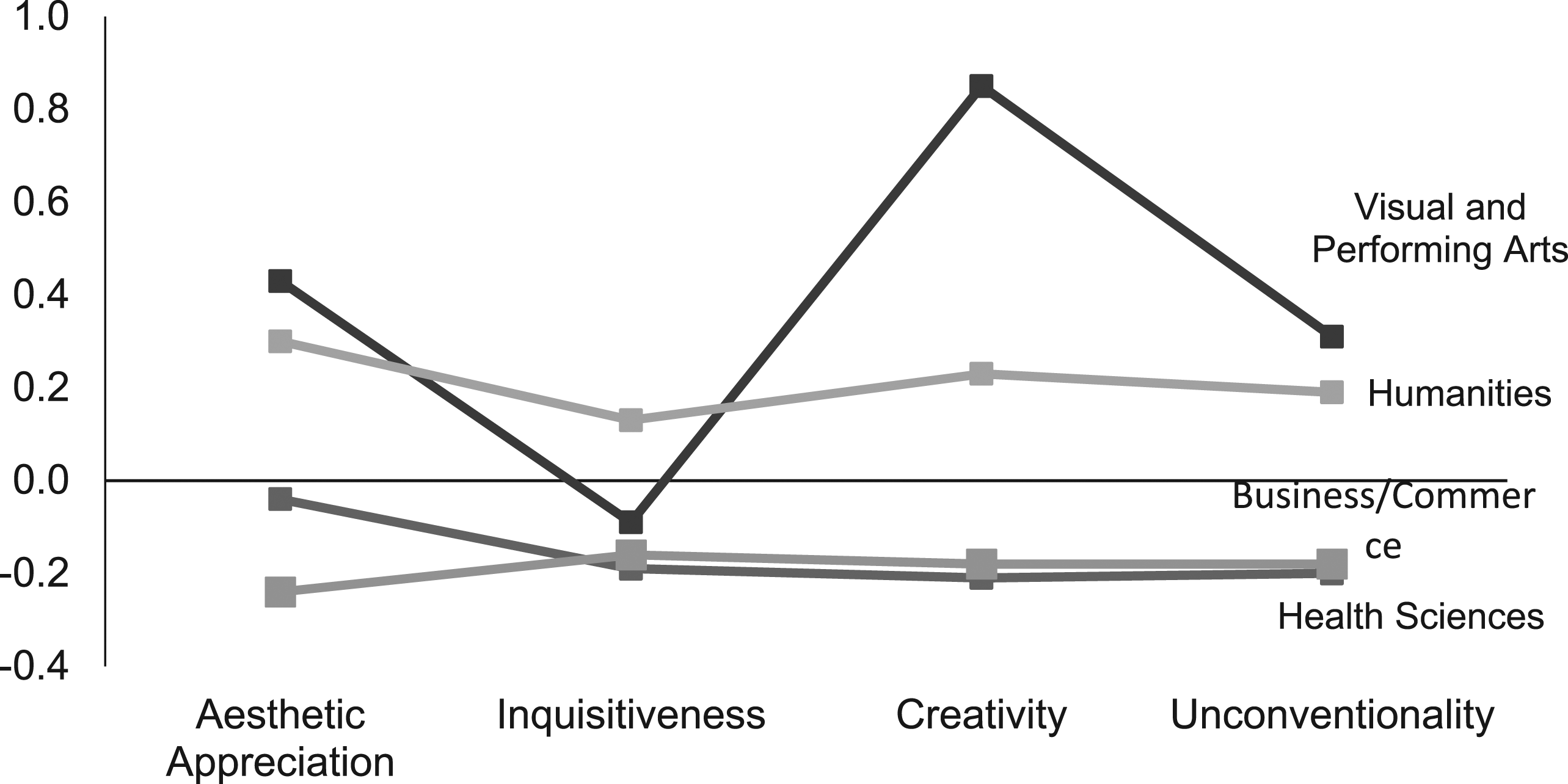
For the Health Sciences group,
Variance in Personality Dimensions Explained by Academic Major Group
To determine which personality factors are more strongly linked to the distribution of people across academic major groups, we computed the proportion of the variance in scores on each personality factor accounted for by academic major group membership. Openness to Experience was found to show the highest proportion accounted for (5.0%), followed by Emotionality (3.8%) and then Honesty-Humility and Extraversion (each 1.6%). Conscientiousness and Agreeableness showed the lowest proportions accounted for by academic major group membership (0.5% and 0.3%, respectively).
Separate Analyses for the US, the UK, and the Other Countries
Means of the Six HEXACO Factor Scales (in SD units) of Academic Major Groups (by region and by college students/graduates).
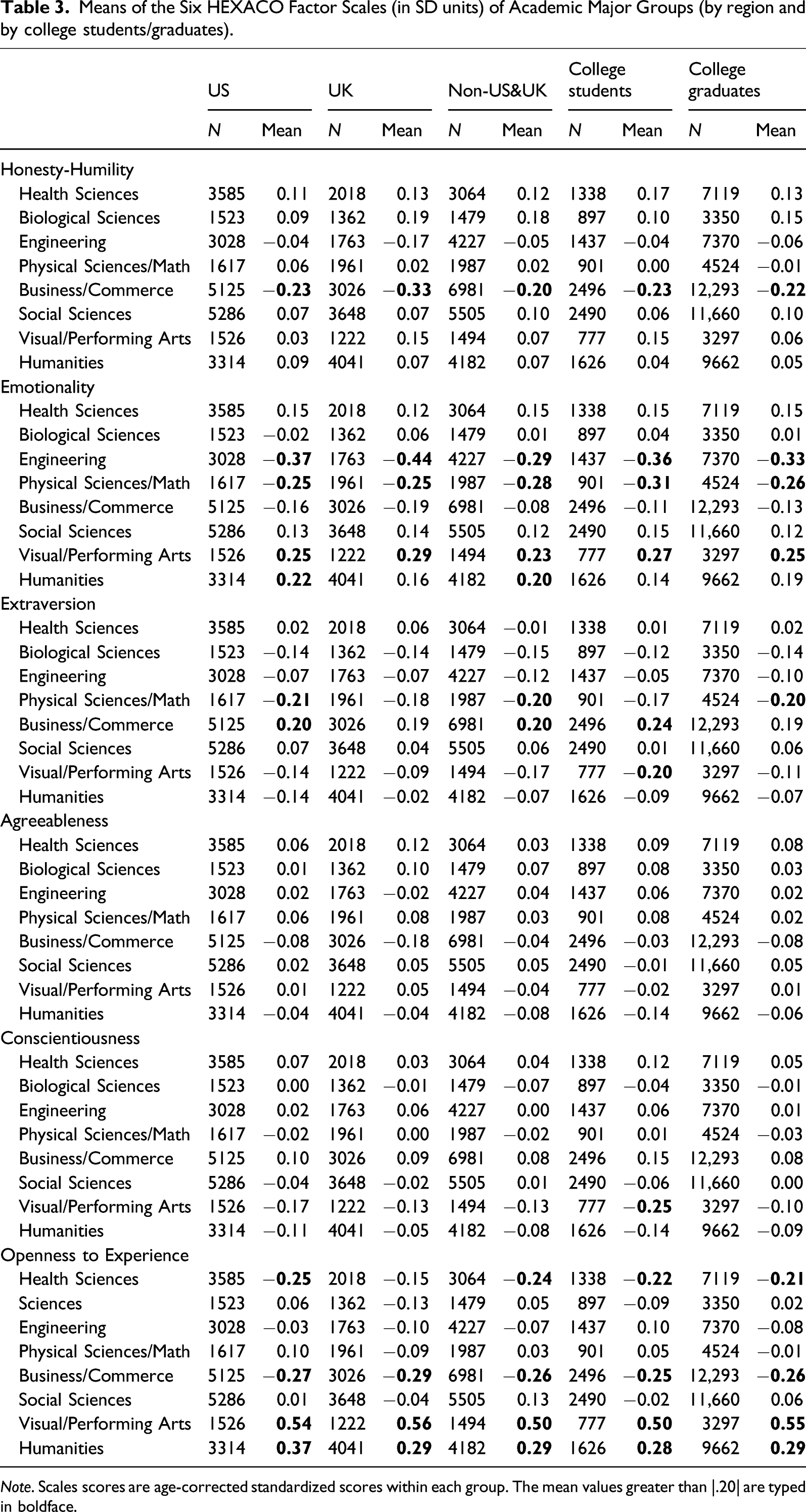
Note. Scales scores are age-corrected standardized scores within each group. The mean values greater than |.20| are typed in boldface.
Separate Analyses for College Students and College Graduates
The present investigation included persons who have finished their college education (N = 59,571) as well as those who are currently undertaking college education (N = 12,019). To examine the possibility that the link between personality and academic majors is different across these two groups, we analyzed the results separately for each group as a post-hoc investigation. Again, we focus on the findings at the factor-level scales. The results of the separate analyses were found to be very similar to those reported based on the combined sample described above.
Some notable differences were found for the Visual/Performing Arts group with respect to Conscientiousness. College students in the Visual/Performing Arts group scored noticeably lower in Conscientiousness than their student peers (
Discussion
The results of the present research suggest that academic major groups differ in some of the HEXACO personality characteristics. Some academic major groups appeared to display more distinctive personality profiles (e.g., Visual/Performing Arts and Business/Commerce) than did other academic major groups (e.g., Social Sciences and Biological Sciences). Similarly, some personality factor-level characteristics appeared to show stronger associations with academic group membership than did other personality variables. Below, we discuss these results first.
Factor-Level Results
As with the previous studies (e.g., Vedel et al., 2015), Openness to Experience was found to play an important role in distinguishing people from one discipline to another. A high level of Openness was observed for the majors involving creative, literary, and philosophical interests (Visual/Performing Arts and Humanities), and a low level of Openness was observed for the disciplines that are oriented toward practical and applied training (Health Sciences and Business/Commerce). Another practical and applied major, namely Engineering, did not follow this pattern, partly because of the relatively high levels of Openness among women in this major group (
Emotionality was found to be the second most important HEXACO personality factor in academic major choice. This finding can be contrasted with the results reported in Vedel et al. (2015) study, where Big Five Neuroticism was found to be least strongly related to academic group membership among the Big Five personality factors. As discussed in the Introduction, HEXACO Emotionality is different from Big Five Neuroticism in that Emotionality squarely captures some personality traits that are traditionally considered feminine versus masculine (see Ashton et al., 2014; Lee & Ashton, 2020). And as discussed in the Introduction, these characteristics have been found to show a rather close link to some primary vocational interests, especially those interests subsumed in the People-Things dimension (Lippa, 1998, 2008; Pozzebon et al., 2015). Considering that HEXACO Emotionality shows the largest sex difference among the personality factors (Lee & Ashton, 2020) and that it shows the strongest (negative) link to Holland’s Realistic interest scale (McKay & Tokar, 2012), it is not surprising to see HEXACO Emotionality figuring prominently in distinguishing Engineering and Physical Sciences/Math majors from the others.
With respect to Honesty-Humility, Business/Commerce majors tended to score lower on this dimension. These results are broadly similar to those observed by Vedel and Thomsen (2017), who reported higher means for the variables known as the Dark Triad (Paulhus & Williams, 2002) for this group. It has been shown that the common core of these variables is strongly correlated with low Honesty-Humility (Hodson et al., 2018; Lee et al., 2013).
With respect to Extraversion, it was found that persons in Business/Commerce were more extraverted, which is consistent with what was found by Lounsbury et al. (2009). Physical Sciences/Math majors showed a somewhat lower level of Extraversion, which was also broadly similar to the result reported by Clariana (2013). The academic major group examined in Clariana (2013) that most closely corresponds to Physical Sciences/Math in the present research was the technology/math/computer sciences group, and this group showed a somewhat lower score on Big Five Extraversion.
Facet-Level Results
The present research extended its examination to the facet-level personality characteristics, which have largely been lacking in previous studies. This is an important gap in the literature given that facet-level personality assessment has repeatedly been found to be useful in understanding important psychological phenomena. We discuss some of the highlights at the facet level below.
Business/Commerce majors showed a higher-than-average mean in Extraversion and lower-than-average means in Honesty-Humility and Openness. With respect to Extraversion and Openness to Experience, the facet-level investigations did not provide much information beyond the factor-level findings. However, with respect to Honesty-Humility, Business/Commerce majors averaged considerably lower in the Greed Avoidance and Modesty facets than in the Sincerity and Fairness facets. Greed Avoidance assesses a lack of desire to acquire material wealth and social status, and Modesty assesses a lack of desire to receive special treatments from others or to have special privileges from societies. These two personality traits have also been found to be linked to left-wing political orientation more strongly than are the other two facets in the Honesty-Humility domain (Lee et al., 2018), apparently because of these traits’ link to a preference for egalitarian societies (cf. Desimoni & Leone, 2014). It may well be that those low in Greed Avoidance and in Modesty (i.e., materialistic and self-entitled persons) tend to be attracted to careers that are more likely to lead to higher social and economic standing.
Visual/Performing Arts and Humanities showed much higher-than-average means in Openness, but the facet-level results within the Openness domain revealed quite a contrast between the two academic groups. First, Humanities showed a relatively similar level of
One particularly interesting facet-level finding involved the Conscientiousness factor for Visual/Performing Arts. The
Limitations and Future Directions
The present research involved a large sample of participants from various academic majors, so the results are likely to be generalizable to other samples. Nevertheless, we should note that the results of studies examining the personality of academic majors would be affected by the way in which academic fields are categorized. The present research adopted a rather broad categorization of academic major groups, which could have led to smaller personality “effects” than would have been observed in studies that specifically selected a number of narrowly defined academic fields (e.g., accounting vs. organizational behavior, or English literature vs. history). We should also note that although the personality profiles of some academic major groups were found to be rather unremarkable (e.g., Social Sciences), this finding may not necessarily apply to specific majors in that group considering the substantial heterogeneity across different majors in the same academic groups (e.g., political science, psychology, and religion studies within social sciences). It would be useful to extend the study of the HEXACO personality profiles using more fine-grained categories of academic majors, which will provide further insights regarding the personality of academic majors.
Second, we should note that although the participants in this study came from diverse regions of the world, they were predominantly from Western countries, especially the US and the UK. The supplementary analyses confirmed that the results observed from the US sample and from the UK sample are very similar to what was found in the non-US/non-UK sample. However, even in the non-US/non-UK sample, only 20% of the participants came from Africa, Asia, or Latin America. As such, one must be cautious in generalizing the results of the present research to the latter regions.
Third, although we have sometimes written as if personality characteristics are the cause of academic major choices, it may well be that socialization during education and training may have an impact on personality trait levels. This is particularly plausible considering the evidence showing that work experiences often influence personality development (Le et al., 2014). To examine this possibility, we compared the personality profiles obtained from college graduates to those from college students. In general, few differences were observed between the two groups for most of the academic major groups, providing limited evidence for the possibility that personality of academic majors could be different depending on whether persons are college students or college graduates.
There were some notable differences, however, observed for the Visual/Performing Arts group. For example, college students in this group tend to be lower in Conscientiousness relative to their college student counterparts, but such differences were noticeably smaller among college graduates. When examining the differences in the Conscientiousness facet scales between college students and college graduates, differences were more prominent for Organization (
Implications
Researchers have been examining the applicability of personality to career theory and career counseling, and many of these discussions have focused on the Big Five model (see Costa et al., 1984; Hammond, 2001, for a discussion as to how the Big Five model can be used during career counseling). The results of the present research suggest that the HEXACO model may serve as a useful basis for assessment during the career counseling process, providing some additional personality information through its Honesty-Humility and Emotionality dimensions.
In utilizing research findings about personality and academic majors in career counseling, we should first note that the effect sizes for the associations between the personality factors and academic major choice are modest, often around a
The present results also suggest that career counselors using personality assessment should pay close attention to facet-level personality variables. For example, for persons pursuing artistic endeavors, a lack of impulse control (indicating low levels of the Conscientiousness factor) may not be a hindrance to their training and performance, but a lack of perfectionistic tendencies is more likely to be a disadvantage. As another example, business majors averaged somewhat lower in Honesty-Humility than did non-business majors. However, the facet-level findings suggest that business majors are not especially predisposed to be unfair and manipulative; rather, those persons tend on average to hold stronger aspirations for wealth and social status. Thus, considering the personality profile only at the factor-level scales may provide an incomplete or potentially misleading view about clients’ career fit. A more fine-grained assessment at the facet level of personality is likely to provide a thorough understanding of the client, making it a more useful resource in understanding the personality/career fit.
Supplemental Material
sj-pdf-1-jca-10.1177_10690727211044765 – Supplemental Material for Academic Majors and HEXACO Personality
Supplemental Material, sj-pdf-1-jca-10.1177_10690727211044765 for Academic Majors and HEXACO Personality by Kibeom Lee, Michael C. Ashton and Christine Novitsky in Journal of Career Assessment
Footnotes
Declaration of Conflicting Interests
The author(s) declared no potential conflicts of interest with respect to the research, authorship, and/or publication of this article.
Funding
The author(s) received no financial support for the research, authorship, and/or publication of this article.

Supplementary Material
Supplementary material for this article is available online.
Notes
References
Supplementary Material
Please find the following supplemental material available below.
For Open Access articles published under a Creative Commons License, all supplemental material carries the same license as the article it is associated with.
For non-Open Access articles published, all supplemental material carries a non-exclusive license, and permission requests for re-use of supplemental material or any part of supplemental material shall be sent directly to the copyright owner as specified in the copyright notice associated with the article.
