




Abstract
Taking a self-regulatory perspective, we examined the within-person relationships between time spent in job search and search outcomes (i.e., the number of job interviews/offers received), focusing especially on the moderating roles of metacognitive activities and perceived job search progress. Data collection was conducted with 12 semiweekly surveys among a sample of 132 job seekers from a university in Southern China. Our results showed that time spent in job search does not necessarily lead to more interviews, and metacognitive activities moderated this relationship. Specifically, the positive effect of time spent in job search on the number of job interviews was stronger among job seekers with low levels rather than high levels of metacognitive activities. Nevertheless, after including perceived job search progress, the moderating role of metacognitive activities was stronger among seekers with low rather than high-perceived job search progress. We found that when individuals engaged in low levels of metacognitive activities and perceived low levels of job progress, they relied on time spent in job search to obtain job interviews and offers. The theoretical and practical implications of these findings are discussed.
Keywords
Over the past 40 years, the job search behaviors of Chinese job seekers have undergone tremendous changes due to the Chinese market reform underway since the 1980s and the emergence of labor markets. One important change is that job seekers’ reliance on nonmarket channels, such as social networks, has greatly declined, and most job seekers obtain jobs through open recruitments (China General Social Survey; Survey Research Center, 2003). Meanwhile, similar to western countries, Chinese change jobs more frequently than before (Zhou, 2006). Thus, it is common for job seekers, especially the young, to engage in job search behaviors. In recent years, the competition in the Chinese job market has intensified as the supply in the labor market exceeds the demand with a gap of 13 million people (Ministry of Human Resources and Social Security of China, 2019). Investigating Chinese college graduates’ job search process is of great importance, as the number of college graduates continues to increase, and most new job market entrants have limited job search experience. Specifically, the number of college graduates in 2018 has reached 8.2 million, which is nearly 50 times the number 40 years ago (Ministry of Education of China, 2018), and this number is expected to increase to 8.34 million in 2019 (Ministry of Human Resources and Social Security of China, 2019). The critical role of employment among Chinese college graduates requires a more nuanced investigation to offer guidance for improving the effectiveness of the job search process.
Consistent with prior literature (e.g., Hoye & Saks, 2008; Liu, Wang, Liao, & Shi, 2014; Wanberg, Zhu, Kanfer, & Zhang, 2012), the current study draws from the self-regulation perspective and conceptualizes job search as a purposive, volitional, self-managed, and dynamic pattern of activity directed toward the goal of job attainment (Kanfer, Wanberg, & Kantrowitz, 2001). Specifically, self-regulation theory addresses the purposive process through which people regulate their cognitions, emotions, and behaviors to achieve their goal (Carver & Scheier, 1998). As new job market entrants typically set the goal of attaining employment, they need to actively regulate their cognitions, emotions, and behaviors to narrow the gap between their current state and their employment goal. For instance, during the job search process, these job seekers need to formulate specific plans, allocate their resources (e.g., time and effort) in job search behaviors, cope with some potential setbacks or negative affect, self-monitor and evaluate their job search progress, and make appropriate adjustments accordingly. As such, job search is suitable to be integrated into the self-regulation framework.
Guided by the self-regulation framework, prior research shows that increased time spent in job search leads to more interviews or offers received (e.g., Saks & Ashforth, 2000; Wanberg, Zhu, et al., 2012; Wanberg, Zhu, & van Hooft, 2010) and a greater chance of employment (e.g., Barron & Mellow, 1981; Saks & Ashforth, 1999; van Hooft, Born, Taris, & van der Flier, 2005; Wanberg, Glomb, Song, & Sorenson, 2005). However, it should be noted that job search process is not only time-consuming but also emotionally and financially taxing and can even be considered a stressor (Song, Uy, Zhang, Shi, 2009). Job seekers need to confront challenges and difficulties, such as setbacks, rejections, and other negative experiences (Kreemers, van Hooft, & van Vianen, 2018; Song et al., 2009; Wanberg, Basbug, van Hooft, & Samtani, 2012; Wanberg, Zhu, et al., 2010), which can exhaust their psychological energy (Wanberg, 1997). In addition, existing research shows that more time spent in search is not associated with more interviews received (Wanberg, Zhang, & Diehn, 2010) and that the job search intensity is unrelated to employment (Koen, van Vianen, van Hooft, & Klehe, 2016). Hence, identifying when time spent in job search leads to desired search outcomes not only offers theoretical contributions but also provides practical implications to job seekers.
Metacognitive activities, which are known for their positive role in learning (e.g., Bell & Kozlowski, 2008; Ohtani & Hisasaka, 2018; Schmidt & Ford, 2003), might help job seekers conduct an efficient search. In the context of job search, metacognitive activities broadly refer to self-regulatory activities in which job seekers set goals, develop plans, monitor and analyze progress, and engage in self-refection (Koen et al., 2016; Turban, Stevens, & Lee, 2009). Job seekers graduating from college are new labor market entrants and have a particular need to engage in metacognitive activities for the purposes of self-evaluation and developing strategic knowledge necessary for learning in unstructured environments (Bell & Kozlowski, 2008). Indeed, previous studies show that metacognitive activities can predict first interviews received (Turban et al., 2009), and such self-regulation activities are positively related to employment status (Koen et al., 2016). However, no studies to our knowledge have examined the role of metacognitive activities in the relationship between time spent in job search and its outcomes. Exploring such a boundary condition is theoretically meaningful, as it provides a complex view of the factors that could impact the role of time spent in job search in influencing search outcomes.
Moreover, prior research investigating the role of metacognitive activities in job search has only focused on between-person effects, which cannot provide a complete picture of this self-regulatory variable or an in-depth understanding of the job search process. As implied by self-regulation theory, job search is a dynamic rather than static process; therefore, the metacognitive activities involved in job search can fluctuate according to feedback from the environment. That is, job seekers may adjust their job search behaviors based on their perceived job search progress. Consequently, the intensive repeated measures design adopted by the current study enables us to capture the within-person variations in the participants’ self-regulative behaviors during the job search process.
By focusing on the constructs central to self-regulation theory, we propose a within-person process model of job search (see Figure 1). By testing this model, the current study advances the job search literature in three ways. First, by extending self-regulation theory in the job search literature, the current research identifies metacognitive activities as a new boundary condition of the relationship between time spent in job search and its outcomes. By doing so, we contribute to the job search literature by providing a straightforward approach to assessing the usefulness of time spent in job search for obtaining more desirable outcomes. Second, by introducing perceived job search progress as an additional boundary condition that constrains the moderating role of metacognitive activities, this research provides finer-grained insights and a complex view of when the effectiveness of time spent in job search at leading to job search success can be amplified. Third, by conducting research using a within-person design, this study provides a more nuanced picture of the role of metacognitive activities in job search and the joint effects of these variables of interest during the job search process.
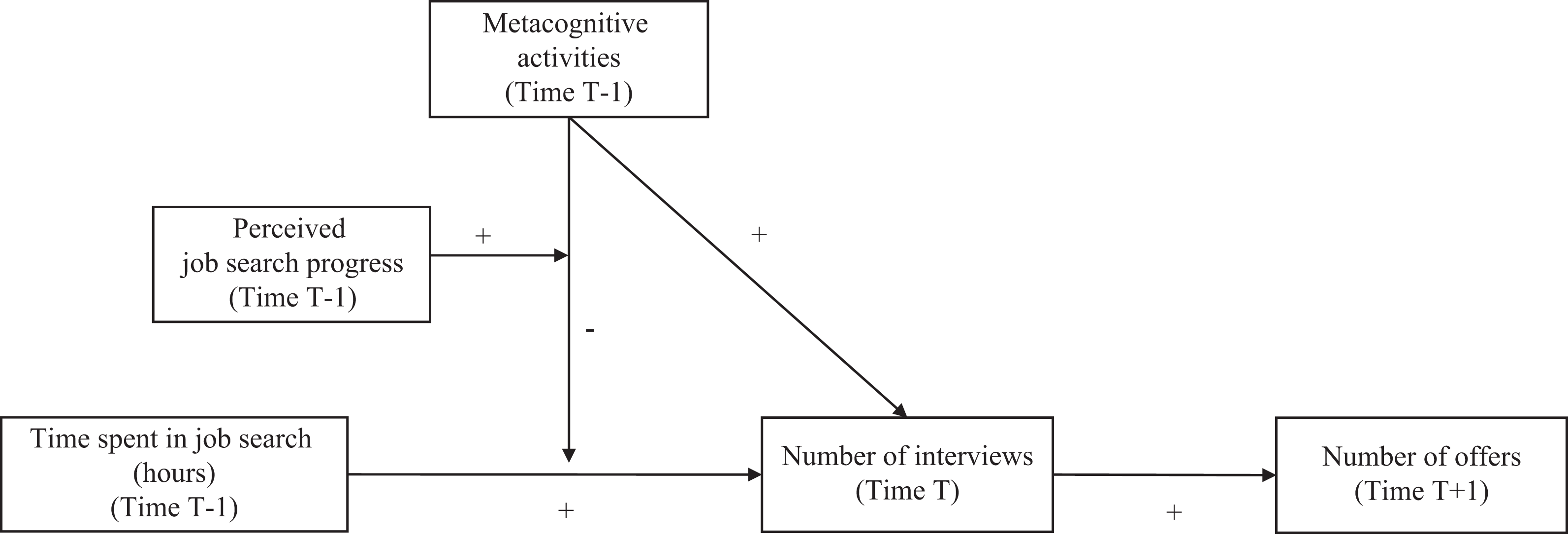
Hypothesized model.
The Interaction of Time Spent in Job Search and Metacognitive Activities: Metacognitive Activities as a Moderator
Metacognitive activities can be traced back to metacognition, which was first defined by Flavell (1979) as cognition about cognition. Numerous studies indicate that metacognition plays a significant role in academic performance in both school and laboratory settings (Dent & Koenka, 2016; Kitsantas, 2002; Pintrich & De Groot, 1990; Vrugt & Oort, 2008), suggesting that metacognition is crucial for learning and achieving favorable outcomes. As higher order cognition, metacognition can be divided into two broad categories, namely, metacognitive knowledge and metacognitive activities (Schraw, Crippen, & Hartley, 2006). Here, we focus mainly on metacognitive activities, which represent a multidimensional construct that includes three self-regulation components, namely, planning, monitoring, and evaluation (e.g., Azevedo & Cromley, 2004; Meijer, Veenman, & van Hout-Wolters, 2006; Schraw & Moshman, 1995; Schraw et al., 2006). In the job search literature, metacognitive activities refer broadly to job seekers’ self-regulatory activities, including setting goals, developing plans, and monitoring and analyzing progress, as well as self-reflection on the job search process (Koen et al., 2016; Turban et al., 2009). Guided by the self-regulatory framework, metacognitive activities in job search generally work in the following way. First, focusing on specific personal goals, job seekers develop a coherent plan to guide the job search process. Subsequently, during the job search process, they constantly monitor their progress and consider how to improve their job-finding skills. Moreover, they think about how to best present themselves to potential employers and analyze their interviews to improve their subsequent performance. Turban, Stevens, and Lee (2009) first examined the role of metacognitive activities in job search and found that these activities are positively related to the number of job interviews received. These authors also examined the construct validity of the metacognitive activities scale and showed that metacognitive activities were distinct from time spent in job search. Furthermore, these self-regulatory activities were found to be positively related to employment status (Koen et al., 2016).
Based on the above evidence, we anticipate that job seekers, especially novices, could benefit from using metacognitive activities because such activities are crucial for learning as they enable job seekers to discover the behaviors that yield better outcomes (Turban et al., 2009). Indeed, previous studies show that some metacognitive activities performed during the job search process, such as self-evaluation, are expected to lead to the discovery of more relevant job information and leads (Linnehan & Blau, 1998), and setting goals as well as formulating strategies can help job seekers receive more job offers (Saks, Zikic, & Koen, 2015) or find high-quality jobs (Koen, Klehe, van Vianen, Zikic, & Nauta, 2010; Saks & Ashforth, 2002; Zikic & Klehe, 2006). As a result, metacognitive activities in job search can not only equip job seekers with more personal resources to attract potential employers and lead to job search success but also save time and effort in job search, thus increasing the efficiency of seekers’ job search. In contrast, job seekers with low levels of metacognitive activities may not set clear goals, strategize how to attain their goals, analyze how well their strategy is working, or make adjustments when needed (Barber, Daly, Giannantonio, & Phillips, 1994; Saks & Ashforth, 2000; Turban et al., 2009). In this case, to receive more interviews or offers, they need to rely on spending more time in specific job search activities, such as preparing and revising resumes, visiting job sites to locate job openings, filling out and submitting applications, or talking with friends about possible job leads. Therefore, based on the characteristics of metacognitive activities, time spent in job search may be particularly important for job seekers with low levels of metacognitive activities because spending more time may help them obtain more job information, generating a greater probability of receiving job interviews or offers (e.g., Saks & Ashforth, 1999
, 2000; Wanberg, Zhu, et al., 2010; Wanberg, Zhu, et al., 2012), and fostering job attainment (e.g., Barron & Mellow, 1981; van Hooft et al., 2005; Wanberg et al., 2005). Thus, we propose:
Time Spent in Job Search, Metacognitive Activities, and Perceived Job Search Progress: A Three-Way Interaction
The self-regulation process represents an interaction among three factors, namely, individual, behavior, and environment. All three factors influence each other and determine the direction of subsequent behaviors (Bandura, 1986). Job search behaviors are context-specific: They do not occur without the interaction between the individual and the environment, that is, they are expected to change as the contexts in which people perform their tasks change (Alliger & Williams, 1993; Carver & Scheier, 1998; Liu et al., 2014). One such context in job search is one’s perceived goal progress, which can help individuals constantly evaluate their behaviors and cognitions to make adjustments (Bandura, 1986). After job seekers complete a several tasks in job search, they may perceive their job search progress as either good or poor depending on their personal standards and specific goals (Bandura, 1991) and adjust subsequent job search behaviors accordingly. It is suggested that perceived job search progress, which is evaluated by job seekers’ comparison of their current state with their desired goal in the self-regulation literature, could help us further understand the job search process (Wanberg, Zhu, et al., 2010).
We have argued earlier that metacognitive activities may attenuate the effect of time spent in job search on the number of interviews received because low metacognitive activities may result in greater reliance on time spent in job search for goal attainment. In addition, more time spent in the job search equips job seekers who conduct fewer metacognitive activities with more resources to obtain opportunities, which can compensate for their low levels of metacognitive activities in the facilitation of receiving more interviews. This relationship might be particularly important among job seekers with low-perceived job search progress. When job seekers with low levels of metacognitive activities notice that there is a considerable discrepancy between their current and desired states, they may increase their effort, spending more time to make up for the discrepancy (Lopez-Kidwell, Grosser, Dineen, & Borgatti, 2013; Wanberg, Zhu, et al., 2010). Thus, for individuals with low-perceived job search progress, the moderating role of metacognitive activities tends to be salient. In contrast, the moderating role of metacognitive activities in the relationship between time spent in job search and outcomes might not be salient for individuals with high-perceived job search progress. Specifically, individuals who perceive that they are doing well in their job search, due to their effective self-functioning, may not rely on time to obtain their desired outcomes regardless of their level of metacognitive activities. That is, for these job seekers, metacognitive activities may not play a role in prompting them to spend more time on obtaining job opportunities. Taken together, we propose:
Job search generally follows a sequential process in which job search effort leads to job interviews, job interviews lead to job offers, and job offers lead to employment (Côté, Saks, & Zikic, 2006; Crossley & Stanton, 2005; Saks, 2006; Saks & Ashforth, 2000; Turban, Lee, Veiga, Haggard, & Wu, 2013). Given that job seekers who receive more interviews may be more attractive to potential employers, they have a high probability of succeeding in interviews and receiving offers. Furthermore, after receiving several interviews, job seekers will potentially engage in interviews and meet their prospective employers. Thus, the two parties develop a deep understanding of each other, which increases the chances of job offers. Additionally, by attending interviews, job seekers may accumulate job search experience, make better presentations in front of employers, and receive more offers. Combined with the previously mentioned three-way interaction on interviews, we further propose that time spent in job search, metacognitive activities, and perceived job search progress jointly lead to more interviews and subsequently more offers. Linking job interviews to offers is important as job offers are closer to job search success, which can help us further understand how the three-way interaction leads to job search success.
Method
Sample and Procedure
A sample of 132 senior students from a university in Southern China was recruited in our survey. Senior students who were actively searching for jobs were invited to participate in the study. The students were ensured that their information and responses to the survey were confidential and that they could quit the survey at any time during the process. Each participant received 150 Yuan (approximately 23 dollars) after completing the entire survey. All 132 students agreed to participate in the survey. As the participants became ineligible for the study after they accepted a job offer, not all participants completed the 12 semiweekly surveys, and on average, 9.75 within-person observations were collected per participant (total N = 1,287). Of the 132 participants, 94 (71.2%) were female. The average age of the participants was 22.49 years (standard deviation [SD] = 1.46) and their average GPA was 3.54 (SD = .28).
Data collection was conducted in two different phases. In the first phase, participants completed a questionnaire on demographic information and GPA. The second phase began a week after the first survey. The second phase included 12 semiweekly surveys collected over 6 weeks, and the questionnaires were distributed to participants on Wednesdays and Sundays. Perceived job search progress, metacognitive activities, and number of interviews and offers that the participants received since the last survey were measured in each semiweekly survey. During the second phase of data collection, trained research assistants went to participants’ dorms and distributed the paper questionnaires to them each Wednesday and Sunday. The research assistants also waited for the participants to complete the questionnaires and then collected them. E-mail-based questionnaires were used if participants were not on campus occasionally, but the participants still needed to finish the online questionnaires on each measurement occasion. If the participants missed a survey, they could not make it up in the following assessment windows.
Measures
Time spent in job search
Following previous research (e.g., Wanberg, Zhu, et al., 2010; Wanberg, Zhu, et al., 2012), we used a 1-item measure of time spent in job search in the current study. Specifically, the individuals were asked “How many hours have you spent on your job search on average over the past 3 or 4 days?” This single item measure of time spent in job search has been shown to be highly correlated with a multiple-item measurement of job search intensity (r =.56 to .68; Wanberg et al., 2005).
Metacognitive activities
We assessed metacognitive activities using the 6-item measure developed by Turban and colleagues (2009). The participants indicated the extent to which they had engaged in the following activities over the past 3 or 4 days (1 = I never did this, 5 = I did this all the time): set personal goals to guide job search activities, developed a coherent plan to guide my job search, monitored my progress toward finding a job, thought about how to improve my skills at finding a job, thought about how best to present myself to potential employers, and analyzed interviews to improve subsequent performance. Across 12 measurement occasions, the mean α for the metacognitive activities measure was .94 (range = .89 to .96, SD = .02).
Perceived job search progress
We used the 3 items developed by Liu and colleagues (2014) to assess the participants’ perceived job search progress. A sample item is “From Monday to Wednesday/From Thursday to Sunday, I made good progress on my job search.” Across 12 measurement occasions, the mean α for the perceived job search progress measure was .92 (range = .88 to .95, SD = .02).
Number of interviews
Following prior studies (e.g., Sun, Song, & Lim, 2013; Turban et al., 2013; Wanberg, Zhu, et al., 2012), we used a single item (i.e., “How many interviews did you receive over the past 3 or 4 days?”) to measure the number of interviews the participants received.
Number of offers
Following previous research (e.g., Moynihan, Roehling, Lepine, & Boswell, 2003; Saks & Ashforth, 2000; Turban et al., 2013; Wanberg, Zhu, et al., 2010), a single item (i.e., “How many offers did you receive over the past 3 or 4 days?”) was used to measure the number of offers the participants received.
Analytical Strategy
Because the data in the current study have a nested structure (i.e., multiple observations are nested within each participant), potential sampling nonindependence (i.e., participants were independent but the observations were not) may influence our model estimates. Therefore, we used sandwich estimator to derive our model estimates in Mplus Version 7.2 (Muthén & Muthén, 2012). Multilevel confirmatory factor analyses (CFAs) were conducted to confirm the construct validity of our multi-item measures. The missing data were addressed by Listwise deletion in Mplus Version 7.2 (Muthén & Muthén, 2012). There were no significant differences in the participants’ demographic information (t = 0.30, p > .05 for age, χ2 = .11, p > .05 for gender, and t = 0.01, p > .05 for GPA), predictors (t = −0.91, p > .05 for time spent in job search, t = −1.50, p > .05 for metacognitive activities, and t = −1.28, p > .05 for perceived job search progress at T − 1 Time), as well as criteria (χ2 = 11.85, p > .05 for number of interviews and χ2 = 3.65, p > .05 for number of offers at T + 1 Time) in our study.
Hierarchical regression analyses were conducted to test our hypotheses. Following Aiken and West (1991), the predictors were centered before creating the interaction terms. In Step 1, we entered the control variables (i.e., order, day of the week, number of interviews, and offers in the previous time) and time spent in job search, metacognitive activities, and perceived job search progress. We added three 2-way interaction terms (i.e., the interaction between time spent in job search and metacognitive activities, the interaction between metacognitive activities and perceived job search progress, and the interaction between time spent in job search and perceived job search progress) in Step 2. In Step 3, we entered the three-way interaction among time spent in job search, metacognitive activities, and perceived job search progress.
Additionally, because the participants’ number of interviews and number of offers were measured as count variables, thus violating the normal distribution assumption (p < .001 for number of interviews and p < .001 for number of offers in Kolmogorov–Smirnov test) of linear regression models (Gardner, Mulvey, Shaw, 1995; Liu et al., 2014; Liu, Wang, Zhan, & Shi, 2009), we conducted Poisson regression analyses to analyze the number of interviews and number of offers using maximum likelihood estimation with robust standard errors (Muthén & Muthén, 2012).
Results
The means, SDs, and within-subject correlations are provided in Table 1. The between-subject correlations are also presented above the diagonal. We estimated a multilevel CFA model in which the same two-factor structure was modeled at both the within-person level and the between-person level for items measuring metacognitive activities and perceived job search progress. The model fits the data well, with χ2 = 216.14, df = 52, root mean square error of approximation = .05, comparative fit index = .97, Tucker–Lewis index = .95, and standardized root mean square residual = .04. This model also fits the data better than combining all items into one factor (Δχ2 = 1,557.67, Δdf = 2, and p < .01). Thus, these results support the discriminant validity of the studied variables at both within-person level and between-person level. We used Hilbe’s (2011) formula to calculate pseudo-R 2 (∼R 2) of the model, and the results showed that the predictors accounted for 11.4% of the total variance in number of interviews and 7.4% of the total variance in number of offers, suggesting that the participants’ time spent in job search, metacognitive activities, and perceived job search progress played significant roles in predicting the number of interviews and offers received.
Means, Standard Deviations (SDs), and Intercorrelations Among Studied Variables.
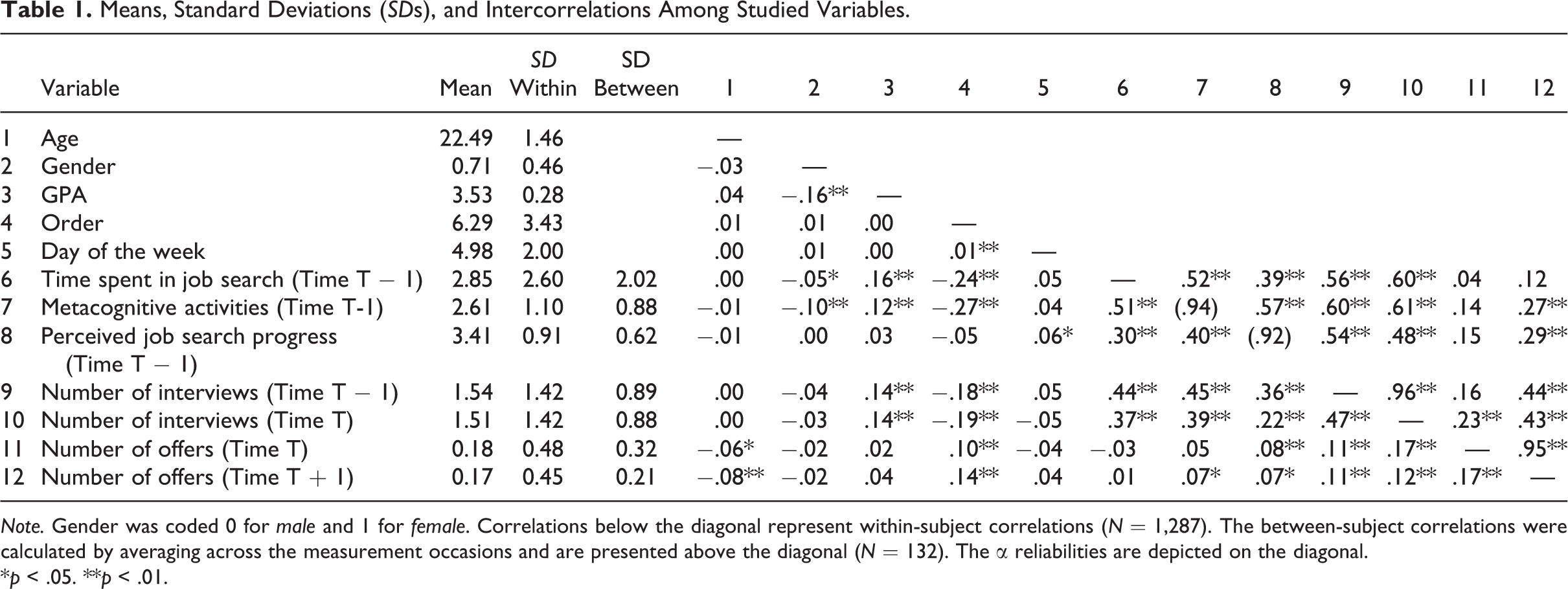
Note. Gender was coded 0 for male and 1 for female. Correlations below the diagonal represent within-subject correlations (N = 1,287). The between-subject correlations were calculated by averaging across the measurement occasions and are presented above the diagonal (N = 132). The α reliabilities are depicted on the diagonal.
*p < .05. **p < .01.
Hypotheses Tests
In testing the hypothesized model as depicted in Figure 1, we controlled for the day-of-the-week effect (i.e., 0 = Wednesday and 1 = Sunday) and the linear time effect when examining the within-person effects on the numbers of interviews and numbers of offers (e.g., Liu et al., 2014; Sitzmann & Yeo, 2013). Additionally, we controlled for the number of interviews and number of offers students received in the previous measurement occasions. 1 The coefficient estimates are presented in Table 2 and Figure 2.
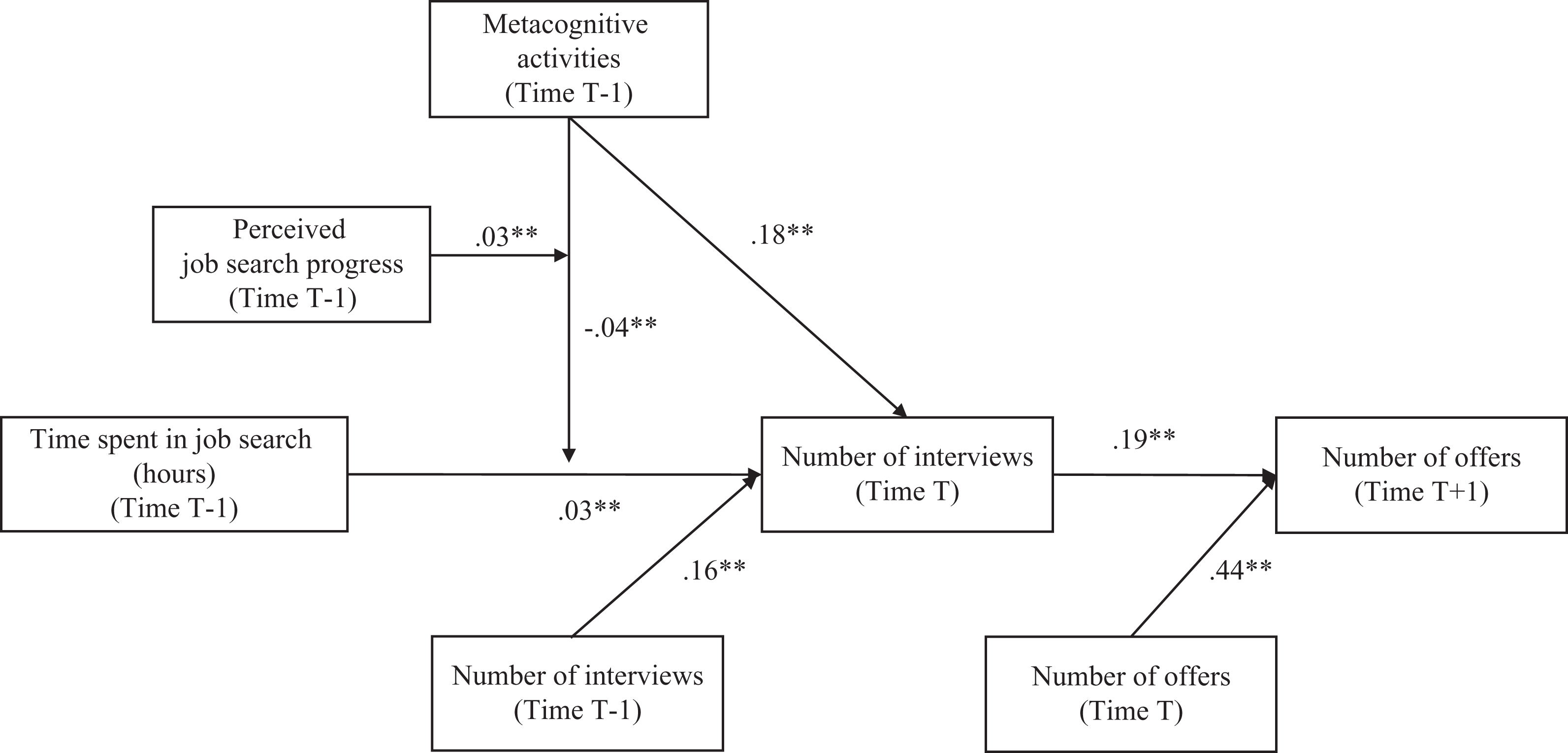
Unstandardized coefficient estimates for hypothesized model. N = 1,287. *p < .05. ** p < .01. Effect of time spent in job search on the number of interviews, effect of metacognitive activities on the number of interviews, effect of the number of interviews on the number of offers, and effects of the interviews and offers received in the previous time were obtained from Step 1 in Table 2; effect of the two-way interaction between time spent in job search and metacognitive activities were obtained from Step 2 in Table 2; effect of the three-way interaction among time spent in job search, metacognitive activities, and perceived job search progress was obtained from Step 3 in Table 2.
Unstandardized Coefficient Estimates for Hypothesized Model.
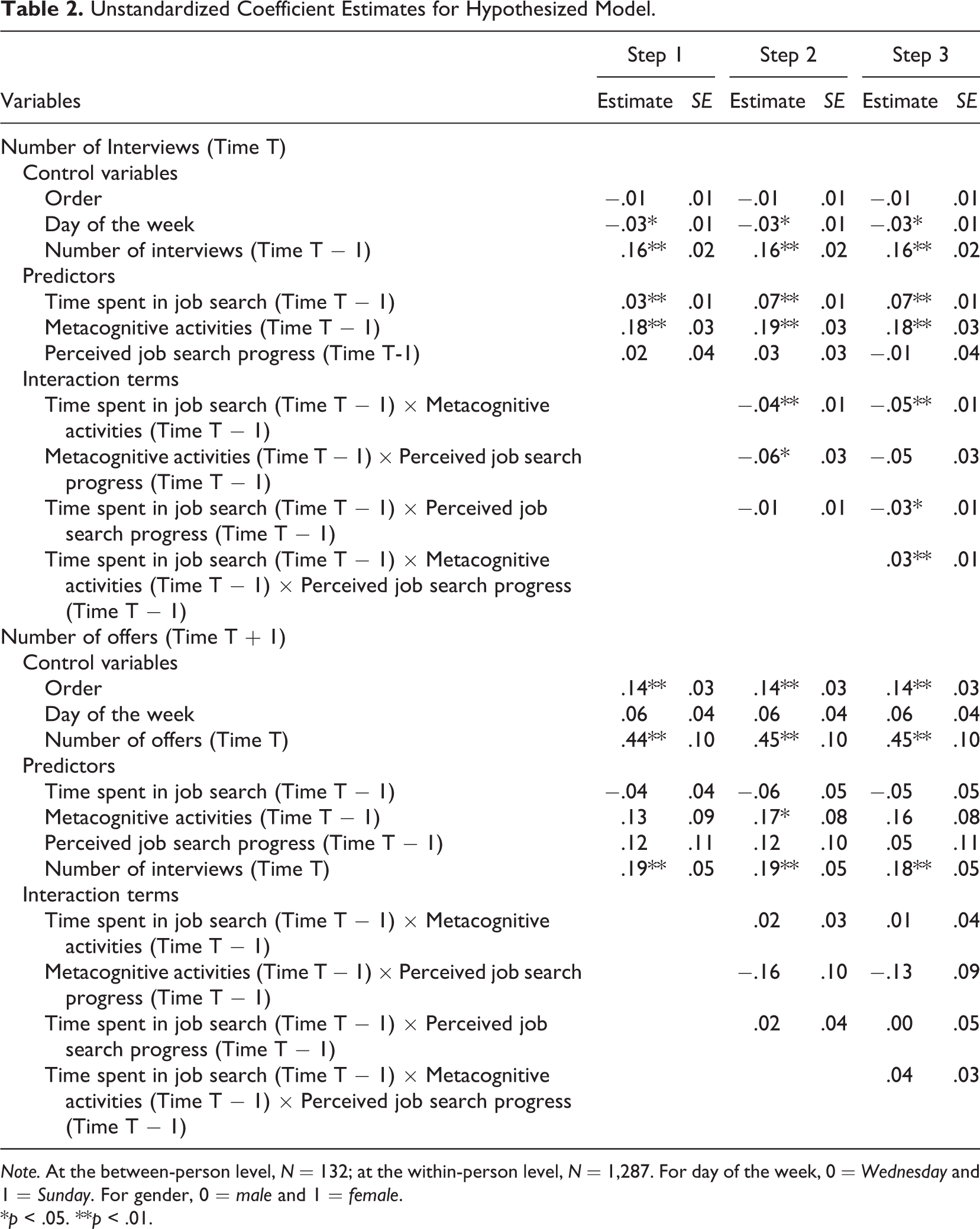
Note. At the between-person level, N = 132; at the within-person level, N = 1,287. For day of the week, 0 = Wednesday and 1 = Sunday. For gender, 0 = male and 1 = female.
*p < .05. **p < .01.
Specifically, we found that both time spent in job search and metacognitive activities at Time T − 1 were positively related to the number of interviews individuals received at Time T (Step 1, B = .03, p < .01 for time spent in job search and B = .18, p < .01 for metacognitive activities). These results indicate that as the individuals’ time spent in job search increased by one unit, the number of interviews received increased by 1.03 times (e.03 = 1.03), and as the individuals’ metacognitive activities increased by one unit, the number of interviews received increased by 1.20 times (e.18 = 1.20). Furthermore, the students’ number of interviews received at Time T was subsequently positively associated with the number of offers received at Time T + 1 (Step 1, B = .19, p < .01), suggesting that as the number of interviews increased by one unit at Time T, the number of offers received at Time T + 1 increased by 1.21 times (e.19 = 1.21).
We found that the effect of the individuals’ time spent in job search on the number of interviews received was significantly attenuated by their metacognitive activities (Step 2, B = −.04, p < .01). We plotted this moderation effect at conditional values of the moderator (i.e., metacognitive activities, ±1 SD) in Figure 3 following Cohen, Cohen, West, and Aiken’s (2013) recommendations. As shown in Figure 3, the effect of time spent in job search on the numbers of interviews when the level of metacognitive activities was low (B = .12, p < .01) was stronger than that when the level of metacognitive activities was high (B = .03, p >.05). Therefore, Hypothesis 1 was supported by the data.
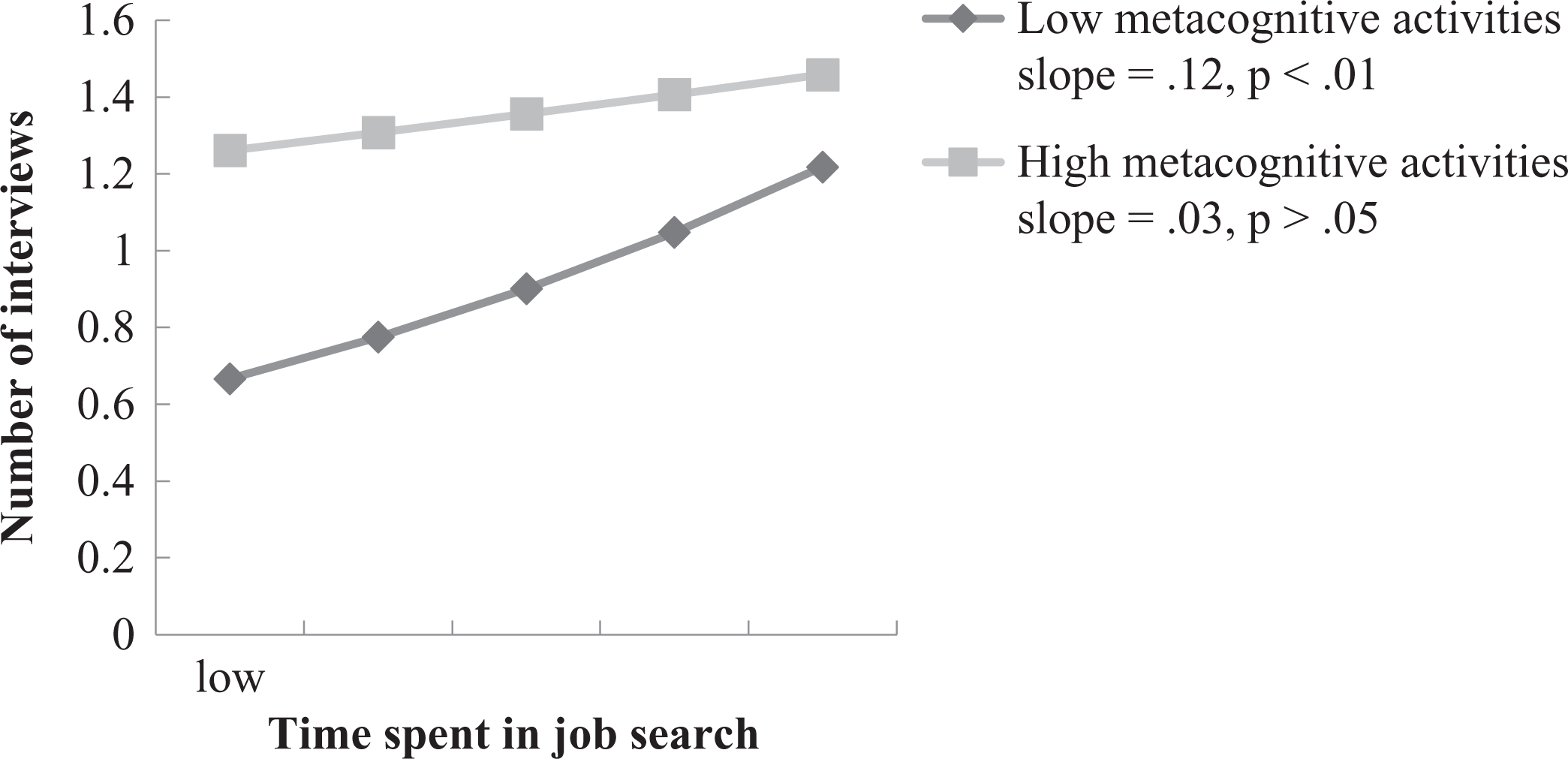
The moderating effect of metacognitive activities on the relationship between time spent in job search and the number of interviews. N = 1,287.
Furthermore, as shown in Table 2, we found that perceived job search progress significantly moderated the joint effects of time spent in job search and metacognitive activities on the number of interviews received (Step 3, B = .03, p < .01). The joint effects of time spent in job search and metacognitive activities on the number of interviews received with higher level of perceived job search progress (+1 SD) are shown in Figure 4A; the joint effects of time spent in job search and metacognitive activities on the number of interviews received with lower level of perceived job search progress −1 SD) are shown in Figure 4B. As presented in Figure 4A and B, when the level of metacognitive activities was high, time spent in job search was not significantly related to the number of interviews received (B = .02, p > .05 and B = .01, p > .05 for high-perceived job search progress and low-perceived job search progress, respectively), whereas when the level of metacognitive activities was low, time spent in job search was significantly related to the number of interviews received (B = .06, p < .05 and B = .18, p < .01 for high-perceived job search progress and low-perceived job search progress, respectively). The simple slope analysis further revealed that among students who perceived a higher level of job search progress, the difference in the conditional effect of time spent in job search on the number of interviews between those with high and low levels of metacognitive activities was not significant (B = −.04, p > .05), whereas among students who perceived a lower level of job search progress, the difference in the conditional effect of time spent in job search on the number of interviews between those with high and low levels of metacognitive activities was significant (B = −.17, p < .01). Therefore, the moderating effect of metacognitive activities on the relationship between time spent in job search and the number of interviews received was significantly attenuated by perceived job search progress. Thus, Hypothesis 2 was supported.
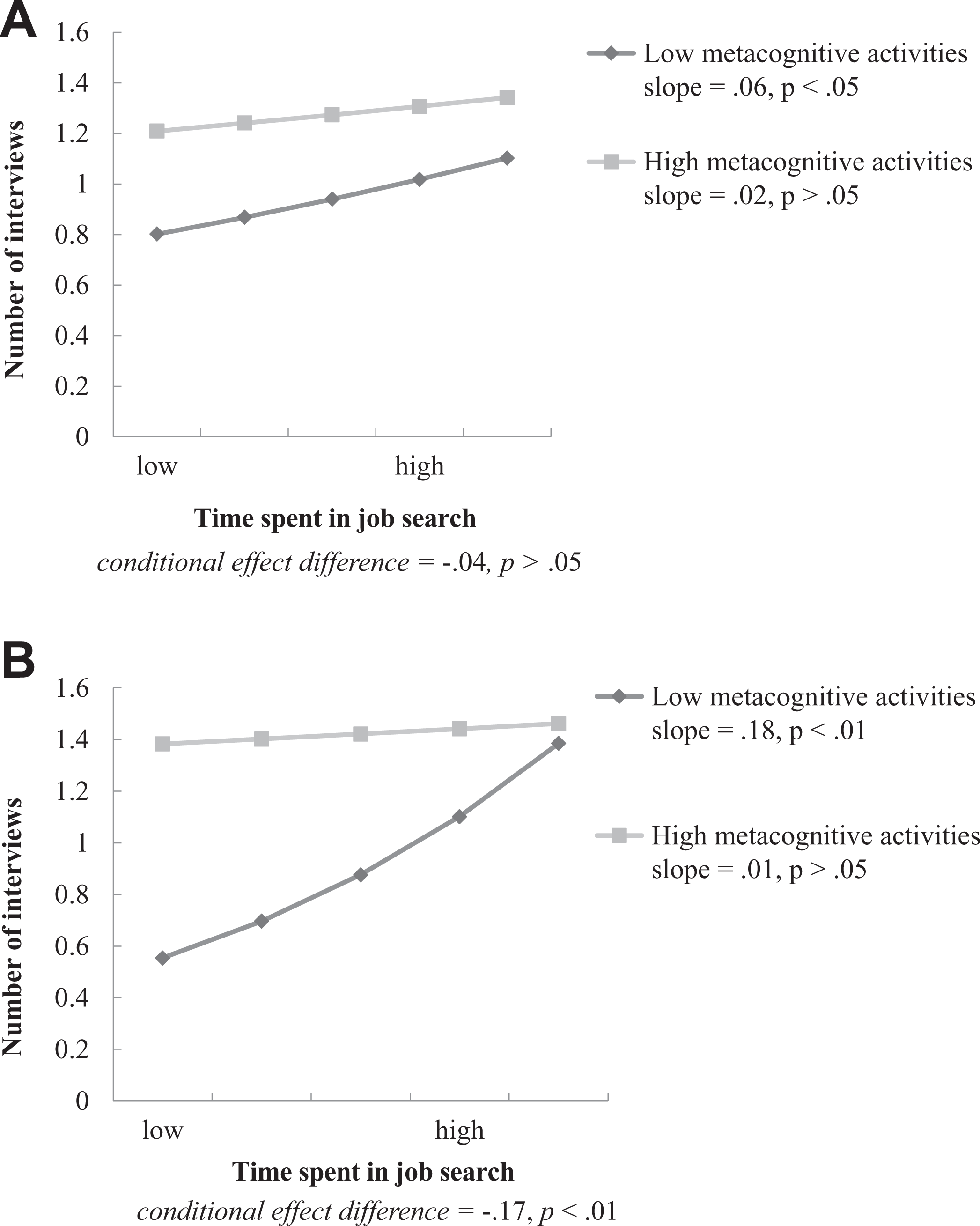
The three-way interaction effect among time spent in job search, metacognitive activities, and (A) high-perceived job search activities or (B) low-perceived job search activities on the number of interviews. N = 1,287.
Discussion
Findings and Theoretical Implications
Drawing from the self-regulatory perspective, we examined a three-way interaction model in a sample of Chinese graduating students. By revealing that time spent in job search does not necessarily lead to desirable outcomes, the present study is timely in providing a relatively complex view of the boundary conditions of this relationship. Specifically, the positive effect of time spent in job search on the number of interviews received was more prominent among graduating students with lower levels of metacognitive activities. Additionally, the moderating effect of metacognitive activities was stronger when perceived job search progress was low compared to that when it was high. As we elaborate below, our research makes the following contributions.
First, the present research emphasizes the conditions under which graduating students’ time spent in job search is more likely to result in desirable search outcomes. By doing so, our study contributes to the job search literature by reconciling the discrepant findings about the relationship between time spent in job search and its outcomes. Specifically, our findings show that the effects of time spent in job search outcomes depend on job seekers’ metacognitive activities. During the job search process, college job seekers with low levels of metacognitive activities tend to benefit more than those with high levels of metacognitive activities from time spent in job search.
Second, we found that the interaction effect of time spent in job search and metacognitive activities on the number of interviews received is further moderated by perceived job search progress. Our results indicated that perceived job search progress buffered the moderating role of metacognitive activities in the effect of time spent in job search on its outcomes, such that the moderating role of metacognitive activities was significant among college job seekers with low but not high-perceived job search progress. These findings, to a certain extent, further filled the abovementioned theoretical gap and provide support for the theoretical proposition that perceived job search progress influences seekers’ job search outcomes with their metacognitive activities and that multiple types of personal resources (e.g., time spent in job search and metacognitive activities) come into play to influence graduating students’ job search outcomes.
Furthermore, we found that the effect of time spent in job search on search outcomes is greatest among college job seekers with low levels of metacognitive activities and low-perceived job search progress. Considering the potential disadvantages (e.g., reduced self-efficacy/positive affect and insufficient strategies) associated with these conditions, this result implies that time spent in job search may generate the greatest benefits among job seekers who face multiple and aggravated difficulties in their job search. From another perspective, this finding demonstrates that time spent in job search still plays an important role in one’s job search process. However, if job seekers engage in metacognitive activities and perceive positive job search progress, they do not need to rely merely on time spent in job search to achieve desirable outcomes, thus conserving resources in this self-regulatory process and making their job search less costly (Moynihan et al., 2003).
Finally, consistent with previous studies investigating metacognitive activities in the job search process (Koen et al., 2016; Turban et al., 2009), we highlight the benefits of metacognitive activities in increasing graduating students’ chances of obtaining desirable search outcomes. Nevertheless, in the job search literature, the role of metacognitive activities has only been examined at the between-person level, which is surprising because job search is an ongoing process and job seekers could constantly change their metacognitive activities in response to their progress. Therefore, our research advances the literature by adopting an intensive repeated measures design to reveal the within-person fluctuation in job search behaviors and search outcomes. In doing so, the current study provides a relatively complete picture of this self-regulatory variable and an in-depth understanding of the job search process as this process is dynamic and unfolds over time (e.g., Song et al., 2009; Sun et al., 2013; Wanberg et al., 2005; Wanberg, Zhu, et al., 2012).
Practical Implications
Our results have practical implications for both job seekers and career counselors. First, we encourage job seekers to set goals and plans, monitor their job search progress, and engage in self-reflection during the job search process. Meanwhile, more job search training programs should be designed for job seekers to develop these important metacognitive activities as our results suggest that such training may substantially benefit job seekers by both saving time and effort and producing desirable search outcomes, thus making job search more efficient. These activities are particularly important for graduating college students since they need to spare time from study for job search and face the stress of the approaching graduation. Nevertheless, the role of metacognitive activities should be considered conjointly with job seekers’ perceived job search progress. Our results suggest that perceived job search progress may assist job seekers and career counselors in designing more effective job search programs. It could be useful for these practitioners to assess job seekers’ levels of perceived progress toward their current job search before determining the following steps. Because job seekers with high levels of perceived job search progress generally see less discrepancy between their current state and their desired goal state, metacognitive activities-based differentiation of interventions may not be necessary. However, for those with low levels of perceived job search progress, practitioners may differentiate interventions based on metacognitive activities to maximize effectiveness.
Second, although our findings suggest that merely spending time on job search may not guarantee desirable job search outcomes, job seekers cannot slack off in their job search because time spent has been shown to be effective in leading to more job interviews and offers when considered alone. Our research indicates that this is particularly important for job seekers with low levels of metacognitive activities and low-perceived job search progress, as time spent in job search may provide them with additional resources to remain industrious and persistent in their job search despite the disadvantages brought about by low levels of metacognitive activities and low-perceived job search progress.
Limitations and Future Research Directions
Despite the theoretical and practical implications outlined above, several limitations of this study need to be addressed in future research. First, we did not test the psychological mechanisms underlying the interaction effects. It remains unclear whether the interaction effects observed in our research can be translated via self-efficacy (Liu et al., 2014), positive affect (Wanberg, Zhu, et al., 2010), or alternative psychological mediators. Future studies can build on our research and explore the psychological mechanisms underlying the effect of this three-way interaction on job search outcomes.
Second, although this research takes the initial step to examine the joint effect of time spent in job search, metacognitive activities, and perceived job search progress on search outcomes, the situational factors or characteristics that may play an important role in shaping seekers’ psychological states, attitudes, and perceptions, such as financial needs or the time remaining to pursue goals, were neglected (Schmidt & DeShon, 2007). For example, as graduation approaches, student job seekers may reallocate their time and effort to academic goals, which could potentially make the effects of job search behaviors on search outcomes less prominent. Therefore, it would be valuable for future studies to investigate other situational factors to further understand the relationship between time spent in job search and its outcomes.
Third, due to the difficulties and complexity of our semiweekly within-person research design, we only measured proximal and quantitative job search outcomes, namely, the number of job interviews and offers received. Future research could examine distal search outcomes, such as employment efficiency and employment quality (e.g., fit perception, job satisfaction, commitment, and turnover intention), which might be more informative indicators of job search success (Boswell, Swider, & Zimmerman, 2012).
Fourth, although the job search pattern of Chinese college job seekers has been suggested to be similar to that of their western counterparts (e.g., Liu et al., 2014; Sun et al., 2013; Wang & Yan, 2018), caution is warranted in generalizing the results to western countries due to the potential contextual differences in job search behaviors. Thus, we encourage future studies to replicate our results in other types of job seekers or western countries to provide cross-validation.
Fifth, using self-report measures to assess participants’ time spent in job search may have some drawbacks. It is possible that the participants’ ratings of their time spent in job search were biased due to their experience with the job search process and, thus, did not accurately reflect their time spent in job search. However, as the participants’ ratings of time spent in job search were self-reported facts, the ratings are expected to be less biased (Wanous, Reichers, & Hudy, 1997), and thus using self-report measures to assess time spent in job search is currently widely accepted and used in the existing literature (e.g., Wanberg, Zhu, et al., 2012; Wanberg, Zhu, et al., 2010). Nevertheless, future studies may build upon our work by using more objective measures to better capture the constructs.
Finally, some of the effects, although significant, appear to be small, which might raise concerns about the practical meaningfulness and replicability of our results. However, the effect sizes (e.g., pseudo-R 2) reported in our study are comparable with those reported in other studies investigating three-way interactions (e.g., Trifiletti, Pedrazza, Berlanda, & Pyszczynski, 2017). Additionally, we suggest that the reported effects should be interpreted considering the operationalization of the predictors (Prentice & Miller, 1992). As the independent variable, time spent in job search was measured in hours (ranging from 0 to 25, mean = 2.85, SD = 2.60), the relatively large scale may result in seemingly small statistical effect sizes. Furthermore, given that job search is a dynamic and ongoing process, these small effects may accumulate and translate into substantial effects in the practical context (Abelson, 1985; Yeaton & Sechrest, 1981). Nevertheless, although we believe that our findings are practically meaningful, caution is necessary in drawing conclusions about the effects of time spent in job search, and future studies replicating and validating our findings could be valuable.
Conclusion
Drawing upon the self-regulation perspective, this research identified metacognitive activities as a moderator of the relationship between time spent in job search and search outcomes. The interaction between time spent in job search and metacognitive activities in predicting the number of interviews received was found to be further moderated by perceived job search progress. Specifically, time spent in job search is particularly important for seekers with low levels of metacognitive activities (vs. high levels of metacognitive activities) in receiving more interviews and job offers. Further, the results showed that job seekers with low levels of both metacognitive activities and perceived job search progress are most likely to benefit from time spent in job search. These findings extend our understanding of the self-regulatory job search process and provide job seekers and career counselors with useful insights for the design and implementation of job search programs.
Footnotes
Authors’ Note
Junqi Shi is now affiliated with School of Management, Zhejiang University, Hangzhou, China.
Declaration of Conflicting Interests
The author(s) declared no potential conflicts of interest with respect to the research, authorship, and/or publication of this article.
Funding
The author(s) disclosed receipt of the following financial support for the research, authorship, and/or publication of this article: The research was partially supported by National Nature Science Foundation of China (Project ID:71672186).
