




Abstract
Resilience, or the ability to bounce back despite facing adversities, may influence parents’ abilities to handle the multitude of parent-specific COVID-19-related challenges that have faced them. This cross-sectional study examined (1) the relationship between parents’ resilience and their COVID-19-related family stressors; (2) parents’ perceptions of their greatest stressors throughout the pandemic; and (3) non-school-related challenges and their resultant impact on parents’ and children's resilience. Via an online survey, data was collected from 63 parents (Mage = 37.09; 82.54% female). A significant relationship was found between parents’ resilience and both their COVID-19-related stressors and family stressors. Parents described stressors challenging their resilience, including impacts on their mental health, managing occupational and educational responsibilities, social isolation, and economic setbacks, while also noting the impacts of social isolation, missing extracurricular activities, and lacking routines for their children. Overall, Ontario parents high in resilience are likely better positioned to adapt to pandemic-related stressors.
Introduction
The World Health Organization (WHO) declared COVID-19 a pandemic on March 11th, 2020 (WHO, 2020). By March 14th, the Ontario Ministry of Education had closed all schools. Across the province, this initial closure lasted 14 weeks (i.e., until June 30th; Canadian Institute for Health Information, 2021). As cases and deaths resulting from the COVID-19 virus continued to fluctuate, public health measures to mitigate the spread of the virus also varied, resulting in an oscillation between in-person and online learning for students across Ontario (Gallagher-Mackay et al., 2021). This fluctuation resulted in Ontario elementary school students being out of school longer than those in any other Canadian province or territory (Subramanian, 2021). Although province-wide elementary school closures have happened only three times thus far, many regions and individual schools have continued to experience closures due to high COVID-19 cases (Gallagher-Mackay et al., 2021). These ongoing public health measures have been essential to slow the spread of the virus, and have also reportedly resulted in social isolation, psychological and economic distress, and an increase in unhealthy coping habits among some adults (Coller & Webber, 2020; Gadermann et al., 2021; Gassman-Pines et al., 2020). Specifically, parents with children under the age of 18 and living at home have been at a disproportionate risk of experiencing worsened mental health due to the pandemic (Gadermann et al., 2021). Worrying about their children's education and heightened stress related to navigating child-minding and home-based/online schooling while continuing to work themselves have been especially challenging for parents (Gadermann et al., 2021). Although a quick internet search will bring up hundreds of links to advice for parents trying to cope with stress during the pandemic, there is currently a paucity of research exploring what has been especially helpful to parents, although Cusinato et al. (2020) proposed that a parent's resilience may be a key variable influencing their ability to effectively deal with pandemic-related challenges.
Resilience can be defined as a dynamic process in which psychosocial and environmental factors interact to enable an individual to survive, grow, and thrive despite exposure to adversity (Munoz et al., 2017; Prime et al., 2020). In a recent cross-sectional study conducted on parents (n = 107; 80.4% female) in Singapore, Lim et al. (2021) found that higher resilience was related to lower depression, anxiety, and stress among this population following the initial COVID-19 lockdown in March of 2020. Similarly, while investigating child adjustment in Spain during the pandemic, Romero et al. (2020) noted that the resilience of parents (n = 1049; 89.6% female) exerted a direct and negative effect on their general perceived distress resulting from the pandemic, such that higher resilience among parents indicated lower levels of perceived distress. This relationship between resilience and perceived distress also positively impacted depression and anxiety screenings, resulting in higher resilience among parents being associated with a lower incidence of depression and anxiety (Romero et al., 2020). Given the outlined relationships between resilience and psychological distress, it is possible that parents’ resilience may be impacted by COVID-19-related stressors.
For many parents, a myriad of stressors may be challenging their resilience during the COVID-19 pandemic. Parents may continue to worry about the impacts that education disruptions have had on their children, with learning gaps caused by closures far surpassing what was originally predicted heading into the lockdown phases (Subramanian, 2021). Despite the return to in-person learning for many, the prolonged impacts of the pandemic on students, and the resultant stress facing parents remains concerning. The impact of these stressors in addition to the variation in school closures experienced by parents and families may have contributed to further distress among parents in the already trying times of the ongoing pandemic. While studies have tried to quantify the experiences of parents (e.g., Cusinato et al., 2020; Dominguez-Alvarez et al., 2020; Laufer & Bitton, 2021), there is currently a dearth of evidence surrounding parents’ perceptions of these stressors and how they may be impacting their resilience or the resilience of their children.
While the impact of the COVID-19 pandemic on children's schooling has been an obvious and substantial challenge for many parents, it is not the only one. Compared to age-similar, non-parent adults, parents have experienced stronger reductions in their social support and heightened financial stress (Cluver et al., 2020; Gadermann et al., 2021; Lee & Ward, 2020). In a recent study conducted on parents (n = 1451; 72.3% female) in China, Ren and colleagues (2020) found that less social support was significantly related to increased parenting stress during the pandemic. A qualitative study conducted by Dawes et al. (2021) echoed these findings, as parents in this study (n = 29) described the increased stress and exhaustion resulting from navigating pandemic-related changes without their usual support networks. The financial impacts of the pandemic on families have also been emphasized by many (e.g., Brewer & Gardiner, 2020; Rodrigues et al., 2021). More Canadian families with children (aged < 18) living at home reported financial strain in the first month of the pandemic than families without children, at 54% versus 41%, respectively (Kaddatz, 2020). At the same time, and perhaps influenced by this financial strain, parents also reported mood, mental health, and sleep disturbances (Kaddatz, 2020). Parents have undoubtedly faced many struggles throughout the pandemic and, whether stemming from school closures or non-school-related factors, their first-hand accounts of these challenges are severely lacking within the literature.
Although the COVID-19 pandemic has likely exacerbated challenges to parents, the specific ways in which Ontario parents have been impacted remain unknown. While the resilience of parents during the pandemic has been investigated by several, to the authors’ knowledge no studies have investigated the resilience of Ontario parents during the COVID-19 pandemic. Given the variations in pandemic experiences around the world and within Canada (e.g., a longer period of school closures in Ontario compared to other provinces and territories), it is plausible that Ontario parents may have experienced different challenges to their resilience than parents in other provinces of Canada. Moreover, while some studies have explored parents’ resilience and psychological distress during the pandemic, to date, no studies have examined parents’ resilience in relation to COVID-19-specific stressors. While still valuable, these studies were not focused specifically on whether the stress experienced by parents was due to COVID-19, or a result of other contextual factors; therefore, the relationship between resilience and specific COVID-19-related stressors remains largely unexplored. Gaining insights into the experiences of parents will allow for a better understanding of the breadth and severity of pandemic-induced stressors as determined by the population members themselves. This timely study is designed to address this research gap to help understand Ontario parents’ capacity to survive and thrive throughout the pandemic, while also providing insights into the experiences of Ontario parents and children. Implications of this research could serve to benefit families of over one million elementary school-aged children who have been impacted by the COVID-19 pandemic in Ontario (Ontario Ministry of Education, 2021).
Purpose
The three-fold purpose of this study was to examine: (1) the relationship between Ontario parents’ resilience and their COVID-19 family stressors; (2) Ontario parents’ perceptions of the greatest stressors challenging their resilience throughout the pandemic; and (3) non-school-related challenges that have surfaced throughout the pandemic and their resultant impact on the resilience of Ontario parents and children (as perceived and reported by parents).
Methods
This cross-sectional study was conducted from January 17th–February 14th, 2022. The study received ethics approval from the host institution's Non-Medical Research Ethics Board. The data that support the findings of this study are available from the corresponding author, Julia Yates, upon reasonable request.
Study Procedures
Study participants were English-speaking Ontarians residing in the province and a parent of at least one child in an English-speaking kindergarten (Junior or Senior), Primary (grades 1–3), or Junior (grades 4–6) elementary school (i.e., public, private, and religious). Participants were recruited via online advertisements (i.e., Kijiji, Facebook, Instagram, Twitter, and LinkedIn) through a total of 153 ads posted by the research team. Upon clicking the online advertisement and QR code, interested parents were directed to the study's online survey hosted on qualtricsXM (Qualtrics, Provo, UT). The study's letter of information and eligibility criteria were outlined first, and upon providing informed and voluntary consent, the survey instructions and content appeared. To diminish social desirability bias, honesty demands (per Bates, 1992) were employed. That is, the instructions included the statement: “There are no right or wrong answers, we are only looking for the answers that are true for you.” After completing the survey, participants had the option to enter a draw for one of three $60 grocery gift cards.
Measures
The online survey consisted of a short demographic questionnaire, the previously validated 10-item Connor-Davidson Resilience Scale (CD-RISC-10; Connor & Davidson, 2003) and the COVID-19 Family Stressors Scale (CoFaSS; Prime et al., 2021), as well as three open-ended questions to more deeply explore parents’ perceptions and experiences of their pandemic-related stressors.
Demographic questionnaire
The demographic questionnaire consisted of 12 items pertaining to participants’ gender, age, ethnicity, education, employment, income, children, and living situations.
Connor-Davidson resilience scale
The CD-RISC-10 was previously validated for use among parents (Cronbach's α range from 0.75 to 0.91; Campbell-Sills et al., 2009; Ye et al., 2017) and consists of 10 statements that describe aspects of resilience. Items correspond to flexibility, sense of self-efficacy, ability to regulate emotion, optimism, and cognitive focus/maintaining attention under stress (Connor & Davidson, 2020). Participants were asked to indicate how much they agreed with the statements as they applied to them over the last month on a five-point scale ranging from 0 (i.e., not at all true) to 4 (i.e., true nearly all of the time). Examples of statements include: “I am able to adapt when changes occur” and “I am not easily discouraged by failure.”
COVID-19 family stressors scale
The CoFaSS was recently validated for family-based research (Cronbach's α range from 0.68 to 0.82; Prime et al., 2021) and consists of 16 items that measure COVID-19-related psychological stressors. The CoFaSS includes three subscales: (1) family stress, which includes seven items (i.e., items 9–15) related to family altercations and child management; (2) income stress, where five items (i.e., items 1–3 and 6–7) relate to income, debts, and job loss; and (3) chaos stress, with four items (i.e., items 4–5, 8, and 16) relating to access to supplies, crowded shopping areas, and news coverage (Prime et al., 2021). Participants were asked if, since the onset of the COVID-19 pandemic in March 2020, any of the changes described in the tool had occurred in their households by responding to the statements as either not true, somewhat true, or very true. Examples of statements include: “Could not access essential supplies (e.g., sanitizer, soap, toilet paper, etc.)” and “Inability to access educational materials for children.”
Open-ended questions
Three open-ended questions were co-created by the researchers to address the study's 2nd and 3rd purpose statements: (1) “Reflecting on your experiences during the COVID-19 pandemic, what, in your role as a parent, has been the single greatest stressor that has challenged your resilience?”; (2) “Reflecting on your experiences during the COVID-19 pandemic, what would you classify as the top three most influential, non-school-related challenges that have surfaced in your child(ren)'s life that has impacted their resilience?”; and (3) “In what ways have these non-school-related challenges that your child(ren) has/have experienced impacted your own resilience?”. To conceptualize these questions, a definition of resilience was provided on the questionnaire prior to the questions: “In this study, resilience is conceptualized as a dynamic process in which psychosocial and environmental factors interact to enable an individual to survive, grow, and thrive despite exposure to adversity.”
Data Analysis
All analyses were completed in RStudio (version 1.3.1090; RStudio Team, 2020). Measures of central tendency and dispersion were computed for demographic characteristics and each tool. Participants were included in analyses if they completed seven or more of the items on the CD-RISC-10 and 12 or more of the items on the CoFaSS (i.e., < 30% data missingness). If less than 30% of a participant's data was missing, a mean score of their completed answers was imputed for the remaining blank responses and they were included in analyses (per Dong & Peng, 2013).
Connor-Davidson resilience scale
Total scores on the CD-RISC-10 were calculated by summing the 10 items to yield a score ranging from 0 to 40, with higher scores indicating greater resilience, and lower scores indicating less resilience, or more difficulty in bouncing back from adversity (per Connor & Davidson, 2020). Following the work of Campbell-Sills and Stein (2007), the distribution of scores on this scale were organized into quartiles such that the lowest quartile scored between 0–29, the second between 30–32, the third between 33–36, and the top between 37–40.
COVID-19 family stressors scale
Total scores on the CoFaSS were calculated by summing the 16 items to yield a total score ranging from 16 to 48. Higher scores indicate parents facing increased COVID-19-related psychological stressors. Total scores on the family, income, and chaos stress subscales range from 7 to 21, 5 to 15, and 4 to 12, respectively, with higher scores indicating more stress in the corresponding aspect of family life (per Prime et al., 2021).
Relationship between resilience and COVID-19 family stressors
Pearson product-moment correlations were conducted to investigate the relationship between resilience and COVID-19 family stressors. A separate correlation was conducted between resilience and: (1) overall COVID-19 family stressors; (2) family stress; (3) income stress; and (4) chaos stress.
Open-ended response questions
To identify any emergent patterns, themes, and categories within the responses to the open-ended, inductive content analysis was conducted independently by two researchers (per Patton, 2005). To help ensure data trustworthiness and uphold qualitative rigor, several strategies were incorporated into data analysis, including analysis being completed separately by multiple coders, collectively solving any discrepancies and agreeing on main themes, and recording the process in detail to allow others the opportunity to re-create the process and determine if findings are transferable to other populations (per Guba & Lincoln, 1989).
Results
Demographics
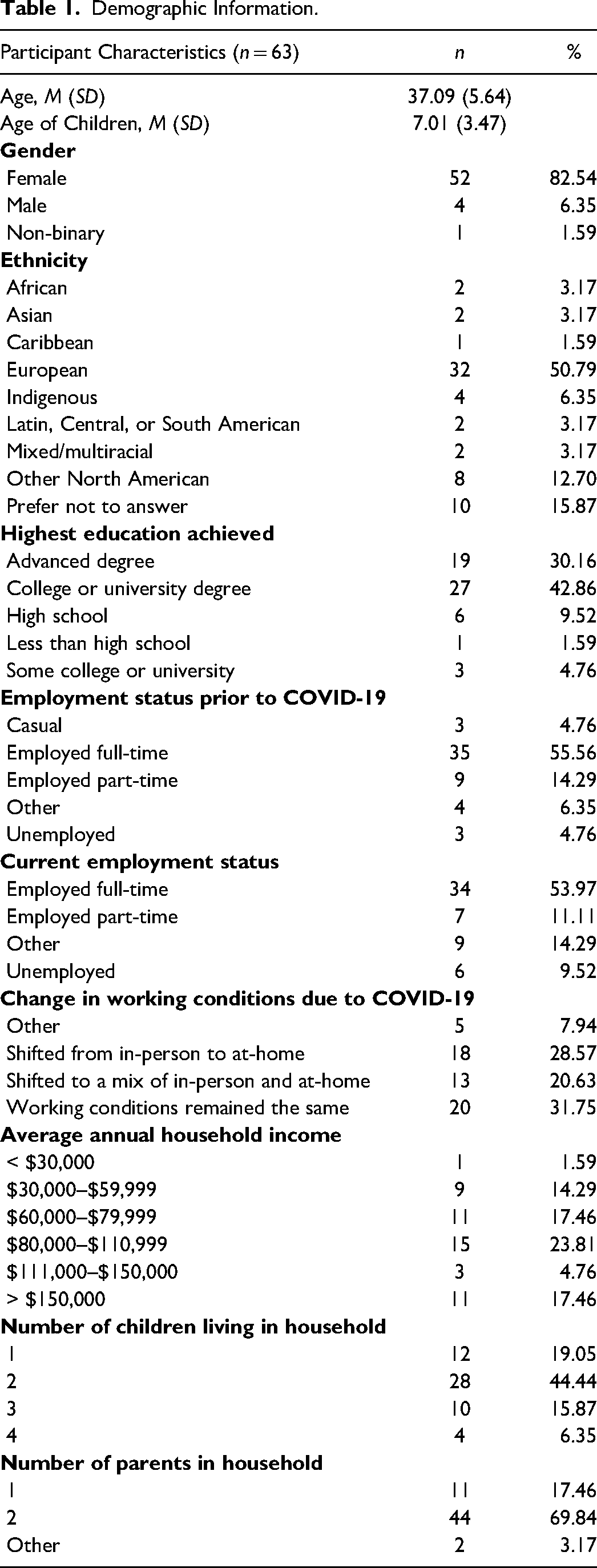
The online survey was completed by 63 parents with a mean age of 37.09 years (SD = 5.64). Most parents identified as female (n = 52; 82.54%), of European descent (n = 32; 50.79%), and most frequently reported completing a college or university degree (n = 27; 42.86%) or higher (n = 19; 30.16%). Just over half of the parents were employed full-time prior to COVID-19 (n = 35; 55.56%) and at the time of completing the survey (n = 34; 53.97%), with working conditions for most remaining the same during COVID-19 (n = 20; 31.75%). The average annual household income was between $80,000 and $110,000 (n = 15; 23.81%). Most commonly, parents reported having two children (n = 28; 44.44%) and living in a two-parent household (n = 44; 69.84%). The mean age of the participants’ children was 7.01 years (SD = 3.47). See Table 1 for a detailed overview of the participants’ demographics.
Demographic Information.
Resilience
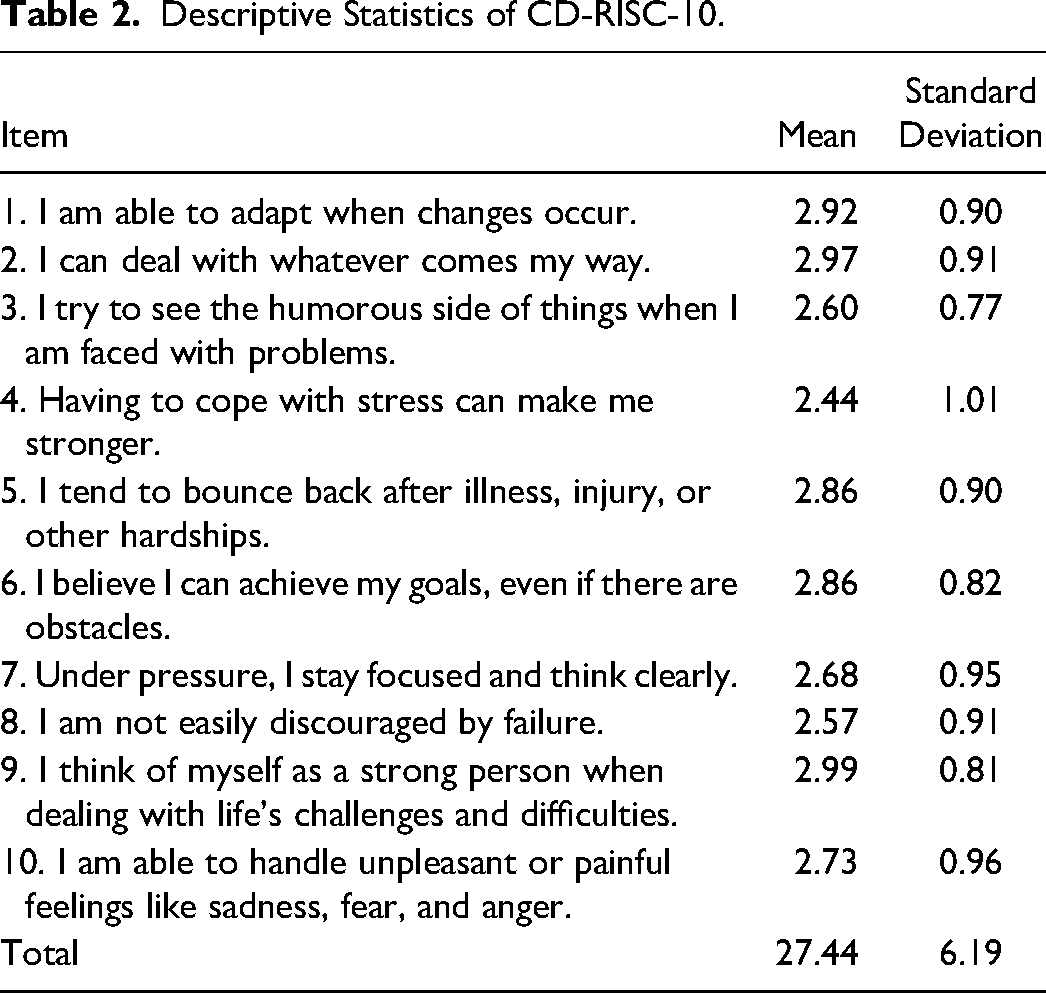
Based on responses from the CD-RISC-10, the mean resilience score of this sample was 27.44 (SD = 6.19). The scores of individual items can be found in Table 2.
Descriptive Statistics of CD-RISC-10.
COVID-19 Stressors
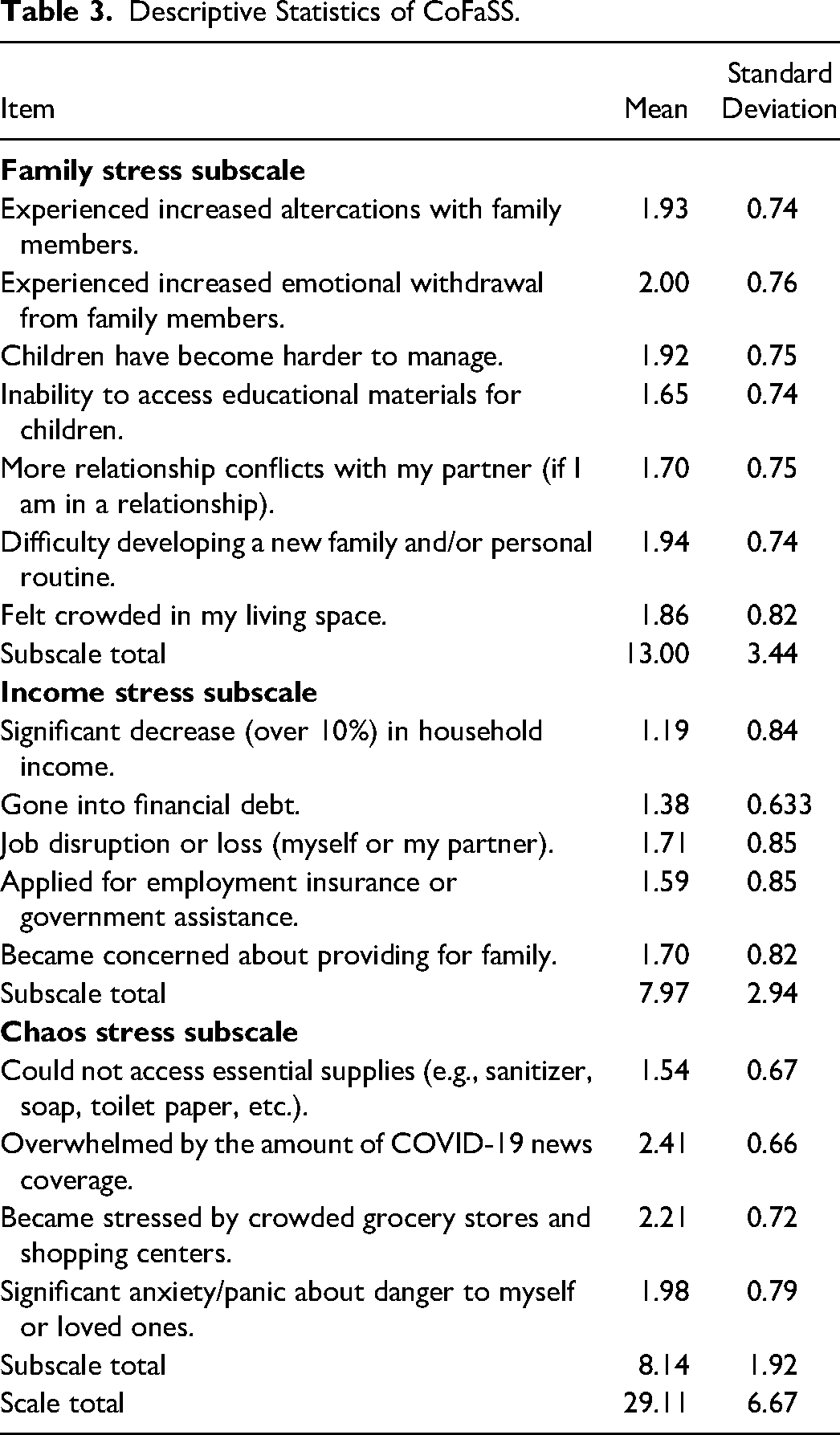
The mean total score on the CoFaSS scale was 29.11 (SD = 6.67). The mean scores on each domain of the CoFaSS across parents were 13.00 (SD = 3.44), 7.97 (SD = 2.94), and 8.14 (SD = 1.92) for the family, income, and chaos stress subscales, respectively. The average scores of each item can be found in Table 3.
Descriptive Statistics of CoFaSS.
The Relationship Between Resilience and COVID-19 Family Stressors
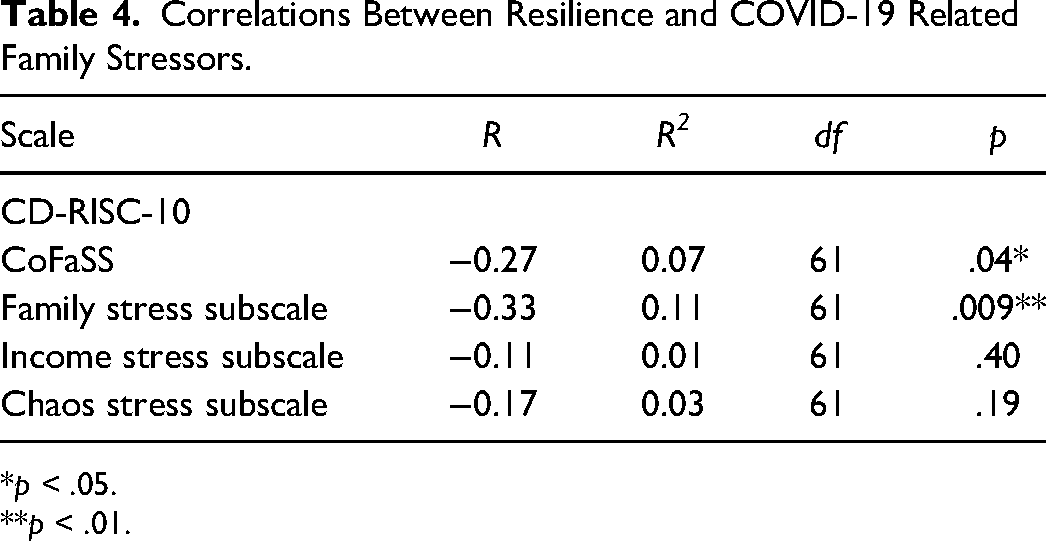
Results from the Pearson product-moment correlations indicated evidence of a significant negative relationship between parents’ resilience and their overall COVID-19-related psychological stressors (r (61) = −0.27, p = .04; Table 4). More specifically, resilience was found to be significantly and negatively correlated with the family stress subscale (r (61) = −0.33, p = .009; Table 4). No significant relationships were found between resilience and income or chaos stress (Table 4).
Correlations Between Resilience and COVID-19 Related Family Stressors.
*p < .05.
**p < .01.
Open-Ended Response Questions
Greatest stressor challenging Ontario parents’ resilience
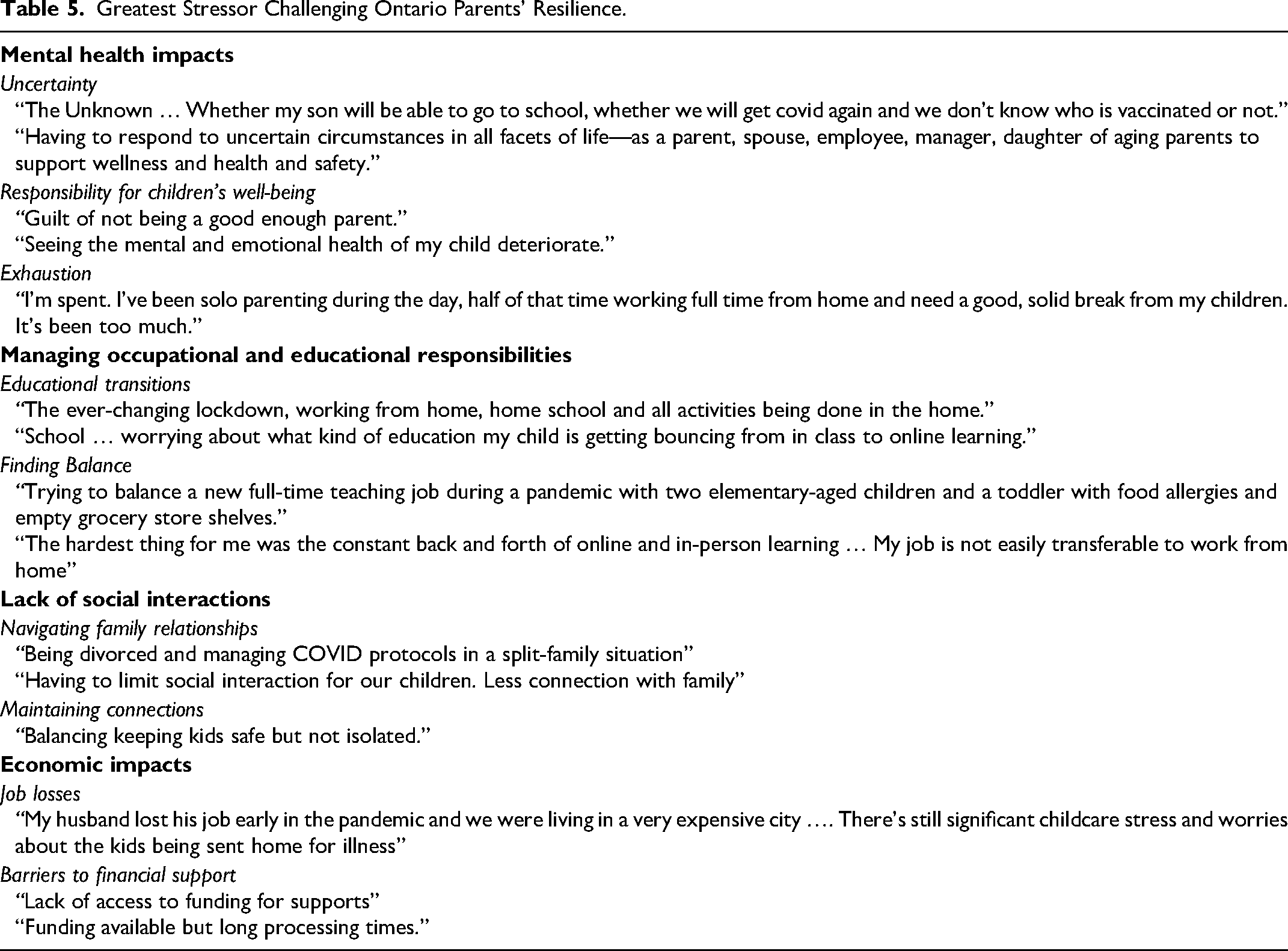
When asked what the single greatest stressor challenging their resilience was, parents were consistent in noting the following broad themes: (1) mental health impacts; (2) managing occupational and educational responsibilities; (3) lack of social interactions; and (4) economic impacts. Specifically, parents stressed the challenges of the constant uncertainty surrounding the pandemic and the resulting exhaustion. Further, the feeling of being responsible for their children's well-being was mentioned by many. Regarding occupational and educational responsibilities, parents noted the struggles of educational transitions and trying to find a balance between their seemingly ever-changing responsibilities throughout the pandemic. The lack of social interactions also challenged parents’ resilience in terms of having to navigate family relationships and attempting to maintain connections for their children. Finally, economic impacts were noted by many parents who stressed the challenges of dealing with job losses and barriers to accessing financial support. Table 5 presents illustrative quotes for each of these themes.
Greatest Stressor Challenging Ontario Parents’ Resilience.
Non-school-related challenges impacting Ontario children's resilience
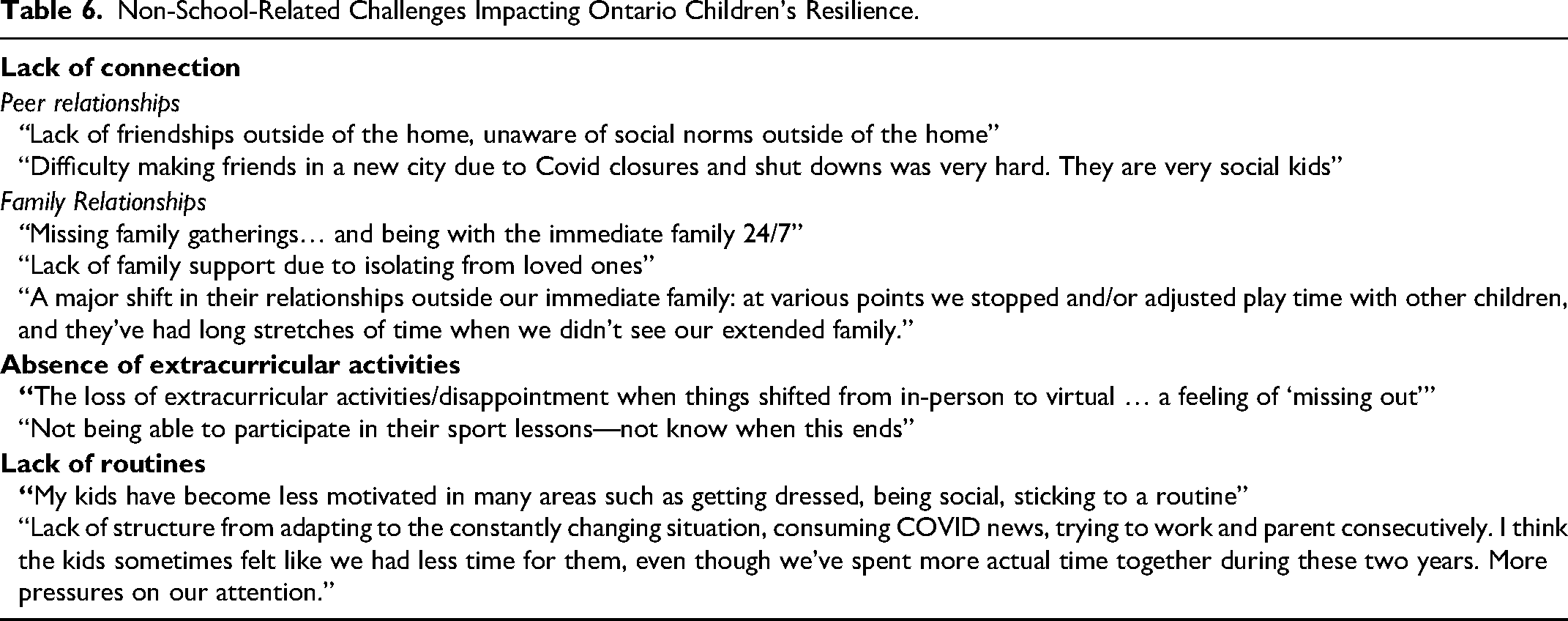
Parents reported the most influential, non-school-related challenges impacting their children's resilience as a lack of connection within both peer and family relationships, the absence of extracurricular activities, and a dearth of routine. Quotes illustrating these themes can be found in Table 6.
Non-School-Related Challenges Impacting Ontario Children's Resilience.
Impacts of children's non-school-related challenges on Ontario parents’ resilience
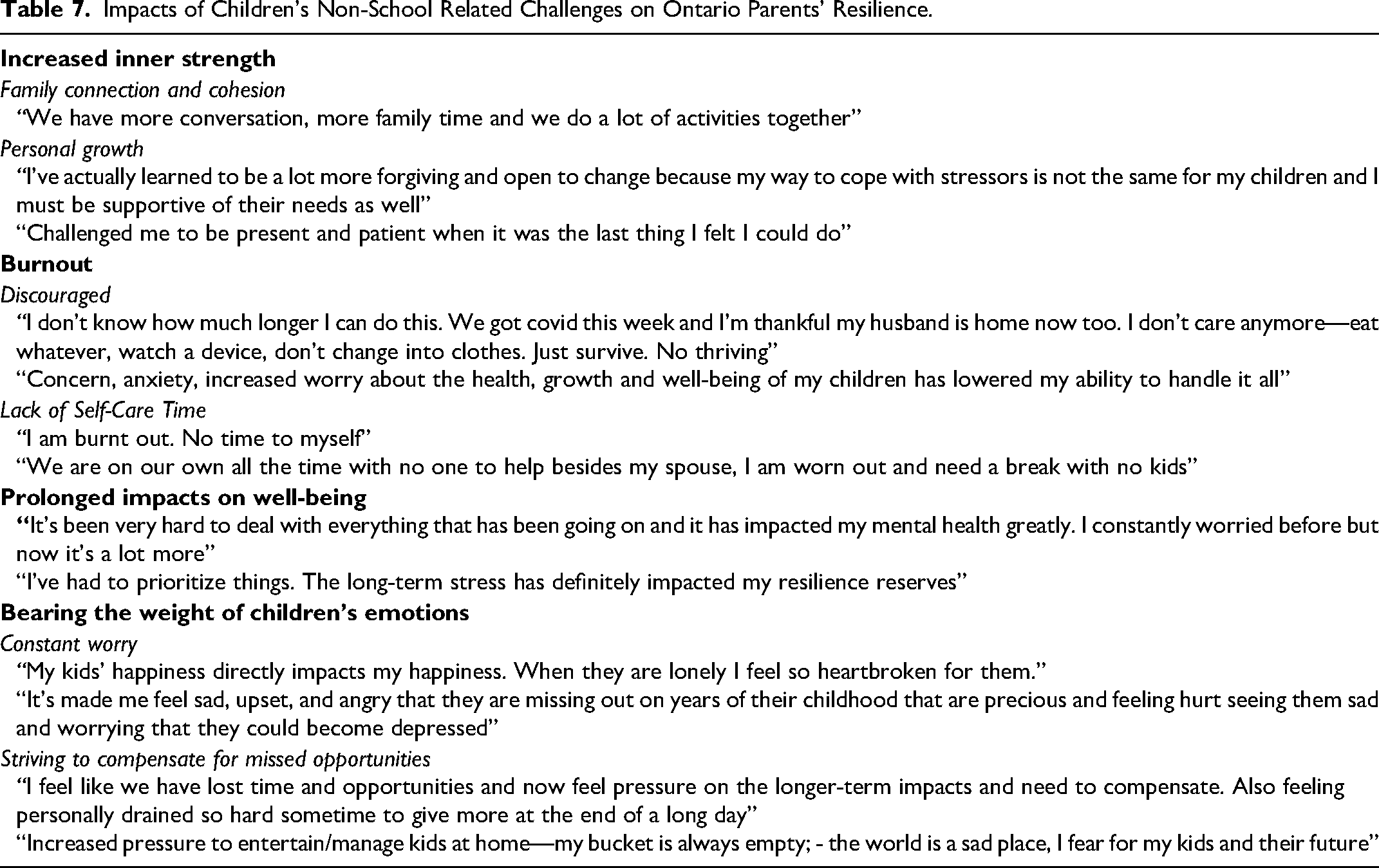
When asked how the above-noted challenges have impacted parents’ own resilience, some participants noted an increase in inner strength, specifically in relation to family connection/cohesion and personal growth. Parents also mentioned feelings of burnout resulting from feeling discouraged and an overall lack of time to spend on self-care activities, as well as prolonged impacts on their well-being. Finally, parents shared the impact of having to bear the weight of their children's emotions, rending many to experience a state of constant worry for their children while striving to make up for missed opportunities. Descriptive quotations of these findings can be found in Table 7.
Impacts of Children's Non-School Related Challenges on Ontario Parents’ Resilience.
Discussion
The purpose of this study was three-fold: (1) to examine the relationship between parents’ resilience and their COVID-19 family stressors; (2) to examine parents’ perceptions of the greatest stressors challenging their resilience throughout the pandemic; and (3) to assess non-school-related challenges that have surfaced throughout the pandemic and their resultant impact on the resilience of parents and children (as perceived and reported by parents).
The Relationship Between Parents’ Resilience and COVID-19 Stressors
Although the average level of resilience for the study sample was low, it is interesting to note that it still seemed sufficiently robust to be related to lower COVID-19-related stress levels. However, it is not clear whether one variable predicts the other. That said, based on previous research (e.g., Cusinato et al., 2020; Laufer & Bitton, 2021; Romero et al., 2020) it is likely that parents’ resilience helped to mitigate the impacts of COVID-19-related psychological stressors. This finding is in line with previous work conducted on parents (n = 353; Mage = 42.15; 64% female) in Italy by Marzilli et al. (2021) who investigated resilience, stress, and mental health of parents of school-aged children (Mage = 9.28). The authors reported that parents’ distress due to COVID-19 was significantly and negatively associated with their resilience (r = −0.27, p < .01; Marzilli et al., 2021). Similar findings were noted in Lim et al. (2021) Singapore-based study exploring factors affecting parents’ psychological distress throughout the pandemic (n = 107; 80.4% female). The parents with high resilience scores were less likely to have scores indicating problematic levels of stress (OR = 0.97, p = .037) when compared to parents scoring lower on resilience (Lim et al., 2021). In the absence of support to help reduce the actual stressors experienced by parents during the COVID-19 pandemic, taken together, these findings suggest that bolstering resilience among parents is, perhaps, one way to counteract the effects of the stressors themselves.
The higher parents’ resilience levels, the less family stress they reported. There is a dearth of evidence regarding parental resilience in relation to family stress in the context of COVID-19; however, as outlined above, previous studies have purported a strong likelihood that parents’ resilience may serve as a protective factor against stress (e.g., Cusinato et al., 2020; Laufer & Bitton, 2021; Romero et al., 2020). While interpretations cannot be stated definitively, in the context of the current study, parents’ resilience may have contributed to lower levels of family-related stress. Although not considering the resilience of parents, Hwang et al. (2022) did study how Canadian families have been functioning (n = 254) in the context of COVID-19. Similar to the current study, these authors highlighted that family functioning is impacted by the COVID-19 pandemic. More specifically, problematic family functioning (e.g., difficulties problem solving, communicating) was noted in almost 80% of families in their sample (Hwang et al., 2022). While it is unknown whether parental resilience played a role in this problematic family functioning, given the significant negative correlation found in the current study between resilience and family stress, it is possible that Canadian parents could be experiencing low resilience during the COVID-19 pandemic. The relationship outlined above regarding resilience and family stress is similar to work published in Aivalioti and Pezirkianidis (2020) study of parents (n = 83; 76% female) living in Greece. Although conducted pre-pandemic, authors of this study on parental resilience and family well-being noted that those parents who reported high levels of resilience were more likely to report higher levels of family well-being compared to parents reporting low levels of resilience (Aivalioti & Pezirkianidis, 2020). Given the likelihood of high parental resilience contributing to lower family-related stress, optimized family functioning, and overall family well-being, it is plausible that supporting parents in bolstering their resilience through periods of adversity may support a ripple effect of positive outcomes among families. Ultimately, supporting parents such that they are not needing to draw upon their resilience reserves is a recommended top priority. When the available supports are insufficient to ameliorate the experience of adversity, incorporating evidence-based resilience-promoting strategies might be a suitable option.
Interestingly, there did not appear to be a relationship between parents’ resilience and COVID-19-related income stress. While it was hypothesized that the COVID-19 pandemic may have substantial impacts on the socioeconomic situation of families, this did not appear to be the case in our sample. One reason for these findings could be due to the high income reported by this sample (i.e., the majority reported an average annual household income between $80,000 and $110,999) compared to the median after-tax income of Ontarians in 2019, which was $66,600 (Statistics Canada, 2021). Moreover, most parents in this study reported living in a two-parent household, which may have further contributed to the high income reported by this sample given that lone-parent families in Ontario reported an almost $10,000 lower median after-tax income in 2019 compared to two-parent families (Statistics Canada, 2021). Based on these demographic characteristics, it may be possible that the current sample did not face a substantial change in income-related stress as a result of the COVID-19 pandemic; therefore, in this sense, resilience related to socioeconomic hardships may not have been required for this sample. In contrast to the findings of the current study, several studies have highlighted that the majority of parents in their samples (i.e., > 50%) have expressed financial worries and associated stressors that come along with their pandemic-related worries (Laufer & Bitton, 2021; Lim et al., 2021; Sorkkila & Aunola, 2021). Further, in a recent review, Prime et al. (2020) explored risks to families during COVID-19. These authors highlighted the pronounced economic reach of COVID-19 and the likelihood of many parents facing unprecedented increases in daily stressors (Prime et al., 2020). Possible reasoning for these discrepancies in the relationship between parents’ resilience and income-related stress may be the timelines during which each of these studies were conducted. While the aforementioned studies were all conducted during the initial months of lockdown caused by the COVID-19 pandemic, the current study was conducted almost two years into the pandemic. As such, it is possible that income-related stressors may have been experienced by this sample during the initial stages of the pandemic and may have leveled off since.
The Greatest Stressors Challenging Parents’ Resilience
Parents in the current study described their pandemic-related stressors as both substantial and difficult to manage. Similar concerns about the challenges in coping with prolonged family and support disruptions were reflected in Guruge et al.’s (2021) qualitative study focused on the pandemic's prolonged upset for Toronto-based parents. Specifically, through semi-structured interviews, participants shared the impacts of COVID-19 on parenting, noting some of the greatest challenges being the prolonged duration at home causing a shift in family cohesion, the closure of schools placing increased pressure on parents to fill multiple roles (e.g., parents, spouses, employees, instructors), fear regarding the impacts of the pandemic on their children, and changing lifestyles and daily habits (Guruge et al., 2021). In a similar qualitative study conducted by Weaver and Swank (2020) on parents (n = 11; 82% female) in the United States, participants echoed the feelings of those in the current study regarding the difficulties of managing multiple roles and shouldering prolonged concern for their children's well-being. Specifically, participants expressed the difficulties of transitioning from in-person to online school, changing routines and priorities, the constant vacillating of emotions, and a loss of connection and support due to physical and social isolation (Weaver & Swank, 2020). Given the similar experiences highlighted by parent-focused studies, it is clear that parents have been experiencing resilience-requiring and -draining pandemic-induced stressors, including changing family dynamics, shifts in occupational and educational demands, and concerns surrounding the impacts of the pandemic on their children.
The Impacts of Non-School-related Challenges on Parents and Children
The absence of extracurricular activities combined with the paucity of having connections with others that were especially concerning to parents in the current study, have been reported since the pandemic began. For example, in June 2020, Statistics Canada’s (2020) study of 32,000 parents revealed strong concerns about reduced social connections. Stemming from the cancelation of extracurriculars and social events, 71% of parents were concerned regarding socialization opportunities for their children, while 54% were concerned about their children's social isolation (Statistics Canada, 2020). Similarly, Szpunar et al. (2021) studied parents (n = 12; 91.7% female) and children (n = 9; Mage = 7.33) living in Ontario, with a specific focus on their physical activity and sport-related behaviors during the pandemic. Via semi-structured interviews, children noted challenges with being unable to see friends at extracurriculars as well as the closure of outdoor spaces and activity facilities (Szpunar et al., 2021). With the uncertainty surrounding the current pandemic mixed with the possibility of future ones, it seems imperative that public health plans to keep citizens safe also include creative programing for safe extracurricular activities to help support children's and parents’ resilience (e.g., ensuring all programing is supported such that every child and parent engaging in extracurriculars can be provided with high-quality masks immediately and at no cost, whenever required).
Strengths and Limitations
There are notable strengths to this study. First, to the authors’ knowledge, this is the first study to investigate the relationship between Ontario parents’ resilience and their COVID-19 family stressors during the ongoing pandemic. In addition, the tools used to capture all quantitative data were previously validated among the targeted study population. Finally, the lived experiences of parents were also captured in this study, thus providing important contextual information to supplement the quantitative findings. While self-report measures lend themselves to social desirability (Callegaro, 2008), honesty demands, which help to encourage truthful responses, were employed to limit this risk (per Bates, 1992). Despite these strengths, there are also several limitations worth noting. First, the data collected was cross-sectional, thus leading to inherent weaknesses including an inability to make causal inferences between constructs or to investigate the temporal relations between variables (Wang & Cheng, 2020). And, although cross-sectional studies are valuable in determining the prevalence and studying the associations of multiple outcomes, they are also susceptible to recall bias whereby participants may not accurately recall previous experiences (Wang & Cheng, 2020). Finally, the lack of demographic diversity present in this Ontario sample limits the generalizability of the results. Most parents identified as females of European descent and high socioeconomic status. Given these characteristics of the sample, participants may have been experiencing fewer COVID-19-related stressors compared to others, such as those who are members of marginalized groups and/or navigating greater financial strain. Future studies may benefit from employing stratified sampling, resulting in a sample whereby various genders, ethnicities, and socioeconomic statuses are more strongly represented.
Conclusion
Ontario parents high in resilience may be better equipped to adapt to pandemic-related stressors, including overall psychological stressors and family-related stress. Further, based on first-hand accounts of pandemic experiences, Ontario parents and children appear to be impacted by a myriad of challenges, many of which may be hindering their resilience. These impacts of the pandemic on Ontario parents and children must be taken into account when making future public health-related decisions. It is evident that parents and children could benefit from immediate and ongoing support throughout future periods of adversity.
Footnotes
Acknowledgments
The authors would like to thank Joelle Weiner for the research support provided during this project and to all participants who volunteered their time to share their experiences. Julia Yates was supported by a Canadian Institutes of Health Research Canada Graduate Scholarship.
Declaration of Conflicting Interests
The authors declared no potential conflicts of interest with respect to the research, authorship, and/or publication of this article.
Funding
The authors received no financial support for the research, authorship, and/or publication of this article.
