




Abstract
Rising economic inequality has coincided with growing political polarization and heightened opposition to immigration in the United States. This paper examines how inequality conditions the relationship between individual economic perceptions, immigration attitudes, and partisan voting behavior. Drawing on theories of relative deprivation and cultural backlash, we argue that inequality amplifies the political salience of anti-immigrant sentiment by shaping how economic and cultural grievances are interpreted and translated into electoral choices. Using pooled multilevel regression analyses of American National Election Studies (ANES) data from 1988 to 2020, we test four hypotheses linking state-level income inequality, prospective financial evaluations, immigration attitudes, and Republican vote choice. We find that higher inequality is associated with more negative views toward immigration, particularly among individuals with pessimistic economic expectations. Moreover, the association between anti-immigrant attitudes and Republican voting is stronger in high-inequality contexts. Together, these findings suggest that inequality operates as a contextual amplifier, strengthening the link between immigration attitudes and partisan behavior.
Introduction
Over the past four decades, the United States has undergone profound economic and political transformations. Income inequality has risen to levels not seen since the Gilded Age, accompanied by wage stagnation, the erosion of middle-class stability, and heightened precarity for large segments of the population (Autor et al. 2017; Piketty et al. 2018; Stiglitz 2013; Wolff 2017). During the same period, American politics has polarized along both partisan and cultural lines, marked by the decline of cross-party consensus, the nationalization of political conflict, and the growing salience of immigration as a symbolic wedge issue (Abramowitz 2018; McCoy et al. 2018).
A central feature of this transformation has been the partisan realignment of white voters without college degrees toward the Republican Party (Abramowitz 2018; Grossmann and Hopkins 2024; Zingher 2022)—an electorate increasingly characterized by skepticism toward immigration and diversity (Abrajano and Hajnal 2015; Hopkins 2010, 2011). This shift has coincided with the rise of far-right populism and was most visibly reflected in the election of Donald Trump, whose appeals fused economic grievance regarding job losses, precarity, and decline (Rebechi and Rohde 2023; Rodríguez-Pose et al. 2021) with cultural resentment framed around immigration, identity, and demographic change (Mutz 2018; Norris and Inglehart 2019). While a vast literature has examined how demographic change, racial attitudes, and elite framing shape immigration politics (Abrajano and Hajnal 2015; Hainmueller and Hopkins 2015; Hopkins 2010), much less attention has been given to how structural economic inequality interacts with these forces over time. We address this gap by theorizing and testing how high inequality conditions both immigration attitudes and partisan voting.
Our central claim is that rising inequality functions as a structural amplifier of cultural grievances, which translate into exclusionary and authoritarian political preferences, such as opposition to immigration. Inequality not only shapes material conditions but also heightens perceived status threat, reinforces zero-sum thinking, and increases receptiveness to framing linking immigration to economic and cultural decline. These mechanisms do not operate uniformly across individuals, rather they are most politically consequential among those who perceive their own economic prospects as insecure. Building on relative deprivation theory (Runciman 1966) and the cultural backlash thesis (Norris and Inglehart 2019), we argue that inequality strengthens the translation of anti-immigrant attitudes into Republican support in high-inequality contexts. Unlike prior U.S. research—which has tended to treat inequality and immigration attitudes in separate analytical silos—we integrate these literatures to explain a durable, decades-long partisan shift.
Using multilevel pooled regression models and rich individual-level data from the American National Election Studies (ANES), from 1988 to 2020, we test four hypotheses linking income inequality, personal financial outlook, immigration attitudes, and Republican vote choice. By combining micro-level and macro-level indicators, our empirical strategy allows us to assess both the direct effects of inequality on political preferences and the conditional pathways through which economic and cultural factors interact. We find that rising inequality is associated with more negative views on immigration—especially among those with a pessimistic financial outlook—and that these views significantly predict Republican vote choice.
In doing so, this study makes four key contributions. First, it provides the first explicit temporal test of the relationship between income inequality and immigration attitudes. Second, it sheds light on the mechanisms through which inequality shapes immigration attitudes and partisan alignment, which moves beyond dichotomies of economic versus cultural explanations of populism. Third, it goes beyond existing literature to demonstrate that these relationships are partially explained by subjective economic experiences, highlighting the importance of perceived, not just actual, material conditions. Fourth, it offers a comprehensive empirical account of the long-term socio-political consequences of inequality, 1 contributing to a growing body of work on the economic roots of authoritarianism and democratic backsliding.
The remainder of the paper proceeds as follows. We first review the relevant literature on inequality, immigration attitudes, and populism. We then present our hypotheses, followed by a description of the data and methodological approach. This is followed by a test of the expectations before concluding with a discussion of the results implications for democratic politics in an age of inequality.
Literature Review
Immigration and Inequality
The United States has the largest foreign-born population in the world (53.3 million), representing 15.8 percent of the total, with an estimated 15+ million undocumented immigrants (Camarota and Ziegler 2025). The most recent wave of immigration, beginning in the post-1965 era, has been overwhelmingly non-white and less likely to speak English—traits that research consistently finds are evaluated more negatively by the American public (Hainmueller and Hopkins 2015). The share of immigrants has grown steadily both in absolute terms and as a proportion of the population, raising the salience of immigration as a political and cultural issue (Enns and Jardina 2021). This salience was further amplified by Donald Trump’s candidacy and presidency, which intensified anti-immigration rhetoric, heightened public focus on immigration policy, and accelerated partisan sorting over the issue (Sagir and Mockabee 2022).
Rather than attempting to adjudicate between all possible explanations of immigration attitudes, our focus is on how structural inequality conditions the salience of economic and cultural grievances. Accordingly, we emphasize mechanisms that link inequality to perceived competition, and status threat.
The mechanisms linking immigration to partisan alignment in the U.S. are well-documented in the work of Abrajano and Hajnal (2015) and Hopkins (2010, 2011). Abrajano and Hajnal argue that Republican elites have consistently connected immigration to broader fears about cultural change, successfully mobilizing white voters toward the Republican Party. Hopkins, in turn, emphasizes the “nationalization” of immigration politics: even in localities with minimal demographic change, nationally framed political messages can activate perceived threats among residents. Together, these accounts underscore that elite framing and partisan cueing are central to understanding the role of immigration in electoral politics.
What has been less explored is why these messages resonate more strongly in some contexts and time periods than in others. We argue that rising income inequality is a critical contextual amplifier. Inequality not only shapes material conditions but also heightens perceptions of competition over resources and perceived threats to social status (Wilkinson and Pickett 2009). In this sense, it strengthens the susceptibility of individuals to the framing of immigrants as both economic competitors and cultural outsiders. By situating immigration attitudes within the structural economic environment, we integrate literatures that have traditionally been treated in isolation.
Two broad theoretical traditions explain immigration attitudes.
Cultural Explanations
These are grounded in social identity theory (Tajfel 1978), which posits that individuals derive a sense of identity from group membership, leading them to favor in-groups and penalize perceived out-groups. When group boundaries are seen as impermeable and differences as fixed, members of the dominant group may respond by defending their privileged status. Inequality can intensify these dynamics by making status boundaries more visible and salient (Wilkinson and Pickett 2009). Jay et al. (2019) argue that inequality increases the appeal of secure, “ascriptive” identities—such as national or ethnic identity—because it raises perceptions of threat. The mechanisms operate differently across the socio-economic spectrum: • Among the affluent, secure high-status groups may respond to inequality by legitimizing and defending existing hierarchies (Hays and Blader 2017; Jetten 2019), viewing their advantage as deserved and seeing out-groups as less deserving. • Among the less affluent, inequality can erode class-based identities and increase reliance on national identity as a source of self-esteem (Shayo 2009).
These processes are consistent with status threat theory (Craig and Richeson 2014; Mutz 2018), which suggests that when the dominant group perceives its cultural position as eroding—particularly under conditions of demographic change—economic inequality magnifies the perception that gains by out-groups come at the expense of in-groups.
While these perspectives are often presented as competing explanations, our argument treats them as complementary. Inequality shapes the material context emphasized by political economy accounts while simultaneously intensifying the symbolic and identity-based mechanisms highlighted in cultural explanations.
Political Economy Explanations
These draw on realistic group conflict theory (Jackson 1993), which holds that intergroup hostility increases when groups compete over scarce resources—such as jobs, welfare benefits, and housing (Rydgren 2008). In the U.S., Malhotra et al. (2013) find that workers in sectors with a high influx of immigrant labor (e.g., high-tech) express more negative immigration attitudes, while Dancygier and Donnelly (2012) find that workers in contracting, or slow-growth sectors are more opposed to immigration than those in expanding sectors. Research also highlights the role of skill level: low-skilled workers tend to express stronger opposition because they face more intense labor market competition and are more dependent on public benefits (Mayda 2006).
Importantly, subjective perceptions of one’s economic prospects have independent explanatory power. Kehrberg (2007) shows that declining personal finances predict more negative immigration attitudes in Western Europe, while Cohen (2018) finds that prospective economic outlooks are more influential than retrospective assessments. In Canada, Polacko et al. (2024) also find a strong link between pessimistic economic expectations and anti-immigrant sentiment. At the macro level, economic decline similarly shapes attitudes: Kuntz et al. (2017) find in Europe that anti-immigrant sentiment rises during downturns, while Just and Anderson (2015) show that dissatisfaction with the national economy predicts opposition to immigration.
Rising inequality compounds these dynamics in several ways. It increases the proportion of people who feel economically vulnerable, intensifies perceived competition for public resources, and may foster a zero-sum mindset that pits natives against immigrants (Baccini and Weymouth 2021; Ferrari 2021; Gest 2016; Gidron and Hall 2017; Meuleman et al. 2020; Norris and Inglehart 2019). In this context, even individuals whose material conditions are stable may become more receptive to anti-immigrant frames if inequality creates a climate of insecurity.
While much scholarship examines immigration’s effects on inequality (Card 2009), the reverse relationship has been less studied. Kang and Look (2020) use data from the 2013 Australian Election Study to link local income inequality to immigration attitudes. They find that higher local inequality is associated with increased support for immigration among both native-born and immigrant citizens, but also with greater divisions between the two groups. The effect is stronger in areas with larger foreign-born populations. However, the study is limited to a single country with medium levels of inequality, only one time point, and a relatively small sample. By contrast, the U.S. combines high inequality, low redistribution, and extensive partisan polarization, making it an ideal setting to test these dynamics over time.
From this synthesis, we propose:
As income inequality increases, attitudes toward immigration become more negative.
Inequality exacerbates the negative effect of a pessimistic personal financial outlook on immigration attitudes.
Populism and Inequality
The link between income inequality and political extremism has long intrigued scholars across the social sciences. Yet the recent surge of far-right populism, accompanied by rising authoritarian tendencies and democratic backsliding, especially in the U.S., has reignited debate over the political consequences of unequal economic development. Inequality is not merely a matter of income distribution; it has deeper political and social implications. It erodes trust in democratic institutions (Andersen 2012), weakens social cohesion (Uslaner and Brown 2005), exacerbates identity-based grievances (Gest 2016), and fosters intolerance toward cultural out-groups (Andersen and Fetner 2008). These effects create fertile ground for populist narratives that blame societal changes—whether economic or cultural—on elites, minorities, or immigrants (Rodrik 2018).
Structural economic transformations such as globalization, automation, and financialization have reduced the availability of stable, well-paying jobs, weakened labor unions, and contributed to regional economic decline. Autor et al. (2017) find that U.S. regions most affected by Chinese import competition saw sharp increases in political polarization. Gidron and Hall (2017) and Rodríguez-Pose et al. (2023) report similar findings in European contexts, showing that places experiencing economic stagnation and social decline are more likely to support populist candidates. The mechanisms often involve spatial inequality—where certain regions fall behind economically and socially—which correlates strongly with anti-establishment sentiment.
However, objective economic decline is not the whole story. Margalit (2019) stresses that the political framing of economic shocks often matters more than the shocks themselves. Rebechi and Rohde (2023), using American data, find that perceptions of unfairness and dissatisfaction with inequality—rather than actual measured income gaps—drive populist attitudes. Stoetzer et al. (2023) similarly show that inequality undermines trust in institutions and fuels support for populist parties when accompanied by perceptions of injustice.
Relative deprivation theory (Runciman 1966) adds a psychological dimension: individuals compare their situation to others and feel resentment if they believe they are falling behind, even if their absolute conditions have improved. Greater inequality sharpens these comparisons by widening economic distances between groups, fostering status anxiety among those not benefiting from growth. Hochschild’s (2016) ethnography vividly captures this in the “deep story” of white voters who feel they are being “overtaken” in the national queue by immigrants and minorities. Mutz (2018) and Hooghe and Dassonneville (2018) find that such status threat, rather than material hardship, was a stronger predictor of Trump’s support in 2016.
These findings intersect with the cultural backlash thesis (Norris and Inglehart 2019), which bridges economic and cultural explanations, positing that populism often gains traction when economic grievances coincide with resistance to progressive social changes. In these moments, inequality not only fuels discontent but also makes cultural losses feel sharper. Reeskens and van Oorschot (2021) show that perceptions of inequality weaken universalistic solidarity and reinforce in-group favoritism.
Institutional context can shape these processes. Gidron and Hall (2020) argue that declining social integration fuels both economic and cultural alienation, especially in fragmented welfare regimes. Gründler and Köllner (2023) suggest that populist support thrives where inequality coexists with low social mobility and inadequate redistribution. Comparative research confirms that in countries with strong redistributive institutions, the political consequences of inequality are muted. In contrast, in contexts like the United States—with weak safety nets, low social mobility, and polarized media environments—inequality acts as a potent catalyst for populism (Kriesi et al. 2012; Manow 2018). The aftermath of the Eurozone crisis, as shown by Afonso and Bulfone (2019), intensified this trend by eroding trust in traditional parties and legitimizing radical alternatives.
The U.S. provides an ideal institutional setting to investigate the relationships between inequality, immigration attitudes, and populism. Most research on populism has been focused on Europe and despite the rise of Donald Trump, no study has yet explored the link between income inequality and populism in America. This geographic concentration may be restricting the broader applicability of findings in the field to other regions, such as the United States. Therefore, building on the literature above, we test two additional hypotheses focusing on immigration attitudes as a mediator in the relationship between income inequality and Republican support. First, we test whether inequality increases are associated with greater likelihood that individuals with negative immigration sentiment support the Republican Party by exacerbating the positive effect of negative immigration sentiment on Republican voting:
As income inequality increases, the likelihood that individuals with negative immigration attitudes vote Republican.
Second, building on relative deprivation theory, we test whether income inequality intensifies the effect of both economic insecurity and immigration sentiment on support for the Republican Party. We do so by interacting, immigration attitudes with a subjective measure of an individual’s personal financial outlook:
The amplifying effect of inequality on the relationship between anti-immigrant attitudes and Republican voting is strongest among individuals with pessimistic financial expectations.
In sum, our theoretical framework is illustrated in Figure 1, which is intended as a conceptual framework rather than a fully identified causal model, as it illustrates hypothesized relationships without implying direct causal mediation. Figure 1 depicts income inequality as a structural amplifier of cultural and economic grievances. Inequality heightens economic insecurity—by increasing exposure to market risks and perceived competition for jobs and welfare—and intensifies status threat by sharpening perceived racial and cultural hierarchies. Both channels feed into more negative immigration attitudes, consistent with realistic group conflict and relative deprivation theories. Conceptual model linking inequality, immigration attitudes, and Republican realignment.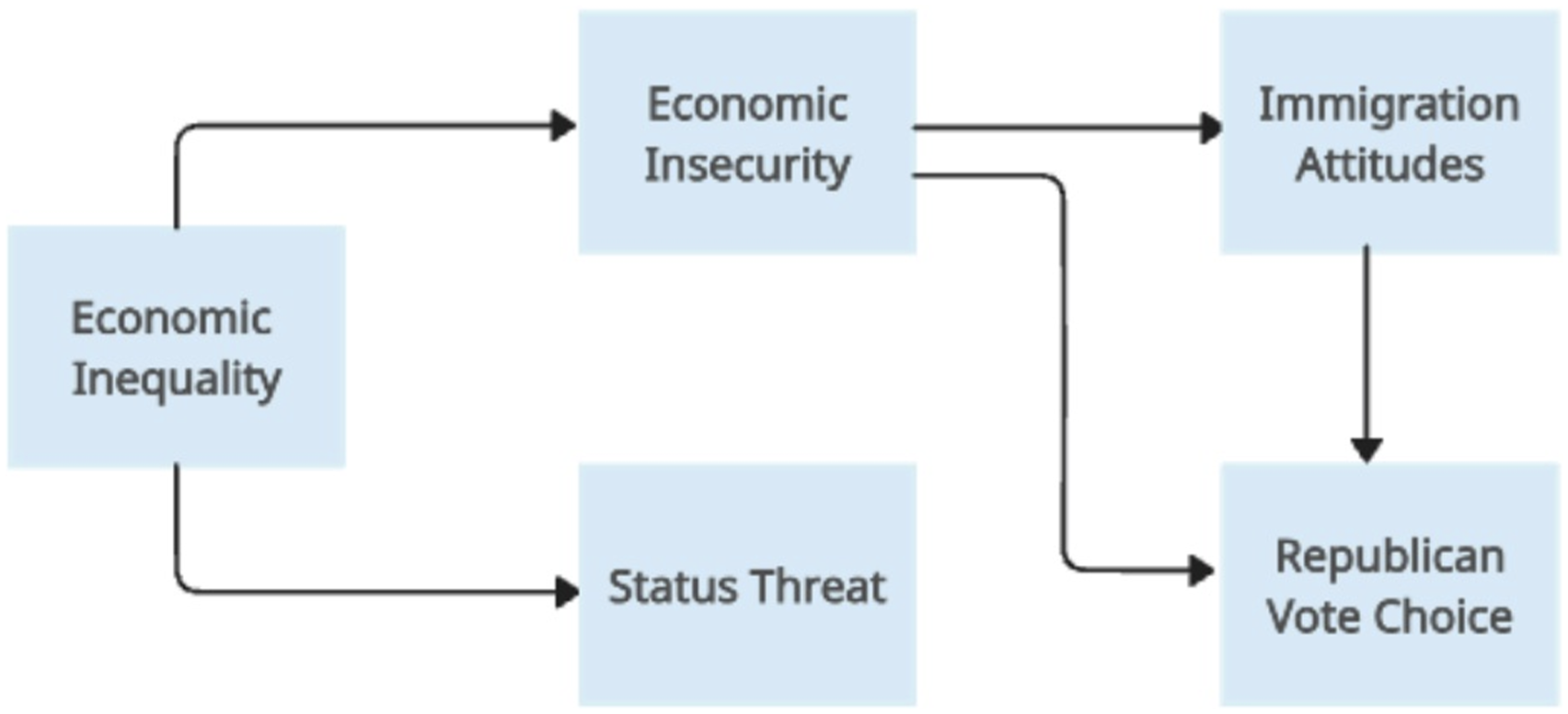
Negative immigration attitudes, in turn, increase the likelihood of Republican vote choice, with this effect strongest under high inequality. A weaker direct pathway runs from economic insecurity to Republican voting, capturing non-immigration-based economic appeals. This integrated framework yields testable hypotheses on how inequality shapes both attitudes and electoral behavior.
Data
This study combines individual-level survey data from the ANES (2022) Time Series Cumulative File with aggregate-level state economic indicators to test the hypotheses. The cumulative ANES provides high quality nationally representative individual-level survey data, which includes key variables such as immigration attitudes (measured on a left-right scale), party vote choice, self-reported financial outlook, demographic controls, and political identification. Survey items measuring attitudes have been included in the ANES surveys since the 1970s but questions about immigration have only been administered since 1988. Hence, we use 1988 as the starting point for our study. We then merge this data with pertinent socio-economic data at the state level. Our dataset contains 29,942 respondents, over 9 general elections, from 1988 to 2020.
Two different dependent variables are utilized. The first measures immigration attitudes based on two questions that are combined into an index (α = 0.56). One question is based on a respondent’s feeling thermometer rating of “unauthorized immigrants” on a scale of 0–100 and the other question asks: “do you think the U.S. should admit more, fewer, or about the same number of immigrants as now?” 2 Following previous literature (Garand et al. 2017; Macdonald 2021), we combine responses to these two questions into a single score using principal components factor analysis, which shows that they both load strongly onto a single factor (eigenvalue = 1.41, variance explained = 0.71). We then re-scale the variable to range between 0 and 1, with higher values indicating greater opposition to immigration. The second dependent variable measures Republican voting by relying on the reported vote choice from each ANES. Republican vote is binary, with Republican voters coded as 1 and all other parties (principally Democrats) code as 0. 3
For the Republican vote models, we use immigration attitudes as an independent variable and for the immigration attitude models we include a subjective measure of prospective personal finance as an independent variable. Respondents were asked to evaluate whether their personal financial situation over the next year is likely to “be worse,” “stay the same,” or “get better.” We then re-scaled the variable 0–1 (worse to better) for consistency. We also include in our models a range of variables that are related to both immigration attitudes and vote choice as controls. Standard demographic controls for each include: age (in years), education (college degree or not), gender (female), immigration status (a foreign parent born abroad or not), household income (three categories), race (white or other), and region (Northeast, North Central, South, West). We also control for partisan identification via a binary variable measuring if a respondent identifies as a Republican (Republican ID).
Our key independent variable at the aggregate level is an objective measure of income inequality. Our primary measure of income inequality is the Gini coefficient, the most widely accepted metric in the literature applied at the state level. 4 State Gini coefficients capture the overall degree of income concentration in a state and range from 0 (perfect income equality) to 1 (perfect income inequality). Research indicates that state Gini coefficients are valid and reliable estimates of income inequality across U.S. states and over time (Langer 1999), which also correlate well with other income inequality measures (Kawachi and Kennedy 1997). We obtain Gini’s from the U.S. Census Bureau, which provides a measure of post-distribution inequality, since it captures inequality resulting from both market forces and redistributive policy. 5 This measure aligns with our hypotheses, since the main mechanisms leading inequality to affect political attitudes are most likely to operate via a person’s disposable income after taxes and transfers, rather than solely their market income (Stockemer and Scruggs 2012).
At the aggregate level, we include two key indicators of economic performance, which have been known to influence vote choice and attitudes towards immigrants. Economic expansion can attract more immigrants and lead to less restrictive immigration attitudes (Gorodzeisky and Semyonov 2016). Therefore, we include state-level GDP growth. 6 As higher unemployment has been linked with the hardening of attitudes towards immigrants and far right support (Baccini and Weymouth 2021; Rebechi and Rohde 2023), we also include state-level unemployment rates. 7 In addition, we include a state-level logged measure of GDP per capita, as economically deprived regions have been linked with greater opposition to immigration and far right support (Ballard-Rosa et al. 2021; Rodríguez-Pose et al. 2023). 8 Last, since immigration attitudes are central to our hypotheses, we also control for immigration levels per state, as contact theory predicts the reduction of out-group hostility via exposure to members of other groups, which inevitably happens in areas with a higher share of immigrants (Allport 1954). 9
Methodology
This study employs a quantitative, longitudinal analysis of the United States to examine the relationship between income inequality, immigration attitudes, and voting behavior. Specifically, it tests four hypotheses regarding the effects of macroeconomic inequality and individual financial perceptions on attitudes toward immigration and support for the Republican Party.
We employ pooled multilevel models rather than panel fixed-effects specifications because the primary variables of interest—immigration attitudes and prospective financial evaluations—are measured at the individual level and vary substantially across respondents within the same state-year. Fixed-effects approaches would absorb much of the contextual variation central to our hypotheses and substantially reduce statistical power.
To this end, we utilize multilevel pooled regression models based on repeated cross-sectional survey data from the (ANES), covering the period from 1988 to 2020. Macro-level indicators of inequality and economic performance—such as the Gini coefficient, GDP growth, GDP per capita, unemployment rate, and the number of new immigrants—are merged by year and state to capture contextual variation. All models include year-fixed effects and cluster standard errors at the state-year level to account for non-independence within contextual units. This multilevel framework is appropriate given the hierarchical nature of the data, with individuals nested within states across time.
The analysis proceeds in two stages: (1) Immigration Attitudes: Multilevel pooled linear regression models predict individuals' immigration attitudes as a function of income inequality (Gini coefficient), personal financial outlook, and relevant demographic covariates. Interaction terms between inequality and financial outlook are included to test for conditional effects. We estimate the following specification (2) Republican Vote Choice: Multilevel pooled logistic regression models predict the likelihood of voting Republican, with immigration attitudes and their interaction with inequality as key predictors. These models are stratified by an individual’s reported financial outlook (worse, same, better) to test whether economic pessimism moderates the effect of cultural attitudes on voting behavior. We estimate the following specification
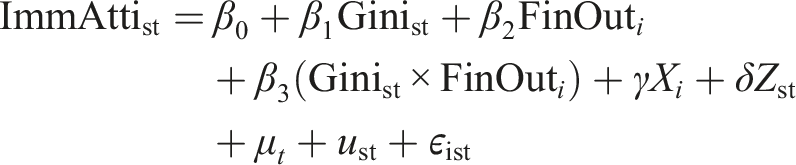
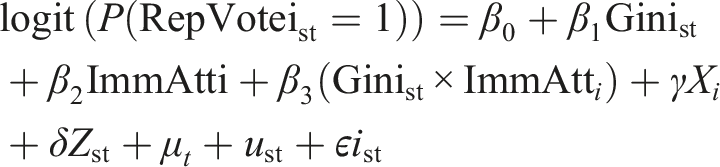
For both sets of analyses, where: • i = individual, s = state, t = year • X
i
= individual covariates (age, degree, female, etc.) • Z
st
= state-level covariates (GDP growth, unemployment, etc.) • μ
t
= year fixed effects • u
st
= random intercept at state-year level • ϵ
ist
= individual error term
This approach enables us to assess both the direct impact of inequality on political preferences and the indirect pathways through personal financial perception and immigration attitudes.
Results
Descriptive Analysis
First, the trends in our key variables are investigated. Figure 2 displays the mean state-level gini coefficient with local polynomial smoothing from 1980 onwards. Gini rates range across the sample between 0.45 (New Hampshire and West Virginia in 1980) and 0.73 (Florida and Wyoming in 2020). We can see that there has been pronounced growth in income inequality in the United States over this period, as the gini has risen from roughly 0.49 to 0.63, which is nearly a 30 percent increase. Inequality rose sharply in the 1980s under Reagan, then gradually increased until just past the turn of the century, before sharply increasing during the Bush II administration, then leveling, and has increased slightly in recent years. Inequality shows a fairly consistent pattern across states and has increased substantially across all states. Inequality increases have also been most pronounced in wealthier states, as it is strongly correlated with GDP per cap (r = .77). Mean income inequality via local polynomial smoothing, with 95 percent CIs, 1980–2020.
Next, we analyze our two dependent variables. Figure 3 displays the mean immigration attitude (L-R) of Republican versus other voters over time. We can see that Republican voters display greater anti-immigrant sentiment than other voters in every election. Overall, Americans have become less anti-immigrant over time, with the biggest decline occurring in 2020. This aligns with the findings of Ollerenshaw and Jardina (2023), who use multiple data sources to examine immigration opinion. However, Republicans have become slightly more anti-immigrant over time (peaking in 2016), while other voters have become much more tolerant, moving 0.58 to 0.36 leftwards over time. This has meant that the partisan voting gap in immigrant sentiment has increased massively over time. From 1988 to 2008, the gap was roughly 0.1 on the 0–1 (L-R) scale, save for the 1992 and 1996 elections, when it was 0.05 and 0.01, respectively. The difference is also statistically significant for every election, save for the 1996 election. Prominently, in 2012, we start to see a very large gap emerge of 0.16, which increases in 2016, to 0.3, and in 2020, to 0.34. The gap has become so large now that in 2020, Republican voters were roughly twice as right (0.7) on the left-right scale as other voters (0.36). Mean immigration attitude (L-R) by party vote, with 95 percent CIs, 1988–2020.
Immigration Attitudes Estimations
Multilevel pooled linear regression predicting immigration attitudes (L-R)

Beta coefficients from a multilevel pooled linear regression predicting immigration attitudes (L-R), with clustered standard errors in parentheses. +p < 0.1, *p < .05, **p < .01, ***p < .001.
Model 1 shows that several individual characteristics significantly predict negative attitudes toward immigrants. These include being Republican-identified, older, white, lower-income, and lacking a college degree. Unsurprisingly, individuals with a foreign parent are significantly less likely to hold negative attitudes towards immigrants at (p < .001). Individuals who view their personal financial situation as being worse off in the coming year, are significantly more likely to view immigrants negatively at (p < .01).
The aggregate-level variables largely behave according to expectations. Lower GDP growth and GDP per capita are significantly associated with more negative attitudes towards immigrants, while higher unemployment is associated with negative attitudes towards immigrants. Greater immigration levels are also associated with positive attitudes towards immigrants. Most importantly, we find that gini is statistically significant and positively related to negative immigration sentiment at (p < .05).
Figure 4 displays the marginal effects of income inequality on predicting immigration attitudes. We can see that at the lowest levels of inequality, immigrant sentiment is roughly 0.575 on the 0–1 scale, which increases with greater inequality. At the highest levels of inequality, immigration sentiment is roughly 0.62, a difference of 0.045, which translates to roughly an 8-percentage point movement to the right on the left-right scale between the lowest and highest levels of inequality. Therefore, we find evidence in favor of (H1), that greater income inequality is associated with negative attitudes towards immigrants. Average marginal effects of income inequality on predicting immigration attitudes (L-R), with 95 percent CIs. From Model 1 (Table 1) of pooled linear regression.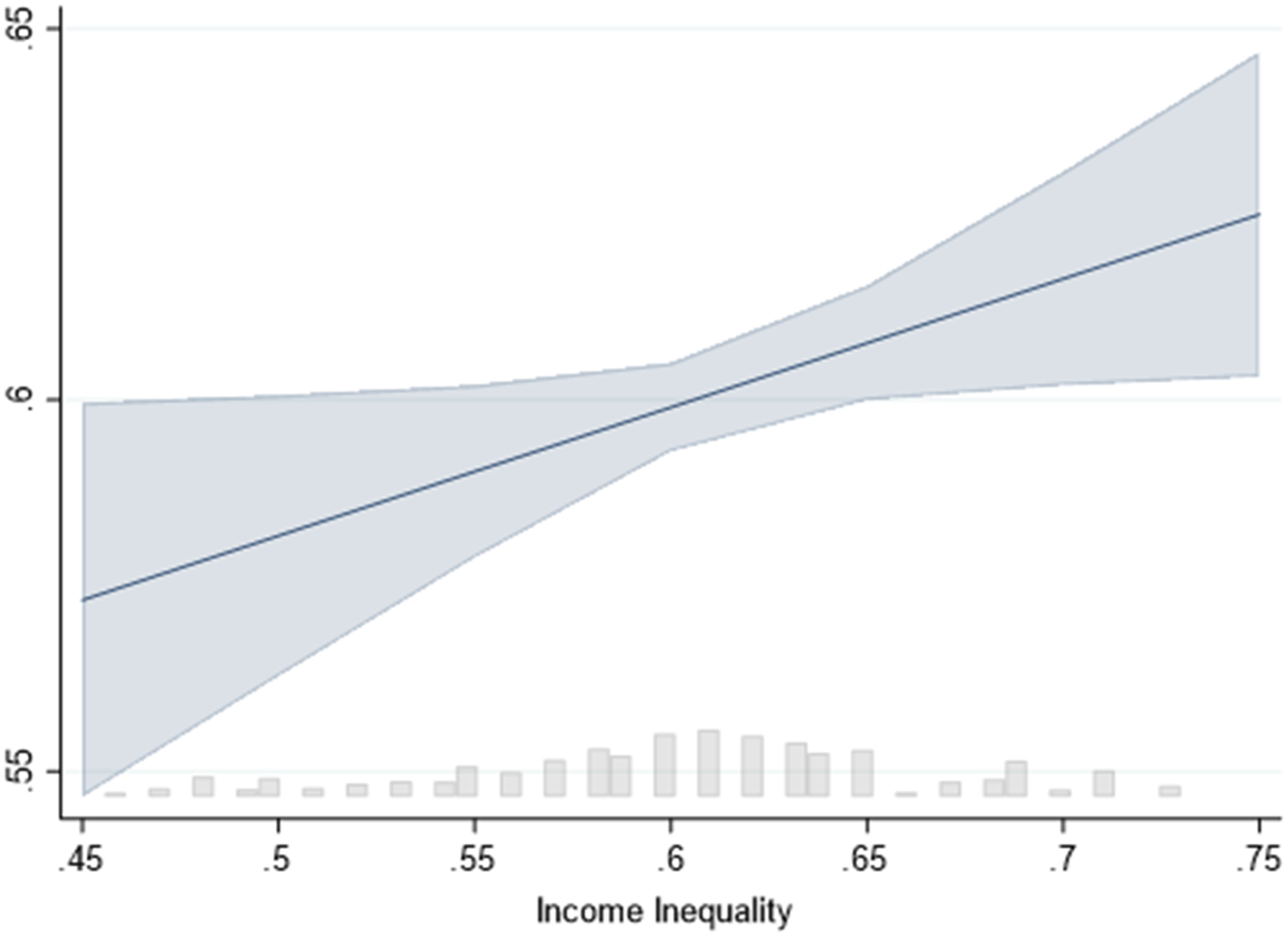
Model 2 tests whether individual prospective financial evaluations moderate the relationship between inequality and immigration attitudes by undertaking an interaction between personal financial situation and gini. The interaction is negative and statistically significant at (p < 0.1). Hence, although the effect size is small, we find that worse financial evaluations and higher inequality are associated with greater anti-immigrant sentiment.
Figure 5 plots the average marginal effects of the interaction. We can see that at low levels of inequality, individuals with a better prospective financial outlook are more likely to be positive towards immigrants than individuals with a worse prospective financial outlook. However, as inequality increases, individuals with a worse financial outlook become significantly more likely to hold negative views towards immigrants. Overall, the worse financial outlook slope increases roughly 0.08, while the better financial outlook slope increases only 0.03, which is a 0.05 difference in the 0.1 (positive-negative) scale. Therefore, we find evidence in favor of (H2), that income inequality exacerbates negative immigrant sentiment significantly more among individuals experiencing worsening financial situations. Average marginal effects of income inequality by future financial outlook on predicting immigration attitudes (L-R), with 95 percent CIs. From Model 2 (Table 1) of pooled linear regression.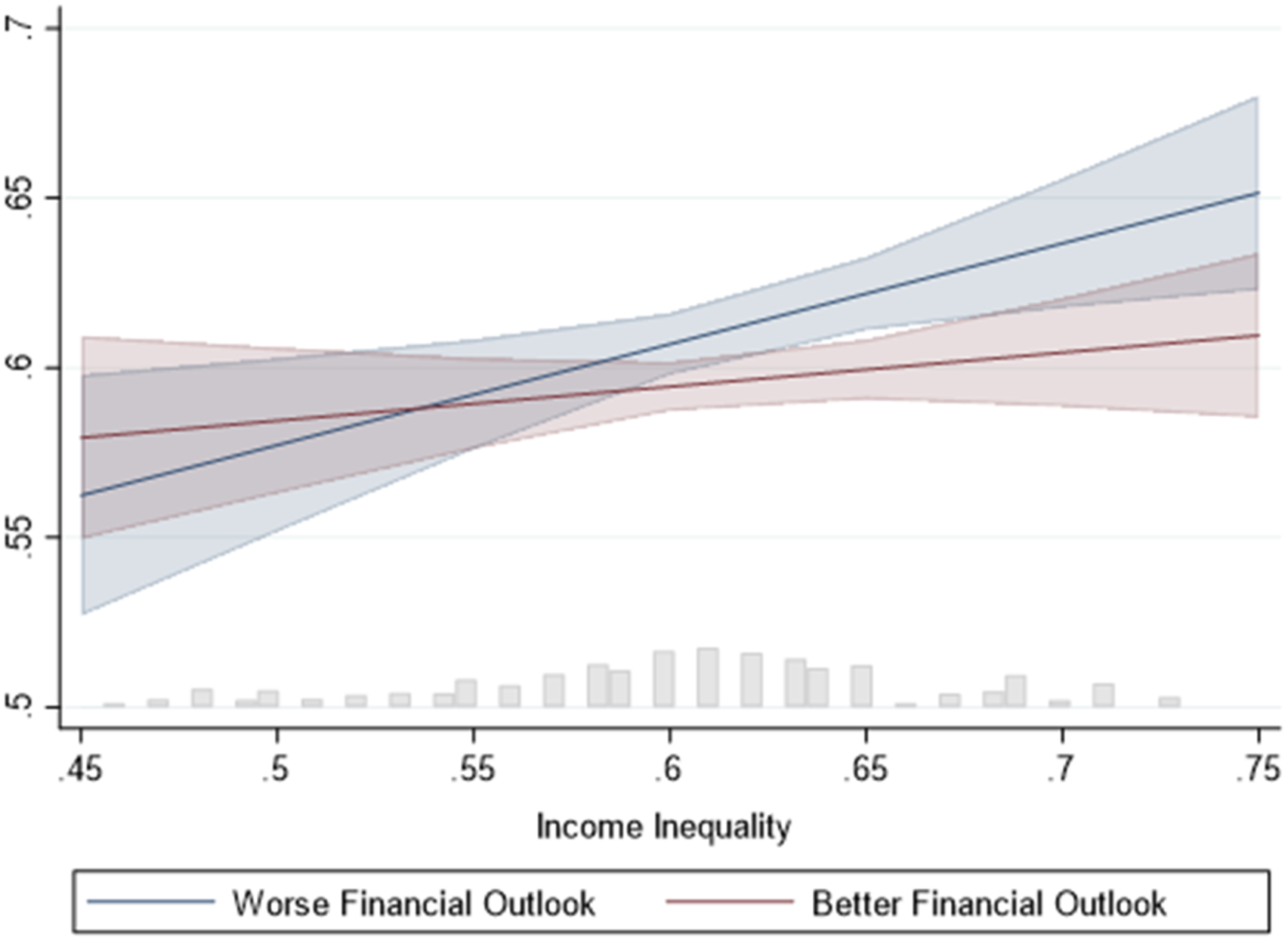
Republican Voting Estimations
Multilevel pooled logistic regression predicting republican vote

Beta coefficients from a multilevel pooled logistic regression predicting Republican vote, with clustered standard errors in parentheses. +p < .1, *p < .05, **p < .01, ***p < .001.
Similar to our immigration sentiment models, Model 1 finds that Republican identifiers, as well as older, white, and lower educated individuals, are significantly more likely to vote Republican. Higher earners, individuals living in the South, and surprisingly, individuals with a foreign parent also significantly prefer the Republicans. Unsurprisingly, individuals with more negative attitudes towards immigrants are significantly positively related to Republican voting at (p < .001). In this specification, the aggregate-level variables display limited effects, as only GDP per capita is statistically significant and is negatively related to Republican voting at (p < .01). Income inequality is positively related to Republican voting but is non-significant.
Model 2 tests whether inequality is associated with an increased likelihood that individuals with negative attitudes toward immigrants vote Republican. It does so via an interaction between gini and immigration attitudes.
10
The interaction is positive and statistically significant at (p < .001). Figure 6 plots the average marginal effects of the interaction. We can see that individuals with positive attitudes towards immigration (or leftist) are less likely to vote Republican under lower levels of inequality. However, individuals with negative attitudes towards immigration (or rightist) are more likely to vote Republican under higher levels of inequality. For example, at the most positive level of immigration sentiment, higher inequality is associated with a reduced likelihood of voting Republican by 0.5 percentage points, but at the most negative level of immigration sentiment, higher inequality is associated with greater likelihood of voting Republican by the same amount. Overall, when moving from 0 to 1 on the immigration attitudes scale, higher inequality is associated with greater Republican voting likelihood by a full percentage point. Thus, we find consistent evidence in support of (H3). Income inequality exacerbates the positive effect that negative immigration sentiment has on Republican voting. Average marginal effects of immigration attitudes (L-R) by income inequality on predicting Republican vote, with 95 percent CIs. From Model 2 (Table 2) of pooled logistic regression.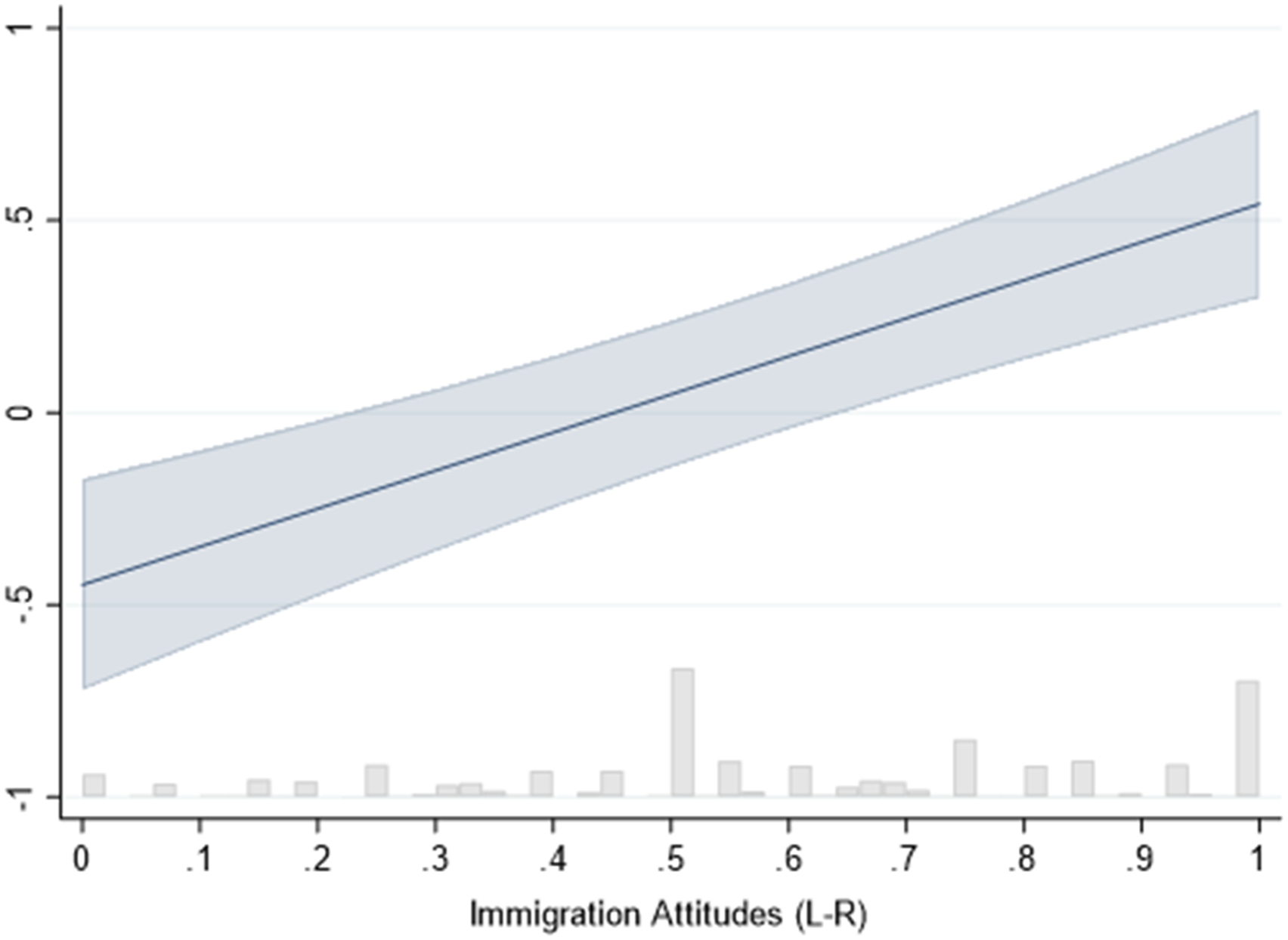
Last, we test whether the interaction between immigration attitudes and inequality is moderated by prospective financial outlook. We do so by replicating Model 2 and running separate models for each category of personal financial outlook (worse, same, better). Each interaction is positive and statistically significant. The interaction coefficient is strongest for individuals with worse financial outlooks and there is marginal difference between individuals with no change or better financial outlooks (see Appendix A3 for full table results).
Figure 7 plots the average marginal effects of each interaction. We can see that the slope is steepest for the worse outlook individuals and that individuals in this category with positive attitudes towards immigration (or leftist) are more than twice as likely to vote Republican under lower levels of inequality than the other two categories. However, there is little difference in vote likelihood between the outlook categories for individuals with the most negative attitudes towards immigration (or rightist). Overall, we find some support for the notion that lower inequality can reduce the likelihood of voting Republican for individuals with worsening financial outlooks. While inequality consistently strengthens the association between anti-immigrant attitudes and Republican voting, we find limited evidence that this effect is systematically stronger among individuals with worsening financial outlooks (H4). This suggests that financial insecurity may shape immigration attitudes more directly than vote choice, or that its influence on voting is mediated through partisan identity. We further test that financial evaluations influence on voting is mediated through partisanship by re-running all of the models in the sample of elections where there is Democrat control of the White House. Although financial evaluations are more negative for Republican voters when a Democrat is in office, our main effects all hold (see Appendix A4).
11
Average marginal effects of immigration attitudes (L-R) by income inequality and future financial outlook on predicting Republican vote, with 95 percent CIs. From Appendix Models 5–7 (Table A2) of pooled logistic regression.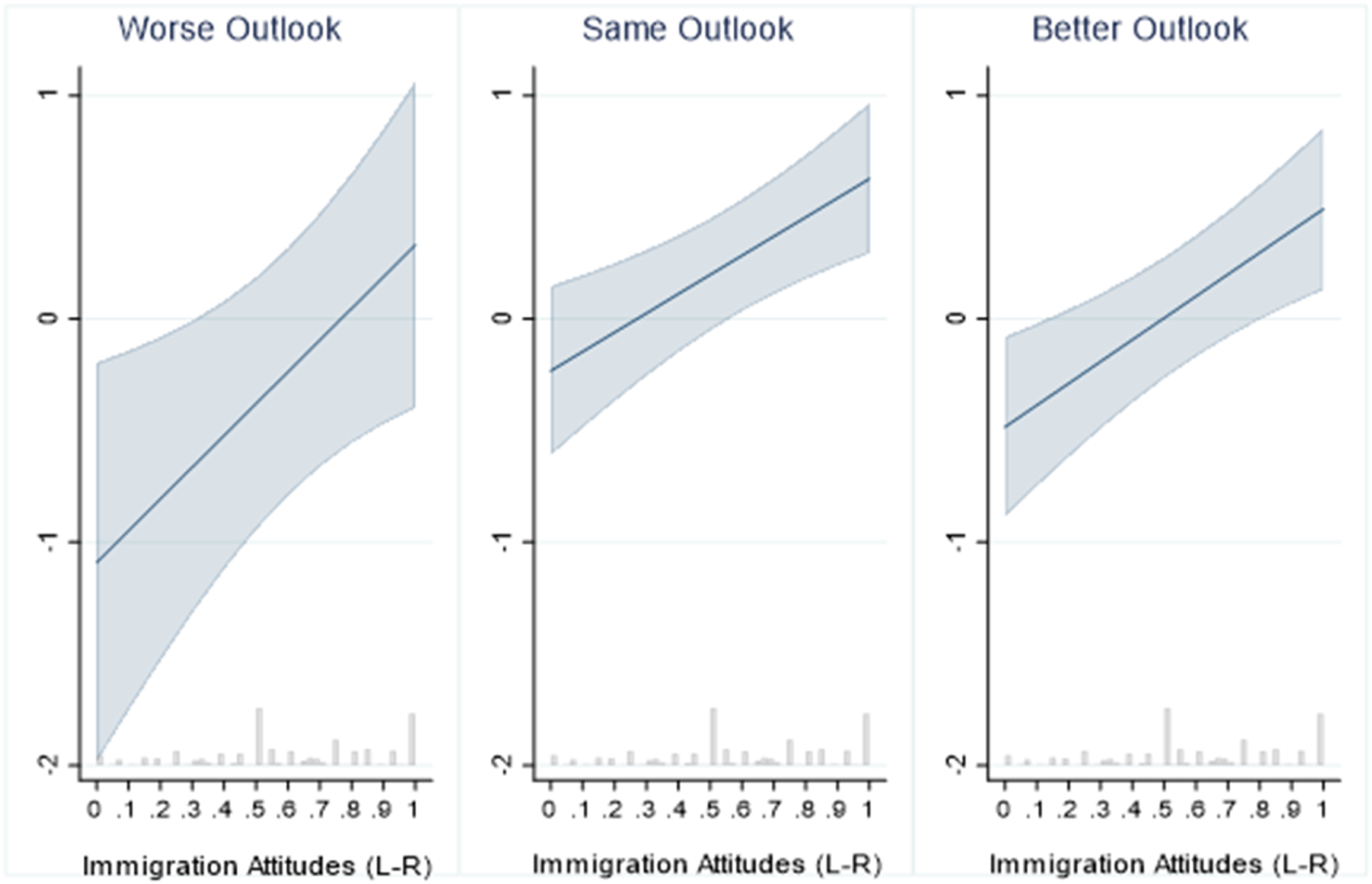
Discussion
The findings of this study offer important insights into the complex interplay between income inequality, immigration attitudes, and partisan alignment in the contemporary United States. Consistent with our expectations, we find robust evidence that rising income inequality is associated with more negative views on immigration, particularly among individuals who anticipate worsening financial circumstances. These results support the idea that inequality functions not only as a structural constraint but also as a psychological amplifier—intensifying anxieties about economic security, cultural change, and social status. In line with theories of realistic group threat, individuals who feel financially vulnerable appear more susceptible to exclusionary attitudes, especially in contexts marked by high inequality (Gravelle 2020; Hüning and Tepe 2023).
Moreover, our results confirm that anti-immigrant sentiment significantly predicts support for the Republican Party and that this relationship is magnified by the level of inequality. Where inequality is higher, individuals with negative views of immigration are substantially more likely to vote Republican, suggesting that the electoral consequences of cultural resentment are magnified under conditions of economic stratification. This finding aligns with previous research emphasizing how populist appeals gain traction when cultural grievances are reinforced by material insecurities (Macdonald 2021; Reeskens and van Oorschot 2021).
At the same time, the evidence for our fourth hypothesis is more limited. While inequality strengthens the link between anti-immigrant attitudes and Republican voting overall, we do not find strong support for the claim that this effect is more pronounced among individuals with worsening financial outlooks. This suggests that while perceived economic insecurity amplifies exclusionary attitudes, its interaction with vote choice may be more indirect or strongly mediated by other factors, such as partisan identity or media consumption (Hooghe and Dassonneville 2018; Margalit 2019).
Taken together, these findings underscore the need to understand inequality as a multidimensional phenomenon—one that shapes political behavior through both economic and cultural channels. They also highlight the importance of subjective perceptions in translating structural conditions into political preferences. By linking rising inequality to immigration attitudes and electoral choices, this study contributes to a growing body of literature on the economic roots of contemporary political realignment (Gidron and Hall 2020; Rodrik 2018). The study also contributes to the burgeoning literature into the socio-political consequences of inequality, as well as to the debate around the sources of far-right support, whose effect, in the past, has been primarily tested within Western Europe. This paper expands on this research by providing a temporal study of an under-explored, but especially relevant case that contributes to the discourse on populism. The study’s relevance is notably timely, with the increased salience of immigration and rise of Donald Trump, which has intensified interest in understanding American populism’s unique characteristics.
Conclusion
This study sheds new light on the economic underpinnings of political extremism in the contemporary United States. Drawing on over three decades of ANES data and robust multilevel modeling, we demonstrate that rising income inequality plays a critical role in shaping both public attitudes toward immigration and voting behavior. Specifically, our findings show that inequality fuels anti-immigrant sentiment—especially among those who perceive their personal financial situation as deteriorating—and that such sentiment is strongly associated with increased support for the Republican Party.
Importantly, our results affirm that economic and cultural explanations for political realignment are not mutually exclusive but mutually reinforcing. Structural inequality does not merely affect the distribution of income—it also undermines social cohesion, deepens feelings of relative deprivation, and erodes trust in democratic institutions. In times of economic hardship, concerns about immigration often become a focus of frustration, making it easier for right-wing populist messages that blame immigrants for broader problems to resonate.
The interaction effects uncovered in this analysis highlight the conditional nature of political discontent: inequality is most politically relevant when filtered through subjective experiences of financial insecurity and status anxiety. In this sense, inequality functions not only as a material condition but also as a cultural amplifier—exacerbating grievances that translate into exclusionary and authoritarian political preferences.
There are several fruitful areas for future research. Future work could benefit from potentially examining supply side factors in the inequality—immigration—populism relationship. More finely detailed survey data or experimental data could also more rigorously evaluate the causal implications of the findings uncovered in this paper. It would also be beneficial to test for the generalizability of these findings in the American case in other democracies. Perhaps it is more of a feature in some contexts over others, such as welfare regime, region, or settler state status?
In sum, these findings carry important implications for the resilience of democratic institutions. As inequality continues to rise, so may the appeal of populist movements that promise to restore lost status through nationalism and nativism. Reversing this trend requires more than economic growth; it demands inclusive policies that reduce inequality and address the deeper psychological and cultural fractures within the electorate.
The economic roots of contemporary populism are deeply intertwined with broader patterns of inequality. Our findings suggest that economic disparities shape political behavior not only by influencing material conditions but also by conditioning how individuals interpret and respond to immigration. Inequality appears to heighten the political salience of anti-immigrant attitudes, strengthening their association with support for right-leaning populist candidates. These results highlight the importance of considering structural economic contexts alongside cultural factors when assessing the sources of populist support and the dynamics of electoral behavior in advanced democracies.
Supplemental Material
Supplemental Material—Bridges and Walls: How Rising Inequality Drives Anti-Immigrant Politics and Republican Realignment
Supplemental Material for Bridges and Walls: How Rising Inequality Drives Anti-Immigrant Politics and Republican Realignment by Matthew Polacko, Giacomo Di Pasquale, and Emma Lofstedt in Political Research Quarterly
Footnotes

Funding
The authors disclosed receipt of the following financial support for the research, authorship, and/or publication of this article: This work was supported by the Social Sciences and Humanities Research Council of Canada (SSHRC) under Grant #430-2025-0937.
Declaration of Conflicting Interests
The authors declared no potential conflicts of interest with respect to the research, authorship, and/or publication of this article.
Supplemental Material
Supplemental material for this article is available online.
Notes
References
Supplementary Material
Please find the following supplemental material available below.
For Open Access articles published under a Creative Commons License, all supplemental material carries the same license as the article it is associated with.
For non-Open Access articles published, all supplemental material carries a non-exclusive license, and permission requests for re-use of supplemental material or any part of supplemental material shall be sent directly to the copyright owner as specified in the copyright notice associated with the article.
