




Abstract
This study investigates the dynamics of wage inequality among immigrants in the United States, a topic often overshadowed by discussions on the effects of immigration on native workers. Utilizing a unique dataset specifically created for this research, we calculate wage inequality using the Gini coefficient and Atkinson index, offering a nuanced analysis of trends across education levels, industries, and immigration policies. The findings reveal a sharp rise in wage inequality among immigrants post-2013, surpassing overall wage inequality in the United States for the first time in 2023. High-skilled sectors, particularly IT, demonstrate a stabilizing effect on wage disparity, while low-skilled immigrants face growing wage gaps exacerbated by stringent visa policies and economic disruptions, such as the COVID-19 pandemic. Our econometric analysis highlights the dual role of minimum wage policies, which increase wage inequality in the short term but reduce it over the long run. This study emphasizes the need for inclusive immigration policies that address within-group disparities and enhance equity in the labor market.
Introduction
Migrant workers accounted for 4.9 percent of the total labor force in destination countries in 2019, according to the International Labour Organization (ILO) 2021. This issue is increasingly becoming a significant source of conflict in nearly all developed countries. On the one hand, the growing influence of the ‘‘New Right” movement around the world is leading politicians to adopt policies that are distant from migrants, emphasizing cultural conservatism and a focus on national identity. On the other hand, demographic shifts in developed countries — such as aging populations and declining fertility rates — as well as the COVID-19 pandemic are exacerbating the problem of labor shortages (McAuliffe and Triandafyllidou 2021). This dilemma is unfolding in a rapidly changing political environment, where both right- and left-leaning parties are reshaping their approaches to migration in response to electoral pressures, cultural anxieties, and economic realities. Some leaders adopt anti-migrant policies, arguing that they will prevent the deprivation of their citizens’ rights, while also being aware that such policies result in economic losses. It would not be wrong to say that the country that has experienced this conflict most profoundly is the United States, which has historically hosted the largest number of immigrants of any country, though not the highest in terms of percentage of the population.
The most recent estimates from the ILO (2021) indicate that, in 2019, 22.1 percent of international migrant workers were employed in the United States and Canada, and their share constituted nearly 20 percent of the labor force. According to Pew Research Center, 1 in 2022, over 30 million immigrants were in the United States workforce, with 22.2 million being lawful immigrants and 8.3 million being unauthorized immigrant workers. However, despite this large number, BCG’s research, 2 found that the United States experienced the worst scenario among developed economies, with the annual cost of labor shortages exceeding 800 billion USD.
When looking at the academic literature, we see that a lot of research has been conducted on immigrant workers in the United States. These studies focus on various aspects of the issue, including labor force participation and immigrant employment, economic growth and productivity, and the impact on native workers. With the recent popularity of the ‘‘New Right” discourse, the number of studies examining the impact of immigration on wages and overall wage inequality has particularly increased.
Within this literature, studies investigating whether immigration exerts pressure on the wages of native workers are becoming more prominent. A number of studies suggest that immigration has a negative impact on the wages of native workers, particularly those with lower education levels. For example, Borjas (2003) argues that immigration lowers both the wages and labor availability of native workers who compete directly with immigrants. Similarly, Borjas and Katz (2007) finds that the substantial influx of Mexican immigrants has widened the US wage structure by depressing the earnings of less-educated native workers while increasing the earnings of college graduates. Aydemir and Borjas (2007) identify an inverse relationship between immigration-driven shifts in labor supply and native wages in the United States. Likewise, Mouw (2016) concludes that immigration reduces native wages, though the effect size is modest. Lin and Weiss (2019) also show that low-skilled immigrants contribute to wage losses at the bottom of the income distribution, while high-skilled immigrants boost the wages of top earners, ultimately increasing overall wage inequality.
On the other hand, a growing body of literature presents more nuanced or even positive assessments of the economic effects of immigration. Ottaviano and Peri (2012), for instance, report mixed outcomes when accounting for heterogeneity in workers’ education and experience levels, suggesting that the impact of immigration differs across various groups of native workers. Peri et al. (2020) examine the migration of Puerto Ricans to Orlando following Hurricane Maria and find sector-specific effects: while wages in construction declined, wages in retail and hospitality rose. They argue that the overall economic impact was positive, primarily driven by increased aggregate demand. Similarly, Clemens and Hunt (2017) analyze sudden refugee inflows and find no significant adverse effects on the wages or employment of native workers, including those in low-skilled occupations. From a historical perspective, Lee et al. (2017) investigate the mass repatriation of Mexicans during the 1930s and find that it did not lead to improved labor market outcomes for native workers; on the contrary, it may have had marginally negative effects. Furthermore, recent evidence, Bernstein et al. (2022), highlights the substantial role of immigrants in driving innovation in the United States: they are responsible for
As exemplified above, existing studies predominantly examine the impact of immigration on the wages of native workers in the United States, often focusing on how immigrants may depress these wages. However, there is a question that, despite being of great importance, has not been asked: How is the wage inequality problem among immigrant workers evolving in the United States? To the best of our knowledge, no research has specifically addressed this question. The purpose of this novel study is to conduct research to address the question mentioned.
In recent decades, as anti-immigrant rhetoric has gained political prominence, two trends are likely to increase and further exacerbate wage inequality among immigrant workers in the United States. One of these trends is the stricter legal regulations imposed on immigrant workers in general, and the second is the policy preference for higher-skilled over lower-skilled workers in the labor force. This research seeks to determine whether these trends worsen wage inequality among immigrants in the United States by analyzing a special dataset prepared specifically for this study.
This article is structured as follows: the Regulations on Immigrant Workers in the United States section discusses legislative proposals and amendments related to immigrant workers. The Data Analysis section presents data and conducts essential data analysis to enhance understanding. In the Empirical Analysis section, we assess wage inequality among immigrants to develop a distinctive dataset that will be used in the econometric analysis. The final Conclusion section contains general evaluations and conclusions.
Regulations on Immigrant Workers in the United States
In the United States, immigration regulations have undergone significant changes over time. Shifts in economic and political conditions often prompt ruling governments to amend immigration regulations. The United States immigration policy has increasingly focused on attracting high-skilled immigrant workers over the past decade. This includes expanding opportunities for skilled professionals, offering incentives for STEM graduates to remain in the United States, and acknowledging the vital contributions of immigrants in sectors such as technology, healthcare, and research. Some of the notable regulations emerging in recent years related to the policy outlined are presented below.
The Senate passed the Border Security, Economic Opportunity, and Immigration Modernization Act of 2013 (S.744), 3 which proposed significant reforms to the immigration system, highlighting a legislative focus on attracting high-skilled immigrants. The comprehensive nature of this act highlights several key provisions related to immigrant workers, including the following:
The bill requires employers to use the E-Verify system to confirm the legal status of their employees, ensuring that only authorized workers are hired in the United States. It proposes changes to employment-based visa programs, including reforms to the H-1B (specialty profession/typically requiring a bachelor’s degree or higher in a specific field) visa system, designed to increase opportunities for high-skilled immigrants and address the backlog of visa applications. Furthermore, the bill seeks to simplify and broaden legal immigration pathways, particularly for skilled workers, entrepreneurs, and family members. Additionally, it tackles the needs of the agricultural sector by offering a pathway to legal status for farm workers and establishing a new visa category for agricultural laborers.
The Fairness for High-Skilled Immigrants Act of 2020 (H.R.1044) 4 was introduced to address long-standing issues in the immigration system by allowing more high-skilled immigration. The bill seeks to enhance fairness, transparency, and accountability in employment-based immigration by making several changes to visa regulations. It removes the 7 percent cap on immigrant visas and limits the number of H-1B and H-4 (family members of H-1B visa holders) visas issued. Transition rules are introduced for EB-2 (workers with advanced degrees or exceptional ability) and EB-3 (skilled and other workers) visas, reserving a portion for applicants from countries with fewer visa recipients and providing visas for professional nurses and physical therapists. The bill also eliminates a visa reduction for individuals from China. Employers applying for H-1B visas must disclose job qualifications and application details, and they are prohibited from exclusively advertising to H-1B applicants. Companies with a certain size cannot employ more than half of their workforce on H-1B or other nonimmigrant visas. The Department of Labor will launch a public website for H-1B job postings and gain broader authority to investigate fraud and misrepresentation in applications. The bill also raises penalties for visa-related violations. This act sought to eliminate per-country caps on employment-based green cards, thereby facilitating a more equitable distribution of visas among high-skilled workers (Blumenthal 2020).
During his first term, the Trump administration aimed to tighten the eligibility for the H1-B visa program, ensuring it was used exclusively for workers in high-wage, high-skilled jobs. In contrast, the Biden administration adopted a more balanced approach, striving to make the process more predictable and transparent while continuing to prioritize skilled workers in STEM fields. With Trump now re-elected, he is expected to implement H1-B visa policies similar to, or even stricter than, those from his first term.
Additionally, the public charge test 5 has evolved over time. The public charge test is an assessment used by United States immigration officials to determine whether an applicant for a visa or green card is likely to become primarily dependent on government support. It evaluates factors like age, health, income, and whether the individual may need public assistance in the future. Historically, the test has been used to assess an applicant’s financial self-sufficiency.
The test became more restrictive under the Trump administration in 2019, but the Biden administration reversed these changes in 2021, focusing mainly on cash assistance and long-term institutional care. A tightening of this rule is expected during Trump’s second term in office. The stricter test evaluation process has made it harder for low-income immigrants to secure green cards or permanent residency. By evaluating applicants based on their use of government assistance, including non-cash benefits like housing vouchers and food stamps, this policy has had a disproportionate impact on lower-skilled workers who may have depended on these benefits.
During Trump’s second term, regulations concerning immigrant workers likely became stricter. The tightening of immigration status could also have been used to further prioritize the influx of high-skilled labor.
Data Analysis
The detailed information on immigrants is sourced from the US Department of Labor, 6 where the department publishes comprehensive immigration application data. To ensure a reliable and robust analysis of wage inequality among immigrants, we consider only the wages of individuals who have been granted work authorization. Additionally, the dataset includes variables such as education, country of origin, country of citizenship, employer, and industry, allowing us to explore the potential influence of these factors on immigrant wages in the United States.
In 1990, the total civilian labor force in the United States (aged 16 and over) included 173,367,617 native-born individuals (participation rate: 64.4%) and 18,020,791 foreign-born 7 individuals (participation rate: 63.9%). By 2000, the total civilian labor force included 188,643,139 native-born individuals (participation rate: 63.8%) and 28,550,949 foreign-born individuals (participation rate: 60.4%). 8 According to the US Bureau of Labor Statistics, 9 in 2023, the total civilian labor force was 167,116,000, with a participation rate of 62.6 percent. Of this, 136,065,000 were native-born (participation rate: 61.8%), and 31,051,000 were foreign-born (participation rate: 66.6%). The median weekly earnings in 2023 were 987 USD for foreign-born workers and 1,140 USD for native-born workers, with a difference of 153 USD. In 2022, the difference was 142 USD. 10
In 2023, among foreign-born individuals aged 25 and over, the participation rates varied by education level: 5,371,000 had less than a high school diploma (participation rate: 57.7%), 7,338,000 were high school graduates with no college (participation rate: 64.9%), 4,378,000 had some college or an associate degree (participation rate: 68%), and 11,928,000 held a bachelor’s degree or higher (participation rate: 75.0%). 11
The top occupations with the highest share of immigrant workers in the United States in 2022 include manicurists and pedicurists (73.2%), plasterers and stucco masons (65.1%), taxi drivers (56.7%), graders and sorters of agricultural products (54.3%), and drywall installers, ceiling tile installers, and tapers (52.9%). Additionally, the share of STEM workers who were immigrants in 2022 was 23.1 percent. 12
As seen above, the US job market is highly dynamic, and immigration numbers have increased sharply over time. The literature contains numerous studies demonstrating the existence of a wage gap between immigrants and natives in the United States. While the wages of immigrants tend to converge with those of natives over time, this gap never fully disappears (Donahue 2021). Furthermore, other research, such as Duleep and Regets (1998), highlights the importance of country of origin among immigrants. These studies suggest that immigrants from developed countries often earn higher wages compared to those from developing countries, emphasizing the role of origin in shaping wage disparities.
To understand how changing immigration policies have impacted the structure and composition of the immigrant labor force in the United States, this section will focus on factors such as education level, country of origin, and industry and provide a more detailed analysis moving forward.
Figure 1 suggests that while country of origin plays a role in determining immigrant wages, its influence is not overwhelmingly dominant. Although immigrants from developed countries are frequently represented among the highest wage earners across all education levels, immigrants from several developing countries — such as India, Belarus, and El Salvador — also attain high average wages in the United States. These findings are broadly consistent with the existing literature but also reveal important nuances that warrant further investigation, particularly concerning how national origin interacts with education to shape labor market outcomes.
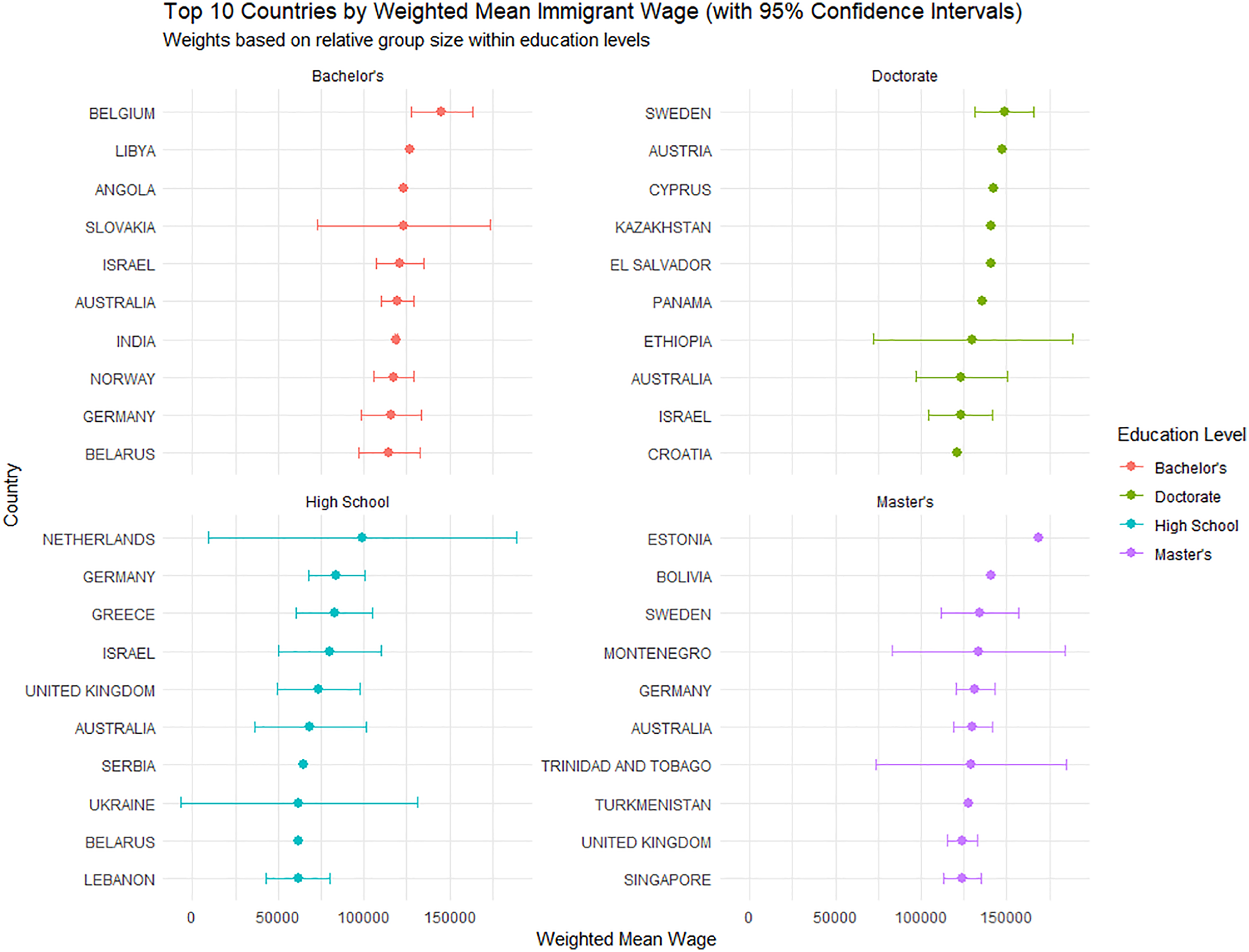
Wages of Immigrants by Origin of Country in 2023.
Duleep and Regets (1998) posited that immigrants from developed countries are often overrepresented in higher wage brackets because their skills are more predictable and transferable, given the similarities in educational and industrial structures between their home countries and the United States. However, considering that their study was conducted in 1998, it is important to recognize that globalization has since increased economic integration worldwide. This enhanced integration has likely improved the transferability of skills for immigrants from developing countries, enabling them to achieve better labor market outcomes in the United States. Recent research supports this view, indicating that immigrants from diverse backgrounds are now better able to leverage their skills in the United States labor market (Aydemir 2020).
To better understand the wage structure of immigrants by education level and identify the wage groups they belong to, we analyzed detailed data. Immigrants were first categorized by education level, and the median wages for each group were calculated.
Figure 2 highlights notable disparities in the wage structure among immigrant groups based on educational attainment. Contrary to conventional expectations, education does not appear to be the sole determinant of immigrant wages. For instance, immigrants with master’s and bachelor’s degrees earn more on average than those with doctorate degrees. Meanwhile, immigrants with only a high school diploma earn less than half the wages of those in higher education categories, and those with associate’s degrees fall between the high school and PhD groups.
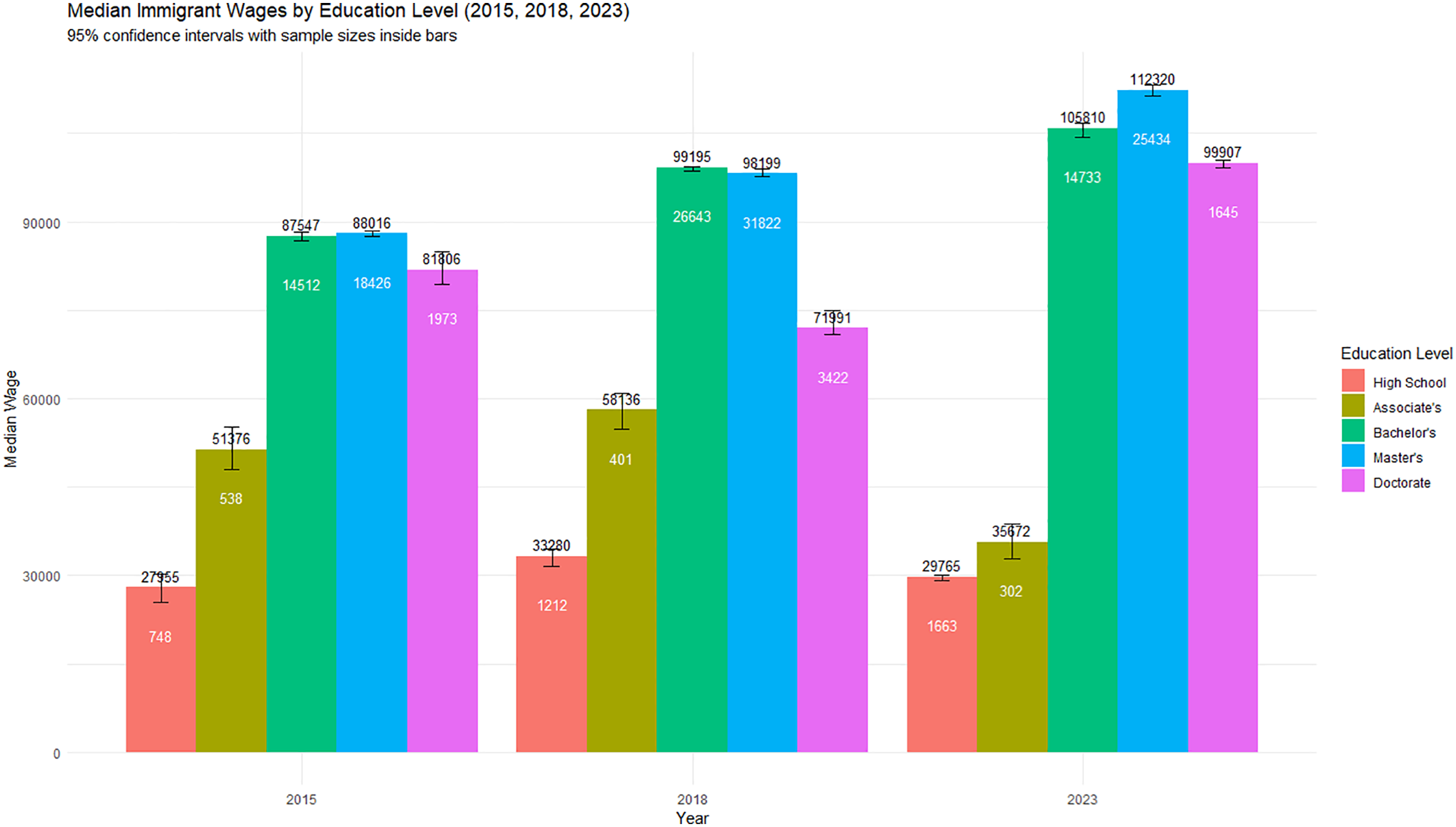
Median Wages of Immigrants by Education Level in 2015, 2018, and 2023. The chart shows bootstrapped 95 percent confidence intervals for each group. Black numbers on top of the bars indicate median wages (in USD), while the white numbers inside the bars represent the group size (number of observations). Error bars reflect the bootstrapped 95percent confidence intervals for the median wages. Note: The “Doctorate” category includes individuals with a PhD working both in academia and in other sectors.
According to the income classification defined by Immigration Research Initiative (2024), wages below 35,000 USD are considered low income, those between 35,000 and 104,000 USD are middle income, and wages above 104,000 USD are classified as high income. Based on median wages, immigrants with high school and associate’s degrees generally fall into the low- and middle-income groups, while those with bachelor’s and master’s degrees fall into the high-income group. Immigrants with doctorate degrees appear to fall within the middle-income category, which challenges traditional assumptions about the linear returns to education.
However, it is important to interpret these categorizations with caution. The standard deviation of wages (see Figure A2) is relatively high across all education groups, particularly for doctorate, associate’s, and high school degree holders, indicating substantial within-group variation. This overlap suggests that while median wages provide a useful benchmark, they do not fully capture the heterogeneity of wage outcomes within each group. Thus, income group classification based on central tendency may mask important dispersion effects, especially in groups with wide wage distributions.
These results suggest that skill-biased technical change 13 remains relevant when comparing low-skilled and highly educated immigrant workers, as evidenced by the substantial wage gap between high school graduates and higher education holders. However, the findings also reveal a deviation from the expected monotonic relationship between education and earnings — particularly the relatively lower wages of doctorate holders. This raises important questions about labor market dynamics affecting immigrants, including issues related to credential recognition, occupational mismatch, overqualification, or systemic barriers to fully utilizing advanced qualifications. Further investigation is essential to understand the factors that mediate the translation of educational attainment into economic outcomes for immigrants in the United States.
Moreover, the sharp increase in wage inequality among immigrants during and after the COVID-19 pandemic can largely be attributed to the significant decline in wages for immigrants with high school and associate degree diplomas. In contrast, the wages of immigrants with higher levels of education either remained stable or increased during the same period. This divergence suggests that the economic and social disruptions caused by COVID-19 disproportionately impacted less-educated immigrants.
It appears that the pandemic, along with the regulations and policies implemented after 2020, created challenges that disproportionately affected immigrants with lower educational qualifications. Since replacing low-skilled migrant workers was easier relative to replacing high-skilled workers, inequalities were reinforced. Additionally, high school and associate graduates, who are often employed in industries most vulnerable to economic downturns — such as hospitality, retail, and low-skilled services — experienced wage cuts or job losses at a much higher rate compared to their more educated counterparts. On the other hand, immigrants with bachelor’s, master’s, or PhD degrees, who are more likely to work in roles that allow for remote work or are essential to the economy, were less affected or even benefited from the changing labor market dynamics.
This stark disparity highlights the uneven economic burden placed on different groups of immigrants during the pandemic, emphasizing the need for targeted policies to support vulnerable workers in times of crisis. Understanding these dynamics is crucial for designing inclusive labor policies that effectively address wage inequality.
To understand why wage inequality followed different patterns across education levels, we conduct a deeper analysis of the data to identify the most common jobs and sectors for each educational group. This approach allows us to examine how the distribution of occupations and industries contributes to the observed variations in wage inequality. By exploring the sectoral and occupational composition of each group, we aim to uncover potential factors such as sector-specific wage structures, job stability, or demand for certain skill sets that may explain these divergent trends in wage inequality.
As illustrated in Figures 3 and 4, 14 there was a significant shift in the supply of certain sectoral jobs over time. When comparing data from 2015 and 2023, a notable trend emerges: a substantial increase in the number of immigrants with bachelor’s, master’s, and PhD degrees securing jobs in the IT sector. This indicates a sharp rise in demand for IT-related skilled immigrants during this period. The growing demand for IT expertise reflects broader global trends in technology-driven economic growth and suggests that the IT sector has become a key destination for highly educated immigrant workers (Migration Policy Institute 2024; National Foundation for American Policy 2023). This trend may have implications for wage dynamics and inequality within these educational groups, particularly given the typically high salaries associated with IT positions.
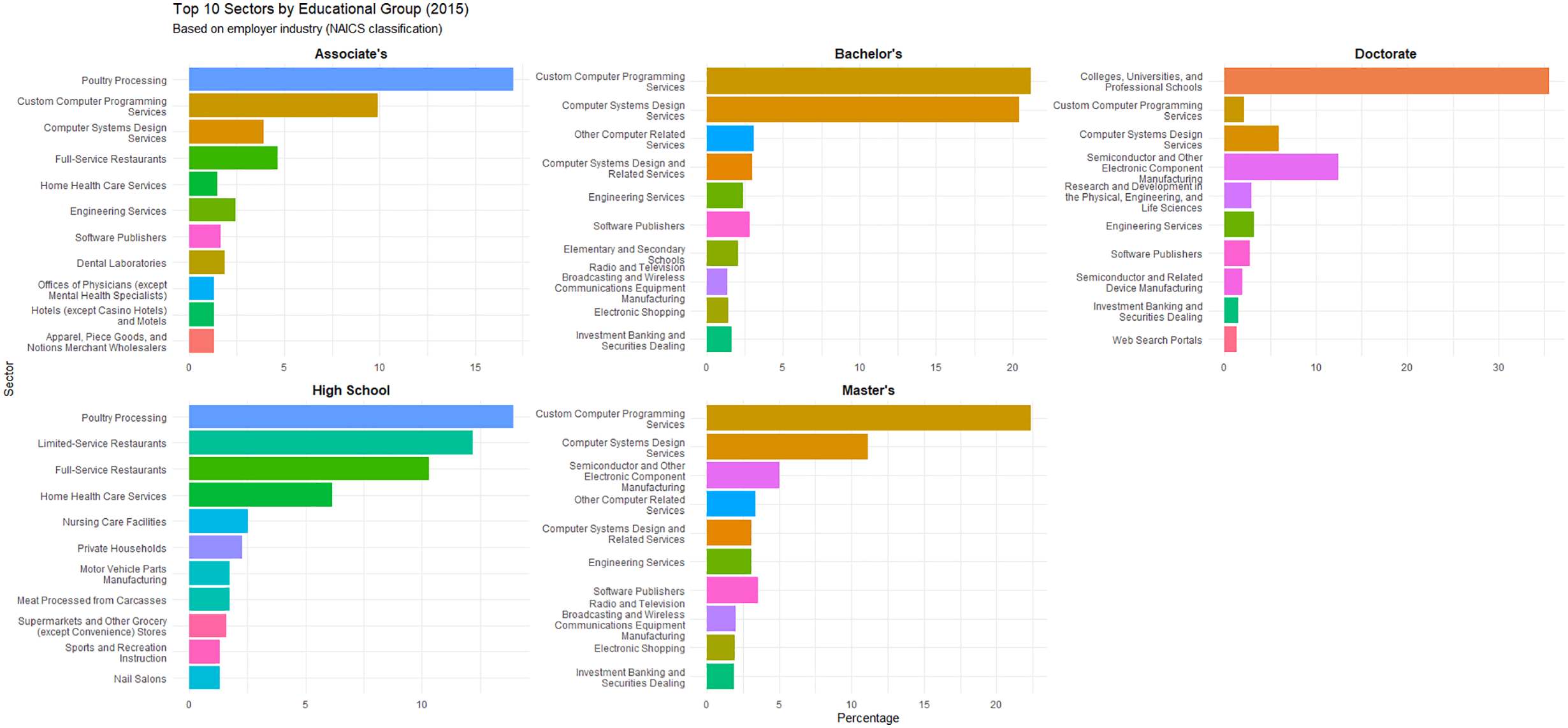
Jobs That Immigrants Work in, Based on Education Level, 2015.
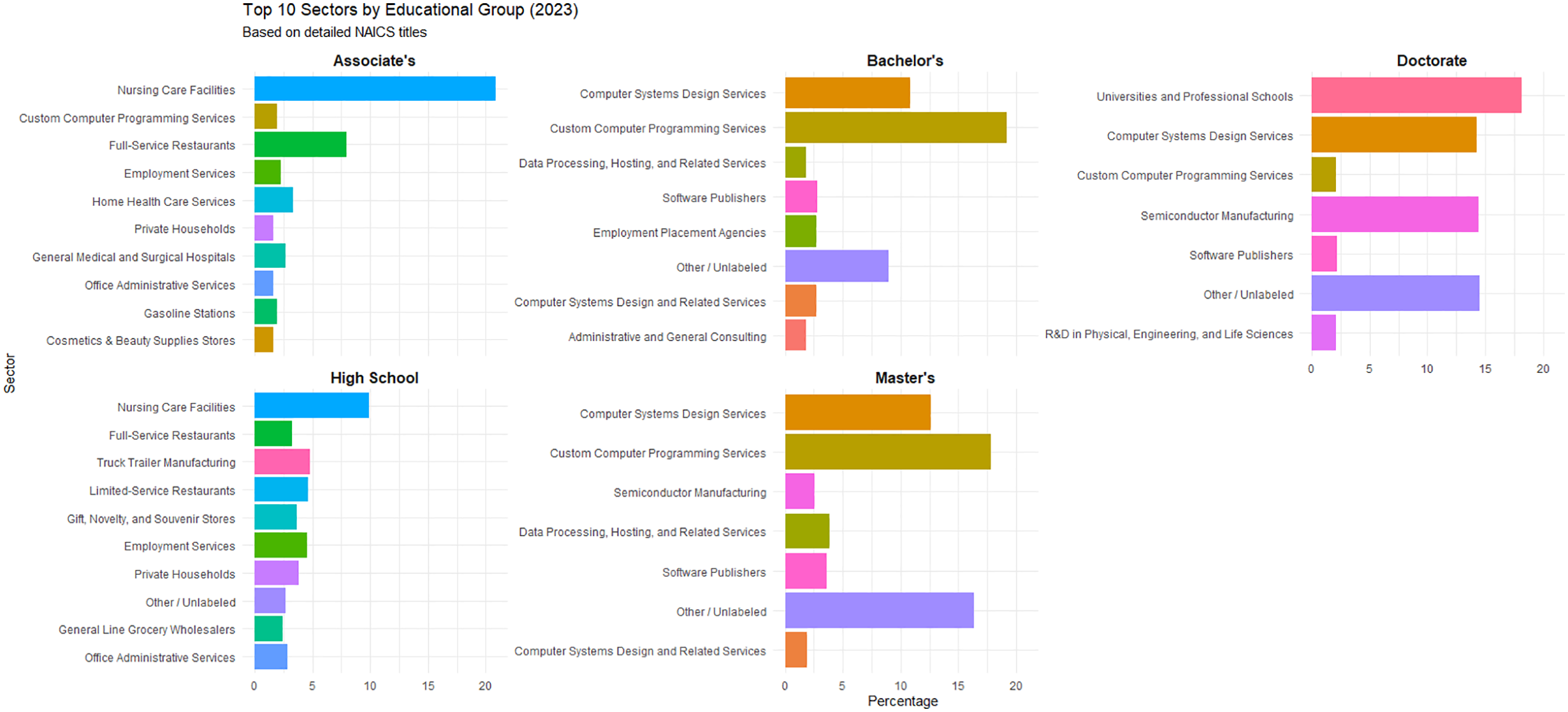
Jobs That Immigrants Work in, Based on Education Level, 2023.
Another important finding relates to the sectoral shifts observed among immigrants with high school diplomas and those with PhDs. High school graduate immigrants transitioned from working in less skill-intensive sectors to higher skill-intensive sectors over time.
Empirical Analysis
Investigation of Wage Inequality
Calculation Method
One of the key contributions of this article is the introduction of a unique wage inequality among immigrants dataset. To the best of our knowledge, no publicly available dataset currently exists that captures wage inequality, specifically among immigrants in the United States. To address this gap, we constructed a dataset measuring wage inequality using the Gini coefficient, a widely accepted metric for assessing inequality. This dataset provides a valuable resource for future research on inequality, immigration, and labor market studies.
The Gini coefficient, a standard measure of inequality, is defined as follows:

In equation (1),

This formulation focuses on the disparities between individual wages, irrespective of population characteristics, thereby offering an accurate measure of wage inequality across wage groups. By applying this approach to immigrants, this dataset serves as a foundational contribution to the field, enabling researchers to delve deeper into issues of inequality and labor market dynamics among immigrant populations.
To complement the Gini coefficient, the Atkinson index is employed to emphasize inequality in the tails of the wage distribution. The Atkinson index is defined as follows:

In equation (3),
The variable
This formulation of the Atkinson index allows researchers to assess inequality with a focus on different parts of the wage distribution, depending on the value of
By combining the Gini coefficient and the Atkinson index, this study provides a comprehensive analysis of wage inequality among immigrants. The Gini coefficient captures overall inequality across the wage distribution, with sensitivity concentrated in the middle. In contrast, the Atkinson index highlights disparities in the tails of the distribution, allowing for a deeper understanding of how inequality affects both the most affluent and the most disadvantaged individuals (Moore and Pacey 2003). Together, these measures offer a more complete picture of wage inequality, addressing limitations inherent in using a single metric (Figures 5 and 6).
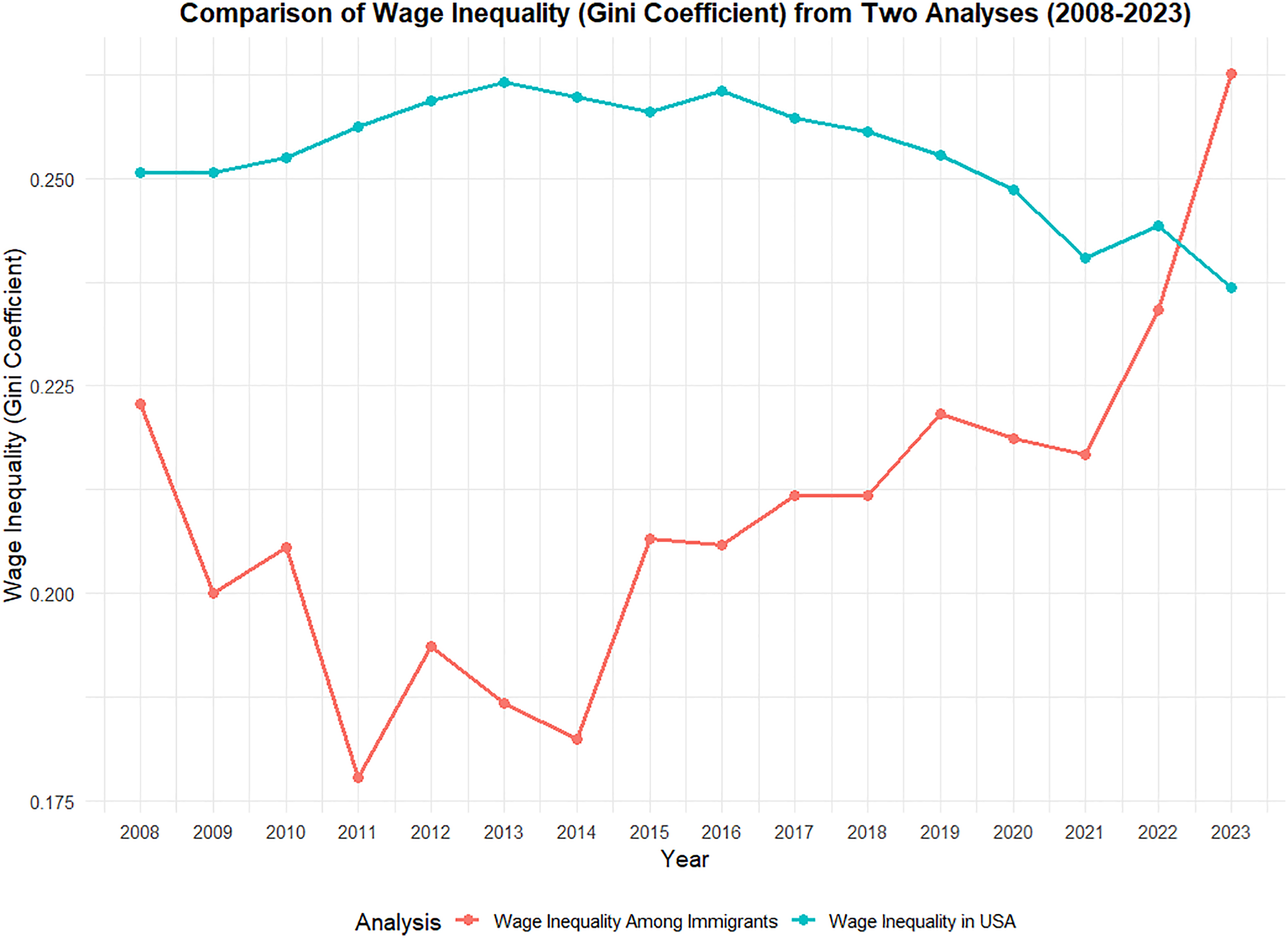
Wage Inequality (Gini Coefficient) Among Immigrants in the United States of America Over Time.
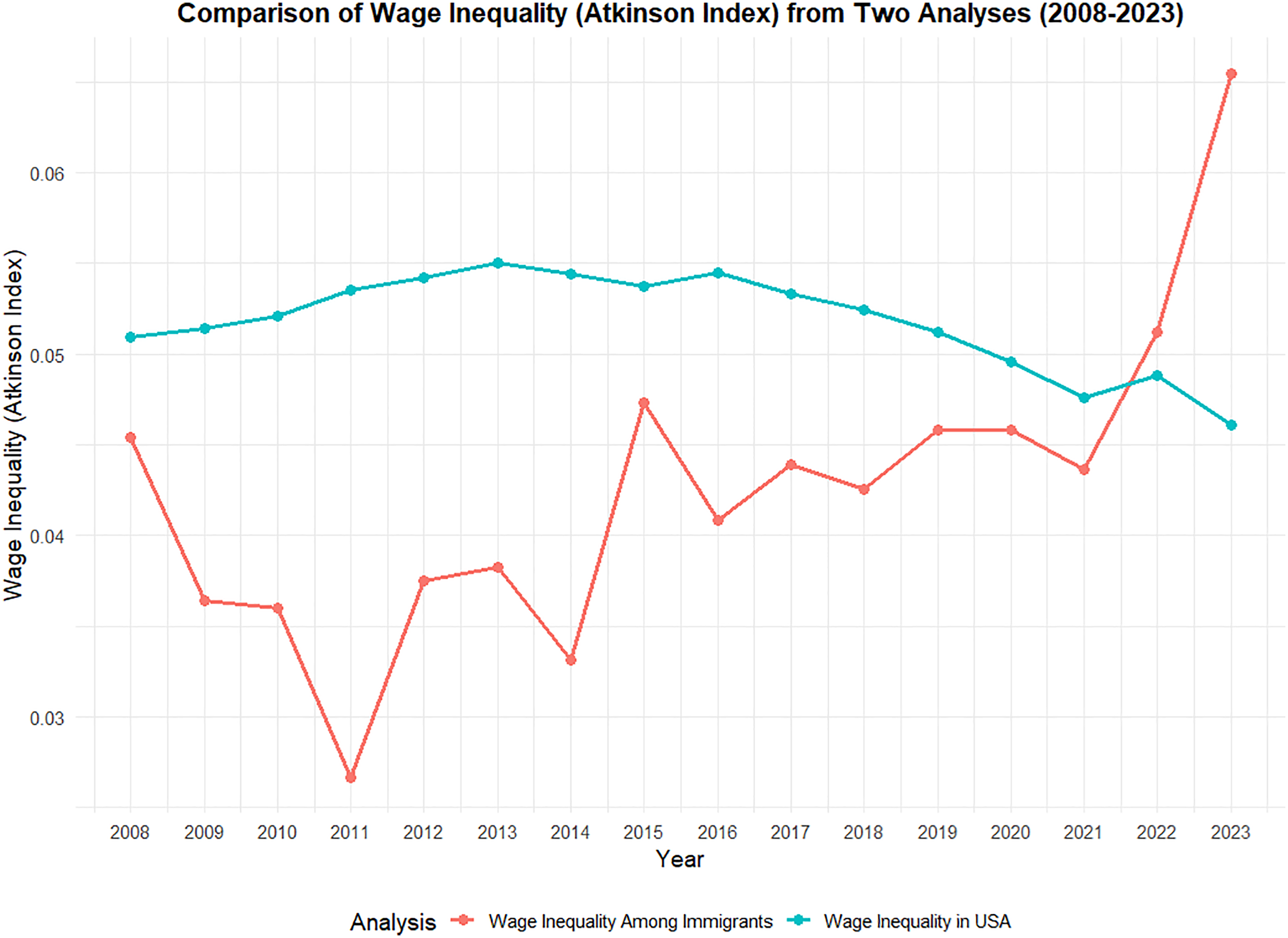
Wage Inequality (Atkinson Index) Among Immigrants in the United States of America Over Time.
Results
Firstly, we investigate the dynamics of wage inequality among immigrants and compare it to overall wage inequality in the United States. This dual analysis enables us to uncover how trends in wage inequality have evolved within immigrant groups relative to the broader population.
Our findings reveal that, for many years, wage inequality among immigrants was significantly lower compared to overall wage inequality in the United States. However, this trend shifted markedly after 2013. While overall wage inequality began to decline, wage inequality among immigrants experienced a sharp increase. To gain a clearer understanding of which income groups were most affected, we employed two distinct methods for measuring inequality. The first is the Gini coefficient, which is particularly sensitive to changes in the wages of the middle-income group. The second is the Atkinson index, which focuses on changes in the wages of the highest and lowest income groups (Moore and Pacey 2003). We observe that both calculation methods yield a similar trend (Figure A1).
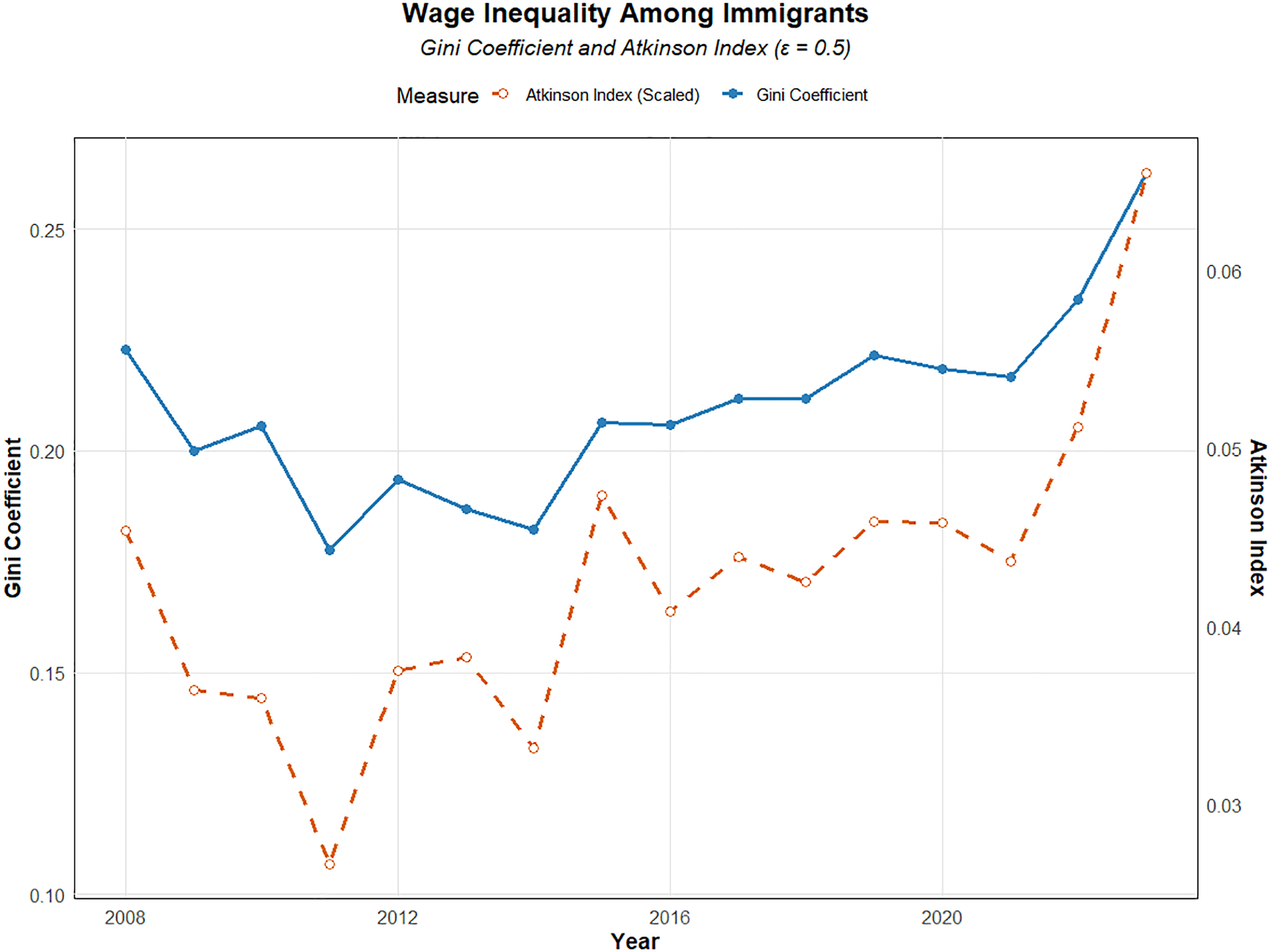
Wage Inequality Among Immigrants in the United States of America Over Time.
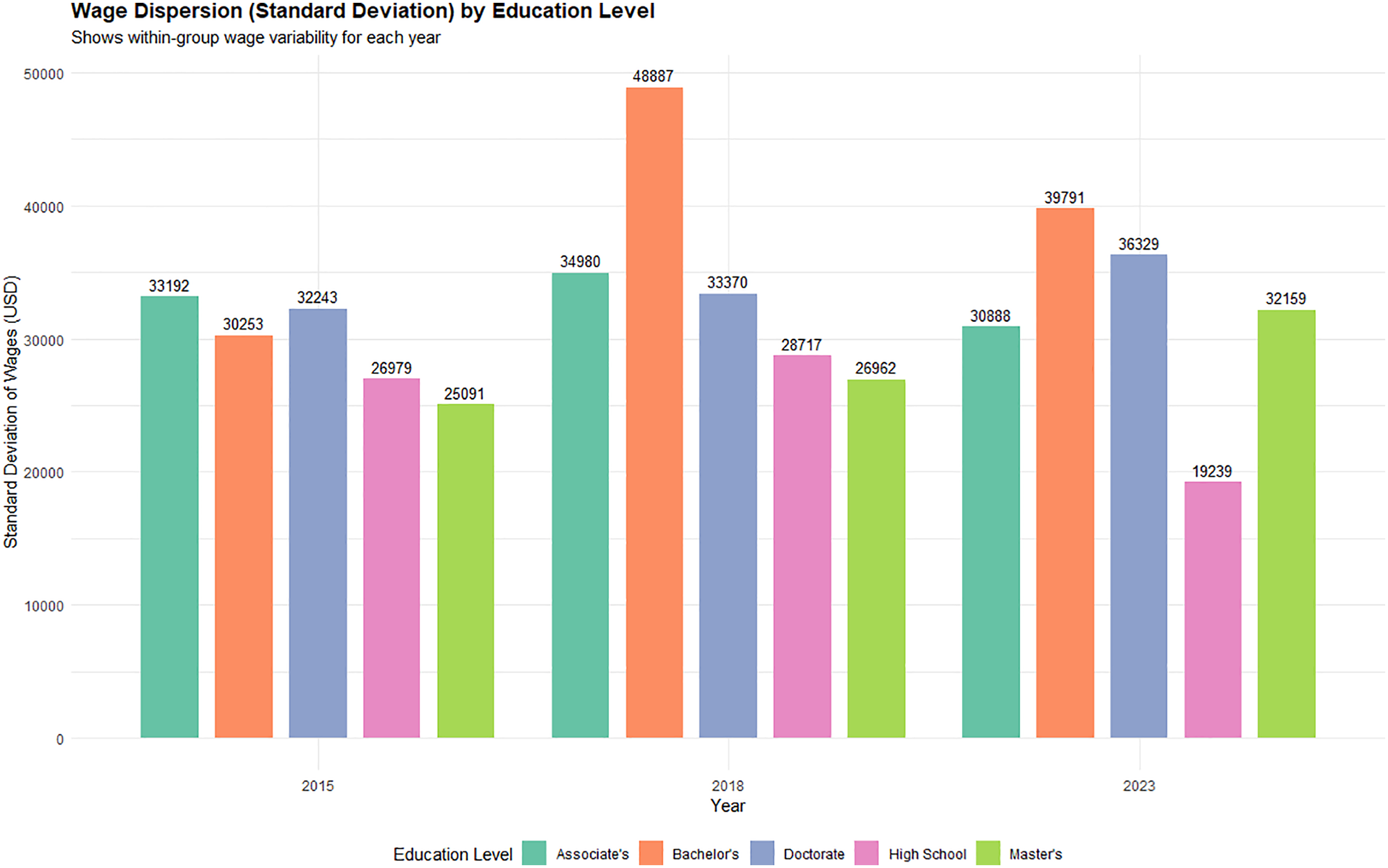
Standard Deviation by Education Level.
This trend in wage inequality may be driven by several overlapping processes. First, rising returns to high-skill sectors may have increased wage dispersion among immigrants, especially those entering more lucrative occupations like IT. Second, the composition of applicants may have changed over time, with a greater share of highly educated or high-earning individuals. Third, differences in approval rates across occupations or wage levels may have influenced which workers are observed in the certified dataset. While a full investigation of these structural drivers is beyond the scope of this article, we acknowledge their potential influence and plan to examine them more deeply in future research.
Moreover, we acknowledge that data quality and consistency in the PERM labor certification dataset may vary across years due to institutional and policy changes. In 2013, early transitions toward structured electronic filing improved standardization in fields such as wages and job titles, though some inconsistencies remained. A more significant shift occurred in 2019 with the full implementation of the Foreign Labor Application Gateway (FLAG) system, which introduced stricter validation protocols and enhanced data completeness, particularly for wage offers and occupational classifications (U.S. Department of Labor, Office of Foreign Labor Certification 2019). However, this transition may also have introduced discontinuities, as some fields were redefined or newly introduced. In 2021, pandemic-related disruptions and policy reversals further affected application patterns, processing timelines, and potentially the composition of approved cases. These shifts underscore the importance of interpreting longitudinal patterns with caution, particularly in wage trends and occupational distributions.
Additionally, our analysis shown in Figure 7 illustrates that wages for the immigrants with the lowest earners fell significantly after 2021, whereas wages for the highest earners rose steadily during the same period. The wage gap between percentiles like the 90th, 50th, and 10th grew sharply following the COVID-19 pandemic, coupled with the Trump administration’s stringent visa application processes for HB1 visas (Chassamboulli and Peri 2020; Pierre-Louis 2024). Notably, wage inequality continued to rise throughout 2022 and 2023 under the Biden administration. Figure 7 shows that the wages at the 10th and 25th percentiles kept declining. This trend may indicate that the Biden administration did not significantly alter the HB1-visa rules left over from the Trump era, which put pressure on low-skilled immigrants. This intriguing finding warrants further investigation.
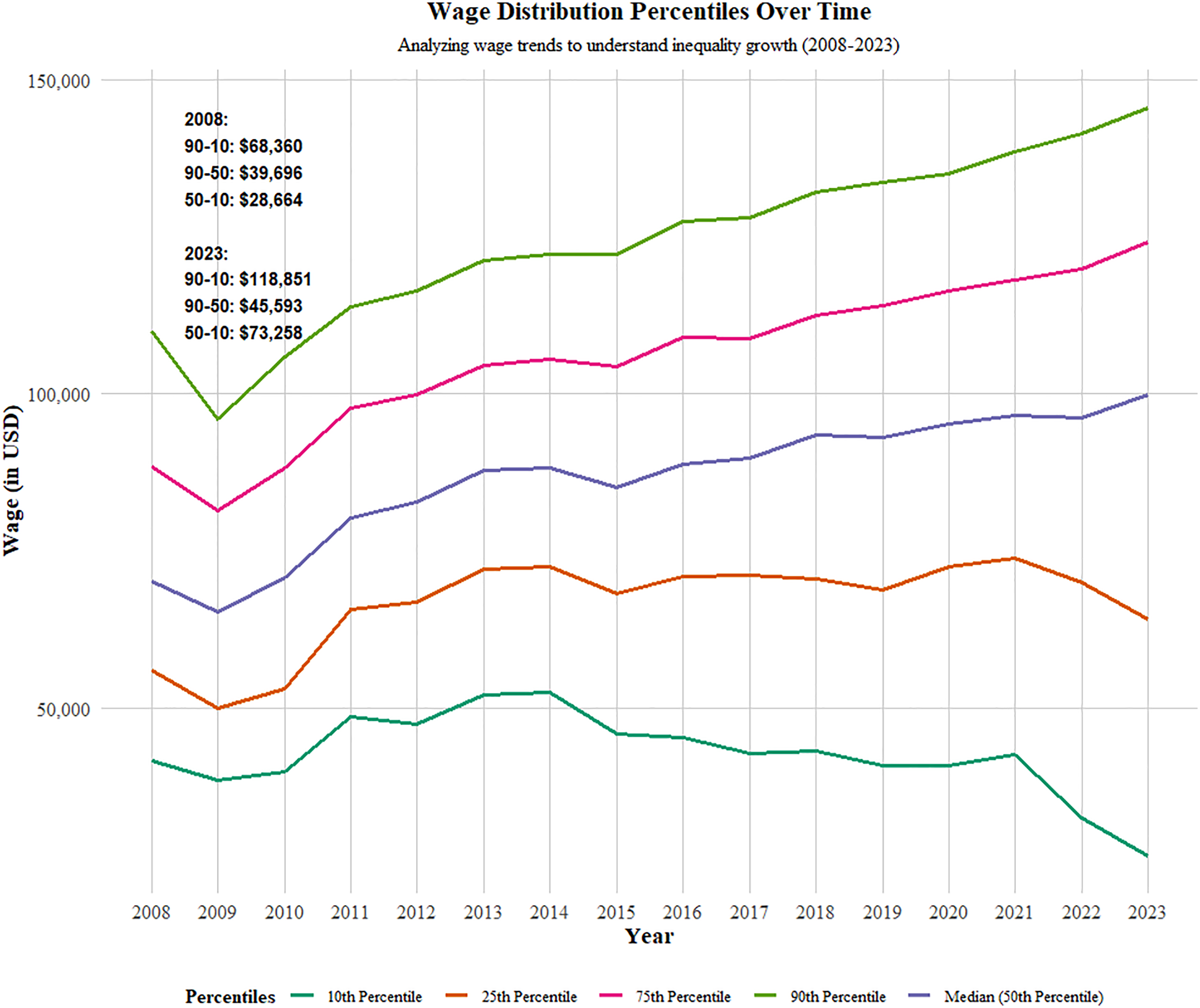
Average Wages in Each Percentile.
Moreover, to deepen our analysis, we also investigate wage inequality among immigrants across different education levels. For example, we first categorize immigrants according to their highest educational degrees and then calculate wage inequality within each education level. As we did for calculating general wage inequality among immigrants, we again use the Gini coefficient and Atkinson index to identify which wage groups are driving wage inequality within the same education level.
As illustrated in Figures 8 and 9, wages among immigrants with high school degrees are distributed very unevenly, in contrast to the relatively uniform wage distribution observed among immigrants with master’s degrees. This suggests that, regardless of the sector, immigrants with a master’s degree tend to receive similar wages, and this pattern has remained stable over time.
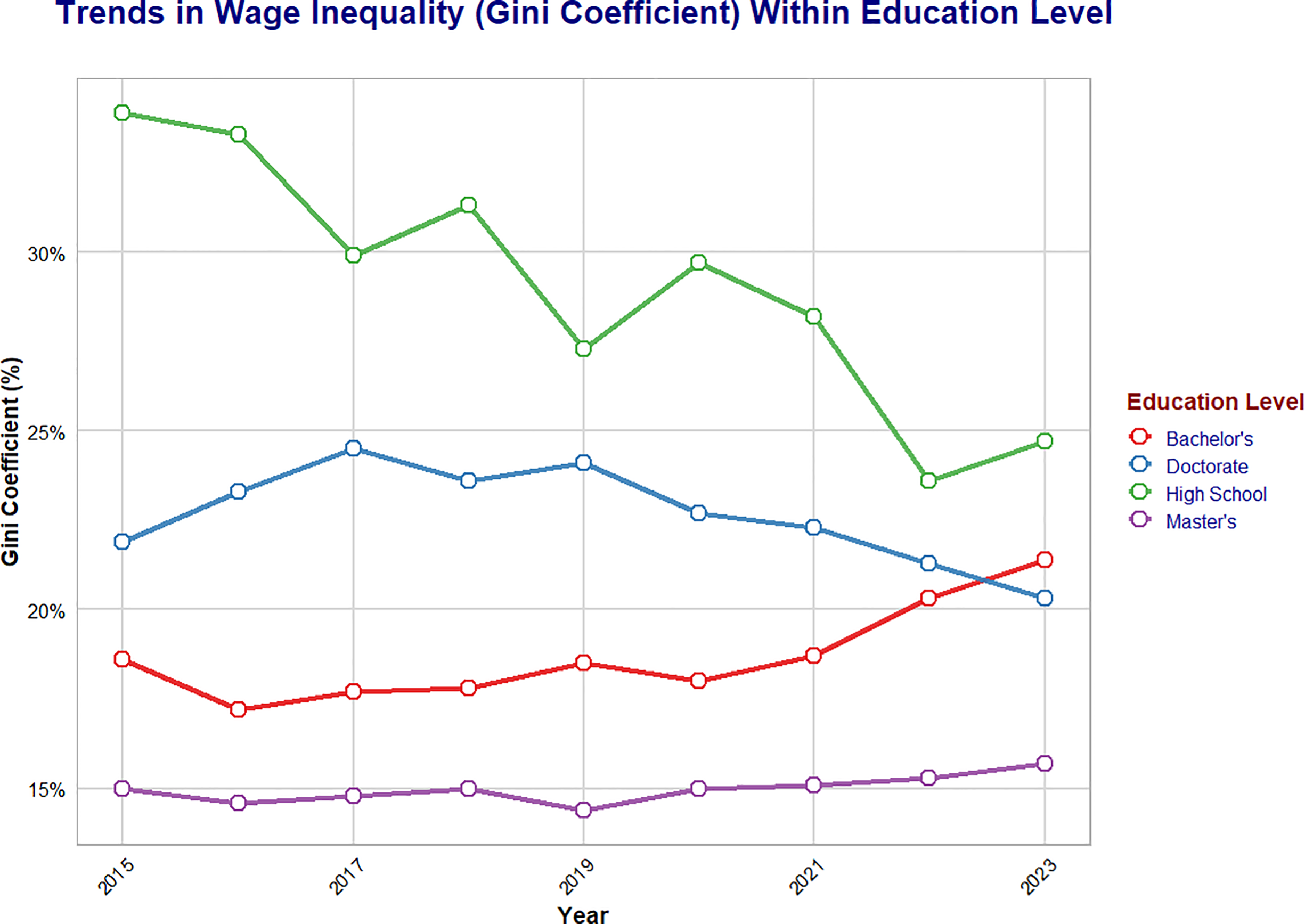
Wage Inequality (Gini Coefficient) Within the Same Education Level Among Immigrants in the United States of America Over Time.
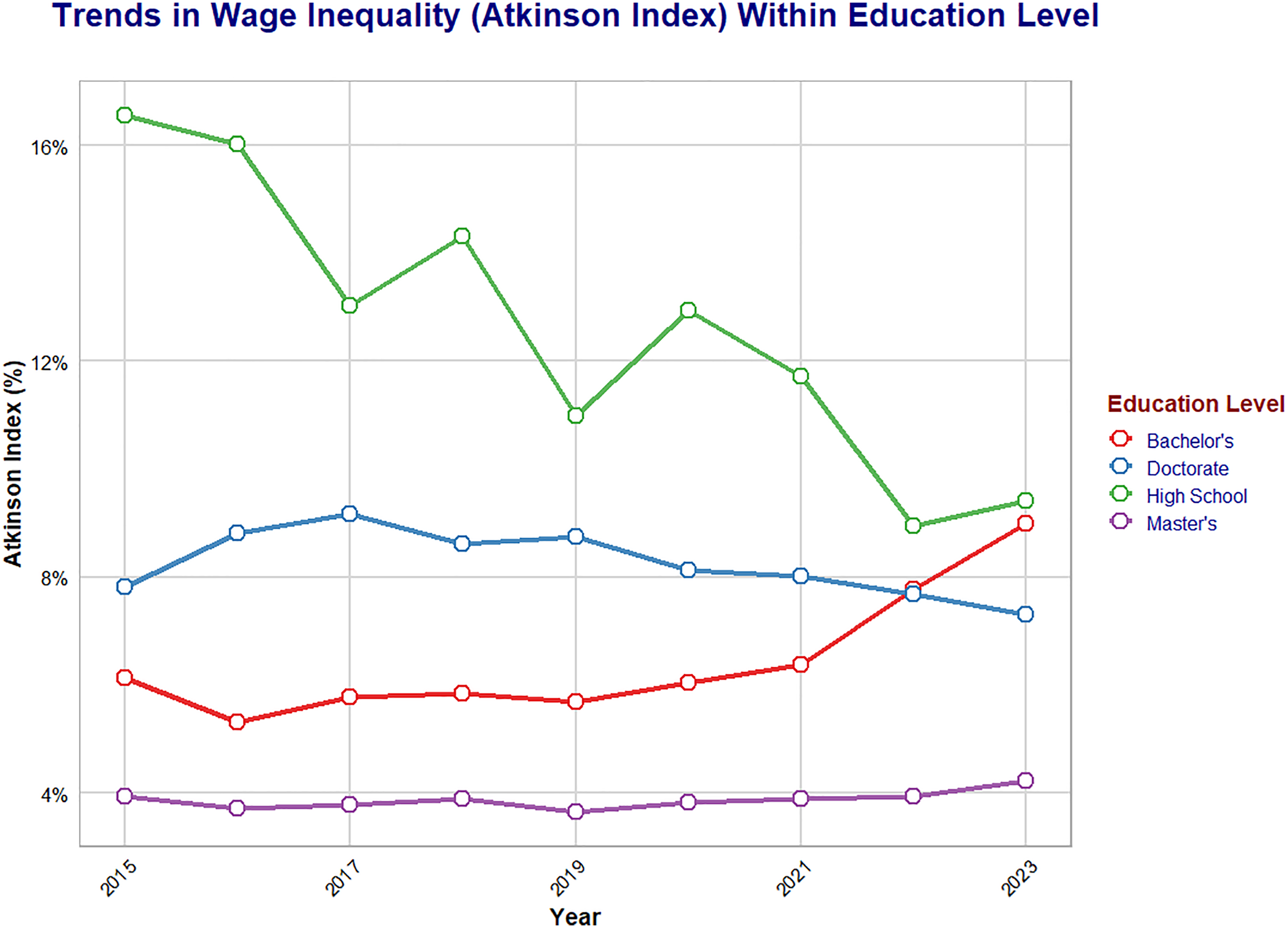
Wage Inequality (Atkinson Index) Within the Same Education Level Among Immigrants in the United States of America Over Time.
In contrast, a notable trend emerges for immigrants with bachelor’s degrees. Following the COVID-19 pandemic, wages among the highest-earning individuals in this group appear to have diverged from those of the rest of the group. This finding is significant and warrants further investigation to determine the underlying causes of this convergence. Understanding the factors driving this change could provide valuable insights into the broader impacts of the pandemic on wage structures among immigrants.
Additionally, over many years, wage inequality among immigrants with PhD degrees has consistently ranked as the second highest. This is particularly striking given that most of these individuals hold the highest educational qualifications and, according to the data, most of them received their diplomas from the United States universities. Despite their advanced education, there is significant variation in the wages they earn. This disparity raises important questions about the factors contributing to such inequality, including potential discrimination, differences in sectoral employment, or other structural barriers. These findings highlight the need for a deeper exploration of the systemic factors affecting wage distribution among highly educated immigrant groups.
When comparing the results of the Gini coefficient and the Atkinson index, an interesting pattern emerges. For immigrants with bachelor’s degrees, both measures indicate that wage inequality has increased, suggesting that the wages of top earners have diverged significantly from those of middle- and low-wage earners within this group. This growing disparity highlights a widening gap among Bachelor’s degree holders.
Conversely, for individuals with PhDs and high school degrees, both the Gini coefficient and the Atkinson index show a decline in wage inequality. This indicates that over time, the wages of middle- and low-wage earners in these groups have gradually approached the levels of the top earners. This convergence suggests a reduction in the wage gap for these educational categories, potentially pointing to shifts in labor market dynamics or policies that have narrowed wage disparities.
Additionally, Figures 3, 4 and A5 reveal that a significant number of PhD-holding immigrants have transitioned from academia to IT-related sectors. To investigate whether this shift corresponds with a notable decrease in wage inequality among PhD-holding immigrants given that salaries in the IT sector tend to be less varied than those in academia — we conducted further calculations. Our findings, illustrated in Figures 8 and 9, demonstrate that wage inequality among PhD holders declines as they move from academia 15 to IT sectors.
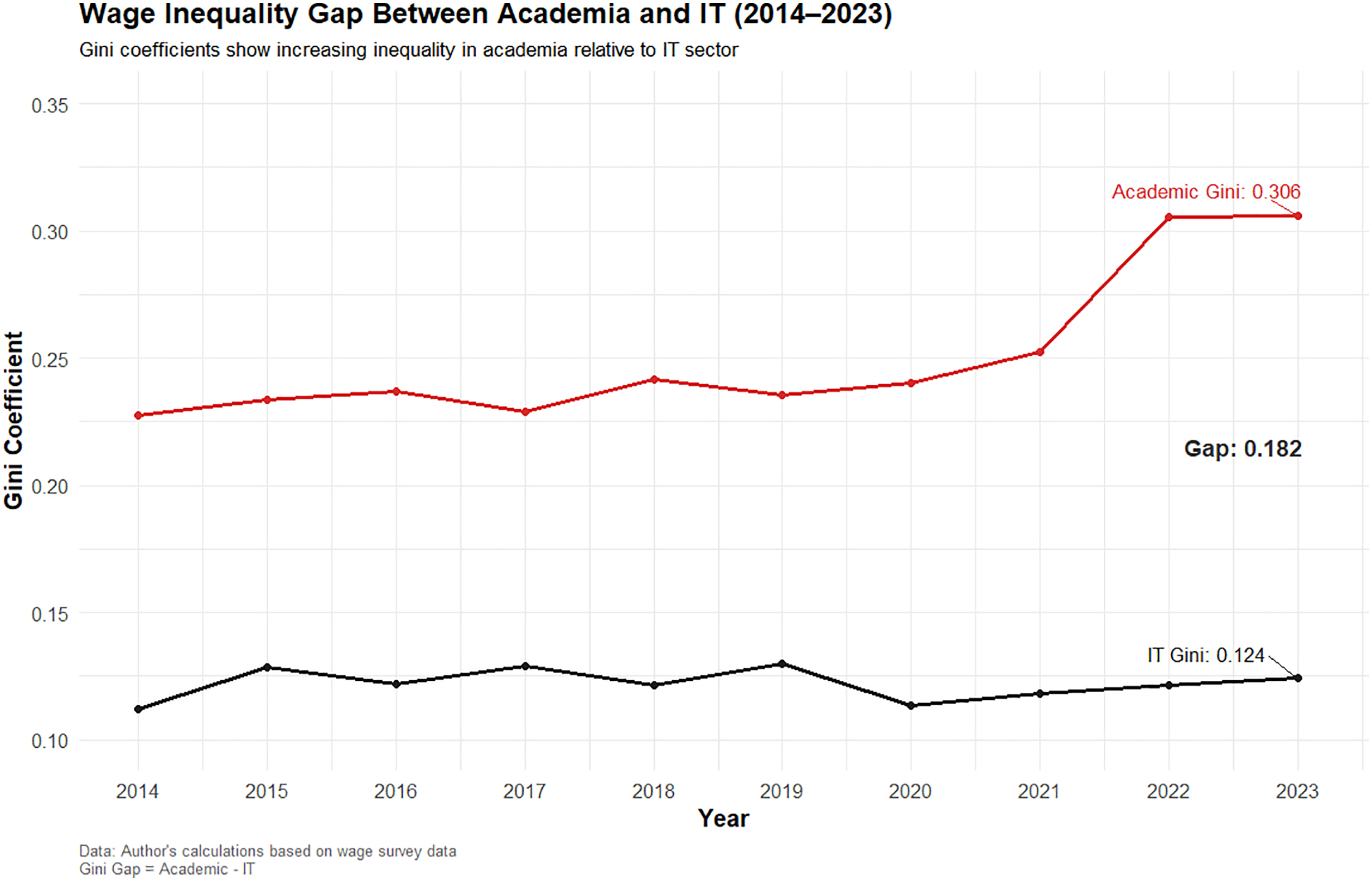
Within-Wage Inequality for Academia, IT, and Other Sectors.
As wage inequality among PhD holders decreases, a key question arises: Does the IT sector play a redistributive role in the labor market? Figure A5 reveals a notable shift between 2015 and 2023, with the share of PhDs in academia falling from 34.4 percent to 18.1 percent, and the IT sector doubling its share from 10.2 percent to 20.7 percent. This structural movement suggests a reallocation of high-skilled labor away from traditionally uneven pay structures (like academia) toward more standardized, higher-paying sectors. To assess the redistributive potential of IT, we compare wage inequality among PhD-holding immigrants both with and without the IT sector. This allows us to isolate the sectoral dynamics that shape overall inequality.
As shown in Figure 10, wage inequality increased sharply among immigrants outside the IT sector. This suggests that the IT sector has been instrumental in promoting a more equitable distribution of wages. Furthermore, the analysis reveals that immigration policies favoring high-skilled immigrants have exacerbated wage inequality in other sectors outside the IT field (Blumenthal 2020).
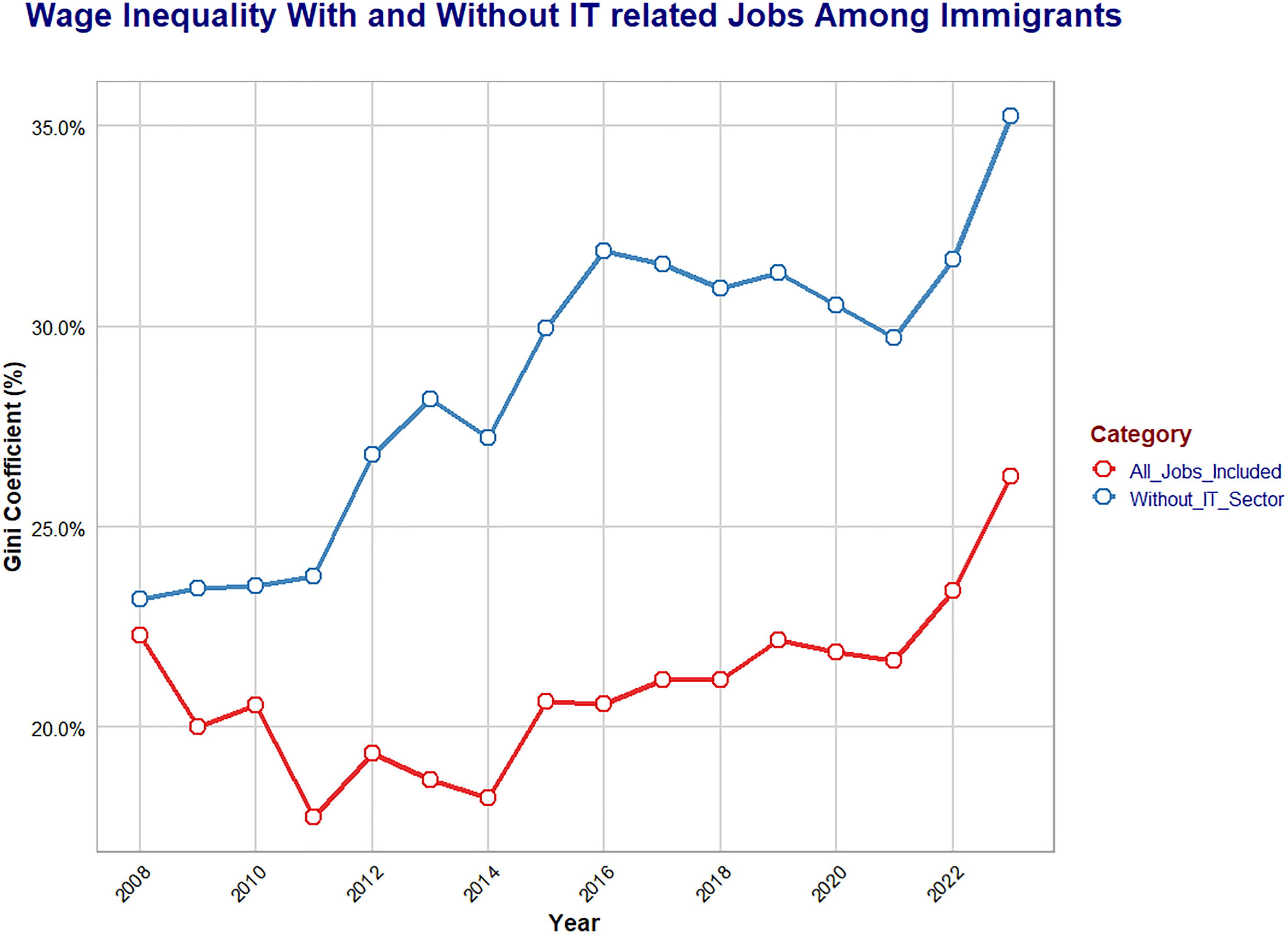
Wage Inequality With and Without IT Sectors.
Interestingly, the IT sector appears to act as a stabilizing force, helping to maintain relatively lower levels of wage inequality compared to the scenario where IT sector wages are excluded. This finding is significant because it challenges the common perception that IT industries contribute to income disparities. On the contrary, our results suggest that the IT sector has implemented more equitable wage practices, playing a crucial role in mitigating overall wage inequality among immigrants. Moreover, this finding aligns with (Information Technology and Innovation Foundation 2022; OECD 2023).
Following our findings in Figure 10, which suggest that the IT sector plays a significant role in reducing wage inequality among immigrants, we conducted a more detailed analysis to examine this effect. Specifically, we calculated within-sector wage inequality for three categories: academia and IT sectors. As illustrated in Figure 11, wage inequality within academic sectors has increased over time, indicating a widening wage gap among individuals within those sectors. In contrast, wage inequality within the IT sector has remained relatively stable, suggesting that wage dispersion among IT workers has not changed significantly over the years. This stability in the IT sector, combined with rising inequality elsewhere, helps explain why excluding IT from the data results in a substantial increase in overall wage inequality among immigrants. The IT sector, therefore, appears to have a stabilizing and equalizing effect on the overall wage distribution.
The influence of prior work experience on wage outcomes in our study is minimal, primarily due to the characteristics of the immigrant population under consideration. Most immigrants in our dataset entered the US labor market through basic work visa programs, such as the H-1B visa, which are typically designated for individuals with specialized skills or recent graduates from US institutions (Monroe 2019). As a result, many of these individuals lack substantial prior work experience within the United States. Even when foreign work experience is present, its transferability and recognition in the US labor market are often limited. Empirical evidence suggests that the formal recognition of foreign occupational credentials significantly enhances employment prospects and wage outcomes for immigrants (Rabben 2013). Therefore, the limited relevance and recognition of prior foreign work experience among our sample suggest that it plays only a negligible role in shaping wage inequality outcomes.
Bernstein et al. (2022) find that immigrants account for
Overall, our findings suggest that immigration policies have exacerbated wage inequality within the immigrant population. As the job market becomes more competitive, increased competition between highly educated native workers and immigrant workers has most likely helped reduce overall wage inequality in the United States. However, the steep rise in wage inequality among immigrants far exceeded the modest decline in overall wage inequality, highlighting a significant disparity in the impact of these policies.
After these detailed wage inequality calculations and analyses, we developed an econometric model to investigate the determinants of wage inequality among immigrants in order to conduct a more precise analysis.
Regression
This study employs a dynamic regression modeling framework to analyze the factors influencing wage inequality. The methodology incorporates stationarity checks, dynamic regression models, and stepwise selection procedures to identify the most relevant predictors. Residual diagnostics and cross-validation ensure the robustness and reliability of the model.
Model
Data transformation and stationarity. Stationarity is a critical assumption for time series regression models to avoid spurious relationships (Granger and Newbold 1974). To test stationarity, the augmented Dickey-Fuller (ADF) test (Dickey and Fuller 1979) was applied to all variables in the dataset as the following equation:

Dynamic regression model. A dynamic regression model was fitted to investigate both the immediate and lagged effects of predictors on wage inequality. The general form of the model is given as follows:

The predictors
The inclusion of lagged terms, such as
This modeling approach provides a comprehensive framework for analyzing the interplay between immediate and lagged predictors, while adhering to theoretical foundations established in the literature on macroeconomic and labor market dynamics (Acemoglu 2002; Piketty 2014).
Stepwise selection procedure. To identify the most significant predictors, a stepwise selection procedure using the Akaike information criterion (AIC) was implemented as follows: Model 1: Included fundamental economic predictors such as “Inflation” and “Minimum Wage.” Model 2: Included all available predictors, such as “Inflation,” “Minimum Wage,” “Unemployment,” and “Employment Cost Index.”

Residual diagnostics. Residual diagnostics were conducted to ensure the validity of the models:
Residuals versus fitted plot: Assesses non-linearity and heteroscedasticity. Normal Q-Q plot: Checks the normality of residuals. Scale-location plot: Evaluates homoscedasticity (constant variance of residuals). Residuals versus leverage plot: Identifies influential observations using Cook’s distance.
The Durbin-Watson (DW) test (Durbin and Watson 1992) was applied to detect autocorrelation in residuals:

Cross-validation. To validate the model’s predictive performance, 10-fold cross-validation (Stone 1974) was conducted. This ensures that the model is robust and not overfitted to the training data.
Robustness Checks
To evaluate the reliability and stability of our econometric findings, a series of robustness checks were conducted. These procedures test the sensitivity of the results to outliers, model specification, and structural changes in the data.
Heteroskedasticity-consistent standard errors. To ensure that standard errors are not biased by heteroskedasticity, we applied robust standard errors using the HC1 estimator (?). The robust variance-covariance matrix is given by the following equation:

Leave-one-out (LOO) sensitivity analysis. We performed a LOO re-estimation procedure to assess the influence of individual observations (i.e., years). For each iteration

Pre-2020 subsample estimation. To isolate the impact of potential shocks during the COVID-19 pandemic, we re-estimated the model using data from 2009 to 2018. The estimates for Minimum Wage, its lagged value, and Employment Cost Index preserved their sign and significance. The adjusted
Baseline model comparison. For comparison, we estimated a baseline model including only Minimum Wage, Inflation, and Unemployment. While these variables alone explained a significant share of the variation in wage inequality, the extended specification — including lags and institutional variables — substantially improved model fit and robustness.
Justification for Model Choice
Dynamic regression models are ideal for analyzing time series data with temporal dependencies, as they capture both immediate and lagged effects. Stepwise selection ensures a balance between complexity and interpretability by identifying the most relevant predictors while avoiding overfitting. Residual diagnostics and cross-validation validate the model’s assumptions and generalizability, ensuring robust results. This approach aligns with best practices in econometric modeling (Wooldridge 2010).
The primary objective of this section is to examine how national-level macroeconomic factors — such as minimum wage, inflation, unemployment, and employment costs — affect wage inequality within the immigrant population in the United States. A key contribution of this study lies in the construction and use of a novel measure of wage inequality, specifically among immigrants, which, to our knowledge, has not been previously analyzed in the literature. This unique dataset enables us to explore how broader economic policies and labor market dynamics shape income distribution within a highly relevant and often underexamined demographic group. Given that our focus is on inequality rather than individual wage levels, our empirical strategy concentrates on national-level variables that are likely to influence wage dispersion among immigrants either directly (e.g., through wage-setting institutions) or indirectly (e.g., through labor demand conditions). By anchoring the analysis at the national level, we avoid issues of cross-state heterogeneity and instead capture the structural forces influencing immigrant labor market outcomes across the country.
Data and Results
The data utilized in this econometric analysis comes from various sources. The dependent variable, representing wage inequality among immigrants, is created specifically for this study. Inflation and unemployment data are obtained from the World Bank, while minimum wage data is sourced from Federal Reserve Economic Data (FRED). Furthermore, the Employment Cost Index is retrieved from the U.S. Bureau of Labor Statistics.
After constructing a dataset specifically focusing on wage inequality among immigrants, we conducted a detailed analysis to examine the influence of various economic factors, such as the minimum wage, on wage inequality within this population in the United States. This investigation is particularly significant as it enables us to identify and better understand the key determinants of wage inequality and the wage levels of immigrants in the United Stated context.
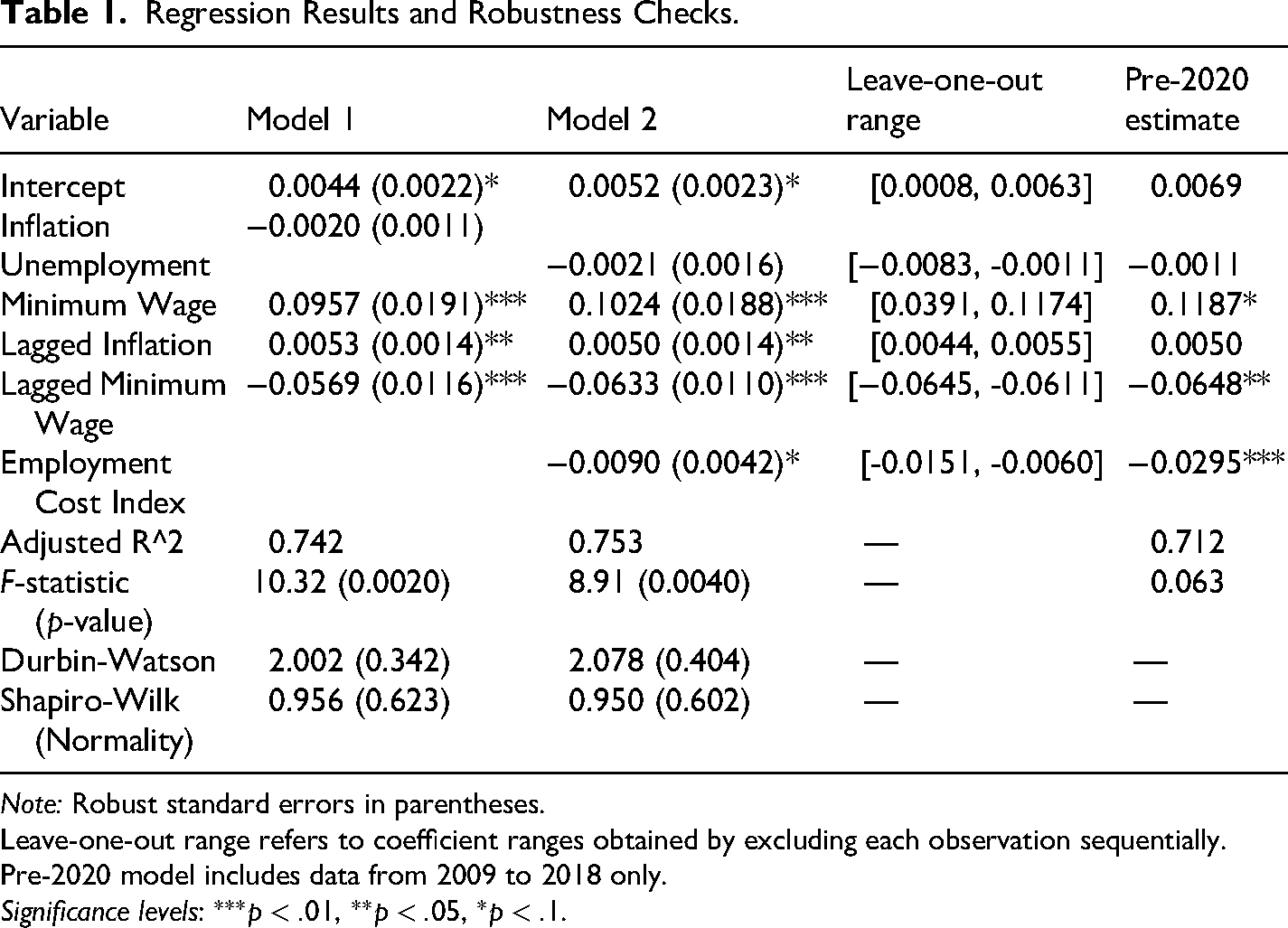
The results presented in Table 1 indicate that the minimum wage plays a pivotal role in shaping wage inequality among immigrants in the United States. Specifically, the analysis reveals that the relationship between minimum wages and wage inequality is upward in the short run. This suggests that an increase in the minimum wage is associated with a rise in wage inequality among immigrants. This is in line with Edo and Rapoport (2019) findings that high minimum wages have a safeguarding impact on the wages and employment of native workers, reducing their vulnerability to competition from immigrants. Therefore, immigrants, particularly those in low-skilled or precarious employment, who are relatively disadvantaged compared to natives because of higher minimum wages, may lose their jobs, exacerbating inequality within this group. Additionally, the presence of an informal sector means that while minimum wage policies are intended to reduce wage inequality, they could unintentionally make inequality worse (Machado Parente 2024). It is likely that there are companies wishing to employ undocumented immigrants at lower wages. Perhaps the over 8 million undocumented immigrant workers in the United States can be seen as evidence of this.
Regression Results and Robustness Checks.
Note: Robust standard errors in parentheses.
Leave-one-out range refers to coefficient ranges obtained by excluding each observation sequentially.
Pre-2020 model includes data from 2009 to 2018 only.
Significance levels:
However, the analysis also highlights a contrasting pattern when examining the long-run effects. Over time, an increase in the minimum wage appears to reduce wage inequality among immigrants. 16 This outcome may be attributed to the increasing tendency of immigrants to accept jobs offering minimum wages, regardless of their skill or education level, thereby narrowing the wage distribution within the immigrant population. The long-term equalizing effect of higher minimum wages underscores the dynamic and time-dependent nature of this relationship. 17
Further support for these findings is provided by the results related to the outcome of the Employment Cost Index. The analysis suggests that when the cost of employment increases in the United States, wage inequality among immigrants declines. This may occur because higher employment costs lead firms to perceive immigrants as a more affordable labor force compared to native workers. 18 Consequently, firms may hire more immigrants, resulting in a compression of wages and a reduction in inequality within this group.
Moreover, over extended periods, inflation exacerbates wage inequality among immigrants. Our findings are consistent with the idea that low-wage immigrant workers often experience wage stickiness (Gravelle 2020), meaning their wages remain stagnant and fail to adjust significantly in response to inflationary pressures. In contrast, higher-wage immigrant workers are more likely to receive salary increases during inflationary periods, further widening the wage gap within the immigrant workforce (Cabral and Duarte 2014). Wage stickiness, as highlighted in the literature, serves as the primary explanation for the increase in wage inequality among immigrants during inflationary periods.
Robustness test results — including the LOO sensitivity analysis and the pre-2020 subsample estimation—demonstrate that our findings are both stable and reliable. In particular, the estimated effects of the Minimum Wage and the Employment Cost Index on wage inequality among immigrants remain consistent in direction, magnitude, and statistical significance across alternative specifications. The adjusted
These findings contribute to a deeper understanding of the complex and multifaceted relationship between wage-setting policies, labor market dynamics, and wage inequality among immigrants, emphasizing the importance of considering both short-term and long-term effects in policy evaluations.
Conclusion
Due to social and economic opportunities, as in the past, developed countries, particularly in North America and Europe, continue to attract immigrants seeking better prospects. In recent years, ongoing wars and conflicts, particularly in Eastern Europe, the Middle East, and Africa, have further reinforced the demand for migration. While the humanitarian aspect of the issue is undeniable, the target countries have also started to worry about the effects of the growing immigrant population on society and the economy, prompting many countries, particularly the United States and European nations, to take steps to tighten their immigration policies.
Given that international migrant workers constitute
Wage inequality among immigrants surpassed overall wage inequality in the United States for the first time in 2023, using the Gini coefficient, and for the first time in 2022, using the Atkinson index, in the analysis covering the years 2008–2023. The gap between the two groups has been widening, increasingly to the disadvantage of immigrants. In 2023, immigrants holding master’s and bachelor’s degrees earned, on average, higher wages than those with doctoral degrees working in academia and other sectors. This trend reflects the growing presence of highly educated immigrants in the IT sector, where wage levels are comparatively higher. Additionally, there has been an upward occupational shift among high school graduates, who are increasingly employed in more skill-intensive sectors. In contrast, an increasing number of doctoral degree holders appear to be transitioning out of academia. Immigrants with a master’s degree faced the lowest wage inequality. From 2022 onward, immigrants with a Bachelor’s degree experienced higher wage inequality than those with a doctorate (PhDs). Despite a declining trend, high school graduates experienced the highest wage inequality in the analysis covering 2018–2023. In 2008, wage inequality for immigrant-held jobs was nearly equivalent to that in jobs outside the IT sector. By 2022, however, this gap had widened considerably, with wage disparities in non-IT jobs worsening. This highlights the IT sector’s critical role in addressing wage inequality among immigrants, which is particularly intriguing given that the common perception was the opposite. Wage inequality in academia has surged significantly, reaching a Gini coefficient of 0.306 in 2023, post-COVID-19. Conversely, wage inequality among PhD holders has decreased as many transitioned to the IT sector, where wages are less elastic. Wage inequality in the IT sector remained virtually unchanged between 2014 and 2023, including during the COVID-19 period. In contrast, wage inequality in academia increased significantly over the same period. This divergence is particularly noteworthy in the context of immigrant wage inequality: while overall inequality among immigrants may have risen, the IT sector exhibited a stabilizing effect. As shown in Figures 10 and 11, the consistency of wage distribution in IT appears to have played an equalizing role within the broader immigrant labor market. This finding is of critical importance, highlighting the IT sector’s potential to mitigate wage disparities in an otherwise unequal landscape. Although a rise in the minimum wage exacerbates wage inequality among immigrants in the short term, it serves to mitigate inequality in the long run. As the cost of employment escalates, wage inequality among immigrants decreases, while extended periods of inflation contribute to an increase in wage inequality within this group.
The results presented are even more striking when considering that
While this study examines wage inequality among immigrants, our findings could apply to the broader American labor market because immigrant workers constitute 20 percent of the US workforce. Future research could be performed to scrutinize the entire labor market. Additionally, due to data limitations, this study concentrates on a narrow time frame. Broader studies spanning a longer duration will validate the robustness of these findings.
Footnotes

Ethical Approval
This article does not contain any studies with human participants or animals performed by any of the authors.
Funding
The authors received no financial support for the research, authorship and/or publication of this article.
Declaration of Conflicting Interests
The authors declared no potential conflicts of interest with respect to the research, authorship, and/or publication of this article.
Notes
Appendix. Education Group Definitions and Data Limitations
Table A1 summarizes the classification used for education levels in the analysis. While the dataset enables clear disaggregation between most levels, it does not allow for the precise separation of professional degrees such as Juris Doctor (JD) and Doctor of Medicine (MD). These are likely grouped under the general ‘‘Doctorate” category, which may partially explain the relatively lower median wages observed for doctorate holders compared to master’s or bachelor’s degree holders.
Additionally, although the dataset contains information on years of experience, these data are incomplete and inconsistent across years and individuals. As such, we chose not to control for experience in the main analysis. Nevertheless, differences in experience levels across education groups may partially explain the observed wage disparities and should be explored further in future work.