



Abstract
This study builds on the existing literature by considering the extent to which minority legislators offer different forms of constituency outreach during times of emergency. This case study of state legislator constituent outreach during the COVID-19 pandemic uses an analysis of Facebook posts in 2020 to track how state legislators provided outreach and communicated resources to their constituents during a public health crisis. We ask, in times of emergency, do women and minority legislators offer unique attention toward the needs of those constituencies that they descriptively represent, or do urgent issues push these legislators to focus more broadly on general concerns expressed by their entire district? We argue that legislators’ social media activity during the COVID-19 pandemic offers an important measure of their practice of constituency outreach due to the nation’s reliance on virtual communication during this period. This study finds there to be important variation by partisanship, but within party, we find important differences depending on both the race and gender of the legislator. Democratic women of all races were those legislators most actively providing information and outreach related to COVID-19 to their constituents in 2020.
Keywords
Advocates of descriptive representation have long argued that both minority and women elected officials practice representation differently compared to white male elected officials who, in turn, offer a distinct dimension of substantive representation for the constituencies that they descriptively represent (Bratton and Haynie 1999; Canon 1999; Tate 2004). While most of this research evaluating the impact of descriptive representation focuses on the regular responsibilities of an elected official, such as roll call voting and legislative activity, how might descriptive representatives act differently during times of crisis? In times of crisis, it is likely that a representative’s choices may not solely rely on considerations such as reelection prospects. During an emergency, elected officials might be tasked to make quick decisions about how to govern and what areas deserve more attention than others, which is different from the regular responsibilities of the job. In times of emergency, do descriptive representatives offer unique attention to the needs of those constituencies they descriptively represent, or do urgent issues push descriptive representatives to focus more broadly on general concerns expressed by their entire constituency?
The objective of this study is to offer an additional understanding of the degree to which descriptive representatives provide unique forms of representation for those constituencies that they descriptively represent. This case study examines the activities of racial/ethnic minority and women state legislators during the COVID pandemic as measured by how they communicated with their constituency to convey information pertinent to curbing the disastrous effects of the virus, which we label “constituency outreach.” We argue that constituency outreach is related to constituency service, an area of scholarship that has already shown important differences between minority and white legislators (Grose 2011). More broadly, we embrace the position that lawmakers represent their constituency in a myriad of ways outside of traditional activities such as bill passage (Eulau and Karps 1977) and highlight constituency outreach as one important practice of representation.
Constituency outreach, which includes sharing or disseminating information about available resources for constituents, is an ideal area of study on representation, specifically during the COVID pandemic for several reasons. COVID was foremost a public health emergency, so elected officials were immediately tasked with organizing and coordinating services for their constituents to either avoid or combat the virus. For some legislators, constituency services and outreach could have been seen to take precedence over some of their other regular responsibilities, such as committee work, when the pandemic hit. Research has already shown that women and minority legislators often take on more tasks than white male representatives (Tate 2004; Thomsen and Sanders 2020), so we anticipate that constituency outreach during the COVID pandemic offers another context to understand how women and minority legislators practice their roles in distinctive ways.
In this study, we measure constituent outreach by analyzing the content of legislators’ Facebook posts during the initial outbreak of the COVID pandemic in 2020. We argue that the content elected officials post on their Facebook accounts can offer a useful empirical measure of how elected officials practice constituency outreach. Through coding the content of social media posts, we can understand the degree to which elected officials offer resources to their constituents by providing information about an urgent crisis. We can also track the degree to which elected officials were willing to embrace remote activities to connect with their constituents, such as organizing virtual informational panels or town hall meetings. In this way, a measure of remote activities offers insights into which types of elected officials were more willing to adapt to the environment presented by the COVID pandemic. Since the world was ultimately unable to contain the virus, we also track Facebook posts over time to understand whether elected officials continued to highlight an urgent issue even when public attention has waned.
We expect that, consistent with the literature, minority and women state legislators will carry out more constituency outreach via Facebook than their white male counterparts during the pandemic. First, we expected women legislators to highlight these unique burdens placed on women. Research shows that health issues are often stereotyped as areas of expertise for women leaders (Carroll 2002) but, at the same time, American women shouldered unique burdens during the pandemic. For example, shifts in employment were higher for women in “essential” sectors in the service industry (Holder et al. 2021) and women with children reduced their paid work (Collins et al. 2020) or left employment (Heggeness 2020) due to school and childcare closures. Second, the pandemic had significant and deleterious effects on communities of color, with Black and Latinx residents shouldering the economic and health-related burdens in disproportionate ways during the first stage of the pandemic (Lee et al. 2021; Park 2021). We expected that minority legislators would see a response to the COVID pandemic as a racialized issue, and so would see a greater need for the government to focus on communities of color (Dowling and Kelly 2020).
In the next sections, we first review the literature and develop our expectations about how constituency outreach via social media differed by the race and gender of the state legislator. We then analyze our original dataset of coded Facebook posts from a sample of state legislators’ official Facebook pages. To offer a preview of our results, we find that overall, Democratic women legislators of all races were those who shared a high rate of posts about COVID and offered more labor-intensive activities related to the COVID pandemic, such as sponsoring remote events.
Representation, Constituency Outreach, and Social Media
Engaging with constituents has traditionally been seen as a method for representatives to build connection with their district which in turn generates a “personal vote” with their constituents (Fenno 1978). This personal vote can be generated in multiple ways: legislators can engage in public appearances to have personal contact with their constituents, and they can offer a wide range of services for their district through casework or accrue pork barrel funds for special needs in the district. Our study focuses on what we label “constituency outreach,” which is how representatives communicate with their district about available resources or services. We conceptualize constituency outreach as a related activity to constituency services since legislators must communicate and advertise the resources that they are helping to provide for the district. In this way, constituency outreach is one way that the legislator can more broadly demonstrate effective representation to their district.
Since we conceptualize constituency outreach as a related activity with constituency service, we draw our expectations from studies that evaluate differences in how representatives practice constituency service. Early research in this area argued that elected officials engage in constituency services primarily to improve their chances of reelection (Fenno 1978), but more recent scholarship has demonstrated that the amount of effort spent on constituency services varies by the race, gender, or class identity of the representative (Broockman 2013; Carnes and Holbein 2019; Thomsen and Sanders 2020). Similarly, Republicans put less effort into constituent service than Democrats, further suggesting that the decision to take these actions is not driven purely by electoral incentives (Snyder et al. nd). Overall, research shows that legislators who hold more marginalized identities are argued to be more sensitive to the needs of their communities (Reingold et al. 2020; Tate 2004), and so may be more likely to spend time on constituency services to address these needs. Since representatives need to practice constituency services in order to communicate those services to their constituents, we can expect that these same patterns found related to constituency services also apply to efforts toward constituency outreach efforts.
Efforts such as constituency services and outreach can be seen by descriptive representatives as a way to provide a form of substantive representation for marginalized communities (Grose 2011; Lowande et al. 2019). Of course, substantive representation may happen regardless of whether the elected official mirrors the politically salient identity of those who are represented. But research also shows that constituents report having more trust in government and perceive more responsiveness from descriptive representatives (Gay 2002; Pantoja and Segura 2003). Descriptive representatives are well suited to build support among marginalized groups where the context of historic mistrust in government is amplified (Dovi 2002; Mansbridge 1999), and constituency outreach can be used to facilitate trust in government among historically marginalized groups.
Moreover, it might be the case that a descriptive representative faces many serious hurdles preventing them from successfully passing legislation for the communities they represent (Yiannakis 1982), but they can use constituent services and outreach as a way to shift the distribution of resources or information that will benefit marginalized communities (Gervais and Wilson 2017; Grose 2011). Scholars have noted that Black legislators are particularly likely to engage in constituent services regardless of their reelection prospects (Broockman 2013; Grose 2011). Others have found that Latino representatives use social media to reach out to Latinos in ways that differ from non-Latinos (Gervais and Wilson 2017). Even in the case of safe seats created by minority-majority districts, minority legislators are still found to spend a disproportionate amount of time on constituency services (Rocca and Sanchez 2008). Indeed, research has shown that legislators of color consistently place a higher value on providing constituency service (Bowen and Clark 2014; Canon 1999; Grose 2011), so we also expect them to put a high value on constituency outreach.
In the past, most constituent outreach came in the form of in-person outreach and physical mail such as newsletters (Eulau and Karps 1977). However, representatives today can connect with their districts through engagement on social media (Adler et al. 1998). An argument can be made that interaction through low-cost online mediums is less valuable than traditional forms of legislator-constituent communication (Chen et al. 2019). But while legislators do place relatively less significance on social media interactions, the greater volume of social media communication offsets the discounting effect. While some argue that social media is most often used by representatives as a way of promoting their own record or their political position (Golbeck et al. 2010), research also suggests that politicians are more likely to follow rather than lead discussions of public issues (Barbera et al. 2019).
We argue that a representative’s social media activity can also serve as a measure of how representatives communicate with their constituents. Representatives can also use social media to share information or resources with constituents, such as directions for how to apply for certain benefits or updates about happenings in the district (Conway et al. 2015; Fitch et al. 2015). Representatives can also post recordings of events when constituents cannot attend in person (Russell 2021). Constituent interaction through social media also serves the secondary goal of “personalization” and “presentation of self” among politicians (Cooper 2002; Graham et al. 2018; Meeks 2017; Sullivan 2022). Additionally, social media messages with a policy orientation are found to be broadly representative of the legislator’s legislative activity (Russell and Wen 2021), reinforcing the likelihood of a connection between social media usage and constituency outreach.
Studies show women and minority representatives are more active social media users than their male or white counterparts (Butler, Kousser, and Oklobdzija 2023; Yarchi and Samuel-Azran 2018). Alvin Tillery’s (2020) work finds that Black congresswomen are more likely to use Twitter to communicate with constituents about racial issues than their black men counterparts. While digital outreach to Latinos has been constrained (Gershon 2008), Latino representatives are found to present Latino perspectives on digital mediums (Pleites-Hernandez 2023; Wilson 2009). 1 Indeed, the “digital homestyles” of Congress members target specific demographic constituencies (Gervais and Wilson 2017). This includes not only discussing issues more often or with a different perspective but also discussing issues that non-descriptive representatives overlook (Pleites-Hernandez 2023). Other scholars have found that women lawmakers tweet more about women’s issues than men (Evans and Clark 2016). While studies tend to focus on the quantity of social media output, fewer studies look at the unique content of posts and the extent to which content might reflect the representational styles of women and people of color legislators. Our research speaks to this developing literature by expanding on how legislators use social media to provide constituency outreach during a time of crisis.
Variation in Constituency Outreach During the COVID Pandemic
The existing literature on representation and constituency services primarily focuses on the regular duties of an elected official during times of normalcy. This study intervenes into the literature by considering how state elected officials practiced leadership during moments of crisis by using the case study of the COVID pandemic. In early spring of 2020, the COVID-19 virus began rapidly spreading across the United States. At all levels of government, elected officials needed to play a leadership role in helping constituents understand how to avoid the virus while at the same time making decisions about how governments would play a role in coordinating responses to an urgent public health threat. Building on this, we argue that representatives’ communication about COVID-19 is a form of constituency outreach.
In this study, we use posts about COVID made by state legislators in 2020 on their official Facebook accounts as a measure of how much time each legislator spent on constituency outreach. The content of the COVID post reflects the type of messages they emphasized in response to the pandemic. In the case of 2020, we argue that most elected officials turned to their social media accounts to offer information on how to respond to the virus, information about resources, and posted links for virtual events because they could not rely on in-person events or contact. Due to stay-at-home directives, most interpersonal communication by elected officials was done online or remotely.
During the pandemic, representatives had to offer leadership in coordinating local responses to deal with the virus and were tasked with offering public health resources and guidance on new stay-at-home directives. At the same time, governmental response to the pandemic was decentralized, which meant that individual legislators significantly varied in their approach and the advice they offered to residents to combat the pandemic. In this way, we can expect that some elected officials saw an increased need to attend to the everyday needs of their constituents during this time, while others did not. Furthermore, existing research confirms there to have been extreme partisan polarization to the pandemic (Gadarian et al. 2022; McCabe and Strawbridge 2024), which leads to the expectation that responses by legislators were significantly polarized, both in terms of the overall attention paid by lawmakers and the advice given, reflecting the discretion given to individual politicians on this issue. Furthermore, there is evidence that state lawmakers discussed the pandemic at higher rates than members of Congress, which is consistent with the highly decentralized response to the pandemic (Heseltine 2024). For these reasons, we expect there to be systematic variation in the amount and content of constituency outreach performed by legislators.
While research on the pandemic suggests that we should expect differences by partisanship (Heseltine 2024), we argue that there will also be differences in the rate and content of constituency outreach by the race and gender of the state legislator. We anticipate that because minority legislators saw communities of color to be disproportionately impacted by the pandemic, they were more likely to engage in outreach related to COVID compared to white legislators. The pandemic exacerbated existing inequalities in the United States, specifically those related to racial inequality. In this context, we argue that legislators of color were primed to view the pandemic as a racialized issue that had distinctive impacts on communities of color. This perspective meant that legislators of color saw response to COVID as a core issue area associated with their racial group.
We also expect there to be a gender difference in state legislators’ social media activity about COVID, with women legislators being more likely to share information about combating the virus compared to men. The existing literature already shows that women legislators engage in more activities, including social media activity, compared to men legislators (Volden et al. 2013; Yarchi and Samuel-Azran 2018). The literature also demonstrates that women legislators are more likely to prioritize those policy areas that are considered to be “women’s issues,” such as education, childcare, and family health legislation (Sanbonmatsu 2002; Swers 2002). Indeed, women’s different social positions relative to men lead them to have different political behaviors and policy interests (Eagly and Diekman 2006). This may be tied to women’s link to motherhood as a key identity that leads to political and civic orientations that orient their participation in public life (Greenlee 2014). Gender differences, or gender gaps, are mediated by women’s other salient political identities—such as race, religiosity, parental status, education, and age (Brown 2014; Lizotte 2020). The policy impact of more women in government is clear; increasing numbers of women in legislators lead to more attention to women’s issues (Norrander and Wilcox 2008; Swers 2002). But while public health is, on the one hand, stereotyped as a gendered issue, other scholars show that because women face different health challenges, women lawmakers practice substantive representation through their leadership on health policy (e.g., Osborn and Mendez 2010). Indeed, like other health issues, the COVID pandemic impacted women differently than men, especially in terms of the consequences the pandemic had on areas like employment (Gadarian et al. 2022), and so we expect women legislators to dedicate more time toward constituency outreach than men.
Data and Methods
For this study, we analyze the content posted by a sample of state legislators on their official Facebook accounts in the time period occurring before and after the initial outbreak of the COVID pandemic between January 1, 2020, and September 30, 2020. 2 Since our focus is on the role of descriptive representatives, we focused on state legislators to increase our available sample size of minority and women representatives. We selected a subsample of states that have both a diverse body of elected officials and diverse electorates: California, Georgia, Nevada, New York, and Texas. 3 Our data included the social media accounts of 654 state legislators. Within this sample, more than half of these legislators were white men (n = 335), with 101 white women, 114 men of color, and 104 women of color. 4 We selected Facebook as the social media platform since, after an initial review of social media accounts held by state legislators in these five states, we found that the overwhelming majority had a Facebook account. We also found that among legislators who had multiple social media accounts, the same content was posted across all platforms. From this, we could see that a legislator’s social media activity can be represented by their activity on Facebook.
To understand how legislators practice constituent relations via social media, we analyzed the content of all posts (n = 141,242) on their official Facebook pages between our dates of interest by implementing a keyword search using the software CrowdTangle. 5 Then, within all posts, we identified those that made at least one reference to the COVID pandemic. Our keywords for this search were terms like “COVID,” “coronavirus,” or “pandemic.” We label our main variable COVID (n = 43,403). 6
Then, we wanted to analyze how state legislators discussed the pandemic, so within this universe of COVID posts (n = 43,403), we sorted these posts into six subcategories that account for specific content mentioned within the post. 7 Our first subcategory is represented by the variable COVID-Dangers, which denotes all COVID posts that discuss the dangers of COVID and the importance of testing. This variable included terms like “positive cases,” “death rate,” and “testing.” Our second subcategory is represented by the variable COVID-Social Distancing, which includes those COVID posts that also made reference to established guidelines on how to avoid the virus, such as using the terms “six feet,” “face masks,” or social distancing policies such as “safer in place.” 8 The third subcategory is the variable COVID-Events, which are those COVID posts that also include an announcement or link to a sponsored event by the legislator’s office, such as a virtual panel. While a legislator who typed a short comment about the pandemic was a way of sharing information with constituents, we argue that legislators who organized and/or hosted an event to discuss how constituents could or should deal with the pandemic is a measure of the additional time and effort legislators’ offices committed toward constituent outreach.
In contrast to offering information for constituents to help combat or deal with the pandemic, we expected that some legislators instead approached the pandemic as a partisan or politicized issue (Green et al. 2020; Hamilton and Safford 2021). The fourth variable, COVID-Partisan, denotes posts when the legislator emphasized the dimension of partisanship or political ideology in the context of the pandemic. For this variable, we included keywords such as “Democrats,” “Republicans,” “liberals,” or “right-wing.”
Finally, to track the extent to which minoritized representatives call greater attention to the constituencies that they descriptively represent, we created the variable COVID-Race (those posts that either reference race or use terms denoting a community of color such as “African American,” “Latino,” or “Asian American”) and the variable COVID-Women (those posts that reference women as a group, such as the terms “women” or “mothers”). 9
We note that keyword searches mainly measure attention to specific topics but do not offer a measure of valence on the topic. For example, mentions of Democrats could be framed positively or critically. By using keyword searches, we also could not distinguish whether the keyword was in an original caption authored by the legislator and their office or simply within content shared on their Facebook page. For example, a legislator’s post could be a response to someone else’s Facebook post using an identified keyword. But even if this is the case, the keyword search measures how legislators bring greater attention to an issue using their social media accounts. 10
For the following analysis, our unit of analysis is the number of posts made by each state legislator. In the first set of analyses, we first examine if minority and white women legislators offered more attention to combat COVID using social media compared to white men legislators by examining overall posting activity related to COVID during the period when the pandemic first spread through the United States between January and September of 2020. Then, within this universe of COVID posts, we assess if the type of content posted about COVID varies by the legislator’s race and gender background. To do this, we compare the number of posts on the six subcategories of dangers, social distancing, hosting events, partisan framing, and references to race and to women by race and gender of the legislator. Then, in the second analysis, we use time series analysis to track posts about COVID over time to identify if certain types of legislators were more likely to maintain their social media attention toward COVID over the entire period of interest. While we expected that most state legislators discussed COVID at the initial outbreak of the pandemic, as the pandemic wore on, attention toward the pandemic might have waned for many, but others would have maintained more committed attention to the issue over time.
Rate and Content of COVID Posts Made by State Legislators: Differences by Race and Gender
This first analysis examines overall posting activity between January and September of 2020. Overall, we found that during this period, social media activity on Facebook was higher for minority
11
and white women legislators than white men legislators (p < .01), and consistent with this, the mean number of COVID posts made by minority and white women legislators was significantly higher than that of white men legislators (p < .01). Figure 1 displays the mean number of COVID posts for women of color, men of color, white women, and white men legislators.
12
Consistent with past research that finds women and minority legislators to take on more tasks compared to white men legislators (Rosenthal 2008), women and men of color legislators, on average, posted 83 and 84 times (respectively) about COVID over this period. Similarly, white women legislators, on average, posted 75 times about COVID over the period. In comparison, white men legislators posted about COVID on average 53 times over the period. Rate of overall Facebook post activity and posts about COVID by race and gender of legislator. Note. Bars reflect average total number of posts made between January and September 2020 for each race–gender group.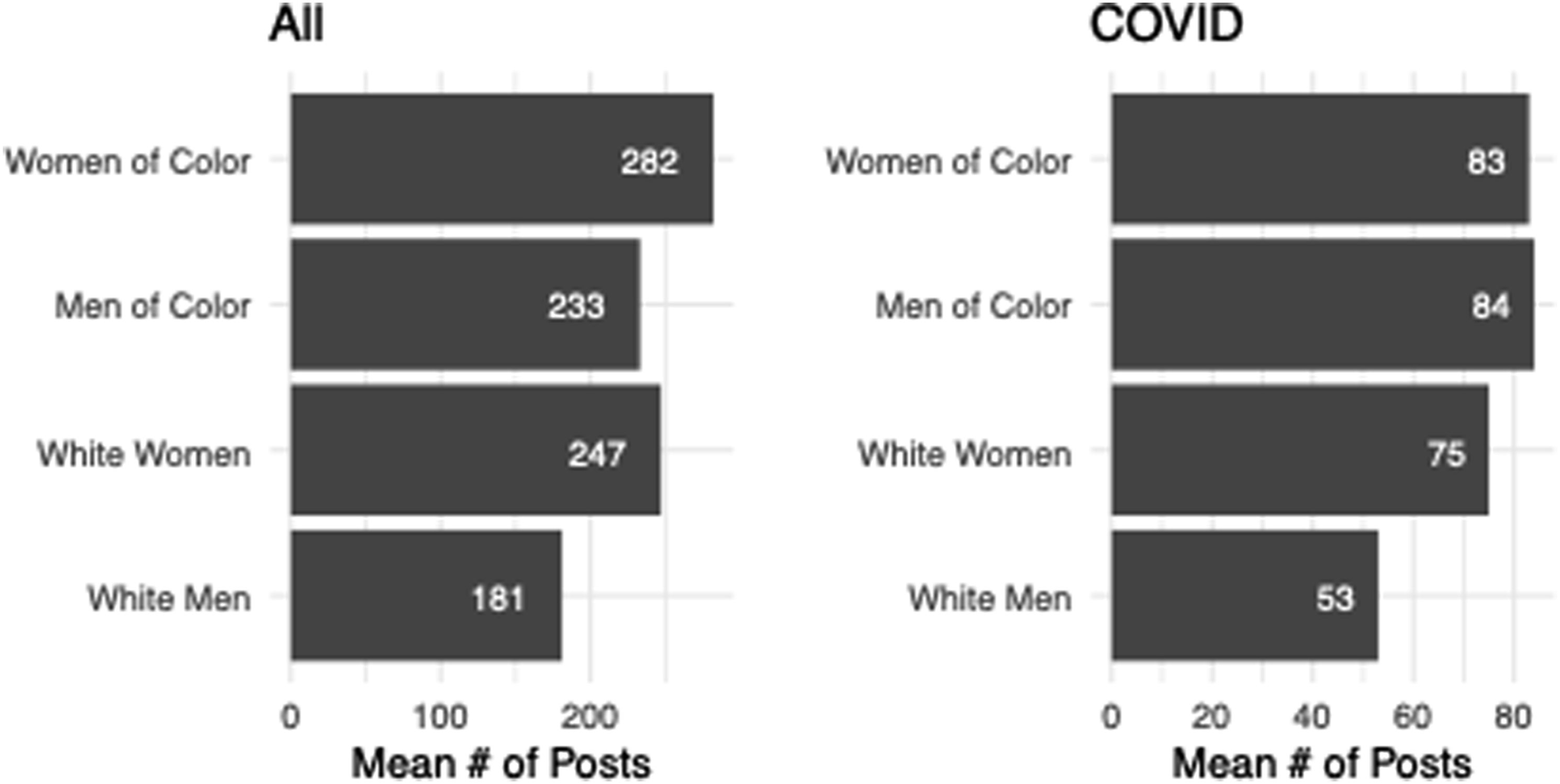
Research has shown there to be significant partisan polarization on the issue of COVID (Green et al. 2020; Hamilton and Safford 2021; Kim et al. 2022). Therefore, we also considered the legislator’s partisanship. Figure 2 shows the average rate of COVID posts for legislators disaggregated by race, gender, and political party. We note that there were only six Republican men of color, three Republican women of color, and two Independent white men, so we excluded them from Figure 2.
13
We find that among white legislators, there is clear variation by gender and party. Democratic white women, along with Democratic minority legislators, averaged the most posts about COVID during this period (we do not find there to be statistically significant differences across these three groups). In contrast, Republican white men averaged the fewest posts related to COVID and significantly fewer posts about COVID than Democratic white men (p < .05). Democratic white men also posted about COVID slightly more than Republican white women. In sum, the descriptive patterns show important differences by race, gender, and party, and so in the remainder of the analysis, we disaggregate legislators by these factors.
14
Rate of overall Facebook post activity and posts about COVID by race, gender, and party of legislator. Note. Bars reflect average total number of posts made between January and September 2020 for each partisan–race–gender group.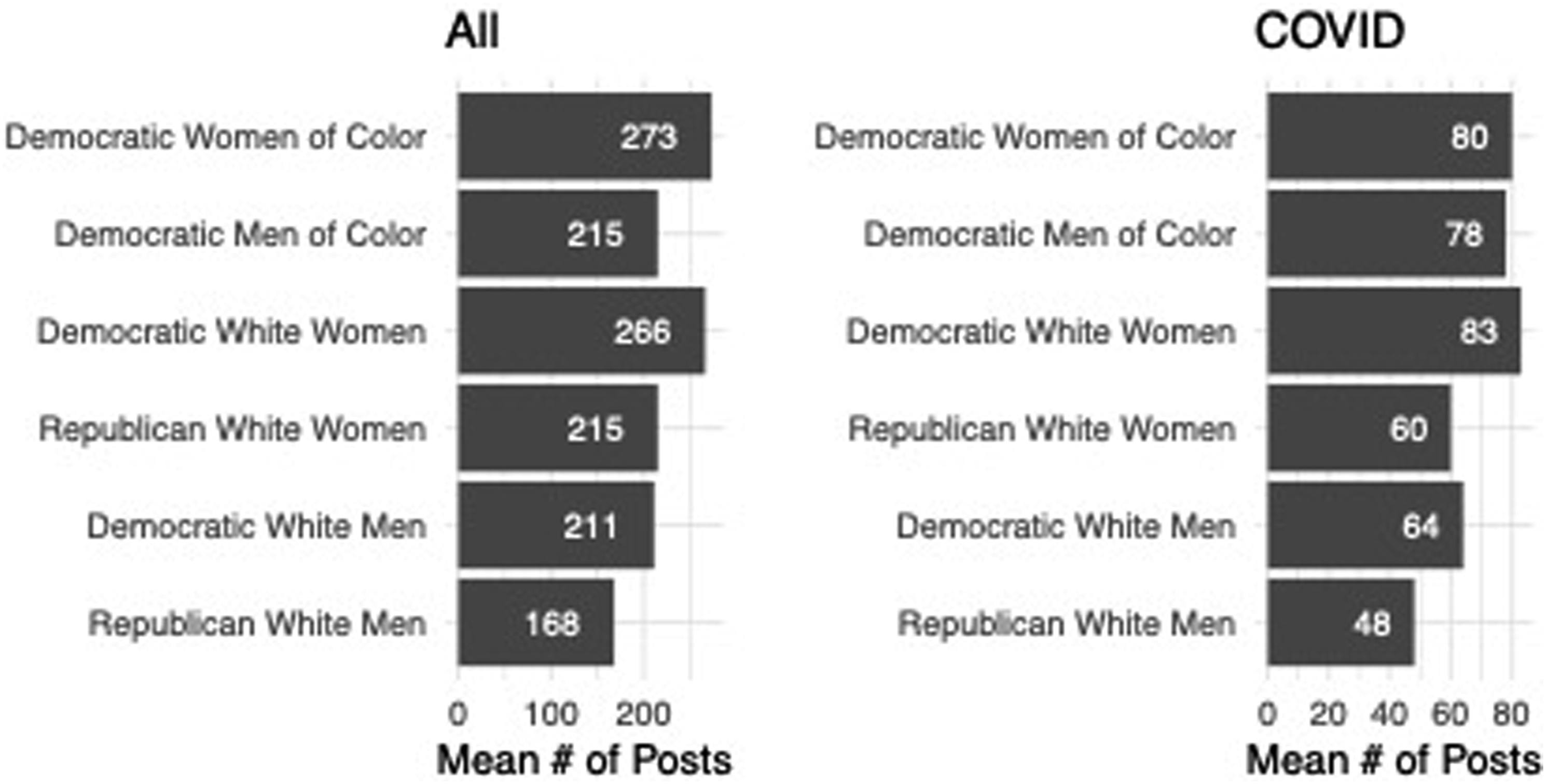
Turning to our analysis of the content of COVID posts, we also find that legislators’ discussions of the pandemic differed by race, gender, and political party. The top left panel of Figure 3 (COVID-Dangers) shows that within their posts about the coronavirus pandemic, Democratic legislators of color and Democratic white women discussed the dangers of COVID and the importance of testing more frequently. White men, regardless of party, posted the least about the dangers of COVID. The top right panel of Figure 3 (COVID-Social Distancing) indicates Democratic white women, women of color, and men of color also posted about social distancing at relatively higher rates. Republican white women and Democratic white men emphasized social distancing at a similar rate and more often than Republican white men but significantly less often than legislators of color and Democratic white women (p < .05). The middle-left panel of Figure 3 (COVID-Events) shows Democratic white women posted at the highest rate about COVID-related events although this rate is not significantly different from that of Democratic white men and legislators of color. White Republicans, regardless of gender, posted the least about COVID-related events (p < .05). Turning to the middle right panel of Figure 3, white Republicans discussed the pandemic as a partisan or politicized issue more than any other group (p < .05). Finally, Democratic white women and women of color made reference to women in their COVID posts at a higher rate than all other groups (p <. 05). Legislators of color similarly posted about communities of color in their COVID posts at significantly higher rates than other groups (p <. 05). Content of COVID posts by race, gender, and party of legislator. Note. Bars reflect average total number of posts in each COVID subcategory made between January and September 2020 for each partisan–race–gender group.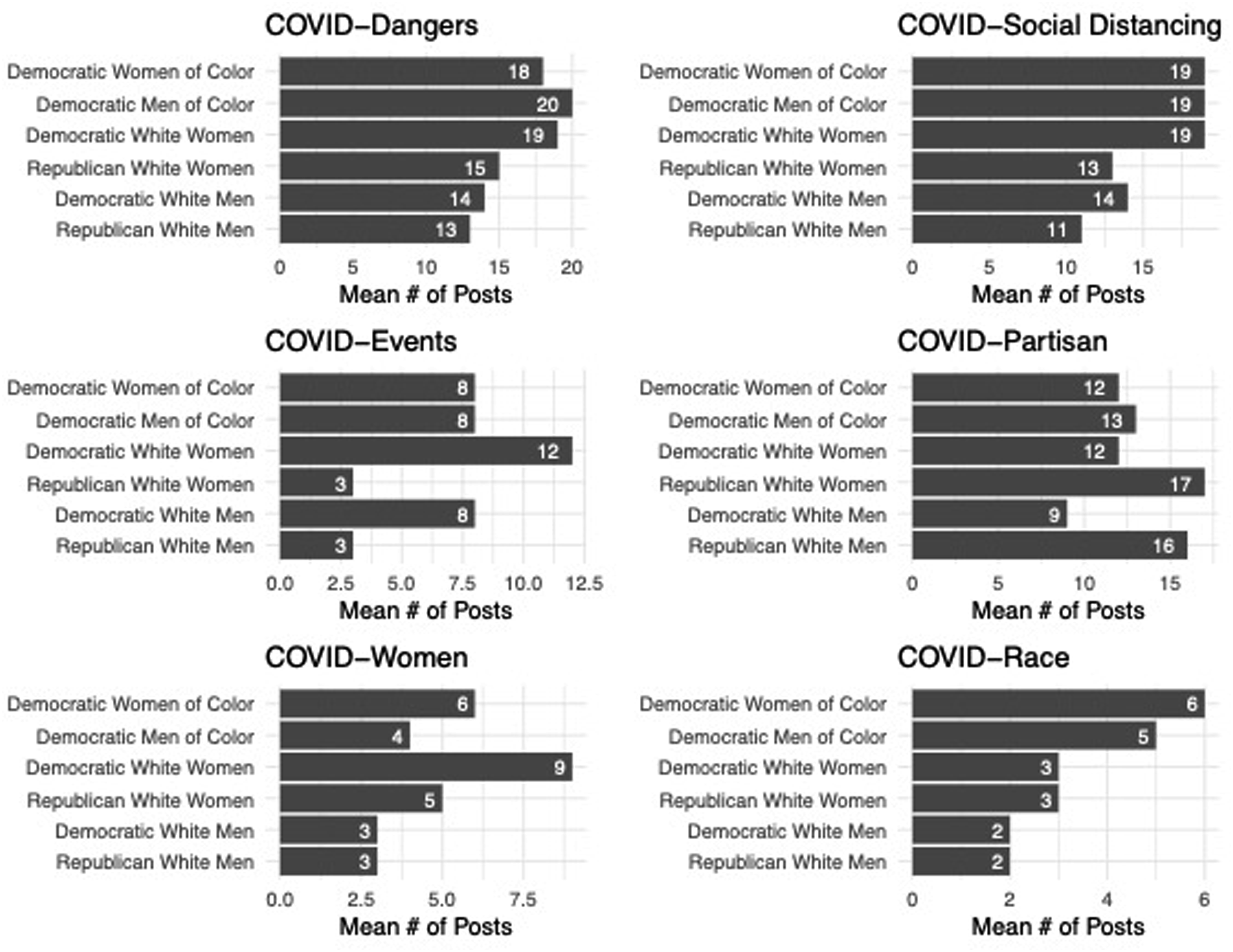
To establish whether these differences across the partisan–race–gender identity of the legislator hold even when considering other relevant factors, we turn to multivariate analysis. The dependent variable for this analysis is the total number of COVID posts for the entire nine-month period. Then, we ran separate models for the six COVID subcategory variables to see if there was variation depending on the content of the COVID post. We used quasi-Poisson regression models for the analysis to account for overdispersion (Ver Hoef and Boveng 2007).
We followed the literature on representation and specified a model that controlled for three dimensions of factors: individual-level characteristics of the legislator, factors related to reelection, and characteristics of the district. To control for the individual characteristics of the legislator, we included variables accounting for the legislator’s age, partisan affiliation, type of seat (lower or upper chamber), and leadership experience (such as serving as a committee chair or a party leader). 15 Since time is a limited entity, it could be the case that legislators who spend a lot of time on legislation activities have less time to spend on other activities like constituency services, so we also include a measure of total bill sponsorship during 2019. To control for reelection concerns, we included the share of the district that voted for the legislator in the last election. 16 We control for the partisanship, racial composition, population density, education level, and income of the district. 17 We also controlled for the COVID infection rate of the district to consider that districts varied in their experience with COVID outbreaks. 18 Since we analyzed legislators in a sample of states, we also included a control for each state. Finally, we controlled for the total number of Facebook posts legislators made during this period to determine if the variation in COVID-related posts was simply being driven by differences in overall legislator activity on Facebook.
To ease the interpretation of the quasi-Poisson regression results, we calculate and visualize the marginal change of the expected count of posts for each of the partisan–race–gender legislator groups and present these findings in Figure 4.
19
To calculate expected counts, we hold all other covariates at their mean observed values.
20
Figure 4 displays the marginal change in the expected count of Facebook posts for a given partisan–race–gender identity of a legislator compared to Republican white men. In a separate analysis, we also run this model with Democratic white women as the comparison group since this is the group that posts at one of the higher rates. We present the marginal change rates when white women are the comparison group in Figure A1 in the Appendix. Difference in expected count of Facebook posts by race, gender, and party (vs. white Republican men). Note. Figures display average marginal effects as the difference in the expected number of Facebook posts by Democratic white men, Democratic white women, Republican white women, Democratic men of color, and Democratic women of color compared to Republican white men, holding all other covariates at their mean observed values, with 95% confidence intervals.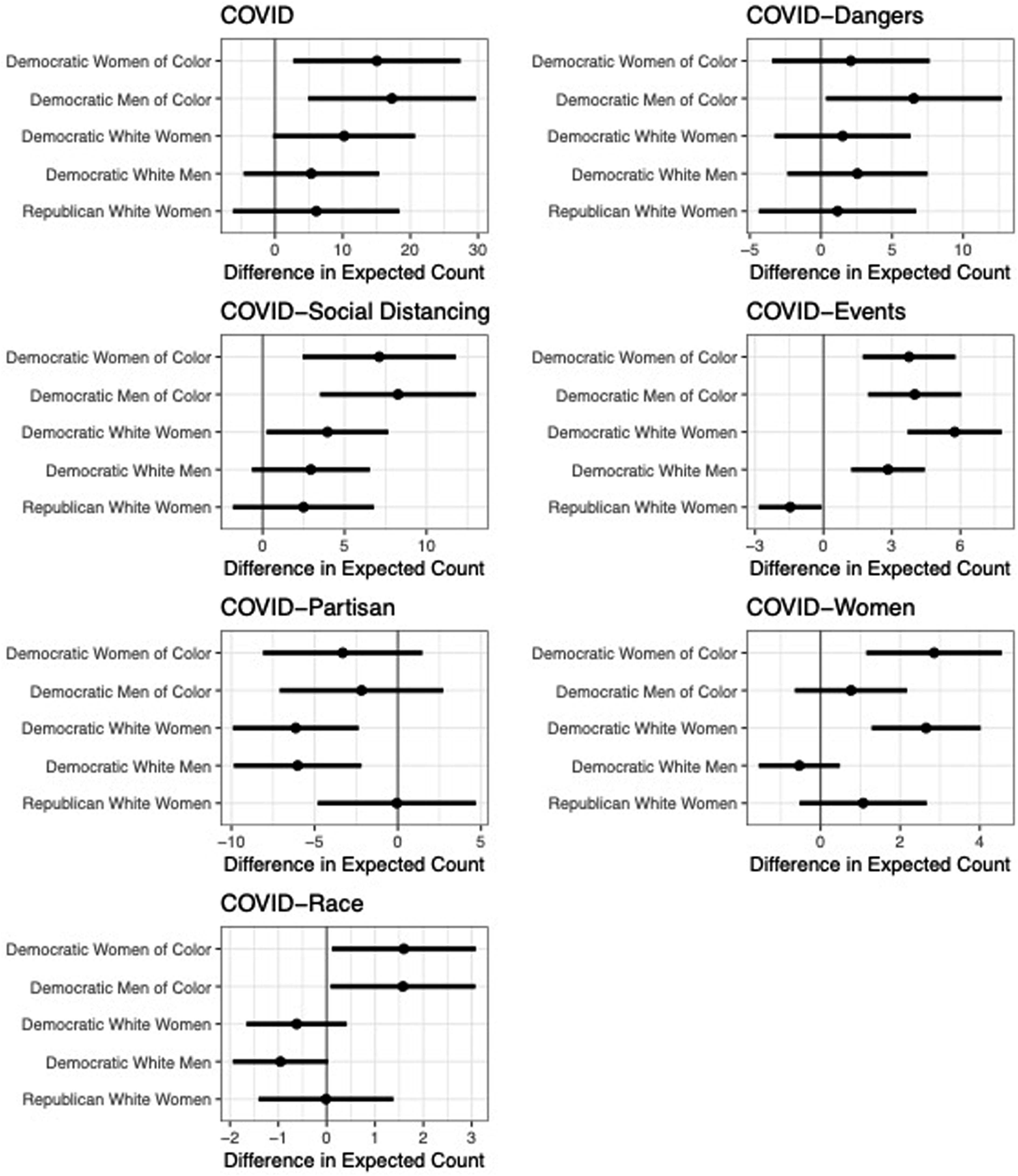
The multivariate analysis confirms that when controlling for important factors, we find important differences in overall COVID posting activity across the partisan–race–gender identity of the legislator. First, looking at the overall COVID variable, we find that Democratic white women made, on average, 10.21 more posts about COVID in our period of interest compared to Republican white men; however, this finding is only significant at p = .054. Similarly, Democratic men of color and women of color averaged 17.28 and 15.05 more posts about COVID relative to Republican white men. In comparison, when Democratic white women are the comparison group, we find no significant difference in COVID posting rate between Democratic white women and men of color or between Democratic white women and women of color. Overall, white men legislators posted about COVID at the lowest rates during our period of interest. We also find no significant differences when comparing Republican white women to each of the two comparison groups. This suggests that there is not a systematic pattern of COVID posts made by Republican white women as a group.
Turning to our analysis of COVID subcategories, we find that all Democratic legislators posted more about COVID-Events than Republican white men. Democratic women of all races and Democratic men of color posted significantly more about COVID-Social Distancing than Republican white men. Democratic minority and women legislators were more likely to connect their role as descriptive representatives to substantive representation by being more likely to mention either gender or race in their posts about COVID. Democratic women were more likely to emphasize women in their posts than white Republican men, and Democratic legislators of color emphasized race in their posts at the highest rates. In contrast, white Democrats made fewer COVID-Partisan posts than white Republicans.
Lastly, we find that across all variables, we find no differences in posting content between Republican white men and women. Therefore, while we document important gender differences among Democratic legislators, we find few gender differences across Republican white legislators.
Facebook Activity Over Time
Looking at total Facebook activity only addresses one dimension of how legislators responded differently to the pandemic using social media. The other critical aspect is their attentiveness to the pandemic over time. We might expect all legislators to post about COVID during the initial outbreak, which was when much of the national attention was on COVID. However, as the pandemic wore on and COVID became a more long-term problem, there may be differences in the types of legislators who continued to discuss COVID via their social media posts. Survey data has consistently shown that women express greater concern about COVID and more support for paid leave and free COVID testing in response to the crisis (Gadarian et al. 2022). It is plausible that these policy preferences translated into greater attention to the issue over time.
Figure 5 displays the time trend in the average number of COVID posts made each week between January 1, 2020, and September 30, 2020, by legislator partisan–race–gender identity.
21
There are virtually no COVID posts by any group of legislators prior to March. Then, there is a drastic uptick in COVID posts for all legislators that begins around the middle of March. This uptick coincides with the Trump administration declaring the coronavirus pandemic a national emergency on March 13, 2020, and states beginning to implement shutdowns and stay-at-home orders on March 15, 2020.
22
While all legislators posted about COVID at high rates in March and April, their attention to the topic dropped after this period.
23
However, after April, there is variation in the amount of decline in COVID posts made by each partisan–race–gender legislator group. We find that while all legislators made many posts about COVID during the initial outbreak of the virus in March 2020, in later months, Republican white men, closely followed by Republican white women, posted the least about COVID. In contrast, Democratic white women and women of color are the two groups that posted at the highest rate about COVID during the latter half of the time period, demonstrating their continued attention to COVID even when news about the pandemic was no longer novel.
24
Weekly average COVID Facebook posts by race, gender, and party of legislator.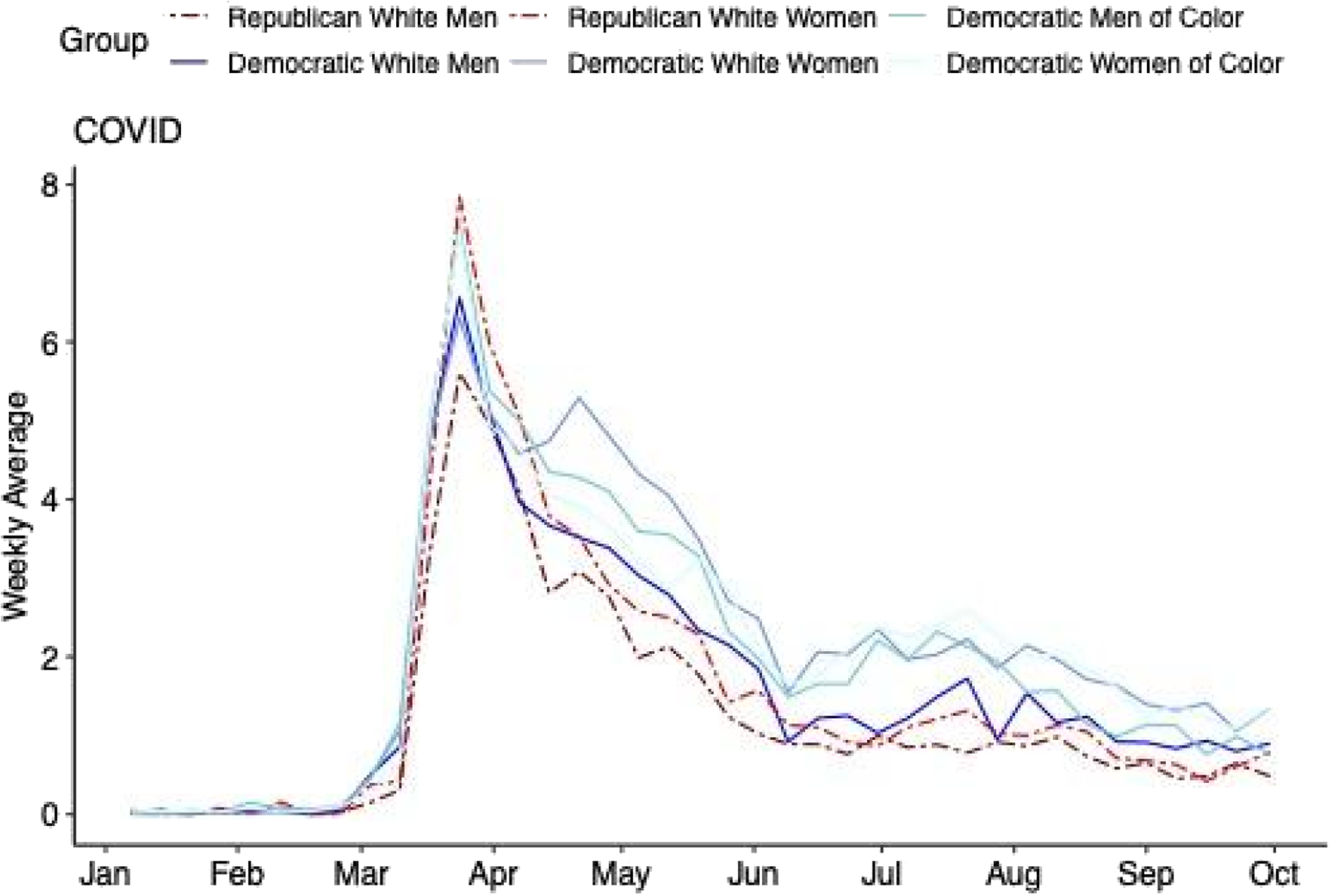
The weekly trends in Figure 5 indicate the need for a more nuanced assessment of state legislators’ Facebook activity. The stark decline in COVID posts after April 2020 and the differences between groups of legislators in the latter half of our period of interest demonstrate that there may be important differences in their degree of attention and commitment to drive attention toward an important issue over time. To determine if Democratic white women and women of color indeed posted more about COVID in the second half of the period relative to other partisan–race–gender legislator groups, we turn to the use of time-series analysis. For this analysis, we use generalized linear mixed effects models, which allow us to control for variation across individuals and over time (Gelman and Hill 2006).
To evaluate COVID posting rate over time, we will examine if there are differences in posting rates across partisan–race–gender legislator groups at specific weeks within our time period of interest. We specified two different models: one that compares posting rates before and after the week of May 13th and the other that compares posting rates before and after the week of July 22nd. We selected the May 13th threshold because this is the first week after President Trump announced COVID-19 tests were available to the public and encouraged businesses around the country to reopen. We selected the July 22nd threshold because this is the first week after several states canceled plans to reopen, the U.S. reported a new single-day record for COVID-19 infections, and the Trump administration instructed hospitals to begin submitting COVID-19 information to a new system run by a private contractor rather than the CDC. 25
For this analysis, we use the total COVID posts as our dependent variable. Our key independent variables were represented by a function that interacts the time threshold and a given partisan–race–gender legislator group, which allows us to determine if that group posted at a higher rate than that of a selected comparison group after the given time threshold. We conduct two analyses: one with Republican white men as the comparison group and one with Democratic white women as the comparison group. We then include the same control variables as described in the above analysis on overall posts.
Testing COVID Posting Rate Over Time: Group Comparisons Against Republican White Men Legislators.
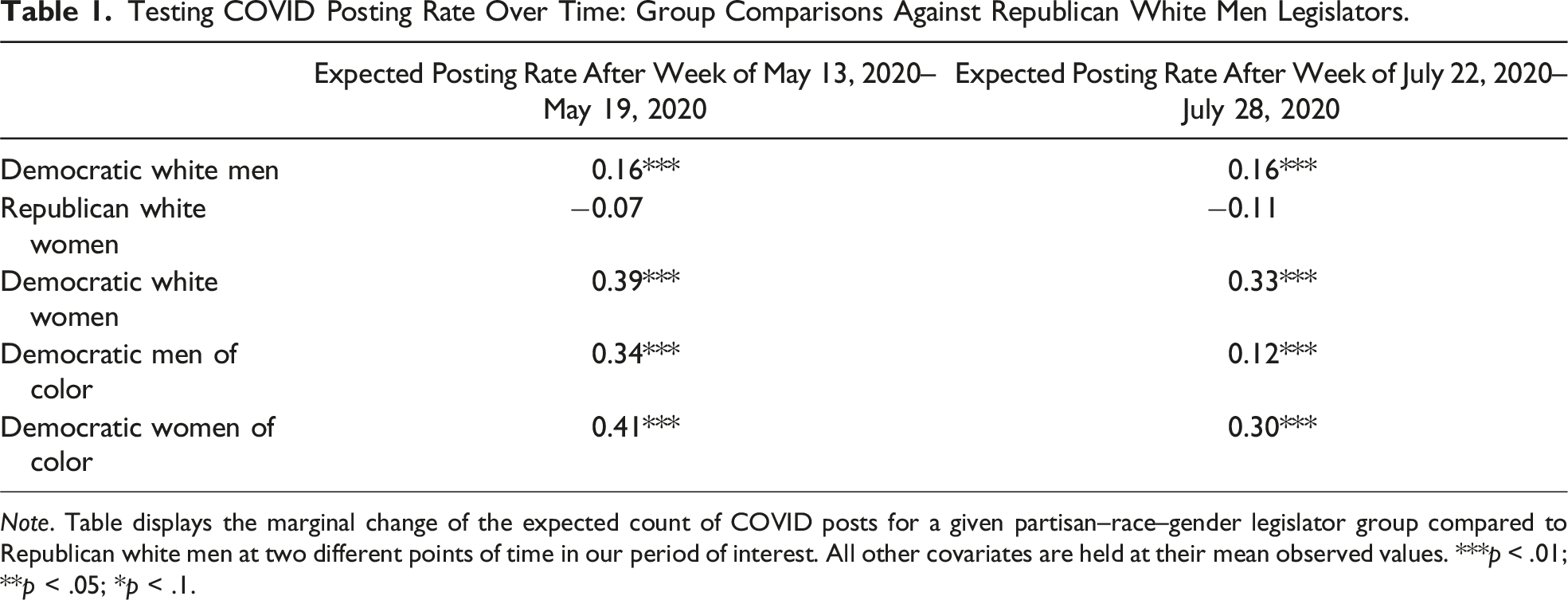
Note. Table displays the marginal change of the expected count of COVID posts for a given partisan–race–gender legislator group compared to Republican white men at two different points of time in our period of interest. All other covariates are held at their mean observed values. ***p < .01; **p < .05; *p < .1.
In contrast, when Democratic white women are the comparison group, we find there to be important variation in posting rates across Democratic legislators. After May 13th, we find that Democratic white men and men of color posted about COVID at a significantly lower rate than Democratic white women. But there was no difference in COVID posting rate between Democratic women of color and white women. After the second time threshold (after July 22nd), we find that Democratic women of color and white women were those legislators who continued to post the most about COVID. This analysis shows how Democratic women continued to raise attention and/or resources in relation to the pandemic even as Americans grew more accustomed to the presence of the virus in their communities. Moreover, while we focus on COVID posts, we find similar patterns across all of the other six subcategories of COVID posts (see Appendix A8–A11).
Discussion
The COVID-19 pandemic should be considered more than a public health crisis and had a clear impact on many areas related to governance, such as economic recession and recovery and the exacerbation of race and gender inequality. In this context of national emergency, our study focused on how representatives communicate with their district about the types of constituency services that they provide, which, in turn, can more broadly demonstrate how they approached representation for their district during this time. The findings suggest that how legislators communicate with their constituencies systematically varies by their partisan, racial, and gender identities.
Our findings reveal that partisanship, in particular, is a major factor influencing how and what state legislators communicate to constituents about COVID. This is not surprising, given that the pandemic began during a time of deep partisan polarization (Lee 2015; Gadarian et al. 2022). Our study finds that Republican state legislators are generally less likely to post about social distancing and protections for racial minorities and women compared to Democratic legislators but more likely to emphasize partisan conflict related to COVID. Public opinion studies have shown that at the mass level, Republicans were more likely to be skeptical about COVID and less supportive of measures to restrict activities in response to COVID (Gadarian et al. 2022), and our findings suggest that these partisan differences found among the mass public were consistent with the partisan differences in how elected officials discussed the pandemic. While our study cannot confirm a causal relationship, one way of interpreting the significance of our study is that it generates evidence showing that elected officials played a role in the creation of this partisan divide in response to COVID.
At the same time, our study advanced an intersectional analysis to examine how partisanship may be mediated by the race and gender of the elected official. We find important differences by race and gender within the Democratic party. The results suggest that Democratic women legislators of all races communicated more about constituency services to combat COVID and that Democratic white women and Democratic legislators of color were also more likely to cue their role as descriptive representatives in their communication with constituents. Consistent with our original expectations, these differences could be due to the disparate impact that the virus had on communities of color and women and are consistent with research which shows that legislators from marginalized backgrounds may turn to social media to communicate with constituents about COVID because they may have less access to traditional media outlets. Future research should explore the mechanisms further.
However, while we found gender differences among Democrats, we found no clear gender differences among Republicans, which suggests that gender identities operated differently by party. Our findings suggest that Republican white men and women legislators were more unified in their partisan messaging on COVID, suggesting that during the pandemic, demonstrating more uniformity or conformity in how they responded to the pandemic. We acknowledge that our study did not examine racial differences among Republicans (given sample size limitations). But since we found few gender differences among Republicans, we wonder if there would also be few racial differences among Republican minority legislators had we had enough data to analyze. Future research can try to explore these questions.
Our findings more broadly pose the question of why events during the COVID pandemic led to greater internal variation among Democrat leaders but not Republican leaders. One consideration is that because it was a Republican presidential administration in 2020, there was stronger Republican leadership at this time, which encouraged greater conformity among Republican state-level leaders. It might also be the case that because Democrats were not in power at the national level, they were more likely to post about COVID to assert more visible leadership on the pandemic. Alternatively, it could also be the case that for Republicans, partisan identity trumps other identities, such as race and gender, which is suggested by some scholars (Grossman and Hopkins 2015; Wineinger 2021). We encourage future research to examine these interesting directions to tackle when and under what circumstances we find partisan differences in communication and representational style.
We acknowledge that our study is concentrated on the first year of the COVID outbreak but argue that our study and results still have several broader implications. Our results indicate that there is a pattern of partisan-raced-gendered communication during the first year of COVID that can be continually explored as COVID remains a public health risk. We argue that the spread of a new and deadly virus might be labeled a once in a lifetime public health crisis, but the COVID pandemic is not the only crisis that can face the nation. There are many types of crises that elected officials must act as leaders and representatives, such as major economic crises such as a deep depression, the outbreak of war, or an attack on national security. Future research can explore if the pattern of elected officials’ responses to COVID is unique to COVID or replicates during other times of crisis.
Finally, our study speaks to the necessity of electing descriptive representatives. This demonstrates a need for additional research on how women elected officials and elected officials of color leverage new social media technologies to reach their constituents. We find that they provide a qualitatively different representation based on the content they posted about COVID on their Facebook accounts which show their unique approach to representation relative to their white male counterparts. In an era where identity politics is demonized, our research presents the usefulness of having representatives from underrepresented backgrounds in office.
Supplemental Material
Supplemental Material - Leadership in a Pandemic: State Legislator Constituent Outreach in Response to COVID-19
Supplemental Material for Leadership in a Pandemic: State Legislator Constituent Outreach in Response to COVID-19 by Michael Strawbridge, Natalie Masuoka, Nadia Brown, and Erik Hanson in Political Research Quarterly
Supplemental Material
Supplemental Material - Leadership in a Pandemic: State Legislator Constituent Outreach in Response to COVID-19
Supplemental Material for Leadership in a Pandemic: State Legislator Constituent Outreach in Response to COVID-19 by Michael Strawbridge, Natalie Masuoka, Nadia Brown, and Erik Hanson in Political Research Quarterly
Footnotes
Acknowledgments
We would like to thank our undergraduate research assistants for their help identifying COVID-related themes: Ashley Ku, Allyson Marquez, Devin Shields, and James Varos. We thank panelists at the 2021 Western Political Science Association and American Political Science Association annual meetings for their helpful feedback and to Christian Grose for assistance with the theoretical argument. Finally we thank Neal Fultz for consultation on the methodology.
Declaration of Conflicting Interests
The author(s) declared no potential conflicts of interest with respect to the research, authorship, and/or publication of this article.
Funding
The author(s) received no financial support for the research, authorship, and/or publication of this article.

Supplemental Material
Notes
References
Supplementary Material
Please find the following supplemental material available below.
For Open Access articles published under a Creative Commons License, all supplemental material carries the same license as the article it is associated with.
For non-Open Access articles published, all supplemental material carries a non-exclusive license, and permission requests for re-use of supplemental material or any part of supplemental material shall be sent directly to the copyright owner as specified in the copyright notice associated with the article.
