




Abstract
During the first 2 years of the coronavirus pandemic, over 150 countries had scheduled elections, but approximately half of them had to be postponed due to the pandemic. Why were some elections postponed while others were not? Despite its impact on the election calendar and democratic accountability, election postponement has received surprisingly little scholarly attention. In this study, I investigate the conditions under which elections are more likely to be delayed. Utilizing a comprehensive cross-national dataset encompassing election schedules worldwide, COVID-19-related factors, and other societal and institutional characteristics, I provide the first systematic examination of election postponement during the first 2 years of the pandemic. The empirical analysis reveals that national elections are less likely to be postponed compared to second-order elections such as subnational and special elections. Furthermore, it demonstrates that the momentum of the pandemic plays a significant role, and effective pandemic management and robust healthcare infrastructures decrease the likelihood of election postponement. On the other hand, institutional constraints have little impact. By shedding light on the factors driving election postponement, this study enhances our understanding of how crises can shape democratic processes.
Introduction
The first 2 years of the COVID-19 pandemic resulted in over 500 million cases and over 6 million cumulative deaths worldwide (as of May 2022, World Health Organization). The pandemic has disrupted every aspect of our lives, with no exception for democratic processes. According to Freedom House, the condition of democracy and human rights has deteriorated in 80 countries since the outbreak of COVID-19. Instances of electoral disruption, interruption of legislative meetings, media restrictions, and restrictions on protests have been observed (Repucci and Slipowitz 2020).
While countries around the world have responded differently to the COVID-19 pandemic, many have implemented restrictions on the freedoms of speech and assembly, leading to significant effects on election campaigns and voting procedures. Consequently, numerous elections and referendums, both at the national and subnational levels, had to be rescheduled. However, it is worth noting that some elections proceeded as originally planned during the pandemic crisis. 1 According to the International Institute for Democracy and Electoral Assistance (IDEA), during the first 2 years of the coronavirus pandemic (Feb 2020–Feb 2022), more than 80 countries and territories globally decided to postpone national and subnational elections due to COVID-19. Out of these, at least 42 countries opted to postpone national elections and referendums. On the other hand, over 160 chose to proceed with their national or subnational elections, including those that were initially postponed, during the same period.
This paper aims to analyse the factors that contribute to the decision of whether to hold elections as scheduled or to postpone them. The study focuses on two mechanisms – the potential public health risk associated with holding an election and the political importance of the election under consideration for postponement – and explores the factors that influence these key drivers. Several questions are explored within this context, including to what extent do the pandemic trends matter for the decision of election postponement?; are less salient elections (e.g. subnational elections) more likely to be postponed?; are the elections that might cause more health risk (e.g. national elections) more likely to be postponed?; to what extent are the government policy responses and pandemic management associated with the likelihood of election postponement?; are wealthier, more democratic, and more educated countries less likely to postpone an election?
Given that electing representatives by holding regular elections is one of the most important features of contemporary electoral democracy, the election disruption caused by the pandemic has had certain consequences. Election postponements can lead to prolonged terms for incumbents or interim periods for representative or executive bodies, resulting in delays in holding politicians and elected officials accountable. Despite its impact on the election calendar and democratic accountability, election postponement has received surprisingly little scholarly attention (James and Alihodzic 2020). As a result, our understanding of the political, societal, economic, and epidemic conditions that influence the likelihood of holding elections during a pandemic crisis remains limited.
This paper presents, to my best knowledge, a first systematic approach to investigate how the pandemic waves, political and social infrastructure, and the feature of scheduled elections interact to influence the decision of election postponement during a pandemic crisis. In the theory section, a set of hypotheses is proposed, focussing on the factors associated with the two main mechanisms – the potential health risk and political importance. These hypotheses are tested using a comprehensive cross-national dataset that incorporates information on elections at various levels, pandemic trends, government responses, and other societal and institutional characteristics. Notably, the analysis reveals that national elections are less likely to be postponed compared to subnational and referendum elections. Furthermore, the findings underscore the importance of effective pandemic management and robust healthcare infrastructure in reducing the likelihood of election postponement.
When an election is scheduled amid a pandemic, it places decision-making bodies under two important pressures: the need to protect and maintain electoral democracy by holding the election on schedule, and the responsibility to prioritize public health by considering the postponement of the election. The findings of this study contribute to our understanding of these dynamics by identifying the conditions under which election postponements are more or less likely to occur. The final section is dedicated to discussing the implications, limitations, and future directions of the study.
The Pandemic, Election Postponement, and Electoral Democracy
In recent years, there has been increasing scholarly attention to the impact of the coronavirus pandemic on voters, political processes, and democracy. For instance, researchers have tracked down the changes in political trust (Davies et al., 2021; Kreps and Kriner 2020; Kritzinger et al., 2021; Price et al., 2021; Schraff 2021), found the presence of the ‘rally-round-the-flag’ effects in different places around the world during the pandemic (Baekgaard et al., 2020; Johansson et al. 2021; Lupu and Zechmeister 2021; Yam et al., 2020), and examined citizen compliance with health guidelines (Bargain and Aminjonov 2020; Becher et al., 2021; Clark and Davila et al., 2020). Additionally, scholars have examined how the pandemic has affected election management and voter turnout in the elections held during this period (Haute et al., 2021; Herrnson et al., 2022; Joe 2022; Neihouser et al., 2022; Picchio and Santolini 2022). For the elections that could not take place during the pandemic or were under consideration for postponement, numerous reports and case studies have been published, offering insights into the legal, political, normative, and practical challenges faced (e.g. Bedaso 2021; James et al., 2022; Rambaud 2020).
These case studies have provided important insights to understand the decision of whether to hold or postpone elections during crises like the COVID-19 pandemic. Each decision, whether to hold or postpone, is supported by its own legitimate reasons. First, not holding an election as scheduled is considered less ideal than holding it on schedule. Postponing elections can disrupt institutional certainty and pose threats to democratic breakdown (James and Alihodzic 2020), and sometimes it becomes a real threat to keeping up the democratic standards. Critics of election postponement are primarily concerned with the potentially ‘undemocratic’ motives of politicians. This concern is particularly pronounced when the new election dates are not promptly re-scheduled and when proper safety measures are not in place for the rescheduled election day (Repucci and Slipowitz 2020). Furthermore, election postponement can exacerbate inequalities in electoral competition by placing greater pressure on candidates with fewer resources, such as independent candidates, than politicians affiliated with established political parties who may have more resources. It can also provide incumbents with an opportunity to strategically set a new election date (James and Alihodzic 2020).
While election postponement is generally considered suboptimal, it is not always undemocratic. James and Alihodzic (2020) highlight that there are humanitarian and democratic justifications for short-term postponements. The rapid progression of the pandemic has significantly increased the personal health risks associated with in-person voting, leading many governments to implement policies that restrict personal interactions and mobility. Under such circumstances, the heightened health risks can inevitably suppress turnout in general, 2 potentially undermining the perceived legitimacy of the elected (Sadana 2021). Additionally, the health risks are often disproportionally higher for specific social groups such as ethnic minorities and the elderly population (CDC 2022; Razzaghi et al., 2020). Holding an election during the pandemic could exacerbate inequalities in participation and democratic representation. The quality of voter choices and election management is also likely to be affected as election campaigns and the flow of information are constrained. The limited availability of election workers and facilities can pose significant logistical challenges, making it difficult to ensure smooth and efficient election management (Asplund et al., 2021; James and Alihodzic 2020).
As such, postponing an election in times of pandemic crisis presents a paradox. On one hand, it disrupts institutional certainty by delaying citizens’ opportunity to hold elected officials accountable. On the other hand, it can be a justifiable decision aimed at protecting public health and preventing potentially low-quality elections that could erode trust in the system in the long term. Thus, election postponement during the pandemic crisis involves not only the health and well-being of citizens but also democratic principles, government capabilities, and the functioning of modern democracy as a whole. The decision to postpone an election may rely on various considerations, including the COVID-19 epidemic trends in the country, the health risks associated with holding an election, constitutional or legal considerations, the capacity of the government and election management bodies to conduct safe and secure elections, as well as public and elite opinions regarding the postponement.
Election postponement is likely influenced by a range of factors in a country’s epidemic, political, societal, and economic contexts. Still, there are important empirical questions that remain unanswered. What specific conditions make election postponements more likely during the pandemic? Why do some elections proceed as scheduled while others require postponement? How significant are the political and institutional contexts in determining whether to postpone an election during the pandemic? Although existing case studies have offered valuable insights into the factors contributing to election postponements in different cases, there has yet to be a systematic analysis to assess the (relative) importance of these considerations in general. This study aims to fill this gap by conducting a comprehensive and systematic analysis. It utilizes extensive data on the national and subnational elections and referendums worldwide that were scheduled, held, cancelled, or postponed during the first 2 years of the COVID-19 pandemic.
Why Are Some Elections Postponed While Others Are Not?
There are various reasons for elections not being held as scheduled. Historically, elections have been cancelled, suspended, or postponed due to, for example, candidates’ death, natural disaster, and political crises such as civil wars and military coups. While it is not uncommon for elections to be delayed or cancelled, 3 we know very little about elections that did not take place. As James and Alihodzic (2020: 346) pointed out, there has been little scholarly attention to ‘the dog that didn’t bark in the night’. The determinants of election postponements during times of crisis have been explored through case studies, with a surge of reports and case studies on postponed or held elections during the COVID-19 pandemic. Yet, we know little about why some elections proceeded as scheduled while others did not. Understanding these dynamics is crucial for further investigating the short-term and long-term political consequences of the pandemic and the broader impact of large-scale crises on democratic governance.
To examine the circumstances under which elections are more likely to be postponed, this study focuses on three types of factors: pandemic-specific contexts, institutional constraints, and political motivations. This section discusses and presents hypotheses regarding the potential impact of health risks associated with holding an election, the governments’ management of the pandemic, and other infrastructures and institutional constraints on the decision to postpone an election.
The Trend of the COVID-19 Pandemic
The primary reason for considering election postponement is the onset and spread of the coronavirus disease (COVID-19). The highly contagious nature of COVID-19 has posed unprecedented challenges to global public health, jeopardizing the lives of millions of people at risk every day.
Figure 1 provides an overview of global trends in the number of newly diagnosed infection cases, new deaths due to COVID-19, biweekly growths in infection cases, and the reproduction rate over the first 2 years of the pandemic. The figure illustrates fluctuations in these indicators over time. For instance, focussing on new deaths (shown in the upright panel), we can identify at least three peaks: one in the spring of 2020, another from the autumn of 2020 to the spring of 2021, and a third during the summer and the autumn of 2021. Different countries and regions around the world have experienced the pandemic waves at slightly different paces, with some experiencing them earlier and others later. COVID-19 trends in new cases, new deaths, and reproduction rate. Note: Data from Our World in Data (OWID), Johns Hopkins University.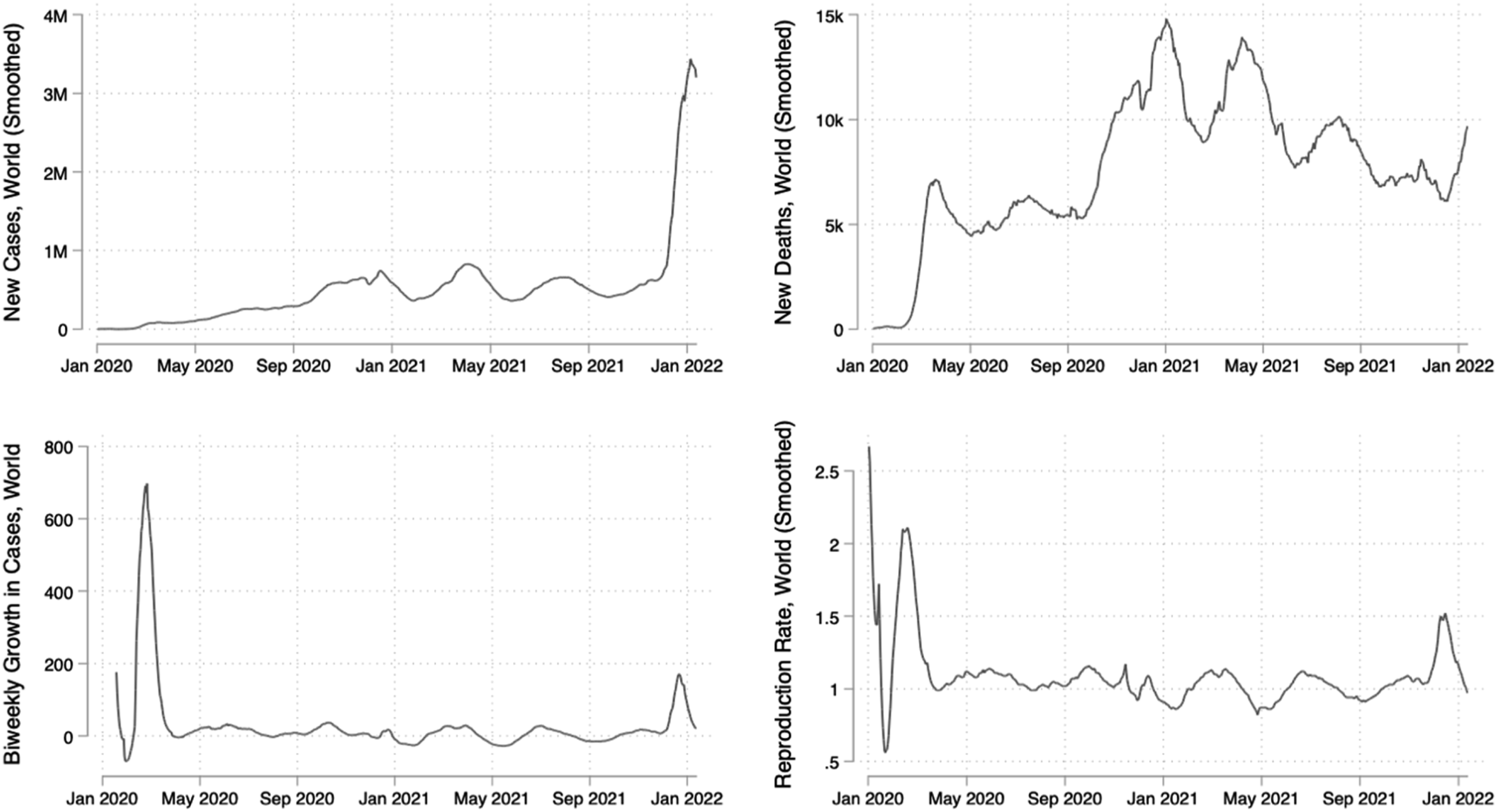
Considering the within- and cross-country variations in the occurrence and severity of pandemic waves and the associated health risks, elections will be more likely to be postponed when they are originally scheduled during periods of surging COVID-19 cases rather than during periods of decline. However, accurately predicting the future course of the pandemic is challenging, so the decision to postpone an election is typically made some time before the scheduled election day, which could be several weeks or months ahead of the time.
4
The baseline hypothesis, therefore, suggests that elections are more likely to be postponed when the risk of COVID-19 is expected to be higher rather than lower in the country (
Pandemic Management and Health Infrastructures
In addition to the severity of the pandemic, the capability and successful management of the government in handling the crisis can also influence the decision to postpone elections. Throughout the pandemic, countries have introduced various policies to prevent the spread of the virus (Goyal and Howlett 2021; Wang et al., 2021). And these policies are vastly different in terms of speediness of the policy responses, strictness, available resources (such as medical system and digital technology), and strategies for ensuring public health resources (such as the supply of medical goods and materials) (Wang and Mao 2021). When a government effectively responds to the pandemic, it can lower the anticipated risk associated with holding an election. This, in turn, may reduce the likelihood of election postponement.
Building upon the work by Wang and Mao’s (2021) and WHO’s framework for public health and social measures, I examine this factor in three ways. First, testing policy is one of the key differences in various pandemic policies implemented in different countries. Given the highly contagious nature of the disease and the prevalence of asymptomatic cases, the ability to conduct widespread testing played a critical role in preventing virus transmission. Daily testing capacity therefore serves as a reliable indicator of a government’s capability and promptness in responding to virus transmission. When a government effectively manages the pandemic situation, the likelihood of postponing elections decreases due to the reduced health risk associated with holding them.
Second, prior studies indicate that strict policies regarding social distancing and quarantine measures are more successful in reducing the peak of COVID-19 waves, while governments tend to struggle in controlling outbreaks when implementing lenient policies (Sjödin et al., 2020; Wang and Mao 2021). However, stricter regulations may pose challenges for conducting elections, as they introduce additional constraints not only during electoral campaigns and voting at polling stations but also in other aspects of election management due to increased demands for poll workers and polling spaces to ensure social distancing. Consequently, the stricter the public health and social measures in place, the higher the likelihood of election postponement.
Third, healthcare infrastructure and the government’s approach to managing medical resources play a crucial role. The government’s responsibilities in this realm encompass a range of tasks, including but not limited to the provision of medical supplies, protective equipment, the expansion of hospital bed capacity, and potentially engaging military support (Wang and Mao 2021: 968). These strategies and services are vital for ensuring the effective implementation of other public health and social measures. A government’s ability to develop and execute efficient strategies in this regard can mitigate the public health risks associated with COVID-19, consequently reducing the likelihood of election postponement. In this study, I employ the availability of hospital beds as a proxy for healthcare system capacity. Research indicates significant variations in hospital capacities across countries, and a shortage of hospital beds during the initial wave of COVID-19 amplified the number of confirmed cases and mortality rates (Berger et al., 2022; Castagna et al., 2022; Rocks and Idriss 2020; Zhou et al., 2020).
The preceding discussion leads to three hypotheses concerning the impact of governments’ pandemic management, policy responses, and healthcare infrastructure.
Type of Elections
The decision on whether to postpone an election could vary upon the type of the election. There are two considerations relevant to election type, leading to conflict expectations – namely, the scale of health risks (imposed by in-person voting and campaign activities if an election takes place following the original schedule) and the political importance of the election.
Compared to national elections, second-order elections – such as regional elections, municipal elections, and by-elections – are generally considered to be less politically salient and have lower stakes (Henderson and McEwen 2010; Reif and Schmitt 1980). Voters tend to be more interested in national elections than in subnational elections, and as extensively documented in the literature, turnout is typically higher in national elections (Franklin 2002; Lijphart 1997; Morlan 1984). This implies that a higher level of mobility is expected in national elections than in subnational ones, assuming all other conditions are equal and the elections are not held concurrently. Consequently, the burden of organizing an election, including mobilization efforts and logistical arrangements, is expected to be greater for national elections. One might argue that these issues are less relevant when voters have alternative voting methods other than in-person voting. Indeed, electoral reforms and innovations, such as expanded early voting and postal voting, greater reliance on remote voting, and online voter registration, have been considered and implemented in some places (Humphreys 2020). While these innovations may help mitigate health risks and ensure access for vulnerable voters, challenges remain in recruiting and training poll workers, operating (international) election observation, managing ballot logistics, and addressing concerns about voting secrecy and technical issues in remote voting (Birch et al., 2020; Zamfir and Fardel 2020). These potential risks and challenges are likely to be more significant for first-order elections than for second-order elections. Therefore, in terms of the health risks posed by different types of elections, it is expected that national elections are more likely to be postponed than subnational and by-elections (
On the other hand, there are reasons to believe that subnational elections may be more prone to postponement. First, national-level elections, such as parliamentary, presidential, and general elections, hold greater significance for the public than second-order elections. The failure to hold politically important elections could negatively impact the incumbent’s image, perceived as an indicator of incompetence in managing the pandemic. Second, during national crises like the COVID-19 pandemic, there is often a rally-round-the-flag effect, where the public shows increased support for the government (Johansson et al. 2021; Lupu and Zechmeister 2021; Yam et al., 2020). In such cases, some incumbents may prefer to hold an election rather than postpone it, and the stakes are generally higher for the national elections than for local elections, assuming all other conditions remain constant.
5
Consequently, special elections, referendums, and by-elections are more likely to be postponed because they are typically less politically important than national elections. This expectation contradicts the previous hypothesis, suggesting that national elections are less likely to be postponed compared to second-order elections such as subnational elections, referendums, and by-elections (
Political Motivations and Institutional Constraints
While the decision to postpone elections is primarily driven by the trends and contexts of the pandemic, it is important to recognize that there are multiple actors involved in the decision-making process and institutional constraints that can impact the ability to change election schedules. This raises the question of whether political motivations and institutional constraints have an impact on the decision to postpone elections, and to what extent they matter.
Existing literature on the political business cycle and opportunistic parliamentary elections has demonstrated that the ‘timing’ of an election is an important political consideration. Incumbents strategically implement policies to maximize their electoral benefits (e.g. Wenzelburger et al., 2020; see Drazen 2000 for a review) and may call for early elections or dissolve governing coalitions to enhance their chances of electoral gain (Balke 1990; Kayser 2005; Lupia and Strøm 1995; Riera 2015; Schleiter and Tavits 2016). The ability to influence the timing of elections is a valuable political asset for incumbents.
The question we face here is whether the context of the pandemic provides a political environment in which incumbents across countries would expect electoral gains (or losses) by postponing elections. To preview, the discussion below suggests that there is limited reasoning to support the notion that the perspective of strategic timing offers a clear and universally applicable theoretical expectation regarding the likelihood of election postponement. Instead, if political considerations do come into play, they are likely to result in different preferences for postponement or proceeding with the election, depending on the specific pandemic and political contexts of each country. Furthermore, recent studies suggest that these preferences and political calculations are likely to be influenced by the aforementioned factors related to pandemic trends and the management of health crises.
First, given the sudden onset and rapid spread of the disease, it is difficult for political actors to predict the consequences of election postponement. Even if incumbents consider the political (dis)advantages of postponing an election, the high level of uncertainties surrounding the pandemic could lead to miscalculations. While rally-round-the-flag effects have been observed in various places during the early pandemic period, resulting in increased political trust and government support, 6 these effects have shown to be temporary (Kritzinger et al., 2021). Moreover, such rally effect (e.g. increase in ‘political trust’) may not always lead to electoral benefits for incumbents (e.g. Turnbull-Dugarte 2023). Second, as the pandemic situation rapidly evolves, so could the public opinion on the matter of postponing an election. For example, a rise in political trust and government support might discourage incumbents from postponing the election. However, there can always be repercussions from the public if the severity of the pandemic increases and poses a greater threat to public health. This aligns with the finding that government support during the early pandemic period was largely affected by health concerns in the Netherlands (van der Meer et al., 2023). Third, the decision to postpone an election is not solely in the hands of incumbent politicians but may involve other actors such as the judiciary, election commission agencies, local governments, and subnational bodies, depending on the constitution and political system of the countries.
The first two points indicate that during the pandemic, there are limited opportunities for strategic timing, or at least significant uncertainties in making such considerations. Moreover, two critical factors to consider for strategic timing – namely, support for the government and public opinion on election postponement – are affected by the severity of the pandemic and the governments’ pandemic management. These factors are already reflected in the previous hypotheses. 7
The third point, however, introduces an expectation regarding the effect of institutional constraints. In a political system with more actors involved in the policy-making process, election postponement, like any other policy change, may be more challenging. This institutional constraint can be measured by the degree of policy change feasibility, indicated by the number of veto players and the partisan alignment of different government branches – such as independent branches of government, the legislature, the judiciary, and subnational entities. This leads to the fourth hypothesis regarding the effect of institutional constraints.
Data and Measurements
To test the hypotheses, we need data on the schedule of elections, election type, whether the election is postponed, indicators for the trend of COVID-19 (e.g. confirmed cases and deaths), pandemic management (e.g. testing capacity, policy strictness, and healthcare infrastructure), and indicators for institutional constraints. I generated a dataset that combines such information from multiple sources.
Election postponement
The dependent variable, whether an election is held on schedule or postponed, is based on the IDEA’s archive on the elections both postponed due to the outbreak of COVID-19 and held amid the pandemic (International IDEA and Asplund E 2020). I take the archive information about all elections and referendums worldwide that had been originally scheduled for the first 2 years of the COVID-19 pandemic, from February 2020 to January 2022. The final dataset includes a total of 311 national and subnational elections and referendums in 156 countries and territories. Among these, 35% (109/311) were postponed due to COVID-19. Figure 2 demonstrates the monthly trend of election postponements for the first 2 years of the pandemic. Elections were postponed at a higher rate during the first wave (spring of 2020); however, the postponement has continued to occur until the end of the so-called third wave, which is almost a year after the initial worldwide rollout of vaccines. Proportion of elections postponed, February 2020–January 2022. Note: Data from International IDEA.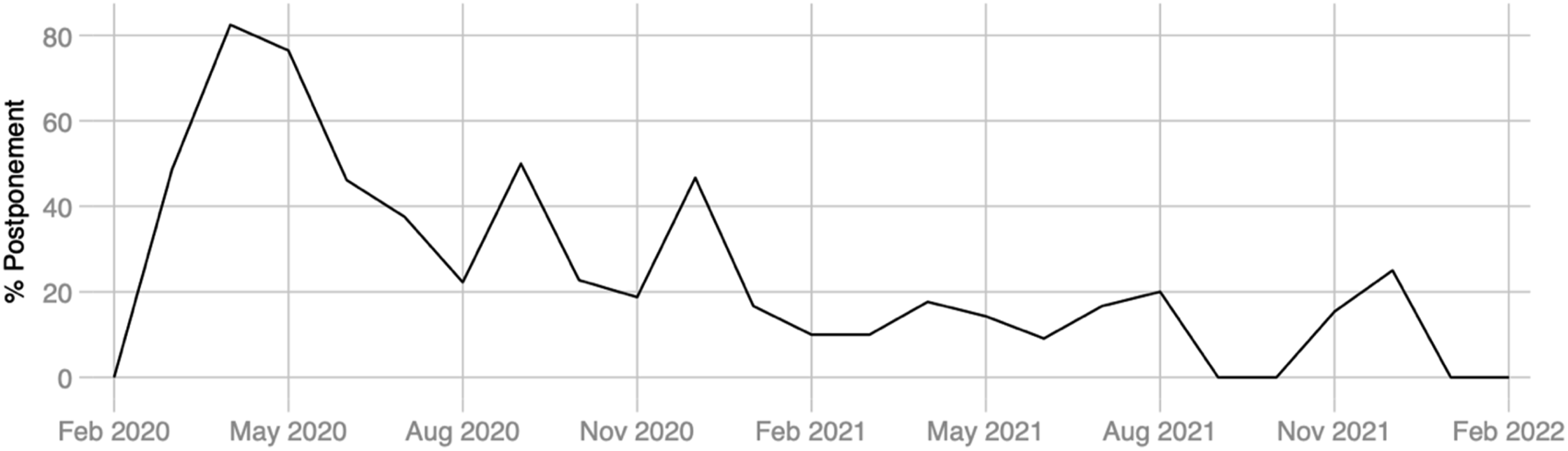
Explanatory variables
To gather variables related to COVID-19 statistics and country-level capacity associated with public health and social measures, I utilized data from Our World in Data (OWID), the Oxford COVID-19 Government Response Tracker (OxCGRT), and The Economist’s estimated excess deaths. The baseline hypothesis predicts a higher likelihood of election postponement when the risk posed by COVID-19 is projected to increase (H1). While various indicators are available to capture the trend of the pandemic, I focus on three: the effective reproduction number of an infectious disease (R-number), daily new cases (per million), and the estimated excess deaths (per million). The reproduction number denotes the average number of secondary infections generated by a single infected case when the population is fully susceptible (Arroyo-Mariolo et al., 2021; Chowell and Brauer 2009; Dietz 1993). An R-value of 1 indicates that each infected person will infect one other person, an R-value of 2 implies each infected case will infect two additional individuals, and the value of 0.5 indicates that every two infected people will infect only one new case. In the dataset, daily cases per million range up to 4619, the reproduction number ranges from 0.12 to 3.67, and the excess deaths vary from −1.08 to 4.21. These statistics exhibit significant variation both within and across countries.
The OxCGRT dataset includes a variable for testing policy, which is categorized into four types: (1) no testing policy, (2) testing only individuals with symptoms who meet specific criteria (e.g. key workers, hospitalized patients, close contacts of known cases, and individuals returning from overseas), (3) testing anyone showing COVID-19 symptoms, (4) open public testing (e.g. ‘drive-through’ testing available to asymptomatic individuals) (Hale et al., 2021). The latter categories indicate more extensive testing measures. The testing policy not only varies across countries but also within a country over time. This variable will be utilized to examine whether increased testing capacity reduces the likelihood of election postponement (H2a). The OxCGRT data also provides a variable indicating the strictness of public health and social measures. The stringency index is a composite measure derived from nine response indicators, such as school closures, workplace closures, travel bans, and travel restrictions. The index is rescaled to range from 0 to 100, where the larger value indicates stricter measures. This index will be used to test whether elections are more likely to be postponed under stricter measures (H2b). We also expect that a stronger health infrastructure will reduce the likelihood of election postponement (H2c). To approximate the health infrastructure of a given country, I use the number of hospital beds (per thousand). This variable varies at the country-level.
The third set of hypotheses expects that the likelihood of postponement may differ depending on the type of elections. For each scheduled election event, I generated a series of binary variables to indicate the type of elections to test the third hypotheses (H3a and H3b). Among the 311 elections and referendums in the dataset, 201 (64.6%) were at the national level, while 110 (35.4%) were subnational. This breakdown includes 35 by-elections and 32 special elections. It is important to note that the national and subnational election categories are mutually exclusive; a by-election and a referendum can be classified as either national or subnational. 8
Finally, to test whether increased institutional constraints are associated with a reduced chance of election postponement (H4), I use Political Constraint Index IV from the POLCON dataset (Henisz 2022). The index measures the level of constraints imposed on executives by veto players. It takes into account various factors, such as the number of independent government branches, judiciary, and sub-federal entities with veto power (more branches leading to more constraint), the extent to which the same party or coalition of parties control each branch (decreasing the level of constraint), and the degree of preference heterogeneity within each legislative branch (increasing constraint for aligned executives and decreasing it for opposed executives). The index ranges from 0 to 1, with higher scores indicating greater political constraint and less feasibility of policy change.
Other covariates
As the public health risk imposed by the COVID-19 pandemic is the main driver of election postponement, it is important to consider other factors associated with this risk. Two such factors are (1) the general health condition of the population and (2) the country’s economic, political, and social resources and infrastructures. Firstly, the risk of severe illness from coronavirus is known to increase with age and the presence of underlying medical conditions. Extensive research by health professionals has consistently demonstrated a higher risk of severe illness and mortality among individuals with diabetes, obesity, cardiovascular disease, chronic respiratory disease, and chronic kidney disease (Banerjee et al., 2020; Clark and Jit et al., 2020; Garg et al., 2020). Once infected, individuals who are more vulnerable are more likely to require hospitalization, admission to intensive care units (ICUs), and medical ventilation, resulting in higher mortality rates than in other groups (CDC 2022; Razzaghi et al., 2020). To account for these underlying health conditions that increase the risk of COVID-19 complications and death, I control for diabetes prevalence, cardiovascular death rate, and the proportion of elderly population in the model. 9
Second, apart from the resources directly associated with the pandemic management, governments’ capacity to successfully implementing public health and social measures against COVID-19 relies on other fundamental sources. Countries with stronger economies and greater wealth likely possess more resources for effectively implementing new measures aimed at containing virus transmission and minimizing the death toll. Moreover, these efforts are likely to be facilitated by political stability rather than instability. Additionally, countries that have traditionally played significant roles in the international community and diplomacy may enjoy certain advantages, such as easier access to medical goods and services, as well as the ability to promote international and bilateral cooperation in containment efforts and vaccine development. Furthermore, a higher level of educational attainment among the general public can result in a better understanding of virus transmission and personal hygiene measures, enhancing individuals’ compliance with healthcare and social measures.
To account for these impacts of economic, political, and social infrastructures, several control variables are considered. GDP per capita is used to measure a country’s economic strength and wealth, the Human Development Index (HDI) measures the general level of education and quality of life, and Freedom House’s political rights and civil liberty scores assess the country’s political context. These scores reflect the extent to which a country has an established democratic system in place, facilitating the implementation and execution of various health and social measures. A summary of the key variables can be found in Table A1 in Online Appendix.
Analysis
Summary of Hypotheses and Key Measures.
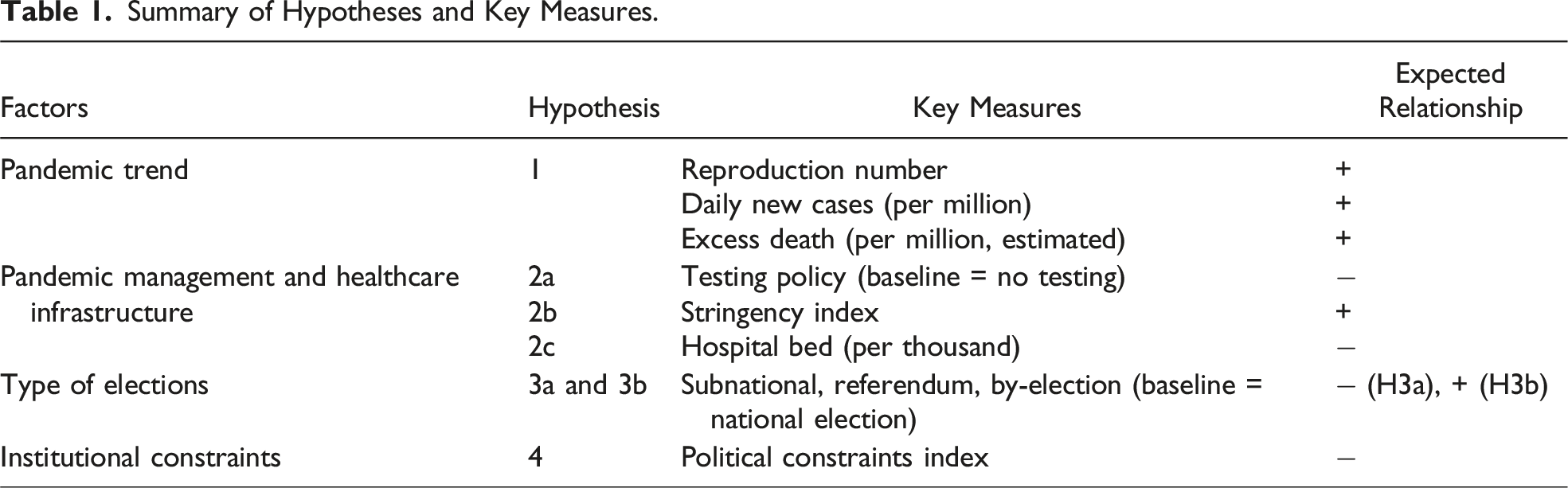
The key measures for the first and second hypotheses, focussing on the pandemic trend (H1) and the pandemic management and healthcare infrastructure (H2), are time-variant and require us to consider the temporal aspect. The decision to postpone an election is typically made some time before the scheduled election date. Although it is difficult to predict the future course of the pandemic, the pandemic statistics available at the time of decision-making can serve as a basis for determining whether an election should be postponed. Ideally, we would use the pandemic statistics at the precise moment of decision-making. However, the information regarding the exact timing of decision-making is not available for most cases involving national and subnational elections and referendums across over 150 countries worldwide. As a less-than-ideal alternative, I employ lagged variables for the reproduction number, daily new cases, excess death tolls (H1), testing policy, and stringency index (H2). I use a lag of 30 days, which I believe strikes a balance between minimizing the missing cases and reflecting a realistic timeline for decision-making. 10
Logistic Regression Results Predicting Election Postponements.
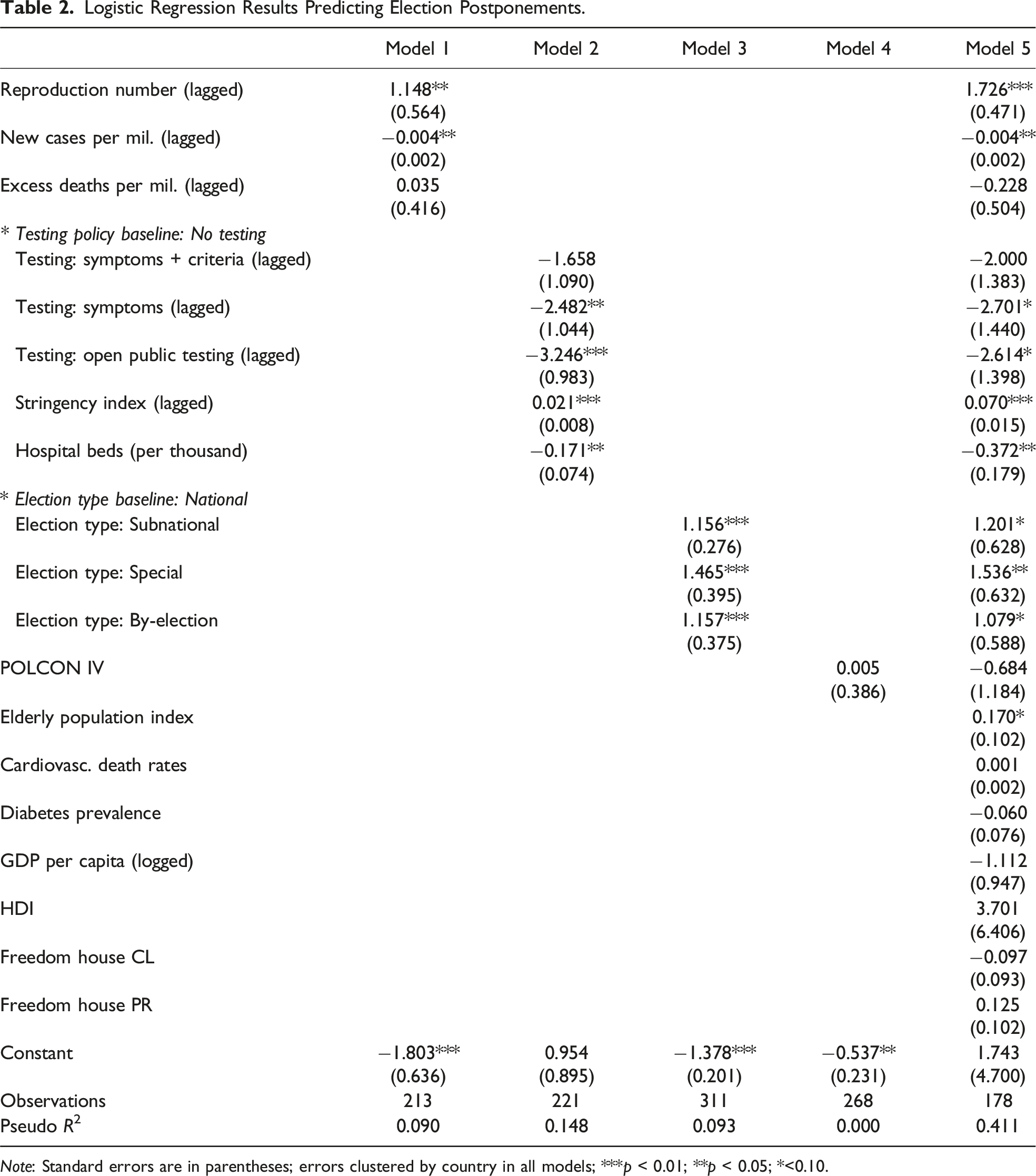
Note: Standard errors are in parentheses; errors clustered by country in all models; ***p < 0.01; **p < 0.05; *<0.10.
Model 2 focuses on the government’s measures against COVID-19 and the country’s health infrastructure (H2). The results show negative effects for all other testing policy categories, with larger effects associated with more comprehensive testing policies compared to no testing policy as the baseline category. This indicates that elections are less likely to be postponed when the government’s testing policy is more inclusive and extensive (H2a). Second, the positive coefficient of the Stringency Index indicates that elections are more likely to be postponed in countries with stricter measures in place (H2b). Lastly, a better healthcare infrastructure, measured by the availability of hospital beds, appears to reduce the likelihood of election postponement (H2c). Overall, these results support the second hypotheses, highlighting the significant role played by pandemic management and healthcare infrastructure.
Model 3 tests whether certain types of elections are more likely to be postponed. The theoretical discussion suggested two competing expectations depending on the weight imposed on the concern for health risk (H3a) compared to the political importance (H3b). The results support the latter – second-order elections are more likely to be postponed than national elections (baseline category). Lastly, Model 4 investigates the impact of institutional constraints on policy change (H4). The analysis found that the effect of the political constraints index is not statistically significant, indicating that institutional constraints have little influence on the likelihood of election postponement.
Overall, the results suggest that the pandemic trend significantly influences the likelihood of election postponement. The capability of governments in managing the pandemic and the healthcare infrastructure of a country are also important factors that affect the decision to postpone elections. On the other hand, the analysis suggests that institutional constraints have little impact.
These findings are held consistent in the pooled model (Model 5), which includes all explanatory variables in a logistic regression. It is important to acknowledge that estimating a pool model results in a loss of some cases; in exchange, it allows us to examine the consistency of the findings with this reduced dataset. Figure 3 presents a comparison of the coefficients from the separate models (left panel) and those from the pooled model (right panel). The results demonstrate substantial consistency in the direction and magnitude of the effects. All variables relevant to the first three hypotheses display the expected effects as expected and are statistically significant, except for daily new cases. The influence of institutional constraints remains nonsignificant. Among the control variables, there is a suggestive association between the proportion of the elderly population and the likelihood of election postponement (p < 0.10), while other demographic, economic, social, and political factors do not show a significant impact. Overall, the results from the pooled model align largely with the findings from the separate models conducted to test each hypothesis (Models 1–4). Coefficients from individual and pooled models. Note: Symbols indicate coefficients from logistic regressions, and horizontal lines represent 95% confidence intervals. The left panel displays the estimates obtained from four separate regression models: circle markers for Model 1, hollow circles for Model 2, squares for Model 3, and hollow squares for Model 4.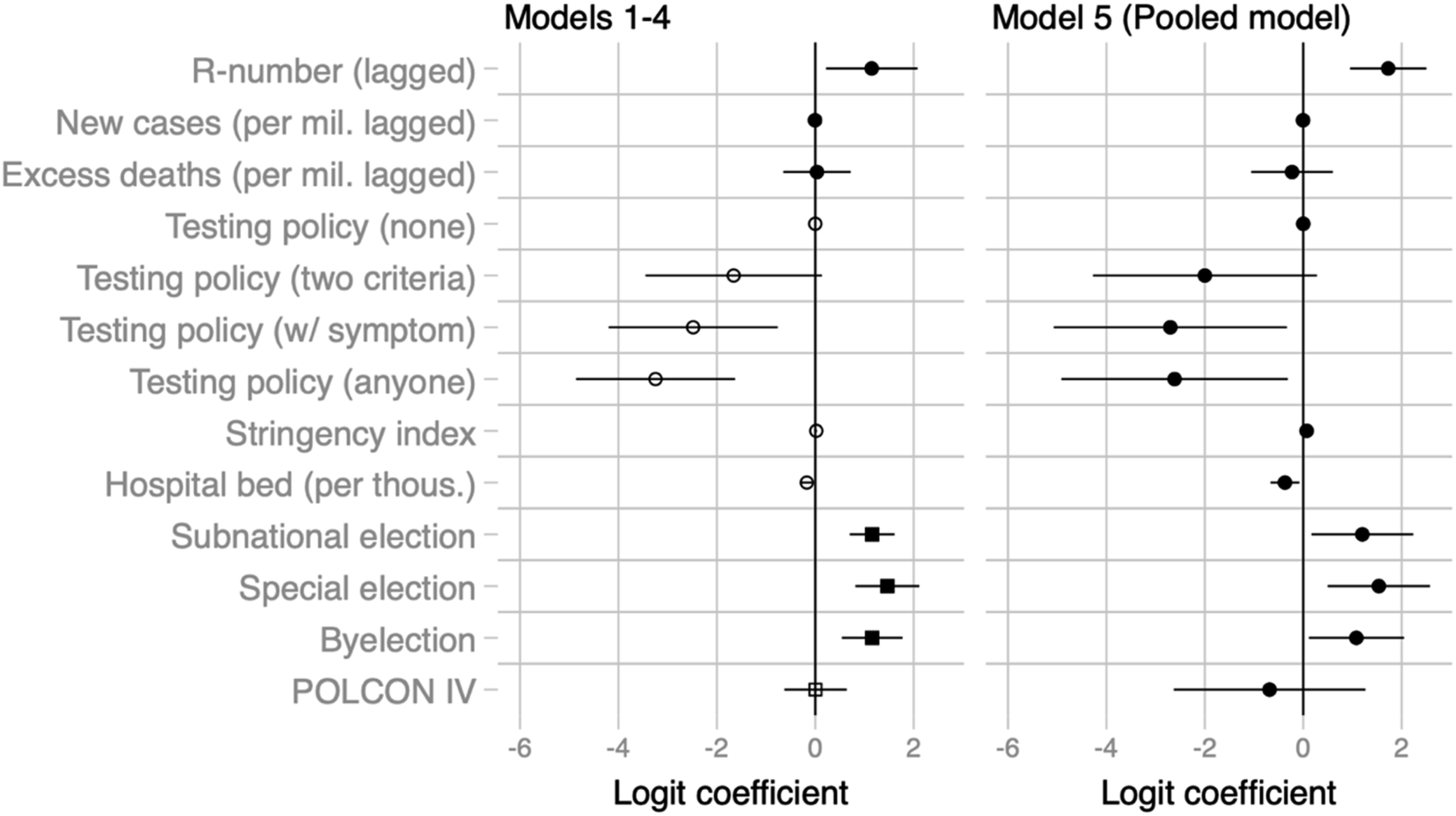
Standardized Coefficients.
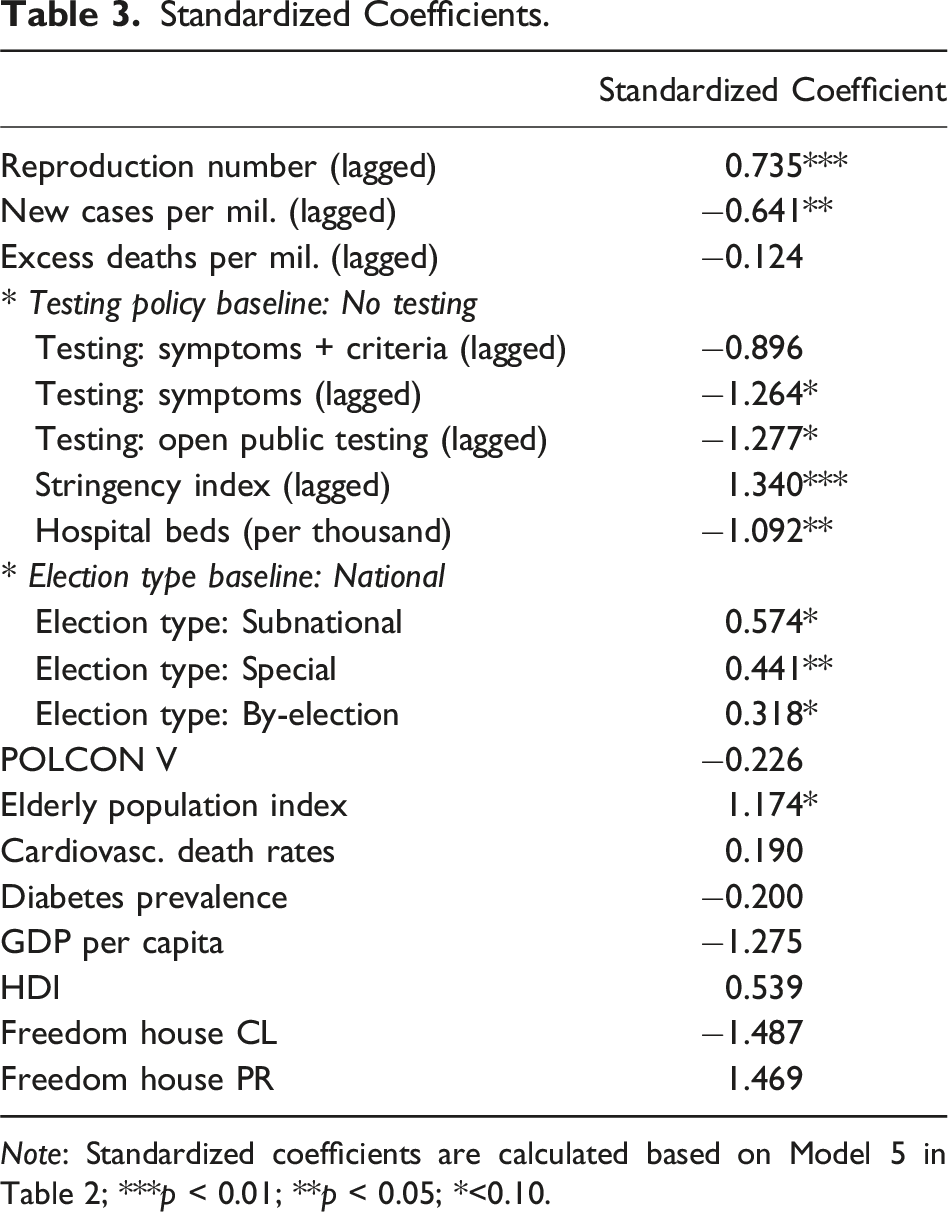
Note: Standardized coefficients are calculated based on Model 5 in Table 2; ***p < 0.01; **p < 0.05; *<0.10.
Robustness checks
To assess the robustness of the findings, I conducted a series of supplementary analyses. First, I compared the results reported in Table 2 and Figure 3 with those obtained from naïve logistic regression and random-effects logit models. The consistency between these results is evident and illustrated in Figure A1 in Online Appendix. Second, I used different time lags for the time-variant explanatory variables associated with pandemic trends and pandemic management (H1 and H2). Instead of using the 30-day lag, I employed 20- and 45-day lags and ran the models for the first two hypotheses. The results, presented in Table A2, remain consistent in terms of direction and relative size of the effects, despite the decrease in observations due to longer lags, which in turn affects the size of standard error. Lastly, I tested the hypotheses using an extended dataset. The current dataset only accounts for the first incident of postponement. Since there are cases in which the election had been postponed more than once, I extend the dataset by including the rescheduled elections as independent cases. 12 The dataset expanded to 405 cases. The results, reported in Table A3 in Online Appendix, once again confirm the findings reported in Table 2: elections are less likely postponed when the disease has lower infectivity (lower R-number) but the number of cases is increasing, where more extensive testing policies are in place, when the election is a first-order election (than second-order). The results also suggest that countries with smaller elderly populations and lower cardiovascular death rates are less likely to experience election postponement.
Conclusion and Discussion
This study presents a systematic analysis of election postponement during the COVID-19 pandemic. The findings confirm that the severity of pandemic and the timing of election influenced the likelihood of postponement. In addition to the impact of COVID-19 waves, the study highlights the crucial role of pandemic management and a country’s healthcare system capacity. On the other hand, institutional constraints and traditional indicators of state capacity, such as the economy, education, and political system, showed little association with election postponement. These findings align with the previous research suggesting that countries with more democratic political institutions experienced higher per capita mortality rates during the pandemic (Cepaluni et al. 2022) and emphasizing the need to redefine state capacity considering the challenges posed by the pandemic crisis (Kavanagh and Singh 2020).
However, it is important to interpret the findings with caution. First, the findings should not be taken as causal. While the findings may suggest sequential associations between variables due to the use of lagged variables, the analysis is based on observational data, and the research design does not allow for causal identification. Second, there may be omitted variables that could have played a significant role but were not included in the dataset – such as modes of voting, the exact timing of the decision to postpone, and the process of election postponements. Obtaining this information would require extensive original data collection across over 150 countries and territories in various languages. Nevertheless, efforts were made to address the omitted variable issue through modelling decisions, and the findings exhibit consistency across different models that account for the panel structure with different statistical assumptions in logit models. Third, while the robustness checks demonstrate consistency, the temporal elements in the analysis, particularly the time gap between the actual timing of the decision to postpone and the assumed timing, may be imperfect. This may partially explain the results regarding the effect of daily new cases. Lastly, the study’s scope is limited in accounting for subnational variations in pandemic severity and trends that might lead to within-country variations in certain cases, such as countries with federalism.
Despite its limitations, this study contributes to our understanding of democratic governance during global health crises through a systematic analysis. It provides compelling evidence that the severity and trends of the pandemic within a given country played a crucial role: when a surge in infections was anticipated, elections were more likely to be postponed. However, the story does not end here. Election postponement was also conditioned by factors such as governments’ capacity for pandemic management, the strictness of health and social measures, and the quality of healthcare infrastructure. This study further reveals that high-profile national-level elections were less susceptible to postponement, indicating the potential influence of political motivations in preserving the incumbents’ perception of competence, albeit within limited bounds.
In light of these findings, it becomes evident that there are structural factors influencing the delay of certain elections amid the pandemic while others took place as scheduled. This has important implications for research on the rally effects and electoral performance during such crises. The present study suggests that even the decision to hold an election itself is already influenced by COVID-19-related factors and the government’s management of the pandemic. This needs to be factored in future research investigating the causes and consequences of the pandemic, including rally effects in elections, for example, to incorporate these factors to mitigate potential selection biases and refine causal pathways connected to the occurrence of elections.
Several future research agendas emerge from these findings. First, it would be valuable to examine how election rescheduling influences the likelihood of further postponements. For example, one could investigate whether elections rescheduled closer to the original date are more susceptible to subsequent postponement. Given that repeated election delays can pose additional challenges in managing the electoral process, conducting research on the legal, societal, and political aspects of such decisions, particularly regarding the timing of rescheduled elections, could enhance our understanding of politics during national or global crises, and election timing more generally.
Another important research agenda involves investigating consequences of election postponements. While previous studies have examined the pandemic impact on voter turnout, most have focused on single-country cases, and comparative analyses are relatively scarce. Beyond turnout, few studies have examined other potential consequences of election postponements. There are several important research areas in this regard, such as comparing the quality of election management between elections held as scheduled and those that are rescheduled, assessing the quality of election campaigns and voters’ decision-making (e.g. issue attention and informedness), and examining the occurrence of election violence, human rights abuses, and health risks associated with holding elections during the pandemic versus rescheduled elections. Investigating these research agendas would not only deepen our understanding of democracy during the pandemic but also contribute to a broader comprehension of human psychology and political decision-making in times of crises.
Supplemental Material
Supplemental Material - When Elections Wait: A Cross-National Analysis of Election Postponement During the COVID-19 Pandemic
Supplemental Material for When Elections Wait: A Cross-National Analysis of Election Postponement During the COVID-19 Pandemic by Seonghui Lee in Political Research Quarterly.
Footnotes
Acknowledgements
The author is grateful to Carl Henrik Knutsen, Nick Lin, the anonymous reviewers, and participants of Comparative Politics Seminar at Lund University and PEPSI seminar at the University of Essex for their vaulable comments. For the purpose of open access, the author has applied a Creative Commons Attribution (CC BY) licence to any Author Accepted Manuscript version arising.
Declaration of Conflicting Interests
The author(s) declared no potential conflicts of interest with respect to the research, authorship, and/or publication of this article.
Funding
The author(s) received no financial support for the research, authorship, and/or publication of this article.

Data Availability Statement
Data and replication code will be available on the author’s Harvard Dataverse.
Supplemental Material
Supplemental material for this article is available online.
Notes
References
Supplementary Material
Please find the following supplemental material available below.
For Open Access articles published under a Creative Commons License, all supplemental material carries the same license as the article it is associated with.
For non-Open Access articles published, all supplemental material carries a non-exclusive license, and permission requests for re-use of supplemental material or any part of supplemental material shall be sent directly to the copyright owner as specified in the copyright notice associated with the article.
