




Abstract
Driving is a visual task and as such it is essential that drivers have good vision out of their vehicles particularly on today’s busy roads. However, rear vision is not always optimum; rear passengers, luggage or the design of the car itself can all impair rear vision. A new camera-based rear view mirror is described in this paper. The system was developed by employing user-centred design methods; requirements for the system were established and a prototype was then tested dynamically with drivers’ feedback then used to improve and finalise the design.
Driving can be said to be predominantly a visual task (Kramer & Rohr, 1982), so appropriate exterior vision is a primary requirement to enable drivers to undertake safe driving with minimal errors. Drivers must have confidence in their vehicle, which is attained by having knowledge both of the size of their own vehicle and also of the external environment (Herriotts and Johnson, 2013). This is particularly of relevance to Land Rover brand with vehicles that traditionally display what is described as the ‘command driving position’ giving the driver a psychological feeling of being in command of the vehicle (Herriotts & Johnson, 2013).
Contemporary cars look very different from their historic counterparts. Vehicle design has evolved for many reasons, with safety, aesthetics and aerodynamics all playing a significant part in defining today’s vehicles. But, where is the progress? In many ways, the user-experience has degraded; at a time when the number of cars on the road is at an all-time high and road rage is prevalent, seeing out of cars has become harder (Herriotts, 1997). Direct exterior vision has been complemented by indirect vision from mirrors: both inside and outside the car. But the interior rear view mirror has drawbacks: it is of less use when the view is blocked by rear passengers, luggage or dirty/wet windows.
When developing the new Land Rover Defender, an opportunity arose to provide the driver with enhanced rear vision using camera technology with an in-car display. Camera-based systems have been used in cars in recent times, with reversing cameras prevalent particularly following legislation introduced in the USA. On 7 April 2014, the National Highway Traffic Safety Administration (NHTSA) issued a final rule to upgrade Federal Vehicle Motor Safety Standard (FMVSS) No. 111, ‘Rear view Mirrors’ (79FR19178). However, while the view and driver-experience in those systems are defined to meet legislation, with a new rear view mirror the opportunity arose to adopt a user-centred approach to design a system based on user requirements. This approach and its successful implementation are described in this paper.
The overriding objective was that the systems should at the very least match the capabilities of a traditional rear view mirror, but the desire was to enhance the experience based on user-centred research. In order to do this, the authors undertook a user-centred design development approach, based on participatory design (Herriotts & Birrell, 2019). This process describes a number of sequential steps with the focus on user engagement, simulation/visualisation of the concept and subsequent user assessments and resultant concept optimisation. While this process is familiar to those working in user-centred product design, it critically included the need for a dynamic assessment of the concept, as this is felt by the authors to be essential in a transport context.
Are Older Cars Better? Seeing Is Believing
Traditional vehicle design provided the driver with good exterior vision, as a result of vehicles having large windows/glass area with slim supporting pillars. However, contemporary legislation dictates that today’s cars must be structurally strong to withstand, for example, rollover crashes, and consequently, car body structures and pillars in particular are now bigger than before, so potentially restricting exterior vision as shown in Figure 1. Historical and contemporary Land Rover Range Rover vehicles displaying differing exterior designs and hence glass area.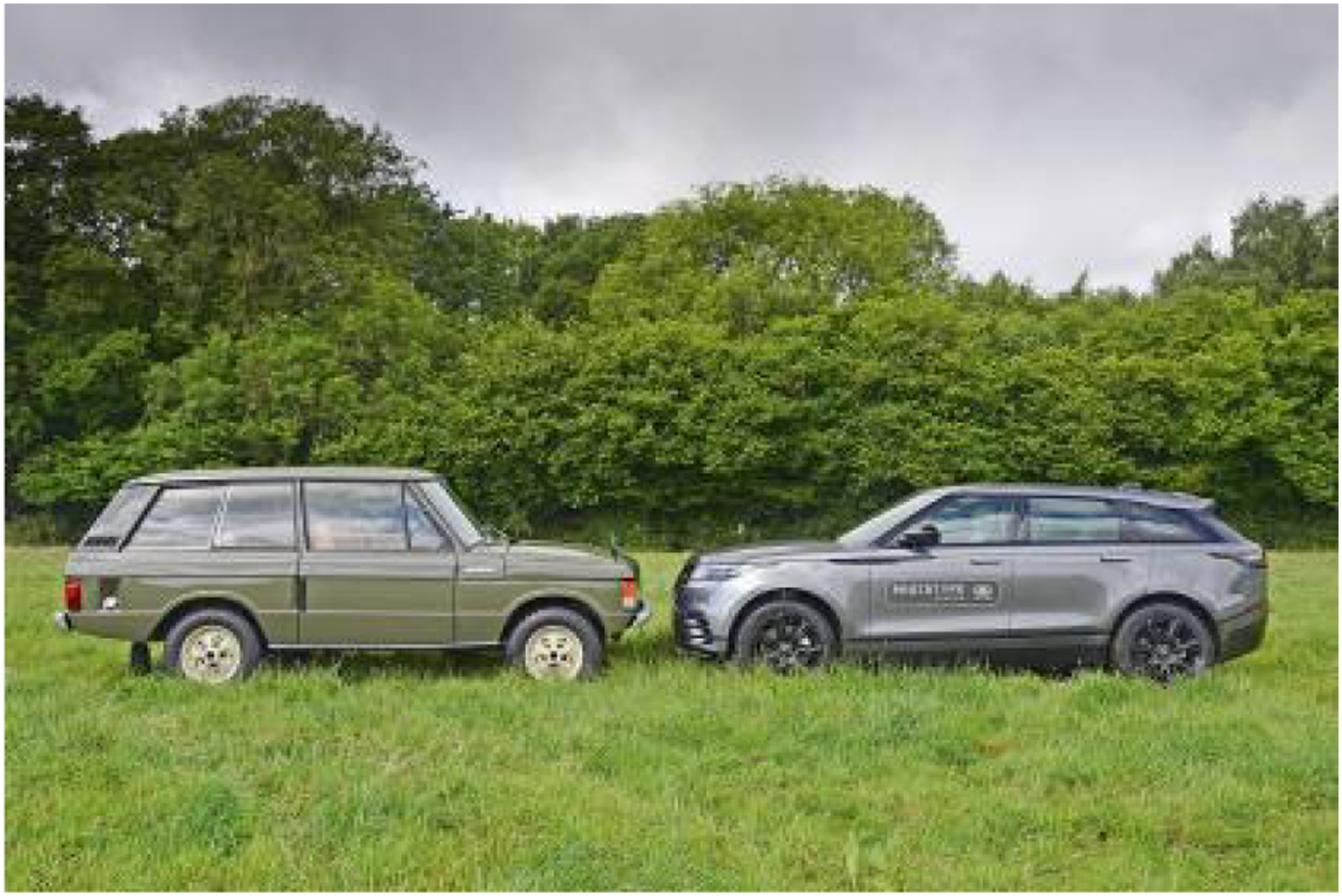
Current and emerging technologies have enabled the production of camera-based assistive vision devices, now prevalent on many cars. This paper describes the user-centred development of a new camera-based interior rear view mirror known as the Clear Sight mirror, which became available in Land Rover vehicles from 2020 Model year, as shown in Figure 2. This was the first implementation of such a device on a car with global market penetration, being available in all markets around the world. The Clear Sight mirror is an in-car rear view mirror that is camera based. It comprises a traditional mirror with a display screen incorporated into the housing. The driver can use this as a traditional glass mirror or can switch to a display screen that shows the environment to the rear of the vehicle, clear of any obstructions. The image is captured from an exterior rearward facing camera, placed high up on the vehicle; this location is designed to provide an image that is similar to that provided by a conventional mirror – such an image cannot be produced by a camera mounted lower down on the vehicle, as used for reversing/backing up. In addition, the image is presented in a conventional/traditional mirror location familiar location to the driver, rather than in the reversing camera display in the centre stack. Traditional rear view mirror with rear view obscured by luggage (left image), versus the camera-based Clear View mirror (showing an enhanced view to the rear of the same car).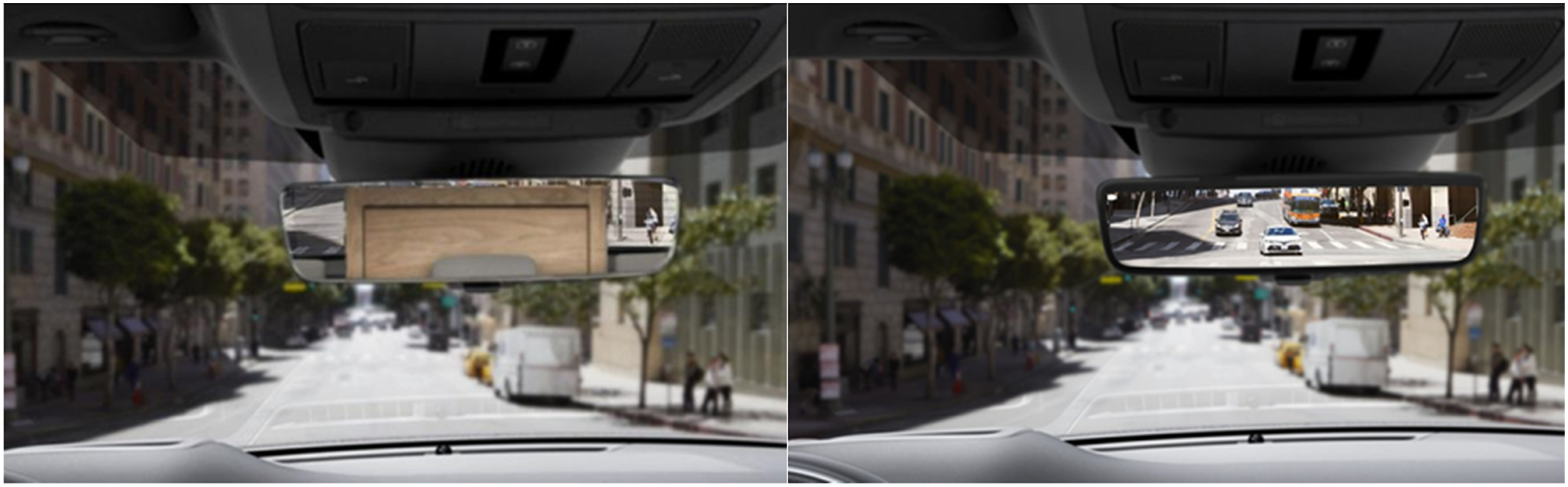
The Customer Is Always Right: So What Can Drivers Tell us?
User/System Requirements.
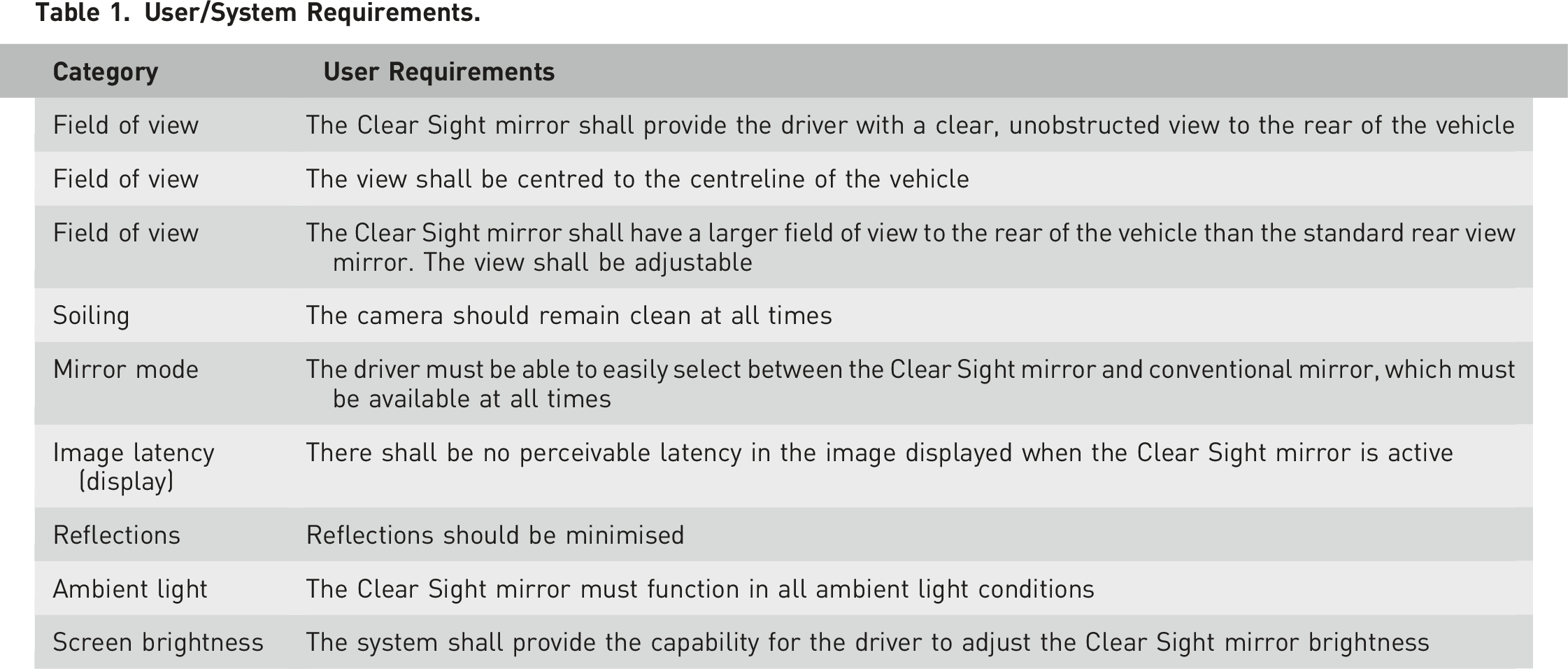
Take home message: drivers were clear that they wanted a system that worked better than a conventional mirror; they told us that it should provide an enhanced field of view, work at all times, in all conditions and be adjustable.
A prototype mirror was developed based on these requirements and installed into a test vehicle which was then used in dynamic user trials. The main objective was to gain an understanding of how drivers respond to the proposed camera-based mirror system installed in a production car during real world trials on public roads and to then collate and interpret the feedback to make any required changes to the system.
Dynamic trials were conducted with 44 participants recruited from Jaguar Land Rover Employees (due to confidentiality issues, it was not possible to use members of the general public). To identify as many issues as possible, drivers were selected who were not familiar with the technology, people from engineering and non-engineering areas of the business with an age range representative of Land Rover customers and those who wore glasses and contact lenses. The average age of participants was 44 years and ranged from 26 to 66 years. Thirty of the participants self-reported as having corrective vision with six wearing vari-focal lenses.
A 2016 Range Rover Evoque was fitted with a prototype Clear Sight Rear View mirror which could be used in display mode or as a traditional mirror. This was fitted in the existing interior mirror location. The camera was mounted at the top of the rear windshield at the back of the car. At the beginning of the trial, an in-vehicle introduction was given explaining the trial process. Participant information was collected including age, height, usual vehicle and type of corrective lenses where applicable. Participants were instructed to drive the car as they would use their normal vehicle, primarily using the mirror in camera display mode, but also using the standard mirror as a comparison. It should be noted that participants were able to drive with the device acting as a standard mirror if they chose to do so, if they felt their driving performance was degraded (as indicated in an initial Jaguar Land Rover risk assessment).
Throughout the trial, participants were asked to record trip details including road type, weather condition, length and time along with any observations.
The trial lasted between 1 and 5 days for each participant, ending when the participant either reported that they had comfortably learned to use to the Clear Sight mirror or were uncomfortable and no longer wanted to participate in the trial. At the end of the trial, a questionnaire was administered to collect feedback on the clear sight mirror and standard mirror features. Participants responded using a 0–10 balanced rating scale and provided supporting rationale for each rating. Participant information was collected including age, whether vision was corrected using glasses and if so what type of glasses and a measurement in the vehicle of eye point to mirror distance. Participants were asked to keep a record of trips made: time of day, weather conditions and mileage. Questions were asked about field of view, distance perception, visual accommodation, learning time, night-time performance, feature performance in varied environmental conditions and about non-driving task use of the mirror (the so-called ‘social issues’).
Feedback Always Helps: Could Key Findings Guide the Design?
Field of View and Distance Perception
Overall, participants rated the field of view in the Clear Sight mirror higher (average score 8.3/10) than the standard mirror (4.6/10), commenting primarily on the increased width over the standard mirror with some requesting a greater vertical field of view or the ability to change move the view up or down.
Some participants also recognised that a wider field of view resulted in differentiation in the views in the Clear Sight and standard mirrors and felt this was an issue for them. This impacted distance perception with participants stating that on motorways and dual carriageways following vehicles tended to look further away than they actually were (17% of participants), whereas at closer following distances in city driving situations, cars appeared closer than they were (32% of participants).
Visual Accommodation
Forty-five percent of drivers noticed the need to re-focus the eyes or commented that it may take longer to glance at the Clear Sight mirror than a standard rear view mirror. This was more of an issue for people wearing corrective lenses (6.4/10) than those who did not (7.5/10).
Three people found they could not use the Clear Sight rear view mirror at all and one participant reported eye strain.
Exposure/Learning
Self-reports of expected learning time varied between less than 5 minutes to an expected time of over 2 weeks or not able to learn to use it at all. Eighty percent of drivers who reported on learning time (35 out of 44) felt they had adjusted to using the Clear Sight mirror display within 2 days. Two participants commented that learning time was extended due to the dual function of the mirror, if it was only a camera display they would expect a shorter adjustment time. There was no strong relationship between length of trial and feature acceptance (r2 = 0.27).
Environmental Conditions
On bright, clear, days without direct sunlight in the camera, the system performed well. The system also performed very well in overcast conditions. When the sun was shining directly on the camera, the image quality was reported to be poor, as shown in Figure 3, with fifty-nine percent of participants commenting on the poor performance in direct sunlight. Prototype mirror showing a poor image in direct sunlight.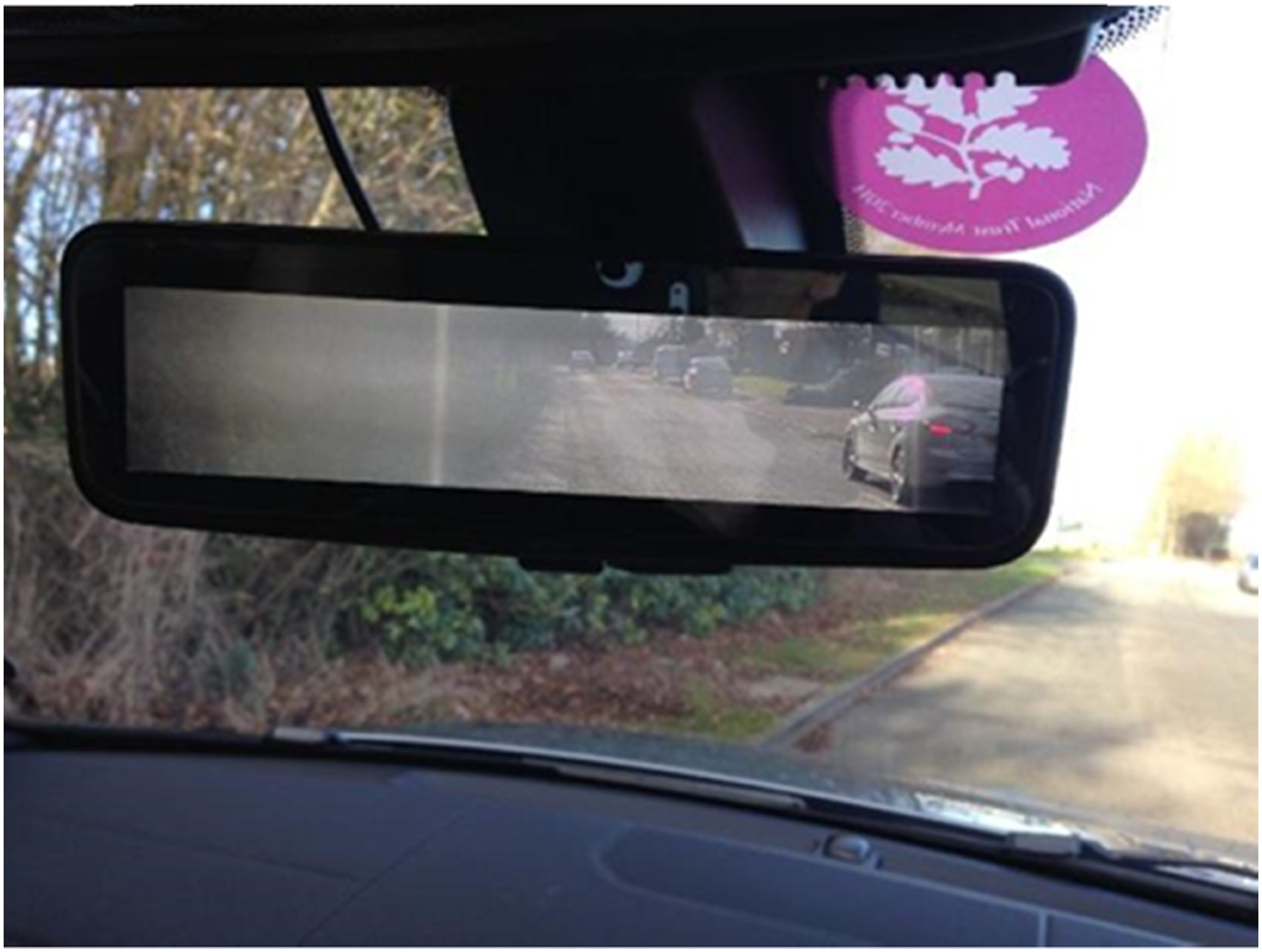
The participants reported that night performance was adequate in lit areas, but poor on very dark roads where they could not identify details at the side of the road that were visible with the standard mirror and could not judge the speed or distance of vehicles behind them. Headlamp flare was an issue as it was difficult to distinguish between following vehicles, as shown in Figure 4. An average of 4.8/10 for night time mirror performance reflected these comments. Prototype mirror showing headlamp flare.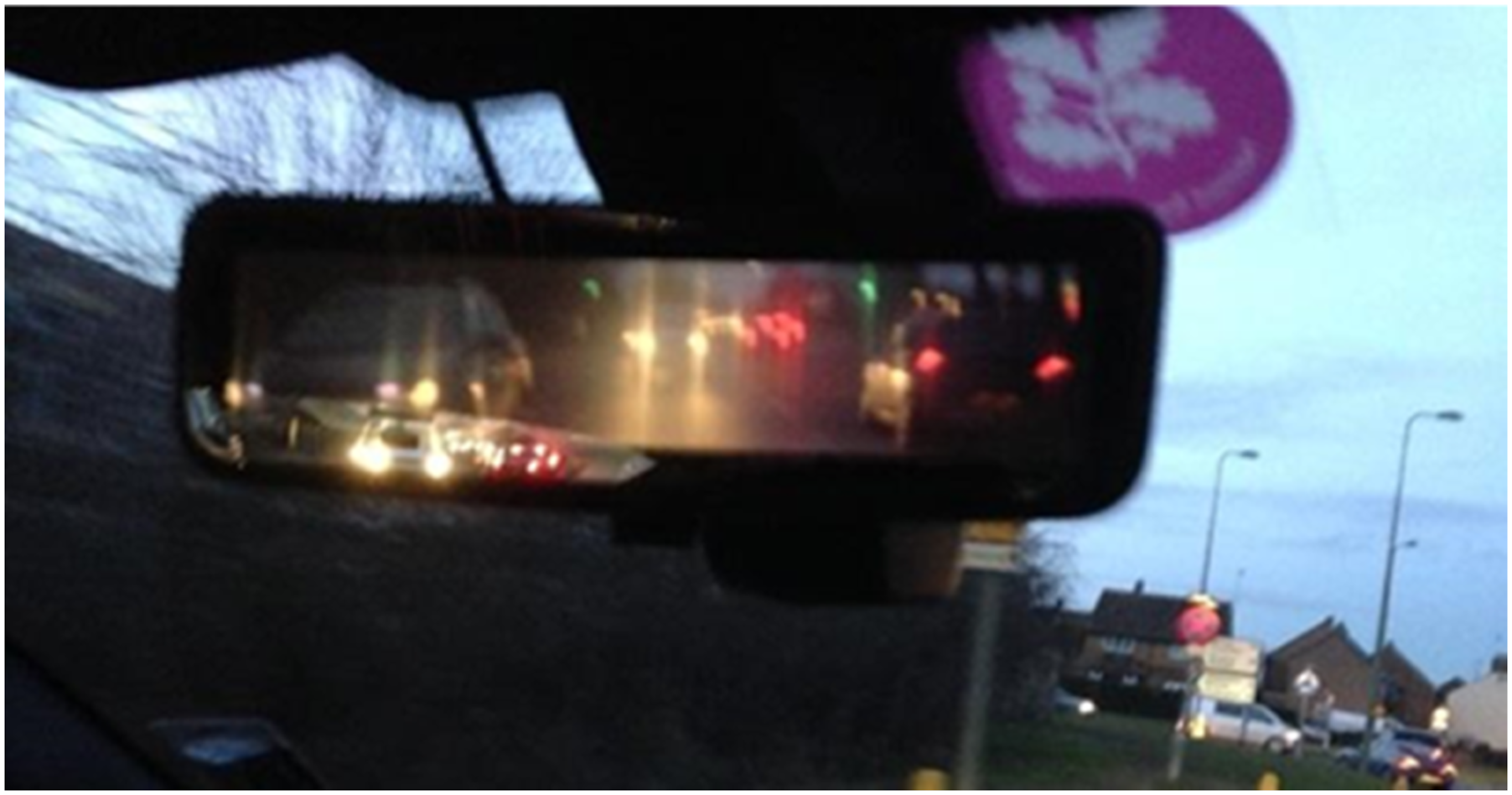
Social Issues
Drivers indicated that they also used the traditional mirror for non-driving reasons, including looking at their rear passengers, particularly children (or pets) as well as checking their own appearance.
Take home message: it’s only through extended real world (dynamic) testing of prototypes, that users will identify all the issues that need addressing. And testing in a lab for a short time does not always do this – in our case, the varied environmental conditions coupled with the diverse uses of the vehicles led to the detailed feedback we received.
Acting upon the feedback: Could the prototype mirror be made better?
The user trial provided valuable feedback to refine final design requirements. Following discussions with the mirror engineering team, technical changes were made to the prototype mirror system based on this feedback. Particular emphasis was placed on improving the quality of the image, particularly with reference to the night vision issues reported by the drivers. In the production iteration, the camera was still mounted in a similar, high location, but was no longer behind the rear windshield glass. By separating it from this adjacent glass, the technical performance of the camera was increased, so addressing many of the issues reported during testing.
The prototype mirror was updated following the technical changes and the revised mirror system installed in a test vehicle enabling dynamic testing to take place. In order to speed up the development process, this revised design was not subject to a full retest by the original participants; instead, it was tested by an internal expert panel of six Human Factors staff and additional Engineering team members, to ensure the technical changes to the prototype mirror led to tangible improvement that addressed the users’ feedback. Each member of the expert panel assessed the mirror dynamically and used a checklist of participant issues as a prompt in their assessment. The checklist of participant issues reflected the six issues detailed in the results section.
The panel of Human Factors experts reviewed these with simple pass/fail criteria. They did not have the ability to switch between the original technology tested and the revised version, so true A/B testing was not possible. However, they could refer to user feedback of the original mirror that was tested when reviewing the revised version to better understand the issues being assessed.
While this study is considered valuable to the design process, it must be acknowledged that by using this expert panel, rather than retesting with the original participants, a true user-design process was not employed.
Following this testing, it was confirmed that the new mirror design addressed all issues highlighted from the prototype testing user trial. Once this had been established, this finalised design was signed off for production.
Mirror Mirror on the Wall Who is the Fairest One of all?
While the primary function of the mirror is to provide the driver with a visual understanding of the external environment, it is interesting to note that the user trial feedback also indicated that drivers use the traditional mirror to visually consult with passengers or pets in the rear of the car. It was also noted that many drivers use the traditional mirror to check their appearance before leaving the car. The finalised design of the Clear Sight mirror enables drivers to easily switch between the traditional mirror and the new camera-based technology. As such they have the best of both worlds, being able to use each system when required and if necessary to address any performance issues of the new technology: the camera-based system when driving provides an enhanced visual field which is beneficial, while the traditional mirror allows the driver to check on rear passengers or to check his/her own appearance.
The study described in this paper is an applied research project taking place in an industrial setting. As such, while maintaining a robust scientific approach, the experimental design reflects the fast-paced nature of a vehicle development programme. In addition, the associated confidentiality requirements have led the authors to present qualitative data and to withhold technical details of the technology. However, it is clear that this user-centred design approach has resulted in a finalised camera-based mirror system that has been successfully implemented and is available in today’s cars. The interior rear view mirror of a vehicle, when used in combination with the exterior side mirrors, enables the driver to see the environment to the rear and sides of the vehicle. This aids the driver in understanding what is happening around them when driving. The Land Rover Clear Sight mirror offers an enhanced view over a standard rear view mirror as it does not have any vehicle parts, passengers or additional items blocking the view to the rear of the car. It can therefore be said to positively help with driving; a very welcome addition considering today’s driving conditions.
Footnotes
We would like to acknowledge Jaguar Land Rover for their support.