



Abstract
In the wake of the US feminist second-wave, a Men’s Liberation movement emerged as an ally to liberal feminism but soon fractured over its relationship to feminism, leading to the rise of the antifeminist Men’s Rights movement. Through analysis of primary sources, media accounts, academic sources, and an interview with the movement’s chief activist, this paper reviews the ideology of 1970s Men’s Liberation, as well as its demographics, key figures, and organizations. It identifies reasons for the schism in the late 1970s and reflects on explanations for its short lifespan and failure, such as ideological shortcomings, organizational weakness, and motivational incoherence. Lastly, new research avenues are suggested, including archival work, fieldwork, transnational analysis, and exploration of its contemporary legacy.
In the 1970s, in the United States, a Men’s Liberation movement emerged. In the wake of the feminist second wave, some men started challenging their own gender role. These mostly White and educated men wrote books and newspapers, marched with feminists, organized a yearly conference, and created hundreds of men’s consciousness-raising groups and dozens of men’s centers across the country. Yet, this movement proved short-lived, and had disappeared by the end of the decade. Sociologist Michael Messner has pointed out the ideological flaws inherent to Men’s Liberation. To him, the movement was riddled with contradictions from the beginning, explaining its eventual demise (Messner, 1998). Others have also insisted on the changing ideological context, as the progressive 1970s supposedly gave way to a more conservative era in the 1980s–1990s (Faludi, 1991). However, such movements did not solely exist in the United States. Recent work reveals parallel developments in Scandinavia, with men’s movements forming in 1970s Norway, Denmark, and Sweden (Gramvik, 2024). This research reveals the key role of historical contingency and smaller-scale phenomena in movement trajectories. Indeed, although ideology and cultural context matter, the success or failure of a movement can also hinge on individual and organizational factors, especially for small-scale movements like Men’s Liberation. This paper uses the word “movement” for convenience, but it must be noted that this loose and decentralized network lacked some of the organizational features typical of socio-political movements, as discussed in the analyses below. Other scholars have questioned this terminology in similar instances while continuing to use the term nonetheless (e.g., Flood, 1998).
Nowadays, there are no monographic books on Men’s Liberation, although it features in an encyclopedia of men and masculinities (Flood et al., 2007), in broader comparative examinations of men’s movements (Clatterbaugh, 1990; Messner, 1998; Newton, 2005), or in the history of men’s activism against gendered violence (Messner et al., 2015), masculinity and emotion in the US (Robinson, 2002), and feminist activism for work and family (Swinth, 2018). In this article, I therefore aim to provide the most thorough account of the US Men’s Liberation movement to date, by combining attention to ideology, culture, and politics, but also to the demographics and people involved. I then analyze the puzzling trajectory of Men’s Liberation, which went from an ally to liberal feminism in the 1970s to the crucible of the antifeminist Men’s Rights’ movement in the 1980s. Lastly, I identify reasons for the movement’s short-life span and eventual schism.
Study Materials and Methods
In a few years, US Men’s Liberationist writers produced a wealth of book-length manifestoes: The Liberated Man (Farrell, 1974), The Male Machine (Fasteau, 1975), Men and Masculinity (Pleck & Sawyer, 1974), Men’s Liberation (Nichols, 1975) and The Forty-Nine Percent Majority (Brannon & David, 1976). These were included in my analysis, and constitute a remarkably coherent ideological corpus. Grassroot activist groups also produced their own literature, which was included in the analysis when available (e.g., Collective, 1971). I also consulted 1970s press accounts of the movement, as well as subsequent academic analyses, although those are scarce (e.g., Messner, 1998; Swinth, 2018). Lastly, on May 12, 2023, I interviewed Warren Farrell, one of the movement’s chief organizers, then 79 years of age, in Mill Valley, California. This semi-structured interview lasted 90 minutes. The goal was to gain insight into the history of US men’s movements from the perspective of this lifelong activist, and to learn more about the ideological transition from Men’s Liberation to Men’s Rights, exemplified by Farrell’s trajectory.
Escaping Postwar White-Collar Masculinity: Men’s Liberation Ideology
This use of the phrase “Men’s Liberation” is thought to have originated in the New Left magazine Liberation in 1970. In a short manifesto, psychologist Jack Sawyer opened by declaring that “Male liberation calls for men to free themselves of the sex role stereotypes that limit their ability to be human” (Sawyer, 1970, p. 32). Arguing that the masculine gender role (then called “sex role”) hinged upon competition and dominance, Sawyer believed it was the root of oppression and authoritarianism in society. To him, men also suffered from this, as most could never live up to the dictates of masculine achievement. Even for those who did, this was at the cost of stunting who they were, and silencing their gentle, playful, and emotional selves. Enthused by the impetus of Women’s Liberation, Sawyer exhorted men to join, and to imagine a future without any gender conditioning: “The present models of neither men nor women furnish adequate opportunities for human development. That one-half of the human race should be dominant and the other half submissive is incompatible with a notion of freedom,” he wrote (Sawyer, 1970, p. 33). In a 1973 collective manifesto, a group of Californian men concurred: We, as men, want to take back our full humanity. We no longer want to strain and compete to live up to an impossible oppressive masculine image—strong, silent, cool, handsome, unemotional, successful, master of women, leader of men, wealthy, brilliant, athletic, and ‘heavy.’ We no longer want to feel the need to perform sexually, socially, or in any way to live up to an imposed male role, from a traditional American society […]. (Berkeley Men’s Center, 1974, p. 56)
In the following years, Men’s Liberationist literature flourished. Scholars David and Brannon edited a liberationist social science textbook (1976), where they identified four dictates of the “male sex role” they deemed particularly harmful to men and society. Taken together, these summarize the core of Men’s Liberationist critiques of traditional masculinity (Bachaud, 2022).
“No Sissy Stuff”
In their analyses, Men’s Liberationists deplore that boys are constantly prompted to be different from girls (deemed weaker and inferior) and are therefore supposed to distance themselves from the feminine upon leaving infancy. Thus, they grow with a fear of appearing fragile, and of expressing their emotions. How could they then turn into emotionally balanced, secure, and expressive adults? The stigma around men’s crying is particularly pointed out by Men’s Liberationist authors as the epitome of this emotional stunting (e.g., Farrell, 1974, pp. 71–72; Fasteau, [1974]/1975, p. 96). Another corollary of this fear of the feminine is homophobia, which not only affects gay men, but all men, according to these writers. Liberationists yearned for a future in which boys and men would be free to cry, touch other, and love each other, thus reclaiming their full humanity. In the men’s consciousness-raising groups typical of the movement, physical contacts were encouraged, going from touching hands and massages to nudity and erotic contacts (Farrell, 1974, see pp. 230, 334; Pleck & Sawyer, 1974, p. 151). Don Clark, a psychologist leading such all-male groups in California thus wrote that “homosexual self-understanding (which is accompanied by understanding of a wide spectrum of male-male affectional needs) is a necessary facet of male liberation,” adding that “[h]omosexual encounter is useful in any all-male growth group, and it would be a strange men’s group in which it did not surface” (Clark, 1974, p. 93). In fact, as discussed below when analyzing demographics, a significant portion of Men’s Liberationists were gay or bisexual.
“The Big Wheel”
Liberationist writings lambast the injunction to compete, which they argue is instilled in boys from a young age, and sports are recurringly pointed out as responsible for this unhealthy competitiveness, encouraging the formation of hierarchies, and the exclusion of the less fit. Later in life, they add, men reproduce this axiom of masculinity, as this conditioning compels them to ascend the corporate ladder. Men’s Liberationist writers were extremely critical of the corporate world, a reflection of their leftist, anti-authoritarian politics. They urged men to stop blindly striving for prestige and dominance, and to find a lifestyle which fulfilled their personal aspirations. In the Liberated Man’s introduction, Warren Farrell explains how he started questioning the competitive academic career track he was following, until he decided to pursue his own interests and to teach part-time while his wife was hired as a prestigious White House Fellow. Although this seemed to others a “move for women’s liberation,” he wrote that this was also liberating to him, granting him the “freedom to make a living doing what I had come to love” (Farrell, 1974, p. xxvii). For writer Jack Nichols, men needed to re-connect with the spontaneous and joyful energy of children’s play, without rules, winners, or losers. In the bedroom as well, he contented, men should stop seeing sexuality as linked to prowess and dominance. Only then could sexuality become a “great revolutionary force.” “Learning to play in concert with others,” he wrote, “is at the root of the new sexuality, and since play cannot be structured, it is antiauthoritarian” (Nichols, 1975, p. 213).
“Give’Em Hell”
As argued by Nichols, this third axiom of masculinity is also drilled into boys from the earliest age: “The American male has been nursed by a violent-prone ethic” (Nichols, 1975, p. 109). Many Men’s Liberationists were drawn from the ranks of the antiwar moment, and the unspeakable violence of Vietnam was ever-present in their writings. The ego of world leaders was lambasted, as they were described as toying with the world’s fate. Kennedy’s unflinching reaction to the Cuban Missile Crisis was thus seen as typical of male ego and brinksmanship, while Khrushchev was saluted as having wisely abstained from such puerility (Nichols, 1975, p. 159; Stone, 1974). The Watergate Scandal discredited the ruling class even further, testifying that male leaders were the product of a twisted and immoral masculinity. Women, on the other hand, were depicted as relatively untainted, a trope already found in Sawyer’s 1970 manifesto: “women, having been deprived of power, have also been more free of the role of dominator and oppressor; women have been denied the opportunity to become as competitive and ruthless as men” (Sawyer, 1970, p. 33). Feminist women, who were claiming their right to occupy positions of power, or the few liberated men who followed them, were thus seen as the remedy to the follies of the Cold War: “Female or male, this kind of human being might well have kept us out of Vietnam” (Fasteau, [1974] 1975, p. 187).
“The Sturdy Oak”
According to David and Brannon, stoic imperturbability is masculinity’s last harmful dictate. Male socialization was premised upon the repression of emotivity, which two sociologists of the time had even dubbed a “tragedy of American society” (Balswick & Peek, 1971). In their paper, as in subsequent liberationist writings, John Wayne was presented as the epitome of that masculine archetype. The Hollywood superstar known for his roles as an inexpressive, self-assured, and solitary figure is even ridiculed in Farrell’s Liberated Man, who imagined the “Ten Commandments of Masculinity” written by John Wayne: “Thou shalt not cry or expose other feelings or emotion […]; Thou shalt not listen […]; Thou shalt condescend to women […],” etc. (Farrell, 1974, p. 32).
While the US Men’s Liberation literature was quite coherent in its charges against what it presented as a monolithic and uniform “male sex role,” it was less so regarding concrete actions to achieve its lofty aims. For these men, the first step towards changing society lay in changing themselves.
This was to be achieved through consciousness-raising groups, inspired by the radical feminist practice which emerged in the late 1960s (Echols, 1989). Men’s Liberationist were aware that, during their gendered socialization, they had incorporated many of the patterns that they denounced. As such, the need to deconstruct one’s own relationship to women, sexuality, or professional success was seen as the first step towards liberation. Farrell was a fervent advocate for all-male consciousness-raising groups, of which he claimed to have founded around a hundred over the country between 1971 and 1974 (Farrell, 1974, p. 221). To him, consciousness-raising groups dealt “predominantly with problems resulting from the attempted adjustment to sex roles,” and could allow a man to open up to his peers, and thus to learn “that all men have similar problems—that he does not need to be insecure about the expectations he never met […]” (Farrell, 1974, p. 222). This stemmed from the recognition that male friendships tended to be emotionally shallow, centered around sports or bravado. These groups were therefore meant as exercises in concretizing horizontal, attentive, and gentle masculinity, as illustrated by Farrell’s insistence on having participants sometimes hold hands: “Holding hands also tends to make men more hesitant to compete and interrupt. The contradiction between warmth and verbal aggression becomes painfully apparent while everyone is holding hands” (Farrell, 1974, p. 230).
Although this was much less central than consciousness-raising, another avenue for social change lay in critically examining and changing vocabulary, as some writers recognized that words had power and concrete effects on society. An example is Warren Farrell’s use of gender-neutral pronouns throughout his book, as shown below on Figure 1: Warren Farrell’s gender-neutral pronouns (The Liberated Man, 1974, p. xxxii).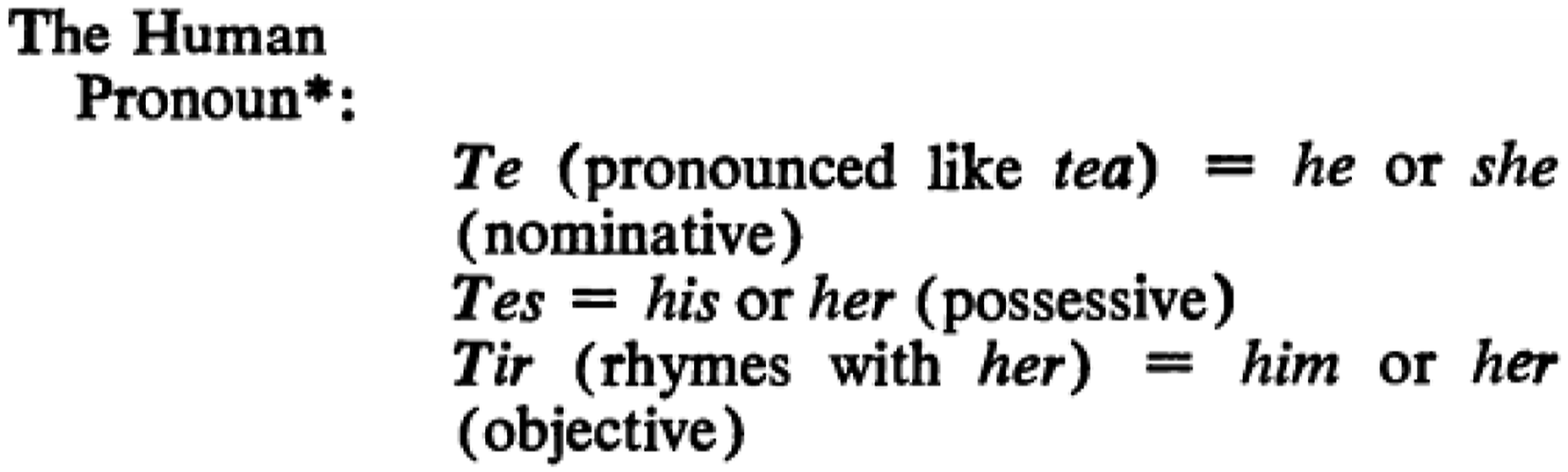
As part of this “human vocabulary,” Farrell also forsook the use of gendered terms for relationships such as “husband” or “girlfriend,” in favor of the one-size-fits-all “attaché,” to be more inclusive towards homosexual couples or open relationships. But he was not the only one proposing such changes. Sexologist Gregory Lehne, for example, advocated for retiring the word “homophobia,” arguing that it misleadingly evoked medically recognized phobias, and proposed using “homosexism” instead (Lehne, 1974, p. 77). Likewise, a consciousness-raising group participant with erectile dysfunction questioned the use of the word “impotent” to describe his situation: In scanning the books which dealt with men, I became irritated by the use of a certain word. The medical term which describes my problem is impotency. Why? Potency means ‘powerful.’ Impotent means ‘without power.’ […] ‘Potency’ and ‘impotency’ are not only broad-sweep words, they are heavy words when applied to sexual relationships—which should have nothing to do with power. (Julty, 1974, p. 37)
He then deconstructed the term “frigid,” which, he contended, was used by men to label women who did not satisfy their sexual expectations, before concluding: “We’re going to have to do some turning around of the language which lays on concepts in place of diagnoses, and perpetuates myth instead of reality” (pp. 37–38).
In terms of actual policy proposals, little can be found in Men’s Liberationist writings. Indeed, their concerns mostly hinged on emotional, sexual, and cultural domains, often removed from the purview of legislative action. Warren Farrell stands as an exception, as his Liberated Man outlined a set of policies to encourage gender equality. Expressing his admiration for Scandinavia, he advocated for childcare centers in the workplace, a four-day workweek, and paid paternity leave—arguing in typical gender-neutral fashion that “[u]ltimately the terms ‘paternity’ and ‘maternity’ leaves should be replaced with ‘parent leaves’” (Farrell, 1974, p. 154). Another of his proposals was “homemaker payments” in single-income households, with the stay-at-home “attaché” (usually the wife) being rewarded for their domestic labor by directly receiving half of the other attaché’s paycheck. After reviewing the ideas of Men’s Liberation, I examine the concrete organizations and people constituting the movement.
Organizations, Actions, and People
In many ways, Men’s Liberation lacked the organizational backbone or clearly defined agenda typical of mass social movements. This was remarked by New York Times journalist Lisa Hammel: “unlike the women’s movement, with its card-carrying members, its social and legislative programs, its public demonstrations and other appurtenances of an organized crusade, men’s lib is fragmented and almost underground” (Hammel, 1972, p. 42). The next year, another sympathetic media account of the movement concurred: “they have not formulated a widely accepted set of social and political goals, nor produced a highly visible structure to fight for these goals” (Katz, 1973, p. 292). US Men’s Liberation was mainly a decentralized network of consciousness-raising groups, estimated in 1973 at around 300 throughout the United States (Katz, 1973, p. 291). While these were more common in urban areas and college cities, the reporter also notes their presence in “heart-of-the-country places like Oberlin, Ohio; Lansing, Mich; and Iowa City, Iowa” (Katz, 1973, p. 291). In 1974, Warren Farrell rejoiced that “men’s groups have started in every region of the United States” (Farrell, 1974, pp. 217–218). In cities, men’s centers also appeared, which joined in on feminist demonstrations, and organized daycare for feminist activists as well as consciousness-raising groups. The most prominent of those was the Berkeley Men’s Center, whose manifesto is cited above. Yet its scope and efficacy remained limited, as mockingly noted by Life reporter Barry Farrell (not to be confused with Warren Farrell): “On the strength of publishing two issues of a men’s liberation newspaper called Brother and throwing up a picket line around the Playboy Club in San Francisco one afternoon (‘SMASH COMPULSIVE MASCULINISM,’ ‘END WHITEY SUPREMO HEIGHTISM NOW’), Mike’s group was far and away the most active in the country” (Farrell, 1971, p. 53). Historian Kirsten Swinth (2018) estimates that there were around thirty to forty men’s centers in the US by the end of the 1970s (p. 49)
The main formal organization was the Task Force on the Masculine Mystique, established by the National Organization for Women (NOW) in September 1971 in New York, and chaired by Warren Farrell. The aim of this task force was to promote the establishment of consciousness-raising groups throughout the country, as explained by Farrell in The Liberated Man, although it is difficult to establish how successful this was: In June 1974 it held the First National Conference on the Masculine Mystique at New York University. Hundreds of facilitators were trained to return to their local communities to form a nationwide network of men’s and joint consciousness-raising groups and to carry out national demonstrations […]. (Farrell, 1974, p. 152)
In 1975, members of the Women’s Studies department at the University of Tennessee, Knoxville organized a Men & Masculinity conference. This gave birth to an organization called the Men’s Awareness Network (MAN), which later become Men Allied for Liberation and Equality (MALE) (Williamson, 1985, p. 312). While it is nowadays difficult to find information on these organizations, the conference was a success. Since the first edition, one has been held almost each year up to 2024, with the 49th edition being hosted by the National Organization for Men Against Sexism (NOMAS) in San Antonio, Texas. Apart from the Playboy Club picketing, another modest demonstration was held in front of a New York bookstore on August 26, 1973, which saw around fifty Men’s Liberationists and their families, led by Farrell, protesting against gender stereotypes in children’s books (Gupte, 1973). Most of the time, it seems that Men’s Liberationists were content to join in on feminist marches, as recalled by Farrell in our interview: “we participated in the women’s strikes for equality. We were having a men’s section protesting against the gender pay gap” (Farrell, 2023). Farrell was somewhat of a “media darling,” appearing on TV shows such as the Today Show, the Michael Douglas Show(see Figure 2), and the Phil Donahue Show, as well as in Cosmopolitan, The Washington Post, and People Magazine (Swinth, 2018, p. 45).
Warren Farrell on the Michael Douglas Show. Source: Wikimedia Commons. Farrell was fond of organizing role-reversed male beauty contests, where women would comment and vote, so that men would “feel the pressure of being a sex object” (Farrell, 1974, p. 331).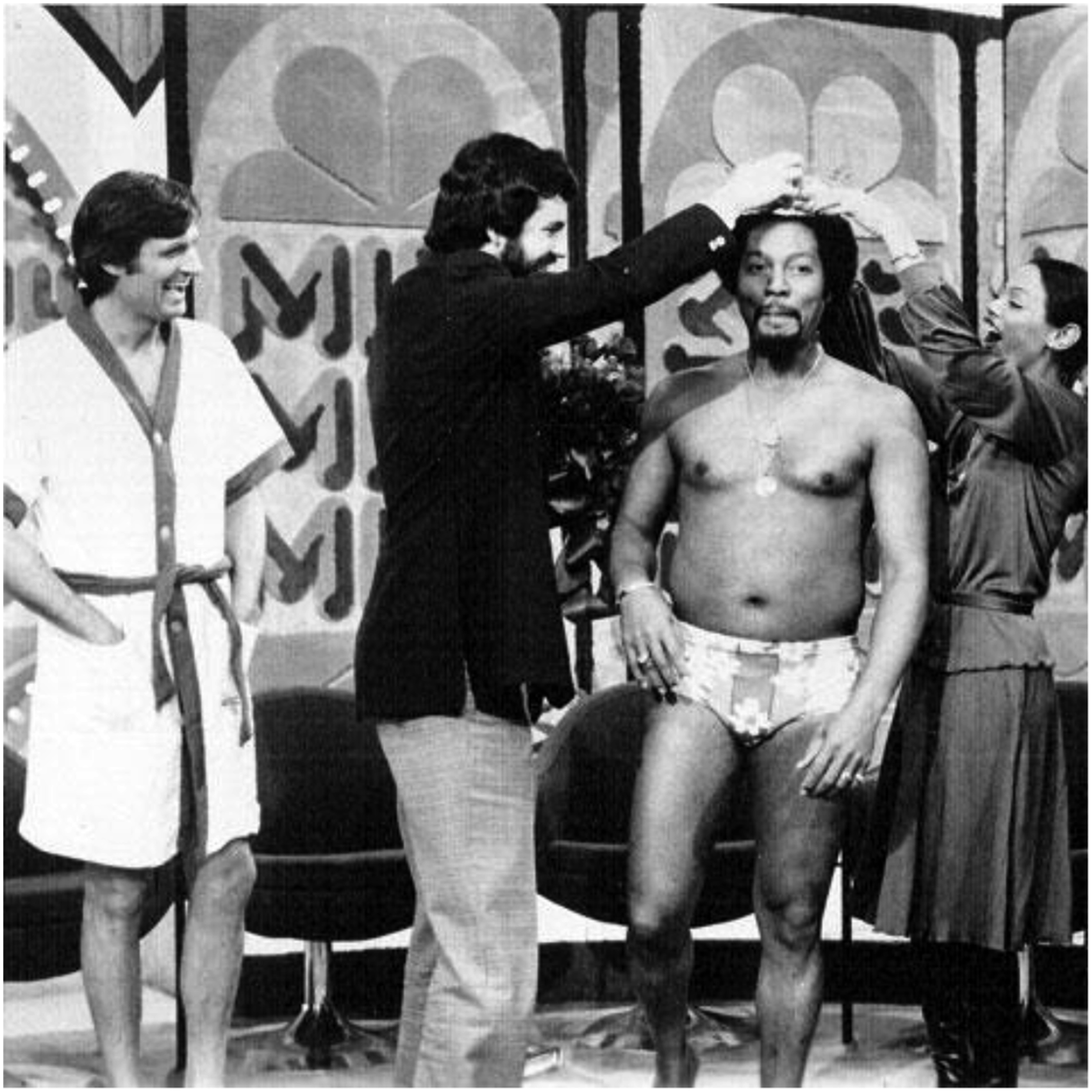
Even a charitable estimate of participation in the movement would probably not reach more than six-thousand men, presumably less (with ten participants per local group and a hundred per men’s center). Who were these men and what were their motives?
Firstly, all accounts of the period remark that US Men’s Liberationists were ubiquitously White, educated, and middle or upper-class men in their 20s–50s (Hammel, 1972; Katz, 1973). I compiled the jobs reported by journalists who went around the country to interview men’s consciousness-raising groups (Supplemental Material S1). Out of thirty men, no less than ten were holding academic positions (e.g., “junior faculty member,” “professor of economics”). They were joined by other white-collar professions such as lawyer, teacher, architect, reporter, as well as several clergymen. Only in Flint, Michigan, did a journalist report on the presence of blue-collar auto-industry workers (Farrell, 1971). For many Men’s Liberationists, this was not the first involvement with activism, as they had been involved in or at least inspired by the 1960s Civil Rights, antiwar, and New Left movements.
In these men’s testimonies, a recurring impetus for joining the movement was a spouse’s engagement with feminism. For example, George, a 47-year-old pastor recalled: “When my wife got involved in the women’s movement several years ago, her thinking and questioning about her role started having an effect on both our lives. I saw I had to start dealing with some of the issues she was raising” (Katz, 1973). Stan Levine, an advertising executive, recalls how he was first wary of his wife’s engagement with a women’s group: “I was scared. From her group, Joan would find out (for the first time, of course) that men are not gods.” Yet, also seeing how his wife was “clearly growing” as a result of feminist consciousness-raising, he joined a men’s group “in self-defense,” seeing that he was “in serious danger of becoming near-extinct,” if he did not shed off his “male chauvinism” (Levine, 1974, p. 156).
Another aspect of Men’s Liberationist testimonies is a feeling of inadequacy with norms of virility, starting from a young age. Thus, after conducting interviews with former activists in the late 1990s, gender scholar Judith Newton found that half of them “had experienced a heightened sense of marginality with respect to traditional masculine ideals” (Newton, 2005, p. 116). As remarked by reporter Barry Farrell, the men forming the Berkeley group “were often short men, bashful men, who suffered from acne; a few, indeed, were virgins” (Farrell, 1971, p. 53). A lot of them recall hating sports in their school years, which subjected them to competition and pressure from teachers, peers, and parents (Collective, 1971; Pleck, 1974). As an activist remembered in 1997: “I’ve always been very woman-identified from the time I was a little boy…. I was terrible at sports. I had no male bonding…” (Newton, 2005, p. 116). Unsurprisingly, these men were more enthused by Men’s Liberation than those who had successfully incorporated their gender’s expectations and norms. This discourse seemed even more appealing to non-heterosexual men who suffered from the homophobia which cemented masculine identity. Thus, historian Kirsten Swinth writes that a “significant portion” of these men “was gay, bisexual, or queer” (Swinth, 2018, p. 47), and a survey conducted at a male antisexist conference in the 1980s revealed that gay and bisexual men totaled almost 70% of attendees (Shiffman, 1987).
Relationships with Feminism: From Honeymoon to Divorce
The fact that Men’s Liberation’s main organization was part of NOW illustrates the convergence between the movement and 1970s liberal feminism. So was its name, Task Force on the Masculine Mystique, modeled after Betty Friedan’s landmark Feminine Mystique (1963). In this bestselling book, the later founder of NOW documented and denounced the strictures of the (White, middle-class) female gender role. To her, women were the victims of a set of expectations and norms which she dubbed a “mystique.” Far from seeing men as enemies, she thought that they were also victims of their own crippling mystique: Men are not allowed to admit that they sometimes are afraid. They are not allowed to express their own sensitivity, their own need to be passive sometimes and not always active. Men are not allowed to cry. So they are only half-human, as women are only half-human, until we can go this next step forward. (Friedan, 1969)
This type of rhetoric is perfectly aligned with Men’s Liberation ideology. Thus, it is unsurprising to find Betty Friedan in the acknowledgements of Farrell’s Liberated Man (Farrell, 1974, p. viii). In fact, the book’s acknowledgements are a who’s who of 1970s US feminism, with names such as third NOW president Wilma Scott Heide, New York activists Jacqueline Ceballos and Ivy Bottini, both credited for encouraging Farrell to start his first consciousness-raising groups, and Ms. co-founder Gloria Steinem. Heide and Steinem seemed particularly sympathetic to Men’s Liberation, with Heide lavishing praise on the 1975 reprint of the Liberated Man: “The work Farrell is doing does and will have universal and profound importance for our nation and the world” (Heide in Farrell, [1974] 1975). Similarly, Gloria Steinem wrote the introduction to Marc Fasteau’s The Male Machine, enthusiastically announcing: “This book is a complement to the feminist revolution, yet it is one no woman could write. It is the revolution’s other half” (Steinem in Fasteau, [1974]/1975, p. xv).
For those male and female activists, Men’s and Women’s Liberation were then conceived as two sides of the same coin. Furthermore, Men’s Liberation was a strategic asset for liberal feminists, because it tried to rally men to the cause. Thus, in The Liberated Man, Farrell goes at length to explain (to men) why Women’s Liberation would be a boon for everyone, a rhetoric that Steinem also favored (Steinem, 1970). If women took on more responsibility, Farrell argued, men would be relieved of their demanding breadwinner role. If men and women shared housework and childcare equally, they would show more respect and mutual understanding. If women were able to flourish as individuals with their own interests and careers, this would make romantic relationships and family life richer and happier (Farrell, 1974, pp. 175–191). As discussed below, however, such rhetoric was not accepted by all feminists, as radical feminists argued that it obscured the oppressive power dynamics between genders.
In the mid-1970s, the US Men’s Liberation movement was at its peak. It was aligned with the liberal feminism of Friedan, Steinem and NOW, both ideologically, with an emphasis on the necessity of escaping traditional sex roles, and strategically, by trying to recruit educated men to this egalitarian program. Yet, when interviewed by a journalist in 2019, Gloria Steinem claimed not to remember ever hearing the phrase “men’s libbers,” a testimony to how short-lived this osmosis proved to be (Aronowitz, 2019). Indeed, by the early 1980s, Men’s Liberation would be completely split, with one faction still supporting feminism, and the other pursuing its own agenda.
“Forks in the Road”: the Scission of the Men’s Liberation Movement
Men’s Liberation had a broad and vague platform, which appealed to various demographics: from white-collar workers who resented the corporate drudge, to gay activists and radical Marxists who wanted to rebuild society. Despite these differences, the movement was held together by criticisms of postwar masculinity and commitment to gender equality. It thus participated in the feminist Equal Rights Amendment (ERA) campaign of the 1970s. The ERA, which would constitutionally enshrine gender equality, was a cause powerful enough to unite and mobilize all supporters of Men’s Liberation, from moderate centrists to radical socialists. In 1972, it was passed by both houses of Congress, but never gathered enough state ratifications. In 1980, the Republican party withdrew its support, Reagan was elected, and the ERA would not come to pass (Mansbridge, 1986). This marked a turning point for male gender activists. As explained by one of them, “Except for the ERA, the men’s movement was in sharp disagreement over the nature of its relationship with feminism” (Interrante, 1982, p. 58).
The main bone of contention was the notion of male oppression. Inspired by radical feminism, an antisexist (or “profeminist”) faction called out male power, and sought to confront men about their sexist conduct. To them, consciousness-raising was insufficient if it did not lead to political action challenging patriarchal power structures. They thought male activists should accept the tenets of radical feminism, and recognize their position as oppressors (Hornacek, 1977; Schein, 1977). Another group refused this framework, which they claimed obscured male-specific issues and suffering (Interrante, 1982, pp. 58–60). Chief among them was Farrell, who had always insisted on a symmetrical approach. To him, men’s liberation and women’s liberation were two sides of the same platform, a position that he still claims to hold to this day: “My fundamental beliefs have always been that we shouldn’t have a men’s movement to criticize women, or a women’s movement criticizing men and calling them the oppressors. […] We should have a gender liberation movement” (Farrell, 2023).
As shown above, this symmetrical approach was somewhat compatible with the liberal feminism of NOW: although liberal feminists naturally found women to be structurally disadvantaged relative to men, they saw Men’s Liberation as a valuable, if not necessary, contribution to their struggle. However, this was not the case with the more radical strands of feminism. For radical feminists, it was not abstract mystiques or roles which belittled, harassed, or raped women, it was men. Indeed, “in the radical feminist argument, the notion of sex roles obscured the power relationship between the sexes,” Barbara Ehrenreich (1983) explains, adding, “One might as well talk, as feminist Carol Ehrlich [1977] suggested, of slave ‘roles’ and slave-owner ‘roles’” (p. 124). Through that lens, the sex role rhetoric of Men’s Liberationists looked more conservative than revolutionary, as if men were avoiding responsibility for their actions. Sociologist Michael Messner thus summarizes the inherent limits and contradictions of 1970s Men’s Liberation: Men’s liberation discourse walked a tightrope from the very beginning. First, movement leaders acknowledged that sexism had been a problem for women and that feminism was a necessary social movement to address gender inequalities. But they also stressed the high costs of the male sex role to men’s health, emotional lives, and relationships. (Messner, 1998, p. 256)
As Messner points out, Men’s Liberation included both a recognition of structural sexism against women and an emphasis on costs of masculinity. It thus attracted people with different focuses and agendas. Some were more interested in rooting out male chauvinism, while some were more focused on male wellbeing and interests, such as custody rights in divorce. This fundamental divide started fissuring the movement in the late 1970s: “The conflict began to surface in debates over political resolutions at the national conferences in St. Louis (1977), Los Angeles (1978), and Milwaukee (1979). And it began to emerge within local men’s groups and centers,” an activist recalls (Interrante, 1982, pp. 57–58). And “by the 1980s,” sociologist Michael Kimmel writes, men’s movements “had reached a crossroads” (Kimmel, 2013, p. 105).
By 1981, the scission was complete, with the now-called profeminist men creating the National Organization for Men (NOM), which in 1990 became NOMAS. According to Warren Farrell, these activists thought that “men’s issues should only exist to the degree that they support women’s” (Farrell, 2023). In his mind, they betrayed the cause of gender equality, along with feminists. For profeminist sociologist Michael Kimmel, the blame lies in the opposite camp: “Once women began to make it personal, to critique men’s behaviors—by making rape, sexual harassment, and domestic violence part of the gender dynamics that were under scrutiny—the men’s libbers departed” (Kimmel, 2013, p. 104). At the start of the 1980s, there was no more Men’s Liberation movement to speak of in the United States. Both sides’ narratives are concordant: some activists thought they should be auxiliaries of feminism and primarily sought to combat male oppression of women, while others kept on advocating for men’s issues and denouncing the male sex role.
The two factions tried to claim the heritage of men’s liberation. Today, NOMAS, the main US profeminist men’s organization, proudly announces that it is “the oldest anti-sexist men’s organization in the United States,” tracing its history back to the first 1975 Men & Masculinity conference. 1 As for the male activists who rejected the notion of male oppression of women, they started being known by the 1980s as “nonfeminist men,” “masculists,” or “Men’s Rights groups” (Williamson, 1985, p. 309). Their leaders, such as Richard Haddad, founder in 1977 of Free Men Inc.—the oldest Men’s Rights organization still in activity, now called the National Coalition for Men (NCFM)—accused feminists of forfeiting the struggle for equality, and invoked the Men’s Liberationist heritage: “Men’s liberation recognized that society lays oppressive roles on both sexes, a fact which feminism tends to ignore,” he wrote in 1985 (Haddad, 1985a, p. 283). About profeminist men, he wrote: “They ignore or belittle the role restrictions men have lived with, and rigidly follow the feminist party line on issues” (Haddad, 1985b, p. 290). Over the years, the Men’s Rights movement went on to become more antifeminist, until its main website, A Voice For Men, was listed in 2018 by an NGO as a “male supremacist hate group” for its “vilification of women” (Southern Poverty Law Center, 2018).
A third, non-political, strand started organizing all-male retreats grounded in New Age spirituality and Jungian psychoanalysis, and became known in the 1980s–1990s as the mythopoetic men’s movement (Schwalbe, 1996). It can be argued that these different ideological strands (radical profeminist, focused on men’s issues and rights, or on the therapeutic and spiritual) had been cohabiting under the broad and loose umbrella of Men’s Liberation during the early-to-mid 1970s—when it was sometimes simply referred to as the “men’s movement.”
In 1993, Warren Farrell published The Myth of Male Power, which became the canonical text of the Men’s Rights movement (Farrell, 1993). In it, he explored structural disadvantages facing men, such as higher rates of suicide, workplace fatalities, or homelessness. He has kept on advocating for men’s issues ever since (a term he prefers to “Men’s Rights”), and has seemingly not reneged on his ideals nor on 1970s sex-role rhetoric: “Freeing both sexes from the rigid roles of the past, for more flexible roles for the future. That has been my theme from really from day one” (Farrell, 2023). Today, he represents the more moderate wing of the Men’s Rights’ movement, which has drifted rightwards in a polarized US political context where Farrell struggles to find support. Concerned by the epidemic of young men committing school shootings, he has been campaigning for gun control, which by his own admission has the effect of alienating “every conservative” (Farrell, 2023). Yet, although he ran as a Democrat in the 2003 California gubernatorial race, he regrets not finding an open ear with liberals either: “where the Democrats are at fault is not understanding the importance of fathers and family, and the importance of things like equally shared parenting after divorce and the importance of fathers in children’s lives” (Farrell, 2023). Thus, the 1970s’ most famous male feminist has become the spearhead of an increasingly vitriolic antifeminist movement, and an isolated figure politically speaking. His paradoxical trajectory reflects the failure of Men’s Liberation, an ambitious egalitarian movement which aimed at blowing up traditional masculinity, but ended up imploding instead.
Autopsy of a Movement: Why Did Men’s Liberation Fail?
Historian Kirsten Swinth argues that “good will more than action typified organized men’s liberation,” adding that “The Task Force on the Masculine Mystique was effectively a one-man show, more the work of Warren Farrell than any groundswell of grassroots involvement” (Swinth, 2018, p. 53). She rightly points out Farrell’s central role, and the lack of organized action or grassroot support for the movement. One explanatory factor for this is found in the movement’s anti-authoritarian politics. As recalled by Farrell, many of his companions believed that “organizations and hierarchies were part of the male patriarchal system that is destroying everything” (Farrell, 2023). In his 1980s history of the men’s movement, activist Tom Williamson explained that this “sometimes preclude[d] election of officers and the organizational structure necessary to maintain their groups. Thus, feminist men persist[ed] as a loose informal collective with no clear means to achieving their objectives” (Williamson, 1985, pp. 312–313). If the name of Farrell stands out in the history of the organized Men’s Liberation movement, it is not for lack of theorists and ideologues, but because he believed in the need for organizational structure, as he recalls today: “I said, ‘that’s ridiculous.’ If we’re going to have any impact whatsoever, we need to start an organization” (Farrell, 2023). In his analysis of the Norwegian men’s movement (1978–1980), Simon Gramvik identifies a similar issue, a form of “organizational chaos” caused by the movement’s anarchist politics (Gramvik, 2024).
Another issue faced by Men’s Liberation was its lack of clearly defined policy objectives. Unlike its feminist ally of the 1970s, which obtained victories such as the nationwide legalization of abortion or Title IX which forbids sex-based discrimination in federally-funded schools, Men’s Liberation did not manage to translate its social diagnoses into policy objectives. The Equal Rights Amendment was a catalyst which managed to unite and rally energies, through an organization called Men Allied Nationally for the ERA (Kimmel & Mosmiller, 1992, see pp. 422–424). Yet, this was first and foremost a feminist campaign, and when it foundered, so did the entire Men’s Liberation movement with it, exemplifying its lack of agenda. Reflecting on the movement’s downfall, an activist explained “This problem is embedded in the ambiguities of a ‘men’s politics.’ It can support profeminist, progay, and antiracist legislation—which many men here see as the legislation of ‘others’—but it has no legislation of its own” (Interrante, 1982, p. 61). Likewise, when feminists disagreed and split over the issue of pornography in the 1980s, men’s profeminist organizations were shaken by these dissensions (Messner et al., 2015).
Furthermore, people who joined the movement had conflicting motives. It is even questionable whether some of them were truly motivated or whether they were joining under pressure from a feminist spouse: “there were also a good many who were dismayed by the new ferocity of their women, made nervous by it, set to wondering if other men had it so bad” (Farrell, 1971, p. 53). Some were looking for male camaraderie and bonding, and were focused on wellbeing. They went to male consciousness-raising and conferences “for ‘renewal,’ ‘regeneration,’ […] and ‘nurturance’” (Interrante, 1982, pp. 61–62). Others saw Men’s Liberation as part of a wider radical socialist, anti-racist, and pro-gay political struggle. Although these motivations managed to co-exist for a while, retrospective testimonies show that cohabitation was uneasy. Moderate elements resented the movement’s radical politics, and they expressed it after the split with profeminist men in the 1980s: Sometimes ‘radicalism’ gets in the way. Freedom from the male stereotype means, to some, the ability to wear women’s clothing in public and to allow homosexual organizations a loud and sometimes preponderant voice at their yearly conferences. Also their rhetoric against capitalism and rather simplistic socialist substitutes, along with their condemnatory attitudes towards men who do not share their ideology, alienate many people who otherwise might find them more appealing. (Williamson, 1985, p. 313)
Between respectable white-collar professionals who wanted to spend more time with their families and loosen norms of masculinity, and radicals who wanted to weave anew the fabric of American society, there was not much in common. Writing in the 1980s, early Men’s Rights leader Richard Haddad thus regretted the “very silly habit of mixing leftist politics and an anti-corporate attitude with men’s issues.” To him, regardless of class, race, or religion, “all suffer the same conditioning as men; the same need to achieve at all costs; the same provider burden; the same guilt; the same dependence on women and distance from other men” (Haddad, 1985a, p. 288).
Haddad’s statement illustrates the main flaw of Men’s Liberation ideology, which was carried over to the Men’s Rights movement: the ubiquity of a one-size-fits-all “male sex role” concept. This concept obscured the fact that men experienced different experiences of gender, as it intersected with class, race, or sexual orientation. When 1970s male activists discussed the male sex role, they were in reality discussing the heterosexual, White, middle-and-upper-class role, which mirrored the movement’s membership. For example, a gay participant at a Men & Masculinity conference recalled that his reaction to a slideshow on masculinity was very different from the others’, illustrating the impracticality of the male sex role concept: “While I identified with some of the experience, I also had reactions very different from what I was being told to feel. I found many of the images of men erotic” (Interrante, 1982, p. 62). This critique has been repeatedly made of Betty Friedan’s liberal feminism. The “feminine mystique” she described was in reality a White suburban one, as working-class families had never been able to rely on the single income household model typical of white-collar families (Hooks, 1984). Men’s Liberation had a similar blind spot, which can explain why the movement failed to attract many Black or Hispanic men (for testimonies of a Hispanic and a working-class activist who felt out of place, see Messner et al., 2015, pp. 44–48). From the mid-1970s, the movement’s White and middle-class bias was in fact repeatedly criticized by radical feminists and their profeminist male allies (Andersen, 1977; Ehrlich, 1977; Lamm, 1977).
In his analysis of the failure of Norwegian Men’s Liberation, Gramwik (2024) points out the lack of a clearly defined adversary. Like policy objectives, this could have strengthened the movement’s cohesion. Often, men’s consciousness-raising consisted in “guilt-tripping” (Interrante, 1982, p. 55), or even in a new form of one-upmanship to be the most self-critical about one’s own sexism (Farrell, 1971, p. 52). This subjected liberationists to the ridicule of their contemporaries, as shown by the bemused tone of journalists who witnessed these often highly-successful men beating themselves up over “slight actions,” as noted by Life reporter Barry Farrell: “people were becoming too sensitive to eat in restaurants—the waitress was a person, after all. Looking out the window at a wind-blown dress could set off chain of recrimination and self-doubts” (Farrell, 1971, p. 55). These examples show the difficulty of structuring a movement around opposition to a vaguely defined “sex role.”
In contrast to their rhetoric was Herb Goldberg’s 1976 book The Hazards of Being Male, which embraced Men’s Liberation’s attack on the male sex role, but with an altogether different tone. The author distanced himself by stating that his book would not provoke guilt in men, and that “pathetic, intellectualized attempts not to be a male chauvinist pig will never do the job” (Goldberg, [1976]/1987, p. 6). As a therapist, Goldberg unapologetically addressed men, without any regard for feminism. He told them about the “hazards” of being a man, without analyzing structural power dynamics between genders. This popular book was the cornerstone of the then budding Men’s Rights movement, which would soon grow more popular and find its own adversary: feminism.
Limitations and Future Directions
Owing to the decentralized nature of the movement, the sociological-organizational reality of Men’s Liberation is difficult to retrace. However, several archive collections could shed more light on this. 2 Moreover, even though Warren Farrell was easy to reach for an interview, hundreds of 1970s liberationists are presumably still alive today, allowing to produce rich collective histories, as researchers did with transgenerational interviews of fifty-two male activists against sexist violence (Messner et al., 2015). Such a project could be conducted on Men’s Liberation consciousness-raising groups participants, whose involvement in the movement was personal and therapeutic: did these men end up living up to their ideals in their relationships with their families and with others? Did they manage to find ways to break free from the gender conditioning that they were lamenting? Or did their interest in Men’s Liberation wane with the end of the 1970s?
Lastly, work on Scandinavian movements reveals a transnational dimension to Men’s Liberation, with Norwegian and Danish activists contributing to the same publications and attending meeting and retreats together (Gramvik, 2024, p. 8). Likewise, the 1970s saw the creation of a British men’s liberation movement, which was influenced by its US counterpart, as explained by UK activist Mick Cooper: “until around 1977, the early American men’s liberation literature was all that British men had available to read” (Cooper, 1991, p. 5). Although a recent book jointly explores contemporary men’s antisexist activism in Spain, Sweden, and the UK (Westmarland et al., 2021), no such work has been conducted yet on this transnational dimension of 1970s Men’s Liberation and the inspiration it provided for later movements such as 1990s Japanese Men’s Liberation (Ito, 2007).
Conclusion
Men’s Liberation’s collapse hinged on its relationship with feminism. Some thought that their movement should be an auxiliary to feminist struggles, but never managed to rally mass male participation to their antisexist men’s movement. On the other hand, the Men’s Rights’ movement kept on advocating for men’s issues and interests and gained popularity, but has become home to growing antifeminist and misogynistic resentment and hatred. Although Men’s Liberation had its flaws and blind spots, it tried to articulate both support for feminist struggles and addressing the ways men could be hurt by gender conditioning and stereotypes too. “In asking how men’s roles needed to change and insisting that true equality required new male selves as well as female ones,” Kirsten Swinth (2018) writes, “men’s liberationists added a crucial piece to the feminist movement that has often not been recognized” (p. 69).
1970s US Men’s Liberation can therefore be seen as an ideological crucible, generating diverse offshoots as activists carried forward its legacy in subsequent movements and causes (e.g., Joseph Pleck and his later involvement in promoting fatherhood; see Swinth, 2018, p. 61). Today, an online movement is reclaiming this heritage. Founded in 2015, the Men’s Liberation community on Reddit (r/MensLib) now boasts 242,000 members. 3 Striving to correct the biases of the 1970s, it presents itself as inclusive and intersectional. While it claims to be an ally to feminism, it also states that “MensLib is a movement and community specifically to identify, discuss, and address men’s issues, and to support men.”
Our historical analyses of Men’s Liberation’s downfall in the late 1970s highlight the key challenges faced by its contemporary avatar. On the one hand, gender egalitarian movements have shown unable to attract massive numbers of men. On the other hand, sole therapeutic emphasis on the costs of masculinity can veer into antagonism, as shown by the antifeminist trajectory of Men’s Rights. In fact, many have argued that overemphasis on men’s emotions tends to obscure gendered power dynamics (e.g., Pease, 2012; Robinson, 2002). The short-lived momentum of US Men’s Liberation in the 1970s doubtlessly owed much to the political and cultural success of Women’s Liberation. To grow more successful, a men’s liberation movement should therefore look towards cultivating allyships and campaigns with feminist organizations around clearly defined policy objectives—such as reinstating legal abortion protection in the United States. For these male activists, this implies finding the elusive balance between convincing feminists of their genuine desire to challenge privileges and work for gender equality, and convincing men that such a program would also benefit them.
Ultimately, fostering male engagement for gender equality is a thorny conundrum, as illustrated by the guidelines from the International Center for Research on Women, which recommend “messaging that avoids a zero-sum game mentality” and emphasizing benefits of gender equality for men—as did the Men’s Liberationists of the 1970s—all the while warning that this approach is insufficient to address “the power structures that subjugate women” (ICRW, 2018). Conversely, profeminist scholars argue that achieving genuine gender equality would inevitably cost men some of their privileges, thus questioning the very idea of “benefits for men” (e.g., Flood, 2015). This tension was already present in the 1970s, and ended up fissuring Men’s Liberation. By documenting past movements, their conflicts, and their shortcomings, hopefully the present article can contribute to advancing this discussion.
Supplemental Material
Supplemental Material - US Men’s Liberation in the 1970s: Autopsy of a Movement
Supplemental Material for US Men’s Liberation in the 1970s: Autopsy of a Movement by Louis Bachaud in The Journal of Men’s Studies
Supplemental Material
Supplemental Material - US Men’s Liberation in the 1970s: Autopsy of a Movement
Supplemental Material for US Men’s Liberation in the 1970s: Autopsy of a Movement by Louis Bachaud in The Journal of Men’s Studies
Footnotes
Funding
The author(s) disclosed receipt of the following financial support for the research, authorship, and/or publication of this article: The interview was conducted thanks to a 1500 EUR Collège Doctoral Nord de France Travel Grant.
Declaration of Conflicting Interests
The author(s) declared no potential conflicts of interest with respect to the research, authorship, and/or publication of this article.
Ethical Approval
The interview protocol was approved by the University of Kent’s School of Anthropology and Conservation Ethics Review Board (Ethics ID # 20231678778764297).

Supplemental Material
Supplemental material for this article is available online.
Notes
Author Biography
References
Supplementary Material
Please find the following supplemental material available below.
For Open Access articles published under a Creative Commons License, all supplemental material carries the same license as the article it is associated with.
For non-Open Access articles published, all supplemental material carries a non-exclusive license, and permission requests for re-use of supplemental material or any part of supplemental material shall be sent directly to the copyright owner as specified in the copyright notice associated with the article.
