



Abstract
Community social participation activities are considered effective in reducing social isolation and loneliness (SIL) amongst older people. However, most community social group participants are women with a paucity of research exploring older men’s perspectives and preferences. This study explored the challenges and facilitators to older men’s social participation utilizing a multi-method qualitative design including interviews (n = 18) and a collaborative workshop (n = 7) with older men and community organizations. The resulting data was analyzed thematically. Five themes were identified, “meaningful occupations”, “identity and loss”, “connections”, “landscape of service delivery”, and “therapeutic landscapes”. The findings informed the development of a framework for engaging older men. The model emphasizes the built environment and intergenerational connections as necessary components for social participation.
Keywords
Introduction
The perceived decline of community and rise of social isolation and loneliness (SIL) has been highlighted for some time yet not effectively resolved (Learner, 2011; Putnam, 1995). Although older age does not necessarily create SIL, contributing factors such as, family migration, bereavements, decreasing friendship networks, physical frailty and retirement are compounded by increasing longevity, resulting in a large ageing population particularly susceptible to the negative impact of SIL (Dahlberg & McKee, 2014; Sullivan et al.,. 2016). Retirement represents a significant occupational transition and given the link of paid employment on many men’s identity and social participation choices the risk of SIL is heightened for older men (Gleibs et al., 2011; Nurmi et al., 2018). Evidence suggests the effects of SIL on men are more detrimental due to varying factors; lack of resilience, perceived failures of masculinity, and limited health seeking behaviors (Addis & Mahalik, 2003; Canham, 2009; Santini et al., 2015).
Social participations drawing on activity theories, are thought to be effective in reducing SIL (Franck et al., 2016; Landeiro et al., 2016; Milligan et al., 2015, 2016). However, evidence indicates attendance is female dominant (Cohen-Mansfield & Perach, 2015; Dickens et al., 2011; Haslam et al., 2009) requiring exploration of men’s preferences and barriers and enablers to their social participation (Beach & Bamford, 2014; Collins, 2018).
A person’s level of involvement in activities which provide interaction with others and their community is defined as social participation and fosters social connectedness, which is an important component of social capital and social inclusion both associated with positive health outcomes (Dawson-Townsend, 2019;
The intricate network of transactional relationships which social participation facilitates highlights the important nature of the characteristics, abilities, values, needs and cultural components of individuals and communities through social engagement (Gallagher et al., 2015). This suggests that social participation is vital for improving the health and well-being of populations by harnessing the unique capabilities of individuals who join together to create cohesive communities, often referred to as an asset-based approach (Foot, 2012; Jakes et al., 2015; Wildman, Valtorta, Moffatt, & Hanratty, 2019). An asset-based approach emphasizes protective factors, and nurtures strengths and resources of people within communities thus gaining recognition as an ideal method for addressing public health challenges, such as SIL (Hornby-Turner et al., 2017). Therefore, by enabling individuals and communities to engage in meaningful social participations, social inclusion is increased, emphasizing that all social participations are important in the construction of the social world and connection to the societal fabric which may reduce SIL (Kantartzis & Molineux, 2017).
Occupational and social participation choices are influenced by social identities which are shaped by systemic and structural factors (Gallagher et al., 2015). This can be witnessed in the current generation of older men who may have relied on their career or partners (if coupled) to form their identity, social ties and occupational choices (Barnes & Parry, 2004; Gleibs et al., 2011; Santini et al., 2016). There is evidence that because of the link of employment to leisure activities, older men may be less socially confident to engage in new opportunities which is compounded by alterations of perceived masculinity linked with ageing thus complicating the transition to retirement and heightening the risk of SIL (Jonsson et al., 2009; Wilson & Cordier, 2013). Additionally, community social participation offerings, through organized programs for older people may be influenced by ageist stereotypes, biases and even a de-gendering of older people (Faílde Garrido et al., 2022; Silver, 2003).
Age UK (2019) determined that men prefer mixed age groups, but have insecurities about fitting into a group, often in relation to the environment in which the intervention takes place. The importance of the environment for older men’s engagement is further evidenced by the success of the Men’s Sheds initiatives (Crabtree et al., 2018; Nurmi et al., 2018; Wilson & Cordier, 2013) which utilizes the concept of therapeutic landscapes to anchor men into social participation through place, allowing for gendered therapeutic landscapes where men can explore their preferences for occupations and activities in an inclusive environment (Milligan et al., 2004, 2015). However, Men’s Sheds are based on assumptions of ideological hegemonic masculinity which may not resonate with all men (MacDonald, 2005) thus requiring the appreciation of the heterogeneity of men.
The term “therapeutic landscapes” was introduced by Gesler (1992) as a concept to explore the “healing sense of place”. This concept has evolved to encompass an understanding of the social and health promoting qualities of place (Cattell et al., 2008), implying that the environment influences health outcomes by creating opportunities for meaningful interactions and participation, which builds social capital, provides purpose and belonging, thus enhancing wellbeing (Bernard & Rowles, 2013; Carpiano, 2006; Korpela et al., 2008; Steinfeld & Danford, 1999). Therefore, the “place” where social participations occur is a vital component for engagement as it embeds individuals into the community which fosters reconstruction of the self through activity, connection, and a sense of societal contributions (Anstiss et al., 2018; Ballinger et al., 2009; Halpern, 2005; Ormsby et al., 2010).
A scoping review by Milligan et al. (2016) determined that beyond “place” effective components of male-centered interventions are: a wide range of activities, strong local support, skilled co-coordinators, feeling a sense of belonging and purpose, being useful and connected to the community, while serving as an active participant and not as a passive recipient or patient. Reynolds et al. (2015) determined that for the men who are engaging in community services, social connection and engagement were fostered through feelings of reciprocity and acceptance, suggesting participation provided role renewal and role coherence. However, Willis and Vickery (2022) suggest that the group dynamic is not always suitable or the most effective, explaining that one-to-one interventions should not be overlooked, and that mixed-generational interventions are highly successful in alleviating SIL, working in both group and one-to-one settings.
Wilson et al. (2013) also highlight the benefits of intergenerational frameworks, with men reporting a sense of accomplishment, enhanced self-worth, and renewed purpose. Certainly, this generativity, or drive to contribute to the future generation, builds social capital while establishing or re-establishing meaningful occupations through engagement and productivity (Hodgkin, 2012; Schoklitsch & Baumann, 2012). Devine et al. (2017) propose that the most sustainable response to SIL is increasing the capacity for voluntary work, intergenerational engagement and focusing on a community development approach, which encourages the construction of intentional and inclusive communities which enable intergenerational engagement. The main factors as indicated by the literature for men’s engagement can be seen in Figure 1. Factors which improve older men’s engagement in community social participation activities.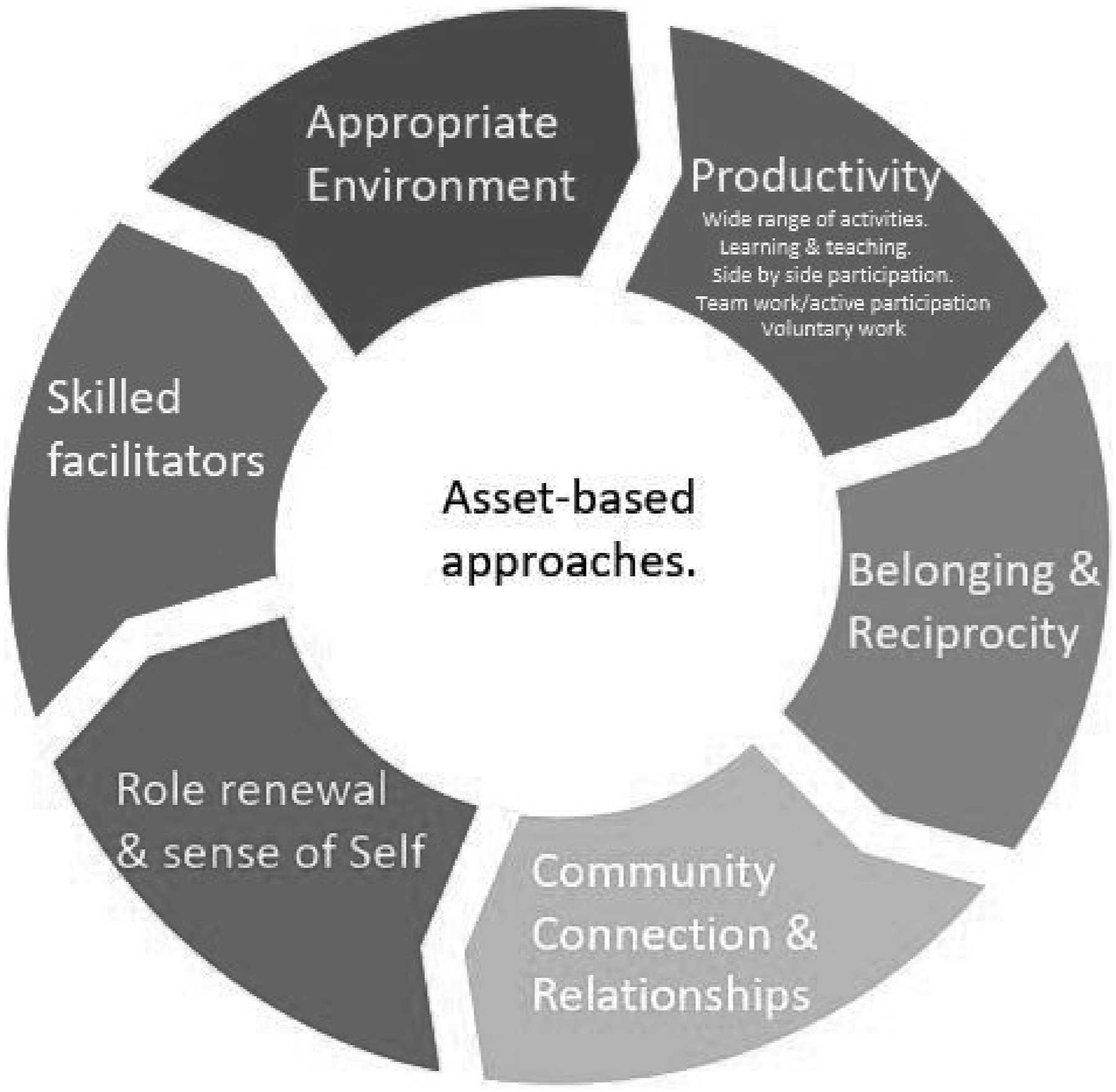
In summary, social participation activities are shown to alleviate SIL. While there are numerous community offerings, many are feminized which may leave older men marginalized within the landscape of care. Although there are male-specific interventions, such as Men’s Shed, this initiative may not resonate with all men’s interests or manifestations of masculinity. What is known is that an asset-based approach as shown in Figure 1 are preferable for engagement. However, the uptake of men engaging in these offerings remains minimal, thereby warranting further exploration.
The gap in knowledge which this research addresses is further illumination of older men’s perspectives and preferences while also understanding the complexities of delivering community social participation offerings. Previous research of a similar natures has emphasized that future projects should conduct research “with” older men, rather than “on” older men (Collins, 2018; Reynolds et al., 2015; Silver, 2003) which this project has strived to achieve.
Methods
A qualitative, multi-method study within an interpretive/constructionist paradigm seeking “explanatory understanding” (Crotty, 1998; Weber, 1962) was employed. Using multiple data collection methods and through the formation of partnerships (older men and community organizations), the research aim was addressed through three stages: foundations, conversations, and collaboration. This layered approach allowed for cumulative understanding and knowledge generated from co-production increases credibility and transferability (Redman et al., 2021).
Participant Characteristics of the Older Men.
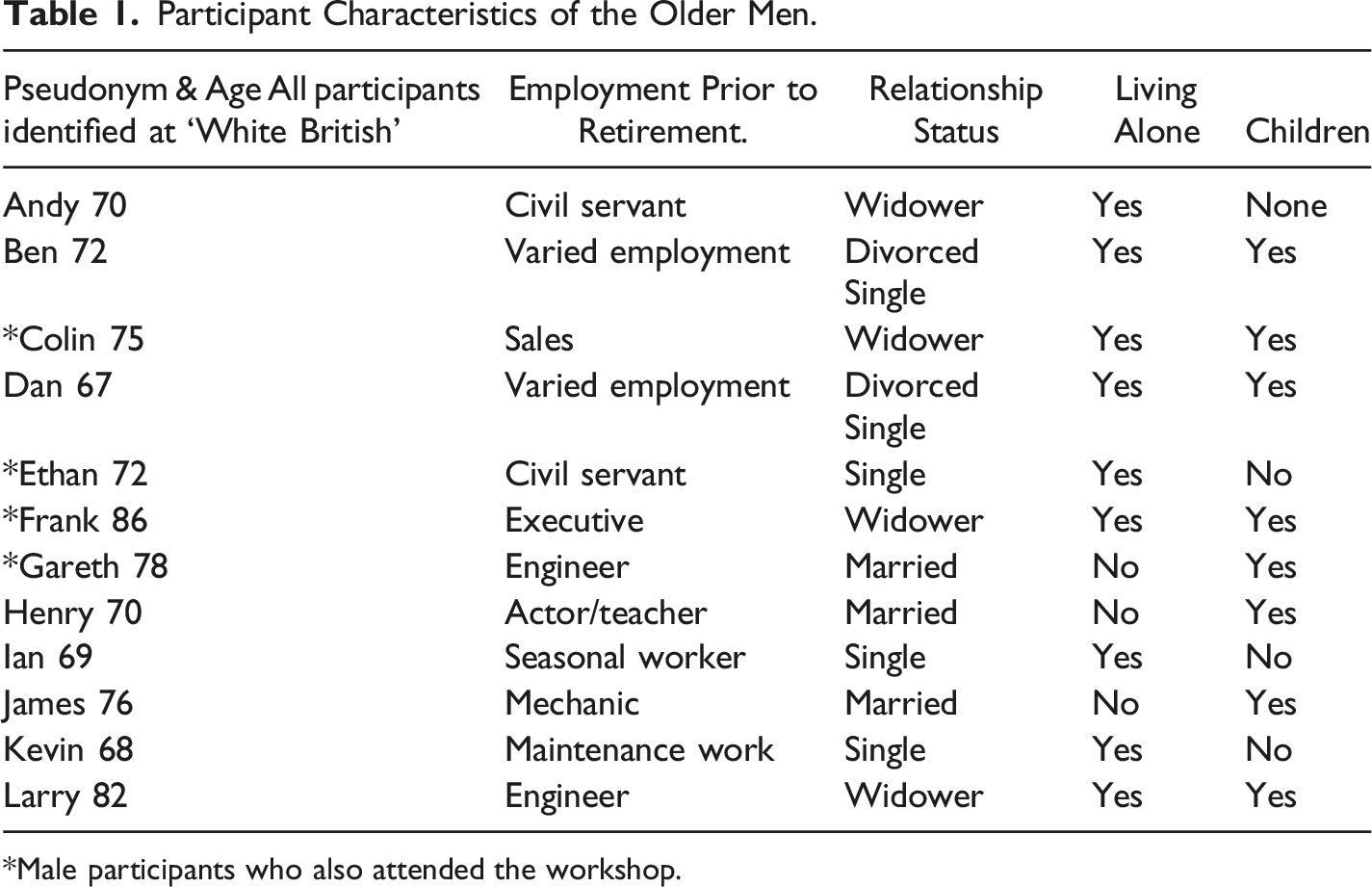
*Male participants who also attended the workshop.
Participant Characteristics of the Organisational Staff.
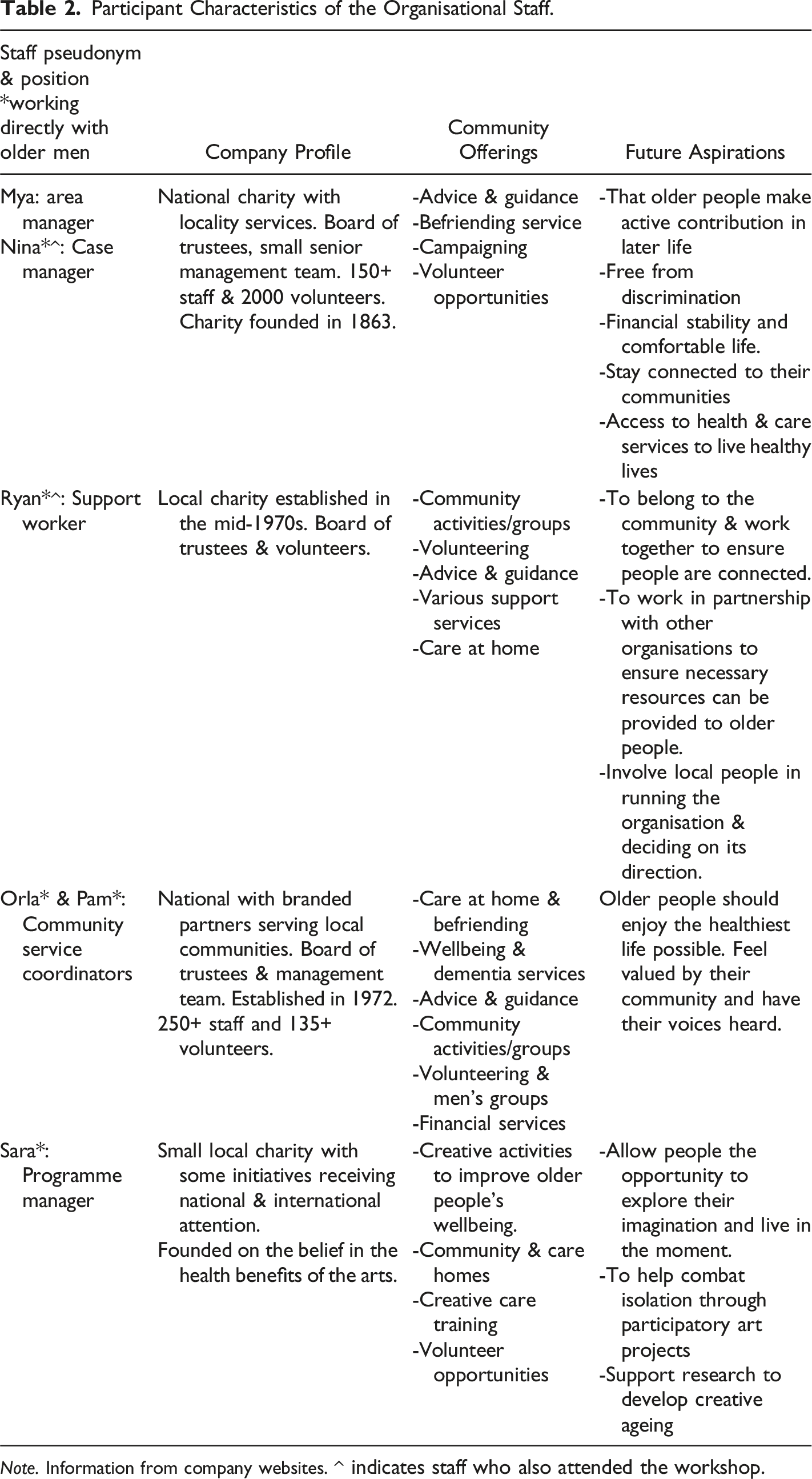
Note. Information from company websites. ^ indicates staff who also attended the workshop.
Inclusion criteria for older male participants was broad to ensure inclusivity. Specifically, to be over 65 years of age, residing in the Tyne and Wear locality in the North East of England. Exclusion criteria was based on potential heightened risk of vulnerability and therefore older men who did not have capacity to provide informed consent were excluded (Pick et al., 2013; Robinson, 2013). However, no older men were turned away who expressed interest in participation as they all met the inclusion criteria.
Ethical approval was obtained through the University of Northumbria’s ethics protocols and procedures. An all-male steering group (comprising of an older man and two male organizational staff) was formed following ethical approval to advise and collaborate on the project. This was to ensure research was conducted “with” older men and that all perspectives (older men and staff) were represented. The steering committee provided valuable support to recruitment, formulation of interview questions, creation of the workshop, and some member checking of data. Ethical principles for community-engaged research projects as articulated in the Belmont Report were considered, specifically, respect of person, beneficence and justice (Bromley et al., 2015) which included the sharing of power with all members. The support of the steering group was invaluable throughout the project.
Individual, semi-structured interviews took place during COVID-19 restrictions requiring interviews to be conducted by telephone or Zoom Video Communication. This offered flexibility, inclusivity and from the findings, the authors are confident that rich and relevant data was gained. Older men were asked about their social participation preferences, motivation for engaging or not engagement, how they found activities, and if there was something they desired which was not on offer. Staff queries centered around their organizations offers, the barriers/facilitators to those offerings and future goals. All participants were invited to attend the workshop a year later, with four older men and two staff from two organizations accepting the invitation. The workshop was held on Zoom given the ongoing situation with COVID-19.
The final phase of the project, the workshop, was the mechanism which integrated the strands of data from previous phases. Data from interviews was validated, and a deeper examination into specific, data-rich areas on which the researcher had been reflecting were strengthened. For example, querying the legitimacy of profound statements/concepts from interviews. Additionally, the workshop evolved from knowledge gained in interviews, such as the importance of the environment and men’s aspirations. Therefore, the workshop was an opportunity to collaborate toward a shared vision for the future utilizing design thinking and ideation methods. Specifically, the preference of the facilitator for storytelling which is growing as a research tool in effecting public health challenges (McCall et al., 2019). Sharing experiences (multiple realities) through a creative outlet such as storytelling was attractive, given the paradigm guiding the researcher. The facilitator’s approach to storytelling was to create scenarios for the participants to consider, thereby, in essence, using their imaginations to construct the ideal “place” (therapeutic landscape) for engaging in social occupations. These methods offer a human-centered, iterative process creating solutions aligning with the communities’ tacit knowledge, thus enhancing public health interventions, and valuing an asset-based approach (Foot, 2012; Hendricks et al., 2018; Huang et al., 2018).
All data was audio recorded and transcribed by the first author. Analysis was iterative, thematic, reflexive and approached through a framework of familiarization (reading and re-reading the transcripts), generating initial codes (identifying and assigning nodes using NVIVO software), constructing themes (grouping codes/nodes), with all authors reviewing and refining final themes (Braun & Clarke, 2006; Nowell et al., 2017). The aim was to move beyond giving “voice” to the participants but instead unravel and construct evidential patterns within the data from interviews and the workshop through the above approach (thematic analysis), reflexive practices and interpretations as displayed in the findings section.
Findings
Five themes summarize the data from interviews and the workshop, “meaningful occupations”, “identity and loss” “connections”, “landscape of service delivery”, and “therapeutic landscapes”.
Meaningful Occupations
Social participation can take many forms, whether “doing” (Andy) activities or simply gathering for “banter” (Frank) the consensus is it is “time well spent” (Ben). The older men emphasized that any social occupations serve as catalysts for further participations, highlighting the importance of occupational engagements throughout the life course: I don’t know whether it needs emphasizing, when you’re trying to get people interested in things but it’s very much a case that just taking part in one activity can lead on to other things because the more people you meet, the more opportunities there are to explore new things. (Gareth)
Nearly all the men indicated social participations needed to be stimulating and meaningful; “to spend time, not kill time” (Ethan), “it’s got to be meaningful. I’ve got to be doing meaningful stuff” (Gareth). There was an emphasis on the importance of learning opportunities; “I like to have my brain stimulated” (Colin) and sharing skills, thus creating reciprocity. Every week a guest speaker, so on a variety of topics. It was really great, and then of course there were questions and answers. It was great to learn off people. (Larry)
All of the older men interviewed expressed their preference was for equitable, diverse groups, “l much prefer mixed gender groups” (Ian). However, they also acknowledged the lack of men at social participation offerings and suggested that might be a barrier to some men: Women are much better to have a talk with. Men run out of conversation, don’t we? (laughing). It doesn’t matter to me, (more women present than men) but I think it must matter to some guys. (Colin)
Staff also emphasized the preference for mixed-gender groups serving as a barrier and enabler. An equitable mix of men and women is the preference rather than a large number of women, and just a few men: We did a bit of research recently with the gentlemen we work with, and we put to them did they want male only activities and I think the majority of them had said that they would prefer mixed. (Nina, staff) I think the vibe of a group does depend on the sexes. I think mixed is the preference, but there’s mixed where you have one man in a group of eight women, or there’s mixed of 50:50. (Ryan, staff)
This is further emphasized by Andy who expressed feelings of apprehension when being in the minority and thinking “I’m the only man here. Might be about five women”.
Intergenerational social occupations were highlighted by older men as preferred, with eleven of the men expressing their desire for more opportunities to engage with a varied age spectrum, suggesting it offers a change of perspectives and meaningful engagements, but also promotes the dismantling of ageism: I do enjoy talking to these probably, 20, 30, 40-year -olds. It’s often quite different to stuff I’ve discussed in the past, and I love it, it’s a challenge and that’s great. (Frank) More natural, more fun, less stereotyping. (Ian)
Staff agreed that intergenerational social participation is worthwhile. However, only one organization is currently delivery intergenerational offerings with conflicting views regarding the ability to implement: I think that there is scope for intergenerational, it’s just quite hard to organize. (Ryan, staff) It’s all easy. I think it’s very natural and organic. We get in touch with the local school, invite them along. (Sara, staff)
There were conversations during the workshop regarding the lack of men attending social occupations: I’ve always felt there is a problem there with older men meeting people and getting out. (James) Now, I do find men reluctant, if I ask them why you don’t come along to our group, lukewarm, you know. (Frank) I don’t think men know what they want, you know. I do find it difficult sometimes and um, like sometimes awkward with people. You understand what I mean. (Kevin)
This seeming reluctance may be due to social anxiety. Staff shared their experiences of older men’s reluctance to attend community offerings: We do get men enquiring and quite a decent number of enquiries for the men’s group. But it’s that follow-through that lacks. (Orla, staff) Not my thing. That comes up a lot. (Pam, staff)
Staff believe if they can get men through the door to observe and feel part of an activity rather than be a bystander, they are more likely to return: It’s getting that road into their confidence to go on their own for the first time. (Ryan, staff) They just don’t know how to make inroads. Women are really encouraged, whether it’s groups at school or going along to mother and toddler groups. Women are encouraged to make those links with other women. I’m not sure it’s the case for men. So, it’s all about relationships. If you want to get anybody engaged in anything, it’s about maintaining and sustaining relationships and make people feel needed so, ‘today we’re going to do this and you’re going to get involved. (Sara, staff)
As mentioned, the seeming reluctance may be due to social anxiety but may also indicate an ambivalence to the older men’s own desires, that is, what is actually meaningful for them. While this is not gender specific it may be more impactful given men’s own perceived notions of masculinity and suggested links of identity to employment. However, with additional encouragement to make “in roads” and skillful practitioners who are talented in building relationships and offering reciprocal social occupations men do successfully engage.
Identity and Loss
The importance of identity was emphasized with men discussing their lived experiences which have formed their identities and thus social participation choices. The greatest factors are their careers, family life, and more recently, loss. Loss featured heavily in conversations and included people, retirement, occupations, and health. There were many comments suggesting a downplaying of negative feelings in relation to ageing, grief, SIL, loss, mental health challenges, concerns for the future and the impact on identity: I went through periods of say, depression and stuff like that. Didn’t want to go out and stuff like that. But you just got to get on with it. (Ethan) Some days you get tired, and you just can’t be bothered. I think that’s only natural; I try to give me self a shake and a kick and get going again. (James)
Grief and loss shape notions of self and featured in many conversations even if not explicitly stated. For example, one man lost his wife fourteen years ago, yet it was the first thing he shared about himself: Well, um well unfortunately my wife died some years ago, so I’m on me own, that’s the first thing. (Larry)
Loss also included once thriving social groups and networks diminishing due to members and friends passing away, for example: The old cliché was when you get to my age, you go to more funerals than anything else, it’s fact. (Ethan)
Retirement does represent a loss and some of the men suggested there is a need to learn how to retire: You got to prepare people for retirement. Unfortunately, you know, I meet so many people, they worked and then it comes to stop and what do they do, they’ve got nothing to do. They have no outside interests. (James)
For men whose identity linked strongly to employment they found renewed purpose in volunteer work: I’m not sure if I do all this work for the customer benefit or my own benefit to be honest (laughing). (Gareth)
Providing person-centered services is the goal for staff, “I think it’s starting with the person and want they want to do” (Mya, staff). However, the vast age spectrum of “older men”, levels of masculinity, and various social demographics create difficulty in delivering person-centered social occupations. Allowing men to reinvent roles, which they may have felt were lost, could be a way to increase their confidence and engagement. Therefore, men may need to engage in occupations which reignite their sense of identity, masculinity, and purpose. Seemingly in that space of engagement (side-by-side) there is freedom to discuss the complexities of being an older man, thus creating community: If you feel like you’ve lost your role as a bloke, it must be really hard to redefine. “(named project)” is all about redefining that role as a man and giving people roles and responsibility. (Sarah, staff) They would say that they were making pies and they’re focused on that and the banter. Then twenty minutes in someone will start talking about their feelings. That kind of sums up men, you have to get all the swearing out of the way, all the onions chopped before anyone talks about anything meaningful. (Ryan, staff)
Staff suggest the main facilitator for delivering social occupations is forging relationships based on reciprocity, inclusion, role renewal and initial personal attention. The specific occupation, although necessary to consider, is not the most important piece of the engagement jigsaw. Instead making a man feel needed and valued is important. I think that it’s really quite important to make people feel needed. Like, I need them, not they need me, but like, we need each other. It’s about having a hook, and not prescribing things to people. (Sara, staff)
Occupational choices are influence by an individual’s identity, which changes over the life-course. Navigating the landscape of older age seems to come with chronic loss which can serve as a barrier to motivation to engage in social occupation. However, building relationships and offering a sense of “community” within social participation activities may enhance older men’s engagement.
Connections
There was an implied sadness about the decline of community, with most men feeling disconnected from their communities and neighbors: It’s quite transient around here, people come and stay for a while and then go, ya know. It’s changed a lot over the years, so it’s not as close knit as it used to be. (Kevin)
Many men discussed the importance of estate-specific community centers (neighborhood-specific community spaces) with three men explaining that the closing of their estate community center (CC) due to seeming lack of interest exacerbates feelings of disconnection around them: There was a good community spirit sort of thing, you know, but times change. That (estate CC) looks like it will close because of no activities, people don’t seem to be interested in gathering like that. (Larry)
The concept of place, which all men discussed as an enabler, was multi-faceted, with a consensus that place should provide an environment which can ease anxiety, support engagement, and increase occupational participation: A feeling of warmth when you walk in. I’m not talking physical, just a warmth in general. So, I like this place, the people seem quite nice. (Andy)
Therefore, place needs to be an enabler in an emotional and spiritual way but also a practical facilitator where the sensory experience should be considered, emphasizing the necessity for appropriate “age friendly” environments: I like it to be conventional, I like it to be good lighting there. I mean there (bowling alleys) designed cause of different types of people but when you’re thinking of older people, we don’t want all the machines crashing in in the background, all the noises, um and we don’t want lights flashing all over the place. I’m talking about older people. I find it dreadful. (Frank)
Social participation which provides an opportunity for learning, developing skills and creates the opportunity for reciprocity seems to heighten engagement for the men interviewed. However, not all men enjoyed social occupations. Two of the men live with mental health conditions which prevents them from engaging in social occupations. This is an important reminder that some men have never enjoyed groups throughout their lives, instead preferring solitary occupations or smaller, close-knit interactions in an appropriate environment for them.
Landscape of Service Delivery
Offering community social occupations presents challenges including securing adequate funding, organizational structures, and person-centered provisions. Appropriate funding is crucial to service delivery, yet recent austerity measures have created pressure and uncertainty: I think that money is tight in the sector, and you try to do innovative things for less and less money. What can we do with this person because we’ve got no money? They’ve got no money, which has its stresses on me, to be honest, and my colleagues. You’re almost in a perpetual state of guilt about who you haven’t managed to get through to. (Ryan, staff)
Less funding means there is lack of security for staff and services, fewer staff to deliver services, inadequate or unavailable equipment, the inability to afford appropriate places to host activities in the community and the closing of community spaces: A group would start up last a few months and then it would run out of funding. So, because the council has had huge funding cuts, a lot of these things have just gone to the wall completely. (Ben)
The intricate nature of seeking and securing financial support requires essential skills and talents. Organization size seems to factor into financial stability with large, national organizations able to employ fundraising teams which ensures they continuously source appropriate funding streams. Whereas, for small, local organizations, this is just one aspect of an already varied and busy role: Quite often you’ll see people getting huge lumps of funding for stuff and you think, well, we’re doing that but because we’re a small organization, we don’t. (Sara, staff)
There are positives for small organizations however, with staff citing less bureaucracy which improves service delivery. Small teams can be adaptable and reactive to their client group. Whereas large organizations seem to undergo continuous re-structures, and re-designs which can delay service delivery: It wasn’t like this before when you had a larger staff team. Between the four of us, everybody is just like, yeah, let’s give it a try and see how it works, and it does keep things fresh and moving forward all the time. (Sara, staff)
While risk assessment and liabilities must be managed, staff indicate that larger organizations seem to have lost the ability to balance risk with need. The hierarchy of large management structures can present challenges with staff indicating that managers can be detached from service delivery: There is a need for the management structure to understand community development is a slow burn, and equally as well, to know when to cut your losses. (Orla, staff)
Implementing social occupations is varied across the organizations regardless of size. Staff discussed the desire to deliver more innovative, and creative occupations and the ability to adapt activities quickly seems key to engagement. However, not all staff feel able to achieve this objective: Many times, we’ve had our ideas scrapped, honestly a little discouraging when that happens, that is quite a hierarchical thing, we (the company) are slow to react, in my view. (Ryan, staff)
One organization has a main activities coordinator who does not deliver sessions, meaning there is limited ability to be reactive. Another organization establishes social occupations as a team-wide exercise allowing flexibility according to client’s needs. The largest organization involved is tied to funding stream requirements which are often activity specific.
Staff roles are dynamic and multi-faceted including but not limited to establishing and maintaining social groups, overseeing volunteers leading shared occupations, managing group dynamics, welcoming new members, finding and liaising with community spaces, organizing social trips, and completing necessary office-based documentation, risk assessments, budget management, and personally leading activities.
All staff valued a person-centered approach, “I think it’s starting with the person and what they want to do” (Mya, staff). However, staff expressed lack of time to spend individually, creating a barrier to understanding people’s identity, motivation, and occupational preferences. To overcome this, staff suggest that prescriptive offerings can be a method of gaining deeper understanding of individuals: You get a taste for people and what people are interested in and then it’s doing x y and z that you find out that they actually like a, b and c so you do a bit more of a, b and c. (Sara, staff)
Although, this is only possible if staff are facilitating groups and for larger organizations, volunteers are often the facilitators or for those staff leading groups amongst a varied role there may not be sufficient time be “person-centered” with everyone. The joy of my job is to get to know the men. To know what motivates a person, the frustration in my job is that I don’t have enough time to do it for everyone. (Ryan, staff)
Place, or therapeutic landscapes, is critical to engagement, but staff discussed lack of control over the environment. Most groups are held in community venues not owned or managed by the organizations delivering groups. Therefore, staff must build partnerships within their communities to secure available spaces. However, there is not an equitable distribution of community venues across localities which complicates the ability to provide social occupations on a local level. Additional challenges are the variable hire costs, availability, accessibility, and location: It’s something that very much varies from area to area so in some areas, like the coast we’re almost spoiled for choice, but you’ll often find that they’re more expensive per hour. When you move further into the north west of the borough, you’ve got less choice, but their often cheaper. (Orla, staff)
The staff or volunteers working within venues can also serve as enablers or barriers: At one stage there were two church volunteers who were more like gatekeepers than welcomers. (Ryan, staff)
In contrast local library staff are praised: I think attitude of the staff, has always been very welcoming and friendly, very much a community feel. (Pam, staff)
Therefore, creating therapeutic landscapes moves beyond physical place, emphasizing the social environment which is shaped by people within a space. In addition, the aesthetic of place seems more important for older people who perhaps leave their homes’ less frequently: “to offer the visual distraction from the normal and the everyday” (Sara, staff).
Therapeutic Landscapes
Alongside intergenerational offerings, the “place” where social occupations are held was cited as one of the main enablers for the older men to engage. This was discussed in interviews and was the predominate topic at the workshop, central to the ideation activities. Interpretation of these discussions is the agreement amongst all participants that place is multi-faceted and more than the built environment, but instead a therapeutic landscape, which encompasses both the psycho-social and physical environment where connections can be fostered.
The participants of the workshop collaborated to create their ideal place for social participation which would offer a building on its own grounds with accessible parking, community garden, football pitches, a bowling green and workshop. This therapeutic landscape should transcend generations and gender, offering facilities for all people to connect through occupations. It needs to be adaptable, flexible, inclusive, and intergenerational: It should be a multipurpose building where everyone can meet for different reasons rather than a specialist one for old men. (Gareth)
Creating this therapeutic landscape initiated a discussion of the concept of “local” which varied amongst participants. For example: Colin stated, “where I live, the only thing we have is the local pub, (named estate) has a community center, we got nothing here for people to meet other than the pub”. Ryan interjects “you’ve got the (named CC) and Colin states “but that’s off the estate, that’s down by the golf club”. There was agreement that estate-specific or neighborhood community centers are important for creating a cohesive community and facilitating social occupations, which was also mentioned during interviews. There was a consensus that participants would value community buildings which would connect them to other people based on geography and occupations.
Discussion
The aim of this research was to illuminate older men’s perspectives and preferences as well as understanding the delivery of social participation activities through the perspectives of community organizations. Although not the intended outcome, a framework for engagement, titled the “Tree of Engagement” (ToE), has emerged from the data and was informed by the themes derived from the data. This model can be viewed in Figure 2 and provides a blueprint for community practitioners working with older men. The tree of engagment.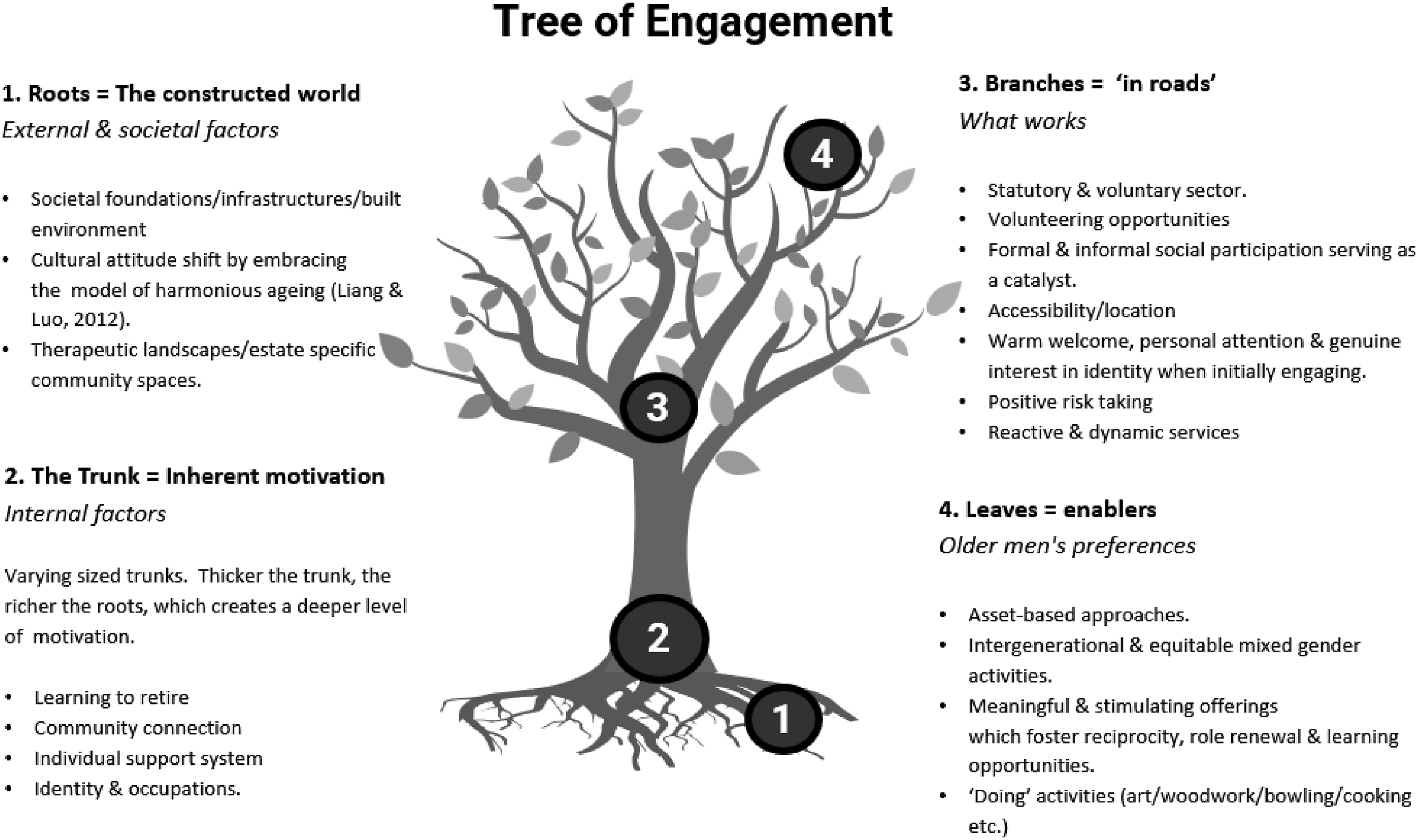
Roots = the Constructed World
The roots represent external and societal factors for engagement. It has been known for some time that the environment influences health and wellbeing outcomes and increases social capital (Bernard & Rowles, 2013; Carpiano, 2006; Gesler, 1992; Korpela et al., 2008; Steinfeld & Danford, 1999. The participants involved with this project cite it as one of the main enablers for social participation and a vital component for developing identity, and well-being. Similar to Milligan et al. (2004) who emphasize therapeutic landscapes as a holistic model of health due to the complex interactions between physical, mental, emotional, spiritual, societal and environmental factors, akin to the core values of occupational therapy which believes that all people are occupational beings and therefore, engaging in occupations is crucial for health and wellbeing (Calhoun, 2021; Creek, 2010).
The findings of this study indicate that an appropriate environment is crucial for engaging and motivating men and policy should reflect this by ensuring adequate facilities are constructed to create community connections allowing for social occupation (Gilroy, 2008; McEwan et al., 2019; Wilson & Cordier, 2013). In ToE the constructed world is the soil which feeds the roots of the tree. These external factors serve as the fundamental foundation for occupational engagements thus, determining an individual’s internal factors, such as, motivation level (the strength of the trunk).
The men involved in this project highlight their desire for inclusive, local spaces, suggesting developing spaces that meet all generations interests is an important goal for social and economic policy which has been highlighted for some time (Gilroy, 2008; Phillipson, 2015). Gilroy (2008) believes that because older people are often fixed within their environments the interplay between self and place is heightened requiring planners to be age aware when considering broader planning agendas (Firestone et al., 2018). Additionally, evidence suggests that older people’s quality of life is enriched by places which allow intergenerational interactions therefore requiring built environments to foster cohesive intergenerational communities (Biggs & Carr, 2015).
The men linked to this project who have been able to maintain motivation, and engagement have done so by being adaptable to the dynamic process of ageing, embracing their evolving identity, and surviving the grief associated with perpetual losses, including loss of previously enjoyed activities, with support from their social ties and communities.
They express the needing to feel a sense of belonging, connection, and purpose which increase social participations and decrease SIL, also emphasized by the literature (Ferguson, 2015; Gardiner et al., 2018). The men’s experiences and desires share similarities with a theory of ageing, the model of harmonious ageing (Liang & Luo, 2012), which offers an eastern perspective. This theory emphasizes the collective and complementary appreciation of the uniqueness of ageing, which offers both challenges and opportunities for the individual and society (Katz, 2000; Liang & Luo, 2012; Longino & Powell, 2009; Moody, 2005). It is suggested that a shift in discourse is necessary to alter society’s view of ageing thus impacting the priorities for the built environment and older men’s sense of belonging and worth to enhance social participations and intergenerational connections.
The Trunk = Inherent Motivation
The trunk represents internal factors, such as an individual’s intrinsic motivation and suggests ways in which motivation can be cultivated and maintained. According to participants this includes connection to their community, with opportunities to participate in social occupations which serve as a catalyst for additional engagements, thus heightening motivation. This reflects previous findings proposing that engagement breeds engagement, feeds community development and social participation, which positively impact SIL (Gardiner et al., 2018; Morrow-Howell et al., 2014; O’Rouke et al., 2018). This may require men to redefine their identity and occupations prior to retirement, in essence, learning to retire which resonates with suggestions that knowledge of community resources and social occupations prior to retirement is equally as important as financial planning (Golding, 2011; Nurmi et al., 2018).
Branches = “In Roads”
The branches represent “in roads” to social participation opportunities which come in various forms such as, community organizations, volunteering opportunities, and accessible places. Creating and maintaining “in roads” is a complex process requiring a person-centered approach and appropriate environment. This reflects evidence from Age UK (2019) which suggested men have insecurities about fitting into a group which is often in relation to the environment. The appropriate environment (therapeutic landscapes) and skilled facilitators who can cater to the heterogenous nature of men, cultivate reciprocity and active participation may ensure men’s continuous investment and engagement in social participations (Barke, 2017).
The consensus amongst male participants was that community spaces do not need to consider gender and should be inclusive further highlighting the desire for intergenerational activities which shares similarities to previous findings (Wilson et al., 2013). This contrasts with the literature that suggests place should be gendered and previous findings from Men’s Shed initiatives which used place, the backyard shed, seen to be a dwelling of masculinity where “men could be men” as the driving force for occupational engagement (Foster et al., 2018; Golding, 2011; Milligan et al., 2015; Nurmi et al., 2018). Rather, the men linked with this project would like an “in road” to opportunities for connection, companionship, and societal contributions with all genders and generations through social participation.
Leaves = Enablers
The leaves symbolize the men’s preferences which are, equitable mixed gender activities, intergenerational offerings, and meaningful social occupations with opportunities for learning and sharing skills which fosters reciprocity. This requires ongoing support from highly skilled and trained staff which previous literature suggests is crucial for successful engagement (Franck et al., 2016; Millgan et al., 2015; Shvedko et al., 2018).
Although the men in this study did not use the term “asset-based approach” they describe all the components as valuable to them. Similarly, the organizations partnered with this project are striving to connect communities, and many are utilizing an asset-based approach to engage men. That is, recognizing and harnessing the unique capacities individuals bring to their communities (Foot, 2012). This allows men to feel they are integral to the success of social occupations, thus providing a sense of belonging, purposefulness, and connection to the social fabric. The organizations who partnered with this project should be applauded for connecting communities through an asset-based approach which builds social capital and can be seen as a promising intervention for reducing SIL amongst older people (Coll-Planas et al., 2016a, 2016).
Study Strengths, Limitations and Recommendations
This project offers a unique insight into both older men and community organizations experiences of social occupations in North East England. To the author’s knowledge there is a paucity of studies which include both participants of social participation activities and the providers. Inclusivity is a strength of the project given the accessible platforms which were used to engage participants while conducting research during COVID-19 restrictions. All participants were given the choice of preferred platform to ensure their comfort (e.g., telephone, or video call). The intention was to honor diversity, and include underrepresented perspectives, for example, older men not engaging with community agencies, or older men from backgrounds other than the current sample which is all “White British”. However, COVID-19 restrictions were in place and access to the community was not possible thereby limiting recruitment.
Utilizing multiple methods of data collection has created triangulation, further ensuring consistency of findings. Collaborative methods, including a steering group and workshop, have ensured that research has been “with” older men rather than “on” older men. The findings are transferable given the North East of England shares similarities with other urban and semi-rural UK communities. However, given the sample is all “White British” future research should prioritize ethnically diverse representation (found in most UK areas) to determine if the framework is truly transferable.
Despite robust methods and implications for future practice, this study does have limitations meriting consideration. While men are heterogenous in nature, the sample is homogeneous with a distinct lack of ethnic diversity. Additionally, although the sample size is appropriate for this qualitative project, it does only represent a small population.
Future projects should aim to prioritize men who are not engaging in any social occupations and include ethnic diversity to reflect the many sub-cultures which exist within society along with a larger sample of older men. Further research into the utility of organization’s ability to increase intergenerational offerings would also be useful.
Conclusions
Through collaboration with older men and community organizations older men’s occupational choices have been illuminated. Mixed-gender and intergenerational social occupations are older men’s preferences. Therapeutic landscapes are key to creating “in roads” for men’s occupational participation which is enhanced by a skilled practitioner and responsive services. However, there are challenges to providing organized social occupations, including funding discrepancies, the inability to be consistently person-centered and the lack of suitable places to hold community offerings. For older men, the ageing process, coping with loss and declining community connections can serve as a barrier to their motivation and attendance.
Footnotes
Acknowledgments
Many thanks to the Research Development Fund. Their investment made this research possible.
Declaration of Conflicting Interests
The author(s) declared no potential conflicts of interest with respect to the research, authorship, and/or publication of this article.
Funding
The author(s) disclosed receipt of the following financial support for the research, authorship, and/or publication of this article: This research was conduct within a PhD project which was a funded PhD by the UK Research Development Fund.
Ethical Statement

Author Biographies
Dr.
Dr.
Dr.
Dr.