



Abstract
Workflow interruptions are skyrocketing in the contemporary workplace, especially in collaborative team environments. The reliance on (communication) technologies and accessibility through email and phone creates increasing avenues for frequent teamwork interruptions. In this study, we investigate in fourteen multidisciplinary team meetings in hybrid healthcare settings (1) which workflow interruptions naturally emerge and (2) how these interruptions influence the communicative processes within the team. We find evidence for an interruptive meeting environment, characterized by videoconferencing issues, disruptive beepers/phones that go off, and people leaving and entering the meeting room during patient discussions. Contrary to what was expected, team members initially respond to the interruption with positive statements (i.e., humor) as a coping mechanism, which decreases significantly in the minutes after the interruptive event. After the interruptive episode, significantly more negative statements, as well as conversational repetitiveness occurs. This research contributes to understanding naturally occurring workflow interruptions in actual organizational healthcare teams, by providing objective and fine-grained empirical insights into how workflow interruptions affect changes in the teams’ communication.
Introduction
In the rapidly growing and changing work environment of today, organizations employ teams with boundaries characterized by increased permeability (Driskell et al., 2023). Permeable team boundaries imply that team members must be able to move quickly and easily in and out of teams (Dibble & Gibson, 2018). Notably, in healthcare environments characterized by high turnover and labor shortages, teams experience evolving compositions with members assuming roles across various teams, resulting in concurrently attending tasks and signals (Mayo et al., 2023).
While these fluid forms of organizing play a pivotal role in maximizing personnel resources in the healthcare sector (Mayo et al., 2023), they also pose new challenges for organizations and teams. One central challenge associated with permeable teams is the one of workflow interruptions. We define workflow interruptions as ‘an unexpected suspension of the behavioral performance or the attentional focus from an ongoing work task’ (Puranik et al., 2020, p. 817). The rapid advancement of technology and the arrival of fluid team structures have facilitated inter-team communication while engendering an increase in interruptions (Mayo et al., 2023). Team meetings are susceptible to diverse interruptions that influence team functioning, such as external telephone calls (Wiesche, 2021), technological malfunctions (Gillespie et al., 2012), and physical disruptions within meeting spaces (van der Meer et al., 2022).
Although extant research has broadly examined the impact of interruptions on various outcomes, such as task interferences (Bretonnier et al., 2020) or productivity (Wiesche, 2021), it has lacked in-depth exploration of their effects on team processes, notably communication. Although Gillespie et al. (2012) found a positive correlation between interruptions and miscommunications that emerge during surgical procedures, the authors look at the phenomenon while taking aggregates of variables per meeting and do not take into account the timing of these events and whether interruptions temporally precede miscommunications. In addition, van der Meer et al. (2022) looked at the effects of one interruption on communication patterns in an exploratory manner. While they do consider the temporal aspect, they look at one manipulated interruption only, while in organizational settings multiple and natural occurring interruptions are common.
Understanding the effects of interruptions on team communication in a fine-grained manner is essential, as it reveals how interruptions can hinder the team’s ability to jointly diagnose problems and develop appropriate interventions, drawing on the knowledge and expertise of its members. Communication is the medium through which organizational team members form a collective unit, achieve collective goals, and sustain their shared identity (Frey et al., 1999; Keyton et al., 2021). Team communication, defined as an exchange of information between two or more team members (Mesmer-Magnus & DeChurch, 2009) is crucial for team performance (Marlow et al., 2018) and serves as the primary means through which most team collaboration is accomplished (McComb & Kennedy, 2020). Particularly, in teams tasked to diagnose and solve complex problems (which is the type of team we consider in this study), successful task performance relies heavily on the active exchanges of ideas, expertise, experience, and inspiration — activities rooted in interpersonal communication (Janssens et al., 2022; Kratzer et al., 2004, 2008; Leenders et al., 2007; Yu, 2005).
In the current paper we contribute to the understanding of interruptions in team settings by studying actual real-time occurring interruptions in organizational teams and how they relate to granular changes in the team’s communication processes. Specifically, we investigate how workflow interruptions influence the substance (‘communication content’) and tone (‘communication valence’) of team communication. Both facets of communication are important and are intricately linked within conversational dynamics and thus warrant simultaneous consideration (Keyton & Beck, 2009).
Adopting a temporal lens, we scrutinize changes in moment-to-moment communication, recognizing that interruptions inherently trigger shifts in focus, thereby impacting how conversational time is allocated post-interruption (Ancona et al., 2001; Lehmann-Willenbrock et al., 2017). This temporal perspective is crucial as it allows us to assess alterations in communication content and valence in response to naturally unfolding workflow interruptions (Baethge & Rigotti, 2013; Feldman & Greenway, 2021). This has not been explored before and it is relevant given that it broadens our understanding of how organizational teams actually deal with interruptions, how it affects the quality of (in our empirical setting) the critical decision-making process, as well as whether the team as a whole is affected by an interruption in their conversational space or just an individual in the team.
Substantively, our study contributes to two key facets within the field. First, we extend the analytical lens beyond the individual level, which has been predominant in existing research (Puranik et al., 2020). Although some work has focused on the effects of interruptions on individuals, theory and empirical findings at the individual level cannot simply be aggregated to the level of a team, considering the complex interactions and interdependencies among team members (Driskell & Salas, 1992; Goldstone & Gureckis, 2009). Recognizing the widespread presence of teams in organizational settings, we advocate for a thorough understanding of work interruptions by exploring their impact on team dynamics, while keeping in mind the interactive nature that is fundamental to team functioning (Goldstone & Gureckis, 2009; van der Meer et al., 2022). By studying the effects of interruptions on team communication we foster a fine-grained, process-oriented understanding of interruptions within teams.
Second, our study contributes to a dynamic, multi-level understanding of teams advocated by team scholars (Mathieu et al., 2019), by analyzing what team members say and do and how that is nested in time. Recognizing the dynamic nature of teams, scholars have emphasized the significance of examining temporal dynamics (Cronin et al., 2011; Klonek et al., 2019; Leenders et al., 2016). By using a temporal approach to examine the effects of interruptions on team communication and by focusing on communication patterns within short-term time frames, we gain fine-grained insights into how problem-solving teams manage high information processing demands during interruptive events.
Theoretical Background
Workflow Interruptions
Interruptions within organizational teams may cause a temporary pause in the team’s behavioral performance and results in teams shifting attention away from a primary task they are currently engaged in (Puranik et al., 2020).
To date, research into work interruptions have predominantly unfolded at the individual level (Puranik et al., 2020). Work interruptions were found to have negative effects on individual performance (i.e., errors and accidents, delays) and well-being (i.e., stress, anxiety, emotional exhaustion; Puranik et al., 2020). At the team level, work interruptions affect not only individual team members but also the overall functioning of the team (van der Meer et al., 2022). The interruption impacts both the interrupted member as well as others in the group and communication actions and behaviors triggered by one team member following an interruption may affect those of other members as well, given the requisite collaboration to perform their joint task. Although relatively scarce, studies examining interruptions at the team level highlight their predominantly negative impact on team functioning. Specifically, interruptions are related to miscommunication (Gillespie et al., 2012), dissatisfaction, stress, delays, and distractions (Wiesche, 2021), as well as to issues concerning task distribution and completion (Tschan et al., 2011; Wiesche, 2021). Other papers have focused on interventions designed to mitigate the effects of interruptions in teams (Aydin et al., 2022; Lu et al., 2022; Quinones Cardona et al., 2021) or have proposed computational models examining the effects of interruptions at a systemic level (Knight et al., 2023).
We build on the study of van der Meer et al. (2022) that has previously explored the impact of workflow interruptions on team communication. In this study, interruptions were artificially induced through confederates, focused on a single type of disruption only (i.e., change of meeting room) and investigated how communication changed. Our study further delves into the naturally occurring interruptions, encompassing a spectrum of types, intensities, timings, and occurrence rates, thereby enhancing ecological validity. Additionally, investigating the communicative responses by members of organizational teams to such naturally occurring interruptions is crucial for understanding their authentic impact (Leroy & Glomb, 2018; Puranik et al., 2020).
In our study we focus particularly on (external) stimuli or secondary activities that interrupt focused concentration on a primary team task (Jett, 2003). Interruptions may also stem from internal factors such as derailing train of thoughts (Seipp, 2019). However, the origin of an interruption (whether it is caused by external factors or initiated by oneself) matters in terms of consequences and spill-over effects for the team functioning. External interruptions are far more intrusive compared to internal sources (Puranik et al., 2021). Due to the fact that this research focuses on spill-over effects for team communication, we focus on external interruptions. This type of interruption is generally initiated by competing activities or environmental stimuli that are irrelevant to the team task at hand.
Communication Valence
Following the conceptualization of Lehmann-Willenbrock et al. (2013), we define communication valence as an observable, behavior-manifested process embedded in the teams’ interaction, which goes beyond the notion of individual internal affective states. Thus, we do not focus on static features or affective states of individuals but rather on behavioral manifestations that are represented in the communicative acts of team members. We also focus on a dynamic team interaction context, because – especially in teams – individuals are subject to social influence (Hareli & Rafaeli, 2008) and hence their communicative acts are influenced by the teams they are embedded in. Communication valence in organizational teams can be either relatively positive or negative in nature. In line with previous team conceptualizations, we define positivity as an individual’s observable verbal statement that expresses or implies optimism or enthusiasm and that is constructive, supportive and affirmative in intention and attitude (Lehmann-Willenbrock & Allen, 2014; Lehmann-Willenbrock et al., 2013). Examples of positive statements are ‘This sounds great,’ ‘This could really work,’ or ‘I’m really looking forward to this’ (Lehmann-Willenbrock et al., 2013). Opposingly, negativity in team interactions is defined as the verbal expressions of disaffirmation that emphasizes the negative status quo and does not advance the team meeting (Gerpott et al., 2020). Examples of negative statements are: ‘This would never work here’ or ‘Others know better how to solve the problem’ (Gerpott et al., 2020).
We state that negativity or positivity statements are not isolated statements, but are formed and constrained by the buildup of moment-to-moment communication in teams (Lehmann-Willenbrock et al., 2017). Accordingly, positive and negative behavior in teams emerges and disappears and team valence can display both upward and downward changes over time (Barsade & Knight, 2015; Lehmann-Willenbrock et al., 2013). One of the factors that may impact valence in teams are interruptive events. In the ensuing discussion, we describe how interruptions may trigger valence responses in teams.
Interruptions and Negative Valence
Interruptions manifest inherently as relational phenomena within the context of team collaboration, eliciting responses within the team (Fletcher et al., 2018; van der Meer et al., 2022). Initially, when an external interruption occurs, it compels a switch away from the primary task, conflicting with individuals' commitment to completing the task at hand and one’s preferences for continuing that work (Leroy et al., 2020). The misalignment between team members’ motivation to work on their primary task and the unexpected induced attention switch explains why workflow interruptions are likely to be experienced as a hindrance to goal progress (Leroy & Glomb, 2018). From this perspective, the workflow interruption, particularly those of an unexpected nature, may evoke negative communicative statements among team members.
Van der Meer et al. (2022) showed in their study that the extent to which organizational teams use negative communication is significantly different before and after the interruption. Although the overall frequency of negative communication did not change significantly, specific task statements triggered more negativity after the interruption, compared to before. Taking these insights into account, we posit that in healthcare teams, characterized by high information processing demands and time pressure, the negative effects of unexpected interruptions are especially salient; medical specialists need focus to process important and densely formulated information and need to come up with treatment plans for patients in a timely, adequate and uniform manner. Thus, workflow interruptions put cognitive strain on the information processing flow, resulting in emerging negativity statements directly after the interruption. Moreover, we hypothesize that initial negative behavioral responses trigger more negative statements within teams. We draw from social contagion theory (Wheeler, 1966) indicating that in a social interaction setting, when an event occurs that produces instigation (e.g., an interruption), people are likely to copy the behaviors of other members in the group: when one or more members express negative statements, the other members in the group are more inclined to use similar statements. Hence, observed negativity during the interruptions transcends towards more negativity directly after the interruption. Therefore, we propose the following hypotheses:
H1: Team members initially respond with more negativity during interruptive events than during uninterrupted conversational time.
H2: Team members express more negativity statements in the five- minute time window after interruptive events, compared to uninterrupted conversational time.
Interruptions and Positive Valence
We posit that interruptions not only trigger negativity, but inhibit positivity in the team’s conversation as well. Interruptions in teams create a different momentary conversational context, with implications for the likelihood of positivity following that conversational moment. As the attention switches to the interruption, Van der Meer et al. (2022) found that teams use positive communication differently before and after the interruption. Specific statements (such as solution-oriented statements) triggered positivity before the interruptions, but not after them. Based on these findings, we posit that during naturally occurring interruptions, positivity in healthcare meetings is also inhibited. The attentional focus requires deviation from the primary task, which does not spark positivity, especially in task environments with high information processing requirements and time pressure. When focusing on moment-to-moment shifts in team’s conversations, we consider that interruptions inhibit positivity statements, which carries on in the conversation after the workflow interruption that has taken place.
H3: Team members make fewer positive communicative statements during the interruptive events than during uninterrupted conversational time.
H4: Team members express less positivity statements in the five- minute time window after the interruptive event, compared to uninterrupted conversational time.
Communication Content
Communication content describes verbal messages that are shared within the team that are associated with the task at hand. Communication content from one team member triggers other team members to add to the discussion and therefore shape co-construction (Zoethout et al., 2017). Thus, team members process verbally shared content communication from other medical physicians and use previously shared information to construct their own contribution. In the literature, this phenomenon is described as ‘transactivity’ or ‘co-construction,’ or as the extent to which team members act on each other’s reasoning (Raes et al., 2015; Zoethout et al., 2017). However, the occurrence of workflow interruptions makes it more difficult to build on what was said previously, because it disrupts the team members’ information processing system (Hinsz et al., 1997). Instead, team members take one step back to repeat or clarify what has been shared previously, which may potentially restore information processing failures caused by workflow interruptions (Schippers et al., 2014). Given that the healthcare work environment is known for its time pressure, the shift back into the primary task after an interruption is thus costly because team members may not remember which part of the primary task was last shared (Rivera-Rodriguez & Karsh, 2010). Therefore, we posit that the team showcases significantly more clarification behavior during meeting interruptive episodes. Consequently, when an interrupted task is resumed, it takes time to remember where one left off and regain focus. Leroy et al. (2020) states that the resumption lag to the primary task must be reactivated, steps previously completed and those left to complete must be remembered and attention must be reoriented towards the right set of task rules and context. Therefore, we hypothesize:
H5: Team members express more clarification statements during the interruptive event than during uninterrupted conversational time.
H6: Team members express more clarification statements in the five- minute time window after the interruptive event, compared to uninterrupted conversational time.
Method
Setting of the Study
Our study is situated within the context of multidisciplinary team meetings (MDTMs), where medical professionals from diverse disciplines meet to deliberate and formulate treatment plans for patient care (Janssens et al., 2023; Rosell et al., 2019). MDTMs have been described as the ‘golden standard’ of healthcare organizing and hence more attention is warranted to understanding the communication dynamics of these team meetings (Johnson et al., 2018; Nancarrow et al., 2013; Soukup et al., 2020, 2021). Within multidisciplinary healthcare teams, examining workflow interruptions holds particular relevance due to the high cognitive demands and focus requisite for crafting suitable treatment plans for patients (Humphrey et al., 2007; Schippers et al., 2014). Moreover, this work environment is characterized by intense time pressures (Walraven et al., 2022; Zajac et al., 2021). Consequently, workflow interruptions may significantly interfere with the team’s communication process, altering deliberation trajectories, and, potentially influencing the quality of critical outcomes.
Sample Characteristics
In total, fourteen medical team meetings are observed, resulting in approximately 18 hours of video footage, ranging from meetings that take minimum 41 minutes to maximum one hour and 32 minutes (Mean = 1h 16 min; SD = 15min). The sample consists of multidisciplinary team meetings in a health care setting, in a non-academic European hospital. During these multidisciplinary decision-making boards, physicians gather on a weekly basis to discuss treatment plans for patients who have been diagnosed with cancer. This research setting is highly suitable for studying workflow interruptions because the physicians are required to share their expertise in order to jointly develop treatment plans for patients during the meeting. Although they are taking part in these meetings, the physicians are required to be accessible by work phone in case of emergencies with other patients. In addition to work phone interruptions, interruptions can also be related to people entering and exiting the room or be related to videoconferencing malfunctions (i.e., audio problems, screen sharing issues). This environment has been described and known as interruptive despite national quality guidelines that explicitly recommend that ‘disruptive elements such as beepers or telephones need to be kept to a minimum’ (Westerhuis, 2016, p. 8).
The data collection took place between July - September 2021. Team composition varied but included multiple subdisciplines, such as neurologists, medical oncologists, pathologists, radiologists, radiotherapist-oncologists, neuro-surgeons, nurse specialists and, occasionally interns/ residents (doctors in training in order to become specialists), ranging from 12 to 21 uniquely contributing members in each meeting (M = 15.5, SD = 2.71). Work experience in the physicians’ current function varied between zero and 25 years (M = 8.22, SD = 6.23). Team members were between 27 and 59 years old (M = 41.23, SD = 8.3). Due to COVID-19 restrictions there was a maximum in terms of the number of people who were allowed in the room, given that space was limited. Therefore, some team members participated to the meeting digitally via an online video conferencing tool. The study was granted ethical approval by a mid-Western European Ethics Committee (complying with the national law on Medical Research in Humans) and informed consent was obtained from all team members.
Transcription
We captured the entire communication flow in audio and video material from each meeting. Each meeting room was equipped with a videoconferencing system, allowing us to record audio and video of participants in the meeting room as well as the participants present at other locations via videoconferencing stream. The audio and video recordings were transcribed into time-stamped sequences of ‘who says what at what time.’ The unit of analysis is a verbal contribution that expresses or implies a complete thought of verbal speech (Bales, 1950), of which there were 11,722 across all MDTMs.
Coding Process
In total, 12,494 verbal contributions were coded by two independent coders for communication content (i.e., clarification statements) and communication valence (i.e., positivity vs. negativity) using the coding software MAXQDA (Kuckartz & Rädiker, 2019). A subset of 772 verbal utterances received the label ‘uncoded’ (due to noise the content was unable to be transcribed) resulting in a final dataset of 11,722 verbal communicative statements. A subset of the act4teams coding scheme was used as a foundation, which is described in the literature as valid and reliable measure for behavioral coding (Kauffeld et al., 2018; Kauffeld & Lehmann-Willenbrock, 2012). One meeting was double coded to determine inter-rater reliability between the two independent coders (one medical physician and one social scientist). There was good agreement between the two coders' judgements, κ = .897 (for a similar methodology see Janssens et al., 2023).
Measures
Communication Valence
Coding Scheme 1 .
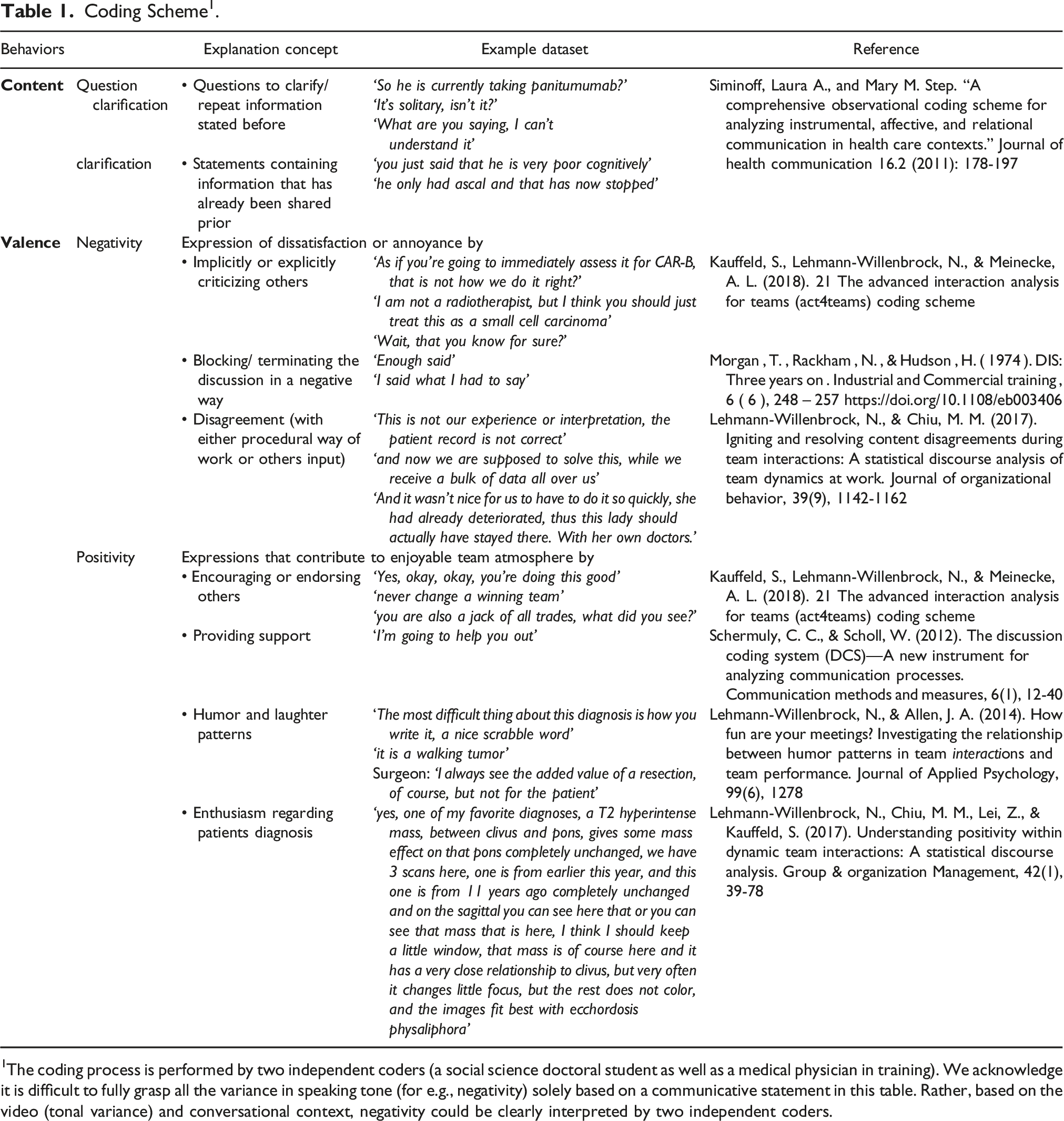
1The coding process is performed by two independent coders (a social science doctoral student as well as a medical physician in training). We acknowledge it is difficult to fully grasp all the variance in speaking tone (for e.g., negativity) solely based on a communicative statement in this table. Rather, based on the video (tonal variance) and conversational context, negativity could be clearly interpreted by two independent coders.
Communication Content
Each verbal contribution that reiterated information or questions about topics that had been shared prior, was labelled a ‘clarification statement.’ Clarification statements cover repetitiveness of information and represent a consistent behavioral code across various coding schemes (e.g., Kauffeld & Lehmann-Willenbrock, 2012; Siminoff & Step, 2011). Examples can be found in Table 1.
Interruptions
Descriptive overview of intrusive workflow interruptions.
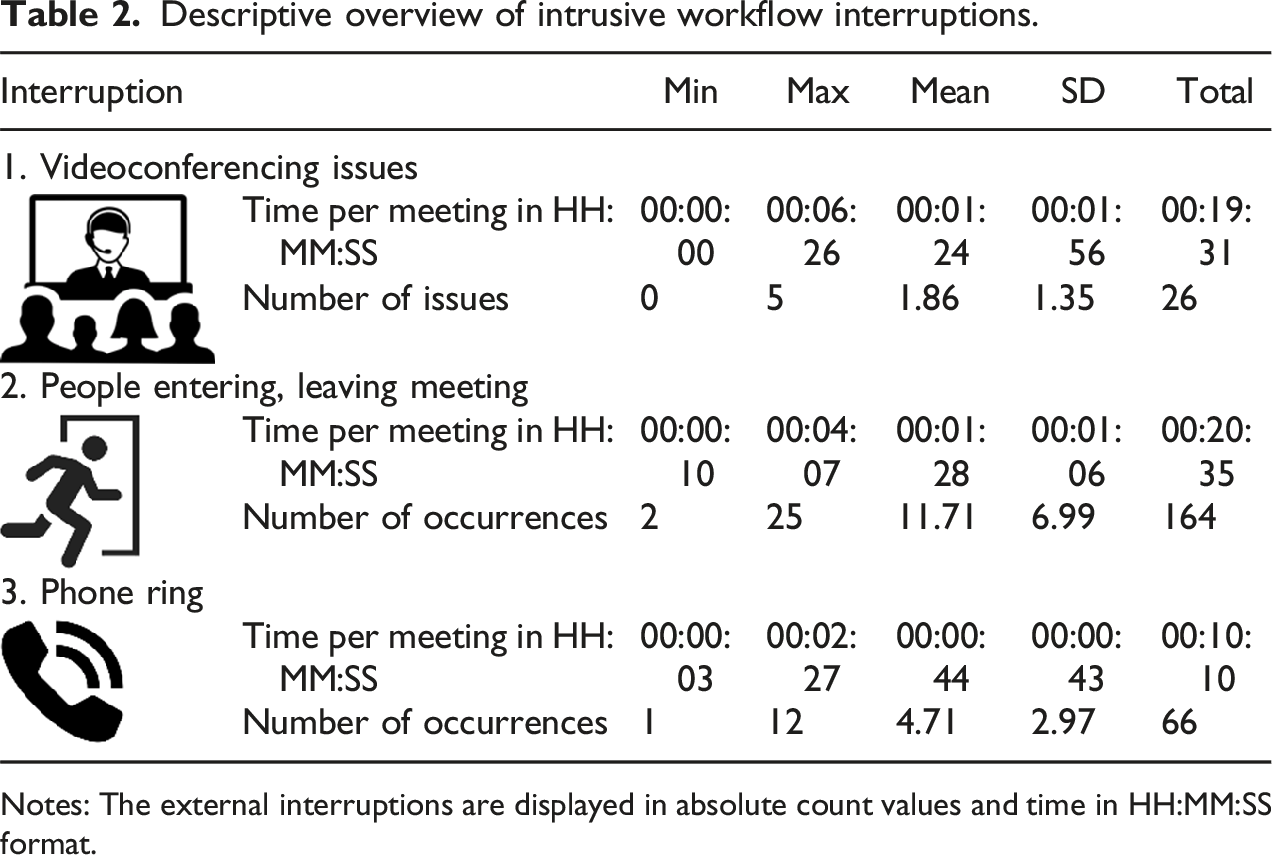
Notes: The external interruptions are displayed in absolute count values and time in HH:MM:SS format.
Data Preparation and Analysis
The time-stamped 11,722 verbal utterances were categorized according to their position relative to the interruption: utterances (1) during interruptive episodes, (2) during the period of 5 minutes
1
after the interruptive episode, and (3) during uninterrupted conversational time before an interruption (which does not overlap with the 5 minutes after the previous interruptive event). If interruptions happen one after the other in close temporal proximity, these conversations are clustered under the category ‘during interruptive episodes.’ From the moment that there is no next interruption within the following 5 minute time window, the ‘during period of 5 minutes’ starts. Hence, the 5 minutes period after an interruptive episode is truly uninterrupted. The selection of conversational time and examples for each category are visually shown in Figure 1. For each category, we calculated the frequencies of clarification statements, positivity statements, and negativity statements. Visual overview of intrusive workflow interruptions per meeting*. *The red box shown in meeting 13 is a conversational example that is categorized in the interruptive conversational episode category. The green box in meeting 1 showcases the time window of 5 minutes after interruptive events. The blue box in meeting 12 showcases the comparison group of uninterrupted conversational time.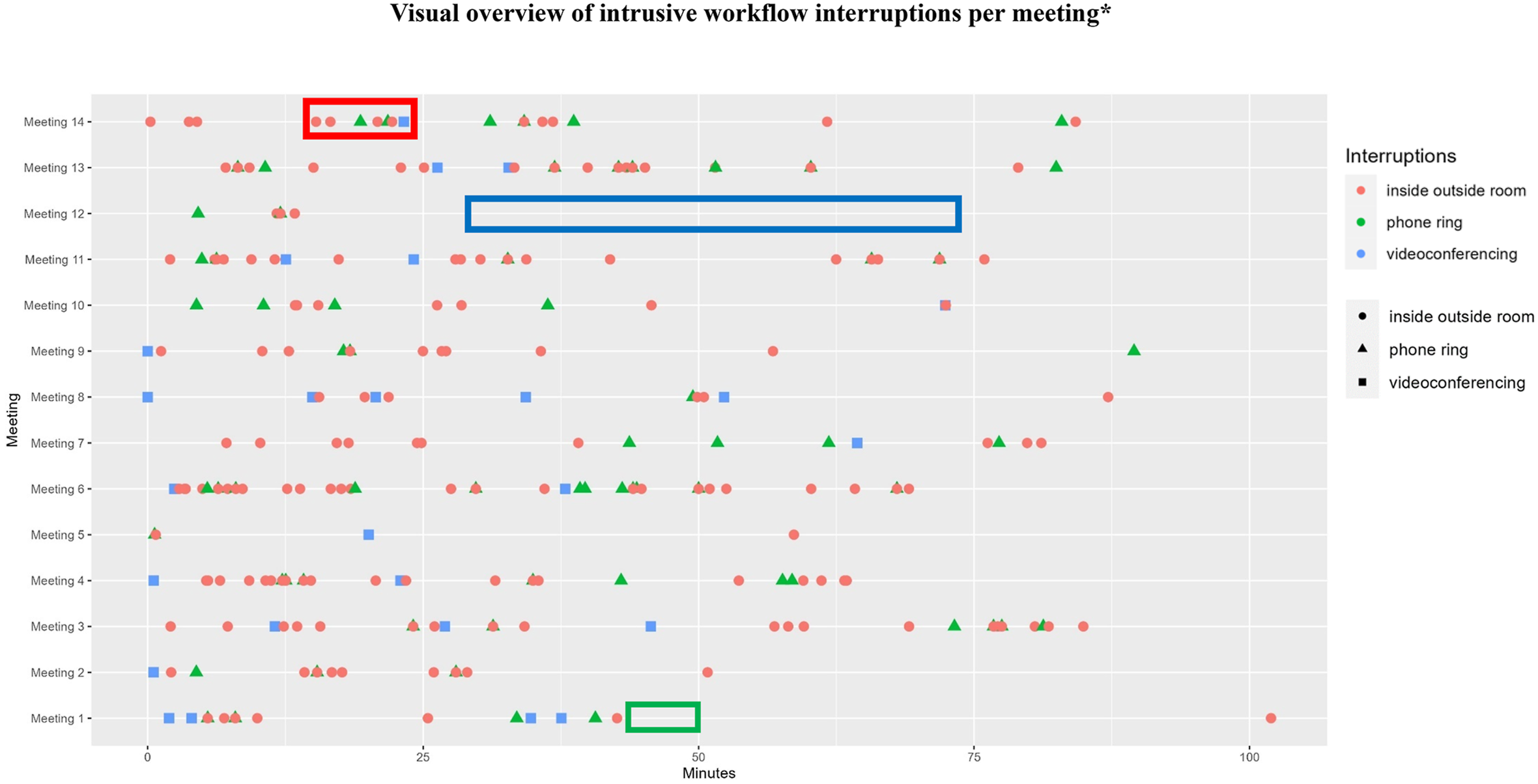
Using the open-source software R, we employed a zero-inflated multilevel Poisson regression model for our analyses (Lee et al., 2006). This model is a good fit for our count data, because we observe an excess of zero counts in verbal contributions (e.g., reflecting neutral valence statements). We account for the multi-level structure of the data in the calculation of the z-values. Interruptions are nested in weekly meetings, thus we add the meeting level as a fixed effect in the zero-inflated Poisson regression model. The control group consists of the events during the period of conversational time i.e. not interrupted.
Small Sample Rationale
In this study, we opt for an in-depth exploration of a small sample of fine-grained data that can yield insights into the minute-to-second unfolding of team communicative changes in response to workflow interruptions. Although the observation size is small, it yields a rich set of data points (e.g., speech acts) reflecting 11,722 statements. The data collection process and coding for this type of research data is highly time intensive, but offers rich dataset structures. This type of dataset is sometimes referred to as “small-n, large-p.” In this context, “n” represents the number of cases (in our case: observed meetings), and “p” represents the number of variables or measures per case (in our case interruptions or communicative statements). However, this term is mainly used in the variable selection literature or the dimension reduction literature. In our case, we prefer the term “Big Small Data,” since that highlights that intricate quantitative analyses can be performed, even though only few cases were observed (Chakraborty et al., 2012; Loh, 2012).
By exploring quantitative changes in communicative behavior, prioritizing on a niche research area, we have maximized the potential of the limited sample to generate valuable insights. Given that the analyses are made at the level of the time stamped verbal utterances, we focused on a small sample size in terms of amount of meetings in order to better capture the context and the endogenous effects as opposed to having to deal with exogenous variables being present while expanding the scope of the research.
Results
Comparison of communicative statements during and after an interruptive event, compared to uninterrupted conversational time using zero-inflated Poisson regression comparisons
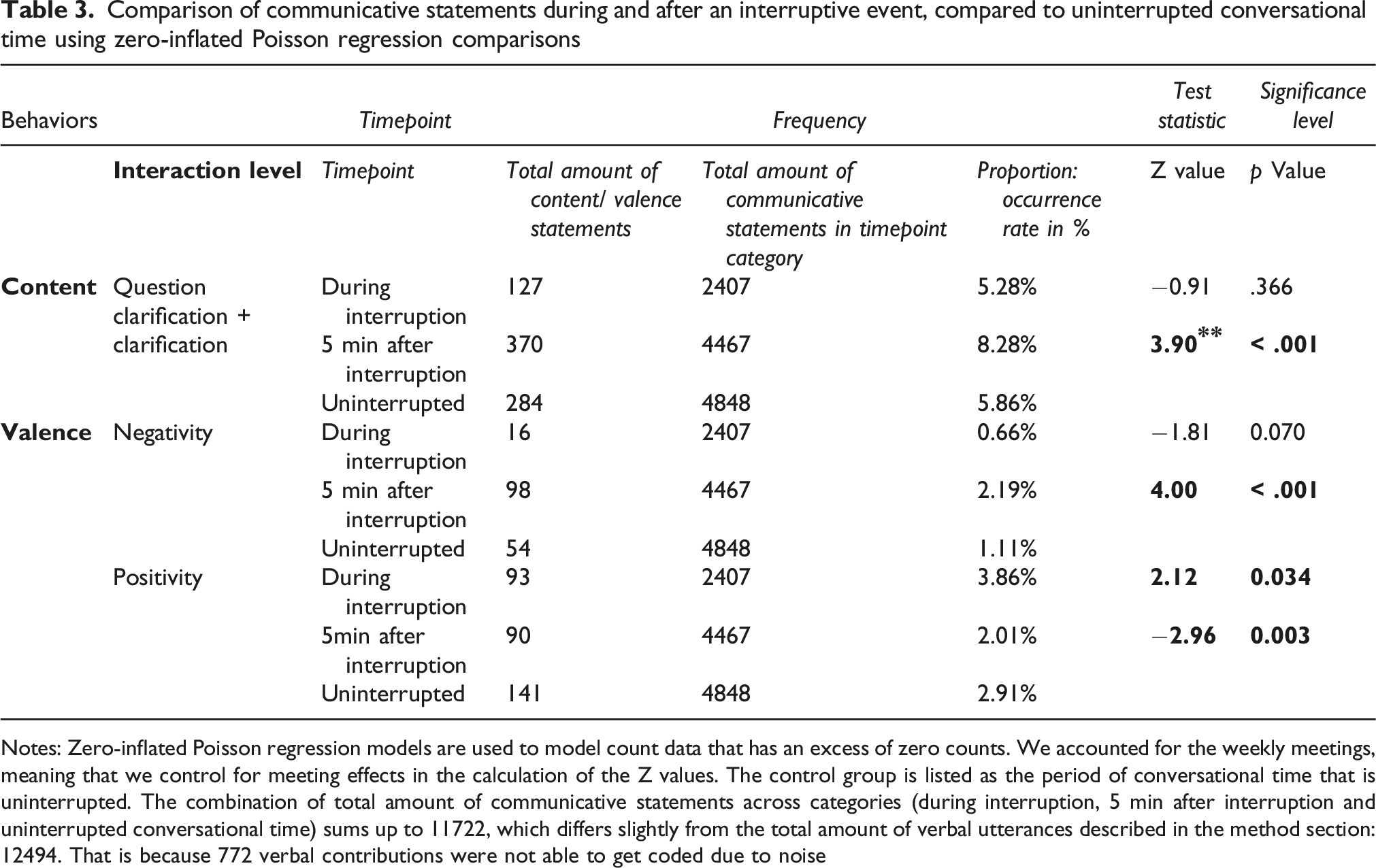
Notes: Zero-inflated Poisson regression models are used to model count data that has an excess of zero counts. We accounted for the weekly meetings, meaning that we control for meeting effects in the calculation of the Z values. The control group is listed as the period of conversational time that is uninterrupted. The combination of total amount of communicative statements across categories (during interruption, 5 min after interruption and uninterrupted conversational time) sums up to 11722, which differs slightly from the total amount of verbal utterances described in the method section: 12494. That is because 772 verbal contributions were not able to get coded due to noise
To test Hypothesis 1, we calculated the total number of negativity statements observed during the interruptive episode, as shown by the red box in Figure 1, and compared this with the frequency count during uninterrupted conversational time (see the blue box displayed in Figure 1 as an example). We do not observe significantly more negativity during the interruption episode (z = −1.81, p = .070) compared to uninterrupted conversational time. Moreover, in Hypothesis 2, we aim to test if negativity is evidenced more during the five-minutes time window directly after the interruptive event (an example is shown in the green box highlighted in Figure 1). The results lend support for Hypothesis 2, as we did find a significant increase in negativity statements in the five-minute time windows directly after the interruptive event, (z = 4.00, p < .001), compared to uninterrupted conversational time. Taken together, these findings suggest that negativity becomes more frequent in the minutes after the interruptive event, thus impacting the team’s conversation with more negativity behaviors.
To test Hypothesis 3, we followed a similar procedure calculating the number of positivity statements during and directly after the interruptive event, and, during uninterrupted conversational time. Contrary to our hypothesis, we see significantly more positivity during the interruptive episode (z = 2.15, p = .034), compared to uninterrupted conversational time. However, the positivity does not continue in the minutes after the interruptive event. As expected in Hypothesis 4, we see a significant decrease in positivity statements after the interruptive episode, (z = −2.96, p < .01), compared to uninterrupted conversational time. In sum, the data shows that multidisciplinary teams initially respond with positive statements towards interruptive events, but the positivity disappears quickly in the minutes after the interruptive event.
Hypothesis 5 states that clarification statements would increase during interruptive events. However, the results do not support this expectation, as instead, we observe a non-significant decrease of clarification statements during the interruptive event (z = −0.91, p = 0.366), compared to uninterrupted conversational time. However, we do find support for hypothesis 6, as we observe a significant increase of clarification statement in the minutes after the interruptive episode (z = 3.90, p < 0.001), compared to uninterrupted conversational time. Taken together, these findings suggest that during the interruption, the team does not directly respond to the interruption, but clarification statements are sought more often in the minutes after the interruptive events.
In addition, we ran post-hoc analysis to explore whether the increase in negativity in the five-minute time window conversation is not just relative to the ‘uninterrupted’ baseline conversational time window, rather also in relation to the conversation during the interruptive events. Negativity behaviors are significantly higher in the five-minute time window after the interruption (z = 4.43, p < .001), compared to the conversations during interruptive events. The opposite effect is found for positivity behaviors, which are significantly less present in the five-minute time window after the interruption (z = - 4.75; p < 01) compared to conversational time during the interruptive event. Additionally, in terms of clarification behaviors, we see a significant increase in clarification behaviors (z = 4.43, p < .001) compared to the conversations during interruptive events. These findings reinforce that negativity and clarification behaviors increase, while positivity decreases, following interruptive events, both in comparison to discussions without interruptions and to the 'during interruptive' events.
Building on the prior post hoc analysis, one of the reviewers suggested that a more detailed analysis at the individual level would further strengthen our multilevel contribution by illustrating how interruptions affect the communication among diverse team members, rather than being initiated by a single team member. Our exploratory observations indicate that interruptions lead to responses from multiple team members across various disciplines. For example, after an initial interruption, we observed several specialists engaging in clarification behaviors, illustrating the spillover effect across team members. On average, during the 5 minutes following an interruption, team members from approximately three different disciplines asked clarifying questions, indicating that interruptions have broader implications for multiple team members in the conversational space, and is not solely surrounded by one member. This reinforces our multilevel perspective, demonstrating that interruptive events influence multiple team members in their conversational space.
Robustness Checks
In response to the reviewers' feedback, we conducted robustness checks by exploring shorter and longer time windows of three and 7 minutes to determine whether the observed effects persist across different time scales.
Our findings indicate consistent patterns in the dataset when using varying time windows. Specifically, clarification behaviors significantly increase across all time windows following the interruptive events, compared to uninterrupted conversational periods. This suggests that interruptions trigger a heightened need for clarification, immediately after the interruptive events (within three-minutes), but also for longer periods of time (within seven-minutes). Negativity behaviors, however, do not show a significant increase within the three-minute window but emerge more clearly in the five- and seven-minute windows, indicating that negativity takes some time to manifest post-interruption. Additionally, our findings suggest an initial increase in positivity behaviors during the interruptive events. However, when extending the time window to 7 minutes (with the comparison group of uninterrupted conversational time correspondingly reduced), this initial positive reaction during the interruptive event appears to diminish. However, we do see a robust significant decrease of positivity behaviors in the three-, five-minute and seven-minute window selection after interruptive events, compared to uninterrupted conversational time. These findings give interesting insights and are to some extend surprising, as the effect of interruptions within the conversational space of healthcare teams lingers, even more than 5 minutes, especially in terms of an increase of clarification behaviors and negativity behaviors and significant decrease of positivity behaviors in three-, five- and seven-minute time window exploration 2 .
Second, we conducted another type of robustness check in which we changed the comparison group from ‘uninterrupted conversational time’ to ‘time windows before the interruptive events’. Although this type of analysis has some limitations in terms of coding issues (e.g., in conversations where clusters of interruptions are spaced approximately 5 minutes apart, the interval between them can be categorized as both “after” one interruption and “before” the next), we do believe this analysis provides some indication of temporal shifts in communication patterns before, during and after interruptive events. We notice similar tendencies in terms of significantly more clarification behaviors after interruption in the three-, five and seven-minute time windows, compared to similar time windows before the interruption. However, we do not observe a significant increase in negativity behaviors in the three- and five- minute time window after the interruption compared to before. Rather, this effect is only visible when selecting a seven-minute time window. Thus, the negativity effects are not robust in terms of changing around the interruptive event (before/during/after); rather only show when the comparison group of uninterrupted conversational time as a baseline model is larger (= patient case discussions that on average do not show interruptions). However, we do observe a significant decrease in positivity in the three-, five and seven-minute time windows after the interruptive events, compared to similar time windows before. However, the initial reaction of positivity behaviors during the interruption is only visible in the five-minute time windows when selecting comparison groups preceding the interruptive event. More detailed findings regarding these robustness test can be found in the Appendix tables, attached to this manuscript.
Discussion
In this study, we investigate the extent to which workflow interruptions in medical multidisciplinary teams influence subsequent communication valence and communication content of these meetings. The main types of interruptions occurring in this work environment were videoconferencing issues, people leaving and entering the room, and telephones or beepers going off. These intrusive events significantly impact both the content and the valence of the communication emerging within the team.
In hypotheses H1 and H3 we posited that team members respond with more negative and fewer positive communication statements during an interruption compared to uninterrupted conversational periods. Contrary to our hypotheses, we did not observe an initial negative response towards intrusive events. Instead, we noted an initial increase in positivity behaviors during interruptive events, which could potentially serve as a coping mechanism for the team to deal with the interruption at hand. One plausible explanation for these findings is that teams employ positive communication statements as a self-regulatory strategy to cope with interruptive episodes. Drawing from self-regulatory theories (Carver & Scheier, 1990; Hacker, 2003), when confronted with an unexpected interruption, team members activate a monitoring system that evaluates their current state against a desired state. When a discrepancy is perceived between the two states (as interruptions generate a delay in goal progress), then team members may activate coping mechanisms such as humor and laughter. One recent study found evidence for humor as a shared coping strategy employed by teams to address environmental stressors (Hmieleski & Cole, 2022).
Consistent with hypotheses H2 and H4, we find that team members exhibit a higher frequency of negative statements and a lower frequency of positive statements during the five-minute time window following the interruptive event compared to uninterrupted conversational time. This suggests that although team members initially respond with positivity to an interruption, they are unable to sustain this positivity and instead transition to expressing negative sentiments, which only becomes more pronounced when exploring larger time windows of 7 minutes after the interruptive event. Prior research shows that negative remarks or expressions of disapproval towards others are associated with rejection, which in turn trigger brain responses linked to physical pain (Eisenberger et al., 2003). These biological reactions are not conducive to effective team functioning of problem-solving. In addition, consistent with social contagion theory (Wheeler, 1966), when one team member expresses negativity, others tend to mimic this behavior, resulting in the spread of negative sentiments within the team meeting.
Contrary to the anticipated outcomes posited in hypothesis H5, the initial response among team members subsequent to an interruption did not reveal an increased occurrence of clarification or conversational repetition when compared to uninterrupted periods. Instead, a notable increase in clarification statements emerged in the minutes following the interruptive event, lending credence to H6. This suggests that there is a temporal delay in regaining the team’s focus and reverting to the primary task, thus prolonging the impact of the interruption on the communication process. This finding remained robust and consistent across three-, five-, and seven-minute time frames, as well as when comparing these intervals to the periods preceding the interruptive events.
The higher occurrence of clarification statements following an interruptive episode may signify a decrease in time efficiency, as the repetition of information consumes valuable time, leading to unnecessarily lengthy and less efficient team meetings. This is particularly significant as interruptions contribute to heightened fatigue in these extended medical team meetings (Soukup et al., 2019). Nevertheless, clarification statements may also serve a constructive purpose within the case discussion at hand, potentially prompting the team to verify the understanding of information and fostering a more thorough exploration of the case. Clarification statements are recognized as important in initiating problem-solving communication (Stray et al., 2012) and are a notable aspect of collaborative design, often taking up a significant portion of design meetings (Olson et al., 1992). Since designers come from diverse backgrounds and need time to explain their ideas to others, the frequent use of clarification statements highlights their key role in supporting effective team communication and problem-solving. However, despite the potentially beneficial function that clarification statements may play in a team’s problem-solving endeavor, the notable increase in their occurrence following an interruption suggests that the interruption causes team members to lose focus and disrupts their collaborative thought process. This, in turn, prompts additional clarification questions that might have been unnecessary had the discussion proceeded without interruption, rendering an already time-pressured meeting needlessly inefficient.
Theoretical Contributions
The insights found in our research are relevant for teams with boundaries characterized by increased permeability (Driskell et al., 2023). Multiple-team membership is a specific example where members have to switch from one team to another (or more) and experience interruptions that can be associated with performance losses (Margolis, 2020; O’leary et al., 2011; Van De Brake & Berger, 2023). Our findings show that interruptions significantly impact communicative processes, thereby disrupting focus on the core team. These results contribute to recent empirical research, which suggests that switching behavior across teams—particularly when they differ qualitatively in aspects such as task type—leads to more substantial switching costs (Backmann et al., 2024; van de Brake et al., 2023). This effect is empirically evident in our data.
Little research has focused on the effects of interruptions on the team’s process. Our findings show that while there is initially a positive response to interruptions, this positivity quickly gives way to an increase in negative statements and clarification queries. Prior research highlights negativity as a dysfunctional form of communication. The study of Aubé and Rousseau (2016) showed that complaining behavior within teams are negatively related to team performance and team process improvement. At the same time, dysfunctional communication such as criticizing others or complaining were negatively related to team and organizational success (Aubé & Rousseau, 2016; Kauffeld & Lehmann-Willenbrock, 2012). Next to these findings, positivity has been linked to team enhanced performance, effectiveness, and task efficiency (Jouanne et al., 2017; Lehmann-Willenbrock et al., 2017; Soukup et al., 2020). Interruptions to team workflow and the subsequent verbal responses have the potential to derail team processes and compromise team functioning, thereby contributing to negative outcomes.
With our findings we align with the interruption research at individual level, emphasizing mainly the negative effects of interruptions (Puranik et al., 2020). However, our unexpected discovery of positive, albeit short-lived, verbal statements during interruption events (rather than the negative response hypothesized) suggests the potential for interruptions to also play a beneficial role for teams. These findings correspond with prior research at the individual level, suggesting that some interruptions can elicit positive emotions (Feldman & Greenway, 2021). The attentional diversity caused by external work interruptions may provide positive ‘windows of opportunities’ for meeting basic psychological needs (Deci et al., 2017; Gagné & Deci, 2005) to improve or reflect on work processes (Okhuysen & Eisenhardt, 2002) or to recover and take cognitive breaks (Jett, 2003). In the team context, the need for relatedness may be satisfied by engaging in an enjoyable side conversation with fellow team members after an interruption (Gagné & Deci, 2005). Interruptions may provide a brief respite from an ongoing conversation to cognitively revitalize (Soukup et al., 2019).
We also contribute to the dynamic, process-oriented perspective of teams (Mathieu et al., 2019). Employing an explicit temporal lens where we measure communicative patterns during interruptions and during the subsequent 5-min period, we address persistent calls for greater consideration of time in organizational and team research (Ancona et al., 2001; Cronin et al., 2011; Klonek et al., 2019; Leenders et al., 2016). Furthermore, by scrutinizing the conversational dynamics that unfold within teams after interruptions, we offer a detailed examination of team processes, moving beyond aggregated self-report measures (Kolbe & Boos, 2019). This study represents a first step towards comprehending the dynamics of positive and negative statements following interruptions in the context of teams. Our results highlight the importance of studying teams dynamically, as evidenced by the observed shift from positivity to negativity and an increase in clarification-oriented statements within the five-minute window following interruptions. Our study shows that team communication processes are not static and can change from one moment to another and hence should be studied as such. If a cross-sectional design would have been used, the results obtained would have been different, depending on when the positive and negative statements were measured (Mitchell & James, 2001). With a design that measures team interaction at different timepoints our study reveals that interruptions have different effects on team communication processes at different timepoints and hence offer a completer and more accurate picture of teams and their interaction processes. We advocate for theory development of how interruptions affect team problem-solving discussion, employing a more temporal perspective that delineates both the immediate and longer-term effects of these events. In addition, as a response to reviewers’ requests, we aim to encourage future researchers to experiment with different time windows in their analysis, thereby ensuring more robust and comprehensive results. In that regard, we contribute to providing some guidance towards how to approach and analyze fine-grained temporal behavioral datasets.
Understanding the dynamics of medical teams may hold crucial implications for teams operating under time-pressure and high information demand across various domains. Medical decision teams, characterized by their multidisciplinary nature and the need for accurate decision-making in high-stake situations, provide valuable insights into team functioning under pressure. The complex interactions of communication, collaboration, and problem-solving within MDTMs reflect the challenges faced by teams in high-pressure environments where accurate decisions are crucial and information demands are high (e.g., emergency response teams, financial trading floors, or military units, many project teams, e.t.c.) (Aggarwal et al., 2024; Jouanne et al., 2017; Schmutz et al., 2018), The need for effective communication and coordination to address complex problems swiftly and accurately is a common denominator among high-pressure teams (Driskell et al., 2018; Power, 2018). Just as in medical teams, interruptions in these contexts can disrupt workflow, hinder information processing, and impact decision-making. By examining how medical teams navigate interruptions and sustain or lose performance, we may gain valuable insights into strategies and interventions that can enhance team effectiveness in other high-pressure settings.
Directions for Future Research
An intriguing avenue for further exploration is to unravel interruption characteristics and explore how variations in interruptions may impact subsequent conversation dynamics. For instance, interruptions characterized by high intensity levels or prolonged durations might have more detrimental effects compared to interruptions with lower intensity or shorter durations. Furthermore, anticipated internal interruptions may be easier for the team to disregard and continue the task at hand, in contrast to unforeseen interruptions.
In essence, studying medical teams provides a rich source of knowledge that can be generalized to enhance the effectiveness of teams operating under similar conditions across various domains. The insights gained from understanding the communication, coordination, and decision-making processes in medical teams offer valuable lessons for optimizing performance and resilience in high time-pressure and information-demanding teams in diverse contexts (Driskell et al., 2018). Subsequent research endeavors could delve into whether interruptions yield distinct effects under conditions of low time pressure and reduced information processing demands, and discern which dimension exerts a more significant influence on the observed effects. For instance, teams functioning in an environment characterized by high information processing demands but minimal time pressure might exhibit a lower susceptibility to negative communicative expressions following an interruption compared to teams operating in a high information processing demands setting coupled with elevated time pressure. Future research might focus on these questions.
Practical Implications
Our results highlight the direct impact of interruption episodes on content and valence communication within teams. Positive valence communication has been associated with beneficial outcomes for teams (Jouanne et al., 2017; Lehmann-Willenbrock et al., 2013; Soukup et al., 2020), while negative communicative statements carry adverse implications (Aubé & Rousseau, 2016; Kauffeld & Lehmann-Willenbrock, 2012). Consequently, it becomes relevant for practitioners to reflect on how they can tackle the effects of interruptions within teams.
One potential approach involves structuring meetings to minimize the occurrence of interruption episodes. One rather straightforward way of obtaining this is to work towards stable IT videoconferencing systems, enabling MDT members to effectively collaborate in a hybrid setting. A more systemic solution entails reevaluating the organization of work within the hospital and the role of multidisciplinary team meetings within the broader workload of medical physicians. Currently, these team meetings are additional work activities that medical physicians engage in on top of other regular duties, resulting in interruptions when they are contacted for patient treatment during the meetings. Formal scheduling of these meetings as uninterrupted work time in the schedules of medical physicians can mitigate interruptions and enhance productivity.
Considering the frequent occurrence of interruptions in multidisciplinary decision-making boards, we propose redesigning the team environment to minimize unnecessary disruptions and distractions. This approach aims to afford team members ample mental space to actively contribute to the development of patient treatment plans. For instance, a potential solution involves segregating availability exclusively for urgent matters during team meetings while discontinuing non-urgent communication distractions. Consequently, team leaders should establish clear social norms, emphasize social control, and promote individual accountability to mitigate non-urgent communication distractions effectively. Moreover, if team leaders identify a tendency among team members to repeatedly engage in non-urgent distractions, addressing these behaviors becomes crucial to prevent the negative spill-over effects and foster behavioral change.
Another strategy to manage the effects of interruptions involves cultivating awareness and reflexivity regarding the nature of communicative responses that ensue within teams following interruptions. While structural changes to reduce interruptions may be challenging to implement in certain medical settings, increasing awareness, particularly through leadership initiatives, can enhance the communicative dynamics within the team and yield improved outcomes.
Conclusion
The findings of this study reveal that workflow interruptions during healthcare multidisciplinary team meetings significantly influence the communication content and valence within teams. The most prevalent interruptions observed include video conferencing problems, beepers/phones that go off, and individuals entering or exiting the meeting room. Initially, team members exhibit a positive response to interruptions, but their statements transition towards a more negative tone in the minutes following the interruption. This is accompanied by conversational repetitiveness. Our study provides objective and detailed empirical insights into the interplay between workflow interruptions and changes in communication dynamics within healthcare teams.
Supplemental Material
Supplemental Material - The Impact of Workflow Interruptions on Multidisciplinary Team Communication in Hybrid Healthcare Settings
Supplemental Material for The Impact of Workflow Interruptions on Multidisciplinary Team Communication in Hybrid Healthcare Settings by Margo Janssens, Samantha S. C. P. Van Der Bruggen, Nicoleta Meslec, Laurens V. Beerepoot and Roger Th. A. J. Leenders in Group & Organization Management
Footnotes
Declaration of Conflicting Interests
The author(s) declared no potential conflicts of interest with respect to the research, authorship, and/or publication of this article.
Funding

Associate Editor: Travis Maynard
Supplemental Material
Supplemental material for this article is available online.
Notes
Author Biographies
References
Supplementary Material
Please find the following supplemental material available below.
For Open Access articles published under a Creative Commons License, all supplemental material carries the same license as the article it is associated with.
For non-Open Access articles published, all supplemental material carries a non-exclusive license, and permission requests for re-use of supplemental material or any part of supplemental material shall be sent directly to the copyright owner as specified in the copyright notice associated with the article.
