



Abstract
This study is an attempt to elucidate the effects of workforce racial diversity on organizational performance by incorporating an important organization-level moderating condition—an organization’s use of human resource management (HRM) practices. Specifically, this study examines how options- and project-based HRM have influence on the racial diversity–performance relationship. Using the longitudinal data sets of 192 U.S. law firms spanning multiple years (2001–2008), we examined the interactive effects of workforce racial diversity and a set of HRM practices (use of nonstandard employees, lateral hiring, pay dispersion, and training/communication) on organizational performance (profitability). Our findings revealed that while an organization’s reliance on nonstandard employment, lateral hiring, and large pay dispersion has significant negative influence on the racial diversity–performance relationship, training/communication has no clear moderating impact. In sum, the results indicated that when organizations adopt more project-based HRM practices (high levels of nonstandard employment, lateral hiring, and pay dispersion) rather than options-based ones, the effect of workforce racial diversity is likely to become negative on organizations’ bottom-line performance.
Keywords
Workplaces and executive boardrooms should reflect the world’s diversity, and lots of companies are using the so-called “business case” for diversity to instigate action. But, popular as it may be, it’s a failed strategy. (
Kaplan, 2020
) Increasing diversity does not, by itself, increase effectiveness; what matters is how an organization harnesses diversity, and whether it’s willing to reshape its power structure. (
Ely & Thomas, 2020
)
Does a diverse workforce add value to an organization’s bottom line after all? Beyond legal compliance and representation, today’s organizations seek to embrace and leverage differences in the workplace and to reap the benefits from their diverse workforces for business success (McKinsey & Company, 2020). Despite significant interest in this topic, as reflected in the opening quotes, organizations are still struggling to utilize diverse human resources successfully, and the business case for diversity appears to be less compelling than was originally thought (Ely & Thomas, 2020; Kaplan, 2020). Empirical evidence from academic research examining the effect of demographic diversity on performance outcomes has been discouraging. Comprehensive reviews on this topic have noted that the general pattern of findings in this area is unclear because past studies reported positive, negative, or nonsignificant effects of diversity on collective performance outcomes (e.g., Joshi, Liao, & Roh, 2011; Roh, Chun, Ryou, & Son, 2019).
In this study, we focus on racial diversity in the workplace and attempt to examine its effect on the bottom-line performance of organizations. Racial diversity is defined as the presence of employees in the general workforce who differ in racial background instead of all belonging to one race (Blau, 1977). Workforce racial diversity indicates demographic and cultural differences in the workplace, that is, subgroup cultures of people belonging to distinct social groups, which helps them to form their own worldview, beliefs, values, norms, and attributes (Cox, 1994; Richard, 2000; Triandis, 1976). Understanding racial dynamics in the workplace and creating inclusive work contexts for racially diverse employees have been enduring and imperative topics for management scholars as well as organizational decision-makers (McKinsey & Company, 2020; Richard, Triana, & Li, 2021). Nonetheless, as with other demographic attributes of diversity, past research has reported unclear effects of racial diversity on collective performance outcomes (Julian & Ofori-Dankwa, 2017; Kochan et al., 2003). For instance, some studies reported that racially heterogeneous groups outperform homogeneous ones because they bring a broader range of ideas to the table and have better problem-solving skills due to greater experience with task-related conflict among members (Cox & Blake, 1991; Kochan et al., 2003). Others identified considerable emotional and relational conflict among dissimilar members of racially diverse groups; such conflict hinders efficient organizational functioning (Pelled, Eisenhardt, & Xin, 1999).
In order to clarify these mixed results and clearly delineate the implications of racial diversity for organizational performance, researchers have gone beyond the traditional debate regarding the potential benefits or costs of diversity toward a more nuanced understanding of when, where, and how diversity dynamics unfold in workplaces (Joshi & Roh, 2009). Accordingly, researchers have proposed several critical moderating conditions such as environmental characteristics (e.g., industry characteristics and community demographics) or business strategy (e.g., growth or innovative strategy) under which either positive or negative aspects of diversity are more likely to prevail (e.g., Andrevski, Richard, Shaw, & Ferrier, 2014; Dwyer, Richard, & Chadwick, 2003; King et al., 2011; Richard, Barnett, Dwyer, & Chadwick, 2004; Richard, Murthi, & Ismail, 2007). The present study investigates the effects of workforce racial diversity on organizational performance by incorporating an important, but less frequently studied, organization-level moderating condition. We propose the use of human resource management (HRM) practices—that is, the influence of HRM practices on cognitive processes and social relations among employees (Bowen & Ostroff, 2004)—as an important organization-level condition that shapes the racial dynamics within an organization. Specifically, this study examines options-based HRM (which considers employees as long-term assets that warrant investment and emphasizes bonding and internal development of employees) and project-based HRM (which emphasizes employees’ project value or short-term productivity capacity and seeks to compete by buying employees from the external market) (Malos & Campion, 1995). We clarify the influence of these two types of HRM bundles on the relationship between racial diversity and performance. The distinction between options- and project-based HRM has been conceptualized and empirically investigated in the context of professional services such as law firms (Kang, Snell, & Swart, 2012; Malos & Campion, 2000) and other knowledge-intensive contexts (Ferratt, Agarwal, Brown, & Moore, 2005). Researchers have suggested that most organizations’ HRM systems are hybrids that appear somewhere along the options/project continuum (Malos & Campion, 2000); organizations make strategic decisions to develop certain types of HRM systems considering the fit with their business strategies (Huselid, 1995). In the present paper, we propose that when an organization adopts more project-based HRM practices, the negative effects of diversity may be more salient (while the positive effects might be limited) and will be manifested in overall performance outcomes. Specifically, we argue that while organizations often adopt project-based HRM practices to increase efficiency and adapt to changing business environments (Galanter & Henderson, 2008; Henderson, 2014), the resulting work context could in fact hinder effective collaboration among diverse employees and thus impede achievement of collective performance goals.
We empirically test our theoretical propositions in the context of large U.S.-based corporate law firms. Law firms used to be less diverse in terms of racial composition within the workforce but, like other organizations, have undergone significant demographic changes in recent decades (Smulowitz, Becerra, & Mayo, 2019). These changes are crucial for law firms because they rely heavily on intellectual human capital for organizational success and invest significantly in acquiring and motivating highly skilled employees (Løwendahl, Revang, & Fosstenløkken, 2001). Researchers have indicated that large law firms in the U.S. have faced considerable challenges in identifying the business impact of a diverse workforce and establishing effective HRM practices (e.g., Wilkins, 2000). Despite these circumstances and needs, the issues regarding diversity management and its performance implications have not yet been systematically examined in this context. In this study, utilizing a rich set of archival data available for multiple years, we conduct a comprehensive empirical investigation of the business case for racial diversity and the role of HRM practices specifically in a knowledge-intensive professional service context such as law firms.
The main contribution of this study is twofold. First, integrating social psychological theories (e.g., Brickson, 2000; Reskin, 2000) as well as the professional service firms and HRM literatures (e.g., Bowen & Ostroff, 2004; Huselid, 1995; Malos & Campion, 1995), in the current study, we particularly examine the role of internal work contexts created by HRM practices. While previous research has often focused on relatively macro-level factors such as external environmental context or business strategy as boundary conditions of the performance effect of workforce demographic diversity (e.g., Richard et al., 2004; Richard et al., 2007), our study departs from this literature by taking a micro- or meso-level approach examining internal contextual factors such as HRM practices. While the effects of diversity-specific HRM practices (e.g., minority recruiting, diversity training) on employees and organizational outcomes have been demonstrated in past research (e.g., Kochan et al., 2003; Richard, Roh, & Pieper, 2013), the role of general (not specifically diversity-related) HRM practices in diverse workplaces has not often been examined in the past. Despite a few empirical attempts to clarify the role of HRM investments (Roh & Kim, 2016) or empowerment and feedback practices (Lee & Kim, 2020), how specific bundles of HRM practices, like options- and project-based HRM practices, shape racial dynamics in the workplace has not yet been examined and thus needs theoretical and empirical investigation. The present study addresses this important gap in the literature.
Second, this study extends the scope of diversity and HRM research to professional service firms such as law firms, thereby going beyond the purview of traditional business organizations. While some research has focused on the mechanisms of specific HRM practices such as promotion or hiring (e.g., Kumra & Vinnicombe, 2008) or the effects of options-based HRM on organizational learning in law firms (Kang et al., 2012), no systematic research on the interactive effects of workforce racial diversity and HRM practices on organizational performance has been conducted in this industrial and occupational context. Considering the growing importance of knowledge-intensive professional service industries in modern economies as well as the critical needs to acquire and utilize diverse workforce in this context (Smulowitz et al., 2019), we identify this as another important contribution of the present study. We propose that our theoretical reasoning and empirical findings can be extended to other related types of knowledge-intensive contexts such as universities (e.g., assistant professors), research project groups, product marketing teams, or other professional service organizations like accounting firms that are continuously confronted by the decision to “make-or-buy” human resources (Ferratt et al., 2005; Kang et al., 2012).
Theoretical Background and Hypotheses
Workforce Racial Diversity and Organizational Performance
Scholars have long argued that demographic diversity in the workplace, including racial diversity, is a double-edged sword because of its mixed performance implications (Milliken & Martins, 1996). Drawing on the knowledge-based view and the decision-making perspective, researchers have suggested that each member in the workplace brings own specialized, context-specific knowledge that can be used for strategic problem-solving and decision-making; an organization’s goal is to create conditions under which organizational members can integrate their specialized knowledge (Andrevski et al., 2014; Grant, 1996). Organizations with racially heterogeneous members are in a strategically advantageous position in gaining competitive advantage because racial diversity indicates informational difference among dissimilar members and rich cognitive resource pool stemming from diverse experience, knowledge, and perspectives (Barney & Wright, 1998; Cox, 1994). Scholars have also argued that racially diverse groups have better problem-solving skills, decision-making capabilities, and broader fields of vision needed for perceiving and interpreting various external signals (Hambrick & Mason, 1984). This cognitive range and flexibility facilitate more comprehensive information processing (Simons, Pelled, & Smith, 1999) and open the organization up to implementation of new methods and practices (Cox & Blake, 1991). Racially diverse groups also have better learning capability or absorptive capacity, enabling them to acquire, assimilate, and exploit diverse information to achieve better performance (Lambert, 2016; Richard et al., 2021) rather than narrowing their focus or overlooking important cues (Cohen & Levinthal, 1990; Levinthal & March, 1993). In this regard, Andrevski and colleagues (2014) found that racially diverse groups are less likely to fall into a competence trap and are better able to make strategic decisions because they initiate a greater number and variety of competitive actions (e.g., new product introduction, product improvement, and market expansion), which in turn results in better financial outcomes (market share gain). In their large-scale longitudinal study using a sample of Fortune magazine’s “50 Best Companies for Minorities,” Richard and colleagues (2007) found that workforce racial diversity was positively associated with firms’ long-term profitability (Tobin’s q). Utilizing data from a national sample of 506 organizations in the U.S., Herring (2009) also found that racial diversity is related to various positive organizational outcomes such as increased sales revenue, greater market share, and better profits.
By contrast, drawing on the self-categorization and social identity theoretical perspectives, researchers have also suggested that racially diverse workplaces are likely to be characterized by conflict, behavioral disintegration, and inefficiencies in organizational functioning (Williams & O’Reilly, 1998). These negative consequences occur because dissimilar people tend to make unfavorable social comparisons, reinforcing categorization-based stereotypes and biases, which results in in-group–out-group discrimination (Brewer, 1979; Tajfel & Turner, 1986). Based on the status and subgroup perspectives, researchers have also argued that race/ethnicity is a source of status (i.e., respect and prestige) and some racial groups are typically ascribed higher status than others (DiTomaso, Post, & Parks-Yancy, 2007). Racial diversity in the workplace can indicate disparities or hierarchical differences within a work unit that hamper social and behavioral integration among members (Harrison & Klein, 2007; Leslie, 2017). In line with this argument, empirical research has also reported negative consequences of racial diversity on organizational performance outcomes. For example, in a large-scale study of quick service restaurants in the U.S., Sacco and Schmitt (2005) found that racial diversity was negatively related to organizational performance outcomes such as profitability. Recently, using a comparable sample to that of Richard et al.’s (2007) study (Fortune’s “Best Companies to Work For” list), Julian and Ofori-Dankwa (2017) attempted to replicate the same pattern found between racial diversity and organizational productivity but indeed found a negative linear association.
In sum, these conflicting theoretical perspectives and unclear empirical patterns indicate that racial diversity has both positive and negative aspects, and that both knowledge-based and categorization-based processes occur simultaneously (Williams & O’Reilly, 1998). Coexistence of these processes may blur the relationship between racial diversity and performance (Van Knippenberg, De Dreu, & Homan, 2004). To improve our understanding of the effects of racial diversity on collective performance outcomes, the main effect approach might be insufficient (Van Knippenberg & Schippers, 2007); instead, a more nuanced examination incorporating key contextual conditions is necessary (Joshi & Roh, 2009). In law firms (i.e., an industrial setting involving knowledge-intensive professional services), while there has been a movement to reap the benefits of increased racial diversity in the workforce (e.g., for the purpose of providing diverse customer contacts) (Wilkins, 2000), significant race-based segregation and discrimination still exist within organizations (Payne-Pikus, Hagan, & Nelson, 2010). Few direct empirical tests have been conducted specifically in a law firm setting, but past research in related contexts has reported unclear performance effects of racial diversity. For instance, although some studies found generally positive effects of racial diversity in service industry settings (e.g., Richard et al., 2007), other studies reported negative performance effects of diversity in knowledge-intensive, high-technology settings (e.g., Joshi & Roh, 2009). Among the studies that reported positive and curvilinear associations in more generalized research settings (e.g., samples across varying industries), the direct relationships between racial diversity and performance measures were often nonsignificant before taking into account certain moderating conditions such as types of business strategy and organizational culture (Dwyer et al., 2003; Richard, 2000; Richard et al., 2004).
Options- and Project-Based HRM Practices
In this study, we consider an organization’s use of HRM practices as an important organization-level moderating condition that can elucidate unclear main effects of racial diversity on organizational performance. Researchers suggested that HRM practices are associated with organizational outcomes through their influence on employee attitudes and behaviors (Huselid, 1995). The effects of HRM practices on attitudes and behaviors depend on cognitive signals or messages (Bowen & Ostroff, 2004). Specifically, research from the fields of social psychology and sociology suggested that HRM practices can affect diversity dynamics within an organization by eliciting cognitive biases and stereotypes against dissimilar others (Bielby, 2000; Reskin, 2000) and revealing identity orientations (Brickson, 2000). Despite these theoretical perspectives, the possibility of a moderating role of HRM practices in the link between racial diversity and performance was not often examined in past research.
Among different types of HRM practices, the present study focuses on the role of options- and project-based HRM in the context of law firms. Law firms in the U.S. have traditionally established a unique HRM system, what is called the “up-to-partner or out-of-the firm” or simply “up-or-out” promotion system (Galanter & Palay, 1991; Gilson & Mnookin, 1989). Under this system, employees (associate attorneys), once hired, are placed on a “partner track” and must work for 6 years or so toward promotion to the partner ladder. After six or more years, only a selected few are able to move up to the position of partner; those who cannot make this promotion must leave the organization (Galanter & Palay, 1991). New partners who won the competition are entitled to a significant pay increase, sharing in their organizations’ profits, and gaining ownership shares; these rewards are far in excess of those typically received as an associate attorney (Malos & Campion, 1995). However, in response to rapid environmental changes and fierce competition, many law firms have made changes in their traditional HRM systems (Galanter & Henderson, 2008; Henderson, 2014). These changes may be characterized as two distinct forms—options- and project-based HRM systems (Malos & Campion, 1995). This distinction and the strategic choices of organizations reflect the difference in HRM strategies among law firms.
An options-based HRM is a bundle of HRM practices in which managing employees is considered as an investment in long-term assets (much like long-term financial options). This strategy emphasizes bonding and internal development of employees (Malos & Campion, 1995). Specifically, options-based HRM mobilizes human capital options through internal staffing and promotion (promotion-from-within) practices. As a core way to invest in employees (human capital options), organizations focus on formal and informal training of employees, developing firm-specific knowledge of firm practices, and fostering relationships with clients and partners (Malos & Campion, 1995). Consensus-building practices such as employee participation in management decision-making and reduction of status barriers between associates and partners are also important to bond employees to the organization (Maister, 1993). Pay practice often involves an egalitarian pay structure (i.e., seniority-based pay, compressed pay differentials, and minimum individual incentives) (Maister, 1993).
By contrast, project-based HRM has the opposite features. Organizations pursuing a project-based HRM approach have a relatively short-term perspective on their employees; they seek to compete by buying employees (both associates and partners) with particular expertise and experience, emphasizing employees’ project value or short-term productivity capacity (Galanter & Palay, 1991; Malos & Campion, 1995). Project-based HRM focuses on short-term efficiency and flexibility in managing an organization’s workforce (Galanter & Palay, 1991; Morris & Pinnington, 1998). Under this system, external market-oriented staffing practices (e.g., use of nonstandard employees, lateral hiring of partners rather than internal promotion) are preferred; training and communication opportunities are less likely to be emphasized. Pay practices also involve strong individualized incentives and large pay differentials reflecting the present market value of employees (Kang et al., 2012).
In this study, considering the conceptualization and key features of these two types of HRM as well as the specific measures available in our archival datasets, we examine the following set of HRM practices: use of nonstandard employees, reliance on lateral partner hiring rather than internal promotion, pay dispersion, and training/communication opportunities offered to employees. More use of nonstandard employees and lateral hiring, large pay dispersion, and less training/communication represent project-based HRM practices; the opposites indicate an organization’s adoption of options-based HRM practices. Figure 1 presents the theoretical framework proposed and tested in this study. Research model.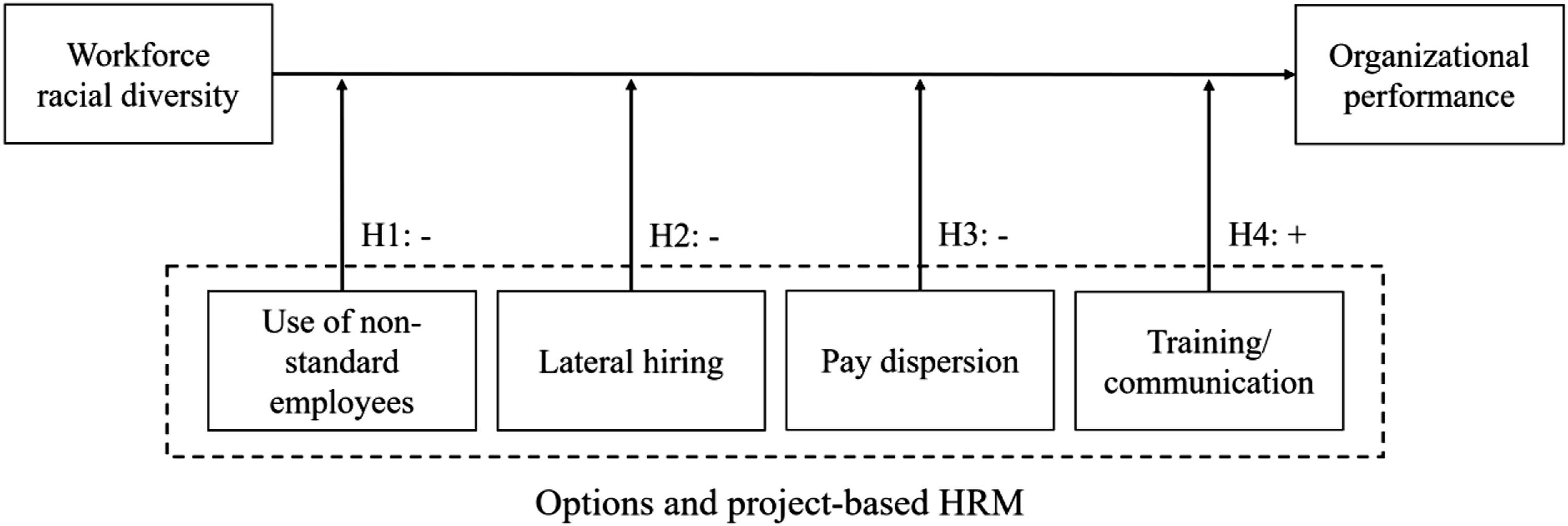
Use of Nonstandard Employees
When organizations pursue a project-based HRM approach, they often adopt an external staffing strategy, for instance, by employing nonstandard employees (e.g., part-timers, temporary, and short-term staff) rather than standard, permanent employees (Galanter & Palay, 1991; Gilson & Mnookin, 1989; Morris & Pinnington, 1998). Employing nonstandard employees can offer strategic advantages to organizations, especially in terms of short-term efficiency and flexibility. Because, unlike permanent employment, the level (amount) of nonstandard employment can be quickly and easily adjusted in line with even short-term changes in labor demand, organizations can flexibly and efficiently adapt to changing business environments (Atkinson, 1984; Matusik & Hill, 1998). As labor costs for nonstandard employees are relatively lower than for permanent ones, this type of employment contract in general does not incur a high level of fixed costs within an organization’s compensation structure (Beatson, 1995). Researchers have also suggested that hiring nonstandard employees can enhance functional flexibility in the workforce because they are likely to be seen as “helping hands” (Harrison & Kelley, 1993) who can make work easier by providing help to core workers (i.e., permanent or standard employees) (Osterman, 1987). While nonstandard workers at the periphery take care of less important tasks, core workers can spend more time on important tasks, expand their roles, and enjoy more support (Broschak & Davis-Blake, 2006).
Despite these expected benefits, an organization’s reliance on nonstandard employment can create an unfavorable work context in which dissimilar employees communicate and collaborate. Past research has indicated that despite short-term benefits in efficiency and flexibility, the costs of using nonstandard employees can be greater and often outweigh the benefits because reliance on nonstandard employment can incur various negative attitudes and behavior among employees such as low organization-based self-esteem, low trust toward an organization, violation of psychological contracts, and poor coworker relations (Chattopadhyay & George, 2001; Davis-Blake, Broschak, & George, 2003). An organization’s policy to employ more nonstandard employees can also send a message to employees about the value of short-term, transactional, and economic exchange relationships between employees and the organization (Schalk et al., 2010; Van Dyne & Ang, 1998). Negative feelings and attitudes toward an organization, poor coworker relations, and emphasis on short-term economic exchange relationships can discourage social contact and interdependence among employees (Broschak & Davis-Blake, 2006; Kamdar & Van Dyne, 2007); however, social contact and interdependence are crucial for reducing stereotyping and intergroup bias in organizations (Gaertner & Dovidio, 2000). Therefore, we expect that under these circumstances, social category (race)–based differences and biases become more salient and the negative consequences of diversity, such as conflict, can be exacerbated (Brown & Turner, 1981; Gaertner & Dovidio, 2000). Cooperation and sharing of diverse information with other organizational members are likely to be limited because intergroup biases elicited by social categorization may diminish openness to communication with dissimilar others and disrupt group information processing (Van Knippenberg et al., 2004).
Drawing on psychological research on the formation of identity orientations, we also argue that greater reliance on nonstandard employment creates barriers to cooperation and prevents realization of the benefits of diversity by emphasizing an individual-based identity orientation among diverse employees (Brickson, 2000; Homan et al., 2008). With an individual-based identity, people conceive of themselves primarily in terms of their own traits and characteristics (i.e., demographic attributes like race) and comparisons with others become the frame of reference, which inhibits intergroup contact and cooperation (Brickson, 2000). According to Kanter’s observation, this setting represents segmentalist organizations, in which “structural barriers are matched by attitudes that confine people to the category in which they have been placed, that assume they are defined by that category” (1983, p. 31). Confirmation and reinforcement of preexisting perceptions and attitudes (including biases and stereotypes) associated with social categories such as race are common in such settings (Kanter, 1983). Conversely, when an organization’s employment practices focus on long-term employment (e.g., job security) and development of social exchange relationships between the organization and its employees (Ployhart, Van Iddenkinge, & MacKenzie, 2011; Shaw, Delery, Jenkins, & Gupta, 1998), cooperation may be fostered, and dissimilar workers may be motivated to form relation-based identities (Brickson, 2000). With a relational identity orientation, the frame of reference shifts from one’s own characteristics and traits to more collective goals and values, motivating individuals to consider the benefits of others and the overall group (Brickson, 2000; Homan et al., 2008). Kanter’s idea of integrated organizations, whose flow charts resemble a “plate of spaghetti” (1983, p. 133), can be achieved by fostering relational identity orientations among employees and promoting interpersonal cooperation, communication, and other-oriented motivation (Brickson, 2000).
Combining these theoretical perspectives discussed above, we predict that when organizations employ more nonstandard employees, negative feelings and attitudes as well as short-term exchange-based relationships develop among employees, which prevents racially dissimilar members from having frequent social contact and sharing information. Under these circumstances, an individual-based identity orientation that reinforces preexisting stereotypes and biases is likely to develop and thus the negative aspects of diversity based on social categorization (e.g., conflict, communication problems, and process loss) would be activated and reflected in organizational performance outcomes.
Lateral Hiring
Another external staffing practice of project-based HRM is to buy employees or hire laterally from the external labor market rather than to rely on internal staffing (e.g., internal promotion) (Galanter & Palay, 1991; Morris & Pinnington, 1998). Under pressure from market competition and high uncertainty, organizations adopting project-based HRM often decide to buy their employees, that is, hire employees with relevant skills and experience directly from the external labor market (e.g., from competitors) when needed, rather than developing and promoting internal human resources with a long-term focus (i.e., as in options-based HRM) (Kang et al., 2012). By hiring employees this way, an organization can save training and other administrative costs (i.e., long-term fixed costs), instead spending its money in a more flexible manner (Davis-Blake & Uzzi, 1993). Rather than hiring inexperienced entry-level employees and investing in them in the long-term, hiring already established and experienced employees, especially at the upper levels of an organization (e.g., seasoned professionals, executives, or partners at law firms) can be an efficient and convenient method to enrich human resources and expand the scope of service and client bases (Dokko & Rosenkopf, 2010). Organizations can also be numerically flexible by having fewer low-skilled employees or bench members, instead acquiring necessary talent from the external labor market only when it is necessary (Cappelli & Keller, 2013).
Although there are positive consequences of lateral hiring, we argue that it can incur psychological and relational costs that hinder collaboration among racially dissimilar employees. Researchers have suggested that when career opportunities are limited within an organization (e.g., filling upper-level positions mainly by lateral hiring rather than internally developing and promoting employees), competition intensifies, exacerbating the likelihood of categorization and intergroup biases (Baron, Mittman, & Newman, 1991; Reskin, 2000). When organizational resources are sparse, people tend to consider other members as competitors, develop individual-based identity orientations, and reduce intergroup contact and communication (Brickson, 2000; Richard et al., 2007). For instance, when organizations are restructuring (e.g., large-scale reduction in the workforce), which reduces the possibility of upward mobility (Stewman, 1988), employees experience increased competition, rely more on their own background and characteristics in social interactions, and thus develop biases toward in-groups versus out-groups (Dencker, 2008; Reskin & Roos, 1990). By contrast, when enough career opportunities are available within an organization (e.g., through career development or promotion opportunities), lack of competition can reduce intergroup biases and segregation while facilitating intergroup contact and cooperation (Baron et al., 1991; Leana & Van Buren, 1999; Reskin, 2000). Baron and colleagues (1991) argued that when organizations provide more staffing opportunities by hiring and developing more employees, past segregation in the workforce can be remedied. When career opportunities are visible within an organization, employees are less likely to consider others as competitors for organizational resources and to develop out-group biases against dissimilar others; rather, integration in the workplace and cooperation are more likely (Baron et al., 1991).
Drawing on the abovementioned arguments, we propose that when an organization actively engages in lateral hiring rather than internal promotion, it can create a less favorable work environment that hinders active information processing and collaboration among racially dissimilar employees. Lateral hiring can exacerbate the negative aspects of racial diversity by fostering competition and formation of individual-based identity orientations among employees.
Pay Dispersion
While an options-based HRM involves adoption of an egalitarian pay structure (low level of pay dispersion) to emphasize bonding and long-term contributions of employees, under a project-based HRM, pay differentials among employees can be greater because of the organization’s focus on individualized contributions and short-term productivity of employees (Maister, 1993). The terms “pay dispersion” or “pay distribution” within an organization refer to the “array of compensation levels paid for differences in work responsibilities, human capital, or individual performance within a single organization” (Milkovich & Newman, 1996, p. 45). Organizations often create a large pay dispersion between employee groups, especially reflecting differences in individual performance, to motivate individualized efforts to earn greater rewards (Milkovich & Newman, 1996). Greater dispersion between top and low performers creates a positive link between pay and performance, encourages individual-based efforts and competition, and results in higher individual performance (Milgrom & Roberts, 1992). Scholars have suggested that greater financial flexibility can be achieved when organizations allocate and adjust labor costs based on performance rather than relying on rigid compensation structures such as rate-for-the-job or seniority-based pay systems (Atkinson, 1984; Beatson, 1995).
Unlike an organization’s strategic intention, however, we argue that increasing pay dispersion may cause unexpected side effects among dissimilar members in the workforce. Researchers have indicated that despite its positive consequences for individual-level motivation and efforts, due to increased interpersonal competition, large pay dispersion can create disincentives toward cooperation, instill feelings of inequity, promote dissatisfaction, and diminish performance (Bloom, 1999; Pfeffer, 1994). When dispersion between pay levels is large, people of lower rank often develop negative feelings or attitudes, sensing relative deprivation or developing feelings of unfairness through social comparisons (Martin, 1981); thus, greater pay dispersion demotivates most employees in organizations, except those at the top (Kochan & Osterman, 1994; Pfeffer, 1994). Status differentials or barriers between organizational members (e.g., associates and partners) resulting from wide pay dispersion can hinder intrapreneurial attitudes, discouraging them from bringing ideas to the table and exchanging knowledge to solve problems (Kang et al., 2012; Leonard-Barton, 1992). Thus, large pay dispersion can be detrimental, especially when work contexts require a high level of interdependence and collaboration among members and the focus is on collective achievement (Bloom, 1999). Considering that cooperation and interdependence are critical conditions to reduce stereotypes and intergroup biases among racially dissimilar members (Allport, 1954; Gaertner & Dovidio, 2000), we expect that when large pay dispersion exists, due to increased competition and negative feeling against competitors, it can create detrimental work context in which dissimilar members collaborate to achieve collective goals. As discussed earlier, people in highly competitive, resource-scarce situations are likely to develop individual-based identity orientations (Brickson, 2000) and behave based on heuristics (Wiersema & Bantel, 1993); under such circumstances, categorization-based aspects of racial diversity are emphasized, while information sharing and other positive consequences of diversity are suppressed (Richard et al., 2007; Kochan et al., 2003).
Accordingly, we propose that in organizations with large pay dispersion, due to increased competition and resulting intergroup biases, the negative effects of categorization processes are likely to be reflected in organizational performance. In this organizational setting, positive aspects of diversity such as sharing of diverse knowledge and communicating various perspectives are less likely to manifest because of individual-based identity orientations among dissimilar employees.
Training and Communication
Options-based HRM involves offering training (formal training, mentoring, and guidance) and communication opportunities (communication with management, participation in decision-making processes) to employees, emphasizing internal development and bonding of employees (Maister, 1993; Malos & Campion, 1995, 2000). With options-based HRM, to realize the value of their human capital, organizations have strategic reasons to invest in employee development and communication; however, with a project-based approach, such investment appears to be unnecessary or even inefficient (Kang et al., 2012; Malos & Campion, 2000).
Researchers have suggested that high investment in employee development and communication indicates an organization’s support and long-term commitment to its employees (Tsui, Pearce, Porter, & Hite, 1995). Employees who perceive that their organizations support them feel an obligation to repay those organizations through positive attitudes and appropriate actions (Settoon, Bennett, & Liden, 1996). Training investment can foster long-term commitment and a sense of responsibility; employees can also develop informal relationships and interconnectedness with others through learning opportunities (Aguinis & Kraiger, 2009; Noe, 2008). An organization’s investment in employee communication—its commitment to conveying accurate and consistent information and fostering participation in decision-making processes—is particularly important for employees’ perceptions of procedural justice, contributing to development of positive social exchange relationships within organizations (Shaw et al., 1998; Tsui et al., 1995). Participation practices also facilitate development of intrinsic motivation for employees to behave proactively, that is, to bring ideas to the table, exchange knowledge and experience, and actively collaborate with other organizational members (Arthur & Aiman-Smith, 2001; Chen & Huang, 2009). As discussed earlier, social exchange relationships developed based on employees’ positive attitudes, perceptions of, and motivation toward an organization can create a positive work context in which dissimilar employees are engaged in interpersonal processes such as cooperation and information sharing rather than experiencing conflict. Conversely, when there is a lack of investment in employee development and communication, employees are likely to have negative attitudes toward an organization and to manifest negative behaviors (e.g., lack of commitment and minimal voluntary information sharing or helping) and are less likely to develop positive interpersonal relationships with coworkers.
Researchers have also suggested that investment in training and communication promotes interpersonal cooperation in the workplace by developing relational identity orientations between people (Brickson, 2000). Relational identity orientations emerge within the context of “small, face to face groups that are essentially networks of such dyadic relationships” (Brewer & Gardner, 1996, p. 83), and thus, organizational practices encouraging interpersonal communication and cooperation such as training, open communication, and participation may also evoke a relational orientation among people. These relational orientations increase the likelihood of individuals viewing themselves as relational partners, developing dense and integrated networks of relationships, and thus promoting interpersonal communication and cooperation, rather than competition (Brickson, 2000). These tendencies also result in reducing categorizations and biases because they will make it less likely that individuals see themselves as members of distinct social groups but lead to deeper cognitive and affective understanding of others (Brickson, 2000; Lanzetta & Englis, 1989).
Building on these theoretical perspectives, we propose that investment in training and communication programs will positively affect the dynamics of racially diverse workforces within organizations. We expect that positive social exchange relationships as well as relational identity orientations developed among employees will promote interpersonal cooperation rather than competition. In this setting, we expect that knowledge-based aspects of diversity are more likely to be stressed than in other organizations, and that the benefits of diversity will ultimately be reflected in performance outcomes. Relational identities and enhanced internal networks may offset the negative effects of social categorization processes by shifting the frame of reference and deepening understanding of others; thus, the categorization-based negative consequences of diversity are not likely to be manifested in organizational performance in this work context.
Methods
Sample and Data Collection
The research sample included in this study involves a set of large U.S.-based corporate law firms that appeared in the American Lawyer’s list of the 200 largest law firms based on total revenue (Am Law 200) for the period of 2001–2008. The American Lawyer, the largest law-related trade journal in the U.S., selects top 200 corporate law firms every year and publishes detailed information including financial performance, compensation, and other key characteristics of these law firms (e.g., headquarter location and headcounts of attorneys). The American Lawyer also collects data directly from each law firm and publishes several other databases such as the Diversity Scorecard, National Law Journal (NLJ) 250, and NLJ Staffing Survey which contain demographic compositions of the workforce (race/ethnicity), associates’ compensation, and staffing information (e.g., numbers of newly promoted partners and numbers of lateral hiring), which are useful and necessary for this research. In addition to these objective databases, the American Lawyer has conducted the Midlevel Associates Survey and investigated perceptions of third- and fourth-year associates regarding their workplace experiences and related matters. Questionnaires were sent to the country’s largest law firms and asked associates to report their experience and perceptions on training and guidance, feedback from partners, communication opportunities, and other related matters. Each survey reports aggregated data for firms from which responses are received from at least half the eligible associates, or from which at least ten responses are received. This study used a combination of multiple archival data sets described above. Final sample used in the analyses is 192 law firms from 2001 to 2008 (total 1246 observations), while sample sizes vary across pairs of variables, ranging from 192 to 138 law firms.
Measures
Workforce Racial Diversity
Using data reported in the Diversity Scorecard, we assessed the racial heterogeneity of each firm’s associate attorney group. In this study, we focus on the diversity of general workforce (associate attorneys) and its effect on organizational performance while controlling for the effect of diversity in an upper-level management group (partners). Blau’s (1977) index of heterogeneity was used to develop the measure of racial diversity among associate attorneys (five categories: Caucasian, African American, Hispanic, Asian, and American Indian).
Organizational Performance
An organization’s profitability, operationalized as the logarithm of net operating income, is a bottom-line measure of organizational performance and reflects controllable actual profits of each law firm. Profitability is one of the popular measures used in the management literature as well as in the professional service industry context (Kim, Kim, Kim, & Byun, 2016; Malos & Campion, 2000; Sacco & Schmitt, 2005). Data was obtained from the American Lawyer’ Am Law 200 lists.
Nonstandard Employment
Drawing on the data from the NLJ staffing and NLJ 250 surveys, we calculated an organization’s utilization of nonstandard employment as the proportion of part-time and temporary attorneys among total number of attorneys employed in each law firm in a given year.
Lateral Hiring
Using data from the NLJ Staffing survey, we calculated the ratio of lateral hiring (the numbers of new partners laterally hired each year) to internal promotion (the numbers of partners internally promoted in a given year). This measure indicates an organization’s relative reliance on lateral hiring from the external market over internal promotion when making promotion or staffing decision (Malos & Campion, 1995).
Pay Dispersion
Pay dispersion was operationalized as the degree of vertical pay dispersion within an organization. Using the compensation data available at the Am Law 200 (for partners) and NLJ 250 (for associates) lists, vertical pay dispersion was measured as the difference (ratio) between the average compensation of all partners and the starting salary of first-year associates. While individual-level compensation data were not available from the archival data sets, this measure focusing on pay differentials between different levels in organizations, including those between the lowest and highest levels, may be appropriate for the purpose of the study (Cowherd & Levine, 1992; Gerhart & Rynes, 2003; Messersmith, Guthrie, Ji, & Lee, 2011).
Training and Communication
An organization’s investment in employee training and communication was measured using the Midlevel Associates Survey available since 2004. Surveys from 2004 through 2008 were chosen for the purpose of the present study because of the lack of data availability as well as some inconsistencies of survey items in earlier surveys. Among several survey items that ask perceptions (level of satisfaction) regarding workplace experience of associates, we chose three most relevant items: associate’s perceptions about training and guidance, communication with partners, and openness in management group (participation opportunities in decision-making process). Responses were provided on anchored Likert-type scales of 1–5 and aggregated within-firm prior to publication. An additive index of three items was calculated and thus a higher score on this index indicates higher levels of employee satisfaction on training, guidance (e.g., informal coaching and mentoring), open communication with management, and participation in decision-making, reflecting more and effective use of these practices by a law firm.
Control Variables
Drawing on previous research on law firms and organization-level diversity studies, we included several important control variables in the analyses. Considering research on the effect of managerial diversity on organizational performance (Richard et al., 2021), we measured racial diversity in a partner group using the Blau index (partner racial diversity) and included it as a control. The leverage ratio of each firm, calculated as the number of associate lawyers relative to the number of partners, was considered as an important indicator of law firm performance in past research (Sherer, 1995; Wholey, 1985) and thus included in the analysis. Consistent with prior research (Hitt, Bierman, Uhlenbruck, & Shimizu, 2006; Sherer, 1995; Sherer & Lee, 2002), we also included the average compensation level of all partners (pay level) as well as other key organization-level characteristics such as organization size (the total number of attorneys employed in each organization), organization age (years of operation), past organization performance (t-1), and year dummies as control measures.
Prior research suggests that practice areas of each organization and the heterogeneity of practice areas can influence performance of law firms (e.g., Hitt et al., 2006). Drawing on past research on law firm practices (Gorman, 2005; Smulowitz et al., 2019), four broad areas of law (with 23 subcategories) were specified: litigation (admiralty, antitrust, bankruptcy, civil rights, consumer, criminal, general business litigation, general personal litigation, and trademark and copyright); business transactions (banking, commercial, general corporate, international, municipal, real estate, securities, and tax); science-based (environmental and patents); and people-oriented (employment, family, immigration, and trusts and estates). Percentages for the practice areas were calculated as the number of lawyers in a practice area divided by the total number of lawyers in each firm. Diversity in practice areas was calculated using Blau’s (1977) index (practice diversity), indicating high scores as more diversified portfolio of practice areas in a law firm.
Finally, we also controlled for the potential effects of office locations on law firm performance. Because of different resources available (e.g., access to more and various resources in New York City than in small cities) and business environment (e.g., state laws and local employment situations), location has been considered to have implications on law firm’s overall operation and performance and was often included as a control in past studies (Gorman & Kmec, 2009; Hitt et al., 2006). Three measures were included in this study: office locations in top ten legal markets (New York, Washington DC, Chicago, Los Angeles, Boston, San Francisco, Philadelphia, Houston, Dallas, and Atlanta); the existence of international offices (out of the U.S. operations); and major geographic locations (Northeast, South, West, Midwest, and National).
Analytical Approach
The data were both cross-sectional (across organizations) and time series (over years) in nature; thus, a panel data methodology was adopted. To correct for heteroskedasticity and autocorrelated error terms, we used the generalized least squares (GLS) procedure (Kmenta, 1996; Sayrs, 1989). Among the conventional panel data analysis methods (fixed- and random-effects models), a fixed-effects approach was chosen based on the result from the Hausman test (Chi2(13) = 324.58, p < .001) (Hausman & Taylor, 1981).
To test the direct effect of workforce racial diversity on organizational performance, we used data ranging from 2001 through 2008 (N = 192 law firms, 1246 observations). For the moderator analyses (testing Hypotheses 1–4), sample sizes and data years were relatively limited due to the lack of data in some HRM practice variables. For the analyses of the roles of lateral hiring and pay dispersion (Hypotheses 2 and 3), we used the sample of 189 law firms (data years: 2001–2008); for the use of nonstandard employees (Hypothesis 1), the sample size was reduced (N = 172 law firms) because of limited data years (2002–2008). Because of a limited availability of the survey measures from the Midlevel Associates Survey (data years: 2004–2008), our sample size was further reduced to 155 firms for the test of Hypothesis 4. To test the full model including all moderator variables, we analyzed the most conservative data set (N = 138 law firms and 455 observations; data years: 2004–2008).
Results
Mean, Standard Deviation, and Correlations of Study Variables.
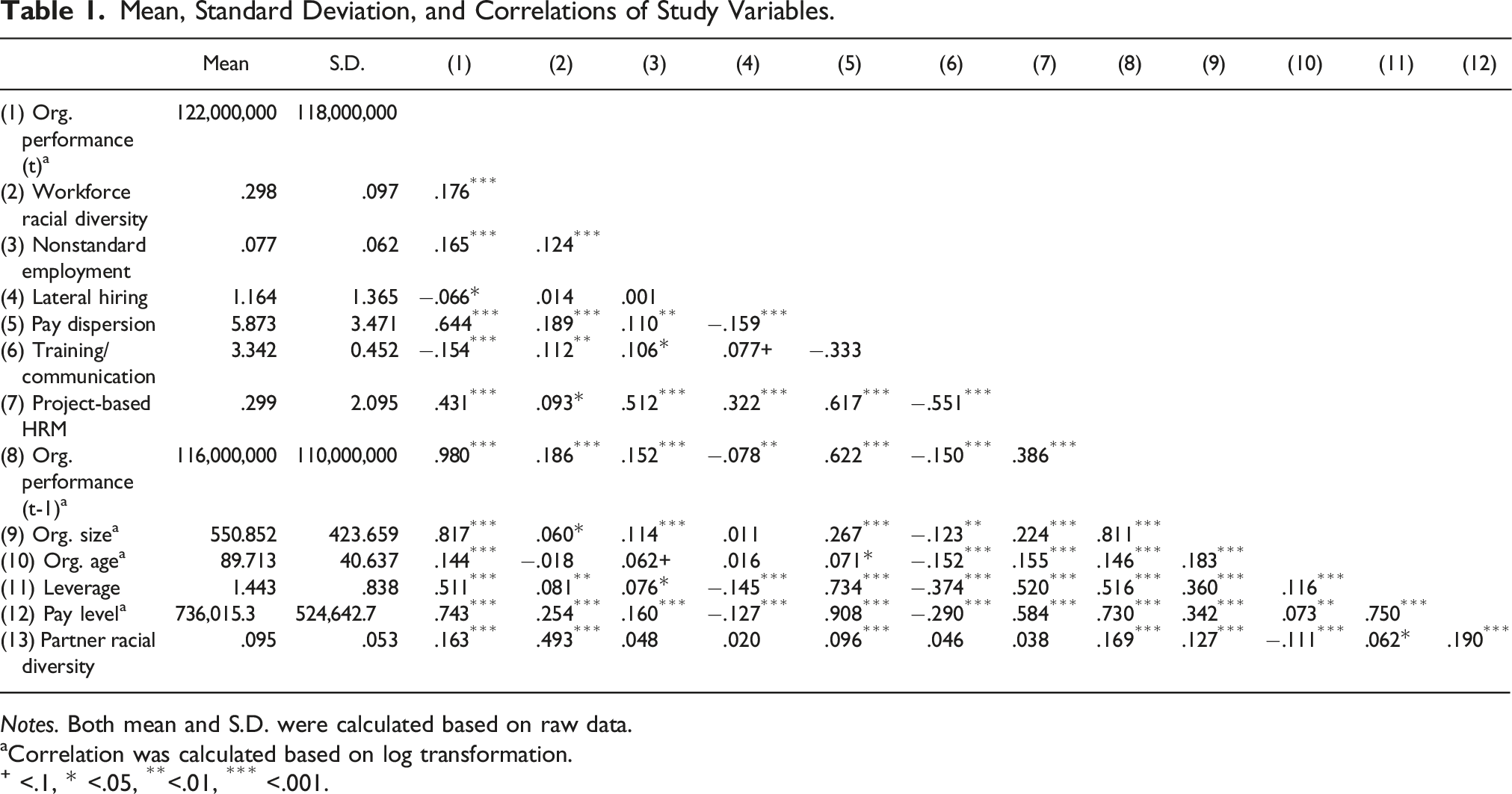
Notes. Both mean and S.D. were calculated based on raw data.
aCorrelation was calculated based on log transformation.
+ <.1, * <.05, **<.01, *** <.001.
The Result of Fixed Effects Panel Data Analyses (Hypothesis Testing).
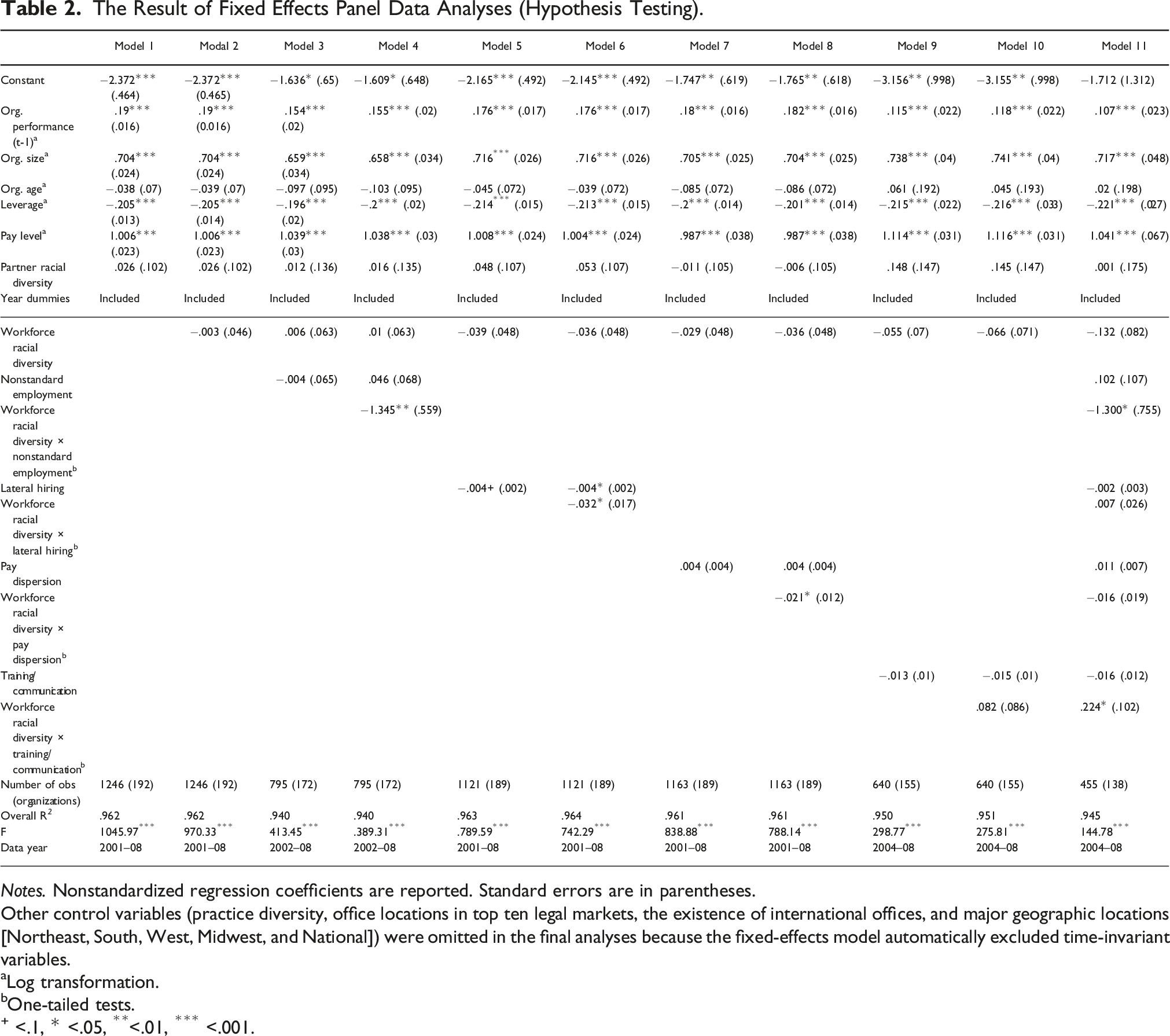
Notes. Nonstandardized regression coefficients are reported. Standard errors are in parentheses.
Other control variables (practice diversity, office locations in top ten legal markets, the existence of international offices, and major geographic locations [Northeast, South, West, Midwest, and National]) were omitted in the final analyses because the fixed-effects model automatically excluded time-invariant variables.
aLog transformation.
bOne-tailed tests.
+ <.1, * <.05, **<.01, *** <.001.
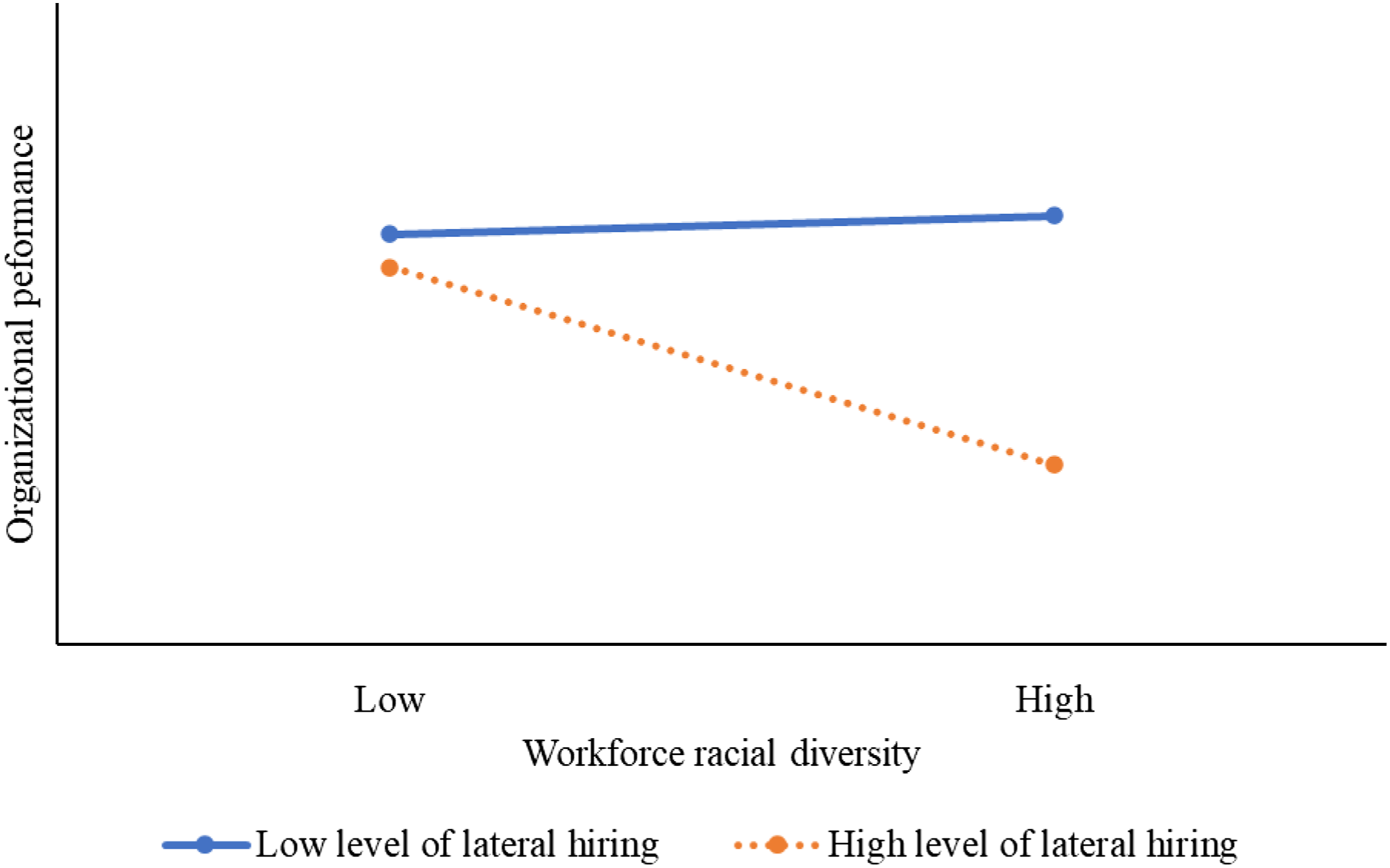
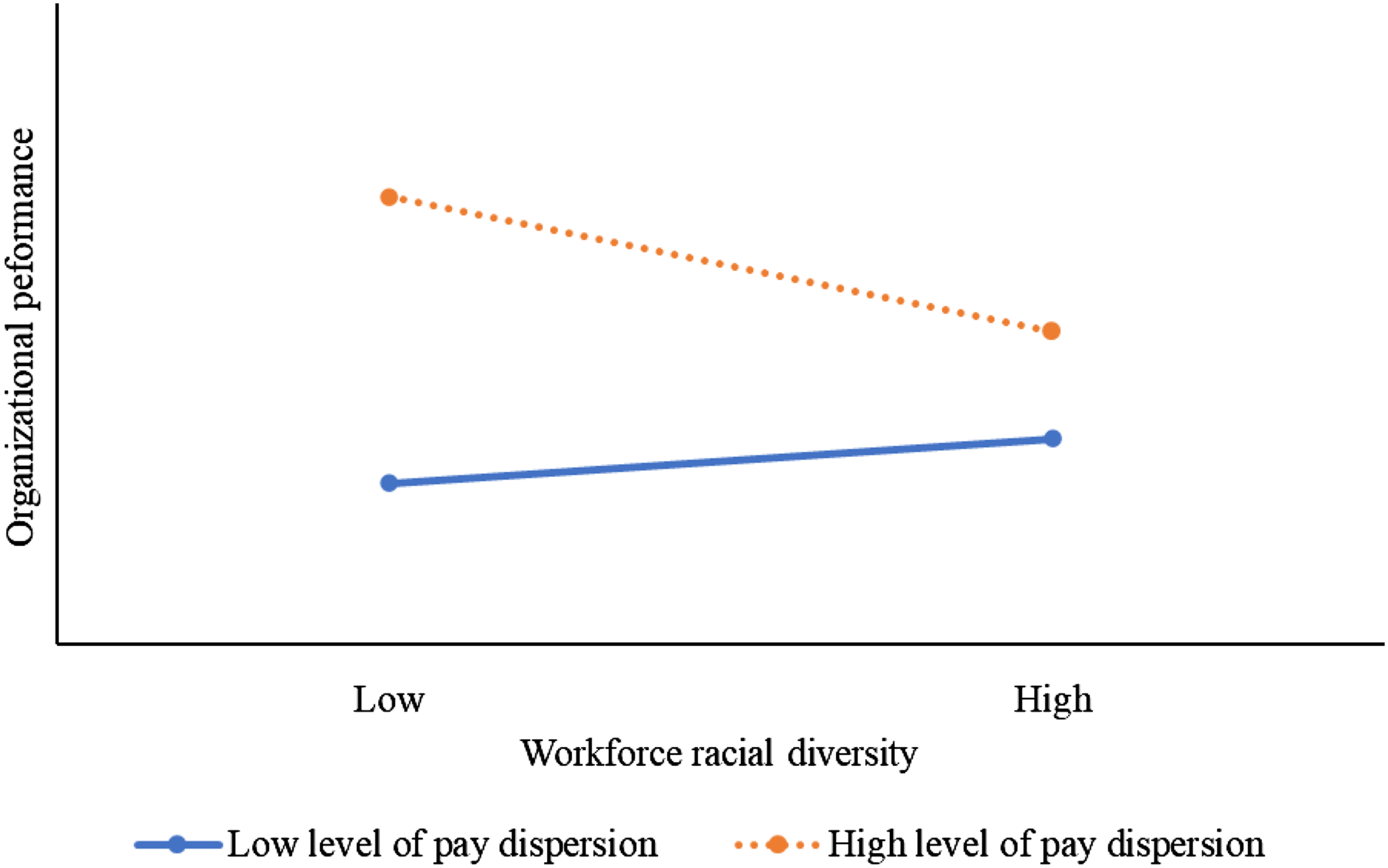
Model 2 in Table 2 reports that there is no main effect of workforce racial diversity on organizational profitability (b = −.003, p = .945). While our finding is consistent with past research reporting mixed patterns of racial diversity effects (e.g., Kochan et al., 2003), this null effect is still noteworthy because our empirical test was conducted in a knowledge-intensive, professional service setting such as law firms. This result might indicate that even in a knowledge-intensive work context, having a racially diverse workforce does not necessarily lead to better performance; an organization’s effort in managing its diverse workforce using a specific set of HRM practices is critical to harness the benefit of diversity (Ely & Thomas, 2020). Hypothesis 1 predicts that the use of nonstandard employees will negatively moderate the relationship between racial diversity and organizational performance. As shown in Model 4, we found statistical support for the hypothesis; the coefficient for the interaction between racial diversity and nonstandard employment is negative and significant (b = −1.345, p = .008). Hypothesis 2 predicts a negative interaction effect between lateral hiring and workforce racial diversity on organizational performance. Supporting the hypothesis, Model 6 reports that the coefficient for the interaction term is negative and significant (b = −.032, p = .035), providing support for Hypothesis 2. We examined Hypothesis 3 also predicting a negative effect of pay dispersion on the workforce racial diversity and organizational performance relationship. Consistent with the prediction, Model 8 shows that the interaction coefficient is significantly negative (b = −.021, p = .046). Finally, we examined a positive moderating effect of training/communication (Hypothesis 4); however, unlike the prediction, we did not find statistical support for the hypothesis (Model 10: b = .082, p = .170). In Model 11, we tested a full model including all variables used in the analyses simultaneously. Results report that while the nonstandard employment still exerts a significant negative moderating effect (b = −1.300, p = .043), the moderating effects of lateral hiring and pay dispersion loose statistical significance. The effect of training/communication turns positive (b = .224, p = .014). This result is based on analyzing the most conservative sample (N = 138, data years: 2004–2008) and needs caution when interpreting due to the restricted sample and potential multicollinearity concern among variables.
Figures 2, 3, and 4 illustrate the interaction patterns of our findings. Figures show that under relatively high levels of nonstandard employment (Figure 2), lateral hiring (Figure 3), and pay dispersion (Figure 4) (one standard deviation above the mean; a dashed line), the racial diversity–performance links turn out to be negative; however, under low levels of those variables (one standard deviation below the mean; a solid line), the relationships become nonsignificant or even positive. The moderating effect of nonstandard employment. The moderating effect of lateral hiring. The moderating effect of pay dispersion.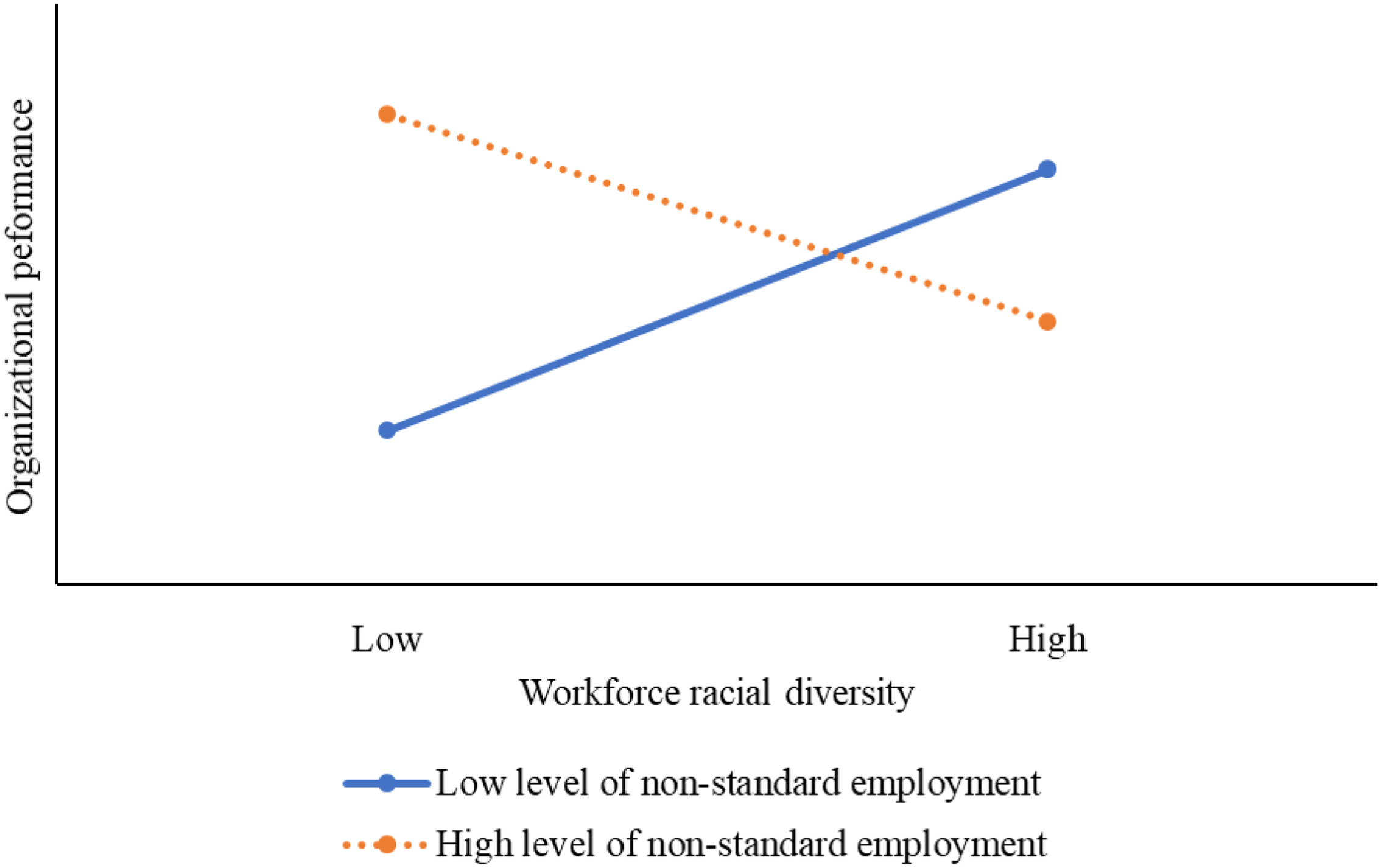
The Result of Fixed Effects Panel Data Analyses (Project-Based HRM Index).
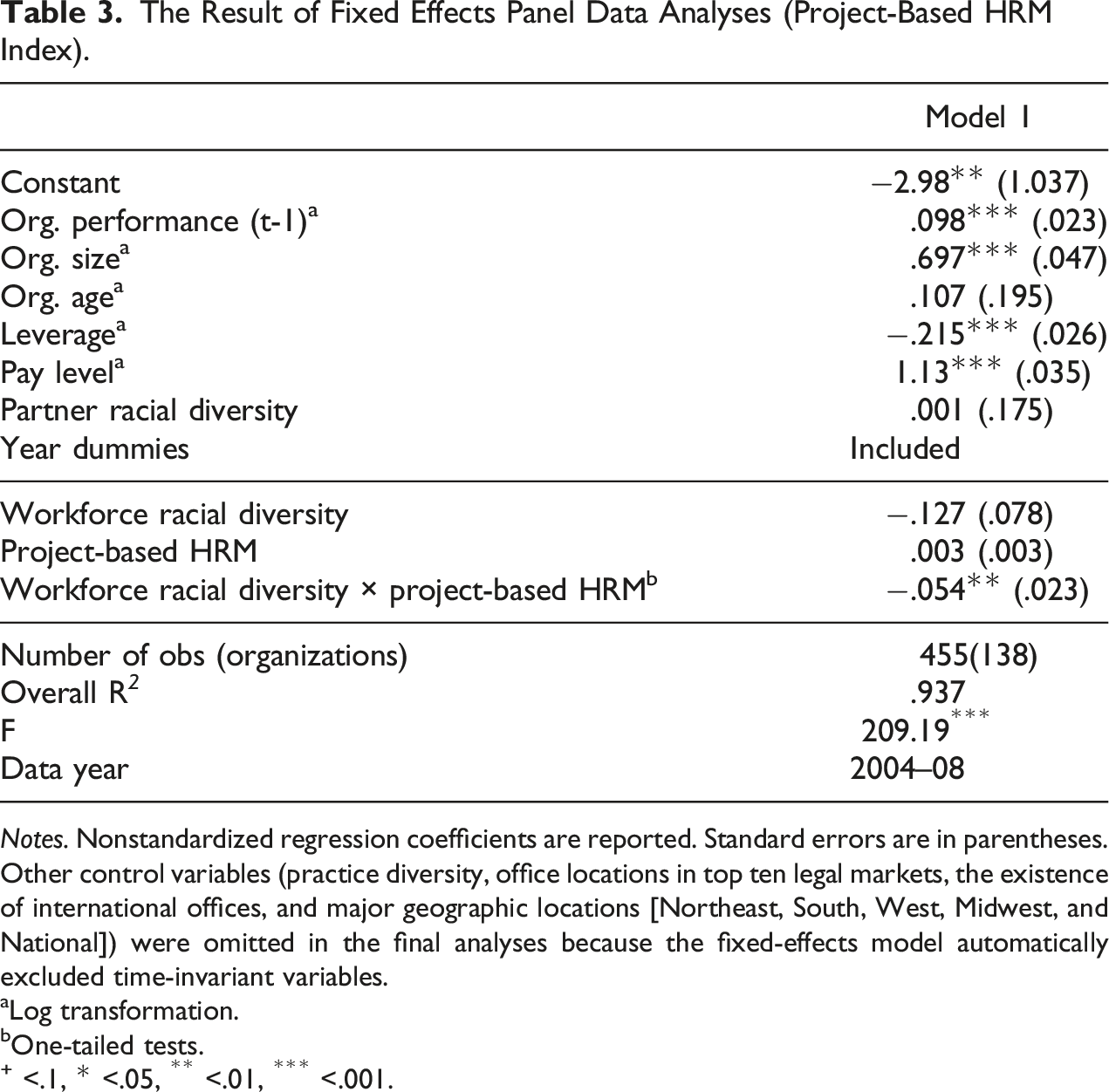
Notes. Nonstandardized regression coefficients are reported. Standard errors are in parentheses.
Other control variables (practice diversity, office locations in top ten legal markets, the existence of international offices, and major geographic locations [Northeast, South, West, Midwest, and National]) were omitted in the final analyses because the fixed-effects model automatically excluded time-invariant variables.
aLog transformation.
bOne-tailed tests.
+ <.1, * <.05, ** <.01, *** <.001.
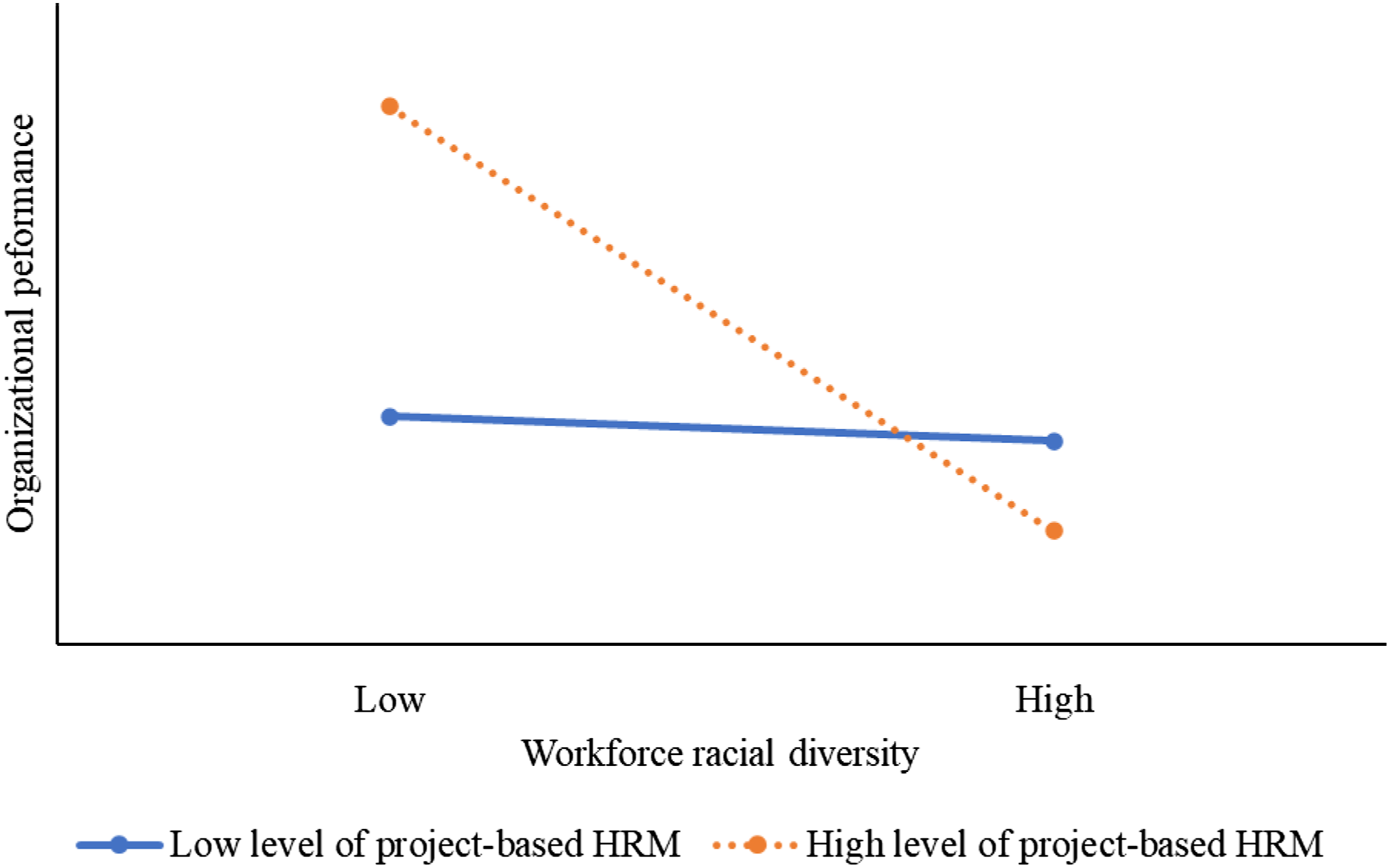
The moderating effect of project-based HRM.
Discussion
The present study elucidated the effects of workforce racial diversity on bottom-line performance (profitability) in organizations by examining the moderating roles of options- and project-based HRM practices. The results of our empirical analyses using a longitudinal data set of large U.S.-based law firms indicated that while no significant direct relationship between racial diversity and profitability could be demonstrated, the association between these two constructs can be negative or positive depending on the type of HRM practices within the organization. Specifically, the findings revealed that an organization’s reliance on external staffing (nonstandard employment and lateral hiring) and large pay dispersion have significant negative impacts on the relationship between racial diversity and performance; no significant moderating influence of training/communication was evident in the analysis. In sum, the results indicated that when organizations engage in project-based HRM practices rather than options-based ones, workforce racial diversity is likely to have negative effects on organizations’ bottom-line performance.
Implications of Research Findings
The findings of this study have several implications for theory and practice. First, although no direct effect of workforce racial diversity on organizational performance was found in this study, it does not necessarily mean that organizations’ efforts to increase racial diversity in their workplaces are meaningless or an ineffective investment. Our null finding may instead indicate that, consistent with the findings of past theoretical and empirical research, racial diversity has both positive and negative aspects (Joshi & Roh, 2009). Our results also revealed that negative interpersonal processes based on social categorization (e.g., relational conflict and behavioral disintegration) are actively in play in workplaces such as the law firms included in this study. Past research has also suggested that in highly prestigious occupational settings such as law firms and accounting firms, despite their emphasis on employee human capital, race-based segregation and discrimination is prevalent because formal and informal practices in these occupational settings enhance a hierarchy structure (Sidanius & Pratto, 2003; Sinclair, Sidanius, & Levin, 2010). Lack of data regarding these psychological, behavioral, and organizational processes in the workplace may be a limitation of the current study; however, our findings emphasize the importance of critical contextual conditions that can shape workplace relationships and determine the effects of racial diversity in the workplace. As Ely and Thomas (2020) indicated, the simplistic business case for diversity is not persuasive enough; however, a more credible and powerful case can be made by investigating the right organizational conditions under which employees can turn cultural differences into assets for achieving organizational goals.
Our findings suggest that the effectiveness of HRM practices can differ depending on the demography of the workforce—that is, there is no one best set of HRM practices that fits all conditions. For example, although in the past, a merit-based, strong, pay-for-performance incentive system has been popularly suggested as an important component of high-performance work systems that can enhance organizational effectiveness in general (e.g., Huselid, 1995), in racially diverse settings, this pay scheme, which is highly likely to increase pay dispersion within organizations, may not necessarily lead to high performance but may instead hurt intergroup relations. In racially diverse settings, a more egalitarian pay structure such as group-based or organization-wide incentives may be more appropriate to optimize synergy and combined efforts from dissimilar employees (c.f., Pfeffer, 1994). As law firms and organizations in general become increasingly more diverse, this situational consideration will be an important strategic concern for HR managers and decision-makers in implementing appropriate HRM practices to achieve best results.
Our findings further indicate that in diverse settings, organizations relying more on external labor markets rather than internal labor markets (e.g., those engaging in lateral staffing and use of nonstandard employees) are less likely to achieve optimal performance outcomes. Although contemporary organizations often adopt an external labor market–oriented, flexible, or quick-and-easy method of recruiting and staffing employees, perhaps due to short-term cost concerns and market competition, as organizations become more diverse, this “buy”-oriented approach can harm social relations among employees and ultimately hamper organizational functioning. Critical and long-term loss and damage may result for organizations because of the personal, socially embedded, and long-term nature of employee social relationships (Leana & Van Buren, 1999). Therefore, organizations with diverse workforces or those actively recruiting ethnic minorities may need to develop a more “make” orientation and options-based strategy in managing their human resources.
The detrimental effects of a buy-oriented approach or project-based HRM may also apply to general (not necessarily diverse) work settings; however, we argue that these effects are more salient and harmful in diverse work contexts. Past research also indicated that options- and project-based HRM is a strategic choice of law firms to adapt to changing business environments, finding no systematic difference between the two HRM types in terms of organizational performance (Malos & Campion, 2000). Consistent with this argument and finding, our regression analysis also indicated no significant direct effect of project-based HRM on profitability; however, the effect of the interaction between the type of HRM and racial diversity was statistically significant. All in all, these findings emphasize the importance of key contingencies in understanding the effects and interaction of racial diversity and HRM practices in the workplace. Our study highlights that organizations need to consider the strategic fit of implementing certain HRM practices, especially when they expect or plan for increased diversity in their workforces.
Contrary to the prediction, we did not find clear statistical evidence that training/communication opportunities have influence on racial diversity effects in law firms. While the moderating effect appears positive but not statistically significant, the effect becomes significant in the full model analysis. We surmise that one reason for this less clear pattern might be the nature and limitation of archival survey measures used in this study that asked the perception (satisfaction) of associates regarding an organization’s investment in employee training/communication rather than directly measuring the level of organizational investment (e.g., the amount of training hours). As stated earlier, relatively limited data years for the analysis can also have influence on this unclear empirical finding. To clarify the influence of training/communication programs in racial diversity dynamics, a more refined test with detailed measurement and data would be necessary for future research endeavors.
Limitations and Future Research Questions
The theoretical and empirical approach employed in this study has several limitations, which provide opportunities for future research. First, as noted earlier, the diversity measures utilized in this study were limited to racial diversity, which may have significant practical meaning in the workplace, but many others were excluded. Other types of workplace diversity such as gender, age, tenure, task-oriented attributes, deep-level characteristics, or faultlines-based measures also warrant further investigation. Second, although we attempted to incorporate key features of options- and project-based HRM identified in past research (Kang et al., 2012; Malos & Campion, 2000), we admit that including more comprehensive and detailed measures that explain options- and project-based HRM would be greatly helpful to improve our understanding of the effects of those HRM practices. Besides options- and project-based HRM, we also acknowledge that there are other operationalizations of HRM variables that deserve attention. For example, examining the effect of high-commitment work systems, development-focused HRM practices, or flexibility-oriented HRM on the dynamics of racial diversity or other demographic diversity would be interesting for future research (Chang, Gong, Way, & Jia, 2013; Kochan et al., 2003). Third, because of the relatively macro focus of this study and lack of data availability, diversity-related processes such as social categorization, information elaboration, and learning processes were assumed to be aligned with past theories but were not directly examined in this study. Direct measurement and testing of these processes and their interactions with HRM practices using surveys, interviews, or mixed methods designs would be most interesting for future research in this area. For instance, we surmise that an in-depth analysis of organizational culture and its relationship with diversity and HRM practices may be an interesting research avenue that may clarify the unexplained variance or causality concerns inherent in the current research design. By adopting a longitudinal qualitative design, researchers may examine how organizational culture influences attraction of diverse employees (i.e., sorting effect) and reinforces certain types of behaviors among employees (i.e., incentive effect). Future research can also delve into how HRM influences or interacts with organizational culture in diverse work contexts and impacts various organizational performance outcomes.
The archival data sets used in this study also have limitations. As stated earlier, our measure of training/communication requires further refinement in future studies. Another concern is that our external staffing variables have some correlations with racial diversity; that is, there may be more racial minorities (thus higher levels of racial diversity) among nonstandard employees and laterally hired partners. This might affect the strength or even direction of the hypotheses proposed in this study. Unfortunately, the measures used here were not specific enough to test or control this possibility directly. Although we did not find strong evidence about the link between external staffing practices (nonstandard employment and lateral hiring) and racial segregation especially in law firms (Edwards, 2011; Noonan & Corcoran, 2004), it may still be the case in other organizational contexts. Thus, future studies need to utilize more detailed measures. Our measurement of pay dispersion can also be improved by collecting more detailed and individual-level compensation data. Moreover, following previous research (Gorman & Kmec, 2009; Hitt et al., 2006; Sherer & Lee, 2002), we considered contextual influences by including various control variables; however, direct control of potentially important factors such as the organizational culture at headquarters, top management team influence, community characteristics, and labor market characteristics was not possible in the present study.
Finally, although we consider that the theoretical reasoning developed in this study is not necessarily confined to a law firm setting, a relatively narrow scope (focusing only on a single industry) can still limit the ability to generalize the findings from this study to other contexts. While we chose a law firm setting because of demographic and strategic changes in this context as well as data availability, more empirical examinations in various industrial and occupational settings could enhance and refine our understanding of the effects of workplace racial diversity.
Footnotes
Acknowledgement
We are indebted to Aparna Joshi for advice and feedback on the earlier versions of this work. We are also grateful for generous data support to the Law Firms Working Group and for valuable feedback to seminar participants at Yonsei University. We thank Yeejeong Ryou for her research assistance.
Declaration of conflicting interests
The author(s) declared no potential conflicts of interest with respect to the research, authorship, and/or publication of this article.
Funding
The author(s) disclosed receipt of the following financial support for the research, authorship, and/or publication of this article: This work was supported by the National Research Foundation of Korea Grant funded by the Korean Government (NRF-2020S1A5A2A01042721) and Ministry of Education.

Associate Editor: Devaki Rau