




Abstract
Research has demonstrated the value of team adaptation for organizational teams. However, empirical work on interventions that teams can take to increase adaptive team performance is scarce. In response, this study proposes a concept mapping intervention as a way to increase teams’ ability to adapt following a task change. Particularly, this study examines the effect of a concept mapping intervention on team transition adaptation (the drop in performance after a change) and reacquisition adaptation (the slope of performance after the change) via its effect on task mental models and transactive memory systems. We conducted a longitudinal experimental study of 44 three-person teams working on an emergency management simulation. Findings suggest that the concept mapping intervention promotes reacquisition adaptation, task mental models, and transactive memory systems. Results also suggest that task mental models mediate the effect of the concept mapping intervention on reacquisition adaptation. A post hoc analysis suggests that the concept mapping intervention is only effective if it leads to high task mental model accuracy. Our study presents concept mapping as a practical intervention to promote shared cognition and reacquisition adaptation.
Keywords
Introduction
The work environments where teams operate are increasingly volatile and turbulent. As a result, teams need to adapt to the changing demands imposed on them by their environments while ensuring they improve their performance after a change occurs (Burke, Stagl, Salas, Pierce, & Kendal, 2006; Kennedy & Maynard, 2017). Researchers have theorized and empirically analyzed various factors related to adaptive team performance, defined as “a change in team performance, in response to a salient cue or cue stream, that leads to a functional outcome for the entire team” (Burke et al., 2006, p. 1190). Embedded in this definition is the fact that team adaptation occurs over time, and therefore, research focused on adaptation needs to adopt a temporal lens. However, research focusing on the trajectory of adaptation over time and the different phases involved have been scarce (e.g., Maynard, Kennedy, & Sommer, 2015).
In this study, drawing on current research on adaptive team performance and adopting a temporal lens, we consider two distinct team adaptation phases after the occurrence of a change event: the transition phase and the reacquisition phase (Devaraj & Jiang, 2019; Hale, Ployhart, & Shepherd, 2016; Lang & Bliese, 2009; Uitdewilligen, Rico, & Waller, 2018). The transition (or disruption) phase occurs immediately after the change event and is represented by a drop in performance from the pre-change to the post-change situation. The reacquisition (or recovery) phase entails the gradual increase in performance after the change as the team recovers by developing novel routines and interaction patterns (Lang & Bliese, 2009).
Empirical research has identified individual factors (e.g., Lang & Bliese, 2009; LePine, 2005), leadership processes (e.g., Randall, Resick, & DeChurch, 2011; Sanchez-Manzanares, Antino, Rico, & Uitdewilligen, 2020), and adaptive processes (e.g., Vashdi, Bamberger, & Erez, 2013) as precursors to adaptive team performance. Moreover, shared cognition (i.e., team mental models and transactive memory systems) has been found to be pivotal for effective adaptation to novel environments (e.g., Marques-Quinteiro, Curral, Passos, & Lewis, 2013; Uitdewilligen et al., 2018). However, although there are a few exceptions (e.g., Gorman, Cooke, & Amazeen, 2010; Marks, Zaccaro, & Mathieu, 2000), there is a gap in our knowledge regarding interventions that can assist in the development of shared cognition and thereby help the team become more adaptive (Gurtner, Tscan, Semmer, & Nägele, 2007). As such, by examining the role that a concept mapping intervention can have on shared cognition and team adaptive performance, we answer those who have called for considerations of team development interventions (e.g., Lacerenza, Marlow, Tannenbaum, & Salas, 2018; Shuffler, Diazgranados, Maynard, & Salas, 2018).
Therefore, in the current study, we introduce concept mapping as a practical intervention for facilitating both shared cognition and adaptive team performance. This intervention is based on a cognitive technique broadly used in educational science to organize and represent knowledge—concept mapping (e.g., Novak & Cañas, 2008). This specific technique has been proven to be a potent tool for enhancing the quality of individual (e.g., Novak & Cañas, 2008) and team knowledge structures (e.g., Stoyanova & Kommers, 2002; Van Boxtel, van der Linden, Roelofs, & Erkens, 2002). Yet, it is unclear which knowledge structures benefit the most from the concept mapping intervention. In this study, we disentangle the influence of this intervention on shared cognition, by isolating and comparing the effects of task mental models and transactive memory systems. In addition, although research has shown that task mental models and transactive memory systems predict adaptive team performance (e.g., Christian, Christian, Pearsall, & Long, 2017), it is unknown whether the concept mapping intervention improves adaptive team performance, and whether task mental models and transactive memory systems are mediating mechanisms of that relationship.
Regarding the effect of practical interventions on team adaptation, Marks et al. (2000) showed that a team-interaction training that provides participants with task-related interaction skills and influences task mental models and team performance in novel environments. Gorman et al. (2010) showed that a perturbation training (i.e., a training that provides experience on using multiple communication paths to induce coordination variability and adaptation to specific interactions) promotes team coordination processes that are needed for team adaptation. Within this study, we adopt a longitudinal design to propose that collectively building a concept map facilitates high team performance in both transition and reacquisition adaptation phases. By discussing the structure of their task, team members generate and compare alternative cognitive representations, resulting in a complex understanding of the task domain, including the realization that there may be more than one strategy for conducting their collective task. Such understanding helps the team members to avoid strategic persistence—the tendency to persist using a previously successful strategy despite evidence that it is not successful anymore (e.g., Audia, Locke, & Smith, 2000)—as it decreases the perception that there is one optimal way of executing the task.
Research on adaptive team performance postulates that an adaptive process initiates when a task change is introduced. However, the mechanisms that explain how teams increase their performance after a task change have not been examined (Baard, Rench, & Kozlowski, 2014; Burke et al., 2006). Drawing on socio-cognitive theories of collective learning (Langfield-Smith, 1992; Van den Bossche, Gijselaers, Segers, & Kirschner, 2006), we argue that concept mapping promotes the development of shared cognition. Additionally, we leverage the theory of compilation and performance (Kozlowski, Gully, Nason, & Smith, 1999) and the input–throughout–output model of team adaptation (Burke et al., 2006) as we argue that shared cognition is an important pathway through which concept mapping promotes adaptive team performance. In particular, we argue that by collectively building a concept map, team members co-construct ideas and engage in a mutual process of building meaning. Thereby they actively develop similar and accurate task mental models and an accurate transactive memory system, which facilitate performance reacquisition after the task change (Van den Bossche et al., 2006; Yew & Schmidt, 2009).
In the present study, we strive to make a novel contribution to the team cognition and adaptation literatures by being the first to introduce and empirically analyze the effect of a concept mapping intervention on shared cognition and on two phases of team adaptation: transition and reacquisition adaptation. As such, the contributions of this study are fourfold.
First, our study contributes to team adaptation literature as we show that a concept mapping intervention helps teams to recover after an unexpected change via its impact on the development of shared cognition. By doing that, we advance knowledge on the mechanisms that explain adaptive team performance trajectories. In addition, by analyzing teams over time, we contribute to the scarce research that has analyzed team processes or emergent states as well as adaptive team performance longitudinally (Baard et al., 2014).
Second, our study contributes to the team cognition literature in two ways: by showing that building a concrete knowledge object—the concept map—promotes the development of shared cognition, we address the need for more work examining how shared cognition is developed within teams. By including both concepts of task mental models and transactive memory system, we show how these two different (but complementary) cognitive constructs influence adaptive team performance over time. Although previous research has examined the influence of both team mental models and transactive memory systems on team performance (e.g., Ellis, 2006; Pearsall, Ellis, & Bell, 2010), we shine the light on the impact that multiple cognitive constructs have on team functioning over time.
Third, our study contributes to the intersection of team adaptation and team cognition literatures by showing that, following a task-related change, the effect of the concept mapping intervention as well as task mental models and transactive memory systems on teams’ recovery is distinct. Conceptually, team mental models and transactive memory systems have both been proposed as drivers of team adaptation (e.g., Burke et al., 2006; Kozlowski et al., 1999; Uitdewilligen, Waller, & Zijlstra, 2010; Zajac, Gregory, Bedwell, Kramer, & Salas, 2014). Empirically, research has shown that task mental model updating (i.e., changing mental models in reaction to a change in the task situation) is positively related to post-change performance following a task change (Uitdewilligen, Waller, & Pitariu, 2013). By analyzing whether task mental models and transactive memory systems enable teams to adapt following a taskwork-based trigger, we advance knowledge on team cognition and adaptation as we empirically test aspects of Maynard et al.’s (2015) team adaptation process conceptual model.
Finally, our study provides valuable practical implications as we demonstrate that a concept mapping intervention can be easily leveraged within an applied setting with positive results, and that is a way to sustain the benefits of training. Therefore, as organizations aim to maximize resources and performance while minimizing costs (Shuffler et al., 2018), they can use such an intervention to help their teams to be adaptive as “adaptive teams can effectively conserve resources, achieve synergistic process gains, and, in some contexts, save lives” (Burke et al., 2006, p. 1203).
Concept Mapping
Concept mapping is a technique to organize and represent knowledge. It is a form of active learning where individuals are required to develop an organized structural representation of their domain knowledge and integrate novel information within this organized knowledge structure (Novak & Cañas, 2008). The resulting concept maps “include concepts, usually enclosed in circles or boxes of some type, and relationships between concepts indicated by a connecting line linking two concepts” (Novak & Cañas, 2008, p. 1). Engaging in concept mapping allows individuals to process meaning more deeply than they normally do when reading text or listening to someone as it requires them to judge the relative inclusivity or specificity of concepts, identify the essential concepts and main linkages of a problem domain, and engage in metacognitive engagement processing. As a result, concept mapping has been found to be effective for enhancing knowledge retention and transfer (Nesbit & Adesope, 2006).
Building on socio-cognitive theories of learning that emphasize the critical role of interaction within a group for the development of cognitive structures (Langfield-Smith, 1992), scholars have also analyzed the potential of collaborative concept mapping techniques for promoting individual learning and performance within a team context (e.g., Stoyanova & Kommers, 2002; Van Boxtel et al., 2002). In these studies, participants were asked to reach a common vision and to create a concept map by using concepts provided to them. Participants explained and discussed the concepts, asked questions, and resolved conflicts. By doing this, participants shared information, reflected on their understanding about the situation, and integrated the information provided by their colleagues, which resulted in improved individual learning and performance. However, even with these positive results, as of yet, research has not examined whether concept mapping has an effect on shared cognition and team adaptation. Therefore, the potential team level effects of this cognitive technique are yet unknown. Previous research has demonstrated that planning (Stout, Cannon-Bowers, Salas, & Milanovich, 1999), reflexivity (Gurtner et al., 2007), and leadership (Marks et al., 2000) interventions increase shared cognition. Yet, research into an intervention that directly targets the development of shared cognition by encouraging team members to engage in an active learning process where they have to (re)construct an organized knowledge network, as concept mapping does, is still lacking (Novak & Cañas, 2008; Yew & Schmidt, 2009).
Although concept mapping has been used to measure team mental models (Mohammed, Ferzandi, & Hamilton, 2010), this is a cognitive technique whose objective is related to the shared cognition’s essence—the organization and representation of knowledge that team members use in their thinking (Monteil & Huguet, 1999). Therefore, besides being used to measure team mental models, the concept mapping can be used to promote not only task mental models but also transactive memory systems. Our decision to using concept mapping as an intervention is in line with previous studies that analyzed the effect of concept mapping on collective cognition (e.g., Stoyanova & Kommers, 2002; Van Boxtel et al., 2002).
When teams engage in concept mapping, they develop a knowledge object—an external representation of knowledge—created by team members in a collaborative way that aims to stimulate knowledge building and negotiation of information in teams (Rentsch, Delise, Salas, & Letsky, 2010). Individual attributes and interactive skills may influence the way team members build meaning and negotiate information (e.g., gender, personality traits, emotional intelligence, self-efficacy, and persuasion; Elfenbein, 2015). However, by developing a concept map in a small group, team members are encouraged to question each other’s points of view, in recognizing contradictions between each other’s ideas, and in giving elaborated explanations about their perspectives to others (Webb, 1991). The concept map is a physical representation of the knowledge stored in collectives’ minds that can be visualized and understood by all the team members. Concept mapping is an effective template or scaffold that promotes teamwork and team performance as it facilitates communication among team members, promotes an effective scanning of the task, and encourages team members to discuss and consider multiple perspectives and integrate distinct expertise (Fiore & Schooler, 2004; Novak & Cañas, 2008).
The Effect of Concept Mapping on Adaptive Team Performance
Team adaptation has received increasing research attention (e.g., Baard et al., 2014; Christian et al., 2017; Maynard et al., 2015) as there is more awareness that teams must be able to change quickly “what they do or how they do” (LePine, 2003, p. 27), given the complex and unexpected demands teams face. Adaptation to change has been mostly studied by means of the task-change paradigm—“an experimental or pseudo-experimental design where individuals (or teams and organizations) are confronted with a novel and complex task until they achieve some degree of mastery of the task” (Lang & Bliese, 2009, p. 411). Based on this paradigm, two distinct phases of team adaptation are identified: transition adaptation and reacquisition adaptation (Devaraj & Jiang, 2019; Hale et al., 2016; Lang & Bliese, 2009; Uitdewilligen et al., 2018). Imagine the situation where two production teams, responsible for assembling a complex medical instrument, are faced with novel standardization requirements. The immediate performance effect—transition adaptation—may be more acute for one team than for the other, for instance because the change leads to more extensive disruption of their coordination. Moreover, the speed and extent to which the teams may regain or even exceed their previous performance levels—reacquisition adaptation—may differ depending on their ability to develop novel strategies and action patterns after the change.
In this study, we posit that collectively building a concept map facilitates high team performance in both transition adaptation and reacquisition adaptation phases yet in different ways. We build upon the theory of compilation and performance (Kozlowski et al., 1999) which postulates that teams are able to adapt to unexpected events when they build rich and shared network structures (i.e., team mental models). Those structures are developed across levels and time along a development continuum where team members learn through reflection, feedback, and sensemaking which culminate in the team compilation phase—the last phase when teams develop adaptive performance capabilities. Specifically, team compilation occurs around four phases: team formation (team members develop individual-level knowledge, skills, and competencies), task compilation (team members acquire individual task knowledge and performance skills that allow them to build individual task mastery), role compilation (team members acquire knowledge on the dyadic linkages needed for coordination and performance), and team compilation (team members develop team mental models and adaptive capabilities; Kozlowski, Watola, Jensen, Kim, & Botero, 2009).
During the team compilation phase, the team focuses on “developing adaptability or the ability to incrementally improve and rapidly respond to novel and changing task demands” (Kozlowski et al., 2009, p. 136). Team members develop knowledge network structures as they learn how the different task requirements are linked among each other, are linked to each team member’s role and expertise, and to different tasks and situations. Therefore, team members develop task and team mental models and adaptive performance capabilities that allow them to grow effectively over time (Kozlowski et al., 1999, 2009).
Burke et al.’s (2006) model of team adaptation postulates that teams develop adaptive performance capabilities by passing through an adaptive cycle. Specifically, those adaptive capabilities develop around four phases: situation assessment (team members identify cues, such as disruptions, that serve as triggers to adaptation), plan formulation (team members decide on a course of action related to the requirements of the changed task), plan execution (team members carry out a new plan), and team learning (team members reflect on results and outcomes of actions and internalize those actions into the routines that guide their behaviors). Embedded in Burke et al.’s model is that teams go through various stages when adapting to a changing situation. While Burke et al.’s situation assessment phase is critical for transition adaptation, the team learning phase is critical for reacquisition adaptation.
The transition phase represents the immediate adaptive reaction of the team to the changed environment. Here situation assessment is a critical process as the more rapidly a team recognizes that the situation has changed and makes sense of the novel situation (Randall et al., 2011), the more time team members have for adjusting their routines and behaviors. Given that in this phase, the team needs to react without abundant time for strategizing; adaptive performance is likely to depend to a large extent on capabilities and knowledge that have already been developed before the change (i.e., it is likely to depend on team members’ mental models prior to the start of the adaptive cycle)—Burke et al. (2006); Randall et al. (2011). We argue that the concept mapping intervention can accelerate the development of adaptive capabilities as it facilitates the development of the knowledge structures that are needed for team adaptation, namely the team members’ development of a shared understanding about their task, roles, and each other’s expertise. A shared and elaborated model of the team task helps team members in rapidly identifying that a change in the task has occurred and in effectively communicating such change to other team members.
Hence, although team members may experience a decrease in performance after an unexpected event—as it challenges their habits and routines (Weick, 1993)—the adaptive capacity developed with the concept mapping intervention may facilitate rapid sensemaking of the event (Weick, 1993) and the generation of alternative tactics, and thereby dampen its immediate effect (Kozlowski et al., 1999). Teams that have developed a network of interconnected linkages and potential actions via a concept mapping intervention may be better able to rapidly generate solutions for novel problems as team members are able to construct new knowledge structures within the team (Yew & Schmidt, 2009).
We argue that the teams that create a concept map will have a less extensive drop in performance immediately after the task change because they have a rich and dense knowledge network they can use to adapt beforehand. In the absence of such a conceptual network, teams will have difficulty with the immediate adjustment of the change as members will likely be thrown back to their limited repertoire of actions and routines (Uitdewilligen et al., 2018). Therefore, we argue the following:
In addition to the impact of concept mapping on transition adaptation, we also expect the concept mapping intervention to facilitate teams in regaining high performance levels in the task episodes following the change (i.e., reacquisition adaptation). In the reacquisition phase, teams need to disband outdated tactics and action patterns and develop new ones that fit the new reality (LePine, 2003). If successful, the outcomes of this process can be observed as a positive performance slope after the change as over time the patterns become increasingly tailored to the task environment and the actions of the members align with each other (Rico, Sánchez-Manzanares, Gil, & Gibson, 2008; Uitdewilligen et al., 2018). This maps onto the team learning phase of the adaptation model of Burke et al., in which team members encode “inferences from history into the routines that guide behavior” (2006, p. 1198).
Team learning is conceptualized as a group level process characterized by a combination of behaviors, including reflection, discussion, and exploration of different perspectives (Edmondson, 1999). Previous studies have suggested that by engaging in team learning processes, members test their assumptions, discuss divergent opinions, and experiment with new working methods (e.g., Guchait & Hamilton, 2013). Moreover, team mental models have been considered crucial for the translation of team learning behaviors into performance improvement (e.g., Decuyper, Dochy, & Van den Bossche, 2010; Santos, Uitdewilligen, & Passos, 2015). Santos et al. (2015) demonstrated that a similar understanding of the task and the temporal aspects of team coordination served as a catalyst for team learning.
We postulate that a concept mapping intervention reinforces learning after a change as it facilitates the development of a shared and complex understanding of the team task, the roles, and expertise of each member. This shared understanding results in effective communication and efficient coordination, which enables exploration of novel tactics and routines (Mohammed et al., 2010; Santos et al., 2015). Moreover, by building the concept map, team members are likely to identify a dense network of relations among concepts, tasks, and roles, which facilitates the generation of novel solutions that are in accordance with the core elements of the changed task (Kozlowski et al., 1999; LePine, 2003). Therefore, teams exposed to the concept mapping intervention are more able to rapidly unlearn outdated routines and develop novel interaction patterns that fit the new task requirements (Uitdewilligen et al., 2018). Thereby, these teams gradually increase their performance over time after the change (Hale et al., 2016; Kozlowski et al., 1999). We, therefore, argue:
The Effect of Concept Mapping on Shared Cognition
Task Mental Models
Team mental models refer to a common understanding among team members about the important aspects of the team context (Klimoski & Mohammed, 1994). Teams may have different types of team mental models (see Santos et al., 2015), one of which is task mental models—a shared understanding among the team members about important aspects of the task, such as work objectives, team resources, and task duties (e.g., Mathieu, Heffner, Goodwin, Salas, & Cannon-Bowers, 2000). A distinction is made between team mental model similarity—the extent to which mental models are similar among team members—and team mental model accuracy—the extent to which team members’ mental models are appropriate for the task according to experts in the respective field (DeChurch & Mesmer-Magnus, 2010). Previous research has convincingly shown that team mental model similarity and accuracy are positively related to team coordination, learning, and adaptation (e.g., Mathieu et al., 2000; Santos, Passos, & Uitdewilligen, 2016).
A few studies have investigated tools for promoting the development of team mental models (Mohammed et al., 2010). Smith-Jentsch, Campbell, Milanovich, and Reynolds (2001) provided Navy team members with a one-hour training using a computer-based training tool. The findings suggest that the computer-based training promotes the development of similar and accurate team mental models. Nevertheless, although team members were provided with teamwork examples of effective and ineffective teamwork, the training was provided individually. In contrast, the socio-cognitive perspective on shared cognition suggests that similar understanding develops through interaction between team members (e.g., Van den Bossche et al., 2006).
Gurtner et al. (2007) conducted a study with teams that worked on a team-based military air surveillance task. The authors developed a reflexivity intervention in which team members received a sheet with information on “how to engage in reflection on teamwork and the task” (Gurtner et al., 2007, p. 132). Team members were instructed to reflect, individually or with the team members, on how they ask and pass information, on potential improvements to perform the task, and on suggestions to improve the task for future work. The results suggested that both individual and team reflexivity interventions have a direct effect on team mental model similarity. However, as the authors state, they focus on the “team interaction aspects of the mental model” and the effect of reflexivity intervention may be different for “task-related mental models” (Gurtner et al., 2007, p. 139, emphasis in the original).
Rentsch et al. (2010) analyzed the effect of a team training strategy (i.e., teams were trained to use an information board to build knowledge) on knowledge outcomes. The findings suggest that the training has a positive effect on knowledge transfer, knowledge interoperability, and cognitive congruence. However, their intervention entailed two separate aspects: a cognitive part (using an information board to structure knowledge) and a communication training part (fostering schema-enriched communication strategies). Given that their study involved these two parts, we are not able to determine which of these factors is most salient in driving the effect on task mental models.
We build on socio-cognitive theories of collective learning (Langfield-Smith, 1992; Van den Bossche et al., 2006) to argue for the effect of concept mapping on the development of task mental model similarity and accuracy. Particularly, we argue that when team members collectively build a concept map, they engage in co-construction and constructive conflict, two processes that have been previously related to shared cognition (Van den Bossche et al., 2006). Co-construction refers to the process by which individuals try to understand ideas provided by others and contribute with their own ideas, thereby developing mutual understanding. This process starts in the concept mapping exercise when team members propose which concepts they find important for describing their collective task and how they see the relationships between these concepts. In reaction, other team members may ask for clarifications, may refine, build, or modify these initial ideas, thereby engaging in a mutual process of building meaning (Van Boxtel et al., 2002; Webb, 1991). Constructive conflict occurs when team members disagree on their interpretation of the situation and provide an alternative view or perspective (Van den Bossche et al., 2006). Within the concept mapping process, this can lead to a reconfiguration of the individual’s initially held mental models to become more in line with the models of the fellow team members (Stoyanova & Kommers, 2002). Therefore, a team-based intervention will more likely lead to shared understanding than an individual intervention, such as a computer-based training (Smith-Jentsch et al., 2001). Individual interventions do not encourage team members to discuss each other’s ideas and provide alternative ideas and perspectives, and they are less likely to promote constructive learning processes (Yew & Schmidt, 2009). Hence, their individual mental models will not be aligned with the mental models of other team members (Stoyanova & Kommers, 2002). When team members create the concept map together, they engage in a mutual process of building meaning, co-constructing ideas with each other in a collaborative way, and (re)constructing knowledge networks, thereby developing team mental models (Van Boxtel et al., 2002; Van den Bossche et al., 2006; Yew & Schmidt, 2009).
Within the concept mapping process, the team members are forced to negotiate each other’s understanding of the task and discuss the relationship between those actions and strategies, which helps them to communicate unique information in a way that can be assimilated by all the members (Van Boxtel et al., 2002; Van den Bossche et al., 2006). This negotiation of meaning is critical to the development of similar mental models (Fiore & Schooler, 2004). As team members identify the critical aspects of the task, and make sense of and organize complex information, they develop task mental models. Therefore, we propose:
However, apart from team members’ mental models becoming more similar due to the concept mapping exercise, are they also likely to become more accurate? In teams with low epistemic motivation (i.e., teams whose members are unwilling to invest effort to achieve an accurate understanding of the team task; De Dreu, Nijstad, & van Knippenberg, 2008), it is possible that teams simply repeat and agree upon inaccurate information. And in “close-minded teams” (i.e., teams whose members agree on inaccurate mental models; Santos et al., 2016), team members do not engage in learning behaviors as they ignore or resist new information and ideas that challenge the existing ideas (Dijksterhuis, van Knippenberg, Kruglanski, & Schape, 1996). In addition, groups may exhibit a “negotiation focus,” wherein group members focus on “exchanging and negotiating opinions and preferences so that the dominant or majority position can be identified and settled within the group” (Brodbeck, Kerschreiter, Mojzisch, & Schulz-Hardt, 2007, p. 463). Yet, Fiore and Schooler (2004) suggest that building a process map “facilitates the scanning of the problem space, ensuring that all elements are accounted for, agreed on, and thus, properly addressed” (p. 140).
Constructive conflict and co-construction can result in deep level information processing when team members negotiate over their understanding of the situation (De Dreu et al., 2008). Deep level information processing has consistently been positively related to task performance as it promotes a thorough and comprehensive understanding of the task situation (Dinsmore & Alexander, 2012). By verbalizing their own task understanding to others and providing elaborate explanations, team members may realize logical inconsistencies in their own mental model (Webb, 1991; Yew & Schmidt, 2009). For instance, research on small-group learning in the classroom and on problem-based approaches to learning has shown that students who explain their own knowledge to others, develop a deep understanding of the course content and recognize gaps in their understanding of the material (Webb, 1991; Yew & Schmidt, 2009). Thus, by creating the concept map, team members may correct misunderstanding or mistakes in their own as well as other’s understanding and simplify difficult ideas by using language that other team members can understand (Webb, 1991). Finally, while creating the concept map, team members are confronted with different perspectives on the task, which encourages re-evaluation of their own perspectives (Tjosvold, 1997). Thereby, team members increase their cognitive flexibility and their ability to deal with different perspectives and reconstruct their knowledge structures (Uline, Tschannen-Moran, & Perez, 2003). Therefore, we propose that:
Transactive Memory Systems
Transactive memory systems refer to a cognitive structure that combines the knowledge possessed by each individual team member with a shared awareness of who knows what (Lewis, 2003). By being aware of the expertise distribution within the team, team members can more easily retrieve and apply expert information during decision-making (Hollingshead, Gupta, Yoon, & Brandon, 2012). As team members distribute responsibilities for different knowledge areas and each member stores different information, a team creates a memory system that combines a large amount of information (Hollingshead et al., 2012; Lewis, 2003). This memory system promotes, for instance, team performance (e.g., Bachrach et al., 2019), team adaptation (e.g., Christian et al., 2017), and team creativity (Gino, Argote, Miron-Spektor, & Todorova, 2010).
Similar to team mental models, transactive memory systems can be regarded in terms of the consensus and accuracy of its content (Austin, 2003). In this study, we focus solely on the accuracy dimension—the extent to which team members are correct in the assessment they make of others’ expertise. Our decision is grounded in the premise that regardless of there being a consensus in the group about the distribution of expertise within the team, it is the accuracy of that knowledge that determines the extent to which team members are capable of coordinating and performing (DeChurch & Mesmer-Magnus, 2010). Indeed, transactive memory system accuracy is “the most significant predictor of group performance” (Austin, 2003, p. 873). Most of the studies on transactive memory systems have used Lewis’ (2003) conceptualization that captures how team members rely on, locate, and coordinate expert knowledge within the team (Bachrach et al., 2019). However, in this study, instead of capturing the process involved in the transactive memory systems’ use, we aim to capture the content of the transactive memory systems, which is possible by using Austin’s (2003) conceptualization and operationalization.
Researchers have argued that a transactive memory system emerges when team members become aware of the knowledge possessed by each other (Hollingshead et al., 2012; Lewis, 2004). Moreland, Argote, and Krishnan (1998) showed that team training can create a transactive memory system because it fosters team members’ understanding of the main goal of the tasks and to become aware of the distribution of expertise among the team members. This finding has been supported by further studies showing that transactive memory systems can be developed through team training, which then improves team communication and performance (e.g., Lewis, Lange, & Gillis, 2005; Moreland & Myaskovsky, 2000).
However, team training interventions are not always possible to implement, and few may enable the explicit identification of experts and role distribution within a team. We argue that a concept mapping intervention promotes an accurate transactive memory system. To collectively build the concept map, team members engage in role identification behaviors—communications “through which team members share information regarding their specialized knowledge, skills, and abilities with the rest of the team” (Pearsall et al., 2010, p. 192). Those behaviors promote the development of an accurate transactive memory system as members organize and integrate the information in a logical way, clarify and understand their own tasks, roles and responsibilities as well as of the other team members, and inform about their lack of knowledge in specific domains (Lewis, 2004; Pearsall et al., 2010). Based on the arguments above, we argue that:
The Effect of Concept Mapping on Shared Cognition and Adaptive Team Performance
As we argued before, teams that collectively engage in a concept mapping intervention are more likely to develop similar and accurate task mental models and an accurate transactive memory system. We argue that those teams, in turn, are able to relearn the task change and recover after the performance loss. When facing unusual or unexpected situations, teams that have those cognitive structures at the start of the adaptive performance cycle have a solid foundation upon which they can rely on to evaluate the task change, generate solutions for the novel problems, and develop new routines and interaction patterns that fit the new task requirements (Hackman, 2012; Uitdewilligen et al., 2018). A similar task mental model allows teams to reconstruct the knowledge structures to fit the changed task and quickly achieve consensus (Marks et al., 2000; Yew & Schmidt, 2009). An accurate task mental model allows teams to reprioritize the tasks, develop, and implement revised strategies that are appropriate to the changed situation (Randall et al., 2011). An accurate transactive memory system enables teams to correctly locate and use the knowledge resources that are available within the team, rapidly (Lewis, 2004) and under stressful conditions (Ellis, 2006), even when that expertise has not previously been used (Austin, 2003). Based on the arguments above, we formulate that shared cognition (i.e., both task mental models and transactive memory systems) mediates the relationship between a concept mapping intervention and adaptive team performance, namely:
The research model is represented in Figure 1. Research model.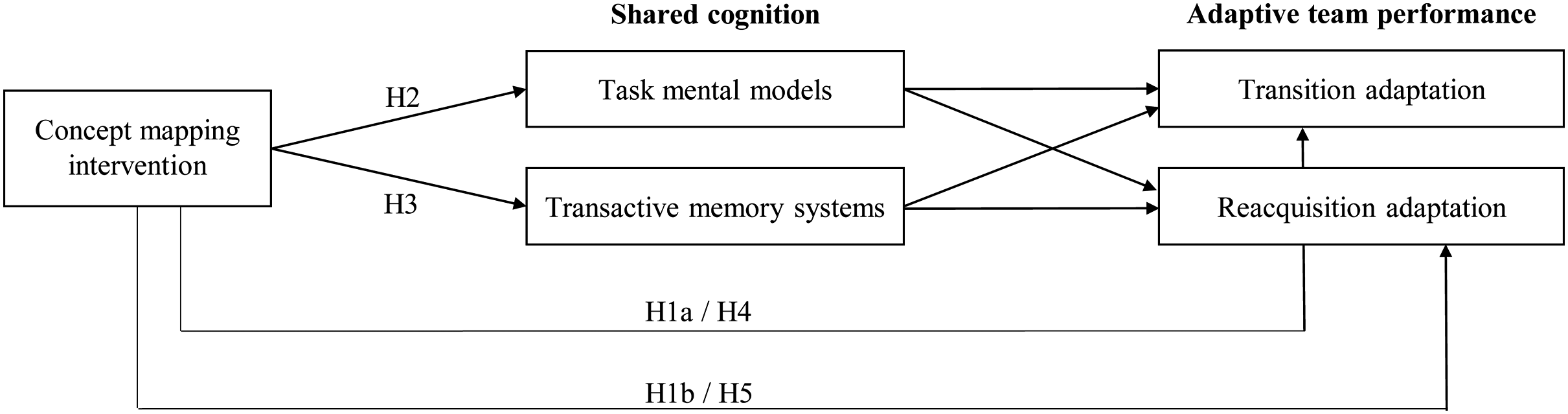
Method
Participants and Research Design
A total of 132 undergraduate students from a European university participated in this study. The students were from different degrees, such as psychology (16.7%), anthropology (13.6%), and management (9.1%). The study was integrated in a soft skills course on conflict management. The participation in the experiment was not mandatory, and the students did not receive course credit for their involvement. If participants did not show up, other students from the university that were available were recruited. Participants were randomly distributed over 44 three-person teams, and 52.7% of the participants were women. Mean age was 21 years (SD = 6.15). We used a between-subjects design, creating two conditions: concept mapping intervention (N = 23 teams) and no intervention (N = 21 teams).
Simulation
The teams worked on the Maastricht University Emergency Management Simulation—a complex decision-making task representing an emergency management simulation with distributed roles (Thommes & Uitdewilligen, 2019). Team members were randomly assigned to the role of fire brigade commander (team leader), a police officer, and a chemical expert. The task for each team is to minimize costs and damage due to fires by making decisions including how to deploy limited extinguishing capacity, which buildings to evacuate, whether or not to enter burning buildings, and closing access routes. Each decision aspect was associated with a specific amount of costs (see Supplementary Material).
Prior to the experimental scenarios, the team members engaged in 30 minutes of individual training, where they were trained to calculate role-specific algorithms. For instance, the fire commander learned how to calculate the number of trucks required for extinguishing a fire, and the chemical advisor learned how to estimate the effect of different chemicals. Team members completed a short test to ensure they fully understood their role.
For each of the experimental scenarios, team members received the same general description of the situation containing the location and intensity of the fires, the time of day, and wind speed and direction. However, each member also received specific information about the situation according to their role. For instance, the fire brigade commander received information about the amount of people in each building; the police officer received information about the different chemicals involved; and the chemical expert received information about the structural weakness of the buildings (see Figure 2 in the Supplementary Material). Team members needed to share information and combine this with their individual role knowledge to come to an optimal solution. As an example, the fire commander needs to tell the police officer how many people are inside adjacent buildings; then the police can calculate how much risks and costs are associated with (not) evacuating people from these buildings and can indicate how many units are required for evacuation.
Procedure
The study took place in a laboratory, and every session followed the same procedure. First, participants read and signed the informed consent. Then, they had the 30 minutes individual training. After that, teams worked on six 10-minute scenarios (see Figure 2). The task change was introduced after the third scenario. In scenario one through three, teams had at their disposable all resources necessary to evacuate civilians and extinguish all fires. Teams could therefore optimize performance by finding the most efficient way to transport and apply resources to the different locations. From the fourth scenario onward, teams faced situations with insufficient resources and more fires than they could extinguish. This required teams to prioritize how to distribute their limited resources based on the costs incurred by the different fires and the trade-off between evacuating and extinguishing. Moreover, the role of chemicals (and hence of the chemical advisor) was much more central in these scenarios. For instance, due to the effect of chemicals on groundwater pollution, it could be better not to extinguish some buildings. Therefore, the change resulted in a qualitative shift in the scenarios due to differences in the importance of the different concepts and roles within the simulation and a change in the optimal strategy (e.g., efficiency-based vs. priority-based). Research design.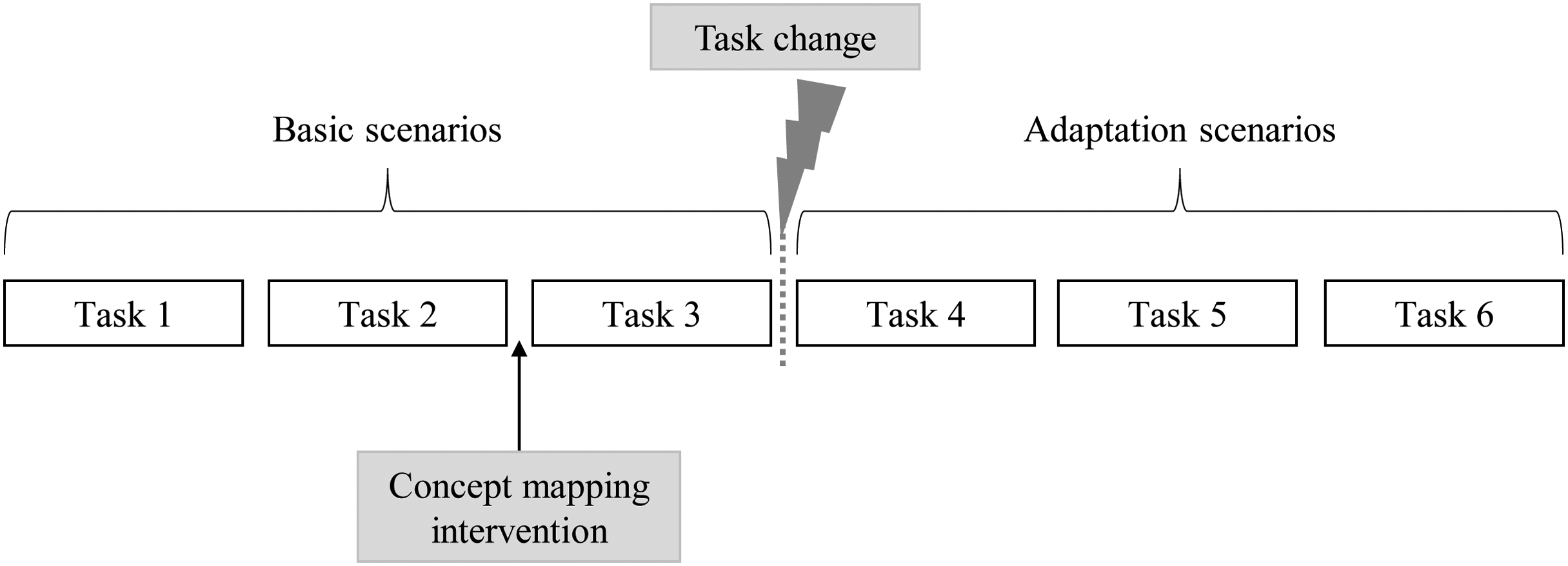
Concept Mapping Manipulation
After the second task, teams in the experimental condition participated in the concept mapping intervention. The intervention consisted of several tasks that culminated with the creation of the concept map. First, participants were instructed to write on post-it notes up to five main actions and/or the main information they needed to perform well in the task. Each team member had different color post-it notes where they wrote the main actions (i.e., the concepts). Then, the participants explained each main action to each other. Afterward, team members were instructed to discuss and achieve an agreement about the relationship among the concepts. Together, the team discussed the importance of the different concepts in order for the team to successfully perform the task. Finally, they built the concept map together. They placed the concepts on a paperboard around the focus idea—team performance. Then, the teams provided links among the concepts and between the concepts and the focus idea and indicated the strength of the relationship among the concepts (1 = totally unrelated to 7 = totally related). In total, the concept mapping intervention lasted 20 minutes, of which the last 5 minutes were used to build the concept map. Members of teams in the control condition were instructed to solve a crossword puzzle individually.
Measures
Task mental models
To operationalize task mental models, we created five sentences for the specific emergency management simulation: blocking roads, extinguishing capacity, using special units to evacuate people from adjacent buildings, chemicals in the buildings, and team performance. The five sentences were paired among each other resulting in 10 pairs of sentences. We asked each team member to evaluate the relatedness of the pairs of sentences on a 7-point scale (1 = the sentences are totally unrelated to 7 = the sentences are totally related). Task mental models were measured after each scenario. A detailed description of the similarity and accuracy calculation is provided in the Supplementary Material.
Transactive memory systems
Transactive memory system accuracy was measured using Austin’s (2003) self-report approach, which requires combining individual self-reports of expertise with team members reports of colleagues’ expertise on a collection of task-relevant knowledge areas. Individual self-reports of expertise were done regarding 11 knowledge areas (see Supplementary Material). We asked each team member to indicate the self-report of the expertise on a 7-point scale (1 = no expertise at all to 7 = full expertise). To obtain team members’ reports of colleagues’ expertise, participants were presented the same 11 knowledge areas as in the individual self-report task and were asked to tag one expert for each area. Participants could tag themselves as the expert on a particular topic. Transactive memory system accuracy was measured after the third task. A detailed description of the accuracy calculation is provided in the Supplementary Material.
Adaptive team performance
Team performance was operationalized based on the costs of each scenario. The costs were recoded such that higher values represent higher performance. In order to assess adaptive performance over time, we modeled the trajectories of performance after the change, relative to the trajectory of performance before the change. In particular, we focused on two main aspects of these temporal trajectories: transition adaptation and reacquisition adaptation. Transition adaptation refers to the drop in performance from the pre-change scenarios to the post-change scenarios, with a lower drop in performance indicating higher transition adaptation. Reacquisition adaptation refers to the increase in performance after the change.
Data Analysis
To analyze the impact of the concept mapping intervention on transactive memory system accuracy immediately after the manipulation, we conducted an independent samples t-test in the statistical software R (R Core Team, 2018) through RStudio (RStudio Team, 2018) with the Rcmdr package (Fox & Bouchet-Valat, 2017). To analyze the effect of the intervention on team adaptive performance and on task mental models and to analyze the mediating hypotheses, we conducted discontinuous growth modeling with the nlme package (Pinheiro, Bates, DebRoy, Sarkar, & R Core Team, 2017) in RStudio. Discontinuous growth modeling examines a discontinuous form of change that results from an unplanned event or discontinuity (i.e., an event that may cause a rapid acceleration and/or an increase/decrease in the value of the variable; Ployhart & Vandenberg, 2010). We followed the steps proposed by Bliese and Ployhart (2002). First, at level 1, we established the fixed functions for time. A detailed description of the analyses conducted at level 1, where we determined the fixed relation between time and team performance and task mental models, is provided in the Supplementary Material. Second, at level 2, we added the predictors of intercept and slope variability to test the hypothesized relationships. Concept mapping intervention is a dichotomous variable comparing intervention (coded as 1) with control condition (coded as 0).
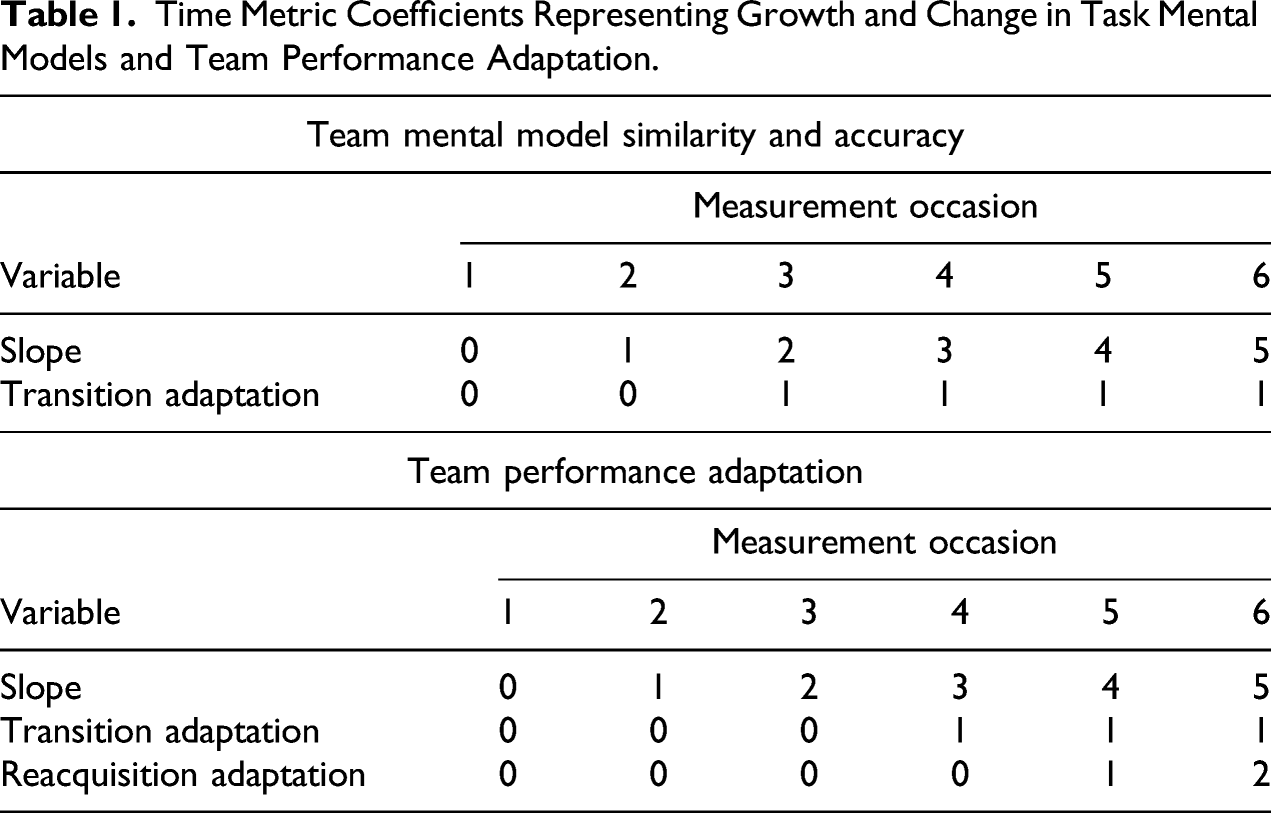
Time Metric Coefficients Representing Growth and Change in Task Mental Models and Team Performance Adaptation.
Results
Means, Standard Deviations, and Correlations for Study Variables.
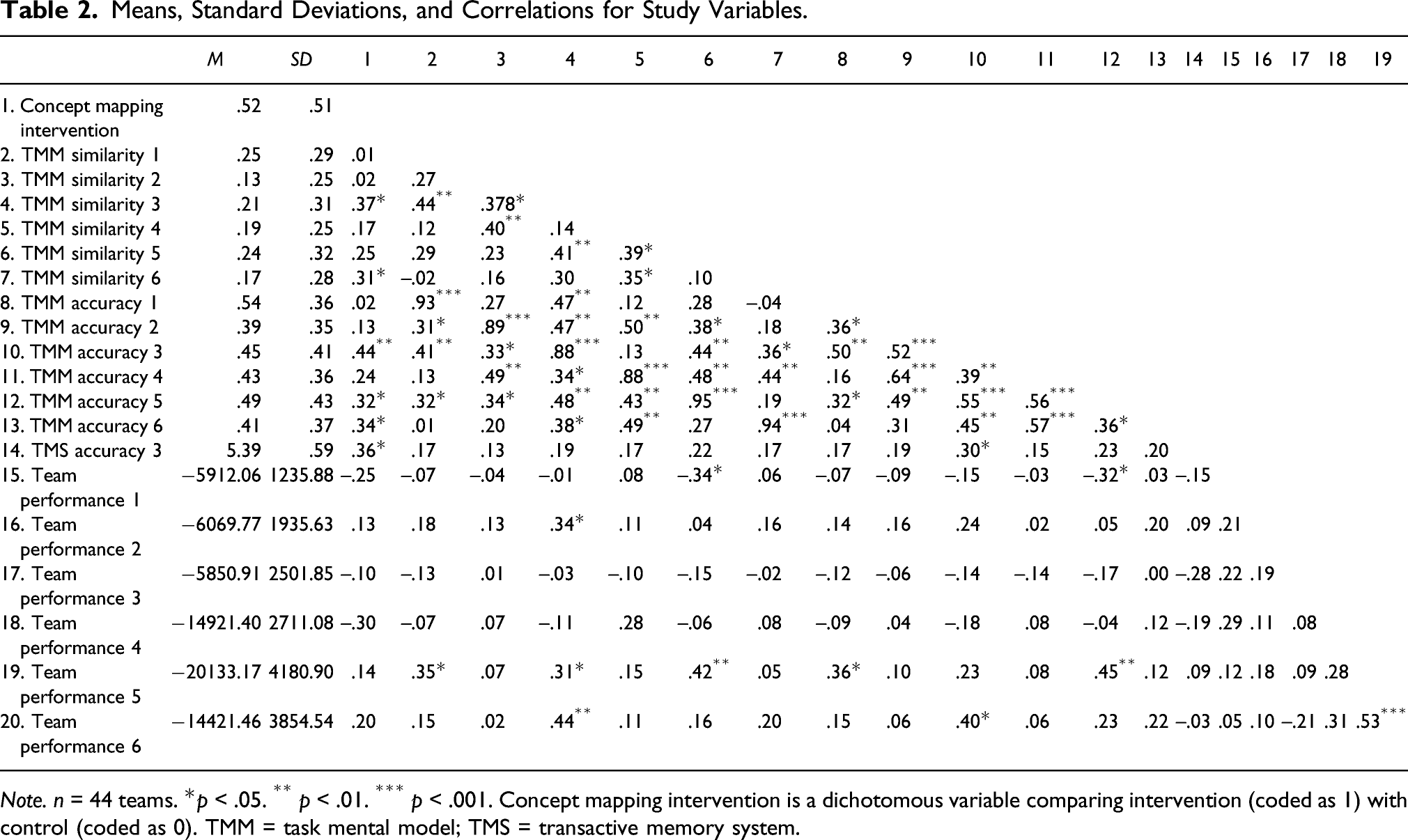
Note. n = 44 teams. *p < .05. ** p < .01. *** p < .001. Concept mapping intervention is a dichotomous variable comparing intervention (coded as 1) with control (coded as 0). TMM = task mental model; TMS = transactive memory system.
Impact of the Concept Mapping Intervention on Adaptive Team Performance
Discontinuous Growth Model Predicting Change in Team Performance AS A Function of the Concept Mapping Intervention.
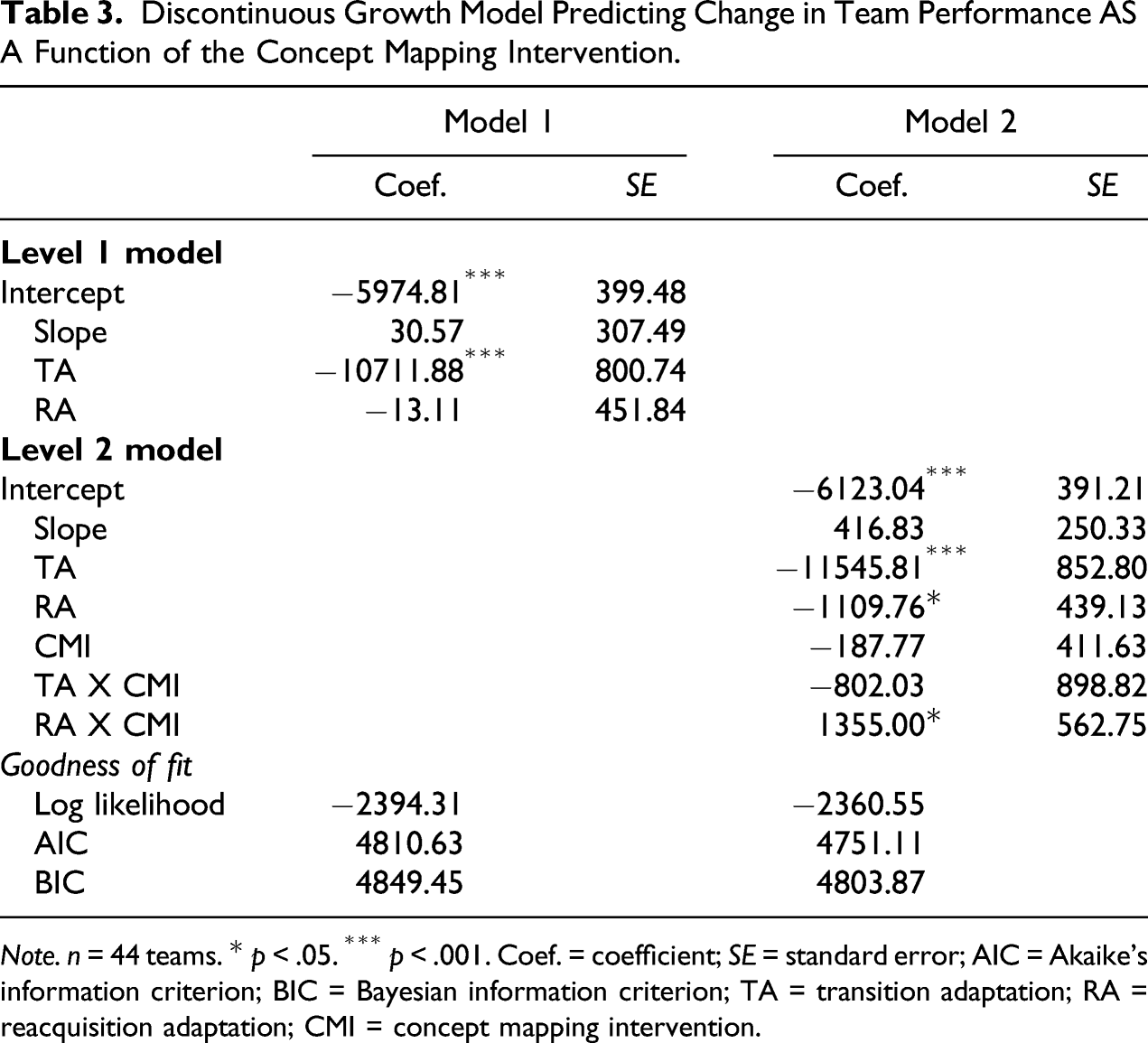
Note. n = 44 teams. * p < .05. *** p < .001. Coef. = coefficient; SE = standard error; AIC = Akaike’s information criterion; BIC = Bayesian information criterion; TA = transition adaptation; RA = reacquisition adaptation; CMI = concept mapping intervention.
In the second part of the model, we estimated a model that included the concept mapping intervention to predict variance in transition adaptation and reacquisition adaptation (see Table 3, Model 2). The interaction term of transition adaptation with concept mapping intervention was nonsignificant, indicating that there was no significant difference in the drop in performance after the unexpected change between the experimental and the control condition. This result did not support Hypothesis 1a. The interaction term of reacquisition adaptation with concept mapping intervention was positive and significant which indicates that teams that collectively built a concept map were faster than teams in the control condition in relearning the task after the unexpected change. This interaction is depicted in Figure 3. These results supported Hypothesis 1b. Predicted performance as a function of the concept mapping intervention. Note. The concept mapping intervention refers to the experimental group. Reacquisition adaptation refers to the increase in performance after the task change that happened from time 2 to time 3.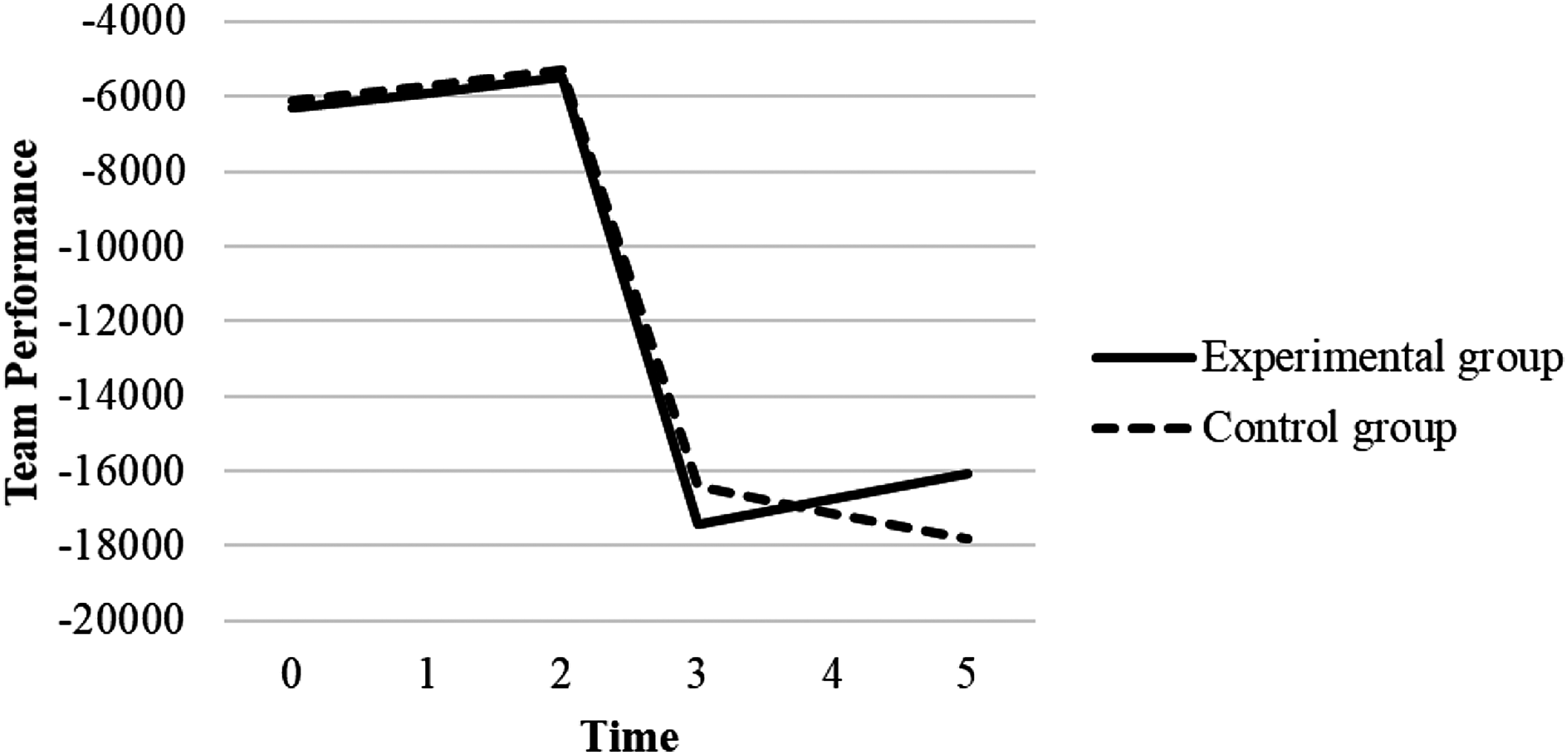
Impact of the Concept Mapping Intervention on Task Mental Model Similarity
Discontinuous Growth Model Predicting Change in Task Mental Model Similarity and Accuracy as a Function of the Concept Mapping Intervention.
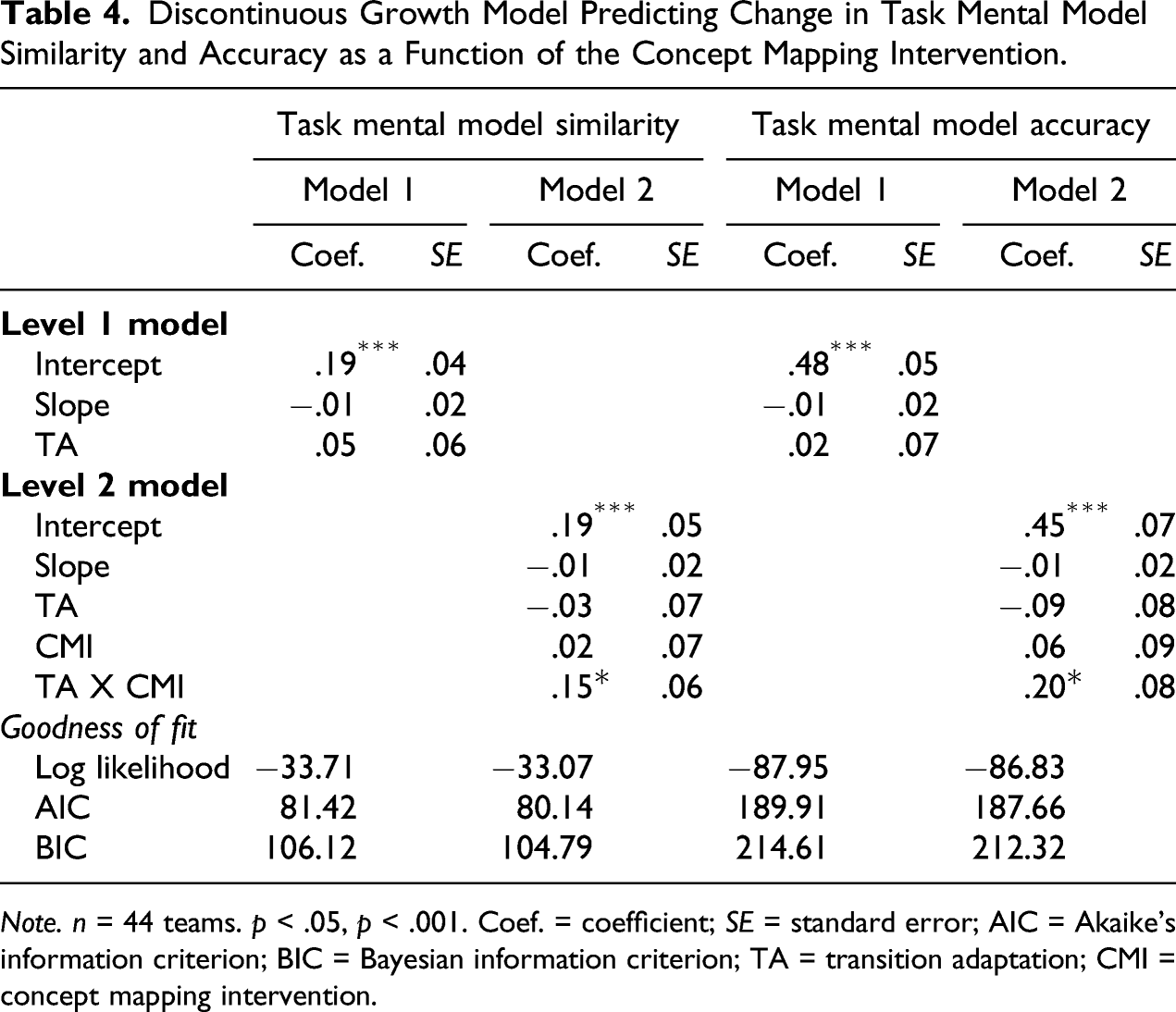
Note. n = 44 teams. p < .05, p < .001. Coef. = coefficient; SE = standard error; AIC = Akaike’s information criterion; BIC = Bayesian information criterion; TA = transition adaptation; CMI = concept mapping intervention.
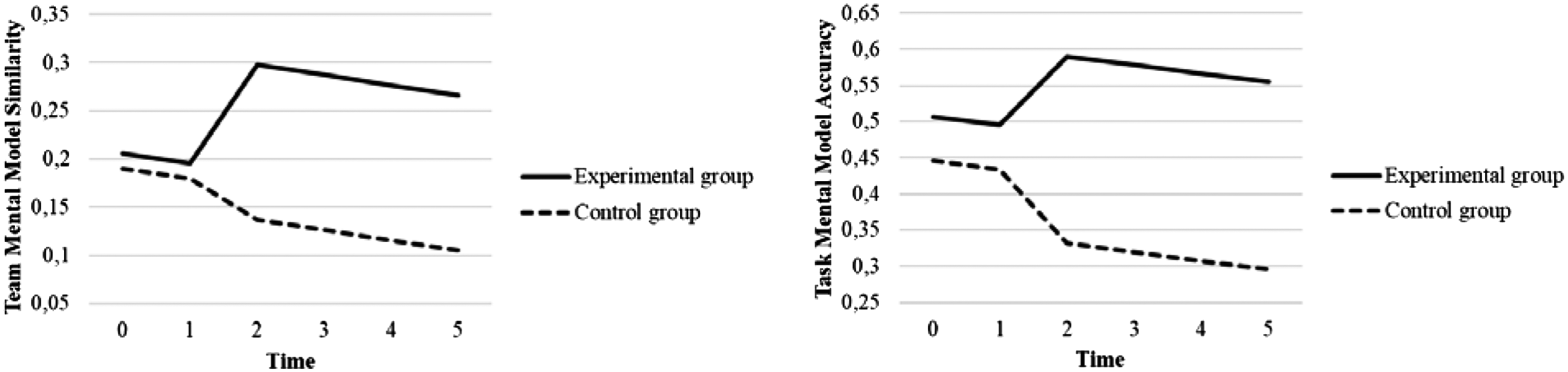
Effect of the concept mapping intervention on task mental model similarity and accuracy. Note. The concept mapping intervention refers to the experimental group.
Impact of the Concept Mapping Intervention on Task Mental Model Accuracy
First, we analyzed the effect of the concept mapping intervention on task mental model accuracy over time. As can be seen in Table 4 (Model 1), the linear trend and the transition adaptation effect were not significant. These results suggest that on average the teams did not show an increase in the task mental model accuracy neither in the pre-change period, nor from the pre-change to the post-change period. The results suggested no evidence for autocorrelation, Δ2LL= −.13, p =.604. In the second part of the model, we estimated a model that included the concept mapping intervention to predict variance in the task mental model accuracy trajectory. The interaction term of transition adaptation with the concept mapping intervention was positive and significant (see Table 4). This interaction is also depicted in Figure 4. The results indicate that for the teams in the concept mapping condition, the task mental model accuracy increases immediately after the intervention, relative to the control condition. These results supported Hypothesis 2b.
Impact of the Concept Mapping Intervention on Transactive Memory System Accuracy
Regarding the impact of the concept mapping intervention on transactive memory system accuracy immediately after the intervention, the results revealed that the difference between the control group, M = 5.18, SD = .56, n = 21, and the experimental group, M = 5.59, SD = .54, n = 23, was statistically significant, t(41.30) = −2.47, 95% CI [−.75; −.08], p = .018. The results indicate that for the teams in the concept mapping condition, the transactive memory system is more accurate immediately after the intervention that in the control condition. These results supported Hypothesis 3.
The Mediating Role of Shared Cognition on the Relationship between the Concept Mapping Intervention and Adaptive Team Performance
To test whether shared cognition mediates the effect of the concept mapping intervention on transition and reacquisition adaptation, we followed the recommendations by Pitariu and Ployhart (2010). First, we entered the concept mapping intervention into the model to analyze the effect on transition and reacquisition adaptation. We tested this step in the previous analysis, and the results showed that concept mapping did not have an effect on transition adaptation but did have an impact on reacquisition adaptation. Therefore, we continued the analysis only for the mediating role of shared cognition on the relationship between the concept mapping intervention and reacquisition adaptation. Thus, the results did not support Hypotheses 4a, 4b, and 4c.
In the second step of the mediation analysis, we regressed shared cognition on the concept mapping intervention. The results show that the concept mapping intervention had a positive and significant effect on task mental model similarity, b = .74, t = 6.51, p < .001, task mental model accuracy, b = .88, t = 7.99, p < .001, and transactive memory system accuracy, b = .71, t = 6.18, p < .001. Finally, we ran models with both the concept mapping intervention and each of the mediator variables. The effect of task mental model similarity and accuracy on reacquisition adaptation was statistically significant, γ = 708.47, t = 2.29, p = .023; γ = 784.30, t = 2.50, p = .013 (respectively), and the effect of concept mapping on reacquisition adaptation became not significant, γ = 814.30, t = 1.36, p = .174; γ = 639.34, t = 1.04, p = .297 (respectively). These findings supported Hypotheses 5a and 5b. The effect of transactive memory systems accuracy on reacquisition adaptation was not significant, γ = 164.948, t = .51, p = .583, and the effect of concept mapping on reacquisition adaptation was statistically significant, γ = 1239.70, t = 2.06, p = .041. These results did not support Hypothesis 5c.
Supplemental Analysis
We conducted additional analyses to examine the interaction effect between the concept mapping intervention and task mental model accuracy and transactive memory system accuracy on team performance adaptation. While the interaction involving transactive memory system accuracy was not significant, the interaction involving task mental model accuracy immediately after the intervention was significant. The interaction effect between the concept mapping intervention and task mental model accuracy was not significant on transition adaptation, γ = 1324.01, t = 1.30, p = .194, and positive and significant on reacquisition adaptation, γ = 1409.95, t = 2.33, p = .021. The interaction is depicted in Figure 5. The results suggest that the concept mapping intervention is only effective for performance recovery after the task change if it leads to high task mental model accuracy. Predicted performance as a function of the interaction effect between the concept mapping intervention and task mental model accuracy. Note. The concept mapping intervention refers to the experimental group. TMM = task mental model.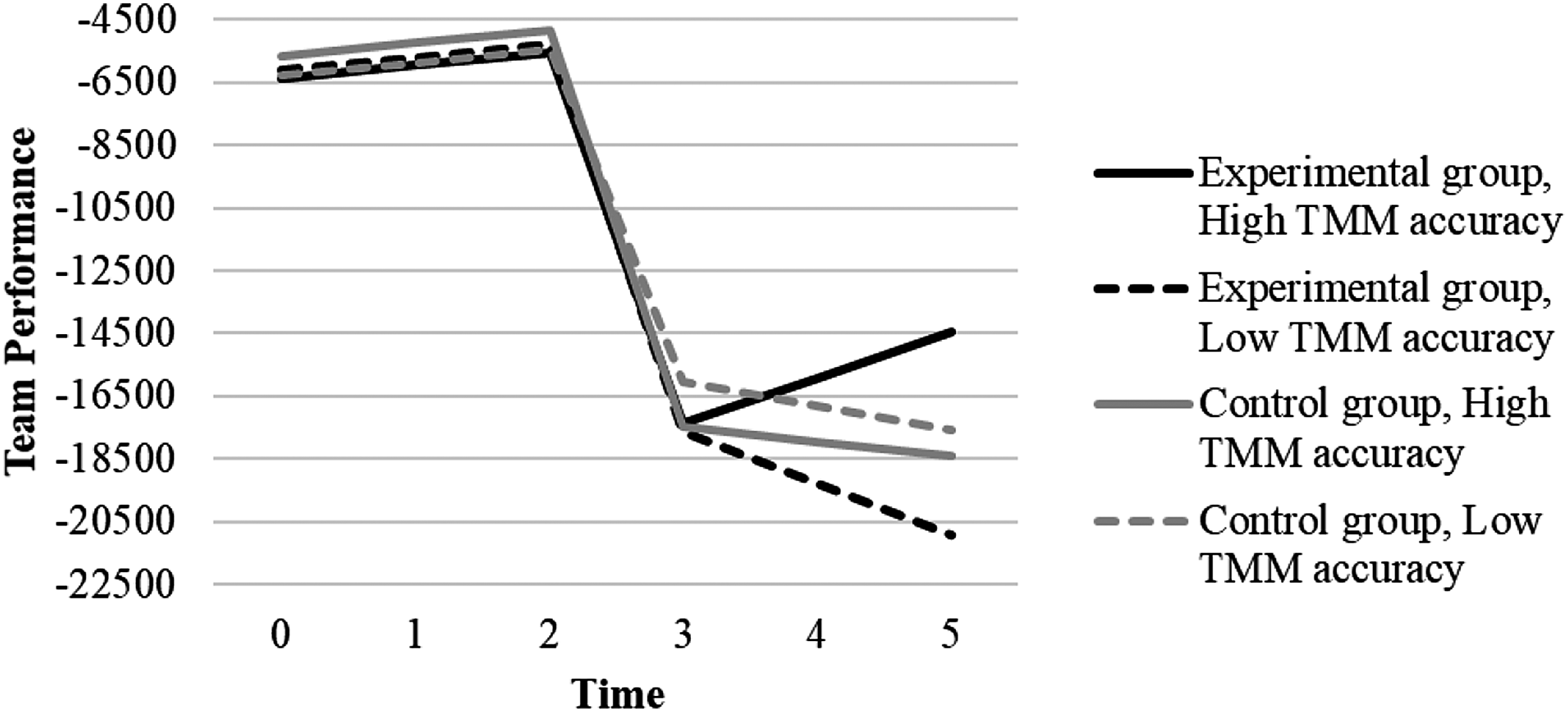
Discussion
Our research presents two major findings that have important implications for researchers and practitioners. First, our research provides insight into the way teams can adapt to changed tasks and how their performance may look different within the near (i.e., transition) and more distal (i.e., reacquisition) time periods, following the change. Second, the intervention that we employed here appears to have some benefits for teams in terms of their development of different types of shared cognition which play a salient role in reacquisition adaptation. By showing that a concept mapping intervention promotes reacquisition adaptation, as well as the development of similar and accurate task mental models, and the development of transactive memory systems accuracy, our research provides theoretical implications to the literature on team adaptation and team cognition. Our research also provides practical implications to organizational teams.
Theoretical Implications
First, this study contributes to the existing knowledge on team adaptation by showing how a simple intervention can facilitate the gradual increase in performance in a reacquisition adaptation phase (Lang & Bliese, 2009). Researchers have theorized and empirically established that teams have to adapt their behaviors and strategies in order to address complex and demanding problems (e.g., Burke et al., 2006; Christian et al., 2017; Maynard, Kennedy, & Resick, 2018). Nevertheless, there is a dearth of experimentally tested practical interventions that could be implemented to train teams to become more adaptive. Thus, this study contributes to the team adaptation literature by introducing a cognitive technique—concept mapping—that researchers and practitioners can use to promote adaptive team performance.
Our study also contributes to the literature on team adaptation by demonstrating the importance of unpacking adaptation into two phases: transition and reacquisition (Lang & Bliese, 2009). Importantly, the concept mapping intervention had an effect on team performance in the reacquisition adaptation but not in the transition adaptation phase. The steep decline in performance immediately after the task change suggests that even when teams seem to be prepared for a change, the human tendency of reacting with the most well-learned or dominant response (Staw, Sandelands, & Dutton 1981) appears to outweigh the planning that may have gone into discussing the task before the unexpected change. Interestingly, teams that created the concept map were able to rebound quickly after the task change and significantly recover their performance over time. Teams that did not create the concept map continued on a decline over repeated attempts. This suggests that different interventions may be needed to address adaptation within the transition phase as teams need to adapt on the spot while simultaneously making sense of the situation and realizing that the task has changed (Uitdewilligen et al., 2018). This requires an immediate and rapid reaction with little time for elaborate communication and discussions (Abrantes, Passos, Cunha, & Santos, 2018).
In order to facilitate transition adaptation, interventions may need to focus on knowledge and abilities that can be employed rapidly without much elaboration. Whereas the concept mapping intervention likely enables the development of declarative knowledge which requires time to translate into action, transition adaptation may benefit more from interventions focused on procedural knowledge building, which can be immediately deployed (Cohen & Bacdayan, 1994). Such interventions could for instance focus on overlearning specific routines for adaptation (Grote, Weichbrodt, Günter, Zala-Mezö, & Künzle et al., 2009). In addition, when teams are faced with a sudden task change, this leads team members to “deal with uncertainty and anxiety rather than focusing on regular tasks” (Devaraj & Jiang, 2019, p. 436). Thus, interventions targeting transition adaptation should focus on the socio-emotional aspects of team adaptation for instance in helping teams deal with the uncertainty and anxiety caused by nonroutine events.
In contrast, our results suggest that teams that collectively built a concept map were able to unlearn outdated routines and develop novel ones as their performance gradually increased over time after the change. This is consistent with the team compilation model of Kozlowski et al. (1999), which states that, if in the development phase teams develop complex network and explore alternative network configurations, this enables their ability to modify the workflow and accomplish the task under shifting demands. In the process of building the concept map, team members may have developed a rich understanding of their task, which helped them to make sense of the task change, align their behaviors and task processes with the change, and establish new routines to complete the tasks (Devaraj & Jiang, 2019; Uitdewilligen et al., 2018).
Second, our study contributes to the team cognition literature by showing how a practical intervention promotes the immediate development of similar and accurate task mental models and an accurate transactive memory system, which disentangles the influence of this intervention on specific team knowledge structures. Understanding how to help teams to develop shared cognition is particularly important because developing a shared understanding among team members about taskwork and the roles and expertise of each member is not easy and requires time (Cannon-Bowers, Salas, & Converse, 1993). Nevertheless, although shared cognition takes time to develop, teams often have to quickly build a shared understanding as this is needed to accomplish high team performance (Santos et al., 2015). To train teams to develop similar, accurate, and timely shared cognition, it is important to develop and experimentally test a practical intervention. Thus, this study contributes to the team cognition literature by showing that in order to develop shared cognition, team members need to build a knowledge and concrete object—the concept map. Furthermore, our concept mapping intervention seemed to help team members to develop task mental models that remained relatively similar and accurate when teams faced an unexpected task change, after the immediate increase in similarity and accuracy following the intervention. Those findings suggest that, after the change, those teams were able to reconstruct their knowledge network and update their task mental model in order to fit the task demands of the changed task (Uitdewilligen et al., 2013; Van Boxtel et al., 2002).
Finally, our study contributes to the intersection of team cognition and team adaptation literatures by showing that the effect of the concept mapping intervention on team performance in the reacquisition adaptation phase is primarily driven by the influence of task mental models. These findings suggest that to improve team performance in the reacquisition adaptation phase, the knowledge about the task should be shared instead of specialized as the task teams performed was highly interdependent and required coordination through shared knowledge (Rico, Gibson, Sánchez-Manzanares, & Clark, 2019). These findings also suggest that task mental models are more appropriate to the task-change paradigm that we used in this study than transactive memory systems. This means that teams need to understand ideas provided by others and contribute their own ideas, in order to develop a task mental model and in turn recover after an immediate performance loss. These findings are in accordance with theoretical models and frameworks of team adaptation (Burke et al., 2006; Kozlowski et al., 1999) that postulate that only teams that have team mental models are able to adapt to changed tasks. However, although team members organize and integrate their own roles and responsibilities as well as of the other team members while building a concept map (i.e., they develop a transactive memory system) that knowledge did not help them to recover after a performance loss.
Previous research on team cognition has suggested that when teams face a change in the task conditions (e.g., lack of resources to complete the task), team members rely on their task mental models to adapt their interaction patterns and their coordination processes (Marks et al., 2000). When teams face a change in the team conditions (e.g., loss of an expert team member), team members rely on their transactive memory system to provide help and backup to each other (Christian, Pearsall, Christian, & Ellis, 2014; Christian et al., 2017; Smith-Jentsch, Kraiger, Cannon-Bowers, & Salas, 2009 (Maynard et al., 2015) postulates that teams may need to focus their adaptation on task-related processes (e.g., coordination) when the adaptation trigger is taskwork-based, and focus their adaptation on team-related processes (e.g., conflict management) when the adaptation trigger is teamwork-based. Our findings are in accordance with the findings on team cognition literature and the propositions on team adaptation literature; as in our study, the change was task-related (i.e., the trigger was taskwork-based), and the task mental models enabled teams to recover after a performance loss. The lack of support for the mediating role of transactive memory systems between the concept mapping intervention and reacquisition adaptation, may suggest that, as the change was task-related, team members could not rely on the transactive memory systems to adapt their processes and behaviors to fit the new task requirements. It could be that if the change was team-related, team members would be able to rely on the transactive memory systems and adapt their team-related processes and recover their performance. This is a question that deserves attention.
Practical Implications
Given the complex environments that many organizational teams operate in, being able to adapt to unexpected changes is becoming increasingly important (Kennedy & Maynard, 2017). Our results emphasize that in order for this to happen, it is valuable for team members to have a similar and accurate understanding about their task and the roles and expertise of each member. This finding is particularly important for multidisciplinary teams like the ones studied here, given the tendency for such teams to not possess shared cognition (e.g., Liao, O’Brien, Jimmieson, & Restubog, 2015). While the teamwork literature has identified team training (Salas et al., 2008) or team debriefings (Kolbe et al., 2013) as practices that leverage the development of shared cognitions and enable team adaptation, these are often time-consuming and expensive. As an alternative, we present concept mapping as a practical intervention that can be used by organizational and business teams to share and combine important information and to build routines in a way that is less time-consuming (20 minutes) and cost consuming (requiring paperboard, post-it notes, and pens/pencils). Indeed, concept mapping is a practical intervention that enables the members of multidisciplinary teams to quickly develop and update knowledge during task performance. It allows team members to briefly pause what they are doing, build a conceptual representation of their shared goals, tasks, and responsibilities, and then proceed with their work. By doing so, team members engage in a collaborative learning process that triggers the development of similar and accurate task mental models and an accurate transactive memory system.
Our study also suggests that concept mapping is an effective intervention in sustaining the benefits of training as teams in our study developed the concept map after being exposed to an individual training and two-team decision-making scenarios. This point is salient as there is a growing appreciation that training interventions by themselves may not be sufficient to gain the benefits thought to accrue from training (e.g., Shuffler et al., 2018). Instead, trainings may need to be coupled with other team development interventions, and our results suggest that concept mapping interventions may partner well with training initiatives. Therefore, organizational teams that are provided with training sessions can, after the training, collectively develop a concept map in order to facilitate the learning process.
Limitations and Directions for Future Research
There are several potential limitations for this research we should highlight. First, even though laboratory experiments have some strengths (e.g., manipulation of independent variables and control over confounding variables, ability to strongly test mediation hypotheses), this design also has some potential disadvantages. One of the potential downsides involves the generalizability of the results to field settings (Podsakoff & Podsakoff, 2019). Accordingly, the generalization of our results to real world teams has to be made with caution. However, by using an experimental design, we reduce methodological problems related to correlational studies, and we provide convincing evidence that the concept mapping intervention actually causes the development of shared cognition and promotes reacquisition adaptation. In addition, researchers have stated that “illuminating the psychological processes by which the independent variable affects the dependent variable is more important than demonstrating that findings from the laboratory generalize to field settings” (Podsakoff & Podsakoff, 2019, p. 23). Nevertheless, further research is needed to evaluate the effectiveness of this intervention to teams in real work environments.
Although our study suggests that the concept mapping intervention is a way to facilitate the learning process, the study does not enable us to demonstrate the sustainability of the team training beyond the investigation period. Future research may shed light on whether concept mapping facilitates the team learning process over the long run.
Another limitation refers to the use of a crossword puzzle in the control condition. Crossword puzzles have been used in experimental studies as a neutral task in the control conditions (e.g., Roch, 2007). In this study, we used a crossword puzzle as a filler task to ensure that the time between task 2 and task 3 was similar in both conditions. Nevertheless, whereas the concept map was built by the team members as a team, the crossword puzzle was solved individually. Thus, interaction might have been also manipulated as the crossword puzzle might have reduced the amount of team interaction, primed individual work, and distracted the team members from the tasks they had to solve as a team. Therefore, the positive learning trajectory before and after the task change in the intervention condition might have happened due to the concept mapping intervention, while the negative learning trajectory after the task change in the control condition might have happened due to the individual task intervention. Thus, teams in the control condition might have been affected more strongly by the experimental manipulation than teams in the intervention condition. That could explain the consistent decline in performance in the control condition after the task change. However, if we assumed that the crossword puzzle primed individual work and distracted the team members from the tasks they had to solve as a team, we could expect a decrease in performance even before the task change, which did not happen. Teams in the control condition would eventually be able to recover their performance after repeated attempts as they would learn the changed task and the best strategy to deal with that by trial and error. That would take time and would be costly for teams.
The fact that teams in the control condition might have been affected more strongly by the experimental manipulation than teams in the intervention condition could also explain the marked decline in task mental model similarity and accuracy between time 1 and time 2. Nevertheless, even if teams in the control condition went straight from task 2 to task 3 without solving the crossword puzzle, we would expect the same decline in task mental model similarity and accuracy as, without the concept mapping intervention, teams were not able to quickly update their cognitive structures in a way that would fit the demands of the changed task. In order to overcome the limitations resulting from the crossword puzzle, in the future, researchers should use a group task in the control condition, such as an unstructured group discussion that would mimic a group being removed from their main task to focus on something mundane and unrelated.
Another limitation involves the small number of teams and the composition of the teams (undergraduate students). The generalization of the results has to be made with caution as student samples may not lead to the same findings as nonstudent samples and may not properly represent the work environment. Nevertheless, “criticisms of the use of students demonstrate a misunderstanding of the goals of laboratory experiments and are often flawed” (Podsakoff & Podsakoff, 2019, p. 24). To overcome this potential limitation, in the future, researchers should analyze the effect of the concept mapping intervention in MBA courses or leadership and team dynamics courses that are attended by professionals and also in field teams. Researchers should also recruit a large number of teams.
Further, we did not include a manipulation check in our design. Nevertheless, Lonati, Quiroga, Zehnder, and Antonakis (2018) argue that a manipulation check should be run “if the manipulation is assumed to alter only a psychological state” (p. 22, emphasis added) and should not be run when the manipulations aim to alter objective variations of, for instance, parameters, as “such interventions do not need to be actively interpreted by the experimental subjects” (p. 22). As our manipulation was designed to change both shared cognition and team adaptation (i.e., an objective variation in team performance), and not only shared cognition, a manipulation check was not needed. In the future, if researchers aim to analyze the effect of the concept mapping intervention on only shared cognition (team mental models and/or transactive memory systems), they should carry out a manipulation check during the pilot studies, which allow them to revise the manipulation if needed (Podsakoff & Podsakoff, 2019).
Conclusion
There is a dearth of experimentally tested practical interventions that could be implemented to develop shared cognition and team adaptation. The current research shows that a concept mapping intervention—a technique to organize and represent knowledge—promotes the development of similar and accurate task mental models, an accurate transactive memory system, and helps teams to recover after an unexpected change in a task.
Footnotes
Declaration of Conflicting Interests
The author(s) declared no potential conflicts of interest with respect to the research, authorship, and/or publication of this article.
Funding
The author(s) disclosed receipt of the following financial support for the research, authorship, and/or publication of this article: This research was conducted while the first and fourth authors were at ISCTE—Instituto Universitário de Lisboa. William James Center for Research, ISPA --Instituto Universitário is financed by FCT ref. [UID/PSI/04810/2019].This work was supported by the Fundação para a Ciência e a Tecnologia [grant number: PTDC/MHCPSO/1044/2014].

Supplemental Material
Supplemental material for this article is available online.
Associate Editor: Guido Hertel
Author Biographies
References
Supplementary Material
Please find the following supplemental material available below.
For Open Access articles published under a Creative Commons License, all supplemental material carries the same license as the article it is associated with.
For non-Open Access articles published, all supplemental material carries a non-exclusive license, and permission requests for re-use of supplemental material or any part of supplemental material shall be sent directly to the copyright owner as specified in the copyright notice associated with the article.
