



Abstract
We analyze product reusability, executed through refurbishment, amid supply disruptions. Consumers trade in used units, which can later be refurbished and sold. Using a three-period model, we determine the optimal reusability level, trade-in and refurbishment policies, trade-in fee, and the prices of new and refurbished units. Our analysis provides a useful framework to understand the interaction between a firm's choice of product reusability and the possibility of supply disruptions. First, we establish a threshold refurbishment policy: the firm refurbishes more as reusability increases but avoids refurbishment at low reusability. When both consumer valuation of used units and supply disruption probability are high, the firm builds a safety-stock of traded-in units, which it refrains from refurbishing when there is no supply disruption, unless the product reusability level is sufficiently high. Second, we find that it benefits to increase product reusability as the supply disruption risk increases until a certain threshold. Beyond this threshold, it is advantageous for the firm to reduce reusability and save on design costs to be profitable, contrary to popular belief. Our numerical examples reveal that the firm reduces reusability when production cost is high due to narrow margins. Finally, we demonstrate that the firm shares the benefits of higher product reusability with its consumers through higher trade-in fees and lower refurbished unit prices. This results in a “Pareto-efficient” win for the firm, its trade-in customers, and purchasers of refurbished units. Thus, our analysis offers insights for product designers on how supply disruption influences reusability choices in products.
Introduction
One of the Sustainable Development Goals (SDGs) established by the United Nations in 2015 is “Responsible Consumption and Production.” This goal seeks to reduce and manage waste by effectively reusing products and resources that have been returned, discarded, or disposed of at various stages of a product’s life cycle. Governments worldwide have implemented regulatory policies to promote such reuse practices, leading to their increasing adoption across various industries. Recently, there has been an increased discussion about how such reuse practices can help businesses withstand supply disruptions like the Suez Canal blockade and the COVID-19 pandemic (UNEP-report, 2020). Circular economy practices, including product and resource reuse, can help businesses build the necessary resilience towards disruptions (McKinsey & Company, 2023). There is a growing recognition that product and resource reuse practices can provide a back-up supply for manufacturers in the event of a supply disruption (Supply Chain Management Review, 2023). These practices can serve as local value-retention strategies, aiding firms in coping with and recovering from disruptive events (EIONET-report, 2021). This article analyzes how firms should manage their product-reusability decisions in the presence of supply disruptions, specifically addressing the question of how much reusability a firm should design into its products (such as through modularity or disassemblability) to support its reuse practices in the face of supply disruptions. While incorporating reusability into product design can lower a firm’s unit refurbishment cost, it incurs substantial upfront product-design costs to enhance the ease of a product’s reusability.
Supply chains frequently encounter disruptions stemming from various sources, such as natural disasters, political conflicts, economic fluctuations, and unforeseen events. These disruptions pose significant challenges to ensuring the uninterrupted flow of goods and materials along supply networks. For instance, the Coronavirus outbreak precipitated a global shortage of computer chips, colloquially termed “chipageddon,” affecting a wide array of industries, including computing, automotive, and telecommunications (Kelion, 2021). These industries continue to grapple with the repercussions of such shortages.
Existing risk mitigation strategies like order-splitting and multi-sourcing that address supply or sourcing disruptions are advantageous for securing supply (Anupindi and Akella, 1993; Tomlin, 2006). However, in the context of responsible consumption and resource availability, there is growing recognition of the role that reuse practices can play in bolstering resilience while promoting value retention. Practices such as refurbishment and remanufacturing are increasingly advocated by industry experts and organizations as a means to enhance supply chain resilience (Alicke et al., 2020; Fitzsimons, 2020). For instance, HP introduced remanufactured laptops alongside its mainstream products during the pandemic, underlining its commitment to sustainability with the slogan “We believe in reincarnation—at least when it applies to HP Notebooks” (REMATEC, 2020). Similarly, Nike launched a refurbishment program in select stores post-pandemic, reflecting a broader industry trend towards embracing reuse practices (Salpini, 2021). Recently, Simchi-Levi et al. (2023) underscore the significance of such practices in boosting resilience within semiconductor supply chains, which are particularly susceptible to disruptions.
Our interviews with senior refurbishing and remanufacturing professionals across various geographic regions, encompassing both developed and emerging economies, underscored the significance of reuse practices, particularly in the context of supply disruptions. 1 One professional noted, “refurbishing and remanufacturing surely is playing a critical role in the recent times as we have seen imports have been banned and there was a huge supply chain disruption going on [during the COVID pandemic]. Having said that companies still have not cracked on refurbishing or remanufacturing in big way yet. It’s just a start and has a long way to go till refurbishing and remanufacturing become an everyday norm. Recent supply chain disruptions has given it a big boost though.” Another professional emphasized, “This [i.e., using reuse practices as a tool to address supply disruption] is true but only possible for a short to medium term fix.” These varied opinions from industry practitioners served as compelling motivations to explore how firms can effectively manage product reusability amidst supply disruptions and potentially alleviate the impacts of supply shortage risks resulting from disruptive events.
Drawing from both industrial practice and academic literature, we broadly classify reuse practices into two categories: (1) refurbishment, and (2) remanufacturing & recycling. The primary distinction between these two categories is the product quality after processing of the used units returned (or traded-in) by consumers. Refurbished units typically exhibit inferior quality compared to the original, leading to decreased consumer willingness to pay for such units. Conversely, in remanufacturing and recycling, the quality of used units is restored to that of newly manufactured units of the product (Chen and Chen, 2019; Thierry et al., 1995). Nevertheless, refurbishing remains one of the most widely used methods to efficiently reuse products and resources, with the market for refurbished products experiencing substantial growth post the COVID-19 pandemic (Allied-Market-Research, 2023; Rawuf, 2022). Consequently, this article focuses on refurbishment practices.
A well-designed product enables a firm to derive greater value from used units during reuse operations (Gershenson et al., 2003; Souza, 2017). This is often achieved by enhancing key product characteristics such as “disassemblability,” “modularity,” and “reusability.” Some examples of firms’ “product reusability” choices include the following. Dell’s product-design methodology emphasizes the role of modular product design in providing “easy access and disassembly” to facilitate their circular economy initiatives (Shrivastava and Schafer, 2018). Another example is Cisco’s sustainability initiatives that incorporates circularity in their products. Cisco’s product design strategy is to “design for reuse, repair & recycling,” so that the products are engineered to be quickly assembled and disassembled (Seward and Doran, 2024). Likewise, our interactions with industry professionals revealed a significant importance for “design for reuse.” One respondent commented, “surely if a firm is going for refurbishing or remanufacturing process they need to think on the designs right away.” However, it is crucial to acknowledge that while product-design techniques such as modularization aid a firm’s reuse operations, they typically entail substantial design process costs. Hence, such costs should be carefully considered in any analysis of product reusability, particularly in the context of supply disruptions.
In this article, we address the following questions when a firm faces potential supply disruptions:
Can managing product reusability be an effective strategy to manage the risk of supply disruptions, and, if yes, under what conditions? How should a firm operationalize its product reusability strategy through pricing and trade-in inventory management decisions? Does product reusability lead to “responsible consumption and production,” which is the United Nations’ twelfth sustainability development goal (UN SDGs, 2024)?
To the best of our knowledge, ours is the first paper that studies product-reusability in the context of reuse practices (executed via refurbishment), in the presence of supply disruptions. Our analysis can provide crucial managerial insights on the interplay between the risk of supply disruptions and the optimal level of product reusability. These insights can assist firms in designing efficient products for reuse when there are supply disruptions.
To address the above questions, we develop a three-period model with periods denoted as 0, 1, and 2. The following events and actions occur in each of these three periods:
As the risk of supply disruption increases, increasing product reusability can be advantageous up to a certain extent. However, when the risk of supply disruption increases beyond this threshold, increasing product reusability hurts the firm’s profits due to elevated design costs and diminished revenues. When consumers’ value for refurbished units is low, the firm always accepts trade-ins and adopts a threshold based refurbishment policy. That is, the firm does not refurbish when the reusability level is low, increasingly refurbishes the trade-ins as reusability increases, and refurbishes all trade-ins when reusability is sufficiently high. On the other hand, when consumers’ value for refurbished units is high, the firm accepts trade-ins if the reusability level is sufficiently high (i.e., above a threshold). Next, the firm refurbishes all the trade-ins in period 2 if the risk of supply disruption is low. On the other hand, if the risk is high, the firm adopts a threshold policy similar to 2 above in the absence of supply disruption, but refurbish all trade-ins during supply disruption. The cost saving in refurbishment due to product reusability enables the firm to encourage trade-ins and offer refurbished units at reduced prices. Thus, firm can promote value retention in alignment with the United Nations’ sustainability goal of “Responsible Consumption and Production.”
Figures 1 and 2 in Section 3 provide the states and the firm’s decisions in each period in greater detail. Following are some key findings of our analysis:
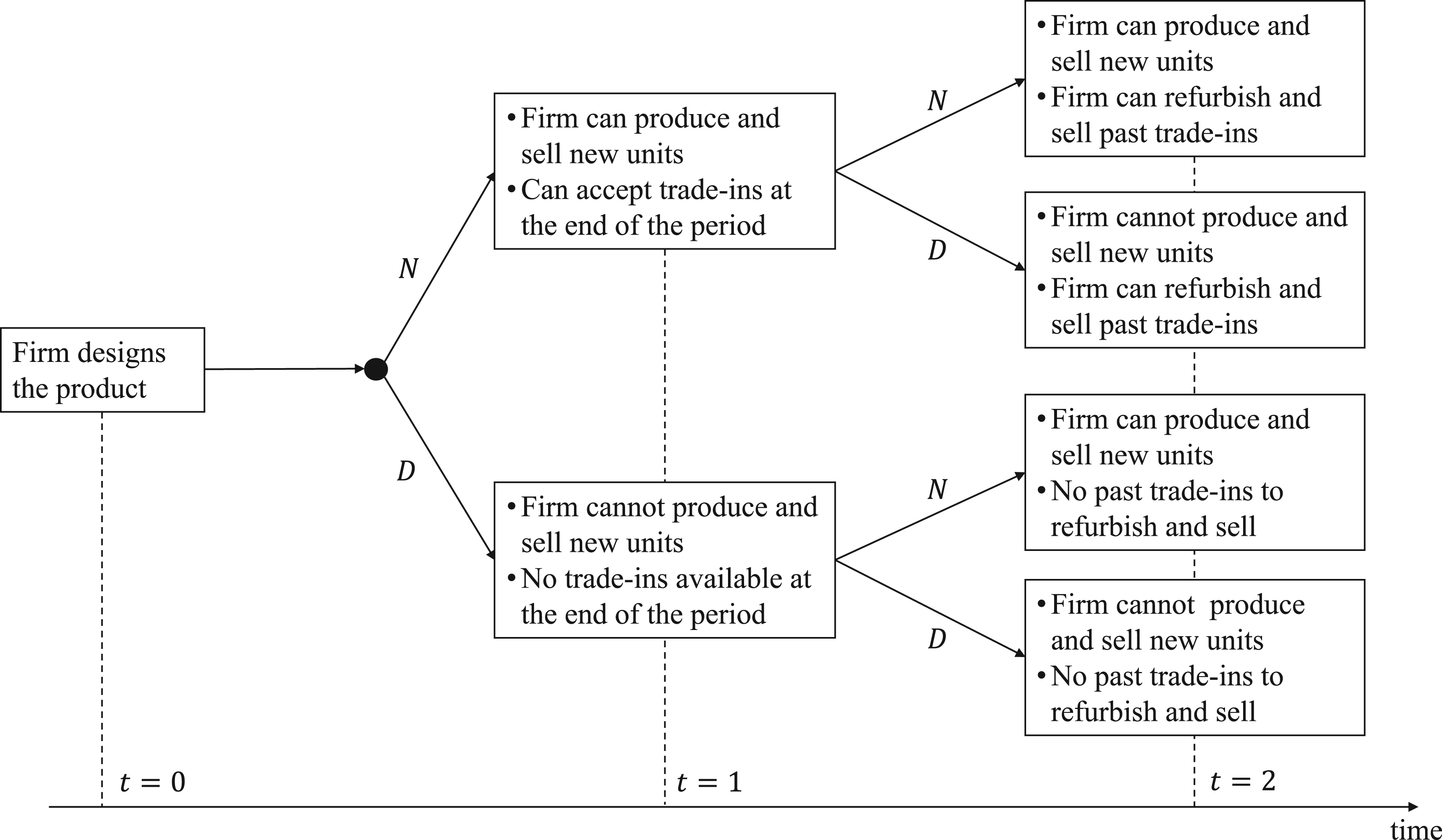
Possible outcomes in different periods
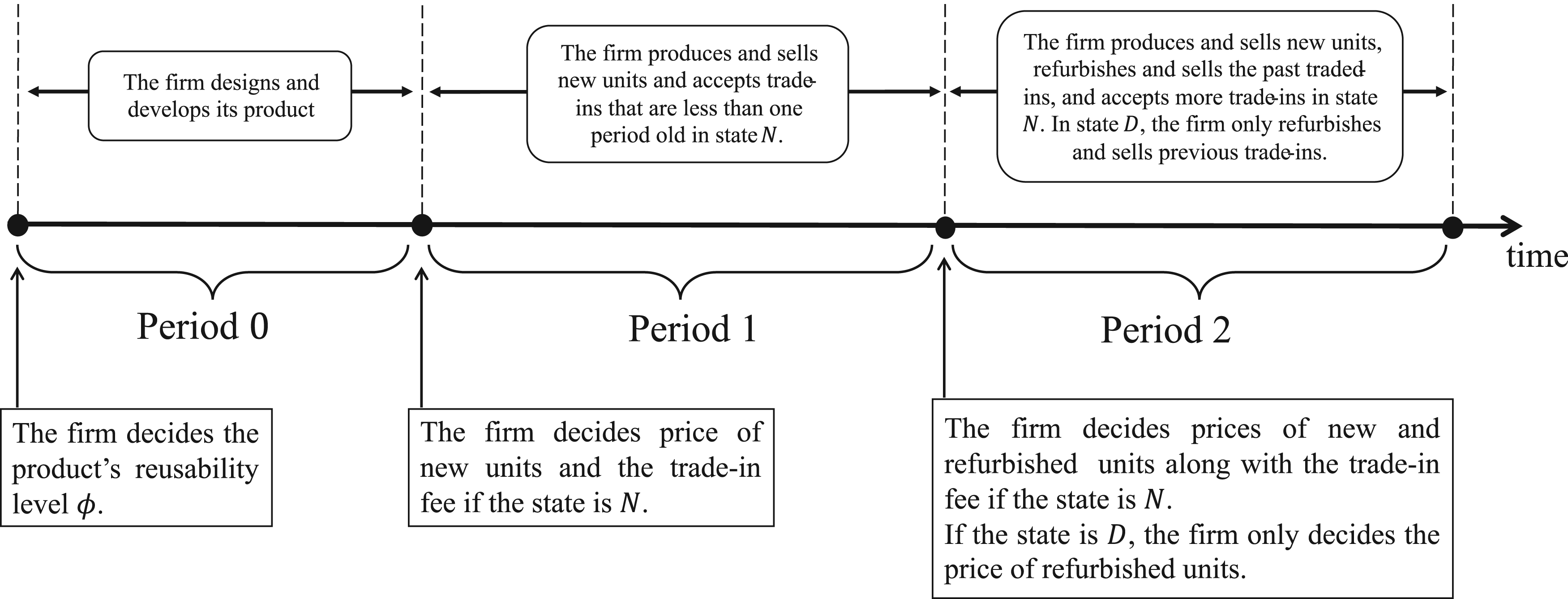
Sequence of events and decisions.
This article is organized as follows. In Section 2, we discuss the literature related to our work. In Section 3, we present the model preliminaries capturing the consumer-behavior and the firm’s operational context. In Section 4, we develop and formulate the model that captures the firm’s production, refurbishment, and pricing activities. In Section 5, by assuming that the firm accepts trade-ins that are at most one-period old, we draw insights on firm’s optimal trade-in policy, optimal pricing of new and refurbished units, trade-in fee, and product-design choice in terms of reusability level. In Section 6, we analyze and discuss the impacts of risk of supply disruption and production cost on the firm’s choice of reusability level. Then, in Section 7, we relax the restriction on the age of trade-ins and extend our model to draw additional insights. In the concluding Section 8, we summarize our work and suggest directions for future research. We provide auxiliary results in Appendix. Auxiliary Results and the proofs of all our results in the electronic companion.
This article resides at the intersection of two research domains: “closed loop supply chains” (CLSC) and “supply disruption.” CLSC can be defined as “the strategic management of a system aimed at maximizing value creation throughout a product’s life cycle, including the dynamic recovery of value from various types and volumes of returns over time” (Guide and Van Wassenhove, 2009). To structure the literature review, we adopt the five-phase framework proposed by Guide and Van Wassenhove (2009). Our study aligns with phases four and five of this framework. Phase four addresses CLSC issues such as product design decisions throughout the entire product life cycle, encompassing both forward and reverse logistics. Phase five deals with market dynamics, such as cannibalization between new and refurbished units, and product valuation, including prices of remanufactured/refurbished products. Given that our paper focuses on a firm’s decisions regarding product design (for reusability) and pricing, we examine existing CLSC literature that addresses these topics.
We introduce Table 1 to summarize significant studies within phases four and five of the CLSC domain, highlighting the context of our work. Table 1 underscores that existing CLSC literature has not explicitly addressed the joint decisions concerning product design and pricing in the presence of supply disruption along three primary dimensions:
product’s ease of reusability for refurbishment, pricing mechanism of new and refurbished units depending on the risk of supply disruption, and trade-in fee to regulate trade-in inventory and its usage.
Positioning our research in the extant CLSC literature (analytical studies).
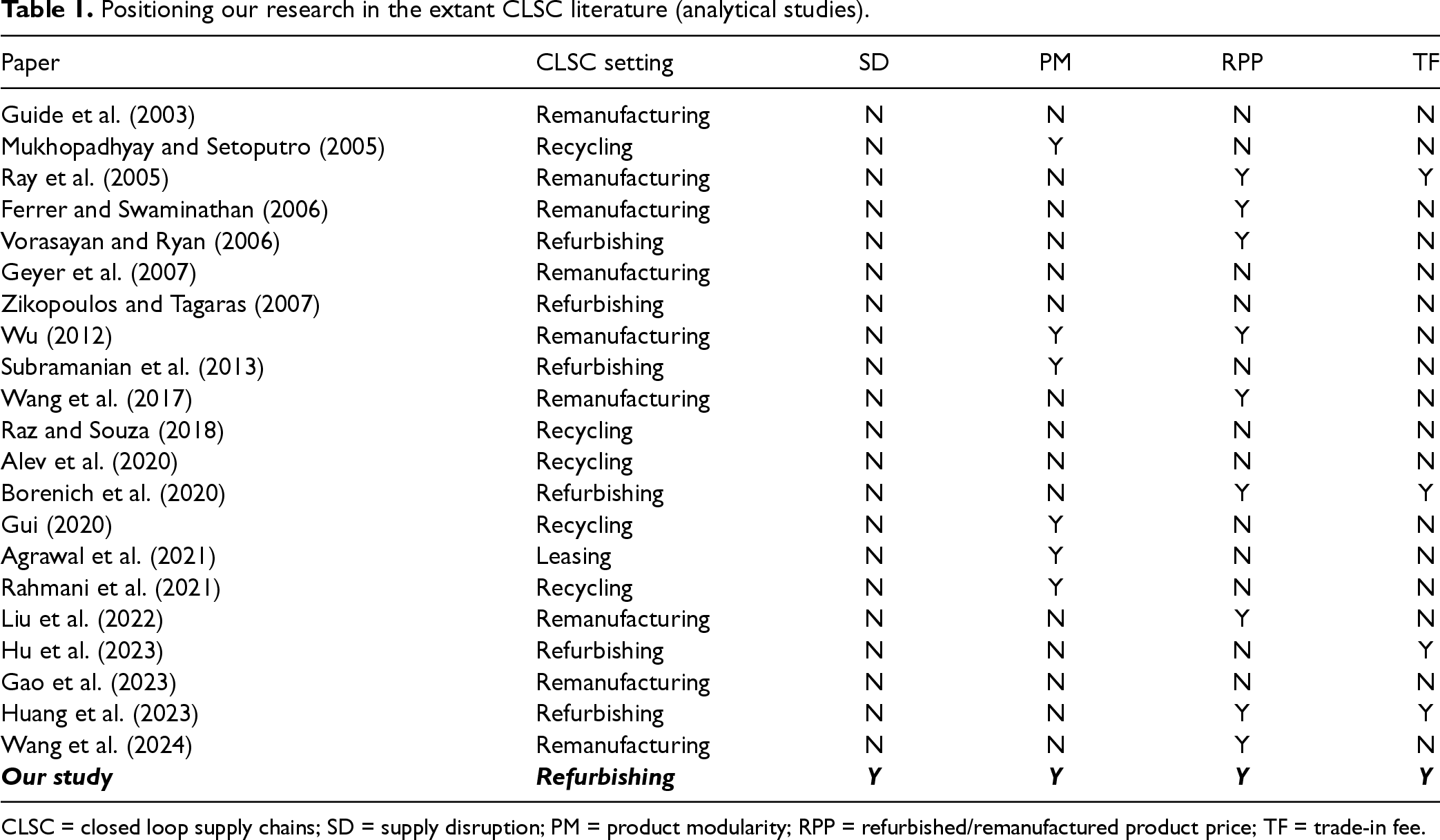
Positioning our research in the extant CLSC literature (analytical studies).
CLSC = closed loop supply chains; SD = supply disruption; PM = product modularity; RPP = refurbished/remanufactured product price; TF = trade-in fee.
We now review the key studies within the CLSC domain that align with the three primary dimensions outlined above. The underlying assumption on product design in the CLSC literature is that well-crafted products can enable firms to maximize the value extracted from returned units. Mukhopadhyay and Setoputro (2005) examined the value of product modularity for firms implementing return policies for build-to-order products, weighing the trade-off between modularity costs and the salvage value of returned and recycled products. Similarly, Wu (2012) explores the role of product disassemblability in reducing remanufacturing costs, although incurring some upfront fixed costs. Subramanian et al. (2013) assessed the value of component commonality (CC) in a refurbishing setting within a multi-product context, examining the trade-off between higher production costs for low-end products and lower refurbishment costs for high-end products. Recent contributions by Gui (2020) and Rahmani et al. (2021) further investigated the impact of product design in recycling contexts.
In the context of refurbishment operations, pricing decisions regarding refurbished products vis-à-vis new products emerge as a critical factor for firms. Several studies within the CLSC literature analyze optimal pricing strategies for refurbished or remanufactured products (Borenich et al., 2020; Ferrer and Swaminathan, 2006; Huang et al., 2023; Liu et al., 2022; Ray et al., 2005; Vorasayan and Ryan, 2006; Wang et al., 2017; Wu, 2012). In their recent work, Wang et al. (2024) analyzed the social planner’s practice of levying fee on producer or consumer in the context of remanufacturing setting.
Product return is a fundamental aspect of problem settings considered in various CLSC studies (Ferrer and Swaminathan, 2006; Geyer et al., 2007; Guide et al., 2003; Vorasayan and Ryan, 2006). However, managing product design alongside trade-ins during supply disruptions is not the primary focus of most papers in the CLSC literature. Some studies (Wang et al., 2017; Zikopoulos and Tagaras, 2007) have examined the impact of the quality of returned units on a firm’s reuse practices. Similarly, a few studies have explored the role of trade-in fees in a firm’s reuse operations. Borenich et al. (2020) studied the impact of unit refund offered by a manufacturer to the retailer in lieu of providing the used units on the manufacturer’s refurbishing operations. However, the authors do not consider the unit refund as a decision variable. Conversely, Ray et al. (2005) and Hu et al. (2023) considered settings where firms optimally determine trade-in fees while managing reuse operations. In their recent work, Huang et al. (2023) explored the impact of certified pre-owned (CPO) programs on market efficiency, with trade-in discounts playing a pivotal role in the effective utilization of such programs.
It is important to note that none of the above mentioned papers in the CLSC literature have analyzed product-reusability design decisions in the presence of supply disruption, which is the topic of this article. We also consider refurbished product price and trade-in fees decisions.
Finally, without getting into specifics of supply uncertainty literature, we establish the context of supply disruption as adopted in our article. In the literature, uncertainty is categorized into two main types: (1) yield uncertainty and (2) supply disruption. For an extensive review of the literature on yield uncertainty and supply disruption, readers are directed to Fang and Shou (2015) and Kumar et al. (2018), respectively. Yield uncertainty pertains to instances where the supply is not entirely halted, yet the quantity supplied remains uncertain (Chintapalli, 2021; Dada et al., 2007). Conversely, supply disruption involves a supplier either fulfilling the entire order in the absence of disruption or providing nothing in the event of a disruption (He et al., 2020; Kumar et al., 2018; Tomlin, 2006). Out of these two types of supply uncertainties, our article focuses on the latter type, which typically carries a low occurrence probability but entails significant adverse effects when they do occur (Kleindorfer and Saad, 2005; Sheffi and Rice, 2005).
In this section, we introduce the basics of our analytical model, laying the groundwork for formulating the firm’s problem and analyzing its decisions. We adopt a three-period model indexed as 0, 1, and 2, commonly utilized in durable product contexts (Desai and Purohit, 1998, 1999).
In period 0, the firm designs its product by determining its reusability level (
In period 1, the firm can manufacture new units if there is no supply disruption (i.e., the period’s state is
Summary of notation.
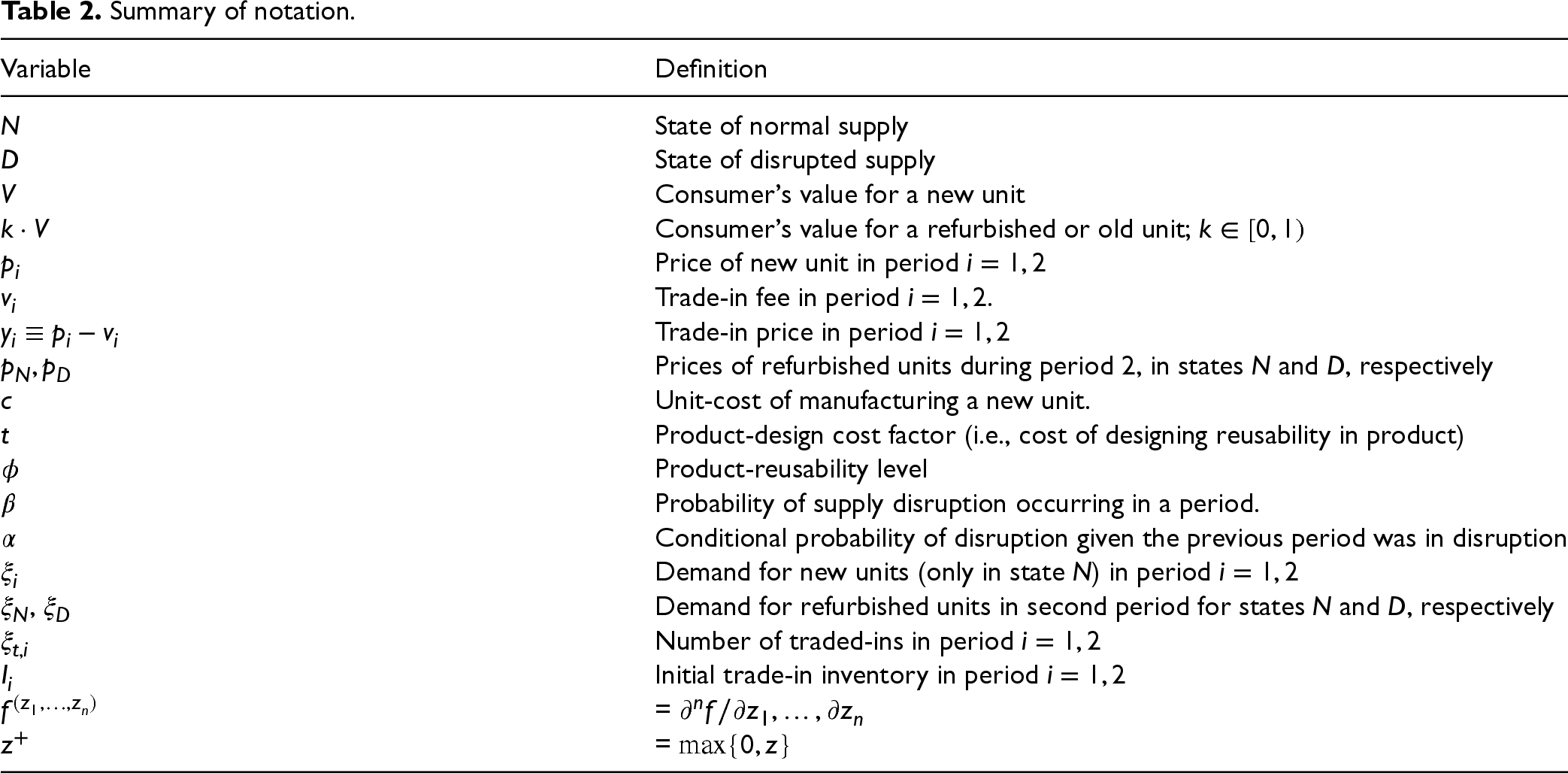
Summary of notation.
Next, in period 2, the firm can continue to produce new units if the period’s state is
Allowing for supply disruptions in period 1 introduces uncertainty regarding the availability of trade-ins that could be refurbished in period 2. Our interviews highlighted that managers often overlooked this critical aspects, which could substantially influence the effectiveness of using trade-ins to counter supply disruptions. Moreover, a potential supply disruption in period 2 further increases the firm’s reliance on refurbishing these trade-ins to meet demand during that period.
Let
In examining consumer behavior, we consider their decisions to: (i) buy the product, (ii) choose between new and refurbished units, and (iii) trade-in their used units. Let 



The firm encourages trade-ins within one period of purchase. Consumers only trade in their used unit upon acquiring a new unit; otherwise, they retain their used unit.
In practice, firms often restrict the age of trade-ins they accept to ensure that these units are not overused and they have sufficient residual value for refurbishment. Thus, the above assumption is non-restrictive when we model product sales over a two-period horizon. We relax this assumption later in Section 7.
Therefore, by using Assumption 1, the number of trade-ins in periods 1 and 2 are:



In this section, we calculate the firm’s profits for each period and derive the total profit over the three-period horizon. We then determine the optimal pricing and inventory strategies for periods 1 and 2, considering states
Profits and Decisions in Period 2
First, we examine the case where the state is 
Finally, by substituting the demands and trade-ins from (2), (9), and (12) in the firm’s profit (7), the firm’s optimization problem during period 2 in state 









First, we derive the firm’s profit under state 




The total profit in period 0, considering the probability of disruption as 
In the subsequent section, we analyze the firm’s problem described above and determine: (i) optimal pricing and trade-in decisions, (ii) inventory-carryover and refurbishment policies, and (iii) the optimal reusability level
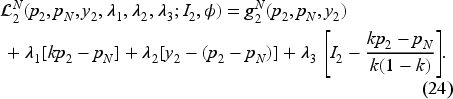
To solve (14), we formulate the following Lagrangian by relaxing (8), (10), and (13):

We address each of the above cases separately.
By solving the Lagrangian (24), we obtain the following firm’s decisions for prices
(Period 2 Decisions in State
)
When 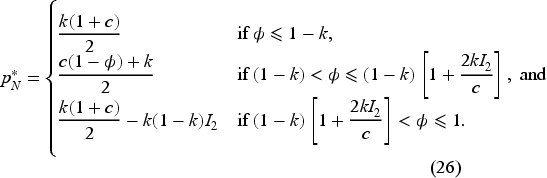
The refurbished-unit price
Suppose the consumers’ value for refurbished units is low (i.e., 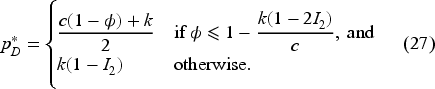
The firm exhausts the total initial trade-in inventory
The firm never refurbishes (in both
After solving period 2, we backtrack to solve the problem (21) in period 1 under state
The firm’s trade-in inventory policy in period 1 under state
(Trade-in and Refurbishment)
In period 1, if the state is Firm always accepts trade-ins during period 1. If the state in period 2 is not refurbish if refurbishes some of the trade-in inventory refurbishes all traded-in units (i.e., all On the other hand, if the state in period 2 is not refurbish if refurbishes some of refurbishes all
Lemma 3 states that the firm accepts trade-ins in period 1 when the state is
The firm employs a strategic threshold policy for refurbishing trade-in inventory during both states
Similarly, in state
Note that earlier in Lemmas 1 and 2 we obtained the firm’s optimal decisions for any given trade-in inventory
(Optimal Decisions in Periods 1 and 2)
Let in state in state
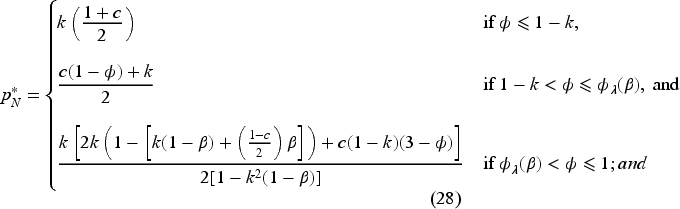
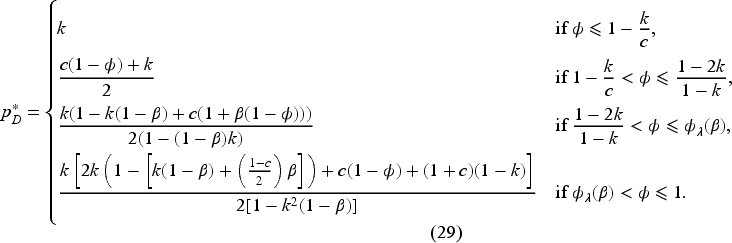
Lemma 4 illustrates that the trade-in price
In this section, we determine the optimal reusability choice for the firm’s product design by solving:

The following result describes the structure of the firm’s profit
Next, before examining the impact of the risk of supply disruption
In this section, we discuss the firm’s decisions during period 2 when the state is The firm discourages trade-ins during period 2 by setting Let
On the other hand, when the risk is high (i.e., do not refurbish if refurbish some trade-ins if refurbish all trade-ins if
When consumers’ value for used units is high (i.e., 
It is noteworthy that the optimal trade-in policy (formally discussed in Lemma 7 in Appendix. Auxiliary Results) ensures that the firm never accepts more trade-ins in period 1 than the number of refurbishments it plans during disruptions (state
Next, the greater the risk of supply disruption, the lower the reusability level at which the firm begins to encourage trade-ins. This is evident from the decreasing nature of
When used units are highly valued (
When consumers highly value used units (
However, when the risk of supply disruption is high (
Finally, we analyze the impact of the risk of supply disruption
After establishing the optimal reusability level
Impact of Risk of Supply Disruption
We now address the key question: “Does increasing product reusability benefit the firm as the risk of supply disruption rises?” This question gains relevance amid growing risk of supply disruptions in many supply chains and the widespread belief that more reusable products help tackle such disruption risks. Our answer is outlined in the following result:
Reducing product-reusability (
While the common belief suggests increasing a product’s reusability as the risk of supply disruption rises, Proposition 1 highlights that such a strategy is only advantageous when the risk is low. Conversely, when the disruption risk is notably high, the firm opts against designing more reusable products to save on design costs, as indicated in Proposition 1. This change in the firm’s reusability strategy is due to the increased likelihood of being unable to produce new units, which limits the availability of trade-ins, thus diluting the benefits of higher reusability through refurbishment. Consequently, the firm chooses to design a less reusable product to decrease its design costs.
In this section, we explore a numerical example and discuss additional managerial implications. Alongside the risk of supply disruption
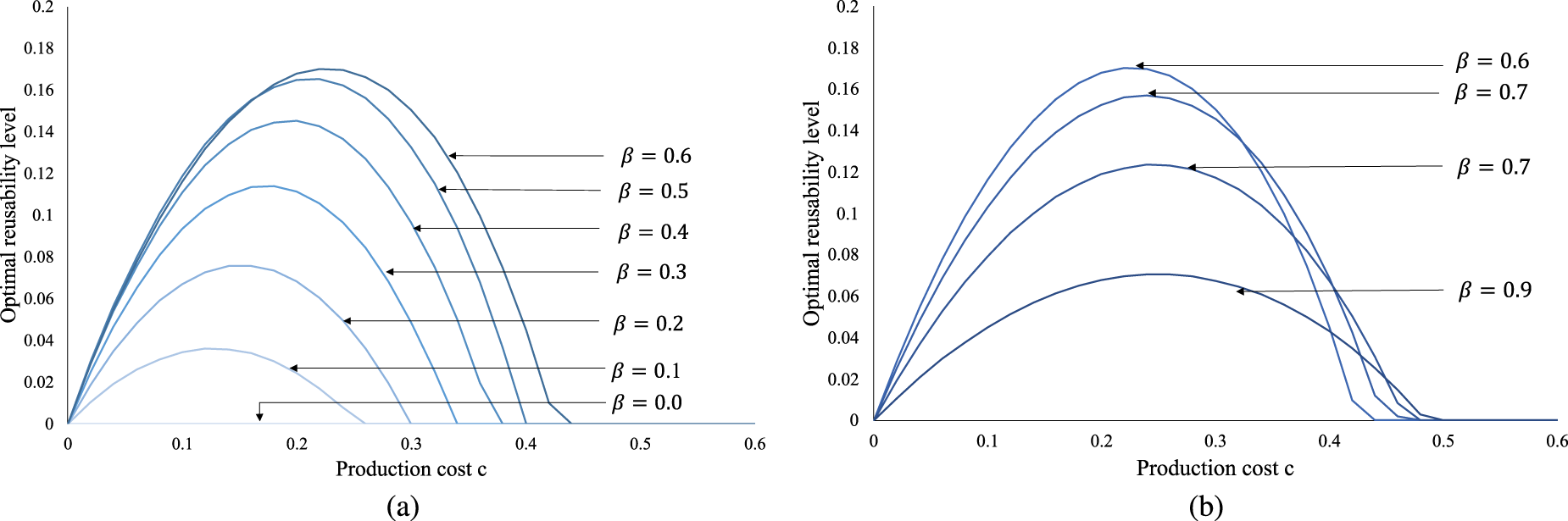
Optimal reusability
Both Figure 3(a) and (b) demonstrate that, for any given
In this section, we highlight how a firm’s choice of reusability can benefit both the firm and its consumers. First, Lemmas 4 and 7 (in Appendix. Auxiliary Results) demonstrate that a higher reusability level leads to lower trade-in prices during period 1 (
Thus, for any given risk level
Consequently, any activities like subsidizing or decreasing the firm’s design costs
Accepting Trade-ins Older Than One-Period
In this section, we analyze the case where the firm accepts trade-ins older than one period, thereby partially relaxing Assumption 1. However, we continue to assume that a consumer trades in their used unit only upon acquiring a new unit, as stated in the later portion of the assumption. Allowing to trade-in older units will provide more opportunities for the consumers to trade-in and for the firm to acquire used units over the product’s life.
To enable older trade-ins, we extend the base model in Section 4 by adding two new trade-in opportunities: one at the beginning and another at the end of period 2. We assume that a unit’s value diminishes to a fraction of
During period 2, owners can trade in at the beginning of the period after knowing the new trade-in price at the beginning of period 2 if and only if at the end of period 2 if and only if
Therefore, a consumer who finds it beneficial to trade in at the beginning of period 2 always finds it beneficial to do so at its end.
Furthermore, after accounting for the risk of supply disruption 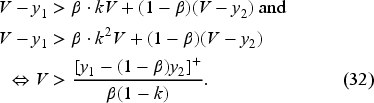
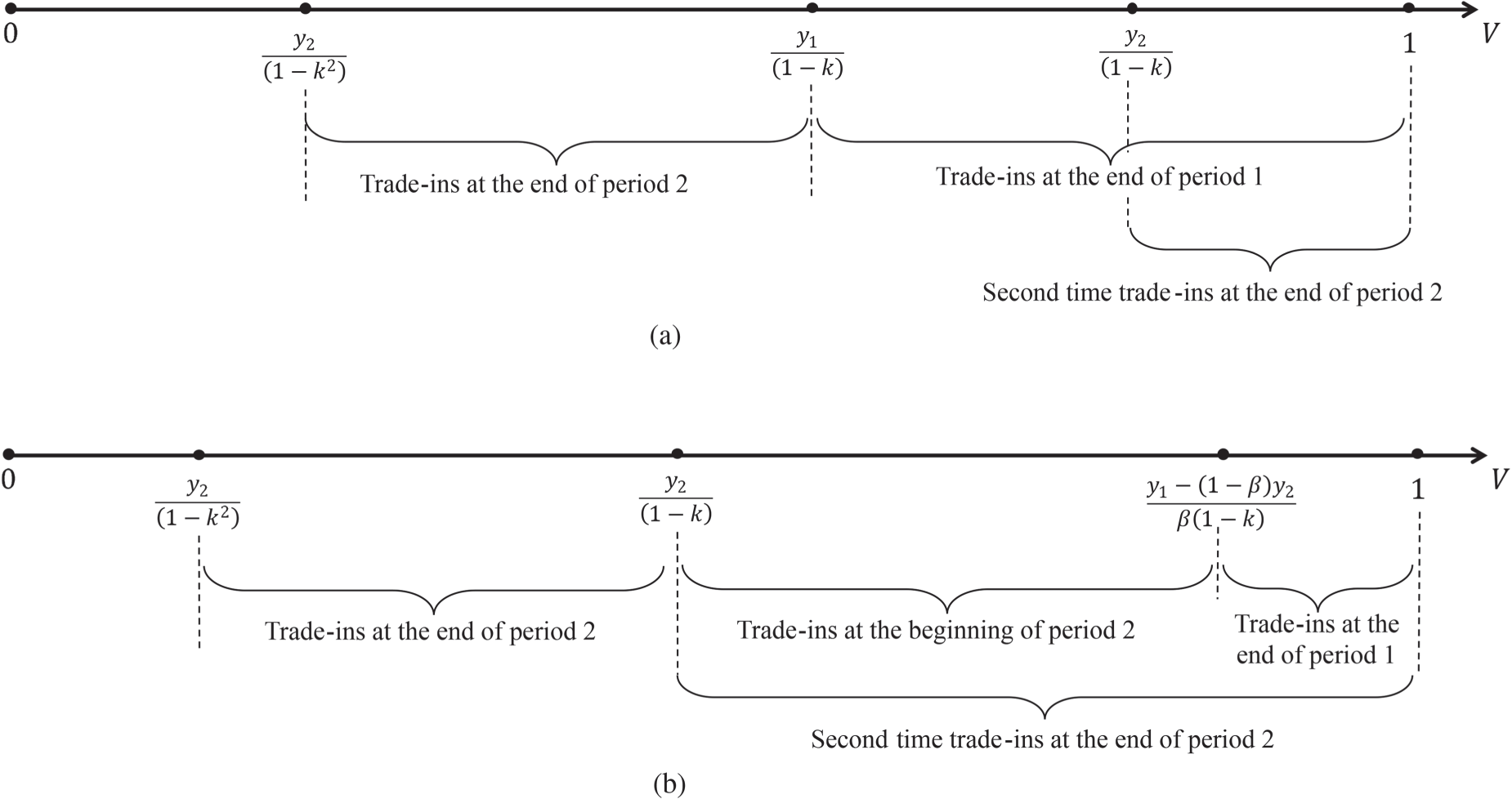
Trade-in behavior of period 1’s customers when the firm entertains trade-ins older than one period: (a) when
All customers with All customers with
Thus, period 1’s customers either trade-in at the end of period 1 or at the end of period 2 when the period 2’s trade-in price 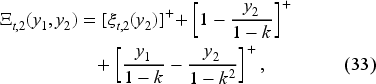
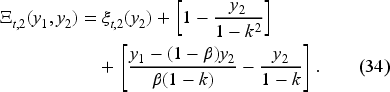
Therefore, by using 
Since the two additional cases
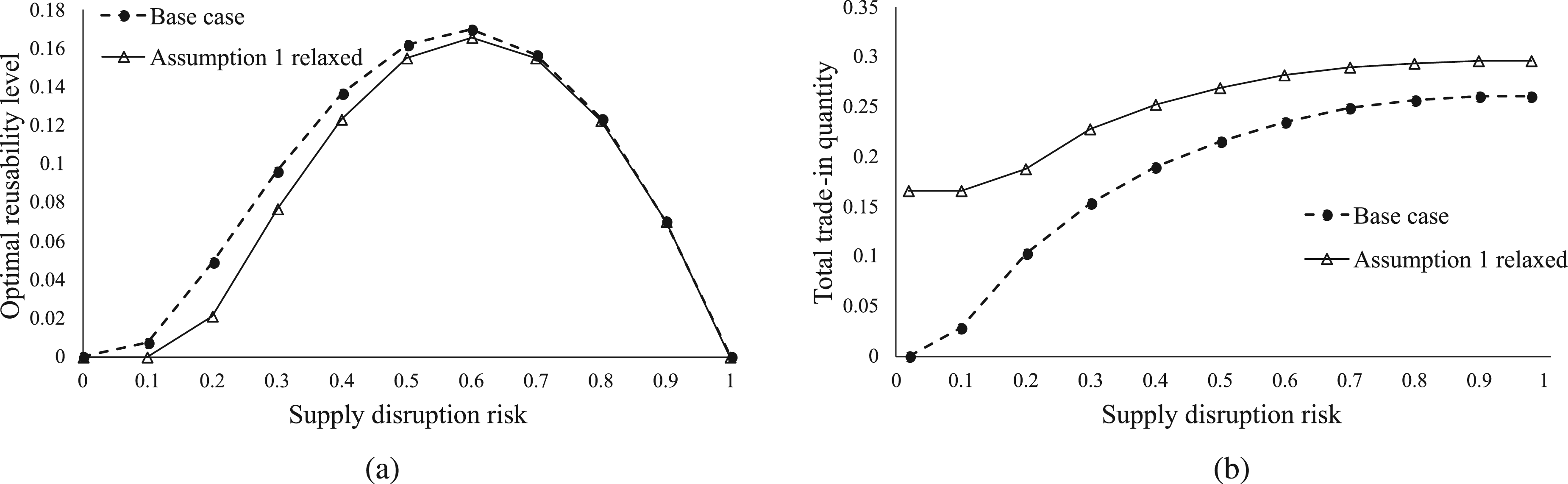
Optimal reusability level and total trade-in quantity (base case refers to the scenario when trade-ins that are at most one period old are accepted): (a) optimal reusability; and (b) total trade-in quantity in two periods.
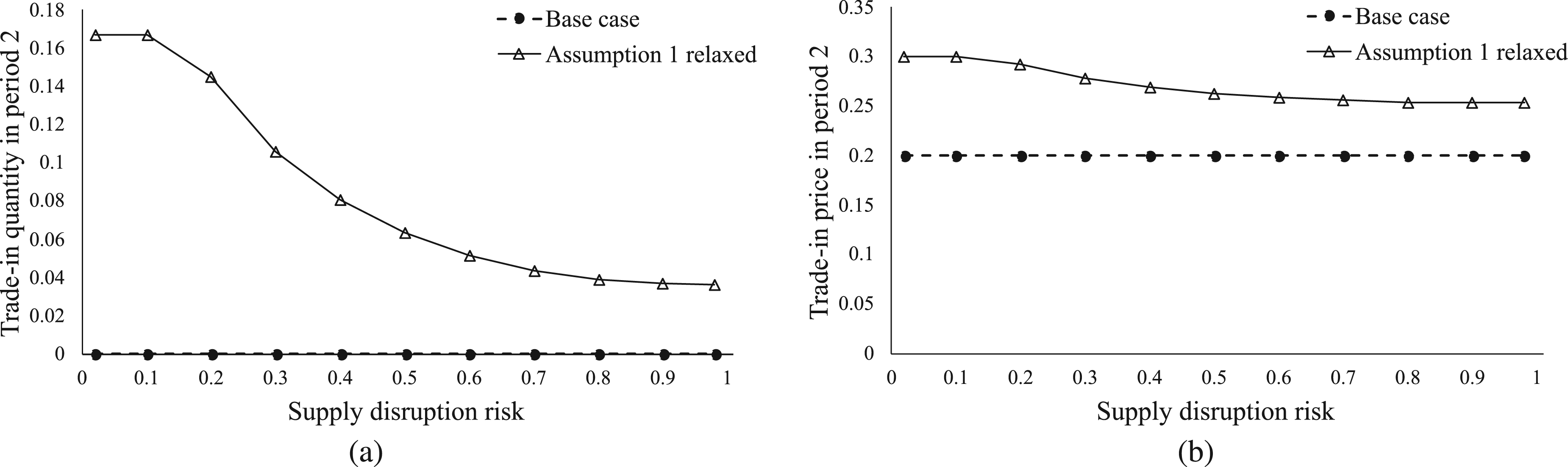
Trade-in quantity and trade-in price in period 2: (a) trade-in quantity in period 2; and (b) trade-in price in period 2.
First, it is crucial to note that the optimal product reusability
Second, some customers of period 1 can choose to postpone their trade-ins to period 2 when the firm offers them additional trade-in opportunities in period 2 (Figure 6(a) shows an increase in period 2’s trade-ins quantity). This could decrease the trade-in inventory accrued during period 1 (Figure 7(a)) that undermines the benefit of product reusability, which eventually prompts the firm to lower product-reusability
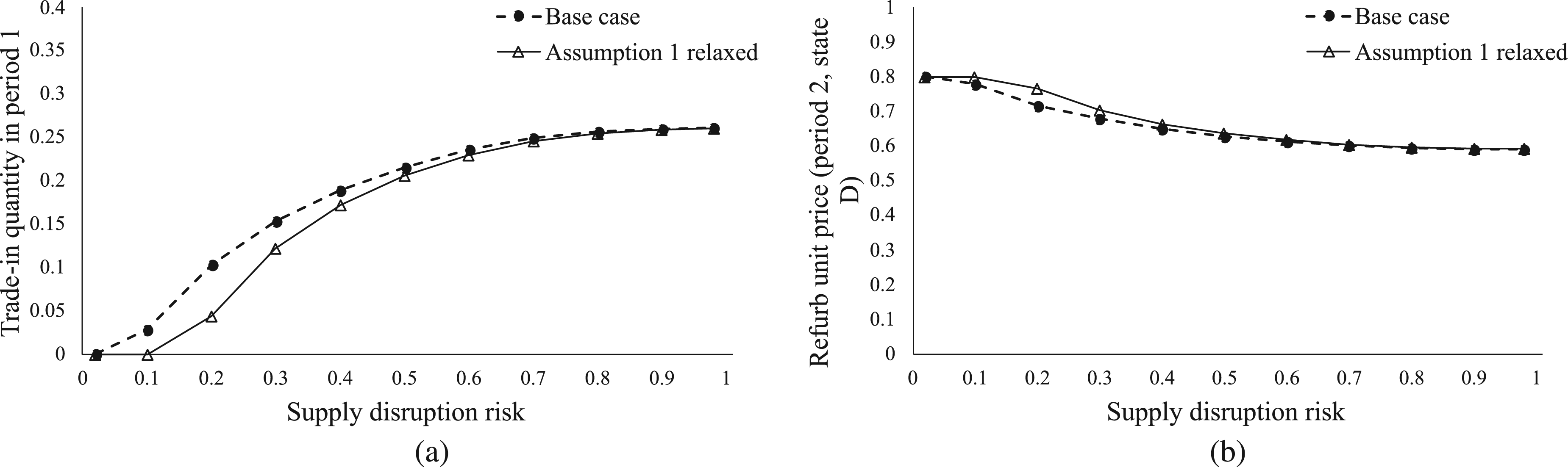
Trade-in quantity in period 1 and refurbished unit prices during disruption in period 2: (a) trade-in quantity in period 1; and (b) refurbished unit prices in period 2 in state D.
Finally, the fewer trade-ins in period 1 (Figure 7(a)) due to customers’ trade-in postponement to period 2 can lead to a higher price for refurbished units during disruption, as shown in Figure 7(b).
In summary, while the firm adapts its decisions to handle the increased trade-ins when it accepts trade-ins of all ages, our main insight on optimal product-reusability remains valid. It is beneficial to increase product reusability as the risk of supply disruption rises, but only up to a certain threshold. Beyond this threshold, it is more advantageous for the firm to reduce reusability to save on its design costs (as illustrated in Figure 5(a) when
In this article, we examine how a firm determines its product’s reusability amidst potential supply disruptions. We develop a three-period model. In period 0, the firms determines the optimal level of reusability and designs the product. In period 1, if there are no supply disruptions, the firm produces new units and accepts their trade-in at the end of the period. Finally, in period 2, the firm undertakes production of refurbished units if inventory is available from the trade-ins from period 1. Further, if there are no supply disruptions, the firm will continue to produce new units and accept their trade-ins at the end of this period.
We analyze consumer behavior regarding the choice between new and refurbished units and when to trade in their used units. Our analysis yields the optimal degree of product reusability, trade-in and refurbishment policies, trade-in fee, and the prices of new and refurbished units chosen by the firm. The following managerial insights can be drawn from this work.
We demonstrate that the firm adopts a threshold refurbishment policy: it does not refurbish trade-ins with low reusability, increases refurbishment with higher reusability, and refurbishes all trade-ins when reusability is sufficiently high. Additionally, under high risk of supply disruption and a high consumer valuation of used units, the firm accepts trade-ins to create a safety stock to hedge against supply disruption. However, the firm refrains from refurbishment in the absence of supply disruption when the reusability level is not sufficiently high. Contrary to common belief, we find that the firm decreases reusability to save on design costs when (i) the risk of supply disruption is high, due to the increased likelihood of being unable to produce new units, or (ii) the production cost is high, due to lean margins. We then discuss how the firm’s reusability choice generates a Pareto-efficient benefit for (i) the firm, with reduced refurbishment costs, (ii) trade-in consumers, with higher trade-in fees, and (iii) refurbished-unit purchasers, with lower prices. Consequently, initiatives to lower design costs for increased reusability can consistently be advantageous for all stakeholders.
Our work initiates the exploration of product reusability amid supply disruptions, relevant for sustainable operations. Further studies could explore the impact of other reuse practices such as remanufacturing, reuse practices in multi-product setting, and competition on firms’ refurbishment strategies. Future research could extend our two-period framework to analyze the infinite-horizon version of the problem and its variants to assess the impact of end-of-horizon effects more comprehensively. Finally, despite being motivated by events like COVID-19, our findings are relevant in a wider context, especially when a firm sources from suppliers who face shared upstream supply chain risks, which could impact all the suppliers simultaneously. Understanding how supply disruptions influence product designs is crucial for sustainable operations across various contexts.
In conclusion, we believe that our work provides a useful framework to understand how supply disruptions can influence product reusability design decisions.
Appendix. Auxiliary Results
Let If the risk is low, that is, if if Thus, the firm discourages trade-ins in period 2 but encourages them in period 1 if, and only if, the reusability is high (i.e., On the other hand, if the risk is high, that is, if if if if Thus, the firm discourages trade-ins in period 2 but encourages them in period 1 if, and only if, the reusability is sufficiently high (i.e., it does not refurbish any trade-ins if it refurbishes a few trade-ins if it refurbishes all trade-ins if
Firm lowers reusability whenever the design cost
Footnotes
Declaration of Conflicting Interests
The author(s) declared no potential conflicts of interest with respect to the research, authorship, and/or publication of this article.
Funding
The author(s) received no financial support for the research, authorship and/or publication of this article.

Notes
How to cite this article
Chintapalli P, Rajaram K and Verma NK (2025) Managing Product-Reusability Under Supply Disruptions. Production and Operations Management 34(8): 2506–2524.