



Abstract
Platforms provide great opportunities for independent sellers to experiment with new products. By facilitating transactions between trading parties, platforms can gather a huge amount of information about successful products and introduce their own versions of competing products. This phenomenon of platform encroachment has received attention from various stakeholders, and concerns have been raised about how it may marginalize independent sellers and hinder the development of the ecosystem. At the same time, platforms expedite the diffusion of information about successful products and facilitate learning and imitation from other independent sellers, which has received little attention in the literature. In this article, we explicitly account for this feature and consider a dynamic model to study the impact of platform encroachment on sellers’ incentives to experiment with new products, when both the platform and independent sellers can imitate and introduce competing versions of products offered by the successful experimenter. We show that when a seller with successful experimentation holds a competitive advantage in the product market, platform encroachment may enhance the incentives to carry out experimentation. This enhancement effect is stronger when information diffuses faster on the platform. We further discuss the implications for the platform’s optimal encroachment strategy and regulatory policies.
Keywords
Introduction
Online platforms have grown rapidly in recent years. By significantly lowering the cost of entry and facilitating transactions with consumers, these platforms provide unprecedented opportunities for sellers to enter and experiment with new products and ideas. Some of these sellers grow their businesses successfully and become top sellers in their product categories, which attracts other sellers to offer similar products following the success, thanks to fast information diffusion facilitated by platforms. For example, when searching for “wireless earbuds” on Amazon, we not only see Anker, which is one of the top sellers on online trading platforms across North America and Europe for peripheral products of electronic devices, but also many other competing brands. 1 At the same time, platforms provide their own versions of products and compete with these sellers on the marketplaces. For example, Amazon offers its own earbud brand, Umi. This phenomenon, commonly known as platform encroachment, has raised concerns among third party sellers as well as antitrust authorities, especially when platforms can gather a huge amount of information about individual sellers and use such information to tailor their product offerings. 2 Despite concerns about Amazon’s entry and use of private information, Amazon continues to grow as the largest online retailer in the United States, with a market share of 37.6% in 2023. 3 The share of third-party sellers on Amazon has grown to more than 60% by the end of 2023. 4 Furthermore, the product categories where we witness most entry by Amazon (e.g., home products, health and beauty) are still the most popular categories where we see most new sellers and new product developments. 5 Similarly, in the mobile app market, Wen and Zhu (2019) showed that Google’s entry does not stop developers from introducing new products but shifts innovation to unaffected and new apps.
So far, studies have focused on the impact of platform encroachment on competition and profits of third party sellers, but little has been done regarding the impact on product experimentation, an important practice facilitated by online trading platforms, especially when third party sellers can also imitate and enter with their own versions of competing products. To explore this, we build a dynamic model of product experimentation on a monopolistic platform with the following features. Firstly, some sellers actively undertake product experimentation and capture a large share of the market upon success. Secondly, when a “hit” product appears in the market, thanks to developments such as sales monitoring tools, other sellers gradually learn about the success, imitate and provide their competing versions of the product. Thirdly, the platform may also enter to compete in the market and it may learn about successful experimentation faster than other sellers. The equilibrium experimentation rate is determined by the absolute value from successful experimentation and the relative value of successful experimentation compared with unsuccessful experimentation. Without platform encroachment, a free-riding problem exists among sellers: a seller can wait for successful experimentation from other sellers and then imitate instead of carrying out their own costly experimentation. This option is more valuable when information diffuses faster on the platform, which decreases both the absolute value and the relative value. Hence, the equilibrium rate of experimentation is decreasing as information becomes more readily available.
The impact of platform encroachment on experimentation incentives is two-fold. Firstly, the platform may have an informational advantage and learn about successful experimentation faster than other sellers. This allows the platform to enter the market earlier, which shortens the horizon for the successful experimenter to capitalize on its product innovation and negatively impacts the experimentation incentives. Secondly, platform encroachment affects the competitive profits of sellers in the product market. The impact of this on experimentation incentives depends largely on whether the successful experimenter holds a competitive advantage over imitators. In the absence of such an advantage, platform encroachment would affect the profits of all sellers in the same way. This means that platform encroachment does not affect the relative value but reduces the absolute value from successful experimentation because of its informational advantage and intensified competition. Therefore, platform encroachment reduces product experimentation.
If, however, the successful experimenter enjoys a competitive advantage in the product market, platform encroachment can increase product experimentation by mitigating the free-riding problem. This can be achieved via two ways. Firstly, the platform could have a disproportionate negative impact on the imitator, which enlarges the profit gap between a successful experimenter and an imitating seller, reduces the value of imitation and hence increases the relative value of successful experimentation. This could be the case when the platform competes more closely with imitators (e.g., in the earbud case above) in terms of product offerings or when the platform biases its recommendations against imitators (e.g., the alleged self-preferencing by platforms). Secondly, platform encroachment leads to more competition in the market and lowers the profits of sellers. This could deter the entry of imitators and reduce the number of sellers. Moreover, under ad valorem commission fee, the platform internalizes part of sellers’ profits when it enters, which makes the platform a less tough competitor compared to imitators. This means that platform encroachment could alleviate the competitive pressure faced by the successful experimenter by increasing both the absolute value and the relative value of successful experimentation. In addition, this experimentation enhancement effect is stronger when information diffuses faster, as the free-riding problem is more severe.
We further consider several other important aspects. Firstly, we examine whether and how the platform should encroach into the product market. It is crucial to balance the impacts on ex post competition and profits from the product market and ex ante experimentation incentives. We show that the platform may find it most profitable to enter when its encroachment deters imitation. Moreover, it may enter with a more aggressive strategy to further stifle imitation and enhance experimentation for an intermediate range of imitation costs. Secondly, the level of commission rates could affect the extent of the experimentation enhancement effect. A higher commission rate means that a larger part of sellers’ profits is captured by the platform, but it also means that platform encroachment has a larger impact on the number of imitating sellers, which could further enhance experimentation incentives. Finally, when sellers can choose to become an experimenter or an imitator, we demonstrate that platform encroachment may incentivize more sellers to become an experimenter and carry out product experimentation, which could bring additional benefits to the market.
The results find some support in the literature. For example, Wen and Zhu (2019) showed that mobile app developers shift innovation efforts to unaffected and new apps upon Google’s entry into the market. This is consistent with our results that platform encroachment may not only incentivize individual sellers to invest more but also encourage sellers to become an experimenter and explore new development ideas. Similarly, Lee and Musolff (2021) examined the impact of Amazon’s entry into the product market on independent sellers. They show that platform encroachment reduces entry by the least efficient sellers while benefiting consumers. The results have several managerial and regulatory implications. For the platform, the results show that platform entry does not necessarily crowd out third party sellers; it may even encourage more product experimentation by mitigating the free-riding incentives. This is more likely to be the case when it deters imitation rather than competing against the original experimenter. The experimentation enhancing effect is more significant and valuable when information diffuses at a faster rate, especially given the development of third-party monitoring tools that help sellers identify successful products. On the regulatory side, our results imply that platform entry could generate long-run benefits by encouraging more product experimentation, which brings new products, more varieties and a wider range of choices for consumers. These results suggest the importance of considering how firms compete and how information diffuses in assessing the impact of platform encroachment and weighing the benefits from enhancing experimentation against the cost arising from platforms’ informational advantages.
Our approach follows the line of research on dynamic R&D incentives such as Loury (1979) and Reinganum (1982) and, more recently, Marshall and Parra (2019). A central theme in this literature is how R&D incentives depend on the market structure. We extend this approach to a setup where firms trade via a platform and examine how the market outcome is affected by the platform’s strategy. Our analysis thus contributes to the recent literature studying the impact of platform encroachment. For example, Zhu and Liu (2018) showed that the entry of Amazon increases demand and reduces shipping costs but discourages sellers from growing their businesses. He et al. (2020) demonstrated that third party sellers migrate to other retailing channels in response to the entry of a Chinese e-commerce platform. An excellent overview of the empirical literature is provided by Zhu (2019). Theoretically, Jiang et al. (2011) showed that platform encroachment may induce independent sellers to reduce valuable services. The more recent literature has mainly focused on how platform entry affects competition in the market; see, for example, Anderson and Bedre-Defolie (2022), Zennyo (2022), and Hagiu et al. (2022).
There has been limited work on the dynamics of the market and the role of information usage by the platform. Madsen and Vellodi (2022) and Hervas-Drane and Shelegia (2022) considered the case when only the platform learns and imitates third party sellers’ products. Lam and Liu (2023) further considered when the platform has access to information at different levels of granularity. In this article, we consider instead the impact of platform entry and information usage on the incentives of product experimentation, when both the platform and third party sellers can learn and imitate. This also distinguishes our work from the literature on private labels such as Hoch (1996) and Gabrielsen and Sørgard (2007), where only the retailers can introduce competing private labels but not other manufacturers.
The article proceeds as follows. We present the main model in Section 2 without platform encroachment and analyze the case with platform encroachment in Section 3. In Section 4, we analyze whether and how the platform should encroach into the product market, and we provide some further discussions and extensions in Section 5. The regulatory implications of our results are discussed in Section 6 and we conclude with some future research directions in Section 7. All omitted proofs are included in the E-companion.
Product Experimentation Without Platform Encroachment
We first present the model and study sellers’ incentives to carry out product experimentation without the possibility of platform encroachment, which we will introduce in the next section.
There is a monopoly platform, Experimentation stage: Two sellers, Learning stage: Once a success arrives, the other seller becomes aware of the success but only gradually learns about the details of the successful product.
6
Specifically, we assume that when one seller succeeds, the other seller stops experimenting, and learning in the market occurs at a Poisson rate of Competition stage: Apart from the imitation cost, we assume that sellers are otherwise symmetrical until Section 5.1 and each earns a flow profit of

Value Function for the Leader and the Follower
In the competition stage, let
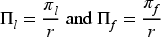
In the learning stage when a seller has succeeded in product experimentation, we derive the value functions for the leader and the follower, denoted by

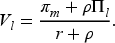

Value Function Before Successful Experimentation
Before any successful experimentation arrives, each seller

The equilibrium experimentation rates are given by

Hence, the experimentation rate increases with the value of being the leader and the value gap between being the leader and being the follower. The former can be interpreted as the absolute benefit from successful experimentation and the latter as the relative benefit of successful experimentation compared with unsuccessful experimentation. When sellers heavily discount the future (i.e.,
The equilibrium experimentation rate
The reason is that the faster information diffuses in the market, the shorter the monopolization period for the successful experimenter, which lowers the value of becoming the leader and hence the absolute benefit. Moreover, faster information diffusion enables other sellers to learn and imitate faster, thereby narrowing the value gap between the leader and the follower and hence the relative benefit. Consequently, the equilibrium experimentation rates become lower. Similarly, an increase in the imitation cost reduces the value of the follower and hence boosts experimentation incentives. The result highlights the free-riding incentives in the market when information becomes more accessible, as sellers value more the option to wait and imitate instead of undertaking their own costly experimentation. 9
How Does Platform Encroachment Affect Product Experimentation?
Now we consider the case where the platform enters with its own version of products at no imitation cost. This could reflect the advantage of the platform in managing the supply chain or benefiting from economies of scale. We assume that the platform itself does not carry out experimentation but instead learns about successful experimentation from two information sources. Firstly, as the follower, it learns from publicly available information, which arrive at a Poisson rate of
This affects sellers in two ways. Firstly, the platform’s access to private information allows it to learn about successful experimentation and enter the market earlier than other sellers. We denote the leader’s flow profit when the platform enters before other sellers by
When sellers and the platform are symmetrical in terms of quality and cost, we always have
We can then derive the value functions of sellers with platform encroachment. In the competition stage, let:
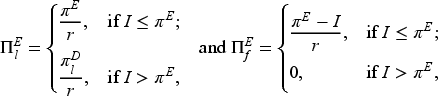




If If If
As outlined above, platform encroachment has two main effects: on the one hand, the informational advantage allows the platform to enter the market early, thereby reducing the absolute benefit of product experimentation and negatively impacting the equilibrium experimentation rate, as follows:
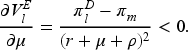
When the leader does not enjoy any competitive advantage in the product market over the follower or when the advantage is small, that is, case (a) with

When the imitation cost is high, platform encroachment again stifles experimentation incentives. In case (b), the follower never enters as
In case (c), when the imitation cost is intermediate with


In fact, when sellers are patient enough, platform entry enhances experimentation incentives regardless of the platform’s informational advantage.
Platform encroachment always enhances product experimentation for
To give readers a more concrete idea, we consider a widely used demand system from Shubik and Levitan (1980) for competition in the product market. Specifically, suppose there are


Consider the case of symmetric sellers, that is,
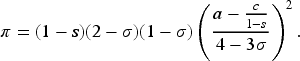

When the platform enters to compete with the leader only, the profit of the leader,


We emphasize that, since the competition stage is the last stage of the game, our analysis does not depend on how the competition stage profits are determined, as long as they satisfy the properties outlined in the analysis. We can certainly consider other types of demand functions or other factors affecting profits, such as the choice of supplier (e.g., Liao et al., 2020). We choose to present the ex post competitive profits from the product markets in a reduced form to focus on the impact of platform encroachment on ex ante experimentation incentives.
In the above analysis, we assumed that
If
The case for
If If If If
In the case where

The analysis can be extended to the case where sellers differ in their experimentation costs, but doing so would significantly limit the tractability of the analysis without generating substantial insights. 12 Hence, we adopt the symmetric experimenter setup to deliver our main insights. We have also focused on the natural setup where the leader earns more profit than the follower in the competition stage. However, in some cases, the follower might earn a higher profit, such as when they have improved technology and, consequently, offer higher quality. In such cases, the free-riding problem could become so severe that no seller would invest in product experimentation if they are patient enough. Nevertheless, if information about successful experimentation diffuses sufficiently slow, sellers would still engage in product experimentation and Proposition 3 would continue to apply for small informational advantages. 13
We can further show that the experimentation enhancement impact is stronger when information diffuses faster and the platform has no informational advantage.
When the platform has no informational advantage, we have
That is, if platform encroachment enhances experimentation, this positive impact is stronger when information diffuses faster. On the contrary, if platform encroachment reduces experimentation, the negative impact is also stronger with faster information diffusion. This occurs because when information diffuses faster, the learning stage is relatively short compared to the competition stage. As a result, the value difference between the leader and the follower weighs more for driving experimentation incentives. This amplifies the impact of platform encroachment at the competition stage, which determines the direction of impact when sellers are sufficiently patient.
This implies that platform entry can effectively promote more product experimentation when imitation is deterred and information diffuses fast, mainly by alleviating free-riding incentives. This is more likely to be the case, for instance, with the emergence of third-party sales monitoring tools, which enables sellers to analyze and respond quickly to market developments.
When Should the Platform Enter?
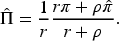
To examine whether the platform should encroach into the product market, we first derive the value function for the platform. We denote

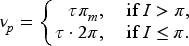


If (a)
The intuition is as follows: condition (a) means that the platform does not enter when the follower always enters (i.e.,
Conditions (a) and (b) are satisfied when the commission rate is high and competition is intense such that entry significantly reduces seller profits and commission fees. In such cases, platform encroachment is less likely. For example, on the App Store, with a 30% commission rate, encroachment by Apple does not seem to be common. Conversely, when the commission rate is lower, as seen on Amazon where most product categories have commission rates between 8% and 15%, these conditions are likely to fail. Another example where these conditions fail is when
If (a’)
The reason is that when the informational advantage is small, the platform’s profit is mainly driven by the competition stage, which, according to conditions (a’) and (b’), is higher when it enters. Moreover, the competition stage arrives sooner when information diffuses faster. Although rapid information diffusion can adversely affect experimentation incentives in some cases, this impact becomes small as sellers become more patient. Consequently, the platform finds it more profitable to encroach into the product market.
We can further explore how the platform may adjust its strategies upon encroaching into the market to balance the impact on the product market and experimentation incentives. We consider the case where the platform does not have an informational advantage and assume the platform determines its encroachment strategy, denoted by
As mentioned above, the choice of
Similar to equation (4), the total expected value obtained by the platform is:


There exists a
The platform could either exclude the follower from the product market with a more aggressive strategy or allow the follower to enter with a less aggressive strategy. We show that the former is optimal when the imitation cost is not too small. This is because by excluding the follower, the platform not only relaxes competition and earns more profit from the product market but also benefits from enhanced experimentation incentives. Therefore, the platform adopts a more aggressive strategy when encroaching into the market as imitation becomes easier. However, when the imitation cost is excessively low, it becomes too costly to exclude the follower. For example, the platform needs to incur significant costs associated with producing premium brands to deter imitation. Consequently, the platform chooses a less aggressive strategy to allow the follower to enter.
This relates our analysis to the literature on private labels, which explores whether and how brick-and-mortar stores should introduce private labels and how this would impact the strategies of national brands. In platform markets, two features stand out. Firstly, information about successful products become abundant and easily accessible. Secondly, not only can the dominant retailer—the platform—learn about popular products and introduce private labels, but other independent sellers can also learn and introduce their competing products. We show how the platform could adapt its product offering to accommodate these market conditions.
Imitation From Other Third-Party Sellers
In the above analysis with only two sellers, imitation costs capture the competitive advantage of the leader over the follower. The main way platform encroachment impacts the follower more than the leader is through complete exclusion. In this section, we show that the follower needs not be forced out of the market for a similar mechanism to work. Specifically, platform encroachment can enhance experimentation incentives by limiting the number of imitating sellers and relaxing competition, provided that the leader holds a certain competitive advantage over the follower.
We consider the case when the platform does not have an informational advantage and continue with Example 1, using the following demand function for

Clearly, if the leader does not enjoy any competitive advantage over the follower (as the imitation cost for the follower is assumed away), the impact of platform entry on experimentation incentives would be neutral, as the profits for both are pinned down to the entry cost of other third-party sellers at
To investigate the role of competitive advantage, we assume that the leader has a perceived quality of
For a given number of sellers, we always have
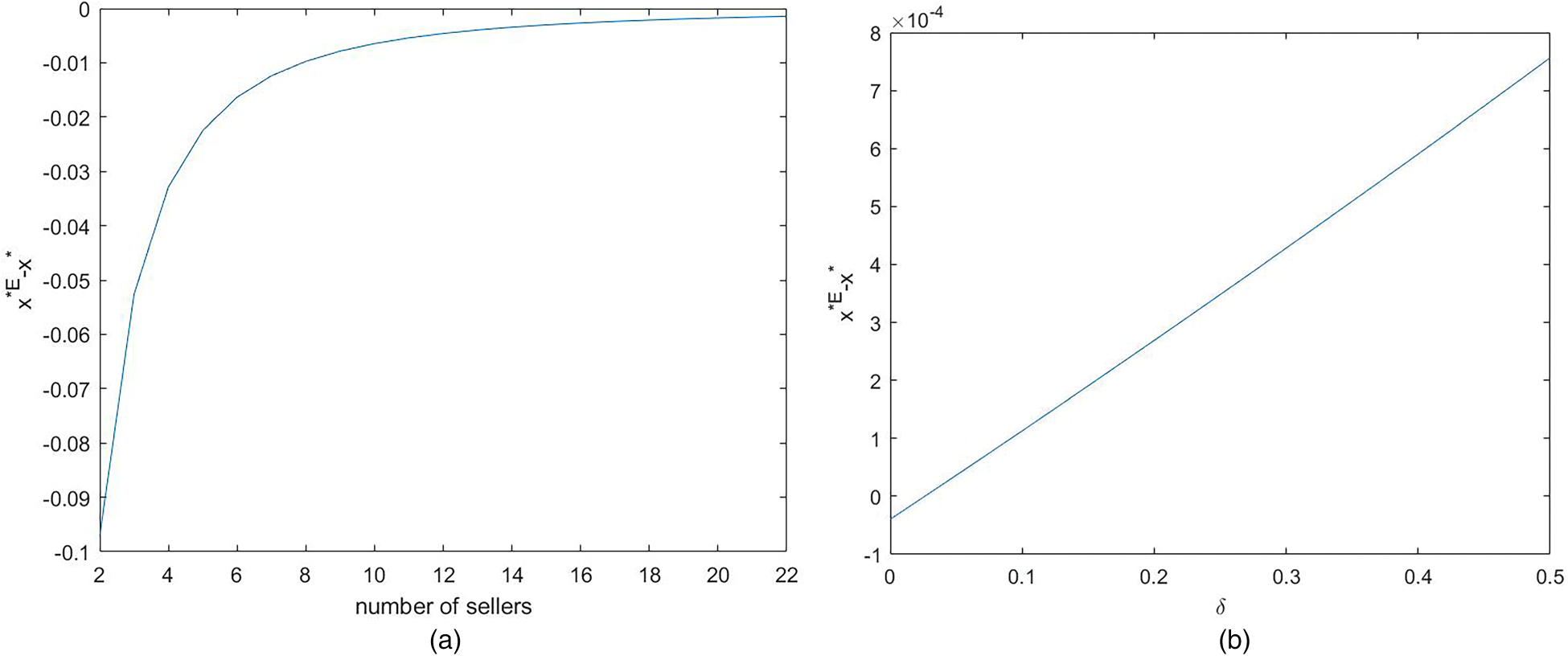
The impact of platform encroachment on experimentation rates (
However, when we take into account the impact platform entry has on the number of active sellers, platform encroachment can instead enhance product experimentation, as shown in Figure 1(b) (ignoring the integer constraint on the number of sellers). This is more likely to be the case when the platform has a larger advantage over the followers, as the impact on the number of active sellers is larger. This is consistent with Proposition 7 that the platform may find it optimal to behave more aggressively to exclude imitators in order to enhance experimentation incentives.
This can be more formally seen as follows. Let the number of sellers in the competition stage be
To streamline our analysis, we have assumed that the follower stops experimenting once the other seller succeeds. In this section, we allow the follower to continue experimenting in our main model with two sellers. We show that this does not change our main insights and introduces an additional channel through which platform encroachment enhances experimentation incentives.
To illustrate the main idea, we assume that the platform has no informational advantage, that is,
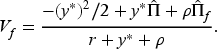
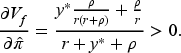
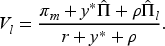
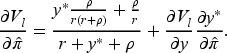
The main mechanism underlying Proposition 2 still works here. Specifically, if
To see this, we consider the case of



Alternative Means to Boost Experimentation
The analysis so far assumes that upon entry, the platform competes with independent sellers on prices only. In practice, however, the platform may have other means to influence the profits of different sellers. For example, the platform can bias its product recommendations towards a particular seller. In such cases, the platform may have alternative means to boost experimentation by favoring the leader.
We continue with the demand system used above:

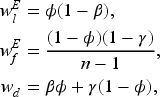
The example demonstrates how platform entry could boost experimentation via alternative means. The intuition is that platform entry hurts the follower more than the leader, similar to our main analysis where the follower is forced out instead. This is more likely when the platform’s product competes more closely with the follower’s rather than the leader’s. This could also occur when the platform biases its product recommendations more against the followers. As discussed in Section 4, while the platform may always have incentives to enter to benefit from direct sales, it can adopt additional strategies to preserve innovation incentives.
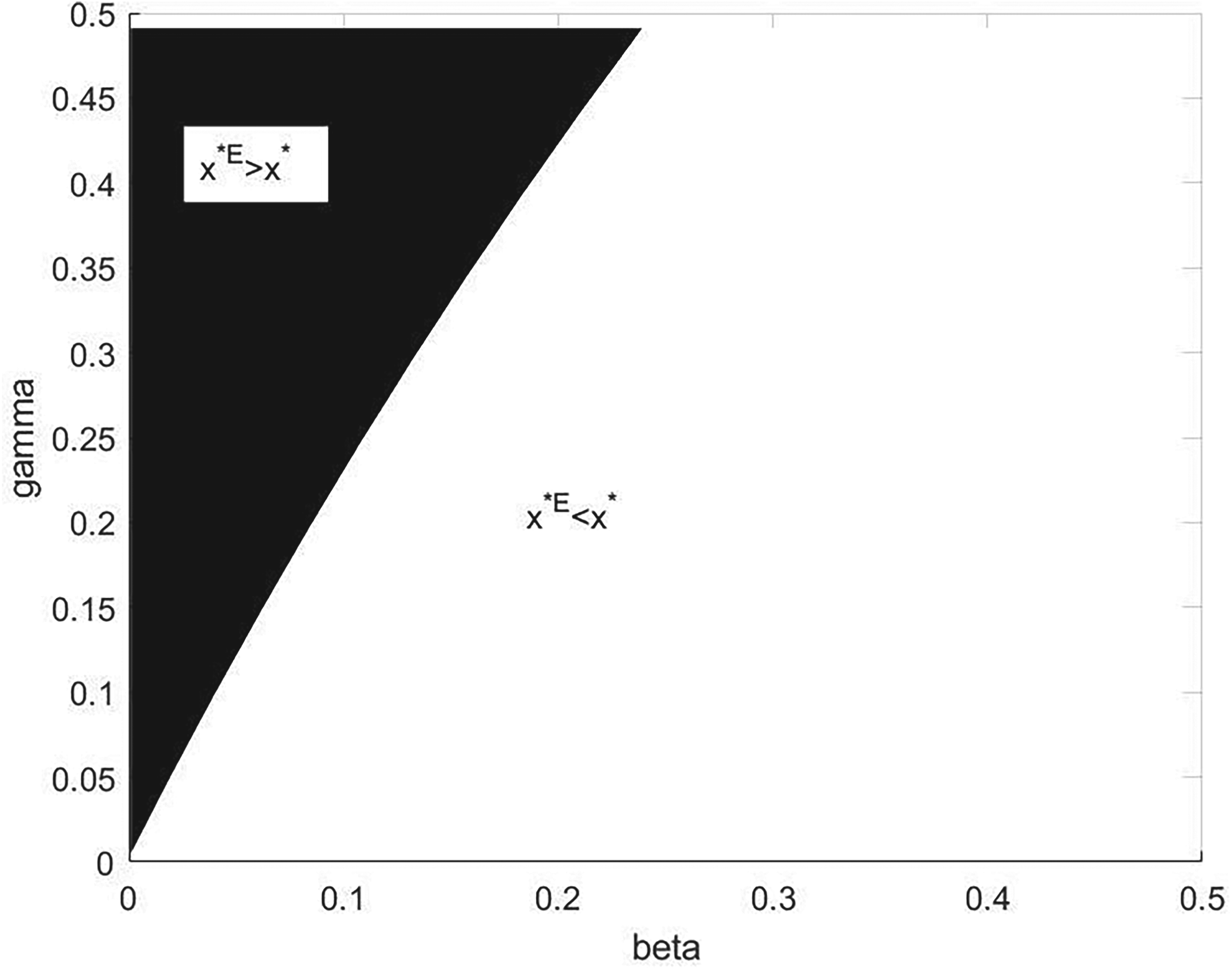
Comparison of equilibrium experimentation rates (
To streamline the presentation, we have suppressed the explicit dependence of sellers’ profits on the commission fee set by the platform (except for Example 1). Our results are valid if the leader and the follower face the same commission rate, which applies well to the cases where, in practice, sellers from the same category are charged the same commission rate. Our model can also be easily adapted to accommodate scenarios where sellers in different categories are charged differently. 15 This would not change our main results but would only affect the extent to which platform encroachment enhances experimentation incentives.
Specifically, for a higher commission rate, the profit gap between the leader and follower shrinks as a larger part is taken by the platform, which weakens the experimentation incentives. However, with a higher commission rate, the impact of platform encroachment on the number of imitators is greater and the platform also internalizes more of the sellers’ profits. Hence, this could lead to more relaxed competition and benefit sellers. To see this, we re-examine Example 2 in Section 5.1 with different levels of commission fees.
As shown in Figure 3, when the platform has a less premium product (
Market Structure and Seller Composition
In this section, we extend the analysis to consider more experimenters and provide further insights into how platform encroachment could change the composition of sellers.
We first generalize the analysis to
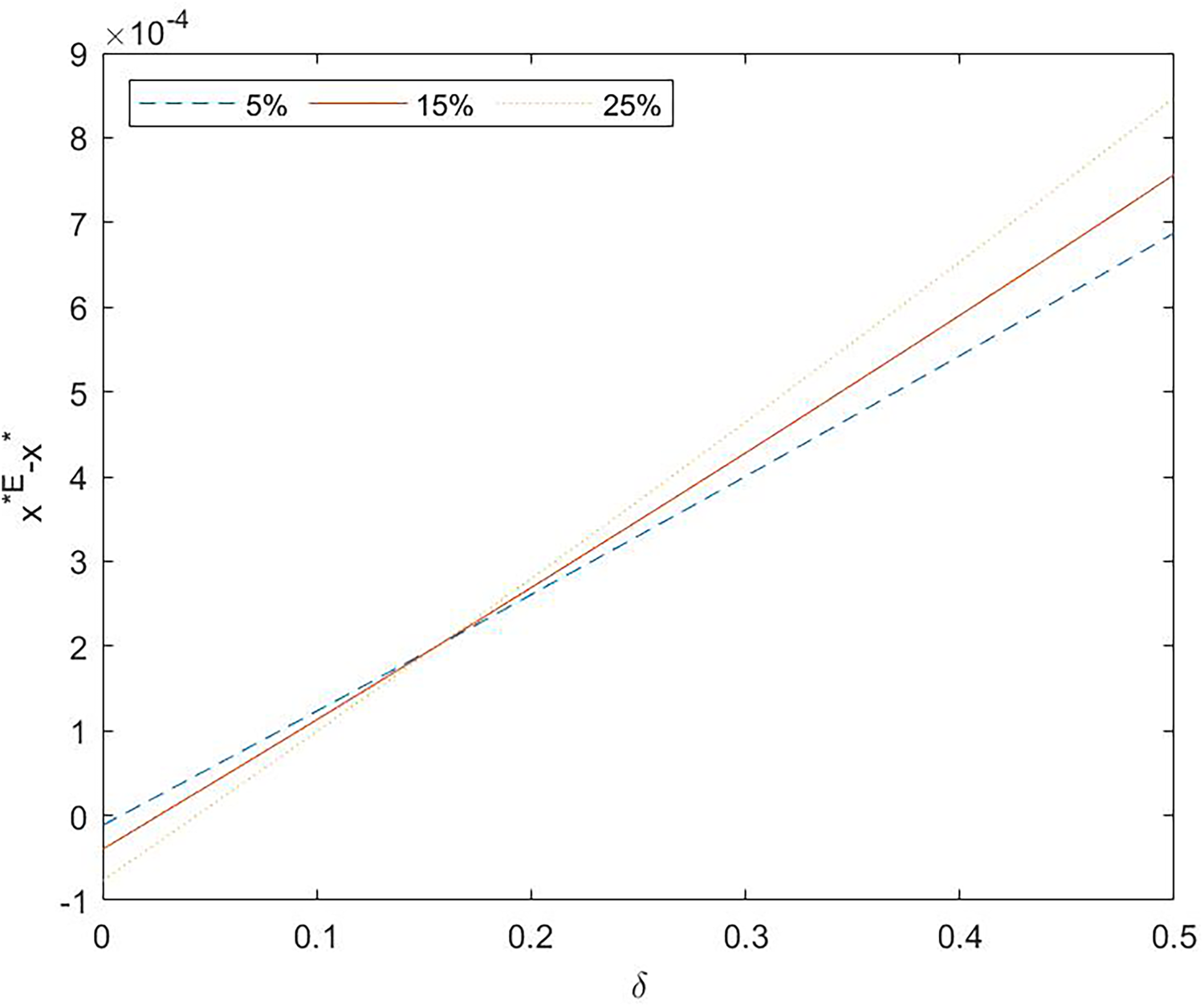
Comparison of equilibrium experimentation rates with different commission rates (
The main difference lies in the experimentation stage. Each seller

Following similar steps as Proposition 1, the equilibrium experimentation rates are such that

Similar to our main analysis, when
We can further extend the analysis to study the incentives to become an experimenter. Specifically, we assume that sellers need to incur a setup cost to become active in the market, either as an experimenter or as an imitator. To capture seller heterogeneity, we rank all sellers according to this setup cost and identify each seller by its rank. That is, for each seller
If a seller decides to become an experimenter, it generates a value of
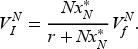
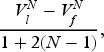
Therefore, the market structure is endogenously determined by two thresholds:

Our analysis implies that when the platform enters, it intensifies competition and reduces
Platform encroachment has raised concerns among policymakers about its potential negative impacts on independent sellers and consumers. In the recent case against Amazon, the European Commission investigated how Amazon used non-public data from independent sellers to leverage its market power in providing marketplace service and to favor its own products or those of sellers using its fulfillment services. 16 The main concern was that this could distort competition in the product market and marginalize independent sellers. The case was eventually settled with commitments from Amazon to not use non-public data for its retail business and to treat all sellers equally. 17
Much attention has been focused on distortion in the product market caused by platform encroachment and the use of private information, which is undoubtedly significant. However, there has been limited discussion on how platform encroachment may impact incentives to experiment with new products, which generates long-run growth for the platform and ultimately benefits consumers. Our analysis is the first to look into these impacts with explicit consideration of imitation by both the platform and imitators. In light of our results, we discuss the implications of two widely discussed regulatory policies on the affected parties. We first derive the consumer surplus without platform encroachment in a similar way as in Section 4:
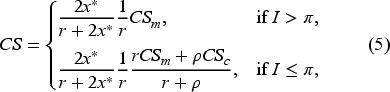
The consumer surplus when the platform encroaches into the market is:

As seen from the European Commission case against Amazon, a natural regulatory policy to consider is banning or limiting the use of private information by the platform, that is, reducing


To illustrate these effects, we reconsider Example 1 with different parameter values. With highly differentiated products, as shown in Figure 4 for
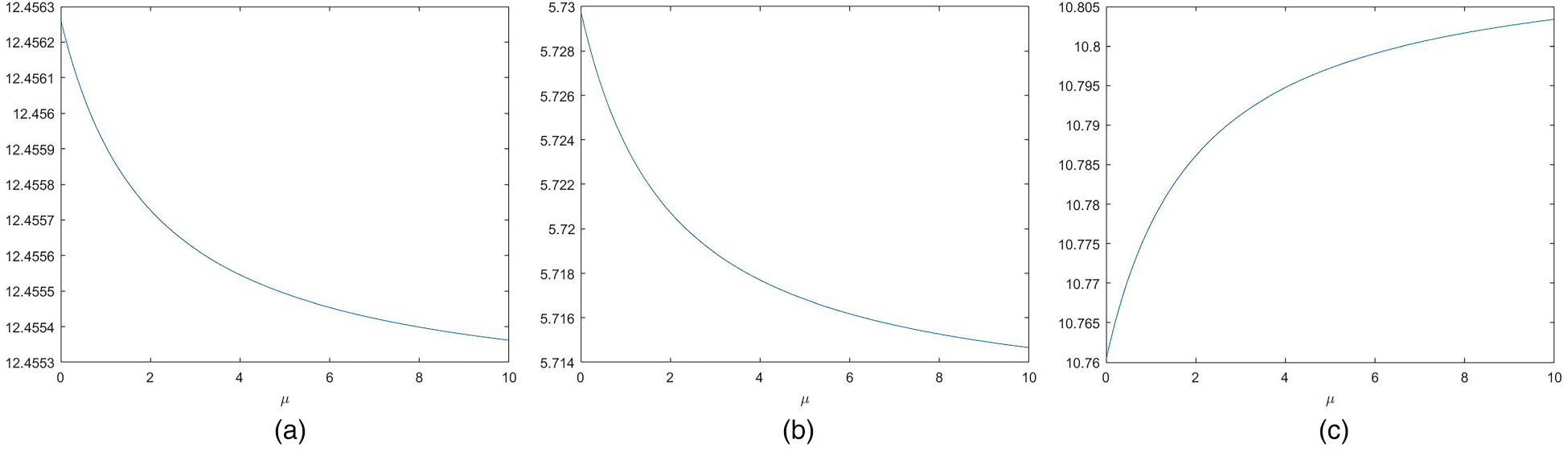
The impact of limiting private information usage with high differentiation (
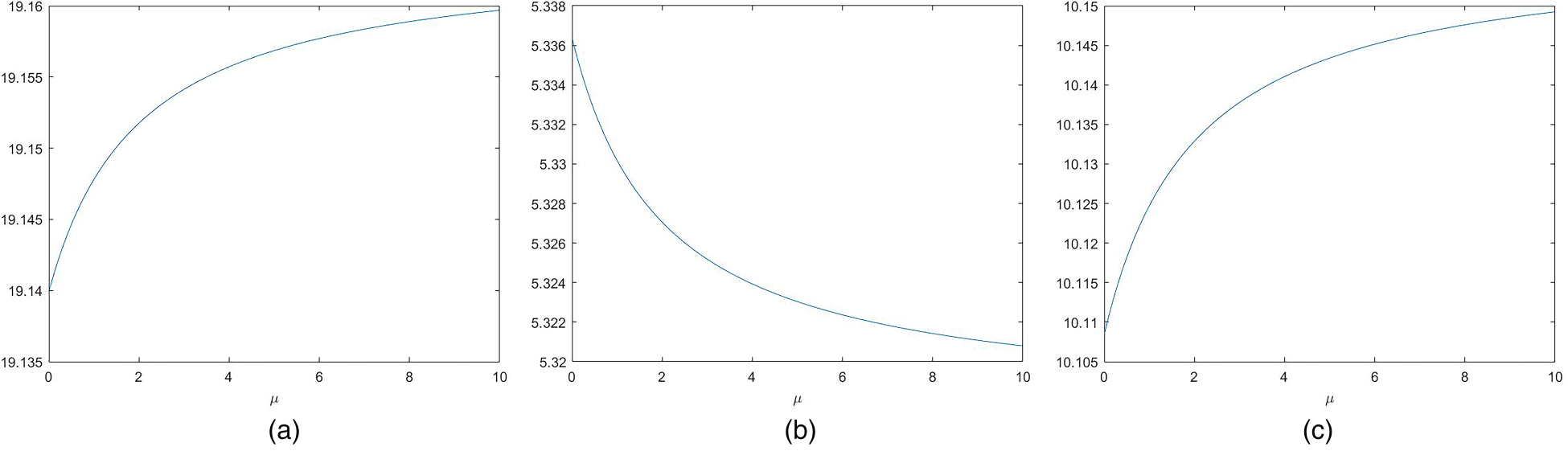
The impact of limiting private information usage with low differentiation (
However, if private information is also used to influence competition among sellers, there are additional effects that need to be evaluated. Most existing discussions emphasize how the platform uses its private information to target the most popular products. In our framework, this can be interpreted as a negative impact on the leader, for example, a higher
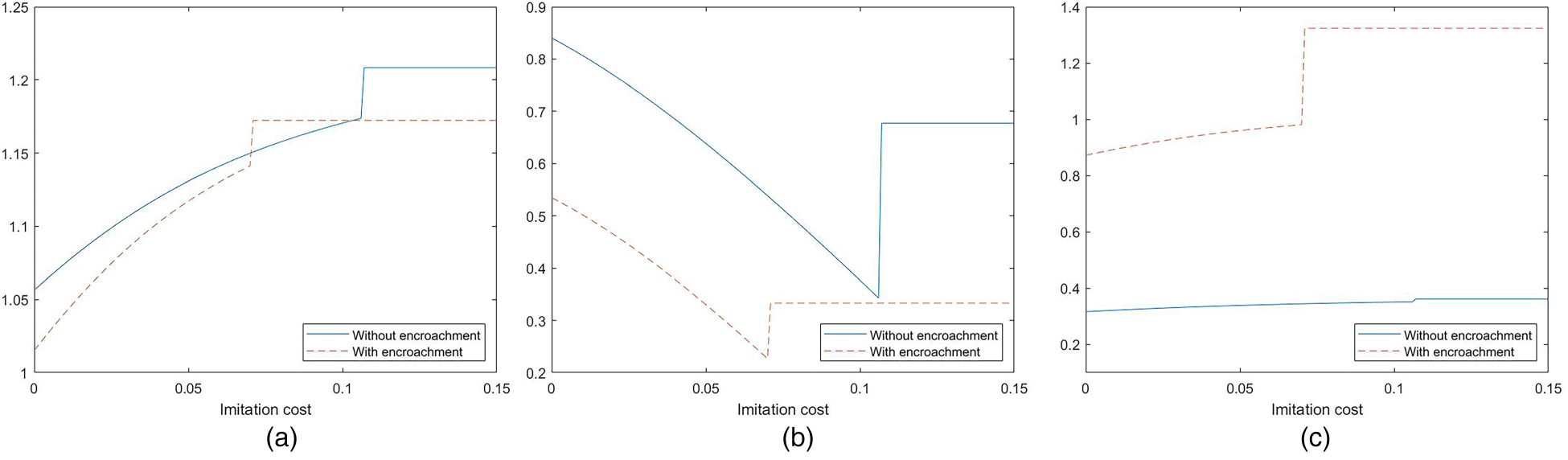
The impact of banning platform encroachment with high differentiation (
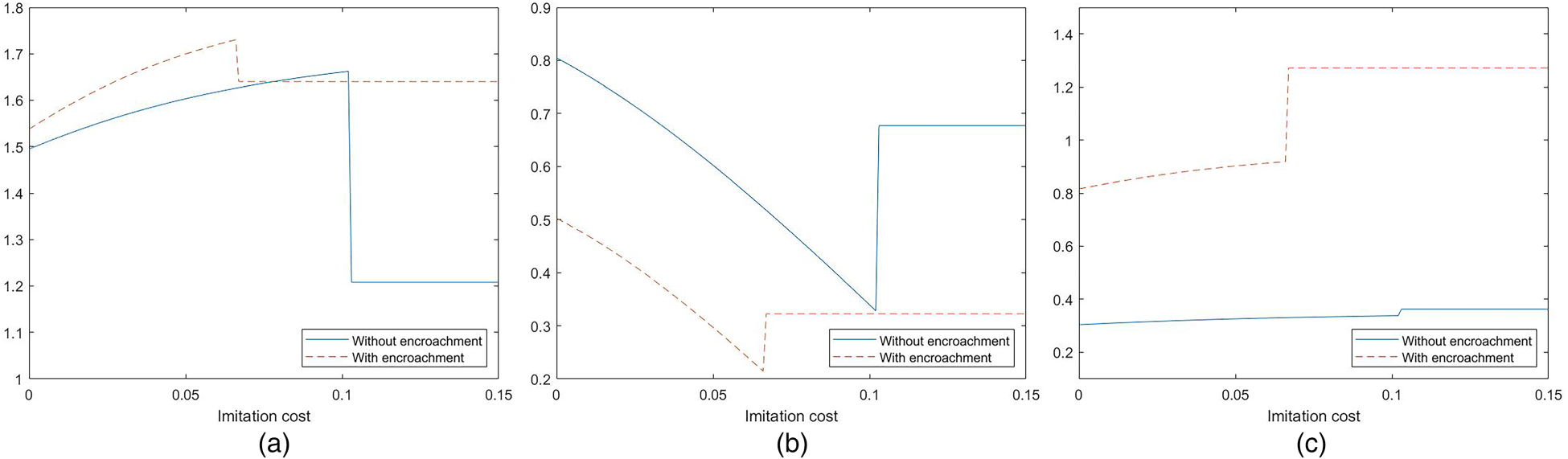
The impact of banning platform encroachment with low differentiation (
A more radical regulatory proposal is to ban the platform from entering the product market, or to implement an effective separation between the dual roles of hybrid platforms. While this approach would certainly address regulators’ concerns about platform encroachment on independent sellers, it is unclear whether it would also lead to higher consumer welfare. For example, platform entry brings more competition and offers more choices, which can benefit consumers. As shown by Lee and Musolff (2021), consumers do sometimes prefer the platform’s products. Our analysis provides another reason why completely banning platform entry may backfire.
As shown in Proposition 2, platform entry can enhance experimentation for an intermediate range of imitation costs. If products are sufficiently differentiated, the impact of platform entry on the product market is small. Therefore, banning platform entry increases consumer welfare if
For larger
As emphasized in this article, if platform entry primarily deters imitation, it can reduce wasteful duplication costs and generate long-run benefits through innovation. However, these benefits need to be balanced against the effects of platform entry on competition and prices in the product market. In summary, how the platform enters is more important than whether the platform should be allowed to enter.
Concluding Remarks
We have considered a dynamic model of product experimentation on a platform when the platform may enter to compete with third party sellers. We show that platform encroachment could enhance sellers’ incentives to experiment with new products by reducing the value of imitation and mitigating the free-riding problem. Furthermore, this changes the composition of sellers by bringing more experimenting sellers but fewer imitators. Such a benefit is larger when information about successful experimentation diffuses faster on the platform, in which case the platform may optimally adjust its product offering strategies to further curb free-riding and promote product experimentation.
We conclude with a few directions for future research. Firstly, we have focused on sellers’ incentives to carry out product experimentation, it would be interesting to investigate how these incentives interact with other features of the platform, such as the search environment and recommendation algorithms. Secondly, the contract between the platform and a seller often includes other terms and conditions in addition to the commission fee, and it would be valuable to study the optimal contract when taking into account the experimentation incentives.
Supplemental Material
sj-pdf-1-pao-10.1177_10591478241305291 - Supplemental material for Product Experimentation, Information Diffusion, and Platform Encroachment
Supplemental material, sj-pdf-1-pao-10.1177_10591478241305291 for Product Experimentation, Information Diffusion, and Platform Encroachment by Wing Man Wynne Lam and Xingyi Liu in Production and Operations Management
Footnotes
Acknowledgments
The authors would like to thank the department editor, the senior editor and two reviewers for their detailed comments, which greatly improve this article. The authors also thank Michele Bisceglia, Amelia Fletcher, Morten Hviid, Bruno Jullien, Robert Somogyi, seminar, and conference participants at Leicester, Norwich, CRESSE 2022, RES 2023, EARIE 2023, and IIOC 2024 for useful comments.
Declaration of Conflicting Interests
The author(s) declared no potential conflicts of interest with respect to the research, authorship, and/or publication of this article.
Funding
The author(s) received no financial support for the research, authorship and/or publication of this article.

Notes
How to cite this article
Lam WMW and Liu X (2024) Product Experimentation, Information Diffusion and Platform Encroachment. Production and Operations Management 34(7): 1707–1724.
References
Supplementary Material
Please find the following supplemental material available below.
For Open Access articles published under a Creative Commons License, all supplemental material carries the same license as the article it is associated with.
For non-Open Access articles published, all supplemental material carries a non-exclusive license, and permission requests for re-use of supplemental material or any part of supplemental material shall be sent directly to the copyright owner as specified in the copyright notice associated with the article.
