



Abstract
This research examines how national cultural differences between the acquirer and target firms affect post-acquisition performance in cross-border acquisitions. We focus on two dimensions of national culture—individualism/collectivism (IDV) and power distance (PDI)—for their close relevance to structural changes that occur during post-acquisition integration. We find that while differences in PDI are negatively associated with post-acquisition performance, differences in IDV positively affect such performance. We also find that the acquirer's cultural learning from supply chain partners helps mitigate the negative impact of PDI differences on post-acquisition performance, especially when the partner has a similar national culture in PDI to the target. Our theoretical development and empirical findings contribute to the operations and supply chain management research by illuminating the differential effects of national cultural differences on post-acquisition integration outcomes. Also, our study sheds new light on the possibility that working with supply chain partners may provide an opportunity for cultural learning that can be utilized in a post-acquisition integration setting.
Keywords
Introduction
Mergers and acquisitions (M&As) are an important strategic endeavor that can enhance a firm's competitive advantage. In 2022, the number of M&A deals worldwide was 49,058, with a total deal value of USD 3.15 trillion and an average deal value of USD 64 million (WilmerHale, 2023). From an operational perspective, M&As lead to changes in the operational routines of the combined firm because reducing operational redundancies and leveraging resources from each of the merging firms are crucial to maximizing potential financial gains from an M&A (Anand et al., 2012; Gupta and Gerchak, 2002; Wu et al., 2016). Furthermore, M&As often result in changing the nature of buyer-supplier relationships and the supply chain structure of the industry due to the increased market power of the combined firm (Cho, 2014; Hu et al., 2023; Zhu et al., 2016). For these reasons, operations management (OM) scholars have studied this topic from multiple perspectives.
Despite advances in knowledge regarding M&As, extant studies in OM have devoted little attention to cross-border M&As in general and the role of national culture in particular. As the global network of production and operations has proliferated (Ferdows, 2018; Prasad and Babbar, 2000), many firms are acquiring operations located around the world. However, cross-border M&As have experienced high failure rates, with one main reason being the challenges caused by cultural differences. KPMG (cited by Reus and Lamont, 2009: 1,299) reported that only 17% of the firms analyzed in their study of cross-border M&As met pre-acquisition performance expectations, and “over one-third of the interviewed executives attributed acquisition failure to cultural differences.” One case in point involves the M&A between Daimler and Chrysler. While Germany-based Daimler was characterized by a clear chain of command and respect for authority, US-based Chrysler had a more freewheeling and open culture. Such cultural differences resulted in many operational problems during the post-merger integration and eventually led to its failure (Appelbaum et al., 2013). This example highlights a need to enhance our understanding of the challenges faced by firms in cross-border M&As, specifically from cultural differences between the two previously independent entities.
Further, although effective post-M&A integration is key to addressing cultural conflicts and realizing the intended values of an M&A (Gupta & Gerchak, 2002), prior OM studies have rarely delved into this topic. While the impact of M&As has been examined with a variety of foci, such as buyer firms’ costs (Hu et al., 2023), consumer price (Cho, 2014), and non-merging firms’ strategic actions and profits (Zhu et al., 2016), this line of research, which mainly relies on analytical modeling, largely assumes that successful post-M&A integration happens naturally. As a result, we have a limited understanding of the specific challenges and opportunities that could arise due to cultural differences during post-M&A integration. These are important gaps in the literature because, without a deeper understanding of the post-M&A integration process and outcomes, the impacts of M&As that prior modeling-based studies have reported may not be realized or sustained.
Additionally, OM scholars have recognized the mutual influences that supply chain partners have on one another (e.g., Cheung et al., 2010). In particular, one stream of research has long studied the learning among supply chain partners (aka supply chain learning), which occurs via frequent interactions and collaborations among partner firms (see Chen et al., 2023 and Yang et al., 2019, for reviews). Building on the organizational learning literature (Argote et al., 2000; Levitt and March, 1988), this stream of research has examined the impact of supply chain learning on partner firms’ capabilities (e.g., innovation capabilities, agility, process management) and performance in a variety of dimensions (e.g., economic, environmental, social) (Yang et al., 2019). Although this literature suggests that supply chain partners may learn each other's different cultures through continuous interactions and that this learning can be used in another setting (e.g., post-M&A integration), little has been known about how cultural learning from an acquirer's supply chain partners influence the post-M&A integration outcome.
Against this backdrop, we ask the following research questions: (1) In cross-border acquisitions, how do national cultural differences between the acquirer and target firms affect post-acquisition performance? (2) How does the acquirer's cultural learning from its supply chain partners influence the relationship between national cultural differences (between the acquirer and target firms) and post-acquisition performance? To examine these questions, we use Hofstede (1980: 25)'s definition of culture as “the collective programing of the mind which distinguishes members of one human group from another.” We focus on two particular dimensions of culture, power distance (PDI) and individualism/collectivism (IDV) (Hofstede, 1980), to explicate the distinct effects of different national cultural dimensions (Gupta and Gupta, 2019). We focus on these dimensions based on their close relevance to the structural changes that frequently occur during the post-acquisition integration process (Barkema and Vermeulen, 1997). Barkema and Vermeulen (1997: 848) state, “Power distance and individualism directly bear on issues of internal integration and influence relationships with personnel, such as the organizations’ choice of control forms, reward systems and so on.” To differentiate the effect of national cultural differences in these two dimensions, we delineate structural changes occurring in post-M&A integration into two distinct aspects: (1) how resources are allocated and (2) who has control over the resource allocation. Further, we draw on the extant knowledge of social hierarchy and workplace conflicts, which distinguishes between task-related and relational conflicts (e.g., Chua and Jin, 2020; Jehn, 1995). To provide a more comprehensive understanding of cultural learning from supply chain partners, we distinguish between learning about similar and diverse cultures.
We test our hypotheses using a unique dataset consisting of cross-border acquisition deals that occurred during 2000–2015. Given that integrating two previously independent firms takes a considerable amount of time, we employ an event study framework to evaluate post-acquisition performance using a long-term performance measure, namely, abnormal operating performance, which is measured after 4 years into the acquisition deal. Consistent with our hypotheses, we find that the difference in PDI is negatively (and that in IDV is positively) associated with post-acquisition performance. We also find that the acquirer's cultural learning from supply chain partners helps mitigate the negative impact of PDI differences on post-acquisition performance, especially when the partner's national culture in PDI is similar to that of the target. However, we find no support for such a learning effect of diverse cultures (i.e., the acquirer's experiences with culturally diverse supply chain partners). Also, interestingly, learning about neither similar nor diverse cultures from supply chain partners has been found to moderate the positive impact of IDV on post-acquisition performance.
The rest of this paper is organized as follows. Section 2 reviews two streams of research in OM that pertain to our study: research on M&As and national culture. Section 3 presents our theory and hypotheses. Section 4 describes our methodology. We present our findings in Section 5 and robustness checks in Section 6. We provide discussions and a conclusion in Section 7.
Literature Review
Prior M&A Research in OM
OM scholars have examined various topics regarding M&A. Prior M&A studies in the OM literature can be categorized into three research streams. The first research stream, which comprises the major body of knowledge in this area, uses analytical modeling to examine the impact of horizontal mergers on merged firms, nonparticipant firms, and supply chain partners. Notably, Cho and Wang (2017) examine the effects of a horizontal merger between retailers on the combined firm's prices and expected profits, as well as consumer welfare under demand uncertainty. Xiao (2020) models a horizontal merger among firms competing on production quantities and demonstrates the impact of a yield correlation between the merging firms on the diversification benefit of the merger and the expected profit of the merged firm. Guo et al. (2023) use a game-theoretic model to examine which post-merger integration strategy (i.e., centralized or decentralized) is more profitable in the context of horizontal mergers. Several studies extended this line of research by considering horizontal mergers in a multi-tier supply chain. Cho (2014), for instance, examines the impact of a merger of two firms at one tier on the outputs and profits of merging firms and nonparticipant firms at the same and other tiers, as well as the overall supply chain profit. In a related study, Zhu et al. (2016) study the implications of upstream/downstream horizontal mergers on the merging and non-merging firms’ optimal decisions and profits after a merger.
Another research stream develops models to evaluate the potential synergies and gains from a merger. For instance, Wu et al. (2016) develop a leader-follower game model to assess the potential gains from the merger of different organizations with constrained resources. This study uses a multi-methodological approach by developing an analytical model to evaluate the potential of a merger and then applying the model to an empirical case in the banking industry. Gupta and Gerchak (2002) develop a model for quantifying operational synergies in an M&A by considering the role of production and the demand characteristics of the acquirer and the target, such as the production capacity, manufacturing flexibility, and demand correlation.
The third research stream involves a few studies that empirically examine the impact of M&As in terms of post-M&A outcomes such as cost, performance, and innovation. Hu et al. (2023) find that M&As among a focal firm's first-tier suppliers (i.e., supply base) are positively associated with the firm's cost of goods sold (COGS) and that this effect is weaker when the supply base is less concentrated and more differentiated. Chae et al. (2022) build on resource dependence theory to examine the role of supply chain structural equivalence, defined as the extent to which merging firms share common suppliers and customers, in post-M&A performance. They find that upstream structural equivalence is positively associated with post-M&A performance, while the effect of downstream structural equivalence is moderated by the merging firms’ vertical industry relatedness.
Taken together, while scholars have made important contributions to understanding how market actors can derive benefits from M&As under different conditions (e.g., Cho, 2014; Cho and Wang, 2017; Hu et al., 2023), prior research has not considered cross-border M&As. This is a serious gap, given the significance of the global network of production and operations and the resulting prevalence of cross-border M&As (Ferdows, 2018; Prasad and Babbar, 2000). Considering cultural differences is particularly important in studying the impact of cross-border M&As because they significantly affect post-M&A integration, which is critical to creating operational synergies (Gupta and Gerchak, 2002).
Another important gap is that extant OM studies on M&A outcomes have largely assumed post-M&A integration as a given (e.g., Cho, 2014; Cho and Wang, 2017; Wu et al., 2016; Xiao, 2020), without delving into the various challenges encountered by firms during the integration process. Even the few studies focusing on post-M&A integration (e.g., Chae et al., 2022; Guo et al., 2023) have only considered merging firms’ supply chain characteristics or demand conditions (e.g., deterministic vs. stochastic) as determinants of post-M&A performance or integration strategy (i.e., centralized vs. decentralized). As a result, conflicts that might arise during the post-M&A integration process in cross-border deals and how they can be mitigated remain understudied. To fill this gap, we explicate the role of national cultural differences between the acquirer and target firms in post-acquisition integration. In addition, motivated by the call to scrutinize supply chain characteristics in M&A research (Chae et al. 2022), we investigate the moderating role of the acquirer's cultural learning from supply chain partners.
Prior OM Research on National Culture
OM scholars have recognized the importance of national culture in international operations (Gupta and Gupta, 2019; Prasad and Babbar, 2000). Metters et al. (2010) highlight the difficulties of managing operations overseas as a result of cultural differences. Indeed, studies have demonstrated the impact of national culture on various operational decisions. Pagell et al. (2005) showed that national culture affects plant-level decisions such as the number of suppliers per input, the amount of outsourcing, and the forecasting horizon. Other studies have also found that national cultural differences lead to firm-level differences in quality management practices such as TQM (Flynn and Saladin, 2006; Rungtusanatham et al., 2005) and process compliance (Gray and Massimino, 2014).
Previous OM research has also suggested that cultural differences may hinder the cross-border supply chain integration (Cheung et al., 2010). This is because behavioral norms and work-related values are influenced by culture. Therefore, cultural differences between partners often lead to conflicting views and disagreements over various issues pertinent to supply chain integration, thereby resulting in shirking behaviors (Lee et al., 2018; Skowronski et al., 2022) and undermining operational performance (Wiengarten et al., 2011). In particular, our focal cultural dimensions, PDI and IDV, have received considerable attention in this research stream. For example, prior studies have reported that differences in PDI affect a firm's tendency to allow a supply chain partner's access to data (Doetzer, 2020), individuals’ acceptance of bonus and penalty incentive contracts in supply chain exchanges (Lee et al., 2018), and suppliers’ reaction to their buyers’ use of different types of power (e.g., coercive vs. expert power) (Skowronski et al., 2022). Differences in IDV also affect firms’ commitment and collaboration (Doetzer, 2020), trust (Cannon et al., 2010), and reaction to other partner firms’ influence attempts (Skowronski et al., 2022) in the context of supply chain integration.
Despite continued interest in the role of national culture and cultural differences in international operations and supply chain integration, a clear understanding is still lacking regarding how cultural differences between different firms (e.g., the acquirer and the target) affect their integration process and post-integration performance. In other fields such as strategic management and international business, on the other hand, this has long been a topic of interest. However, findings have been mixed. We conjecture that the main reason for such mixed findings is that the vast majority of previous studies on this subject have relied on a composite measure of cultural distance (Kogut and Singh, 1988) 1 , which makes it difficult to understand the specific aspects of national cultural differences that create challenges (or synergies) and why they create such challenges (or synergies). To fill this gap in the literature, we unpack national cultural differences into two specific dimensions (i.e., PDI and IDV) and analyze how each of these dimensions affects post-acquisition performance.
Theory Development and Hypotheses
Post-Acquisition Integration, Structural Changes, and National Cultural Differences
For successful post-acquisition integration, the operating units from the previously independent firms must work together (albeit with varying levels of intensity) to reduce redundancy, increase economies of scale and scope, and foster knowledge transfer and resource deployment (Capron et al., 1998; Larsson and Finkelstein, 1999). For example, on the revenue side, the sales activities of the target firm's products must be combined with the marketing activities of the acquirer. On the cost side, the production and distribution processes of the acquirer must be standardized and integrated with those of the target to achieve economies of scale (Graebner et al., 2017).
While such integration is crucial for the acquirer to achieve better post-acquisition performance, it requires structural alignment and changes ranging from small adjustments in communication practices to the complete restructuring of business units. In particular, to facilitate the acquirer's control over the target's operating units, significant changes often ensue in such areas as reporting hierarchy, grouping of work, business processes, performance measures, and reward systems. For the purpose of theorizing, we delineate two distinct aspects of structural changes that occur during the post-acquisition integration process: (1) how resources are allocated and (2) who has control over the resource allocation. The former essentially asks who (e.g., individuals or units) gets what (e.g., rewards or penalties) when (e.g., specific measures) in organizing work. Various work design decisions, such as how work can be divided across hierarchical levels and distributed horizontally across organizational units (Sinha and Van de Ven, 2005), are pertinent to this aspect. The second aspect is concerned with who makes such decisions, which is linked to the ranks of individuals in the organizational hierarchy and is reflected in job titles, reporting structures, and organization charts (Magee and Galinsky, 2008). In firms, individuals are ranked, and the amount of resources each person controls is decided according to their rank (Magee and Galinsky, 2008).
We distinguish these two aspects of structural changes since the nature of conflicts and resistance to change that may arise during the integration process could differ. Moreover, the extent to which different dimensions of national culture are linked to each of these aspects could vary. Below, we discuss how each aspect of structural change is more pertinent to IDV and PDI, respectively, and how this understanding is related to post-acquisition integration outcomes.
Task Conflicts From Cultural Differences in IDV and Post-Acquisition Integration Outcomes
IDV refers to the degree of social connectedness among individuals and their desire for greater equality within an organization (Hofstede, 1980). Prior OM studies have examined this dimension of national culture and demonstrated that workers’ proclivity toward groups versus individuals affects not only individual behaviors but also supply chain integration and operational performance (e.g., Doetzer, 2020; Lee et al., 2018; Skowronski et al., 2022). In an organizational setting, IDV is tightly linked to individuals’ preference for group-based versus individual work (Gray and Massimino, 2014) and compensation (Lee et al., 2018). These preferences are closely tied to organizational decisions on how resources are allocated, the first aspect of structural change that we defined earlier.
More specifically, differences in IDV lead to various role expectations and behavioral patterns in terms of individuals’ relations to a group. For example, in a collectivistic culture, managers expect their employees to spend more time together inside and outside the organization. In such a cultural setting, the “organization is viewed like a family” (Flynn and Saladin, 2006: 587). Thus, social activities such as eating together after work hours are often expected (Earley and Gibson, 1998). Building a cohesive atmosphere and friendly relationships among group members is an important mandate for managers. In an individualistic culture, on the other hand, such an expectation creates conflicts because individuals in this environment value private interests, such as personal growth through task achievement (Flynn and Saladin, 2006), rather than building relationships within workplaces (Kim et al., 1994). Hence, when working together, people from a collectivistic culture would consider such individualists’ reaction as disrespectful and may question their loyalty to the organization, while those from an individualistic culture would perceive collectivists’ expectations as intrusive.
Such different cultural views and behaviors affect post-acquisition integration because culturally engraved expectations and behaviors require different structural arrangements for better operational outcomes. Prior studies show that individuals in a collectivistic culture are more productive when working in an in-group context, whereas those in an individualistic culture are more productive when working alone (Earley and Gibson, 1998) and with a high level of autonomy (Hahn and Bunyaratavej, 2010). Moreover, depending on the cultural orientation in IDV, managers may have different preferences toward resource distribution and compensation. Collectivists, for example, prefer the equality rule (i.e., distributing resources equally), while individualists prefer the equity rule (i.e., distributing resources according to the level of contribution) (Kirkman, 1996).
Although reconciling such different structural demands is not an easy task, we argue that the conflicts arising from differences in IDV are negotiable and can be resolved as long as the integration process continues. This is because the root causes of conflicts are different preferences and orientations toward norms and values pertinent to how work is done, or work design defined as how work can be better designed horizontally and vertically (Sinha and Van de Ven, 2005). When mandated changes in work design are incompatible with the target unit's cultural expectation, the target unit members may resist such changes. International business scholars, in this regard, have suggested that, albeit challenging, cultural differences are endogenous hazards that firms can mitigate by learning the differences and taking proper actions (Cuypers and Martin, 2010; Slangen and Beugelsdijk, 2010). This notion suggests that how the target unit members’ resistance is handled and resolved largely depends on decision-makers’ (e.g., managers from the acquiring firm) capacity to manage cultural differences. If decision-makers aspire to resolve such conflicts, they can deeply engage with the target unit and modify the direction of changes based on the feedback from the unit.
In line with this argument, research has demonstrated that compensation practices (that are linked to IDV) in Asian countries have changed substantially by adopting more individual- and merit-based practices that depart from traditional group- and seniority-based ones to accommodate the dynamic business environment (Chang, 2006). Furthermore, other studies show that collectivists’ preference for equality in resource distribution can be shifted to equity, depending on the organization's goal orientation (Chen, 1995). These findings highlight the relative flexibility in changing practices linked to IDV. This does not mean that there will be no resistance to such changes. Although resistance may still occur, the adjustment process can continue with the upward feedback from the target unit and decision-makers’ accomodations of the feedback.
Beyond more flexibility in accommodating differences, we further argue that conflicts from cultural differences in IDV have the potential to create synergies as the conflicts are primarily caused by different expectations toward how work is done. According to research on teamwork and conflict management, such task-oriented conflicts resulting from criticism or dissenting opinions on a task may create positive outcomes if carefully attended to. This is because such conflicts lead team members to engage more in the task itself and go deeper into the information elaboration process, such as discussing conflicting issues from different perspectives (Chua and Jin, 2020). Particularly in a setting where cultural differences exist in IDV, scholars have reported synergistic potentials with members from each entity leveraging each culture's positive aspects while working together. For instance, employees in an individualistic culture are used to expressing their own perspectives and adopting new and innovative ideas (Černe et al., 2013: 106). On the other hand, the emphasis on solidarity and cohesion in a collectivistic culture facilitates frequent information exchanges (Michailova and Hutchings, 2006). Therefore, when cultural differences in IDV are properly managed, cross-cultural collaboration may create synergies and foster the building of a social community, which can further accelerate the transfer of knowledge across units (Kogut and Zander, 1993). Morris et al. (1994) also suggest that a balanced mix of individualism and collectivism motivates innovation with the evidence that entrepreneurship peaks at a moderate level of IDV, while extremely collectivistic or individualistic organizations have lower levels of entrepreneurship.
Taken together, we suggest that during the post-acquisition integration process, when the national culture between the acquirer and the target is different in IDV, cultural clashes are inevitable. However, challenges from the differences in IDV can be remedied through managerial interventions. Further, each culture's strengths can be leveraged and meshed together, thereby resulting in positive post-integration outcomes. We thus propose:
Hypothesis 1: The cultural difference in IDV between the acquirer and target firms is positively associated with post-acquisition performance.
Relational Conflicts From Cultural Differences in PDI and Post-Acquisition Integration Outcomes
PDI refers to the degree to which members of a culture accept and expect that power in society is unequally distributed (Hofstede, 1980). This concept continues to generate significant interest in the OM literature. For example, research has shown that a high-PDI culture is closely associated with a leader's centralized and autocratic decision-making and clear hierarchical role definitions (Flynn and Saladin, 2006; Gray and Massimino, 2014). A low-PDI culture is tied to decentralized and participative decision-making (Daniels and Greguras, 2014; Hahn and Bunyaratavej, 2010). Given that power reflects “asymmetric control over valued resources in social relations” (Magee and Galinsky, 2008: 361), cultural differences in PDI could deeply influence managers’ decision-making, especially in regard to who makes resource allocation decisions (Fleming and Spicer, 2014; Pfeffer and Salancik, 1974), the second aspect of structural change defined earlier.
Structural changes concerning this aspect imply that redistributing power and authority within the combined organization is inevitable during the post-acquisition integration process. In general, managers are very sensitive to changes in this dimension and tend to be more resistant when their assumed power and authority are challenged. Yu et al. (2005) demonstrate that, in a large healthcare organization resulting from a merger of hospitals and clinics, the merged organizations were dysfunctional and fought against one another even after 8 years into the merger. The conflict was largely due to the initial accounting structure of the merged organization; thus, structural changes were inevitable. However, no meaningful changes occurred despite repeated feedback from internal (e.g., internal performance reviews) and external (e.g., consultants) entities because changes in the accounting structure required the redistribution of power and resources within the merged organization (Yu et al., 2005). This observation is well aligned with Hannan and Freeman (1984: 156)'s argument that organizational structures in terms of “hierarchical layers of structural features” and “forms of authority” are reproduced over time with the great strength of inertial forces.
Given these strong inertial forces, it is often daunting for managers to achieve harmonious decisions involving the structural arrangements that influence individuals’ power and authority. Cultural differences in PDI aggravate such already challenging issues because they entail different perceptions and expectations with respect to the source of power and how power is exercised within an organization (Zhao et al., 2008). In a high-PDI culture, it is readily accepted that managers’ decision authority is secure based on their hierarchical rank (Skowronski et al., 2022). In low-PDI cultures, however, the amount of power maintained by managers is not solely determined by the organizational hierarchy (Pfeffer and Salancik, 1974). Rather, various sources of power exist and are respected, such as one's position in the social network within an organization (i.e., social capital), one's authority derived from knowledge and expertise, and the possibility of collective action (Fleming and Spicer, 2014; Magee and Galinsky, 2008; Skowronski et al., 2022). Furthermore, how power is perceived and exercised can also differ in high- versus. low-PDI cultures. In a high-PDI culture, power and social status usually go together; therefore, higher-ranked managers tend to be perceived as elite and superior (Hofstede, 1980), while subordinates are perceived to be submissive and obedient (Yang et al., 2007). In contrast, in a low-PDI culture, power from one's hierarchical position is supposed to be exercised only for organizational decision-making, which has little to do with social status (Fleming and Spicer, 2014); thus, the kind of respect for higher-ranked managers assumed in a high-PDI culture cannot be expected.
Such cultural differences will be detrimental to post-acquisition integration outcomes because different perceptions and orientations toward power profoundly impede managers’ decision-making processes. For example, because managers from a high-PDI culture consider the amount of power from the organizational hierarchy as most important, they would insist on working with a manager similarly ranked in the organizational hierarchy as their counterpart for decision-making. In contrast, managers from a low-PDI culture may possess decision authority from other sources (e.g., knowledge and expertise), which may not be seriously respected by the former. With these different ways of perceiving power, managers will have difficulties in making collaborative decisions during the integration process. Furthermore, organizational scholars have found that differential power and status are prominent sources of interpersonal conflict in a work setting (Anicich et al., 2016). The nature of conflict in this case is different from task conflict. Such conflicts (caused by different power and status perceptions) inherently disrupt interpersonal relationships among group members (Anicich et al., 2016) and thus are detrimental because people tend to avoid exchanging, discussing, and integrating their ideas when interpersonal relationship quality is low due to damaged psychological safety (Chua and Jin, 2020). Moreover, prior research has found that efforts to resolve relational conflicts undermine task effectiveness (Behfar et al., 2008) because such efforts lead managerial attention to deviate from the focus on the task (Chua and Jin,2020).
These studies suggest that conflicts from cultural differences in PDI are more difficult to resolve. Thus, it takes a significant amount of time for individuals to reach an agreement on the proper structural changes to support the integration. Specifically, if the acquirer firm is from a high-PDI culture, its managers may be less willing to accommodate the structural demands of the target firm from a low-PDI culture. This is because structural changes in that direction require high-PDI managers to forgo their implicit and explicit privileges from the organizational hierarchy, as well as their elite status assumed from their ranks. For managers of the target firm from a low-PDI culture, any structural changes that strengthen the hierarchy can be interpreted as more control over their autonomy; thus, strong resistance is expected (Cartwright and Cooper, 1996). If the acquirer firm is from a low-PDI culture, its managers are less likely to accommodate the demands of its high-PDI counterparts: allowing members of the target firm to maintain their power and authority within the organizational hierarchy at the previous level can impede the interests of the acquirer's own members. We therefore expect the difficulties of integration to be more severe and persist when firms with a larger cultural difference in PDI are to be integrated. Prolonged conflicts will drain the combined firms’ resources and undermine the intended benefits of an acquisition. Therefore, we propose:
Hypothesis 2: The cultural difference in PDI between the acquirer and target firms is negatively associated with post-acquisition performance.
Moderating Role of Cultural Learning From Cross-Border Supply Chain Partners
We now turn to describe how an acquirer firm that learns about similar and diverse cultures from its supply chain partners can enhance its cross-border post-acquisition performance. According to the organizational learning literature, organizations develop knowledge and skills through cumulative experiences (Argote and Epple, 1990; Levitt and March, 1988). Further, many firms often retrieve and utilize lessons learned from one situation in other similar situations (Perkins, 2014). This notion suggests that firms may have different levels of ability to manage cultural differences depending on their experiences in handling cultural differences. We believe that collaborating with supply chain partners from different cultures provides opportunities for experiential learning (Yang et al. 2019), which allows the firm to capitalize on that learning in other similar contexts (Argote et al., 2000) such as the post-acquisition integration process.
Supply chain integration requires frequent interaction and collaboration among partner firms to achieve effective decision-making and a seamless flow of information, knowledge, and products (Jin et al., 2019; Ulrich and Ellison, 2005; Zhao et al., 2008). All of this matters in post-acquisition integration, as previously independent firms are merged together to create operational synergies, which requires realigning the combined firm's complementary resources (Hu et al., 2023), restructuring processes (Wu et al., 2016), and reconciling organizational differences between the acquirer and target firms (Gupta and Gerchak, 2002). In this respect, supply chain integration provides a similar context to post-acquisition integration. Therefore, learning from the former could be transferable to the latter. Furthermore, Cheung et al. (2010: 472) maintain that supply chains are “their [buyers and sellers’] own social communities capable of learning and knowledge transfer.” In other words, while exchanging information and jointly making sense of issues together, supply chain partners—influence one another and create shared relational values through collaborative efforts (Cheung et al., 2010). This understanding suggests that the experience of working closely together among supply chain partners can foster cultural learning. To delve more deeply into this insight, we consider two distinct dimensions of cultural learning that the acquirer firm may gain from its supply chain partners: learning about similar versus diverse cultures. Below, we discuss how such cultural learning may moderate the impact of the cultural differences between the acquirer and target firms on post-acquisition performance.
Learning About Similar Cultures
Prior studies on culture suggest that “the usefulness of knowledge and experience that is accumulated from earlier activities is determined by the similarity of the new setting to those settings already experienced by the company” (Hutzschenreuter and Voll, 2008: 56). This is because each cultural experience provides a type of knowledge on the business codes, behavioral norms, and value systems specific to a particular cultural setting (Perkins, 2014). Therefore, if the new and prior settings are culturally different, the applicability of the learning gained by the firm from prior experience is eroded (Barkema and Vermeulen, 1997). Furthermore, some scholars even point out a potential detrimental effect of learning—the learning penalty—when the learning is applied to an irrelevant cultural setting because managers without similar cultural experiences are likely to misestimate the environment, draw erroneous inferences on the causality between an experience and outcomes, and try to apply inappropriate knowledge from dissimilar contexts (Perkins, 2014; Zeng et al., 2013).
Thus, a firm's prior experience of working with a supply chain partner is likely to bring advantages in the post-acquisition integration process, especially when the partner is from a culture similar to the target firm. For example, as we described earlier, the acquirer could encounter various conflicting situations with the target due to different perceptions of power. If the acquirer has prior experience in dealing with a similar culture in PDI through working with a supply chain partner, it is likely to better manage such conflicting situations, compared to a firm with no such experience. Likewise, if the acquirer has prior experience working with a supply chain partner from a similar culture in IDV to the target firm, it can better manage divergent views and better foster the synergy potential that we described earlier. All of this is possible as cultural experiences with supply chain partners enable the acquirer to know when and how to intervene, negotiate, and compromise with the counterpart when conflicts arise. Based on this understanding, we propose that the cultural learning from a supply chain partner whose cultural background is similar to that of the target firm mitigates the negative impact of the cultural difference in PDI (between the acquirer and the target) on post-acquisition performance and enhances the positive impact of the cultural difference in IDV. Formally, we propose:
Hypothesis 3a: The negative relationship between the cultural difference in PDI and post-acquisition performance is less prominent when the national culture in the PDI of the acquirer's supply chain partners is more similar to that of the target firm.
Hypothesis 3b: The positive relationship between the cultural difference in IDV and post-acquisition performance is more prominent when the national culture in the IDV of the acquirer's supply chain partners is more similar to that of the target firm.
Learning About Diverse Cultures
In addition to learning about similar cultures, we also consider the impact of learning about diverse cultures from supply chain partners. As a firm expands its supply chain partners across countries, its scope of experiential learning and resulting knowledge base may broaden. While international business scholars highlight the costs of learning about new environments (e.g., Zaheer, 1995), the benefits of a firm's exposure to various cultures have been also highlighted. In particular, organizational learning scholars argue that learning from diverse experiences enables a firm to generate a greater knowledge pool, which may “lead to more possible combinations and a broader range of future choices” (Cyert and March, 1963 cited by Perkins, 2014: 151). Prior studies also suggest that firms with diverse perspectives and approaches may generate more ideas and multiple solutions (Stahl and Tung, 2015) and thus often show better performance in tasks demanding creativity (Sivakumar and Nakata, 2003).
The post-acquisition integration process is complex and often requires the recombination of existing routines (Graebner et al., 2017). The acquirer's diverse cultural experiences and learning from supply chain partners may enable the firm to accumulate a knowledge base of how to deal with conflicting situations caused by cultural differences from its diverse cultural repertoire. Also, the experience of working with various supply chain partners from diverse cultural backgrounds likely broadens the firm's views and may raise its level of tolerance for differences. All of this may help build the firm's ability to manage various challenging situations stemming from cultural differences, which can be deployed in the post-acquisition integration setting. We therefore expect that an acquirer's experiences with more diverse supply chain partners (in terms of cultural background) will mitigate the negative impact of cultural difference in PDI and enhance the positive impact of cultural difference in IDV on post-acquisition performance. Formally, we propose:
Hypothesis 4a: The negative relationship between the cultural difference in PDI and post-acquistion performance is less prominent when the acquirer has supply chain partners with more diverse national cultures in PDI.
Hypothesis 4b: The positive relationship between the cultural difference in IDV and post-acquisition performance is more prominent when the acquirer has supply chain partners with more diverse national cultures in IDV.
Methodology
Data and Measures
We collected data from the Securities Data Company (SDC) Platinum database on cross-border acquisition deals that occurred during 2000–2015. The sample includes cross-border acquisitions between firms in North American or European countries with a deal size larger than 1 million USD. From the SDC sample, we excluded acquisition deals if their accounting fundamentals were not available in Compustat or Compustat Global and those in which the acquirer had gone through more than one acquisition deal per year. Additionally, since our dependent variable, abnormal operating performance is estimated in longer horizons that span from (t–1) to (t + 5) periods (with t being the announcement year of a focal acquisition event), our sample size was further restricted. For instance, an acquisition that occurred in 2015 (t = 2015) required a comparison of the performance between 2014 (t–1) and 2020 (t + 5). 2
To construct the independent and control variables, several databases were used: Hofstede's cultural indices from Hofstede Insights 3 and linguistic and religious distance measures from Dow's website 4 (see Dow et al., 2016, for more information); GDP data from the World Bank; bilateral trade from the International Monetary Fund (IMF); firms’ information technology (IT) assets from the Ci Technology Database (CITDB); and supply chain partnerships from the FactSet database (e.g., Falcone and Ridge, 2024; Modi and Cantor, 2021; Wang et al., 2021). This led to a sample size of 1,249. Please refer to Supplemental Table A1 in the E-Companion for details.
Dependent Variable: Abnormal Operating Performance
Estimating cultural effects on post-acquisition performance presents several empirical challenges. First, cultural clashes and their resolution during the integration process tend to occur over a relatively long horizon. Second, we cannot observe the alternate state for each firm: a firm either did or did not undertake an acquisition, not both. To address these concerns, we adopted a fundamental-based event study framework (Barber and Lyon, 1996; Corbett et al., 2005) to compute the acquirer's abnormal operating performance subsequent to an acquisition announcement. This approach alleviates the above concerns by allowing the estimation over a long term and using benchmark firms (i.e., firms that had not undertaken acquisitions but were similar to a focal firm otherwise). A more thorough discussion is provided in the E-Companion regarding our choice of this approach.
Specifically, abnormal operating performance uses accounting fundamentals to reflect the long-term aspects of the post-acquisition integration process. This approach outlines the procedure for selecting a performance benchmark that produces a suitable counterfactual for a focal firm (see Barber and Lyon, 1996, for details). By comparing an acquirer's realized performance with its expected performance, this approach enables us to measure the acquirer's abnormal operating performance attributable to the focal acquisition. This method has been widely adopted across various disciplines, including management, finance, and operations management (e.g., Corbett et al., 2005; Fee and Thomas, 2004; Heron and Lie, 2002; Zollo and Meier, 2008).
Following the literature, the abnormal operating performance of acquisition i is defined as:

Cultural Differences in PDI and IDV
For our independent variables (i.e., cultural differences in PDI and IDV), we calculated the difference (in the absolute value) in the respective cultural dimension between an acquirer's and target's countries using normalized Hofstede's indices,

Cultural Similarity Between an Acquirer's Supply Chain Partners and the Target (SCP Similarity Hereafter)
The countries where the acquirer's supply chain partners operate for each acquisition i were derived from the FactSet database. Among these countries, the country with the smallest cultural difference in each of the two cultural dimensions (PDI and IDV) from the target's country was chosen to compute the cultural similarity between the acquirer's supply chain partners and the target in the respective cultural dimension. The similarity is then normalized by dividing it by the cultural difference between the acquirer and the target, as follows:

Cultural Diversity of an Acquirer's Supply Chain Partners (SCP Diversity Hereafter)
To capture the supply chain partners’ cultural diversity in each of the two cultural dimensions (PDI and IDV), we use the standard deviation of the normalized cultural indices of the acquirer's supply chain partners’ countries:

Control Variables
We included a comprehensive set of control variables. At the acquisition deal level, we controlled for the relative transaction size (the ratio of the transaction size to the acquirer's total assets), ownership of the target (target firm's public status), industry relatedness (1 if the acquirer and target firms operate in the same two-digit SIC industry, 2 if they are in the same three-digit SIC industry, 3 if they are in the same four-digit SIC industry, and 0 otherwise), and cash payment (1 if the M&A deal is completed using cash as the payment method, and 0 otherwise). At the firm level, we included firm size (the acquirer's total assets), book leverage (the acquirer's current liabilities and long-term debt divided by total assets), and the firm's M&A experience (the number of past M&As). In addition, we controlled for R&D intensity (the R&D expenditure-to-sales ratio) because R&D-intensive firms may have a different motivation, such as geographic diversification, to improve the appropriability regime of innovation (Hitt et al., 1997). We also controlled for IT intensity (the IT expenditure-to-sales ratio), given that IT capability may affect the firm's integration and alignment of its operational units (Tanriverdi and Uysal, 2011), as well as the overall number of supply chain partners and the number of supply chain partners within the target's region. Last, at the country level, we included the distance in other cultural dimensions (an aggregated index of masculinity and uncertainty avoidance using Kogut and Singh's (1988) formula) and the GDP gap between the acquirer's and target's countries. We also included linguistic and religious distance between the countries of the merging firms (see Dow et al., 2016, for details). Furthermore, the economics literature suggests that similarities in cultures, values, and preferences promote business partnerships and investments between countries (Guiso et al., 2006). To account for the degree of economic exchange, we included the level of exports for each country pair, collected from IMF's direction of trade (DOT) statistics. 5
Model Specification
To test our hypotheses, we developed the following baseline model:

The baseline model is augmented by the interaction terms with SCP similarity and SCP diversity:

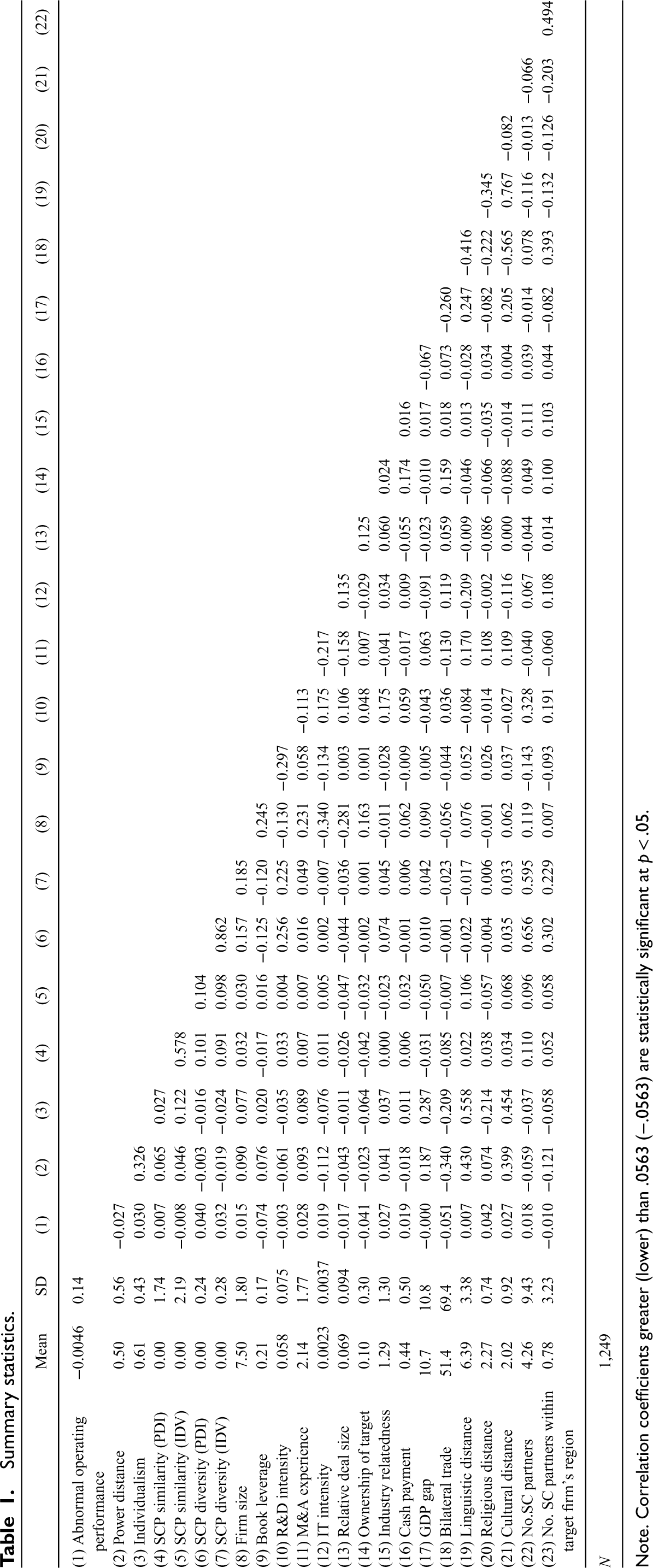
We estimated the models using ordinary least squares (OLS) with clustered standard errors at the region-pair level to account for potential within-cluster correlations in the error term. Table 1 reports the descriptive statistics and correlations of these variables.
Summary statistics.
Summary statistics.
Note. Correlation coefficients greater (lower) than .0563 (−.0563) are statistically significant at p < .05.
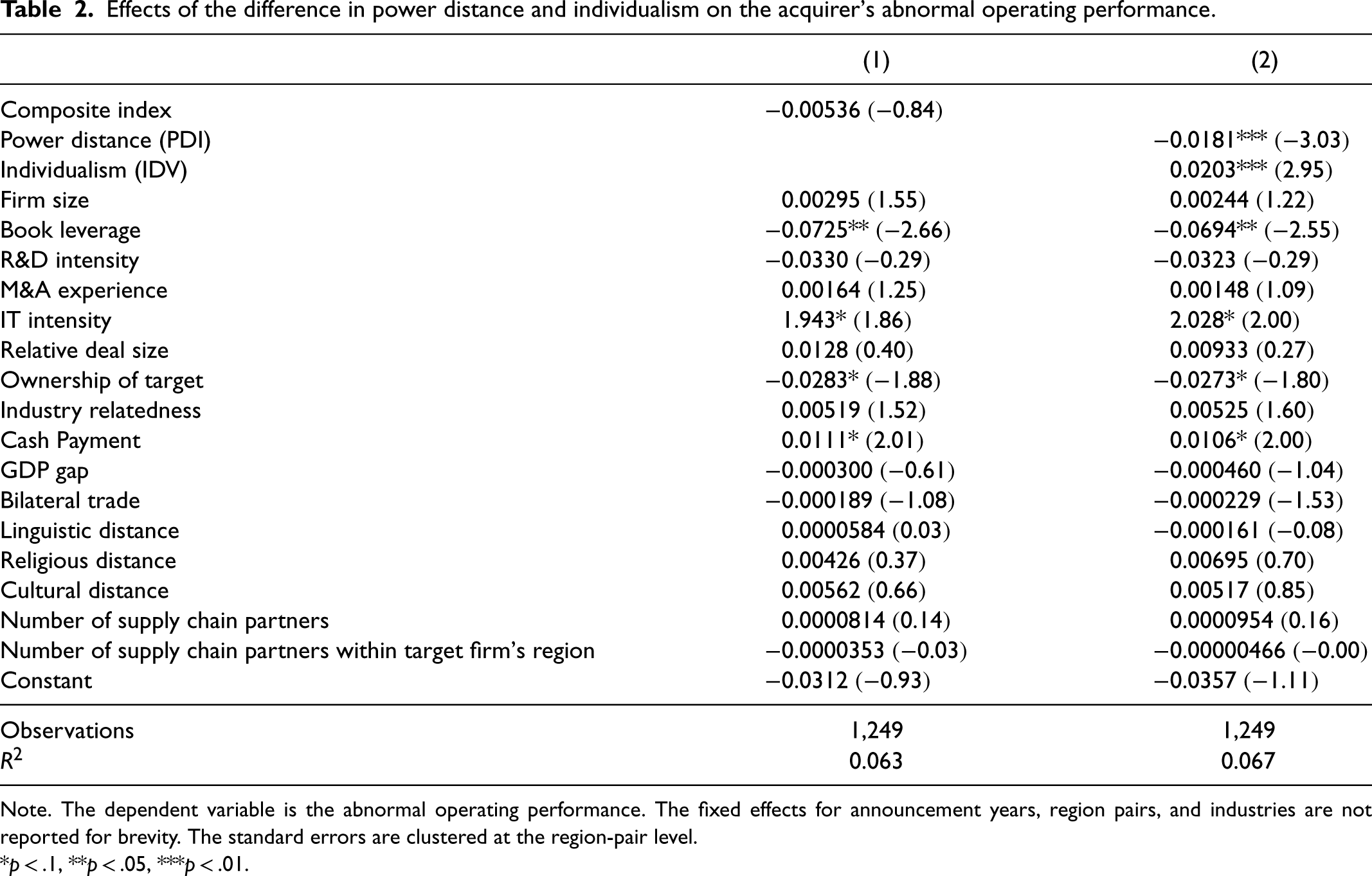
Table 2 reports the results of the regression analysis. First, the coefficients of the control variables are consistent with prior work (e.g., Heron and Lie, 2002; Huang et al., 2017; Tanriverdi and Uysal, 2011). For instance, acquisition deal size appears to have a negative impact on post-acquisition performance, which is consistent with the literature (Alexandridis et al., 2013).
Effects of the difference in power distance and individualism on the acquirer's abnormal operating performance.
Effects of the difference in power distance and individualism on the acquirer's abnormal operating performance.
Note. The dependent variable is the abnormal operating performance. The fixed effects for announcement years, region pairs, and industries are not reported for brevity. The standard errors are clustered at the region-pair level.
*p < .1, **p < .05, ***p < .01.
In Model 2, the cultural difference in PDI is negatively (–.0181; p < .01), and that in IDV is positively (.0203; p < .01) associated with abnormal operating performance. These results suggest that the abnormal operating performance of a cross-border acquisition decreases (increases) as the cultural difference between the acquirer's and target's countries becomes larger in PDI (IDV). This supports H1 and H2 on the distinct performance effects of the two cultural dimensions.
Table 3 reports the results of the models augmented with the acquirer's SCP similarity and SCP diversity variables. In Model 1, the positive and significant coefficient of the interaction term involving the PDI difference and SCP similarity (.0281; p < .01) indicates that the SCP similarity mitigates the adverse effect of PDI difference on performance. This result supports H3a and suggests that the cultural learning from a supply chain partner whose national culture is similar to that of the target indeed helps the acquirer better manage challenges from the PDI differences between the merging firms. Interestingly, no evidence was found for IDV difference: SCP similarity has no impact on the relationship between the IDV difference and abnormal operating performance. Therefore, H3b is not supported.
Moderating effects of the acquiror's supply chain partner similarity and diversity.
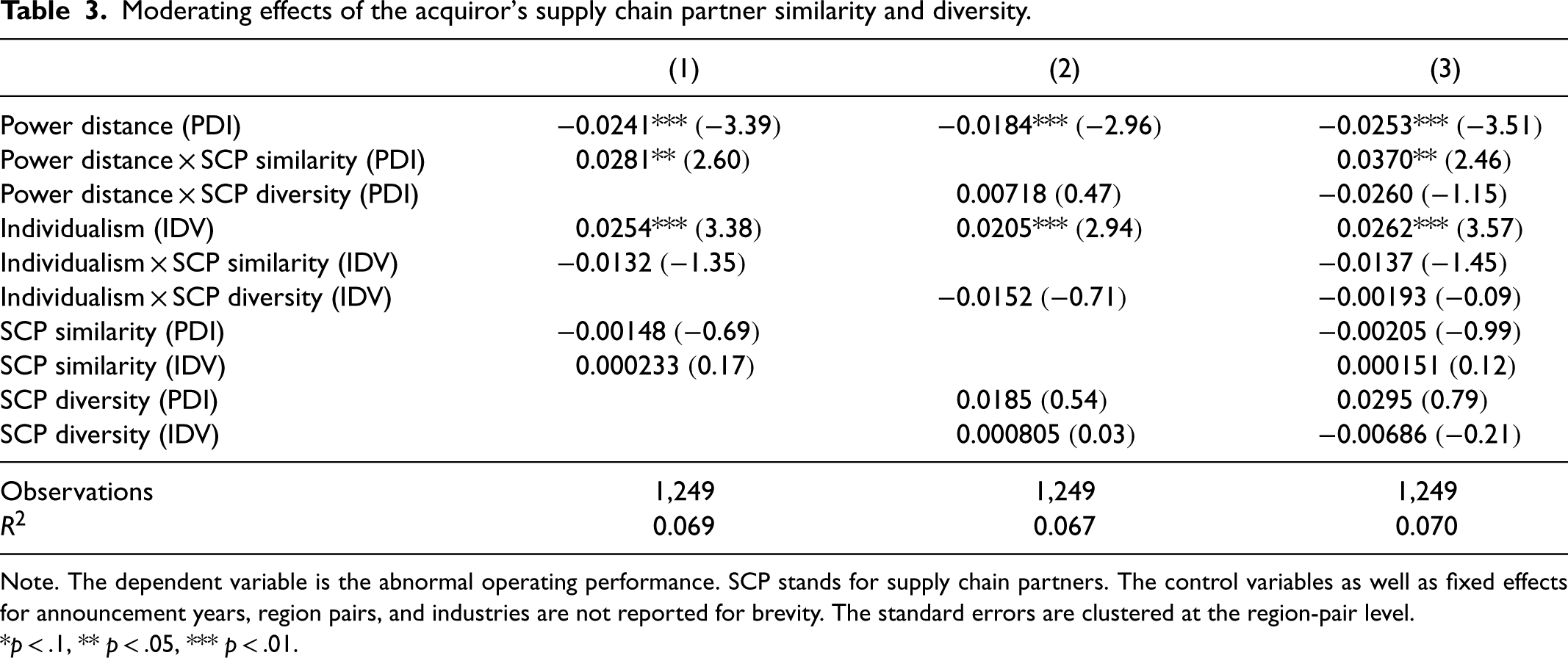
Note. The dependent variable is the abnormal operating performance. SCP stands for supply chain partners. The control variables as well as fixed effects for announcement years, region pairs, and industries are not reported for brevity. The standard errors are clustered at the region-pair level.
*p < .1, ** p < .05, *** p < .01.
In Model 2, SCP diversity appears to have no discernible impact on the relationship between the cultural differences and post-acquisition performance, as neither interaction term involving SCP diversity is statistically significant. Therefore, H4a and H4b on the moderating role of the SCP diversity of the acquirer are not supported. Model 3 shows the results of estimating the full model with both interaction terms included, and the results remain unchanged.
Alternative Estimation Periods
We used five years—from (t − 1) year to (t + 4) year—as the estimation period for computing abnormal operating performance. To test the sensitivity of the results to the length of the estimation period, we computed the abnormal operating performance by varying the time gap. Supplemental Figure A1 in the E-Companion shows the results with the dependent variable computed over different estimation periods: [–1, + 1], [–1, + 2], [–1, + 3], [–1, + 4], and [–1, + 5]. For instance, [–1, + 1] indicates that our dependent variable was calculated by subtracting the operating performance of 1 year prior to the announcement from that of 1 year after the announcement (relative to the benchmark performance). The vertical lines in Supplemental Figure A1 represent the 90% confidence intervals. The coefficients of PDI and IDV differences remain largely unchanged across all estimation periods, demonstrating the robustness of our results to the length of the estimation period.
Alternative Benchmarks for Expected Performance
The validity of our performance measure largely hinges on how closely the benchmark performance (i.e., the performance of control firms) resembles the counterfactual performance of a focal acquirer in the absence of an acquisition. Following the literature (e.g., Corbett et al., 2005; Zhang and Xia, 2013), we compare the characteristics of the focal and control firms to show their similarity. For comparison purposes, we included the two variables that were used for matching (i.e., asset and operating performance), as well as two variables not used for matching (i.e., sales and operating income).
In Supplemental Table A2 of the E-Companion, the first panel reports the summary of our study sample. On average, 17.46 control firms were matched and used to compute the counterfactual performance for each focal firm. The difference in asset size between the focal and control firms was USD 603 million, which is approximately 6.7% of the focal firm's asset size (USD 9,018 million). This gap looks reasonable, considering that the matching filter for assets allows control firms to be within +/–30% of the focal firm. The gap in operating performance, another condition used for matching, stands at 0.6%, which also falls well within the +/–10% filter range. Similarly, the differences in sales and operating income are 3.4% and 7.6%, respectively. It is worth noting that even though sales and operating income were not used as matching criteria, the focal and control firms exhibit comparable characteristics in these aspects. Next, we explored restricting the sample further such that the imposed differences in operating performance and asset size are smaller (within two standard deviations).
As anticipated, applying stricter criteria reduced the sample size to 1,143, with marginal improvement in the matching quality. The differences in assets, sales, operating income, and operating performance decreased to 5.2%, 10%, 6.4%, and 0.4%, respectively. In the third panel, an even more stringent cutoff was applied (within one standard deviation). Doing so resulted in the smallest sample size but further improved the matching quality, albeit to a lesser extent (4.6%, 15%, 6%, and 0.4%). However, applying a more restrictive filter renders the composed sample less comparable in nonmatching characteristics, such as sales, where the percentage difference increases from 3.4% to 15%. This suggests that a restrictive matching criterion may not necessarily result in a more comparable control group. The matching quality from these different filters is comparable with other studies adopting the same method (e.g., Corbett et al., 2005, Zhang et al., 2014). As shown in Supplemental Table A3, the results are largely consistent, demonstrating the robustness of our findings to different matching criteria.
Alternative Outcome Measure: Operational Efficiency
Further, we employed another outcome measure sharing similar statistical properties as the abnormal operating performance mentioned above and yet could capture different aspects of post-acquisition outcomes: operational efficiency. While the abnormal operating performance represents the overall effectiveness of a firm in generating profits, the operational efficiency captures a firm's overall efficiency in converting organizational resources into operational outcomes.
Using the stochastic frontier analysis (SFA) methodology (Li et al. 2021; Yiu et al. 2020), we measure operational efficiency as the change in a firm's pre- and post-acquisition inefficiency parameters estimated from the stochastic frontier model. Following the literature (Jacobs et al., 2016; Li et al., 2021; Yiu et al., 2020), we considered the operating income as the output, and the number of employees, capital expenditure, and plant, property, and equipment as the inputs. We specify the following frontier function:


Alternative Explanations for the Cultural Difference Effects
We further consider potential alternative explanations for our findings. First, one might argue that the observed effects could be attributable to a firm's learning from past M&A experience. One possibility is that M&A experiences and learning could be shared within an industry. Once industry leaders execute a few successful cross-border M&As, the best practices and know-how of cultural management are documented and shared within the company, which may spill over to other firms in the same industry via labor markets or other conduits of knowledge exchanges (e.g., conferences). In this case, the superior returns observed between countries similar in culture (e.g., PDI) might have resulted from this collective stock of knowledge on cultural management shared among industry members. However, since our model includes industry fixed effects that can account for such industry-specific variance, it is not likely that industry-wide learning effects have driven our findings.
Further, firms with prior M&A experience may have developed superior integration capabilities, which help mitigate issues that may arise during the integration process. Experienced firms may also be adept at resolving cultural differences. Moreover, they may strategically acquire firms from a particular set of countries with similar cultural profiles so that they can reapply the accumulated integration knowledge. This strategic selection of targets may allow them to avoid “difficult” M&As and thus may increase the firms’ chance of success. To account for a firm's integration capability, we consider another type of M&A experience, i.e., target-specific M&A experience, measured by the number of past M&As that an acquirer has made in the current target's country. Supplemental Table A5 in the E-Companion reports the results of the models with target-specific M&A experience. The results are consistent with our main findings, which rules out this alternative explanation based on integration capabilities.
Considering Different Types and Durations of Supply Chain Partnership
The learning effect from a supply chain partner may vary depending on the type and duration of the partnership. 7 Given this possibility, we checked the robustness of our results by constructing alternative supply chain partner (SCP) similarity and diversity measures using the FactSet database, which provides information regarding the type and duration of each supply chain partnership. Specifically, we differentiated partnerships with (1) strategic partners (licensing and financial investment), (2) supply chain partners (suppliers, manufacturing, distribution, R&D, etc.), (3) duration equal to or shorter than 1 year, (4) duration between 1 and 3 years, and (5) duration between 3 and 5 years. As shown in Supplemental Table A6, the learning effects of SCP similarity/diversity remain the same across all models, with one exception. In the supply chain network consisting only of partnerships shorter than 1 year (Column 3 of Table A6), the moderating effect of SCP similarity on the relationship between cultural difference in PDI and post-acquisition performance is insignificant. We believe that this result might be due to the insufficient time for the partners to develop deep and transferable knowledge. Nevertheless, the overall consistent findings demonstrate the robustness of our results and suggest that firms can leverage their cultural learning from supply chain partnerships during post-acquisition integration as long as the partnership is not too short.
Discussion and Conclusion
Ferdows (2018) emphasizes that adding a strong OM perspective can significantly enrich the current understanding of strategic issues such as M&As. Prior studies in the OM literature have indeed investigated important aspects of M&As by not only focusing on the combined firm itself but also taking into account supply chain actors (e.g., buyers and suppliers), as well as the nature of their connectedness. Our study contributes to this research stream by providing a more nuanced understanding of the role of cultural differences and cultural learning from supply chain partners, all of which affect post-acquisition integration and outcomes. We discuss our contributions to the OM literature more specifically below.
First, although OM scholars acknowledge a need to understand M&As within the global economy context (e.g., Wu et al., 2016; Xiao, 2020), studies specifically focusing on cross-border M&As have been substantially lacking. Likewise, scholars highlight the importance of realigning the combined firms’ complementary resources (Hu et al., 2023), restructuring processes (Wu et al., 2016), and reconciling organizational differences between the acquirer and target firms (Gupta and Gerchak, 2002), all of which are important for post-acquisition integration. Nevertheless, few studies have delved into this subject in the OM literature. Relatedly, Gupta and Gupta (2019) point out that, in the current operations management and supply chain management literature, more studies are needed “to determine what cultural factors affect performance in cross-border acquisitions” (p. 2,693). They list “the role of national cultural differences between firms in the success and stability of international joint ventures and international mergers and acquisitions” (p. 2,695) as an important topic for future research. Responding to this call, our study elucidates the important yet understudied research topics in OM scholarship by demonstrating the divergent effects of cultural differences in PDI versus IDV and the moderating effect of cultural learning from supply chain partners on post-acquisition performance. Given the increasing proliferation of cross-border M&As and the resulting need to integrate operating units across countries, our theoretical explanations and empirical findings specific to post-acquisition integration in cross-border deals significantly complement and extend the previous OM studies on M&As.
Second, more specifically, our results demonstrate that cultural differences in PDI have a detrimental effect, while those in IDV have a positive effect. These results provide a finer-grained understanding of how cultural differences affect the integration of two previously independent organizations. Given the contextual similarity between supply chain integration and post-acquisition integration in terms of assimilating two distinct entities for effective operational processes and decision-making (albeit to varying degrees), we believe that the aforementioned findings extend not only the studies on M&As but also the research on cross-border supply chain integration (e.g., Cheung et al., 2010; Lee et al., 2018; Qi et al., 2022; Skowronski et al., 2022). Most notably, while scholarly efforts have been put forth to understand cross-cultural differences in operational practices and their impacts, the literature to date has largely considered cultural differences as a challenge to overcome (see Gupta and Gupta, 2019, and Prasad and Babbar, 2000, for a brief understanding). Our finding of the positive effect of cultural differences in IDV on post-acquisition performance offers an alternative perspective to examine cultural differences. More studies focusing on the positive effects of cultural differences in a variety of integration settings will benefit the literature.
Additionally, our findings of the persistent and detrimental effect of cultural differences in PDI call for more special attention to the difficult nature of power in handling the integration of two previously independent entities. These results are aligned with Naor et al. (2010)’s findings regarding the convergence and divergence of cultures in manufacturing plants across countries. They show that the cultures measured in manufacturing plants between Eastern and Western countries were substantially different in PDI but similar in IDV. This finding suggests that, while globalization may result in cultural convergence to some extent, the power-related cultural aspects are persistent and difficult to change. In this regard, we provide our theoretical explanations regarding why cultural differences in PDI are particularly more challenging to overcome based on a deeper understanding of workplace conflicts in relation to power and social hierarchy, as well as the distinct aspects of organizational structural changes that are more prone to power struggles. These theoretical underpinnings provide a complementary theoretical lens to supply chain integration research that draws on the notions of control, power, and influence (e.g., Skowronski et al., 2022; Zhao et al., 2008).
Finally, our study demonstrates a potential way for an acquirer to mitigate the challenges of cultural differences in PDI by illuminating the role of cultural learning from supply chain partners. Despite the rich knowledge in regard to the collaborative nature of work among supply chain partners (e.g., Cheung et al., 2010), OM scholars have not explored the possibility of cultural learning from supply chain partners and the application of such learning to another similar context within a firm. Our results show that cultural learning can mitigate the negative influences of cultural differences in PDI especially when the acquirer obtains its learning from a supply chain partner whose culture is similar to that of the target firm. This finding suggests that the ability to handle the difficult nature of power-related issues in an integration context can be developed as a firm accumulates relevant experience. Our results, however, did not support the idea that the positive effect of cultural differences in IDV can be further enhanced by learning about a similar culture. Also, we found no support for the effect of learning about diverse cultures, which may be due to the countervailing difficulties of handling a variety of cultures. Overall, our findings regarding cultural learning from supply chain partners and its application in post-acquisition integration offer a novel insight into the literature on supply chain integration.
This study provides several important managerial implications. First, we show that, in cross-border acquisitions, managers must be more careful about national cultural differences in PDI, compared to those in any other dimension. If a firm does not have sufficient resources to resolve internal struggles and address structural inertia, our results suggest that such a firm should avoid cross-border M&As with firms having a large difference in PDI. Second, our study highlights the possibility of creating synergies from an M&A with a firm having a large difference in IDV. In this regard, managers should be well-equipped with various managerial approaches to building social bonding, a shared identity, and trust with the members of the acquired firm (Gupta and Gupta, 2019). Finally, our study also suggests that managers may need to consider the experiences of handling cultural differences in one operational context (e.g., supply chain integration) as a valuable learning opportunity to build their firm-level knowledge of how to handle culture-related challenges that can be deployed across different settings.
This study has several limitations. First, the nature of longitudinal and secondary data has limitations in elucidating the post-acquisition integration process. In-depth qualitative studies would provide a complementary understanding of the mechanisms regarding how conflicts and learning from national cultural differences arise and how they are addressed over time. Second, while our study focuses on the impact of national cultural differences on cross-border acquisitions, we acknowledge that a firm's value orientation and behavioral norms may also be influenced by its organizational culture (Gupta et al., 2022; Marshall et al., 2016). Thus, there may be interactions between the national and organizational cultures in influencing the post-acquisition integration process and performance. Although we did not study this issue (due to our focus on the effects of national cultural differences), examining the interplay between the two types of cultures in the context of M&As would be a fruitful avenue for future research (Gupta et al., 2022; Gupta & Gupta, 2019). Third, the sample of our study includes countries in North America and Europe due to the unavailability of data in other regions. Although we find sufficient cultural variations in our sample (see Supplemental Table A7 and Figure A2 in the E-Companion for the sample distribution), our findings should be interpreted with caution. More studies are warranted with a broader sample covering a more diverse geographic scope to ensure the generalizability of our findings.
Lastly, our empirical models do not include control variables reflecting target firm characteristics due to the difficulty in accessing the data of private firms, a common limitation in M&A studies. We, however, note that not controlling for target firm characteristics is unlikely to introduce bias into our estimation. Since the cultural differences between the acquirer and target firms’ countries are at the level of the country pair, an unobserved factor (if any) would most likely exist at the same level. Consequently, even though target firm or deal characteristics may be relevant in predicting M&A outcomes, they are unlikely to influence the identification of the cultural difference effect with the inclusion of a comprehensive set of country-level controls in the models.
Supplemental Material
sj-docx-1-pao-10.1177_10591478241281495 - Supplemental material for How Do National Cultural Differences Affect Cross-Border Acquisitions? Cultural Dimensions, Learning From Supply Chain Partners, and Post-Acquisition Performance
Supplemental material, sj-docx-1-pao-10.1177_10591478241281495 for How Do National Cultural Differences Affect Cross-Border Acquisitions? Cultural Dimensions, Learning From Supply Chain Partners, and Post-Acquisition Performance by Jisun Yu, Kyunghee Lee, Kunsoo Han and David E Cantor in Production and Operations Management
Footnotes
Declaration of Conflicting Interests
The author declared no potential conflicts of interest with respect to the research, authorship, and/or publication of this article.
Funding
The author received no financial support for the research, authorship, and/or publication of this article.

Notes
How to cite this article
Yu J, Lee K, Han K and Cantor DE (2024) How Do National Cultural Differences Affect Cross-Border Acquisitions? Cultural Dimensions, Learning From Supply Chain Partners, and Post-Acquisition Performance Production and Operations Management 34(5): 1009–1027.
References
Supplementary Material
Please find the following supplemental material available below.
For Open Access articles published under a Creative Commons License, all supplemental material carries the same license as the article it is associated with.
For non-Open Access articles published, all supplemental material carries a non-exclusive license, and permission requests for re-use of supplemental material or any part of supplemental material shall be sent directly to the copyright owner as specified in the copyright notice associated with the article.
