



Abstract
The digital divide is an area of significant concern as society increases its reliance on the internet for everyday tasks. Retail operations are no exception to this trend where the use of the online sales channel has become ubiquitous. As retailers seek to provide a high-quality customer experience across socioeconomic groups to maximize sales potential, they must find ways to bridge the digital divide and ensure consumer access to their products. Embracing resources and appropriation theory and the consumer transaction cost perspective, we hypothesize on the efficacy of strategically focusing on omnichannel fulfillment offerings and online fulfillment offerings as operational tools retailers can employ to expand access to their products and improve sales to the diverse populations affected by the digital divide. We contribute to the digital divide research in operations management by showing that a strategic focus on e-commerce fulfillment capabilities is associated with a reduction in the negative impact of the digital divide. We further disaggregate the digital divide into its two component parts, infrastructure deficiencies and socioeconomic factors, to delve into the nuances of the hypothesized relationships. The findings indicate that e-commerce fulfillment strategies are broadly effective at ameliorating the negative effects of infrastructural elements of the digital divide while overcoming the socioeconomic-related component of the digital divide is more nuanced. To further understand the complexities of the socioeconomic element of the digital divide, we disaggregate the measure and explore the impact of an emphasis on omnichannel and online fulfillment offerings to help alleviate the impact of the digital divide for the following vulnerable consumer populations: those who are in poverty, those who are over 25 and have less than a high school education, those 65 and older, and individuals with a disability. Our results show that while these vulnerable populations can be aided by carefully selecting which omni or online fulfillment offerings are available to consumers, not all fulfillment offerings are effective.
Introduction
That every individual has the opportunity to access the “American Dream” is core to the ethos of the United States (US). While this is typically thought of in terms of equal opportunities for success, equality of access to basic goods and services is also a fundamental aspect of the American social contract. Despite this, there are populations within the US that face challenges in accessing and participating in today's marketplace, challenging these core notions of society and underscoring the need for retailers to address these barriers in order to serve these vulnerable populations.
One clear opportunity gap in the US is in internet accessibility and use—the so-called “digital divide,” defined as “the gap between individuals, households, businesses, and geographic areas at different socioeconomic levels with regard to both their opportunities to access information and communication technologies and to their use of the Internet for a wide variety of activities” (OECD, 2001: 5). For retailers, the digital divide is a significant impediment to the ability of consumers to access and use the valuable online sales channel; e-commerce sales currently represent around 15% of all retail sales in the US (valued at $284 billion), and these have shown year-on-year growth of nearly 8% while total retail sales have grown at only 2% per year (US Census Bureau, 2023). Concerns regarding the digital divide are echoed in the operations management literature. Sunar and Swaminathan (2022: 4379) identify the digital divide as a socially relevant issue, “ripe for analysis and improvement using an operations management lens,” and Brynjolfsson et al. (2021) encourage scholars to investigate how information technologies can bridge the digital divide and reduce social, economic, and informational inequalities.
Despite the increasing popularity of the online channel, resources and appropriation theory (RA) as proposed by van Dijk (2012) suggests the digital divide dampens retailer online sales through imparting substantial transaction costs to affected consumers due to the lack of skills, resources, and motivation necessary to access and effectively use a retailer's online channel. As Greenwood and Agarwal (2016) demonstrate, the populations most impacted by the digital divide are nevertheless affected by internet-based platforms. The authors suggest that the digital divide is a continuum; individuals may have intermediate levels of digital access or use through publicly available resources such as libraries or are unskilled in accessing the internet available within their homes. A recent consumer survey found that 66% of US consumers experienced difficulties related to a weak internet connection (Cox, 2020), and in some rural areas, individuals are forced to rely on local libraries for access to high-speed internet services (Barton, 2019). Recent reports suggest that as many as one-third of working adults in the US have limited or no digital skills, and another third are merely proficient, having sufficient skills only to use e-mail and handle basic website navigation (Ezell, 2021).
While consumers impacted by the digital divide may encounter substantial barriers to accessing the online sales channel, they may also especially benefit from the reduction in transaction costs that shopping online allows. For example, the online sales channel offers consumers the opportunity to perform market research, determine the availability of inventory (Gallino and Moreno, 2014), and identify and access items stocked at various locations (Akturk et al., 2018). By contrast, traditional in-store shopping entails significant risks of transactional failure; consumers only learn of stockouts after arriving at a physical location and are limited in their ability to substitute products. The online channel has also been linked with greater product variety, convenience, and lower costs (Agnihotri, 2015). Given the significant proportion of the population affected by the digital divide, retailers that are able to develop and employ capabilities to overcome this unequal access to products via the online sales channel and help bridge the digital divide are well-positioned to substantially increase sales revenue, maximize their market share, and provide a high level of customer service to their customers.
Retailers have invested heavily in myriad e-commerce-fulfillment capabilities, including online and omnichannel innovations that are viewed favorably by consumers (Bell et al., 2018). We argue these represent a strategic opportunity for retailers to allow access for consumers affected by the digital divide. Specifically, we propose that a retailer's strategic emphasis on the online sales channel through increased focus on omnichannel fulfillment offerings and online fulfillment offerings serves to decrease consumer transaction costs and encourage purchasing decisions in the online channel. However, what is not clear, ex ante, is how these e-commerce fulfillment offerings may affect consumers impacted by the digital divide. If these consumers simply opt out of the online channel and do not engage in online purchasing, e-commerce fulfillment options will not affect customer accessibility. If, however, those affected face higher access or usage costs in purchasing online, they may benefit from retailer's efforts to reduce transaction costs by focusing on online and omnichannel offerings; these would provide meaningful tools to bridge the digital divide and increase access to these consumers, thereby increasing online sales. Our research questions are thus as follows: can a strategic focus on e-commerce fulfillment options ameliorate the negative effect of the digital divide on online sales? What are the boundary conditions for the efficacy of these e-commerce fulfillment options—for example, are some vulnerable populations helped more or less by e-commerce fulfillment options than others?
Individual e-commerce fulfillment options may also have varying levels of efficacy in aiding certain vulnerable populations within the US that are generally less able to access online-based tools because of a history of digital access deficiencies (Gallardo, 2020). In a post-hoc analysis, we go further, considering whether an emphasis on the online channel (i.e., greater focus on omnichannel and online fulfillment offerings) can also help alleviate the problems of the digital divide for these identified as vulnerable (i.e., consumers who are living in poverty, are over 25 and have less than a high school education, are age 65 and over, or have a disability).
We argue that retailers can take advantage of the characteristics of specific e-commerce fulfillment strategies (e.g., buy-online-pickup-in-store, reserve-online-pickup-in-store, free shipping, free return shipping) to best alleviate the impact of the digital divide within vulnerable populations. For example, we find that for individuals living with a disability, reducing the risk of accessing the online channel via offering free return shipping is an effective method to reduce the impact of the digital divide, though it does not have a significant effect on other vulnerable populations. We uncover several other nuances of e-commerce fulfillment offerings and the associated impacts on vulnerable populations identified in this study, and we discuss the relevant implications accordingly. Of particular note, we identify the idiosyncratic effects of these offerings on the disabled, underscoring the need to expand diversity, equity, and inclusion research to consider these individuals.
We thus contribute to the literature on the digital divide in operations management by investigating the important and understudied impacts of strategically focusing on omnichannel and online fulfillment options as moderators in the relationship between the digital divide and online retail sales. Our findings contribute to the developing stream of research that draws on RA theory by showing that by adopting a strategic focus on e-commerce fulfillment offerings, retailers can reduce the negative impact of the digital divide on the efficacy of the online sales channel. This takes place by enhancing access for consumers most affected by the digital divide and thereby increasing sales in the online channel. Our exploration of the boundary conditions of this relationship in a post-hoc analysis extends our contribution to the growing body of work investigating issues of diversity, equity, and inclusion in operations management (e.g., Shalpegin et al., 2023; Sunar and Swaminathan, 2022; Zhang et al., 2023).
Our post-hoc analysis considers the component parts of the digital divide, allowing us to explore the nuanced effects of specific e-commerce fulfillment strategies on the infrastructural and socioeconomic aspects of the digital divide. We find that, when evaluated individually, e-commerce fulfillment strategies (e.g., buy-online-pickup-in-store, reserve-online-pickup-in-store, free shipping, free return shipping) differ in the extent to which they can bridge the socioeconomic elements of the digital divide by meeting the needs of those vulnerable populations. Our findings contribute to the growing literature highlighting the importance of understanding the role of multiple fulfillment strategies on retailer performance (Yang et al., 2022), providing insights into how retailers can develop effective strategies to mitigate the negative effects of the digital divide in the online sales channel.
Theory and Hypotheses Development
The Digital Divide
The online sales channel offers various benefits to consumers, including lower search costs, greater information availability, and hassle-free shopping (Gallino and Moreno, 2014; Gao and Su, 2016). Nevertheless, not all individuals are equally able to access these features. Specifically, consumers may find significant impediments to accessing and using the online retail channel. As described in their development of RA theory, van Dijk (2012) suggests societal inequalities result in an uneven distribution of resources, affecting individuals’ access to internet-connected technologies and, ultimately, their participation in society. Importantly for our study, RA theory identifies three primary mechanisms through which the digital divide is produced: resources, skills, and motivation (Fang et al., 2019). We posit that the digital divide—described by this unequal access to internet-connected technologies and limited consumer resources, skills, and motivation—represents a substantial transaction cost incurred by affected consumers, limiting their ability and motivation to participate and engage in online retail shopping.
Chircu and Mahajan (2006) identify demand-side transaction costs as a reflection of the efficiency of the transaction from the customer's point of view. From this perspective, factors altering the perceived costs of completing the transaction affect consumer spending (Teo and Yu, 2005). Specifically, we propose that the digital divide influences consumer behavior in the online retail channel by imparting substantial transaction costs through requiring significant resources, limiting consumer motivation to shop online, and requiring specialized skills. These transaction costs may include increased inefficiencies caused by lower internet speeds and outdated equipment, greater inconvenience as a result of an increased potential for internet service interruptions, increases in travel time and cost incurred if internet access is not available at home, and increased effort required to effectively navigate and use the internet as a retail channel. Accordingly, we posit that populations highly affected by the digital divide will be associated with lower online retail sales. Retailers may nevertheless be able to help bridge the divide and promote online sales through the deployment of novel e-commerce fulfillment options that reduce consumer transaction costs.
The Purdue University Center for Regional Development identifies two primary drivers of the digital divide in any given region: internet-related infrastructure and adoption and socioeconomic factors linked to lagging technology adoption (Gallardo, 2020). While the digital divide represents a substantial barrier to the online sales channel, retailers may be able to strategically lower the associated transaction costs for these populations. For example, consumers with physical disabilities may be more motivated to use the online channel if they are offered discounted home delivery services. Those less comfortable with technology, such as older individuals, might be willing to engage in the online channel if they were able to build familiarity while engaging in risk-reduction activities, such as inspecting and evaluating items prior to finalizing the purchase and reserving products online then completing the purchase in-store. These and related e-commerce tools can be categorized as either online or omnichannel fulfillment offerings.
Omnichannel Fulfillment Offerings
The means by which retailers interact with customers have been fundamentally altered by the development and deployment of new digital tools, technologies, and processes to meet customer demand across multiple channels (Lemon and Verhoef, 2016). Retailers have often struggled to adapt to the complexity of managing the customer experience across these various channels (Lemon and Verhoef, 2016) due to myriad challenges, including unexpected consumer behavior (e.g., Chen, 2023) and last-mile delivery issues (Lim et al., 2023). Despite these challenges, retailers have sought to leverage their various e-commerce offerings into positive returns and increased sales by empowering consumers to choose the time, method, and channel of their retail interactions (Hsia et al., 2020). We first consider the potential of a retailer strategically focusing on omnichannel fulfillment offerings to lower transaction costs and thereby improve access to the online retail channel. Song et al. (2020) show that implementing buy-online-pickup-in-store options promotes online and offline spending, and Gao and Su (2016) determine that this option increases customer demand through improved information availability and convenience.
With regards to technology-related skills (van Dijk, 2012), consumers affected by the digital divide are likely less experienced with the online retail channel and feel greater uncertainty when purchasing goods online with respect to evaluating item quality and fit-for-purpose. Omnichannel fulfillment offerings, such as buy-online-pickup-in-store and reserve-online-pickup-in-store options, and curbside pickup allow consumers to inspect and immediately return the product if it does not meet expectations, thereby reducing the potential mismatch between consumer expectations and product characteristics. Additionally, the omnichannel fulfillment offerings represent a hybrid acquisition model. The inclusion of elements of the traditional shopping experience (such as face-to-face interactions) may alleviate the concerns of consumers who, as suggested by RA theory, find the adoption and use of e-commerce technologies daunting and demotivating (Fang et al., 2019).
However, while quality-related risk and search costs may be ameliorated through omnichannel fulfillment offerings, there are other transaction costs that increase under this format. For example, customers must invest in transportation assets and incur travel costs (e.g., time and fuel) to access physical stores to complete the purchase (Gao and Su, 2016). As consumers affected by the digital divide often face significant resource constraints (van Dijk, 2012), these costs may be onerous. For traditional consumers, these cost increases are offset by the reduction in transaction costs mentioned above, and while omnichannel fulfillment offerings have been shown to enhance customer value and give retailers a competitive advantage (Herhausen et al., 2015), they have not been examined in the context of the digital divide. Nonetheless, we expect a focus on omnichannel fulfillment offerings to ameliorate the deleterious effects of the digital divide on online sales.
Hypothesis 1a: The negative relationship between the digital divide and online sales is positively moderated (weakened) by greater retailer focus on omnichannel fulfillment options.
Online Fulfillment Offerings
Next, we consider the effects of retailers’ focus on online fulfillment offerings as a mechanism to alleviate the negative effects of the digital divide in the online sales channel. Online fulfillment offerings often reduce the resource costs of using the online channel, which may promote consumer engagement and participation in online shopping by alleviating the resource constraint component of the digital divide as suggested by RA theory (Fang et al., 2019). For example, many retailers offer free shipping for online orders. This limits the total transaction costs in the online channel and reduces the consumer's transaction costs relative to traditional in-store fulfillment, which requires consumers to commit resources in the form of travel time and costs. Online fulfillment offerings in the form of free return shipping and online return processing similarly reduce the resources required to return a product and also limit the risks and uncertainty of shopping online. This is especially relevant for those significantly impacted by the digital divide who may lack the skills for online shopping and are demotivated by the transaction costs associated with returning items (Akturk et al., 2018) and the evaluation and quality risks where tactile feedback is not possible (Chircu and Mahajan, 2006).
Another online shopping challenge is that new technologies and processes (Shi et al., 2020) may require that customers develop specialized knowledge to use a retailer's online tools (e.g., retailer-specific interfaces for placing an order or completing a return). Despite this, and following the logic of RA theory, we suggest that focusing on online fulfillment offerings (free shipping, next-day delivery, free return shipping, and online return processing) is a meaningful way for retailers to reduce consumer transaction costs related to the online sales channel for those impacted by the digital divide. These offerings reduce the resources required to engage in e-commerce and motivate greater participation by affected consumers, lessening the negative impact of the digital divide on online retail sales.
Hypothesis 1b: The negative relationship between the digital divide and online sales is positively moderated (weakened) by greater retailer focus on online fulfillment offerings.
Research Methodology
Data and Variables
In this study, we investigate retailers’ strategic focus on omnichannel and online fulfillment offerings, emphasizing retailers operating through online and offline channels. Our research targets retailers in the apparel sector, an industry known for its widespread adoption of e-commerce strategies and that has been extensively covered in the academic literature (Avery et al., 2012; Fisher et al., 2019). We focus on retailers operating in approximately 700 small- and medium-sized cities with populations ranging from 50,000 to 500,000. These urban settings are less complex than larger cities, making them more accessible for research. For instance, smaller cities often exhibit greater population homogeneity, which simplifies the analysis of specific demographics or social issues. Essentially, centering our study on small- and medium-sized cities allows access to valuable insights and distinctive perspectives that may otherwise have remained unobserved in complex, large urban areas.
Our primary data are online consumer spending data compiled by Earnest Analytics based on geographically and demographically representative data sourced from US financial institutions; the company monitors the credit, debit, and store-card transactions of over six million US consumers for over 2500 major national brands. Earnest retains a subset of consumers with consistent spending behavior. Consumers who stop using a card during the sample period are removed, resulting in a final sample representing approximately 0.5% of households in each state. The dynamic consumer spending data are then aggregated at the city-retailer level.
Our initial sample consists of 214 retailers spanning 15 subcategories in the apparel sector. We then exclude three subcategories—jewelry and watches, luggage and bags, and apparel subscriptions—narrowing our sample to 188 retailers. After removing retailers that have filed for bankruptcy, our final sample comprises 148 retailers across 12 subcategories: active and athleisure, children's apparel, fast fashion, footwear, general apparel, intimate and swimwear, luxury apparel, outdoor, plus size, professional and dress attire, specialty apparel, and teen apparel.
We use online consumer spending as a proxy for the online sales performance of our sample retailers. The dependent variable,
We collect information regarding the sample retailers’ focus on omnichannel and online fulfillment offerings from their official websites. A strategic focus on omnichannel fulfillment offerings,
We source digital divide data from the Purdue University Center for Regional Development, which publishes information related to digital divide based on the 5-year American Community Survey (ACS) and Ookla Speedtest open dataset (Gallardo, 2020). The digital divide index,
The area's broadband infrastructure and overall rates of internet adoption are measured by INFA, which has five components: the “percent of 2019 population without access to 100/20 fixed broadband,” the “median advertised download… and upload… speeds,” the “percent of homes without internet access or not subscribing,” and the “percent of homes with no computing devices” (Gallardo, 2020). The SE score for a given area has four components that are predictors of lagging technology adoption or factors that reinforce inequalities that also affect adoption (Hsieh et al., 2011, Sipior et al., 2011): the “percent of the population age 65 and over,” the “percentage 25 and over with less than a high school degree,” the “individual poverty rate,” and the “percent of the noninstitutionalized civilian population with any disability” (Gallardo, 2020). 1
To estimate our models, we standardized the original measures to have a mean of 0 and a standard deviation of 1, allowing for comparison of the estimated coefficients. In many of our models, we decompose DDI into its subcomponents. In those models, the infrastructure score may be correlated with the overall socioeconomic score, as well as the four components comprising the socioeconomic score. Following the approach in existing studies (e.g., Eroglu and Hofer, 2011; Wiersema and Zhang, 2011; Yu, 2008), we control for the associated potential confounding effects. First, we independently regress the overall socioeconomic score and each of its four components on the infrastructure inequality score. Second, we compute the residuals from these estimations and use those to replace the original values of these variables in the models in which we include the decomposed DDI elements. Third, we standardize all digital-divide-related variables to allow for comparison of the estimation coefficients.
We include a demographic control (racial/ethnic diversity). The data are obtained from the City Health Dashboard (CHDB, 2020). The control variable capturing racial/ethnic diversity,
We also include several additional control variables. First, we control for retailer age,
In Table 1, we provide a detailed overview of the data before transformation; the definitions and the correlation matrix for the variables under consideration are provided in Appendix Tables A1 and A2, respectively. The results reveal significant variations in digital divide characteristics across the sample cities, including differences in infrastructure inequality and socioeconomic characteristics. We observe considerable variability in the e-commerce fulfillment offerings of the sample retailers for omnichannel and online fulfillment. These findings underscore the importance of investigating the role of e-commerce fulfillment offerings in the relationship between the digital divide and sample retailers’ online sales performance.
Data summary.
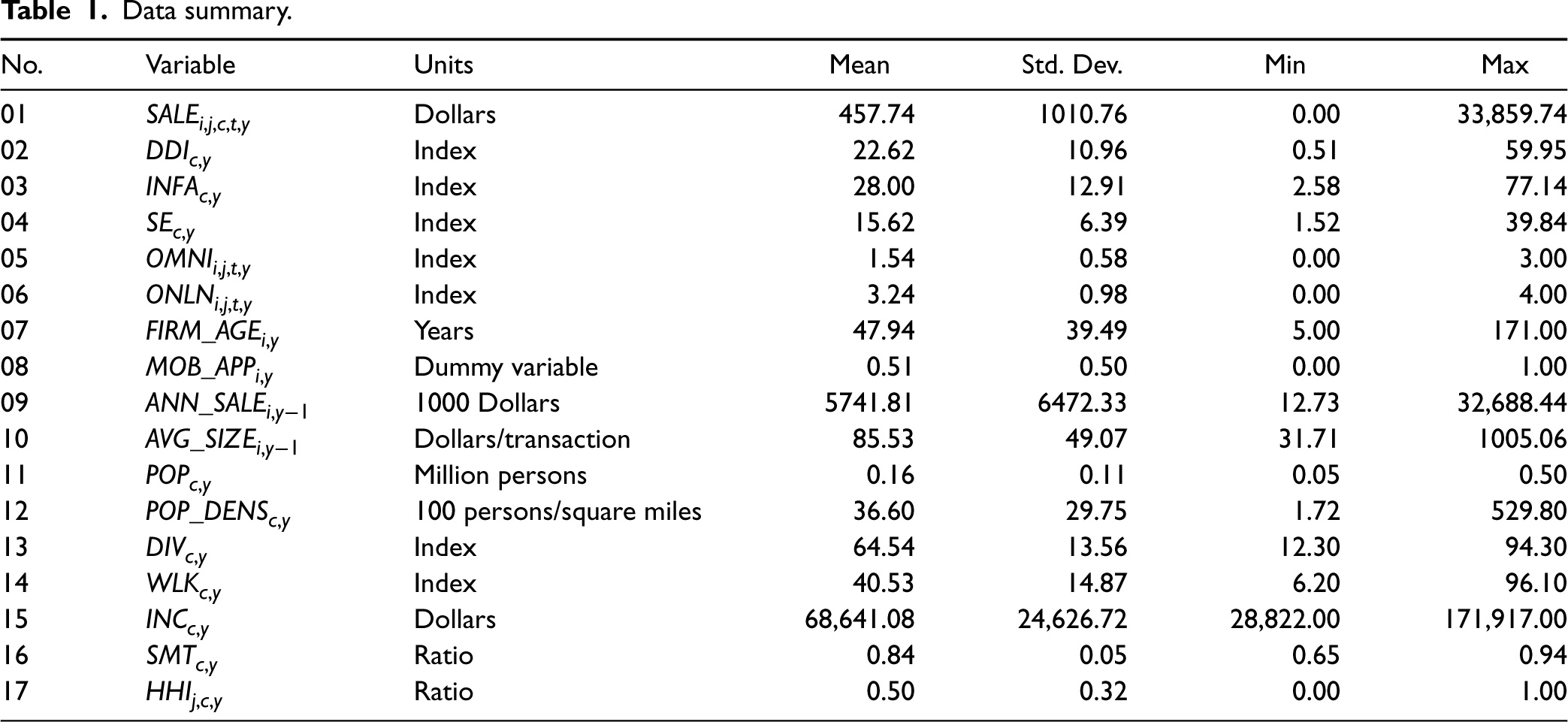
Data summary.
We apply two-way random-effects models because one of our main variables of interest,
We address the potential endogeneity using the instrumental variable (IV) method, which is common in the literature (Miguel et al., 2004). A valid IV is correlated with the endogenous variable (

Descriptive Analysis: Distribution of Fulfillment Offerings
Figures 1 and 2 illustrate the diversity of retailers’ fulfillment options in 12 subcategories, underscoring the broad range of fulfillment strategies employed by retailers in our sample. For example, while retailers in the luxury apparel sector average among the highest number of omnichannel fulfillment offerings, those same retailers represent the lowest average number of online fulfillment offerings. This strategy enables these retailers to maintain focus on the personal customer experience and preserve the exclusivity of designer fashion offerings while embracing specific, limited online elements. Conversely, we note that, on average, children's apparel retailers have among the highest average online fulfillment offerings while providing relatively few omnichannel fulfillment offerings. This aligns with an expected increased strategic focus on consumers who are likely to be busy parents who prefer efficient shopping via online channels.
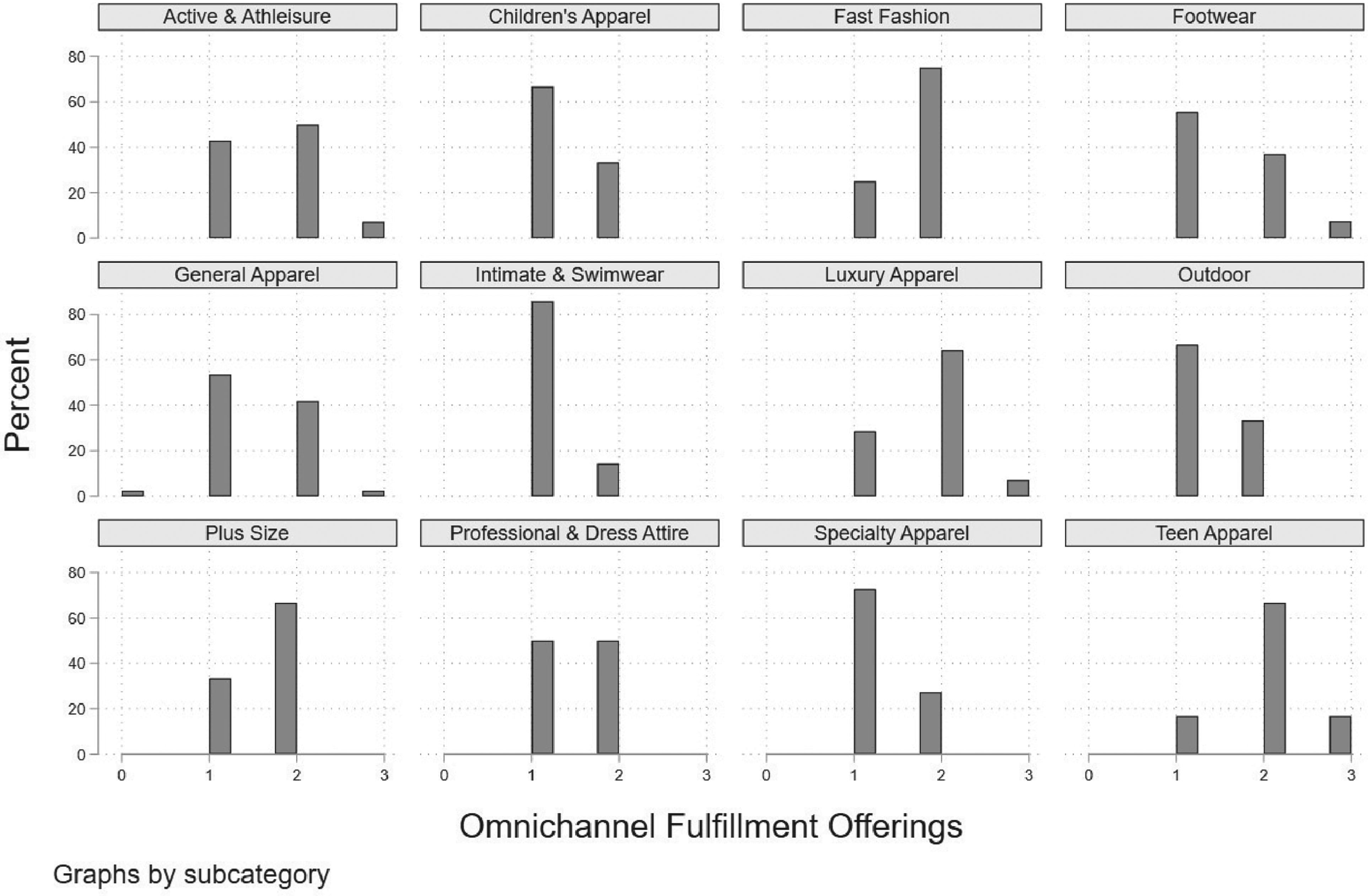
Omnichannel fulfillment offerings.
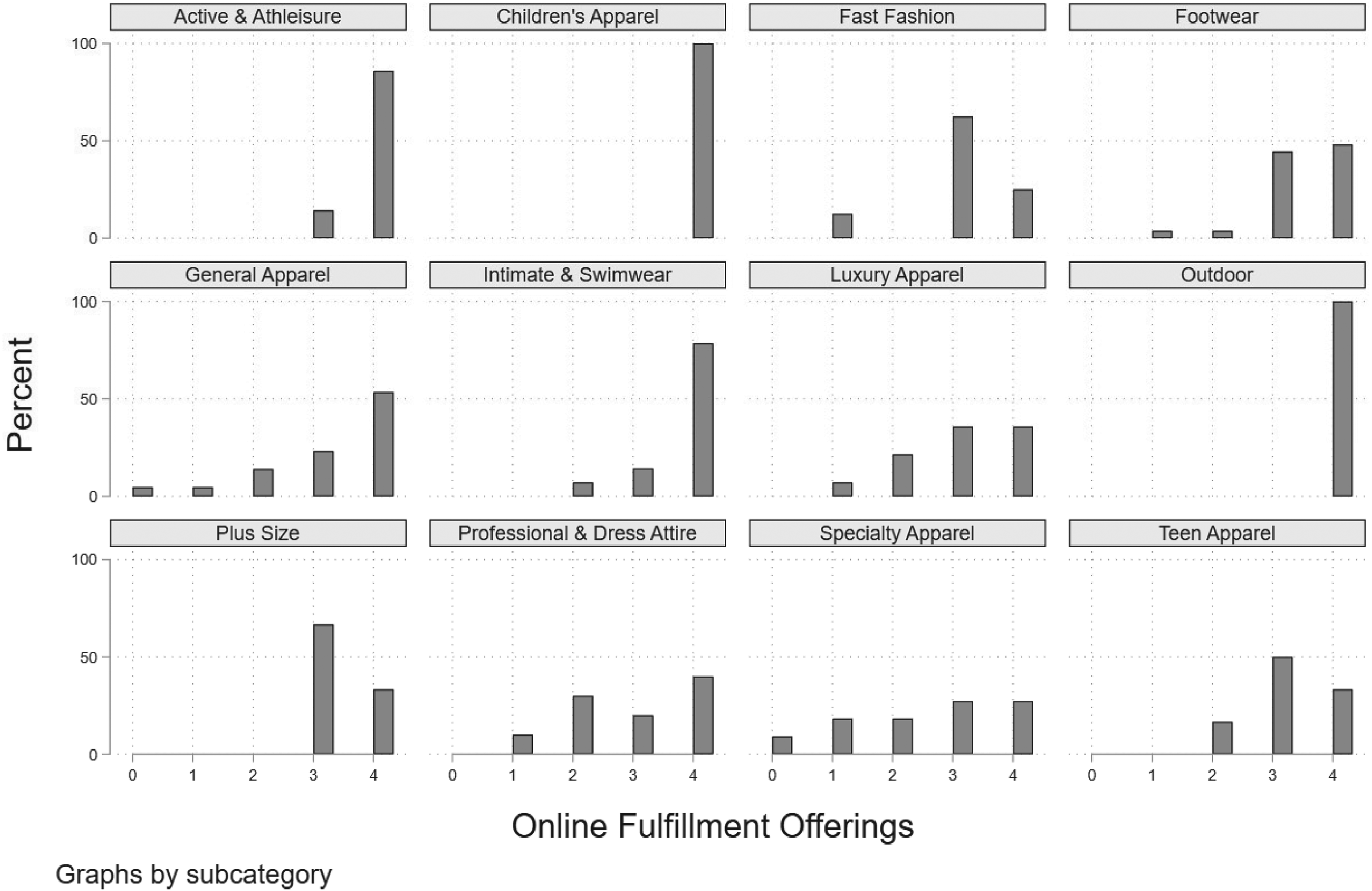
Online fulfillment offerings.
Next, we offer empirical, model-independent insights (Davis-Sramek et al., 2023) into the impact of a market's digital divide on retailers’ online sales, as illustrated in Figure 3. We analyze the digital divide through two key dimensions: infrastructural inequalities and socioeconomic factors. Figure 3(a) illustrates the average online sales per million customers at varying levels of infrastructural inequality and in relation to the proportion of the population below the poverty line (POV). These groups are categorized based on their median values; for example, infrastructural inequalities are deemed high if they exceed the median value. The data indicate that a shift from low to high infrastructural inequality reduces sales, with a further decline observed when POV increases. Similar trends are noted for other socioeconomic indicators: the percentage of the population without a high school education (LTHS), the older population (AGE65), and those with disabilities (DIS).
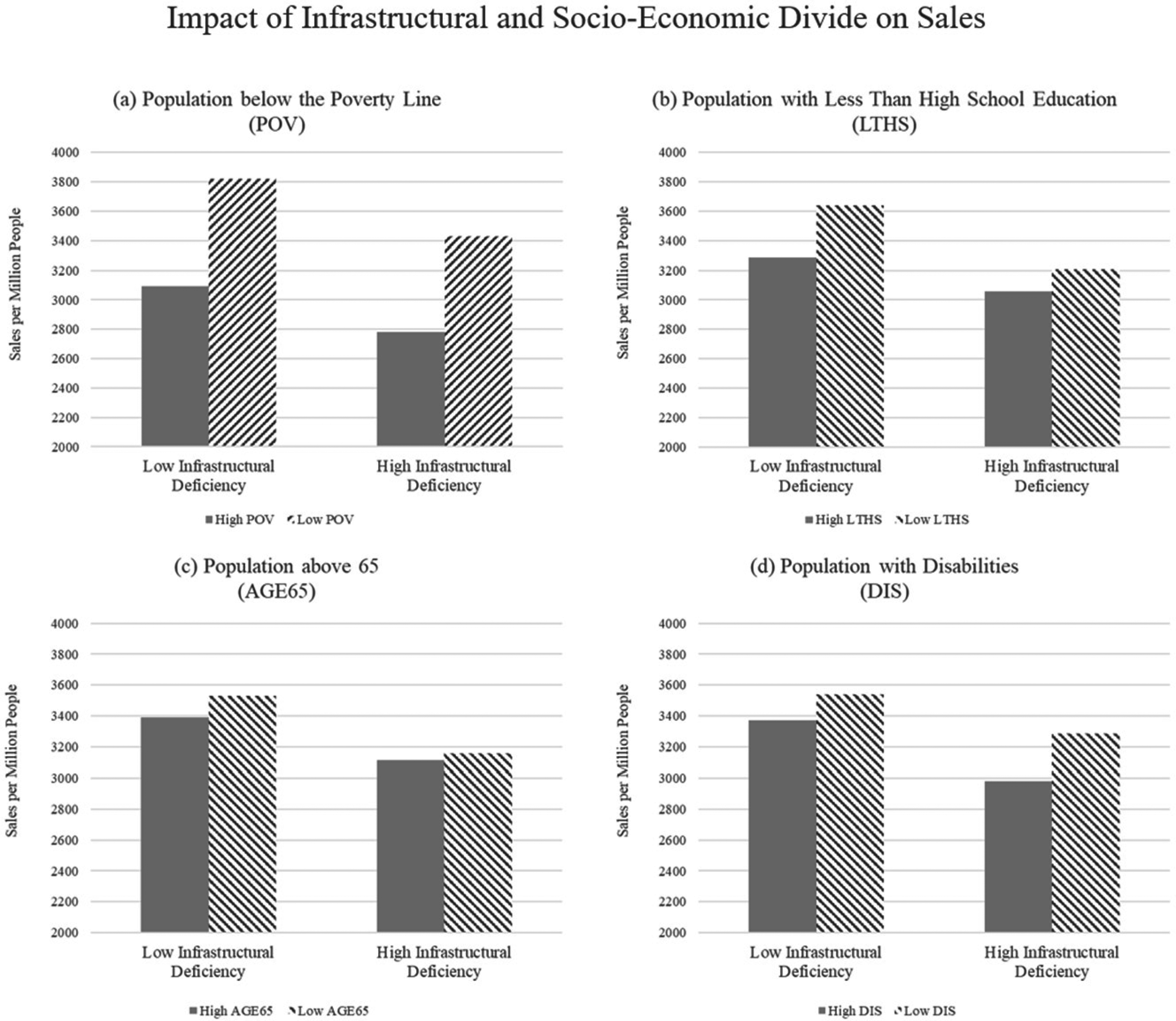
Model-free evidence.
Overall, we find that infrastructural inequality (as an aspect of the digital divide) exerts a negative impact on online sales and that socioeconomic characteristics exacerbate the impact. In the next section, our estimation results indicate how these negative impacts may be alleviated by retailers’ strategic focus on fulfillment in the omnichannel and online channels.
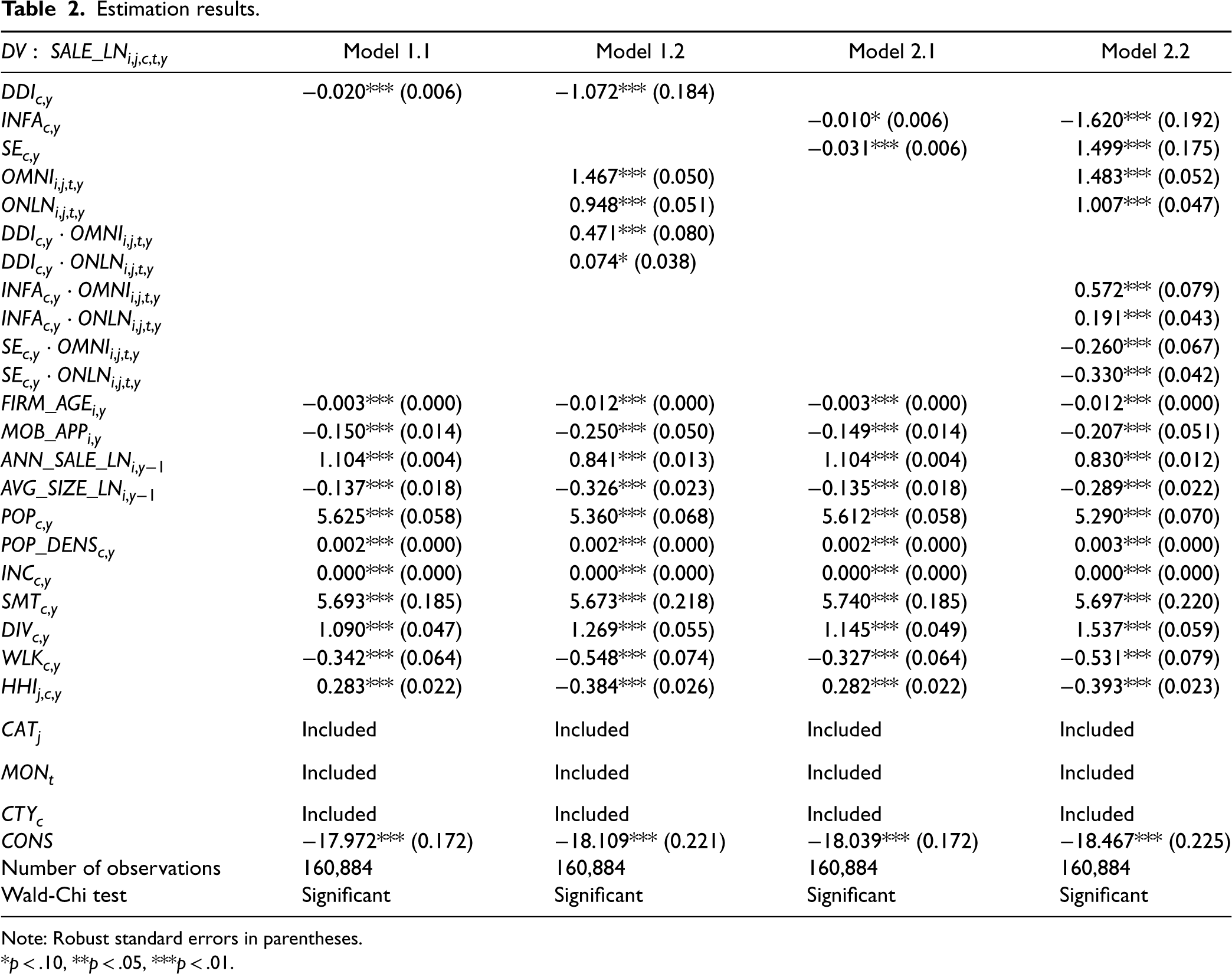
We present our estimation results in Table 2. Model 1.1 includes only the direct effect of the digital divide on retailers’ online sales. Model 1.2 considers how an omnichannel and online strategic focus moderates the impact of the digital divide on online sales. To gain additional insights, in Models 2.1 and 2.2, we replace the digital divide variable with its two components: the infrastructure score and the socioeconomic score. For all estimation results, the Craig-Donald F and Kelibergen-Paap rk LM test statistics are significant, indicating that our IV regressions do not suffer from weak instruments.
Estimation results.
Estimation results.
Note: Robust standard errors in parentheses.
*p < .10, **p < .05, ***p < .01.
First, we observe the direct effects of the digital divide. In Models 1.1 and 1.2, the coefficients for
Next, we consider the moderating effects of a strategic focus on omnichannel and online fulfillment offerings. In Model 1.2, the coefficients for
To gain further insights into the mechanisms driving these effects, we decompose the digital divide score into its infrastructural and socioeconomic components. In Models 2.1 and 2.2, the coefficients for
In Models 2.1 and 2.2, the coefficients for
Socioeconomic Characteristics
A more detailed assessment of the various vulnerable populations with lower digital literacy/accessibility that may not fully benefit from a retailer's strategic focus on e-commerce fulfillment is vital. Each group is likely to react to these offerings differently based on the factors driving their relative transaction costs to access/use the online sales channel (e.g., cost, skills, motivation); any offerings must be seen as useful by consumers to meaningfully impact purchase behavior (Berg and Tornblad, 2017). To reiterate, the digital divide (DDI) has two components: the infrastructure score (INFA) and the socioeconomic score (SE). The socioeconomic component is captured in four variables: (1) the individual poverty rate (POV); (2) the percentage of the population aged 25 and over with less than a high school education (LTHS); (3) the percentage of the population aged 65 and over (AGE65); and (4) the percentage of the population with a disability (DIS). We next examine how these subgroups are differentially affected by a retailer's strategic focus on omnichannel and online fulfillment offerings. The results are presented in Tables A3a and A3b.
The results of this analysis indicate that a focus on omnichannel or online fulfillment offerings is less likely to benefit three specific populations: those in poverty (Table A3a, Model 3.2), adults with less than a high school education (Table A3a, Model 4.2), and those aged 65 and over (Table A3b, Model 5.2). Moreover, we observe that for those aged 25 and over with less than a high school education and those aged 65 and over, the negative impact is even more pronounced for the omnichannel than for the online fulfillment offerings. This suggests that when a retailer focuses on omnichannel (rather than online) fulfillment, the options offered are particularly inaccessible for these two vulnerable groups. We also find that a retailer's focus on online offerings is less effective in providing access to the online sales channel across all tested groups. These findings underscore the importance of addressing the digital divide and developing more inclusive e-commerce strategies to better serve these vulnerable populations and enhance their access to the retailers’ online sales channels. Interestingly, the results in Table A3b, Model 6.2 also show that a focus on omnichannel fulfillment can allow retailers to engage with disabled individuals and incentivize greater online sales to that population (Federici et al., 2005). The full results are available in Tables A3a and A3b in the Online Appendix.
Fulfillment Method Decomposition
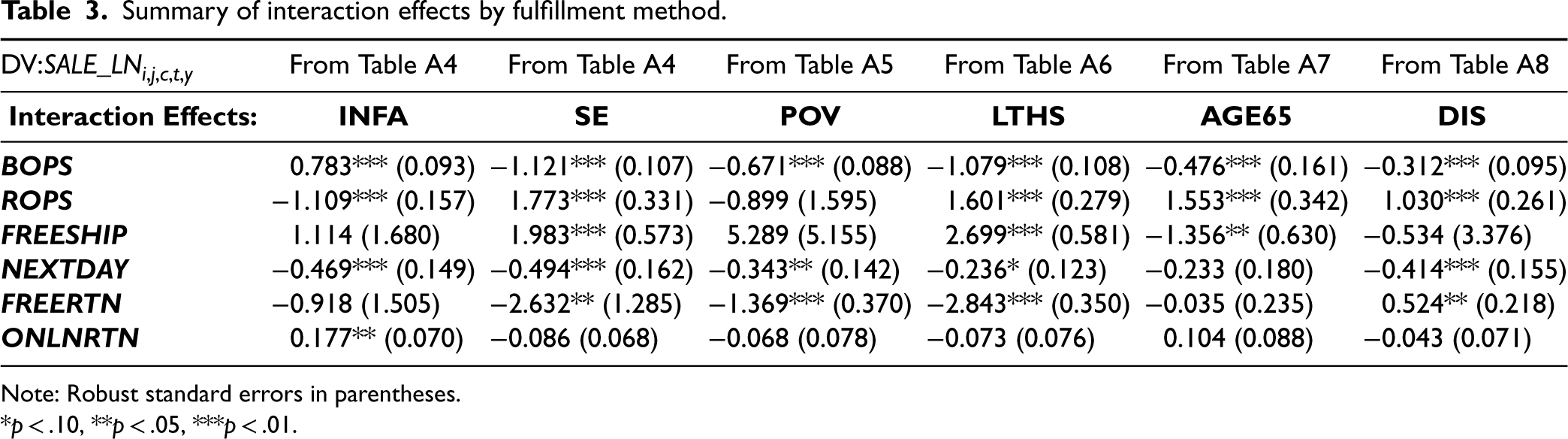
To better understand the effects of individual components that represent a retailer's focus on omnichannel or a focus on the online channel, we decompose
Summary of interaction effects by fulfillment method.
Summary of interaction effects by fulfillment method.
Note: Robust standard errors in parentheses.
*p < .10, **p < .05, ***p < .01.
Table A4 presents the estimated results for the interaction between different fulfillment methods and both components of the digital divide, infrastructure inequality (INFA) and socioeconomic characteristics (SE); Tables A5–A8 contain the results of our further testing of the impacts of these fulfillment options on each of the vulnerable socioeconomic groups identified in our data.
The results in Table A4 indicate that an option to buy online and pickup in store (BOPS) is particularly effective at bridging the digital divide in areas with high infrastructural inequality but less effective at addressing the socioeconomic components of the digital divide. The option of reserving online and picking up in store (ROPS) is less beneficial in markets with high levels of infrastructural inequality (high-INFA markets), where customers may prefer direct store visits over online reservations. However, in markets with a high SE score (factors negatively impacting the digital divide), the option of online reservation with an online pickup is an effective way to reach consumers; this may be due to the no-upfront-payment feature making it more accessible, especially for those with limited digital literacy or liquidity constraints.
Offering free shipping appears to significantly increase sales in markets with a high SE score, likely because it reduces the total cost of online purchases, making essential items more affordable for budget-constrained consumers. Next-day delivery is less advantageous in markets where the INFA and SE scores are both high, suggesting the premium associated with this option can be prohibitive. We also find that free return shipping is less beneficial in areas that have a high SE score. The return process, which typically requires printing return labels and accessing shipping services, can pose challenges for those without ready access to necessary resources or transportation. Lastly, offering online return processing (ONLNRTN) is found to be more beneficial in areas with high infrastructural inequality. Online return processing offers a convenient alternative, saving customers time and money by facilitating returns from home.
In Models 8.1–8.6 in Table A5, we consider the moderating effects of the specific omnichannel and online fulfillment options on the relationship between the individual poverty rate and sales in the online channel. In Models 9.1–9.6 in Table A6, Models 10.1–10.6 in Table A7, and Models 11.1–11.6 in Table A8, we examine the impact of those same fulfillment options on the relationship between the percentage of the population aged 25 and over with less than a high school education, the percentage of the population aged 65 and over, and the percentage the population with a disability, respectively.
The results in Table A5 regarding the moderating effects of the various options suggest that the buy-online-pickup-in-store, next-day delivery, and free return options are less effective at enhancing access to the online retail channels for populations experiencing higher levels of poverty. In Table A6, the moderating effects suggest that while these same factors (BOPS, NEXTDAY, and FREERTN) are less effective at driving sales in the online channel for populations with less than a high school education, the positive and significant coefficients of ROPS and FREESHP indicate that the option to reserve online and free shipping are associated with an increase in this population's access to the online channel. In reviewing the results in Table A7, the coefficients of BOPS and FREESHP indicate the options to buy online and pickup in-store and free shipping are less likely to increase online sales for those over 65, but the coefficient of ROPS is positive and significant, suggesting that having the option for online reservation with in-store pickup is a viable way to reach these consumers. Finally, the moderating effects in Table A8 indicate that the buy-online-pickup-in-store (BOPS) and next-day shipping options (NEXTDAY) are less able to motivate online sales to disabled populations, but the option to reserve-online-pickup-in-store (ROPS) and free returns (FREERTN) are attractive options that positively impact the use of the online sales channel for disabled populations.
The internet's growth has fundamentally altered how retailers connect with and sell products to their consumers. The extension of traditional brick-and-mortar stores into the online space has been central to retailers’ strategies to grow revenues and expand their markets (Sorescu et al., 2011). However, this extension has been uneven—often leaving behind those on the other side of the digital divide. Selling products through an online channel alleviates many common causes of customer-service failure associated with traditional in-store purchases. This is because inventory stocking decisions are simplified through pooling effects across multiple warehouses and stores, and customers expect and accept longer lead times for shipments (Rodrigue, 2020). However, many people struggle to access the benefits offered by the online sales channel. Hence, in order to provide an equitable retailing experience and to maximize the pool of potential customers, it is critical for retailers to identify strategies that bridge the digital divide using tools that effectively expand their customer base and increase the efficacy of the online sales channel.
We contribute to the growing literature on the role of online and omnichannel fulfillment offerings as key facilitators of online retail sales. We hypothesized that a strategic focus on omnichannel fulfillment options and online fulfillment options are effective tools that can help bridge the digital divide. The value of online and omnichannel fulfillment offerings has been demonstrated in terms of increased customer service levels, lower inventory, and overall improved sales (Dhruv et al., 2017; Rodrigue, 2020; Semeijn et al., 2005). However, the extent to which a strategic focus on these capabilities may facilitate or impede access to customer bases who are suffering from the digital divide has not previously been considered. Drawing on insights from van Dijk's (2012) RA theory and the theory of consumer transaction costs (Teo and Yu, 2005), we consider how a retailer's strategic focus on omnichannel and/or online fulfillment offerings may help to overcome the digital divide by reducing consumer transaction costs related to the resources, skills, and motivation required to use the online channel (Fang et al., 2019).
This study, then, answers a theoretically and managerially important question by investigating the strategies retailers can employ to ameliorate the negative relationship between a region's digital divide and online sales volumes. We find that omnichannel-fulfillment and online fulfillment strategies are both viable paths by which retailers can bridge the digital divide. These bridging effects are nuanced; we show that focusing on the omnichannel or online channels is an effective way to reduce the impact of the infrastructural components of the digital divide; these include deficiencies in internet access due to limitations in internet speed, device ownership, and in-home internet access.
At this point, it is worth remembering that the digital divide is a continuum from minimal to full internet access rather than a binary measure (Greenwood and Agarwal 2016). We thus posit that reducing an individual's barriers to digital adoption, such as a lack of resources, skills, or motivation to use the online channel, offers a way for retailers to bridge the digital divide (van Dijk, 2012). Hence, we observe the amelioration of the infrastructural component of the digital divide when retailers focus on providing e-commerce fulfillment options that can directly address consumers’ obstacles to accessing the online channel. For example, some consumers lack sufficient personal resources to easily access the online channel. For these individuals, retailers can increase their sales volumes by making the experience cheaper through free shipping and free return shipping.
Other consumers may lack the skills or familiarity with the online channel, and accessing the online channel imposes a mental cost; for these consumers, retailers can offer various omnichannel fulfillment options that can act as a hybrid between the brick-and-mortar and online experience (e.g., buy-online-pickup-in-store, reserve-online-pickup-in-store). A surprising finding is that while both the online- and omnichannel-focused strategies limit the negative impact of digital infrastructural inequalities on online sales, we do not see the same effect for the socioeconomic elements of the digital divide, as can be seen in Table 2, Model 2.2. We conduct a post-hoc analysis to understand what is driving this lack of efficacy in relation to the socioeconomic dimension of the digital divide and determine the boundary conditions of our findings.
The socioeconomic element of the digital divide is that aspect of the phenomenon concerned with vulnerable populations who have historically been less able to access online tools because of a history of low rates of technological adoption (Gallardo, 2020). We consider four populations identified in the literature as particularly affected: those who are in poverty, those who are over 25 and have less than a high school education, those 65 and older, and individuals with a disability. We see in our post-hoc analysis that there seems to be a clear boundary condition in our theorizing with respect to these vulnerable populations: omnichannel and online offerings were, in the aggregate, less effective at bridging the digital divide for those in poverty, those with a less than high school education and the older population (Models 3.2–5.2 in Tables A3a and A3b). However, we did see omnichannel offerings had a beneficial effect for people with a disability in Model 6.2 in Table A3b. These findings are surprising and demonstrate the challenge retailers face in bridging the gap for vulnerable populations affected by the digital divide.
To further understand our findings regarding socioeconomic elements, we disaggregate our measures of omnichannel and online fulfillment options into their component parts: buy-online pickup-in-store; reserve-online-pickup-in-store; free shipping; next-day shipping; online return processing; and free return shipping. Our findings, shown in Table A4, paint a nuanced picture of which components of a retailer's focus on e-commerce fulfillment can meaningfully impact consumers in the four vulnerable populations. While we do not provide an exhaustive list of our results here, we note that there are several interesting findings with regard to individual fulfillment offerings.
For example, we see in Table A4, Model 7.1 that buy-online-pickup-in-store is a fulfillment option that can effectively address the infrastructural elements of the digital divide; we do not see the same positive effect for any of our vulnerable populations (captured by the socioeconomic component of the digital divide); in fact, we see a consistently negative and significant coefficient of the interaction of buy-online-pickup-in-store with each tested population. This indicates that while buy-online-pickup-in-store is popular and may assist average consumers who face infrastructural challenges with accessing the internet, it is not an effective strategy to address the digital divide among vulnerable populations. Conversely, for the reserve-online-pickup-in-store option, we observe a weakening of the impact of the digital divide for those over 25 without a high school education, those 65 or older, and those with a disability. We suspect there are multiple reasons for the positive impact of reserve-online-pickup-in-store.
First, the option to reserve online and then pickup in store allows consumers who are unfamiliar with the online purchasing process a low-risk entry into the online purchasing experience; the consumer can come into the store and physically handle and examine the product before finalizing their purchase. Second, it has several desirable attributes of the omnichannel experience, such as being able to remotely observe the price and inventory availability of the product. Furthermore, the process of reserving online and picking up the product in-store is initiated through the online medium (website/app), and being able to reserve online before purchase is a low-risk way to familiarize and educate consumers who have historically been hesitant to try or are inexperienced with the online channel.
We also find that some fulfillment options have differing effects across the identified vulnerable populations. For example, free shipping is effective in increasing sales in the online channel for those with less than a high school education but is less beneficial for those over 65. We also note that next-day shipping was not an effective measure for any population examined. As this option typically includes a relatively high cost, this finding further supports our supposition that transaction costs play an important part in motivating these vulnerable populations to use the online channel.
Our findings highlight that, in many ways, the disabled community has unique characteristics when compared to the other vulnerable populations identified in our data. It would thus behoove retailers to consider these idiosyncratic needs to effectively reach these consumers. For example, we find that, while not an effective way to reduce the impact of the digital divide among most of the vulnerable populations in this study, free return shipping was strongly associated with a weakening of the digital divide for people with disabilities. This demonstrates the importance of reducing the risks of using the online channel for the disabled community. However, the needs of this community overlap in some areas with those of other groups in our sample; the disabled, those over age 65, and those without a high school education can all benefit from the digital-divide-ameliorating effect of the option to reserve online and pickup in-store.
Our findings regarding the disabled community demonstrate the need for further operations management research that considers this vulnerable population. We further note that the ACS data 5 used in our study identify as disabled anyone with hearing, vision, cognitive, ambulatory, self-care, or independent-living difficulties. Such aggregation is likely to obfuscate differences in responses to e-commerce fulfillment offerings. Our findings suggest that future research in operations management related to diversity, equity, and inclusion would benefit from considering distinctions among types of disabilities with regard to the impact of consumer disability on retailing.
Our results are of particular value to retail managers who wish to expand their firm's customer base to include traditionally underserved populations disproportionately affected by the digital divide. Our findings indicate that, from a big-picture perspective, retailers should focus their channel strategy on omnichannel fulfillment offerings, as these seem to be more effective than an online-focused strategy in mitigating the negative effects of the digital divide on online sales volumes. A focus on omnichannel fulfillment offerings represents a hybrid approach between traditional in-store purchasing and fully online shopping. This approach can effectively lower consumer transaction costs by allowing individuals to take advantage of the convenience of online shopping (e.g., lower search, hassle, and frustration costs) while reducing the risks associated with having fewer skills to do so (e.g., with regard to evaluating quality, selecting the correct product, incurring long wait times for back-ordered products, managing returns) by allowing in-person completion of the transaction. This limits the skills and resources necessary to make use of the online channel and motivates individuals affected by the digital divide to engage in online purchasing activities.
The uneven efficacy of the various omnichannel and online fulfillment offerings in ameliorating the impact of the digital divide (seen in Tables A4–A8) indicates that retailers should strive to improve and simplify the online user experiences to better include vulnerable populations such as those groups considered here who struggle to access many e-commerce fulfillment offerings. Additionally, as immigrants (many of whom do not have English as their first language) are disproportionately represented among those who have less than a high school education (Gambino, 2017), managers should consider offering translated versions of their websites; this would improve the efficacy of their e-commerce fulfillment offerings in overcoming the digital divide. Lastly, retailers should collaborate with community organizations and educational institutions to provide digital literacy training and workshops for vulnerable populations, thus empowering them to access and benefit from e-commerce.
Limitations and Future Research
As with any study, ours has certain limitations that must be considered. Our empirical strategy relies on the availability of archival data. In this study, we are limited to transactions made via credit and debit cards; a recent report from J.P. Morgan (2020) notes that cards are the most popular method of e-commerce payment, accounting for nearly 60% of online purchases and more than twice as popular as any other method. Future studies could incorporate alternative payment methods such as those made via a digital wallet using Paypal, Apple Pay, or a mobile app. This would be a fruitful area of study as it is possible that lower-income individuals who are more likely to be affected by the digital divide also struggle to access credit and debit cards.
Additionally, the data we collected only included individuals who exhibited regular card usage over the sample period. It is possible that some consumers facing the digital divide halted their use of credit or debit cards or did not consistently purchase items over our sample period. Future studies could expand the scope of the sample to incorporate individuals with irregular purchase patterns. We are also limited in our observation of omnichannel and online channel offerings to what companies report on their websites. It is possible that not all offerings are fully reported, which could lead to an underestimation of the omnichannel or online fulfillment options. We also do not have internet pricing information for our retailers’ regions. Future research, especially that focused on policy, could explore the link between local internet pricing and the digital divide. We also focus on retailers in the apparel and accessory category in the US. Future studies could extend this analysis to consider alternative industries or geographies and examine if the relationships studied change under various conditions, for example, purchases of produce and other grocery items where there is a high degree of quality variance between items or where returns are more complicated, that may incentivize increased use of omnichannel fulfillment over online fulfillment offerings.
Supplemental Material
sj-docx-1-pao-10.1177_10591478241261254 - Supplemental material for Bridging the Digital Divide in Online Retailing: The Effect of a Strategic Focus on E-Commerce Fulfillment Offerings
Supplemental material, sj-docx-1-pao-10.1177_10591478241261254 for Bridging the Digital Divide in Online Retailing: The Effect of a Strategic Focus on E-Commerce Fulfillment Offerings by John-Patrick Paraskevas, Xiaodan Pan, Isaac Elking and Kevin H Park in Production and Operations Management
Footnotes
Acknowledgments
We would like to thank the special issue editors Sriram Narayanan and Charles J. Corbett, the associate editor, and the reviewers for their constructive feedback through the review process. Any remaining errors are our own. We also would like to thank the Earnest Analytics for their provision of consumer spending data, the Purdue Center for Regional Development for assistance in using the digital divide data, and City Health Dashboard for providing city data. We thank the Fonds de recherche du Québec - Société et culture (FRQSC) for their support in funding this research. Lastly, we thank the participants of the INFORMS MSOM Conference in 2023 in Montreal for their helpful feedback regarding our paper.
Declaration of Conflicting Interests
The authors declared no potential conflicts of interest with respect to the research, authorship, and/or publication of this article.
Funding
The authors disclosed receipt of the following financial support for the research, authorship, and/or publication of this article: This work was supported by the Fonds Québécois de la Recherche sur la Societe et la Culture (grant number 2023-NP-312059).

Notes
How to cite this article
Paraskevas J-P, Pan X, Elking I and Park KH (2024) Bridging the Digital Divide in Online Retailing: The Effect of a Strategic Focus on E-Commerce Fulfillment Offerings. Production and Operations Management 34(4): 743–758.
References
Supplementary Material
Please find the following supplemental material available below.
For Open Access articles published under a Creative Commons License, all supplemental material carries the same license as the article it is associated with.
For non-Open Access articles published, all supplemental material carries a non-exclusive license, and permission requests for re-use of supplemental material or any part of supplemental material shall be sent directly to the copyright owner as specified in the copyright notice associated with the article.
