



Abstract
In 2015, the United Nations (UN) countries signed up to achieve 17 sustainable development goals (SDGs) for people, planet, prosperity, peace, and partnership by 2030. However, the trend of progress toward achieving these goals indicates that none of the 17 goals may be achieved by 2030 globally. We first provide La foundation for operations management (OM) researchers to help shape the interventions for countries and companies to help achieve the SDGs by (1) identifying the synergies among the SDGs so that interventions can impact multiple SDGs positively and (2) linking some of the extant OM research with the synergies among the various SDGs. This way, researchers can understand the complexity of the challenges ahead and build on the OM literature to influence the interventions of governments and organizations to maximize the attainment of the SDGs. We also list some research opportunities to help OM researchers develop research agendas.
Keywords
Introduction
We must rise higher to rescue the Sustainable Development Goals—and stay true to our promise of a world of peace, dignity, and prosperity on a healthy planet.
How can the world achieve sustainable development? Management guru Peter Drucker said, “If you can’t measure it, you can’t manage it.” Having adopted the United Nations Millennium Declaration in 2000, world leaders sought to commit their countries to a new global partnership by setting specific “ambitious but feasible”—and measurable—goals for 2015 to reduce extreme poverty. These were the eight Millennium Development Goals (MDGs). 1 By the time the project concluded, attaining the eight goals was “uneven” across different countries and goals. Countries in sub-Saharan Africa made the least progress. Moreover, new challenges emerged, requiring a broader approach.
Drawing on the lessons learned from the MDG project, the UN took up the challenge again with a second 15-year project, establishing a broader set of 17 sustainable development goals (SDGs) for people, planet, prosperity, peace, and partnership. The motivation was a balanced approach to the economic, social, and environmental dimensions, akin to the triple bottom line concept of profit, people, and planet, coined by John Elkington (Economist, 2009). The 193 countries in the UN signed up to achieve these 17 goals—with 231 (performance) indicators to track progress—by 2030.
However, halfway through the 15-year horizon for achieving the SDGs in 2023, the attainment of these goals indicated the same widespread unevenness across countries and goals as the MDGs. In the 2023 UN SDG Index report card for countries, the 25 countries that led in the progress toward attaining the SDGs are all European, except for Japan, followed closely by Canada at 26. The bottom 25 countries are mostly from sub-Saharan Africa, along with a few non-African countries: Afghanistan (under economic sanctions), Haiti, and Papua New Guinea (Sachs et al., 2023).
Two conclusions may be drawn from this 2023 report card: (1) the countries that need to attain the SDGs the most are also the least likely to attain them, and (2) the ‘partnership’ goals among countries across the globe will likely be missed again as reflected in the glaring global disparities. Moreover, there is unevenness across the attainment of the SDGs globally, and even in Europe, individual goals will be missed. The overall assessment was that “at the global level, averaging across countries, not a single SDG is currently projected to be met by 2030, with the poorest countries struggling the most” (Sachs et al., 2023, p. 2).
This assessment motivates us to examine how operations management (OM) research can help accelerate attaining these goals. It also prompted us to start by providing a basis for OM researchers to understand the complexity of the problem of improving the SDGs and what OM and other researchers have already done as interventions for companies and governments towards the different SDGs directly or indirectly. As such, we started by (1) recognizing the synergistic interconnections between operational interventions and multiple SDGs to have maximal impact, and (2) establishing linkages between the extant OM research (in various areas such as humanitarian operations, socially responsible operations, and sustainability) and the UN SDGs (and the synergies among them). By capitalizing on these opportunities, we can build on the existing research in different OM streams and, more importantly, help shape the interventions of individual governments and companies toward attaining the SDGs as much as possible without duplicating efforts or wasting resources. We also provide some research topics for OM researchers to explore or build their research agendas on achieving the SDGs.
In the rest of this paper, Section 2 summarizes the UN reports on the extent to which the SDGs were attained midway through the 2015–2030 SDG horizon. Next, Section 3 covers recent literature that shows the growing interest in the SDGs. Section 4 identifies synergies between the SDGs using different lenses from the OM literature, while Section 5 ties the pertinent OM literature to the SDGs. Sections 4 and 5 provide the basis for further research, and we provide some research topics in Section 6. Section 7 concludes.
The Extent of SDG Non-Attainment
Different regions (and countries) have made varying progress towards achieving the targets for each of the 17 SDGs. Sachs et al. (2023) created an SDG attainment index comprising various metrics based on publicly available data or, for some metrics, from think tanks or other reliable organizations. Using the index, they have rated the level of SDG achievement and the trend in such achievement for each of the 17 SDGs by country or region (Figure 1). For economic-geographic regions, it is easy to see that attaining some SDGs would be a problem worldwide. SDG 2 (zero hunger), SDG 3 (good health), SDG 14 (life below water), SDG 15 (life on land), and SDG 16 (peace, justice, and institutions) had low levels of achievement. The trend also indicates stagnation and, therefore, unlikely to be met by 2030. The world average reflected the poor levels of achievement for SDGs 2–3 and 14–16 by the end of 2023. Oceania (not including Australia and New Zealand), the Small Island Developing States, and sub-Saharan Africa showed alarmingly poor levels of regional achievement of most SDGs as of 2023 (Figure 1).
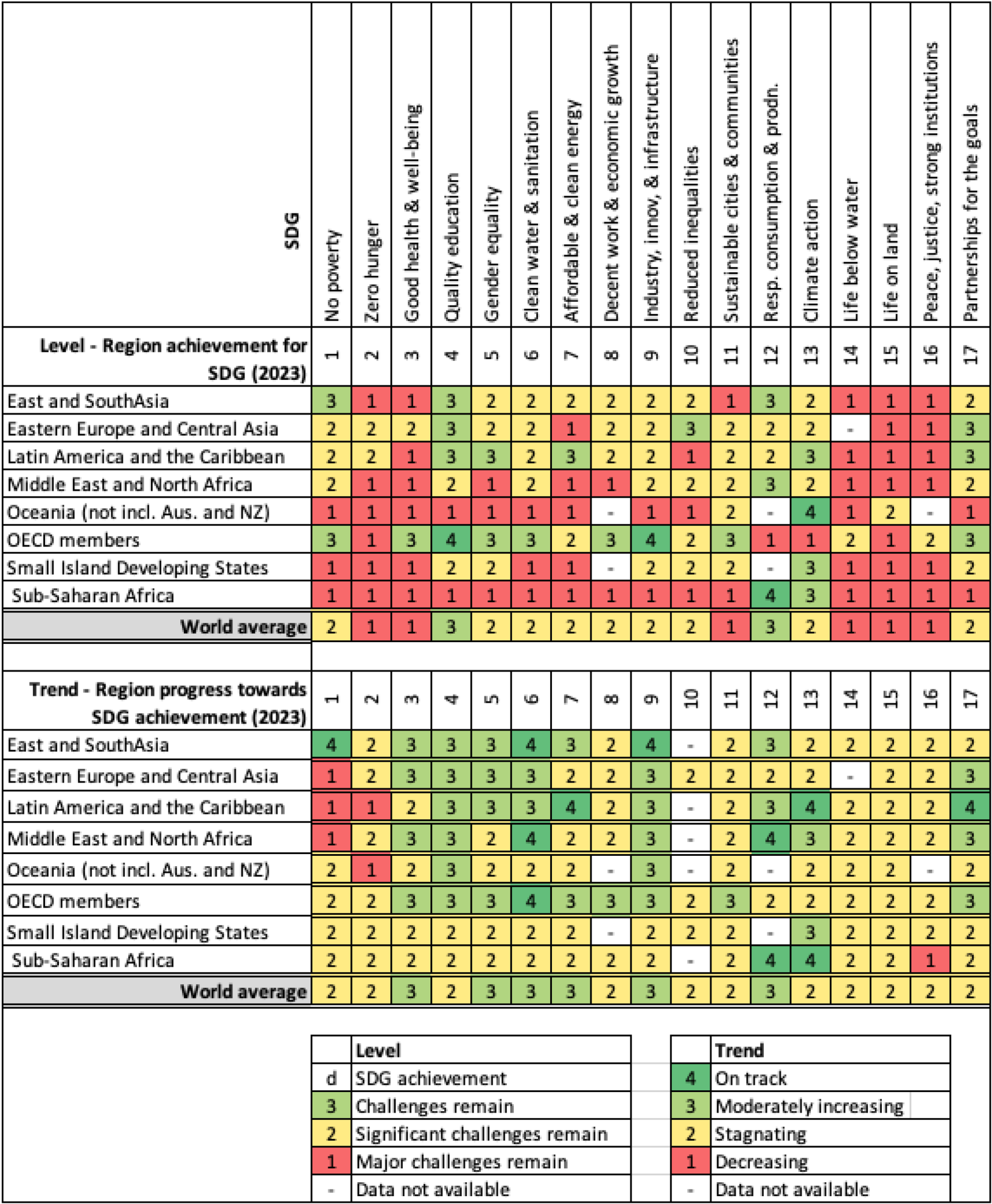
The level and the trend (as of 2023) for SDG attainment for each SDG on four-point scales, respectively. The upper table with the level shows that the columns for SDG 2, 3, 13, 14, and 15 show that major challenges remain worldwide. The lower table shows that the trend for improvement of these SDGs is also not encouraging. The same can be said for Small Island Developing States and Sub-Saharan countries across all the 17 SDGs. Data: Sachs et al. (2023).
We can learn more about humanity's challenges by considering the worldwide progress for each of the 17 SDGs in the UN Sustainable Development Goals Reports for 2022 and 2023 (UN, 2022, 2023). These reports show the reversal of progress for the SDGs, not just because of the so-called three C's: climate, conflict, and COVID-19, but also because of a lack of global partnership. Below, we provide some highlights from these UNSDG reports for each goal as discussed above (Figure 1):
The above is only a sampling of the current status of SDG achievement from the UN (2022, 2023) reports to highlight the challenges underlying the bleak assessment in Figure 1. The SDGs are estimated to cost trillions of dollars to implement, and the countries that benefit most from the SDGs need more resources to meet these costs. Kharas and McArthur (2019) estimate a shortfall of about $1 trillion in annual SDG-related public spending across all countries in 2025. Moreover, their estimates suggest that all countries with a per capita GDP of less than $1000 in 2025 would have an SDG-related spending gap of more than 10% of their GDP and, therefore, a much more significant percentage shortfall in their SDG-related spending. There is a shortage of data, too, as some countries have not reported these goals for partnership and climate action, and less than 30% of countries have reported on gender equality (Kitzmuller et al., 2021). SDGs, such as climate change mitigation and adaptation, will require significant technological advances, such as solar energy, but these advances also need funding and political will for partnership.
Moreover, the level of “partnership” between the developed and developing countries was arguably lower in 2022 and 2023 compared to when all the countries signed up in 2015 to implement the SDGs. The SDG Index Report stresses funding to realize the SDGs (Sachs et al., 2023), and we saw above that the funding—or other financial help by importing goods—is not coming through fully.
OM (and related) research that refers explicitly to SDGs is nascent as of writing but growing. There is a special issue of POM (Besiou et al., 2021) and one paper in M&SOM (Besiou and Van Wassenhove, 2020), both focused on SDGs related to humanitarian operations, along with a paper in POM focusing on empowering women to improve SDG 5 gender equality (Tang, 2022). Still, there have been special issues on topics closely tied to the SDGs. For instance, POM has special issues focused on responsible operations (Sodhi, 2015), modern slavery (Fayezi et al., 2021), and diversity, equity, and inclusion (Corbett and Narayanan, 2022).
Similarly, M&SOM has a special issue on responsible operations (Deshpande and Swaminathan, 2020) and one on value chain innovations in developing countries (Lee, 2019). Supply Chain Management: An International Journal also has a special issue on sustainability in the supply chain (Fritz et al., 2022). There are also SDG-focused special issues of journals in related fields, e.g., the Journal of Management and Organization (Macht et al., 2021), Sustainability (Setó-Pamies and Papaoikonomou, 2020), and the Journal of Business Ethics (Nonet et al., 2022). Springer Nature has a SDGs Series under the Springer and Palgrave imprints to present research on the SDGs and efforts to address society's most significant grand challenges. 6 There is also one subseries of books for each of the 17 SDGs and an eighteenth subseries, “Connecting the Goals,” for volumes addressing multiple goals or studying all the SDGs together. Several volumes are already available in the series.
Additionally, there are individual articles in the OM and the broader management literature. In a structured literature review on management and the SDGs, Pizzi et al. (2020) analyzed 266 articles published before 2019 to identify four key research themes: technological innovation, firms’ contribution in developing countries, non-financial reporting, and education for SDGs. They also analyzed bibliometrics. For instance, by 2019, the Journal of Cleaner Production had 58 SDG-related articles with 653 citations, and the Journal of Management Education had 17 articles with 126 citations. Their analysis also reflected the geographical context of the papers on SDGs: global (61% of the articles), Australasian (15%), European (10%), African (8%), South American (4%), and North American (1.5%). Berrone et al. (2023) review SDG-related articles published in nine leading management journals—AMJ, AMR, MS, ASQ, Journal of Mgmt, JMS, Org. Science, Org. Studies, and SMJ—to provide a research agenda for management researchers and implications for practice.
With this broad background for the OM interest in SDGs, we delve deeper into the OM research by (1) recognizing the synergistic interconnections between operational interventions and multiple SDGs to have maximal impact and (2) establishing links between the synergistic SDGs and the extant OM research in areas such as humanitarian operations, socially responsible operations, and sustainability. We do so next in Sections 4 and 5, respectively.
Identifying Synergies Among SDGs
The SDGs are interconnected; hence, an intervention that helps achieve one goal can also help achieve others. The OM literature offers different theoretical lenses to identify such synergies.
An Operational Performance Lens
Operational performance entails working with a hierarchy of objectives. The SDGs are no different and have a three-tier hierarchy: level 1 with the 17 SDGs, level 2 with 169 targets or sub-goals, and level 3 with 248 (performance) indicators (with 231 unique metrics) to monitor progress. These synergies are apparent at the goal level. For instance, an initiative to reduce poverty (SDG 1) will also reduce hunger (SDG 2).
Also, interventions for increasing female participation in a country's workforce can help achieve decent work and economic growth (SDG 8) and gender equality (SDG 5) simultaneously. Improving access to quality education (SDG 4) can lead to a more skilled and knowledgeable workforce, fostering decent work and economic growth (SDG 8). Transitioning to affordable and clean energy sources (SDG 7) and responsible consumption (SDG 12) can help reduce greenhouse gas emissions, thus contributing to climate action (SDG 13). Providing access to clean water and sanitation (SDG 6) is crucial for good health and well-being (SDG 3). Peaceful and inclusive societies (SDG 16) can help reduce inequalities within and among countries (SDG 10).
However, interventions sometimes entail trade-offs rather than synergies across multiple SDGs. Interventions for decent work and economic growth (SDG 8) and responsible consumption and production (SDG 12) can be contradictory, as economic growth can increase consumption and production patterns that are unsustainable and wasteful. Moreover, such consumption (and production) could damage the environment, creating a negative impact on climate action (SDG 13) and life on land (SDG 15).
Still, such conflicts can be resolved with innovation. Zero hunger (SDG 2) and life on land (SDG 15) appear to conflict if the target is to expand agricultural land, leading to deforestation and biodiversity loss. However, the conflict can be resolved if we focus on using innovative farming techniques to improve the productivity of current agricultural land rather than increasing it at the expense of forest area. Similarly, good health and well-being (SDG 3) and industry, innovation, and infrastructure (SDG 9) can conflict when industrial development increases air pollution and health risks. Worse, one country might export the most polluting parts of its industry to other countries, leaving the planet worse off. While this has been true historically, technological innovation could help improve SDGs 3 and 9.
Synergies can also be sought at the more granular level, recalling that there are 231 metrics, 7 called indicators or targets, for the 17 SDGs. As illustrated in Table 1, some metrics are repeated under multiple SDGs; for instance, the proportion of the people affected by disasters is the same metric: 1.5.1 (SDG 1), 11.5.1 (SDG 11), and 13.1.2 (SDG 13). Some metrics drive others; for instance, the proportion of local governments (11.b.1 in SDG 11) and the number of countries (13.1.1 in SDG 13) adopting disaster reduction could lower the proportion of people affected by disasters (1.5.1, 11.5.1, and 13.1.2). Other metrics complement each other for the same purpose. Increasing the number (5.b.1) or the proportion (9.c.1) of people owning a mobile phone and the number of people with fixed-line internet subscriptions (17.6.2) would contribute to the proportion of individuals using the Internet (17.8.1).
Selected indicators (Metrics) for some UN SDGs (Source: UN, 2020).
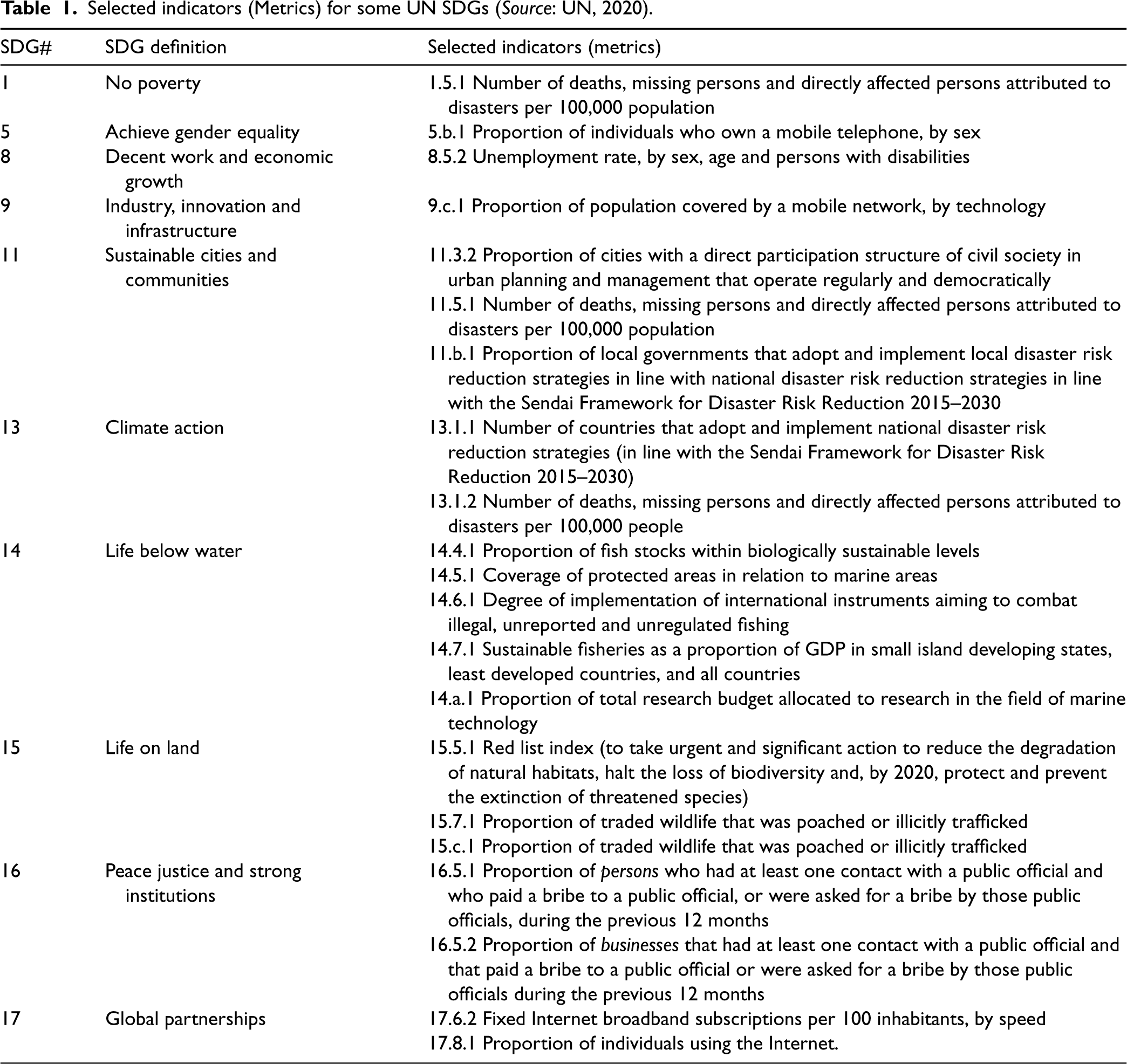
Selected indicators (Metrics) for some UN SDGs (Source: UN, 2020).
Other links could be more direct. The extent of bribery faced by individuals (16.5.1) and businesses (16.5.2) can increase wildlife trafficking (15.7.1 or 15.c.1); also, in some countries, people in poverty with high unemployment (8.5.2) are more likely to resort to such trafficking. Supporting marine biodiversity and ecosystems (14.4.1, 14.5.1, 14.6.1, 14.7.1, and 14.a.1) would also indirectly support the land species (15.5.1) that rely on marine life (Table 1).
Engaging stakeholders is necessary to develop initiatives because of the comprehensive nature of the SDGs. However, business managers, governments, and the public may have different and conflicting objectives. Developing mechanisms to align their interests and striking a balance among the SDGs can be difficult with their emphasis on different stakeholders, including various sections of society and the ecosystem with wildlife, biodiversity of plants, etc. Building on stakeholder theory, Sodhi (2015) proposes a stakeholder-resource-based view (SRBV) for the decision-makers in a company to develop their organization's and their stakeholders’ dynamic capabilities, resources, and routines to maximize their utility and these stakeholders’ utility. Stakeholders for a large company include those in the extended supply chain (suppliers, including smallholder farmers or contract workers) and those of the corporate entity (consumers, shareholders, and regulators).
At the corporate level, SRBV can be useful for normatively evaluating corporate interventions to improve conditions for any subset of stakeholders and exploiting synergies across multiple stakeholders. Similarly, at the national or regional level, government officials charged with SDG implementation must consider improving the respective utilities of even more diverse stakeholders, and that too against a political background with competing interests. SRBV, when used normatively and transparently, can help frame how a particular intervention could improve conditions for multiple stakeholders. For example, a better quality of life below water (SDG 14) would mean more business for coastal communities, helping reduce poverty (SDG 1). At the same time, sustainable agriculture could be good for reducing hunger (SDG 2) and improving life on land (SDG 15). Sodhi et al. (2022) provide empirical support for such synergistic thinking in corporate India: the proportions of corporate social responsibility funding in education, healthcare, skill development, and six other broad categories in the local community are statistically identical across the top 50 companies by capitalization. Finally, there is a many-to-many relationship between the SDGs and stakeholders. As such, companies and governments can focus on the interests of a narrow set of stakeholders, for instance, the “poor” with low incomes (e.g., Sodhi and Tang, 2014), to achieve multiple SDGs (Table 2). For practical reasons, we use the World Bank's definition of extreme poverty to refer to the “poor,” as noted in Section 2, but alternative definitions could be used instead.
Stakeholders who would benefit directly and indirectly from implementing each SDG.
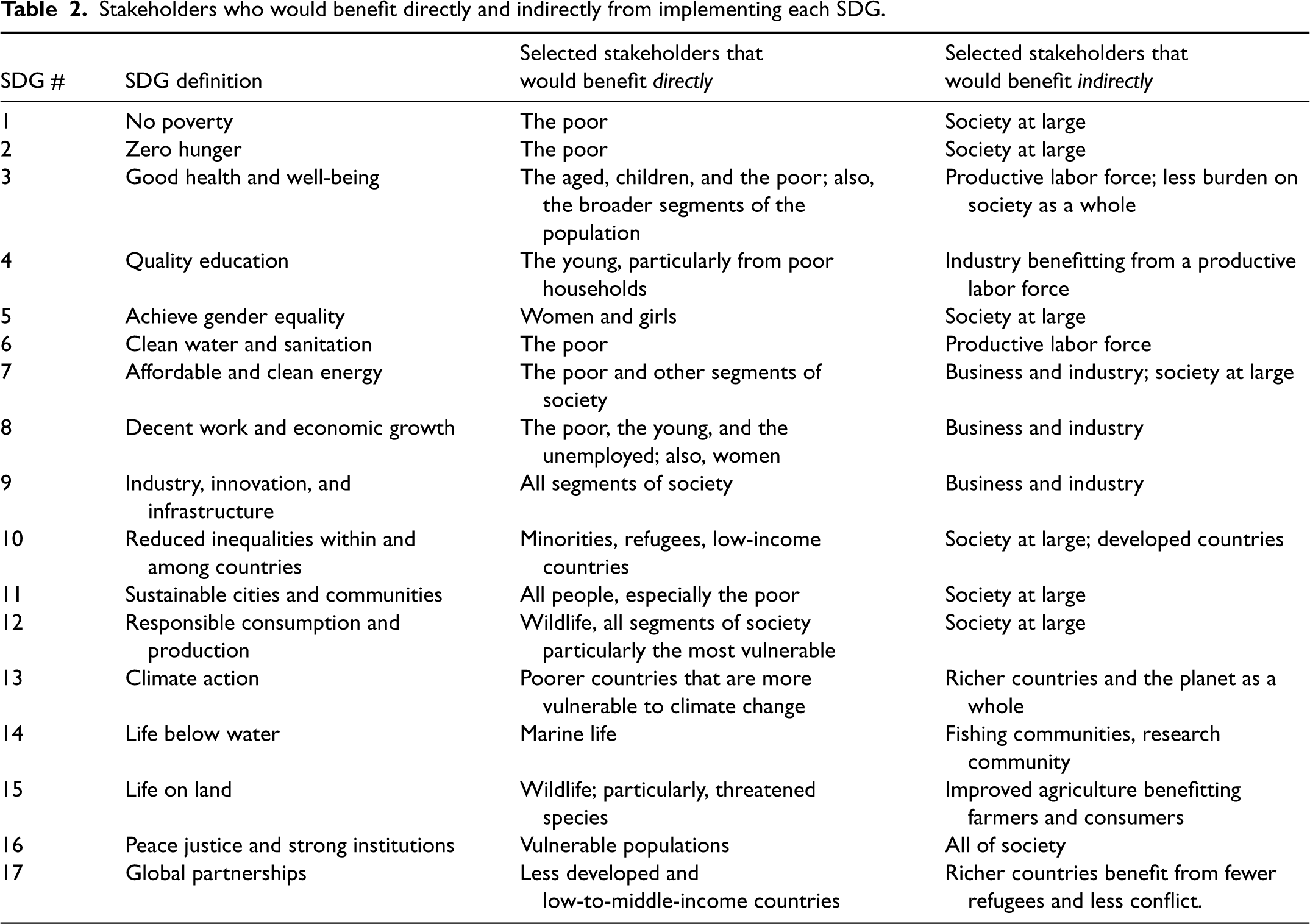
Stakeholders who would benefit directly and indirectly from implementing each SDG.
In their review of sustainable development-related articles in nine leading management journals, Berrone et al. (2023) use a four-stage SDG adoption framework for companies based on guidelines from consultancies: (1) prioritizing SDGs to the strategic goals of the firm, (2) contextualizing the SDGs to the firm's geographical and industrial contexts, (3) collaborating with other organizations and stakeholders to make more impactful progress (global partnerships, SDG 17, can be seen in this light), and (4) innovating via business model change.
In the first stage, an organization can prioritize SDGs in its strategic agenda based on tensions or synergies between it and society's activities. The purpose is to look for alignment (or lack thereof) between corporate and societal goals to avoid consultancy-driven “implementation simplicity” or “commercially driven, stakeholder-engaging initiatives” (Berrone et al., 2023, p. 321). From their review, Berrone et al. note that the management literature offers managers criteria to assess how much to support an SDG (Figure 2). The upper-right quadrant represents the “win-win” case in which efforts towards an SDG would also be relevant to the organization's goals, so the organization should leverage that effort. In the upper-left quadrant, the organization finds advancing a given SDG is pertinent, but doing so would require trade-offs. Managers must take a paradoxical approach that recognizes the contradictions and helps them to acknowledge and embrace the contradictions among the financial, social, and environmental dimensions. For the two lower quadrants, the SDG of interest has low relevance. In the lower-left quadrant, the SDG conflicts with the organization's goals, so managers should ignore it and direct their efforts elsewhere. In the lower-right quadrant, even with synergies with the organization's other goals, management can postpone the SDG-related initiatives (park for later) to focus on higher-priority SDGs or other goals.
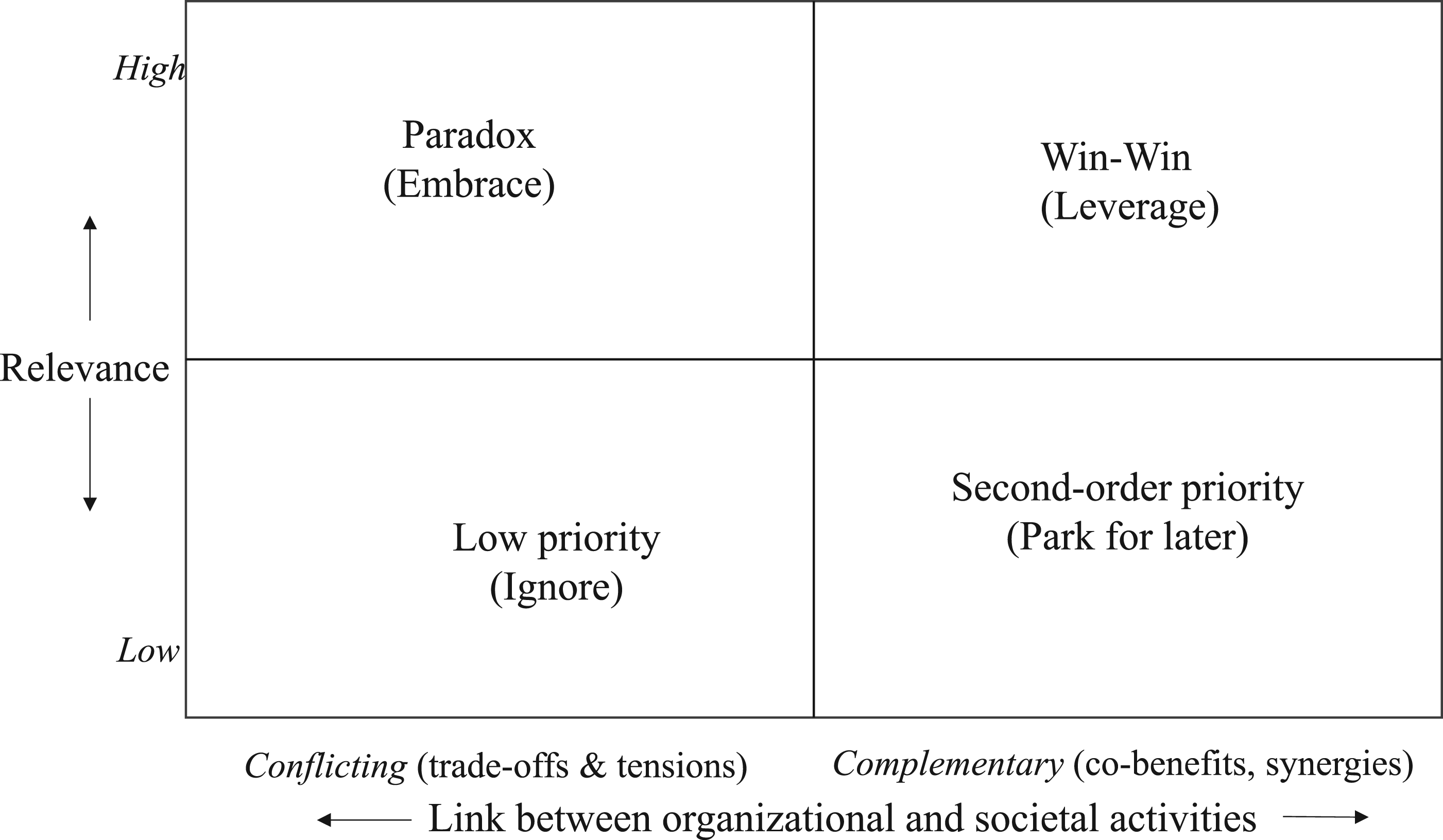
Prioritization of UN SDGs in a company with tensions and synergies between the firm's organizational and societal activities and the relevance of the SDGs to the firm's values, core activities, and geography. Source: Berrone et al. (2023).
The interconnected SDGs can also be conceptualized as a “self-perpetuating” dynamic system fueled by “feedback loops.” In this self-perpetuating system, progress with one subset of SDGs helps with that of another subgroup, which in turn helps with another subset, eventually helping with the first subset, without any SDG being a “root cause” or driver (Figure 3) (Besiou et al., 2021).
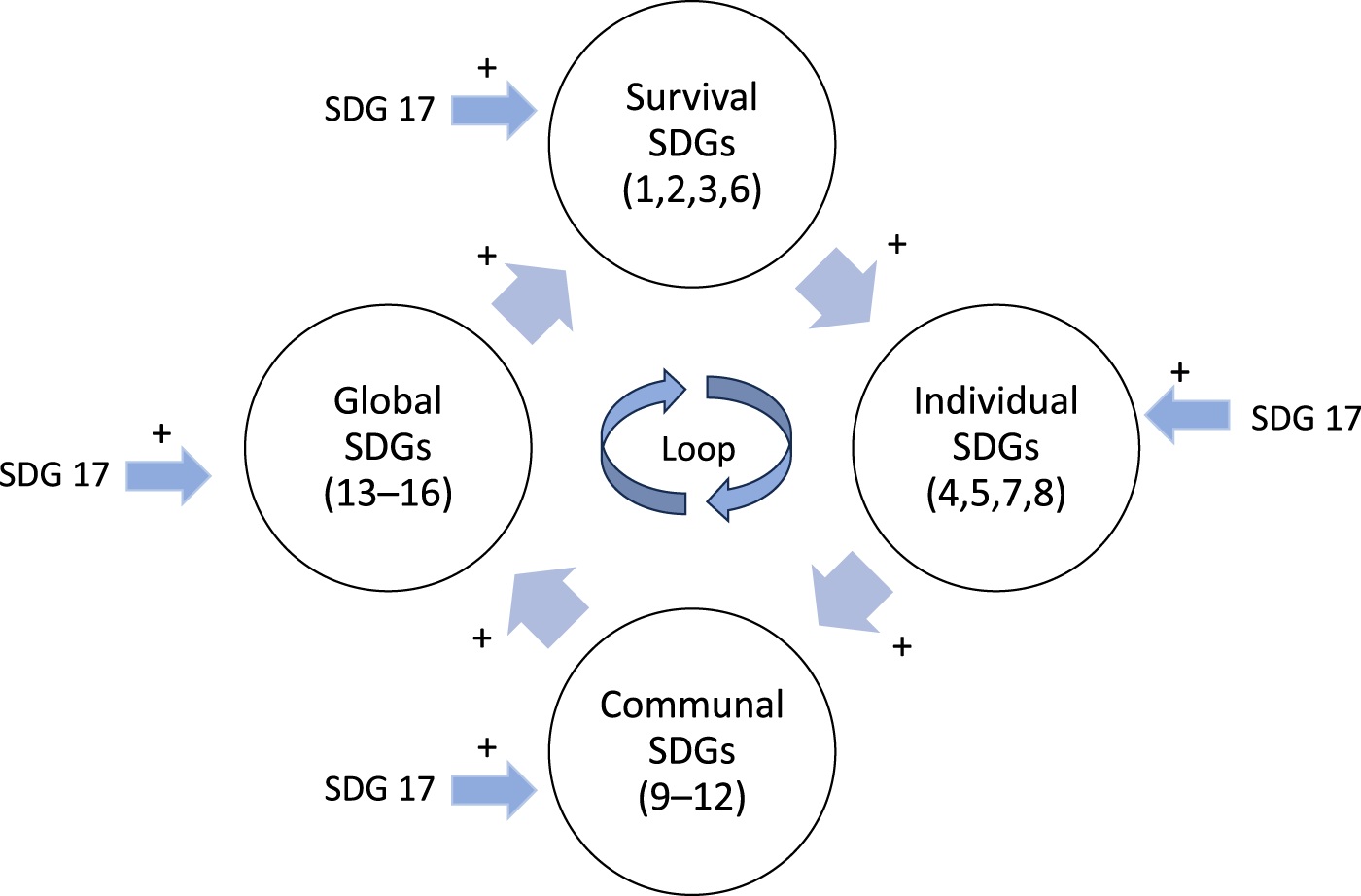
A systems dynamics model with macro-interactions of SDGs. Each arrow represents an interaction in this positive feedback loop. For example, progress toward fulfillment of SDG 17 improves the attainment of SDGs 13–16, which advances SDGs 1, 2, 3, and 6, and then 9–12, which, in turn, helps with SDGs 13–16. Source: Besiou et al. (2021).
The different subsets of SDGs and their positive links in the feedback loop are (Figure 3):
8
Survival SDGs: These are related to poverty (1), hunger (2), good health (3), and clean water (6). Fulfilling these SDGs is needed for people's very survival in a society. Individual SDGs: These pertain to quality education (4), gender equality (5), affordable energy (7), and decent work (8). If people can survive, they can focus on improving their quality of life, so progress on survival SDGs helps progress on the individual SDGs. Communal SDGs: These goals relate to industry and infrastructure (9), inequalities (10), sustainable communities (11), and responsible consumption and production (12). With individual SDGs sufficiently achieved, people can focus on community-related goals to give back to society. Another way to look at this is that with individual SDGs achieved, quality of life can improve only with the achievement of the communal SDGs—getting a nice car is not worthwhile if the roads are in bad shape—hence the positive link from the individual to the communal SDGs. Global SDGs related to climate (13), life below water (14), life on land (15), and peace and justice (16). Beyond communal goals, if one community does better, it can help the individuals in other communities survive. At least, that is the belief underlying global development aid, providing a reinforcing link from the global SDGs to the survival SDGs above (Figure 3).
The partnership SDG (17) extends the idea of global SDGs in supporting all the above subsets. Interestingly, the model does not have anything to improve SDG 17 further. Indeed, we have seen from the MDGs over 2000–2015 and the SDGs over 2015–2023 that the global partnerships SDG can remain unfulfilled despite its potential to improve all other SDGs.
There is another positive feedback loop. Sodhi (2016) empirically shows a vicious cycle of disasters leading to an exponentially increasing impact over time as regards the number of people affected or the value of property damaged, even after considering population or GDP growth. This vicious cycle is a positive feedback loop of natural disasters’ impact leading to poverty, which leads to vulnerability, and that means when the disaster strikes, the effect is even more significant for a country. In their effort to respond as quickly as possible, humanitarian organizations tend to underestimate the power of this vicious cycle or ignore it (Besiou et al., 2021). From a systemic perspective, humanitarian operations reduce the risk of future disasters and increase community resilience, contributing to fulfilling SDGs 1–16. Strengthening the SDGs, in turn, improves the potential success of future humanitarian operations and lowers the dependency on them by ending poverty, ensuring prosperity, and protecting the planet (Figure 4).
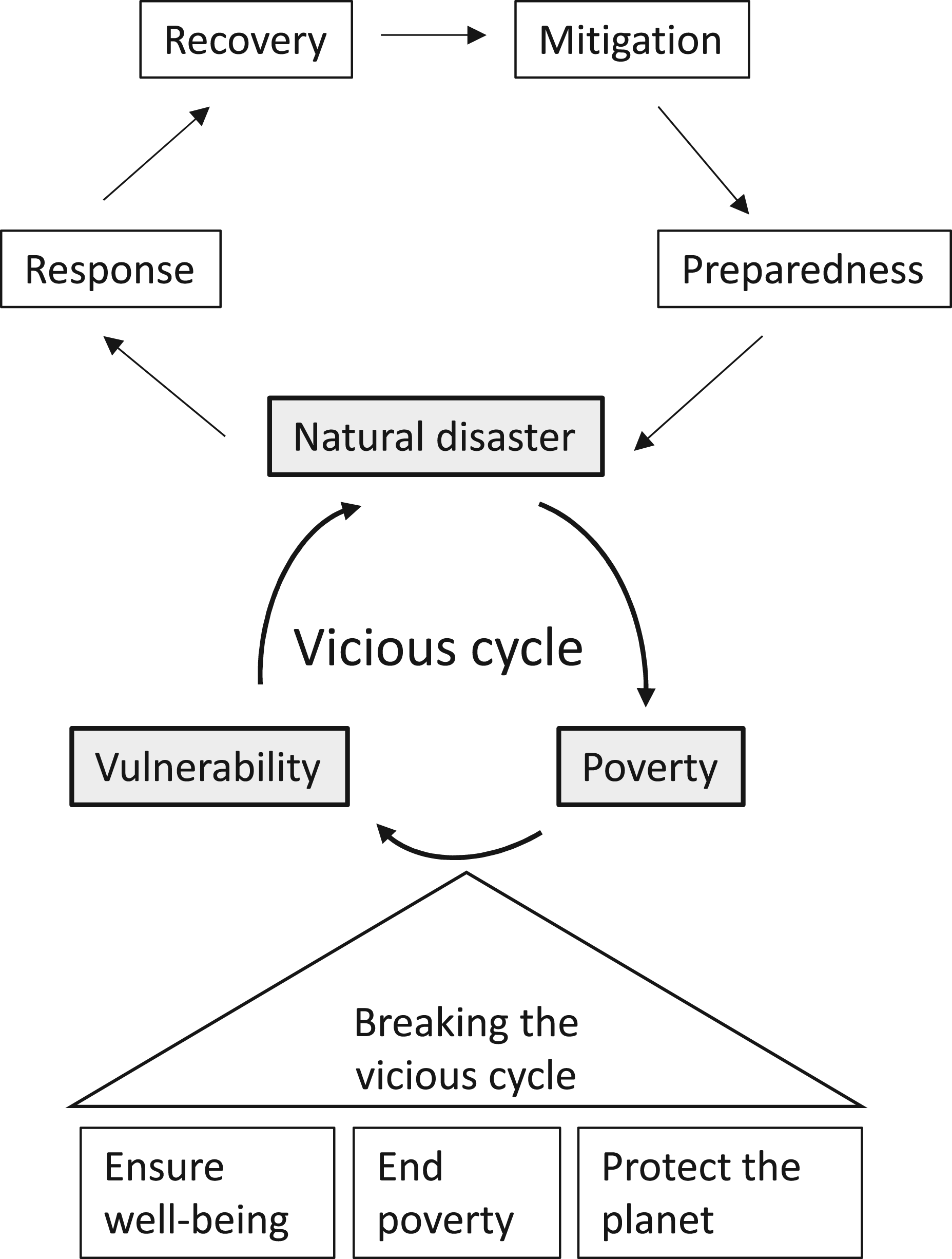
Dealing with disasters effectively using response, recovery, mitigation, and preparedness (Besiou et al., 2021). Additionally, achieving SDGs can break the vicious cycle of disasters, poverty, and vulnerability (Sodhi, 2016).
A positive feedback loop means that the output, namely the different types of impact, would exhibit exponential growth. To illustrate, consider the exponential growth of global property damage. After adjusting for inflation, the global damage appears to double every 14 years, using the data from the EM-DAT database. Even though there are questions about the reliability of the older data, the exponential growth pattern is evident (Figure 5). The global GDP has also grown exponentially over this time but slower than the damage growth, so the global damage has also grown exponentially relative to global GDP, further evidence of a positive feedback loop. Notably, countries are not uniform in GDP growth or the impact of the disasters they endure. Therefore, we have disparities among countries regarding achieving basic UN SDGs regarding food or poverty, with vulnerable countries caught in a vicious cycle of disasters, poverty, and vulnerability (Sodhi, 2016).
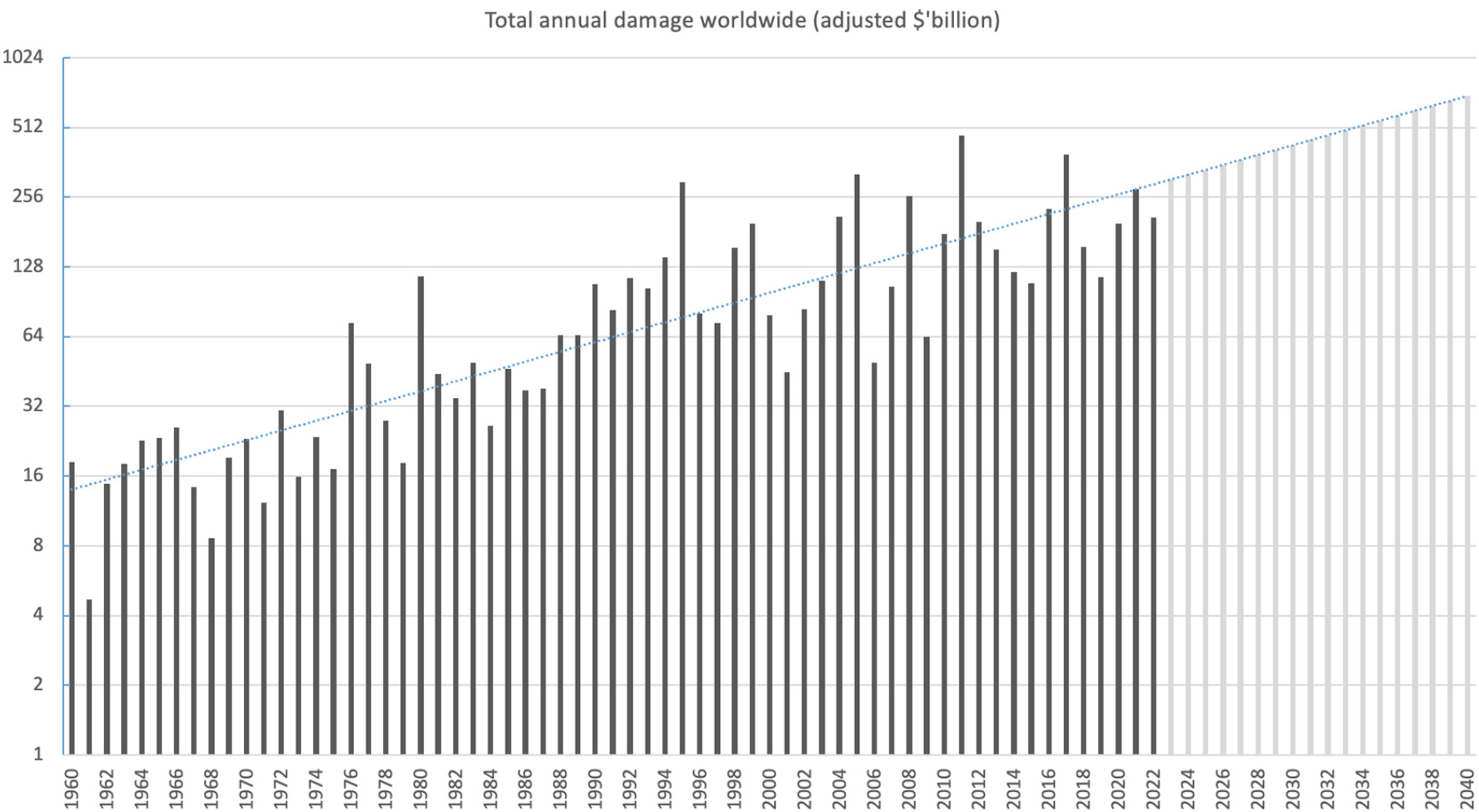
Exponential growth of annual property damage from disasters worldwide, over 1960–2022, with the inflation-adjusted damage in billions of US$ on a logarithmic scale; successive ticks indicate double the damage. The projections in the lighter shade are from 2023 to 2040. Data: EM-DAT.
To highlight the underlying linkages among different SGDs, the Stockholm Resilience Centre developed a “wedding cake” representation of the SDGs, with the SDGs partitioned among economy, society, and the biosphere. The cherry on the cake is the goal of partnerships for the goals (SDG 17), for which the countries are underperforming by a wide margin as they did with the MDGs. Within each layer, there are synergies and trade-offs. For instance, SDGs 8 and 12 are trade-offs. As we shall see in the next section (Opportunity 2), this representation helps us find synergies not only among SDGs within the same layer with a horizontal cut of the cake but among SDGs across layers with a vertical cut to relate the economy, society, and the biosphere (Figure 6).
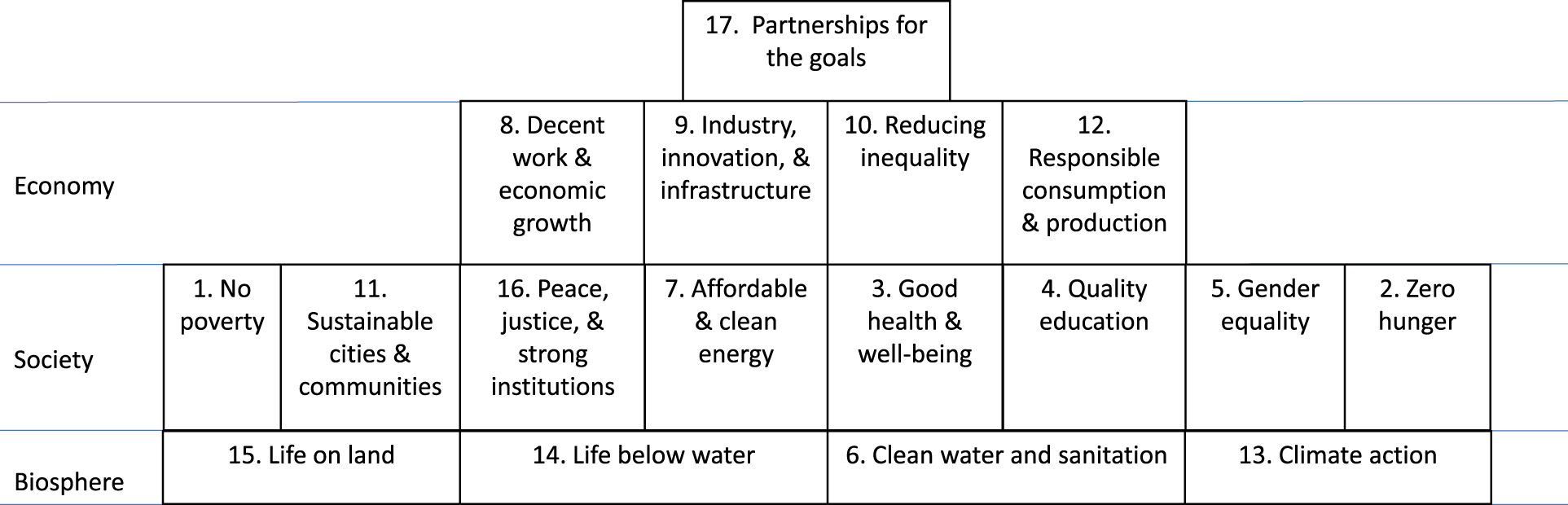
A (three-layered) wedding cake representation of the 17 UN SDGs. Adapted from Stockholm Resilience Centre, https://tinyurl.com/nhcud8hv.
Next, we link specific extant OM research with synergies among different SDGs with an illustration by “cutting” the SDG wedding cake (Figure 6) horizontally or vertically. These “cuts” are examples of synergies OM researchers may seek to identify themselves.
A Horizontal Cut: Gender Equality and No Poverty
The horizontal layers of the cake (Figure 6) are the economy, society, and the biosphere. A research agenda can be established by focusing on any of these layers, for instance, around interventions to alleviate poverty (SDG 1) and reduce hunger (SDG 2) that can improve gender equality (SDG 5) and education quality (SDG 4) in the society layer. For instance, by considering several SDGs within one layer, one can examine how access to clean water and sanitation (SDG 6) in the biosphere layer can improve gender equality (SDG 5) and education quality (SDG 4) in the society layer (Figure 6).
Consider two OM papers as examples that can be viewed as taking a horizontal cut across the society layer of the cake (Figure 6). Tang (2022) examines how innovative operations enabled by technologies such as mobile phones, online platforms, solar technology, blockchain, AI, and the Internet of Things can improve gender equality (SDG 5), alleviate poverty (SDG 1), and quality education (SDG 4). Another example is the work of Plambeck and Ramdas (2020). Over 300 million women in India lack access to affordable sanitary napkins, causing many of them to drop out of school at puberty and miss work during menstruation. Hence, cheap and readily available sanitary napkins can affect quality education (SDG 4) for girls and women, enable gender equality (SDG 5), and reduce poverty (SDG 1).
OM research also discusses technological interventions that take similar horizontal cuts. Gender quality (SDG 5) begins with identity: a prerequisite for accessing services and exercising their rights. With one out of every two women in low-income economies not having a national ID or similar identity credential, 9 the World Bank has worked with over 40 countries to develop digital ID systems called ID4D for people, particularly women, to obtain authenticated identity. 10
Another innovation is mobile apps. UNICEF and Microsoft developed a global learning platform called “Learning Passport” (https://www.learningpassport.org/) that offers free lessons via mobile phone. Khan Academy (https://www.khan academy.org/) has a mobile app that offers free online lessons in Mathematics (along with other subjects) for Pre-K to 8th-grade students. As two-thirds of the world's illiterate adults are women (Ford, 2015), mobile learning can play an essential role in improving quality education (SDG 4) and gender equality (SDG 5). Mobile apps can help people experiencing poverty and women find jobs. In China, during Covid-related lockdowns, Alibaba created an online platform with restaurant chains for online employee-sharing plan so that over 3000 restaurant workers could find temporary work during the pandemic (Wang, 2020) to reduce poverty and maintain gender equality.
Another technological innovation studied in the OM literature is solar and other devices, which add affordable and clean energy (SDG 7) to the same horizontal cut through the cake's society layer. Solar lanterns are safer than kerosene lamps or burning wood that generate carbon monoxide. Also, it can enable students to study and workers to work at night, which supports quality education and alleviates poverty. Sodhi and Knuckles (2021) present a field study across five solar-lantern “development-aid” supply chains in Haiti to show how donor cash enables these supply chains. Motivated by such development aid supply chains, Yu et al. (2020) show analytically that donors’ intervention through subsidies can be effective, and more product and retail-channel choices can increase the number of beneficiaries; this increase becomes more pronounced as demand becomes more uncertain. Considering the case of subsided pricing, recharging, and adoption of lamps, Uppari et al. (2019) find that upfront subsidized prices and subsequent recharging micropayments are insufficient to ensure higher adoption rates.
In 2016, 13% of the world's population did not have access to electricity, and over 3 billion off-the-grid households relied on women to collect fuel wood to meet their energy needs (Ritchie and Roser, 2020). Some social enterprises developed solar cookers that enabled women in rural Nicaragua to produce and sell baked goods, candies, and roast coffee (Sodhi and Tang, 2011). Solar Energy Kenya Foundation (https://solar-energy-foundation.org/en/) installs solar lighting systems for classrooms. It offers 100 portable solar lamps for each pilot school so that children come to school with the lamp to recharge during the day and return home with a fully charged lamp for evening learning. Among different initiatives that aim to improve gender equality and alleviate poverty, one initiative in India entails the development of a solar-powered eKOCool cooler to enable female micro-store owners to sell ice-cold drinks, operate at night by using and charging solar lanterns, and offer mobile phone charging service to customers by tapping into the charging ports provided by eKOCool coolers (Kumar, 2012).
A Vertical Cut: Reducing Hunger Through Responsible Consumption and Production
We can develop different research agendas by exploring issues that affect the biosphere, society, and the economy, i.e., by taking a vertical cut across the layers of the SDG wedding cake (Figure 6). For example, there is a need to increase food supply with responsible consumption and production (SDG 12) to reduce hunger (SDG 2) without damaging the environment in line with climate action (SDG 13). We must consider humanity's reliance on fishing and seafood—much more than poultry, pork, and beef—and the link to life below water (SDG 14). A pertinent example is the collapse of the Alaskan crab population due to the rising temperature of the ocean. The collapse forced the state of Alaska to call off the crab harvest in 2022, financially impacting the fishing communities dependent on the crabs for a $150 million annual harvest (Salam, 2023).
A vertical cut through the layers indicates the urgency of the world's challenges, the threat of growing world hunger being particularly compelling, and the attainment of the goal of zero hunger (SDG 2) is threatened. The UN reported that in 2020, roughly 161 million more persons worldwide were suffering from hunger than in 2019. In 2020, a staggering 2.4 billion people, or above 30 percent of the world's population, were moderately or severely food-insecure, lacking regular access to adequate food. 11 The average per capita arable land worldwide has declined from 0.26 hectares per person in 1980 to 0.11 hectares per person in 2020. 12 Moreover, the UN reported that 5 billion people, or around two-thirds of the world's population, will face at least 1 month of water shortages by 2050 (Cusick, 2022). Rather than increasing land under agriculture with a consequent alarming rate of deforestation, the world needs to improve farm yields or other operations, particularly those of smallholding farmers in low-income countries.
OM researchers have written about interventions whose impact cuts across all three layers of the cake, for instance, on company efforts to improve responsible consumption and production (SDG 12), reduce inequalities (SDG 10), and reduce waste to improve life below water (SDG 14) and life on land (SDG 15). For instance, Chen et al. (2022) have written about the apparel company Patagonia's program to ensure their contract manufacturers’ workers are paid above the living wage for their country while encouraging customers to reduce consumption (with its “don’t buy this jacket” campaign) and use the Patagonia-provide repair services to extend the life of its products.
OM scholars have researched at least three ways farmers can produce more:
There are also “peer-to-peer” (P2P) knowledge-sharing programs, such as the one by WeFarm, to assist knowledge exchange among smallholders across the globe. Similarly, Rainforest Alliance launched its Farmer Training App in 2015 for farmers to share tips, videos, and photos with others about best practices in sustainable agriculture, with a pilot study with a Guatemalan cooperative of coffee farmers to watch videos on sustainable farming, post questions, and share tips. However, Xiao et al. (2020) find that farmers with high knowledge levels are unwilling to share their knowledge with other farmers due to self-interest unless there is an appropriate reward mechanism. Indeed, Rainforest Alliance's SCN offers a small number of free phone minutes to reward farmers who share effective farming practices.
In India, the minimum support price (MSP) is a price support scheme offered by the Indian government to farmers to improve (a) the farmer welfare by safeguarding farmers’ incomes against vagaries in crop price and (b) the consumer surplus by ensuring sufficient crop production. The government needs to reexamine its MSPs to ensure sufficient incentives for growing crops like corn or millet that require less water than the rice and wheat currently being produced in excess in India at the detriment of groundwater. Chintapalli and Tang (2021) examine the implications of a credit-based MSP scheme, in which the government will credit farmers based on the price difference if the prevailing market price falls below the pre-specified MSP when risk-averse farmers face both price and yield uncertainties. They find that when one crop (such as sorghum) is more rewarding (higher price) but riskier (lower yield) than the other crop (such as rice), then it is sufficient to offer an appropriate MSP for one of the two crops. In a follow-up study, Chintapalli and Tang (2022a, 2022b) find that offering MSPs to complementary crops (e.g., lentils and rice) is more beneficial than providing MSPs to substitutable crops (e.g., staples such as rice and wheat).
Given the different lenses OM research affords to view the synergies across the SDGs (Section 4) and examples from the OM research and the use of such lenses (Section 5), we hope that OM researchers can build their research agenda from our work. There are plenty of compelling research topics to understand the non-achievement of the SDGs thus far and to find normative solutions for the immediate future. These OM research issues range, for instance, from empowering women's economic development, which can help achieve SDG 5 (gender equality), to enabling farmers to use information and digital technologies in agriculture to produce more using less land and water, which can help achieve hunger SDG 2 (zero hunger) and support SDG 13 (climate action). Geopolitical challenges have also created other research opportunities. Below are examples of research topics that researchers can explore or use to build their research agendas:
Action research and case studies: As an example of normative or action research, one could propose value-adding activities by the Solar Mamas program, including repairing, reusing, and recycling solar devices to support the circular economy models to reduce waste. The Solar Mamas’ knowledge about user experience could also be helpful for the manufacturers of these solar devices to improve their product design for a circular economy. Such a research opportunity corresponds to a vertical cut of the SDG wedding cake that intends to develop a mechanism to create decent work (SDG 8) to sustain affordable and clean energy (SDG 7) and to reduce electronic waste that can improve life on land (SDG 15). Use of information and digital technologies in agriculture: Similarly, due to declining arable land and agricultural water, it is essential to help farmers produce more using less land and water. As various industry 4.0 technologies become more affordable, OM researchers could examine the costs and benefits of different precision agriculture techniques using sensors, drones, robots, etc. Indeed, pasta maker Barilla has been guiding durum wheat farmers for region-specific guidance on the sowing time, watering, fertilizing, and harvesting using the web (Tang et al., 2016). For instance, researchers can study the value of precision agriculture techniques in increasing farmers’ productivity, quality, and profitability while reducing environmental impacts (e.g., minimizing water consumption via precision irrigation systems) and, at a national level, enhancing food security. Such research questions correspond to a vertical cut of the SDG wedding cake across the economy, society, and the biosphere with the adoption of precision farming technologies toward industry, innovation, and infrastructure (SDG 9) to reduce hunger (SDG 2) and water consumption, which would support climate action (SDG 13). Achieving global partnership: At a higher level, researchers can look at the SDGs (and MDGs) to investigate whether these are the means for global sustainable development. On one hand, humanity shares this planet, which is under threat on many fronts. On the other hand, there is competition among countries for resources and dominance. In such a setting, is the only solution that rich countries provide some SDG-related funding to least-developed or lower-to-middle-income countries but not all the funding required? If so, researchers could propose better mechanisms to bring about more cooperation between countries—and between regions within a country—to achieve a higher level of partnership (SDG 17) and, thus, attain the other SDGs to the level agreed. Empowering women in developing countries: Tang (2022) has outlined various research topics in three categories that we summarize here:
Making necessities accessible: Carrying out data-driven research for determining the optimal location for toilets and water tanks to maximize social welfare through empowering women in rural areas of developing countries. Affordability of emerging technologies such as solar technology: Examining the impact of different pricing and operating models (including the revenue sharing model) on the adoption rate of solar technology in emerging markets for female micro-entrepreneurs. Sustainability of environmental and social issues: Conducting behavioral research on (a) the impact of social nudging on sustainable efforts and (b) the impact of mobile financial services on sustainable savings among female users. Measuring poverty specific to UN SDGs: Researchers could also investigate the notion of ‘poverty,’ which is crucial to development. As noted earlier, the World Bank uses an income-based measure of US $2.15 per day per person for a low-income country, $3.65 for a lower-middle-income country, and $6.85 for an upper-middle-income country in 2017 prices as the poverty line. While the (national) poverty line is incorporated in SDG 1 (no poverty) as one of the 13 indicators, overall, the indicators for the SDG take a much broader approach in line with the global multi-dimensional poverty index (MPI) (UNDP, 2020).
14
Researchers looking for synergies could investigate how the different dimensions of poverty (indicators of SDG 1) are linked to the other SDGs and their indicators. Business recognition of stakeholders: Besides government commitments (whether held in practice or not), there are business declarations. For instance, as per the Business Roundtable website, some 179 CEOs of US-based companies have signed a statement saying that they recognize and commit to various stakeholders by (a) delivering value to customers, (b) investing in employees, (c) dealing fairly and ethically with suppliers, (d) supporting the communities where the companies operate, and (e) generating long-term value for shareholders. OM researchers could investigate the convergence of such declarations with the UN SDGs, focusing on pertinent stakeholders, as these businesses may be only virtue-signaling with their declarations. OM researchers could investigate positive changes in these businesses’ support of communities where these companies have operations or in the improvement of conditions for labor upstream in the supply chain. The impact of conflict: In Section 2, we saw that progress on some SDGs has been held back due to various conflicts worldwide. Besides affecting individual SDGs on zero hunger (SDG 1) or peace, justice, and institutions (SDG 16), conflict reflects poor global partnership (SDG 17) and further undermines it. A poorer state of global partnership, in turn, jeopardizes the achievement of nearly all the SDGs for many of the poorer countries. Therefore, it would be helpful to examine the short- and long-term impact of various regional conflicts—such as those between Russia and Ukraine, Israel and the Palestinian people, and internal ones in Iraq and Syria—on the progress of the SDGs in Europe, the Middle East, and even other regions. For example, progress towards SDG 2 (zero hunger) in many African countries suffered due to their reliance on grain exports from Ukraine, which plummeted after the end of the grain deal between Ukraine and Russia in July 2023, or fertilizer exports from Russia indirectly affected by Western sanctions. De-globalization and the China–US trade conflict: Tensions between the US and China on trade and security matters have triggered many Western firms to diversify their supply chains away from their suppliers from China to countries such as Vietnam and India. However, Vietnam and India rely on China for various parts and components to produce electronic products, solar panels, etc., creating risks to supply chains overall despite increasing opportunities in these countries (Tang, 2023b). An Economist podcast (Economist, 2023) and a recent article in Danish Foreign Society magazine (Sodhi, 2023) delve into the risks of de-risking from China. More generally, there is the problem of a possible reversal of globalization as many countries, including the US and the EU, seek to develop domestic capacity for critical goods like electronic chips (Sodhi, 2022). For instance, the $280 billion US CHIPS and Science Act of 2022 encourages domestic production of semiconductor chips. Because of de-risking supply chains away from China and, more generally, de-globalization, global supply chains have become even more complex (Tang, 2023a). On the one hand, such efforts promise more job opportunities, improving the potential for decent work and economic development (SDG 8) within the country. Yet, on the other, such moves divert funds away from almost all other SDGs, undermine global partnerships (SDG 17), and eventually diminish the achievement of SDG 8, providing researchers an opportunity to understand the dynamics of deglobalization.
Conclusion
To summarize, we noted at the outset that in 2015, the UN countries signed up to achieve 17 SDGs for people, planet, prosperity, peace, and partnership by 2030. Still, the trend of progress toward achieving these goals indicates that none of the 17 goals may be achieved by 2030 globally. We sought to provide a foundation for OM research in this area by (1) identifying the synergies among the SDGs so that interventions can impact multiple SDGs positively and (2) linking the pertinent extant OM research with the synergies among the various SDGs. To do so, we first outlined four different lenses that OM researchers could use to find synergies among the SDGs: (1) an operations performance lens, (2) a stakeholder-focused lens, (3) a system dynamics lens, and (4) a wedding cake lens. Researchers can use any of these lenses to view and frame synergies across SDGs for studying or normatively designing interventions. Tying extant OM research that uses different lenses to identify possible synergies between SDGs can enable OM researchers to develop research agendas around them. Next, to illustrate how to link the extant OM research to SDG synergies, we used the wedding cake lens to illustrate how some of the OM literature ties to SDG synergies by taking a horizontal and a vertical cut of the SDG wedding cake. We also outlined some specific research topics. Thus, we provide a springboard for further OM research on SDG attainment and interventions needed by companies and governments to make progress on the SDGs.
Given the threats facing the planet in the coming years and the gap between the achievement of the SDGs and the level necessary, OM researchers must start paying more attention to the SDGs. The attention to the SDGs till 2030 and other similarly motivated programs after 2030 can only grow in the coming years and decades. We hope our article helps OM researchers frame their research in SDG terms and find extensions and new ideas.
Footnotes
Acknowledgments
This paper is based on a keynote speech by one author (Tang) and a presentation by the other (Sodhi) at the POMS International Conference in Paris in July 2023. The authors thank the editor, two anonymous reviewers, and the conference participants for their constructive comments.
Declaration of Conflicting Interests
The authors declared no potential conflicts of interest with respect to the research, authorship, and/or publication of this article.
Funding
The authors received no financial support for the research, authorship, and/or publication of this article.

Notes
How to cite this article
Sodhi MS and Tang CS (2024) Seeking and Exploiting Synergies Among the UN Sustainability Development Goals: Research Opportunities for Operations Management. Production and Operations Management 33(4): 962–978.