




Abstract
Hate crimes, which stem from prejudiced attitudes, have a distributionally detrimental impact on societal stability. Although inter-group contacts are potentially an effective means for reducing prejudice and subsequently decreasing the number of hate crimes, scholars have recently recognized the possibility of negative contacts that might actually amplify prejudice. As a result, the question of whether intergroup contacts truly possess the ability to effectively decrease hate crime numbers remains inconclusive. In addition, prior contact research primarily relies on laboratory experiments because the establishment of intergroup contacts in a field setting is challenging. Examination of the effectiveness of intergroup contacts hence merits further investigation in a real-world setting. In this article, we propose that ride-hailing services, which naturally connect individuals from different backgrounds, offer an avenue to facilitate intergroup contacts in practice, which could potentially reduce prejudice and the volume of hate crimes. Leveraging the staggered introduction of this technology into counties in the United States, we conducted a series of analyses to empirically evaluate the contact effects in the open field. Our analysis reveals a notable decrease in the number of hate crimes (particularly a 5.75% reduction in racial hate crimes) after the introduction of ride-hailing services. These findings remained consistent across various robustness tests. Additional moderation analysis suggests that the increased interaction between different groups, facilitated by ride-hailing services, is the most likely explanation for the observed decrease in hate crimes. We further conducted an extensive survey involving real ride-hailing drivers and passengers. The results from our survey provide direct evidence that ride-hailing services create natural and constructive environments where positive interactions and mutual understanding can develop among diverse groups of people. This, in turn, helps mitigate prejudice and hate crimes within society, as observed in our analysis. This study not only extends the existing body of literature on contact theory but also sheds light on how modern technologies can play a pivotal role in curtailing hate crime, yielding both theoretical and practical implications.
Introduction
Hate crimes are motivated by prejudice and have a detrimental effect on societal stability. An American Experience with Discrimination Survey shows that more than 20% of people in the United States have been victims of hate crimes. 1 Hate crimes have attracted attention worldwide because the resulting harm and trauma can spread beyond immediate victims to affect entire communities. Hate crimes can cause victims (and their peer groups) to feel unwelcomed and threatened, which leads to further negative consequences, such as poorer mental and physical health, fewer job opportunities, and unfair treatment in education or healthcare (Inzlicht and Kang, 2010). Therefore, it is crucial to prioritize addressing hate crimes to minimize their detrimental impact on societies.
The root of hate crimes lies in the prejudice that perpetrators hold against victims from out-groups (Jacobs and Potter, 1998). One significant solution to prejudice reduction is to create closer connections between people from different groups, known as the contact theory (Allport 1954). Specifically, intergroup contacts are effective for inducing positive emotions (e.g., empathy) (Vescio et al., 2003), decreasing negative attitudes (e.g., threats and anxiety) (Tausch and Hewstone, 2010), and improving mutual understanding (Pettigrew and Tropp, 2008), all of which contribute to reducing prejudice. To the extent that prejudice could result in hate crimes (Lantz et al., 2023), it is reasonable to expect that intergroup contacts have the potential to reduce prejudice and consequently the number of hate crimes. Empirically, a multitude of self-reported surveys and lab experiments have evidenced that intergroup contacts substantially reduce prejudice (Pettigrew and Tropp, 2006).
However, intergroup contacts are not always beneficial for prejudice reduction (Paolini et al., 2010). Recently researchers have recognized the possibility of negative contacts that might amplify prejudice (Dixon and McKeown, 2021). Such negative intergroup contacts could be more influential than positive intergroup contacts in shaping outgroup attitudes (Graf et al., 2014) because individuals often place greater weight on negative information than positive information (Baumeister et al., 2001). Nonetheless, positive intergroup contacts are more frequently reported than negative intergroup contacts (Graf et al., 2014). This may explain the prevalent conclusion in contact theory literature that emphasizes the advantageous effect of intergroup contacts in diminishing prejudice. In reality, both positive and negative intergroup contacts intertwine to influence outgroup attitudes in complex ways (McKeown and Dixon, 2017). These intertwined effects on prejudice and further broader societal issues such as hate crimes remain undetermined and hence merit further investigation.
In prior literature, the study of contact effects is mainly demonstrated in lab experiments or self-reported surveys (Pettigrew and Tropp, 2006). However, the manipulated environments in labs are hardly comparable to genuine, real-life contexts. The intergroup contacts observed in lab environments could differ substantially from actual intergroup encounters in terms of their valence, formality, and structure (Dixon et al., 2005). As such, many researchers suggest that contact studies should return to the wild field, examining intergroup contacts in natural settings that are not staged or monitored. To verify if contact theory stands its ground in practice and if intergroup contacts can genuinely “lead the horse to water” in reducing prejudice, it requires empirical evidence based on authentic, real-world data. However, it is challenging to establish a realistic environment for intergroup contacts as individuals are preferably engaged in in-group contacts (Hewstone, 2009). This also hinders the implementation of contact theory in facilitating actual intergroup contacts in society (Kauff et al., 2021). Therefore, our research proposes ride-hailing platforms as a potential technological opportunity to create contact opportunities, allowing us to analyze their impact on prejudice-related behaviors.
Ride-hailing, emerging as an innovative technology, provides a unique opportunity for frequent intergroup contacts. Ride-hailing platforms pair drivers and passengers without considering group identity factors, 2 allowing individuals from varied backgrounds to interact with each other, which would potentially influence their attitudes towards other groups. The affordability and greater availability of ride-hailing services further enhance the potential for people from different backgrounds to connect. Previous research has highlighted that elements such as self-disclosure and sympathy are sufficient conditions for intergroup contacts to effectively reduce prejudice (Seate et al., 2015). Compared to alternative modes of transportation, ride-hailing platforms could set the stage for these conditions advantageously.
Firstly, unlike traditional modes of public transportation like buses or subways that are noisy and impersonal, ride-hailing services connect individuals within a confined shared space. Prior studies indicate that as group size expands, individuals become more reserved about sharing personal information (Solano and Dunnam, 1985). Settings that prioritize personal privacy can enhance the willingness for self-disclosure (Altman, 1971), thus promoting intergroup contacts. Therefore, compared to the hustle and bustle of public transport, ride-hailing services offer an intimate environment with merely a few individuals, creating an atmosphere conducive to self-disclosure and positive intergroup contacts. Secondly, the research underscores that geographical closeness can foster feelings of sympathy (Loewenstein and Small, 2007). Given that ride-hailing brings individuals physically closer than traditional public transportation, it has the potential to nurture feelings of empathy, further encouraging positive contacts between groups. Thirdly, although taking a taxi is perhaps the most similar mode to ride-hailing platforms in providing a private environment for contacts, it underperforms in facilitating intergroup contacts compared to ride-hailing services, because the taxi industry primarily targets maximizing profits (Gao et al., 2018), whereas ride-hailing platforms offer more social value than financial incentives. As pointed out by Arteaga-Sánchez et al. (2020), ride-hailing platforms contribute to social enrichment including fostering friendships, facilitating cultural dialogues, and providing emotional sustenance. Such social value is intrinsically linked with self-disclosure and sympathy, both of which amplify positive intergroup contacts (Pettigrew et al., 2011).
Put together, it is plausible to suggest that ride-hailing services may enhance positive intergroup contacts, potentially reducing prejudice and the number of hate crimes. While we acknowledge that negative contacts could occur during these rides, it is imperative to empirically examine whether this technology embodies the contact theory and aids in fostering societal harmony in a field setting.
We conducted a series of analyses to assess the relationship between the entry of ride-hailing services and the number of hate crimes in the United States. We collected hate crimes’ data from the FBI website 3 and used the entry dates of Uber platforms across different counties in the United States as a proxy for the inception of ride-hailing services. This is reasonable because Uber is the pioneering and most popular ride-hailing platform in the United States. As Uber ride-hailing services entered different counties at staggered dates, we employed a difference-in-differences model for explorative analyses and adopted counterfactual estimators proposed by Liu et al. (2024) to account for the unobserved confounding factors. Our estimates showed that the entry of ride-hailing services significantly decreased the number of hate crimes in a county, particularly racial hate crimes. To testify to the intergroup contact mechanism that the entry of ride-hailing services facilitates intergroup contacts and reduces prejudice, thereby mitigating hate crimes, we take two steps. One is to perform an online survey to interview the actual users of ride-hailing services. Our survey data provides a direct view of intergroup contacts via ride-hailing services and confirms the occurrence of intergroup contacts during the hailed trips. The other is to conduct moderating analyses based on local poverty levels and racial diversity. We identify that the entry of ride-hailing services significantly influences individuals from the middle range of poverty levels, which is the largest segment of Uber users. Moreover, the entry of ride-hailing services significantly reduces the number of hate crimes in counties with relatively high racial diversity. This is reasonable as racially diverse areas allow for a higher possibility of intergroup contacts.
The results of this study have theoretical and managerial implications. First, our findings contribute to the literature on intergroup contact. Prior literature has identified both positive and negative contact experiences and calls for further investigation into the impact of intergroup contacts in reducing prejudice. The empirical analyses in our study indicate that positive intergroup contacts prevail, even if negative intergroup contacts might occur, in reducing prejudice and the number of hate crimes within the field settings of ride-hailing services. To the best of our knowledge, this marks one of the first attempts to demonstrate the practical application of contact theory in the open field. Second, we draw the boundaries of the contact effects, which is an underexplored area. The intergroup contacts are heterogeneous across counties regarding the economic level and racial diversity. Counties with mid-tier poverty levels and a relatively greater racial diversity show a more pronounced decrease in the number of hate crimes following the introduction of ride-hailing services. This discovery yields insights into more advanced designs of contact-facilitating programs across geographical areas in the future. Third, our study uncovers an implementable approach to reducing the number of hate crimes. Ride-hailing services, which facilitate intergroup contacts, are helpful for enhancing mutual understanding and alleviating prejudice. The Employee Resource Groups program, started by Uber 4 to promote and support diversity and inclusion, resonates with the results of this study. We believe that our findings can inspire relevant organizations to take advantage of similar technologies in designing harmony-promotion and hate-reduction measures. Fourth, this article extends our understanding about the effects of ride-hailing services. A wide array of research has examined the societal impacts of ride-hailing services, including complementing public transportation (Babar and Burtch, 2020; Li et al., 2022; Pan and Qiu, 2022), improving the environment to reduce street rape violence (Park et al., 2021), activating the labor market and deactivating entrepreneurial activities (Burtch et al., 2018; Huang et al., 2020; Li et al., 2021). By investigating the effects of the entry of ride-hailing services on the number of hate crimes, we extend our understanding of the effects of ride-hailing services from a novel perspective.
Related Literature and Theory
Hate Crimes and the Contact Theory
The Federal Bureau of Investigation (FBI) defines a hate crime as a “criminal offense against a person or property, motivated in whole or in part by an offender's bias against a race, religion, disability, sexual orientation, ethnicity, gender, or gender identity.” This definition indicates that hate crimes stem from prejudice or bias against out-groups. To combat hate crimes, it is essential to address and reduce prejudice, which is the cause of the issue. Contact theory proposed by Allport (1954) could provide guidance on prejudice management. Allport (1954) suggested that contact between various groups can foster understanding and lessen prejudice. This original contact theory outlined four conditions for effective contact, including equal status, common goals, inter-group cooperation, and institutional support (Allport, 1954). However, a wide spectrum of recent research argues that Allport's four conditions are facilitating rather than are necessary for the reduction of inter-group prejudice. Pettigrew and Tropp (2006) conducted a comprehensive review of 713 independent samples from 515 studies and showcased notable prejudice reduction even in samples not adhering to these conditions. These findings align with the mere exposure perspective in social psychology, which suggests that merely increased exposure and familiarity enhance positive attitudes toward out-groups (Bornstein, 1989). Furthermore, sociologists and psychologists advocate for the pragmatic utilization of the contact theory rather than emphasizing stringent conditions (Dixon et al., 2005). They argue that these conditions, though theoretically sound, often pose real-world implementation challenges, thereby potentially constraining the theory's practical applicability (Dixon et al., 2005).
Contact research has investigated the reasons why inter-group contact influences prejudice, including the improvement of mutual understanding, reduction of anxiety, and enhancement of empathetic thinking (Hughes, 2007; Stephan and Finlay, 1999). Inter-group contact triggers a learning process aimed at cultivating a shared understanding of individuals from out-groups (Cuhadar and Dayton, 2011). Knowledge gained from this process allows individuals to discover their similarities with out-groups and to foster tolerance for inter-group differences, leading to a reduction in prejudice (Pettigrew, 1998). This process is particularly critical for those with pre-existing prejudices attributable to limited interactions (Pettigrew, 1998). Beyond improved mutual understanding, decreased anxiety toward out-groups is another important mechanism elucidating the function of inter-group contact in reducing prejudice (Pettigrew and Tropp, 2008; Tausch and Hewstone, 2010). Notably, individuals engaged in inter-group contacts exhibit significantly reduced levels of stereotypical threats against out-groups, as compared to their counterparts devoid of such interactions (Blascovich et al., 2001). In addition, inter-group contacts raise empathetic thinking, prompting individuals to contemplate the viewpoints of those belonging to out-groups. This cultivates a more inclusive attitude and results in less prejudice (Vescio et al., 2003).
In addition to direct inter-group contacts, indirect inter-group contacts also improve inter-group relations (Dovidio et al., 2011). One example is vicarious contact, where merely observing in-group members interacting with out-group individuals can potentially improve intergroup attitudes (Mazziotta et al., 2011). In a ride-sharing trip, passengers may share trips with outgroups and witness the interactions among other members, which could activate vicarious contact. Given both the importance of inter-group contact in managing prejudice and the correlation between prejudice and the number of hate crimes, we could apply the contact theory in a pragmatic way to further prevent hate crimes.
While positive intergroup interactions can reduce prejudice, recent studies have begun to recognize the possibilities of negative contacts (Dixon and McKeown, 2021), and call to account for such negative experiences in applying the contact theory. Given that positive experiences tend to be reported more often than negative ones, previous studies have predominantly supported the idea that intergroup interactions decrease prejudice (Dixon and McKeown, 2021; Graf et al., 2014). It is important to note that scholars have observed that negative interactions may play a more substantial role in escalating prejudice than the diminishing effects that positive encounters may bring (Barlow et al., 2012). More and more scholars have emphasized the importance of understanding the differences in frequency and impact between positive and negative interactions, and how they interact to shape outgroup attitudes (Paolini and McIntyre, 2019). For example, Paolini et al. (2014) showed that previous positive experiences could lessen the impact of later negative ones on increasing group consciousness and resulting prejudice. More recent insights suggest a complex relationship between positive and negative experiences in forming group views, which has not yet been fully understood (McKeown and Dixon, 2017). Therefore, there is a pressing need for more research to draw a definitive link between intergroup interactions and prejudice.
Moreover, in reality, people tend to engage in interactions within their own groups rather than branching out to out-group activities (Latané and Rodin, 1969), presenting a challenge for the practical application of contact theory. Considering the gulf between laboratory settings and real-world situations, the prejudice-reduction effects observed in previous contact literature merits an empirical investigation (Kauff et al., 2021). The rise of digital technologies could provide solutions to create contact opportunities in society. In our research, we delve into the potential impact of ride-hailing services, which connect individuals across diverse backgrounds in private car settings. This presents an intriguing avenue for transposing contact theory into everyday scenarios. Through this lens, we can empirically evaluate the role of intergroup contacts in affecting prejudice and specifically assess the capacity of ride-hailing platforms to reduce the number of hate crimes.
Ride-Hailing Services and Hate Crimes
Ride-hailing services have been widely adopted. Figure 1 shows an increasing trend in the use of ride-hailing services in the United States 5 from 2014 to 2018. Cramer and Krueger (2016) confirmed that as of 2017 around one-third of Americans use ride-hailing services. With the increasing penetration, ride-hailing services are likely to exert a significant influence on society. Inspired by the contact theory, ride-hailing services present a promising avenue for facilitating inter-group contact and reducing the number of hate crimes. Literally, the effectiveness of contact theory necessitates both the presence of multiple groups and the opportunities for mutual contact among groups. These two prerequisites are aptly fulfilled by ride-hailing services when ride-hailing platforms match user demands with available vehicles. In particular, the supply–demand matching gathers individuals from different backgrounds. Uber has reported that their drivers and passengers span a broad range of ethnicities, experiences, education, and faiths. 6 A particular ride-hailing user could encounter and contact numerous members of out-groups during their daily commutes or tourist travels. We note that such inter-group contacts occur in mundane lives. Such a natural environment is more helpful for fostering mutual understanding between different groups compared to an artificial setting that may induce reactance (Oskamp, 2013).
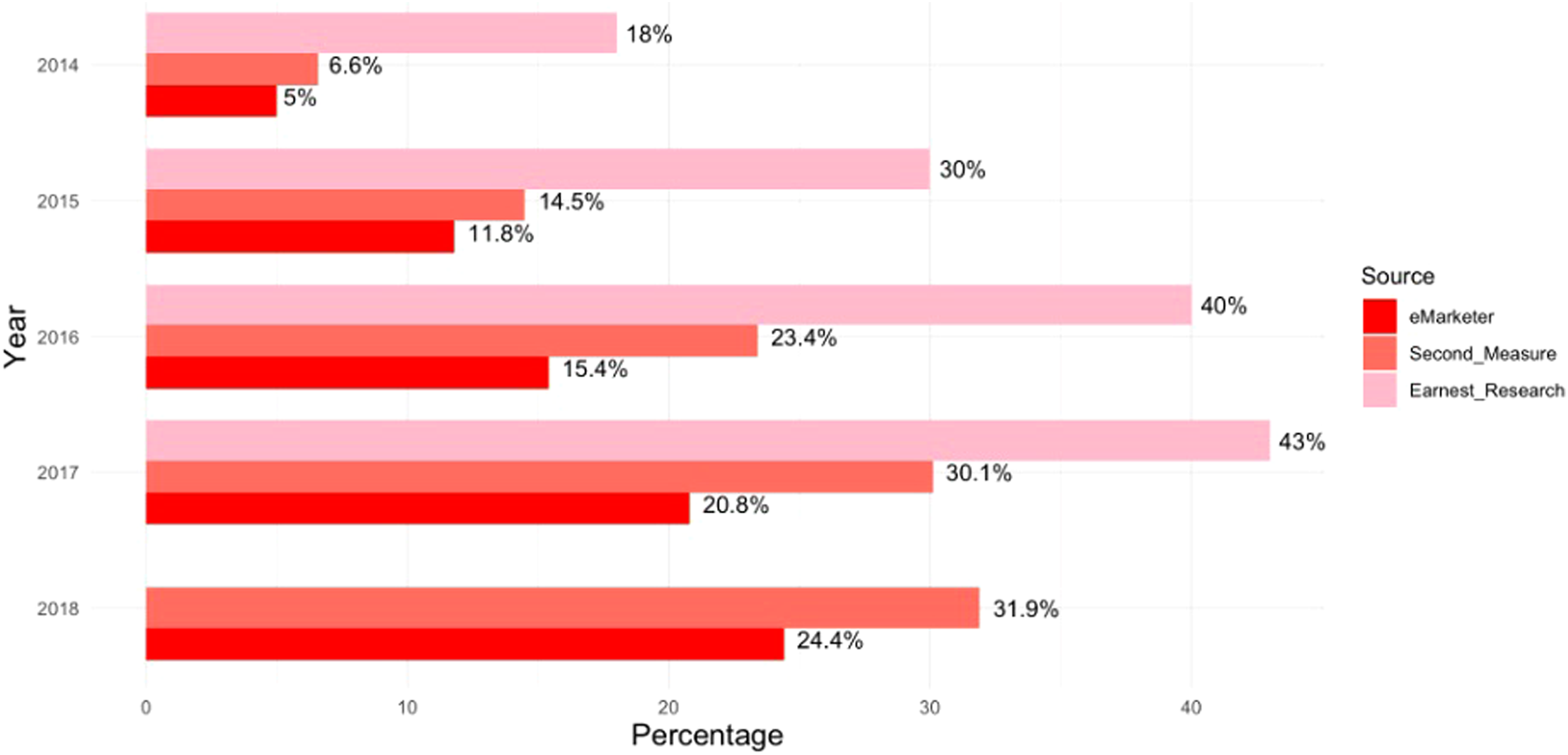
Share of Americans using ride-hailing services. Note: This figure demonstrates the percentages of Americans who used ride-hailing services during a calendar year from three data sources. Statistics from eMarketer is based on survey data while those from Second Measure and Earnest Research respectively are based on debit/credit card spending data.
Ride-hailing services are superior to alternative transportation modes (e.g., bus, subway, taxi, etc.) in applying the principles of the contact theory to mitigating the number of hate crimes. Traditional public transport (e.g., bus and subway) generally offers an open space and a noisy environment. Although passengers of traditional public transport are exposed to out-groups, the environment hardly allows for contacts that can lead to mutual understanding. Behavioral constraint theory (Sommer, 2009; Stokols, 1972) suggests that individuals’ behaviors are constrained by their environments. Passengers in buses or subways tend to restrict their behaviors, turning inwards and focusing on private space (e.g., looking at their mobile phones) (Andrews et al., 2016). In contrast, ride-hailing services offer compact and private space that encourages contact and conversation, thereby increasing mutual understanding, lessening prejudice, and consequently reducing the number of hate crimes.
The closest alternative to ride-hailing services is conventional taxis. Taxi drivers are employed on a full-time basis and taxi companies need to provide professional services including vehicle inspection and driver evaluation (Baron, 2018). These businesses select drivers who possess extensive driving experience and are predominantly aged 40 and above. 7 In contrast, ride-hailing drivers are more diverse. Many ride-hailing drivers are part-time workers and are not subject to driver evaluations as strict as those for taxi drivers (Fielbaum and Tirachini, 2021). The flexibility of working time and a lower barrier to entry allow more individuals from various groups to join ride-hailing platforms as drivers. Moreover, ride-hailing services are usually more economical than taxis by charging lower rates. 8 This more affordable pricing model could attract a larger and more diverse user base compared to that of taxi services. Given the higher diversity of both drivers and passengers, inter-group contact is more likely to happen in ride-hailing trips than in taxi trips. Further, ride-hailing users are more willing to develop friendships and conduct cultural exchanges (Arteaga-Sánchez et al., 2020). Such inherent social benefits of ride-hailing services are less salient for conventional taxis. Therefore, compared with conventional taxis, ride-hailing services have much greater potential to facilitate inter-group contact and further reduce the number of hate crimes.
While previous research has explored the societal implications of ride-hailing services, their potential role in curbing the number of hate crimes remains inadequately studied. The most relevant work in this realm has been undertaken by Park et al. (2021). They determined that ride-hailing services are helpful in protecting passengers from potential sexual assaults on the streets. Nevertheless, the underlying motivations driving hate crimes substantially differ from those inciting sexual assaults. Therefore, a rigorous analysis of the impact of ride-hailing services on the number of hate crimes is merited. Moreover, prior studies have examined the impacts of ride-hailing services on other societal issues, including traffic congestion and the public transit system (Babar and Burtch, 2020; Lee et al., 2022; Li et al., 2022; Pan and Qiu, 2022), alcohol-related motor vehicle fatalities (Greenwood and Wattal, 2017), and crowdfunding campaigns (Burtch et al., 2018). Our research provides novel perspectives on the potential of ride-hailing services to enhance societal stability.
Following the passage of the Hate Crime Statistics Act of 1990, the FBI has gathered and published hate crime statistics annually since 1992. This allows for tracking the trend of the number of hate crimes over time. Based on perpetrator motivations, hate crimes can be classified into multiple categories, including crimes motivated by bias against race or ethnicity, religion, sexual orientation, gender, and disability. Racial hate crimes constituted the largest proportion, averaging 59.41% of all hate crimes in the study period of 2009–2017. Religious hate crimes and sexual orientation hate crimes accounted for 19.99% and 19.23%, respectively, of all hate crimes during the same period (see Figure 2). Our empirical analyses took a granular view by examining the effects of the entry of ride-hailing services on each of these three major categories of hate crimes.
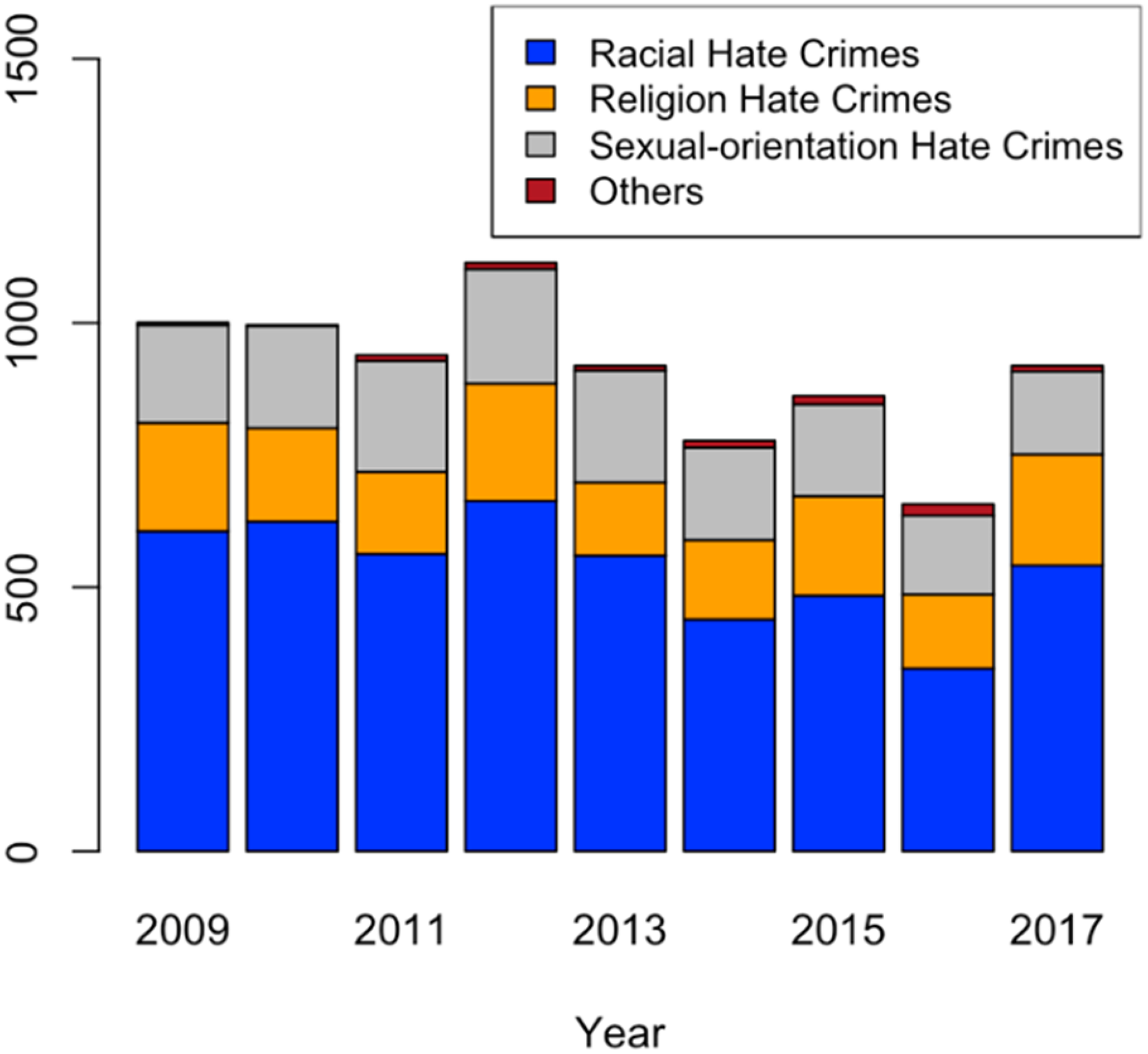
The distribution of hate crimes by year.
The FBI website provides hate crimes’ data for both metropolitan and non-metropolitan counties. We focused on metropolitan counties (see panel (a) of Figure 3) because Uber ride-hailing services are typically deployed in metropolitan counties, rather than non-metropolitan counties, due to higher demand and easier availability of drivers. Moreover, the population in metropolitan counties accounts for 85.2% of the population in the United States (Ingram and Franco, 2014). It is reasonable to conclude that the population in metropolitan counties makes up the majority of users of Uber ride-hailing services. We collected hate crimes’ data in 1083 metropolitan counties from the FBI website, out of a total of 1167 metropolitan counties in the United States (Ingram and Franco, 2014). The distribution of hate crimes across the 1083 metropolitan counties is shown in panel (b) of Figure 3.
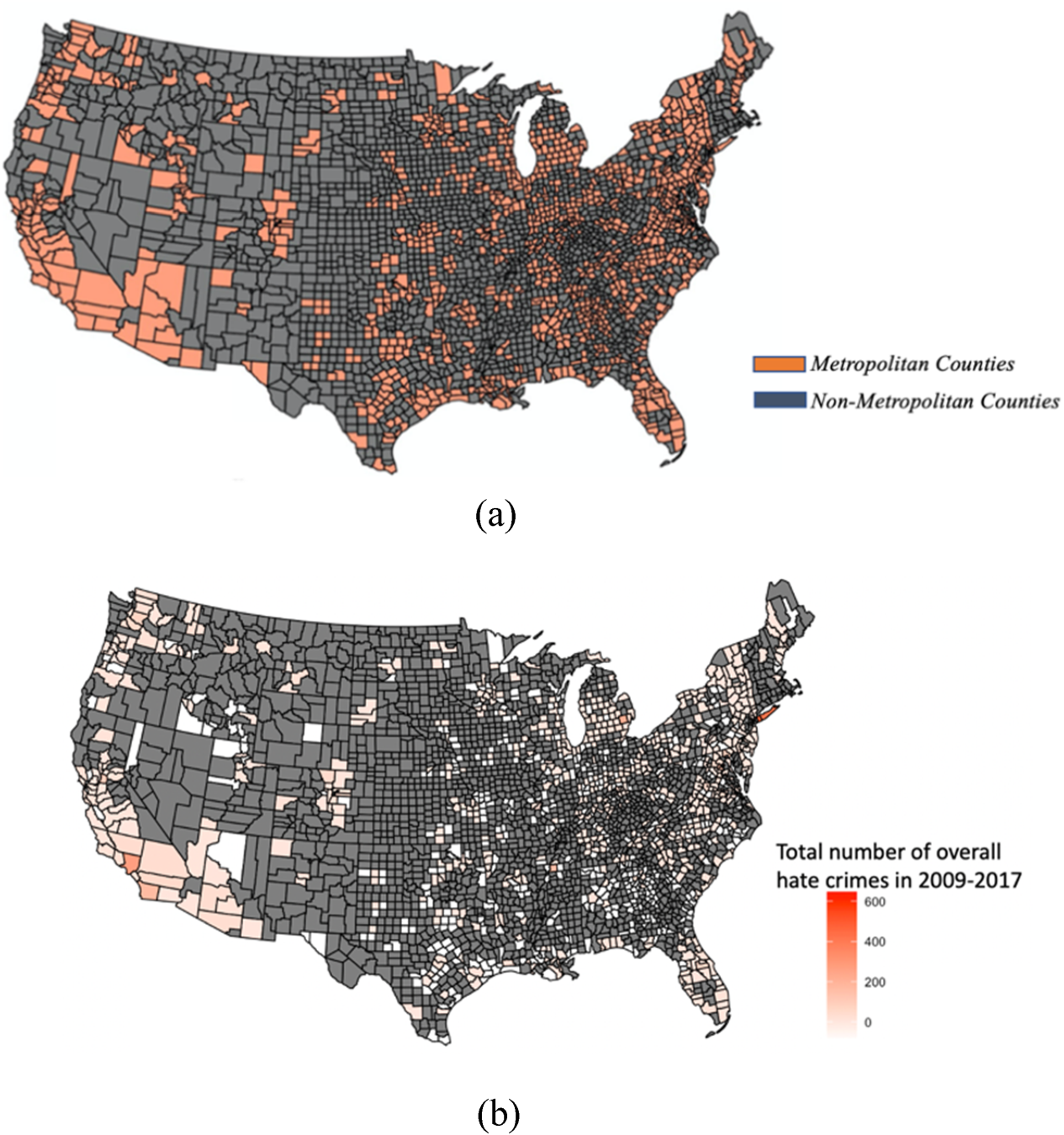
Overview of hate crimes in metropolitan counties. (a) The distribution of metropolitan counties in the United States. (b) The distribution of the number of hate crimes across metropolitan counties. Note: Metropolitan counties are filled with white color in (b).
In the examination of ride-hailing service introductions, we focus on the entry into service of Uber ride-hailing services in individual counties. Uber is the digital archetype of ride-hailing services and the first entrant into the vast majority of metropolitan counties where ride-hailing services are available (Greenwood and Wattal, 2017). Thus, the entry of Uber ride-hailing services is an appropriate proxy for the inception of ride-hailing services in examining the relationship between the entry of ride-hailing services and the number of hate crimes. The first mode that Uber launched in a county was typically UberX (a standard version). Although some counties started with Uber Black (i.e., a premium version of UberX), the adoption of UberX generally followed quickly (Greenwood and Wattal, 2017). In this study, we used the earlier entry date from the two service modes as the Uber ride-hailing services entry date for empirical analyses. These entry dates were retrieved from the Uber newsroom and local news reports. We were able to gather the entry dates for 792 metropolitan counties (73% of the 1083 metropolitan counties recorded on the FBI website). Specific entry information on Uber ride-hailing services in counties can be found in Online Appendix A1. We visualized the distribution of the entry dates in Figure 4 and identified that most ride-hailing platforms were introduced between 2014 and 2017. Accordingly, we focused on the period from 2009 to 2017 which marked the rise of ride-hailing services in the United States. This provides us with an ample and credible dataset for empirical analysis.
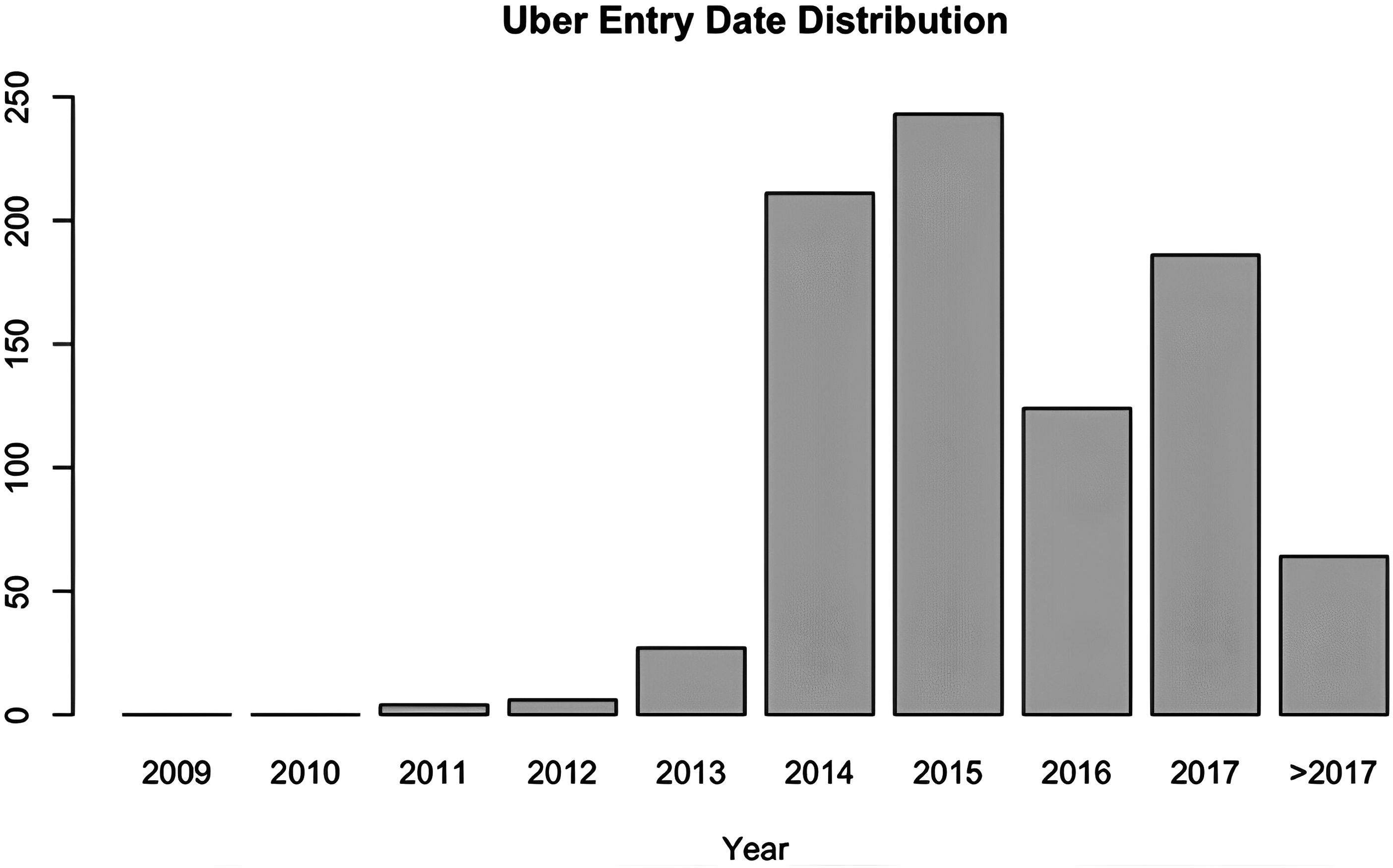
The distribution of entry dates for Uber ride-hailing services.
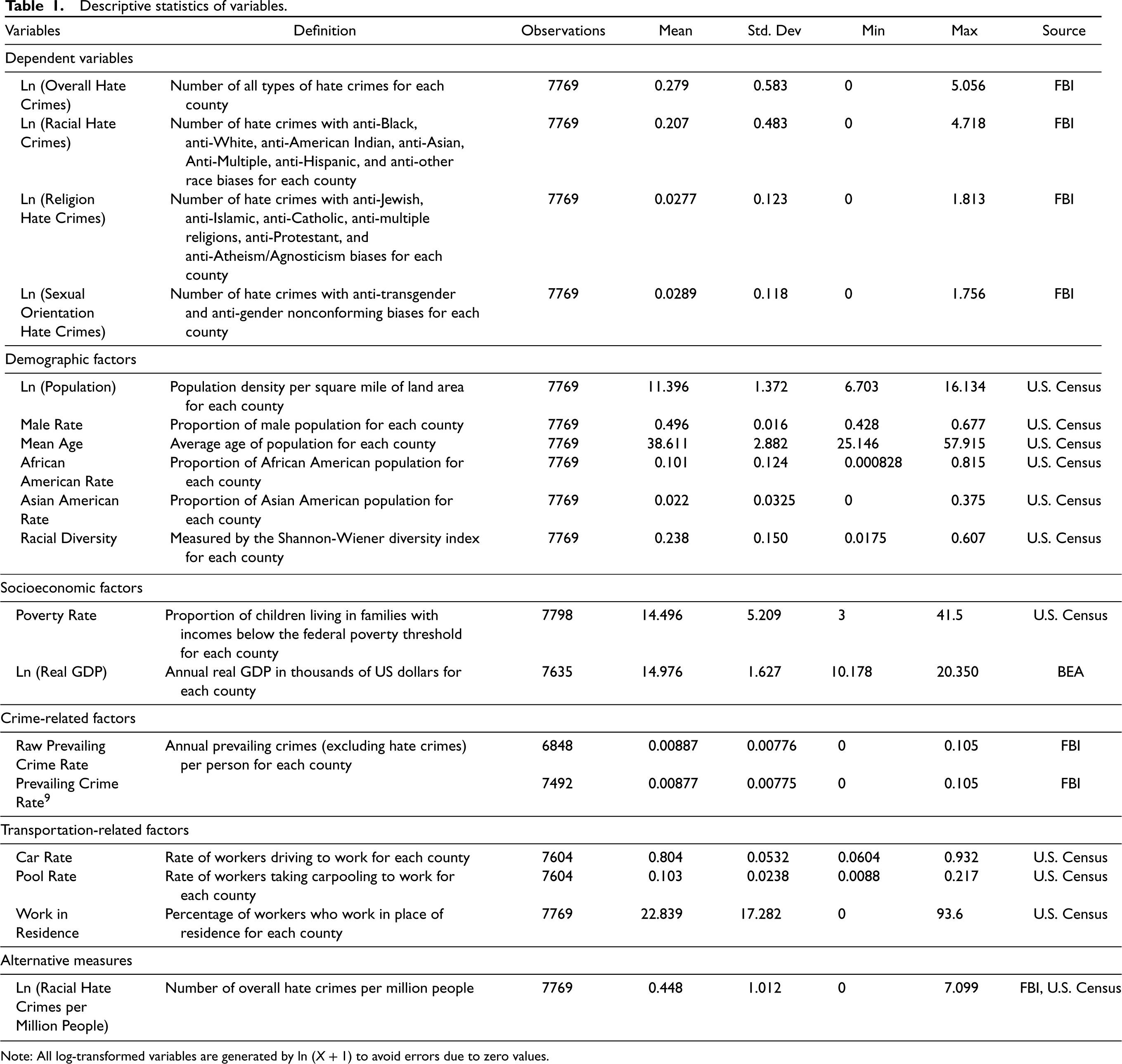
Previous studies have shown that macroeconomic activities and the sociological status of a county can influence crime rates (Bell et al., 2013; Glaser et al., 2002; Kelly, 2000; Lochner, 2020). To account for such potential impacts, we collected county-level data on demographics and socio-economic status. The United States Census Bureau (U.S. Census), the United States Bureau of Labor Statistics (BLS), and the United States Bureau of Economic Analysis (BEA) publish annual information on population, gender proportions, mean age, race proportions, poverty levels, employment levels, and real gross domestic product (GDP) for counties. We collected data on prevailing crime rates from the FBI Uniform Crime Reporting program to account for the overall crime situation in each county. Transportation factors (i.e., rate of population driving to work) and carpooling factors (i.e., rate of workers taking carpooling to work) were also gathered to capture potential effects due to a general change in transportation patterns. Integrating information from these different sources, we created a panel dataset that covered 763 metropolitan counties (in 46 states). We provide the definition and descriptive statistics of all variables in Table 1.
Descriptive statistics of variables.
Note: All log-transformed variables are generated by ln (
Difference-in-Differences (DiD) Model
The staggered entry of Uber ride-hailing services into different counties allowed us to use the counties Uber entered earlier as the control group and the counties Uber entered later as the treatment group. Hence, we used a staggered DiD model to assess the relationship between the entry of ride-hailing services and the number of hate crimes. Such DiD models that utilized temporal and spatial differences in treatment across units have been widely adopted in previous studies about ride-hailing services (Burtch et al., 2018; Greenwood and Wattal, 2017). Formally, our model is formulated as the following equation:

Given that Uber's entry into various counties likely is not arbitrary, our DiD model tried several ways to address potential endogeneity concerns. To be specific, we incorporated both location-based and temporal fixed effects to account for shared time-unvarying shocks and common trends. Moreover, we have accounted for the dynamic characteristics of each county, such as economic statuses and demographic shifts. To further improve the alignment between treated counties and control counties, we undertook additional matching, because matching can improve the balance on the distributions of observable covariates between treated and control counties and might potentially improve the balance on unobservable covariates.
In particular, we used Propensity Score Matching (PSM) to match counties with Uber ride-hailing services and counties that never had Uber ride-hailing services during our study period. The covariates used in the matching included demographic and socioeconomic factors. These matching variables were similar to those used in the work of Greenwood and Wattal (2017) which examined the effects of ride-hailing services on drunk driving. We additionally included crime-related factors in the matching because of our focus on hate crimes. The final matching variables consisted of Population, Mean Age, Male Population, African American population, Real GDP, Poverty Percentage, and Prevailing Crimes. The matched data would then render us a more balanced sample for our DiD estimations.
In our DiD evaluations, we have attempted to tackle the issue of Uber's selective entry by accounting for several identifiable confounding variables and enhancing sample balance via matching. The more challenging part was to account for the unobserved confounding factors. While we have included county fixed effect and yearly fixed effect to absorb the unobservable time-invariant bias, unobserved time-varying confounders might still have influenced the results. In this section, we leveraged a recent method called counterfactual estimator (Liu et al., 2024), which can address the unobservable time-varying bias, to resolve the remaining endogeneity concern and enhance the estimation rigor.
Specifically, the counterfactual estimator is applied in the time-series cross-sectional setting (Liu et al., 2024). This process involves generating counterfactual outcomes for observations that received treatment. The treatment effects are then determined by examining the average differences between these counterfactual results and the observed outcomes for the treated units. As an advanced version of the classical synthetic control method proposed by Abadie et al. (2010), the counterfactual estimator could accommodate our context of staggered treatments and has been widely used for causal inference. In addition, the constant treatment effect assumption could be relaxed in the counterfactual estimator, which accounts for the heterogeneity of the effects of ride-hailing services on the number of hate crimes. Compared to a conventional two-way fixed-effects model, the counterfactual estimator could provide more reliable causal estimates when Uber entry is not completely external.
The key to counterfactual estimators lies in the prediction of counterfactual outcomes for those treated observations. Specific to our context, the counterfactual estimator is specified as follows:

Results of the DiD Model With PSM
Following the specification in Section 4.1, we first conducted PSM to match treated counties and control counties in our data. We conducted a t-test to evaluate the balance of the matched sample. Online Appendix A3 reports the results and the matching details. After matching, there were no significant differences between the treatment and control groups in terms of the matching variables, suggesting the comparability of these two groups. Based on this matched sample, we ran the DiD estimations and reported the results in Table 2. 10 From Column (1), we found that the entry of Uber ride-hailing services substantially reduced the overall number of hate crimes in counties. Upon closer inspection of Column (2), we found that such a reduction arose mainly from the decrease in racial hate crimes. The entry of Uber ride-hailing services reduced racial hate crimes by 5.75% 11 on average. Columns (3) and (4) showed that the decline in religious hate crimes after the entry of Uber ride-hailing services was less significant and that there was no impact on sexual orientation hate crimes.
Empirical results of DiD model with PSM sample.
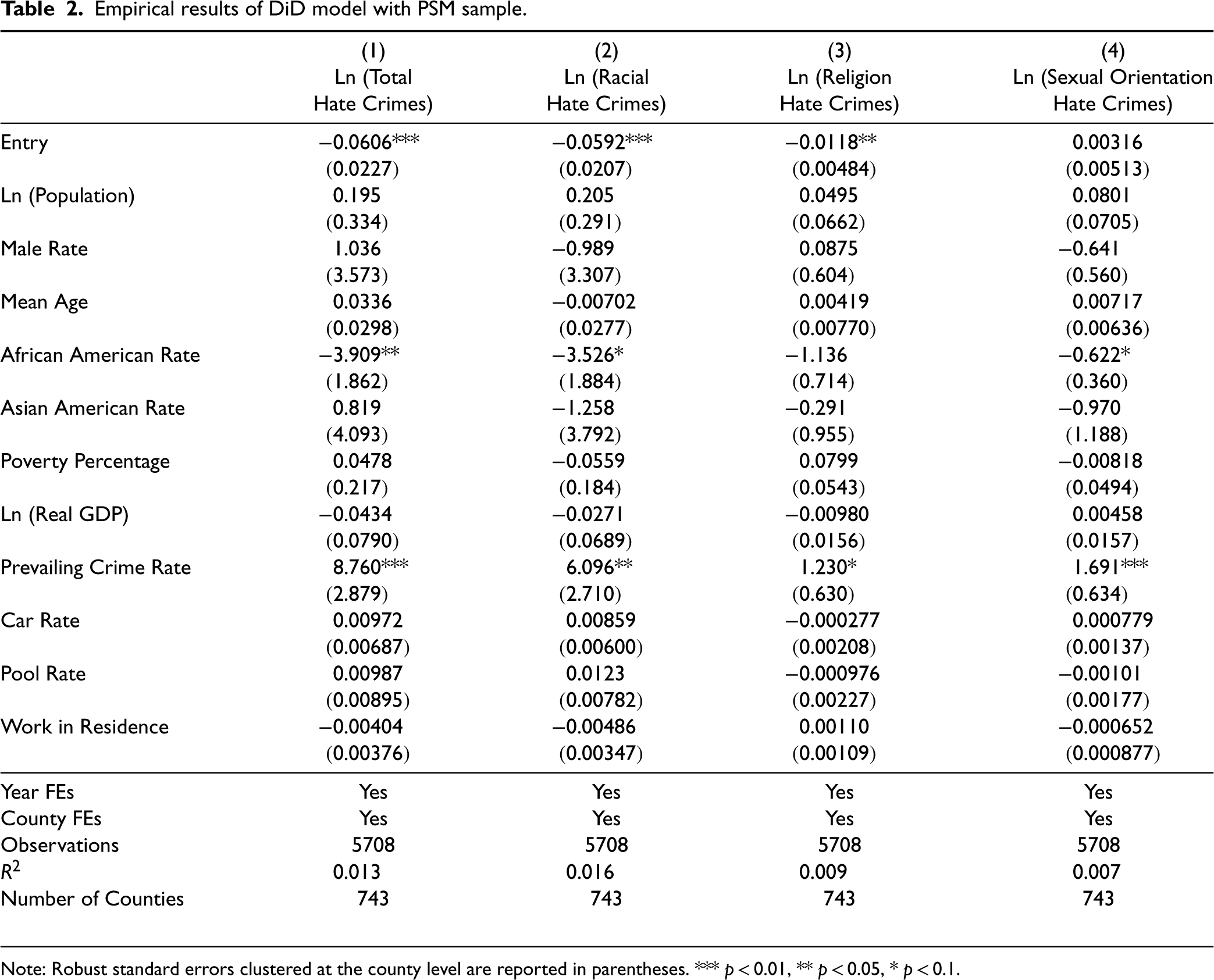
Empirical results of DiD model with PSM sample.
Note: Robust standard errors clustered at the county level are reported in parentheses. *** p < 0.01, ** p < 0.05, * p < 0.1.
The heterogeneous impacts on different categories of hate crimes are reasonable. Through inter-group contacts in ride-hailing trips, an individual can easily distinguish others’ races from their appearance (e.g., skin color or other facial features). These inter-group contacts help passengers to lessen their prejudice towards other races, leading to fewer racial hate crimes. An individual's religion may occasionally be deduced from his/her attire in inter-group contacts during ride-hailing trips, but this is not always the case. Hence, it is less likely anyone will recognize religion attributes as opposed to race attributes during rides. Inter-group contacts via ride-hailing services would be less helpful for lowering prejudice towards different religions. This explains why the impact of the entry of ride-hailing services on religion hate crimes has been less significant. In contrast, a person's sexual orientation can less likely be inferred from inter-group contacts in shared rides. As individuals are less likely to identify others’ sexual orientations through inter-group contacts in the rides, there is no possibility of reducing prejudice towards other sexual orientations. It is reasonable to see that the entry of ride-hailing services has no impact on sexual orientation hate crimes.
The heterogeneity in Uber’s impacts across the categories of hate crimes also provides evidence supporting the mechanism suggested by the contact theory. The significance of the impact of Uber’s entry on the number of hate crimes towards different attributes decreases with the ease of attribute recognition in inter-group contacts during ride-hailing trips. This verifies the function of inter-group contacts in the relationship between ride-hailing entry and the number of hate crimes, supporting the contact theory.
On the other hand, these findings minimize the possibility of alternative mechanisms related to economy-related or safety-related factors. Alternatively, the entry of ride-hailing services may benefit economic development and reduce the exposure risk in the streets, both of which can mitigate the number of hate crimes. If economy-related or safety-related factors work as the major mechanism, the ease of attribute recognition should not play a role and the impacts of the entry of ride-hailing services would not have differed with the categories of hate crimes. As such, the conclusion about the varying effects of the entry of ride-hailing services across the categories of hate crimes is helpful in excluding the alternative economy-related or safety-related mechanisms.
Lastly, we reported the coefficient of Pool Rate, which represents the rate of workers using traditional carpooling in each county. No significant result was observed for this variable, which demonstrated that ride-hailing services are different from traditional carpooling. Although traditional carpooling enables shared rides, this typically involves families and friends, who would not be people from out-groups (DeLoach and Tiemann, 2010). Hence, there would be little chance for traditional carpooling to promote contacts with people from out-groups (Tajfel et al., 1979).
In Section 4.2, we further introduced a counterfactual estimator to mitigate the endogeneity issue that might be driven by unobservable time-varying factors. We have reported our estimation results based on this MC counterfactual estimator in Table 3. The results are similar to our DiD analyses based on the matched sample. Despite employing more rigorous estimation techniques, we consistently observed that the introduction of ride-hailing services substantially decreased the total number of hate crimes, particularly those motivated by race. It is worth noting that while the significance of the reduction in religiously motivated hate crimes diminishes, the trend remains negative. No substantial effect was evident on the number of hate crimes based on sexual orientation. These outcomes align with the contact theory as previously explained. These insights provide further robustness for our conclusion that services similar to Uber can create meaningful interactions between different groups and can play a significant role in reducing societal hate crimes’ numbers.
Empirical results with counterfactual estimator model.
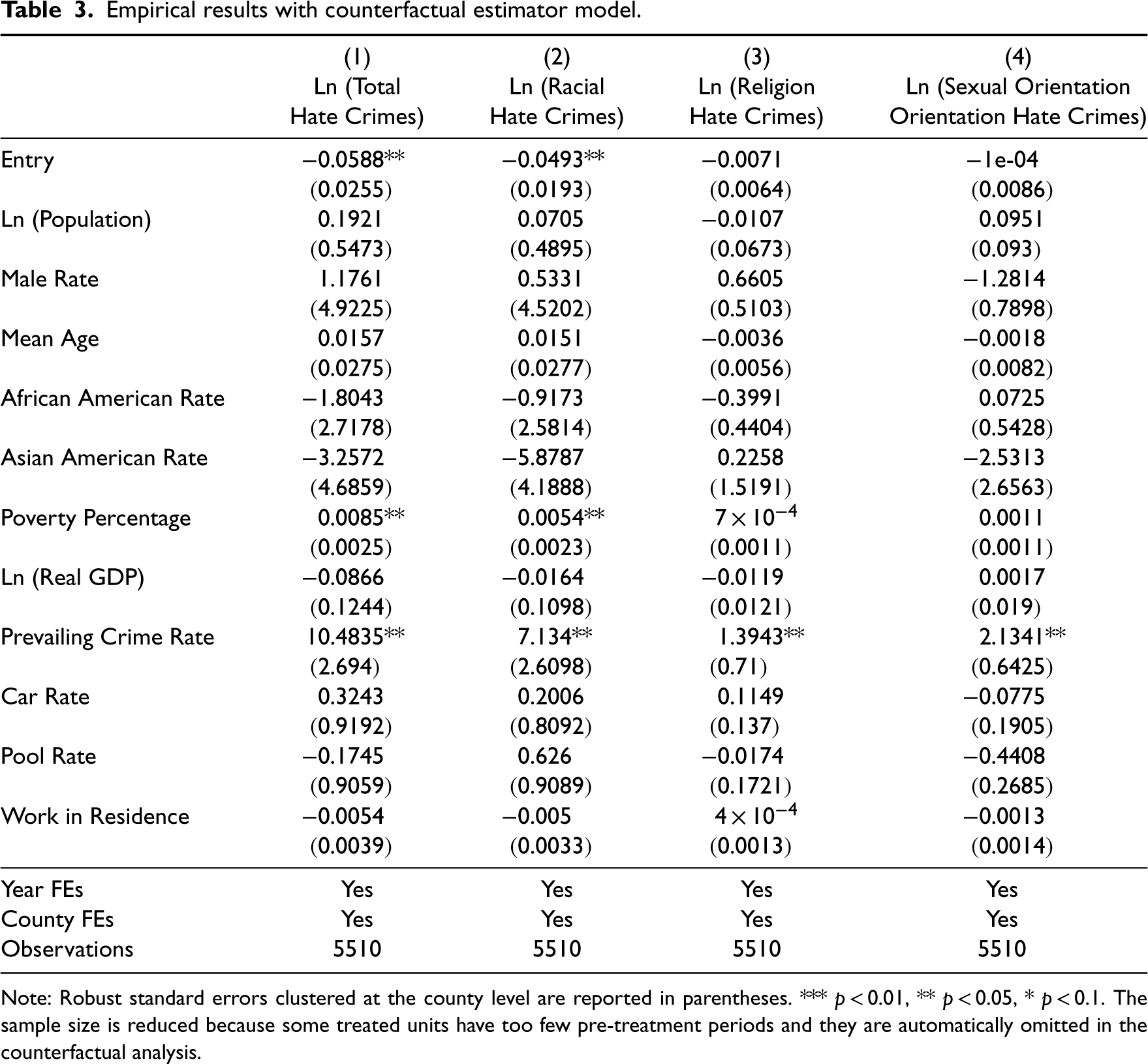
Empirical results with counterfactual estimator model.
Note: Robust standard errors clustered at the county level are reported in parentheses. *** p < 0.01, ** p < 0.05, * p < 0.1. The sample size is reduced because some treated units have too few pre-treatment periods and they are automatically omitted in the counterfactual analysis.
Our main analyses revealed that the entry of ride-hailing services significantly reduced racial hate crimes’ numbers. This finding empirically shows that positive contacts should dominate over negative contacts in using ride-hailing services, demonstrating the applicability of the contact theory in real-world settings. Inter-group contacts (even mere exposure) are helpful for improving inter-group understanding, decreasing anxiety towards out-groups, and raising empathetic thinking, thereby reducing prejudice against out-groups. Ride-hailing services provide natural opportunities in a comfortable environment for more positive inter-group contacts. This, in turn, would reduce racial hate crimes’ numbers. We conducted analyses to further validate this mechanism based on the contact theory.
Heterogeneous Analyses
The contact theory posits that inter-group contacts could be instrumental in reducing racial hate crimes’ numbers. More inter-group contacts lead to fewer racial hate crimes. If ride-hailing services facilitate inter-group contacts, we could expect that the entry of ride-hailing services potentially reduces racial hate crimes’ numbers. To evaluate this mechanism, we consider two moderators that are closely associated with the frequency of inter-group contacts. The validity of these moderators would empirically support the role of inter-group contacts in mitigating the number of hate crimes, as suggested by the contact theory.
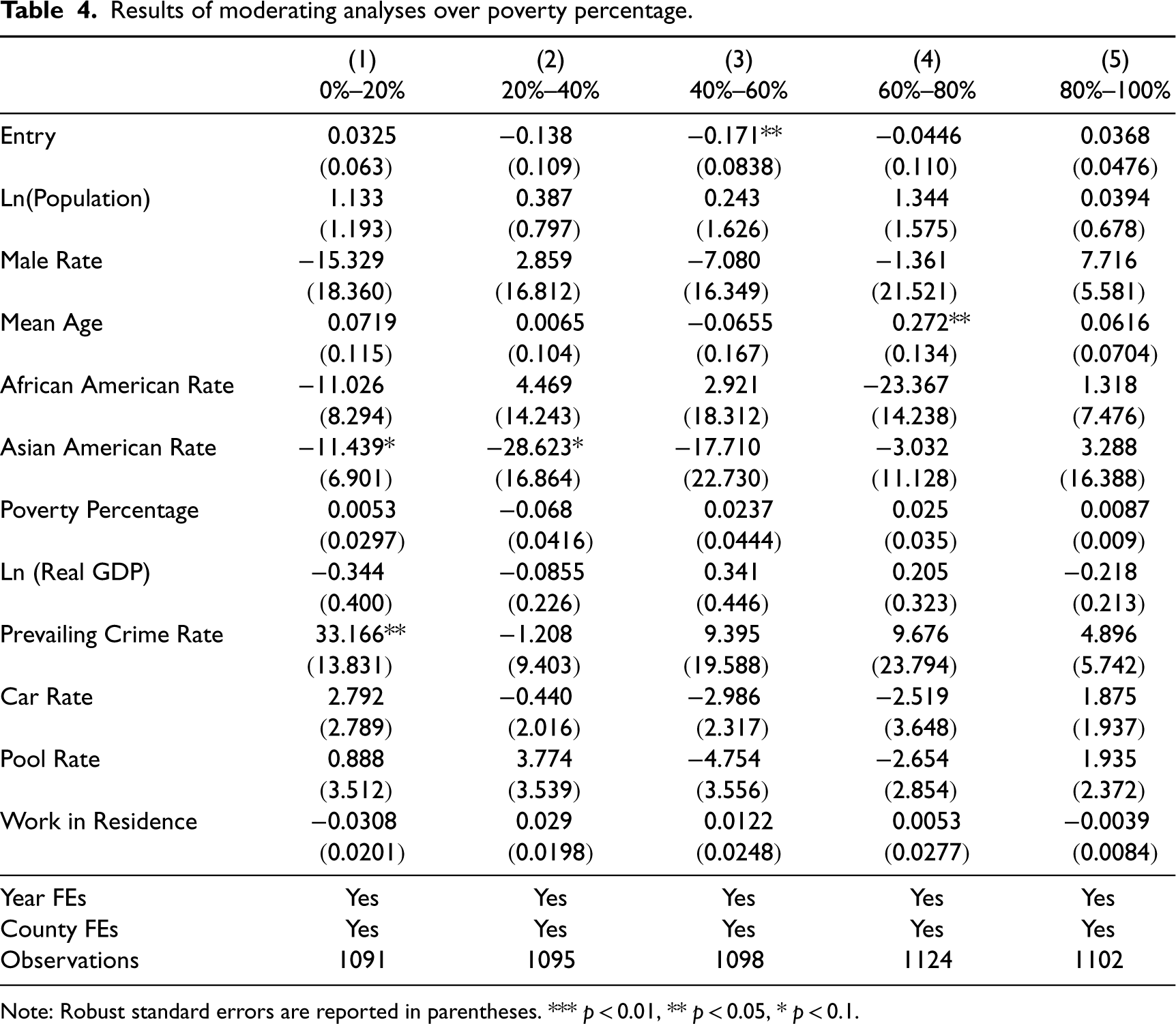
First, we examined the income-related moderator. Statistics on the users of Uber ride-hailing services by income 12 (see Figure 5) showed that Uber users mainly come from middle-income countries. Compared to individuals from low- or high-income counties, individuals from middle-income counties use Uber ride-hailing services more frequently, having more inter-group contacts. Based on the contact theory, there would be a more significant reduction in racial hate crimes’ numbers for middle-income counties than low- or high-income counties after the entry of Uber ride-hailing services. We used the poverty percentage to represent the average income level in a county. To provide granular insights, we divided our sample into five groups according to quantile cut-offs. The results of subsample analyses regarding income factors are reported in Table 4. The reduction of the sample size decreases the estimation power. However, we continue to observe that the entry of ride-hailing services significantly reduces the number of hate crimes in the counties with middle-average-income levels, particularly in the subsample between the 20% and 40% quantiles. There are no significant impacts in the counties with top- or bottom-level incomes. These results confirm our conjecture based on the contact theory, evidencing the ability of ride-hailing services in fostering harmony through intergroup contacts.
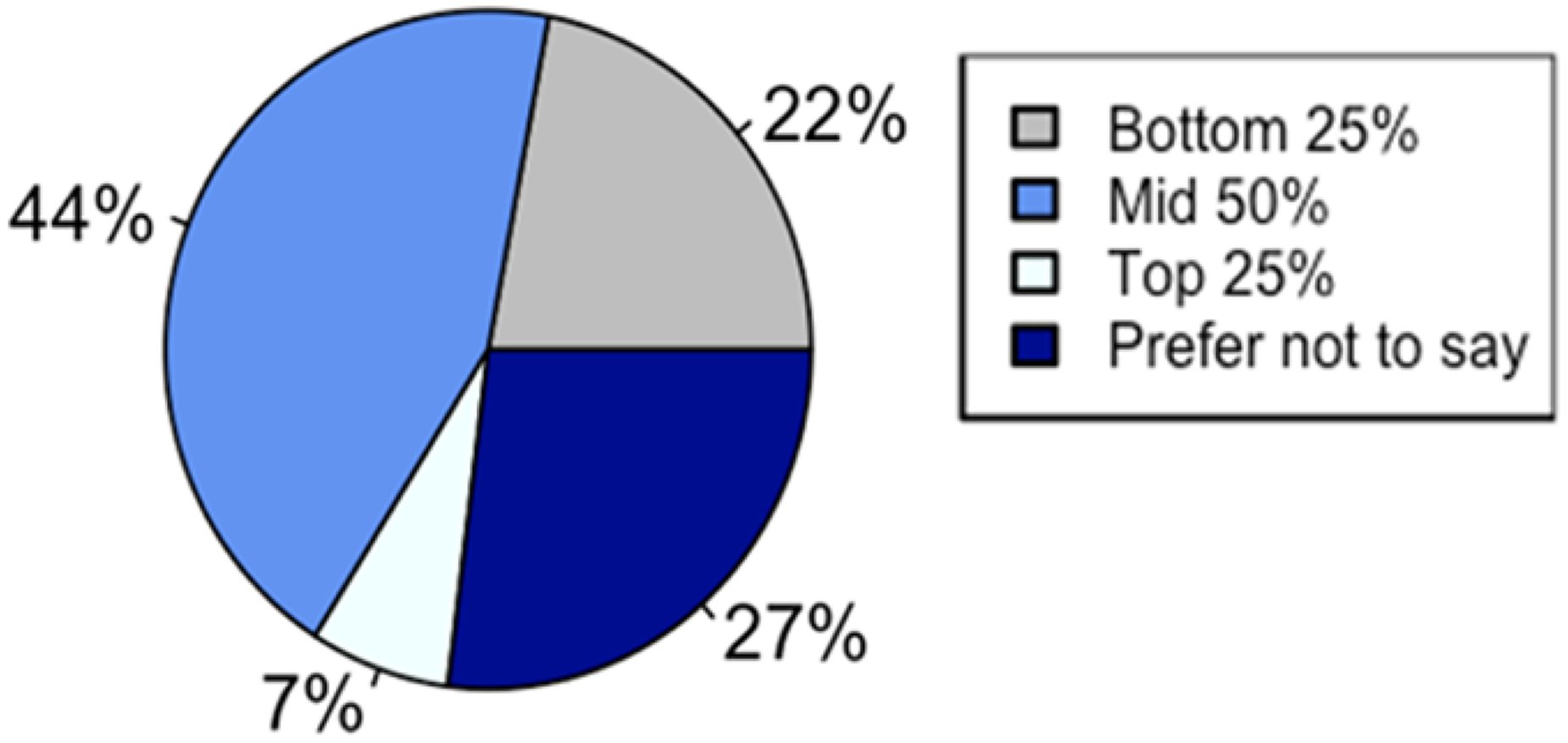
Income distribution of users of Uber ride-hailing services.
Results of moderating analyses over poverty percentage.
Note: Robust standard errors are reported in parentheses. *** p < 0.01, ** p < 0.05, * p < 0.1.
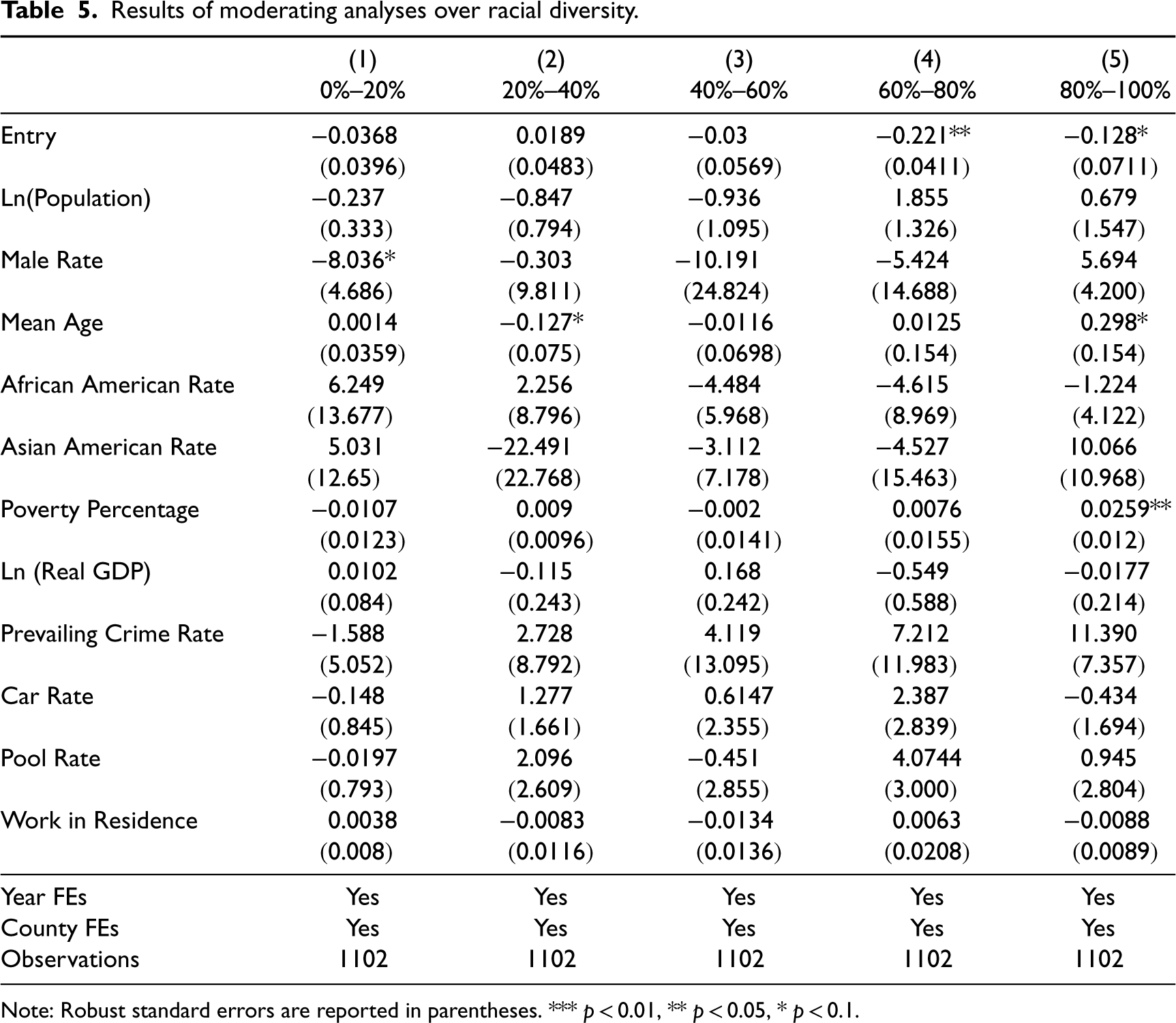
Second, a precondition to any form of direct face-to-face contact is the presence of outgroup members. We hence examined the moderating effect of racial diversity. Compared to counties with lower racial diversity, counties that were more racially diverse allowed for higher opportunities for inter-group contacts because individuals encountered other races more easily. This would reduce prejudice and contribute to a greater reduction in racial hate crimes’ numbers. As such, the entry of ride-hailing services is more likely to affect counties with higher racial diversity than counties with lower racial diversity. To verify this contention, we measured the racial diversity of each county and investigated how racial diversity might moderate the effects of the entry of ride-hailing services on racial hate crimes’ numbers. We used the Shannon-Wiener diversity index (Shannon and Weaver, 1949), which had been widely used in prior studies to measure racial diversity in communities (Garcia-Torea et al., 2020; Horn, 1966; Klir and Ashby, 1991). Similar to the moderating analyses on income factors, we divided counties into five sections based on quantiles. The results of subsample analyses about racial diversity are reported in Table 5.
Results of moderating analyses over racial diversity.
Note: Robust standard errors are reported in parentheses. *** p < 0.01, ** p < 0.05, * p < 0.1.
In Table 5, we see that the entry of ride-hailing services significantly reduces the number of hate crimes specifically in the counties with higher levels of racial diversity, as shown in Columns (4) and (5), but it has no significant impact in the counties with low-quantile samples. Interestingly, in extremely racially diverse counties (top 10%), the effect of Uber in decreasing racial hate crimes’ numbers diminishes. Such counties already provide ample inter-racial contact opportunities, leaving limited room for ride-hailing services to further boost these interactions. As a result, in highly diverse counties, the entry of ride-hailing might have a less significant influence on reducing racial hate crimes’ numbers.
In summary, the findings from the moderation analyses suggest that in counties where individuals are more likely to interact with outgroup members via Uber rides, there is a higher likelihood of a decline in racial hate crimes’ numbers. Consequently, the contact theory serves as a valid framework to elucidate how ride-hailing services can decrease racial hate crimes’ numbers and foster societal harmony.
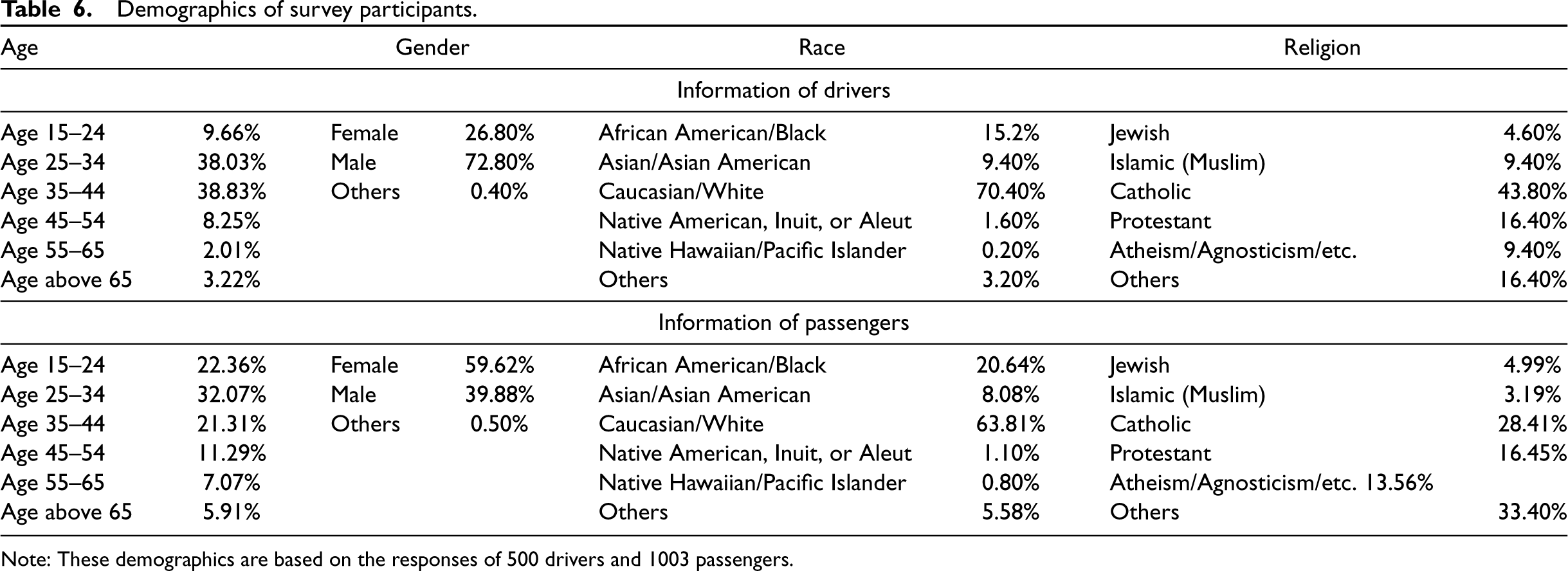
To obtain a direct view of the inter-group contact occurring in the ride-hailing trips, we conducted an online survey with the assistance of Cint.com, a professional consumer research company. This company has been used by previous studies across different disciplines, given its ability to reach a wide range of appropriate respondents (Bursztyn et al., 2020; Fetzer et al., 2020; Wood and Porter, 2019). We recruited 500 drivers of ride-hailing services and 1003 passengers who had used ride-hailing services in the United States. The demographics (e.g., gender, age, race, and religion) of these drivers and passengers are reported in Table 6. The profiles of the respondents are consistent with the reality that the majority of such drivers are males 13 and that younger people use ride-hailing services more frequently than elder people. 14 The distributions of race and religion in the sample are also consistent with the overall population, with White and African Americans as major races, 15 and Catholic and Protestant as major religions. 16 As such, our sample of passengers and drivers is a good representation of the overall population of passengers and drivers of ride-hailing services. The questions used in the online survey can be found in Online Appendix A5.
Demographics of survey participants.
Demographics of survey participants.
Note: These demographics are based on the responses of 500 drivers and 1003 passengers.
The purpose of this survey is to observe inter-group contacts facilitated by ride-hailing services. The statistics in Figure A6-1 in Online Appendix A6 reveal that drivers and passengers have frequent contact with individuals from other races through ride-hailing services. 17 Almost 70% of drivers have “very often” interacted with people from other races on the rides. Such interactions are also common for passengers, with about 40% reporting “very often” and another about 50% reporting “from time to time.” Additionally, the duration of such contacts in the rides typically lasted 5–10 min or 10–20 min. Thus, ride-hailing services promote contacts between people from different races. The statistics, shown in Figure A6-2 in Online Appendix A6, provide similar evidence that ride-hailing services facilitated contacts between people from different religions.
To better understand the behavior of passengers, the survey asked them to indicate what they usually did during the rides. As shown in Figure 6, most passengers (43.27%) interacted with others during the rides. Another 22.13% of passengers watched others interact during the rides but did not directly participate in the interactions. This is evidence of actual or vicarious contacts during the rides.
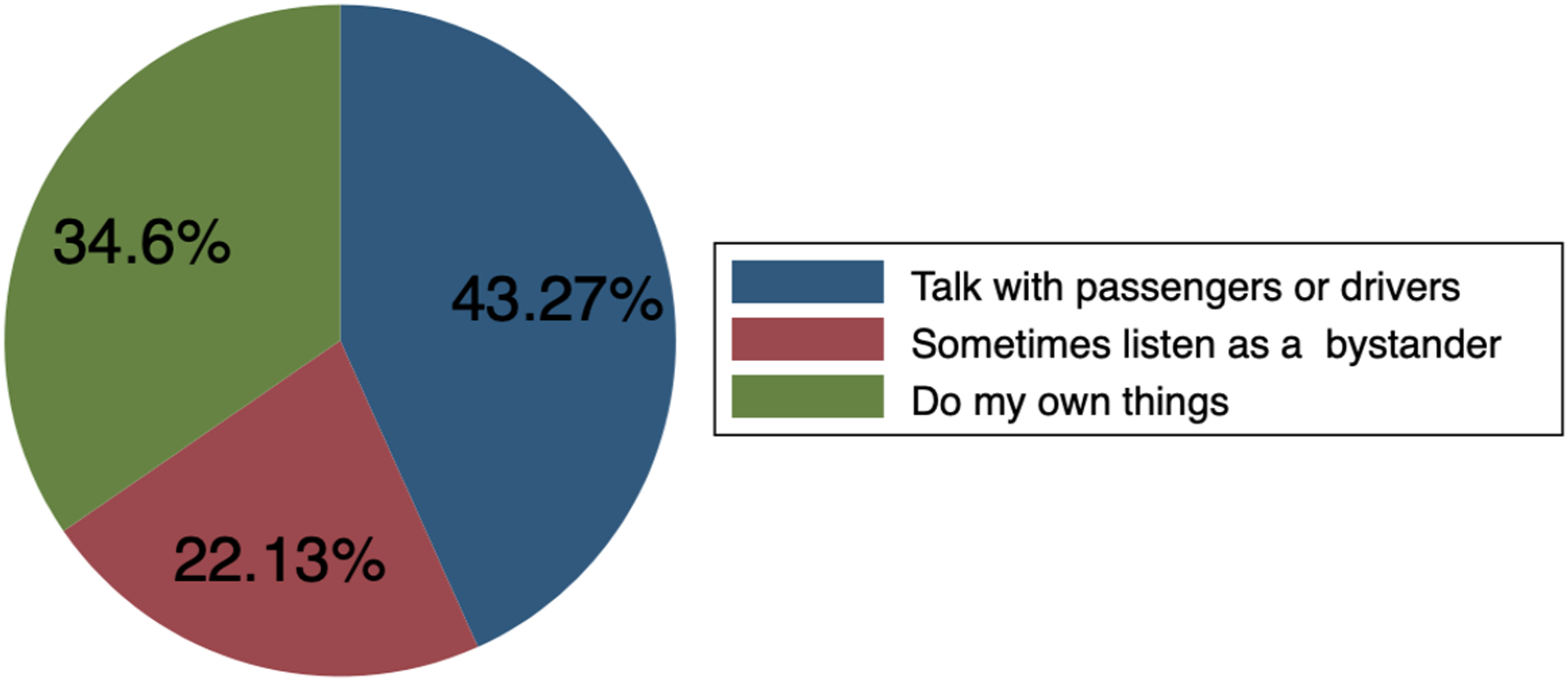
Behaviors of passengers during the rides. Note: These results were based on the responses of 478 drivers and 898 passengers.
To provide more insights into the role of inter-group contacts in reducing the number of hate crimes, the statistics for attitude change and knowledge improvement regarding people from other races and religions are shown in Figures A6-3 and A6-4 in Online Appendix A6, respectively. In Figure A6-3(a) and (c), 74.06% of drivers reported that their attitudes toward people from other races became more positive after having contact with people from other races through the rides, and 92.47% (57.74% + 34.73%) of drivers improved their knowledge about people from other races through the rides. In Figure A6-3(b) and (d), 43.65% of passengers reported that their attitudes toward people from other races became more positive after having contact with people from other races through the rides, and 70.49% (38.75% + 31.74%) of passengers improved their knowledge about people from other races through the rides. Considering that only a very small proportion of drivers (0.42%) and passengers (1.11%) reported becoming more negative towards people from other races through the rides, it was reasonable to conclude that ride-hailing services had a significantly positive impact on improving attitudes towards and knowledge about people from other races. This also corroborated the dominance of positive intergroup contacts in ride-hailing rides, indicating that positive contacts occurred more frequently than negative contacts through ride-hailing services.
In summary, the results from the survey supported our contention that inter-group contacts occurred frequently, with reasonable duration, through the rides. Such contacts helped passengers and drivers to have more positive attitudes towards and better knowledge about people from other races and religions. This was a direct validation that the mechanism suggested by the contact theory was the most plausible explanation for how the entry of ride-hailing services could result in the reduction of the number of hate crimes.
Falsification Tests for DiD-PSM Model
To assess if the observed effects of the entry of Uber ride-hailing services on the reduction of racial hate crimes were spurious, we performed two sets of falsification tests that have been widely used in previous literature (Gong et al., 2023; Zhou et al., 2020). First, we artificially generated a “placebo entry” on a random date before the entry of Uber ride-hailing services and we repeated the DiD analyses based on PSM samples. If significant effects were observed in this estimation, then some omitted variables other than the entry of Uber ride-hailing services could be driving the reduction of racial hate crimes. As shown in Online Table A4-1, the coefficient of “placebo entry” for Uber ride-hailing services had no significance, indicating that the effects of the entry of Uber ride-hailing services on the reduction of racial hate crimes did not happen by chance. Second, we conducted shuffle tests by replicating the first step 1000 times. We evaluated the average values of the coefficients and standard deviations, as presented in Online Table A4-2. The estimated treatment effects were significantly different from the average random treatment effects. This evidence suggested that the effects of the entry of Uber ride-hailing services on the reduction of racial hate crimes were not spurious.
Diagnostic Tests for Counterfactual Estimator Model
To further validate the results of the counterfactual estimator, we conducted a series of diagnostic tests coupled with a counterfactual estimator as suggested by Liu et al. (2024). Similarly, we focused on racial hate crimes since the Uber impact largely resulted from the reduction in racial hate crimes’ numbers.
We first plotted the evolving patterns of the treatment effects in Figure 7. Following the introduction of Uber ride-hailing services, a marked drop in racial hate crimes’ numbers was observed and such a drop continued to grow over time. This dynamic graph also provides an intuitive “eyeball” test for the causality inferred using the MC counterfactual estimator, as pretreatment residual averages between observed outcomes and counterfactual outcomes hovered around zero.
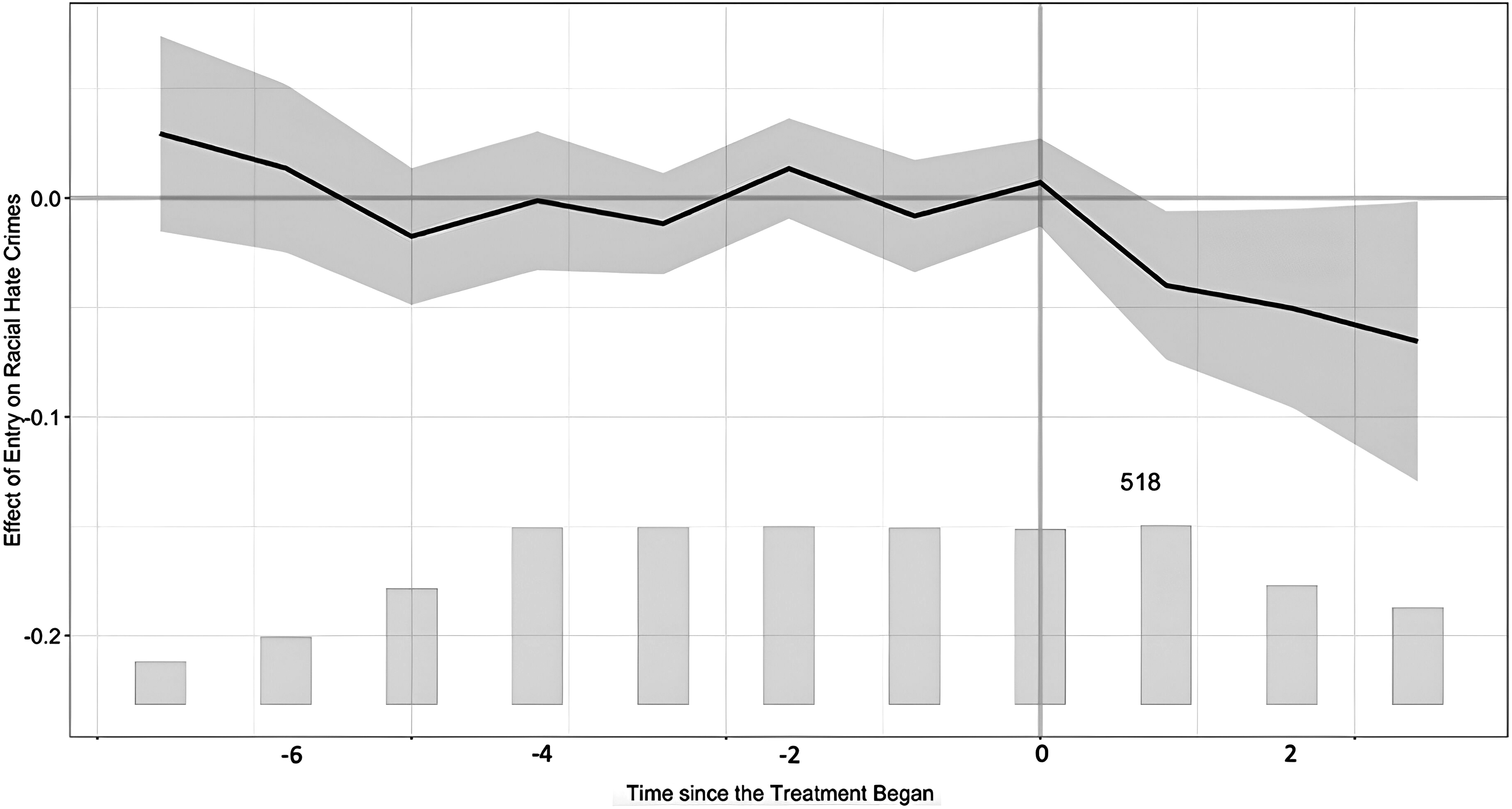
Dynamic treatment effects using matrix completion estimator. Note: The Y-axis denotes the estimated coefficients while the X-axis denotes the relative time distance (i.e., the number of years that a particular period is from the year of entry of Uber ride-hailing services). A 95% confidence interval was used in the plots. The histograms at the bottom represent the number of treated counties in the given year relative to the entry of Uber ride-hailing services.
Following the work of Liu et al. (2024), we conducted two further validation tests for the counterfactual estimator, namely the equivalence test and the placebo test. The equivalence test is a more global test for no pretend through a statistical procedure. The null hypothesis of the equivalence test is that the average treatment effect on treated in any pre-treatment period falls out of a pre-specified range around zero. The rejection of the null hypothesis suggests the opposite that the average treatment effect on treated falls in a pre-specified range around zero. Rejecting the null of inequivalence means the absence of unobserved time-varying confounders and indicates that the identification assumption is valid for counterfactual estimates. Liu et al. (2024) advised the equivalence bound as [−0.36σɛ, 0.36σɛ], where σɛ is the residual standard deviation of non-treated outcomes. We followed this advice and visualized the equivalence test in Figure 8. We observed that our counterfactual estimates passed the equivalence test, as all pretreatment residuals fell within the equivalence bounds.
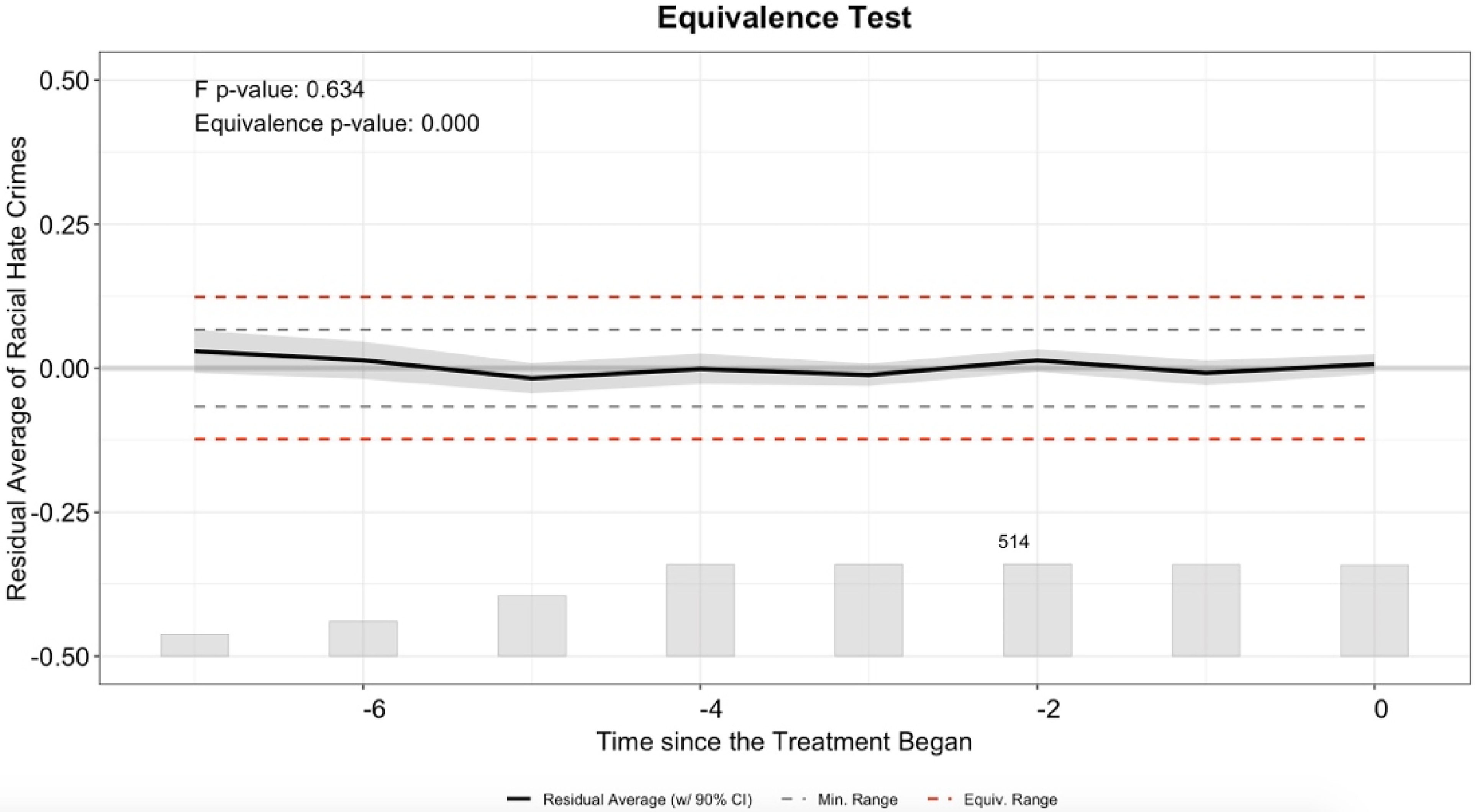
Equivalence tests for counterfactual estimators.
The placebo test was designed for two purposes. One was to validate the no-time-varying confounders’ assumption. Given that observations within the [−S, 0] periods remain unexposed to the actual treatment, the estimated average treatment effect on treated for these S periods should not be statistically significant from zero if the aforementioned assumption stands. The other was to alleviate the concern of model over-fitting. Given that pre-treatment data are utilized to construct the prediction model in the counterfactual estimator, there might be an over-fitting issue. Assuming the treatment commences S periods prior to the actual treatment event, the data from the [−S, 0] periods are not included in the predictive model. Consequently, the placebo test is safeguarded against over-fitting, as it depends on out-of-sample forecasts during the placebo intervals. We conducted the placebo test and plotted the results in Figure 9. We have proved that our counterfactual estimates passed the placebo test by showing that the estimated average treatment effect on treated for these P periods (as shown in the highlighted blue area in Figure 9) is insignificantly different from zero.
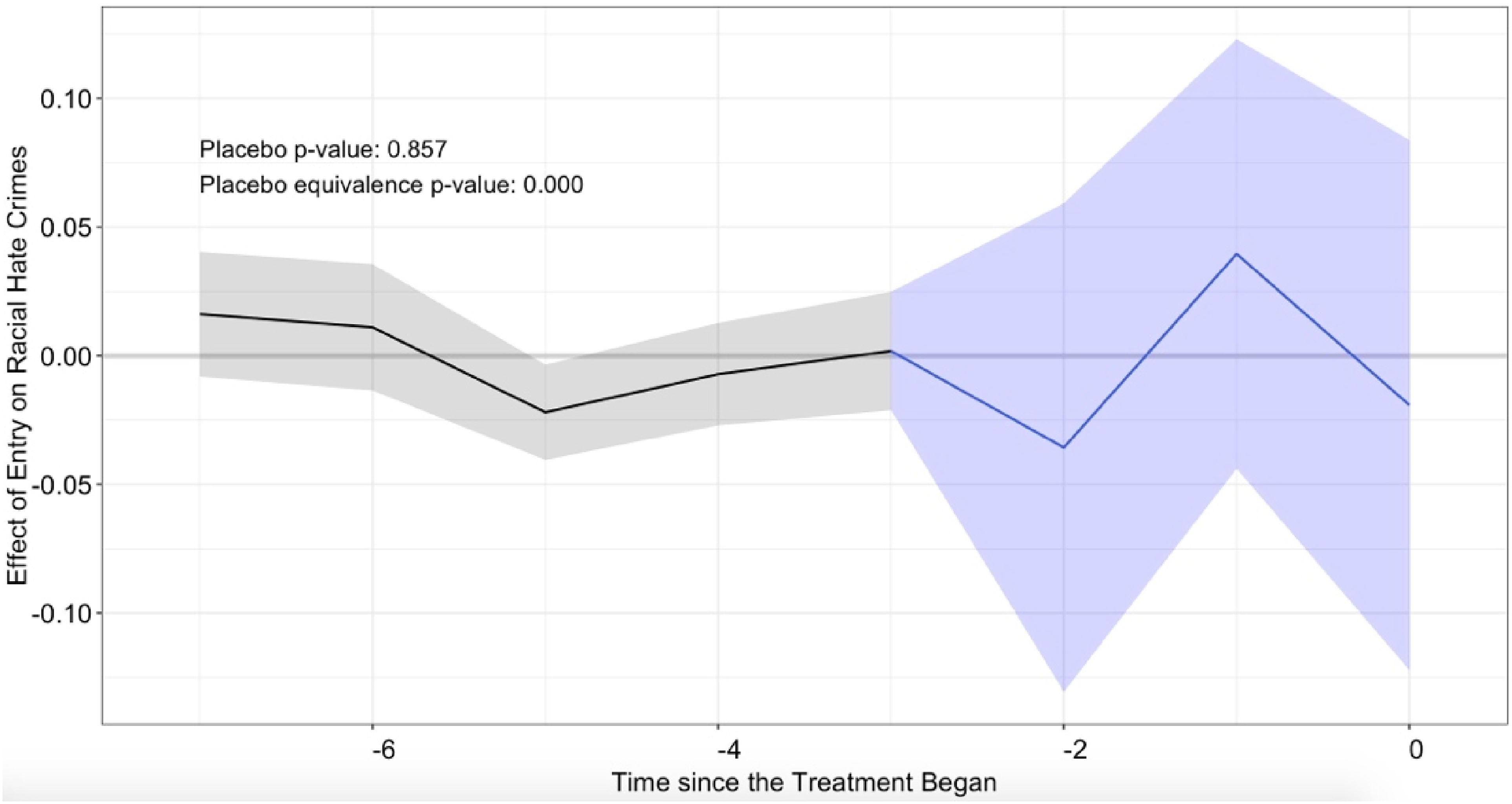
Placebo tests for counterfactual estimators.
This study shows that ride-hailing services facilitate inter-group contacts, thereby helping to reduce prejudice against out-groups and significantly decreasing hate crimes (particularly racial hate crimes). Relying on the staggered entry time of Uber ride-hailing services in counties in the United States, we designed a DiD specification to assess the impact of the entry of Uber ride-hailing services on hate crimes’ numbers. We also adopted a counterfactual estimator to address the potential biases of unobservable time-varying confounding factors. We conducted a series of robustness checks, which yielded consistent findings. Further, we used the contact theory to explain why ride-hailing services led to the reduction in racial hate crimes’ numbers. The results of heterogeneous analyses, coupled with the evidence from an online survey, affirmed our contention that intergroup contacts provided by ride-hailing services was the most plausible mechanism driving the decrease in racial hate crimes’ numbers. The reduction in racial hate crimes’ numbers was the most prevalent in counties with relatively higher racial diversity (where Uber ride-hailing services had most opportunities to facilitate inter-group contacts) and in middle- income counties (where Uber ride-hailing usage should be highest). Results of the online survey provided direct evidence supporting that intergroup contacts occurring in the ride-hailing trips improved individuals’ outgroup attitudes and knowledge about people from other races, thereby reducing racial hate crimes’ numbers.
The results of this study have important theoretical and practical implications. First, this study extends the literature on contact theory, marking one of the pioneering endeavors to empirically validate the theory's effectiveness in real-life contexts. Despite the extensive literature that exists on positive intergroup contacts, recent research has recognized negative intergroup contacts. Academics hence have expressed concerns about balancing positive and negative experiences in intergroup contacts and discussed these intertwined effects on the implementation of the contact theory. Our research suggests that, in the ride-hailing environment, positive encounters prevail and these steer intergroup attitudes in a favorable direction, as evidenced by the significant reduction in hate crimes’ numbers. Our heterogeneous analyses further delineate the extent of contact effects across different geographical areas regarding their economic levels and racial diversities.
Second, this study offers a new option to combat hate crimes’ numbers through ride-hailing services. Hate crimes are a continuously serious societal challenge because the damage can go beyond immediate victims to affect entire communities. Traditional methods to mitigate hate crimes’ numbers have primarily revolved around legislative measures, including regulations pertaining to online hate speech (Boyd et al., 1996). However, these measures fail to produce the anticipated outcomes because they address the problem on the surface rather than at the fundamental level. The results of this study demonstrate that intergroup contacts through ride-hailing services fundamentally deal with the problem by reducing prejudice and hate crimes’ numbers. As strategies to counteract hate crimes’ numbers evolve, policymakers and legislators should consider technological advancements, including gig-sharing platforms, as valuable tools for fostering community cohesion.
Third, our paper yields insights for policy making related to sharing gigs. The results are insightful for providers of ride-hailing services, such as Uber. Encouraging more intergroup contacts (perhaps through matching passengers and drivers) can potentially make a significant contribution to counteracting prevailing societal prejudices and reduce hate crimes’ numbers. Conversely, Uber Black offered a quiet driver mode, which has been criticized because this mode, considered a dehumanizing move, “robs drivers of free speech in their own vehicles.” 18 In general, this mode potentially curtailed essential intergroup contact, even if it might minimize undesirable interactions. Ride-hailing providers, such as Uber, have to judiciously assess these competing implications before extending this feature beyond Uber Black to other services. Because our findings show that ride-hailing services have created more positive contacts than negative ones, this has helped in improving outgroup understanding and reducing prejudice. Uber has recently issued a program, Employee Resource Groups, which states its mission is the promoting and supporting of diversity and inclusion. Our findings offer suggestions for policy designs that advance diversity and inclusion.
Fourth, we have enriched the understanding of the societal impact of ride-hailing services. Although the emergence of ride-hailing services has attracted academic investigation into the impact on societies, such as structural changes in public transportation (Babar and Burtch, 2020; Cramer and Krueger, 2016; Pan and Qiu, 2022), environmental influences (Li et al., 2022; Lee et al. 2022), local entrepreneurial activities (Burtch et al., 2018), and sexual violence (Park et al., 2021), there has been no study examining how the entry of ride-hailing services may impact racial hate crimes’ numbers. This study adds to literature by filling this gap in knowledge.
The limitations of this study also offer options for future research. First, this study attempts to establish the relationship between ride-hailing services and hate crimes’ numbers without relying on detailed data on Uber rides. Without such detailed data, our results have established a macro link between ride-hailing services and hate crimes’ numbers. Future studies can rely on more detailed data (e.g., trip frequencies, passenger and driver racial distributions, and contact valence) to develop richer insights, such as the impact of ride-hailing service usage intensity on hate crime, and other potential mechanisms relating ride-hailing services to hate crime. Second, the rationale posited by contact theory has been employed to elucidate the correlation between ride-hailing services and hate crimes’ numbers. More granular mechanisms that could further reduce hate crimes’ numbers can be explored. For example, although the conditions for positive contacts initially delineated by Allport (1954) are not necessary, subsequent research can still examine these conditions to find ways that could better facilitate positive intergroup contacts and mitigate hate crimes’ numbers on a deeper level. Third, this research utilizes Uber as the representative digital sharing gig for identification. Future research can assess diverse sharing gig models to ascertain the broader applicability of our findings.
Supplemental Material
sj-pdf-1-pao-10.1177_10591478231224944 - Supplemental material for Leading the Horse to Water? Investigating the Impact of Ride-Hailing Services on Hate Crimes
Supplemental material, sj-pdf-1-pao-10.1177_10591478231224944 for Leading the Horse to Water? Investigating the Impact of Ride-Hailing Services on Hate Crimes by Lin Qiu, Dandan Qiao, Bernard C Y Tan and Andrew B Whinston in Production and Operations Management
Footnotes
Acknowledgments
Dandan Qiao acknowledges the support of the Singapore Ministry of Education Academic Research Fund [Tier 1, Grant [R-253-000-171-114]. Lin Qiu acknowledges the Southern University of Science and Technology Startup Program, Grant/Award Number: Y01976208.
Declaration of Conflicting Interests
The author(s) declared no potential conflicts of interest with respect to the research, authorship, and/or publication of this article.
Funding
The author(s) received no financial support for the research, authorship, and/or publication of this article.

Notes
How to cite this article
Qui L, Qiao D, Tan BCY and Whinston AB (2024) Leading the Horse to Water? Investigating the Impact of Ride-Hailing Services on Hate Crimes. Production and Operations Management 33(1): 342–363.
References
Supplementary Material
Please find the following supplemental material available below.
For Open Access articles published under a Creative Commons License, all supplemental material carries the same license as the article it is associated with.
For non-Open Access articles published, all supplemental material carries a non-exclusive license, and permission requests for re-use of supplemental material or any part of supplemental material shall be sent directly to the copyright owner as specified in the copyright notice associated with the article.
