




Abstract
While there is a rich body of literature regarding attitudes toward the police, longitudinal empirical research on perceptions of police legitimacy among youth offenders is scant. Using data from Pathways to Desistance, a longitudinal study of 1,354 serious juvenile offenders, the current study builds upon the literature by identifying developmental trajectories of perceptions of police legitimacy among serious young offenders by gender. The study used group-based trajectory modeling, which yielded five trajectory groups for males and four trajectory groups for females. Female youth offenders exhibited slight increases in perceptions of police legitimacy, whereas males showed variations in perceptions of police legitimacy across the seven waves. To examine the probability that predictors belong to certain trajectory groups, the average marginal effects from a multinomial logit regression model were calculated. The findings showed that direct and indirect procedural justice and Black were statistically significant predictors of the probability of police legitimacy trajectories for both males and females. Compared with the male youth offenders, among their female counterparts, legal cynicism, self-reported offense, Hispanic, and age were not associated with the probability of each trajectory group. Given our findings and the strong association between the likelihood of offending and perceptions of the police, we suggest that existing early intervention programs may add a curriculum on prosocial attitudes toward the police. The findings also shed light on the significance of gender in the developmental perspective of police legitimacy perceptions among youth offenders.
Introduction
The 1960s, early 1990s, and the second decade of the 21st century are low watermarks for police legitimacy. Tensions between law enforcement officers and civilians continue to occur, prompting efforts to better understand public views and attitudes about the police (Albrecht & Green, 1977). Recent events such as the deaths of George Floyd, Breonna Taylor, Michael Brown, and Eric Garner at the hands of law enforcement have harmed police legitimacy around the country. Understanding the underlying etiology of public attitudes toward the police—especially of youth, a vulnerable population that is frequently in contact with the police—is therefore vital for any department seeking to restore its legitimacy in the eyes of the body politic. A crucial first step in restoring police legitimacy is to strengthen procedurally fair policing practices by understanding the public's perception of law enforcement officers.
Previous studies have fruitfully identified various factors as predictors of attitudes toward the police and their services. However, the empirical research on perceptions of police legitimacy is largely limited to studies of adult populations in the United States, even though the age of respondents tends to be inversely associated with public views regarding police legitimacy, with younger populations exhibiting less favorable attitudes than those shown by their older counterparts (Hinds, 2009; Hurst & Frank, 2000). Examining adolescent views of police legitimacy has become even more critical as young people grow up in an era of mistrust of law enforcement (Fine et al., 2020; Trinkner & Tyler, 2016).
Despite this reality, very little is known about how juveniles regard the police from a developmental perspective (Esbensen et al., 2001; Fine et al., 2020; Mclean et al., 2019; Piquero et al., 2005; Stewart et al., 2014). Most works devoted to this issue also have not exclusively focused on perceptions of police legitimacy. In addition, while some research has examined gender differences in impressions regarding the police, their results in both juvenile and adult populations are inconclusive and often contradictory. To illustrate, while some research has suggested that adolescent males hold more critical views of the police than females (Winfree & Griffiths, 1977), more recent research on youth populations implied the reverse (Hurst & Frank, 2000). Lastly, understanding views on police legitimacy among serious juvenile offenders is perhaps more important than doing so among the general youth population because the former have more frequent encounters with the criminal justice system, especially with the police (Leiber et al., 1998), which may influence their opinions and perceptions of law enforcement.
To this end, we employed a developmental perspective in identifying attitudes toward the police among serious adolescent offenders. More specifically, we identified several developmental trajectories that help explain youth offenders’ views on police legitimacy. The current study used the seven waves of Pathways to Desistance data over a period of 36 months. In addition, we examined differences in attitudes about police legitimacy trajectories and determined the factors that might be associated with each trajectory on the basis of gender. What follows is a brief overview of the existing literature on juvenile perceptions of police legitimacy and developmental perspectives on impressions regarding police legitimacy among adolescent offenders, a discussion of our methodology, and a detailed review of our results and their implication for the corpus of research on police legitimacy.
Literature Reviews
Youth Perceptions of Police Legitimacy
People's willingness to cooperate with the police as law abiders, problem solvers, and crime reporters seems to depend on the public's favorable perceptions and attitudes toward policing agencies (Tyler, 1990, 2001). People are also more likely to obey laws and rules when they perceive the police as a legitimate source of legal authority (Tyler, 1990). Legitimacy refers to an individual's attitudes and perceptions that authority figures are fair or appropriate and that the organization should exist (Sunshine & Tyler, 2003; Tyler, 1997). The literature on perceptions of police legitimacy suggests that perceptions and attitudes concerning the police, especially among the youth, encourage obeisance to the law, crime reporting, and cooperation with law enforcement (Fagan & Tyler, 2005; Fine et al., 2020; Stewart et al., 2014; Sunshine & Tyler, 2003). In equal measure, young people's negative views of the police are related to an increased likelihood of engagement in crime and deviant behavior, crime reporting, and an increase in uncooperative behavior toward law enforcement officers (Hinds, 2007; Tyler & Trinkner, 2017).
Previous studies have shown that numerous factors affect juvenile perceptions about police, including gender, race/ethnicity, delinquency status, and contact experience with law enforcement (Hinds, 2007; Hurst & Frank, 2000; Hurst et al., 2000, 2005; Hurst, 2007). The most common hypothesis in the empirical literature is that perceptions of police legitimacy are shaped by having direct contact experiences with the police. Some studies have noted that police contact is a better predictor of perceptions about the police than demographic characteristics (Miller & Davis, 2008). Other studies have suggested that both direct experiences and indirect or vicarious experiences impact perceptions regarding police legitimacy (Hinds, 2009; Miller & Davis, 2008; Rosenbaum et al., 2005; Schuck & Rosenbaum, 2005).
It is reasonable to assume that during late childhood and into adolescence, views of police legitimacy can be dramatically altered, given the continuing dynamic between adolescent attitudes and experiences (Piquero et al., 2005). In particular, policing-related negative events and knowledge acquired through a number of ways, such as social media (e.g., Facebook, Instagram, Twitter), television, and the vicarious experiences of friends and family, tend to affect young people more strongly than adults (Fine et al., 2020). Furthermore, involvement with the criminal justice system, particularly the police, may be important to know how these law enforcement officers are viewed and the future behaviors of juveniles (Fine et al., 2020). That is, an officer who treats a juvenile fairly during a search may generally improve that youth's perception of police legitimacy, thereby encouraging future law-abiding behavior.
Research on perceptions of police legitimacy has largely concentrated on differences in respondents’ demographic characteristics. Perhaps the most salient are the effects of race and ethnicity on perceptions of police legitimacy (Hinds, 2007). Since the 1960s, numerous studies have documented the racial/ethnic disparity in attitudes toward crime and the criminal justice system. Regarding perceptions of police legitimacy among youth offenders, numerous studies have indicated that racial minority groups, particularly African Americans, are less likely to have favorable perceptions of police legitimacy and less likely to trust police agencies than White youth (Hinds, 2007; Hurst & Frank, 2000; Hurst et al., 2000; Leiber et al., 1998; Sullivan et al., 1987; Taylor et al., 2001).
Studies on perceptions of police have revealed that legal cynicism is also a significant determinant of compliance with police. Legal cynicism refers to a cultural frame in which people perceive the law and societal norms as unresponsive and illegitimate (Sampson & Bartusch, 1998). Much of the literature has found that adults report strong feelings of obligation to obey the law, the legal institutions, and legal actors (Tyler, 1990; Tyler & Huo, 2002), but a gap in the literature remains regarding the relationship between legal cynicism and the youths’ perceptions of police legitimacy. Legal cynicism is established during adolescence through the process of legal socialization (Piquero et al., 2005). The concept of legal cynicism is a component of the larger developmental phenomenon of self-definition in relation to legal authorities and legal institutions that occurs during adolescence. Several studies have provided significant background material on legal cynicism. For example, using a sample of 8,782 residents in Chicago, Sampson and Bartusch (1998) found that African Americans showed a higher level of legal cynicism than Whites. Carr and his colleagues (2007) examined views on the police among a sample of youth in Philadelphia. The findings showed that most youths had negative perceptions about the police, which were associated with their higher level of cynicism and lower police legitimacy across ethnic groups and neighborhoods.
Findings from studies regarding the relationship between criminal behavior and perceptions of police legitimacy are often conflicting. In a study examining perceptions of law and legal authorities using a community sample of 212 children and adolescents, Fagan and Tyler (2005) found that none of the variables associated with offending predicted perceived police legitimacy. On the other hand, Ren and his colleagues (2016) examined attitudes toward the police using a sample of 358 adjudicated youth offenders incarcerated in a juvenile prison in China. They focused on the effect of delinquent subculture theory and traditional models pertaining to perceptions of the police. They reported that self-reported delinquent behavior was one of the significant predictors of juveniles’ attitudes toward the police. Given the target population of the current study, each juvenile's self-reported offending history was included in the analysis.
With this point in mind, the current study aims to expand the literature on perceptions of juvenile offenders by considering relevant variables, including direct and indirect effects of procedural justice, race/ethnicity, legal cynicism, and self-reported offending considering both time development and gender differences.
Developmental Perspectives in Youth Perceptions of the Police
A handful of studies have examined youth attitudes toward the police from developmental perspectives. For example, Piquero and his colleagues (2005) examined legal socialization over time using a juvenile court sample of offenders charged with serious crimes. Legal socialization refers to the process through which people develop their attitudes and views regarding the law, legal institutions, and legal authority. The authors reported that perceptions of legal socialization among adolescent offenders stabilize over a long period of time, while there appears to be some movement of mean levels of legitimacy and legal cynicism over the short term. A similar study conducted by McLean et al. (2019) focused extensively on the cognitive, experiential, and social factors that lead to shifts in police legitimacy attitudes through adolescence and into emerging adulthood. One pertinent finding is that the strength of the connection between attitudes associated with legitimacy diminishes as they enter adulthood. Even though both studies did not concentrate exclusively on perceptions about the police, they provide a framework for better understanding variations in legitimacy attitudes over time.
Stewart and his colleagues (2014) identified how youth perceptions of the police change over time using data from the National Evaluation of the Gang Resistance Education and Training program (GREAT; cf. Esbensen et al., 2001). Employing group-based trajectory modeling (GBT), the authors found that developmental trajectories among the general youth population remain relatively stable with the passage of time; however, there was some oscillation (a downward trend) for one group. Similarly, Schuck (2013) sampled 1,773 children and teenagers who participated in the Drug Abuse Resistance Education (DARE) program in Illinois and found that individuals of young ages (between 10 and 12 years) hold more positive views about the police but that such impressions declined into adolescence. Finally, Fine and colleagues (2020) pinpointed developmental trends of perceptions regarding police legitimacy using a sample of youth ages 7–14 years. They found that age-graded perceptions of police legitimacy vary by race/ethnicity but generally decline during late childhood.
Gender Differences in Perceptions of the Police: Expanding the Literature
Previous studies related to the effects of gender on attitudes about the police have delivered inconsistent results in both the adult and juvenile literature (Benedict et al., 2000; Brown & Benedict, 2002; Cao et al., 1996; Correia et al., 1996; Frank et al., 2005; Kusow et al., 1997; Lai & Zhao, 2010; Madan & Nalla, 2015; Reisig & Correia, 1997). While some studies suggest the absence of any gender effect (Hinds, 2007; Rigby et al., 1987), there are studies that, at the very least, hint at differences in perceptions of the police by gender.
Studies have suggested that males (both adults and boys) often hold less favorable views of the police than those harbored by females (women and girls) (Cao et al., 1996; Cheurprakobkit, 2000; Lai & Zhao, 2010; Reisig & Parks, 2000; Weitzer & Tuch, 2005). For example, Lai and Zhao (2010) surveyed 756 respondents in Houston, Texas, in 2008 to examine the effects of the demographic, neighborhood, and police/citizen interaction variables on general attitudes toward the police and specifically on trust in police. They found gender was a significant predictor, such that females have a more positive attitude toward the police than males. Conversely, some studies suggested that females hold less favorable views of the police than males (Brown & Coulter, 1983; Correia et al., 1996; Gourley, 1954). Correia et al. (1996), for instance, found that females are less likely than males to have positive views of the Washington State Police on the grounds of data obtained from a statewide random sample of 892 households.
Among adolescents, some researchers’ findings have suggested that boys harbor more pessimistic views about the police than those held by adolescent girls (e.g., Weitzer & Tuch, 1999), whereas others illustrated that negative opinions are more prevalent among the latter (e.g., Flexon et al., 2009; Hurst & Frank, 2000). For example, Jonas and Whitfield (1986) conducted research on satisfaction with police officers in New Zealand and reported that female respondents exhibited a greater probability of being satisfied with how police officers dealt with issues than male respondents. Conversely, some studies show that girls, particularly African American females, have been found to be more likely to see and hear of police mistreatment. This vicarious mistreatment has been employed as an explanation for why females have a less favorable view of the police (Hurst et al., 2005).
In sum, there is mixed evidence of gender differences in youth attitudes toward the police, with results being inconclusive and often conflicting. Nevertheless, amid the inconclusive identification of gender differences in the literature, numerous studies have hinted that gender is directly or indirectly linked to youth perceptions of the police.
Current Study
The current study builds upon existing literature by identifying developmental trajectories of serious adolescent offenders’ perceptions of police legitimacy using the longitudinal study of Pathways to Desistance (Research on Pathways to Desistance) (Mulvey et al., 2004; Mulvey, 2012). Seven waves of data (baseline, 6, 12, 18, 24, 30, and 36 months post-baseline) were used in the current study. Three research questions were addressed:
How many distinct trajectories of views of police legitimacy are there among serious adolescent offenders? Do developmental trajectories of views of police legitimacy vary by gender? How does each trajectory group of males’ and females’ perceptions of police legitimacy vary across other factors?
To explore the first question, it is hypothesized that there will be distinct developmental trajectories of perceptions of police legitimacy among serious juvenile offenders. Further, for the second question, it is hypothesized that the trajectories of youth offender's police legitimacy will vary by gender. For the third question, we hypothesize that there will be differences in developmental trajectories of perceptions of police legitimacy between males and females in terms of the direct effect of procedural justice, the indirect effect of procedural justice, race/ethnicity, legal cynicism, and self-reported offending.
Methods
Data
Data for the current study were obtained from Pathways to Desistance (2000–2010), a longitudinal study of serious adolescent offenders in two cities: Phoenix, Arizona (n = 654), and Philadelphia, Pennsylvania (n = 700) in the United States (see Schubert et al., 2004 for a complete methodology; http://www.pathwaysstudy.pitt.edu/). Across both sites, a total of 1,354 adjudicated youths aged 14–18 were recruited from the juvenile and adult court system. Each of these adolescents had been convicted of a felony or had been adjudicated delinquent. Researchers oversampled females and all adolescents considered for a transfer to adult court. However, they capped the sample at 15% drug offenders to ensure inclusion of a variety of offenses and offenders in the study. For enrolled participants, baseline interviews were conducted within 75 days of adjudication and 90 days of arraignment (Maricopa County, AZ) or decertification hearing (Philadelphia County, PA) (Schubert et al., 2004). Participants were reinterviewed ten times in the 7 years following the baseline interview. Six follow-up interviews were held over 3 years at 6-month intervals. In the final 4 years of the study, the latter interviews were conducted every 12 months. The final follow-up interview was performed in March 2010.
We limited our analysis to juveniles who participated completely through the 36-month collection point for a total of seven-time points. Additional details regarding recruitment and a complete description of the full sample and Pathways to Desistance study are discussed by Schubert and his colleagues (2004) and can be found on the study website (http://www.pathwaysstudy.pitt.edu/).
Measures
Variables of Interest
Police Legitimacy
The police legitimacy scale had six items, including “I have a great deal of respect for the police”; “Overall, the police are honest”; and “People should support the police.” Each question was measured on a 4-point scale ranging from “strongly disagree” to “strongly agree.” The police legitimacy was measured as the mean of the six items, with higher scores indicating more positive perceptions of police legitimacy (Cronbach's α = 0.89).
Procedural Justice (Direct and Indirect)
The procedural justice measure provided by Pathways to Desistance study has several items which rely on police contact with the interviewee, which was adapted from Tyler (1997). Pathways to Desistance used the 19 items to measure participants’ perceptions of police treatment (listed in Appendix A). The first 14 subscales included direct experiences with the police during the time interval considered in each wave (e.g., “During my last encounter with the police, they treated me in the way that I expected they would treat me”). The remaining five items measure general perceptions of procedural justice regarding indirect experiences with the police (e.g., “Of the people you know who have had contact with the police, how much of their story did the police let them tell?”). All of the procedural justice items were measured or converted to a 5-point scale ranging from “strongly disagree” to “strongly agree.” A higher score indicates a greater perceived procedural justice.
Previous studies have mainly relied on an aggregated index of procedural justice derived from the combined score from all 19 questions. However, we believe that combining the direct and indirect effects of procedural justice items related to encounters with the police into a single measure can be problematic because they measure two distinct phenomena. Pina-Sánchez & Brunton-Smith (2020) also suggested the perceptions of direct and indirect procedural justice measures not be conflated in the same broad index. Thus, we included separate scales of direct and indirect procedural justice measures in the analysis. The Cronbach's alpha for the indirect effect of procedural justice measure was 0.82, which yielded a high degree of internal consistency. The Cronbach's alpha for the direct effect of procedural justice measure was 0.69, indicating an acceptable degree of internal consistency.
Self-Report of Offending (SRO)
Pathways to Desistance interviewers asked respondents to self-report their participation in several criminal acts using the SRO (Huizinga et al., 1991), which was adapted to examine juveniles’ accounts of involvement in different crimes. Respondents were asked to indicate whether they were involved in 22 antisocial and illegal activities during the 6 months before their interview (Cronbach's α = 0.88; see Monahan & Piquero, 2009; Sweeten, 2012). The SRO items were composed of 22 items. These items included, for example, selling drugs, destroying property, stealing car or motorcycle, shoplifting, physical attacks, carjacking, shooting, and homicide. A positive answer resulted in a follow-up question regarding the amount of offending (i.e., “How many times during the recall period did you enter or break into a building to steal?”). Responses for the SRO were measured on a binary response (0 = never, 1 = yes). The self-report offending variable is the sum of the responses an individual self-reported committing 22 different criminal acts, giving a maximum possible score of 22.
Legal Cynicism
The legal cynicism measure provided by Pathways to Desistance study was adapted by Sampson and Bartusch (1998). Legal cynicism is composed of five items, including “Laws are meant to be broken,”; “It is okay to do anything you want,”; “There are no right or wrong ways to make money,”; “If I have a fight with someone, it is no one else's business,”; and “A person has to live without thinking about the future.” Responses for the legal cynicism were measured on a 4-point scale ranging from “strongly disagree” to “strongly agree.” The scale yielded a high degree of internal consistency (Cronbach's α = 0.86).
Demographic Variables
Youth offenders’ age ranged from 14 to 18. Race/ethnicity variables were included in the analysis (Black, White, Hispanic, and other race; all measured at baseline).
Analytical Procedure
Using the data from Pathways to Desistance, this study performed a series of analyses. First, we examined the development of perceptions of police legitimacy among serious juvenile offenders from ages 14 to 18, relying on GBT, also known as finite mixture modeling. A trajectory defines the course of a measured variable over age or time (Nagin, 2016). GBT modeling is useful for modeling unobserved heterogeneity in the population (Nagin & Land, 1993). GBT modeling has been widely used in criminological research on life course transitions in offending (Morris et al., 2012) and behavioral development (Stewart et al., 2014). Moreover, GBT has rarely been used in the modeling of attitudes toward the police. To this end, it presents a useful analytic tool for our purposes.
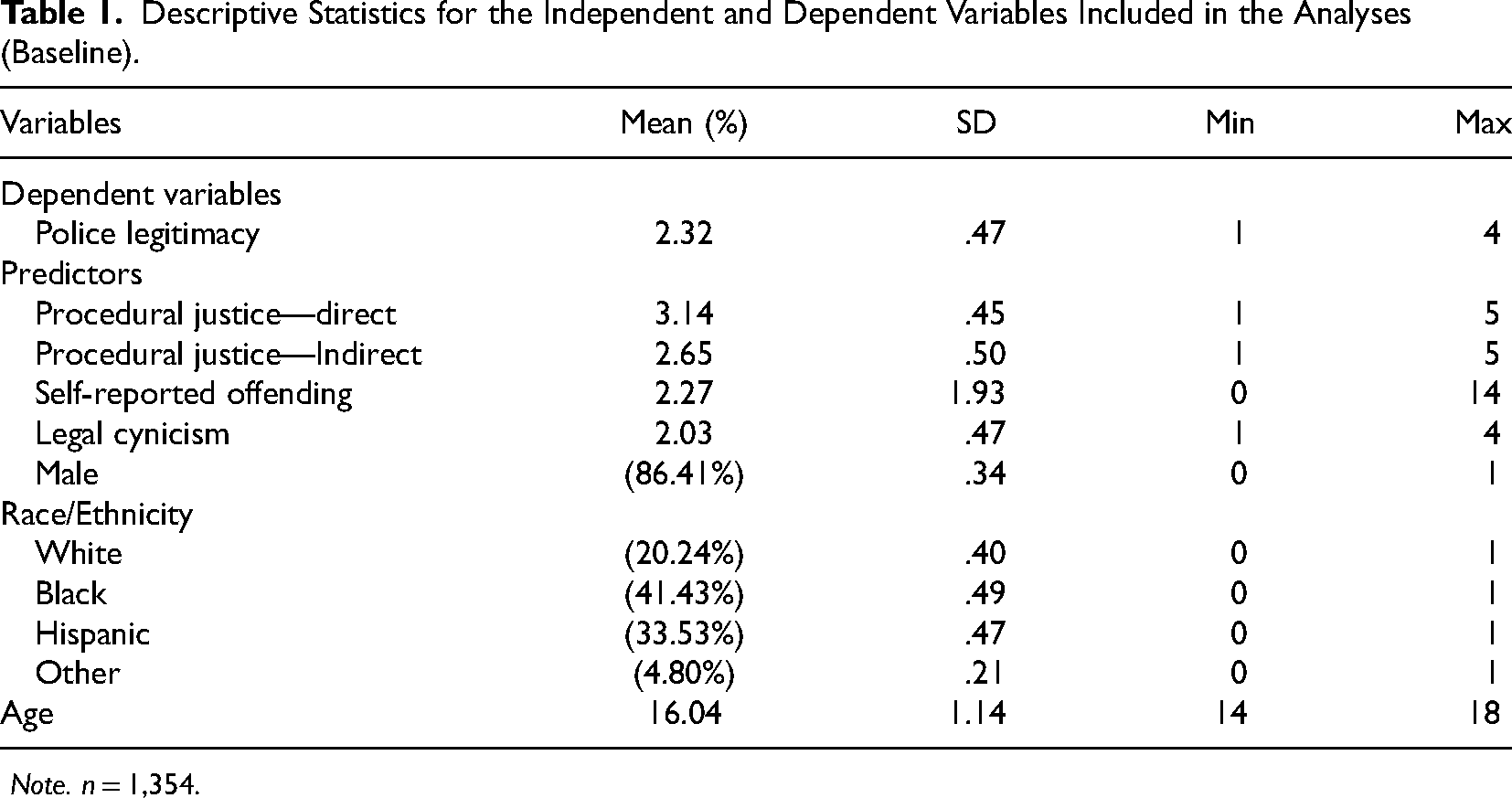
A censored normal distribution was used for the analyses, and the trajectory groups were identified using the “traj” plugin in Stata (Jones & Nagin, 2013). All statistical analyses were performed using Stata 17.0 (Stata Corp, College Station, TX, US) (Table 1).
Descriptive Statistics for the Independent and Dependent Variables Included in the Analyses (Baseline).
Note. n = 1,354.
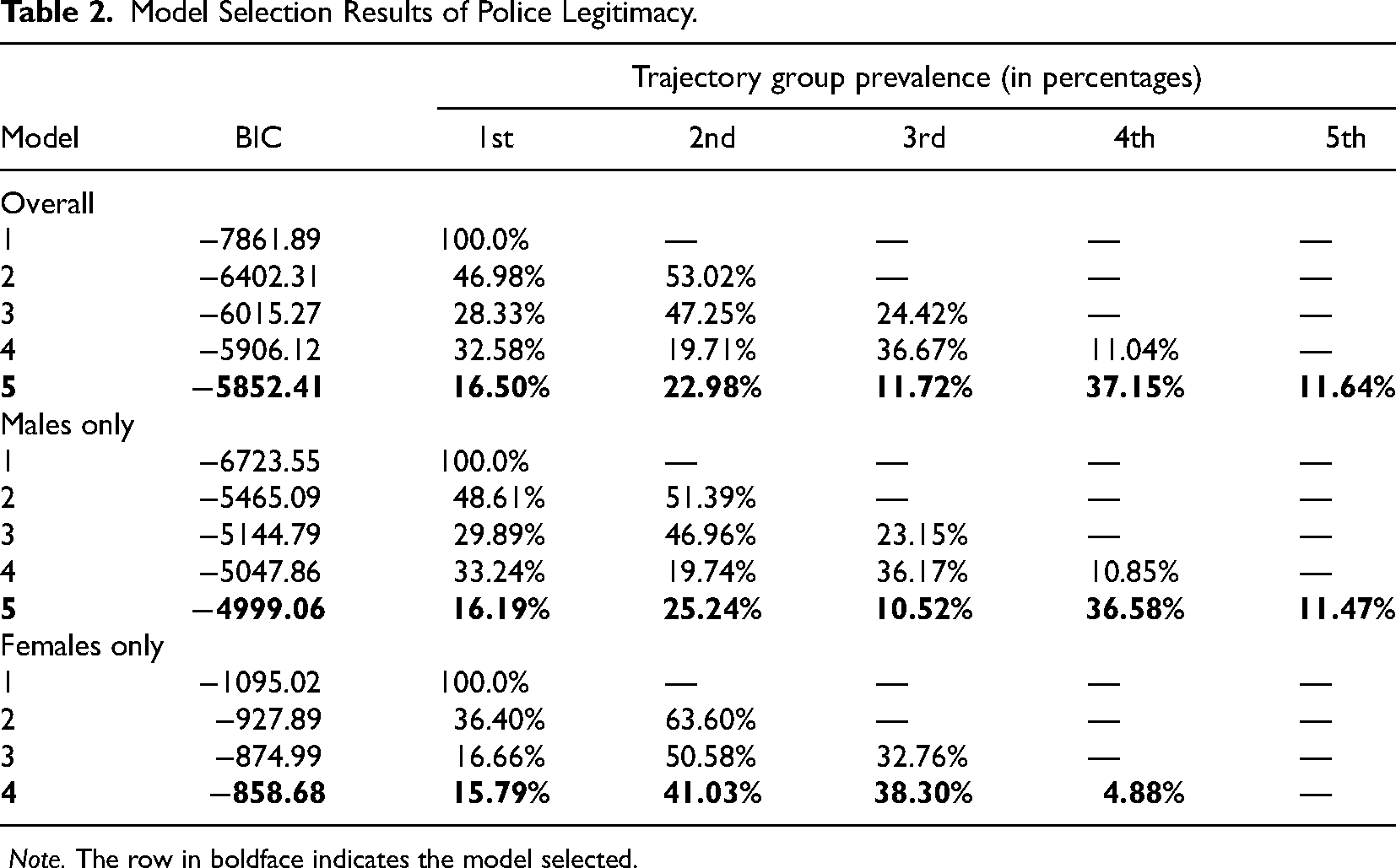
The first step in the trajectory analyses was to identify developmental trajectories of attitudes toward the police. To determine the best fit model, standard maximum likelihood measurements of best fit were employed (i.e., Bayesian Information Criterion; BIC). For perceptions of police legitimacy, BIC maximized with the five-group model (see Table 2). In terms of gender, the five-group model for males and the four-group model for females was the best fit. Based on this search, we concluded that at least a four-group multi-trajectory model was required. We also examined the posterior probabilities of group membership as a method for assessing model adequacy (i.e., the fit between the group-based model and the data). Each group model performed well in estimating the model precision. Posterior probabilities (see Table 3) are estimates of the likelihood that an individual can be classified into a particular group of perceptions of police legitimacy (Nagin & Tremblay, 2001). Posterior probabilities that are closer to one show better model adequacy. The average posterior probability for those assigned to a group based on the maximum posterior probability rule is .83, and all exceeded the .70 threshold of acceptability suggested by Nagin (2005).
Model Selection Results of Police Legitimacy.
Average Group Posterior Probabilities for Police Legitimacy Trajectories.
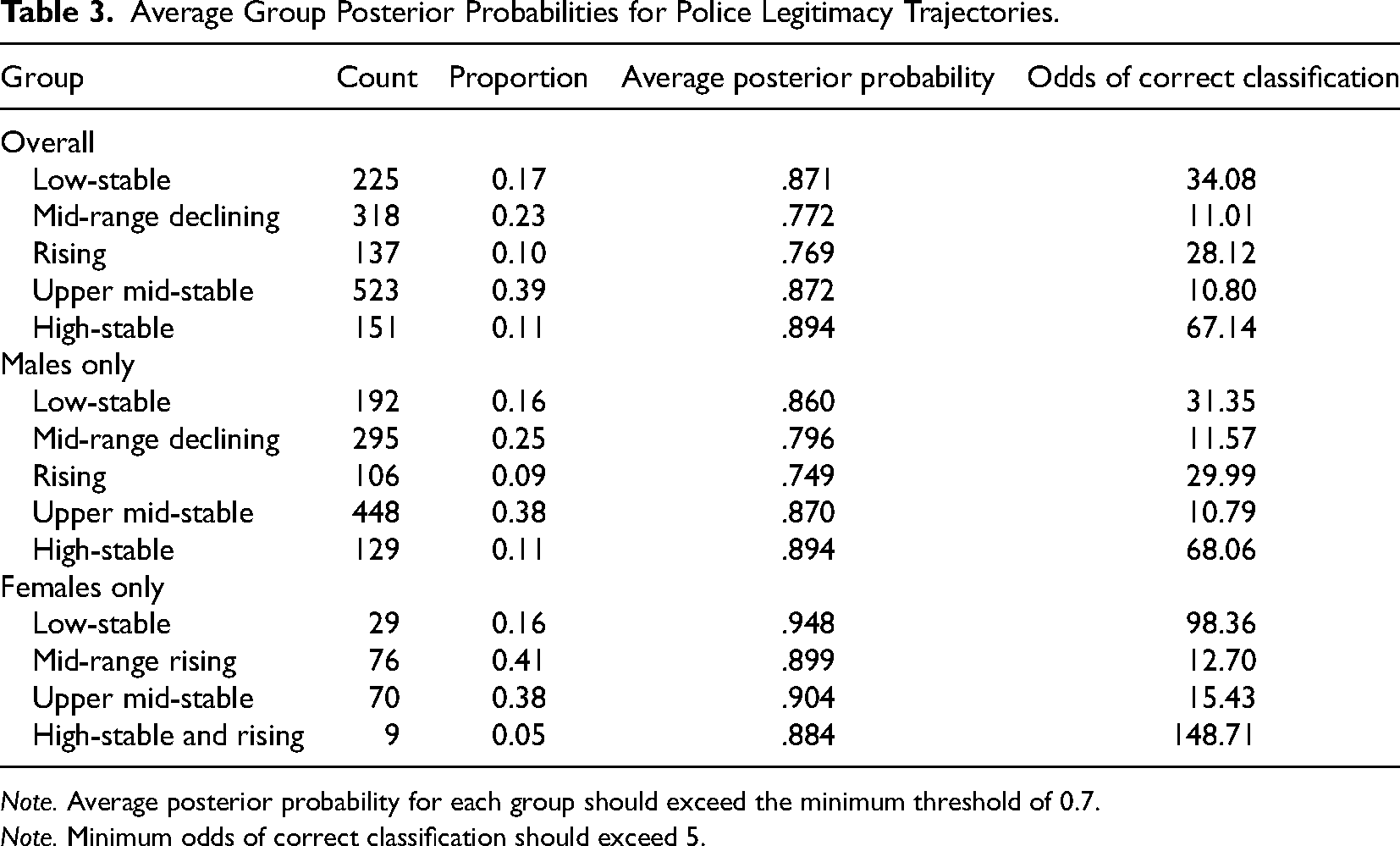
Note. Average posterior probability for each group should exceed the minimum threshold of 0.7.
Note. Minimum odds of correct classification should exceed 5.
In the second stage, multinomial logistic regression was used to identify which factors are related to police legitimacy trajectory group membership from the ages of 14–18. Scholars recognized the limitations of coefficient interpretations from the multinomial logistic regression model, with these constraints stemming from the difficulty of examining the substantive significance of results (Long & Freese, 2006; Williams, 2012). To address this issue, the marginal effects of the variables were calculated, specifically average marginal effects (AMEs). The margins command in Stata 17 was used to estimate the probabilities from the multinomial logistic regression model shown in Tables 4–6.
Average Marginal Effects of Probability of Police Legitimacy Trajectory Group Membership (Overall).
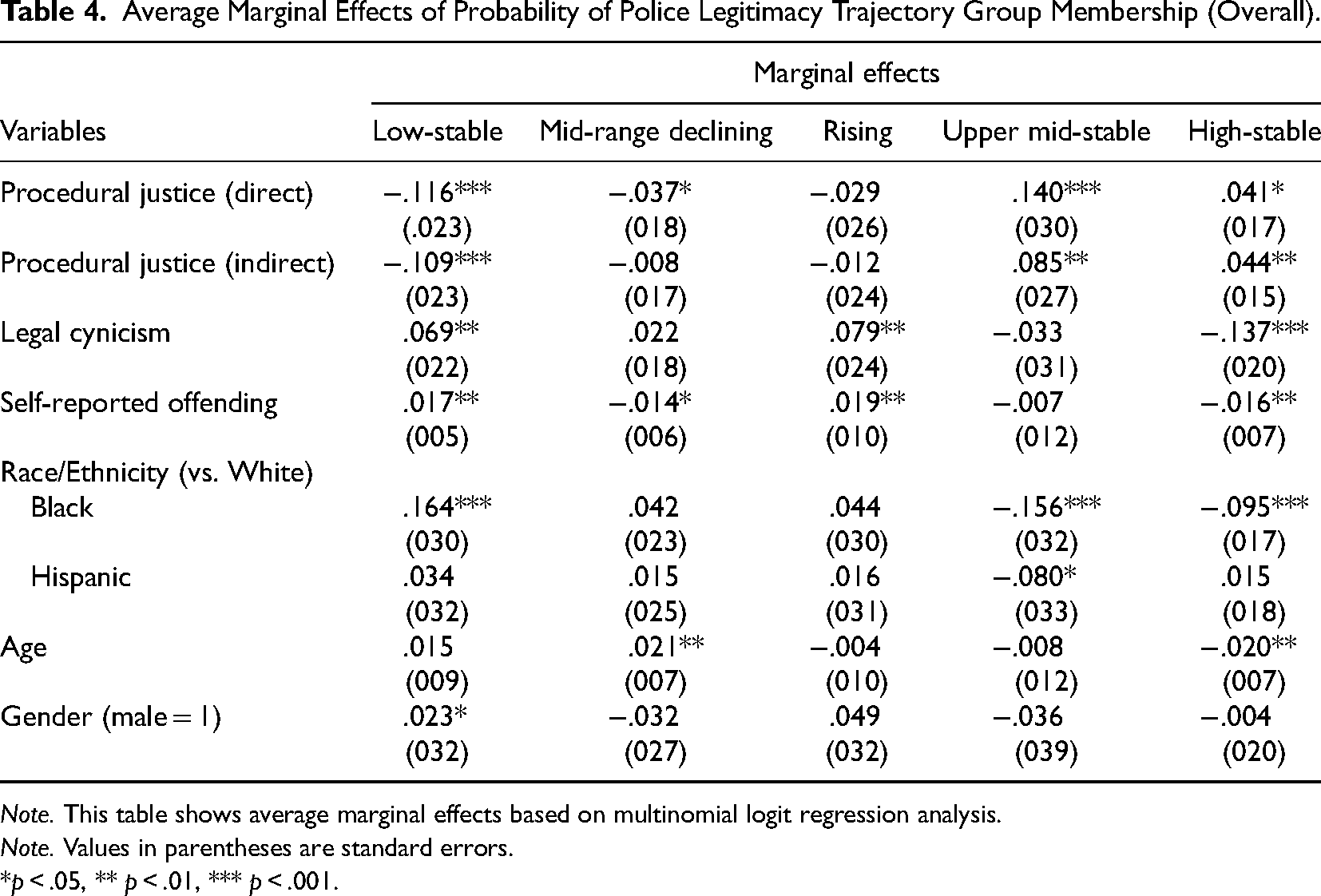
Note. This table shows average marginal effects based on multinomial logit regression analysis.
Note. Values in parentheses are standard errors.
*p < .05, ** p < .01, *** p < .001.
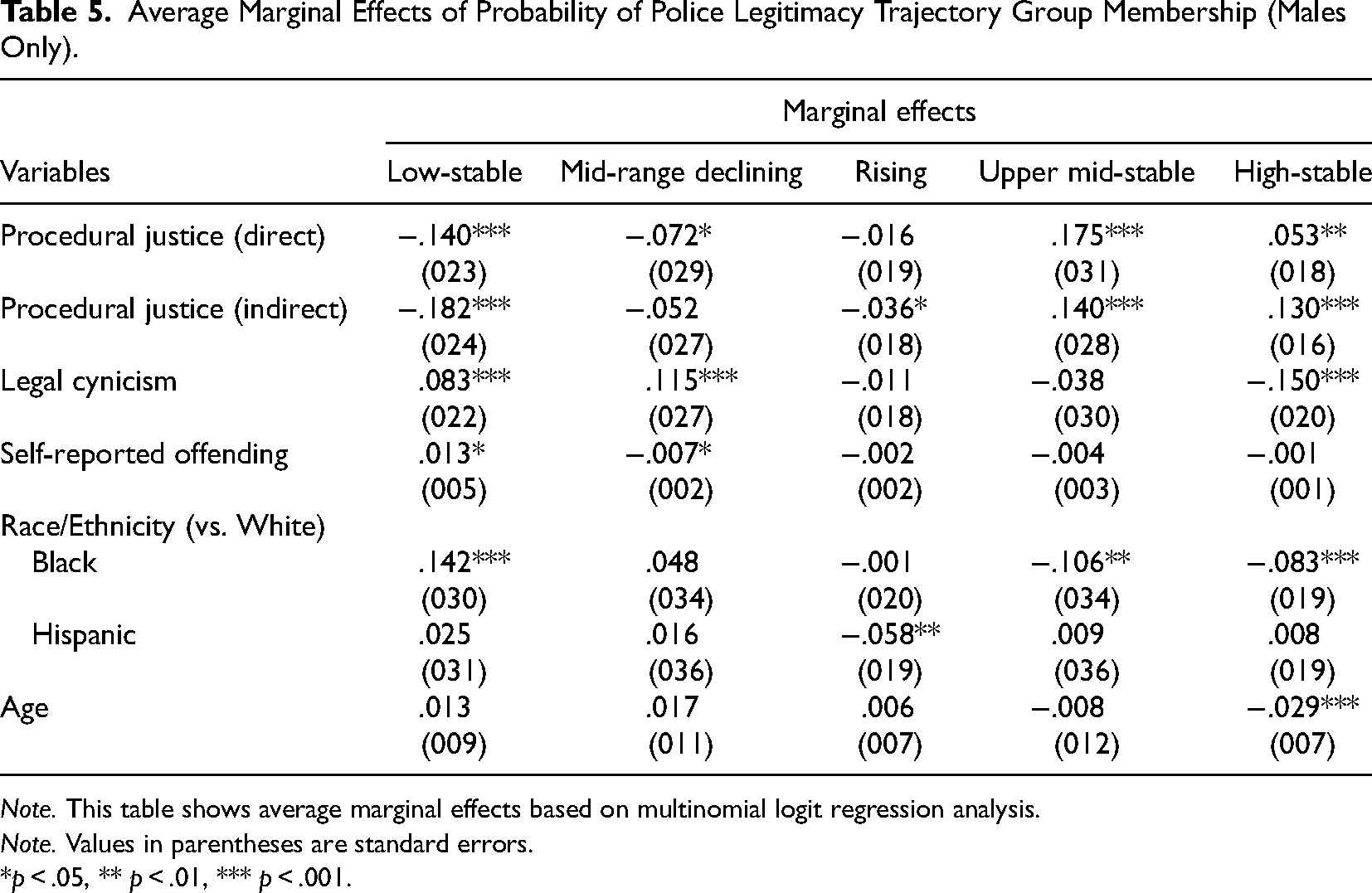
Average Marginal Effects of Probability of Police Legitimacy Trajectory Group Membership (Males Only).
Note. This table shows average marginal effects based on multinomial logit regression analysis.
Note. Values in parentheses are standard errors.
*p < .05, ** p < .01, *** p < .001.
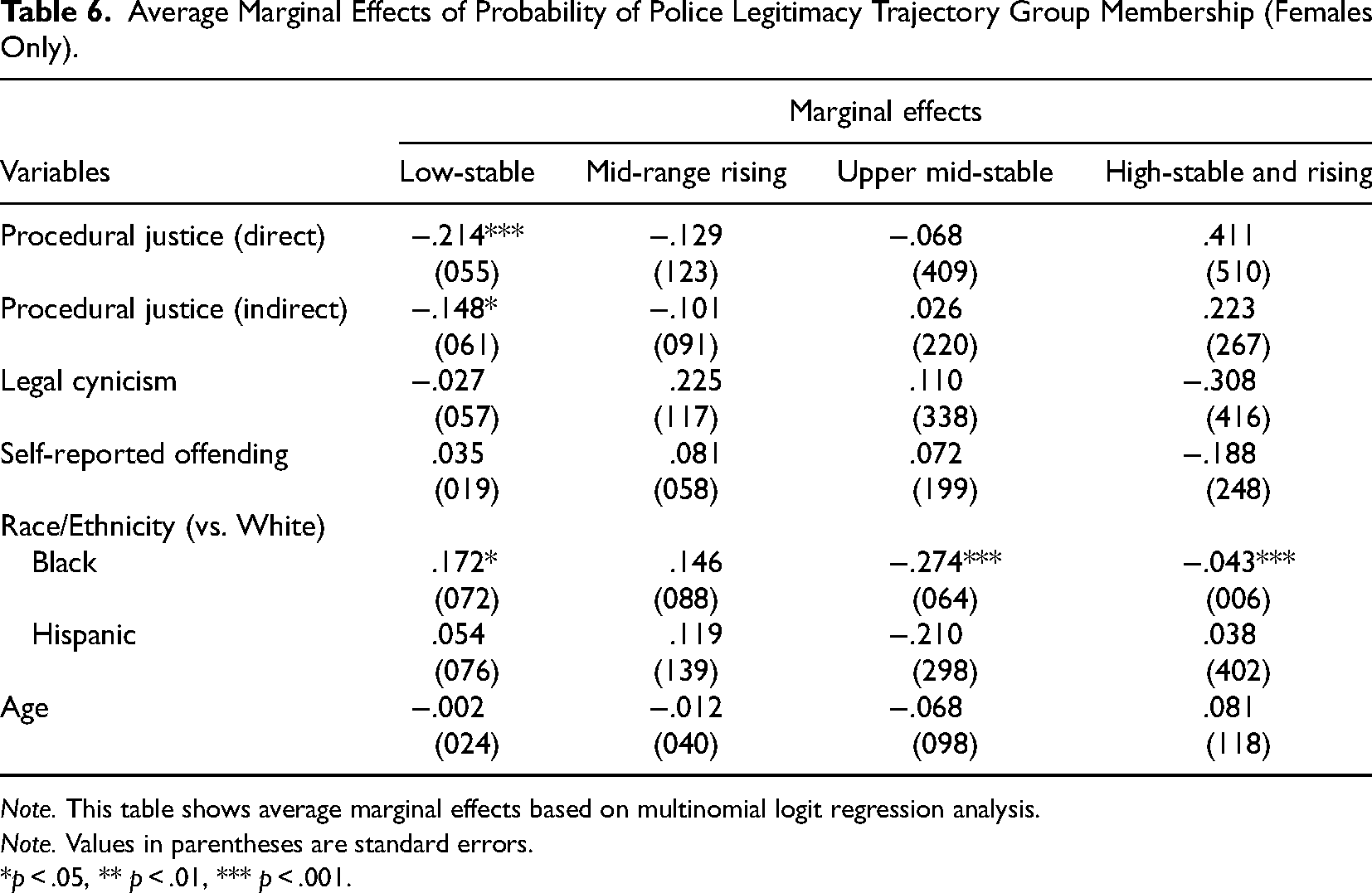
Average Marginal Effects of Probability of Police Legitimacy Trajectory Group Membership (Females Only).
Note. This table shows average marginal effects based on multinomial logit regression analysis.
Note. Values in parentheses are standard errors.
*p < .05, ** p < .01, *** p < .001.
Results
Descriptive Statistics
Table 1 presents the basic descriptive statistics of the full sample, including means and standard deviations for each variable used in the analysis. Overall, the average age of the respondents was 16 years old at baseline. Youth offenders in the sample were 86.4% male with a racial/ethnic breakdown of 20.2% of White, 41.4% of Black, 33.5% of Hispanic, and 4.8% of other racial or ethnic groups. The average score of self-offending was 2.27, with a range of 0–14. On average, youth offenders in the sample reported a legal cynicism scale score of 2.03.
Regarding youth offenders’ contact with police officers, the average direct procedural justice score was 3.14, while the indirect procedural justice score was 2.65. Descriptive statistics for the police legitimacy measure indicate that the average score was 2.32.
Developmental Trajectories of Police Legitimacy
Figure 1 presents the trajectories of attitudes towards police legitimacy among serious adolescent offenders between the ages of 14 and 18, regardless of gender. A five-group model was the best fit for the perceptions of police legitimacy among youth offenders. Model selection was based on evaluating comparative fit indices, including the assessment of BIC statistics, average posterior probabilities, visualization of mean trajectories for each class, and odds of correct classification (see Tables 2 and 3). These distinct developmental trajectories were labeled as low-stable, mid-range declining, rising, upper mid-stable, and high-stable trajectory groups.
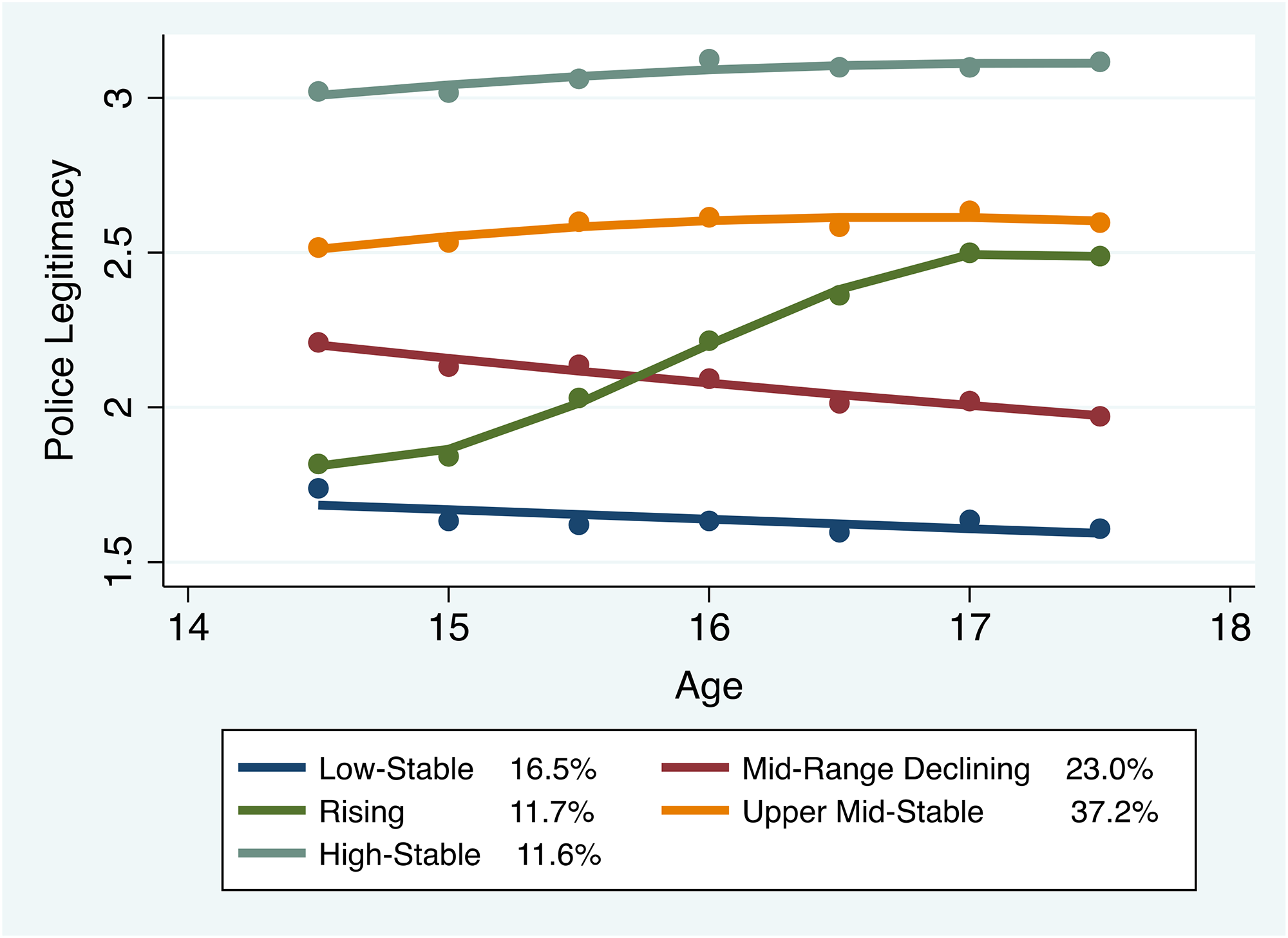
Developmental trajectories of perceptions of police legitimacy among serious adolescent offenders: overall.
Overall, juvenile offenders in this sample are predominantly represented by individuals who have upper mid-stable (37.2% of the sample) perceptions of police legitimacy, which tend to remain stable from the ages of 14–18. These individuals in the upper mid-stable group average close to 2.5 and appear to be converging by seven waves of observations, perceiving somewhat more police legitimacy over time. On the opposite end of the spectrum, there are groups of youth offenders who consistently reports negative views about police legitimacy across the seven waves of Pathways. These groups, labeled as mid-range declining trajectory and low-stable trajectory groups, consist of 23% and 16.5% of the sample. Especially, the individuals in the mid-range declining trajectory group average 2.2 but decrease to around 2 by the 36 months mark. Of the overall sample, 11.7% of youth offenders follow what we label a rising trajectory group. These individuals start out with relatively low police legitimacy perceptions (averages 1.7) but increase to around 2.5 by the seven waves. The final group, labeled high-stable trajectory, consists of 11.6% of the sample. Across the seven waves of the observations, this group expresses positive views about police legitimacy.
Developmental Trajectories of Police Legitimacy Among Males and Females
Figure 2 shows the trajectories of perceptions of police legitimacy among serious adolescent offenders ages 14–18 by gender. A five-group model for males and a four-group model for females was the best fitting model for the perceptions of police legitimacy among youth offenders. Several interesting findings are shown in Figure 2. First, for males, youth offenders in this sample are predominantly represented by individuals with an upper mid-stable (36.6% of the sample) perception of police legitimacy. These individuals in the upper mid-stable trajectory group tend to remain stable (around 2.5) from 14 to 18 years of age. The group with the second-highest percentage of males, 25.2%, shows mid-range declining perceptions of police legitimacy. In the 36 months observation period, youth offenders in the mid-range declining trajectory group average 2.2 at baseline but decrease to around 2. Among five trajectories, the rising trajectory noticeably indicates an upward trend and consists of 10.5% males.
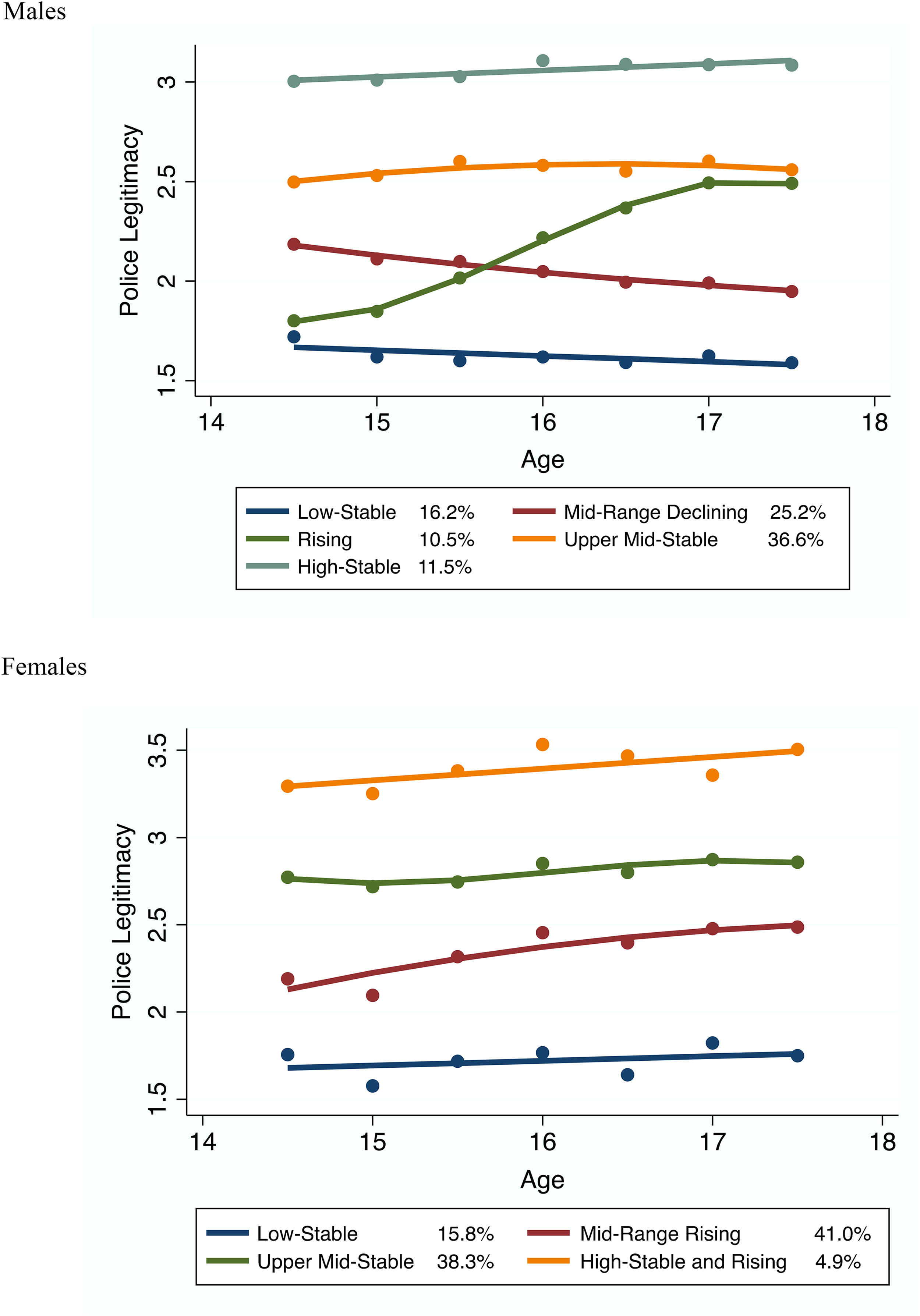
Developmental trajectories of perceptions of police legitimacy among serious adolescent offenders: males and females.
For females, youth offenders in this sample are predominantly represented by individuals with a mid-range rising (41% of the sample) and an upper mid-stable (38.3% of the sample) perception of police legitimacy across the different time periods observed. Both groups of female juvenile offenders report very high perceptions of police legitimacy, which have increased over the seven waves of the observations. Of the overall sample, 16.2% of males consistently show negative views about police legitimacy, while 15.8% of females show a low-stable perception of police across the seven waves. In addition, 11.5% of males in the high-stable trajectory and 4.9% of females in the high-stable and rising trajectory exhibit the highest level of police legitimacy, which increases over time. Although these groups have small percentages of youth offenders in this group, it is important to note the average police legitimacy for females is higher than that of males.
Lastly, it is also worth noting that the developmental trajectories of police legitimacy among male youth offenders mirror those of the results of the overall groups, although to varying degrees. It is reasonable to assume that this is due to the fact that males make up the majority of the population. However, when breaking it down into gender, we found interesting findings that the degree of stability and number of groups retained were significantly varied. In short, most groups of female participants exhibited increasing trajectories over time, whereas there was variation in perceptions of police legitimacy among male youth offenders across the 36-month period.
Predictors Associated With the Probability of Trajectory Group Membership of Police Legitimacy Using Marginal Effects
The objective of the second phase of the analysis was to identify predictors of group membership across developmental trajectory groups. In the juvenile offender trajectories literature, a number of factors have been examined. The current study looked at self-reported offending, legal cynicism, direct and indirect effects of procedural justice, age, gender, and race/ethnicity, which were shown to be related to youth police legitimacy (McLean et al., 2019; Piquero et al., 2005).
To facilitate the interpretation of the results, we calculated the AMEs of each variable in the sample (Table 4). First, a one-unit increase in the direct effect of procedural justice significantly increased the probability of being placed in the upper mid-stable trajectory group by 14% (p < .001) and the high-stable group by 4.1% (p < .05). Conversely, such an increase significantly reduced the probability of placements in the low-stable trajectory group by 11.6% (p < .001) and the mid-range declining group by 3.7% (p < .05). Second, under a single-unit rise in the indirect procedural justice, the probability of classification under the upper mid-stable and high-stable trajectory groups significantly increased by 8.5% (p < .01) and 4.4% (p < .01), respectively. By contrast, such an increase was associated with a 10.9% decrease (p < .001) in the probability of placement in the low-stable trajectory group. Third, a one-unit increase in legal cynicism significantly increased the probability of being placed in the low-stable and rising trajectory group by 6.9% (p < .01) and 7.9% (p < .01), but reduced the probability of belonging to the high-stable group by 13.7% (p < .001). Fourth, a one-unit increase in self-reported offending significantly elevated the probability of being placed in the low-stable and rising trajectory group by 1.7% (p < .01) and 1.9% (p < .01), whereas the probability of placement in the mid-range declining and high-stable group decreased by 1.4% (p < .05) and 1.6% (p < .01). Fifth, we found variations in relation to race and ethnicity. Being Black significantly increased the probability of belonging to the low-stable trajectory group by 16.4% (p < .001), but reduced the probability of being placed in the upper mid-stable and the high-stable groups by 15.6% (p < .001) and 9.5% (p < .001), respectively. In addition, being Hispanic significantly reduced the probability of categorization in the upper mid-stable group by 8% (p < .05). Sixth, every 1-year increase in youth offenders’ age translated to a rise in the probability of belonging to the mid-range declining trajectory group by 2.1% (p < .01), whereas the probability of being in the high-stable trajectory group was decreased by 2% (p < .01). In terms of gender, the probability that male youth offenders belonged to the low-stable trajectory group was approximately 2.3% (p < .05).
Predictors Associated With the Probability of Trajectory Group Membership of Police Legitimacy Using Marginal Effects Among Males and Females
The overall AMEs of males and females in each trajectory group were calculated in Tables 5 and 6. There were both similarities and differences across gender when various factors were simultaneously considered. Table 5 shows the AMEs of each variable for the male youth offenders in the sample. A one-unit increase in the direct effect of procedural justice significantly increased the probability of being placed in the upper mid-stable and the high-stable group by 17.5% (p < .001) and 5.3% (p < .01). A one-unit rise in the direct effect of procedural justice significantly reduced the probability of classification in the low-stable trajectory group by 14% (p < .001) and the mid-range declining group by 7.2% (p < .05). Interestingly, the degree of probability significantly increased for the upper mid-stable and the high-stable groups when this aspect was broken down on the basis of gender. Moreover, a one-unit increase in indirect procedural justice significantly augmented the probability of being placed in the upper mid-stable and the high-stable trajectory group by 14% (p < .001) and 13% (p < .001). A single-unit rise in indirect procedural justice significantly reduced the probability of classification in the low-stable and rising trajectory groups by 18.2% (p < .001) and 3.6% (p < .05), respectively. We also found that every one-unit increase in legal cynicism significantly increased the probability of being placed in the low-stable and the mid-range declining trajectory group by 8.3% (p < .001) and 11.5% (p < .001). Contrastingly, the probability of belonging to the high-stable group was reduced by 15% (p < .001). In addition, a one-unit increase in self-reported offending significantly increased the probability of placement in the low-stable trajectory group by 1.3% (p < .05), whereas the probability of belonging to the mid-range declining group was reduced by 0.7% (p < .05).
In terms of race and ethnicity, being Black significantly increased the probability of placement in the low-stable trajectory group by 14.2% (p < .001), whereas the probability of being placed in the upper mid-stable and high-stable groups was reduced by 10.6% (p < .01) and 8.3% (p < .001), respectively. Being Hispanic significantly reduced the probability of belonging to the rising trajectory group by 5.8% (p < .01). The results of the AMEs indicated that every 1-year increase in youth offenders’ age drove a significant reduction in the probability of belonging to the high-stable trajectory group by 2.9% (p < .001).
Table 6 displays the AMEs of each variable for the female youth offenders, among whom direct and indirect forms of procedural justice were significant only in the low-stable trajectory group. Indeed, the most notable marginal effects of the direct effect of procedural justice were observed for the low-stable trajectory group, which was 21.4% (p < .001). A one-unit increase in indirect procedural justice also significantly reduced the probability of placement in this group by 14.8% (p < .05). Unique to the female trajectory groups, direct and indirect procedural justice were shown to be significant predictors of perceptions of police legitimacy for the low-table trajectory group. Lastly, similar to male youth offenders, being Black significantly increased the probability of belonging to the low-stable trajectory group by 17.2% (p < .05), whereas the probability of categorization under the upper mid-stable and high-stable and rising groups declined by 27.4% (p < .001) and 4.3% (p < .001), respectively.
Overall, the AMEs of the trajectory group membership of police legitimacy among the male youth offenders were similar to those of the overall groups because the sample was dominated by young males. However, the findings reflected similarities and differences in terms of the predictors of the AMEs of trajectories of police legitimacy across gender. Direct and indirect procedural justice were statistically significant predictors of the probability of police legitimacy trajectories for both males and females. Compared with the male youth offenders, among their female counterparts, legal cynicism, self-reported offense, Hispanic, and age were not associated with the probability of each trajectory group. It is worth noting that the AMEs of direct procedural justice in the low-stable trajectory for females were considerably higher than those derived for males. In contrast, the AMEs of indirect procedural justice in the low-stable trajectory for males were higher than those for females.
Discussion and Conclusion
To date, developmental and life-course criminology has paid little attention to attitudes toward the police, and little is known about the developmental perspective on perceptions of police legitimacy among juvenile offenders. The primary goal of this study was to identify trajectories of perceptions regarding the police from ages 14 to 18 years among juvenile offenders by using Pathways to Desistance data, with a specific appeal to gender. To this end, we identified several factors that might influence each trajectory group of perceptions of the police overall and by gender.
This study provided key findings that warrant further attention. First, consistent with the findings of some of the past research (e.g., Piquero et al., 2005; Stewart et al., 2014), our results indicate that young people's perceptions of police legitimacy are relatively stable over time. Our findings were similar to those of Piquero et al. (2005), who identified five trajectory groups for juvenile offenders’ perceptions of legal socialization over time. Our findings are also consistent with those of Stewart and his colleagues (2014), who identified five trajectory groups of attitudes toward police among the general youth population. However, unlike these studies, we further identified trajectories of police legitimacy perceptions by gender and the factors that influence each trajectory group of males’ and females’ perceptions of police legitimacy.
Second, there was a noticeable difference in the shapes of the trajectory curve by gender. We found a difference between male and female groups in terms of the number of trajectory groups of police legitimacy perceptions, with a five-group solution for males and a four-group one for females. Four out of five trajectories for males were relatively stable, whereas one trajectory group exhibited an upward trend. For females, the developmental trends of perceived police legitimacy showed slight increases across the seven waves. Furthermore, our analyses showed significant gender differences in the overall average level of perceived police legitimacy perceived across the different trajectories. The trajectory groups for females reflected higher rates of perceived police legitimacy than the trajectory groups for males; this is consistent with previous research that found that females possess more favorable views of the police than males (Hurst et al., 2000; Taylor et al., 2001; Stewart et al., 2014).
Perhaps, the most significant distinction between trajectories of perceived police legitimacy for males and females was the variation among male trajectories. In contrast to the majority of the female trajectory groups, which shows slight increases over time, there were substantial differences between the male trajectory groups. For males, two trajectory groups (mid-range declining and rising groups) showed noticeable fluctuations across the 36 months of observations. These two trajectory groups had different shapes overall, with the mid-range declining group starting off at the average of 2.2 and then dropping significantly. That is, youth offenders who began with a moderate level of police legitimacy baseline attitudes ended the period of observation with a low level of police legitimacy. In contrast, the rising group started at a similar level to that of the low-stable group, but these groups ended at very different points by late adolescence. The female youth offenders, particularly those in the mid-range rising and upper mid-stable groups, held very high perceptions of police legitimacy, which increased over the seven waves of observations. This suggests that not all juvenile offenders follow the same path with regard to perceived police legitimacy. In sum, these group differences among females showed slight increases over time, whereas those among males were more dynamic and fluid. Such differences in perceptions of police legitimacy between the male and female trajectory groups may be due to the nature of encounters with the police.
Third, we hypothesized differences exist in the developmental trajectories of police legitimacy between males and females, specifically in terms of age, race/ethnicity, direct and indirect effects of procedural justice, legal cynicism, and self-reported offending. The multinomial regression analyses of how various factors differed across the trajectories showed similarities and differences among serious adolescent offenders across the genders. For example, in the high-stable trajectory group, procedural justice (direct), procedural justice (indirect), legal cynicism, Black, and age were significant predictors of the probability of group memberships among males. Unlike males, legal cynicism, self-reported offending, Hispanic, and age were not significantly associated with females’ trajectory groups, suggesting these need to be considered when examining gendered factors in different trajectories of police legitimacy for females. Notably, the findings suggest that procedural justice (both direct and indirect) is the most significant factor affecting youth offenders’ views of police legitimacy overall and across genders over time. More specifically, young people's expectations that police will use fair practices in interactions are the strongest shapers of youths’ perceptions of police legitimacy. This is consistent with previous findings from the procedural justice literature, which suggest that the police force's exercise of fairness in dealing with individuals improves public views of its legitimacy (Hinds, 2007; Piquero et al., 2005).
Our findings have significant practical implications. This study bolsters the present effort of police to prioritize procedural fairness during contact with the public in the United States (Baker & Norris, 2021; Mclean et al., 2019). The findings suggest that police use of procedurally just practices during an encounter with adolescents has a significant role in building trust with the police and ultimately leading to compliance with the police in the long run (Fine et al., 2020; Mclean et al., 2019; Piquero et al., 2005). Such efforts need to emphasize developing rapport with adolescents and treating youth with dignity and respect to enhance police legitimacy.
Moreover, our findings indicated attitudinal differences in police legitimacy by gender. We found that female youth offenders had more favorable views of the police than male youth offenders. This may be explained by various factors, including different socialization processes for boys and girls, disproportionate involvement in delinquent and criminal behavior, and different treatment by police officers. Scholars have suggested that police officers may treat female suspects differently than male suspects (see Chesney-Lind & Shelden, 1992). Taylor et al. (2001) stated that females’ more positive perceptions of the police were a product of more lenient consequences stemming from favorable discretionary decision making by police officers in cases involving young females. More importantly, male youth offenders expressed less favorable perceptions of police legitimacy across the seven waves. Males’ attitudes toward the police shifted significantly downward in two of the five trajectory groups. Given these findings and the consistent strong association between the likelihood of offending and perceptions of the police in the literature (Hinds, 2009; Hurst, 2007; Stewart et al., 2014), we suggest that existing early intervention programs add a curriculum on prosocial attitudes toward the police. The youth–police relationship is more complex to suggest that positive interactions with the police engender positive perceptions of the police (Winfree & Griffiths, 1977). Nevertheless, the intervention programs promoting positive interactions between the youth and the police may help reduce tensions and foster trust and fairness in law enforcement, especially among males. In addition, while the current study focused primarily on gender differences in perceived police legitimacy among serious adolescent offenders, the intersection of gender and race should be examined further. Police training or programs may need to consider gender and racial differences in individual contact experiences with the police.
Although the current study had various strengths (e.g., longitudinal study of perceptions of police legitimacy, focus on gender differences, and examination of factors associated with the developmental trajectories of police legitimacy), the findings of this study should be interpreted in light of certain limitations. First, the data that were used to examine perceptions of police legitimacy among juvenile offenders covered 36 months. We believe this is a sufficiently long period compared to the time frame adopted in previous studies, but this may not be long enough to observe change. We recommend that future studies use more waves as a basis for exploring changes into adulthood. Second, the fact that the data were collected from only two sites (Pennsylvania and Arizona) is another limitation. This sample represented juveniles in the two sites, but it remains unclear how well these findings represent other areas, including rural settings. A “contextual impact” on attitude formation has long been debated by scholars (Taylor et al., 2001). The community context is expected to influence subcultural norms, including perceptions of the police, but this can be possible in other jurisdictions (Leiber et al., 1998). We suggest that researchers replicate our results in different jurisdictions to ensure a complete understanding of police legitimacy and to combat our study's inherent threats to external validity. Third, Pathways data were used to examine the developmental trajectories and factors comprised of self-reported perceptions about the police. The prevalence and correlations in this sample may have been underestimated. Fourth, this study mainly focused on the gender difference in perceptions of police legitimacy among serious adolescent offenders. Future research needs to examine the combined effects of gender and race/ethnicity, and other social characteristics on perceived police legitimacy and how these characteristics influence one another. Special consideration should also be given to the impact of social media on the youth's perceptions of the police, as recent research has suggested a correlation between the youth's exposure to negative police-related content on social media and their perceptions of police legitimacy (Cross & Fine, 2021). Finally, a longitudinal study always entails temporal order issues, and the current study is no exception. Pathways study measured various factors at the same time as police legitimacy in the assessment of the developmental trajectory analysis. It is important to note that temporal order can affect the interpretation of the findings. For example, low impressions of legal cynicism may result from an unfavorable perception of the police instead of functioning as the main predictor of police legitimacy. Future studies need to consider the issue of temporal order in relation to their findings.
Notwithstanding these limitations, the study offered an important contribution to our understanding of developmental trends in the perceptions of police legitimacy and the factors that influence each trajectory group among youth offenders. It clarifies the essential processes of how police legitimacy is constructed by serious juvenile offenders. The use of a large sample of a representative panel dataset on two sites also strengthened the work. Our findings bolster the calls of previous studies, especially regarding the need to consider similarities and differences in perceptions of police legitimacy between male and female youth.
Footnotes
Acknowledgments
The authors thank the anonymous reviewers and editor for their helpful comments and suggestions on an earlier draft of this manuscript.
Declaration of Conflicting Interests
The authors declared no potential conflicts of interest with respect to the research, authorship, and/or publication of this article.
Funding
The authors received no financial support for the research, authorship, and/or publication of this article

Author Biographies
Appendix A.
Items Used to Measure Key Variables in Pathways to Desistance
Legitimacy
I have a great deal of respect for the police. Overall, the police are honest. I feel proud of the police. I feel people should support the police. The police should be allowed to hold a person suspected of a serious crime until they get enough evidence to charge them. The police should be allowed to stop people on the street and require them to identify themselves. During your last contact with the police when you were accused of a crime, how much of your story did the police let you tell? The police treat me the same way they treat most people my age. Over the last couple of years, the police have been treating me the same way they always treated me in the past. During my last encounter with the police, they treated me in the way that I expected they would treat me. During my last encounter with the police, they treated me in the way that I thought I should be treated. Even after the police make a decision about arresting me, there is nothing I can do to appeal it. Even after the police make a decision about arresting me, someone in higher authority can listen to my case, and even in some cases, change the decision. Police considered the evidence/viewpoints in this incident fairly. Police overlooked evidence/viewpoints in this incident. Police were honest in the way they handled their case. Police used evidence that was fair and neutral. Police made up their mind prior to receiving any information about the case. Think back to the last time the police accused you of doing something wrong. Did the police treat you with respect and dignity or did they disrespect you? Think back to the last time the police accused you of doing something wrong. Did the police show concern for your rights? Of the people you know who have had a contact with the police (in terms of crime accusation), how much of their story did the police let them tell? Police treat males and females differently. Police treat people differently depending how old they are. Police treat people differently depending on their race/ethnic group. Police treat people differently depending on the neighborhoods they are from. Laws are meant to be broken. It is okay to do anything you want. There are no right or wrong ways to make money. If I have a fight with someone, it is no one else's business. A person has to live without thinking about the future.
Procedural Justice (Direct and Indirect)
Legal Cynicism