




Abstract
The COVID-19 pandemic upended major facets of global society, including policing. This study describes three types of changes that police agencies in counties worldwide made. First, how have various domains of policing changed and how much did they change? Second, were these changes regulated by the official policy? Third, what are the potential consequences of the changes made during the pandemic? Taking a mixed-methods approach, our quantitative survey data from 27 countries, buttressed by qualitative responses, enable us to examine changes in these three areas. Our results suggest there is a great deal of heterogeneity in the degree of change, the use of policy to make the changes, and the perceived effects of the changes. Some changes (i.e., the use of personal protective equipment) are relatively ubiquitous and common sense based on the pandemic. Other organizational changes show a great deal more variation, especially when considering the valence of the change. Finally, the police executives from these countries express a highly optimistic—and potentially overly rosy—view of the potential longer term consequences of the pandemic or the operational changes made because of it. Overall, the results paint a more complicated picture of the responses to the pandemic made by the police organizations included in our sample. We conclude by discussing the implications of these findings for future research, police practice, and the development of policy.
By early March 2020, the COVID-19 virus had spread across the world and the World Health Organization (2020) declared a pandemic, calling for countries “…to take urgent and aggressive action.” By late April, worldwide nearly 3 million people tested positive for COVID-19, more than 200,000 people had died (Worldometers, 2020), and about one third of the world’s population was in varying forms of lockdown to minimize the spread of the virus (Bucholz, 2020; Warran et al., 2020). As Roche’s (2020) analysis of the European governments’ decisions during the first wave of pandemic in spring of 2020 suggests, these decisions may not be correlated with the intensity of the pandemic, but, rather, with the political culture and the extent of the rule of law.
As governments restricted social life, the police performed the role of first responders in addition to being expected to enforce the new safety measures. While police frequently assist in emergency situations (e.g., earthquakes, hurricanes), policing during the COVID-19 pandemic is different. Cave and Dahir (2020) argue that this has been a difficult time for governments trying to determine what the police should do and citizens trying to determine what is expected by changing regulations. Due to the lack of clarity guiding policing of the pandemic (Farrow, 2020; Jennings & Perez, 2020; White & Fradella, 2020), there have been documented instances in which the police have made controversial decisions about enforcing pandemic specific policies (Cave & Dahir, 2020). Obtaining instrumental compliance through fear of punishment challenges the notion of consent-based policing and could result in the erosion of police legitimacy. On the other hand, securing normative compliance from citizens who evaluate the COVID-19 governmental decisions as appropriate and police enforcement decisions as fair, both in terms of procedures and outcomes, could enhance the legitimacy of the police (e.g., Stott et al., 2020). In other words, the police were proverbially put between a rock and a hard place even more so than normal by the pandemic.
It remains unclear how the police have responded to this evolving situation. Although the COVID-19 pandemic affected police organizations around the world, these organizations operated in differing social landscapes. This begs the question, were police organizational changes similar across the world? This study seeks to provide a global perspective on police organizations’ responses and changes as a result of the COVID-19 pandemic. We explore the changes in both internal operations and demand for police services by looking specifically at proactive and reactive strategies. This study also examines whether these changes were made by agency policy/procedure. Finally, we examine the potential consequences—for the organization and the community—of the changes made in response to the pandemic.
Literature Review
Changes in the Demand for Police Services
Many governments implemented social distancing and social isolation in response to the pandemic, which transformed citizens’ social life (Devlin & Cornibert, 2020; Listening Project, 2020). These drastic changes in social patterns likely changed the demand for police services (i.e., calls for police service). A survey of U.S. and Canadian police administrators from about 1,000 police agencies found that police administrators in most agencies (57%) reported declines in calls for service (CFS) in their communities early in the pandemic—some (14%) experienced dramatic reductions (i.e., >50%; Lum et al, 2020). However, it is unclear whether this decrease was consistent across CFS types. Subsequent research examining CFS yielded mixed results, both across types of CFS and between jurisdictions (Baier, 2020).
To our knowledge, Ashby’s (2020) study of CFS in the 10 largest U.S. police agencies is the most comprehensive study of the influence of COVID-19 on CFS to date. The results show CFS was significantly reduced compared to the forecast distribution of CFS for 18 common call types in six of the 10 largest U.S. cities. An in-depth exploration across different call types revealed substantial variation in changes. The number of crime-related calls is not at all uniform across the cities. While serious assaults were relatively stable in most of the cities, three cities saw significant declines. On the other hand, burglary calls were at or above the predicted level in most cities. Mohler and colleagues’ (2020) study of CFS in Los Angeles and Indianapolis further illustrates the complexity of the issue. For example, burglary calls decreased in Los Angeles, but not in Indianapolis. Similarly, robbery calls decreased significantly in Los Angeles, but only marginally so in Indianapolis.
As nongovernmental organizations (NGOs) and the media raised concerns about the potential increase in the number of domestic violence incidents, scholars have also examined the effect of the COVID-19 pandemic on CFS for domestic violence. The results do not paint a uniform picture either. For example, Hansen and Lory (2020) found that the New York State Police responded to more domestic violence CFS during the pandemic (March 2020) than they did the year before, and the state domestic violence hotline saw an increase in the number of calls. Similarly, Mohler and colleagues (2020) reported that domestic violence calls in Los Angeles and Indianapolis increased during the pandemic. Contrary, both Ashby (2020) in the United States and Payne and Morgan (2020) in Australia found that domestic violence calls/breaches of domestic violence orders remained unchanged.
Order-maintenance calls and medical calls have not increased significantly across the U.S. largest cities, but calls for dead bodies have (Ashby, 2020). Lersch (2020) also finds mental health CFS in Detroit early in the pandemic were the lowest in the last 3 years. Yet, the number of calls for suicide in progress remained relatively stable across 4 years.
In the category of traffic-related CFS, the results seem to be more uniform—fewer traffic-related calls—likely due to decreased traffic volume. Indeed, Ashby (2020) finds that CFS for traffic collisions (i.e., accidents) were significantly below the predicted historical numbers in 10 largest U.S. cities. While the specific percentage decrease varied by city, the decrease ranged between 20% and 70%. Car crashes initially decreased, but, as people started going out more despite the stay-at-home orders, the number of car crashes slowly began to rise (Ashby, 2020).
Taken as a whole, extant research on the demand for police service (measured through CFS) suggests there have been some changes, albeit not homogeneous, in demand. This heterogeneity in changes in CFS suggests the need to contextualize our assessment of police organizational and operational changes. Understanding what—if any—universal changes were noted by police organizations can improve our understanding of crime and police impact on it during future similar situations.
Police Internal Organizational Changes
The Police Executive Research Forum (PERF) maintains a list of how U.S. police agencies responded to the COVID-19 pandemic. Similar recommendations were offered by the Vera Institute of Justice (2020). Although police agencies have emphasized different aspects of change in adapting to the pandemic, a common theme was changed to the internal organization (e.g., suspending in-person training and recruitment, adjusting roll calls, limiting access to buildings, encouraging remote work, physical distancing, and reassigning officers). The issue of police changes in response to the COVID-19 pandemic has been addressed in numerous countries, including Australia (e.g., Drew & Martin, 2020), Brazil (Matarazzo et al., 2020), Canada (Jones, 2020), Denmark (Hartmann & Hartmann, 2020), Peru (Hernandez-Vasquez & Azanedo, 2020), United Kingdom (Reicher & Stott, 2020; Stott et al., 2020), United States (Jennings & Perez, 2020; Kugler et al., 2021; Papazoglou et al., 2020; White & Fradella, 2020), and Vietnam (Luong et al., 2020).
Only three empirical studies, of which we are aware (Alexander & Ekici, 2020; Lum et al., 2020, Warren et al., 2020), asked police agencies directly what operational changes were made. Lum and colleagues (2020) survey of North American police agencies early in the pandemic—in March/April of 2020—found that about one half of the agencies had suspended in-person training and offered formal training or guidance on social distancing when responding to CFS. In addition, about three quarters relied on phone and internet systems for CFS and instructed officers to limit custodial arrests for less serious crimes (Lum et al., 2020). Warren and colleagues (2020) examined the responses by police agencies from across the globe and found a great deal of heterogeneity in the responses. In June 2020, Alexander and Ekici (2020) surveyed more than 200 Illinois police departments and found that over three quarters modified roll-call procedures, suspended police academies, and in-service training. Furthermore, about two thirds modified personnel scheduling, limited access to specific buildings, and reduced in-person responses to CFS.
Some NGOs developed lists of changes police agencies should make in response to the pandemic (e.g., PERF, 2020; Vera Institute of Justice, 2020); however, these lists were based on anecdotal evidence and were consistently updated. In addition, there is very limited evidence to indicate what changes the agencies have actually implemented. Understanding what—if any—universal changes were made by police organizations will improve our understanding of how police agencies can quickly adapt to any subsequent emergencies.
Changes in Police Reactive and Proactive Activities
In addition to potential internal organizational changes in response to the pandemic, police agencies changed how officers engage in reactive policing (e.g., responding to CFS, making arrests) and proactive strategies (e.g., community policing activities, proactive traffic stops). In their reactive strategies, PERF noted that many agencies are telling officers to handle CFS in person only when necessary and discouraged officers from making arrests for less serious crimes. Indeed, Lum and colleagues (2020) noted in their March–April survey that a number of police agencies had reduced the use of arrests for minor crimes. Similarly, Alexander and Ekici (2020) reported that 78% of police agencies reduced enforcement activities.
Lum and colleagues’ (2020) survey revealed that about two thirds of police agencies in their sample developed formal policies limiting proactive traffic or pedestrian stops. Ashby (2020) found that, compared to prior years, the number of police-initiated traffic stops decreased in nine of the 10 cities during the pandemic. As the number of car crashes began to pick up, so too did the number of traffic stops. Similarly, Mohler and colleagues (2020) show traffic stops declined significantly both in Los Angeles and Indianapolis, although patrol officers in Indianapolis received explicit instructions to reduce the numbers, while the officers in Los Angeles did not.
Changes in the Health and Safety of Police Officers
Interpol (2020) shared guidelines for police agencies for dealing with the pandemic that largely stressed the same issues mentioned elsewhere but also included suggestions for minimizing the transmission risk between police officers and their families. One study found that only about 60% of the police agencies in the United States and Canada offered formal training or guidance to the police on how to maintain social distance when responding to in-person CFS (Lum et al., 2020). Jennings and Perez (2020) highlighted another problem, namely, that early in the pandemic, agencies were unable to secure sufficient personal protective equipment (PPE). In addition, about one half of the police agencies in March/April of 2020 rated their ability to provide PPE for their officers as “excellent” or “good” (Lum et al., 2020). As time progressed, circumstances seem to improve with a later study finding 94% of agencies deployed safety measures, including PPE (Alexander & Ecki, 2020). Yet, PPE has not been readily available and police agencies, particularly smaller ones (Hansen & Lory, 2020), continue to struggle with securing sufficient quantities of PPE for their employees. This is also the case in other countries, including Brazil where only about one third of the police officers were given PPE and trained how to stay safe during the pandemic (Matarazzo et al., 2020).
Keeping personnel safe is another key organizational response to the pandemic. An early study indicated that about two thirds of agencies rate their ability to manage officers exposed to COVID-19 as “good” or “excellent” (Lum et al., 2020). A subsequent study found that 75% of agencies reported that officers’ interest in physical and emotional well-being increased during the pandemic, while 94% of agencies reported the adoption of new safety procedures (Alexander & Ekici, 2020). This disjuncture may suggest that officers feel that agencies’ changes are inadequate to keep them safe or, conversely, that there is a cultural element at play for the police. In fact, one study reported a conflict in the traditional ethos of law enforcement with the new care and procedures implemented to combat the pandemic in Brazil (Alacadipani et al., 2020). This conflict may make it harder to keep officers safe despite the availability of supplies and policies.
Beyond the physical dangers associated with the pandemic, there were also other dangers to officer well-being. These other threats come in the form of increased officer stress and reduced availability of healthy coping mechanisms (Frenkel et al., 2020). Using data from five European countries (Austria, Germany, the Netherlands, Spain, and Switzerland), Frenkel and colleagues (2020) find that officers report marginally higher levels of stress, but this was inversely related to their sense of preparedness to deal with the pandemic, mostly in the form of training. Additionally, officers highlighted the risk of infection and deficient leadership and communication as key stressors.
In sum, several conclusions can be drawn from the extant pandemic era officer safety and wellness literature. First, organizations struggled with securing PPE early in the pandemic, but this seems to have been ameliorated as time went on, especially for larger agencies in established democracies. Second, inappropriately using PPE may be exacerbated by other elements of the police culture. Third, these factors directly affected officers’ levels of stress, although agencies could stave off these ill-effects with better communication. It remains unclear whether there were universal increases in PPE usage and whether this was mandated by changes to agency policy and procedures.
Changes in the Relationship With the Community and Police Legitimacy
PERF (2020) also included the examples of police agencies limiting unnecessary interactions with the citizens (e.g., limiting public access to police buildings, suspending in-person community engagement programs). One empirical study found that 73% of the police agencies reduced or limited community-oriented police activities early in the pandemic (Lum et al., 2020), which was consistent with the results from another study later in the pandemic (Alexander & Ekici, 2020).
Yet, to obtain voluntary or normative compliance with the strict measures, the police should optimally rely on positive police–community partnerships to bolster legitimacy (Grace, 2020; Jennings & Perez, 2020). Curtailing positive police–community contacts reduces the means of effectively communicating and partnering with the community. Based on observations of police−citizen encounters prior to the pandemic, Grace (2020) conjectured that the most effective way to garner citizen compliance was through normative compliance, which rests on the principles of procedural fairness—giving voice, emphasizing respect, and explaining the rational for decision. Officers are acting with distributive fairness (i.e., even application of the rules) and procedural fairness (i.e., voice, neutrality, respect, trustworthiness), which promotes police legitimacy, one of the side effects of which would be voluntary compliance with regulations (Grace, 2020). However, some early research on citizens’ willingness to obey COVID-19 rules suggests voluntary compliance and legitimacy are not independent (Jackson et al., 2020). A survey of UK citizens showed that neither deterrence nor legitimacy affected respondents’ willingness to obey the COVID-19 regulations. In fact, what mattered is the message that “we are all in this together” or signaling that the country needs to take the lockdown seriously (Jackson et al., 2020).
Compliance with the COVID-19 restrictions may rest on the perceived legitimacy of the COVID-19 rules themselves rather than the police or government legitimacy (Grace, 2020; Jackson et al., 2020). Sibley and colleagues (2020) found that data from respondents after the lockdown in New Zealand—which took aggressive steps to prevent the spread of the virus early on—exhibited marginally more trust in both politicians and the police postlockdown than prelockdown. Postlockdown respondents expressed more patriotism and greater satisfaction with the government, leading the scholars to argue that, “results suggest that in the short terms, bold and decisive action—even that which puts the economy at risk—has the potential to bring people together at the national or state level” (Sibley et al., 2020, p. 625). This effect should be taken with a grain of salt. Data from South Africa showed that 70% of respondents felt the lockdown was justified yet trust in the police remain largely unchanged from prior to the pandemic, despite the accounts of heavy-handed enforcement of new regulations (Faull & Kelly, 2020).
In deeply divided societies, such as the United States, there is much consternation about the appropriate way to respond to the pandemic—based on both the appropriate governmental entity for enacting these regulations and political differences. These problems were on full display with high-profile instances of people flagrantly violating restrictions and challenging the legitimacy of governments that enacted them (Eagan, 2020; Oosting, 2020). Stott and colleagues (2020, p. 576) astutely point out that conflicts of this sort are often turned over to the police to handle, even though these organizations are already stretched thin. In essence, in highly divided societies, the police are forced to step into the void of governmental legitimacy and thus risk their own legitimacy in the process—regardless of whether they choose to act.
Current Study
This study adds to the growing body of literature examining the effects of the COVID-19 pandemic on changes in police organization and police activities. However, the changes—like the spread of the virus—have not been uniform worldwide. We attempt to provide a global perspective on changes in policing by addressing three related ideas. First, we describe the nature of the organizational and operational changes that police organizations have made in response to the pandemic. Second, we strive to determine the extent to which these changes have been regulated by official rules. Third, we assess what—if any—potential consequences police organizations feel the changes brought on by the pandemic may have on the future ability of the police to perform their duties effectively.
Method
Survey
The data for this study were collected through a survey administered to police executives around the world. We used the PERF’s (2020) recommendations for police agencies and the results of the early systematic data collections from researchers (i.e., Lum et al., 2020) as the starting point in the design of our questionnaire. Additionally, given the comparative nature of the study, we sought feedback from police executives around the world to ensure the appropriateness of the constructs and descriptions used in this study. The feedback from these executives indicated we are tapping the major areas of concern for their organization.
Data
The data were collected through a digital survey using a restricted link—and associated password—that was sent to police executives in the summer of 2020 through two primary means. Firstly, the survey was distributed to member states of the United Nations Office on Drugs and Crime. Secondly, we reached out to professional organizations that represent police executives in various countries (i.e., Police Chief’s Associations in the United States, The European Union Agency for Law Enforcement Training in Europe [CEPOL], and the National Police Chiefs Council in the United Kingdom). We cannot calculate the response rate for the surveys, given that the survey was distributed to a convenience sample of police executives who are the members of these various organizations. Furthermore, the human subjects’ protection and the agreements with the agencies from which we collected the data prohibit us from provide identifying information on the identities of the participants. We try to contextualize the responses by giving a basic information on the country when specific information is presented.
We received the data from 27 countries (Figure 1). Overall, we have data from approximately 14% of the countries of the world, which accounts for more than 35% of the world’s population. If multiple submissions were received for a particular country (M = 5; Mdn. = 1; Q 1 = 1; Q 3 = 3; SD = 10.67; range = 1−53), we averaged all the responses. This point estimate was then rounded to the closest whole number, so that the results could be presented with the response anchors that were available for individual responses. The rounding did not substantively change average values of the variables in the study. All surveys were sent in and completed in English.
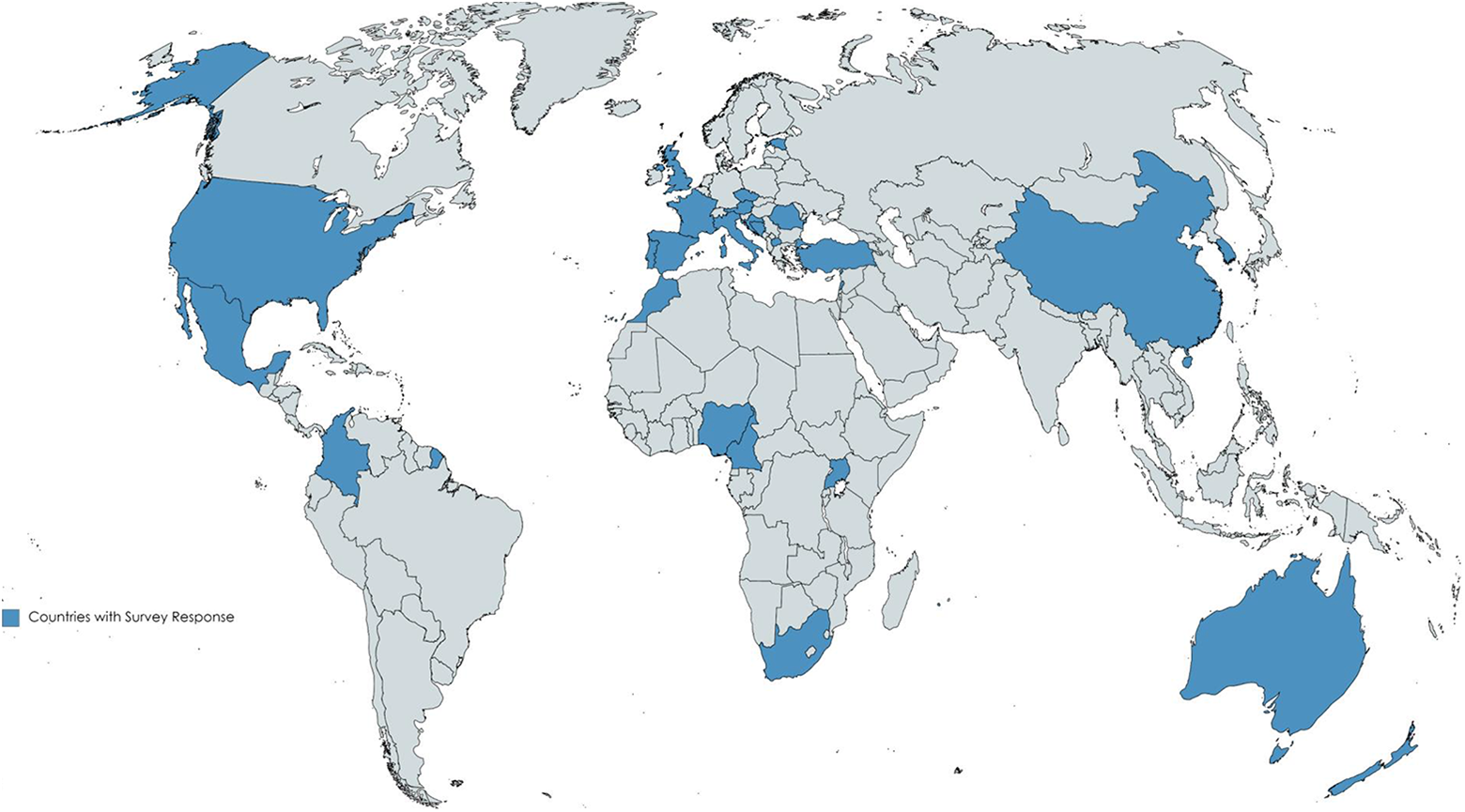
Map of countries that provided survey responses.
Variables
The variables used in this study come from four areas. First, we asked participants to indicate the degree of change across 26 potential organizational changes from the pandemic. Participants were asked to indicate whether things were changed, ranging from (1) no change, (2) slightly changed, (3) somewhat changed, (4) mostly changed, or (5) completely changed. These variables were reduced into eight different subdomains based on the results of principal axis factoring with an oblique rotation to account for the correlation in the factors (Brown, 2015). Unlike traditional factor analysis that is trying to combine these items into subdimensions, this was not the purpose. The items loaded well on for each respective factor (i.e., |λ ≥ .30|) with no double loadings in the rotated solution. 1
Secondly, executives were also asked to indicate whether these things had changed as a result of agency policy or procedural changes, using the following scale: (1) yes, my policy/procedures specifically addressed this; (2) no, my police/procedures did not address this; and (3) I am uncertain if my police/procedures specifically addressed this.
The third set of variables included in this study is similar to the first in that it asks about change. However, this version asked participants to indicate the valence of the change (i.e., did things increase or decrease in frequency). Additionally, this third set of items consists of 27 different changes, including 15 that were identical or similar to items from the items above. However, this set expanded upon the enforcement of COVID-19 laws by asking executives to indicate whether the number of warnings, citations/fines, and arrests had changed during this period. The answers included (1) significantly decreased, (2) slightly decreased, (3) no change, (4) slightly increased, and (5) significantly increased.
The fourth and final set of items asked police executives to rate how the pandemic, and the organizational changes that were made as a result, would affect various facets of the organization moving forward. Executives were asked to indicate whether the pandemic (1) made worse, (2) had no change, or (3) made better any of 15 different factors. These factors are divided into two categories: internal police organization and the police–community relationship.
Analytic Plan
Given the exploratory nature of this study, the analyses are descriptive. We start by looking at the potential changes in four domains: organizational (risk reduction, risk mitigation, and information sharing), complaints, operational (crime prevention, crime suppression, proactive policing, and reactive policing), and COVID-19-related policing. We then look at the extent to which these changes were regulated by official rules. Furthermore, we study the valence of these changes (i.e., the direction of the change). We then examine the degree to which our respondents thought that the consequences the COVID-19 pandemic will have on the ability to provide police services to their communities and the relationship with the community moving forward. We use the open-ended responses to contextualize the findings from the survey data.
Results
Examining Types of Changes
To aid in the interpretation of these factors in Table 1, we added a column called changed total, which is the sum of responses that expressed at least “some change.” The data indicate that police organizations were much more likely to change in certain domains than others. Notably, we see that more than 70% of agencies indicated changes in factors that were classified into the organizational risk reduction category. Interestingly, police organizations saw the least change in the use of PPE (72%), which may reflect the fact that agencies were using this equipment in some capacity prior to the pandemic. We report similar changes, although more modest in magnitude, for organizational risk mitigation strategies. It is worth noting that the risk reduction strategies are those designed to reduce the likelihood of exposing officers to risk, in this case COVID-19, whereas risk mitigation strategies are those designed to reduce the likelihood that an exposure would broadly affect the organization.
Changes in Police Organizations and Police Activities.
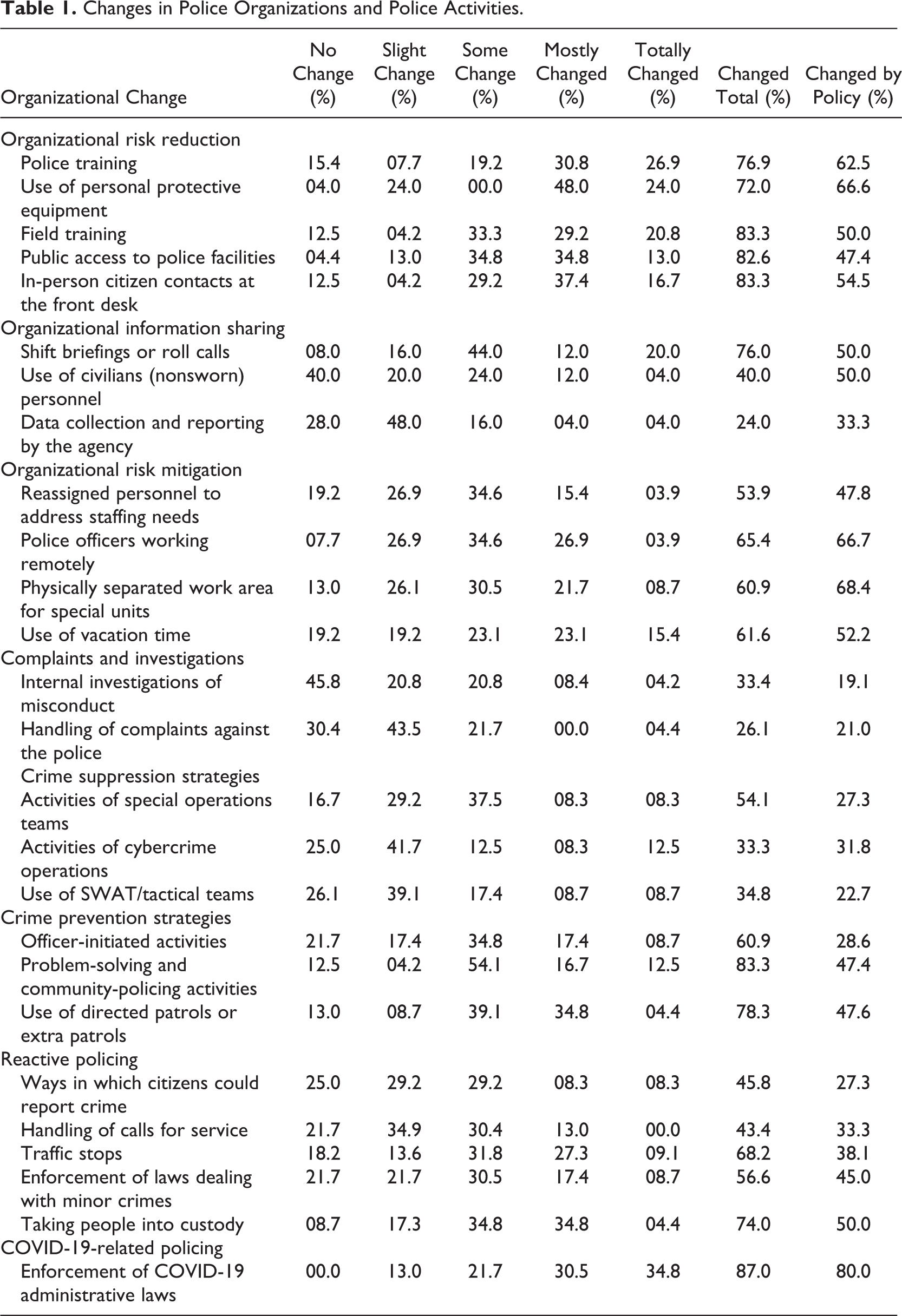
We see changes in other domains as well, although these are neither as drastic nor as consistent. For instance, in the domain of information sharing, we see that the majority of agencies (76%) reported changes in the shift briefings, but much fewer reported changes in the use of civilians (40%) and data collection and reporting by the agencies (24%). Similarly, we see a great deal of variation in the changes to crime suppression strategies with the biggest change coming from the activities of special operations teams (e.g., narcotics, vice, gangs), and much smaller changes for cybercrime and tactical teams. The least frequent change was noted in the domain of complaints and investigations.
The qualitative responses shed some light on the types of changes that were made. Some police executives discussed changes to the types of training offered, specifically the need and implementation of various types of hygiene and pathogen training to protect citizens and officers from COVID-19 to the degree possible. For instance, one police executive said that a notable challenge early in the pandemic was “No time for an adequate training on COVID-19 protocols and [there were] several operational officers [working] in the high-risk population” (Country A, developing Western democracy). Similar challenges were noted by more developed countries as well, “Training sessions concerning hygiene and keeping a distance. Educational work to avoid panic and to strengthen the holistic thinking in the future” (Country B, developed Western democracy). Many countries highlighted the change in the modality of training delivery (i.e., transitioning from face-to-face to on-demand online learning solutions). One executive stated, “Regarding training, there have already been and will be an increase in the e-learning area. The in-house training sessions will be reduced, however, in the long term, there will and must be a normalization [of online learning]” (Country B, developed Western democracy). This suggests that the pandemic may have had some positive benefits for police organizations.
Finally, the data suggest a mixed bag when it comes to changes in the use of crime prevention strategies and reactive policing strategies. The respondents from most countries reported that the traffic stops (68.2%), the way people were taken into custody (74%), and the enforcement of minor crimes (56.6%) have changed. While developing the survey, we heard from police executives that it was becoming more difficult to get people into custodial settings because of the concerns of importing the virus into the facility. Some responses to the qualitative component of the survey indicated the respondents’ frustration with the changes in custodial arrangements that these executives saw as a barrier to effectively addressing crime problems. For example, “Police officers have to [specifically consider the] protection and respect [the right] to health of the arrested, considering novel law enforcement protocols” (Country A, developing Western democracy). Another respondent indicated that in their country, “Jail population reduced by more than 50%, and new entry into the jail was limited to [select] violent crimes” (Country C, developed Western democracy).
Policy Changes
We see that the largest percentage of executives reported that policy changed the enforcement of COVID-19 laws and regulations, which is logically consistent (rightmost column in Table 1). In many countries, these new police powers required establishing the internal rules and standards for their enforcing and determining under what circumstances the police are allowed to enforce these new rules. Some executives suggested that their policies specifically prohibited their officers from enforcing such laws, while others expressed specific authorization and expectations to enforce these laws.
The other two areas where the highest number of police executives reported the greatest extent of policy and procedure change were in the domains of risk reduction and risk mitigation. A majority of agencies changed their policies around police training (62.5%), field training of recruits (50.0%), police officers working remotely (66.7%), use of physically separated working areas for special units (68.4%), and the use of vacation time (52.2%). All of these changes address things largely under the direct control of police executives and thus easy to change unilaterally or in response to changes in national/local governmental restrictions.
Additionally, most agencies changed their policy on the use of PPE (66.6%), although about three quarters of respondents indicated that the use of PPE changed due to the pandemic. It is possible that the countries could have had an extant policy that robustly addressed the need and use of PPE in certain situations, circumventing the need to develop a new policy. Prepandemic conversations with police about PPE were typically more heavily focused on assault prevention (e.g., bullet-resistant vests) rather than pathogen prevention. It is also possible that some countries experienced difficulties securing appropriate PPE for their workforce and were consequently reticent to put these policies into place. About 30% of the respondents indicated that securing the appropriate quality and quantity of PPE was a struggle during the early stages of the pandemic. Although it may be tempting to assume that these issues arose predominantly in smaller countries or those with lower purchasing power, the data do not support this. Instead, we see respondents from countries across the spectrum of development and economic capacity reported similar issues. A respondent from a developed Western democracy said their biggest problem was, “Availability of PPE, sanitizer, and disinfecting supplies” (Country C). This response is strikingly similar to that expressed by a respondent from a transitioning country, “The officers and men are not provided with PPE as front-line workers and no incentive for the extra work put into securing the nation at this trying time” (Country D). A respondent from the global south said, “Lacking of knowledge on how to protect COVID-19 and [lacking] equipment for [the protection] of [officers] during investigations and operations” (Country E).
Another issue that emerged from participants open-ended responses identified an additional source of frustration: the flow of information from policy makers. Many of the respondents identified rapidly changing policies, conflicting guidance from different governmental bodies, and a lack of clear and timely communication about what changes and expectations were being imposed led to problems. For example, Lack of consistent, science-based information exacerbated the fear factor. Initially, agency and supervisor directions were accepted without question, only to be later questioned as conflicting information came to light through external sources. (Country C, developed Western democracy)
Valance in Changes in Police Organizations and Police Activities
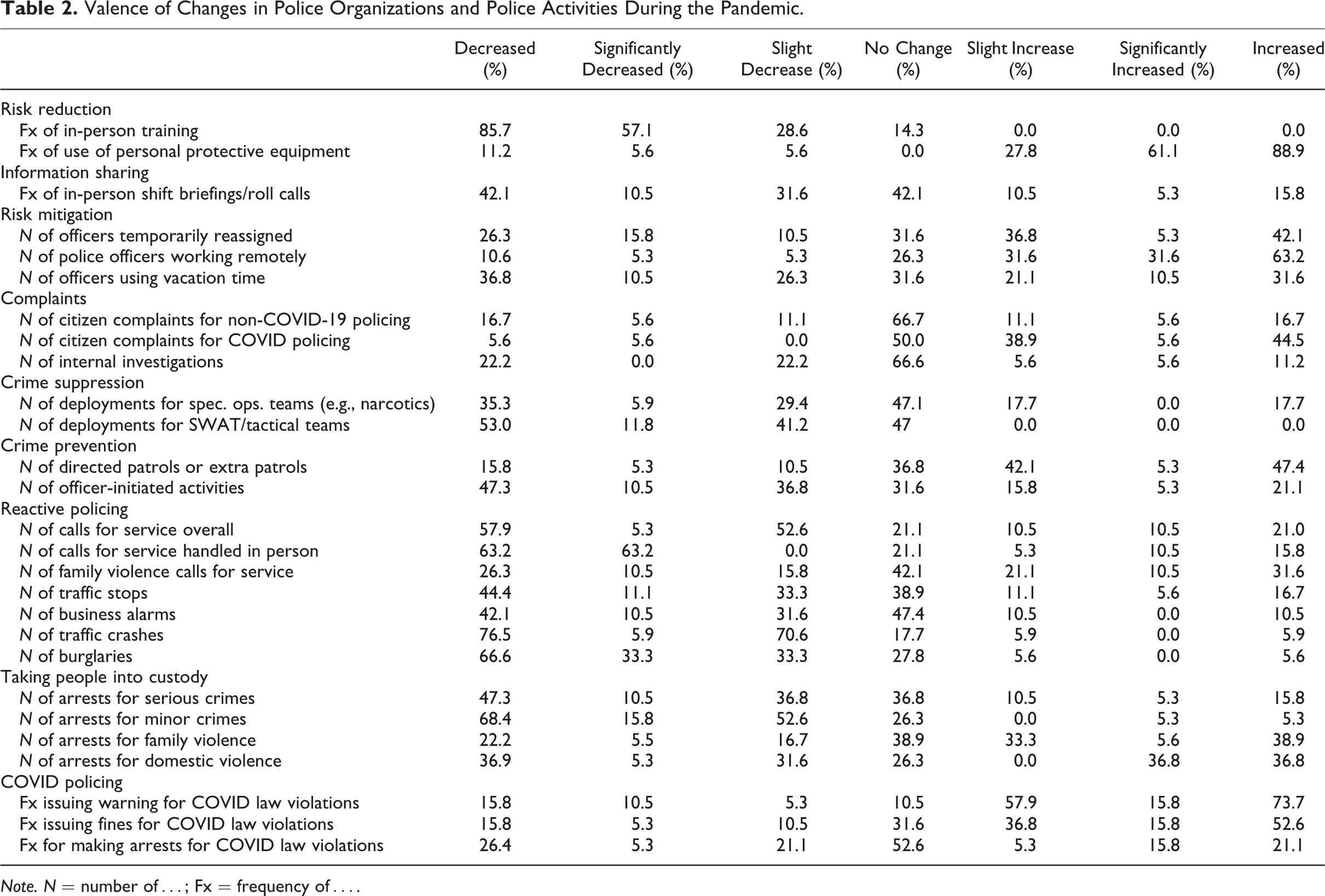
Table 2 presents the data on the valence of changes for the same eight domains presented above and adds one more—taking people into custody. To aid in the comprehension of this table, we added the leftmost column that sums the percentage of respondents who say this activity decreased and the rightmost column that sums those who say these things increased. Some findings are logical, like the 88.9% of respondents who say that the frequency of using PPE increased during the early stages of the pandemic. Although the use of PPE is one of the best mechanisms to reduce the spread of the COVID-19 when physical distancing is not possible, 11.2% of respondents reported that the frequency of PPE use has decreased during the pandemic. Again, qualitative data suggest that, although the demand for PPE may have increased, the actual decrease may be attributed in part to the fact that securing PPE has been very challenging at the time. For example, one of the biggest challenges reported by a participant was, “At the beginning the main obstacle was lack of protective equipment; not equipped checkpoints on state borders—the conditions for line officers were not good, but it had improved” (Country G, transitioning democracy).
Valence of Changes in Police Organizations and Police Activities During the Pandemic.
Note. N = number of…; Fx = frequency of….
Other organizational changes offer insights into the ways police organization responses to the pandemic varied by country. Within risk mitigation, our quantitative data show us that about two thirds of the respondents (63.2%) saw an increase in the number of officers working remotely. Qualitative responses suggest that many agencies hope to permit staff to work remotely after the pandemic. One respondent indicated, “More work from home arrangements” (Country H, developed Western democracy) would be something that their agency would like to keep after the pandemic. This same sentiment—to varying degrees—was expressed by most respondents who came from developed and transitioning democracies. However, the utility of these types of changes was also noted by respondents from other regions, with additional caveats. For instance, “remote working but it may require the national assembly to make amendments to the law” (Country D, transitioning democracy in the global south). Many respondents commented on how working remotely allowed them to work more effectively and productively than when they were in the office. For example, one respondent indicated: Our organization had a culture of unnecessary presenteeism, which has been changed overnight. We have now pushed on with many IT changes as a result of the opportunity that has now presented. We will be more efficient in the long-run with more agile working for our civilians and officers, supported at Chief Officer level. (Country F, developed Western democracy)
Additionally, during the pandemic, the use of vacation/personal time off/general leave was prohibited under the policy (52.7% of the countries in the sample). A hasty assumption that such a prohibition necessarily implied canceled vacations—after all, where would one go on holiday during a pandemic? However, a plurality of countries saw vacation usage increase, decrease, and remain the same. Qualitative data offer a rich tapestry of divergent reasons for these differences. One respondent indicated Canceled leave led to too many officers in the buildings and lack of equipment for them to be able to work. Meant officers were sitting in close confines. Now leave is available again there aren’t enough staff to cover COVID duties such as border patrols. (Country H, developed Western democracy)
Table 2 also suggests changes in reactive policing. The majority of the respondents (57.9%) stated that their countries saw decreases—some rather sharp—in the number of calls for police service overall and slightly more (63.9%) saw a decrease in the number of the calls for police service handled face-to-face. Our qualitative data show that one of the things that many agencies want to keep in the aftermath of the pandemic is the use of the new options for dealing with calls for service (i.e., internet and telephone crime reporting). For example, “More remote training and online collection of information” (Country C, developed Western democracy). Another participant from Country F—also a developed Western democracy—reported “We will look to continue to resolve more minor crime and calls for service without the deployment of police officers.”
While most of the respondents agreed that the CFS overall decreased, there is a much greater heterogeneity in the number of family violence calls; about one quarter of the respondents (26.3%) thought that the number of such calls decreased, about one third (31.6%) thought that the number increased, and close to one half (42.1%) thought that it remained the same. Most of the answers were not significantly spread throughout the scale, but the majority (79%) were rather clustered close to the center of the scale (“slight decrease,” “no change,” and “slight increase”), suggesting that these were relatively minor changes from what was typically noted. We observe similar patterns for the frequency of arrests for both family violence and intimate partner violence. These data are in sharp contrast with the arrests for minor crimes, which 68.4% of respondents say decreased along with 47.3% saying arrests for series crimes fell as well.
Additionally, some changes in other reactive policing activities were reported. Specifically, there was a substantial decrease (66.6%) in the number of burglaries in the sample and a corresponding drop in the number of business alarms (42.1%). The fact that almost one half of the respondents reported no change here is not surprising because research suggests that most alarms are false alarms (Sampson, 2007). Relatedly, we saw that the number of crime prevention activities—apart from increased directed/extra patrols—also decreased during the pandemic. It is unclear whether these things decreased because of officer preference, agency policy, or need based on the community.
The numbers for COVID-related reactive policing strategies are the indicators of how organizations deal with the citizens caught violating COVID-19 laws and regulations. Among the three responses—issuing warnings, issuing fines, or making arrests (Table 2)—respondents reported the largest increase in the number of COVID-19 warnings issued (73.7%), followed by the fines for COVID-19 violations (52.6%), and making arrests for COVID-19 violations (21.1%). These punitive—or at least adversarial—contacts between police and community members because of COVID-19 may have contributed to the number of citizen complaints related to COVID-19 policing.
Consequences of Policing Changes
Finally, we examine how police executives think that the pandemic may have affected the organization and its ability to perform its job (Table 3). The data overwhelmingly show police executives feel there will be few negative consequences for the changes brought on by the pandemic. In fact, police executives reported these changes will have no effect on a host of organizational factors (e.g., officer morale, perceptions of organizational justice, ability to retain officers, ability to recruit officers, complaints against officers, instances of misconduct, ability to manage the organization’s budget, and the number of on-the-job injury claims). Further, some police executives feel that these changes may improve police–community relationships (e.g., confidence in the management, public confidence in the police, meeting public expectations, providing quality services, and enhancing public safety).
Potential Consequences of Policing Changes During the Pandemic.
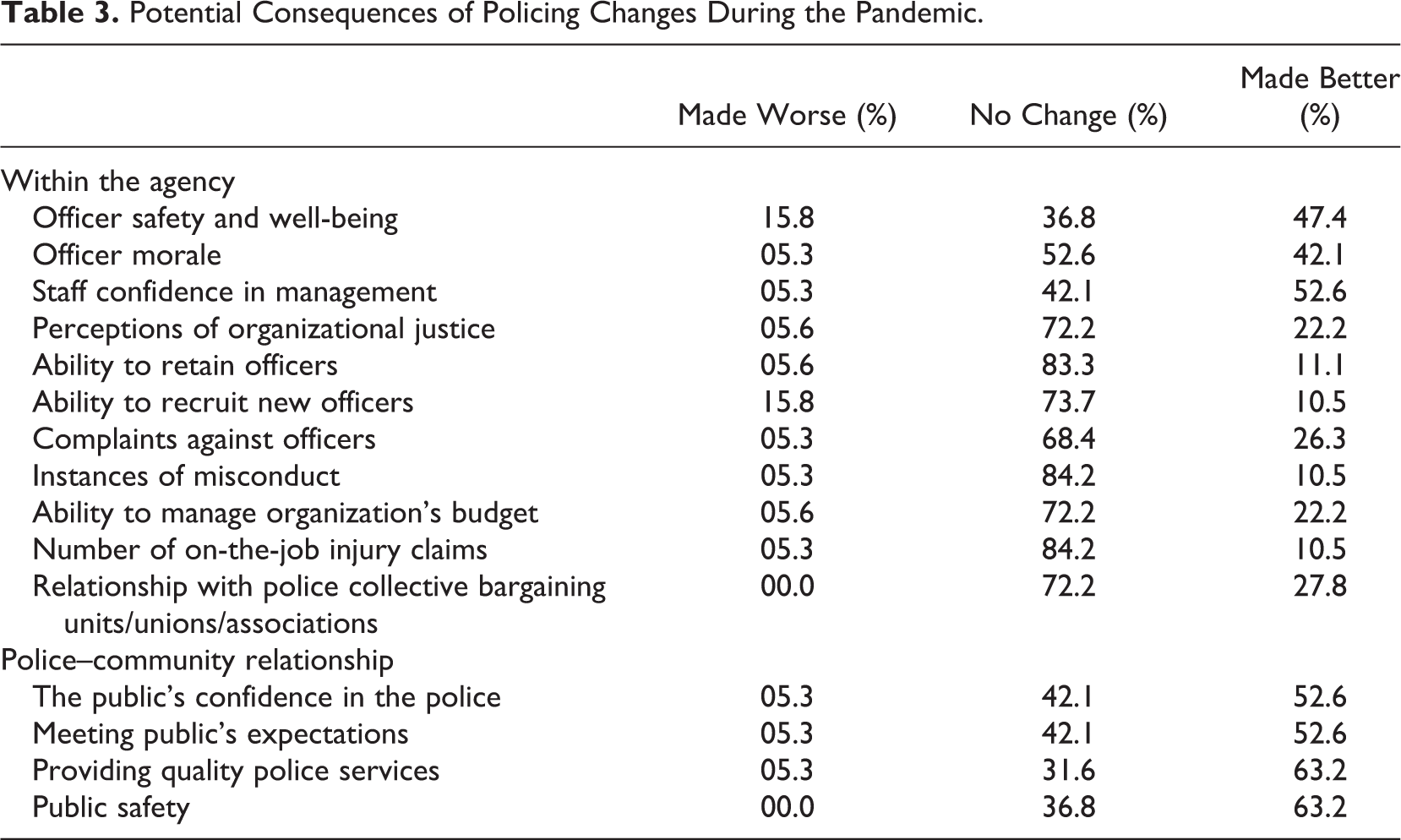
Only 15.8% of respondents expressed concerns about how the pandemic would affect officer safety and well-being as well as the ability to recruit new officers. This is perplexing given respondents concerns about the ability to secure PPE for their staff. Again, there is a disjuncture here given that COVID-19 was relatively easily transmitted in the right circumstances, and PPE is one of the best ways to limit the transmission of the virus.
Conclusion
Our results show—in vivid detail—that in response to the COVID-19 pandemic, both police organizations and police activities have changed across police agencies from a diverse sample of countries. The most extensive and consistent changes were those things that were easy for police executives to unilaterally change (e.g., decrease in the in-person training, decrease in the use of in-person roll calls, restrictions on the public access to the police agencies, increase in the percentage of officers working remotely). Additionally, to a lesser degree, we saw changes in how police interacted with citizens (e.g., changes in arrest practices, decrease in the number of arrests for minor crimes, increase in the number of warnings for COVID-19 violations). As the police have been changing, the operational environments kept changing as well. The least consistent and drastic changes were seen in areas that are largely outside of the direct control of the police (i.e., behaviors of community members).
Subsequent research should examine what factors are associated with how police organizations changed due to the pandemic. For instance, Murphy and colleagues (2020) report the level of compliance with the lockdown requirements was quite variable and this level of compliance likely directly influenced police responses. Afterall, if the police are expected to actively enforce these public health measures, lower rates of citizen compliance will necessitate adversarial contacts between the police and citizens.
The pandemic also led to police agencies using PPE more often and at a much larger scale than prepandemic. Our respondents noted that officers were told to protect themselves, and their communities, but often lacked sufficient PPE. Findings from the study by Lum and colleagues (2020) of the U.S. and Canadian police agencies early in the pandemic indicate that only about half of agencies felt they were able to adequately secure the PPE, whereas a later study by Alexander and Ekici (2020) found this number to have gone up. The results of our global study show a more gradual increase. The availability—or lack thereof—of PPE early in the pandemic may have resulted in officers being unable to use it. This may have inadvertently exposed officers to COVID-19 and developed herd immunity within organizations or resulted in the needless death and suffering of officers. Additionally, the lack of availability—especially with no negative repercussions—may have institutionalized officers’ reticence to use PPE appropriately. This is an open empirical question that our data cannot answer but is something that future research should also consider.
Another consistent finding reported by respondents was the frenetic pace of change in policies and procedures. While it is certainly understandable that rapid changes were often necessary based on evolving standards and the local situate, the respondents consistently reported that the flow of information was quite poor and often contradictory, supporting the statements from extant literature about the lack of clear rules (e.g., Farrow, 2020; Jennings & Perez, 2020; White & Fradella, 2020). The changes that were necessary should be communicated in as clear and succinct manner as possible, so that the people who are responsible for enforcing these rules know more precisely what they are meant to be doing. Addressing the why question may go a long way to helping organizations and officers understand what they are expected to do.
The belief about the effects of the pandemic on the organization and its ability to effectively perform its job in the future are quixotic—to say the least. Specifically, the puzzling findings are related to changes in public confidence of the police. Given the adversarial nature of the encounters between the police and the community in enforcing COVID-19 rules and the number of related complaints about police conduct, it strains credulity to believe that direct and vicarious experiences with enforcement strategies will not adversely affect public perceptions. In the United Kingdom, for example, the police issued more than 17,000 fines over a 2-month period (BBC, 2020). Similarly, Italy has charged more than 40,000 people for violations of the lockdown (Tondo, 2020) and Spain issued more than 1 million fines violations of lockdown regulations (Palmer, 2020). There is a certain degree of ambiguity about whom the public will hold more responsible for these issues: the government who enacted the laws or the police who enforced the laws. The data here suggest the answer to this question is especially important and vexing for police. Many respondents expressed frustration about the way in which the laws were enacted and how these changes were communicated to the police. Governments were ostensibly working to protect public health but seem to have failed to consider the downstream effects on the institutions that were responsible for enforcing these laws and regulations.
There are seemingly predictable consequences of the pandemic, including strained governmental budgets and, in some places, calls for monies spent on policing to be reallocated to other social programs. However, these effects may be exacerbated by the specific nature of the pandemic. Notably, the pandemic forced citizens into their homes and away from shops and their jobs—both of which erode tax revenue. Simultaneously, governments were forced to spend increasing amounts of money in an effort to protect public health. The situation is made more ominous when examined in conjunction with the potential for economic turmoil ahead coupled with growing unemployment and food insecurity, all of which point to a potential rise in crime. This suggests that the next few years—at least—will present unique challenges for police administrators, community members, and researchers who work to understand what the long-term consequences of the COVID-19 pandemic will be on policing. This challenge is further exacerbated by growing calls for police reform in the wake of highly publicized instances of police violence.
This research has largely covered what has been termed the “first wave” of the COVID-19 pandemic and its policing impact. In many nations where we collected data, the pandemic has continued to worsen. One thing is clear: The police were able to respond to the pandemic, although the efficacy and sustainability of these responses remains unclear. It will likely take many years and a great deal more research to fully address these questions. This study was a the first step in that direction, but definitively not the only study that is needed. The limitations of the convenience sample and variations in policing models around the world make comparative police research difficult on a good day but damn near impossible during a global pandemic. Future research—both qualitative and quantitative—is needed to enhance our understanding of these changes. Additionally, research is needed to look at the perceptions and experiences of officers and members of the community too. Finally, as we are hopefully seeing an end to the pandemic, it is necessary to understand that police organizations will be going through another turbulent transition as we return to the “new normal,” whatever that means.
Footnotes
Declaration of Conflicting Interests
The authors declared no potential conflicts of interest with respect to the research, authorship, and/or publication of this article.
Funding
The authors received no financial support for the research, authorship, and/or publication of this article.