




Abstract
Over the past several decades, American penal exceptionalism—the tendency for U.S. penal policies and practices to proudly diverge from those of other Western countries—has severely limited the development of comparative criminal justice research from a U.S. perspective. However, in recent years, a growing consensus that America’s criminal justice policies and practices are too expensive, ineffective, excessively punitive, and often inhumane has laid the ground for a new phase of soul-searching. This article argues for an explicit rediscovering of comparative criminal justice policy in America, which would prove extremely helpful in providing bold yet practicable solutions in the current commendable but unimaginative era of criminal justice reform. We first contend that American exceptionalism is not as embedded in U.S. penal policy and culture as the past few decades might seem to suggest. Second, we discuss the main causes of the gradual demise of the comparative criminal justice enterprise in America. Finally, we discuss two areas of U.S. criminal justice reform suggesting mechanisms of comparative criminal justice policy that should be nurtured: (1) new prison reform initiatives pointing to renewed openness to comparative insights and (2) the growing chorus calling for prosecutorial reform, showing how many of the reform ideas proffered tap into characteristics found in continental systems.
Keywords
Introduction
During the last four decades of the 20th century and into the new century, the idea of “American exceptionalism” increasingly became a regular talking point among U.S. politicians and commentators, emphasizing that America should do things “its way” and that other countries’ experiences should not inform U.S. domestic policies. Perhaps the most potent depiction of American exceptionalism is the “shining city on a hill,” a biblical image employed by John Winthrop, Puritan lawyer and first governor of the Massachusetts Bay Colony, in his 1630 sermon A Model of Christian Charity (see Rodgers, 2018). This image was popularized by Ronald Reagan throughout his political career—most notably in two speeches in 1974 and 1989—to describe America as a unique example of freedom and hope, and Americans as “a special people, in a special land, with a special mission” (Calabresi, 2006, p. 1371). The notion of American exceptionalism within the domain of criminal justice and punishment grew out of the general understanding of the term and can be defined as the tendency for U.S. penal policies and practices to diverge sharply from those of other developed industrialized Western countries (K. R. Reitz, 2018). American exceptionalism has been often invoked, particularly in the post-mid-1970s era: Not only did it become a mainstay of death penalty proponents (see Steiker, 2002), but eventually it also came to characterize all of the major areas of the U.S. penal state—from policing to prosecution, from sentencing to imprisonment, and from community supervision to collateral consequences of conviction (Garland, 2020). At least for some, American exceptionalism embodies not just the idea that America does things differently but that it does so proudly, even defiantly.
Especially over the past decade, a growing consensus that America’s criminal justice policies and practices are too expensive, ineffective, excessively punitive, and often inhumane has laid the ground for a new phase of soul-searching. The years since the peak of mass incarceration and mass supervision, in 2009 and 2007, respectively (Cullen, 2018; Pew Charitable Trusts, 2018), have been variably described as a period of “late mass incarceration” (Beckett et al., 2018; Seeds, 2017) or a phase of “equilibrium” (Tonry, 2016, pp. 91–93). Prison populations and adults under penal supervision have declined by about 10%, and punitive policies and practices have coexisted with reform initiatives characterized by a more lenient approach, especially for nonviolent offenders. However, although the wisdom of “mass punishment” (K. R. Reitz, 2018, p. 8) in America is now widely questioned, incarceration and correctional supervision rates have fallen far less than one might have guessed a few years ago, given declining crime trends and the seemingly new societal debate and political discourse around crime and justice issues. Despite a few seeds of change, the current state of affairs of U.S. criminal justice highlights the need for bolder reform ideas. In this context, an important contribution may come from thinking outside the box by looking beyond the borders.
The central argument we present in this article is that American exceptionalism in criminal justice policies and practices is neither historically immutable nor politically inevitable, nor desirable policy-wise. A renewed openness and attention to foreign ideas and models should not be seen with suspicion or as an attempt to corrupt or subvert fundamental American values and principles in the administration of criminal justice. On the contrary, questioning the widespread exceptionalism ethos and rediscovering comparative criminal justice in the United States could be the key for moderating today’s overuse of harmful aspects of criminal justice policy—and this especially in a time of growing consensus as to the need and increased opportunity for reform, given current low levels of crime and fear of crime (Zimring, 2007). Furthermore, receptivity to international policies is far from un-American: In fact, we make the case that the “xenoskeptic” (to say the least) turn of American exceptionalism is the aberration from a more long-standing willingness to borrow and adapt policy ideas, including from foreign nations.
We first challenge the often-assumed ontological nature and unavoidability of the American penal exceptionalism hypothesis from a policy, historical, and cultural perspective. We do so by showing how, until a relatively recent yet largely forgotten past, U.S. scholars, penal reformers, and policy makers alike were not just open to but also actively engaged in learning from other systems as well as leading penal reform at the international level. We also discuss what we think have been the main causes of the gradual downfall of the comparative criminal justice enterprise in America—a process that unfolded especially in the last three decades of the 20th century. We then highlight and discuss two areas of U.S. criminal justice policy—(1) prisons and imprisonment and (2) recruitment, training, and retention of prosecutors—showing, respectively, the timid yet promising signs of new openness to comparative inquiry and the elements of compatibility with borrowing and adaptation of foreign ideas. We conclude with a discussion of the importance and desirability of rediscovering comparative criminal justice from a U.S. perspective more explicitly and systematically, focusing in particular on continental jurisdictions. Drawing on open, thorough, and unbiased comparative analysis of relevant European models and practices could teach U.S. policy makers important lessons, especially in today’s climate of visible, yet vulnerable, eagerness for criminal justice reform. It would also prevent the risk of naive, idealized, and off-guard importations or adaptations of features from other systems.
The Decline of Comparative Criminal Justice Policy in the United States
Care must be taken to distinguish “comparative” research in criminology and criminal justice from related enterprises which are best characterized as “foreign” or “transnational” scholarship. Research with a “foreign” focus—often dubbed as “international” 1 —describes and discusses institutions, policies, and practices of countries other than the United States. Research having a “transnational” focus is concerned with the investigation and regulation of conducts and phenomena that transcend national frontiers (Friedrichs, 2007). Neither of them can be said to be strictly “comparative” in their scope and methodology. Comparative criminal justice policy from an American perspective—the theme of this article—unquestionably entails a deep dive into foreign law and policy but, by necessity and definition, also needs to include a fruitful comparison or dialogue with relevant aspects of the U.S. system. 2 Studies that are merely concerned with foreign jurisdictions (e.g., policing in Pakistan, prison overcrowding in Mexico, or the death penalty in China) may well serve the aims of providing valuable information, developing the skill of intercultural competence, and ultimately broadening our understanding of other justice systems of the world. 3 However, such studies are, almost by design, of little use to the domestic U.S. criminal justice reform enterprise insofar as they focus on the criminal process and punishment issues in a given foreign country without the additional exercise of “comparative application.”
The same can also be said of genuinely comparative studies focusing on multiple foreign jurisdictions with no reference to America’s criminal justice system. Certainly, one does not need to be comparing their own country to be engaged in comparative studies. That being said, research on, for example, prosecutorial misconduct in Southeast Asia or community corrections in Eastern European countries is not necessarily useful for policy conversations looking at possible reforms of the U.S. criminal justice system. As it has been noted, “[i]f one wishes to claim the benefits of the comparative method [for domestic reform purposes], one cannot leave the act of comparison to the reader” (J. C. Reitz, 1998, p. 619). In regard to studies on, say, transnational drug trafficking, corruption, money laundering, and organized crime, these can surely be helpful in learning how to deal more effectively with crime problems involving different countries and encouraging cross-national cooperation, but, once again, they are not comparative in method and focus and are of little help as far as U.S. criminal justice policy reform is concerned.
It is also important to stress that, while discussing in what follows the advent of the American penal exceptionalism ethos and the decline of the comparative approach to criminal justice policy in the United States, we refer specifically to the demise of comparative scholarly and policy conversations concerning the reform of crucial aspects of the main stages and institutions of the criminal justice process, both pre- and post-adjudication (police, prosecution, sentencing, prisons, community corrections, and collateral consequences). We recognize the comparative contributions in some broader areas (see, e.g., Bennett, 2004). For example, comparative research on more traditionally criminological topics (e.g., cross-national analyses of homicide rates, domestic abuse, drug control, and correlates of victimization) has flourished, but these are rather removed from the previously identified criminal justice reform issues we focus on in this article.
The United States has a long, yet largely forgotten, history of comparative attention to foreign criminal justice systems and institutions for policy reform purposes. Interestingly, the demise of such an attention coincided with the rise of mass punishment in the late 20th century. Describing the state of U.S. criminal justice at the beginning of the 21st century, Dubber (2006b) observed the following: In the United States criminal law parochialism has been turned into something of a virtue. U.S. exceptionalism in criminal law is as often celebrated as it is bemoaned. To many, that the United States is the only Western democracy that still practices capital punishment, competes for the world’s highest incarceration rates, and disenfranchises millions of convicted persons manifests fierce independence: no coddling criminals here. (p. 3)
A core part of law reform in the Revolutionary period, as expressed in constitutional amendments four to eight in the 1791 Bill of Rights, concerned criminal law and procedure. There, substantial influence came from Beccaria and Montesquieu. Later, especially at the state level, Bentham and Blackstone, both heavily influenced by the two continental scholars, were the main English influences on policies concerning crime and punishment (Harcourt, 2014). The interest continued in the pre–Civil War period, when rehabilitation, proportionality, and codification of penal law were the key concepts (see Dershowitz, 1976, pp. 125–126). In the late 19th and early 20th century, the United States was undoubtedly a trailblazer in penal reform at the international level and actively engaged in frequent exchanges with other nations.
A telling litmus test of U.S. openness to foreign ideas is represented by the publication record of what is among the oldest and most influential journals in the criminal justice field in the United States, the Journal of Criminal Law and Criminology. The journal was established in 1910 with the purpose of articulating and promoting a criminal justice reform agenda, inspired by the ideas of the Progressive Era, with the involvement of scholars as well as policy makers and practitioners. Interestingly enough, during its first six decades of publication, studies analyzing and discussing foreign models and ideas were routinely and prominently featured in the journal. They focused, among others, on subjects such as policing, substantive criminal law and procedure, sentencing, community corrections, and prisons. These contributions ranged from in-depth discussions of legislative reforms and direct observations of criminal justice institutions and practices to penological theories and detailed reports of international penal congresses. The journal was a prominent forum specifically aimed at fostering an ongoing discussion on criminal justice reform and promoting a cross-national dialogue from an American perspective.
Until approximately 1970, an average of nearly four comparative pieces per year was published in each volume of the journal, with peaks of as many as 14 in 1933 and 10 in 1912 and 1936. Continental European jurisdictions were routinely covered, showing a profound interest in ongoing reforms and developments in that part of the world. A sheer total of 218 pieces on comparative topics, often authored by foreign contributors, were published between 1910 and 1970. As shown in Figure 1, the total then drops to just 21 articles published between 1971 and 2019, with only four comparative pieces published since 1990, focusing exclusively on other common law jurisdictions. The “epitaph” for the interest in cross-national research is probably represented by the piece authored by Ronald J. Allen in 1990 where, commenting on one of the last truly comparative articles ever to be published in the journal (see Bradley, 1990), 4 he condemned “the dewy-eyed appraisals of foreign systems that frequently characterize comparative scholarship” (Allen, 1990, p. 6). 5
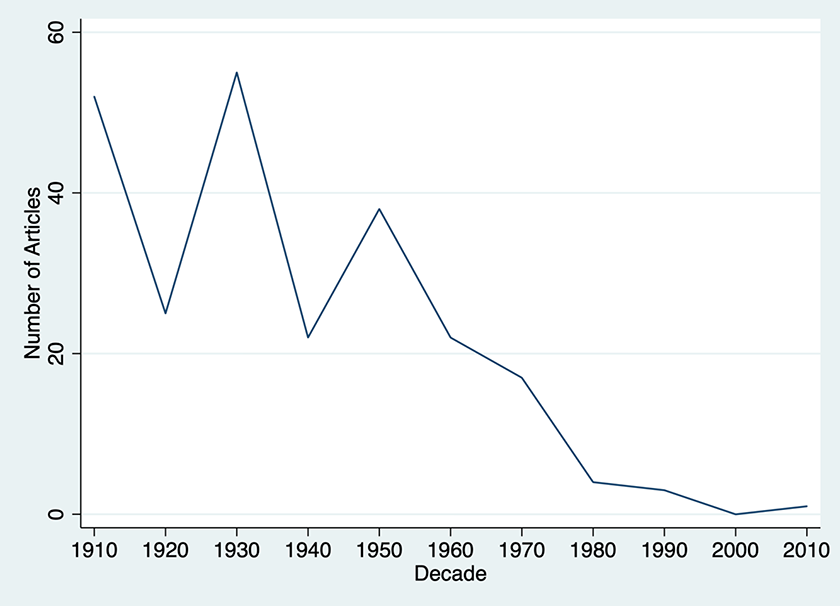
Frequency of comparative articles published in the Journal of Criminal Law and Criminology, by decade, 1910s–2010s.
This is in stark contrast with the progressive spirit of reform, epistemic curiosity, and willingness to seek foreign solutions to similar problems that characterized U.S. criminal justice scholarship and policy during the first decades of the 20th century. This approach was well summarized in the remarks that Hall (1962), one of the fathers of U.S. criminal law, made in the early 1960s, observing that “among democratic countries there is a wide sharing of values that have been articulated most precisely in their penal laws. The discovery of this cultural unity would have great social as well as scientific significance” (p. 279). Yet, as the “great verve and high hopes” of the 19th and early 20th century were gradually abandoned, the comparative criminal justice enterprise was, for the most part, slowly “turned over to professional comparatists who lacked the broad vision that animated its creation and were largely content to accumulate foreign law materials” (Dubber, 2006a, p. 1291). 6 By the 1980s, at the policy level our reconnaissance does not go beyond timid attempts to import day fines and structured community service orders inspired by Western European systems centering in efforts by the Vera Institute of Justice and the National Institute of Justice (see Hillsman, 1990; McDonald, 1986). Other than that, during the last two decades of the past century interest for foreign criminal justice systems, once visible and tangible, gradually faded away from the U.S. stage, with very few exceptions confined at the scholarly level.
The Reasons of the Demise
What happened? A plurality of factors ultimately contributed to the gradual rejection, oblivion, and almost disrepute of international comparison in criminal justice circles in the United States, both within and outside academia. In particular, we identify and discuss five of them which we believe played a role in this process: (i) an increasingly self-referential approach toward law and policy reform, (ii) the development of a U.S. legal and policy imperialism resulting in ethnocentrism, (iii) the rise of populist resentment against the “elites,” (iv) a methodologically flawed approach to comparative analyses, and (v) the trend toward chronocentrism and a false perception of immutability.
An Increasingly Self-Referential Approach Toward Law and Policy Reform
During the 1960s, the decisions of the Warren Court constitutionalizing criminal procedure (see, e.g., Kamisar, 1995; Stuntz, 2006, pp. 791–792) had an important impact in making the need for a whole new reading of the rules in the field apparent. This eventually led to the emergence of (domestic) criminal justice in the United States as a coherent discipline and as a focus of increased attention. Furthermore, the American Law Institute’s 1962 Model Penal Code, designed to stimulate and assist U.S. legislatures to update and standardize the penal law across the country (see Wechlser, 1968), also played a major role, stimulating domestic comparison (i.e., among the 52 American jurisdictions—the 50 states, plus Washington, D.C., and the federal system) over international comparison (see, e.g., George, 1969; Robinson & Dubber, 2007). 7 Where the Warren Court rules applied, the “all-U.S.” requirements seemed to leave no room for experiments based on foreign practices (or any other inspiration); where the Court’s jurisprudence did not apply, the American Law Institute's nationwide research revealed considerable state-to-state variation, suggesting no need to look at foreign systems.
The result was the development of a more self-contained body of American jurisprudence and policies that naturally led to an inward focus and internal reliance upon U.S.-generated decisions and ideas. With criminal justice reforms across the United States having developed since the 1960s in a mainly self-referential, inward-looking way, the result is that contemporary U.S. systems are essentially creatures of domestic comparative criminal justice (Dubber, 2006a, p. 1300). Only few voices lamented such a development and explicitly spoke of “American provincialism” (see, e.g., Alschuler, 1998, p. 765). Reform efforts today continue to follow a similar pattern, focusing almost exclusively on the national stage and no longer paying attention—not even at the scholarly level—to possible models for reform coming from the outside of the United States. Ignoring comparative work has become very easy in contemporary America because scholars and policy makers have been led to believe that a fruitful and sufficient comparison “can be realized by comparing South Dakota with South Carolina,” reinforcing the view that “America can only be compared with itself” (Zimring, 2006, p. 615).
U.S. Policy and Legal Imperialism Resulting in Ethnocentrism
Since the end of World War II, the new status of political and economic powerhouse gained by the United States on the international stage was crucial in promoting a process of “Americanization” of European law and policy in different areas—from civil procedure to securities regulation, from antitrust law to corporate law, and counting (see, e.g., Kelemen & Sibbitt, 2004; Wiegand, 1991). Criminal justice is no exception if one considers, for instance, the influence—if not direct transplantation—of key features of the American adversarial system of criminal procedure as well as of plea bargaining in many continental jurisdictions (Grande, 2019; Langer, 2004). The United States has thus been a crucial driver of the convergence of laws, polices, and regulations. The process has been largely, if not exclusively, unidirectional, although the tenacity of European national legal cultures and political structures preserves fundamental differences that are unlikely to disappear anytime soon (see Kagan, 2007).
Undoubtedly, and increasingly so over the past seven decades, the United States views itself “as primarily an exporter of ideas in the realm of government and public policies” (Frase, 2001, p. 285) rather than an importer of them. This has led to a criminal justice ethnocentrism—embodied in the assumption that “what we do, our way of thinking about and responding to crime, is universally shared or, at least, that it would be right for everyone else” (Nelken, 2009, p. 291). Significantly, Rudolf Schlesinger, one of the initiators of American comparative law, toward the end of the 1970s foresaw the soon-to-be demise of comparative criminal justice policy in the United States precisely on grounds of criminal justice ethnocentrism. As he put it, when it comes to criminal justice issues, the American people in general and American scholars in particular “are possessed by a feeling of superiority that seems to grow in direct proportion to the ever-increasing weight of the accumulating evidence demonstrating the total failure of our system of criminal justice” (Schlesinger, 1977, p. 363).
Rising Populist Resentment Against the “Elites”
Interest in comparative analyses corresponded to the zeitgeist of the Progressive Era. As noted by Pifferi (2016), The cultural horizon of US reformism in the Progressive Era was not very different from the European concept; the anti-historicist criticism and anti-formalism pleaded by Pound and many contributors to the American Journal of Criminal Law and Criminology, together with the accusations against the sterile conservative attitudes of that part of jurisprudence attached to traditional rules, were all elements that should be interpreted in light of the global coordinates of social defence, which moved criminal justice into a new dimension of social control. (p. 156)
Methodologically Flawed Comparison
The decline of comparative analysis from an American perspective in the period from the 1970s through the 1980s was also characterized by a poor use of this method of inquiry. Most of the U.S. interest in foreign systems in this period was focused on criminal procedure issues left unresolved following the Warren Court’s due process revolution. Mass incarceration was just beginning to manifest itself and sentencing reform focused on guidelines initiatives drew little, if any, inspiration from foreign laws, policies, and practices. The attention was rather on problems that Europeans seemed to have successfully avoided—excesses of adversariness, weakening of the criminal process’ truth-seeking function (especially in light of exclusionary rules that threw out reliable evidence in order to enforce limits on police powers), and overcriminalization (which, in turn, necessitated substantial exercise of police and prosecutorial discretion, with all the problems that entail; see Frase, 1990, pp. 542–545).
Yet many of the comparative studies and reforms developed during this phase appeared, at best, to put forward straw-man proposals. The methodological flaws of such attempts have been effectively captured by Frase and Weigend (1995), who identify three major cardinal sins in U.S. comparative criminal justice studies of that period, namely: (a) a decontextualized comparative analysis looking at foreign policies and institutions in a vacuum rather than also taking into account the context in which they operate; (b) a formal and static (rather than functional and dynamic) description of foreign systems; and (c) a focus on wrong aspects of foreign systems unlikely to clear U.S. customs due to their marked difference with American domestic rules and institutions. Flawed proposals led important commentators to warn against the use of foreign models for reform purposes without engaging in methodologically sound comparative analyses. For example, in the early 1990s, Pizzi cautioned against the seemingly “strong temptation among comparativists” in the criminal justice field to uncritically bring to the United States “certain principles or procedures that seem so sensible and workable in civil law systems” (1993, p. 1327). 8 It is no surprise that, in such a climate, the advent of the American penal exceptionalism ethos marked the downfall of comparative and dialogic scholarship on criminal justice issues from a U.S. perspective and for domestic reform purposes.
The Tendency Toward Chronocentrism
Chronocentrism is usually defined as the belief that the times one lives in—the present—are more important or significant than other time periods in the past. In this context, we want to slightly expand the concept to include the perception of immutability, that is, the belief that the way things are currently done cannot be changed. Such assumptions are often associated with a memory loss regarding ideas and approaches once widely regarded as important and useful. U.S. scholars and policy makers appear to suffer from amnesia when it comes to comparative criminal justice insofar as they believe certain things cannot be done and certain ideas are just not fit for purpose in today’s America.
The United States’ descent into mass punishment has been characterized not only by the loss of comparative curiosity for the outside world but also paralleled by the transformation of the role of America, from beacon of reform to punitive outlier in the Western world. This historical trajectory is striking if one thinks that in the 19th century the United States was widely considered as a model for other civilized nations in the criminal justice field and that, as recently as the early 1970s, 9 the country was aligned in spirit and practices with other developed Western democracies (Whitman, 2005, 2007, pp. 251–253). In this regard, it is noteworthy that the growing divide between the United States and Europe in the use of criminal punishment, both quantitatively and qualitatively, did not manifest itself before the last decades of the 20th century despite distinctive indicators and risk factors of enhanced punitiveness tracing back to the 18th century (Frase, 2004, discussing Whitman, 2003).
The described memory loss and the development of a new “all-American” punitive imagination combined played a major role. As noted by Rock (2005), “[a]mnesia does seem to be such a real force, leading as it does to the methodical extinction of many ideas and authors beyond a certain age” (p. 475). The inability of most U.S. scholars to even engage in historical-comparative research, focusing on approaches that were once adopted in the country (Frase, 2001, p. 285), further contributes to reinforcing the mischaracterization of cross-national research as something alien in contemporary America—a view silently shared by many and vocally fought by few. Today, U.S. criminal justice scholars—particularly legal scholars—and policy makers belonging to the late baby boomer generation, Generation X, and millennial generation who focus on the previously identified areas of the criminal system almost completely ignore the comparative component in their work.
Reimporting Criminal Justice Policy (?)
Decades of mass incarceration and supervision have laid the foundations for a new phase of soul-searching. The last 10 years, in particular, have been characterized by a timid yet determined spirit of reform benefiting from various factors of different intensity, including (a) the partial weakening in the public discourse and the media of the punitive imperative that dominated the “tough on crime era” (early 1980s–early 2000s), greatly facilitated by the drop in crime rates (Clear & Frost, 2014); (b) fiscal constraints arising from the recession caused by the financial crisis of 2008 (Aviram, 2015); (c) an increased concern for the fundamental rights of those subject to the government’s penal power (Simon, 2014); and, last but not least, (d) an all-but-seamless bipartisan convergence on the need for criminal justice reform (see, e.g., Gottschalk, 2015, pp. 7–8).
However, as the first decade of criminal justice reform since the peak of mass incarceration and supervision in the United States drew to a close, “it…appear[ed] that both economic and human rights-based predictors of major reform were over-optimistic about its pace and degree” (Simon, 2019, p. 353). Furthermore, besides a commendable shift in the political discourse about criminal justice reform, particularly in regard to mass incarceration, to date not much has been accomplished. The passing of the First Step Act in 2018, although positive, has not substantially altered the preexisting landscape (Gottschalk, 2019; Pfaff, 2019).
As of 2020, the United States was still a punitive outlier on the international stage, and yet some hints of hope engender a “cautious optimism” (K. R. Reitz & Klingele, 2019, p. 260). In the current phase of soul-searching, the need to think boldly and creatively about criminal justice reform provides an additional argument in favor of rediscovering comparative criminal justice policy as conscious borrowing and adaptation. Virtually, all of the main aspects of the “made in America” criminal process would greatly benefit from an enhanced engagement with comparative materials. In what follows, we first discuss current timid yet promising signs of new openness to comparative insights found, in particular, in the area of prisons and imprisonment. We then highlight a “degree of compatibility” with importation and adaptation of continental models that may be found in one of the most critical areas for U.S. criminal justice reform: prosecution.
Prisons and Imprisonment
Between the mid-1970s and the late 2000s, as the idea of American exceptionalism in the criminal justice field gained traction, incarceration rates in the United States more than quintupled (see Zimring, 2010), a growth that has been eloquently described as “historically unprecedented and internationally unique” (National Research Council, 2014, p. 37). Despite the fact that from 2007 to 2017 incarceration rates in both prisons and jails decreased by more than 10% (Bronson & Carson, 2019; Ghandnoosh, 2019; Zeng, 2019), the United States still has the world’s largest incarcerated population and a current imprisonment rate more than five times higher than the European prison population rate (taking into account Council of Europe member states; see Aebi & Tiago, 2020).
Before American penal exceptionalism and isolationism took over, U.S. penal policy was distinctly different, and prison reform was a prime example of it. Reformed prisons at the state level developed in the late 18th and early 19th centuries. These models then spread to Europe along with a constant reciprocal flow of ideas, policies, and practices between the two sides of the Atlantic (see, e.g., Mouledous, 1963 on Edward Livingston, one of the key American comparativists in the prison field; see also de Beaumont & Tocqueville, 1833, translated by Francis Lieber who brought to the United States German and French penological theories and ideas). Broadly speaking, until the mid-1970s, the United States and European countries shared a relatively sparing use of imprisonment, and systems of corrections were explicitly geared toward resocialization and rehabilitation. Such characteristics came to a nadir during the “get-tough” era. The onset of mass punishment, Americans’ fear of crime, and despair over “nothing works” fueled a callous reaction to the humanity of the offender inside U.S. prisons (Dolovich, 2017), backed for decades by the Supreme Court’s rights forfeiture posture toward incarcerated persons. 10
For much of the get-tough era, American punishment policies, practices, and patterns gravitated toward nonrehabilitative justifications including retribution and incapacitation. However, there is now significant evidence that attitudes in the United States have shifted back toward a more rehabilitative model (Green, 2015). Awareness of the “iron law” of corrections (Travis, 2005)—that almost everyone who spends time in prison will be released at some point—has engendered a renewed interest in recidivism reduction programs, prisoner reentry efforts, and other evidence-based decision making. Today, these signs of a course correction are reinforced by a seeming interest in exploring foreign models to nurture the better angels of U.S. punishment rationales, especially with regard to imprisonment policies and practices.
In recent years, the German (Vera Institute of Justice, 2018), Dutch (Subramanian & Shames, 2014), and Scandinavian (see, e.g., Larson, 2013) prison models have attracted attention. Subramanian and Shames (2014) document a project facilitated by the Vera Institute of Justice in which representatives from Colorado, Georgia, and Pennsylvania visited institutions in Germany and the Netherlands with the goal of identifying European ideas and practices that could be incorporated into their state systems. One of the key “basic principles” identified by the Vera Institute project participants was the clear, central focus on resocialization and rehabilitation observed in the German and Dutch prison systems. Another key contrast drawn from the Vera Institute project, closely related to the first, was the element of human dignity of the incarcerated person and the “normalization” of the life of incarcerated individuals—something that is “a world away from the conditions in which most states hold offenders in the United States” (Subramanian & Shames, 2014, p. 40). Incarcerated individuals in Europe are allowed self-expression by wearing their own clothes and painting their cells, for example.
Could such institutions exist in the United States? At first, the corrections experts who participated in the Vera Institute project thought no. But, on reflection, participants envisioned ways in which rights and privileges could be expanded for some inmates, for example, by allowing personal property and increasing pay for prison labor. Besides scholarly work, recently a few grants have been assigned by important foundations and institutions with the goal of producing a framework for transformative change at the policy level. Indeed, thanks to one such grant, the Pennsylvania Department of Corrections in 2020 opened an experimental unit, filling it with randomly selected incarcerated individuals, inside the State Correctional Institution in Chester, a medium-security, all-male facility, to explore the efficacy of many of the ideas operating in Scandinavian prisons (Norway, in particular). This came after U.S. researchers and prison officials involved in the project traveled to Scandinavia and were exposed firsthand to how things operate on the ground in a foreign jurisdiction (Hermann, 2019).
Similar efforts are underway elsewhere. For example, a pilot program called T.R.U.E. has been implemented at Cheshire Correctional Institution in Connecticut since 2017. The project focuses on young male incarcerated individuals applying rules found in German youth prisons designed to support the needs of 18- to 25-year-old inmates. Those accepted into the program—about 50 prisoners, along with a small group of older prisoners serving as mentors—live in a separate unit and take cognitive behavioral skills courses in addition to learning a trade. In this case, too, the experimentation followed a field trip in which the Connecticut corrections commissioner toured German prisons (Chammah, 2015, 2018).
Despite important differences, 11 this renewed comparative interest demonstrates that an increased awareness and knowledge of how foreign systems operate—including those that might seem distant from “the American way”—can lead to the adoption of virtuously experimental policies and practices, voluntarily developed from the “inside” and not imposed by any “outside” authority. Solutions that work locally can then be replicated or adapted elsewhere, especially in a correctional context like the one in the United States where prison officials still enjoy vast organizational discretion. Although American views on punishment are layered, there is substantial evidence that for many categories of offenders U.S. citizens believe rehabilitation is still important. Given the iron law that most incarcerated people will return at some point to the general population, the continental approach to normalization and reintegration has much to offer for U.S. policy makers interested in the successful reentry of formerly incarcerated individuals.
Prosecutorial Reform
The apparent new openness to overtly borrowing ideas in the area of prison reform is promising. Much more frequent, however, are areas where no explicit appeals to comparative approaches are being made but where such appeals would be helpful due to the connections between calls for American reform and policies and practices abroad. One important example that provides an apt case study is with U.S. prosecutors, a role that is increasingly coming under scrutiny.
U.S. prosecutors are “by consensus, the most important actors in American criminal justice” (Wright, 2017b, p. 395). Prosecutors wield practically unchecked discretion and are seen as the ultimate power players in the modern U.S. criminal justice system (Sklansky, 2016). No other Western country currently selects or retains prosecutors the way the United States does. The U.S. approach related to selection, training, and retention of prosecutors likely constitutes the key causal mechanism of mass punishment. Unlike the presidential appointment of U.S. district attorneys in the federal system, at the state level chief prosecutors (state district attorneys) are selected through local county elections (with the exception of five states: Alaska, Delaware, Connecticut, New Jersey, and Rhode Island; Sklansky, 2016; Wright, 2014). Furthermore, 43 states elect their Attorney General, who is the top law enforcement officer in the jurisdiction. Because the overwhelming majority of criminal cases are prosecuted at the state rather than the federal level, the overwhelming majority of sentencing and punishment in the United States is initiated by prosecutors who are directly accountable to the local populations that elect them.
Tonry (2009, 2012) theorizes that, rather than a professionalized bureaucracy that protects against short-term populist sentiments, politicized American prosecutorial offices are inherently responsive to these populist sentiments. Get-tough campaigns are often imbued with unrepresentative anecdotes that scare citizens and evoke emotional responses, creating a one-way “ratcheting-up” effect: It is always politically salient to promise to be tougher and usually political suicide to be perceived as anything less than tough on crime (but see infra the discussion of the progressive prosecutor movement). Pfaff (2017) ties a substantial portion of the increase in incarceration in the 1990s and early 2000s to the increase in the number of line prosecutors in that era. And not only is the head prosecutor a political office; line-level positions are often seen as short-term proving grounds. As the argument goes, young attorneys take positions as prosecutors in order to gain courtroom experience and accumulate high conviction rates, which make them attractive prospects for lucrative private practice litigation positions (Bibas, 2009). The problem here is that a focus on career goals and performance statistics can eclipse goals of doing justice and advancing the public good. Unlike what happens in the United States, in the continental tradition prosecutors (like judges) are bureaucrats who enter civil service positions following their academic training. As career civil servants, they undergo extensive training and maintain long-term position stability. Candidates sit for a highly selective entrance exam and go through a lengthy training program before beginning on the path of a career bureaucrat in the justice system (Frase, 1990; Wright, 2017a). 12
The United States has not always embraced many of the most problematic practices it now holds to in this area. Significantly, popular election of prosecutor is not a Founding Era practice. As Ellis (2012) recounts, it was not until the 1830s–1860s that states moved from executive appointment to popular elections. The current state of affairs is thus not inevitable. Policy makers would do well to consider ways in which the crucial prosecutorial role can be, at least in part, reformed. In this regard, we observe that many of the arguments and criticisms put forward by U.S. scholars suggest elements of compatibility with borrowing and adapting policies and practices found in European systems where the presence of a professionalized bureaucracy of career civil servants plays a key role in hedging prosecutorial practices against the highlighted short-term populist sentiments and career goals.
Our observation here is that the leading complaints about prosecutorial structure, incentives, and careerism are effectively addressed in other models, and both scholars and policy makers can benefit from considering comparative insights. For example, there are several options that would allow American jurisdictions to move away from today’s excessive politicization of prosecutorial offices and toward a more European-inspired professionalization.
First, the most drastic approach would be formal structural changes in selection and retention. States with popular elections could adopt appointment or merit selection methods for prosecutors. The impetus is on lawmakers to understand that get-tough reactions are natural and predictable given the incentives of direct popular accountability. In the 2010s, the United States began to witness the rise of a new “progressive prosecutor movement” that, to us, signals the need for policy makers to take prosecutorial reform seriously. The progressive prosecutor can be defined in numerous ways, as Levin (2020) points out. We use the term broadly but especially having in mind the new movement of state district attorneys who have expressed a commitment to reducing mass incarceration and racial disparities (Davis, 2019). It remains to be seen whether progressive prosecutors will be able successfully to integrate progressive ideals into the criminal justice system. In some jurisdictions, there has been staunch opposition from police which could have unknown long-term effects. To the heart of our argument, the politicization that makes the progressive prosecutor movement possible is the same mechanism that makes reactionary responses to moral panic and get-tough sentiments possible. Progressives may celebrate these segregated instances where the ebb and flow of punishment sentiments shifts, for a time, away from overly punitive practices, but our argument is that it would be better still to depoliticize punishment in the first place. Whether the progressive prosecutor movement can make strides toward scaling back mass punishment remains to be seen. With the longer view in mind, it seems preferable to have more political insulation in the European style than to place hopes in inevitably politicized shifts.
Second, internal policies and practices can facilitate professionalization and hedge against the career motivations of novice line prosecutors. Short of systemic shifts, there are less drastic ways in which jurisdictions could nudge their prosecutorial offices so that they begin to look more like the bureaucratic civil service, nonpolitically volatile model known to continental systems. Barkow (2019) offers some interesting insights from the administrative law perspective in favor of bureaucratic checks and safeguards on prosecutorial activity. She notes how American systems of government, which emphasize transparency and checks and balances, have allowed prosecutors to emerge as the single most powerful actor in an immensely large field of public law with virtually no transparency and almost unchecked power. Fish (2018) observes how the excesses of U.S. adversarialism have negatively affected the prosecutorial role and calls on prosecutors to act as “morally accountable actors” more akin to judges than partisan advocates. Wright and Levine (2014) describe the problem of the “Young Prosecutors' Syndrome,” defined as the tendency for young prosecutors to be especially harsh and unyielding in order to build up their reputations as adept negotiators and litigators. To counter this, they propose hiring a wider diversity of experienced line prosecutors and increasing training (see also Bibas, 2009; Frase, 1990; Wright, 2017a), including having junior prosecutors work more closely with senior colleagues and roundtable discussions of key decisions. Furthermore, both Wright (2017b) and Bibas (2009) discuss ways in which office structure and management can help build a culture of oversight and mentoring. These proposals would also tend to gently nudge offices toward a more European-style bureaucratic model able to enhance professionalism, make prosecutors more insulated from politics, and incentivize a more dispassionate interpretation of their role.
Comparative Criminal Justice Policy U.S. Style: The Importance of Looking Back to the Future
U.S. policy makers have not been shy in advocating that other jurisdictions adopt American-inspired legal principles and institutions, even in much different contexts with starkly differing cultural and historical traditions. Yet, conversely, this approach has resulted in an increased parochialism domestically. The much decried “punitive turn” of the late 1970s/early 1980s, in a context of an already rising American penal exceptionalism, encountered little resistance and could not be mitigated by foreign ideas and models to which U.S. scholars and policy makers largely paid no attention. Toward the end of the 20th century, this role of outlier in punishment policies and practices was even a source of pride for some.
Feeley (2018) has argued against the utility of comparing and contrasting American criminal justice institutions with those of European countries. In his view, according to many indicators (the arrangement of the political system, income inequality, and levels of violence) the United States should be “ranked well below Western Europe, and toward the Latin American end of the spectrum” (p. 730). And this despite having a common law system and an adversarial legal process like the United Kingdom and being an advanced industrialized country with a liberal democratic tradition like Western Europe. Feeley’s words of caution are intellectually provocative. Yet, as we have argued, the closed-minded and self-referential approach that characterizes the American exceptionalism view is precisely one of the main factors that facilitated the rise of mass punishment. Distinctive features of American culture and governmental structures are not sufficient to justify leaving the United States to its own devices in the field of criminal justice reform. Variations among American states are simply not enough to override the pattern that has developed nationwide since the mid-1970s, leading to the current penal crisis (Zimring, 2018). Furthermore, it must be noted that many non-Western countries in recent decades have modeled their systems after that of the United States. This means that a search for different, and more suitable, comparative models from a U.S. perspective is likely to result, at best, in a sterile play of mirrors. U.S. criminal justice reformers would be stuck between two uneasy alternatives: stubborn isolationism and an unflattering mirror image. This certainly cannot be a satisfactory outcome.
The hypothesis of the inevitability of American penal exceptionalism is challenged if one looks north of the border. Canada and the United States have close cultural and economic ties in addition to a common heritage. They also share a liberal market economic system and a legal system based on English common law. However, Canada’s penal institutions are characterized by a far greater insulation from politics and punitive public pressures, with the latter being not too dissimilar from the ones observed in the United States (Kugler et al., 2013, pp. 1102–1104; Pratt, 2007, pp. 153–158). Canada also benefits from a more pluralistic approach and greater openness to influences from other systems—including European ones, especially via Quebec—at the judicial and policy level (Olivetti Rason & Pennicino, 2019; Tonry, 2007, p. 36). These factors contribute to Canada’s persisting penal moderation, especially if compared to its south-of-the-border neighbor (Doob & Webster, 2016).
There is a compelling need for the United States to see itself as a punishment aberration in comparison to its Western developed peers and to fall back in line with other advanced democracies. Comparative research first serves a useful self-diagnostic function, providing “an opportunity to reflect on our own practices and values in the light of what others do” (Nelken, 2011, p. 403). For example, it has played an important role in helping U.S. policy makers understand that mass incarceration “was not the inexorable product of rising or high crime rates, but the consequential result of conscious policy choices” (Tonry, 2015, p. 506).
The contribution of comparative criminal justice can also be extremely valuable to actual reform efforts if skepticism and the exceptionalism ethos are abandoned in favor of conscious, well-informed, and adaptive comparative inquiries and borrowings. Many lessons can be learned by looking at other countries, though this approach should not be idealized by limiting the analysis to macro-level (and sometimes simplistic) explanations. 13 Scholars and policy makers should closely analyze and consider elements of compatibility and build on experiments and good practices in order to avoid naive, rigid, or reductionist transplantations. It is also crucial that learning activities do not amount to symbolic policy virtue signaling or lead to ineffectual mimicry (Jones & Newburn, 2019). As Frase (1998) notes, “procedures can be borrowed from foreign systems, and grafted onto existing domestic stock, or recombined to create new, hybrid approaches” (p. 791). Foreign countries that have taken the United States as a standard for comparison to reform specific criminal justice institutions have, in many instances, done so successfully without contradicting or fatally undermining their own legal principles and cultural values (Luna, 2003, p. 284). This seems to confirm the validity and potential of the policy mobility approach, championing circulation, adaptation, and assemblage of ideas, models, and institutions from one system to another rather than the adoption of “cold” transplants and policy transfers very often doomed to fail (Newburn et al., 2018).
The time has come for the United States to do the same and, once again, import ideas rather than only exporting them. Developments such as the limited yet meaningful “sandbox” comparative experimentations (Andersen & Hyatt, 2018) in the prison field and the new reform focus on prosecutors manifest, at the very least, important possibilities for convergence with relevant European models. U.S. jurisdictions, at the state and federal level, should engage in comparative work, borrowing and adapting starting with what they have. Policies and academic arguments presented and discussed in this article seem to suggest an increasing receptivity to doing so. The timid yet renewed attention for comparative research and solutions should not just lead to 180-degree reversals of what has been the norm thus far. Rather, a new era of criminal justice reform in America should take the inspiration from foreign approaches and integrate them into the amalgam of current U.S. criminal justice policy.
Conclusion
After decades of commitment to mass punishment, there is now widespread agreement that the unprecedented U.S. penal policies of the 1970s–2000s were misguided and are unjustifiable and unsustainable (Tonry, 2014, 2018). Since around 2010, there have been signs of change: Some jurisdictions are engaging in serious bail reform, a number of states have decriminalized marijuana usage, and incarceration rates have leveled off or declined in many states. And yet, in spite of the rhetoric of reform, the changes have been underwhelming. Much of the celebrated decline in incarceration has come from a small number of states, America still leads the world in incarceration rates, and the robust changes needed to correct the excesses of the era of mass punishment remain aloof. The tergiversations of this era of equilibrium can potentially transition into a time of significant reform if the United States owns up to the mistakes of exceptionalism—preventing for over four decades any meaningful engagement with foreign ideas and models—and makes a concerted effort to discover new ways to address the host of penal problems that define mass punishment.
In this article, we argued that, although American penal exceptionalism may well still be today’s prevailing reality, it is not an inevitable fate. Thinking otherwise would lead to an agency-sapping fatalism. Until the first decades of the 20th century, no signs of American exceptionalism or cultural isolationism in the penal realm were apparent besides a marked “eagerness to experiment, based on a disregard for tradition” (Sellin, 1931, p. 485), which nonetheless nourished itself with a constant trading of strategies and best practices with other countries, particularly European ones. Rediscovering what comparative analysis has to offer may open the doors of an unexpected reservoir of ideas and practicable solutions. The discussion on imprisonment and prosecutors has attempted to show that comparative criminal justice can prove extremely beneficial, especially when a system is in trouble reforming itself from the inside. This does not deny that promising experimentations capable of teaching valuable domestic comparative lessons are happening between U.S. jurisdictions (Frase, 2014), but “business as usual” (see Zimring, 2020) is a powerful, inertial force that is difficult to resist or substantially reverse without bold ideas and solutions. Comparative research should be encouraged and used to suggest or initiate change in the United States, and policy makers should carefully consider the added value that authentic comparative criminal justice policy can bring to the table in tackling the ailments of today’s American criminal justice system.
Footnotes
Acknowledgments
The authors are grateful to the anonymous reviewers and to Richard Frase for their very valuable suggestions and comments. The article also benefited from conversations and exchanges with David Clark, Nora Demleitner, Ashley Rubin, and Michael Tonry.
Declaration of Conflicting Interests
The authors declared no potential conflicts of interest with respect to the research, authorship, and/or publication of this article.
Funding
The authors received no financial support for the research, authorship, and/or publication of this article.