



Abstract
The buckling instability of micro- and nanopillars can be an issue when designing intelligent miniaturized devices and characterizing composite materials reinforced with small-scale beam-like particles. Analytical modeling of the buckling of miniaturized pillars is especially important due to the difficulties in conducting experiments. Here, a well-posed stress-driven nonlocal model is developed, which allows the calculation of the critical loads and buckling configurations of the miniaturized pillars on an elastic foundation and with arbitrary numbers of edge cracks. The discontinuities in bending slopes and deflection at the damaged cross-sections due to the edge cracks are captured through the incorporation of both rotational and translational springs. A comprehensive analysis is conducted to investigate the instability of pillars containing a range of one to four cracks. This analysis reveals interesting effects regarding the influence of crack location, nonlocality, and elastic foundation on the initial and subsequent critical loads and associated buckling configurations. The main findings are: (i) the shielding and amplification effects related to a system of cracks become more significant as the dimensions of pillars reduce, (ii) the influence of the shear force at the damaged cross-section related to the translational spring must not be neglected when dealing with higher modes of buckling and long cracks, (iii) an elastic foundation decreases the effects of the cracks and size dependency on the buckling loads, and (iv) the effects of the edge cracks on the critical loads and buckling configurations of the miniaturized pillars are highly dependent on the boundary conditions.
Introduction
The buckling instability of the small-scale structural elements must be understood to safely design smart devices. Buckling experiments on the miniaturized specimens are difficult to conduct since applying appropriately aligned uniform compression loads at the specimen’s ends is challenging. The atomistic models (e.g., Shen and Chen, 2006; Ye et al., 2016; Zhang et al., 2017a, 2017b) are computationally expensive and therefore, may not be used for design purposes. For these reasons, the engineering science community has always appreciated the analytical modeling of the buckling of micro- and nanosized pillars and beams. Such analytical knowledge is also important for material science applications since the buckling of beam-like reinforcements during the manufacturing process may significantly compromise the structural integrity and mechanical properties of composite materials such as carbon nanotube-reinforced polymer composites (Lourie et al., 1998). Using molecular dynamics simulations in Zeighampour and Tadi Beni (2020) and a nonlocal analytical formulation in Darban et al. (2023), it is shown that the buckling behavior of the micro- and nanopillars is highly affected by the presence of the edge cracks due to, for example, manufacturing process (Sun et al., 2010), in-service loadings, and environmental effects. Hence, the paper is aimed at developing an efficient beam formulation to model size-dependent buckling of miniaturized cracked pillars.
The formulation presented in Darban et al. (2023) for buckling of the Bernoulli-Euler micro- and nanocantilevers with single edge cracks is extended here to miniaturized pillars supported by an elastic foundation and with any number of edge cracks and different kinematic constraints. Unlike the work in Darban et al. (2023), the formulation takes into account the effect related to the shear force acting on the cracked cross-sections. All the improvements in the present formulation compared to that in Darban et al. (2023) are important, as explained in the following. The consideration of the elastic foundation has practical application since the distributed lateral force applied to the pillar by the elastic foundation may be used to model the interaction between (i) the pillar and other elements in a miniaturized device, or (ii) a beam-like reinforcement and matrix phase in a composite material. Also, several edge cracks may appear in miniaturized structures in practical applications (Zhou et al., 2020; Sun et al., 2019), and therefore, the influence of a series of cracks on the buckling behavior of small-scale pillars must be studied. It will be proven in this work that excluding the impact of shear force would result in high errors for the miniaturized beams with severely damaged cross-sections and higher modes of buckling. In addition, it will be shown here that the kinematic constraints at the pillar’s end significantly influence the impact of the cracks on the critical loads of the miniaturized pillars. It is worth noting that the effects of crack propagation and interaction on the buckling behavior are not considered in this work. Also, only conservative forces are considered here and the related instability problems due to nonconservative forces are investigated elsewhere.
To solve the problem of buckling of a miniaturized pillar with multiple cracks, the structure is partitioned into distinct sections interconnected with rotational and translational springs. Therefore, the buckled configuration of the pillar is characterized by discontinuities in bending rotation and deflection where the cracks are located. The rotation and displacement jumps are assumed to be proportional to, respectively, the bending moment and the shear force at the cracked cross-section. The proportionality factors are the spring compliances defined solely in terms of the crack lengths through energy considerations and the linear elastic fracture mechanics principles.
It is widely acknowledged that the mechanical characteristics of materials and structures may become size-dependent at small scales (Ju and Yanase, 2011; Zhao et al., 2023). Several nonclassical continuum mechanics-based theories have been developed to address the size effect in the mechanical behavior of miniaturized structures. Among them, nonlocal elasticity and damage models (e.g., Ju et al., 1989) have gained popularity for analyzing the behavior of structures and materials. These models consider the long-range interactions between atoms and molecules, which are important at small scales and cannot be accounted for using local continuum mechanics models. Several studies have shown the applicability of nonlocal elasticity models in predicting the mechanical properties of various structures at the micro and nanoscale. As an example, in Reddy (2007), several nonlocal beam formulations are developed utilizing Eringen’s nonlocal theory (Eringen and Edelen, 1972) together with the Bernoulli-Euler, Timoshenko, and higher-order beam theories. These formulations are employed to predict the bending, vibration, and buckling of such beams. Similarly, nonlocal beam models are used in Wang (2005) to study wave propagation in carbon nanotubes, and in Li and Hu (2015) to investigate the size-dependent buckling of beams. These studies, along with many others, demonstrate the potential of nonlocal elasticity models to provide reliable predictions of the mechanical behavior of miniaturized structures.
In this paper, the nonlocal stress-driven theory (Romano and Barretta, 2017) is used to model the size effect. The stress-driven theory defines the elastic curvature at a section by taking into account the bending moment at all sections through an integral convolution, along with a smoothing kernel function that assigns weights to long-range interactions. A recent study in Darban et al. (2023) demonstrated that the stress-driven model is capable of modeling size dependency in quasi-static and dynamic experiments conducted on micro- and nanocantilevers. The range of applicability of the stress-driven theory lies within materials that exhibit a stiffening behavior at small-scale dimensions, such as the polymer SU-8 as demonstrated by the experimental data reported in Sumelka et al. (2015). The stress-driven nonlocal model has proven effective in studying various problems concerning miniaturized structures, as demonstrated in prior works such as (Barretta et al., 2020; Darban et al., 2021; Mahmoudpour et al., 2018; Sedighi et al., 2020; Tang and Qing, 2023; Ouakad et al., 2020). These analytical investigations established that the nonlocal stress-driven theory can accurately simulate the mechanical behavior of micro- and nanobeams, and the experimental confirmations outlined in Darban et al. (2023) enhance the reliability and usefulness of the model.
Following previous studies (Caporale et al., 2022; Darban et al., 2022, 2023) and with the assumption of an exponential kernel function, integral formulation of the nonlocal constitutive expression, which is defined over the entire length of the pillar, is converted into a differential equation valid at different sections of the pillar between damaged cross-sections. The associated higher-order constitutive boundary and continuity conditions are also derived. These higher-order conditions are expressed in terms of curvature. Therefore, the formulated model is always well-posed and does not encounter inconsistencies such as those that occur when the models based on Eringen’s nonlocal theory Eringen and Edelen (1972) are used (see, for example, Challamel and Wang, 2008). The problem definition, the main assumptions, and the model derivation are detailed in the next section. Section ‘Numerical examples and discussion’ applies the formulation to pillars with one, two, three, and four damaged cross-sections, and extensively studies the effects of damage location and severity, size-dependency, and elastic foundation on the fundamental and higher-order buckling loads and configurations. Finally, a wrap-up and conclusions of this research are presented.
Definition and formulation of the problem
The system to be analyzed is depicted in Figure 1. It involves a slender pillar of micro- and nanoscale dimensions being subjected to a compressive load, denoted as P. The pillar has n edge cracks and is resting on an elastic foundation. The length of the pillar is L, and its cross-section is rectangular, with in-plane thickness h and out-of-plane width b. The pillar is made of a homogeneous and isotropic material and deforms under plane stress conditions. The size-dependent critical loads and buckling mode shapes of the pillar are sought. The mid-thickness and lower end of the pillar serve as the origin of the Cartesian coordinate system
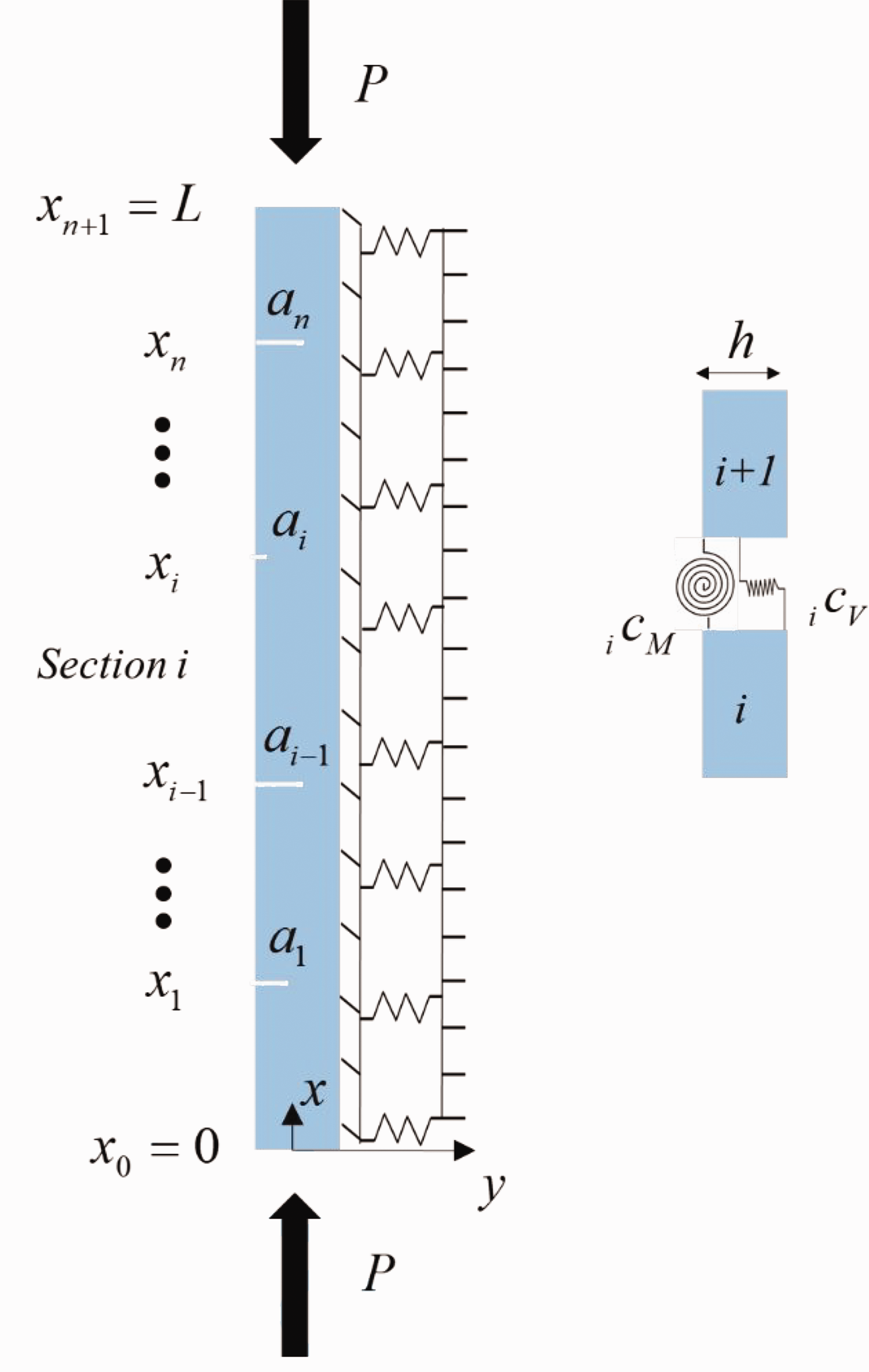
A miniaturized pillar with n edge cracks supported by an elastic foundation under the action of the compressive load P. Rotational and translational springs are used to model the influence of cracks (Dimarogonas, 1996; Fernández-Sáez and Navarro, 2002; Freund and Herrmann, 1976; Liu et al., 2008; Loya et al., 2009; Sayyad and Kumar, 2012; Sayyad et al., 2013; Yokoyama and Chen, 1998).
Formulation
Crack kinematic compatibility conditions
To include the cracks in the proposed model, it is necessary to decompose the pillar into

Here,
Nonlocal formulation
The stress-driven nonlocal theory of elasticity in Romano and Barretta (2017) is used to capture the small-scale size effect in the buckling behavior of the miniaturized pillar. Within the context of the stress-driven theory, the pointwise strain is defined through a convolution integral that includes the stresses exerted at all points within the body and the corresponding kernel function. Integrating the constitutive equation over the thickness, the following constitutive equation is derived for the pillar (Romano and Barretta, 2017):

The constitutive equation (2) is defined over the entire length of the pillar, and therefore, can be used to solve only the buckling problem of the intact pillar (Barretta et al., 2020; Darban et al., 2021). Following literature (Caporale et al., 2022; Darban et al., 2022, 2023) and for the pillar with n edge cracks, the constitutive equation (2) can be expressed as:
(

The curvature of the generic section i at the distance x has four different contributions based on equation (3) from the cross-sections within


The curvature in equations (4) and (5) is related to the transverse displacement through the relationship between curvature and deflection in the Bernoulli-Euler beam model,


Variationally consistent equations
On the basis of the Bernoulli-Euler beam model, the buckling of each section of the pillar is governed by the differential equation


Non-dimensional forms of equations
To simplify the mathematical formulation of the problem, the subsequent equations are expressed using the following dimensionless parameters:

Based on the dimensionless parameters, the buckling equation (8) and the continuity conditions in equation (9) are:


Table 2 (Appendix 2) displays the dimensionless variational boundary conditions, while the dimensionless form of equation (7) is:.

The size-dependent buckling equation (11) is a linear homogeneous sixth-order ordinary differential equation with constant coefficients whose closed-form solution is derived in Darban et al. (2021) in terms of six unknown constants. For the pillar with n cracks, the buckled configuration is defined in terms of
Numerical examples and discussion
This section presents the buckling loads and mode shapes of pillars with and without elastic foundation with one to four cracks. The first three modes of buckling and different boundary conditions are considered and the critical loads are given by varying the crack length, crack location, the parameters of the elastic foundation, and nonlocality. The bisection method is used to numerically calculate the roots of the determinant of the coefficient matrix, which correspond to the buckling loads.
Verification
To assess the accuracy of the proposed formulation, the critical loads predicted by the model are compared with previously reported results for three distinct cases. The first case is depicted in Figure 2, where the critical loads associated with a small-scale pillar containing one crack of length of
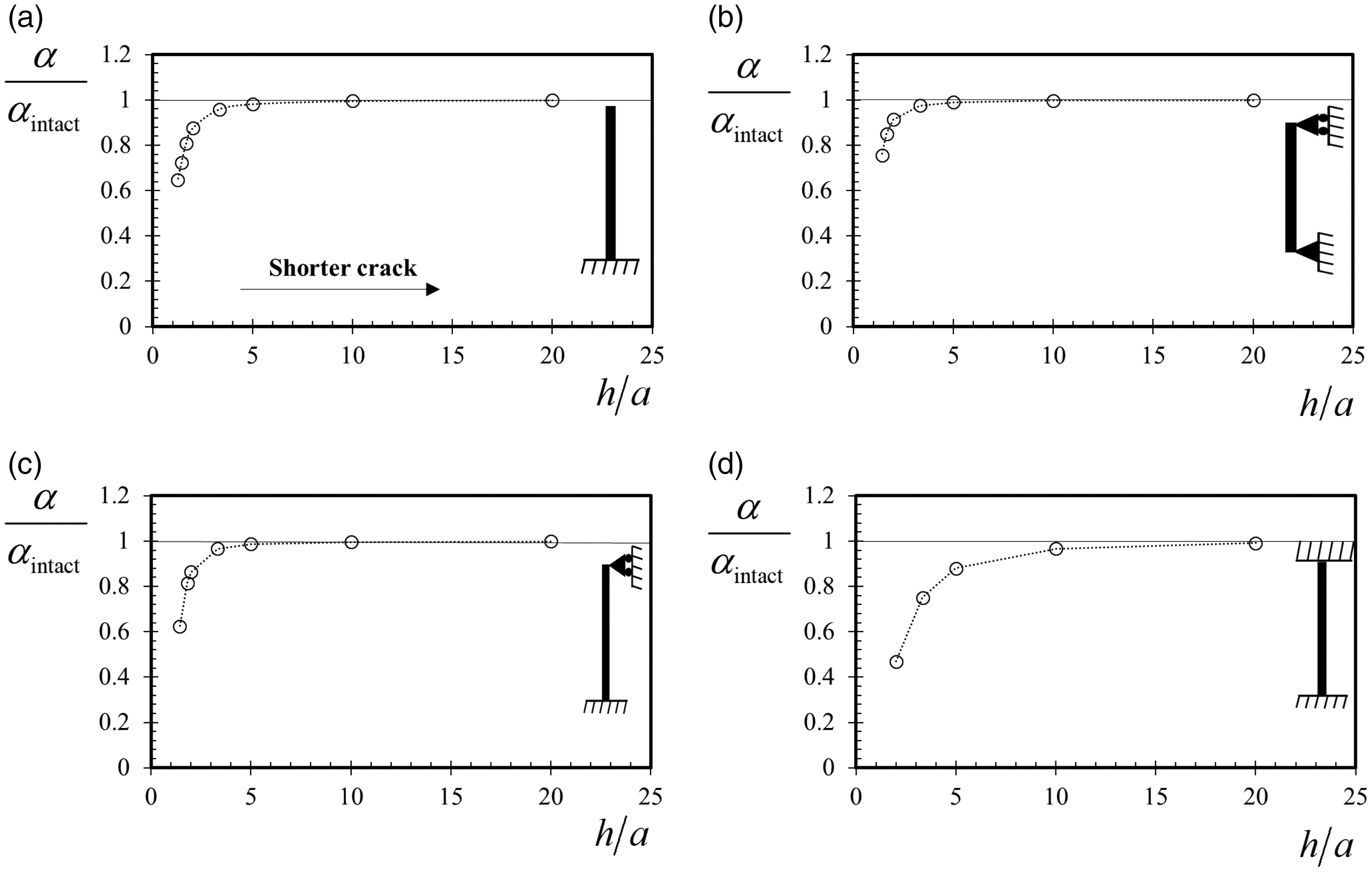
Ratios of the buckling loads upon reducing the crack length of: (a) clamped-free, (b) pinned-pinned, (c) clamped-pinned, and (d) clamped-clamped miniaturized pillars with one crack at the pillar’s mid-length. The results are normalized against the solutions of the intact pillars and presented for
The results refer to the case with
The results depicted in Figure 3 refer to the buckling loads of pillars with one damage at the mid-length with the severity of
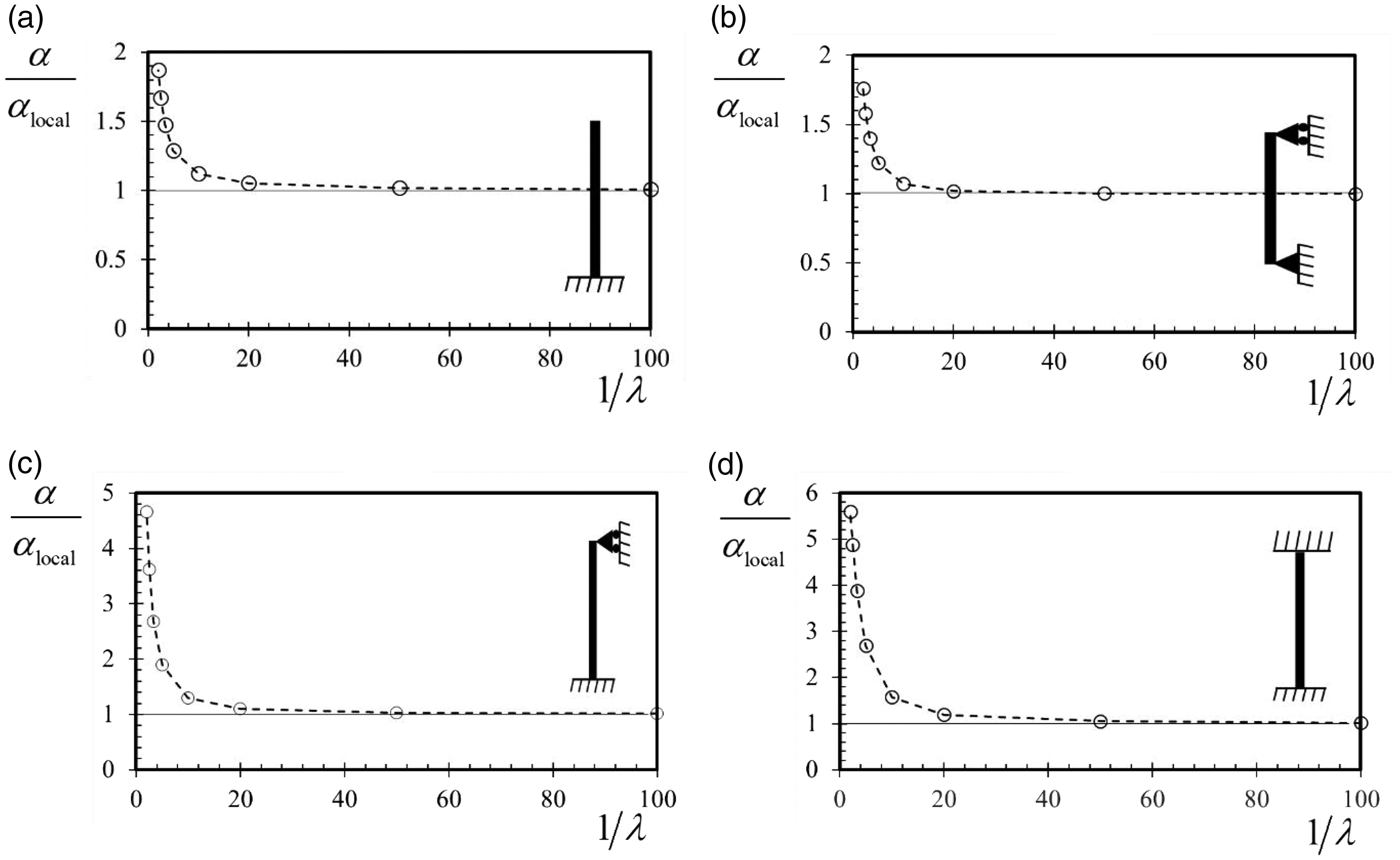
Ratios of the buckling loads vs. the nonlocal parameter for (a) clamped-free, (b) pinned-pinned, (c) clamped-pinned, and (d) clamped-clamped miniaturized pillars without elastic foundation with one crack at the mid-length. The results are normalized against the solutions of the local pillars for
The third case which is used to verify the present formulation is a miniaturized cantilever with two cracks at
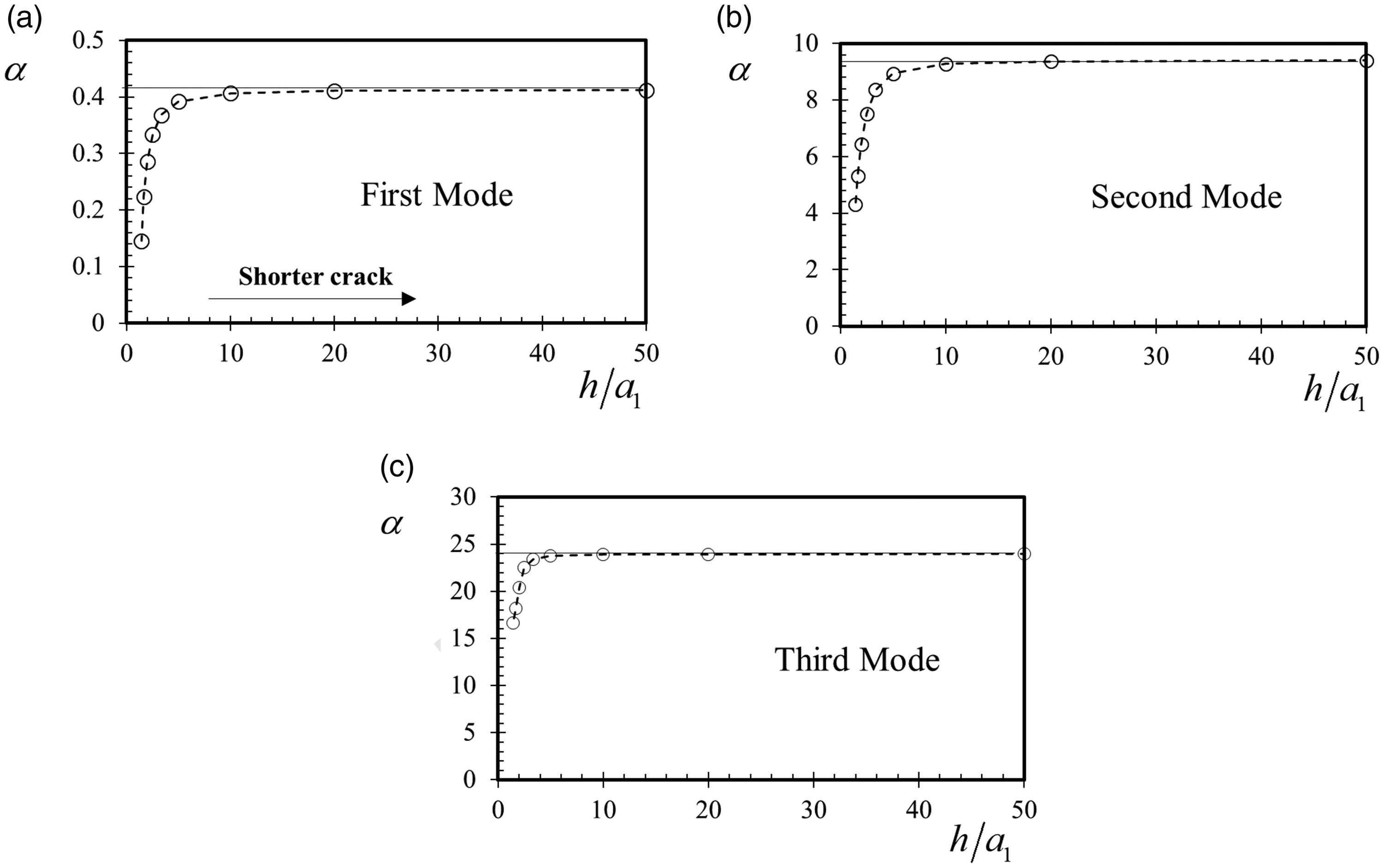
The dimensionless buckling loads of a cantilever pillar in the absence of the elastic foundation with two cracks at
Miniaturized pillars with one crack
Effects of nonlocality, boundary conditions, and elastic foundation
In Darban et al. (2023), the critical loads of micro- and nanocantilevers containing a single crack are presented. Here, the results are extended to the pillars with pinned-pinned, clamped-pinned, and clamped-clamped boundary conditions to investigate how the kinematic constraints would change the effect of the crack on the buckling loads. For this purpose, a pillar with one crack at the mid-length,
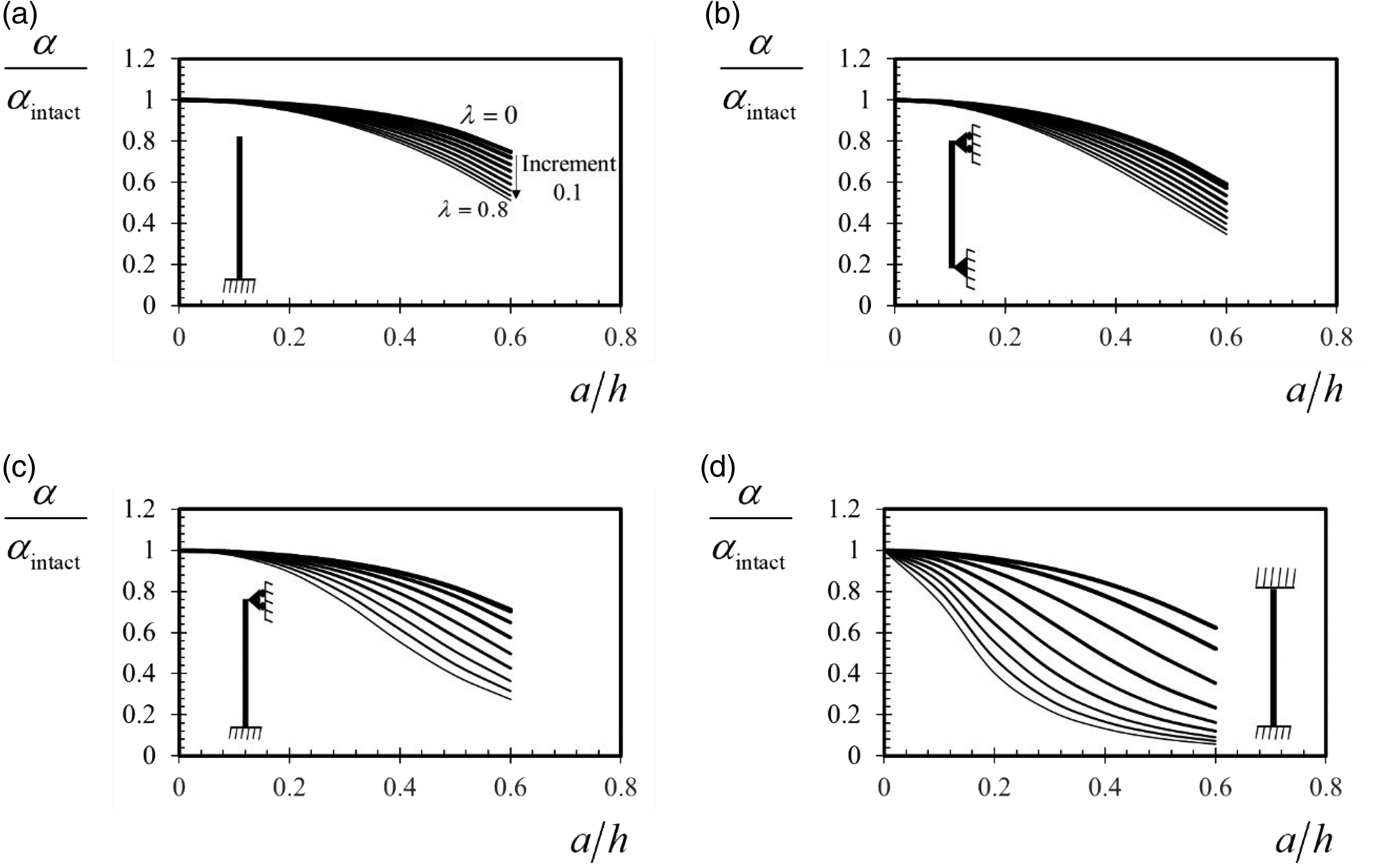
The critical loads of (a) clamped-free, (b) pinned-pinned, (c) clamped-pinned, and (d) clamped-clamped pillars in the absence of the elastic foundation by varying the nonlocal parameter and crack length. Pillars have one crack at the mid-length, and
For all the cases, the existence of a longer crack reduces the stiffness of the pillars and therefore, the buckling loads decrease. Since the clamped-clamped pillar is stiffer than the pillars with other types of boundary conditions, the presence of the mid-length crack reduces its stiffness to a greater extent. This is the underlying reason for the high dependency of the buckling loads in clamped-clamped pillars on the crack presence. In addition, the impact of the crack on the critical loads is stronger for the nonlocal pillars. For illustration, the crack with
As a result, the influence of damage on buckling loads is contingent on both the kinematic constraints at the pillar’s ends and the value assigned to the nonlocal parameter. Based on this observation, one can conclude that the occurrence of defects in the form of edge cracks is a more serious issue in the design of the miniaturized pillars than that of the large-scale pillars.
To analyze how the buckling loads of the cracked pillars are affected by the elastic foundation, the previous example is considered in the presence of an elastic foundation with
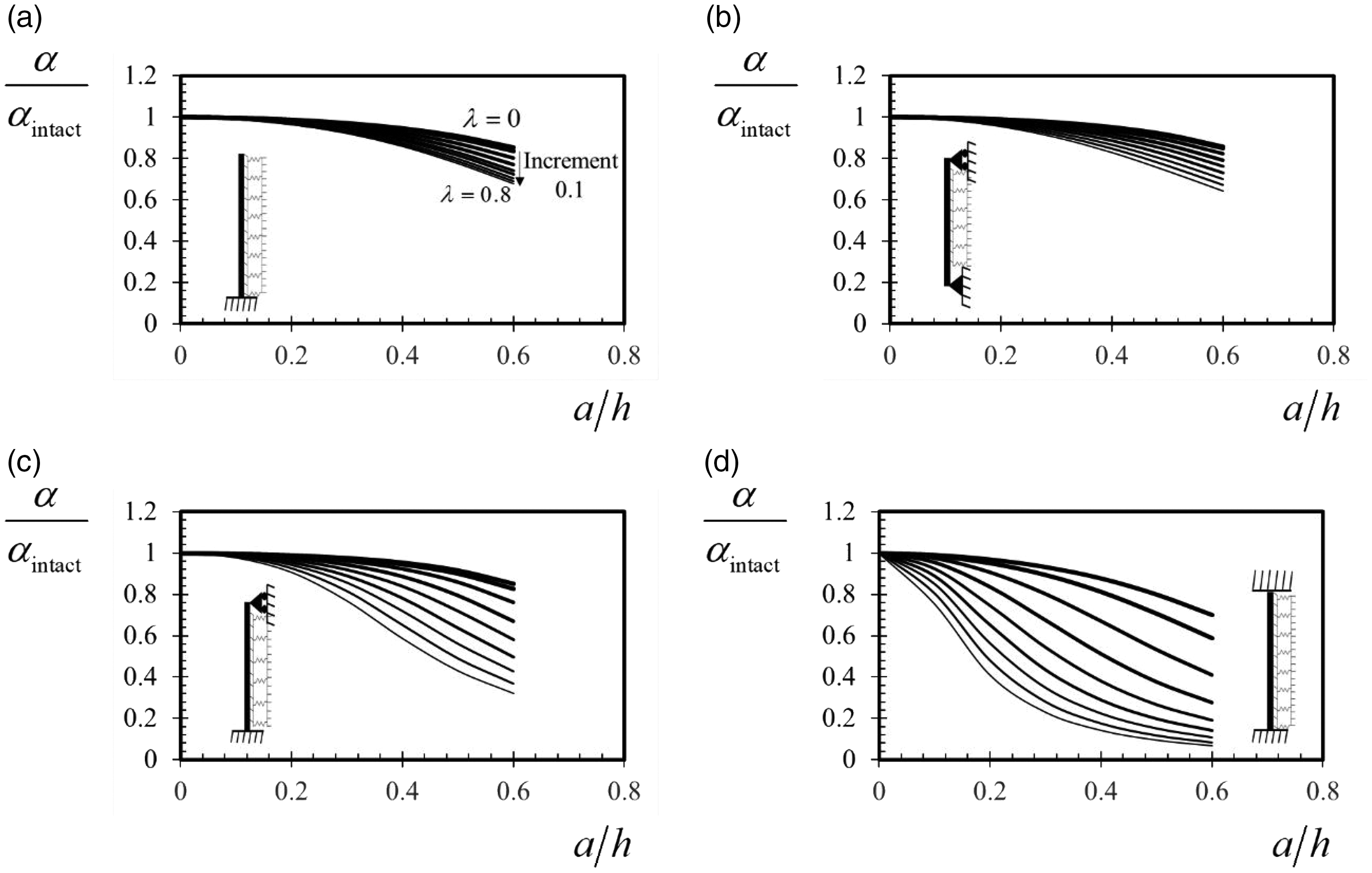
The critical loads as a function of the nonlocality and crack length for (a) clamped-free, (b) pinned-pinned, (c) clamped-pinned, and (d) clamped-clamped pillars supported by an elastic foundation with
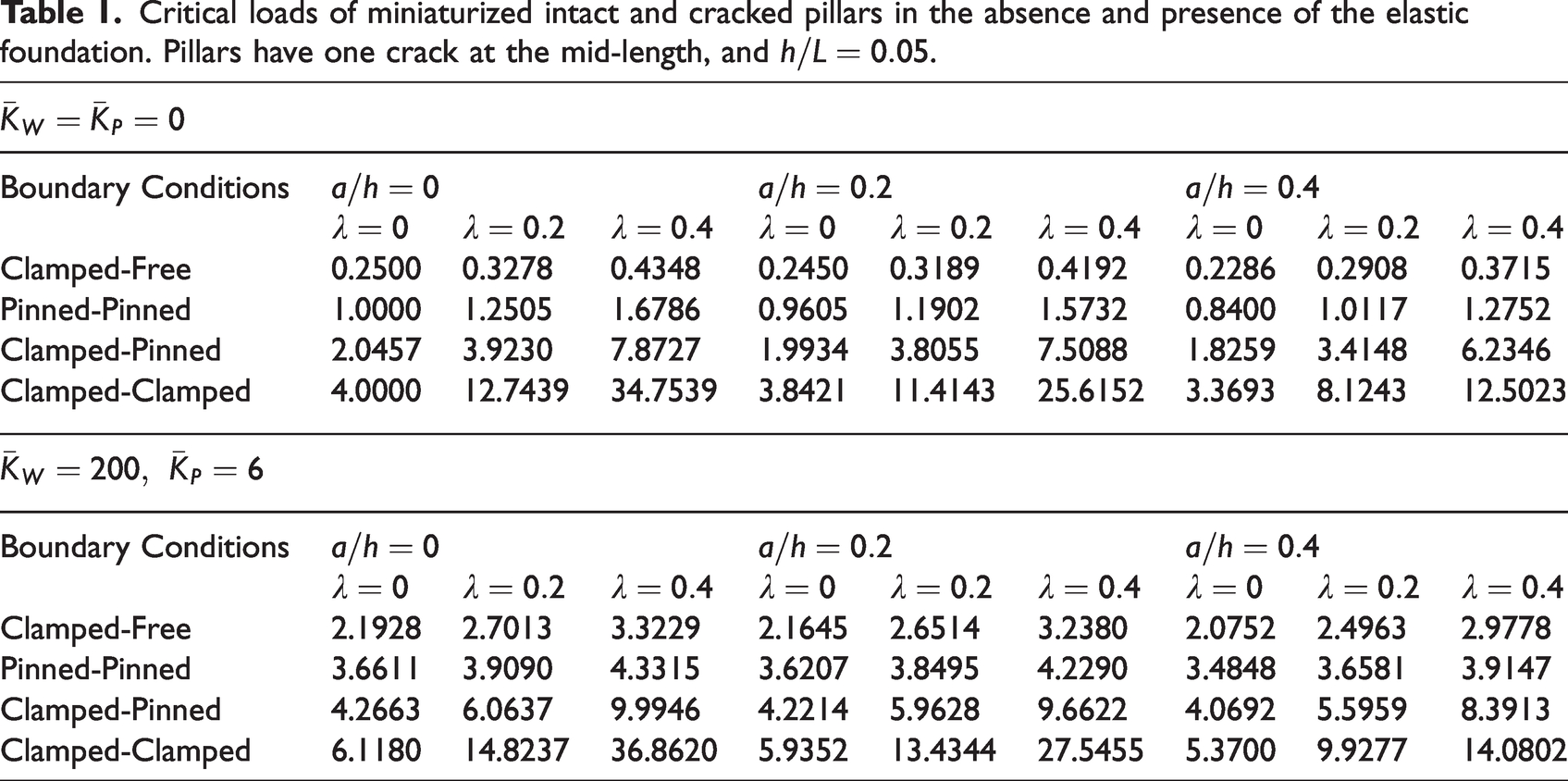
The critical loads of pillars are influenced by the elastic foundation differently according to the boundary conditions imposed. Generally, the elastic foundation has a stronger effect on the buckling loads of less constrained pillars. To verify this statement, the buckling loads of intact and cracked pillars with and without elastic foundation are given in Table 1 for typical boundary conditions. Pillars have one crack at the mid-span, and
Critical loads of miniaturized intact and cracked pillars in the absence and presence of the elastic foundation. Pillars have one crack at the mid-length, and
The curves in Figure 7 show the variations of the buckling loads of miniaturized intact and cracked pillars with one crack at
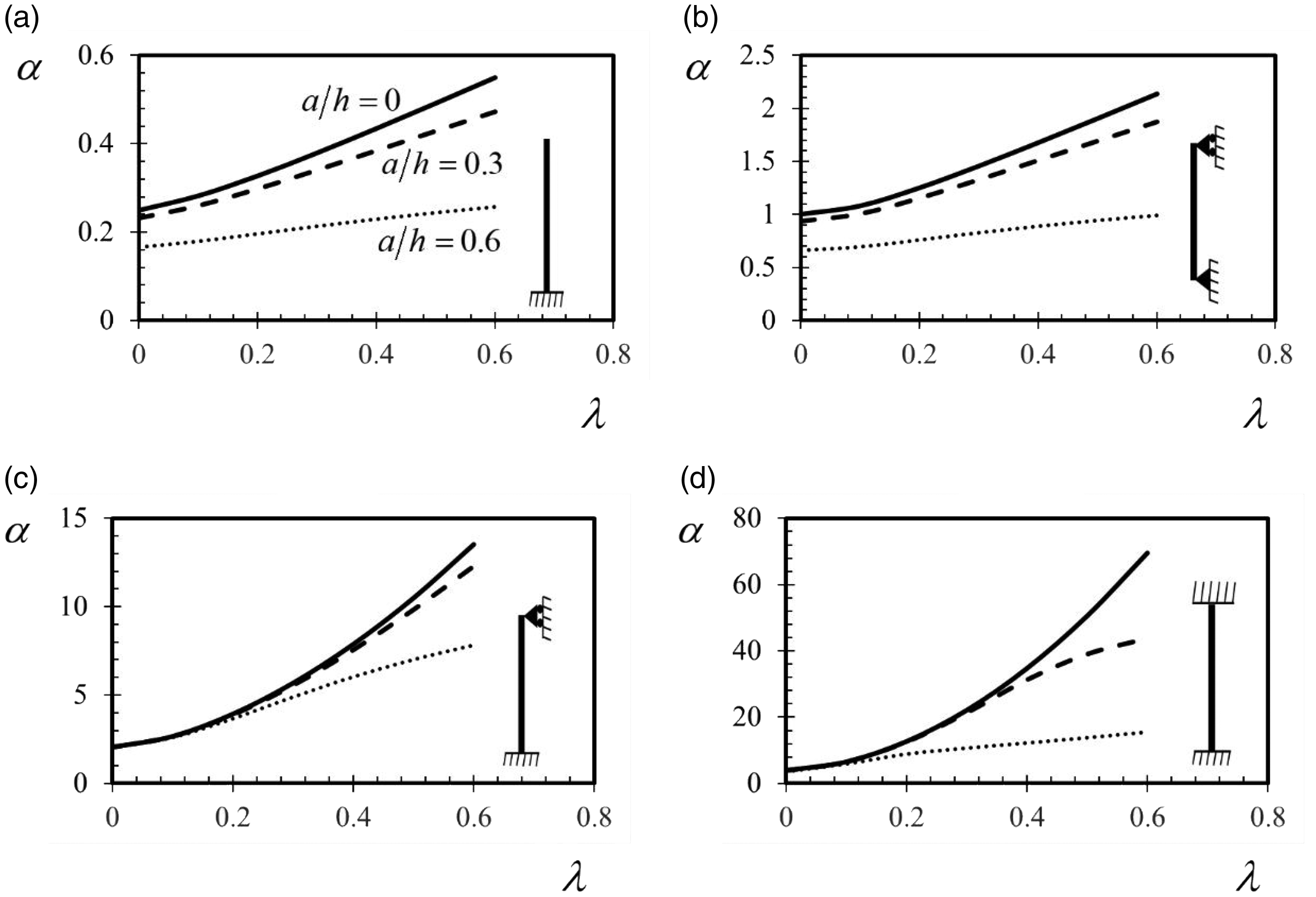
The critical loads of (a) clamped-free, (b) pinned-pinned, (c) clamped-pinned, and (d) clamped-clamped pillars without elastic foundation by varying the nonlocality parameter. Pillars have one damaged cross-section with
To investigate the impact of the nonlocality on the critical loads of pillars in the presence of the elastic foundation, the same results as those illustrated in Figure 7 are presented in Figure 8 for
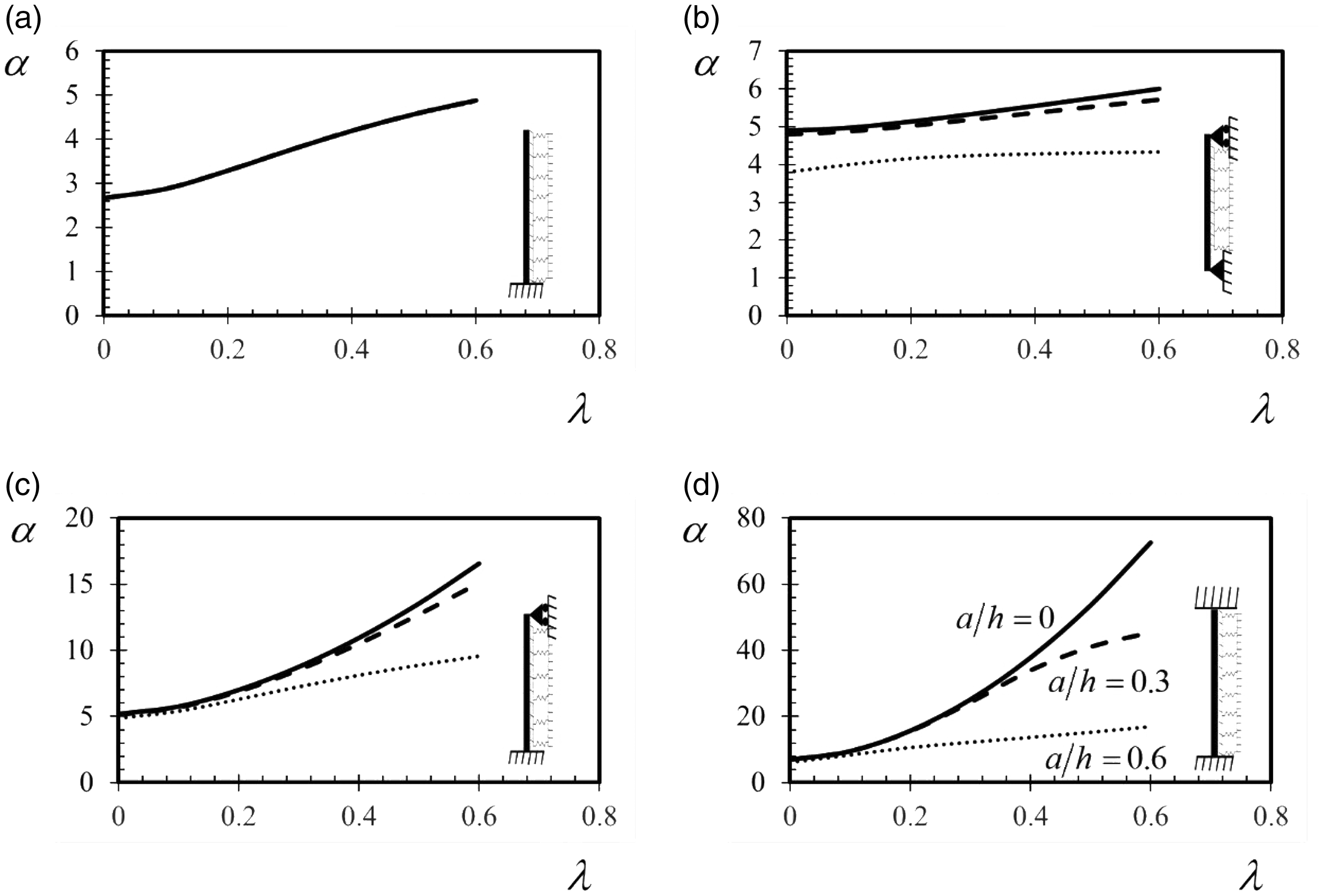
The critical loads vs. the nonlocality parameter of (a) clamped-free, (b) pinned-pinned, (c) clamped-pinned, and (d) clamped-clamped pillars supported by an elastic foundation with
An important understanding can be gained from Figure 8(a), where the curves corresponding to the different crack lengths virtually coincide. This means that the crack has almost no effect on the buckling load of the clamped-free pillar supported by the elastic foundation. To investigate this observation, the first three buckling loads of the clamped-free pillar with
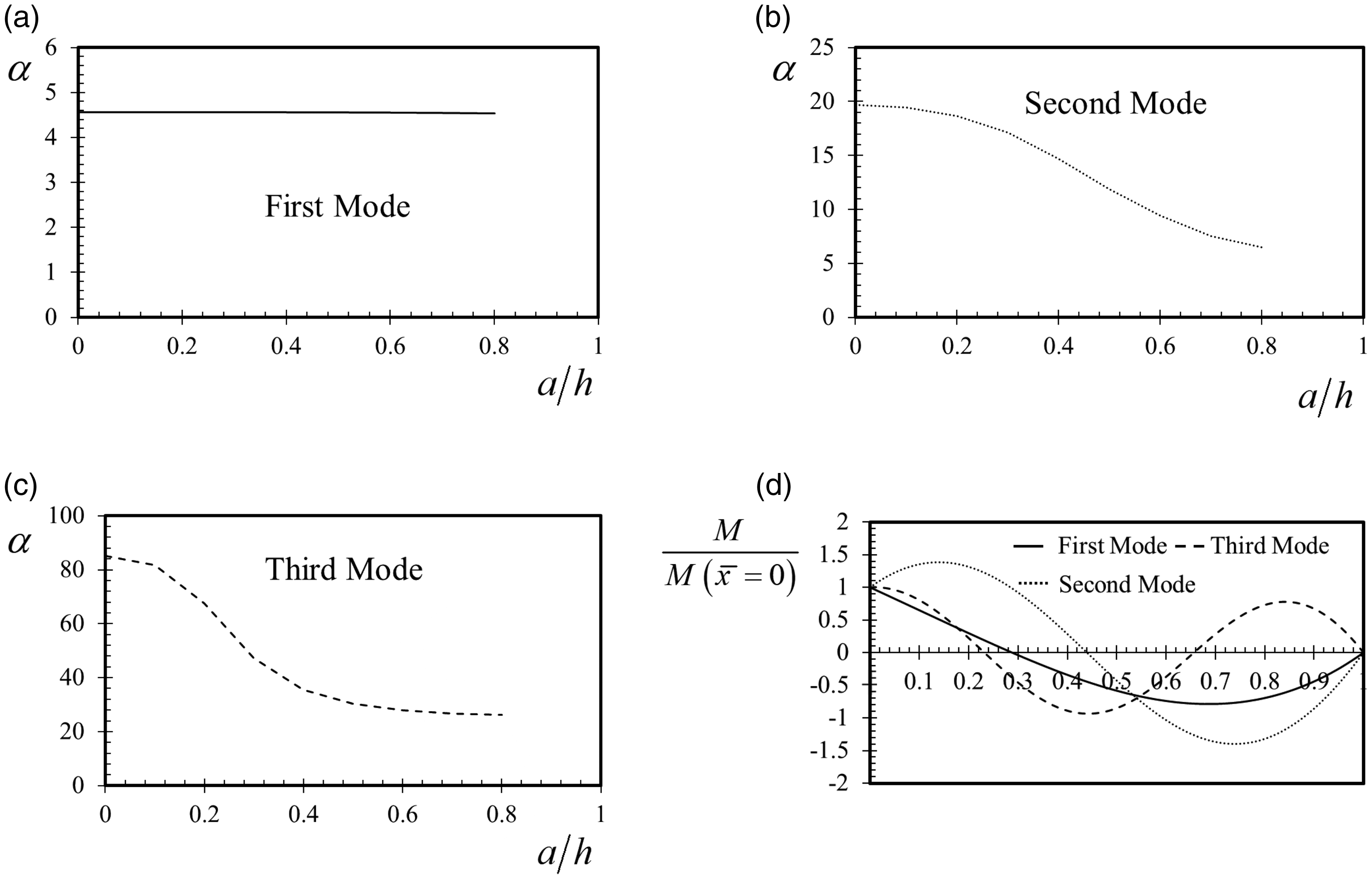
The critical loads corresponding to the (a) first, (b) second, and (c) third buckling modes of a clamped-free pillar with an elastic foundation with
Effect of crack location
It can be understood from equation (1) that the bending moment and shear force at the damaged cross-section dictate the impact of the damage on the buckling loads. Therefore, it is expected that changing the location of a crack significantly affects the buckling loads. This premise is validated by the results depicted in Figure 10, which illustrate the buckling loads of pillars without elastic foundation containing cracks of length
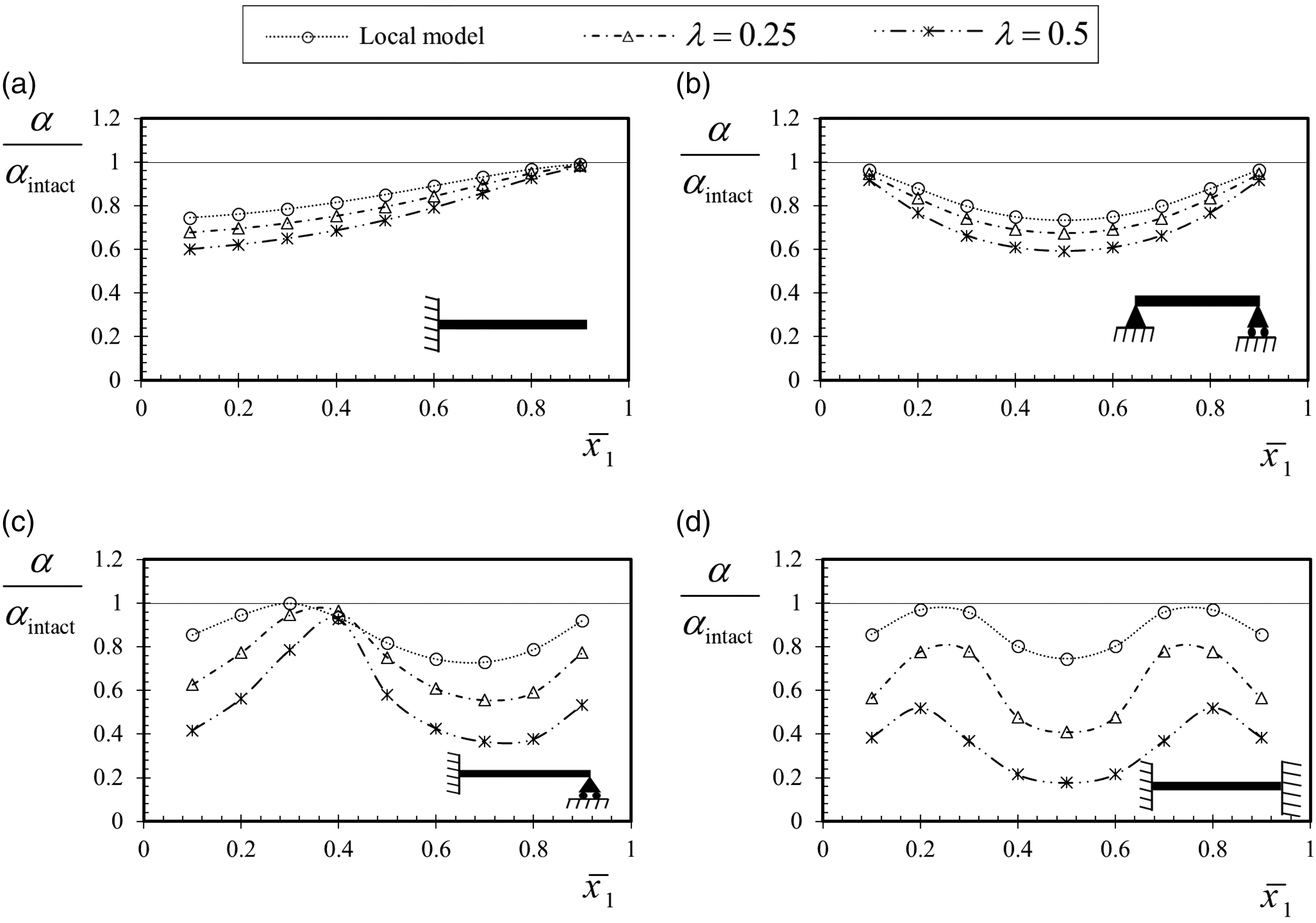
The buckling loads vs. the crack location and nonlocality for (a) clamped-free, (b) pinned-pinned, (c) clamped-pinned, and (d) clamped-clamped pillars in the absence of elastic foundation. Pillars have one crack with
In the considered case, the effect of the crack is mostly controlled by the bending moment at the damaged cross-section. More precisely, the cracks located at the cross-sections with higher bending moments have a stronger effect on the buckling load. This is the reason why the effect of the crack closer to the fixed end in the clamped-free pillar is higher than that of the cracks at further distances. For the pinned-pinned and clamped-clamped pillars, the buckling load is highly affected by the crack because the bending moment attains its maximum value at the location of the damaged cross-section that is the mid-length. The maximum effect of the crack on the buckling load of the clamped-pinned pillar occurs at a location within the interval
Since the axial variation of the bending moment depends on the buckling mode, it is expected that the impact of the damage location on the critical loads associated with the higher modes of buckling is different from that observed in Figure 10. This is shown in Figure 11 for the second mode of buckling of pillars without elastic foundation. The results in Figure 11(a) and (b) refer to the second buckling loads of the clamped-free and pinned-pinned pillars by altering the location of the damaged cross-section and the nonlocality. The pillar containing a single crack of length
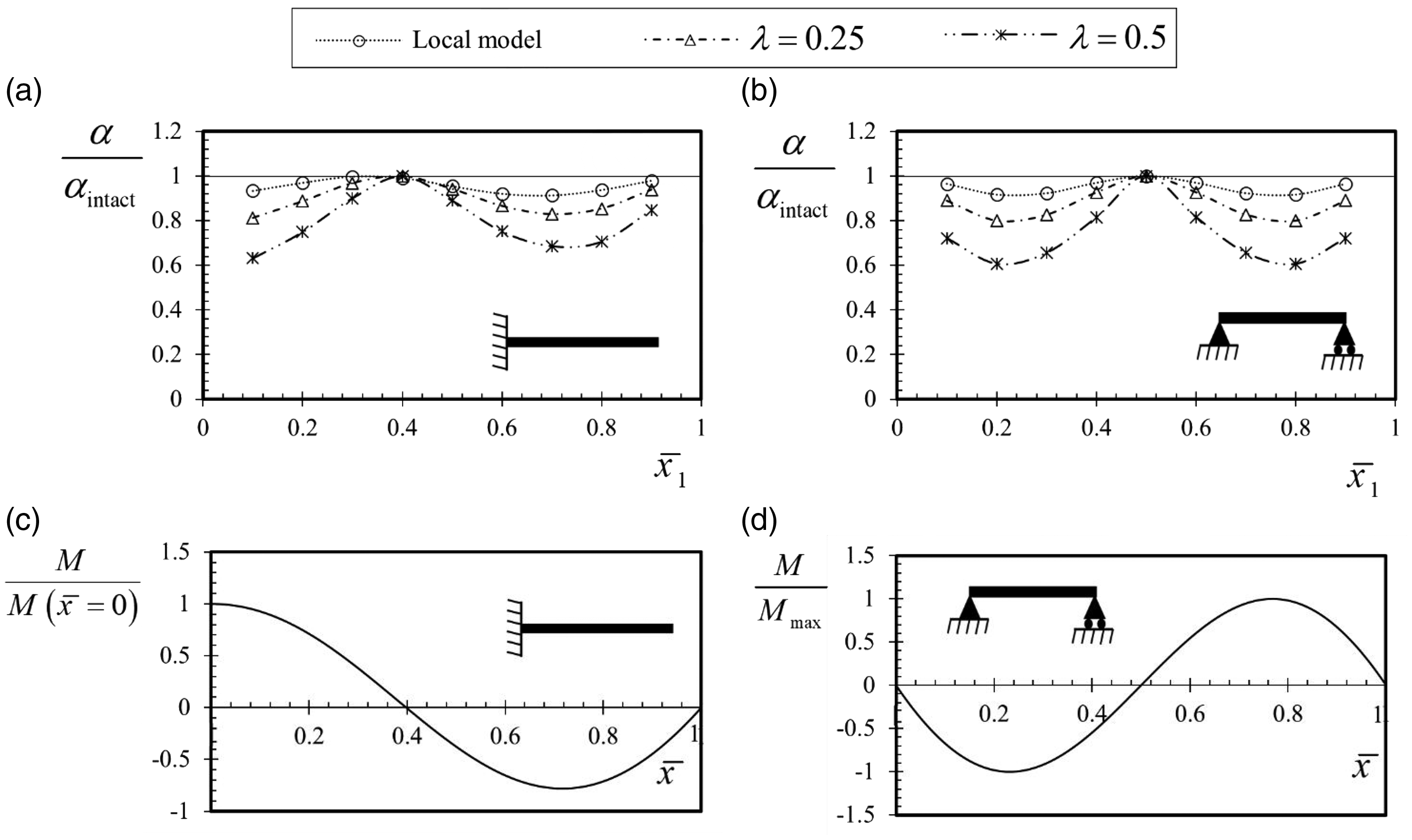
The second buckling loads of (a) clamped-free, and (b) pinned-pinned pillars without elastic foundation by altering the damage location and the nonlocality. Pillars have one crack with
The axial variation of the bending moments of the intact clamped-free and pinned-pinned pillars for
Effect of translational spring
To show that the influence of the translational spring related to the shear force at the cracked cross-section can be important in some cases, the first and higher critical loads are illustrated in Figure 12 for a clamped-clamped pillar without elastic foundation. The pillar has one crack at
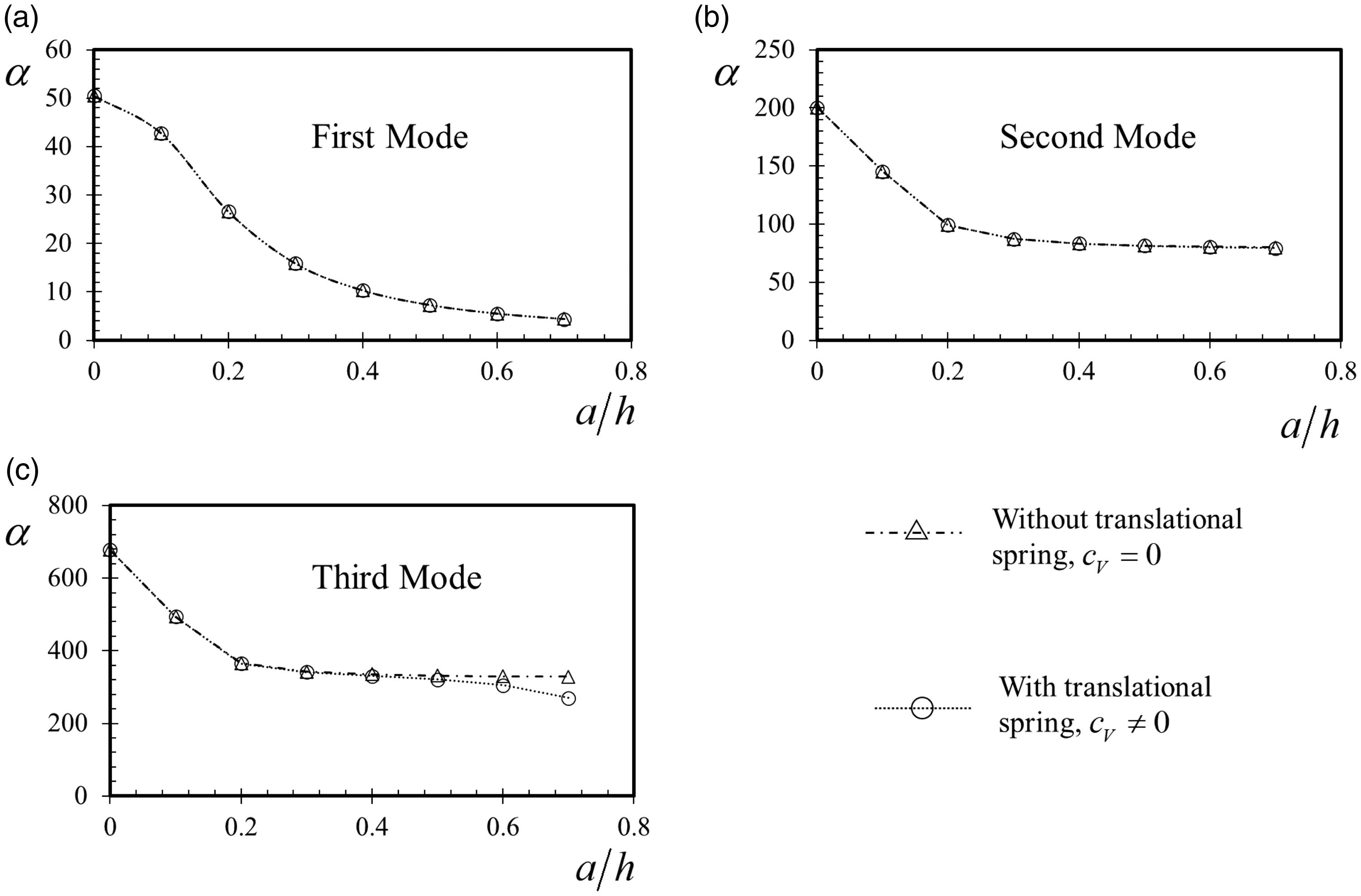
The critical loads of the (a) first, (b) second, and (c) third buckling modes of a clamped-clamped pillars without the elastic foundation in the case when the translational spring at the damaged cross-section is present (circles) or absent (triangles). The pillar contains a single crack at
Miniaturized pillars with multiple cracks
The present model is used to study the critical loads and associated buckling configurations of the pillars with two, three, and four cracks. As shown in Figure 13, the first example is a clamped-free pillar with two cracks at
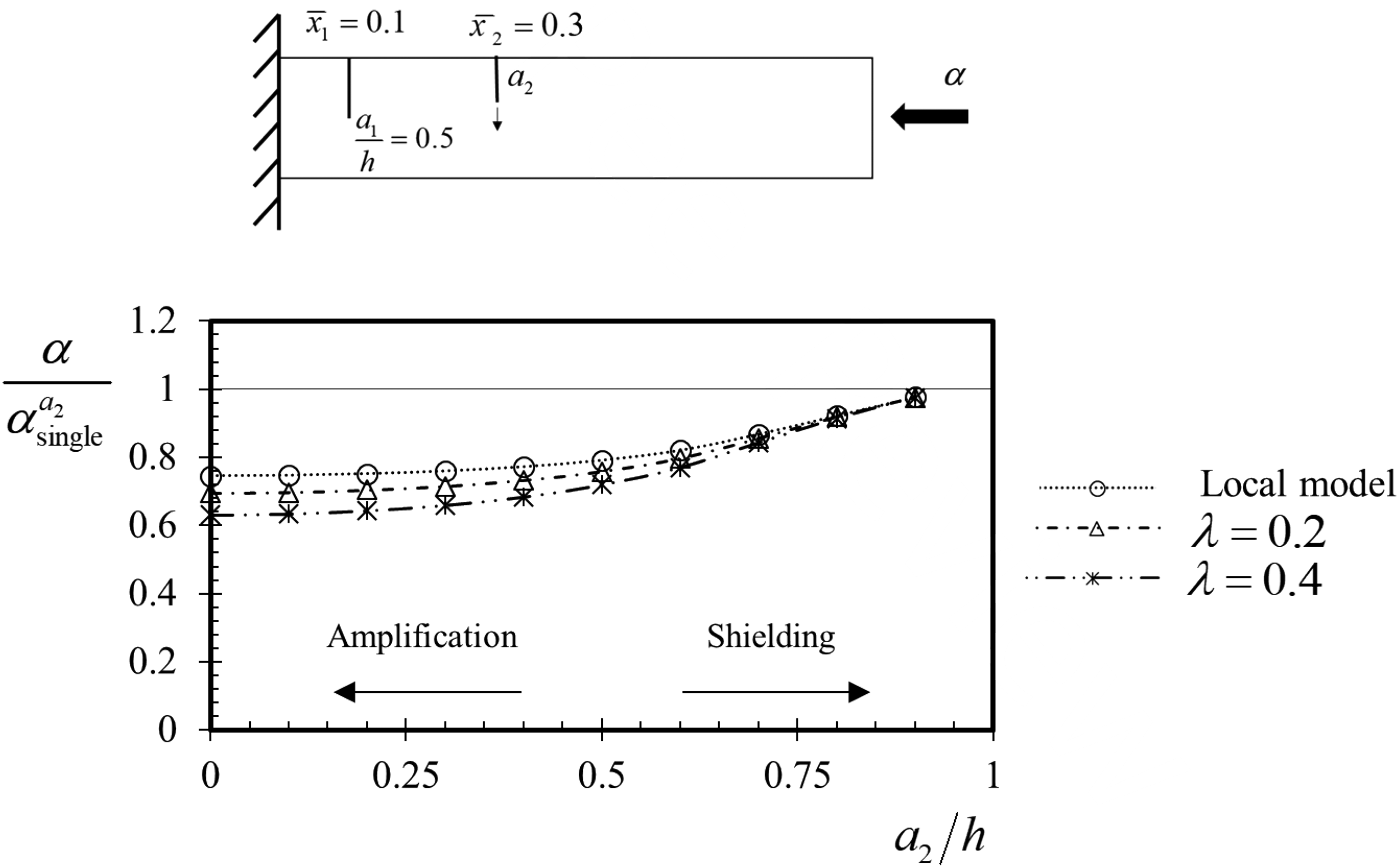
The buckling loads of a clamped-free pillar without elastic foundation with two damaged cross-sections at
For the cases with smaller values of
Cracks may also significantly change the buckling mode shapes of the miniaturized pillars. The mode shapes corresponding to the first mode of buckling of the clamped-free, pinned-pinned, clamped-pinned, and clamped-clamped miniaturized intact (solid lines) and cracked (dotted lines) pillars without elastic foundation are presented in Figure 14 for
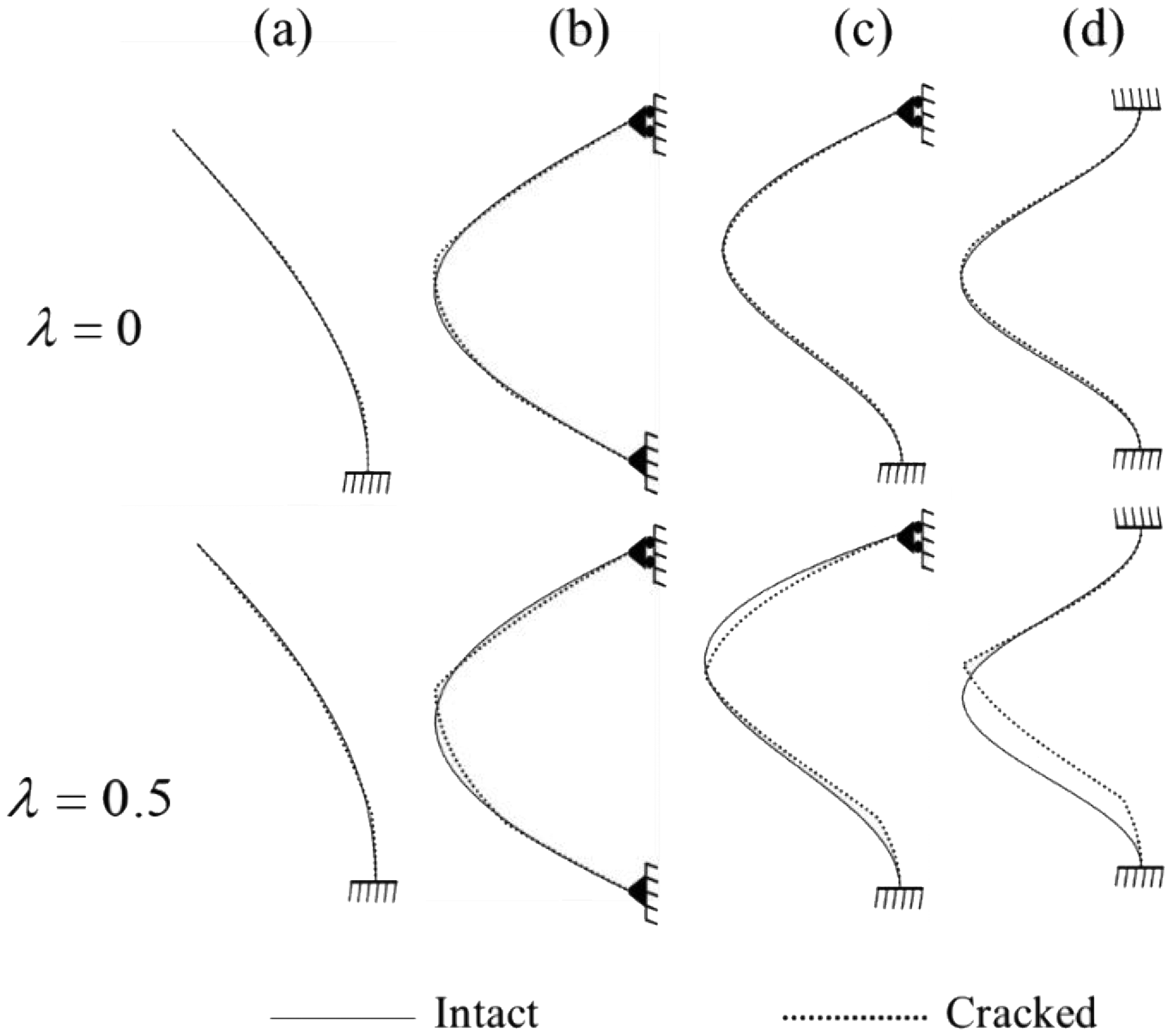
The mode shapes of (a) clamped-free, (b) pinned-pinned, (c) clamped-pinned, and (d) clamped-clamped miniaturized intact (solid lines) and cracked (dotted lines) pillars without elastic foundation. The mode shapes are illustrated for
The critical loads of clamped-clamped pillars without elastic foundation with three and four cracks are presented in Figure 15. The cracks have the same lengths,
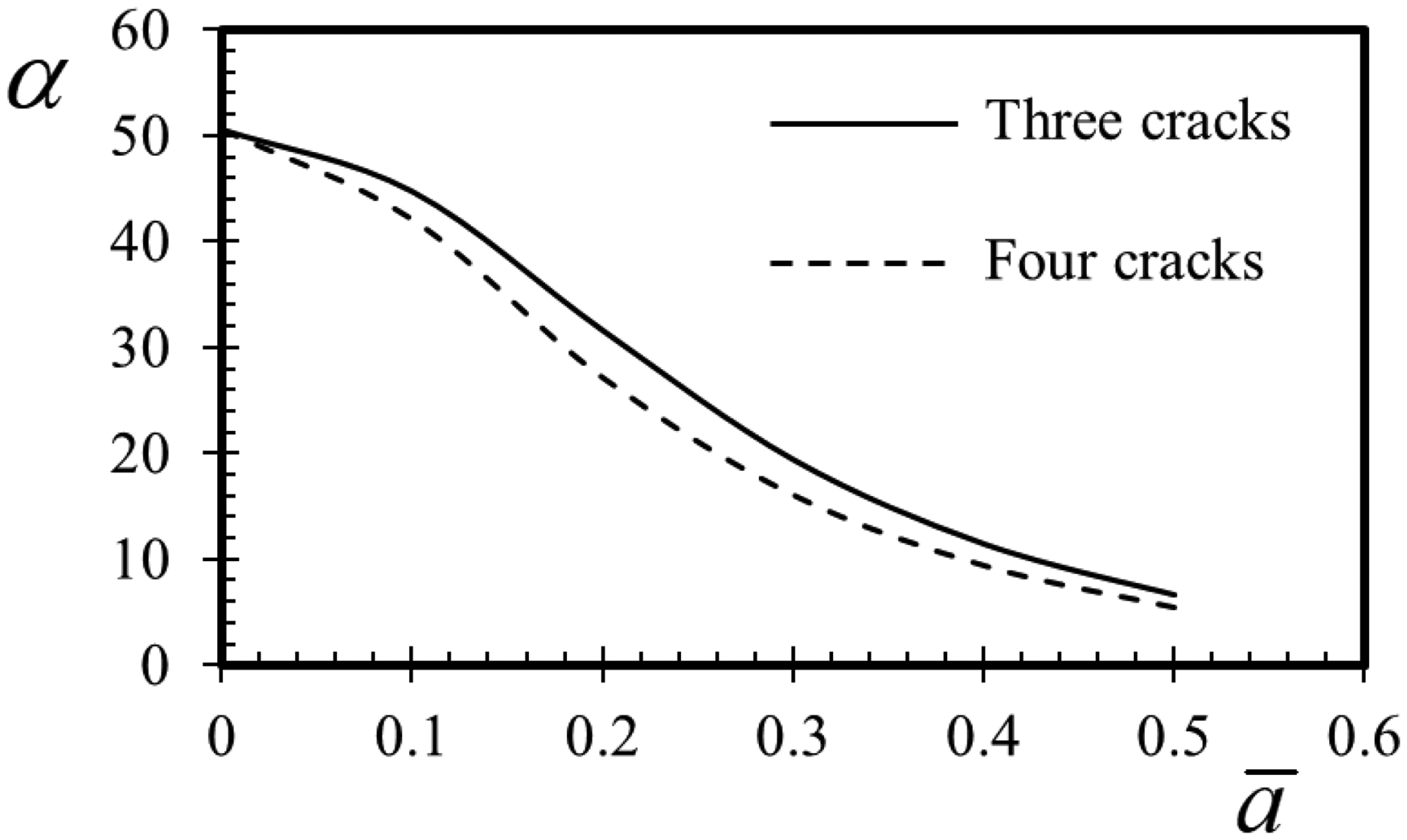
The critical loads of clamped-clamped pillars with three and four cracks having the same length
Conclusions
The effects of multiple edge cracks, shear force at the damaged cross-section, elastic foundation, and type of boundary conditions on the critical loads and buckling configurations of the small-scale pillars have been studied. The formulation combines the Bernoulli-Euler beam model with the stress-driven nonlocal theory. The sections at the left and right of a damaged cross-section have been assumed to be interconnected by rotational and translational springs.
Pillars with typical boundary conditions and with one to four edge cracks have been considered. The buckling loads have been presented by varying the crack length, crack location, nonlocality, and stiffness of the elastic foundation. The present work has yielded the following conclusions:
The presence of edge cracks has a more pronounced impact on the critical loads and buckling configurations of miniaturized pillars compared to their larger counterparts. The shielding and amplification effects due to the presence of multiple cracks are more significant in the buckling behavior of miniaturized pillars than large-scale pillars. The effect of translational spring related to the shear force at the damaged cross-section should not be excluded from the formulation when dealing with higher modes of buckling and long cracks. Elastic foundation decreases the effect of the cracks on the buckling loads. Depending on the crack's location and the boundary conditions, the critical loads can be greatly influenced by the presence of a crack.
Footnotes
Declaration of conflicting interests
The author(s) declared no potential conflicts of interest with respect to the research, authorship, and/or publication of this article.
Funding
The author(s) disclosed receipt of the following financial support for the research, authorship, and/or publication of this article: The first author gratefully acknowledges the financial support provided by the National Science Centre (NCN) in Poland through the grant agreement No: UMO-2022/47/D/ST8/01348. For the purpose of Open Access, the authors have applied a CC-BY public copyright license to any Author Accepted Manuscript (AAM) version arising from this submission.
