



Abstract
The paper discusses the effect of stress state and of loading direction on the onset and evolution of damage in anisotropic ductile metals. A series of experiments with uniaxially and biaxially loaded specimens covering a wide range of stress states and different loading directions is used in combination with corresponding numerical simulations to develop damage criteria. The underlying continuum damage model is based on kinematic definition of damage tensors. The strain rate tensor is additively decomposed into elastic, plastic and damage parts. The anisotropic plastic behavior of the investigated aluminum alloy sheets is governed by the Hoffman yield condition taking into account the strength-differential effect revealed by uniaxial tension and compression tests. Based on this yield criterion generalized anisotropic stress invariants as well as the generalized stress triaxiality and the generalized Lode parameter are defined characterizing the stress state in the anisotropic ductile metal. A damage criterion formulated in terms of these anisotropic stress invariants is proposed and damage mode parameters allow adequate consideration and combination of different damage processes on the micro-level. At the onset of damage the anisotropic stress parameters are determined. With these experimental-numerical data the damage mode parameters are identified depending on stress state and loading direction.
Keywords
Introduction
Engineering materials have to fulfill several demands to reduce energy consumption, to enforce safety requirements, to increase lifetime and to improve cost efficiency. For example, to develop an efficient design of structural components in the automotive industries an important aspect is the evaluation of the forming severity. In this context, necking can be seen as a major failure process indicating loss of load carrying capacity. Therefore, new high quality metals and alloys have been developed with optimized material properties to reduce localization of irreversible strains as well as damage and failure during loading. Since damage and fracture may cause remarkable problems accurate prediction of the performances of these ductile metals is very important. Thus, development of accurate and practically applicable material models is necessary to perform numerical simulations of complex loading processes. To validate the constitutive approach experiments covering a wide range of stress states and loading histories have to be performed.
Many experiments with various specimens have been proposed in the literature to examine inelastic deformation behavior and damage processes. In particular, results of tests with uniaxially loaded specimens with unnotched and notched geometries have been reported by Bao and Wierzbicki (2004), Bonora et al. (2005), Bai and Wierzbicki (2008), Brünig et al. (2008), Gao et al. (2010), Li et al. (2011), and Dunand and Mohr (2011) investigating the effect of the stress state on damage and fracture mechanisms. Special geometries for uniaxially loaded specimens have been developed by Bao and Wierzbicki (2004), Brünig et al. (2008), Gao et al. (2010), Driemeier et al. (2010), Li et al. (2011), Roth and Mohr (2016), Lou et al. (2017), and Liu et al. (2019) to analyze the deformation and failure behavior under shear dominated stress states. Combined shear-tension tests with aluminum tubes have been proposed by Scales et al. (2019). To cover a wide range of stress states experiments with biaxially loaded cruciform specimens have been presented by Demmerle and Boehler (1993), Lin and Ding (1995), Müller and Pöhland (1996), Green et al. (2004), Kuwabara (2007), Kulawinski et al. (2011), and Song et al. (2017). For studies of stress-state-dependent damage and fracture mechanisms in ductile metals Brünig et al. (2015a, 2015b) and Gerke et al. (2017) proposed new geometies for biaxially loaded specimens. These new specimens have been extensively used to analyze the influence of non-proportional load paths (Brünig et al., 2019; Gerke et al., 2020) or the effect of loading direction in anisotropic metals (Brünig et al., 2021, 2022) on damage and failure behavior.
In automotive and aeronautical industries metals can be deformed by various manufacturing process such as rolling, extrusion or deep drawing to produce thin sheets. These forming operations often lead to anisotropies due to internal changes in the crystallographic structure. To simulate the mechanical behavior of these thin sheets in an accurate manner the deformation-induced anisotropies have to be taken into account in the constitutive model. For example, Hill (1948) proposed an anisotropic generalization of the von Mises criterion with a quadratic function of stresses. For plane stress applications identification of material parameters is also based on r-values which are defined assuming isochoric plastic deformations and are computed using measured plastic strain increments during loading in different directions with respect to the rolling direction. Badreddine et al. (2015) and Badreddine and Saanouni (2017) used this yield condition with kinematic hardening in their continuum damage model. Barlat et al. (2005), Ha et al. (2018), and Hu et al. (2021) presented anisotropic yield conditions with non-quadratic functions where identification of material parameters is based on results of uniaxial and equi-biaxial tension tests. Alternatively, Stoughton and Yoon (2009) discussed a quadratic yield criterion combined with four hardening curves taken from uniaxial tension tests along rolling, diagonal and transverse directions as well as from equi-biaxial tests. In addition, based on results of cruciform hole expansion tests Tsutamori et al. (2020) developed a spline yield condition showing better accuracy than conventional anisotropic yield functions proposed by Hill (1948) and Barlat et al. (2005). Furthermore, many metals show different yield behavior under tension and compression loading (Spitzig et al., 1975, 1976; Spitzig and Richmond, 1984). This strength-differential (SD) effect is also examined in the present paper and the anisotropic plastic behavior is proposed to be modeled by the Hoffman yield criterion (Hoffman, 1967) which was developed to investigate failure in composite structures.
Furthermore, in engineering applications accurate information on the influence of micro-defects on stress states in multi-axially loaded structures is needed. Thus, modeling of damage in materials has received remarkable attention and different damage models have been proposed based on experiments and numerical simulations, see Lemaitre (1985), Chow and Wang (1987), Chaboche (1988), Brünig (2003), Abu Al-Rub and Voyiadjis (2003), and Badreddine and Saanouni (2017), among others. In these approaches internal deterioration of material properties is taken into account and, therefore, they can be seen as a tool between elastic plastic continuum and fracture mechanics. Critical values of damage variables can be taken to predict onset of macro-cracking.
In the present paper, results of experiments with the X0- and the H-specimen performed by Brünig et al. (2021, 2022) are used to develop the anisotropic plastic model and the damage condition which has been applied to the aluminum alloy EN AW-2017A (EN AW-AlCu4MgSi). The experiments clearly showed that the stress state as well as the loading direction influenced the damage mechanisms on the micro-level and, therefore, both dependencies are here taken into account. The analysis is based on a continuum model where the anisotropic plastic behavior including the SD effect is governed by the Hoffman yield criterion. Corresponding generalized stress invariants based on this condition are formulated and the current stress state is characterized by the generalized stress triaxiality and the generalized Lode parameter. With these parameters a stress-state-dependent damage criterion for ductile metals with plastic anisotropy is proposed taking into account different damage mechanisms in a phenomenological way. Numerical simulation of a series of experiments based on the elastic-plastic model are performed to identify the onset of damage in the respective tests with uniaxially and biaxially loaded specimens cut in different directions with respect to the rolling direction. Analysis of stress states in critical parts of the specimens is used to develop stress-state- and loading-direction-dependent functions for the damage criterion.
Continuum model
Analysis of inelastic deformations and damage behavior of ductile metals is based on the continuum framework developed by Brünig (2003), Brünig et al. (2013), and Brünig (2016). Their phenomenological model considers isotropic plastic behavior and is based on experimental and numerical studies on both the micro- and the macro-level examining various mechanisms acting on these scales as well as their interaction. To enhance this continuum model for anisotropic plasticity a series of multiaxial tests has been performed by Brünig et al. (2021, 2022). These experiments reveal the influence of the loading direction on evolution of inelastic deformations and on damage and failure mechanisms.
The basic idea of the continuum damage approach is the definition of the damage strain tensor,
The fictitious undamaged configurations are considered to formulate the isotropic elastic law leading to the effective Kirchhoff stress tensor




Further material parameters modeling the plastic anisotropy are included in the tensor

with
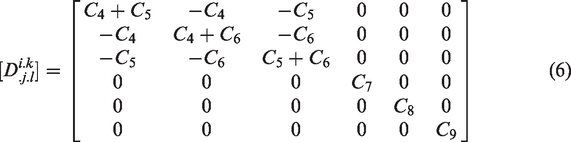
For isotropic material behavior stress invariants can be taken into account to characterize the stress state. With these invariants it is possible to define the stress triaxiality and the Lode parameter which are often used to develop stress-state-dependent functions (see, for example, Brünig et al., 2013). Badreddine et al. (2015) and Badreddine and Saanouni (2017) modeled the anisotropic plastic behavior with the Hill yield condition and used the classical isotropic definition of the stress triaxiality given by the ratio of the mean and the von Mises equivalent stress. Similarly, Hosseini et al. (2022) studied the effect of material orientation on void growth based on the orthotropic Yld2004 yield criterion (Barlat et al., 2005) also using the classical isotropic definition of the stress triaxaility and the Lode parameter expressed in terms of the principal stresses. However, in the analysis of anisotropic materials it is important to take into account the directionality of the stress state with respect to the material orientation and, therefore, a generalized stress triaxiality and Lode parameter have to be developed. In this context, to examine ductile fracture of anisotropic metals Park et al. (2017) suggested the Lou-Huh criterion (Lou et al., 2012; Lou and Huh, 2013) and proposed an anisotropic stress triaxiality based on Hill’s yield condition (Hill, 1948). Park et al. (2018) recommended an alternative definition of the stress triaxiality taking into account the Yld91 criterion (Barlat et al., 1991). However, in these anisotropic definitions only the equivalent stress is based on an anisotropic yield condition whereas the classical definition of the mean stress with the trace of the stress tensor is used. In addition, the Lode parameter is classically formulated with the principal stress values.
Since all parameters characterizing the stress state in anisotropic metals should take into account the material orientation, in the present paper, generalized invariants are introduced based on the Hoffman yield condition (2). In particular, the first Hoffman invariant is defined as



Based on these Hoffman invariants the generalized Hoffman stress triaxiality


With the introduction of the generalized invariants (7) to (9) the Hoffman yield condition (2) can be rewritten in the form

Spitzig and Richmond (1984) reported that during their experiments with tension and compression tests superimposed by various hydrostatic pressures only marginal plastic volume increases in ductile metals have been measured and, thus, plastic incompressibility is assumed. Therefore, the evolution of plastic strains during loading is governed by a non-associated flow rule. Based on the plastic potential function



Furthermore, the damaged configurations are considered to formulate equations modeling the damage behavior of ductile metals (Brünig, 2003, 2016). In particular, the Kirchhoff stress tensor

It has been observed in many experiments with ductile metals that damage mechanisms on the micro-level strongly depend on the stress state: during tensile loading with high positive stress triaxialities the predominant damage processes are nucleation, growth and coalescence of micro-voids, during shear and compressive loading with small positive or negative stress triaxialities the main mechanisms are formation and growth of micro-shear-cracks and for moderate positive stress triaxialities damage is a combination of these basic processes whereas no formation of damage has been detected for high negative stress triaxialities (Brünig et al., 2018). Thus, the onset and evolution of damage in plastically anisotropic metals is characterized by the damage condition

In addition, the damage strain rate tensor


Material and elastic-plastic parameters
The aluminum alloy EN AW-2017A (EN AW-Al Cu4MgSi) taken from 4 mm thick sheets is analyzed in detail. Uniaxial tension and compression as well as shear tests taken from the sheets in different directions with respect to the rolling direction (0°, 45°, 90°) have been performed to identify the material parameters. Figure 1(a) shows the geometry for the flat dog-bone-shaped specimens for the tension and compression tests. It is characterized by a short uniform part allowing compression tests without early occurrence of buckling. In addition, shear tests have been carried out with new specimens where the symmetric geometry is characterized by two notched parts (Figure 1(b)). Details of the geometry of the central region with notches are shown in Figure 1(c). During the respective experiments three-dimensional displacement fields on the surfaces of the specimens have been monitored by digital image correlation (DIC) using a four-camera system with one pair on the front and one pair on the back surface of the specimen (see Brünig et al. (2022) for further details).
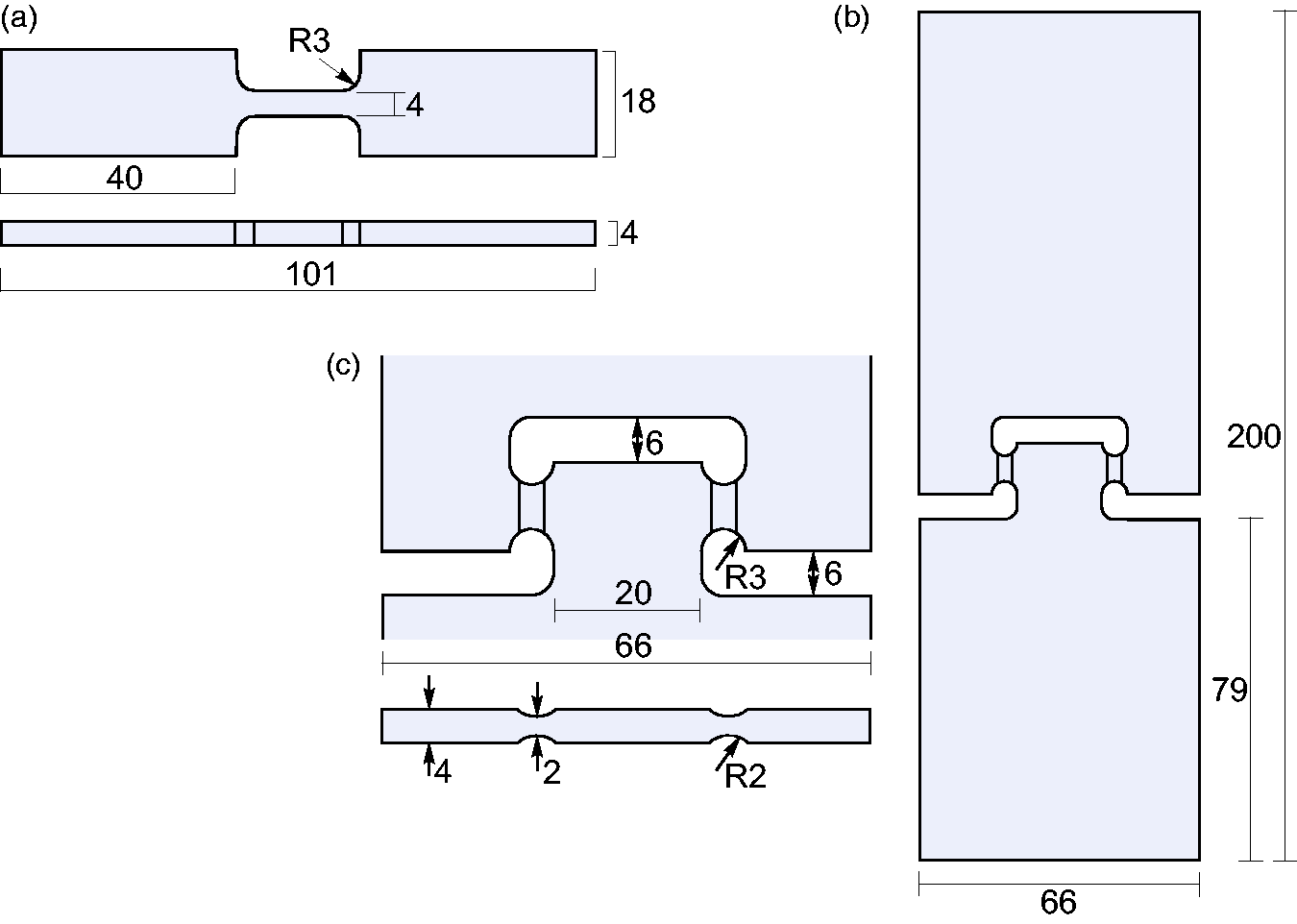
(a) Tension/compression specimen, (b) Shear specimen and (c) Central part of the shear specimen; all dimensions in mm.
From the uniaxial tests, true stress–true plastic strain curves are shown in Figure 2(a). Comparison of the respective tension and compression tests shows the SD-effect with smaller initial yield stresses under compression than under tensile loading. During further compressive loading a more pronounced increase in yield stress can be seen which might be a result of 3D-effects caused by non-homogeneous inelastic deformations of the short specimen and, thus, will not be taken into account in the present analysis. The material parameters for isotropic elastic behavior are determined: Young’s modulus

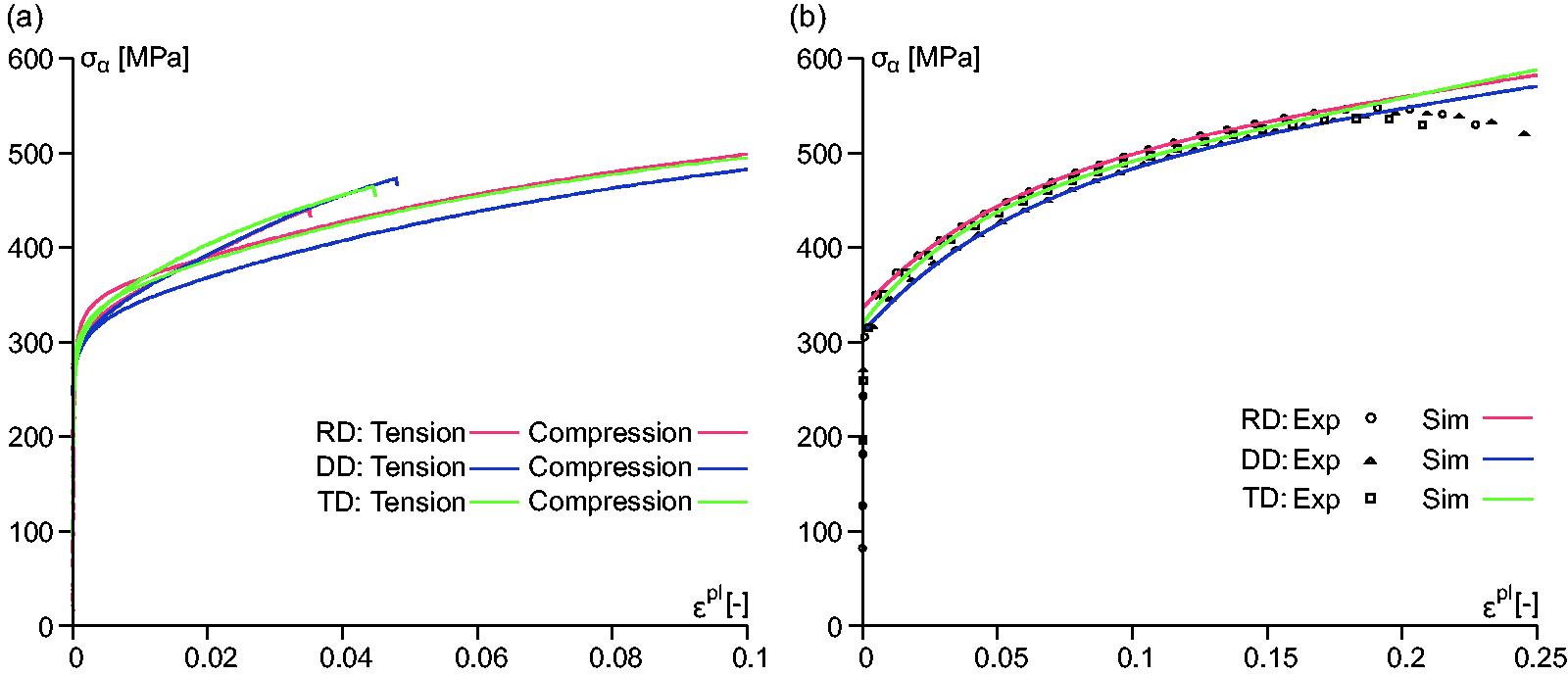
(a) Uniaxial true stress–uniaxial true plastic strain curves for tension and compression tests and (b) Numerical simulation of the tension tests.
Plastic material parameters.

RD: rolling direction.
Identification of anisotropic material parameters of thin metal sheets is restricted to tests with flat specimens cut in the plane of the sheet and, therefore, plane stress conditions are taken into account where all stresses in the plane with the normal in z-direction are taken to be marginal. In particular, from the tension (T) and compression (C) tests with specimens cut in RD (x-direction) the parameter


Further anisotropy parameters can be identified by an alternative indirect method based on the ratios of measured plastic strain increments in uniaxially loaded specimens cut in RD and TD as well in the diagonal direction (DD, 
Lankford coefficients.

Based on the results of the tension test with the specimen cut in RD the parameter. The Lankford coefficients for different directions are shown in Table 2






If in the critical region additional normal stresses 
In the present analysis the parameter
Anisotropy parameters.

Experimental and numerical aspects
The tension, compression and shear tests with uniaxially loaded specimens discussed above have been used to identify the elastic-plastic parameters for the anisotropic ductile metal which serve as input parameters in the numerical simulations. On the other hand, series of experiments with biaxially loaded specimens have been performed to investigate the stress-state-dependent damage behavior as well as to study the effect of the loading direction on damage and failure mechanisms in anisotropic metals. In particular, the X0- and the H-specimen have been extensively tested by Brünig et al. (2021, 2022) considering different load ratios leading to a wide range of stress states in notched parts where damage occurred. They also studied the influence of the orientation of the specimens with respect to the principal axes of anisotropy during loading and concluded that in both specimens loading in RD and TD leads to more and larger micro-voids whereas during loading in DD more pronounced micro-shear-cracks are formed. The experimental results reported in Brünig et al. (2021, 2022) are used in the present paper to develop the stress-state- and loading-direction-dependent damage criterion (17).
The biaxial experiments were carried out with the biaxial test machine type LFM-BIAX 20 kN (produced by Walter & Bai, Switzerland) containing four electro-mechanically, individually driven actuators, see Figure 3(a). The specimens were clamped in the four heads of the actuators and during the tests they were biaxially strained with proportional load paths. During the experiments three-dimensional displacement fields in notched regions of the specimen were monitored by DIC using stereo setting with eight 6.0 Mpx cameras (Figure 3(b)). More details on the experimental equipment are given in Brünig et al. (2021, 2022).
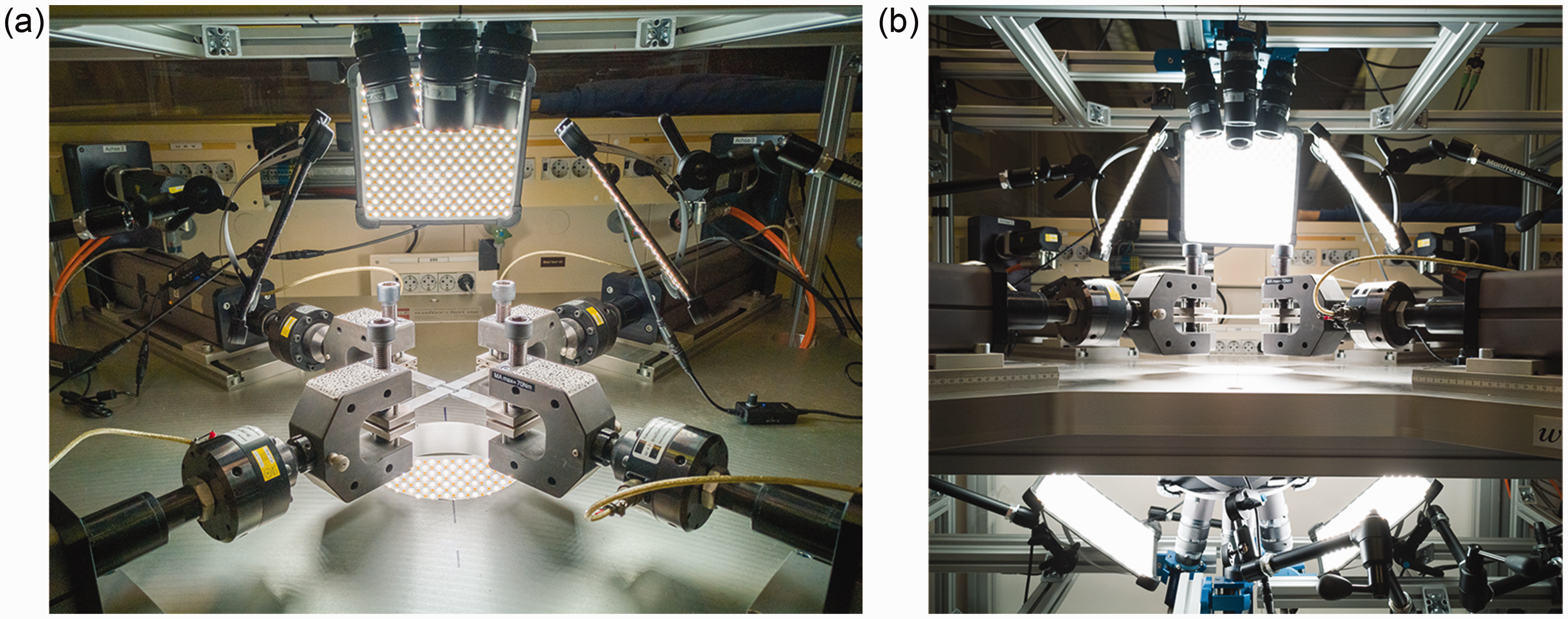
(a) Biaxial test machine and (b) lighting system and camera equipment (Brünig et al., 2021, 2022).
Details of the geometries of the X0- and the H-specimen are shown in Figure 4. The outer dimensions are 240 mm in both directions (Figure 4(c)) and in their central parts four notches in thickness direction are milled (Figure 4(d) and (h)) leading to a reduction in thickness up to 2 mm (Figure 4(f) and (i)). The respective notch radii are 2 mm in thickness and 3 mm in plane direction (Figure 4(e) and (j)). The specimens are simultaneously loaded in two perpendicular directions by the forces
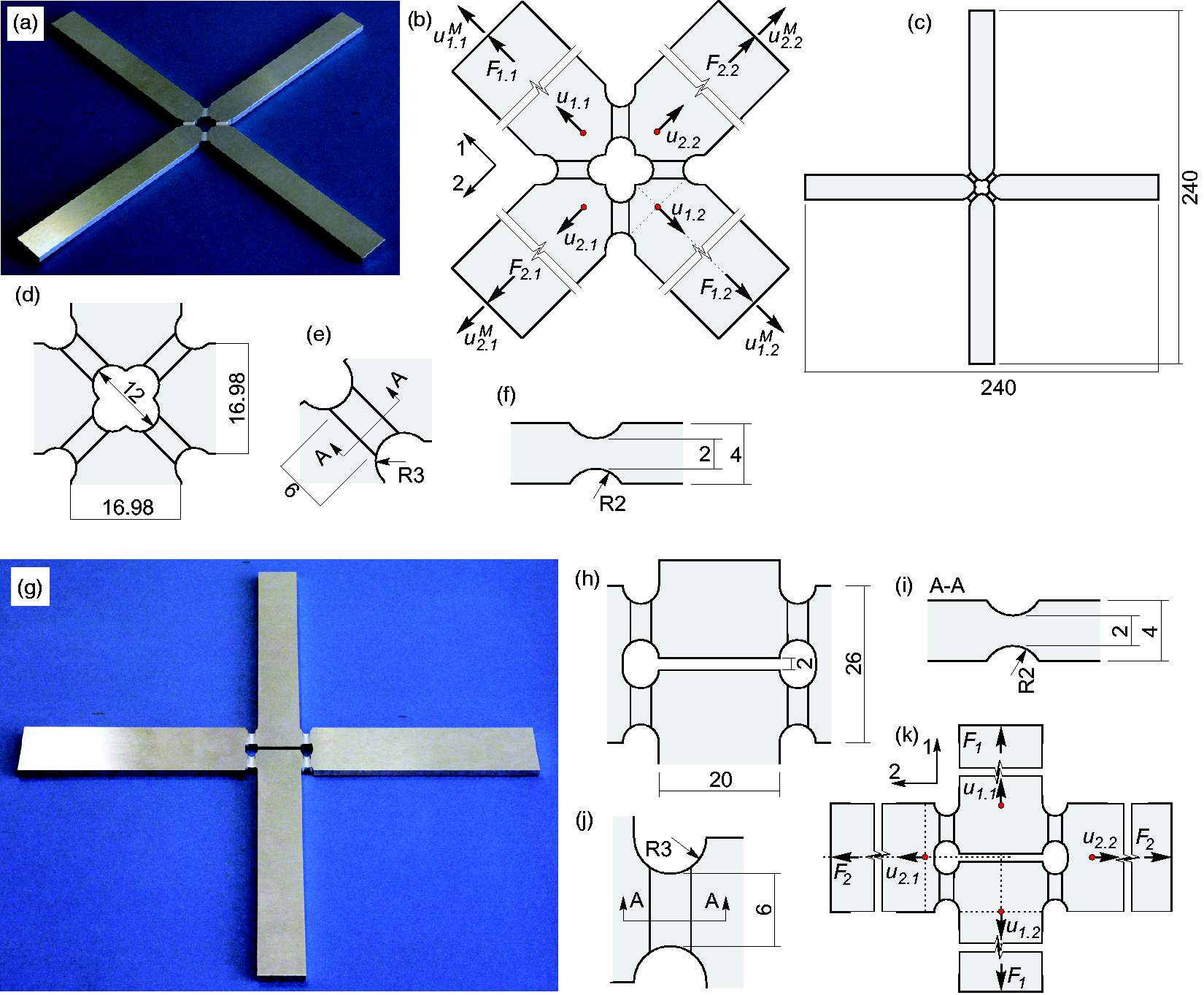
Details of the geometry of the X0- ((a)–(f)) and the H-specimen ((g)–(k)); all dimensions in mm (Brünig et al., 2021, 2022).
Furthermore, numerical analysis of the respective experiments with the biaxially loaded specimens has been performed to predict the stress states at the onset of damage. The corresponding numerical simulations are based on the finite element program ANSYS enhanced by a user-defined subroutine taking into account the elastic-plastic material model discussed above. The numerical procedure is based on the plastic predictor–elastic corrector method leading to fast convergence of the numerical results and numerical stability of the algorithm, see Brünig (1999). Using symmetry boundary conditions a quarter of the X0-specimen is divided into 18,645 eight-node elements of type SOLID185 (Figure 5(a)) whereas the H-specimen is discretized by 20,802 elements, see Figure 5(b). Remarkable refinements of the finite element meshes are used in the respective central notched parts where high stress gradients are expected to occur. The displacements act on the nodes at the end faces and out-of-plane deflections are suppressed by zero displacements in the symmetry planes.
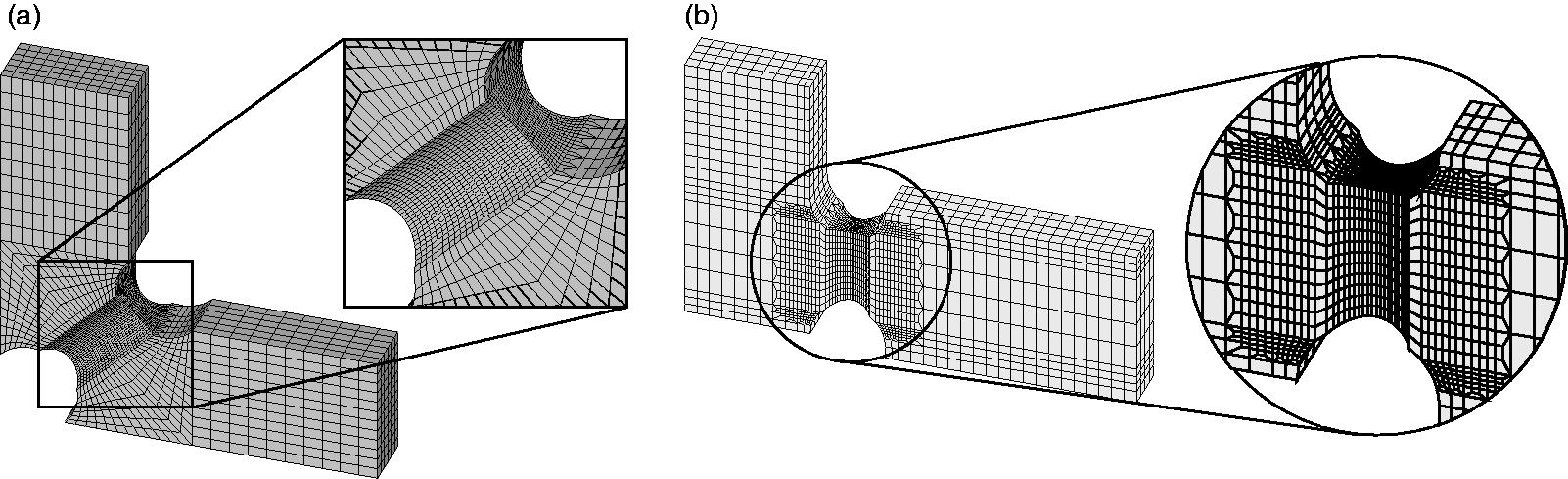
Finite element meshes of (a) the X0-specimen (Brünig et al., 2021) and (b) the H-specimen (Brünig et al., 2022).
Experimental and numerical results
Results of experiments with uni- and biaxially loaded specimens and corresponding numerical simulations are used to develop a damage criterion for the investigated anisotropic aluminum alloy.
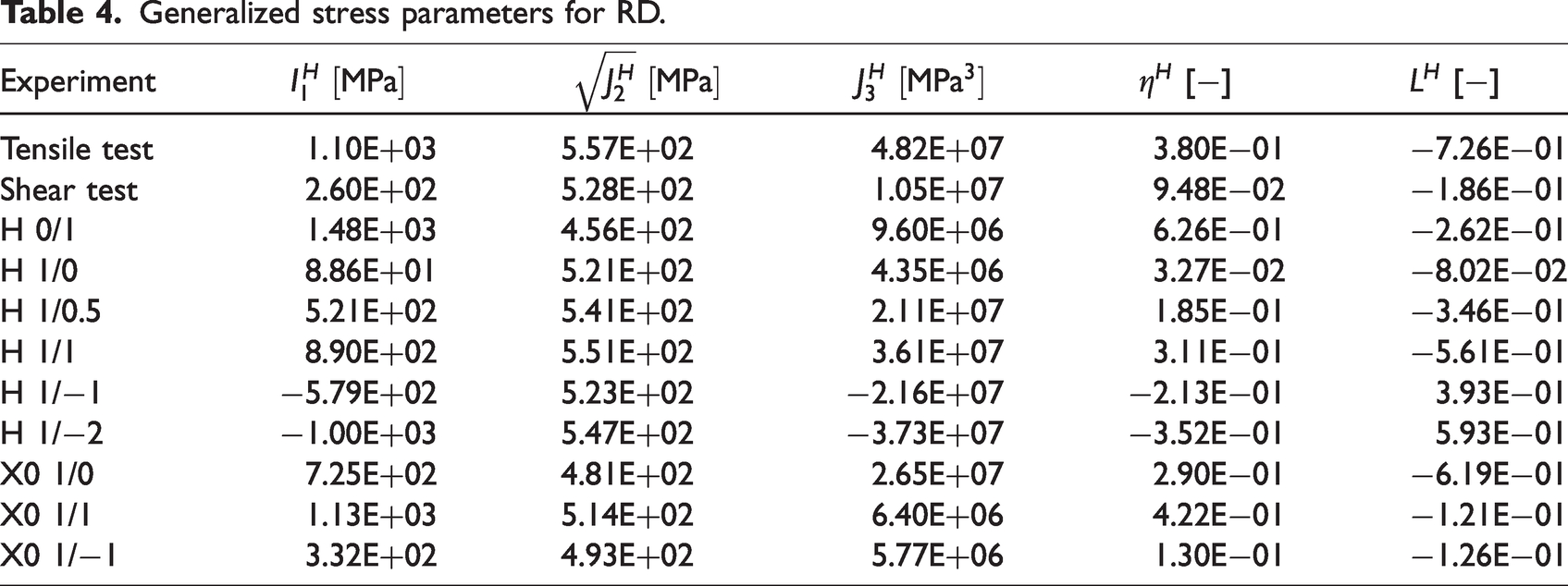
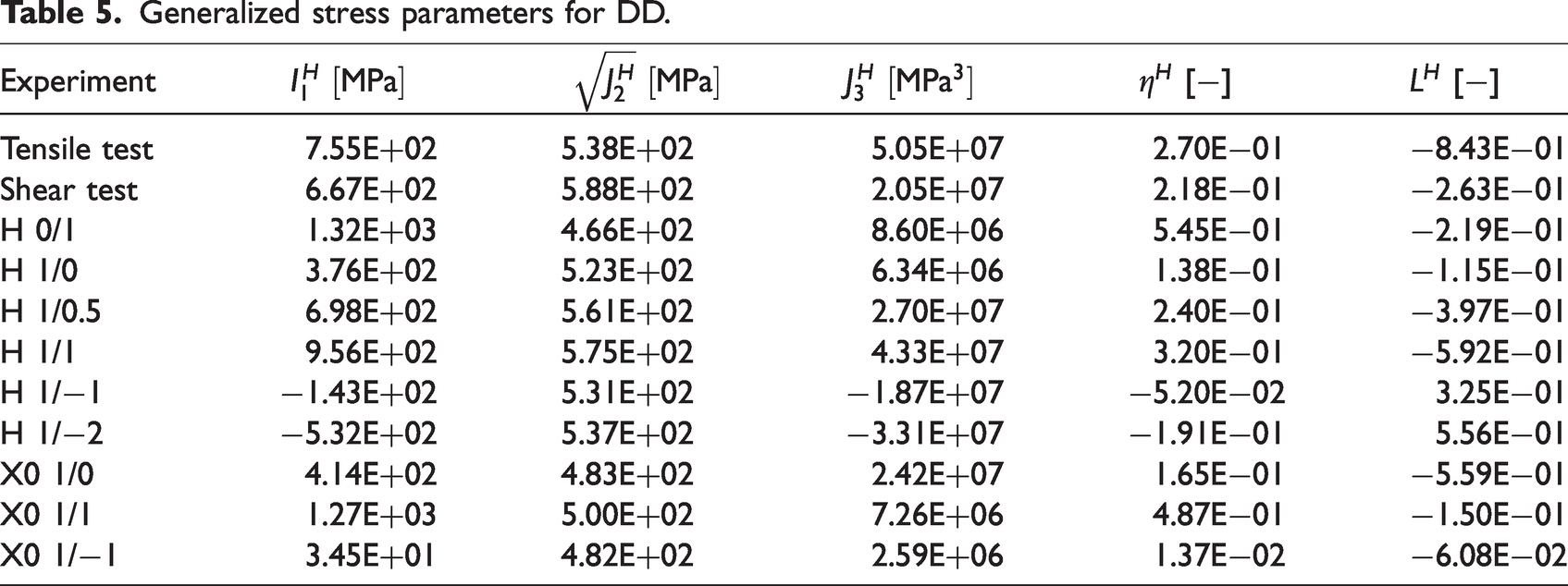
Brünig et al. (2008) proposed that based on elastic-plastic numerical simulations damage is assumed to be initiated when discrepancies between numerically predicted and experimentally obtained load-displacement curves occur. They reported that in their experiments with uniaxially loaded specimens it was easy to identify this critical point. Therefore, this identification method is also used in the present analysis with the uniaxially loaded tension and shear specimens as well as with the biaxially loaded X0- and H-specimens. At this stage of loading various stress quantities are determined in the region of the maximum equivalent plastic strain where onset of damage is expected to occur. The parameters are used to develop the functions of the stress-state- and loading-direction-dependent parameters
Generalized stress parameters for RD.
Generalized stress parameters for DD.
Following Bao and Wierzbicki (2004) and Brünig et al. (2008) it seems to be convenient to distinguish three regions of stress triaxialities and to develop in these regions an analytical expression for the stress-state-dependent damage parameters
Experimental and numerically predicted load-displacement curves of the uniaxial tensile tests are shown in Figure 6(a). Good agreement can be seen in the first loading range and especially the direction-dependent load levels are well simulated. Highest loads appear for loading in RD whereas smaller ones can be observed for loading in DD and the differences are about
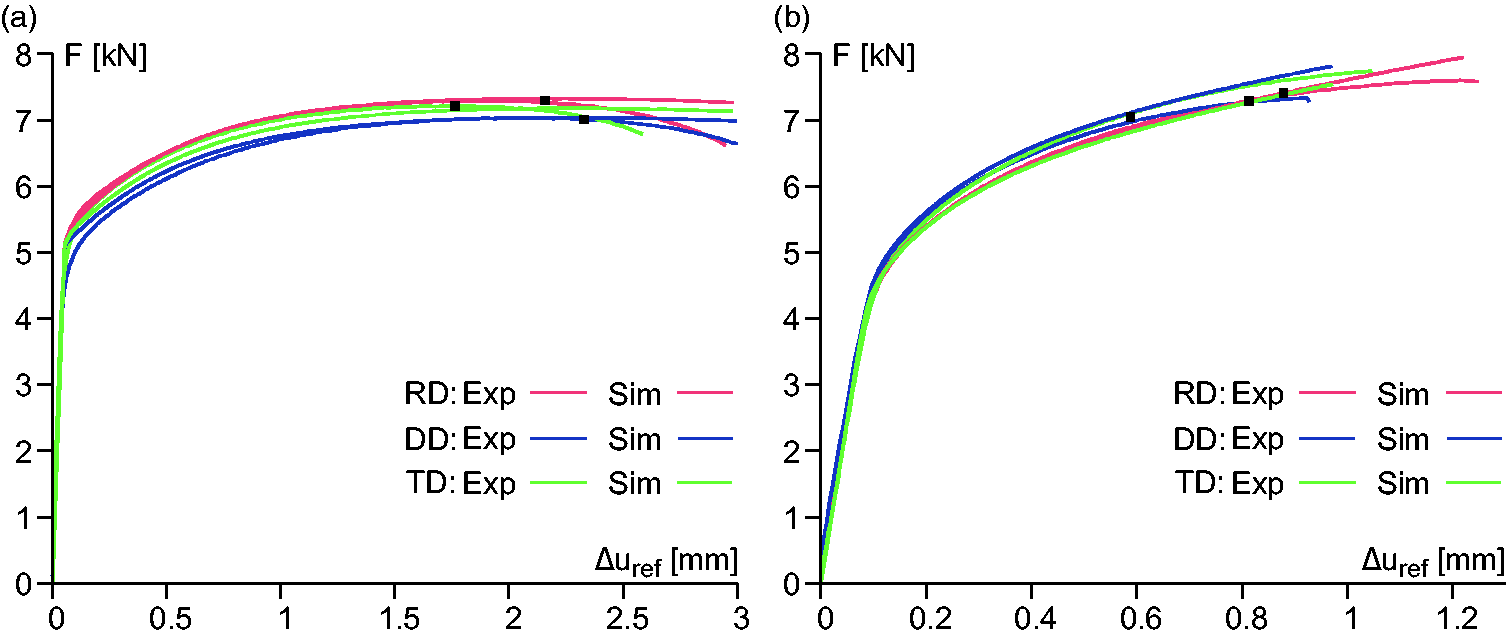
Load-displacement curves of (a) uniaxial tensile tests and (b) shear tests based on experiments (Exp) and numerical simulations (Sim).
Experimental and numerically predicted load-displacement curves of the biaxially loaded X0-specimen are shown in Figure 7 where results for the different load ratios (a)
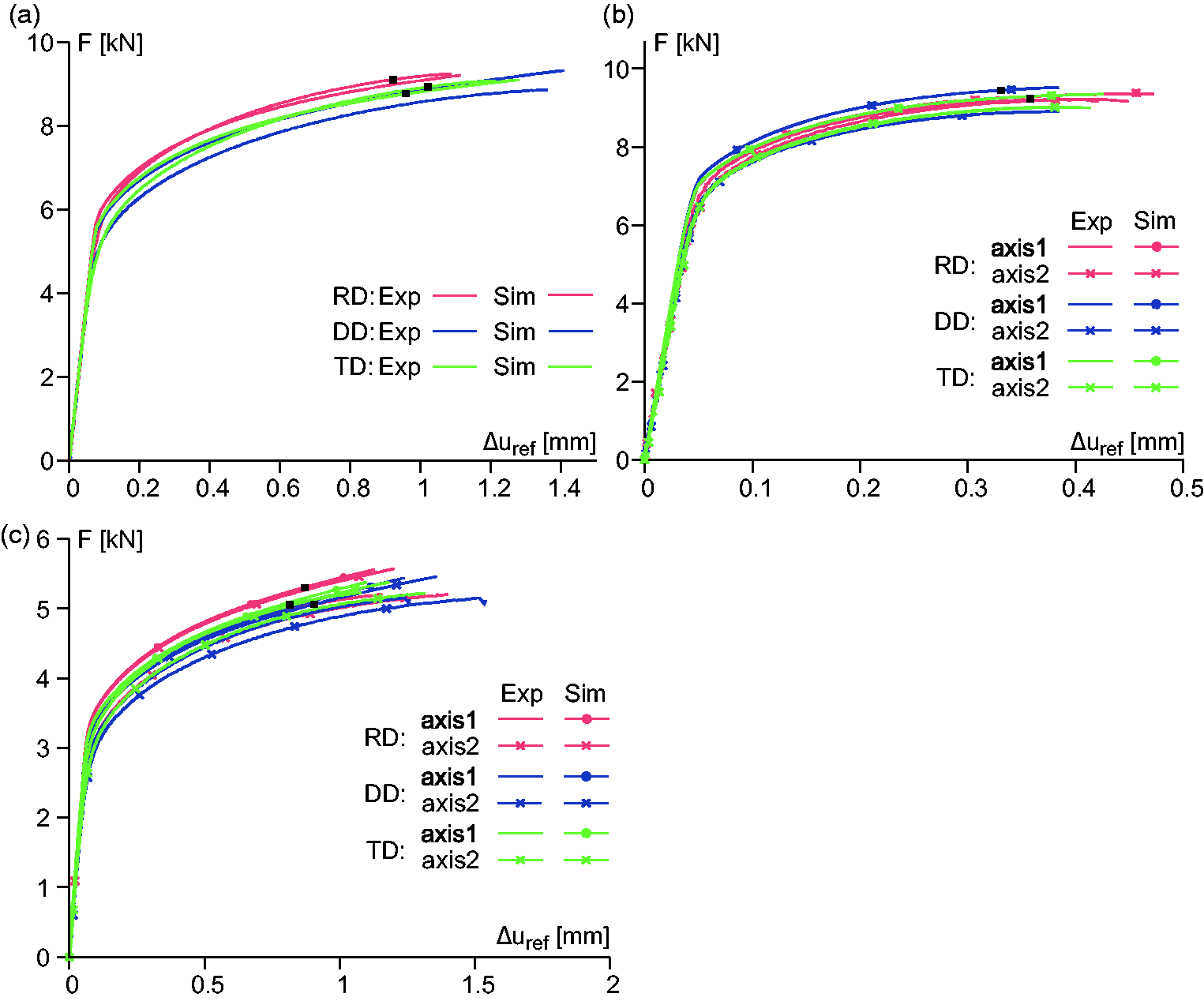
Load-displacement curves for the X0-specimen with (a)
In addition, experimental and numerically predicted load-displacement curves of the biaxially loaded H-specimen are shown in Figure 8 where results for the different load ratios (a)
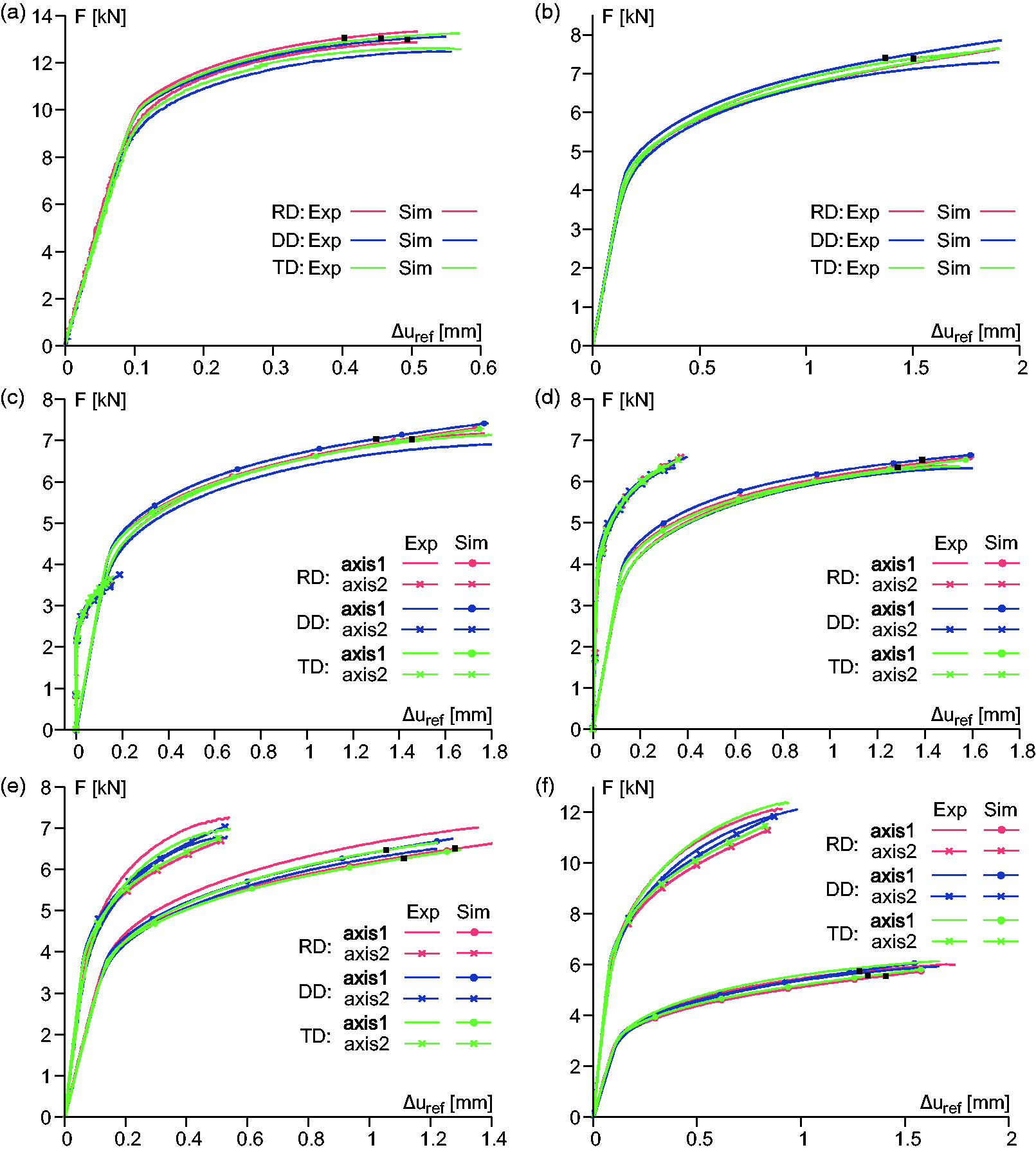
Load-displacement curves for the H-specimen with (a)
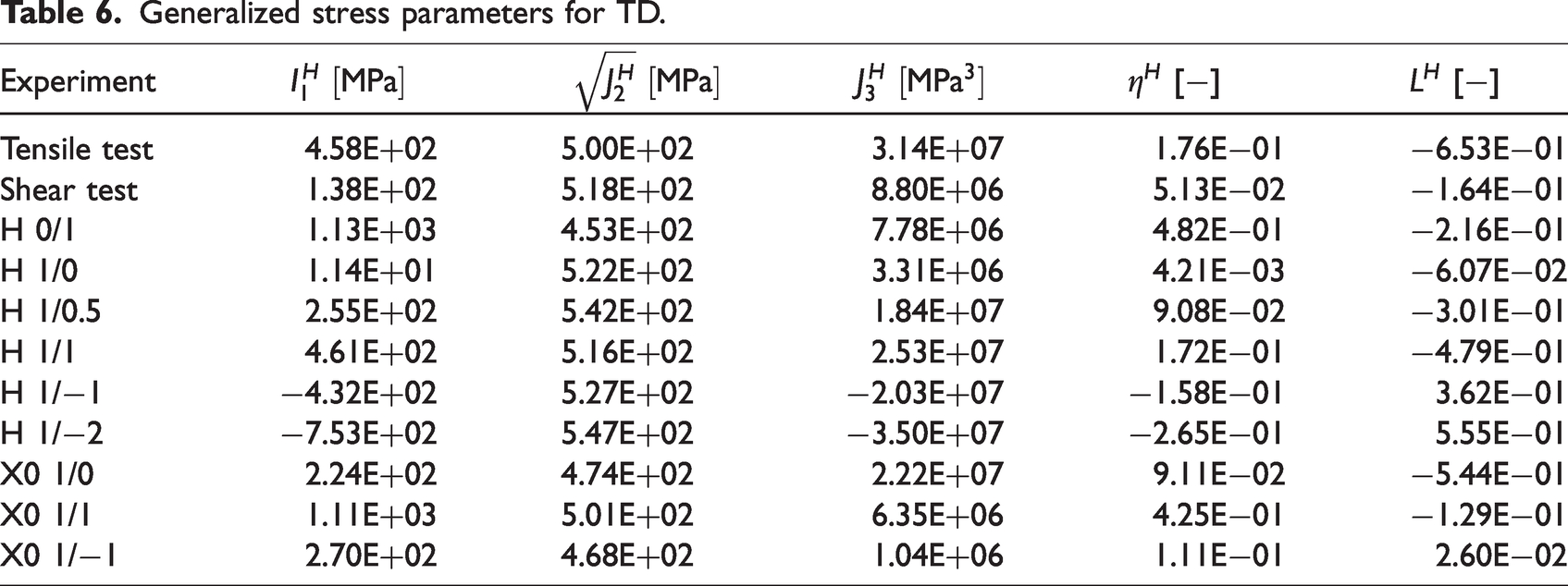
Based on the results of the numerical simulations of the experiments with uniaxially and biaxially loaded specimens there are sufficient data (see Tables 4 to 6) enabling development of a quantitative representation of the damage parameters 
Generalized stress parameters for TD.
Analyzing the stress parameters of all experiments with specimens loaded in RD leads to



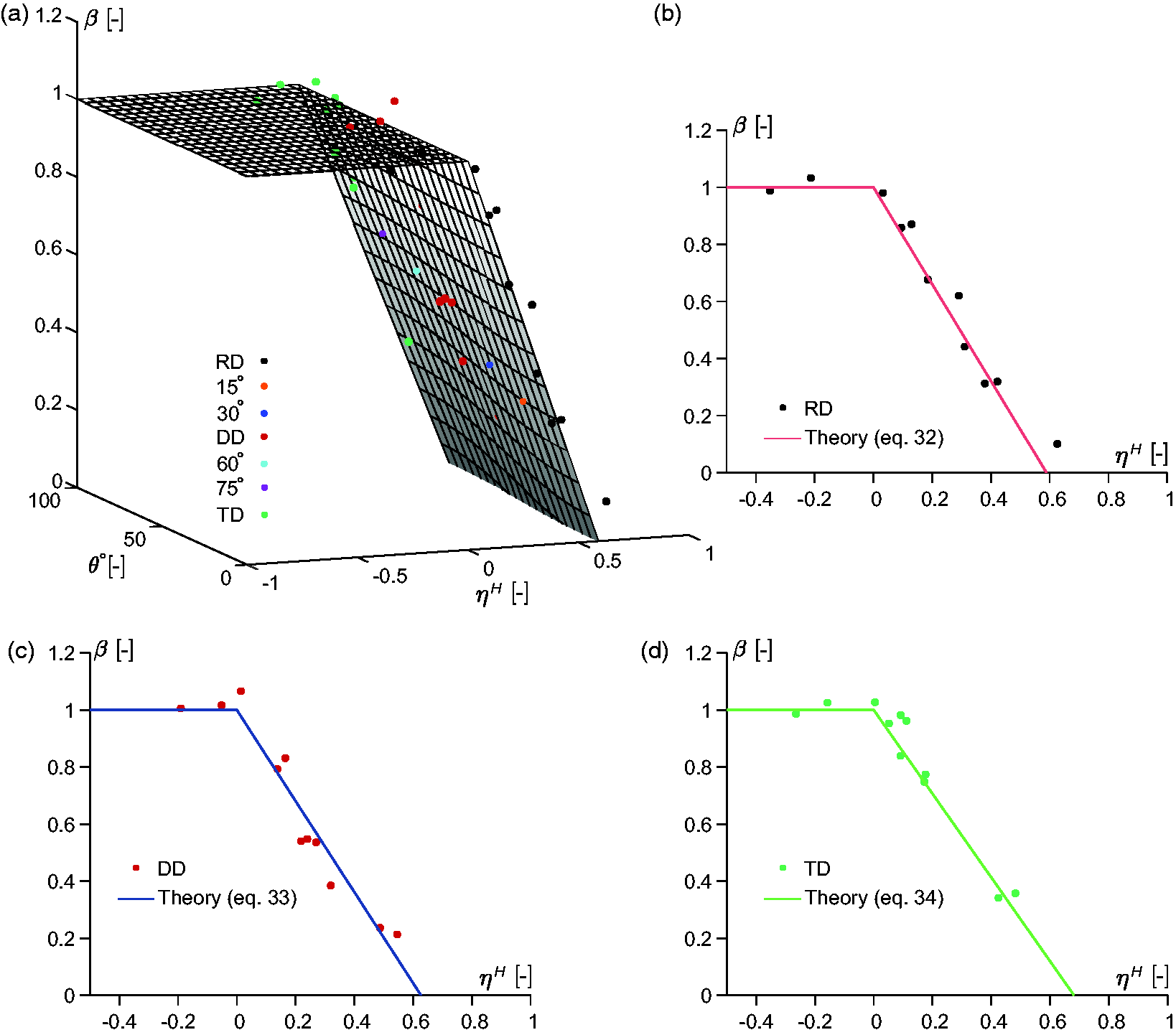
Parameter
However, different parameters 

If, based on equation (35) a negative value is computed,
Conclusions
In the present paper a damage criterion for ductile metals with plastic anisotropy has been proposed. A series of experiments with uniaxially loaded tension/compression and shear specimens as well as with the biaxially loaded X0- and H-specimens deliver data for identification of stress-state- and loading-direction-dependent damage mode functions. Anisotropic plastic behavior of the investigated aluminum alloy EN AW-2017A is modeled by the Hoffman yield condition taking into account the strength-differential effect which has been observed in the tension and compression tests. Evolution of isochoric plastic strains is based on Hill’s plastic potential function leading to a non-associated flow rule. Based on the Hoffman criterion generalized anisotropic stress invariants as well as the generalized stress triaxiality and the generalized Lode parameter have been defined. The damage condition for anisotropic ductile metals has been formulated in terms of the generalized stress invariants. Damage mode parameters are used to combine the anisotropic stress variables in an adequate manner taking into account in a phenomenological way the different damage and failure mechanisms acting on the micro-scale. The functions of the damage mode parameters depend on both the stress state and the loading direction with respect to the rolling direction. The proposed damage model can be seen as an efficient framework to numerically simulate the anisotropic behavior of materials in various engineering applications.
Footnotes
Declaration of conflicting interests
The author(s) declared no potential conflicts of interest with respect to the research, authorship, and/or publication of this article.
Funding
The author(s) disclosed receipt of the following financial support for the research, authorship, and/or publication of this article: The authors received financial support from the Deutsche Forschungsgemeinschaft (DFG, German Research Foundation) under project number 394286626 (BR1793/20-1).
