



Abstract
The implementation of project-based learning (PBL) heavily relies on the role of teachers in classrooms, but little attention has been paid to how their personal and professional experiences impact their teaching. To address this gap, a qualitative multiple case study was conducted, exploring the beliefs and practices of five high school teachers toward PBL. The study discovered that teachers who had prior exposure to hands-on activities were more likely to engage in PBL. Moreover, external factors such as accountability pressure from standardized tests and school leadership also played a significant role. Therefore, I recommend that policymakers, school leaders, and researchers pay more attention to the real-life experiences of teachers and the challenges they face in their specific contexts. To do that, creating a platform for dialogue among teachers and with them is crucial.
Originating from the project method introduced by Kilpatrick (1925), project-based learning (PBL) is “a student-driven, teacher-facilitated approach to learning” (Bell, 2010, p. 39). As a prominent approach in teaching practices, research has evidenced that PBL could facilitate students’ higher-order thinking and skills in numerous studies (Minarni et al., 2022; Mthethwa-Kunene et al., 2022). An essential driver of promoting student learning through PBL is teachers (Jirajarupat et al., 2022; Saavedra et al., 2022; Zhong & Lyu, 2022), who should not only believe in the value of PBL but also implement PBL in their classrooms. Aligned with Burns’ (1992) claim that teacher beliefs could influence classroom practice, many studies simultaneously addressed teacher beliefs and practice (e.g., Enderle et al., 2014; Fang, 1996; Prestridge, 2012).
Most research on teacher beliefs and practices of PBL only focuses on their professional context, without considering their life experiences. However, according to Kagan (1992), these experiences and beliefs can significantly influence a teacher's approach to PBL. Cain and Cocco (2013) and Larmer et al. (2015) also emphasize the importance of considering teachers’ personal and professional experiences when supporting them in implementing PBL. Therefore, it is essential to pay attention to their overall lived experience, both personal and professional, to better support teachers. This is particularly important given the increasing number of K-12 school districts in the United States that are adopting PBL as a reform to enhance student learning (Ravitz, 2008, 2010; Rogers et al., 2011). By understanding teachers’ overall lived experience, we can ensure the success of instructional reform with PBL.
In response to the call, this multiple case study collected data from a K-12 school division that implemented PBL to reform its instructional approach. The study provides a comprehensive view of how K-12 teachers’ experiences shape their beliefs and practices of PBL. The findings could have implications for pre-service teacher preparation programs, in-service teacher professional development programs, and school leadership. These programs can offer specific support and guidance to teachers. Policymakers and researchers interested in PBL, teacher well-being, and teacher education can also benefit from the valuable information provided by this study.
Literature Review
This literature review summarizes studies on PBL, teachers’ beliefs and practices, and lived experiences. Then, I address gaps and contradictions in the literature.
Project-Based Learning
PBL is a teaching approach that allows students to learn through authentic projects, encouraging them to explore and investigate while developing both content knowledge and success skills (Chiu, 2020). As a learner-centered teaching approach, PBL emphasizes activating learner engagement by awakening their natural curiosity (Tsybulsky et al., 2020). In PBL classrooms, student engagement could be influenced by challenges, skills, and interests (He et al., 2022). Multiple studies provide evidence of the positive impact of PBL on student development (Han et al., 2015; Hovey & Ferguson, 2014; Koşar, 2021; Singh-Pillay, 2020). However, PBL can be challenging for both teachers and students, as students are required to create a final product that addresses a driving question (Blumenfeld et al., 1991), and teachers may face dilemmas in promoting student motivation during PBL practice (Nicolas & Ramos, 2022).
Teacher Beliefs and Practices of PBL
Research often explores the relationship between teachers’ beliefs and practices, either as separate entities or as a holistic concept (Eisenbach, 2012; Haney et al., 2007; Miller et al., 2021; Said et al., 2019; Subramanian, 2014). “Teacher beliefs” is a broad concept encompassing pedagogical beliefs and other beliefs relevant to teaching (Borg, 2001). In this study, teacher beliefs are defined as “implicit assumptions about students, learning, classrooms, and the subject matter to be taught” (Kagan, 1992, p. 66). Other terms that are used interchangeably with teacher beliefs include practice principles, perceptions, understandings, and orientations (Kagan, 1992).
Regarding PBL, Cintang et al. (2018) discovered that teachers have varying beliefs about PBL when faced with obstacles in implementing it. Many articles also discuss teachers’ beliefs and practices of PBL simultaneously. For example, Haney et al. (2007) found that teachers’ beliefs and practices increased significantly during a PBL-themed professional development program. Similarly, in a study that explored math teachers’ beliefs, practices, and belief change in implementing problem-based learning, a comparable approach to PBL, Said et al. (2019) discovered that teachers’ beliefs changed and were reflected in their practices.
There are several contradictions in the literature regarding teachers’ beliefs and practices of PBL. First, teachers’ attitudes toward PBL are inconsistent across different studies. While some studies report that teachers hold optimistic attitudes toward PBL (Habók & Nagy, 2016), others emphasize negative concerns (Ott, 2015). Second, despite the widely recognized benefits of PBL (Hovey & Ferguson, 2014), its implementation has been more talked about than put into practice (Han et al., 2015). Dolmans (2019) has pointed out that implementing PBL has encountered problems in daily teaching situations.
Teachers’ Lived Experiences
Over the years, several studies have delved into teachers’ lived experiences from a qualitative perspective, which is suitable for exploring the intricacies of the complexity of their lives. Poole (2020) conducted interviews and suggested a construct of international teacher identity through their lived experiences, which include personal, professional, and cross-cultural experiences. Philipsen et al. (2019) conducted hermeneutic interviews to examine teachers’ feelings during professional development and identified specific positive and negative emotions. Robosa et al. (2021) conducted a phenomenological study in the Philippines to explore public school teachers’ experiences during the COVID-19 pandemic and found that teachers faced multiple challenges, including inadequate resources for online teaching and burnout from workload. More recently, Dadmehr et al. (2023) investigated teachers’ communication experiences during curriculum planning and implementation.
Research on teachers’ professional experiences with PBL has been conducted, with some studies explicitly focusing on pre-service teachers’ experiences of learning PBL as students in teacher preparation programs (Dag & Durdu, 2017; Tsybulsky et al., 2020), in-service teachers’ experiences of learning PBL in professional development sessions (Han et al., 2015), and in-service teachers’ perception of themselves as facilitators, where motivation and values were considered crucial to the implementation of PBL (Habók & Nagy, 2016). However, there is a lack of research that examines teachers’ overall lived experiences with PBL.
Research Gaps
Most studies exploring teachers’ experiences have primarily focused on their work environments and school settings, with very few acknowledging the connection and impact between teachers’ past and present life experiences and their beliefs about PBL. As individuals, the personal and professional experiences that teachers have encountered are equally significant and may influence one another. While several qualitative research studies have examined teachers’ experiences, most have only described the experiences without exploring the intricate complexities and connections. Moreover, there is a shortage of research that delves explicitly into teachers’ lived experiences related to PBL. Therefore, the existing literature lacks an in-depth examination of teachers’ lived experiences.
This Study
Limited research has been conducted on the impact of teachers’ personal experiences on their beliefs and practices of PBL. This multiple case study aims to fill the gap by exploring the influence of lived experiences on teachers’ perceptions and practices of PBL. The study adopts a social constructivist approach, emphasizing the importance of individualized voices and personal experiences. Social constructivists believe that “individuals seek understanding of the world in which they live and work” (Creswell & Creswell, 2018, p. 8). To that end, this study incorporates personal and professional experiences within the conceptual framework proposed by Poole (2020). The research intends to address two primary questions:
How do teachers’ personal experiences influence their beliefs and practices of PBL in K-12 classrooms? How do teachers’ professional experiences impact their beliefs and practices of PBL in K-12 classrooms?
The two research questions guided the creation of the conceptual framework and interview protocol. It is worth noting that personal and professional experiences are often interconnected, so the analysis and discussion will address both research questions as a unified whole, rather than strictly separating them.
Conceptual Framework
In order to achieve the research objective, the conceptual framework of the current study was adapted from two previous studies on teachers’ experiences (Poole, 2020; Tsybulsky et al., 2020). The conceptual framework, as shown in Table 1, consists of horizontal and vertical domains. The horizontal domain includes teachers’ personal and professional experiences (Poole, 2020), the two significant aspects the current study aims to explore. Poole's (2020) framework was initially designed to understand the international school teacher identity, including a third category, cross-cultural experiences. However, as this study focuses on K-12 school teachers in the United States, only personal and professional experiences are included in the conceptual framework. Additionally, the subcategories in the framework have been updated to better reflect the context of this study.
Conceptual Framework of the Study.
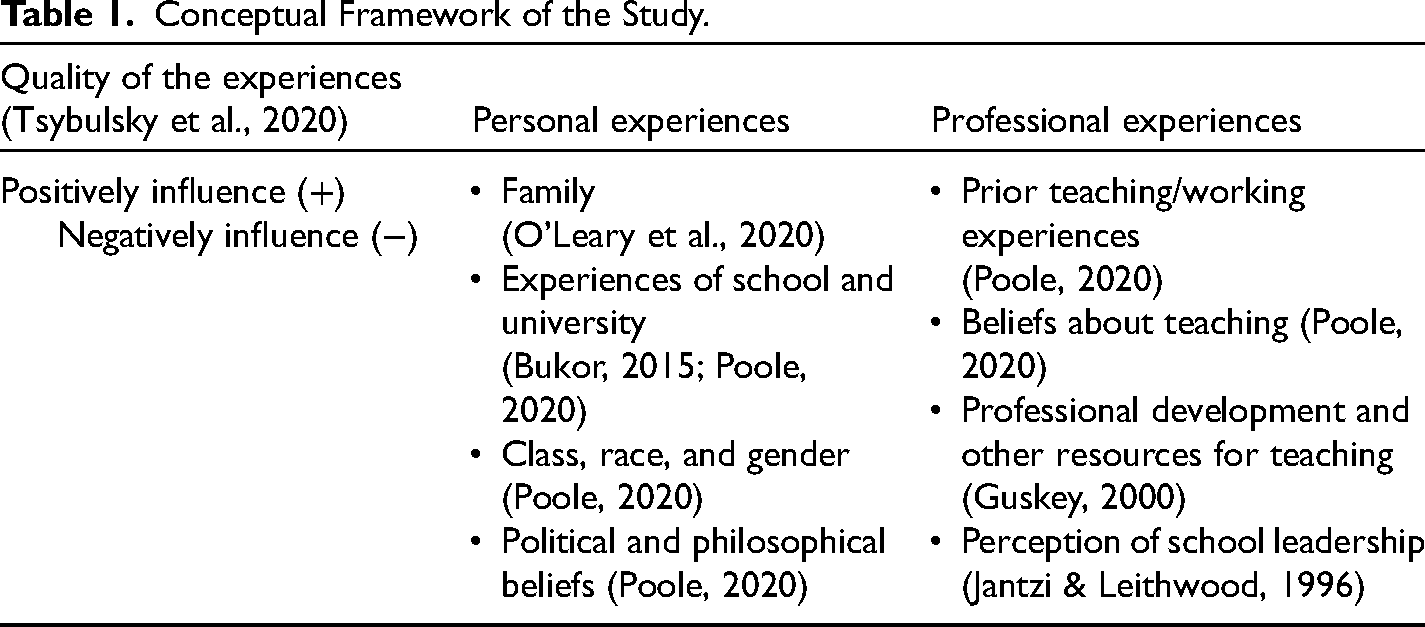
Apart from personal and professional experiences, the quality of teachers’ experiences in the vertical domain can also positively or negatively impact them (Tsybulsky et al., 2020). This category has been adapted from Tsybulsky et al. (2020), who proposed a conceptual framework that covers both the positive and negative emotional aspects of student teachers when exposed to PBL. These positive and negative aspects are crucial for this study to understand the influence of teachers’ experiences on their comprehension and implementation of PBL. Therefore, by adapting and adding additional subcategories, Poole's (2020) personal and professional experiences provide categories to understand teachers’ lived experiences, while the positive and negative influences from Tsybulsky et al. (2020) provide a lens to identify the quality of teachers’ experiences. These subcategories, divided into horizontal and vertical levels, form the core of the study, from interview protocol design to data collection and analysis. The interview questions listed in the Appendix have been designed to address the subcategories in the conceptual framework.
Methodology and Methods
Qualitative research is different from quantitative or mixed methods as it values and supports multiple perspectives from participants (Billups, 2021). Therefore, the research focus of this study, which is the lived experiences of in-service teachers, is better suited to the worldview embodied by qualitative research. The methodology employed in this study is a case study, which emphasizes what is to be studied rather than how to examine the issue, as some researchers have suggested (Hesse-Biber, 2017; Stake, 2005). According to Yin (2014), a case study is “an empirical inquiry that investigates a contemporary phenomenon in depth and within its real-world context” (pp. 16–17). This definition indicates that case study is a way to explore knowledge in a complicated context and welcomes multiple specific methods to reach the goal of the inquiry. Therefore, case study is suitable to be implemented in this study to examine the complexities of teachers’ experiences concerning their PBL practice with a certain depth. This multiple case study explores the influence of multiple in-service teachers’ lived experiences on their beliefs and practices of PBL.
Case Definition and Sampling Selection
To conduct a case study, it is vital to define the case (Baxter & Jack, 2008). For this particular study, I sought approval from the institutional review boards of my institution and the school division where I collected data. Five K-12 teachers were recruited as participants, with each teacher representing a case. Table 2 shows the demographics of the participants.
Demographics of Participants.
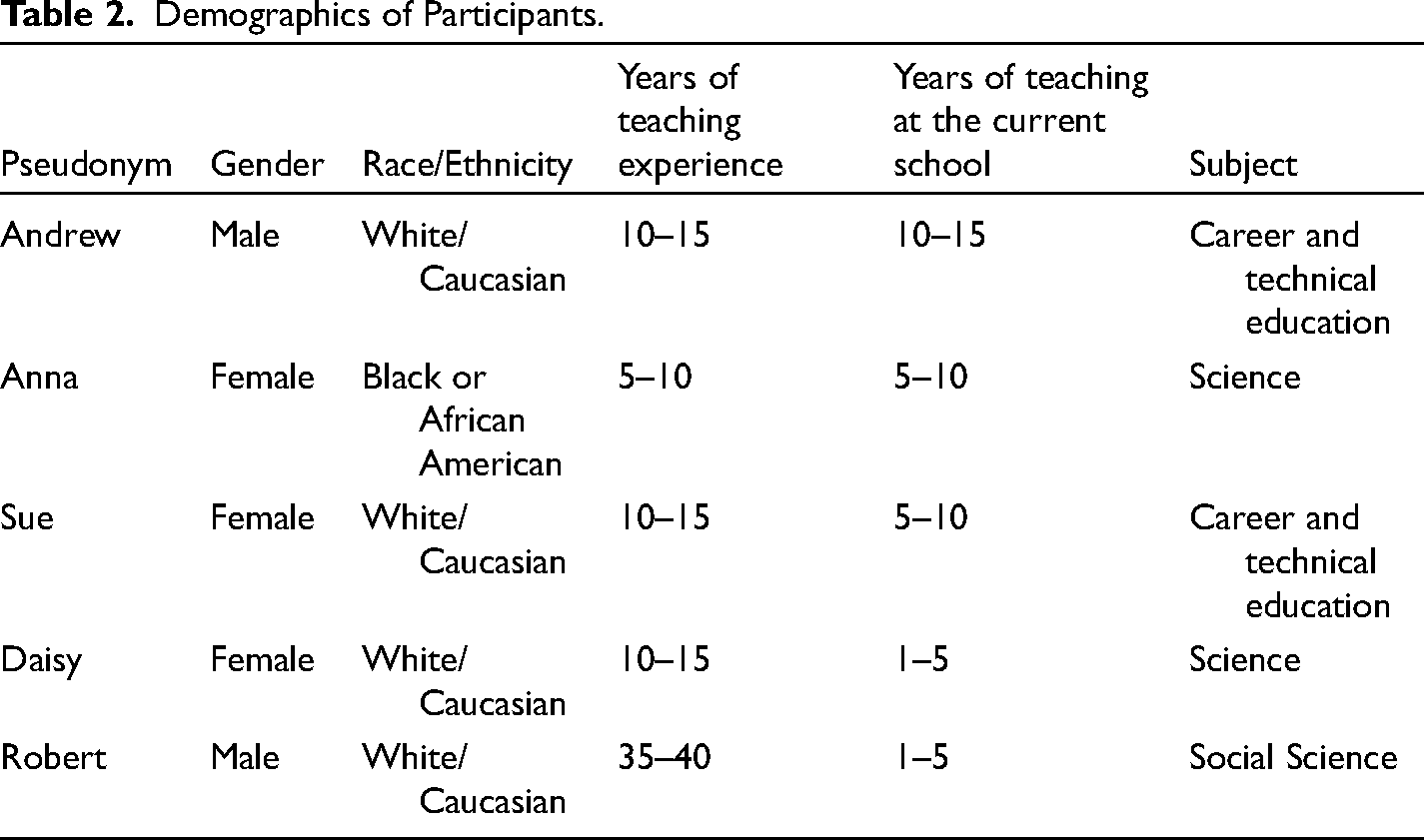
During the recruitment process, I set a criterion that each participant must be a current K-12 school teacher who has been teaching at the same school division for at least 1 year. This ensured that the teacher had enough experience and understanding of the professional context and the PBL reform in the school division. The recruitment email clearly stated the purpose of the study, including the claim that the study does not evaluate how skillful the teacher is in terms of PBL. This was done to avoid potential bias that might have discouraged less active PBL teachers from participating by assuming that the study preferred PBL expert teachers. All the participants were recruited from three high schools in one public school division, K Schools (pseudonym), located in a relatively less wealthy area on the East Coast of the United States. About two-thirds of its students are eligible for free lunch. K Schools started an instructional reform in August 2022 that promoted PBL implementation in all its schools. Therefore, the school division was well-suited for this study.
The study utilized purposeful sampling and snowball sampling in recruiting participants. Purposeful sampling is a commonly used method in qualitative research (Palinkas et al., 2015; Suri, 2011) and helped me select suitable participants for my specific research focus. To achieve this, I contacted a curriculum specialist in K Schools who works with teachers in the whole division to help recruit. I then used snowball sampling (Goodman, 1961), where the first three participants recommended their colleagues to join the study. Email was used as the primary method of communication.
Data Collection
To ensure a successful research study, it is essential to have a clear plan for qualitative data collection (Creswell & Poth, 2016). In the case of multi-case studies, knowledge is constructed by developing an understanding of the subject (Merriam, 1998). This study utilized various data sources to answer the research questions, including:
school policy and curriculum documents student PBL project examples interviews with participants informal interviews with non-participant administrative staff field observation notes reflective journal
First, as a part of the evidence collection (Yin, 2014), various documents were gathered, such as the written curriculum, standards of learning, and other records that reveal information about PBL from the state, the school division, and the school levels. These documents provided valuable information on the school culture and requirements for PBL, which may impact participants’ experiences in their working environment.
Second, interviews are a valuable tool to gather detailed information about participants’ perspectives and experiences (Creswell, 2016). In this study, each participant was interviewed using a semi-structured format (Billups, 2021) after receiving and signing an informed consent form. The interviews took place over Zoom and lasted approximately 1 h each. With consent from the participants, the interviews were recorded and transcribed for analysis. The questions used during the interviews are available in the Appendix. In addition to the formal interviews, I also informally interviewed three administrative staff members to gather contextual information about the PBL reform in the school. This additional information enriched the data analysis.
Third, I had the opportunity to attend an in-person PBL presentation at a high school in the division. During the event, I observed the final products of eight student groups whose teachers implemented PBL in their classes. I was also invited to be a judge, which gave me a deeper insight into how PBL was being implemented, how the students were performing, and how teachers collaborated in terms of PBL in the school. I obtained permission to collect hard copies of the student's presentation slides, rubrics for the judges, and my field notes during the event.
Fourth, I used journaling as a reflective tool to gather data for my research. Journals provide a way for individuals to record and describe their daily experiences and emotions (Billups, 2021). I wrote weekly journals to capture the nuanced information I observed from the participants, students, administrators, and K School websites. Additionally, I used journaling to reflect on the information I collected. I also added memos (Merriam, 1998) to my journal entries to ensure that I recorded critical information for data collection and analysis.
Data Analysis
During the data analysis process, I used both an approach and techniques. First, the hermeneutic approach was adopted to deeply explore the participants’ experiences, as suggested by Butler (1998). This approach offers an interpretative lens that helps analyze the data and guides the coding process. Additionally, I employed case-study techniques as recommended by Yin (2014). These techniques included pattern matching, linking data to propositions, explanation building, time-series analysis, logic models, and cross-case synthesis analysis. These techniques helped identify the prominent themes across cases and make sense of the participants’ experiences.
As the primary data source was the interviews conducted with participants, I utilized NVivo 12 software to organize and analyze the interview data. In addition, other data sources were analyzed to provide supplementary information that could confirm the interpretations drawn from the interview data. The interview data underwent first- and second-cycle coding stages (Saldaña, 2021). During the first cycle, I used descriptive coding, which generated a sufficient list of subtopics (Saldaña, 2021) to identify emerging themes related to teachers’ varied experiences. The first round of coding resulted in 220 codes.
Furthermore, analyzing multiple data sources, as suggested by Creswell and Poth (2016), helped to determine evidence at every stage of the case's evolution. Therefore, documents, journals, and interviews were simultaneously analyzed to generate a more comprehensive understanding of the cases. During the second cycle, I used axial coding (Boeije, 2010) to reorganize the data and explore the essential and less prominent factors that influenced teachers’ beliefs and practices of PBL. After the coding cycles, I used matrix display (Miles et al., 2020) to present the findings closely related to the research questions. Ultimately, I identified 14 categories, organized into three themes and two theme groups (personal experience and professional experience).
Positionality
The researcher's positionality is vital in the research process (Bourke, 2014). As a former classroom teacher and a current researcher of performance assessment, I am intensely interested in innovative pedagogy and educational assessment to encourage deeper learning. I firmly believe that PBL is an effective way to promote authentic learning and assess students’ performance. Therefore, I am keen on understanding how teachers’ experiences influence their perception of PBL. Additionally, I am driven to generate potential research findings that could help promote PBL and more balanced assessment and ultimately benefit students’ learning.
Trustworthiness
To ensure this study's trustworthiness, I employed positionality, triangulation, and member checking (Creswell & Poth, 2016). I was mindful of my positionality while conducting interviews and interpreting data, mainly if any implicit bias existed, as I lack teaching experience in K Schools, which limits my understanding of my participants’ experiences and current situation. I also utilized multiple data sources, such as interviews, documents, and journals, to ensure consistency in findings across different data sources before making conclusions. In addition, I conducted member checking by sharing interview transcriptions with respective participants to ensure they accurately represented their intended meaning. Throughout the research process, I kept in mind that the study aimed to highlight how the lived experiences of in-service K-12 teachers impact their beliefs and practices of PBL, rather than generalization.
Findings
Multiple case studies often report both individual cases and some cross-case findings (Yin, 2014). However, depending on the specific research question, the report of a multi-case study does include the option to only emphasize the cross-case analysis without separate sections devoted to each case (Yin, 2014). This study explores how teachers’ lived experiences influence their PBL beliefs and practices. Each case has different lived experiences, but reporting each case's detailed scenario is insufficient to answer the research questions. Therefore, I synthesize and identify prominent essences of cases’ experiences to make meanings. The three themes identified are: (a) prior personal and professional experiences matter, (b) subject and workload make a difference, and (c) resource and support play a part.
Prior Personal and Professional Experiences Matter
The study identified the personal and professional experiences that teachers have had prior to the PBL reform in K Schools. These experiences include the teacher's school experiences, family background, social class, gender, ethnicity, work experience before becoming a teacher, and educational beliefs. Despite the differences in teachers’ prior experiences, I found that those teachers who believe in the effectiveness of PBL and are more actively involved in PBL practice are likely those who have previously experienced PBL or the essence of PBL, such as applying knowledge to real-life situations. In other words, teachers with prior experience applying knowledge to real-life situations are more likely to value PBL. This finding aligns with the Gold Standards of PBL proposed by the Buck Institution of Education (n.d.), which includes the authenticity feature of the project as a standard.
Anna (all names are pseudonyms), an African American female science teacher, grew up in a family of educators and attended a gifted education program in primary school. Unlike some Black females who would struggle in science because of race and gender (Mensah, 2019; Farland-Smith, 2015), Anna said she was lucky that race and gender had not been critical issues in her prior schooling and career experiences. She attributes this to her family's emphasis on education and the supportive environment created for her to pursue her studies. Anna was admitted to the gifted education program after passing an admission test, which was only open to select students. Although the school was predominantly White, Anna spent most of her time with a diverse study group, which prevented her from feeling marginalized. She found the program engaging, with hands-on classroom activities and real-life tasks, which she believes are similar to today's definition of PBL. Anna even remembers a project where she learned French through role-play and summary writing, which she enjoyed. We would pick a character and kind of like, put ourselves in the role of that character and dress up in that. That's how our book reports were done. It wasn't done as if you read or write five or six pages. It was more like, you read the book, you take your character, and you become that character, like a short little performance as if you are that character to show that you understand what the book was. You did write like a one-page summary report. So that's the class I remember more of our projects. And so you didn't just learn French, you actually learned about the Renaissance, you had to pick prominent French figures and put on monologues and dress up for Renaissance Fair. (Anna, a science teacher)
Three other participants (Andrew, Sue, and Robert) also shared that they had undergone learning experiences similar to or involving PBL activities during their own student years. Additionally, they all belonged to middle-class families. This implies that their higher socio-economic background might have given them greater access to PBL-focused education during their schooling. Sue, who is now a career and technical education (CTE) teacher, had worked in the industry for over a decade prior to teaching. During her time in the industry, she learned various real-life skills, such as interpersonal communication and hands-on skills. Sue believes that her prior professional experiences significantly influence her ability to teach students real-life skills through PBL.
The participants emphasized that their prior PBL-related experiences positively impacted their PBL beliefs and practices. It was also noted that these experiences influenced each other before ultimately influencing their beliefs and practices related to PBL. For instance, the socio-economic status of their original families played a role in shaping their schooling experiences and opportunities to engage in PBL-related activities.
Accountability Played a Part
Teachers often face accountability pressure from standardized tests. However, some teachers more involved in PBL tend to teach elective courses. These courses allocate less accountability pressure to prepare students for state standardized tests. According to Chen and Yang (2019), the subject matter influences the effectiveness of PBL. Sue, a CTE teacher, shared that the subject she teaches plays a significant role in the effectiveness of PBL. If I was a core subject teacher, let's say I was a math teacher, I think I would be miserable at my job. Because there's no flexibility in there. For me as a teacher. If my class is going in a certain direction, I don't mind letting that go in that direction, explore what they’re talking about, and then bring it back to what we should be doing. I’m okay, because I have that flexibility. I wrote the curriculum. (Sue, a CTE teacher)
Studies show how PBL can improve students’ scores on standardized tests (Geier et al., 2008; Leggett & Harrington, 2021). However, some active participants in PBL are unsure if PBL can fully prepare students for standardized tests. Teachers believe that standardized tests do not comprehensively assess students’ learning and could even harm it. Andrew, a CTE teacher, has shared his views on this matter. PBL is what I do a lot, and it's kind of how I teach the class. Many times I feel like the PBL works a lot better than giving them an exam, because there are multiple grades for that. And multiple aspects of it, and that finally, when it is done, I think the kids have something to show for it. They’re basically making something or doing something that there's an end result that you can see. (Andrew, a CTE teacher)
During the students’ PBL product presentation I attended, a group of Andrew's students was there. The group shared the project process, including generating ideas, collecting materials, and designing and making a physical product. Andrew provided formative feedback during the whole process and also assessed students’ learning formatively and summatively based on their final product and presentation.
Daisy, a core subject (science) teacher, has different experiences. While she does not believe that multiple-choice tests can accurately assess students’ learning, she accepts that she must prepare her students for them. However, Daisy finds that the supplemental materials from textbooks and other resources are insufficient to prepare her students for standardized tests. As a result, she spends much time designing her own tests, which increases her workload. This accountability issue indirectly discourages her from being more active in PBL, a new pedagogy for her, and leaves her with less time to explore new teaching methods.
Resource and Support Matter
Different teachers have varying attitudes toward the resources and support provided by the school or district and their effectiveness. Those more actively involved in PBL reported that they have received sufficient resources and support, while those who are less active claim to have received insufficient support. Hawari and Noor (2020) suggest that the support of the school administration can help alleviate the constraints of implementing PBL. During the PBL reform, K Schools made available a range of resources and support for teachers, including professional development sessions, online resources that introduce the rationale and recommended steps for PBL implementation, and staff member assistance. Each school has administrative staff who can help teachers acquire resources and materials for their PBL implementation. In informal interviews, two such staff members shared that those more active in PBL are also more likely to request help with resources from them. For instance, Anna shared that she has enough resources to implement PBL effectively. I have resources and networks everywhere, so I’m fully supported. I can't say that's the same for every teacher, though. Um, well, one, I would say reading emails and actually applying for things and to maybe just being vocal and asking, like, I have a very good relationship with the science department. So, when I want to do something, I ask them. But I also know we can put in requests apply requests; we just have to go through our vendors. I write grants. So when I want to do something that I might want funding a little more speedily, I write a grant for it. And I get so I can order it on my own and, or they send the check over. I’ve taken on some extra professional development opportunities where I can be an ambassador for deal, stem, and those opportunities give me more funds to buy things for my classroom and resources for free speakers, like kids. There's a lot of things out there for STEM. But I can't, like I can't say that it would be the same for English or social studies. (Anna, a science teacher)
Anna requested resources and carefully monitored potential opportunities. According to Han et al. (2015), the teacher is crucial in implementing educational reform, including science, technology, engineering and mathematics (STEM) PBL. As a STEM teacher, Sue's positive attitude and proactive approach resulted in more resources and support for her PBL practice.
Professional development emerged as a crucial topic during discussions about resources and support. However, Robert, a social science teacher who firmly believes in the effectiveness of PBL, expressed his desire to implement PBL more often in his classrooms. He mentioned that the professional development sessions provided by the school leadership team were poorly designed, which corroborates the findings of Bramwell-Lalor et al. (2020). They suggested that school leaders should foster a culture that promotes PBL practices. Robert attended a session introducing teachers to the PBL reform right before the fall semester began. However, since the teachers were busy preparing for the regular setting of the new semester, they found it difficult to absorb new pedagogical approaches. Additionally, the lack of breakout rooms made it challenging for them to learn effectively.
Discussion
This study has discovered three significant findings that suggest how teachers’ personal and professional experiences have impacted their beliefs and practices in PBL. As each teacher has individual experiences, each aspect of their lived experiences plays a distinct role and collectively shapes their beliefs and practices of PBL.
Let Teachers See the Benefits of PBL
It was observed in the study that all teachers who claimed to be involved in PBL had prior experiences with PBL or PBL-related experiences during their schooling or work. The teachers agreed that PBL is similar to real-life situations and provides hands-on experience to students, which aligns with deeper learning (Sergis & Sampson, 2019). Deeper learning is “a set of competencies students must master to develop a keen understanding of academic content and apply their knowledge to problems in the classroom and on the job” (Hewlett Foundation, 2013, p. 1). During PBL, students must learn through the three domains of deeper learning proposed by the National Research Council of the United States: cognitive domain, intrapersonal domain, and interpersonal domain (National Research Council, 2012).
However, as adult learners, teachers only genuinely recognize the value of PBL after they have seen, felt, and experienced the benefits firsthand, which aligns with studies that have explored teachers’ learning through adult learning theory (Dolmans, 2019; Kanyesigye et al., 2022; Tyler & Hamdy, 2013). To encourage the adoption of PBL, it is vital to create spaces and opportunities for teachers to exchange teaching experiences related to it. Peer teachers can transmit information related to PBL teaching, and influence each other in the workplace, much like what Maturana and Nickerson (2019) found concerning financial decisions. In addition, the experiential learning model proposed by Kolb (1984) suggests that teacher belief, experience, and active practice of PBL would grow simultaneously through substantial experience and reflection. Therefore, providing and creating more chances for teachers to witness students’ deeper learning progress would be an excellent approach to enhancing their beliefs and practices of PBL.
Understand Teachers’ Perception of the Accountability Pressure
Frank et al. (2020) suggested that accountability pressures added complex demands for educators, especially early career teachers. Such pressure would also push teachers to teach to prepare students for standardized tests (Ross, 2008). Furthermore, some studies have suggested that PBL may be more effective in certain subjects than others. Rogers et al. (2011) suggested that some teachers found it more challenging to implement PBL in mathematics than in science. In this particular study, although multiple participants expressed that accountability pressure negatively influenced their own or peer teachers’ PBL practice, the suitability of PBL is not strictly related to the subjects being taught. An administrative staff shared that even though most core-subject teachers must spend time preparing students for the standardized tests, limiting their time to practice PBL, a few core-subject teachers (e.g., English Language Arts teachers) are still actively practicing PBL in their classrooms.
Although accountability pressure exists, its impact on PBL is primarily influenced by how each teacher interprets it. A teacher's interpretation is shaped by their past experiences, both personal and professional. For example, if teachers had positive experiences with PBL during their school years, they are more likely to engage in PBL practices actively. Additionally, teachers who teach core subjects that require state-wide standardized tests may still actively engage in PBL practices. Therefore, school leaders should have more conversations with teachers to better understand them as individuals with unique experiences and perspectives. This will help school leaders understand how teachers perceive accountability pressures and offer support when necessary. This is especially important for those who want to be more active in PBL but face significant accountability pressure.
School Leadership Should Provide More Support
The resources and the support teachers receive from school leadership influence their beliefs and practices of PBL. Ott (2015) conducted a study and found that school administrations have not provided enough support to teachers implementing PBL. In contrast, this study reveals that teachers’ perceptions of the support they receive from school leadership relate to their prior personal and professional experiences. Aligned with the essence of the Matthew effect (Coyne et al., 2019; Fiorentin et al., 2019), teachers who have already experienced the benefits of PBL tend to be more active in seeking new resources and support for PBL, while those who lack prior experience with PBL tend to be less active in gaining existing and potential resources for PBL. As a result, they may be less able to implement PBL.
While studying various approaches for school leadership to support teachers, two primary issues were identified: professional development and community partnerships. To assist the entire faculty during the PBL reform, the school could evaluate the current professional development sessions using Guskey's (2000) five levels of professional development evaluation: participants’ reactions, participants’ learning, organizational support and change, participants’ use of new knowledge and skills, and student learning outcomes. The results of each level could provide valuable information on what kind of professional development would help teachers become better equipped and supported in practicing PBL.
Another approach is to build partnerships between the school and the local community (Hermino & Arifin, 2020; Mahoney et al., 2021). Nicholas and Scribner (2021) suggest building connections with STEM-professional volunteers to enhance PBL in STEM education. Such connections would provide more opportunities for students to gain real-life experiences, observations, and reflection, which align with the goals of PBL.
A Visual Model of Teachers’ Lived Experiences Influences Their Beliefs and Practices of PBL
To create a comprehensive understanding across multiple cases (Yin, 2014), a visual representation (Figure 1) that aligns with the conceptual framework has been developed. This representation synthesizes how teachers’ lived experiences interact with each other and collectively shape their beliefs and practices regarding PBL. In Figure 1, personal and professional experiences are represented as water that falls into a tank. The phrases in the tanks are examples of experiences that may differ from teacher to teacher. Additionally, some experiences may impact a teacher more than others. The experiences in the tank contribute to the water level, representing positive influences. For instance, prior exposure to PBL during schooling, availability of PBL implementation resources and support from school leadership, and professional development opportunities are positive influences.
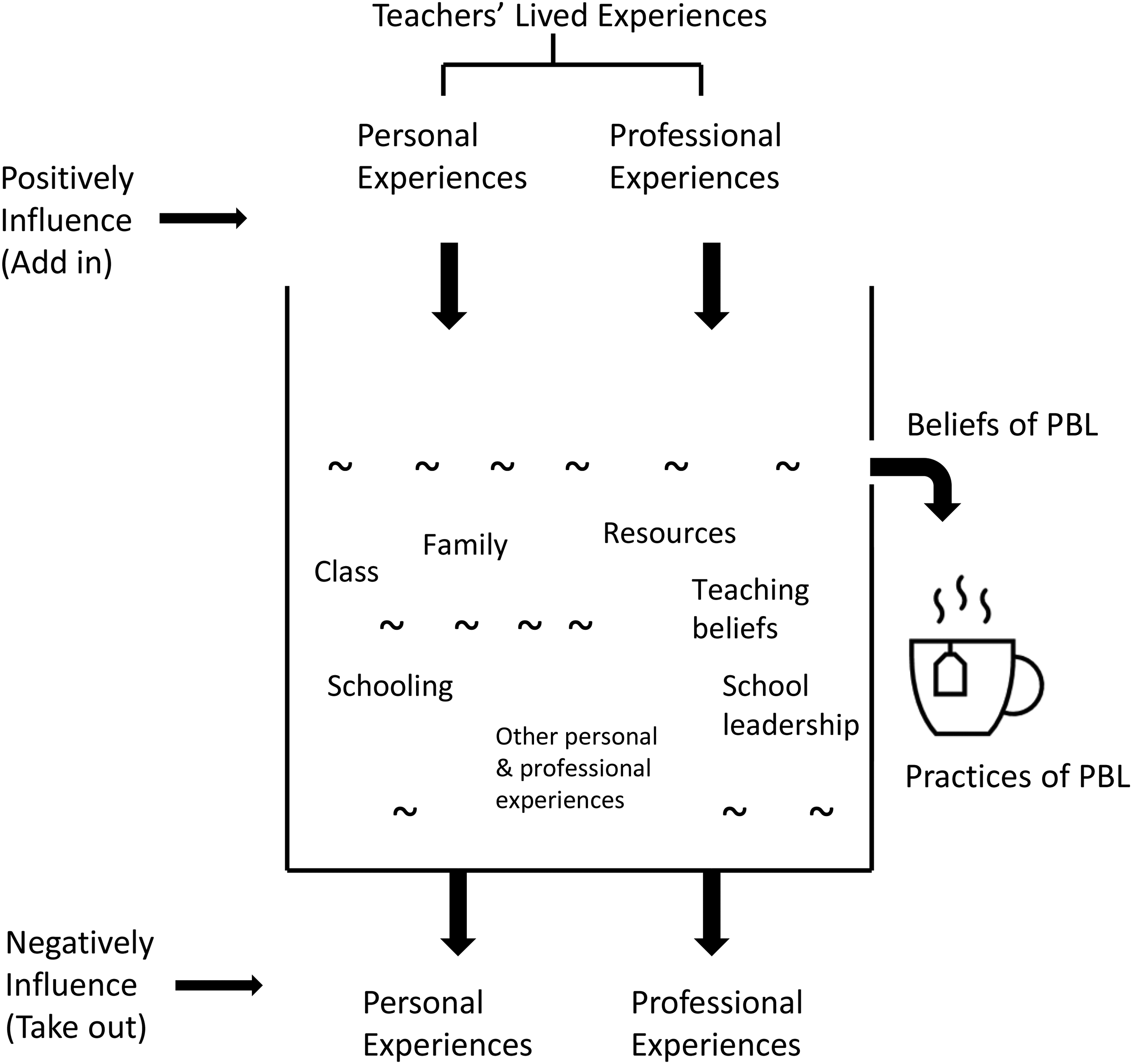
Visual model of teachers' lived experiences influence their beliefs and practices of PBL.
Contrary to positive experiences, negative experiences that leak from the bottom of the tank are believed to be harmful. For example, teachers who feel burdened by heavy workloads and accountability pressure from standardized tests may negatively influence their participation in PBL. Ultimately, the amount of water in the tank represents the level of teacher belief in PBL, which acts as a water tap that contributes to implementing PBL practices. Teachers who gain more positive experiences are likely to have a higher level of teaching belief in PBL and, hence, show a higher degree of PBL implementation in their classrooms.
Limitations and Implications
It is important to note that this study has some limitations. First, as it is a multiple case study with only five participants, collecting data from each participant might be more insightful if multiple interviews were conducted or participants were asked to write reflective journals. This would allow delving deeper into the nuances of teachers’ experiences. Second, this study only gathered information about teachers’ professional experiences with students and school leadership, but did not include any voices from those parties. Future research could focus on exploring their perspectives. Lastly, as this study has identified that different experiences influence teachers differently, exploring and comparing experiences with more perspectives would be worthwhile. For example, examining teachers’ experiences within and outside the school would be a good starting point.
Finally, I urge policymakers, school leaders, and researchers to consider the real-life experiences of teachers and the challenges they face in their specific contexts. Creating a platform for dialogue among teachers and with them is essential. By raising awareness on this topic, my hope is to motivate fellow educators to assist teachers in understanding and implementing PBL, which will ultimately help our students learn more effectively.
Footnotes
Acknowledgments
The author would like to extend heartfelt thanks to Dr. Erica Wiborg for her excellent guidance on qualitative research methods and this specific study. The author also expresses gratitude to Dr. Christopher Gareis and Dr. Leslie Grant for their close mentoring, which led to this topic, and to Dr. Jan Sokolowsky for his insightful feedback. Last but not least, the author would like to thank all the classroom teachers who have participated in the study and all the school administrators who offered support.
Declaration of Conflicting Interests
The author declared no potential conflicts of interest with respect to the research, authorship, and/or publication of this article.
Funding
This research received no specific grant from any funding agency in the public, commercial, or not-for-profit sectors.
