




Abstract
Collaboration is recognized by policy-makers as a key element in innovation-led economic growth. Collaborative relationships form organically, but also can be actively facilitated. Studies of business collaboration facilitation typically concentrate on value-appropriating commercial organizations, acting as hub orchestrators or knowledge-brokers. Little attention has been paid to potentially more trustable and effective value-independent facilitators. The attributes and activities of these organizations were empirically investigated using grounded theory and situational analysis. Value-independent, third-party orchestrators (i3POs) are demarcated from related concepts, and are found to vary considerably in capability and motivation as collaboration orchestrators. A reappraisal of these organizations’ drivers, from the perspective of collective action theory, suggests how more i3POs may be encouraged to follow the practices of leading examples, with positive economic outcomes. Membership-based i3POs, such as trade associations, have longer term potential as collaboration orchestrators than transient business-growth programs but are under-exploited in this regard.
Introduction
The World Economic Forum (WEF, 2015) identifies collaboration as the key to growth in Europe. Collaboration is intrinsically linked with inter-organizational innovation processes (Dodgson, 2014; Miozzo et al., 2016) and long-term inter-organizational collaboration features prominently, therefore, in public policy for economic growth. The European Commission is driving a €100Bn investment, over six years, in the Horizon Europe program of industry-partnered research and innovation collaborations (European Commission, 2018). The Commission has repeatedly identified research and innovation as vital to the global competitiveness of the European Union (EU), as well as an important recovery-response in times of economic crisis (Ulnicane, 2016).
Collaboration is defined as: two or more organizations, working cooperatively and sharing resources to generate benefits that would not be achieved by working alone (adapted from Huang et al., 2020). We further qualify business collaboration as: collaboration between two or more organizations, featuring at least one commercial enterprise. Collaboration leads to competitive advantage, through access to external knowledge and resources (Barney, 1991; Dyer & Singh, 1998; Prior, 2012), and a synergistic collaborative advantage where partners’ benefits exceed those from working alone (Huxham & Vangen, 2013; Kanter, 1994). Although substantial bodies of literature exist in domains such as firm-university R&D collaboration (Belderbos et al., 2018; Lai, 2011), inter-organizational learning (Lin et al., 2017; Liu, 2014; Powell et al., 1996), public sector collaboration (Torfing, 2019; Vangen et al., 2015), and supply-chain collaboration (Cai et al., 2016; Cao & Zhang, 2011; Huang et al., 2020; Nyaga et al., 2010), there is surprisingly little in the mainstream collaboration literature on the role played by value-independent third-parties in relationship facilitation.
Collaborative business relationships form organically, but additional relationships can also be actively facilitated by third parties. Third-party facilitators can provide the leadership and resource access needed to exploit innovative ideas and to help SMEs lacking relational skills or conviction to collaborate, and they can provide forums to generate new collaborative opportunities. Facilitators either derive a share of value generated by the relationships they create (value-appropriators), or are value-independent, with no direct commercial stake in facilitated relationships.
The role of value-appropriating facilitators lies at the heart of literature on innovation intermediaries (De Silva et al., 2018; Howells, 2006) and hub-orchestrators (Dhanaraj & Parkhe, 2006; Nambisan & Sawhney, 2011; Perks et al., 2017), but there is little or no coverage of the activities and motives of value-independent collaboration facilitators. Value-independent collaboration facilitators are potentially more trustable (Hingley et al., 2015) than value-appropriators, so empirical research is now needed to establish the types of organizations that exist in this category, the facilitation activities they perform, and how effectively. Additionally, in the absence of a value incentive, the motivational drivers for these organizations need to be established.
The lack of research on value-independent collaboration facilitators is all the more surprising given their prevalence and importance. Trade associations, as a prominent example, are estimated to number up to 3,500 in the United Kingdom alone and are recognized, in a government report on growth, as having a key role to play in engagement with business (Heseltine, 2012), and yet they are under-researched organizations (Marques, 2017; Rajwani et al., 2015; Spillman, 2018). To ensure that policy-makers are able to exploit the full potential of this category, the research questions posed are the following:
RQ1: what attributes and actions characterize the most effective value-independent collaboration facilitators, and
RQ2: how might the motivation for value-independent collaboration facilitators be explained?
Situational Analysis, a complementary method to grounded theory, is employed to explore complexity relating to diverse actors, and varied settings and styles of interaction, for their effects on processes (Clarke & Charmaz, 2014a). Through this analysis, sub-categories of collaboration facilitators are identified and explored, and factors impacting their effectiveness are identified. A set of collaboration facilitating activities are identified, which we term orchestration. The motives for value-independent third-party orchestrators (i3POs), in facilitating collaboration are explored through an extension to the Business Collective Action (BCA) theory, in which collaboration orchestration is identified as a selective good that can ameliorate theoretically grounded membership challenges that most i3POs face. Membership-based i3PO are self-funding and highly prevalent. They represent a considerable reservoir of unfulfilled potential for business growth that can be realized where more are motivated to recognize the mutual benefits from collaboration orchestration. Potentially, membership-based i3POs are a lower cost, longer term option for collaboration facilitation compared with publicly funded growth programs.
In the following section, conceptual differences between value-independent and value-appropriating collaboration facilitators are established, and BCA theory is introduced. Details of the grounded theory method are then followed by the findings, organized around the central category of orchestration. The discussion builds on BCA theory to explain how orchestration may be positioned as a selective good to increase i3PO commitment.
Conceptual Background
Business collaboration facilitation is covered by diverse literature. Roles have been suggested for intermediaries (De Silva et al., 2018; Howells, 2006), collaboration orchestrators of innovation networks (Dhanaraj & Parkhe, 2006; Nambisan & Sawhney, 2011; Perks et al., 2017), convenors of socio-political collaborations (Gray, 1985), cupid organizations controlling alliances (Stephens et al., 2009), and honest brokers of peer-to-peer collaboration (Hingley et al., 2015). The domains within which such relationships operate include ecosystems (Aarikka-Stenroos & Ritala, 2017; Järvi et al., 2018), networks (Corsaro et al., 2012; Dhanaraj & Parkhe, 2006), communities (Kolbjørnsrud, 2017) and even collegial nests (Schwab & Starbuck, 2016).
Typically, such studies are almost exclusively focused on value-appropriating organizations that are both active participants and beneficiaries of value created through collaboration. Only a few studies also encompass value-independent collaboration facilitators. Metcalfe (2010) recognizes the role of non-commercial facilitators in triple-helix relationships (government-industry-university) and Giudici et al. (2018) extend their organizational perspective to include potential facilitators such as business incubators, regional innovation programs, and venture associations. Even in this case, however, the open-systems context excludes closed-system organizations, such as membership-based facilitators.
Despite the predominant focus on value-appropriators, studies highlighting the properties of effective intermediaries and orchestrators serve to illustrate why value-independence warrants greater study. In the first section, therefore, the concept of value-independent collaboration facilitators is explored through the literature on intermediaries and orchestrators, in recognition of the importance of establishing differences and links between overlapping concepts (Haas, 2015).
Organizations undertaking a collaboration facilitation role act as focal points within the business collectives within which they operate, but for value-independent facilitators, working without a commercial motive, alternative drivers need to be recognized. In the second section, we draw on BCA theory to explore these drivers.
Value-independence
Where relationship brokers are able to demonstrate neutrality, they can establish a common identity and trust, especially with diffuse aggregations of firms (Hurmelinna-Laukkanen & Nätti, 2012). In a rare example of a power-neutral intermediary, Hingley et al. (2015) suggest that fourth-party logistics providers (4PLs) in the retail grocery sector can act as honest brokers and be trusted to broker horizontal collaborative relationships between their client organizations. In contrast, value-independent facilitators are trustworthy because no commercial conflict of interest exists. In the absence of a commercial share, value-independent facilitators are also more readily accepted as they have no need to exert control over the principals.
Collaboration is most effective when the hub firm assumes the mantle of a nondominant orchestrator (Dhanaraj & Parkhe, 2006). The degree of control and influence exerted by network orchestrators varies, from strongly hierarchical to peer-level collaboration where control is abrogated. At the hierarchical end of the spectrum, knowledge broking intermediaries rely on controlling knowledge development to protect their own future revenue (De Silva et al., 2018), and network orchestrators, such as Boeing, manage partners during new product developments to retain technical and commercial control (Nambisan & Sawhney, 2011). At the opposite end, control is abrogated where leaders act as technical visionaries rather than technical platform owners. A Finnish mobile handset manufacturer, for instance, fulfilled a low-control technical visionary role to facilitate development of a new mobile TV service (Ritala et al., 2012). In the absence of a powerful hub actor, networks are orchestrated through collectively agreed goals (Matinheikki et al., 2017) that are more acceptable to members, increasing commitment through collective action. Members are also better able to appreciate how their own self-interest will be served through the collective interest (Matinheikki et al., 2017).
Whilst the dominant hub firms that hierarchically manage their networks have clear value expectations, collectively managed hubs (Matinheikki et al., 2017) and technology leaders (Ritala et al., 2012), where value returns are longer term, exhibit considerably lower value-dependence, illustrating that dependence is scalar rather than binary. In these examples however, actors are both involved as collaborating principals and have a direct interest in the outcomes of the collaboration, and as such are still examples of value-appropriators rather than independent facilitators.
Variations in value-dependence are also recognized in a recent conceptual review of orchestrator categories (Hurmelinna-Laukkanen & Nätti, 2018). Facilitator-orchestrators are distinguished from value-appropriating player-orchestrators, and commercially motivated sponsor-orchestrators such as venture capitalists, by their “non-competitive orientation” (Hurmelinna-Laukkanen & Nätti, 2018, p. 68). However, whilst this definition does not preclude value-independent facilitators, their examples and discussion of “pre-competitive” networks, render facilitator-orchestrators as both active collaboration participants and longer term value-appropriators, similar to the technical visionaries (Matinheikki et al., 2017; Ritala et al., 2012).
The literature on intermediaries and orchestrators highlights the positive impact on trust and cooperation arising from value-independence and control-abrogation, especially in an innovation context. Whilst these properties emphasize the potential importance of value-independent collaboration facilitators, they also raise the question of why a third-party would be motivated to undertake the facilitation role, in absence of a value-share. To examine motives in this study, collaboration facilitators are explored as focal points of BCA.
Business Collective Action
Collective action occurs when a group of people collaborate to achieve a common aim (Olson, 1965). Businesses sharing common aims may similarly join forces to undertake BCA. Business collectives may lobby for statutory or regulatory change (Jia, 2014; Walker & Rea, 2014), facilitate access to funding (Wincent et al., 2010), address sector reputational issues (Winn et al., 2008), and influence sector standards (Delmas & Montes-Sancho, 2010).
Collaboration facilitators are representative focal points of business collectives, either directly in the form of membership bodies such as trade associations and social enterprises (SEs) or indirectly through publicly funded business incubation and regional investment programs (Giudici et al., 2018). BCA theory provides a basis for exploring the reasons that different types of third-party organizations may be motivated to facilitate collaborative relationships.
Collective action theory
Although collective action increases a group’s influence, the self-interest of individual members poses a theoretical challenge to its success. Where all members of a collective benefit equally from action, whether or not they participate, rational members will choose to freeload, leading to a potential tragedy of the commons where too few participate for the action to succeed (Fonti et al., 2017; Olson, 1965). The issue relates to collective goods, which are benefits that become available to one member of a collective that cannot be withheld from another. Olson (1965) suggests collective action is irrational because rational members are not motivated to commit time and resources to action when, instead, they can choose to free-ride on the contributions of others. Olsen argues instead that to stabilize the group, collective action must be accompanied by selective incentives through which participants are rewarded or non-participants are punished (Olson, 1965). Even this position has been criticized, however, as “someone has to pay for the selective incentive” (Oliver, 1993, p. 274), implying that freeloading is inevitable and that collective action organizations face an ongoing existential threat.
Collective action in a business context
With business collectives, the tragedy of the commons is typically averted (Barnett, 2013). Questions on how this is achieved and why organizations such as trade association persist in the long-term (Spillman, 2018) are not adequately explained by existing theory, implying, as Olson predicts, that other factors motivate continued membership.
Studies of collectives, such as trade associations, as lobbying organizations (e.g. Barley, 2010; Jia, 2014; Walker & Rea, 2014), concentrate on public goods made available to all in the sector. Attention has been deflected from other activities these organizations undertake that may be a source of private goods. Despite the prevalence of these organizations (Marques, 2017), there has been a “lamentable” dearth of research (Barnett, 2013, p. 214), especially with regard to selective incentives that may explain their longevity.
The BCA perspective is important because it highlights a theoretical challenge that must be overcome to explain the drivers for value-independent collaboration facilitation. In so doing, the study’s scope also encompasses an under-researched group of organizations (Barnett, 2013; Rajwani et al., 2015).
Method
The empirical context is a complex macro-economic environment in which public policy and funding places SME collaboration and innovation at the heart of economic growth strategy. The study arose following the researchers’ direct involvement, over three and half years, in two EU funded, innovation-oriented, business growth programs in the United Kingdom, where the variety of public, private, and third-sector organizations involved in collaboration facilitation was apparent. Facilitators were neither beneficiaries of, nor participants in, the relationships they facilitated, and yet some of these organizations seemed to be particularly adept at creating relationships that would not otherwise have occurred. This study examines the attributes and activities that characterize the most effective, independent third-party collaboration facilitators and considers how the motives and performance of effective facilitators may be explained such that the full potential of the category may be exploited.
Research Design
The complementary methods of Grounded Theory (GT) and Situational Analysis (SA) were selected for their suitability in investigating the effects of complex settings on the social processes through which collaboration facilitation occurs. GT is one of the most widely used methods in the social sciences and is suited to studies featuring a human element especially where theory generation is intended (Bryant & Charmaz, 2014). However, traditional forms of GT have been criticized for a slavish focus on social processes that inadequately recognize the important effects of context (Clarke & Charmaz, 2014a). Although the issue was partly addressed by Strauss, through the conditional/consequential matrix (Strauss & Corbin, 1998), SA offers a “considerably more elaborate” toolset for studying the situational complexities affecting social processes (Clarke, 2003, p. 555). Situational analysis provides tools that guide the researcher in delineating the research scope, recognizing diverse categories of relevant actors and in analyzing inter-actor relationships. SA is now an established, complementary extension to grounded theory achieving joint billing in the four volume Sage GT/SA publication (Clarke & Charmaz, 2014b).
Research Process
Grounded theory research follows a three-stage process through which an initially broad line of enquiry is progressively focused onto core emergent themes. The three stages of initial, focused, and theoretical coding (Charmaz, 2014) are iterative and overlapping (Birks & Mills, 2015). Situational analysis was used to establish the research scope and to support analysis and theoretical sampling processes.
Research Scope
The delineation of research scope was supported by use of a social arena map (Clarke, 2005) of organizational actors relating to the phenomenon (Figure 1). Relevant actors were depicted as a series of overlapping domains that illustrate inter-actor relationships and degree of actor engagement within the arena. The social arena map was revised subsequently as further actors of interest were revealed. In accordance with GT theoretical sensitivity principles, engagement with the literature is minimized at this stage to avoid preconceptions stifling discovery. The first six participants were identified as a purposive sample of informants with relevant expertise.
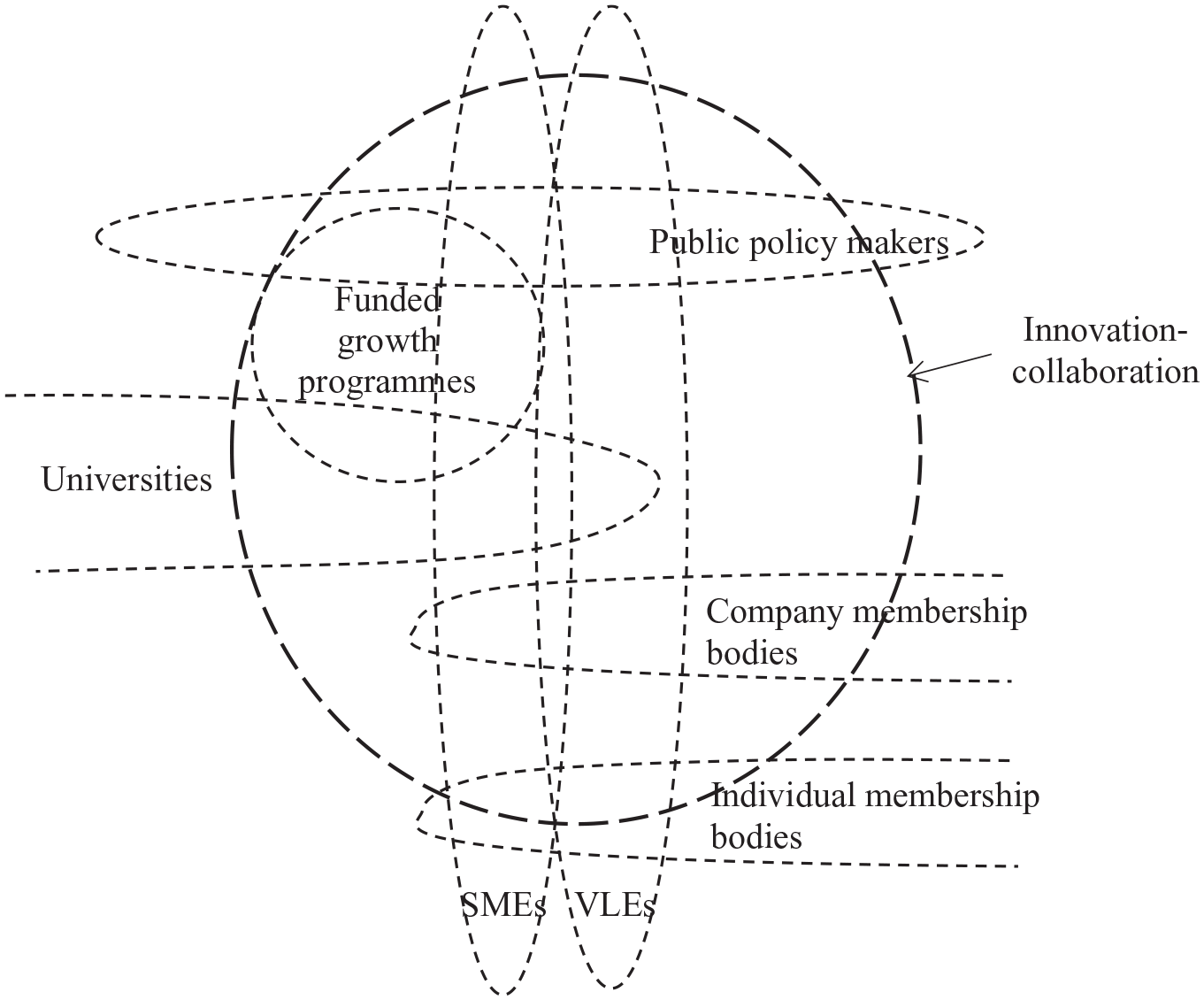
Social arena map for third-party facilitated collaboration.
Data gathering and theoretical sampling
Data were gathered from multiple sources: informed respondent interviews, documents supplied by interviewees, promotional material and collaboration-facilitators’ websites. Websites were researched for statements pertaining to the organization’s mission, examples of past and forthcoming member events, and press releases or blogs that indicated the nature and priority of collaboration-facilitation activities. Interviewees beyond the initial purposive sample were selected in accordance with GT’s theoretical sampling principles for their relevance to the phenomenon and for developing the properties and dimensions of the core categories, during the theoretical coding phase. Interviewees were sought that represented different examples of collaboration-facilitators. Twenty-eight interviews were conducted with senior officers, managers, or CEOs of member firms, and third-party facilitators (Table 1).
Research Participants.
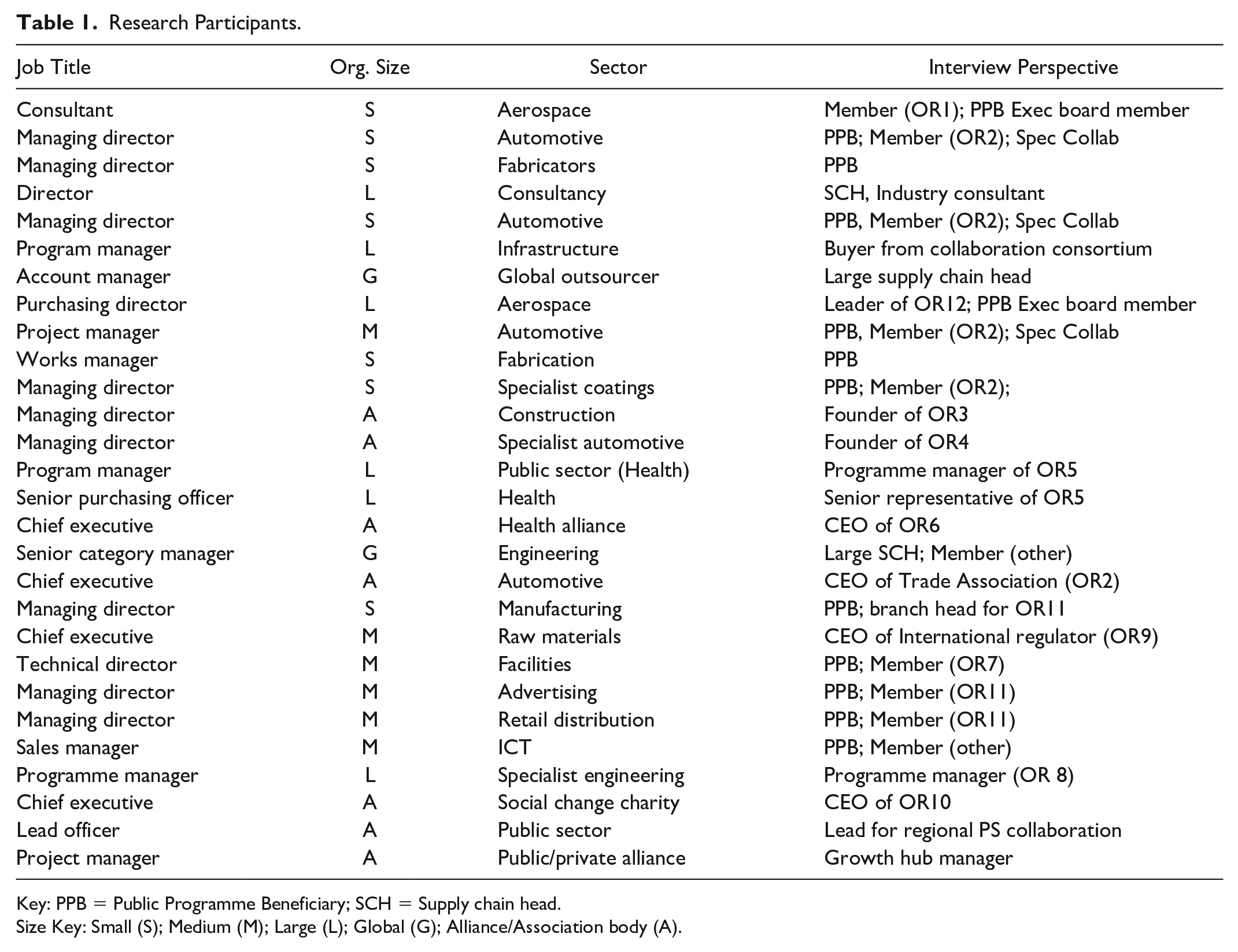
Key: PPB = Public Programme Beneficiary; SCH = Supply chain head.
Size Key: Small (S); Medium (M); Large (L); Global (G); Alliance/Association body (A).
Interview protocols were used to ensure that topics of interest were addressed, but in accordance with constructivist principles, open-ended, active interview techniques were employed to ensure that emerging topics of interest were fully explored (Holstein & Gubrium, 1995). Interview protocols were adapted as the investigation proceeded to focus progressively on elaborating the attributes, activities, and effectiveness of collaboration facilitators. Interviews were 60 to 90 minutes long and were all digitally recorded and transcribed verbatim.
Initial and focused coding
Transcripts were loaded into Nvivo® for coding and analysis. Initial codes were generated in vivo through line by line analysis. Each initial code was annotated with a description to inform subsequent analysis. During focused coding, codes were hierarchically organized in categories that represented phenomena of significance to respondents (Charmaz, 2014). These phases of data collection, labeling and organization are rigorously inductive (data driven).
Theoretical coding
The properties of core categories and the inter-relationships between them were then explored during the theoretical coding phase. At this stage, emerging themes and concepts were explored in more depth against existing literature, in accordance with theoretical sensitivity principles (Charmaz, 2014). In particular, themes were explored in the light of BCA theory to develop an explanation of why value-independent organizations might be motivated to act as collaboration facilitators.
Situational maps (Clarke, 2005) were used at this stage to maximize analytical insights. These maps enable a more systematic analysis of data by exploring the relationships between a wide range of human and non-human actors, issues, ideas, discursive constructions, and spatial and temporal factors (Clarke, 2005). Situational maps are sketchpads, rather than analytical outputs, that open data up to interrogation in “fresh ways within a grounded theory framework” (Clarke, 2005, p. 83). These maps were used to ensure that similarities and differences were explored for each variant of a collaboration-facilitator. Through this process, the key factors impacting collaboration-facilitation effectiveness were revealed.
The central (theoretical) category was derived through an abductive process (Charmaz, 2014). This central category defines a conceptual framework, through which the properties and behavior of facilitators are explained. Abduction is an iterative process through which possible explanations are progressively refined after investigating their fit and relevance against the data. The process drew on BCA theory and, where appropriate, extended theory to explain the findings. Further relevant organizations were sampled to reveal the variety in orchestrator types, and differences in their properties and activities.
Throughout the process, best practice guidance for GT studies was followed (Suddaby, 2006). The Gioia et al. (2013) structured framework for demonstrating GT process rigor was utilized, suitably adapted for the Charmaz method variant (Table 2).
Demonstrating Grounded Theory Rigour.
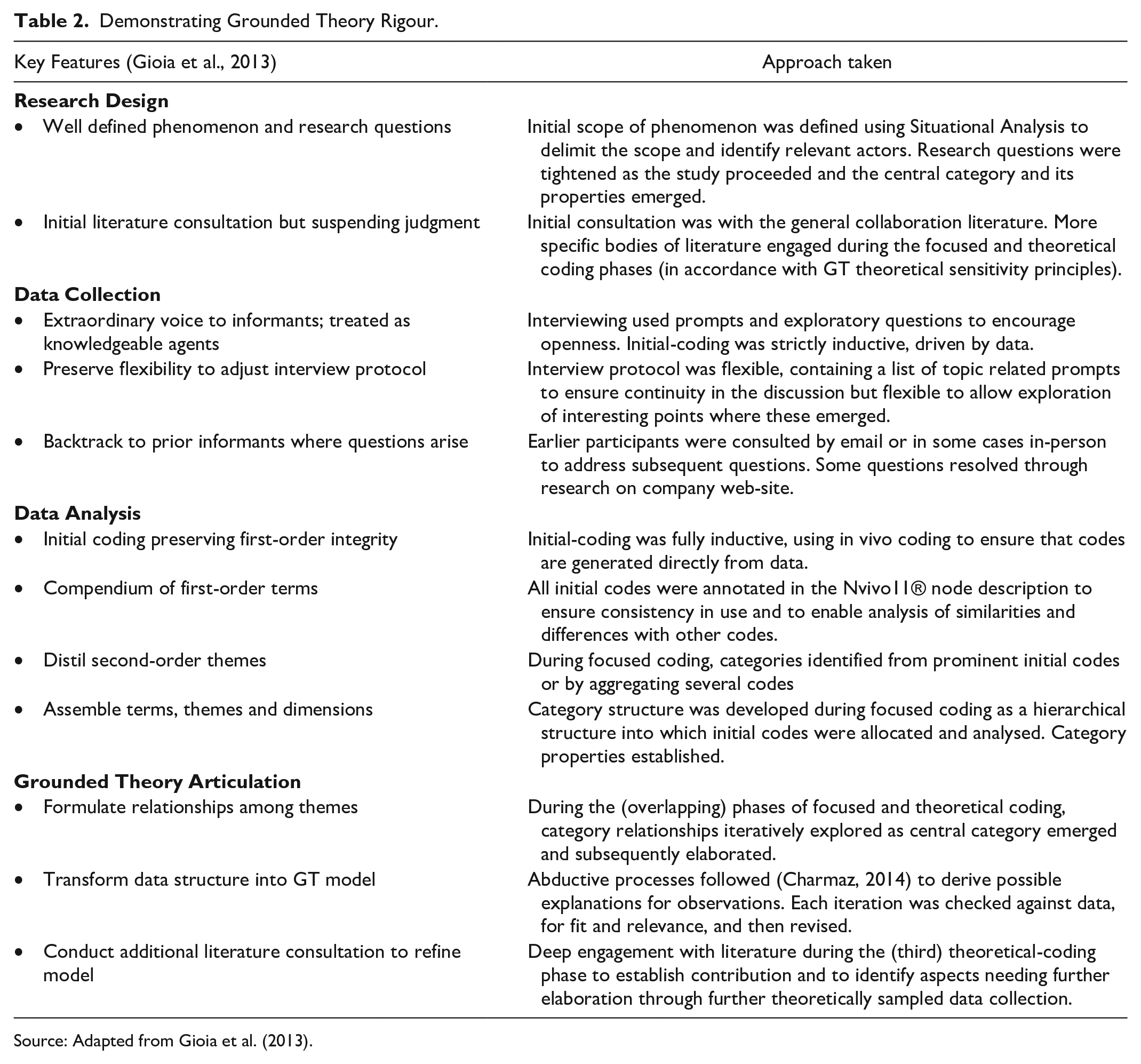
Source: Adapted from Gioia et al. (2013).
Findings
The study investigated the catalytic role that value-independent third-party facilitators play in fostering new collaborative relationships. The research explored the attributes and actions characterizing effective facilitators, and derives an explanation of their motives.
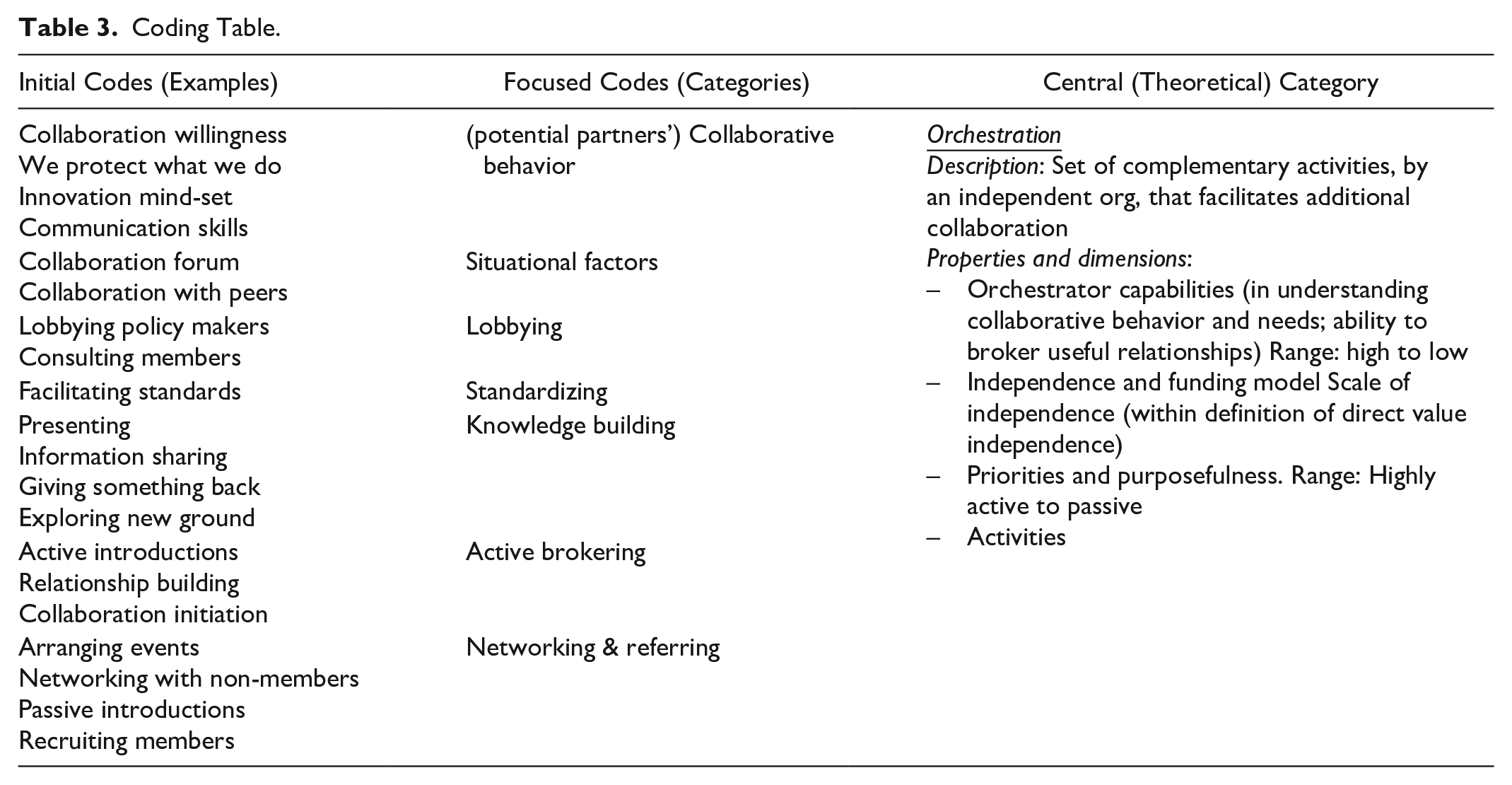
The findings are organized around the central conceptual category (Table 3) of independent i3POs. A grounded theory central category is a meta-abstraction through which core categories, their properties and inter-relationships, are aggregated into a composite explanatory framework. Each i3POs is associated through their activities with diverse organizations that constitute a business collective. BCA theory was utilized and extended to explain how i3POs should be motivated. The term orchestrator expands on lobbying action, as the basis for BCA, to encompass a coordinated set of activities through which i3POs facilitate collaborative relationships. The term qualifies activities performed by i3POs and should not be confused or conflated with activities performed by hub-orchestrators.
Coding Table.
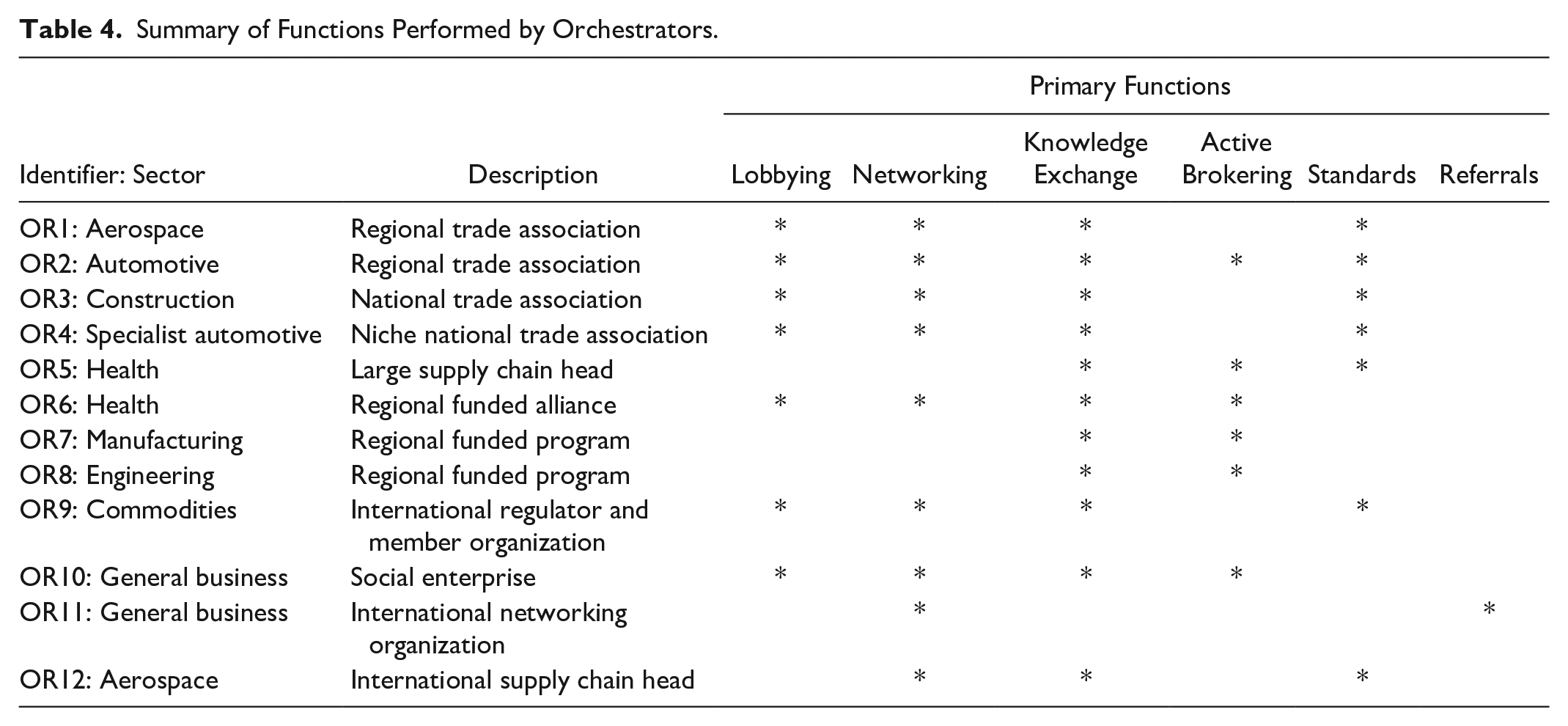
Twelve i3POs were explored through the views of their officers, members, and through secondary documents (Table 4). The sample included trade associations, publicly funded business development programs, a public-sector and a private sector supply chain head, a SE, an industry regulation and arbitration body, and an international business-networking organization.
Summary of Functions Performed by Orchestrators.
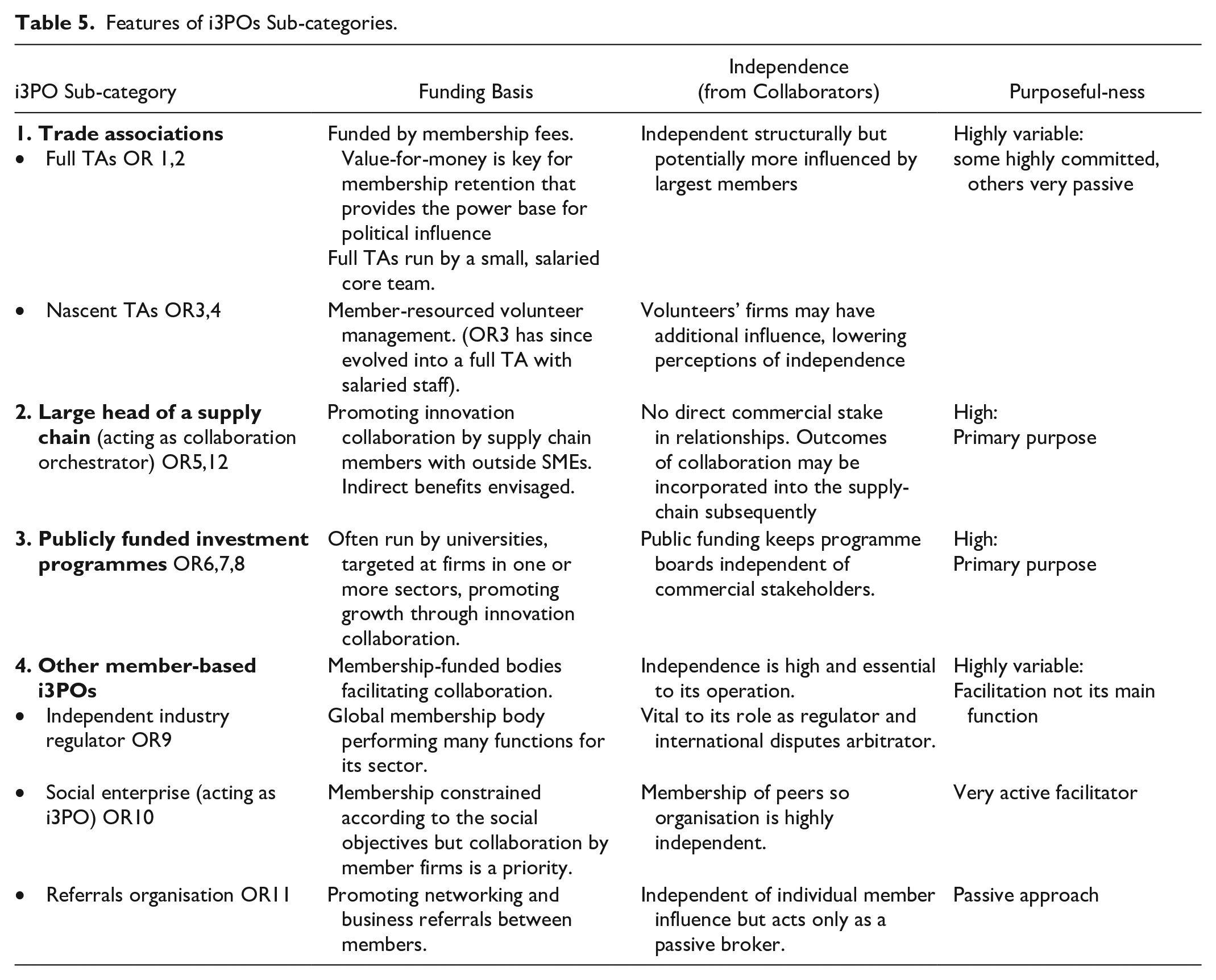
The central category is divided into four sub-categories, into which the 12 i3POs were allocated, according to similarities in their structural features and commercial foundation (Table 5). These sub-categories represent different types of business collective, some bound tightly by membership, others through common cause or association through their activities. The following sections detail the properties and dimensions of i3POs, through which effective performance can be explained. The activities comprising orchestration are then presented, along with data extracts, to illustrate the actions of effective orchestrators.
Features of i3POs Sub-categories.
Effectiveness of i3POs
The findings demonstrate a wide range in the effectiveness of i3POs in facilitating collaborative relationship formation. The properties with the greatest impact are orchestration capabilities, purposefulness (intent), and perceptions of independence.
Orchestrator capability
i3POs vary in their capability as orchestrators. Although they are relatively small organizations, capable i3POs are extensively networked and skilled brokers. Charismatic, well-connected senior figures were a feature of eight of the twelve i3POs, including all the active brokers. The CEO of OR3 is described as a “really flamboyant character” with “an amazing network”, whilst the CEO of OR2 was described as “quite exceptional” by a member. Examples were encountered where i3PO officers were able to provide links into different communities of practice, as well as with wider research, political, and business support communities. For member-based i3POs, networks managed by the i3PO, both inside and outside the collective, represent a more efficient use of resources, compared with members establishing their own overlapping networks, especially for SME members.
Purposefulness
Purposeful i3POs are those that intentionally seek to broker connections and generate collaborative relationships that would not otherwise occur. Although the best-performing orchestrators illustrate the potential of i3POs for increasing collaboration, especially those involving SMEs, it is also clear that many do not purposefully orchestrate collaboration. Orchestration purposefulness is therefore a sliding scale of intent, ranging from i3POs that practice active brokering with collaboration-facilitation being a specific goal, to others where it is a passive consequence of knowledge-sharing and networking activities only. Active orchestrators all recanted tales of collaborative ventures that were unlikely, otherwise, to have arisen. Purposefulness varies to some extent by sub-category. For publicly funded programs and supply chain heads (Table 5), where collaboration facilitation is a primary objective, there is no lack of incentive, but for membership-based i3POs collaboration facilitation actions may be undertaken passively, as a lower priority. Purposefulness needs to be increased if the full potential of this large category is to be realized. The extended theoretical basis for this motivation is expounded in the discussion, drawing on collective action theory.
Independence
i3POs are value-independent as long as they derive no direct commercial benefit from products or services arising from relationships they broker. However, this is not a simple dichotomy. In practice, other dependency links exist that moderate the benefits of value-independence. i3POs may still derive value indirectly or may have other dependence relationships with collaborating principals (such as membership revenue). This is described here as a qualified scale of independence (rather than as low dependence) to maintain the emphasis on value-independence. i3POs are sub-categorized according to similarities and differences in their independence, and their funding relationship with the communities they represent (Table 5). Of these sub-categories, publicly funded programs are the most independent but the least strongly bonded as collectives. Membership i3POs, such as trade associations, are commercially independent of the outputs of relationships they broker, but their dependence on membership revenue may reduce their perceived independence in cases where heterogeneous (member and non-member) relationships are brokered. The least independent sub-category (Table 5) are the supply chain heads. These organizations qualify as value-independent because they derived no immediate value-share from the relationships they facilitated, however, they nevertheless held longer term expectations of commercial return through the availability of more innovative products and services in their supply chains. The private-sector example in this sub-category (OR12) is the closest i3PO studied to value-appropriating intermediaries, which may account for it being the only example encountered of an unsuccessful attempt to facilitate collaboration, potentially indicating that members were suspicious of its motives.
Orchestration Activities
Considerable variation was apparent in the combination of collaboration-facilitating activities that i3POs undertake, reflecting the different reasons these organizations came into existence. The activities described in this section (Table 4) are limited to generic collaboration facilitation activities. i3POs vary in the activities they perform and the extent to which they actively encourage collaboration among network members. The more these actions are pursued with the purposeful aim of facilitating collaboration, the more they can be described as orchestration. Each of these i3POs performs collaboration enhancing activities that benefit actively engaged members more than either passive members or non-members, thereby providing a selective incentive for membership.
i3POs facilitate the creation of new collaborative relationships, either passively, by hosting the events through which connections are established, or through active brokering. Active brokers (OR2, OR5, OR6, OR7, OR8, and OR10) devoted considerable time to understanding members’ backgrounds and interests before effecting personal introductions. The CEO of OR6 goes further still and draws on tacit experience to envisage the collaborative potential in certain new business combinations before either, openly effecting introductions, or more surreptitiously, re-arranging seating pattern at events.
We had a plan about how we would sit them, who might make a link with somebody else, who would have sort of an interesting conversation, who needed to talk to someone because we hadn’t managed to get them together.
Two orchestrators (OR2 and OR8) actively build consortia to exploit emerging opportunities. In accordance with our definition of i3POs, these organizations had no commercial stake in the ventures created and were readily accepted as orchestrators because of this value-independence (Table 5). The typically extensive connections of i3PO leaders also enabled them to identify additional relevant partners, from both within and beyond the collective, that otherwise may not have been engaged. OR2 is a relatively young regional engineering trade association in a sector worth £9bn annually to the UK economy. Members range from global manufacturers to micro-firms. The association holds regular networking, social, and knowledge exchange events, including site visits and provides industry-specific, accredited training. OR2 links members into international trade visits and, largely through its CEO, enables members to access a wide network of research, funding, marketing, and business development contacts. OR2 takes a particularly proactive approach to brokering collaboration, both between association members, and with external organizations. The CEO described the association’s capability: [B]ecause of our contacts, and because we have a good understanding of what each of our member companies are doing, we have the ability to build consortia for whatever type of opportunity. . .engaging internationally or nationally. . .we needed to bring others in to the consortia. . .through some of the contacts we had [the consortium was extended]”.
The CEO went on to describe three complex collaborative consortia that OR2 had helped to build that were unlikely to have existed otherwise. Value generated through these relationships represented selective goods, which, unlike collective goods, reward mainly the partners involved. The i3PO’s contacts were particularly important in bringing in additional partners to each consortium at the right stage. The CEO’s reference to understanding its members was achieved through several routes including “getting to know you” sessions, company presentations, site visits, and one-to-one interactions. The depth of understanding gained by the i3PO, coupled with its wider connection network, enabled collaborative consortia to be formed to exploit innovation opportunities. One of its SME members commented: [I]t’s a good networking club, but goes far beyond that. . .I have found it to be one of the most useful organisations I’ve come across to be honest. . .I’ve never heard anyone say a bad word about the organisation . . .[CEO] is quite exceptional. She is an exceptional person and built a good team. That’s why it works so well
The social composition of collectives was observed to be more important than physical settings. i3POs create conditions in the form of networking events, presentations, site visits, industry shows, and awards dinners, through which attendees are afforded the chance to make new personal contacts, develop social relationships, and learn about others’ businesses. Well-received events were noted where brokering organizations paid careful attention to group composition, but many experiences were negative and included phraseology such as “the wrong people” used in the example given here: We used to just go to the meetings. That was everybody from [TransCo], down to the guys that repair pallets on the dock road. . .we actually got like our technical director to go in front of the podium. . .but I would be sitting next to an operations manager from [TransCo]. He wasn’t interested in IT. The guy who ran [the] marina, he wasn’t interested. He’d always say, oh, I’ll mention it to our guys. It was the wrong people. (TA member)
Interviewees seemed to accept collaboration as beneficial and a valid objective, including those who had negative experiences. However, SME leaders, sensitized by aggressive sales practices, sought the company of those with whom they shared a sense of identity and generally seemed unaware of the innovation potential that may exist in more diverse contacts. Establishing a cohesive forum, whilst also exposing members to new ideas and methods, is a complex and challenging task, not always appreciated by SMEs. One trade association CEO observed: “It’s a very complicated dynamic which SME’s don’t always realise” whilst another inferred that the “wrong people” was a consequence of poor event management: [S]ometimes you can be invited along to business networking, and it’s just shabby . . . put together with the wrong people and there isn’t enough thoughtfulness[sic] behind it. (Social Enterprise CEO). [F]ound [networking events] of fairly limited value because the groups I joined seemed to be completely full of professional service providers. (SME MD).
These examples illustrate some of the complexities, of which i3POs need to be aware. Those that invested time in understanding their members’ interests, experience, and knowledge, were rewarded with strong endorsements from stakeholders.
Underpinning the different functions outlined in this section, i3POs also fulfill various knowledge dissemination, creation, and collation roles. Once again, these activities selectively benefit participating members more than the rest of a collective. In a knowledge-dissemination role, i3POs act as knowledge concentrators, collecting and forwarding information on impending changes to legislation, regulation, or other aspects of the trading environment affecting members: “it was my way of keeping up to date as to what’s happening legislatively, or technically, within the industry” (SME head). In a knowledge creation role, i3POs host presentations, industry shows, and site visits are well-recognized catalysts for product and process innovation. In a knowledge collation role, i3POs, first, collate knowledge on members’ capabilities and strategic priorities to inform the i3PO’s brokering function and, second, assimilate members’ experiences to inform the i3PO’s lobbying function. In this role, i3POs accumulate the collective knowledge and experience of a sector upon which good legislation depends: [M]inisters agreeing on things without really knowing the impact of their decisions. Those things are then translated into legislation and . . . . suddenly, it has an impact on [sector] trade, but it’s too late. (OR9 CEO).
These examples illustrate the importance of bilateral knowledge exchange, both of which provide an incentive for greater business interaction.
Typical of trade associations, two associations (OR3 and OR4) were recently created as lobbying organizations. OR3 has progressively merged with several peer organizations and, in the process, has considerably increased its influence as membership rose from 75 to approximately 450 in just six years. This enlarged group has increased its influence but through a widened group in which the voice of the original niche may now be diluted. Contrastingly, OR4 has avoided mergers to maintain its niche focus. OR4 is a niche trade association in the automotive sector that focuses primarily on influencing regulation of its sub-sector. As most of the sub-sector’s regulation originates at a European level it has expanded geographically rather than through merger with related bodies: [W]e are negotiating more and more with Brussels, at a European level. . .we needed a European identity, so I was tasked, within the association, of setting up a European association. (TA head).
The creation of OR4 has increased collaboration over emerging political and regulatory developments, but the small membership, in a competitive sub-sector, constrains the potential for collaboration facilitation. Lobbying is a function most closely associated with membership bodies, for whom it is often a primary reason for existence, but is not a priority for other i3POs.
In addition to attempting to influence macro-economic change, trade associations are also uniquely well positioned to promote and manage industry standards for collective benefit. This function may encompass the development standards, training, accreditation, and regulating activities. The importance of the function varied considerably between associations. OR9 exists primarily as an international standards organization, setting and enforcing compliance and arbitrating on disputes. Its international standing is such that it is also an effective lobbying organization, and a respected training institution. Its activities are undertaken in a multi-jurisdictional context. Lobbying efforts become particularly complex, however, when they operate across multiple jurisdictions. As a global commodities association, it is often forced to react after governments have already implemented policy changes that negatively impacted free trade, though increasingly, it is attempting to be more proactive by improving its knowledge of impending change and protecting standards through joint lobbying.
It’s called the Committee for the Cooperation between [commodity] Associations and there are 18 [commodity] associations from around the world. Imagine it as the United Nations of [commodity] associations. . .our role is to lobby governments when things go wrong. (Association CEO).
Discussion
This empirical investigation of value-independent, i3POs of business collaboration examines the structural characteristics of these organizations to understand better what they are, what they do, and the factors that make them effective as facilitators. The term orchestrator encapsulates the diversity of these enabling activities.
The effectiveness of i3POs depends on their capabilities, the purposefulness with which they pursue orchestration, and perceptions of their independence. All of these attributes are dimensional, with two requiring further unpacking. First, degrees of independence are recognized across i3PO sub-categories (Table 5) and the area of potential overlap with value-appropriating orchestrators is discussed. Second, wide variations in purposefulness are explored through BCA theory to explain i3POs’ motives.
Degrees of Independence
Independence from collaborating principals increases the trustworthiness and effectiveness of facilitators (Hingley et al., 2015; Hurmelinna-Laukkanen & Nätti, 2012), but the degree of independence varies. Of the sub-categories in Table 5, publicly funded programs are clearly independent of value generated by collaborating principals. Membership organizations are also highly independent but are recognized to be dependent on membership fees, which may impact trust in heterogeneous collaborations of members and non-members. The least independent sub-category contains two supply chain heads that promoted inter-supplier collaboration. These organizations matched the definition of value-independence by not being active collaborators and not benefiting directly from specific collaborations. However, these organizations both envisaged indirect future benefit through useful innovations emerging from their supply chains. The private-sector supply chain head was the only case encountered of unsuccessful collaborative facilitation. The supply chain heads are borderline i3POs, sharing characteristics with visionary leaders (Matinheikki et al., 2017; Ritala et al., 2012) and facilitator orchestrators (Hurmelinna-Laukkanen & Nätti, 2018), but the low engagement from suppliers in the private-sector example potentially indicated suspicion of its commercial motives, suggesting that members regarded it more as a value-appropriating player (Hurmelinna-Laukkanen & Nätti, 2018).
Purposeful Orchestration as Collective Action
Large variations in how purposefully i3POs pursued collaboration facilitation were most notable in membership-based sub-categories, and yet, arguably, these organizations are the most important because of their prevalence. By reappraising these organizations’ drivers from the perspective of BCA theory, it is possible to envisage how many more member-based i3POs may be encouraged to follow the practices of leading examples.
Membership-based organizations, including trade associations and business-oriented SEs pursing social change, typically come into existence as lobbying organizations, and studies of BCA (e.g. Walker & Rea, 2014) concentrate on this perspective. However, such change agents face a freeloading challenge because nonmembers stand to gain as much as members from action (Fonti et al., 2017). In addition to the freeloading threat to membership levels, successful change agents may also remove their own reasons for existence unless their members perceive a wider purpose.
Collaboration orchestration is important from an existential perspective because unlike lobbying activities that produce public goods (Olson, 1965), orchestration produces outcomes that preferentially benefit the most active and engaged members within a collective. Each new relationship constitutes a selective good that most benefits the collaborating principals. We define the term selective good to refer to outputs that are available to a sub-group of businesses, rather than being restricted to a single firm (private goods). Although others in the collective may also benefit indirectly (e.g. as supply chain members), the benefits are not accessible to the collective as a whole. The more a member-based i3PO can demonstrate commercial benefits to its most active members, the greater the membership incentive. The recognition of selective goods addresses a theoretical challenge faced by membership-based i3POs because they constitute a class of selective incentives that are needed (Olson, 1965) to counter the free-loading problem. Furthermore, with collaboration costs being borne mainly by the principles, collaboration facilitation is an attractive membership incentive as it does not require additional funding from the collective, a problem that Oliver (1993) suggests would still leave an organization vulnerable to free-loading, with no one prepared to pay.
Collaboration orchestration by membership i3POs is therefore a self-sustaining solution, in which the collective drives its own growth, potentially indefinitely (top right, Figure 2). Membership-based i3POs are an integral part of a business community. Trade associations and certain SEs (top row, Figure 2), are distinguishable from funded-program orchestrators that operate on behalf of communities such as SMEs in a regional economy (bottom row, Figure 2). Both types of i3PO can generate superior returns for the collective, but the former have better long-term potential because they are self-sustaining, whereas public programs, even when regarded as competent, motivated and trusted-independents, are transient, leaving a leadership vacuum in their absence.
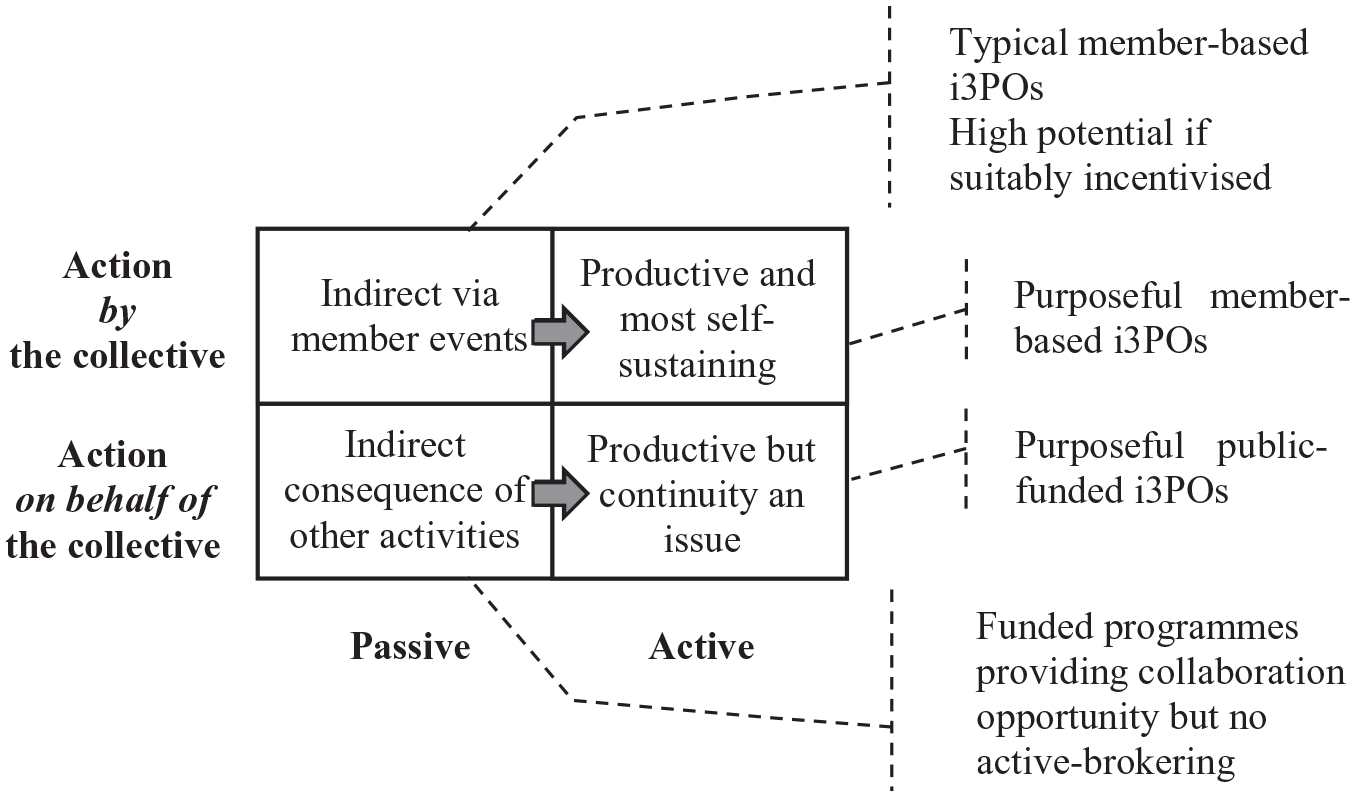
Characterising i3PO collaboration orchestration as collective action.
Collective and Economic Advantage Generated by i3POs
We defined i3PO-facilitated relationships to include all business collaborative relationships, arising from orchestrator activities, which would not otherwise have occurred. This additional dividend necessitates an extension to terminology.
The terms collective advantage and economic advantage are proposed, to extend the extant concepts of competitive advantage and collaboration advantage into the domains of business collectives and economic regions, respectively. The established concept of competitive advantage considers innovation collaboration benefits from a firm-centric perspective (Barney, 1991), whilst the term collaborative advantage was defined to recognize additional value that collaborative relationships generate, beyond that which the partner firms would create alone (Huxham & Vangen, 2013; Kanter, 1994). Collective advantage is proposed to recognize the value-sum of all i3PO-facilitated relationships from which members of the collective have benefitted. The more effective an i3PO is, then the more members of the collective stand to benefit. This same logic can be applied to any economic region by recognizing the value-sum of all collective advantage generated within the region, as an economic advantage. The concept of collective advantage provides a platform for appraising each i3PO’s effectiveness, whilst economic advantage provides a basis for discussing policy relating to all i3POs in a regional economy.
Theoretical Contributions
Contributions are made to the BCA literature and to studies of collaboration facilitation. The study extends theory on BCA by identifying orchestration as a set of collaboration facilitating activities, generating selective goods. Unlike collective goods, from which all members of a collective benefit, irrespective of their commitment, selective goods disproportionately benefit committed members. This is theoretically significant, because in the absence of selective goods there is no incentive for members to contribute resources to collective action (Olson, 1965). Resource dependent organizations, such as trade associations would face an existential threat in such circumstances.
In the absence of identified selective goods, previous studies of trade associations have noted, but not explained, the longevity of these organizations (Spillman, 2018). Typically, trade associations are studied as lobbyists for business environment change (Barley, 2010; Walker & Rea, 2014), but the outcomes of these activities are collective goods, available to all. The collaboration perspective adopted in this study has enabled a broader category of activities to be identified that better explains trade association persistence. Selective incentives provide a route to increased membership, and a motive for i3POs to facilitate collaborative relationships in absence of a value share.
Through the collective action contribution, the study increases understanding of an under-researched group of organizations, addressing many calls for further research (e.g. Barnett, 2013; Marques, 2017; Rajwani et al., 2015) whilst also extending the category of member-based organizations studied.
Value-independent collaboration facilitators are very under-represented in the collaboration literature and have only been tangentially recognized previously (e.g. Giudici et al., 2018). Studies of network orchestrators and intermediaries focus on value-appropriators; value-mediators that benefit commercially from the relationships they create. This study demarcates and examines value-independent collaboration facilitators. These value-moderators (catalysts) do not directly benefit from the relationships they create. At the boundary between these two extremes, previous studies have identified noncompetitive, cooperative cases (Matinheikki et al., 2017; Ritala et al., 2012), where value-appropriation is not a near-term objective. These facilitator orchestrators (Hurmelinna-Laukkanen & Nätti, 2018) achieve higher levels of trust than typical value-appropriators but still act as collaborating principals that eventually expect a return for their involvement. i3POs are conceptually distinguished as orchestrators of relationships in which they are not mainstream participants and from which they do not derive commercial value.
Policy and Practice Implications
Effective i3POs are of strategic importance to the collectives they represent, especially their SME members, increasing access to knowledge and resources located outside the firm’s boundary that increasingly are sources of competitive advantage (Prior, 2012). The UK government recognizes the importance of trade associations in a business growth context, but also recognizes variability in their quality (Heseltine, 2012). The more effective i3POs are at facilitating business collaboration, and the more willingly they accept the mantle of collaboration orchestrators, the more potential they have for stimulating business growth. Our research highlights wide variation in how actively (or passively) i3POs facilitate collaboration, suggesting that their overall potential is substantially under-exploited. Public policy needs to recognize the number and variety of i3POs and their potential for stimulating growth, by training and motivating more to become effective orchestrators, either supplementing or replacing publicly-funded programs. Policy initiatives need to ensure that leaders of i3POs prioritize collaboration-orchestration activities in recognition of the stronger membership incentives they provide relative to lobbying activities. In turn, i3PO leaders need to promote the benefits of collaboration with their members and share success stories.
The need for government to work more closely with trade associations is recognized (Heseltine, 2012), and these membership-based i3POs offer a more self-sustaining, long-term option for stimulating collaboration than transient, publicly-funded programs (Figure 2). Publicly funded programs are the most independent and, therefore, trusted category of orchestrator, but not necessarily the most efficient. Each new business assistance program has to establish its contact networks and develop trusted relationships with targeted businesses. This social capital is then likely to dissipate after the program concludes. Policy-makers may consider that funds would be used more effectively by helping business collectives to develop their own orchestration capabilities and by encouraging cooperation between i3POs, rather than being directed predominantly to transient programs.
For the United Kingdom, as it leaves the EU, membership-based i3POs could help to compensate for diminishing access to EU-funded growth programs. European structural investment funds alone totalled €17.2bn for the period 2014–20 (UK Parliament, 2018), but with other declared priorities, the UK government may be unable to match this level of investment in the future. Active collaboration facilitation by i3POs, provides an alternative spur for business growth and is relevant to all administrations seeking recovery from economic crises (Ulnicane, 2016), including those currently planning recovery from pandemic-induced recession.
Limitations and Further Research
The study was based in the United Kingdom, so further research is needed in other international contexts, especially with regard to the nature and collaboration-enhancing potential of member-based, self-funded orchestrators.
Orchestrator effectiveness was evaluated predominantly through historical reflection. There is an opportunity for action research to establish how readily the least effective i3POs, and least motivated i3POs, may be transformed into active and effective orchestrators. Changes in stakeholder perceptions of membership value across a period of transformation would provide useful evidence of the i3PO’s ability to market the value of its services.
A variety of i3PO were sampled in the study, but a more systematic review of orchestrators was outside the project’s scope. Further research on these organizations would help to establish the full diversity of i3POs and the range of collaboration fostering activities they undertake. Considerable opportunity remains for exploring this diversity and effective ways in which business collaboration can be encouraged. Business-oriented SEs for instance were identified as an example of effective membership-based i3POs. These widespread but under-researched organizations have diverse reasons for their existence and collaboration orchestration will be appropriate only to a subset. However, for those whose mission would be served through increased business collaboration (e.g., SEs representing disadvantaged geographical regions or segments of society), more research is needed to establish the how those SEs differ from other i3POs in their activities, motives, and the extent of their value independence.
Footnotes
Declaration of Conflicting Interests
The author(s) declared no potential conflicts of interest with respect to the research, authorship, and/or publication of this article.
Funding
The author(s) received no financial support for the research, authorship, and/or publication of this article.
