



Abstract
Background
This study examines the subjective well-being of school-aged learners in Gauteng, South Africa, and their perceptions of using mobile health (mHealth) tools for digital journaling. The aim of this study was to identify the perspectives of learners with disabilities on the requirements for digital journaling to promote subjective well-being.
Methods
A qualitative descriptive research design was employed. Semi-structured interviews were conducted with 20 learners aged 11 to 14 years from a school for learners with learning disabilities in Gauteng, South Africa. Participants were selected using a purposive-convenient sampling method.
Findings
The findings revealed that subjective well-being encompasses social, cognitive, psychological, and physical well-being. Participants highlighted the potential of mHealth tools to enhance communication between learners and parents. The content for digital journaling preferred by participants included psychological, cognitive, and physical well-being. Desired features for the digital journal included personalisation, advice, dialogue, and reminders. Preferred formats for input were writing, typing, videos, and reading.
Conclusions
Further research is necessary to investigate the implementation and effectiveness of these tools in educational settings.
Keywords
Introduction
Learners with physical (cerebral palsy, spina bifida, and spinal muscular atrophy) and learning disabilities (dyslexia, ADHD, and ADD) experience various barriers to teaching and learning practices in the classroom. 1 These barriers to learning can be attributed to access to school facilities, the school’s culture of inclusion, policies that promote the participation of learners with disabilities in the school, an inclusive curriculum, teaching methods, seating arrangements, and interaction between learners, peers, teachers, and school management. 2 Even though these barriers can be mitigated through resources within the school and community (physical, financial, human, and political), these resources are often not applied adequately, which may impact the subjective well-being of learners with disabilities.2,3
Subjective well-being refers to how individuals evaluate their lives, encompassing emotional reactions and cognitive judgments.4,5 This multidimensional concept includes (i) psychological well-being which refers to the full engagement in life’s challenges and opportunities, incorporating autonomy, personal growth, navigating the environment, meaning, positive relations with others, and self-acceptance; (ii) social well-being is founded on relationships and assesses the conditions of the community, culture, and individual functioning within society; (iii) cognitive well-being refers to skills such as academic proficiency, collaboration, critical thinking, and application of academic skills to function independently in society; and (iv) physical well-being refers to health conditions, physical exercise, and a healthy diet.3,5,6
Mobile health (mHealth)-based digital journaling can enhance the well-being of learners with disabilities by providing accessible, multimodal tools for self-expression and emotional regulation. 7 Features such as voice-to-text, mood tracking, and customisable interfaces cater to diverse needs, while secure data storage ensures user privacy.8 Optional sharing with educators or clinicians enables personalised interventions. 9 Research indicates that digital health interventions yield positive emotional and cognitive outcomes, 7 and mental health apps incorporating cognitive behavioural therapy principles have been shown to reduce anxiety and depression. 10
This study focused on using the PicPecc app as an mHealth tool and its potential for digital journaling. The PicPecc app was identified through previous research conducted by Johnson et al. 11 and Wiljén et al. 12 This app is an mHealth tool designed to help young people with disabilities communicate their well-being using visual symbols and personalised features, reducing barriers to self-expression and improving care coordination. Research on mHealth-based digital journaling for learners with disabilities is vital because it addresses health disparities and improves access to mental health support. Learners with disabilities often face barriers to traditional care, leading to poorer outcomes. 13 Evidence shows digital health interventions improve emotional, cognitive, and social well-being, promoting inclusion and quality of life. 7
Using mHealth-based digital journaling may enhance learners’ autonomy in their person-centred care, allowing them to choose whether to share their stories, monitor their mental and physical health outcomes, and receive socio-emotional support. Learners with disabilities often experience social isolation and struggle to maintain friendships. 14 Digital journaling can facilitate social well-being by providing a platform for joint problem-solving, apology letters, and descriptions of feelings and events that learners can choose to share. 15 Additionally, mHealth-based digital journaling can also facilitate physical well-being. Learners with disabilities often encounter motor, cognitive, linguistic, and sensory barriers to learning, which can impact their reading, spelling, and writing abilities. 16 mHealth-based digital journaling could therefore be used to compensate for learning and physical disabilities by using speech-to-text, videos, pictures or photos to represent their thoughts. This could increase their motivation to continue using the mHealth-based digital journal and reduce device abandonment.17,18
This study employed Büchi’s Digital Well-Being Framework as a theoretical framework.
19
Digital well-being can be considered an extension of subjective well-being, indicating that digital well-being plays a role in achieving subjective well-being.
19
The Digital Well-being Framework examines how digital media practices impact individuals’ subjective well-being within a socio-technical context. It considers the balance between the benefits (e.g., stress relief, self-awareness, and positive mood enhancement) and harms (e.g., overuse and privacy concerns) of digital media use. The Digital Well-Being Framework advocates for user-centric digital practices that cater to individual needs and promote well-being. Büchi’s framework emphasises the importance of descriptive validity and the necessity of formal theories to comprehend the causal relationships between digital practices and well-being. Figure 1 illustrates an adapted digital well-being framework, which is based on Büchi
19
and Kaya and Erdem.
5
For this study, the digital framework will be integrated with the conceptualisation of subjective well-being.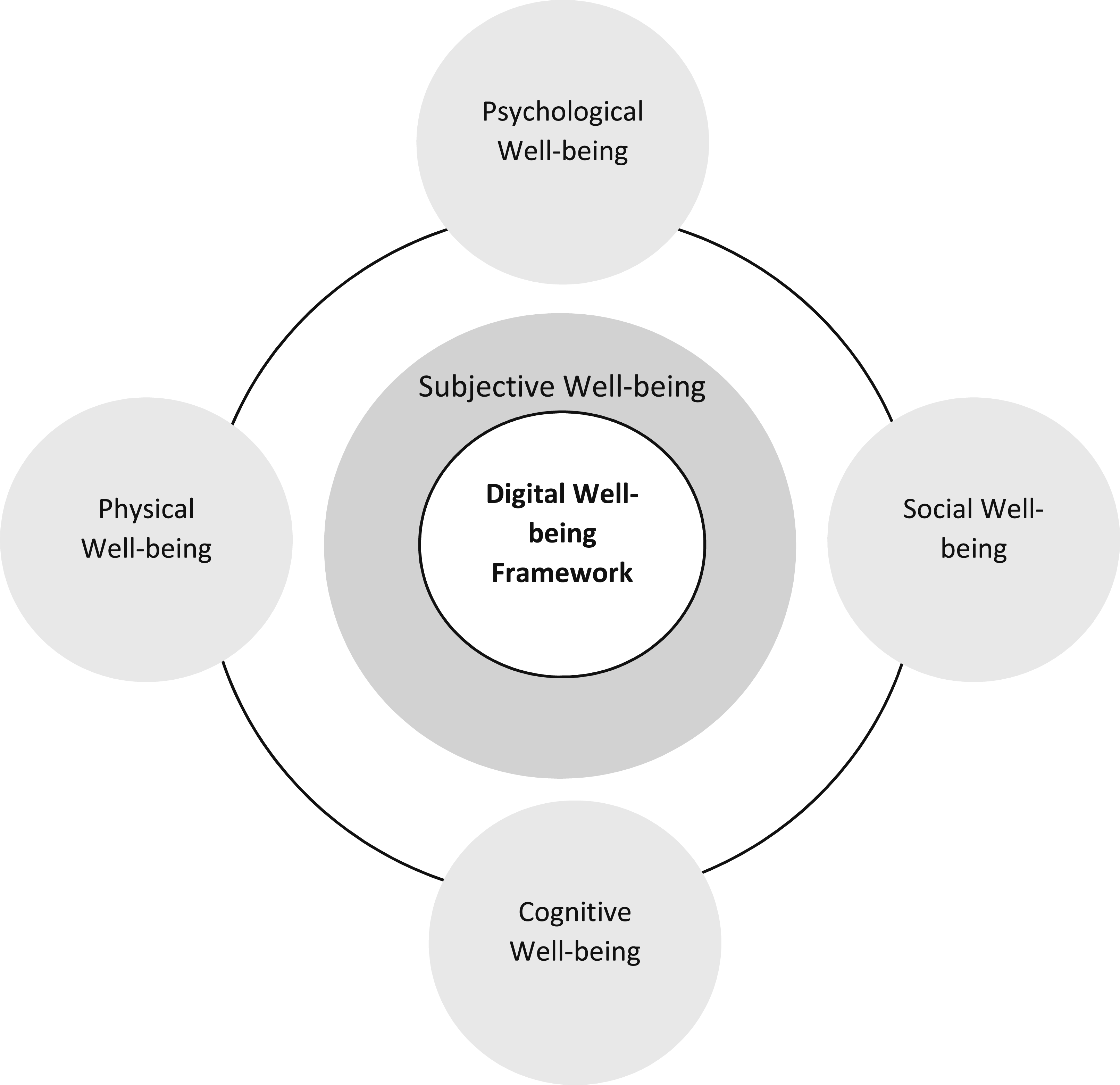
Method
The aim of this study was to identify the perspectives of learners with disabilities on the requirements for mHealth-based digital journaling (PicPecc app) to promote subjective well-being. This study employed a qualitative descriptive research design, using semi-structured face-to-face interviews with 20 learners with disabilities. The learners were between 11 and 14 years old and were receiving teaching and learning at a school for learners with learning disabilities in Gauteng, South Africa, during the time of data collection.20–22
Sample and setting
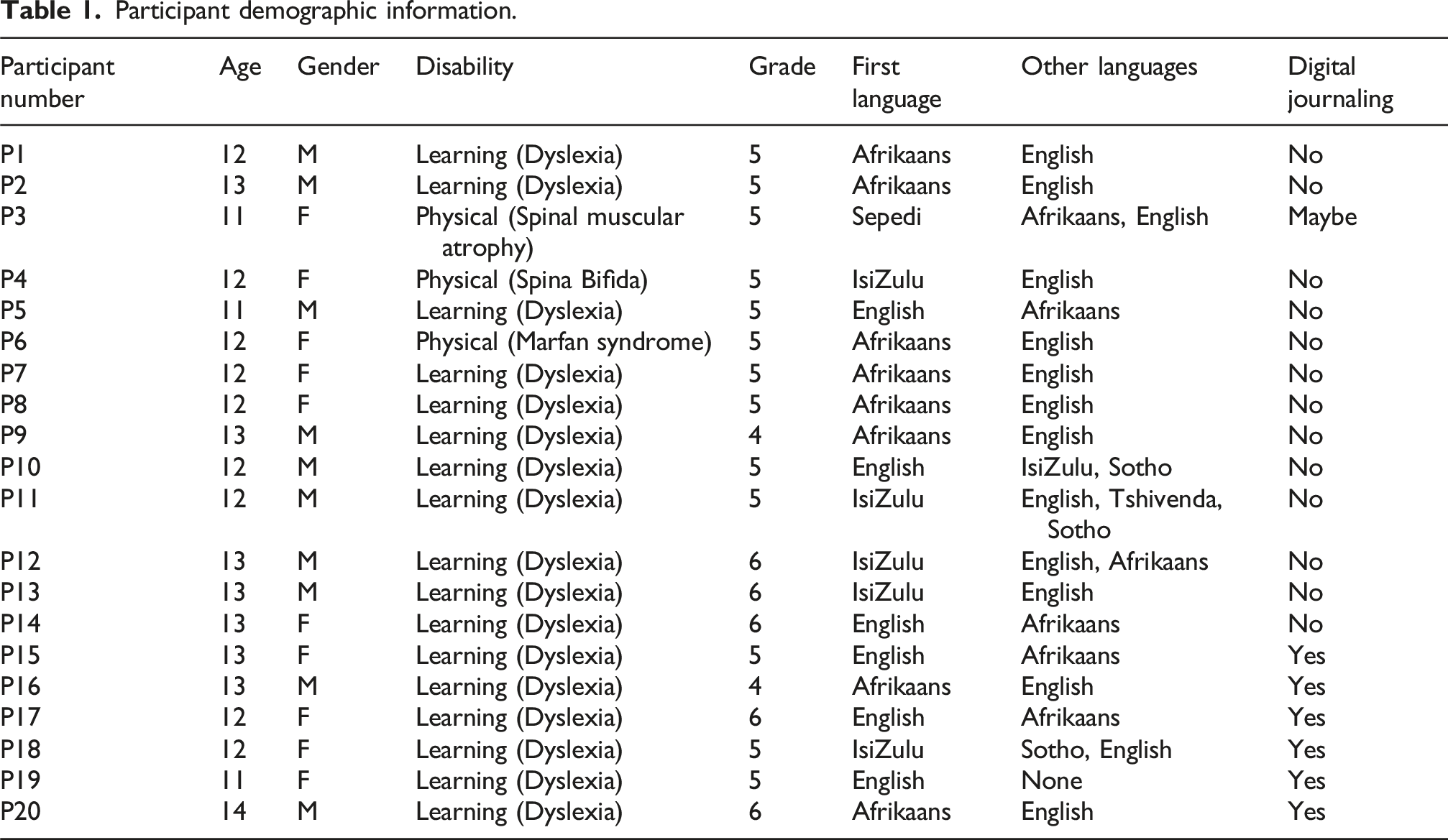
A purposive-convenient sampling method was employed to select 20 school-aged learners, aged 11 to 14, from a school for learners with learning disabilities in Gauteng, South Africa. This school is a public institution situated in a semi-urban area of Gauteng, serving approximately 800 learners, including those with physical and learning disabilities. Additionally, at this school, a mainstream curriculum is followed from Grade 1 to 12, indicating that all learners, regardless of their disability, demonstrate English language proficiency in speaking, writing, and reading at a Grade 1 level. This school was selected based on convenience, as the first author was employed at the school. The first author was not familiar with the participants, and gatekeepers (teachers) identified potential candidates. Gatekeepers received a checklist consisting of specific inclusion criteria. The inclusion criteria consisted of: English language proficiency in reading, speaking and writing at a Grade 2 level, and ages between 11 and 14 years old. None of the learners experienced communication difficulties or sensory difficulties. The authors acknowledge that the findings drawn from this population may only be generalised to the population from which the sample was conveniently drawn. As such, generalisability to the larger population should be done with caution. 23
Participants
Participant demographic information.
Instrument
PicPecc is a pictorial mHealth app designed to support children and adolescents, including those with disabilities, in using accessible visual and auditory cues to self-report symptoms and well-being. 12 The interface features universally designed elements, such as a digital ‘Faces Thermometer Scale’ that combines colour, facial expressions, and numeric ratings, alongside optional text and audio prompts to aid diverse communication needs. 12 The ‘Faces Thermometer Scale’ was validated in studies by Castor et al. 24 and Höök et al.25,26 In a South African feasibility study, 20 children aged 7–18 confirmed the app’s usability and relevance for mental health support within under-resourced contexts. 11 A subsequent evaluation involving learners aged 11–14 using the Mobile Application Rating Scale (MARS) found high scores for engagement (4.4/5), functionality (4.7/5), aesthetics (4.7/5), and information quality (4.6/5), reflecting strong reliability and user satisfaction across core dimensions. 27
Data collection procedures
Interview questions.
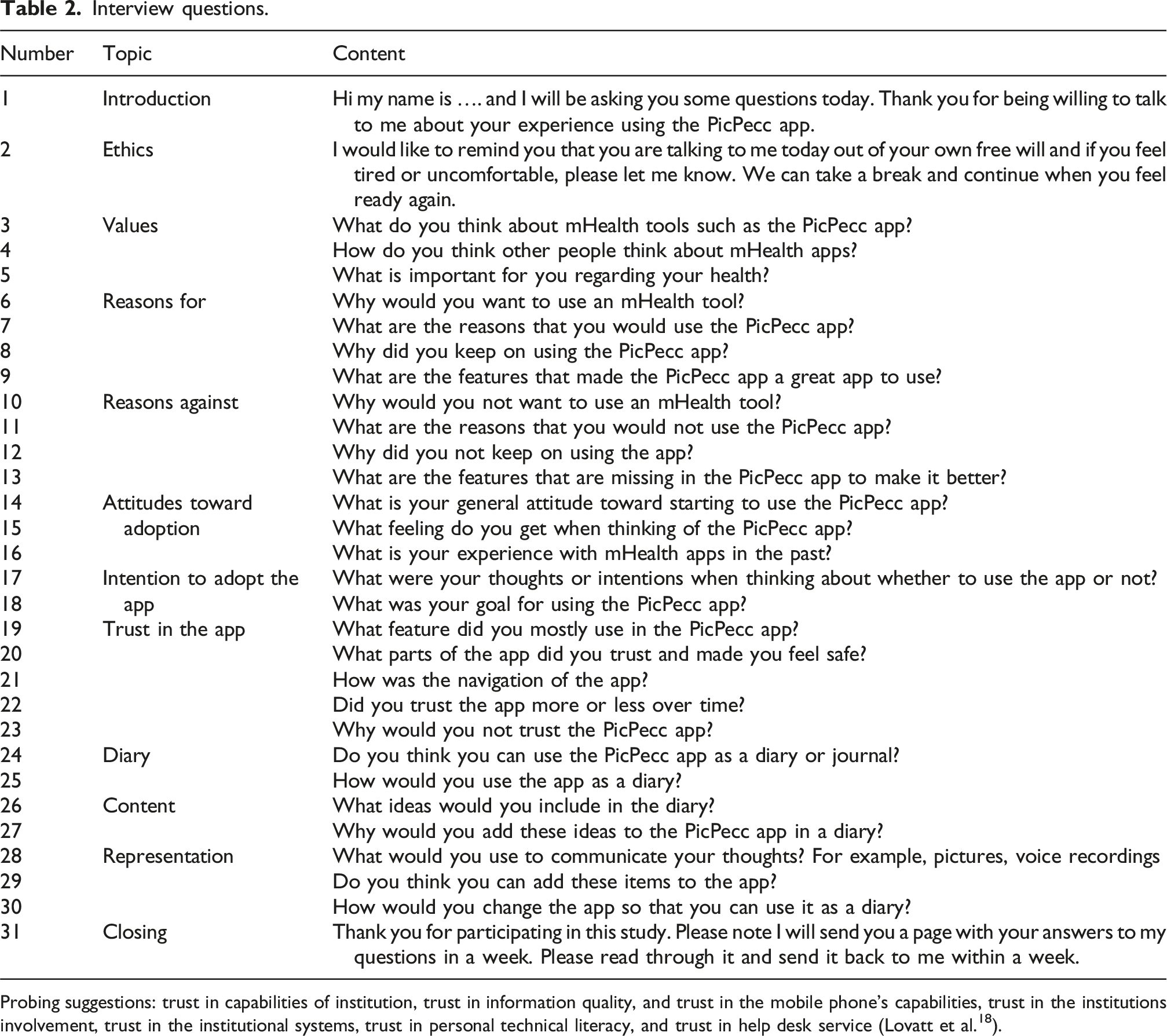
Probing suggestions: trust in capabilities of institution, trust in information quality, and trust in the mobile phone’s capabilities, trust in the institutions involvement, trust in the institutional systems, trust in personal technical literacy, and trust in help desk service (Lovatt et al. 18 ).
The interviews were voice-recorded, transcribed verbatim, and sent to the learners one week later for member checking. The learners provided minimal critique, confirming that their perspectives were accurately reflected.
Data analysis
For the inductive thematic analysis, the six steps outlined by Clarke and Braun 29 were followed: (i) the data were assembled and transcribed; (ii) an initial assessment of codes was made without interpreting the data; (iii) after initial coding and collation, the search for emerging themes began; (iv) all themes were critically assessed to determine if further analysis was needed; (v) the themes and their respective sub-themes were compiled and a thorough analysis of each theme was performed; and (vi) the complete report was compiled. Both authors conducted data analysis independently and then organised a joint meeting to determine the level of agreement. To include the themes, a discussion was held to achieve 100% consensus.
Trustworthiness
Trustworthiness in qualitative research is often evaluated through four key aspects: credibility, transferability, dependability, and confirmability. 30 Credibility was maintained in a study using semi-structured interviews by ensuring accurate representation of participants’ perspectives through member checking. Transferability was addressed by providing detailed descriptions of the research context, enabling others to determine the applicability of the findings to their own settings. Dependability was ensured by maintaining a clear audit trail of the research process, including data collection and analysis methods. Confirmability was achieved by triangulating data sources and techniques to reduce researcher bias. Additionally, the researchers regularly reflected on their biases and assumptions, documented these reflections, and considered the impact of these on the research process and findings. This reflexive practice helped to enhance the overall trustworthiness of the study.
Findings
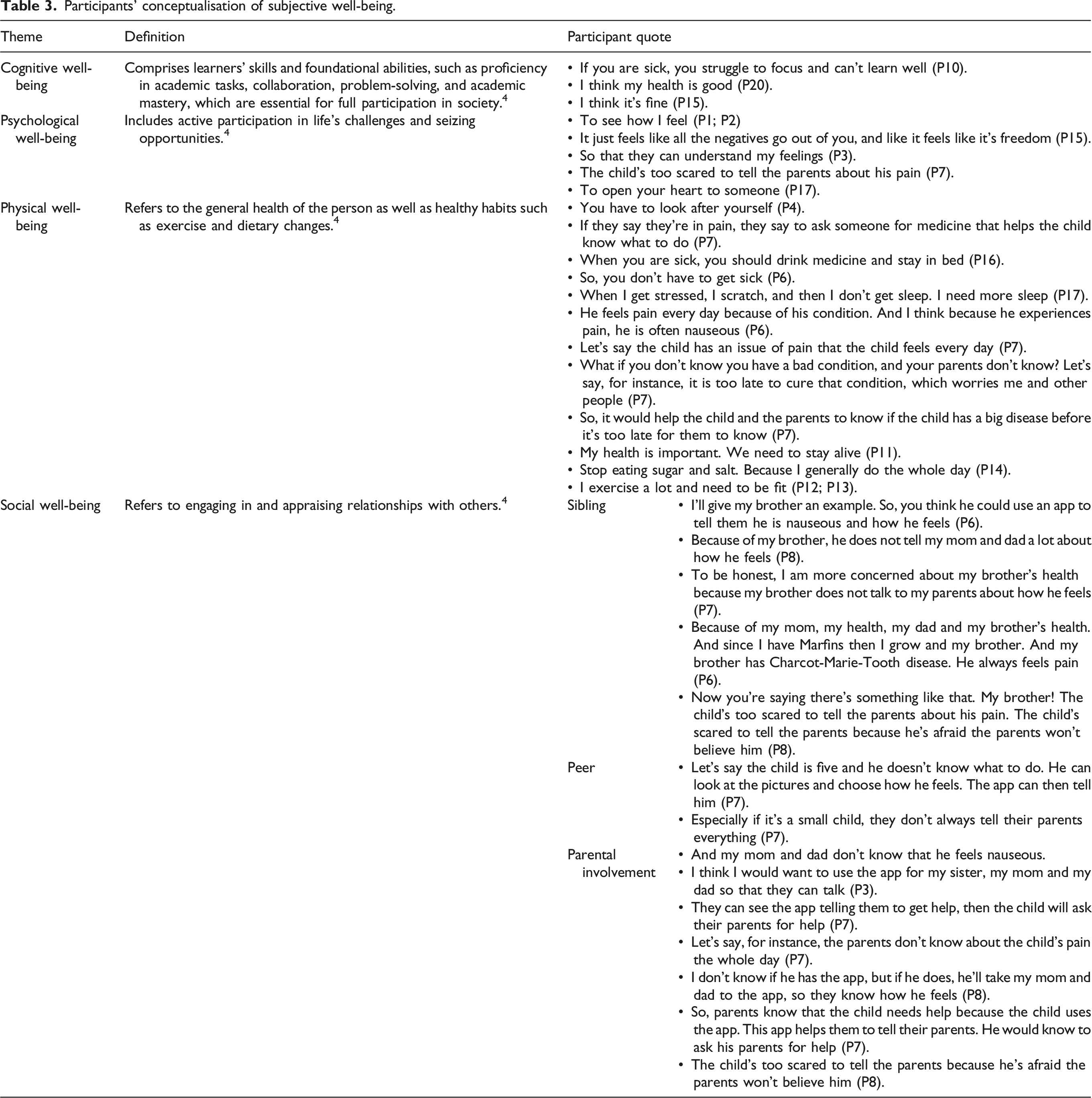
Participants’ conceptualisation of subjective well-being.
Psychological well-being
Six participants (n = 6) mentioned psychological well-being, with Participant 15 stating, ‘It just feels like all the negatives go out of you and like it feels like it’s freedom’. Participants emphasised the importance of understanding and communicating their feelings through the PicPecc app. They highlighted the need for self-awareness and the relief from sharing emotions, describing it as a sense of freedom. Some noted that participants might be afraid to share their pain with parents, emphasising the value of having someone to confide in and open up to. The participants emphasised how beneficial the PicPecc app could be to promote their psychological well-being.
Most participants (n = 16) expressed a desire to incorporate content on psychological well-being into their mHealth-based digital journals. Content included participants’ feelings (n = 11), trauma (n = 1), Disney (n = 1), likes or dislikes (n = 1), wants (n = 1), and secrets (n = 1).
Social well-being
Social well-being was mentioned by most participants (n = 14) and was related to relationships with siblings, peers, and parental involvement. Participants frequently mentioned concerns about their siblings’ well-being (n = 5), emphasising the need for using mHealth-based digital journaling to promote parent-child communication. The participants mentioned that the PicPecc app could be used to improve communication between parents and learners, as learners can use the voice-to-text option, type their message or use visual symbols to express their feelings and show the message to parents on a device. They noted that siblings often do not share their feelings with parents, leading to worries about their well-being. For instance, one participant said, ‘I’ll give my brother an example. So, you think he could use a digital journal to tell them he is nauseous and how he feels’ (P6).
Peer well-being was mentioned less frequently (n = 3), and participants also discussed the role of peers in health communication. They pointed out that younger children may not always express their feelings to their parents, and tools like the PicPecc app used as an mHealth-based digital journal can help facilitate this process. One participant stated, ‘Especially if it’s a small child, they don’t always tell their parents everything’ (P7). The PicPecc developers are creating opportunities for social connectedness as learners registered on the app can access other learners with similar conditions through the database.
Parental involvement was mentioned the most (n = 6). Participants suggested that mHealth-based digital journals could help bridge the communication gap, ensuring parents are informed about their child’s condition. One participant mentioned, ‘So, parents know that the child needs help because the child uses the digital journal. This journal helps them to tell their parents’ (P7).
Participants mentioned that mHealth-based digital journals should provide advice (n = 6) based on the information added by the user, as well as offer a dialogue (n = 3), with some even suggesting that it should sound like someone talking to them.
Cognitive well-being
Participants mentioned cognitive well-being least (n = 3), with Participant 10 stating, ‘If you are sick, you struggle to focus and can’t learn well’. Participants noted that illness can significantly impact their ability to focus and learn effectively. Despite this, some individuals expressed confidence in their current health status, with statements such as ‘I think my health is good’ (P20) and ‘I think it’s fine’ (P15) indicating a general sense of well-being.
Cognitive well-being (n = 7) was also mentioned as an important topic that learners wanted to include in their mHealth-based digital journals. The content included participants’ daily life (n = 4) and school routine (n = 3). Additionally, participants requested that mHealth-based digital journals should allow features such as personalisation (n = 7), reviewing the information participants added to the app (e.g. reading through content) (n = 2), using the PicPecc app as a diary (n = 2) and receiving daily reminders (e.g. notifications) to add content to the mHealth-based digital journal.
Physical well-being
Most participants (n = 13) also mentioned physical well-being, with Participant 11 mentioning ‘My health is important. We need to stay alive’. Taking care of oneself is crucial, as highlighted by participants who emphasise the importance of seeking medicine when in pain (P7), resting when sick (P16), and maintaining healthy habits to prevent illness (P12-14). Stress management and adequate sleep are also vital for well-being. Chronic pain and undiagnosed conditions are significant concerns, underscoring the need for early detection and communication with parents. Maintaining good health through a balanced diet and regular exercise is essential for staying healthy and fit. To compensate for the physical or learning disabilities of learners, they requested that the input for the mHealth-based digital journal include writing (n = 6), typing (n = 6), videos (n = 6), and reading (n = 6). Some participants believed that not all learners can read and write, and the option to draw (n = 4) should be included in a notebook format (n = 3). Participants also requested the inclusion of pictures (n = 2), voice notes, photos (n = 1), and emojis (n = 1).
Discussion
The aim of this study was to identify the perspectives of learners with disabilities on the requirements for digital journaling to promote subjective well-being. The findings highlight the multifaceted nature of subjective well-being, encompassing psychological, social, cognitive, and physical dimensions.5,19 Additionally, the findings also included participants’ requirements for digital journaling.
Psychological well-being
Psychological well-being was mentioned by participants with a specific emphasis on understanding and communicating feelings. Participant 15 stated, ‘It just feels like all the negatives go out of you and like it feels like it’s freedom’, illustrating the therapeutic potential of mHealth-based digital journaling (PicPecc app). This relief and sense of freedom from sharing emotions align with Büchi’s Framework, which emphasises the emotional benefits of mHealth-based digital journaling (PicPecc app). 19 Psychological well-being was the most desired content for digital journaling, with participants wanting to write about their feelings, trauma, likes, dislikes, wants, and secrets.
Participants highlighted the value of self-awareness and emotional expression in achieving psychological well-being. This suggests that the participants possessed emotional intelligence, enabling them to perceive, manage, and plan their emotions effectively in response to life’s stressors. 31 A fear of sharing pain with parents was noted, emphasising the need for supportive environments where learners feel safe confiding in others. This is supported by Nukulkij et al. 32 who suggest that creating a physically secure environment can have a positive impact on the psychological well-being of learners.
Social well-being
Social well-being emerged as a significant aspect, with most participants emphasising the importance of parental involvement. Participants suggested that using the PicPecc app could bridge communication gaps between parents and learners, ensuring parents are well-informed about their child’s condition. Gahler 33 notes that technology can interfere with parent-child relationships, as both parents and children spend more time on their mobile devices rather than engaging in face-to-face communication. To manage this, Anjum et al. 34 mention that mHealth tools can enable parents to manage their children’s screen time and maintain a balance between technology consumption and mindful parenting. Additionally, Tadpatrikar et al. 35 mention that maximum family communication occurs through digital tools, but also caution that parents should engage with their children in face-to-face communication and limit technology use to prevent feelings of isolation in their children.
Children place a high value on parental involvement, as this is one of the most important social bonds a person experiences. 36 This aligns with Büchi’s Digital Well-Being Framework, which suggests that mHealth-based digital journals can enhance social connectedness and support networks, thus positively influencing subjective well-being. 19 The PicPecc developers are creating opportunities for social connectedness as learners registered on the app can access other learners with similar conditions through the database. For example, Participant 7 remarked, ‘So, parents know that the child needs help because the child uses the app. The PicPecc app can help them to tell their parents’. Shin et al. 36 also note that digital technology can enable children to share their stories and feelings with parents, thereby supporting the parent-child relationship regardless of location. Johnson and Rogers 37 also mention that digital technology can create communication opportunities for children and parents who are not in the same vicinity.
Siblings’ well-being was prevalent, highlighting the need for communication tools to facilitate emotional sharing within families. PicPecc, an mHealth application employing visual scales (faces, colours, icons), facilitates emotional expression among children who may struggle with verbal articulation. By providing a structured, child-led format for reporting feelings, the tool enhances parental understanding, reduces miscommunication, and fosters empathic engagement. Routine use of PicPecc promotes reciprocal emotional disclosure, normalises affective dialogue, and supports collaborative coping strategies. Longitudinal patterns in reported emotions further enable families to anticipate stressors and engage in proactive communication, thereby strengthening relational closeness and resilience. 12
According to Bražinová and Caletková, 38 sibling relationships are the longest-lasting relationships as siblings spend time together, share living spaces, and have a common history, providing opportunities to develop social-cognitive and behavioural skills that enhance the quality of their relationships. The study participants emphasised their empathy for their siblings and suggested the PicPecc app may improve parent-child communication. This is supported by Bražinová and Caletková, 38 who suggest that mHealth-based digital journaling can have a positive influence on family relations. To promote social well-being, participants suggested that mHealth-based digital journals provide advice and dialogues (conversational interface), emphasising the need for social inclusion and interaction. 15
Cognitive well-being
Cognitive well-being was the least mentioned theme, yet it remains an important component of subjective well-being. Participants noted that illness can significantly impact their ability to focus and learn effectively. For example, one participant stated, ‘If you are sick, you struggle to focus and can’t learn well’ (P10), indicating the need for supportive digital interventions, such as the PicPecc app. The Digital Well-being Framework suggests that mHealth-based digital journaling can enhance cognitive well-being by offering resources and strategies to manage health-related challenges 19 . Barnett et al. 39 suggest that children with health conditions may face challenges in their functional, social, and cognitive capacities. As such, Barnett et al. 39 suggest that health conditions can lead to increased school absenteeism, which may impact learning and academic performance. Despite this, some expressed confidence in their current health status, indicating a general sense of cognitive well-being.
Participants expressed a need for personalisation and interactive features for mHealth-based digital journaling. Other requested features included reviewing added information, using the PicPecc app as a diary, and receiving daily reminders to add content. These preferences align with the Digital Well-Being Framework, which advocates for user-centric mHealth-based digital journaling that caters to individual needs and promotes well-being. 19
Physical well-being
Physical well-being was one of the primary topics discussed, with participants emphasising the importance of maintaining good health through a balanced diet, regular exercise, and sufficient sleep. As Participant 11 stated, ‘My health is important. We need to stay alive’, reflecting the critical role of physical well-being in overall life satisfaction. Participants emphasised the importance of early detection of health issues and effective communication with parents. The Digital Well-being Framework supports the latter by emphasising the role of mHealth-based digital journaling in promoting healthy behaviours and facilitating access to health information. 19 Participants further emphasised the need to address chronic pain and undiagnosed conditions. This is supported by Richardson et al. 40 who suggest that chronic pain can have an impact on social, emotional, and behavioural factors for the child and family. Participants emphasised the necessity of self-care practices, such as seeking medical attention when in pain, resting when sick, and maintaining healthy habits to prevent illness. Stress management and adequate sleep were also highlighted as vital components of physical well-being. According to Skinner et al. 41 coping strategies (stress management, self-care, and healthy habits) may indicate school success and academic functioning through self-control, competence, self-perception, and autonomy.
Regarding digital input methods, participants preferred writing, typing, videos, and reading. Some participants highlighted the need for alternative input methods, such as drawing, especially for those who struggle with reading and writing. Additional inputs, such as pictures, voice notes, photos, and emojis, were also mentioned, indicating a desire for a versatile and inclusive digital journaling tool. This diversity in format preferences emphasises the necessity for flexible and inclusive mHealth-based digital journals that cater to various user abilities and preferences, as highlighted in Büchi’s Digital Well-being Framework.
Limitations
This study, while providing valuable insights into the conceptualisation of subjective well-being and the requirements for mHealth-based digital journals among school learners, has several limitations. The small sample size of 20 learners may not fully capture the diversity of experiences, and the specific geographical and cultural context of the participants may limit the generalisability of the findings. Self-reported data can be subject to biases, and the qualitative nature of the study means interpretations are influenced by researchers’ perspectives. Additionally, the study captures perspectives at a specific time, and the focus on mHealth-based digital journals may not encompass all relevant mHealth digital journaling. Future research should consider larger, more diverse samples, comparative studies across different contexts, triangulation of data sources, involvement of multiple researchers in data analysis, longitudinal studies, and exploration of a wider range of digital tools.
Conclusions
A study on learners with disabilities using PicPecc as an mHealth-based digital journal advances inclusive education by demonstrating how accessible mHealth tools foster emotional expression and self-reflection, supporting Universal Design for Learning principles. These findings inform policy on equitable technology integration and guide developers toward user-centred design that prioritises accessibility, privacy, and engagement. Future research should continue to explore these dimensions and the effectiveness of digital interventions in promoting overall well-being.
Footnotes
Acknowledgements
The authors thank the participants and management of the public school where the research was conducted.

Funding
The authors received no financial support for the research, authorship, and/or publication of this article.
Declaration of conflicting interests
The authors declared no potential conflicts of interest with respect to the research, authorship, and/or publication of this article.
Declaration of Generative AI and AI-assisted technologies in the writing process
Co-pilot was used to write the abstract of this manuscript.
Data Availability Statement
Authors elect not to share data.