



Abstract
Background
Communication and language are pivotal for children’s development and social functioning. Early identification of difficulties and timely interventions are essential. Interactive digital media offer new possibilities to support parents.
Objective
This study aimed to explore parents’ ideas and visions of a new web application that focused on an early parent-based communication intervention.
Methods
Twenty-one parents of children with communication difficulties participated in semi-structured audio interviews. The children, aged between 2 and 4 years, were on wait lists for assessment for either speech-language therapy or neuropsychiatric services. The interviews were analyzed using systematic text condensation.
Results
The analysis identified four categories indicating that parents of young children with communication difficulties needed information, advice, and real-life examples. They also desired personal contact and feedback. Parents provided concrete suggestions for an accessible design and useful content. They emphasized the importance of an understanding perspective and respectful tone. Parents’ views and ideas are discussed and presented visually in a figure and table to aid implementation in future digital application designs.
Conclusions
To support parents of young children with communication difficulties, it is crucial to understand their needs and preferences. This study contributes valuable insights to the body of knowledge on this topic.
Keywords
Introduction
All children have the right to communicate. 1 Efficient communication is essential to enable care, development, and learning to allow the child to participate in social contexts. 2 Delays or deviances in early communication and language development are also one of the first and most important symptoms of neurodevelopmental or neuropsychiatric disorders (e.g., autism spectrum disorder [ASD], intellectual disability, or attention deficit hyperactivity disorder [ADHD].3,4 Early intervention, focusing on improving communication skills, is strongly recommended for children with these conditions.5,6
The parents are the children’s most important communication partners. The amount of time and in which way they interact with their children is of great importance for the development of language and communication, regardless of potential future diagnosis. 7 Evidence indicates that early parent-mediated social communication interventions can have a positive impact on the parent’s communicative style, the interaction between the parent and the child, and the child’s communication development. 8 There is also evidence that web-based social communication interventions can have positive effects when delivered, self-directed, or therapist assisted.9–11
Today, there is a lot of information about early parent-based communication intervention that can be found on the web. Most resources are from North America or Great Britain, but there is also some high-quality information available in Swedish. Some parents find these sources on their own, but the risk of also finding information and advice that are not evidence-based is problematic, specifically concerning children with autism whose symptoms are not as easy to understand.12,13 Besides open-web resources, there are resources and programs that have been developed for exclusive use by centers, companies, or services of different types.
The research that has been done thus far on web-based or online interventions aimed at parents of children with communication difficulties mainly reports positive results. A review by Bellon-Hann et al. 10 found that the parents of children with language disorders had increased their awareness of what promotes children’s language development and how to use these strategies. The review additionally found that the parents felt empowered by their acquired competency, and children were reported to have increased their number of interactions and use of words. Most of the studies of digital interventions have focused on parents of children with ASD, however. In a systematic review by Parsons et al., 11 they found that interventions for parents with children who have ASD had an effect on improving the children’s communication and socio-emotional abilities, for example, in increasing joint attention and reducing challenging behaviors. Moreover, the interventions were reported to have large effects on the parents’ knowledge and skills. 10 One study compared independent use of a web page for 6 months with the parents being allowed to use the page with simultaneous access to professional guidance once a week. 9 Both groups showed improvements in terms of reduced stress, increased sense of competence, application of the knowledge from the intervention, and improvements in the child’s language. However, the group that had access to professional guidance had better results in terms of social skills of the child, completion rate of the program, and a slightly more positive perception of the child.
Sweden—this study’s context
The public-funded Swedish child health services reach most pre-school aged children (about 95%) and offer health visits according to a national child health program, including the screening of communication and language to enable early intervention. Also, the comparatively large population of persons in Sweden having another native language (about 25%) are reached by these services.
The screening procedures are carried out by specialist or general nurses. In the western part of Sweden, where this study took place, screening for communication and language difficulties, as well as for autism, is conducted at 2.5 years of age. Depending on the results, the children that are identified as having communication or language difficulties are referred to either speech-language pathology or child psychiatry services for further assessment, diagnosis, and early intervention. However, due to an increase in referrals and insufficient resources to meet these needs, many regions in Sweden struggle with long waits for assessment as well as for interventions. This situation is frustrating for the children, parents, and the professionals. When there are delays like this, studies have found that both children and parents risk having poorer mental health, 14 and some children may also develop challenging behaviors that further complicate the family situation. 15 Previous research echoes that the staff experience frustration and stress being unable to assist these families while being aware of the importance of providing early interventions.16,17
In Sweden, early communication interventions are provided mainly by using the AKKtiv program (https://www.akktiv.se/). AKKtiv, being a partner-focused program, teaches parents how to apply responsive communication and environmental teaching strategies in natural interactions in their home environment as well as how to use multimodal augmentative and alternative communication (AAC) strategies. All sessions (six to eight) include mini-lectures, exercises, and discussions mainly based on video-clips collected from the homes of the families. All packages so far have been designed as on-site group interventions.
AKKtiv has been developed using a multicultural perspective since evidence show that parent-based interventions are more effective when they are adapted to the culture of the family. 18 As the majority of parent-based communication interventions this mainly includes linguistic adaptations and translation. 19 However, other cultural aspects have also been focused including discussion of play, disability, gender and language learning.
Evaluations and research studies have shown that parents perceive that their communication style has changed, that the interaction with their child has increased, and that the child communicates more.20–22 Most of the parents further report that they have started to use AAC at home and that this facilitates communication with the child and the social life for the family. 23 The results of families with multicultural background were equally positive. However, there are no comprehensive web-based programs for early communication intervention available within the AKKtiv program or elsewhere in Sweden.
With the aim of developing a web intervention that could be prescribed to parents of children with communicative disabilities early on at the phase of detection/identification, parents of young children waiting for assessment were invited to take part in a co-participatory user-centered design-process 24 in which this study represents the initial stage. Parents having another native language than Swedish were also invited in order to obtain a multicultural perspective.
The study is built on the interviews with these parents and has the purpose of describing the parents’ own ideas and visions of a new web application focusing on providing knowledge and practical guidelines on how to apply communication strategies and AAC in their home environment.
Materials and methods
Research design
A qualitative design with semi-structured interviews 25 was chosen to understand what ideas and visions parents of children with early identified communication difficulties have regarding a future web application focusing on an early parent-based communication intervention.
Participants
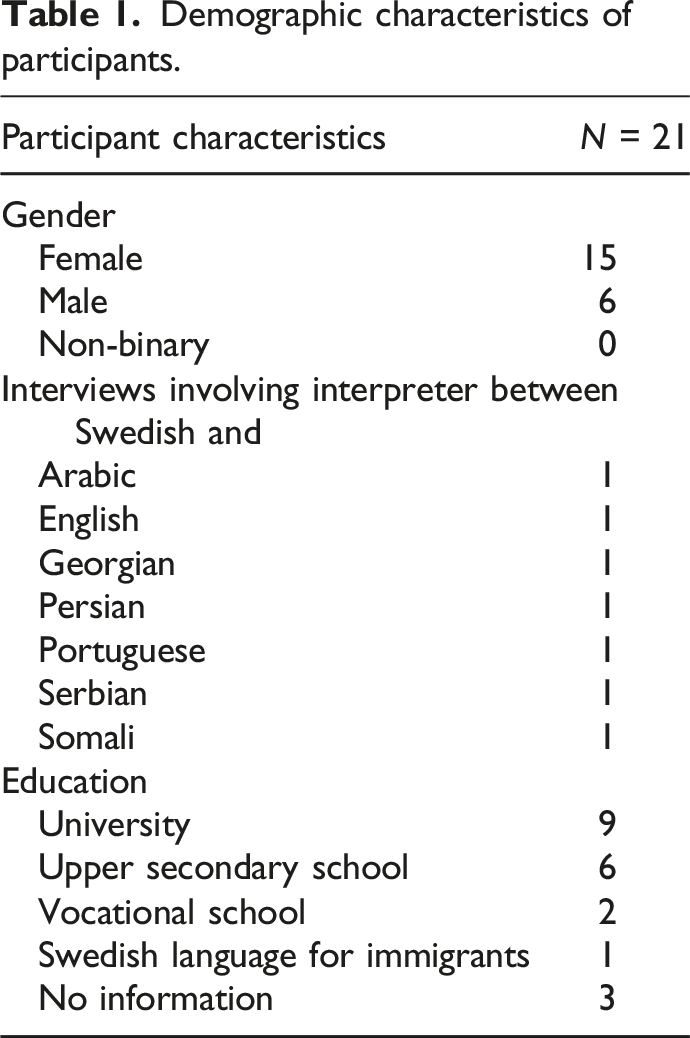
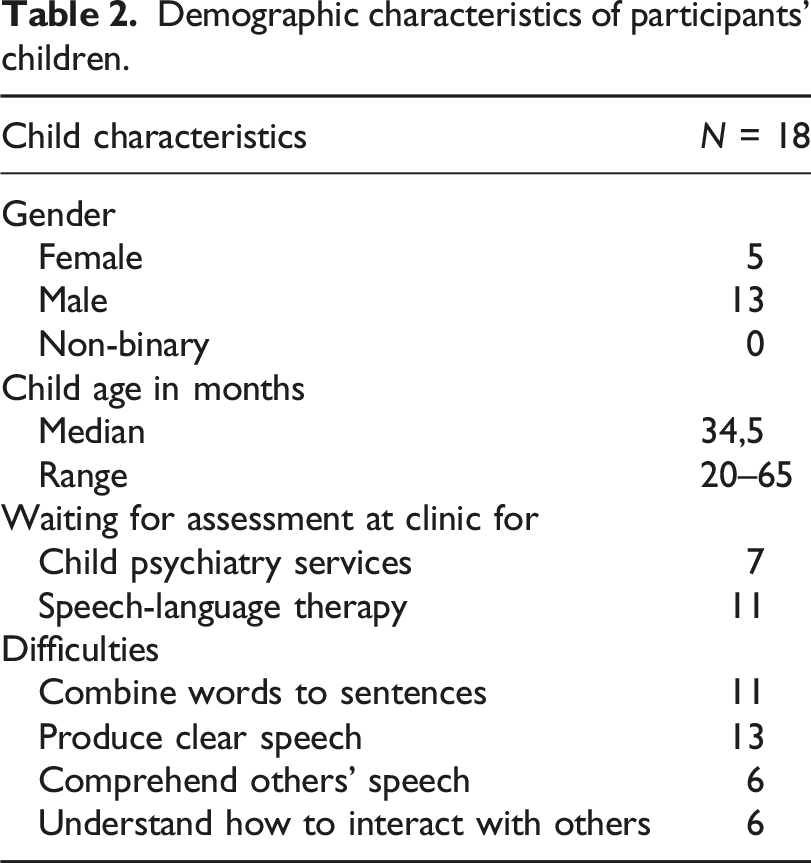
Parents of children with early identified communication difficulties referred to and waiting for further assessment by either speech-language therapy or child psychiatry services in a regional university hospital in Sweden were invited to express their thoughts on a web application centered around early parent-based communication intervention. This call was answered by 26 parents who were then contacted to receive further information, collect informed consent, and to book an individual phone interview, resulting in 23 participants. Two parents dropped out: one due to a cancellation by the interpreter and one for an unknown reason, resulting in a total of 21 parents of 18 children who were interviewed in 20 interviews (from three families both parents were interviewed, in two cases separately and in one case together). The interviews were conducted in Swedish. Several parents had a different native language than Swedish, and in 7 interviews, interpreter services were required to enable full participation. This means that about one third of the families had another native language than Swedish which is slightly more than described above (25%) but means that the views of this part of Swedish population were represented in this study.
Demographic characteristics of participants.
Demographic characteristics of participants’ children.
Interviews
All phone interviews were carried out by the first author (SÖ). The interviews were recorded and transcribed on a computer. The interviews lasted between 22 and 48 minutes (M = 33 min).
The sessions started with the interviewer providing information about the interview and using some small talk to make a connection and create a relaxed atmosphere. A topic guide (Appendix 1) was created by the authors in cooperation with the overall project developing the web application. The topic guide was used to ensure that the same basic lines of inquiry were carried out with each participant and that the relevant topics were consistently covered. 25
Data analysis
Prior to analysis, the last author (MB) listened to the interviews and proofread the transcripts. Analysis was carried out according to systematic text condensation (STC), described by Malterud. 26 This analysis method has a descriptive approach fitting smaller samples that reveals the participants’ own experiences, as expressed by themselves, and then these experiences condensed into meanings. The analysis was carried out in four steps that aimed to (a) establish an overall impression of the data and describe initial themes, (b) identify and organize these themes into meaning units related to the phenomenon, (c) abstract and condense the content, and (d) synthesize and summarize the content into categories and subcategories that represent different aspects of the participants’ ideas and thoughts. Steps a and b were carried out in cooperation between two authors (SÖ and MB). Discussions and consensus were reached on which themes should be further explored. This was the starting point for further analysis and organization of the meaning units. Steps c and d were done by repeated discussions between the three authors (SÖ, GT, and MB) until consensus regarding the final categories and subcategories was reached.
Results
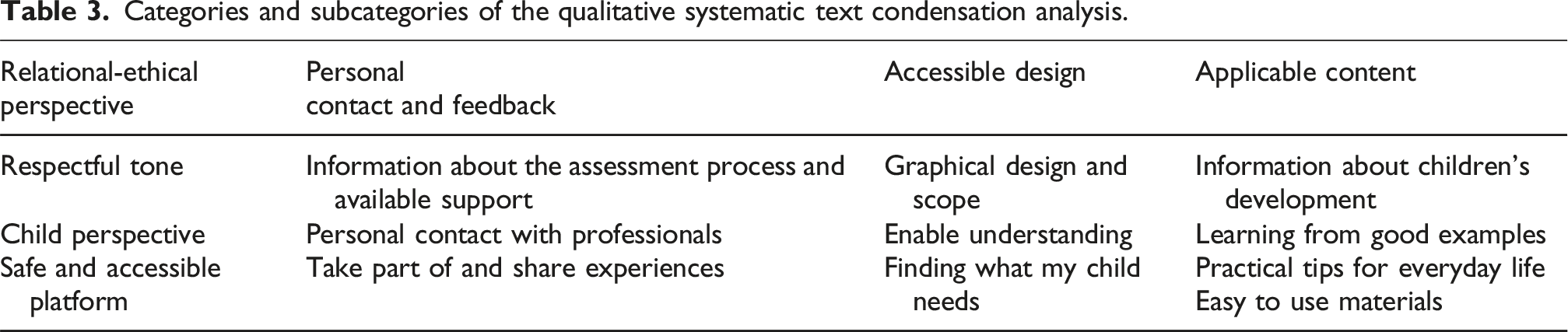
Categories and subcategories of the qualitative systematic text condensation analysis.
Relational-ethical perspective
A web application for early parent-based communication intervention must address parents in such a way that understanding and respect for the family’s situation and needs as a whole are demonstrated.
Respectful tone
The participants pointed to the importance of the values that are communicated and what tone should be used. They wanted the information to be provided in a way that alleviates parents’ concerns and that normalizes disability. They wanted the advice that is conveyed to be given in a non-judgmental, neutral way. “Really point out that one should not feel that one has raised the child incorrectly, that it is not only up to me.” “But above all, it should be clear that there is nothing strange about these children, but this is quite common, so that it doesn’t feel like it is something different because you have received a referral to a speech language therapist.”
Child perspective
The web application should be presented clearly from a child perspective. The participants described how the training activities must be fun and become a positive experience for the child, focusing on play. They wanted the child to be involved, and they wanted to be able to implement the advice with their child. “How can you adapt a play situation when you play with your child? It would be good to think about that, just those kinds of small things.”
Safe and accessible platform
The participants explained the ways in which they wanted to receive the information about a web application for early parent-based communication intervention. The participants expressed that digital support should come from a reliable source. They wished the web application to be accessed via 1177 (the national source of digital healthcare information for the public in Sweden) through login with their BankID (a secure web log-in procedure that is used for individual e-health). They had experiences of receiving information by post, which has certain advantages, such as being able to put the note up where it can work as a reminder. However, they described that the most important way to reach parents was via digital communication, such as email or 1177. “It would be really good to have a safe source because there is a lot online that is not that secure. You may get incorrect information.” “But I think it simplifies it if it is always accessible digitally…At least for me, it feels like it’s easier to get to it when you want to and feel that you have the time…A piece of paper, well yes, but at best you maybe put it on the refrigerator, or it ends up forgotten in a drawer or gets mixed up with other papers. It disappears in all the mix.”
Personal contact and feedback
The participants experienced feelings of uncertainty and what position they were on the wait list. They wanted more information about how an assessment would be carried out and where in the queue they were. They expressed a need of personal support from professionals as well as support from other parents in a similar situation.
Information about the assessment process and available support
The participants felt unsure about the upcoming assessment of their child and wanted more information about how assessments in general are carried out. They suggested that the web application should contain information about the assessment process and what would happen afterward as well as contact information to relevant professionals. They also wanted information about their rights, what resources are available, and how to apply for them.
They also expressed frustration over the long wait times for the assessment of their child without knowing when it might be their turn. The participants suggested that a web application should contain information about their place in the queue and estimated wait time. “I want to know what the first steps are. We have no diagnosis yet. We would like to know, once he gets a diagnosis, what will happen step by step.” “Some information about the situation itself. Preferably also about what it looks like with the actual wait time if it is possible. What it looks like and what to expect.”
Personal contact with professionals
Being provided with a personal contact with a professional around their child’s situation was considered very important. The participants expressed a need of receiving support on how to best support their child. They expressed a need of a web application that guided them on which areas they needed to focus on and how they should relate to/handle their child. The participants also expressed a need for personal psychological support for themselves. This psychological support for the parents, along with information about how to support their child, was suggested to be available online in the form of a chat contact, video meetings, video consultations with the child, or online workshops in groups with other families. “And also, like you and I sit and talk now [online meeting]…that you can find someone, a psychologist that you can talk to through 1177 about your child’s difficulties and your own difficulties to deal with it.” “I think there should be support for the parents. Psychological support. Parents become anxious when they receive such a diagnosis. I do not really know. Today, I talked to my cousin who also has a child with autism. She calmed me down and told me that the phase I am in will eventually pass.”
Take part of and share experiences
The participants expressed that it was important to have contact with other parents and families in a similar situation. They would like a web application to include a forum function where parents could meet. They wanted to be able to listen to and learn from each other’s experiences and support each other by giving and receiving advice. The participants described how such a meeting place could provide support when they perceived feelings of grief in order to make them feel less lonely. In a forum, they could coordinate meetings and join in real-life activities. “I think there should be a place where parents can write about their own experiences and share experiences with other parents. Where you can exchange ideas, as if it were over a coffee in a café.” “You are probably in very different emotional states. You are a bit fragile as well and just being able to talk to someone and just this sense that you are not alone.”
Accessible design
The web application should have an accessible design available for everyone. It should be easy to get an overview of the content, and the information needs to be easy to understand. Parents must easily find content related to the needs of their child. The content should be presented in different ways and be available in several languages.
Appearance and scope
The participants focused on the importance of a clear and user-friendly interface that appeals to everyone. This can be achieved through an attractive look, pictorial support, and an easy-to-orient, clear structure with overall brief information. A common statement in the interviews was “less is more” with a wish for simplicity. At the same time, comprehensive and expanded information was desired for the areas where parents may want more in-depth knowledge. These seemingly opposite wishes were described as possible to achieve through a well-planned clear design with brief information at the first level combined with easily accessible sub-pages with more extensive information. Timestamps were suggested to facilitate orientation to the material. “I myself have autism…Well, I do not click that much on links and stuff in general I think…But there is so much information, there is a lot of information it…Well, when I see the information, it becomes too much…For me, I have problems reading too much.” “It may well be quite compressed and quite easy to read. Well, difficult to say about the amount itself…Preferably if there is a lot of information that it is structured so that it is also simple. In summary, maybe so. It’s easy to say yes, if you now just feel that you have time to read the summary or even that. Read all of a whole text that is a little longer that it simplifies it if there is first a simple summary of it.” “So that you are drawn into it instead of being discouraged…Well, so you can pause where you were, but it may not work, but that you log in in some way and find where you were the last time, so I can start here again then and preferably that you can bookmark or find a certain chapter or section…and preferably some history. What did we do last or what did we do the first time we logged in? That would be good, you think you remember, but you don’t, so that would be good.” “Explain it in a very simple way. Yes, less is more – and simplicity.”
Enable understanding
It is important that the web application is designed to facilitate understanding. Information presented in text needs to be in an easy-to-read language with pictorial support. The materials also need to be accessible in various ways, such as via computer, tablet, mobile phone, and printed paper. The information should be multimodal so that one can digest it in one’s own way. The participants suggested that the same information should be given via film, audio recordings, and text. All information should also be available through text-to-speech. All materials need to be available in several languages to make it easier to understand for people with different language backgrounds. Self-tests were suggested to make sure that one has understood the information. “Texts in easy-to-read Swedish, it’s hard for us to understand complicated words.” “Not too much text and preferably a lot of pictures to lighten it up…because I have a hard time when there is a lot of text and then I don’t read…Yes, it’s probably good to have shorter sections.” “Fantastic to have material in our own language.” “Well audiobooks and such are becoming more common, it could be an alternative to listen to someone talking, such as a little audio book.” “It should be both pictures and many short videos, where one can participate in experiences and get tips.”
Finding what my child needs
The participants described how it can be difficult to find information that applies to their current situation and emphasized the importance of finding information relevant to them without going through extensive amounts of information. They suggested a clear categorization of the information based on children’s different ages and developmental stages, on diagnoses and difficulties, and on different contexts, such as situations in everyday life. There were suggestions that people should be able to fill in a questionnaire regarding their child and based on this, get individualized information through artificial intelligent (AI). “It is very difficult to find content that will work for everyone, but there can be like a small, short background description.” “The absolute best I think would be kind of a questionnaire that you could sort of fill in, so that it can ‘calculate,’ well, this is probably what will help your child.”
Applicable content
Participants defined the information they would like to see on a web application. They suggested basic information about child development would be beneficial, and they wanted to learn skills from good examples. They asked for practical everyday advice and useful materials.
Information about children’s development
The participants highlighted a need for information about child development and different diagnoses, and how a child’s development can be affected by these. They also wanted to know what they may need to be aware of in relation to their own child. “Yes, although I do not know if it applies to everyone or so, but we would like to get, well it is interesting to read about autism. For example, that there are links to information about different diagnoses.” “It is so difficult as a parent to see everything…But it would be nice if there were a few different parts for all children.”
Learning from good examples
The participants expressed how case reports with good examples would be a way to increase knowledge. They asked for practical cases where one could follow a process. It may be in the form of filmed training situations with a professional or with a child in their everyday environment. “It becomes more tangible when you get to see examples from real life and there is a person who explains how it is and why. So that you take the most important pieces with you. ‘This is how I use these tools, and this is how I talk to my child. I noticed that this has worked very well.’ Like short videos where you see the mother or father talking to the child and then you notice a response.” “So that you get to see other situations, other children with similar conditions. Where someone explains and breaks it down why it works the way it does or why that child is like me.”
Practical tips for everyday life
A web application for early parent-based communication intervention should focus on families’ everyday lives. The participants asked for practical tips on how to support their child in everyday situations and have suggestions of exercises that can be carried out in everyday life. They suggested training in play to be carried out while waiting for an assessment. Participants also wanted to know if there were things they should avoid doing. “If there are things that can help at home, then it’s good to know. What should one do?…How should one talk? How should one play?” “A bit more specific, that this is what my child has problems with. So that you could get advice and tricks and so on, and what to think about for that kind of thing.”
Easy to use materials
Participants described different types of content they would appreciate. They suggested a bank of ready-made materials for communicative and cognitive support, and they wanted the possibility to produce their own materials on the website. The materials should be possible to use digitally or in printed form. The participants had ideas about interactive materials to implement the training with their child directly on the digital platform. It could be exercises that the parent and child can do together or for the child to do on their own. They also suggested information about manual signs, as well as advice on books and other resources. “That there were pre-made ones [picture material] like this that they have in preschool similar pictures. Print them out and you can have in the hallway, for example, if you are going to get dressed in a certain order. That kind of pre-made thing you know.” “And press buttons to start different exercises.”
Discussion
This study’s main purpose was to explore and describe parents’ ideas and visions of a web application for early parent-based communication interventions. Parents in need of interpreter services also took part in this interview study to include a multicultural perspective necessary in services aiming at this population. 19 Taken holistically, the participating parents of young children with communication difficulties were eager to share their thoughts and ideas that will hopefully be of use for both clinicians and software developers.
The main overall findings from the interviews clearly demonstrated that parents highly valued the perspective and tone of the information being understandable and respectful. The possibility of having personal contact and feedback was also expressed, as in earlier studies from other countries.
11
They provided many concrete suggestions on how to achieve an accessible design and presented ideas about what content would be useful. It was interesting, and not really expected, to see that the views and perceptions of the parents with another cultural background were very similar to those of the other parents. These overall findings represented in the four categories and subcategories identified in the analysis are visually outlined in Figure 1 relating to a screen and depicted application content. This figure has nothing to do with the future application, instead the more concrete suggestions regarding design, accessibility, and content have been listed in Table 4 to facilitate implementation in future applications. These results are additionally the study’s clinical implications. The discussion that follows will discuss the parents’ views and ideas following the findings, as presented in Figure 1. The four identified categories illustrated visually in screen format. Suggestions from parents. The table compiles concrete suggestions from the participating parents on important aspects for development of a web application for early intervention.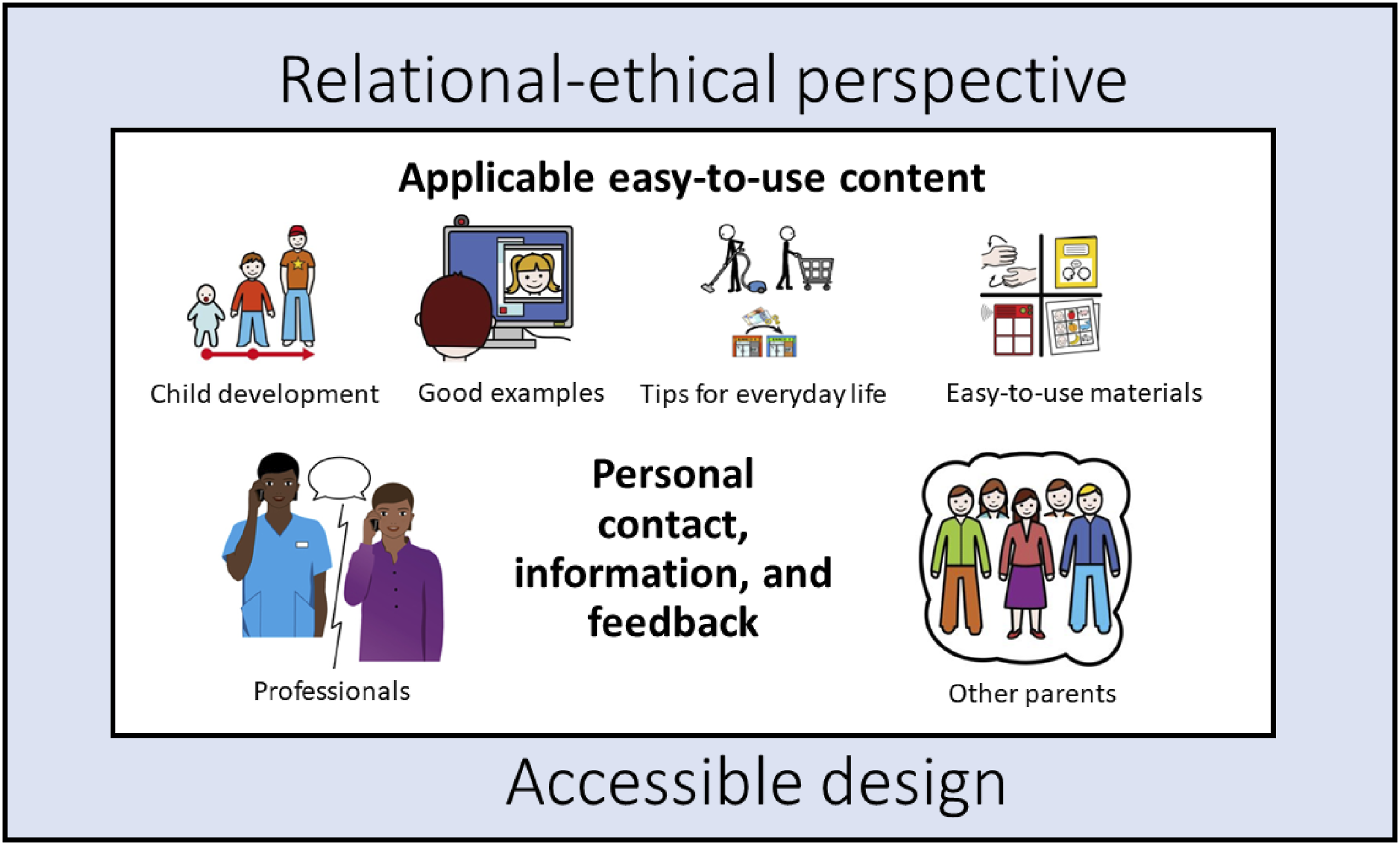
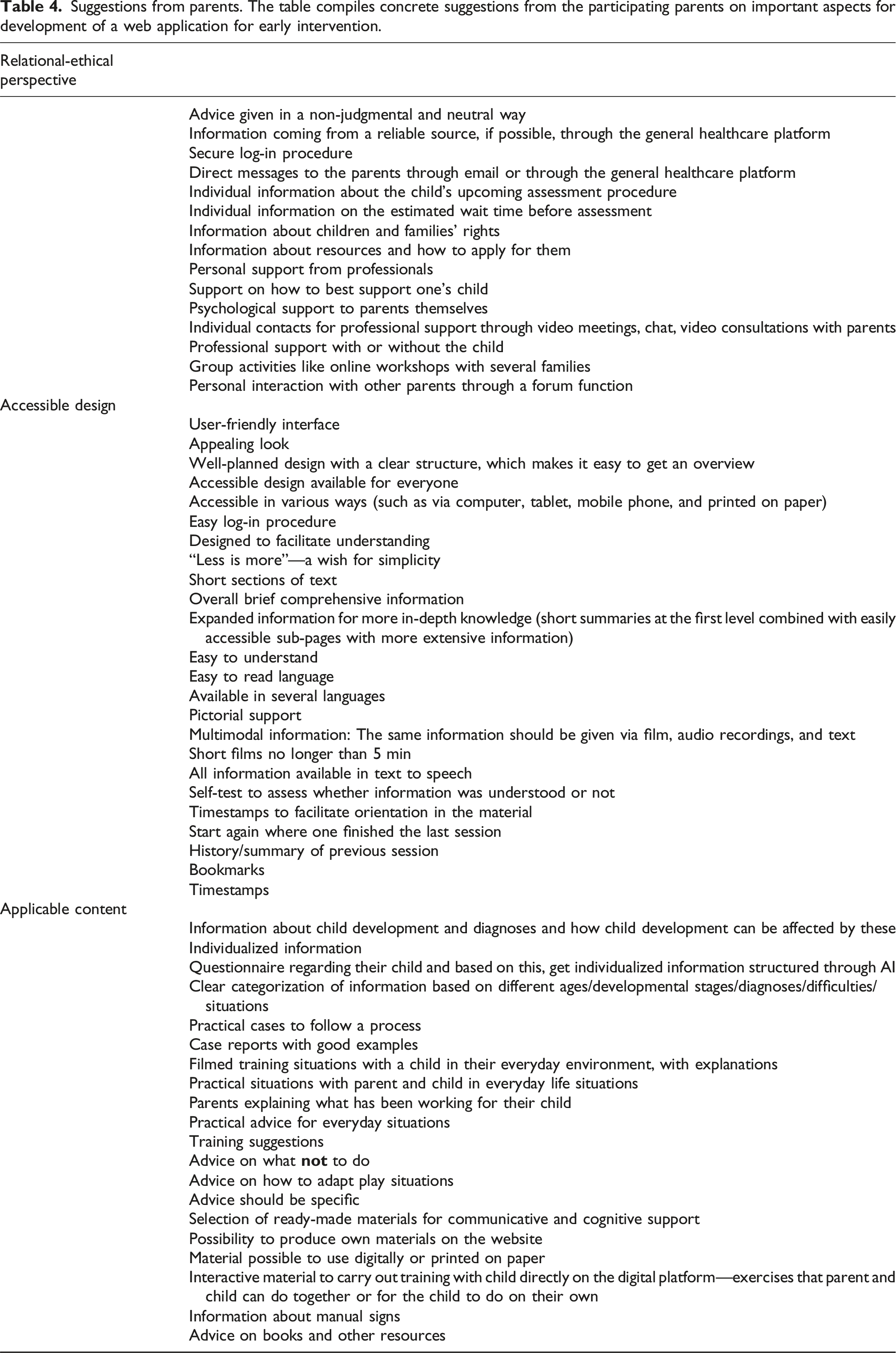
Figure 1 shows a white square being placed in or on a larger light blue square forming a frame representing the overall form or outline of the app. The inner white space or square presents content and functionality. Two themes each in the analysis referred to the perspectives of structure and content.
To start with the frame or form aspects (Figure 1), an important, and perhaps self-evident, finding was that parents wished to be met with respect and in a comforting non-judgmental way, demonstrating an understanding for the whole family’s situation. They expressed a lack of acknowledgement for them doing their best with their child as well as a need for hope for their child’s future. Furthermore, participants described the importance of having a trustworthy publisher they can rely on. Today, the Internet is full of advice from different sites and experts with varying levels of reliability, making it difficult to navigate and determine what information is or is not reliable. 27 Some participants expressed that they wanted the app to be connected to the Swedish national healthcare platform with a secure log-in, demonstrating the importance of trustworthiness. These thoughts relating to respect and trustworthiness seem to constitute a new finding. Perhaps this is related to the increasing problems with trustworthiness and internet-services.
The second form aspect included in Figure 1 and that clearly was expressed by the participants concerned the design. An accessible design available for everyone with information that is easy to understand was on the wish-list of the participants. The participants stressed the importance of this for varying reasons, such as having difficulties with the Swedish language or the parents themselves having communication difficulties. Interestingly, these aspects were put forth both by parents with a multicultural background and the Swedish parents. Several participants were aware of and mentioned the genetic factors involved in developmental language disorders and ASD. These concerns regarding accessibility connected to the idea of universal design being an important part of the convention on the rights for persons with disability (UN, 2006). The idea to use universally designed communication in healthcare has been put forth 28 and was implemented in the research and development project KomHIT (Communication support in healthcare situations). The research that was done in KomHIT showed promising results, for example, that stress levels were lowered both in children and parents when they were provided with pictorial support and simple instructions and that misunderstandings of information decreased (e.g., in regard to drinking or eating or managing the child).28–30
Moving the discussion to the participants’ wishes and ideas regarding content, they suggested being provided with the basic information about children’s development would be beneficial. They also wanted to have good examples of how to support their children in daily life situations, preferably presented in videos. Furthermore, they expressed wanting to see and try useful communication tools. Reading this wish list of content is interesting due to its adherence to the evidence base that indicates that early communication interventions should be situated in daily natural interaction and play in the home with parents or at a pre-school environment.31,32 Additionally, research focusing on change of communicative behaviors in adults recommends the use of modelling, 33 as has also been seen in AAC-intervention research and in research on a communication partner’s use of AAC predicting the child’s success with AAC. 34
Feelings of uncertainty and frustration arise due to the long wait times for the upcoming assessment. To alleviate frustration in this situation, at least partly, the participants suggested that they should be provided with information about their estimated time on the wait list and have more information about the forthcoming assessment process. If this information was adapted to the child, it would be even better. More information that is accessible and partly individualized would possibly enable a greater sense of control and reduce parental stress in this complex situation. This was seen in a study of parents of children undergoing day surgery 29 and in a study interviewing staff at a neuropsychiatric clinic. 35
Regarding functionality, the participants expressed that they wanted to be provided with professional support. They wanted this support to be directed both at the child and themselves as parents. It was suggested that parents should be given some sort of psychological support in the form of chat contacts or video meetings. A possibility of providing video consultations with the child or through online workshops in groups with other families was also indicated as a need. These wishes of a meeting and of personalized or individual care is in line with the golden standard of today’s healthcare, namely, person-centered care. 28 A person-centered or family-centered perspective, having its roots in ethics and human rights, is also put forth in convention texts1,36 and legislation in many countries. 37 Person-centered care focusses on the person and their own story rather than the body or diagnoses. This means that digital interventions must provide some type of personal meeting, on-line or on-site, in order to be used according to the person-centered care approach. 11 The fact that participants described this as an important part of a web resource is a reminder that a person-centered standpoint is vital and perhaps not a matter of course in all healthcare contacts the participants currently encounter. Besides, a personal meeting and consultation with a professional is in accordance with person- or family-centered care, the research studies that have been conducted thus far show that the combination of digital intervention with professional support have somewhat better outcomes, primarily regarding completion rates, 13 but also on the children’s development. 9
The importance of having contact with other parents and families was pointed out by the participants. This is something that is described in almost all parental group interventions.10,20–22 Meeting others in the same situation as oneself is important and is almost always expressed in evaluation forms and interview studies of on-site group interventions.20,21 A forum function on the website aimed at communication with other parents was suggested to provide this opportunity.
Strengths and limitations
A strength of this study was that parents from both speech-language pathology and neuropsychiatry services were interviewed. Our experience, as well as the descriptions in research studies, is that these groups are separated too much and that most early communication interventions focus on children with ASD despite the fact that parents of all young children with communication difficulties are in need of early parental support.
In one interview, both parents wanted to participate, which was granted to empower them in an unfamiliar situation. This may have affected data collection in the sense that one parent may feel inhibited or affected by the other. On the other hand, it may also have stimulated reflection among the parents.
The fact that approximately a third of the interviews were carried out using an interpreter may have affected the dynamic and understanding of one another in this study. Authorized interpreters were used in all interviews except for one (Georgian). The interviewer strived to create an atmosphere based on mutual understanding and asked for clarifications whenever there were any doubts in how to interpret the information. On the other hand, the inclusion of participants in need of translation is a strength considering that these parents are typically excluded from research. This means that research results in fact seldom are valid for the whole population in a country despite today’s situation with immigration and many languages being spoken in a country.
Conclusion
In order to provide support to parents of young children with communication difficulties, we need to know what kind of support they need and how it should be given. This interview study showed that parents value an understanding perspective and a respectful tone in web information. They also wanted web resources that are accessible and universally designed. Regarding content, they wanted to learn about children’s development and be provided with good examples and advice on how to manage everyday life situations. The possibility of having personal contact and feedback was also expressed. The participants had many concrete suggestions for design and content of a new web application. These suggestions are listed in Table 4 and should be viewed as clinical implications for future development of web resources supporting parents of young children with communication difficulties.
Footnotes
Acknowledgements
The authors wish to thank all the participating parents for sharing their experiences and contributing their time.

Ethical approval
The project was vetted by, and received approval from, the Swedish Ethical Review Authority (Dnr 2021-02744).
Informed consent
Informed consent was obtained from all participants.
Author contributions
Conception: Ms. Östberg played a significant role in the initial idea and design of the study. Performance of work: Ms. Östberg conducted all the qualitative interviews and was actively involved in all aspects of the research. Interpretation or analysis of data: Ms. Östberg contributed to the interpretation and analysis of the qualitative data. Preparation of the manuscript: Ms. Östberg was involved in drafting the manuscript and organizing its content. Revision for important intellectual content: Ms. Östberg participated in revising the manuscript critically for important intellectual content. Supervision: Ms. Östberg coordinated and communicated between all team members to ensure the progress of the study.
Author 2 (Assoc. Professor Gunilla Thunberg)
Conception: Assoc. Professor Thunberg contributed to the study’s design and provided guidance on the theoretical framework. Performance of work: Assoc. Professor Thunberg supervised the research activities and ensured the study adhered to ethical standards. Interpretation or analysis of data: Assoc. Professor Thunberg was involved in interpreting the data in the context of existing literature. Preparation of the manuscript: Assoc. Professor Thunberg took primary responsibility for writing the background and discussion sections. Revision for important intellectual content: Assoc. Professor Thunberg critically reviewed the entire manuscript, providing essential revisions for intellectual content. Supervision: Assoc. Professor Thunberg provided overall supervision and mentorship throughout the research process.
Author 3 (Dr Margret Buchholz)
Conception: Dr Buchholz provided input on the study’s design and contributed to developing the research questions. Performance of work: Dr Buchholz was responsible for managing the data collection process alongside Ms. Östberg. Interpretation or analysis of data: Dr Buchholz led the data analysis and was the primary author of the results section. Preparation of the manuscript: Dr Buchholz contributed to the writing and structuring of the results section. Revision for important intellectual content: Dr Buchholz participated in revising the manuscript, ensuring the accuracy and robustness of the analysis. Supervision: Dr Buchholz provided supervision for the data analysis phase and ensured methodological rigor. Cooperation: All authors worked collaboratively and in consensus on all aspects of the research, ensuring a cohesive and comprehensive study.
Funding
The authors disclosed receipt of the following financial support for the research, authorship, and/or publication of this article: This work was supported by the Council for Research and Development in Gothenburg & Södra Bohuslän (VGFOUGSB-937590).
Declaration of conflicting interests
The author(s) declared no potential conflicts of interest with respect to the research, authorship, and/or publication of this article.