



Abstract
Significance of the Research
This study presents a framework for transforming climate change education from passive reception to active engagement and persistent understanding. The game's cost-effective design and compliance with curriculum standards make it a viable resource for resource-constrained schools in vulnerable regions.
The Earth is undergoing accelerated environmental changes due to climate change, with impacts more severe than previously anticipated (Zhao et al., 2022). Developing countries, particularly those within South Asia, face vulnerability to extreme weather events, droughts, and rising sea levels (Adnan et al., 2024). Bangladesh, India, and Pakistan rank among the most vulnerable countries on the Climate Risk Index (CRI). The CRI ranking indicates that Pakistan was the most affected country in 2022, facing severe floods, landslides, and storms due to an intense monsoon season that included torrential rainfall (Adil et al., 2025).
Despite these threats, significant gaps persist in climate change education (Moser, 2016; Neuhoff et al., 2022). International reports stress the importance of issue-based education in elementary curricula, as students in developing countries often lack awareness due to insufficient focus on climate literacy (Ergun et al., 2021). Early education is critical to developing long-term sustainable behaviors, yet traditional pedagogical approaches fail to engage students effectively (Kang & Tolppanen, 2024). A passive, top-down teaching method, such as lectures, documentaries, and technical reports, relies on an information deficit model, which assumes that merely conveying facts will lead to behavioral change (Huxster et al., 2018). However, this approach neglects the role of values, local contexts, and interactive learning, often leaving students with misconceptions (McEntee & Mortimer, 2013). Common misunderstandings among students include confusing weather with climate, misinterpreting the greenhouse effect, and incorrectly linking ozone depletion to global warming (Lambert et al., 2012). Even when students learn concepts like recycling, retention is low, and behavioral change remains minimal due to transient, non-participatory learning (Antle et al., 2014; D’Angelo et al., 2015). To address these challenges, game-based learning (GBL) has emerged as a promising alternative, supported by a growing body of studies (Armenia et al., 2024; Ghodsvali et al., 2022; Plass et al., 2015; Qian & Clark, 2016). GBL fosters engagement, creativity, and problem-solving abilities while reducing the passivity associated with traditional methods (Safapour et al., 2019; Yordudom et al., 2025). Research indicates that games enhance knowledge retention and intrinsic motivation, making them an effective tool for complex subjects such as climate change (Carvalho et al., 2025; Karpouzis & Yannakakis, 2016; Vergara et al., 2020; Wrzesien & Raya, 2010).
GBL merges education with interactive gameplay, fostering spontaneous knowledge acquisition (Plass et al., 2015). By combining entertainment with pedagogy, GBL boosts engagement and motivation (Abdul Jabbar & Felicia, 2015), leveraging mechanics like competition and rewards to enhance cognitive development (Chen et al., 2020). Studies confirm GBL's superiority over lectures, with improved academic performance (Hung et al., 2014) and reduced failure rates in STEM education (Freeman et al., 2014). GBL's intrinsic motivation sustains learning beyond classrooms (Franco Mariscal et al., 2012). Board games excel in science education, with 87.7% approval for math games and preference over traditional methods (Mosher et al., 2012). Beyond academics, GBL drives social change, including climate action (Wallace, 2022). For example, tabletop games such as Ely (Africano et al., 2004), a cooperative board game based in Ethiopia, require players to collaboratively manage water resources to support their community, indicating how games can simulate systemic interdependence and foster collective problem-solving. Collaboration is a key element of climate change education, as this problem represents a “commons dilemma” demanding coordinated efforts; activities that promote collaboration can develop essential skills in negotiation, collective responsibility, and systems thinking (Garcia et al., 2019). In climate change education, GBL enhances retention and pro-environmental behaviors (Illingworth & Wake, 2019; Pfirman et al., 2021), even fostering empathy (Mandelli et al., 2022). Meta-analyses show games simplify complex concepts and shift attitudes, with rewards and social interaction maximizing impact (Reckien & Eisenack, 2013). It is critical to acknowledge that competitive and collaborative mechanisms are not inherently mutually exclusive; effectively designed games can employ competition to improve engagement within a structure that ultimately incentivizes collaborative strategy and peer learning, thereby aligning motivation with cooperative outcomes (Deterding et al., 2011).
Context of Climate Change Education in Pakistan
Pakistan ranks among the world's most climate-vulnerable countries, with increasing floods, droughts, and heatwaves (Golo et al., 2024). The government has implemented a progressive policy framework, comprising the National Climate Change Policy in 2012 and the Climate Change Act in 2017, which mandates the inclusion of climate and environmental awareness into the national education system (Shaikh et al., 2021). Consequently, the federally approved secondary school curriculum incorporates the causes and impacts of climate change.
However, a significant implementation gap persists. A worldwide survey revealed that 74.2% of participants, including individuals from Pakistan, found the current climate education insufficient for fostering sustainable behavioral change (Leal Filho et al., 2024). Pedagogical practice often relies on traditional, passive approaches such as textbooks and lectures, limited by a lack of resources, insufficient teacher training, and competing socio-economic agendas that may prioritize immediate needs over environmental concerns (Alvi et al., 2020; Meo et al., 2025). Moreover, major challenges in resource distribution, gender equity, and institutional collaboration prevent efficient service delivery, especially in rural and underprivileged regions (Arshad et al., 2025).
This study fills this gap by developing an alternative, experiential tool. The board game design can transcend the limitations of passive instruction by fostering an active, strategic learning environment. It aligns with Kolb's ELT by promoting its four cyclical processes. Additionally, its mechanisms of choice, negotiation, and engagement are informed by game theory, emulating the complex decision-making required in real climate action (Ghodsvali et al., 2022). This learning intervention aims to function within and address the particular contextual requirements of Pakistan's educational environment, where strong policy intentions confront real implementation challenges.
The limited use of GBL in climate education (Antle et al., 2014; D’Angelo et al., 2015) underscores Pakistan's specific vulnerability to global warming acceleration (Adnan et al., 2024). Although climate change education research is extensively conducted, few studies incorporate GBL with experiential learning theory (ELT) teaching in Pakistan's under-resourced schools, and these studies rarely assess the long-term retention of climate change education. Despite GBL's proven role in teaching social issues (Bochennek et al., 2007), its application to climate change, especially via tabletop games for young students, remains understudied. This study fills this gap by developing a board game on climate change causes, effects, and their solutions; comparing its efficacy with traditional lectures; and assessing long-term knowledge retention and behavioral changes. By bridging theory and practice, we demonstrate GBL's potential to transform climate change education into an immersive and actionable experience.
Experiential Learning Theory
This study is based on Kolb's (1984) ELT, which offers a cyclical framework for the translation of experience into knowledge. Kolb's (1984) approach, grounded in the broader philosophical tradition of learning by doing (e.g., Dewey, 1938), presents a particular, testable framework comprising four iterative stages: concrete experience (direct engagement with activities), reflective observation (analysis of the experience), abstract conceptualization (formation of new ideas), and active experimentation (application of new concepts). Kolb (1984) posited that learners enter the cycle at any stage, with individual preferences influencing engagement. The first two stages (concrete experience and reflective observation) focus on experience apprehension, while the latter two (abstract conceptualization and active experimentation) transform experiences. This process creates memorable learning that enhances retention when learners (a) gain new experiences, (b) reflect, (c) develop mental models, and (d) test them to achieve deeper learning (Kolb, 1984). This framework aligns perfectly with GBL, connecting experience, cognition, and behavior. Research confirms strong ELT-GBL synergies in active participation, as games shift learners from passive to active roles (Hou et al., 2023), mirroring ELT's concrete experience. In the engagement cycle, game mechanics naturally incorporate ELT's cyclical process (Wilson et al., 2009). In Ecological Focus, environmental-based games drive awareness, attitude change, and behavior modification (Soekarjo & van Oostendorp, 2015). There are two key components that optimize this synergy: interactivity for meaningful engagement (Blasco-Arcas et al., 2013; Erickson & Siau, 2003) and real-time feedback connecting actions to outcomes (Petersen et al., 2007). Together, these significantly improve motivation (Ruggiero, 2015), attention and participation (Kulik & Fletcher, 2016), and knowledge retention. Our study builds on this foundation by embedding climate change concepts in ELT's cyclical framework, incorporating strategic interactivity and feedback, and measuring impacts on understanding and behavioral intentions. This addresses climate education gaps by combining ELT's effectiveness with evidence-based GBL design for optimal learning outcomes.
The intervention of this study is based on the synergistic integration of ELT and game theory. ELT offers the pedagogical framework for learning via its four cyclical processes (Kolb, 1984), while game theory provides the formal structure that facilitates this cycle (Ghodsvali et al., 2022). The rules, reward structures, and requirements for the strategic involvement inherent to game theory establish a confined ‘microworld,’ a fail-safe environment wherein players can experience complex problems (such as climate change as a commons problem), observe systemic consequences, develop strategic concepts, and experiment with new strategies (Armenia et al., 2024). Board games offer a structured experiential medium (Yordudom et al., 2025), which enables them to serve as a simulated context for climate action, wherein strategic decision-making, resource management, and competitive-cooperative dynamics produce tangible outcomes (Osborne, 2004). This approach extends theoretical learning; it employs structured play to promote cognitive learning as well as the normative and relational learning crucial for developing the collective knowledge and behavioral intentions aimed at in climate education (Falk et al., 2023).
Method
Design
This study is based on ELT, a framework developed from the foundational work of Dewey (1938), which posits that knowledge is generated through the transformation of experience via an iterative, four-stage cyclical process: concrete experience, reflective observation, abstract conceptualization, and active experimentation (Khuadthong et al., 2025). This “learning by doing” approach highlights the importance of reflection and active engagement in actual or simulated environments (Hindi et al., 2022). ELT aligns closely with GBL, as games provide an organized platform for this cycle through simulation, immediate feedback, strategy development, and opportunities for experimentation (Carvalho et al., 2025; Kebritchi et al., 2010). The present study employs a mixed-methods design to assess the effectiveness of a board game-based experiential learning intervention compared to traditional lectures for enhancing climate change knowledge retention among high school students.
First, we developed a board game based on ELT that simulates key climate change factors. Second, we conducted expert evaluation sessions with science teachers to evaluate the game's effectiveness and suitability for classrooms. The evaluation was structured around four criteria: (a) pedagogical alignment, (b) engagement potential, (c) practical utility, and (d) learning outcomes. Third, we conducted learning assessments with student participants to measure knowledge retention.
Participants
First, we recruited 16 science teachers (7 male, 9 female) from five public schools in Pakistan for the experiment evaluation purpose on the game, selected for their expertise in teaching environmental science (mean experience = 8.2 years, SD = 3.1 years). Teachers were divided into four focus groups, each including four teachers, to facilitate effective discussion sessions. This division was based on scheduling availability and school representation to ensure diverse perspectives.
Second, we recruited 32 student participants (ages 12–14; 17 female, 15 male) for the learning assessment. This age group, considered early adolescence, was selected due to the cognitive capacity for abstract and systems thinking necessary for understanding climate change. Additionally, this period is important for developing long-term attitudes, making it a significant target for climate education within Pakistan's secondary curriculum.
Participants were volunteers from their schools’ “Go Green” clubs, ensuring a baseline level of interest and awareness. Membership in this club indicates a higher baseline interest, motivation, and awareness of environmental issues relative to the general student population, as students generally opt into such groups based on pre-existing campaigning or interest. This sampling choice enabled us to investigate the learning intervention's mechanics within a committed cohort; however, it limits generalizability to less-motivated students. The limitation was addressed by (a) employing a baseline assessment (W-1) to evaluate prior knowledge and (b) highlighting that the intervention can be effective in improving retention and engagement within a predisposed group, which can be an essential preliminary step prior to broader testing.
All participants received prior climate education through the standard Pakistani secondary school curriculum, including basic topics in environmental science and climate change according to the national syllabus. A total of 32 students were selected from this pool based on consent and randomly assigned to either the game-based learning (GBL) group (n = 16), which engaged in the board game session and attended the lecture, or the lecture-based group (n = 16), which solely attended the lecture. Before participating in the study, all participants provided their written informed consent. This study received ethical approval from our institutional review board (IRB).
We maintained a minimum 24-hour interval between each intervention and assessment to minimize time effects. The lecture material was collaboratively developed with participating science teachers to guarantee direct alignment with game content, addressing the identical causes (deforestation, transportation), effects, and solutions to climate change.
Materials
The board game design translates ELT's cyclical framework into concrete game mechanics. We specifically focused on high school students aged 12 to 14, as this age group possesses the cognitive ability to understand complex environmental concepts and plays a crucial role in climate action in vulnerable regions like Pakistan (Hou et al., 2023; Nadolny & Halabi, 2016).
The design of a board game based on experiential learning dedicated to climate change understanding originated from a systematic needs assessment. Consultation with five science teachers indicated that Pakistan's environmental curriculum disproportionately focuses on the causes and effects of climate change while neglecting practical solutions. Student surveys (n = 60) indicated that 89% of participants acknowledged the significance of climate change, yet only 34% understood feasible solutions they could enact. In particular, 78% demonstrated an increased preference for competitive strategy games as engagement mechanisms, with numerous individuals expressing dissatisfaction that current educational games do not provide meaningful lessons (Illingworth & Wake, 2019). These insights resulted in the development of five fundamental design requirements: (a) multi-sensory engagement to sustain focus and awareness, (b) social interaction mechanisms facilitating peer-to-peer learning, (c) portability for adaptable use in educational or domestic settings, (d) universal iconography substituting text-laden content, and (e) a real-time visual feedback system.
The design of a board game based on experiential learning employed a three-step, user-centered approach via an iterative design process that integrated ELT principles at every step and incorporated theoretical concepts into concrete game mechanics. In step 1, we conducted a needs assessment for the concrete experience stage of the ELT. In step 2, we conducted the conceptual design for integrating the reflective observation stage. Step 3 was conducted for prototyping and testing for enabling the active experimentation stage. The details of these steps are presented below.
In step 1, we conducted curriculum analysis and consultations with teachers and identified six contextual climate drivers crucial to Pakistan: deforestation, transportation, industrial farming, fossil fuel combustion, waste disposal, and overconsumption. These drivers highlight the Punjab province’s significant decrease in tree cover and address the Lahore city’s severe smog crises due to CO2 emissions and air pollution (Shirazi & Kazmi, 2016; Razzaq et al., 2024). These served as the basis for physical cause cards intended to elicit concrete experiences via multi-sensory engagement. Each card necessitated players to 1) physically handle and select cards, 2) verbally express their cause (“deforestation diminishes carbon absorption in Pakistan”), 3) visually document actions on individual boards, and 4) observe peers’ choices to understand interconnected impacts (Kolb, 1984). This approach transformed abstract concepts into concrete experiences, bridging the significant gap in climate education where students retain knowledge without any contextual understanding (Moser, 2016).
Figure 1 visually maps the six climate change drivers, representing the cause cards and their impacts on the environment.
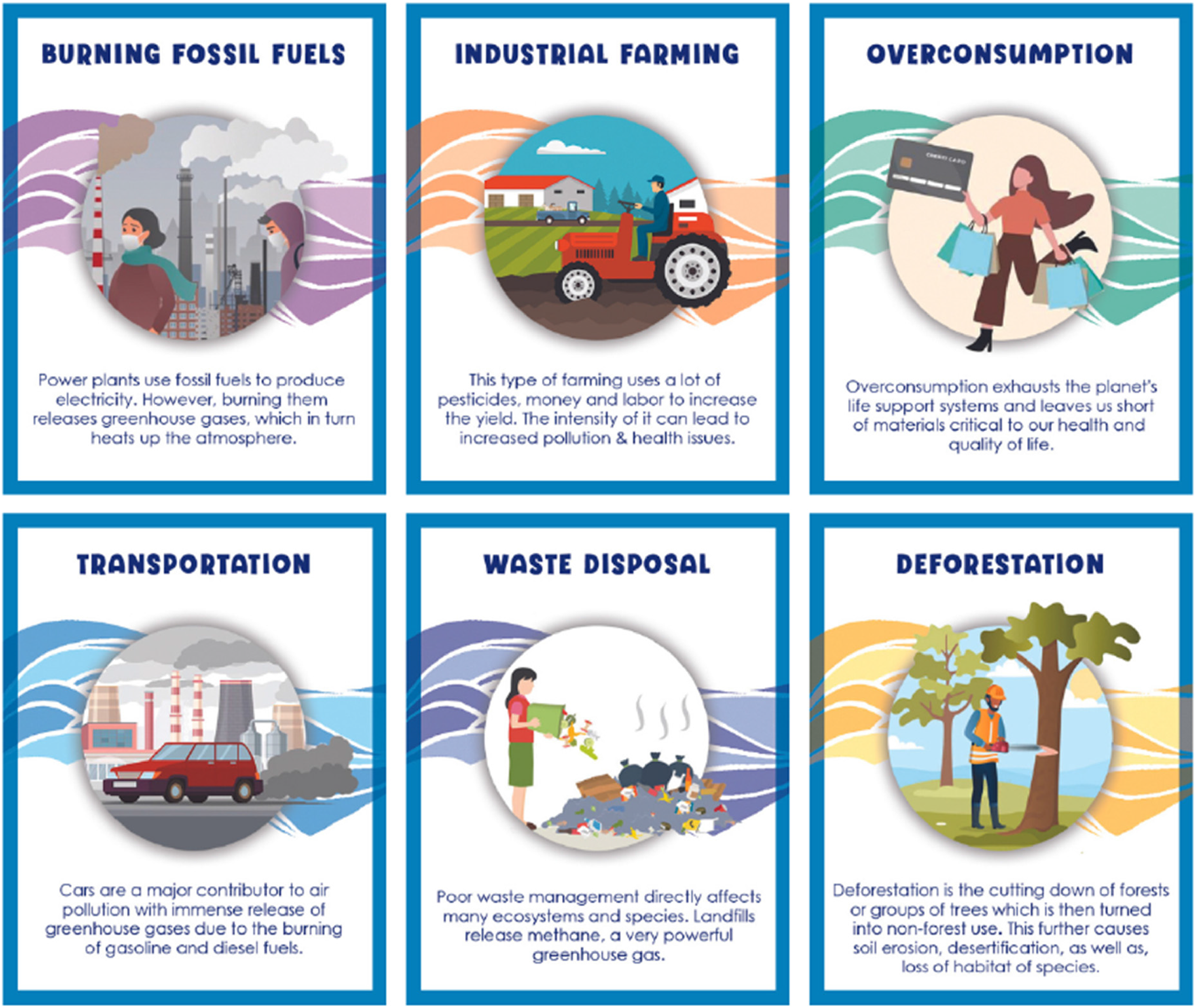
Cause cards and their effects on environment.
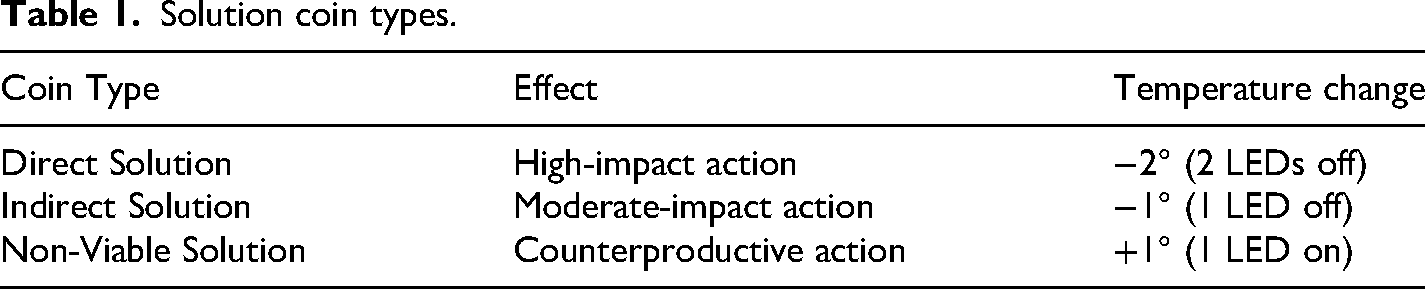
In step 3, we designed a game framework focused on strategic decision-making, building upon Kolb (1984)'s reflective observation stage. A digital thermometer featuring 8 LEDs, inspired by the “tug-of-war” mechanic, serves as a primary reflective tool, visually displaying climate impacts in real-time. Solution coins were classified into three levels of efficacy: direct solutions, which involve high-impact actions such as the adoption of renewable energy and a temperature reduction of 2°C; indirect solutions, which encompass moderate-impact actions like carpooling incentives leading to a 1°C reduction; and non-viable solutions, which are counterproductive actions that result in a 1°C increase in temperature (see Table 1).
Solution coin types.
The structured system established immediate feedback loops, enabling players to observe the impacts of their decisions and fostering critical analysis of solution efficacy (Plass et al., 2015). Figure 2 presents the concept design of the board game and its sketching (see Figures S1a to S1h for detailed concept sketches in Supplementary Material A). The detailed concept sketches are as shown.
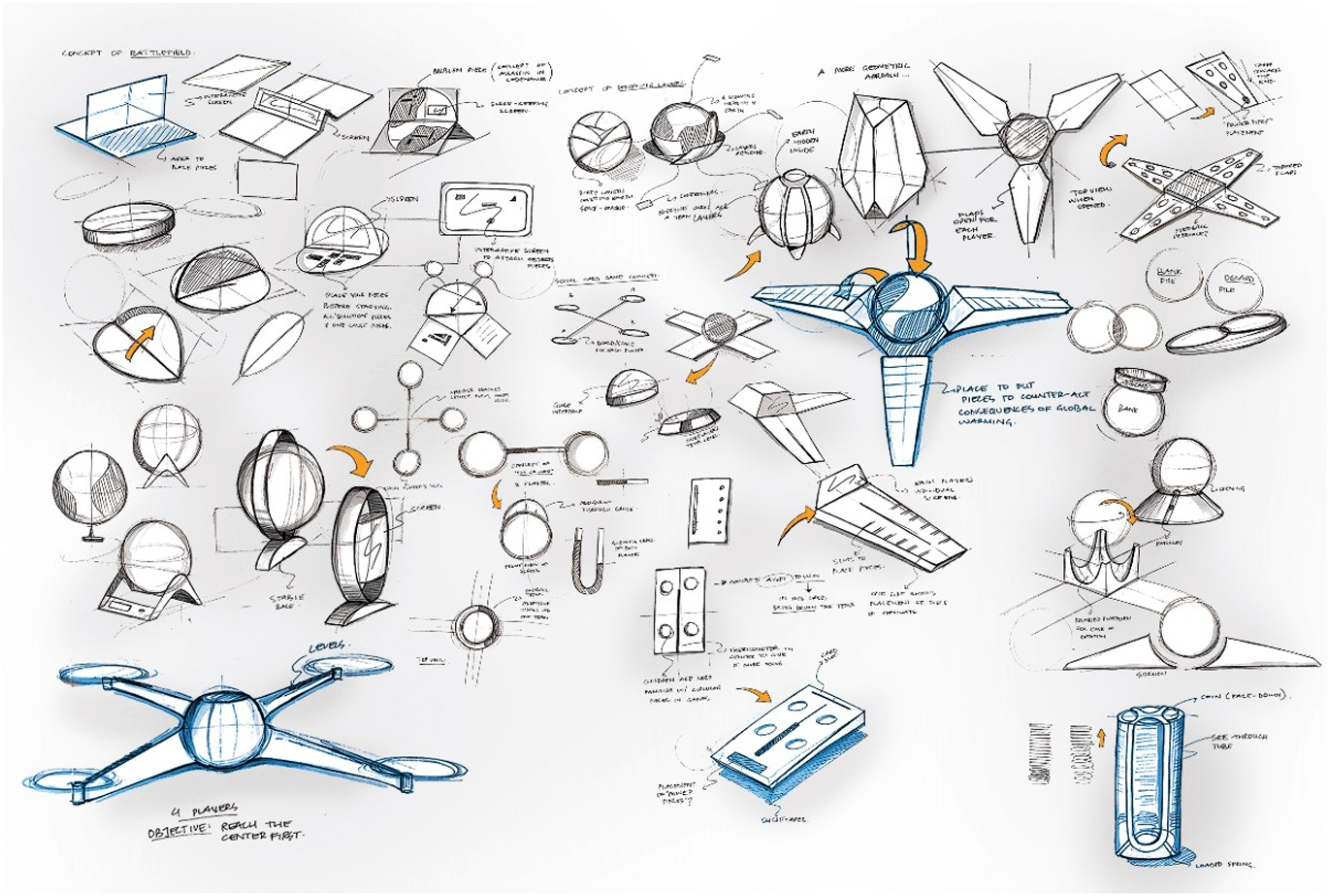
The concept design of a board game and its sketches.
In step 3, we designed low-fidelity cardboard prototypes that underwent five iterative cycles, resulting in significant improvements led by playtesting feedback. The initially proposed dice mechanics were substituted with RFID-enabled coins following tests that indicated privacy issues associated with visible solutions. The player capacity was increased from 2 to 4 to improve social learning dynamics. Passive “awareness coins” were replaced with strategic strike coins, drawing inspiration from UNO's interaction mechanics, due to observations indicating that the original special coins reduced gameplay and decreased engagement. This transition incorporated Kolb's active experimentation phase, necessitating that players evaluate strategies and modify approaches based on outcomes (Wilson et al., 2009). A significant challenge involved balancing complexity with accessibility; extensive playtesting indicated that being laden with text cards prevented engagement. The implemented solution features universal icons, such as “no parking” signs for transportation solutions, along with a glossary. This approach minimizes cognitive load and improves knowledge transfer (Plass et al., 2015).
The final board game incorporates Kolb's (1984) ELT four-stage cycle by using interconnected systems that convert theoretical learning into experiential cycles. The four-stage cycle is presented below. Figure 3 shows Kolb's four-stage learning cycle.
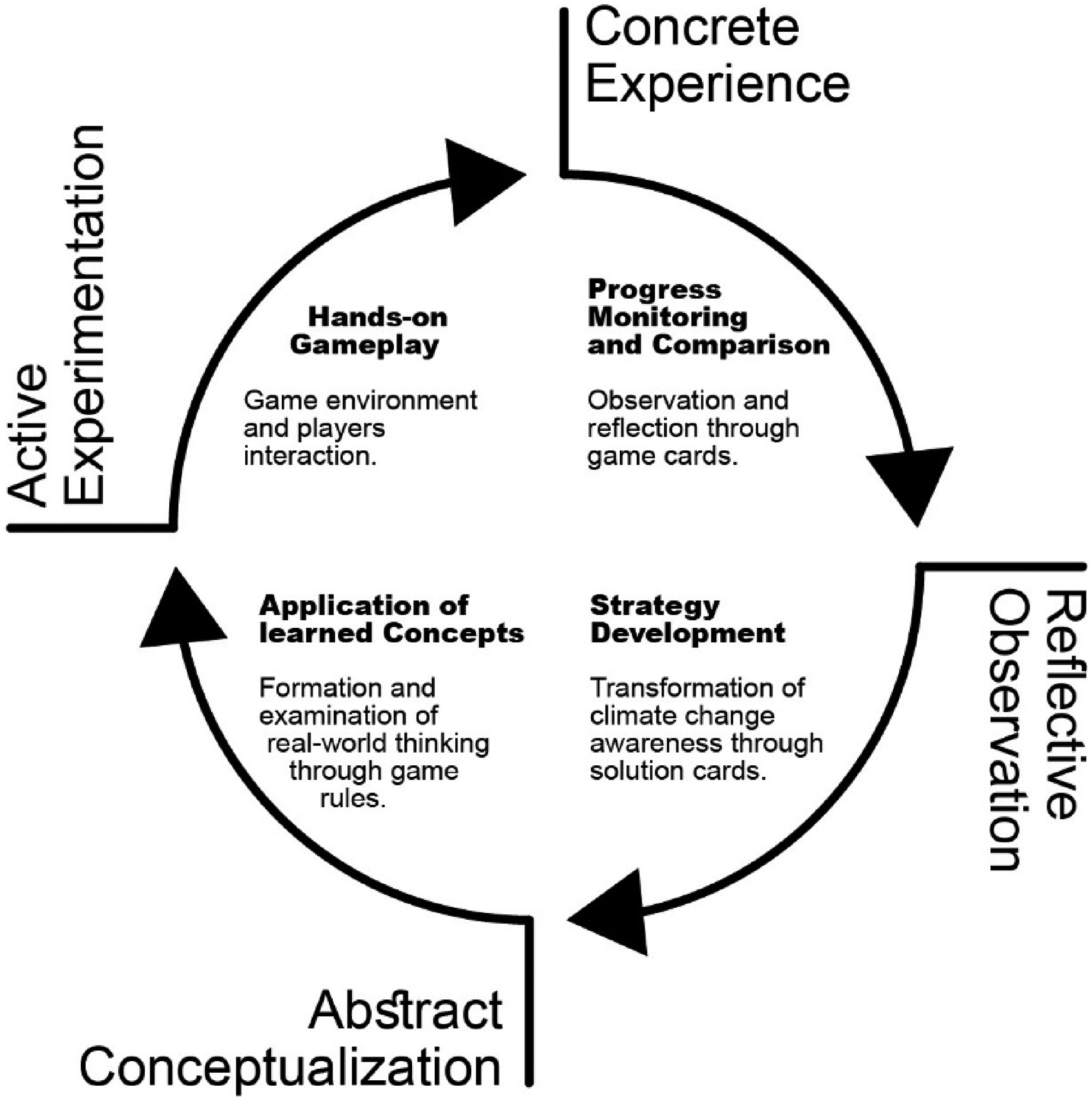
Kolb’s ELT four-stage learning cycle (Kolb, 1984).
We integrated a concrete experience mechanism using RFID-enabled cause cards that showcased localized Pakistani scenarios rather than generic descriptions. The deforestation card indicated, “deforestation reduces carbon absorption, and Pakistan has lost 40% of its tree cover.” During the setup, players manipulate cards, verbally express causes, and place them onto personal boards, activating LED thermometers at 4°C (50% capacity). This multi-sensory approach with tactile, verbal, and visual elements anchors abstract climate concepts in concrete reality, directly confronting the passivity of traditional lectures (Wolf & Moser, 2011).
The reflective observation system focuses on the LED thermometer that delivers immediate feedback on solution efficacy. Players participate in a systematic decision-making cycle:1) select three hidden solution coins and one additional coin based on turn order, 2) strategically position the coins, 3) monitor changes in LED indicators (e.g., two LEDs deactivate for direct solutions), and 4) debate on the outcomes with peers. For instance, implementing a “solar energy” solution in place of “fossil fuels” results in a 2-LED reduction, often prompting inquiries such as “can Pakistan afford this transition?”, illustrating the reflective observation phase where learners evaluate experiences (Kolb, 1984). Figure 4 presents the gameplay scenario (see Figures S2a to S2e for detailed game scenario in Supplementary Material B).
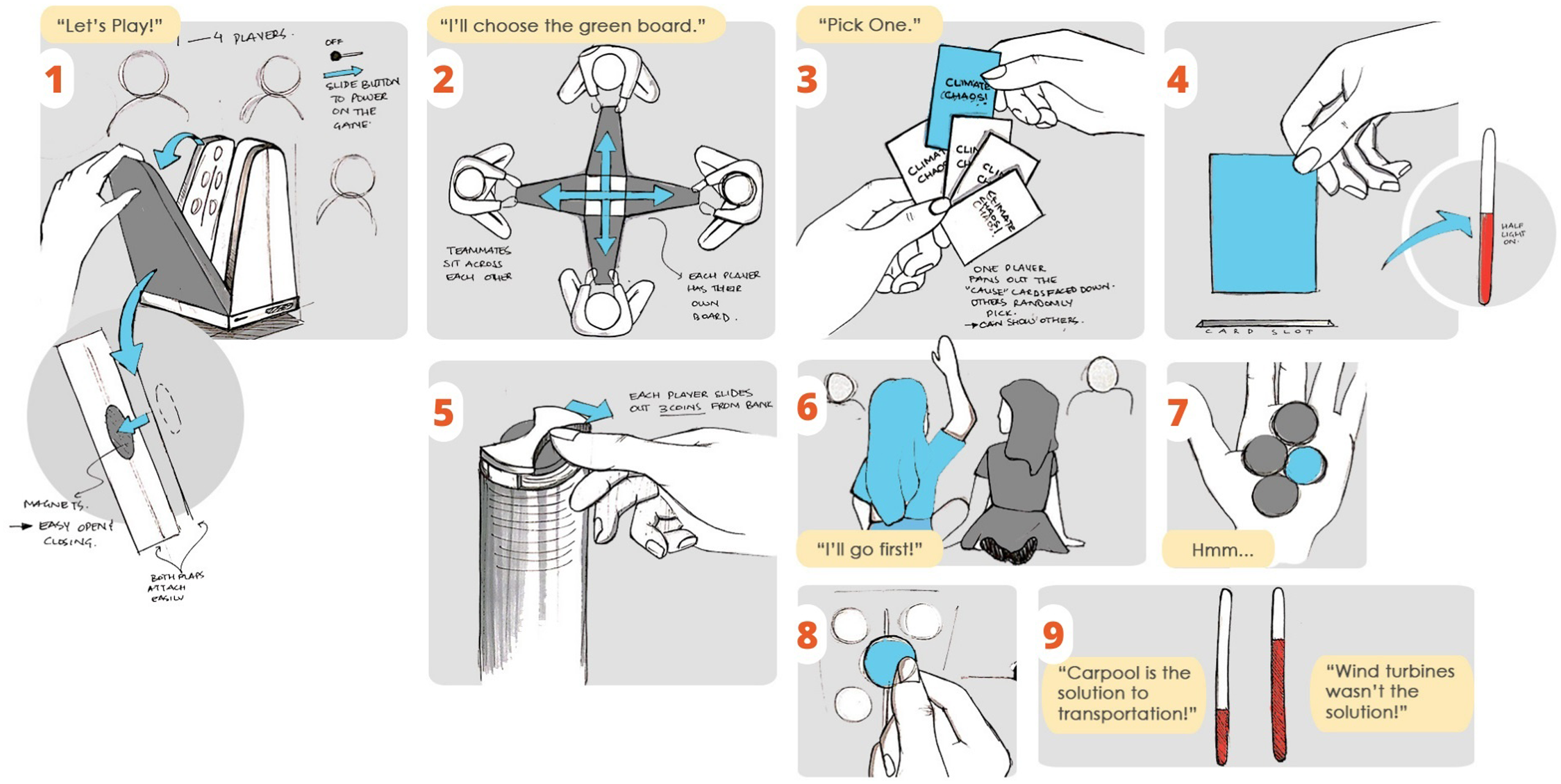
The proposed gameplay scenario in the board game.
Abstract conceptualization tools comprise an iconographic system utilizing universal symbols (e.g., tree icons for reforestation) and a color-coded hierarchy of solutions (red for direct, yellow for indirect, and black for nonviable). The non-linear feedback of the digital thermometer (e.g., 2 direct solutions ≠ 4 indirect solutions) teaches systems thinking, while the solution glossary offers scientific context without overplay (Reckien & Eisenack, 2013). These elements assist players in constructing mental models that link game actions to real-world applications. Figure 5 below depicts the coin types and their proposed functions.
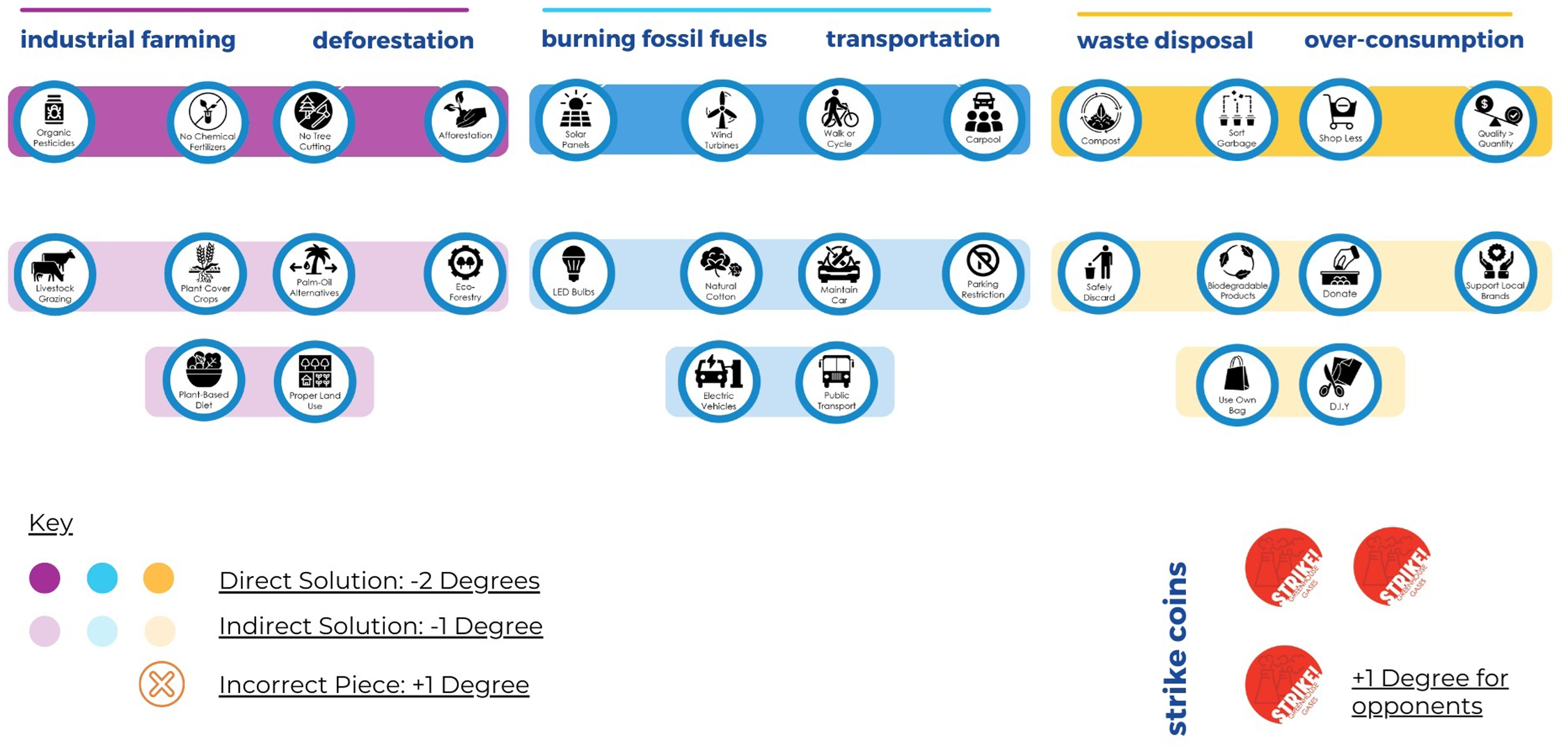
Types of coins and their functions in the proposed game.
The active experimentation mechanism encompasses dual-objective gameplay. On the defensive side, players lower their temperature by utilizing solution coins, thereby enhancing their understanding of mitigation effectiveness. On the offensive side, strike coins enable the escalation of opponents’ tensions, simulating actual policy resistance. Strategic decisions adhere to conditional logic: if an adversary's temperature decreases to ≤1°C (critical threshold), deploy strike coins; if not, accelerate solutions. This mechanism produces what teachers subsequently termed “a climate policy simulator,” necessitating players to evaluate assumptions and modify strategies fundamental to active experimentation (Kolb, 1984).
The physical prototype combines pedagogical goals with appropriate gadgets (see Figures 5 and 6). For the final prototype, modular boards were designed using laser-cut cardboard, incorporating foldable designs to enhance portability. The RFID systems were embedded in the board that utilized 32 sensors, with 8 assigned to each player station, interfaced with Arduino Mega microcontrollers, and the interaction logic adheres to predefined programming rules. We employed spring-loaded mechanisms in coin dispensers to guarantee the release of a single coin while maintaining user privacy. The material costs were maintained under $5 per unit by utilizing local resources, such as cardboard and recycled plastics.
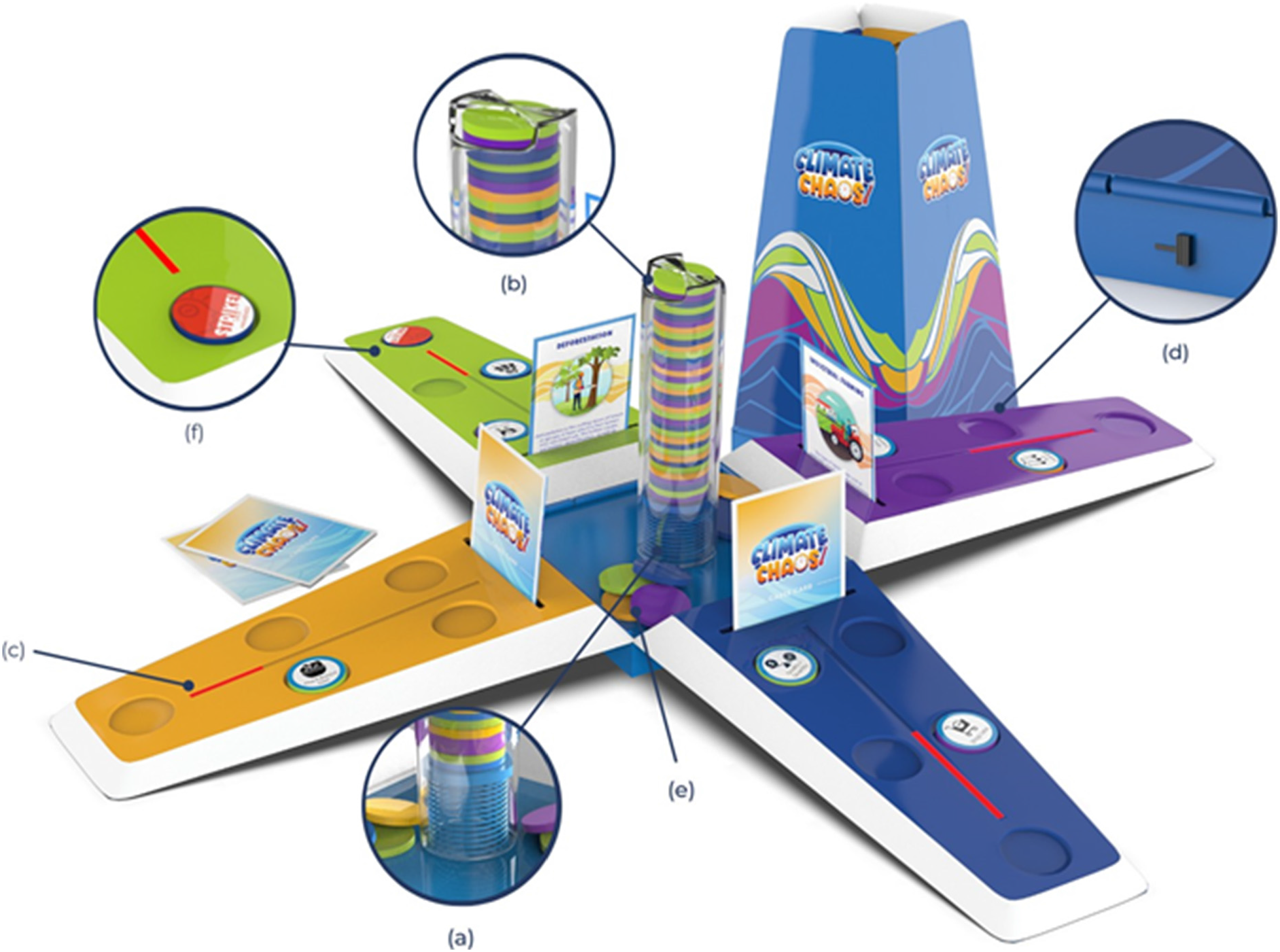
The proposed board game: (a) Coin bank, (b) Coin bank stopper, (c) Digital temperature meter, (d) Power button, (e) Discard area, and (f) Strike coin.
The board game transforms climate change education into an experiential cycle through structured gameplay. During setup, players activate boards and draw cause cards. The verbal articulation requirement (“I have transportation, regarding Lahore's smog crisis”) initiates social learning, while inserting cards initializes LED thermometers at 4°C. The core gameplay loop implements the cyclical nature of ELT, as selecting and handling solution coins represent concrete experience, observing LED changes after placement is a reflective observation, utilizing solution guides in debates denotes abstract conceptualization, and adapting strategies in response to outcomes is regarded as active experimentation.
Victory conditions offer two options: individual victories, defined as the first player to reach 0°C, and collaborative efforts aimed at collective temperature reduction, which accommodates diverse learning styles. The motivation system integrates intrinsic rewards (temperature reduction progression), extrinsic challenges (strike mechanics), and transformative outcomes wherein players suggest “solution transfers,” such as implementing carpooling strategies for school travels.
The proposed board game based on experiential learning is presented below in Figure 6.
Throughout development, ELT's staged cycle proved particularly compatible with game design despite critiques of oversimplification (Miettinen, 2000). Table 2 illustrates that each game component directly aligns with the ELT stages, resulting in what participating teachers subsequently referred to as “a climate change simulator for the classroom.” By incorporating localized Pakistani climate realities into each element, the game connects global environmental discourse with a practical local understanding.
Link between game mechanics and the stage of ELT with the proposed learning outcomes.
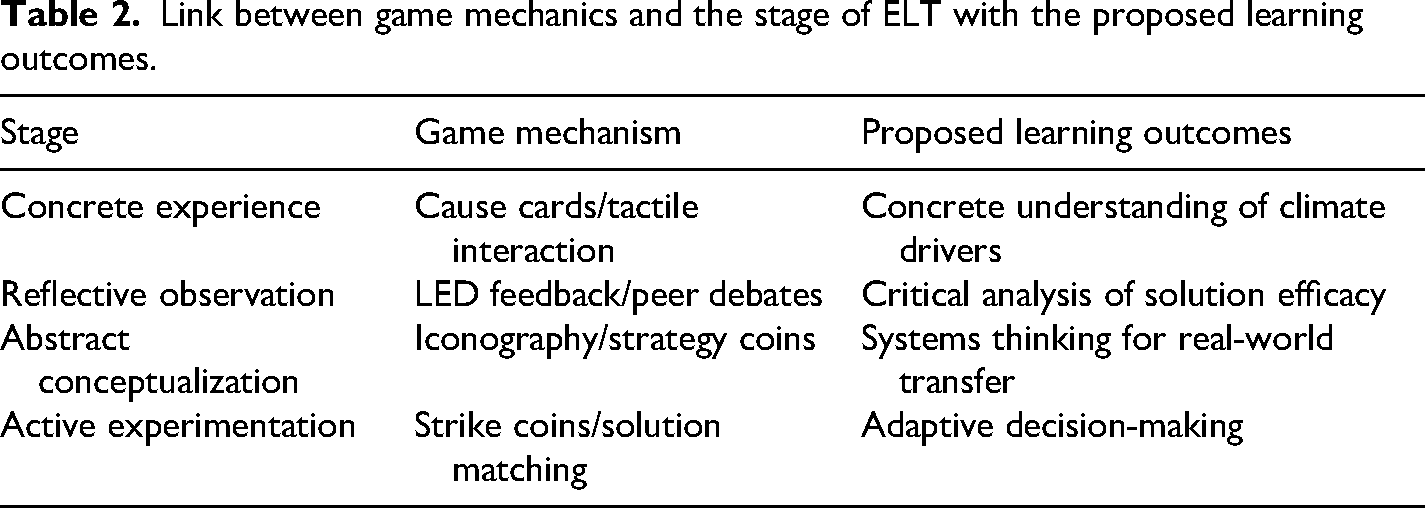
Table 2 above explicitly connects each game component with the ELT's four stages, illustrating how tactile cause cards represent concrete experience, LED feedback signifies reflective observation, solution coins exemplify abstract conceptualization, and strike coins embody active experimentation within ELT. This integration corresponds to Wolf & Moser's (2011) argument for theory-driven, experiential approaches in climate education, involving active engagement with abstract concepts.
The game's mechanics, which include hidden solution coins, competitive strike coins, and a real-time feedback thermometer, are designed to develop a strategic decision-making scenario that corresponds to game-theoretic principles of choice, negotiation, and reward, while simultaneously applying the four stages of Kolb's ELT cycle.
Procedures
For expert evaluation, we conducted focus group interviews with 16 science teachers. These semi-structured discussion guides facilitated teacher sessions, including pre-play discussions on existing pedagogical challenges and post-play evaluations of game efficacy and integration possibilities.
During the gameplay, we conducted behavioral observations with the student participants in order to ensure their engagement with the learning process through the game. Regarding the learning assessment, a self-reported (SR) learning assessment was collaboratively developed with local science teachers, based on a standard lecture on climate change. In accordance with the frameworks established by Crawford et al. (2024) and Davis et al. (2023), the assessment required participants to evaluate their level of agreement with statements regarding their understanding of the causes, effects, and solutions related to climate change. This two-part questionnaire included 10 factual multiple-choice questions (MCQs) to mitigate SR bias (Porter, 2011).
The assessment was conducted over a three-week period to evaluate knowledge retention. All participants completed a pre-assessment (W-1), attended a lecture (W-2), and subsequently finished a post-assessment. The GBL group engaged in the board game following the lecture, whereas the lecture-based group did not participate. A final assessment was performed in the third week (W-3) to evaluate retention.
Analysis
The qualitative data from focused group interviews underwent thematic analysis. Two researchers independently coded transcripts, establishing intercoder reliability (κ = 0.82) before finalizing themes.
These gameplay session observations were analyzed using a systematic protocol that recorded 1. the frequency of peer discussions regarding climate change solutions, 2. strategic negotiation events, and 3. emotional responses during critical gameplay moments (e.g., strike coin deployment).
For learning assessment, a mixed-design ANOVA was employed to examine the impact of the learning intervention, using between-subject factors (GBL and lecture-based) on the SR learning score, which was used as the dependent variable, with three within-subject factors (W-1, W-2, and W-3 time points). The score was determined by averaging the numerical values assigned to the responses of the 18 SR questions. Post-hoc LSD tests conducted in SPSS identified significant differences between the GBL and lecture-based groups at the three time points.
Results
Expert Insights for Transforming Climate Change Education
Pre-play discussions with teachers identified significant weaknesses in existing climate change education. All 16 teachers highlighted the instruction of causes (e.g., the greenhouse effect) and effects (e.g., extreme weather) of climate change; however, 15 (94%) admitted to neglecting practical solutions at the student level. A teacher expressed this gap: “We instruct on carbon taxes while students are unable to execute basic recycling.” Annual tree-planting activities, as reported by all teachers, demonstrated negligible behavioral impact, with 14 teachers (87.5%) reporting minimal translation to sustainable student practices.
Post-play assessments revealed the board game's educational significance by clearly engaging ELT's four stages. Teachers expressed concrete experiences through tactile card manipulation (“students physically associate deforestation with CO₂ increases”), reflective observation in LED-initiated debates (“the temperature decline inspired discussions regarding the viability of renewable energy”), and active experimentation during strategic coin allocation (“they modified strategies following unsuccessful outcomes”). Fourteen teachers (87.5%) evaluated the game as an alternative to lectures for teaching practical solutions, observing a significantly greater frequency of peer discussions during gameplay (mean = 5.2 discussions/session) compared to lectures (mean = 1.3 discussions/session). Eleven teachers (68.8%) argued for the inclusion of team-based modalities to improve collaborative learning, whereas three (18.8%) proposed expanding the content to encompass additional subjects.
Knowledge Integration and Behavioral Intentions
Students demonstrated significant integration of game concepts with real-world scenarios. After the game, 78% suggested specific sustainability initiatives, including “organizing carpools as a transportation solution” (Male, 14) and “planting neem trees at school to address deforestation” (Female, 13). Teachers specifically observed how the game's iconography aided this transition, with one stating, “The ‘no parking’ symbol directly associated with reducing school traffic congestion.”
Behavioral observations indicated that players engaged in solution debates in 92% of gameplay sessions, compared to 12% during lectures. They demonstrated an average of 3.1 strategy changes throughout gameplay, indicating a pattern of active experimentation. Emotional response reached its highest point during the deployment of strike coins, indicative of competitive tension, and during successful solution matches, characterized by expressions of victory.
Figure 7 (classroom gameplay) illustrates group dynamics among four students who negotiate solution trades and form temporary alliances in two teams, while also showcasing visible learning processes through gameplay. In this context, students reference solution manuals (See Figures S3a, S3b, and S3c for solution manuals in Supplementary Material C), debate the applicability of coins, and express either frustration or celebration regarding the effects of strike coins. Active experimentation completes the experiential learning cycle while providing measurable outcomes about students’ ability to transfer climate knowledge to actionable strategies.
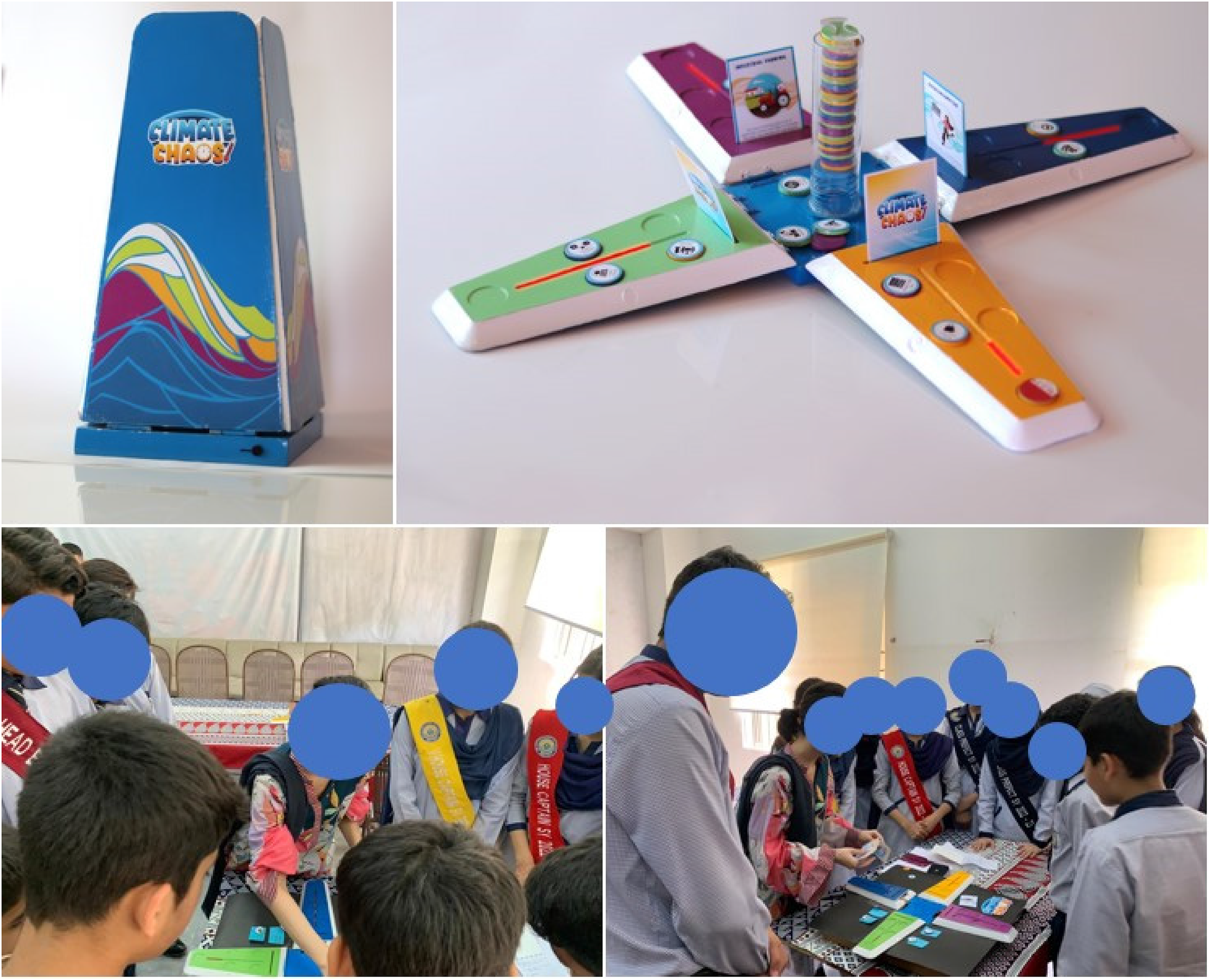
Gameplay sessions and its use in the classroom settings.
Learning Outcomes, Knowledge Acquisition and Retention
The quantitative results showed that the learning intervention (GBL and lecture-based learning) significantly influenced participants’ climate change knowledge retention across the three-week study (F(2, 316) = 4.59, Wilk's Λ = 0.956, p = 0.029, η2 = 0.028). This indicates a small to medium effect size based on established standards (Cohen, 2013), suggesting that the type of learning intervention significantly influenced the variance in knowledge retention scores.
In W-1, there was no significant difference in prior knowledge between groups (*p* > 0.05). Both groups showed low baseline scores (Lecture: M = 0.90, SD = 1.10; Game: M = 0.92, SD = 0.70).
In W-2, the GBL group (M = 3.8, SD = 1.16) outperformed the lecture-based group (M = 3.2, SD = 1.23) after combined lecture and gameplay sessions (post hoc LSD test, p < 0.05). This indicates that the GBL group experiential learning significantly enhances the retention of climate change knowledge compared to a lecture-based learning group with traditional lectures, thereby confirming ELT's effectiveness.
In W-3, without any further interventions, both groups maintained significant differences in knowledge retention: GBL group (M = 4.0, SD = 1.16) and lecture-based group (M = 2.4, SD = 1.03). The GBL group retained a 33% more knowledge than the lecture-based group at W-3 (M = 4.0 vs. 2.4). The board game not only enhanced immediate learning (W-2) but also sustained understanding longer than traditional lectures (W-3), supporting its efficacy as a supplementary educational tool.
Discussion
The results reveal a significant gap in traditional climate education: although teachers express confidence in teaching on the root causes and effects of climate change, they acknowledge considerable limitations in promoting practical solutions. This highlights the “knowledge-action gap” (Moser, 2016), wherein traditional approaches do not transform awareness into behavioral change. Teacher feedback supports this, with 94% reporting negligible changes in student behavior following symbolic activities such as tree-planting, consistent with findings regarding the transient nature of such activities (Antle et al., 2014). The proposed board game-based experiential learning intervention addresses this gap through its ELT-informed design, providing three key advantages over traditional lectures. First, our study demonstrates experiential knowledge building. The GBL group's 33% higher knowledge retention corresponds to Kolb's (1984) notion that knowledge evolves through “the transformation of experience.” In contrast to lectures, which mainly focus on abstract conceptualization, the game encapsulates the entire ELT cycle: concrete experience (tactile card interactions), reflective observation (LED feedback debates), abstract conceptualization (strategic planning), and active experimentation (using the strike coins). Second, our study showed context-based practical learning. A 37% increase in applied solution knowledge directly addresses the teachers’ identified “macro-scale solution problem.” By integrating practical solutions (e.g., carpooling) into specific local contexts (e.g., Lahore's smog crisis), the game addresses the “contextual disconnect” in climate education (Ergun et al., 2021). This efficient transfer of knowledge is exemplified by student-initiated local endeavors such as “planting neem trees at school,” which corresponds to demands for education that connects global issues to local actions (Wolf & Moser, 2011). Third, the gameplay sessions provided competitive collaborative engagement. Our results, with 5.2 peer discussions per session compared to 1.3 in lectures, corroborate Chen et al.'s (2020) findings regarding intrinsic motivation in GBL. We further observed that competition increased engagement (e.g., emotional peaks during strike coins), whereas collaboration facilitated knowledge transfer (e.g., solution debates). This dual mechanism illustrates the game's effectiveness, despite comparable content coverage.
The game's design effectively implemented the cyclical stages of ELT. The results corroborate previous studies (Freeman et al., 2014; Pfirman et al., 2021; Hou et al., 2023), demonstrating that GBL enhances engagement and long-term retention. Unlike previous climate GBL studies (e.g., Antle et al., 2014), this game systematically incorporates all four ELT stages. The results support and expand upon previous studies; for instance, while Juan & Chao (2015) demonstrated that GBL enhanced sustainability awareness, our study elucidates the underlying mechanisms. Our study extends the findings of Nadolny and Halabi (2016) by demonstrating that motivational gains result in measurable retention benefits. The GBL group's performance highlights its effectiveness in reinforcing abstract concepts via actual decision-making, supporting findings on enduring learning results from GBL settings (Illingworth & Wake, 2019).
The observed iterative strategy changes and peer negotiations during gameplay offer empirical support for the integrated theoretical framework underpinning this study. These behaviors not only indicate ELT's active experimentation phase independently (Kolb, 1984) but also demonstrate the actualization of the complete experiential cycle via game-theoretic mechanisms. Students calculated the costs and benefits of various ‘climate solution’ strategies, hence engaging themselves in a concrete experience of strategic problems (Armenia et al., 2024). The game's rules and feedback mechanisms facilitated their reflective observation of systemic cause and effect, leading to the abstract conceptualization of effective strategies (Wrzesien & Raya, 2010). This process demonstrates that board games combining ELT with game theory create a ‘microworld’ that facilitates safe experimentation with complex systems (Ghodsvali et al., 2022). The observed transition from competitive to collaborative play in certain sessions indicates that the game promoted not only cognitive learning (knowledge of solutions) but also normative and relational learning, influencing perspectives and fostering a shared understanding necessary for collective climate action (Falk et al., 2023). Therefore, the board game operated as a structured environment in which the theoretical integration of ELT and game theory manifested in apparent, meaningful learning behaviors (Fang et al., 2025).
GBL utilizes established psychological and educational principles. It effectively regulates cognition (Plass et al., 2015), delivering information gradually to free cognitive resources for schema development. For example, representing CO₂ emissions through visual “thermometer” LEDs elucidates abstract concepts. GBL utilizes strong intrinsic motivators that are frequently lacking in traditional instruction (Chen et al., 2020). Mechanisms such as challenge, immediate feedback, autonomy, and a sense of progression promote deep engagement and persistence (Chen et al., 2020; Abdul Jabbar & Felicia, 2015), in contrast to less effective extrinsic motivators (Ryan & Deci, 2000). Kolb's (1984) ELT provides the crucial theoretical lens; traditional lectures primarily engage learners at the abstract conceptualization stage but neglect the other three stages, while GBL operationalizes the entire cycle.
This study addresses key shortcomings, including misconceptions, behavioral engagement, and local relevance. The game's real-time feedback reduced common misconceptions by associating actions with visual consequences (Lambert et al., 2012). Students in the GBL group suggested more realistic solutions, tackling the “attitude-behavior gap” (Moser, 2016). By simulating locally relevant issues, the game bridged the gap between global climate discourse and the local context (Ergun et al., 2021). The design tackles passivity, as lectures do not include students in experiential learning cycles (Wolf & Moser, 2011), and contextual disconnect, as traditional programs often overlook locally relevant solutions (Monroe et al., 2019).
The results demonstrate practical implications for curricular integration, teacher training, and scalability. The game's affordable design and curriculum conformity make it feasible for resource-constrained schools in vulnerable regions (Adnan et al., 2024). Facilitators need to prioritize post-game debriefs to reinforce abstract conceptualization. Future iterations may include localized scenarios to improve relevance (Neuhoff et al., 2022).
The effects of climate change are getting worse worldwide, especially in developing nations (Adnan et al., 2024). Despite this urgency, gaps remain in climate change education (Moser, 2016). Traditional approaches often fail because of passive knowledge transmission (Huxster et al., 2018), disconnect from the local context (Ergun et al., 2021), and persistent misconceptions (Lambert et al., 2012). The present study integrates GBL, which improves engagement (Chen et al., 2020) and enhances knowledge retention (Freeman et al., 2014), for climate change awareness (Reckien & Eisenack, 2013).
The study identifies three significant gaps: the empirical gap pertaining to the absence of long-term retention data for climate-focused educational games (Antle et al., 2014); the developmental gap emphasizing the significance of focusing on young students; and the geographical gap involving adapting climate change education for South Asia. The proposed board game integrates actual climate-related contexts, multimodal interaction, immediate feedback mechanisms, and a mix of collaboration and competition. This synthesis establishes a framework for shifting climate change education from passive receipt to active participation and persistent knowledge.
Implications for Education
Within the context of this study, conducted with environmentally aware students from Pakistani secondary schools, the findings indicate that an experiential learning-based board game led to significantly higher knowledge retention compared to traditional lectures. The integration of ELT enabled the game to transform abstract climate concepts into practical understanding, suggesting promise for similar interventions in climate-vulnerable regions. However, further research with broader, more representative samples is needed to establish generalizability.
This study presents three primary contributions. First, it presents empirical evidence supporting the long-term retention benefits of GBL and outlines design principles for climate games that incorporate real-time feedback and localized content. Second, it illustrates the systematic integration of the four stages of ELT to address the knowledge-action gap. Third, the proposed design offers a scalable and cost-effective solution (approximately $5 per unit) that transitions climate education from passive learning to active behavioral engagement.
The study suggests the integration of GBL into Pakistan's national climate curricula, with a focus on local relevance. It recommends the implementation of teacher training programs centered on experiential pedagogy, the use of longitudinal studies to assess GBL effectiveness and its behavioral impacts, the emphasis on collaborative learning approaches, and the importance of climate education as a national imperative due to Pakistan's vulnerability. The cost-effective prototype, utilizing local materials such as cardboard and LEDs, facilitates practical application in resource-constrained contexts. The study suggests the integration of game-based experiential learning methods into Pakistan's Climate Action Plan for Schools, facilitated by teacher workshops and collaborations with local organizations. Implementing these measures will enable Pakistan to cultivate climate-resilient generations through dynamic education that enables adolescents to address real-world climate challenges
Limitations of the Present Study
This study presents some important limitations that must be addressed in future studies, including convenience sampling and Go Green Club membership. The use of convenience sampling from ‘Go Green Clubs’ suggests that participants potentially possessed higher prior interest and understanding regarding climate issues than the average student. This procedure established a consistent baseline; however, it limits the direct generalizability of our retention results to a broader, less-engaged classroom context. The positive effects observed might be improved in this pre-interested group. Further studies should utilize randomized sampling from the general student population. Another limitation is the short-term focus, despite W-3 results indicating retention; hence, a long-term study should evaluate behavioral changes, such as recycling rates post-intervention. Furthermore, the game mechanisms include limitations, as the competitive “strike coins” may have overshadowed collaborative learning; thus, balancing competitiveness and collaboration might enhance results.
Future Research
Our future research intends to optimize and improve game-based learning, specifically addressing areas identified for enhancement through expert feedback. While our study focused on short-term knowledge retention, we plan to gather feedback and observations from teachers approximately one year later to evaluate any significant changes in student behavior regarding sustainability and responsible environmental practices. This assessment will provide us with additional insights for future iterations of the game and assist us in enhancing its efficacy in engaging students with the real world and fostering enduring behavioral change.
Future studies on game design should emphasize localized content and collaborative mechanisms to improve relevance and empathy, and extend longitudinal studies to assess real-world behavioral effects (e.g., energy conservation).
Conclusion
This study indicates that interactive GBL is a more practical and engaging approach to climate change education compared to traditional classroom teaching. By integrating the game into ELT, it effectively transformed complex climate concepts into practical knowledge for students. This approach is particularly crucial for vulnerable regions such as South Asia, where climate literacy is required.
This study suggests that educators should adopt games as supplementary resources and implement debriefing sessions to reinforce learning. For policymakers in education, this study recommends that they must incorporate GBL into national education systems, utilizing its cost-effectiveness for developing countries and facilitating teacher training. Education researchers should further develop evaluation methods that link in-game learning to real-world behaviors and explore cross-cultural adaptations.
As climate risks increase, this study argues that GBL has transitioned from an innovative alternative to an educational requirement, indicating the end of passive information dissemination in favor of active learning that directly connects knowledge to action.
Supplemental Material
sj-docx-1-jee-10.1177_10538259261442438 - Supplemental material for The Design of a Board Game-Based Experiential Learning Intervention to Enhance Climate Change Knowledge Retention Among High School Students
Supplemental material, sj-docx-1-jee-10.1177_10538259261442438 for The Design of a Board Game-Based Experiential Learning Intervention to Enhance Climate Change Knowledge Retention Among High School Students by Aleena Qaiser, Rao Shahzaib Ali Khan, Raja Mubashar Karim, Hyunyim Park and Muhammad Tufail in Journal of Experiential Education
Supplemental Material
sj-docx-2-jee-10.1177_10538259261442438 - Supplemental material for The Design of a Board Game-Based Experiential Learning Intervention to Enhance Climate Change Knowledge Retention Among High School Students
Supplemental material, sj-docx-2-jee-10.1177_10538259261442438 for The Design of a Board Game-Based Experiential Learning Intervention to Enhance Climate Change Knowledge Retention Among High School Students by Aleena Qaiser, Rao Shahzaib Ali Khan, Raja Mubashar Karim, Hyunyim Park and Muhammad Tufail in Journal of Experiential Education
Supplemental Material
sj-docx-3-jee-10.1177_10538259261442438 - Supplemental material for The Design of a Board Game-Based Experiential Learning Intervention to Enhance Climate Change Knowledge Retention Among High School Students
Supplemental material, sj-docx-3-jee-10.1177_10538259261442438 for The Design of a Board Game-Based Experiential Learning Intervention to Enhance Climate Change Knowledge Retention Among High School Students by Aleena Qaiser, Rao Shahzaib Ali Khan, Raja Mubashar Karim, Hyunyim Park and Muhammad Tufail in Journal of Experiential Education
Footnotes

Funding
The authors received no financial support for the research, authorship, and/or publication of this article.
Declaration of Conflicting Interests
The authors declared no potential conflicts of interest with respect to the research, authorship, and/or publication of this article.
Supplemental Material
Supplemental material for this article is available online.
Author Biographies
References
Supplementary Material
Please find the following supplemental material available below.
For Open Access articles published under a Creative Commons License, all supplemental material carries the same license as the article it is associated with.
For non-Open Access articles published, all supplemental material carries a non-exclusive license, and permission requests for re-use of supplemental material or any part of supplemental material shall be sent directly to the copyright owner as specified in the copyright notice associated with the article.
