




Abstract
Significance of the Research
This study demonstrates that authentic, industry-based assessments can transform how students prepare for their careers. Drawing on experiential learning principles, it shows that real-world projects not only strengthen students’ confidence and professional identity but also provide a scalable framework for universities to embed career development across the curriculum and enhance graduate employability outcomes.
Introduction
Universities face growing pressure to enhance graduate employability outcomes, prompting a stronger focus on embedding career readiness throughout the curriculum (Australian Government, 2019; Tomlinson & Jackson, 2021). Concurrently, shifts in assessment integrity and quality assurance have intensified efforts to safeguard the credibility of awards (Fowler, 2023). Previous research has explored strategies to enhance student employability, skills, and personal attributes, emphasizing the value of service learning, work-integrated learning (WIL), and career development (Bridgstock, 2009, 2019; Jackson, 2016). However, little attention has been given to the student perspective and the triggers that propel them from learners to work-ready graduates (Jackson, 2015). Furthermore, the impact of career development initiatives within students’ degree programs, particularly as graduation approaches, on students’ career confidence and transition into the workforce remains understudied. This article addresses this gap by examining learning from students’ perspectives and exploring how experiential learning through authentic, industry-based assessments shapes career readiness, builds confidence, and supports successful transition to employment.
Graduate Employability and Curriculum Design
Employers have long requested the development of key job-ready skills among new graduates to meet changing demands (Kaider et al., 2017). WIL programs and internships are common in business degrees, but the debate over effective graduate preparation continues. Some argue that extracurricular activities, volunteering, and immersive experiences enhance graduate skills and networks (Bennet, 2020; Jackson & Bridgstock, 2021). Others emphasize embedding career-learning initiatives early to develop students’ capabilities, networks, and understanding of their chosen careers (Sotiriadou & Hill, 2015). Educators believe these immersive activities manage student expectations, advance professional practice, and cultivate career-ready graduates (Kelley & Bridges, 2005).
Within this context, authentic assessments play a crucial role in enhancing graduate employability by advancing students’ networks, providing real-world insights, and building confidence to work in their chosen profession (Kinash et al., 2018). Authentic assessments denote tasks that mirror professional practice in their activity, context, standards, and criteria (e.g., product/performance, knowledge transfer, metacognition, feedback, collaboration), enacted in real or simulated workplace settings (Ashford-Rowe et al., 2014; Villarroel et al., 2018).
Assessments are no longer used solely for evaluating knowledge but serve as a method of instruction and learning in their own right (Boud, 2010; Kinash et al., 2018). The assessment itself has become a salient part of the learning experience in higher education and substantially influences the quality of students’ learning (Boud, 2010). The objective of assessments has also shifted from producing classroom competent students to nurturing employment-ready graduates (Kinash et al., 2018), with authentic assessments playing a critical role in this transformative process.
As authentic assessments continue to gain recognition for their ability to bridge the gap between theoretical knowledge and practical application across various disciplines (Villarroel et al., 2018), their importance becomes particularly evident in business degrees, where they equip students with the skills, experiences, and industry-specific competencies required for success in the dynamic and competitive professional landscape.
This study examines the practical impact and student experience of an authentic assessment specifically tailored to the marketing profession in enhancing graduates’ competencies, confidence, and post-graduation success. In this assessment, students actively develop and execute their marketing plans in real-world settings, obtaining tangible outcomes and valuable feedback regarding the effectiveness of their professional endeavors. The assessment not only closely mirrors the criteria required in the workplace but becomes the very benchmark for evaluating success in this context. This study aimed to identify the key features of authentic assessment that enhance graduates’ learning experiences and to develop a framework illustrating how such assessment supports the application of academic knowledge to industry contexts and fosters self-efficacy for career readiness. The study also proposes a scaffolded approach across 3 years of a course to progressively build authentic learning experiences aligned with disciplinary knowledge and to increase authenticity throughout students’ studies.
Experiential Learning Theory and Career Development
Experiential learning theory (ELT) provides the framework for understanding how students translate assessment experiences into career readiness (Kolb, 1984; Kolb & Kolb, 2005). ELT conceptualizes learning as a cyclical process comprising concrete experience, reflective observation, abstract conceptualization, and active experimentation. Within this context, the industry-based assessment represents the concrete experience; structured reflection develops insight; conceptualization connects experience to marketing theory and professional norms; and experimentation occurs as students apply these insights in interviews, internships, and early-career roles. This cycle reflects students’ adaptation to and interaction with professional environments, illustrating how authentic, industry-proximal tasks can accelerate career development.
In Kolb's (1984) account, experiential learning is fundamentally a process of adaptation, where individuals continuously align thinking and action in response to environmental demands. In this study, the four ELT stages are therefore interpreted as adaptive capability-building. Concrete experience exposes graduates to ambiguity and real constraints, supporting creativity through tolerance for uncertainty and flexible thinking. Reflective observation consolidates attitude change by prompting graduates to interrogate assumptions and evaluate what did (and did not) work. Abstract conceptualization supports decision-making by enabling rational comparison of alternative strategies and translating feedback into principles for future action. Active experimentation operationalizes adaptation through resource mobilization and interaction with the environment (e.g., leveraging stakeholders, tools, and opportunities) as graduates implement and refine solutions in situ.
Transition to Work
Transitioning from university to work is the first major challenge graduates must face in their careers (Ng & Feldman, 2007). This transitional step represents a defining moment in a graduate's life, a decisive stage with long-term significance (Lifshitz, 2017). For many students, the decision to enroll into higher education studies is accentuated by their pursuit of employment opportunities and upward social ascension (García-Aracil et al., 2021). While preparation for the labor market is not the sole motivation for enrollment, it remains a dominant reason. Consequently, it is critical that students’ perceptions of their preparedness to enter their chosen profession upon graduation are both accurate and realistic.
From the student perspective, authentic, industry-based assessments offer a sense of relevance and ownership in learning, helping to bridge academic study with real career contexts. These experiences support students to articulate their capabilities, build confidence in professional interactions, and view their transition to work as both achievable and meaningful (Jackson, 2015). Consistent with this, Schnobrich-Davis et al. (2025) found that students view experiential learning as a key component of their career preparation strategy, with many indicating that the most valuable activities are those that allow them to build or practice their skills and make professional connections. Understanding how students experience and interpret these assessments is therefore critical to evaluating their impact on employability.
Within the framework of ELT terms (Kolb & Kolb, 2005), the industry brief provides the concrete experience; structured debriefs and feedback enable reflective observation; aligning deliverables with professional standards facilitates abstract conceptualization; and client presentations and networking encourage active experimentation in real-world labor market contexts. This assessment design scaffolds graduates’ adaptation to workplace norms and professional interactions, helping make the transition to employment more achievable and confident.
Employability
According to Hunt and Scott (2020, p. 465), “Graduates are increasingly called upon to exhibit additional markers of employability over and above educational qualifications.” As acknowledged in the literature, individual employability is multifaceted, “with constituent dimensions spanning professional identity, career self-management, social connectedness and work and life experience” (Jackson & Tomlinson, 2020, p. 436). This view is shared by English et al. (2021, p. 648), who argue that “employability refers to graduates having the ability, knowledge and skills to gainfully contribute to society and the economy across their working lives in multiple work settings.” Although employability has been extensively discussed (Barkas et al., 2021; English et al., 2021; Jackson & Tomlinson, 2020; Sotiriadou et al., 2020), uncertainty remains regarding how best to embed these skills within the curriculum (Barkas et al., 2021). ELT operationalizes these employability dimensions: reflection consolidates career self-management narratives; conceptualization connects knowledge to role requirements; and experimentation rehearses applications, interviews, and workplace performance (Kolb & Kolb, 2005).
Graduate employability is an explicit aim for universities and a central concern for regulatory bodies, particularly amid the rapid rise of artificial intelligence and the proliferation of new applications that challenge the rigor of traditional assessment regimes (Fowler, 2023). Employers increasingly expect universities to equip students with the knowledge and skills relevant for their chosen professions (Kinash et al., 2018), placing business schools under increasing pressure to prepare graduates for an evolving workplace (Jackson & Chapman, 2012). However, employability development remains peripheral in many curricula, often described as “generic skills” taught in isolation rather than integrated within core disciplinary learning. The literature suggests that employability extends beyond technical capabilities to encompass a deeper understanding of the society in which graduates seek to work, its practices, language, shared beliefs, and norms, and the ability to situate oneself within that professional community (Jackson & Bridgstock, 2021). Viewed through the lens of ELT, these meta-skills accumulate across the learning cycle to build confidence (self-efficacy), expand networks (social capital), and deepen enculturation within professional identity, language, and norms.
Assessment has been recognized as an effective means of addressing these expectations and concerns (Kinash et al., 2018). In particular, authentic assessments enable students to apply the knowledge and skills required in their future professions (Jackson & Tomlinson, 2020; James & Casidy, 2018; Sotiriadou et al., 2020). Authentic assessment operationalizes this by intentionally mapping tasks and criteria to ELT stages, positioning assessment design as a lever rather than a proxy for employability.
Most research on curriculum-based activities focuses on WIL as a key approach to enhancing student employability through enterprise capabilities, career development learning, and perceived employability (Jackson et al., 2022). The significance of WIL in supporting the transition from higher education to the workforce is widely recognized by employers and the higher education sector (Scholtz & Bester, 2018). Integrating WIL into curricula provides an ideal platform for students to develop cognitively and socially within industry contexts. A strength-based approach, encouraging students to examine how their values, beliefs, and experiences shape their thinking (Bennet, 2020), further engages them in professional growth. Effective curricula foster these cognitive connections as well as to better prepare students for future work (Jackson & Tomlinson, 2020). While the effectiveness of WIL programs is undisputed, recent research highlights the added value of embedding authentic assessments into formal learning alongside existing WIL programs (James & Casidy, 2018; Sotiriadou et al., 2020).
Authentic Assessments
Authentic assessments enhance higher-order thinking and transferable skills by connecting learning to real-world contexts (Ashford-Rowe et al., 2014; Darling-Hammond & Snyder, 2000). They also improve student engagement, motivation, satisfaction, and success (Simpson, 2016), leading to stronger employability outcomes (James & Casidy, 2018). Typically, authentic assessments require students to complete tasks that mirror professional or workplace practices (Ashford-Rowe et al., 2014; James & Casidy, 2018; Karunanayaka & Naidu, 2021) and consider the task, its physical and social context, the expected outcome, and the assessment criteria relevant to that situation (Gulikers et al., 2004).
Design elements proposed by Ashford-Rowe et al. (2014) include challenge, performance or product outcome, knowledge transfer, metacognition, assessment accuracy, a real-world environment, discussion and feedback, and collaboration. Similarly, Vos (2015) identifies common characteristics of authentic assessments such as real-world applicability, product creation, complexity, targeted evaluation criteria, providing a form of formative assessment, varied activities, reflection, and interaction.
Authentic assessments utilize a range of methods and tools, such as live performances, projects, presentations, case studies, portfolios, journals, teamwork, and interviews, and the integration of these tools provides a comprehensive assessment (Custer et al., 2000). The task itself should enable students to synthesize knowledge and skills realistically (Gulikers et al., 2004) through project-based work that embraces ambiguity and real-world uncertainty, thereby enhancing their competitiveness (Kinash et al., 2018; Rohm et al., 2021; Villarroel et al., 2018). Industry-based projects expose students to contemporary terminology, application of concepts, and, in this case, marketing framework relevance, giving graduates a distinct advantage (Ye et al., 2017). Consequently, integrating industry-based projects in the curriculum is crucial for achieving these outcomes and for revitalizing assessment strategies in response to the growing challenges posed by artificial intelligence.
Purpose and Research Questions
The purpose of this study was to examine how an industry-based authentic assessment functions as experiential learning that supports students’ transition to work and career development.
Significance
This study is significant as it demonstrates the crucial role of authentic, industry-focused assessments in preparing students for a successful transition from academia to the workforce. By providing real-world learning experiences, these assessments help students develop essential skills, build confidence, and establish professional networks, facilitating a smoother integration into their chosen professions. The research addresses a critical gap by highlighting how such educational practices influence long-term career outcomes and support graduate employability. The paper also proposes a “transition framework” and curriculum guidance to maximize the impact of these practices.
Method
The Social and Not-for-Profit Marketing unit was structured to deliver a practical, community-focused learning experience that immersed students in authentic problem-solving. Drawing on contemporary pedagogical approaches, the curriculum introduced core concepts in social and not-for-profit marketing (Ford et al., 2007) through a student-centered design that emphasized active, contextualized, and applied learning (Kwan & Wong, 2014).
Working in teams, students developed a genuine fundraising campaign, enabling them to cultivate meta-skills such as collaboration, critical thinking, problem-solving, and communication. Guided by ELT, the industry brief and live campaign served as the foundation for concrete experience. Team discussions, mentor input, and structured reflection supported reflective observation, while professionally aligned deliverables facilitated abstract conceptualization. Client presentations and community outreach provided opportunities for active experimentation.
Participants
The study involved 20 marketing graduates (20 of 31 eligible alumni; 64.5% response rate) who had completed the Social and Not-for-Profit Marketing unit and were surveyed 2 years after graduation.
The research was situated within a Western Australian public university operating across three campuses, two located in a major metropolitan city and one in a regional center. It has over 27,000 higher education-enrolled students, primarily in the 20- to 24-year age group, and a high proportion of first-in-family students. The university offers a 3-year Bachelor of Commerce degree in which students select majors after completing first-year core business disciplines. The Marketing major includes the Social and Not-for-Profit Marketing unit, which aims to strengthen employability by engaging third-year students in a self-directed, project-based collaboration with industry partners. In this instance, the project involved developing a fundraising campaign to address homelessness.
This Western Australian public university provides a valuable context for employability research as it serves a comparatively high proportion of first-in-family students and operates across both metropolitan and regional campuses, foregrounding issues of equity and transition. Its business programs emphasize industry engagement and authentic assessment through live briefs, client interaction, and iterative feedback, making it an ideal context to examine how assessment features map onto experiential learning mechanisms and contribute to early-career outcomes.
Sampling Frame and Inclusion
To examine the impact of the authentic assessment on students’ transition from university to the workplace, graduates were identified who had completed the Social and Not-for-Profit Marketing unit in their final year, undertaken the full cycle of the industry-based authentic assessment (client brief, plan, activation, evaluation, and reflection), graduated at least 2 years before data collection, and were employed or actively seeking work in marketing-related roles at the time of the survey.
A 2-year lag was adopted to reduce halo effects from coursework and allow sufficient time for graduates to test whether assessment-derived capabilities transfer into early-career contexts. Thirty-one eligible alumni were contacted via the faculty's alumni mailing list and records, with twenty participating (64.5% response rate). Non-respondents received two spaced reminders, and no incentives were offered.
Using a series of open-ended questions approved by the university ethics committee, qualitative data were gathered on graduates’ transition to work, and their perceptions of how the authentic assessment influenced their learning experiences. By focusing on former students, the study aimed to evaluate the long-term impact and relevance of authentic assessment in developing employability and career readiness.
Design
A qualitative, cross-sectional design was employed using a guided-introspection questionnaire to elicit graduates’ retrospective accounts of assessment-to-work transfer. The Social and Not-for-Profit Marketing unit was selected as the focal assessment because it integrates prior marketing theory and requires students to design and implement an effective marketing campaign, thereby demonstrating higher-level cognitive abilities. The unit meets established criteria for authentic assessment, incorporating real client briefs, professional standards, iterative feedback, and public deliverables. Reflection and evaluation components further ensure a cohesive connection between the learning environment and the practical application of theory.
Graduates 2 years post-completion were surveyed electronically. Participants were recruited via the alumni database and program mailing lists, and data were collected through a secure online survey platform. The electronic mode maximized accessibility among graduates who were employed, had relocated, or no longer maintained a university email address.
Materials and Instrument
A researcher-developed guided-introspection questionnaire was used, comprising eight open-ended prompts aligned with the research questions, the stages of ELT (concrete experience, reflective observation, abstract conceptualization, active experimentation), and proximal mechanisms of employability (confidence/self-efficacy, networks/social capital, enculturation/professional identity). Participants were asked to reflect on the unit's structure, the impact of engaging in a real fundraising project, networking outcomes, the marketing skills and capabilities developed, ethical considerations, and whether the project provided a realistic experience of bringing theory to life. The prompt sequence was designed to elicit (i) perceived career impacts (RQ1), then (ii) the assessment features the graduates themselves linked to those impacts (RQ2), before inviting reflection on how learning developed and transferred beyond the unit (RQ3). The analysis involved first coding inductively to capture graduates’ language about impacts and influential features (RQ1 and RQ2) and then mapping the emergent features deductively to ELT stages to explain mechanisms (RQ3).
Procedure
In completing the assessment, students formed teams of two and collaborated with their peers, a not-for-profit organization, and commercial industry partners to address a community-based social issue. In this instance, students developed and implemented a fundraising campaign to address homelessness. Each team was assigned an industry mentor with expertise in social marketing who provided guidance throughout the semester. Fortnightly workshops enabled students to maintain focus and engage with local professionals in social marketing and business entrepreneurship. Reflective skill development was emphasized, with students encouraged to maintain a weekly reflective diary to support mentor discussions and self-evaluation. The unit culminated in the planning, implementation, and evaluation of a real fundraising campaign, allowing students to apply theory to practice and gain practical insights into marketing strategies. The program was the first of its kind in Australia, offering students a risk-free environment to design and execute their own campaign while receiving professional mentorship. University Human Research Ethics approval (HREC-03207) was obtained, and participation was voluntary with informed consent.
Analytic Strategy
A hybrid content analysis approach was used (Hsieh & Shannon, 2005). The analysis began with inductive coding to identify graduates’ perceived career impacts and the assessment components to which they attributed those impacts (RQ1–RQ2). Subsequently, the emergent elements were deductively aligned with the stages of ELT (concrete experience, reflective observation, abstract conceptualization, and active experimentation) to explain the mechanisms of impact (RQ3), including the development of adaptive capabilities.
Two researchers independently coded all responses and reconciled discrepancies through discussion. Inductive codes were added only where data extended the existing framework. In line with qualitative quality guidance (Nowell et al., 2017), an audit trail was maintained to document coding decisions and codebook revisions. Thematic saturation was achieved after the 18th interview, at which point no new codes emerged, aligning with the narrowly bounded phenomenon and shared assessment context.
Results
Findings are reported to align with each of the research questions. Beginning with graduates’ perceptions of career impact arising from the industry-based authentic assessment (RQ1); followed by the assessment features that graduates themselves attributed to those impacts (RQ2); and finally these features are mapped to the ELT cycle (concrete experience, reflective observation, abstract conceptualization, active experimentation) to explain the mechanisms through which impact was generated (RQ3
RQ1: Graduates’ Perceived Career Impacts
Authenticity and proximity to industry accelerated progression through the ELT stages, translating into tangible employability outcomes. Graduates perceived the assessment as career-accelerating, describing how it strengthened their transition narratives, improved recruitment performance, and increased confidence when engaging stakeholders in a professional context. Several participants explicitly linked the assessment to securing roles and to feeling “career ready” before graduation. In every way possible! Transitioning into the industry required real life experience… It felt like I was career ready even before I had graduated, and this was attested to by the fact I gained my first professional role one year before officially finishing University. (Male, 22 years) The professional element that was needed when engaging with stakeholders definitely helped give my confidence moving into the workspace. This project was actually how I got a job with the Guild and then my role within the University. (Female, 30 years)
These reflections illustrate how concrete experience and guided reflection build the confidence to engage stakeholders, while conceptualization clarifies professional expectations and active experimentation fosters networking and enculturation, ultimately shortening the transition to work.
The unit's hands-on learning approach offered a risk-free environment for students to develop and implement their own campaigns under professional mentorship. This peer-led, practice-based learning deepened understanding of industry standards, built professional competence, and strengthened career identity. Here, enculturation was evident in the adoption of professional language, meeting etiquette, and stakeholder management; confidence in autonomous client interaction; and network growth through repeated, structured industry contact. Being able to be mentored by a member of the industry team but also interact with the people who are running the charity showcased how to build and be part of a professional environment…I do feel that having that time to be able to chat with different professionals, in a different structure than that of university, really gave me a better start into work life. (Female, 23 years) The unit provided me with the confidence to deal with internal and external stakeholders in a corporate setting. Having a business mentor also allowed me to determine the importance of having a mentor in a career setting, something that is still very valuable to me. (Male, 22 years) I recently started a new job as a Copywriter. In my interviews I was asked, on the spot, to give examples on how I would promote/sell certain products and services. The Social Marketing unit definitely prepared me for this moment. (Female, 23 years) The skills I developed allowed me to enter the industry sooner than people of a similar age. It gave me the confidence and belief that I belonged in this environment and, in many ways, confirmed my ambitions that I first had when starting my Undergraduate degree. (Male, 22 years) The networking in this unit was one of the most valuable aspects. Being trusted by yourself to represent the University in front of industry experts with many years’ experience was daunting at the time but when we got comfortable with industry we soon found out the importance of building strong relationships with these types of people. (Male, 22 years) It helped build my professional acumen in the networking space and helped lead to a job after my degree. (Female, 31 years) Being part of the unit helped my presentation skills, networking, and understanding of the workforce. To this day, it is something I am very proud to say I was part of. (Female, 24 years)
RQ2: Assessment Features Graduates Perceived as Influential
To address RQ2, graduates’ responses were coded inductively to identify which aspects of the assessment they themselves emphasized as most influential. Across accounts, graduates consistently attributed career impacts to recurring assessment features, including the live client brief and real constraints, stakeholder interaction, mentor guidance, iterative feedback, team-based accountability, structured reflection, and implementation/evaluation through public-facing deliverables. Importantly, no predefined list of “assessment elements” was provided to participants; the elements reported below emerged inductively from graduates’ open-ended reflections and were subsequently consolidated through constant comparison.
These staged experiences underpin the proximal mechanisms reported later: confidence (self-efficacy), networks (social capital), and enculturation (professional identity and language). Participant excerpts illustrate development across these domains, growth in self-efficacy (confidence to “roll with an idea” and persist after rejection), social capital (initiating contact with external stakeholders), and early professional enculturation (adopting norms of delegation, representation, and client communication). This unit really pushed me out of my comfort zone. Before this unit I hadn't really made any connections at university—I kept to myself and had very little confidence to interact with others. This unit gave me no choice but to communicate with other students, lecturers, businesses, people in general. This was a struggle for me at first—the anxiety was real!—but it did me a lot of good. (Female, 23 years) Through the fundraising project I was able to develop skills relating to targeting certain markets and the most efficient way to do this. Reflecting on my time in the unit I realize that it gave me the confidence to roll with an idea and to think outside the box to achieve the ideal outcome. It's important not to be afraid when marketing an event, even a failure assists for future events! (Male, 22 years).
RQ3: Mapping Perceived Features to ELT Stages
Applying theory to practice mapped directly onto the ELT cycle: in-market experience, guided reflection, conceptual alignment to marketing theory, and experimentation in new contexts. Developing self-awareness through reflective practice was a core objective of the unit. By planning, implementing, and evaluating a real fundraising campaign, and subsequently reflecting on their experiences, students successfully bridged academic learning with professional application. I loved the practicality of this unit—it made a difference to just sitting in classrooms and lecture theatres like our other units. The assessments were great as they required real-life planning and action—again very different to the other units. (Female, 23 years). The delivery of the unit was fantastic. The ‘real-world’ nature of the unit was priceless, and I am sure every student would provide the same feedback. (Male, 22 years)
These reflections illustrate abstract conceptualization (connecting theory to practice) and active experimentation (trialing strategies in live contexts). This process built confidence, consolidated professional identity, and expanded networks through client and industry exposure. By developing and executing a creative marketing campaign that utilized contemporary marketing technologies, reflected industry language and standards, and built professional partnerships, students increased their self-efficacy and raised substantial funds for the charity.
From an educational perspective, this practical application of theory enabled students to develop professional competence and confidence in pursuing their career goals. When asked whether they would recommend this form of experiential learning, participants explicitly linked these ELT-consistent activities to increased self-efficacy and professional enculturation: Yes, it teaches a lot more skills than just the standard that other units can provide. It takes a project that could be done on paper and brings it to life. (Female, 24 years) Working in the real-world is difficult—finding a job without experience, but not being able to get experience because you can't get a job—it's a vicious circle. This unit gives you some real-world experience so I would say it's worth doing. (Female, 23 years).
Overall, these findings show that authentic, industry-based assessments create personally transformative learning experiences that build higher-level thinking (Bloom et al., 1956) and cognitive flexibility (Matheson & Sutcliffe, 2017). Through progressive engagement with the ELT stages, students developed confidence, social capital, and professional identity, core enablers of employability.
This is consistent with Kolb's view of experiential learning as adaptation. Graduates’ accounts of progressing through the cycle were accompanied by descriptions of ambiguity tolerance and flexible thinking (creativity), reassessment of assumptions (attitude change), deliberative evaluation of alternatives (decision-making), and resource mobilization through interaction with stakeholders and tools (active experimentation). These adaptive competencies are particularly salient for self-employment and entrepreneurial pathways, where work problems are ill-structured, and constraints are commonplace.
Discussion
This discussion interprets the findings with regard to RQ1-RQ3 and situates them within the authentic assessment, experiential learning, and employability literature. The study demonstrates that authentic, industry-based assessments serve as powerful experiential learning mechanisms that accelerate students’ transition from university to employment. Viewed through the lens of ELT (Kolb, 1984; Kolb & Kolb, 2005), participants’ reflections show clear movement through the ELT cycle—concrete experience, reflective observation, abstract conceptualization, and active experimentation, culminating in increased confidence, professional identity, and employability. The discussion interprets these outcomes in relation to the study's three research questions, which explore how graduates perceive the impact of the assessment on their career development, the assessment elements that foster career readiness, and how these elements align with ELT mechanisms of learning and impact.
Together, these insights provide a nuanced understanding of how authentic assessments influence students’ transition to work. The following sections discuss the findings thematically, linking the research questions to key dimensions of employability and experiential learning.
RQ1. Perceived Career Impacts
Findings addressing the first research question indicate that graduates perceived the industry-based assessment as accelerating the transition to work by increasing their confidence in engaging stakeholders, strengthening their professional networks, and enhancing their professional enculturation. The experience bridged academic theory and professional practice (Ashford-Rowe et al., 2014; Villarroel et al., 2018), providing practical competence, self-efficacy, and professional acumen, qualities central to employability (English et al., 2021; Jackson & Tomlinson, 2020). Authenticity and proximity to industry translated theoretical understanding into embodied professional capability, making assessment not merely evaluative but transformational
RQ2 . Influential Assessment Elements
In addressing the second research question, identifying the assessment elements that triggered career readiness, the results point to professional enculturation, confidence, and networking as central influences. The authentic nature of the assessment enabled students to absorb workplace norms, language, and behavioral expectations, strengthening their ability to engage with clients, mentors, and industry partners. This mirrors ELT's view of learning as socially situated and extends employability literature by showing how authentic experiences cultivate both competence and identity (Jackson & Bridgstock, 2021). Graduates linked these benefits to specific assessment design features including the live brief, guided stakeholder engagement, iterative feedback, structured reflection and public implementation.
RQ3. Mechanisms Via ELT and Adaptation
The third research question examined how these elements relate to ELT stages to explain mechanisms of impact. Students’ reflections revealed how structured reflection and feedback loops converted concrete experience into confidence and adaptability, demonstrating the reflective observation and abstract conceptualization stages of ELT. Iterative interaction with mentors and peers expanded students’ professional networks, building social capital that endured beyond graduation. These mechanisms collectively underpin smoother transitions to employment and stronger career self-management. Mapping these elements to ELT suggests that the assessment cycle fostered adaptability (ambiguity tolerance, flexible thinking, deliberative decision-making, and resource mobilization) that is particularly relevant to self-employment and entrepreneurial work.
Implications for Education
Curriculum and assessment should intentionally activate all stages of ELT to cultivate the proximal mechanisms evidenced in this study: confidence, networks, and enculturation, which underpin career development and employability. Practically, this requires embedding: (i) experience through scoped live briefs and client engagement; (ii) reflection through structured prompts, mentor feedback, and short reflective memos; (iii) conceptualization through assessment criteria that make professional standards explicit and link theory with practice; and (iv) experimentation through client-presented deliverables, networking events, and external feedback cycles. When sequenced in this way ELT-aligned assessment design becomes a deliberate pathway to employment rather than a proxy for it.
This study extends beyond the conventional understanding of authentic assessment, typically defined as real-world tasks that apply knowledge and skills, by also considering the outcomes of these tasks in authentic contexts. In this case, the assessment's social impact amplified its authenticity and meaning for students. As McArthur (2022) argues, genuine authenticity requires that an assessments social worth be made explicit. The fundraising project addressed this by allowing students to see the tangible effects of their marketing work, making the learning both professionally and personally meaningful.
Accordingly, this paper proposes a “Transition Framework” (see Figure 1) illustrating how authentic assessment transforms students into work-ready graduates through a sequence informed by ELT, social constructivism, and the zone of proximal development (ZPD) (Vygotsky, 1978). Industry-based assessment provides concrete experience; mentor feedback and reflection enable reflective observation; alignment with professional criteria facilitates abstract conceptualization; and client deliverables and networking enact active experimentation. This process yields confidence, networks, and enculturation, all key mechanisms of career readiness.
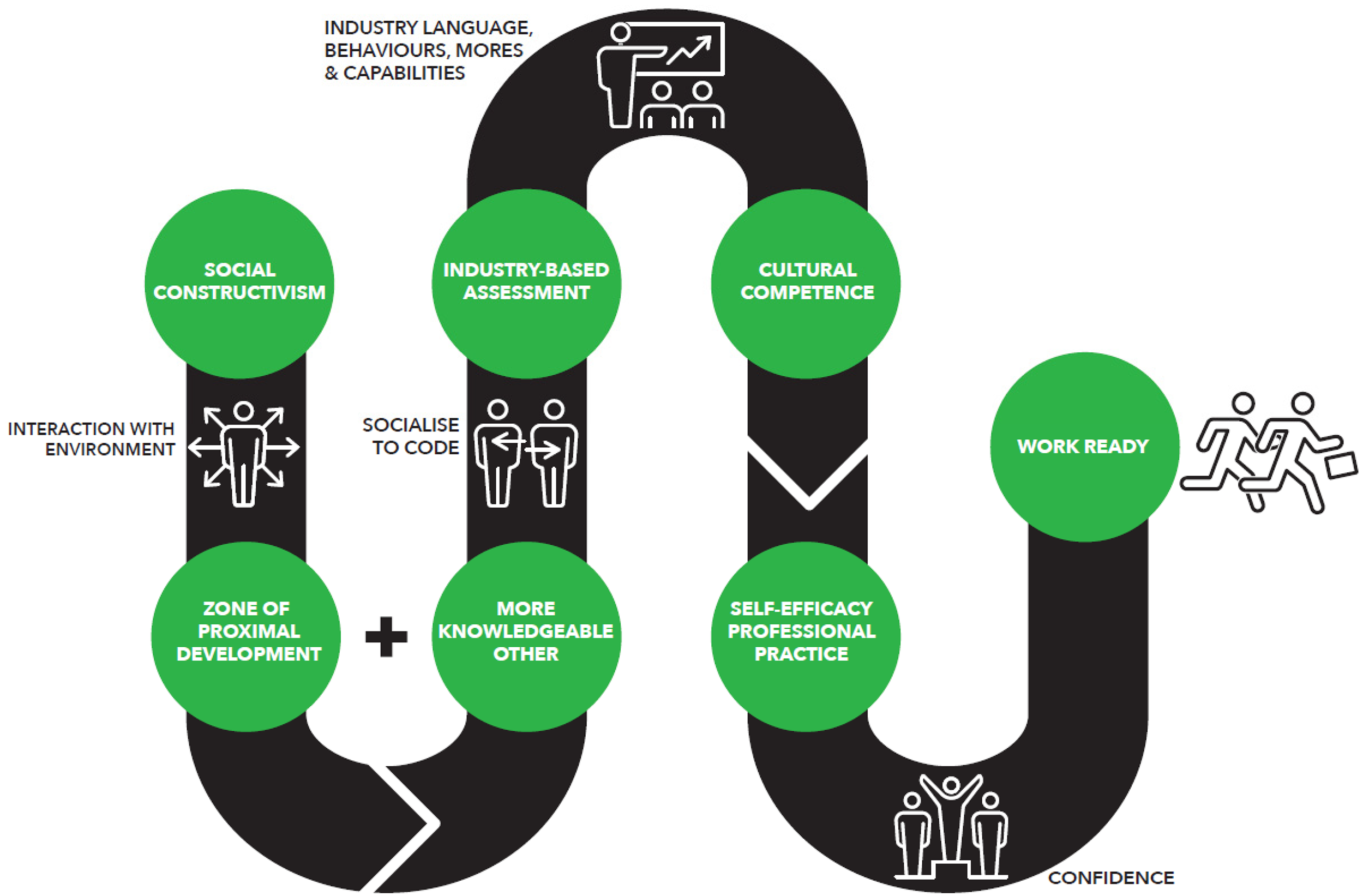
ELT-informed transition framework.
Curriculum Design Contextualization
Although ELT provides the primary explanatory lens for RQ3, the assessment context also highlights that learning and career formation are socially situated. In practice, graduates’ accounts indicate that the ELT cycle was activated and sustained through structured interaction with people, standards, and workplace-like norms embedded in the unit (e.g., mentors, clients, and professional feedback). This aligns with social constructivist assumptions that meaning-making and identity development occur through participation in socially organized activity, where students learn “how work is done” by engaging with others and with the cultural tools of the profession (e.g., professional language, etiquette, and expectations).
Relatedly, the role of mentors and staged support can be described in terms of scaffolding within a ZPD where students are initially supported to perform unfamiliar professional tasks (e.g., client engagement, stakeholder negotiation, presenting deliverables), and progressively take greater ownership as competence develops. Here, scaffolding is treated as a pedagogical design feature that enables movement through ELT stages of supporting reflective observation (guided debriefs and feedback), strengthening abstract conceptualization (making standards explicit and linking experience to disciplinary concepts), and enabling active experimentation (iterating strategies in live contexts). Importantly, these perspectives are included to clarify how the learning environment enables the ELT process evidenced in the findings, rather than to introduce an additional analytic framework beyond ELT.
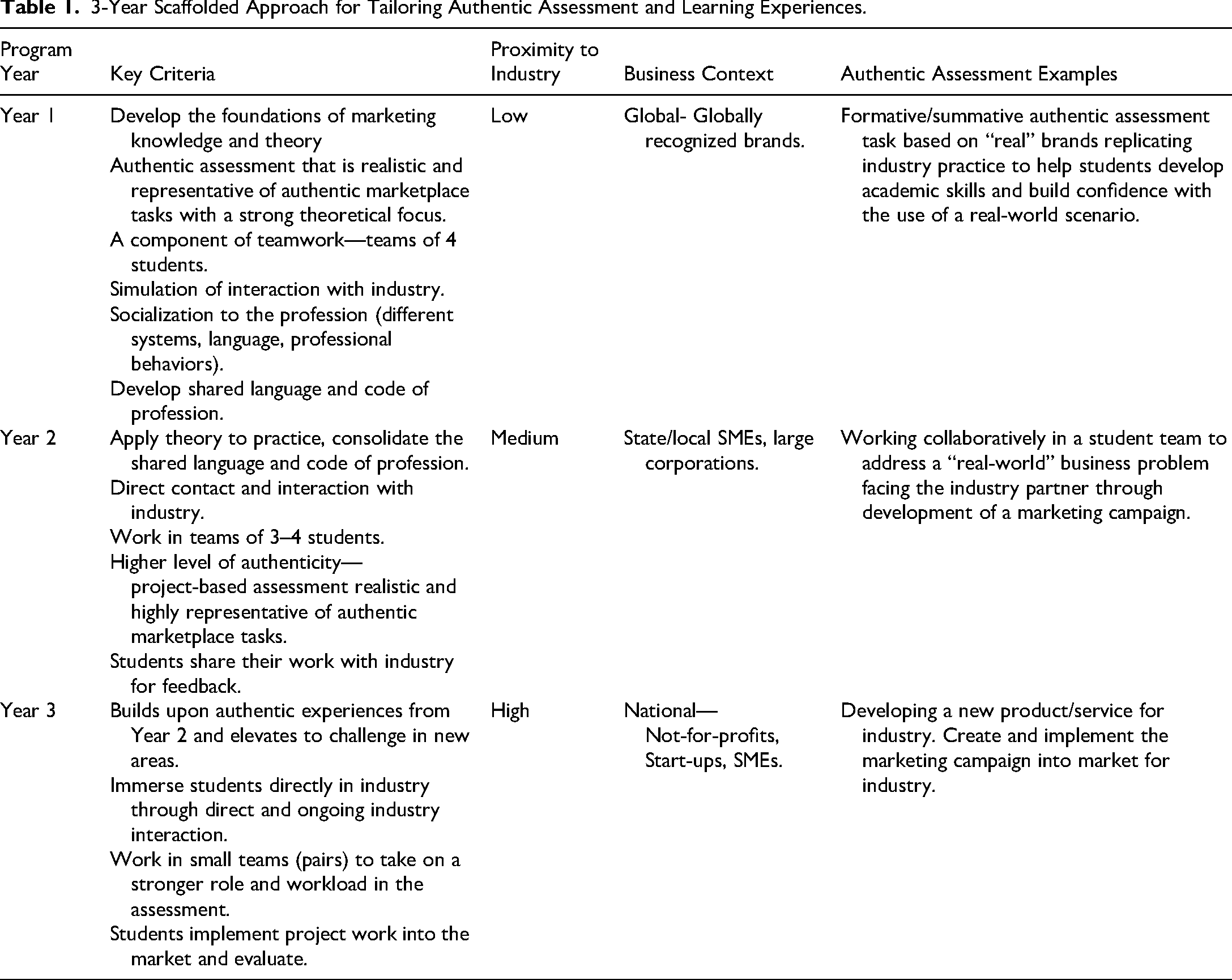
Building on graduates’ accounts of increased confidence, stronger networks, and deeper professional enculturation, a practical implication is to embed industry-based authentic assessment across the program through a staged, 3-year scaffold that progressively increases authenticity and industry proximity. Early units can introduce low-stakes client briefs and guided reflection (concrete experience and reflective observation). Mid-program tasks can strengthen disciplinary sense-making by linking feedback to marketing concepts and standards (abstract conceptualization), and capstone projects can emphasize implementation with real constraints and public-facing deliverables (active experimentation). This “whole-of-program” progression supports earlier and sustained experiential learning (Thomas et al., 2025) and career identity development (Bridgstock & Hearn, 2012), while systematically embedding employability indicators such as communication and networking (Jackson et al., 2024; Jackson & Bridgstock, 2019). Consistent with authenticity–proximity principles (Kaider et al., 2017), Table 1 summarizes indicative task types and expected learning progression to provide a transferable template rather than a prescriptive model (see Table 1).
3-Year Scaffolded Approach for Tailoring Authentic Assessment and Learning Experiences.
Today, educators face the challenge of adopting new assessment forms as artificial intelligence drives change in assessment design. Authentic, industry-based assessments offer distinct advantages in maintaining learning integrity and outcomes (Sotiriadou et al., 2020). Educators must also embed career development learning across already crowded curricula, requiring time, resources, and expertise (Bennet, 2020; Bridgstock, 2019). Industry-based assessments address both these goals through scaffolding career development learning while fostering deep, applied learning experiences (Bennet, 2020). Developed collaboratively with industry, these assessments are less susceptible to replication and enable students to build authentic career identities, graduate work-ready (Kaider et al., 2017) and meet employer expectations.
Limitations of the Present Study
While the qualitative findings from the third-year cohort were rich and informative, enabling development of the Transition Framework and the 3-year scaffolded approach to industry-based assessment, the study's small sample size limits the generalizability of results. The findings represent a snapshot of one cohort within a specific program and institutional context. Additionally, as data were collected 2 years post-graduation, participants’ recollections may have been influenced by memory decay or retrospective bias, potentially presenting a more positive view of the project than experienced at the time. Nevertheless, their reflections remain valuable for understanding the long-term impact of authentic assessment on graduates’ employability and transition to work.
Future Research
Future research should empirically test the proposed 3-year scaffolded approach to determine its effectiveness and scalability in embedding industry-based assessments within career development learning. Longitudinal or comparative studies could further examine how such experiential approaches influence student's learning trajectories and sustained employment outcomes. Continued investigation into the use and benefits of authentic, industry-based assessments is particularly timely given increasing demands for academic integrity and the need to demonstrate graduates’ applied capabilities and professional readiness.
Conclusion
The study demonstrates that structured progression through the ELT cycle, engineered by an industry-based authentic assessment, builds confidence, expands networks, and deepens professional enculturation, the key mechanisms through which students become work-ready. Authentic assessments play a pivotal role in developing workforce capabilities by socializing students into the “code” of their chosen profession while fostering the social capital essential for each career success. Embedding high-level, industry-based assessments within the curriculum enables students to apply theory in real contexts and cultivate self-efficacy through practice. Extending this approach across a 3-year scaffolded program, where authenticity and industry proximity progressively increase, ensures the systematic development of both disciplinary and meta-skills. Through this integration, universities can strengthen employability outcomes, producing graduates who are confident, connected, and ready to navigate the complexities of an evolving professional landscape.
Footnotes

Funding
The authors received no financial support for the research, authorship, and/or publication of this article.
Ethics
Students were required to provide signed informed consent prior to participating in this study as well as for the publication of deidentified results. This study was approved by the Edith Cowan University Ethics committee, approval number 20022-03207-Meek, February 2022.
Declaration of Conflicting Interests
The authors declared no potential conflicts of interest with respect to the research, authorship, and/or publication of this article.
Data Availability
Data remains available and stored securely as per the ECU guidelines for storage of research data.