




Abstract
In the field of therapeutic interventions for youth there is a consensus that non-conventional treatment methods should be an integral part of the institutional treatment plans (Harper, 2017). Therefore, alongside the use of traditional, conventional intervention methods, an approach known as adventure therapy (AT) has increasingly been used over the last three decades. Essentially, AT is based on a variety of challenging actions and tasks, aimed at establishing cognitive, behavioral, and emotional change among the participants. AT also contributes to the youth's ability to create positive relationships with others in their environment, and was found to reduce criminal behaviors (Clem et al., 2015; Davis-Berman & Berman, 2012; Gass et al., 2020). As a result, there is growing interest in this method's contribution to the therapeutic process used with youth in different settings (Harper, 2017; Lubans et al., 2012; Russell et al., 2017; Vankanegan et al., 2019). Studies have also focused on the professionals who support the youth during the AT implementation (Davis-Berman & Berman, 1994; Gass, 1999; McGovern, 2022).
Regarding the institutional treatment programs for youth in residential facilities (RFs), for the most part, AT is part of a broader treatment plan program for these youth. As such, it is supported by additional treatment methods (Herbell & Ault, 2021) such as cognitive-behavioral therapy (CBT) (e.g., Dimitropoulos et al., 2023), attachment-based intervention (e.g., Munroe, 2009), and behavior design (DBT) (e.g., Fox et al., 2020). Thus, there is a built-in challenge in AT implementation in general, and in the case of RFs in Israel in particular. On the one hand, the treatment methods are practically implemented by the RF staff members; on the other hand, the treatment plan includes AT activities, which are guided and implemented by outside experts. These experts have no prior knowledge about the individual/general treatment plan of each of the RF youth who participate in the AT activity (e.g., Margalit & Ben-Ari, 2014; Margolin, 2017). Therefore, practitioners and RF staff members must negotiate the challenge of linking the youths’ treatment plans with their therapeutic experiences during AT activities, such as the wilderness therapy (WT) process, which this study focuses on (Ritchie et al., 2016; Tucker & Norton, 2013).
WT is a therapeutic-educational intervention method that takes place in the wilderness - an environment that is far removed from the participants’ daily environment. WT is considered one of the three main practices of AT, along with adventure-based therapy and long-term residential camping (Gass et al., 2020). The WT “journey” is carried out in a small group format and usually lasts for several days (Gass et al., 2020). It is challenging to integrate the participants’ different treatment/therapy types with the change process that occurs during the journey. This is a challenge for both the external professionals from private settings who lead the WT journey, as well as the RF staff members who support the youth during the journey (Russell et al., 2017).
Research into WT for youth has seemingly overlooked this topic regarding the dual role played by the RF professional staff. It is important to clarify that while the external staff members are dedicated WT professionals, the RF staff members are professionals and employees who are involved in the journey, but also have an ongoing relationship with the participants (Margolin, 2017). These individuals include teachers, therapeutic guides, social workers, psychologists, and educational consultants, among others. Prior studies in this field have tended to deal with the importance of the relationships forged during the journey between the leaders and/or staff members who accompany the leader, and the way this relationship impacts the youth, and the success of the WT process (e.g., Halsall et al., 2016; Taniguchi et al., 2009). These studies have focused on issues such as the WT leader as a role model, the leader's empathy towards the youth, and self-expression regarding the difficulties the youth encountered. In addition, previous research has examined the importance of articulating the shared positive experiences of the journey, and how the journey ultimately influences the youth in a positive way (e.g., Dobud, 2022; Dockler, 2022; Kraft & Cornelius-White, 2020; Margolin, 2017).
While many studies have examined the perspective of RF staff members regarding the integration of WT within the RF framework (e.g., Dobud & Harper, 2018; Fusco & Rauktis, 2013; McCarthy et al., 2020; Scott & Duerson, 2010), there is a need to examine the RF staff workers’ perspective more specifically regarding their role within a challenging structure. As we mentioned, this is a dual structure reflected in the fact that, on the one hand, RF staff members are entrusted with the implementation of the RF youths’ individual treatment plans within the institutional framework; and on the other hand, they are also present as companions of the youth on the WT journey, which is guided by external experts. Thus, to the best of my knowledge, there is a lack of studies that investigate the meaning that RF staff members give to their dual role. This issue of the RF staff members’ dual role is also relevant to the claim that there is a need to ensure the continuity of the therapeutic and educational processes that take place during WT, once the youth are back in the RF (e.g., Davis-Berman & Berman, 1994; Gass, 1999; Herbert, 1996; Kelly & Baer, 1968; Kennedy & Minami, 1993; Wichmann et al., 1983).
Therefore, this study attempted to bridge ethical and communicative gaps identified with models in which there is a functional and institutional separation between the external therapeutic staff members who facilitate the journey, and the RF staff members, who accompany and support the youth in the WT process (e.g., Dobud, 2022; Reese, 2016). The phenomenological perspective of the RF staff members is two-fold. First, we predicted that it would deepen our understanding of the contribution that practitioners’ participation makes to the overall treatment plan for the youth who participate in WT. Second, RF staff members’ input could shed light on the ways in which their participation impacts the daily institutional treatment received by youth in the RF setting.
Literature Review
WT as an Intervention Method for Youth
WT is an educational-therapeutic method of intervention which takes place in an extreme, outdoor, natural environment, by way of a wilderness journey. The key aim of WT is to help youth experiencing behavioral health challenges to develop a new set of values by teaching them to cope with new situations that require life skills (Gass et al., 2020). By exposing them to stressful situations, the youth also gain knowledge related to leadership and teamwork (Russel et al., 2020). WT consists of challenging activities that have been designed to prompt cognitive, behavioral, and emotional change within the participants (Gass et al., 2020). The contribution and effectiveness of WT, from the participants’ perspective, is manifested in improved relationships with loved ones, and in a greater motivation to succeed and to perform well at school (Gray et al., 2017). WT has been found to have a positive impact on the lives of the participants (Davis-Berman & Berman, 2012), and has been shown to contribute to a decline in recidivism in criminal behavior (Clem et al., 2015).
WT, as an aspect of AT, is based on an approach that views nature as a therapeutic setting, and time spent in nature as an effective form of therapeutic engagement for youth coping with various behavioral issues (Battey & Ebbeck, 2013; Gillis et al., 2008). The duration of WTs may vary from several days to several months. During these expeditions, youth grapple with a range of tasks. These include navigating a route from one point to another; lighting a fire and cooking food; building a shelter, and so on. The professionals, who accompany and support the youth on these WTs, play a role in helping them acquire the skills and tools necessary for coping with various challenges in everyday life (Russel & Farnum, 2004). Furthermore, everyday tasks are often carried out in small teams, which serve as key social frameworks for therapeutic work on the interpersonal level (e.g., Dobud, 2022; Dockler, 2022; Kraft & Cornelius-White, 2020; Margolin, 2017). While engaging in physical coping, participants also take part in individual and group discussions on their feelings, needs, and everyday lives, with the aim of connecting the “here and now” with the various issues they must contend with on a daily basis (Russel et al., 2020). Besides the general view that nature is a therapeutic catalyst, WT also highlights two main subjects: self-image and social skills (Gass et al., 2020). The structure of WTs provides participants with the opportunity to experience self-competence, and to recognize their skills, as well as various coping abilities (Berman & Davis-Berman, 2013).
Research on Professionals Involved in WT
As mentioned, RFs staff members who accompany youth on WT journeys are a subgroup within the broader group of external professionals involved in such excursions. Within this group is a range of professionals from the helping professions, such as therapeutic counsellors, certified WT leaders, social workers, psychologists, educational counsellors, psychiatric nurses, and psychiatrists (Karoff et al., 2019). Despite this diversity, the WT literature indicates that considering the place and role of the various professionals accompanying the youth on the WT journey; the distinction between WT staff and other professionals involved in these excursions; and the affinity between the process participants undergo in WT and their general treatment plan in the RF are all issues that have yet to be studied (Karoff et al., 2019; Margolin, 2017; Tucker & Norton, 2013). In fact, most previous studies that have examined the involvement of WT professionals - whether from the youth or practitioners’ perspectives - indicate the importance of the presence of the professionals and adult figures that accompany the youth and take part in their experience. Studies also show that the quality of the youth-adult relationship and the therapeutic alliance forged between them is significant (Halsall et al., 2016; Russell & Gillis, 2017, 2020; Taniguchi et al., 2009). This significance is expressed from both the WT participants’ perspective (the youth) and that of the professionals.
The youth who participate in WT mentions the following as contributions of the professionals who accompany them on the WT journey: the professionals’ willingness to set objectives, define goals, show interest, be kind, believe in them, and create an informal experience of fun and pleasure. Moreover, the youth also mentioned the positive change process they undergo as a result of these contributions (Duerden et al., 2012; Margolin, 2017; Taniguchi et al., 2009). From the professionals’ perspective, near-similar conclusions were drawn from studies that examined their own self-reported view of their contribution to the WT process. For instance, a study that explored WT professionals’ contribution (in this case, therapeutic counsellors) found that their key contributions lay in forging an interpersonal connection with the participants, and their ability to provide a positive adult role model. The fact that they had to carry out the camp tasks together with the youth was also cited as a contribution (Ambrozaitis, 2010). Halsall et al.'s (2016) study, explored the role of WT professionals (advisors, facility directors, and therapeutic counsellors) and found two main characteristics: Functional efficiency, expressed in the emotional aspects of building a therapeutic relationship; and the use of therapeutic strategies, manifest in matching responses to the participants’ characteristics, and creating a supportive and enabling environment. A study conducted by Field et al. (2016) showed that the mere presence of WT professionals on the journey contributed to the participants’ ability to successfully complete the various phases of the WT; acquire skills associated with improved quality of life and a healthy lifestyle; and develop leadership abilities. This study indicated the continuity of the results of the intervention in the daily lives of the participants.
Thus, in the historical debate on the role of professionals’ involvement in WT, there is support for the need to find ways to link WT with participants’ day-to-day life and broader treatment plan. For example, Kelly and Baer (1968), in their essay Outward Bound Schools as an Alternative to Institutionalization for Adolescent Delinquent Boys, pointed out the need for the continuity of those processes that take place in the Outward-Bound frameworks in the daily life of the participants. Among other things, they posed question such as: “How does one move Outward-Bound from the wilderness retreat to the urban environment?” (p. 169). Wichmann et al. (1983) also pointed out the importance of the systemic-ecological aspect of evaluating Outward-Bound for delinquent youth programs and adopting appropriate methodologies to examine the effects of the intervention in the participants’ daily lives within the community. A follow-up study was conducted among 91 youth with a substance use disorder, who were admitted to an in-patient treatment facility. The study found that the results of an Outward-Bound adolescent chemical dependency treatment program, among participants who continued to be involved in various programs in the community, such as Alcoholics Anonymous, improved compared to participants who lacked support from community organizations (Kennedy & Minami, 1993). Other researchers claimed that efforts should be invested to transfer AT and WT intervention results to the real world (Herbert, 1996). Researchers also asserted there is insufficient follow-up data to ascertain whether reported therapeutic benefits are sustained, and if they generalize to other life areas (e.g., Davis -Berman & Berman, 1994; Gass, 1999).
Following this line, contemporary criticism, based on the eco-systemic approach, argues that various aspects of the change that takes place during WT - and are associated with values and behaviors originating in the encounter with nature and the environment - should also express themselves in the participants’ day-to-day lives and their various ecological circles (Reese, 2016; Reese et al., 2019). Another argument based on the eco-systemic approach relates to the existence of ethical and communicative issues identified with models that do not differentiate between the process that takes place during the WT process and the conventional treatment provided by institutions or practitioners in the community. Thus, an effort must be made to integrate ecological thinking among the various professionals involved in WT (Pringle et al., 2023; Reese, 2016; Swank et al., 2015). This criticism corresponds with the contention that there is a need to examine other work models beyond the boundaries of the United States and Canada, which are considered to be leaders in WT (Field et al., 2016). This should be done in a manner that will link the teens’ treatment objectives from the out-of-home care facility together with the WT process (Margolin, 2017).
The Comfort Zone Model
One of the common models for understanding and analyzing the process undergone by WT participants is the comfort zone model (Brown, 2008; Luckner & Nadler, 1997). This model (Figure 1) is based on the understanding that the challenging aspects associated with WT participation creates a confrontation situation, involving fear, anxiety, and other emotional barriers. These challenges have clear developmental potential, in a manner consistent with developmental theories, such as that of Vygotsky, namely regarding proximal developmental zones (Cole et al., 1978; Gabrielsen et al., 2019). Thus, according to the developmental metaphor, professionals’ presence on the WT journey is equal to that of a “significant other,” who becomes a part of the development process. The model consists of three key coping zones: 1) The Comfort Zone—coping with simple situations that do not require any special effort, such as walking to a familiar place, meeting friends, or other routine activities; 2) The Learning/Growth Zone—coping with more complex issues that require physical, emotional, and cognitive effort. Examples of these challenges include grappling with a difficult exam, an intimidating encounter with strangers, or walking to an unfamiliar place. Alongside unpleasant feelings of intimidation and anxiety, engaging in a successful coping experience results in a sense of competence, growth, and learning, as well as the ability to generalize with other similar engagements in everyday life. 3) The Panic Zone: Difficulties that extend beyond a person's ability. The obstacles one faces here pose a difficulty experienced as impossible. The consequence of this situation is a sense of paralysis and an increased sense of incompetence.
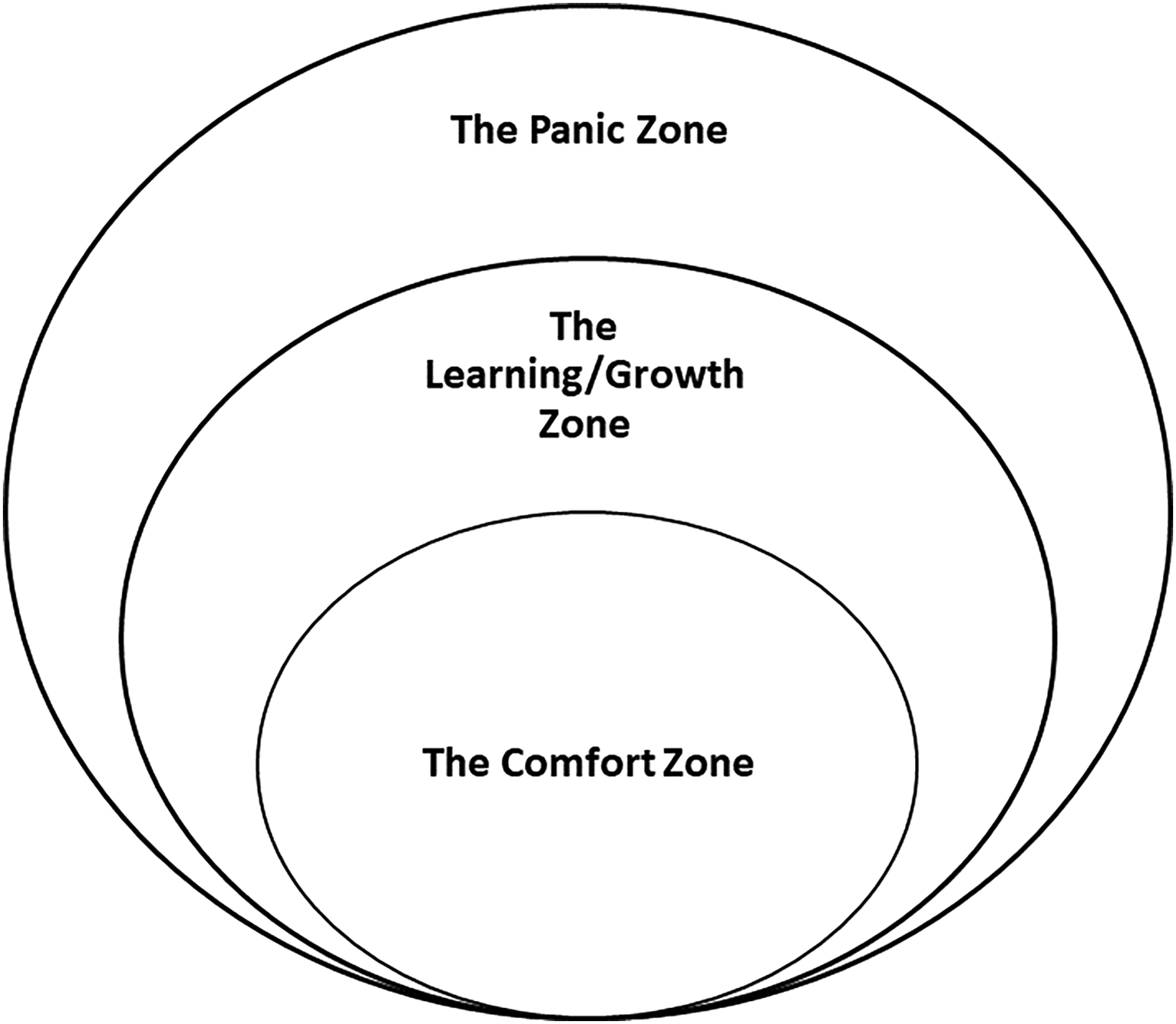
The comfort zone model (Brown, 2008; Luckner & Nadler, 1997)
A key objective of WT is to create a customized framework, requiring the participants to leave their comfort zone and cope with new challenges (Brown, 2008; Luckner & Nadler, 1997). Experiences that are outside an individual's comfort zone force them to cope with stress, often accompanied by a decline in self-confidence. At the same time, overcoming such difficulties shores up one's potential for a successful experience that can turn the incident into an opportunity for growth. Experiences once viewed as impossible become familiar and possible, broadening one's Comfort Zone and reducing the Panic Zone. Within this context, the professionals who take part in WTs help the participants regulate their feelings and emotions, as well as cope with various situations and challenges.
WT Implementation in Israeli Residential Facilities
WT in Israel first began in the early 1990s with the Outward-Bound and survival camp models, which were used to help youth experiencing behavioral health challenges residing in RF (Margalit & Ben-Ari, 2014; Margolin, 2017). As this field continued to evolve in Israel, two main models formed. The first, and most prevalent model, consists of a professional staff, which is responsible for the entire excursion, including its technical aspects, treatment plan, and the introduction of content from the WT in the therapeutic process undergone by participating youth. This model does not necessarily solely target youth; it is also implemented among affluent populations, who join the camp, or a structured program operated entirely by private companies (Margalit & Ben-Ari, 2014). The second model, which is relevant to the current study and the RF staff members who participated, involves external NGOs (such as Lotan's Way and Team Path). These organizations specialize in WT, operating as ‘external providers’ that help RFs integrate this form of therapy into their work. These NGOs hire practitioners (trained therapists and/or clinically trained practitioners) and qualified field staff to work with RF staff members who are not familiar with WT, to prepare them so they can accompany the youth during the journey.
In such frameworks, the teams of professionals who accompany WT participants include the NGO's (external) WT professionals as well as RF professionals (Margolin, 2017), who are actually the target population of this study. Thus, the WT working model - in relation to which the research participants were interviewed - has been adapted to the frameworks of RFs for youth. This WT working model is based on a journey spanning between 6–10 days, and ideally, the WT treatment plan is integrated into the RF's general treatment plan. Thus, although the current study focused solely on the Israeli context, RF staff members’ role is also relevant in the broader, international context, as regards the systemic-ecological aspects invested in WT.
Research Questions
The present study sought to explore the phenomenological perspective of RF staff members, who accompany RF youth on the WT journey, and how they perceive their role. The research questions are as follows:
What are the roles played by RF staff members as companions on WT journeys, considering the interface between the RF youths’ general treatment plan and the therapeutic process they undergo/experience during the WT journey? What is the meaning given by RF staff members to their roles as companions on WT journeys, regarding the interface between the general youth drop-in program and the WT?
Method
This study relies on the constructivist-interpretive paradigm as a phenomenological study (Creswell & Poth, 2016), based on the RF staff members’ lived experience. Specifically, as regards the research questions, the phenomenological perspective is directed at two aspects of phenomenology - experience and meaning (Husserl & Moran, 2012). Regarding the first research question, the study seeks to examine the roles that the RF staff members formulate from their lived experience. Regarding the second research question, the study seeks to trace the meaning given to these roles. Thus, this research method was found to be appropriate to produce knowledge based on the participants’ lived experience (Moustakas, 1994); the way in which they describe and interpret WT as an intervention method; and their role in it, based on their experience. In addition, given the claim that knowledge about the role of professionals involved in WT is mainly anchored in quantitative studies (Harper, 2017; Kraft & Cornelius-White, 2020), our study joins contemporary qualitative studies (e.g., Dobud, 2020), which examined other important aspects, such as the meaning that these professionals attribute to their position.
Self-Positioning
Both authors are social workers. In addition, the first author served as the supervisor of the second author's master's thesis. The first author has professional and academic experience in practice and research with at-risk youth, in the training and supervising of professional teams in RF settings for at-risk youth, and in building a treatment plan and professional models with the treatment teams in RF settings. The second author first gained professional experience leading WT journeys, and then worked as part of a professional team in RF settings for youth at risk. Based on this experience, the research topic and its questions emerged.
Study Participants and Procedure
Twelve RF staff members (Table 1), members of multi-professional teams responsible for the treatment plan of facility occupants, participated in the study. All of the participants selected for this study took part in a WT journey, as part of their work, and had in-depth knowledge in this area. To recruit these interviewees, we contacted organizations with experience in this field, using purposive sampling and snowball sampling (Parker et al., 2019).
Participants Names, Gender, Age, Position, and Seniority.*
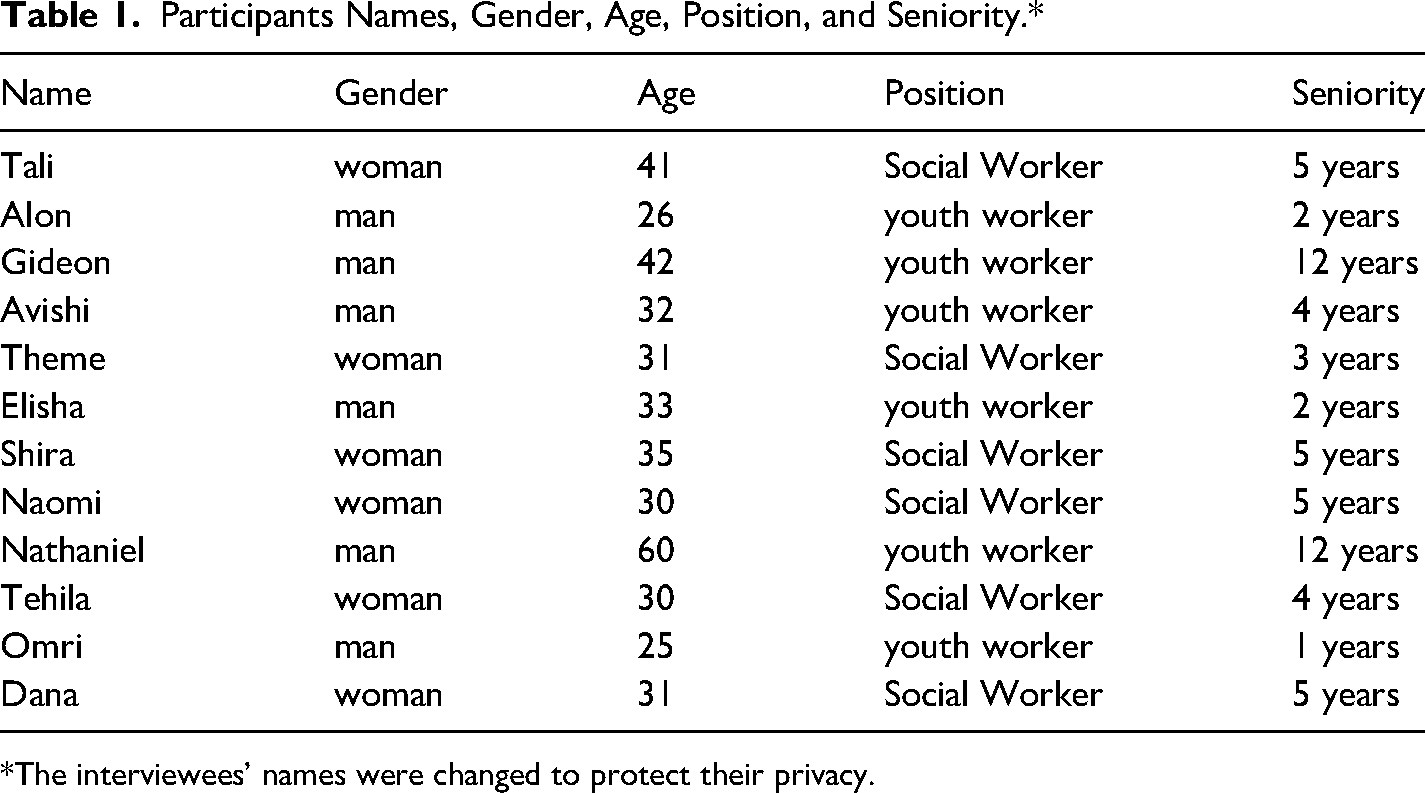
*The interviewees’ names were changed to protect their privacy.
Data Collection and Analysis
The data were collected using semi-structured, in-depth interviews conducted by the second author (Patton, 2014), who also transcribed the data. Respondents were asked about their role as RF staff accompanying and supporting youth on WTs with items such as:
Tell me about the RF treatment plan. Tell me about your perspectives on the WT journey as part of the RF treatment plan. Tell me about the WT journey you took part in. How did you prepare for the journey? How do you understand your role in the journey? Tell me about a boy or girl you accompany in the RF and explain how participating in the journey was integrated into his or her treatment plan. How do you view your role as a RF staff member during the WT?
The interviews lasted approximately 90 min on average and were coded and analyzed for categorical content in seven steps (Kacen & Krumer-Nevo, 2010).
Deborah Padgett (2016), following Lincoln and Guba (1985), proposed several qualitative research procedures, which we followed to ensure the trustworthiness of the research, as follows:
To ensure credibility, that is, “the degree of fit between respondents’ views and the researcher's description and interpretations” (Padgett, 2016; p. 294). We took two steps. In the first, we compared the analysis results of the data between the two authors, until we reached agreement. In the second, a draft of the findings was presented to two of the participants, who were senior staff, and we received feedback about the findings. Transferability of the findings, that is, the examination of the findings’ relevance to additional contexts (Padgett, 2016), both through presentation at professional conferences relevant to RF for at-risk youth, and through theoretical anchoring about the ecological-systemic theory (see Discussion section). Dependability, we made sure to document the research procedures subject to an accepted qualitative research procedure, which can be used in additional studies. Confirmability, that is, a demonstration that the research findings were not imaginary, but well connected to the data (Padgett, 2016), through the selection of key quotes that represent the relevance of the findings (See examples in the section). Ecological validity, that is, examining how the findings can be generalized to the real world, by presenting it to professionals from the field of WT and professional teams from external consultation frameworks.
In addition, several actions were taken that helped us ensure the described procedures. The findings that emerged from the interview analysis were examined by comparing them to the topic-relevant literature, and were presented in two conferences, as well as individually to WT professionals and several of the interviewees. The researchers drew from a reflective research journal which they kept during the research process, and which closely reviewed the researcher's personal positions and views. As mentioned, the researchers also carried out a purposeful sample, to identify the interviewees who would provide the information required to learn about the studied phenomenon (Patton, 2014).
Ethical Considerations
The study was approved by the Ethics Committee at the authors’ academic institution. The interviewees signed informed consent forms; their names, as well as those of the teens mentioned in the interviews, have been changed to protect their privacy.
Results
The interviewees emphasized three main roles regarding their participation in the WT process: Witnessing the experience; mediation; and promoting treatment goals.
Witnessing the Experience
The first role: Witnessing the experience divided into three main subthemes:
Participants’ Know the RF Staff Is Present
Crucial Observation
Blurring the Professional Boundaries
Promoting Treatment Goals
This role brings to light the early familiarity that the RF staff members have about behavior patterns and difficulties that the youth who participate in the journey deal with and how they are related to their general treatment plan.
Mediation
In the mediation role, of the RF staff members seek to bridge and “move” the process of change that occurs during the journey, to additional professionals and additional natural, educational, and touristic systems in the day-to-day life of the youth.
Discussion
The current study examined a specific phenomenon in the field of therapeutic interventions with youth from RFs related to the professional position of the RF staff members. The phenomenon is when RF staff members who are in charge of implementing the youth's daily/routine/general therapeutic program within the RF, accompany the youth on their WT journeys, but in a different role, as the intervention itself is led by external professionals. Within this context, the study examined two central questions. Through the first question, the research sought to discover which roles the RF staff members play during the journey. The second question examined the meaning they give to these roles. As will be reflected in the Discussion section, these two questions are inter-related. Three roles played by the RF staff emerged from the study findings: a) the role of being a witness to (and active participant of) the WT experience; b) the mediator role; and c) the role of being a promoter and supporter of the therapeutic process during the WT survival camp.
Witnessing the Experience
The findings indicated that the presence of RF staff members - their role as witnesses, characterized by their indirect involvement - provides unique depth and value to the WT experience for the youth. This relates to many spontaneous situations that may arise during WTs. RF staff members recognize that the participants may need their presence and support when facing the challenging situations presented by the WT experience, for instance, coping with various onsite barriers. This type of role requires RF staff members to be able to contain the complexity of the situation, rather than rush in and try to solve it in a manner that would negatively reinforce or emphasize the adult-youth hierarchy. Moreover, a quiet and accurate presence presumably contributes to the development of participants’ coping skills, whereby the adult (RF staff member) serves as a mirror, reflecting their faith in the youth, and the belief that they can succeed. The fact that the permanent RF staff members are the ones who accompany the youth on the WT is an added advantage to the WT process. The witnessing component is underwritten by a therapeutic concept that ensures continuity within the broader context of the therapeutic process. The transition occurs during the period between indirect involvement in the witnessing moment, and direct intervention, which comes after the WT experience in different contexts and settings.
The findings on the importance of staff members’ role as witnesses to the youth's experience during the WT journey are consistent with the findings of previous studies, which gave weight to the meaning of the youth-adult therapeutic alliance in the context of WT (Halsall et al., 2016; Russell & Gillis, 2017, 2020; Taniguchi et al., 2009). Thus, the way in which youth described the importance of the adult in the WT journey - as a significant other who contributes to the process of change (Duerden et al., 2012; Taniguchi et al., 2009) - is reflected in their role of witnessing the experience.
Moreover, regarding the comfort zone model as a theory of change, the findings lend validity to the meaning of the presence of a significant adult, in the development of the youths’ ability to deal with feelings of anxiety (Gabrielsen et al., 2019), and to move - as part of the WT journey - from their comfort zone to a place of growth and learning. As described by the youth, the physical presence of the staff members as significant adults allows for active listening and appropriate encouragement, empowering the youth to face and overcome challenges, while acquiring a sense of competence.
Treatment Plan Promoters
The second role pointed out by the interviewees, that of treatment plan promoters, was found to be inseparable from the witnessing the experience role in two different contexts: First the involvement on the basis of prior acquaintance with the youth, so that the contents that arise along the journey constitute a platform for work in the “here and now” on issues that concern the youth even outside of the journey; and second, the journey itself, which engenders insights and confrontations that will be used in the general therapeutic work after returning from the journey. Both require building a therapeutic sequence (before, during, and after the journey), as well as involvement in the specific treatment plan of each youth, including immediate goals and longer term objectives.
Thus, WT journeys are an opportunity for RF staff to encourage the participants to grow closer and experience intimate relationships. This, in turn, enables the sharing of issues and content they are usually less willing or able to share during their daily routine at the RF. Because intimate relationships, openness, sharing personal content, and reflective ability are common criteria for the development of therapeutic processes (e.g., Bordin, 1979), the presence of the RF staff, and the way they help actualize these criteria, becomes key in supporting each participant's specific treatment goals.
From a systemic-ecological point of view (Pringle et al., 2023; Reese, 2016; Reese et al., 2019), the findings regarding the treatment plan promotor role are consistent with claims made in the field of WT research, regarding the need to preserve the educational and therapeutic achievements the participants acquire within the WT framework, once they return to their settings, in their community, school or RF (Davis -Berman & Berman, 1994; Gass, 1999; Herbert, 1996; Kelly & Baer, 1968; Kennedy & Minami, 1993; Wichmann et al., 1983). However, the findings regarding this role illuminate another systemic-ecological point of view (Pringle et al., 2023; Reese, 2016; Reese et al., 2019) in the interface between the WT and the participants’ daily life. This role indicates the possibility of a deeper understanding during the WT journey, of the participants’ needs, pains, problems, and abilities. This means the potential of the WT journey as a change process among the participants can be utilized in a better way.
Regarding the treatment plan promoter role, contrary to classic perceptions of therapy taking place exclusively in the treatment room, a model that views the therapeutic framework as a “therapeutic space” attributes significance to the therapeutic value embedded in all experiences that take place within this framework (McIver et al., 2018). It is extremely valuable to strengthen the RF staff-youth connection, and to further encourage the professional dialogue. No less important is developing a shared understanding of a therapeutic process combining both educational and therapeutic elements.
The eco-systemic meaning of this role (Pringle et al., 2023; Reese, 2016; Reese et al., 2019) is manifest in the RF staff's ability to hold a professional discussion about each youth and their individual treatment plans - both within the residential facilities and vis-à-vis other frameworks associated with the therapeutic process, such as the youth probation services. Thus, from the eco-systemic perspective, the role of treatment plan promoters contributes to the transformation of accomplishments - both during the WT and following it. Moreover, these promoters can ensure that knowledge gained during WT is assimilated into the professional language and conceptualization upon which the general treatment plan is founded. This brings us to the third role, which was pointed out by RF staff members: the role of the mediator.
Mediator
The role of mediator is expressed in the RF staff's ability to use shared experiences and observations accumulated by virtue of the two previous roles mentioned, in order to mediate between the youth and the social systems that did not take part in the WT journey. These social systems include the other RF staff members; the youths’ families; and social systems such as courts, probation service, and educators. As mediators, RF staff members can make these systems more aware of the competencies, strengths, and capabilities of the youth, which they witnessed first-hand in an empathetic way reflecting the youth's perspective, as well as from a position of “standing by” the service user (Moensted et al., 2020).
The mediator role is of tremendous social importance, as many youths living in supported facilities experience a reality of social exclusion and marginalization (Attar-Schwartz & Khoury-Kassabri, 2015). As a result, their voices are not heard or present in normative society, and in some cases these youth are negatively labeled. Consequently, doubts about their ability to succeed emerge (Moensted et al., 2020). RF staff members present significant processes and report progress made in therapeutic work to external therapy practitioners and families. This mediating action increases the chances of social recognition regarding the change the youth achieve (or to which they aspire). The hope is that the significant efforts they made during the WT process will continue to resonate after they leave the wilderness and return to the RF.
Regarding youth exclusion based on ethnicity, class, gender, nationality, etc., the mediator role has value in the creation of opportunities for social healing (Moensted et al., 2020; Te Riele, 2010). Thus, the knowledge and observations made by the RF staff who supported the WT - regarding the participants’ abilities and competence, as well as their understanding of their personal stories and aspirations for a better future - can be translated into a position that advocates the right to social inclusion (Attar-Schwartz & Khoury-Kassabri, 2015; Malka, 2023; Moensted et al., 2020; Oppenheim-Weller & Zeira, 2018). In fact, the eco-systemic vantage point contributes to various aspects of the RF staff's roles, which are mutually affiliated and complementary. Their perspective becomes a sort of “memory cartridge”, which also finds expression in encounters between the youth who participated in WTs and other systems associated with their lives and future. This understanding may allow for the adoption of a more complex perception among all of the RF staff members, which embraces the ability to distinguish between the youth's general potential and a single, isolated incidence of problematic behavior (Te Riele, 2010; Malka, 2023).
Considering the integrative meaning of the three RF roles, they all seem to point to the importance of creating a therapeutic continuity capable of integrating the qualities of WT as a therapeutic space - in which the youths’ strengths, coping abilities, intimate relationship experiences, opportunities for openness, and the disclosure of profound content all find expression (Dobud et al., 2020; Gass et al., 2020). These three roles underscore the creation of two points of view—before and after the WT journey. As mentioned, the RF staff members’ roles, and their contribution to the creation of therapeutic continuity, underline the importance of implementing an eco-systemic approach in institutions that use the WT approach (Reese, 2016; Reese et al., 2019). The eco-systemic approach fundamentally seeks to provide a solution for the fragmentation that exists between the immediate outcomes of a WT experience and the various systems and facilities in which the youth reside daily. Such therapeutic continuity contributes to the relevance of intervention outcomes beyond the specific time and place. This is accomplished by providing solutions for ethical, professional, and bureaucratic problems stemming from the gaps existing among the various professionals involved in the youth's overall treatment plan, of which their participation in the WT is only a part (e.g., Gass, 1999; Harper, 2017; Pringle et al., 2023).
The eco-systemic meaning of the RF staff member's role is expressed by its contribution to creating a common organizational memory shared by all of the RF staff members (those who participated in the WT and those who did not) and the youth. The information accumulated in this organizational memory has the potential for dissemination among immediate social and natural systems in the daily lives of youth who participated in WT. Thus, even during times of crisis and conflict within the RF, the outcomes and accomplishments attained during WT - which underscore the youth's sense of competence and ability - can be drawn upon. As stated, for youth that are grappling with profound deprivation, social marginality, and various adjustment difficulties (Oppenheim-Weller & Zeira, 2018; Malka, 2023), the memory of empowering experiences, as expressed in the role of witnessing the experience, can have a protective and empowering meaning.
Regarding the integration of RF staff members’ three roles, the ecological approach supports the change process that takes place in WT according to the comfort zone model (Brown, 2008; Luckner & Nadler, 1997). The findings highlight the added value of the continuity engendered by the WT experience. The three roles which emerged from the study findings strengthen the potential for harnessing the (sometimes extreme) changes that occur during the WT journeys, and integrating them into a daily therapeutic framework, and vis-à-vis other systems in the lives of the youth. Even if the interviewees did not explicitly address this, one can assume that the RF staff's prior acquaintance and various roles - as shown in the Findings section - can contribute to expanding the WT participants’ growth and learning zones.
Thus, the RF staff members’ supporting roles have several advantages. These are expressed in expanding the wider organizational memory regarding the abilities and strengths of the youth in their care; understanding certain incidents during the WT in relation to, and not separately from, the youth's characteristics and treatment goals; and in the creation of close relationships, anchored in the shared experience of a challenging event. These advantages can also be used to remind participants and RF staff of all that a return to the RF's daily routine may make them forget. However, at the same time, these advantages may also pose a risk. One example is when the WT experience creates an “aura” around the youth; so much so that the abilities discovered during WT are perceived as “absolute truths” and problematic behavior as “absolute falsehoods.” Hence, the RF staff must possess the ability to maintain a complex view of their charges, one that is not unilateral or one-dimensional.
Implications for Practice
The research findings have several practical implications. First, with reference to the treatment plan promoter role, it is recommended to establish a channel of communication and transfer of information between RF staff members and the professionals in charge of delivering the WT journey. Understanding each participant's treatment plan will enable the RF staff member to better assist the youth during the WT, and to advance the treatment goals during the journey itself. Second, regarding the roles of witness and mediator, it is recommended to establish different documentation practices, such as photography, video, and narrative writing. This will make it possible to accurately facilitate the mediation process between the lived experience of the youth during the journey and his\her\their successes and various factors such as family, school, and other members of the RF therapeutic staff. Third, during the WT intervention, it is recommended to incorporate significant figures from the daily lives of participating youth, figures who have the potential to fulfill the described roles. An example of this is the combination of family members who can witness the experience; educational counselors and teachers, who can witness the experience, and perhaps also serve as treatment promoters as well as mediators; and treatment personnel who are part of the participants’ daily life. Along these lines, it is important to note that the research findings are valid for any intervention program that aims to reproduce an intervention experience and transfer it to the daily life of the participants - both within the community and in their future circles of life. According to Joseph Campbell (2008), this can be linked to another historical transcultural segment in the hero's/heroine's journey.
Limitations
The present study has several limitations. First, it does not consider the perspective of the young people who participated in the WT on the role of facility staff during it. Second, the interviewee group is heterogenous, consisting of social workers and youth workers (educational-therapeutic counsellors). Third, it is important to note that the study was conducted from a retrospective perspective; Finally, the study did not focus on the experiences of other facility staff in supporting and supervising of the WT journey, or of the learning processes about themselves that they had undergone. These insights could shed light on the uniqueness of the WT method, and into understanding the experience of the youth.
Future Research
Based on the current study and its findings, it is recommended to conduct follow-up studies in several directions. First, it is recommended to carry out a study based on a set of three time points which examines the staff members’ role: before the WT journey, during the WT journey, and after the WT journey. This will allow for a much deeper and richer understanding regarding the meticulousness of the RF staff members in each of the stages. Second, it is recommended to carry out a study that examines the way in which the youth perceive, describe, and understand the role of the staff members who accompany them on the WT journey as part of their treatment process. Third: A follow-up study would be helpful in completing the picture of the more specific knowledge on each area of expertise (social workers and youth workers), and with respect to the question. Finally, it is also recommended to examine the current research question through ethnographic research based on fieldwork and participant observation. This type of research has the potential to document the interaction between the staff members and the youth in the “here and now.” This, in turn, may provide additional and rich insights into the role of the RF staff members - from the complementary perspectives of both the youth and the staff members, as well as that of the researcher who closely shares the experience during the WT journey.
Footnotes
Acknowledgments
This article was partially based on the article: Haas, A. & Malka, M. (2020). The meaning that staff members of residential facilities for at-risk youth attribute to their role as leaders in wilderness therapy journeys. Society and Welfare, 40(1), 79–108. (Hebrew). Published in the journal “Society and Welfare: Quarterly for Social Work” (in Hebrew).
Declaration of Conflicting Interests
The author(s) declared no potential conflicts of interest with respect to the research, authorship, and/or publication of this article.
Funding
The authors received no financial support for the research, authorship, and/or publication of this article.
