




Abstract
Keywords
Higher education institutions are expected to deliver students with competencies that support continuous learning and that prepare them for their later working life (OECD, 2019). This has resulted in a more explicit focus on professional competencies, which include generic learning outcomes in addition to domain-specific knowledge and skills (Mulder, 2018; Tynjälä & Gijbels, 2012; Young & Chapman, 2010). Generic learning outcomes are characterized by their applicability across various professional contexts (Male, 2010; Strijbos et al., 2015). These outcomes may be specific skills, such as communication skills, or outcomes linked to lifelong learning, such as self-regulation. However, generic learning outcomes are only meaningful when embedded in domain-specific knowledge and expertise. This implies that they can only be developed in relation to a certain profession or discipline. This emphasizes the importance of contextualizing learning and points to the need for higher education institutions to forge closer links with the workplace to foster generic learning outcomes (Helle et al., 2006; Jones, 2009; Tynjälä & Gijbels, 2012).
Challenged to narrow the gap between higher education and the workplace (OECD, 2019), more attention has been drawn to experiential learning environments that introduce real-world scenarios into the classroom in diverse ways (Ellington et al., 1998; Roberts, 2018; Tynjälä, 2008). Authenticity is considered to be a core feature of experiential learning (Radović et al., 2020; Roberts, 2018). It is defined by the extent to which the learning environment has real-world relevance and resembles situations and contexts of professional practice (Gulikers et al., 2004, 2008; Reeves et al., 2002; Roberts, 2018). Such environments are, for example, considered beneficial for the development of students’ professional identity, student engagement, motivation, and critical-analytical thinking skills (Duchatelet et al., 2019; Sullivan et al., 2007). In short, experiential learning environments provide students with an authentic learning context that aids the development of both domain-specific knowledge and skills, as well as generic learning outcomes (Chernikova et al., 2020; Radović et al., 2020; Tynjälä & Gijbels, 2012). Insights into the variation of such learning environments and their relationship to specific generic learning outcomes are currently limited, however (Duchatelet et al., 2019; Radović et al., 2020; Roberts, 2018). Moreover, research on the benefits of experiential learning activities is scattered across several bodies of discipline-specific literature (Roberts, 2018).
While recent research has provided an overview of concepts, research methods, and operationalization of generic skills across domains (Tuononen et al., 2022), the present review study aims to expand on current insights by focusing on characteristics of the learning environment that may facilitate student learning of these generic skills. Specifically, this study seeks to identify the design elements that contribute to the variation in authentic experiential learning environments across different domains and investigate the relationship between these design elements and generic learning outcomes. Relying on studies found in a systematic search, the following research question is central in this scoping review study: What relations between features of authentic experiential learning environments and generic learning outcomes are found across domains?
Theoretical Background
Features of Experiential Learning Environments
Experiential learning environments offer students the opportunity to apply domain-specific knowledge and skills in a real-world-based learning context while also promoting generic learning outcomes (Chernikova et al., 2020; Radović et al., 2020; Tynjälä & Gijbels, 2012). Such environments offer the opportunity to integrate theoretical knowledge with practical experiences (Tynjälä, 2008). For example, simulation-based learning activities, which allow students to address authentic problems, have been implemented in several study domains (Chernikova et al., 2020). Also, instructional methods that rely on authentic learning environments, such as case-based learning (e.g., Baeten et al., 2013), problem-based learning (e.g., Gijbels et al., 2005), or project-based learning (Helle et al., 2006), have been used increasingly. These learning environments and instructional methods share the common element of authenticity, with a focus on real-world relevance (Radović et al., 2020).
Authenticity
The degree of authenticity is one of the elements that contribute to variation in experiential learning activities. Roach et al. (2018) showed that authentic content and task/activity authenticity are important to ensure cognitive realism for students. The presence of a “real context” or a context that is “similar” to real professional life defines the authenticity of the learning environment, also described as realism (Villarroel et al., 2018). Comparing students’ and teachers’ perceptions of realism, teachers perceived most characteristics of the learning environment as significantly more authentic than students. Of course, teachers rely on their experience in professional practice, of which students might not have an accurate or complete picture of what it entails (Gulikers et al., 2008). In a simulation-based learning environment, higher levels of authenticity are achieved through a more precise design of the learning environment rather than the use of recent technologies (Chernikova et al., 2020). Three aspects of learning environment authenticity can be distinguished: authenticity related to the task (content), to the physical context (the environment in which students perform), and the social context (interaction possibilities) (Gulikers et al., 2008).
Structure and Agency
Another approach to analyzing experiential learning environments in a more fine-grained way is establishing to what extent and how such learning environments offer structure and promote student agency (Duchatelet et al., 2019). Student agency refers to the extent to which students have the opportunity to make choices, to act upon ideas and plans, to learn in cooperation with fellow students, and have an active involvement in learning (Baeten et al., 2013; Duchatelet et al., 2019). In this study, we focus on the individual level of agency that can be expressed in relation to individual tasks as well as in relation to group work where the individual is expected to contribute actively (Damşa, 2014). For example, it relates to how students play their role during a debating exercise, how students prepare for their service-learning project, or how they contribute during a group discussion. Students’ choices and actions are bound by the structure of the learning environment, which refers to elements that are rather stable on the long term, such as the duration of the experiential learning activity or the teacher's role (Duchatelet et al., 2019). There is a constant interplay between structure- and agency-related elements (Damşa, 2014). Moreover, the design of project-based or case-based learning environments can vary depending on the situational context. In project-based learning, students may be required to collaborate in pre-defined project teams with a professional partner (structure). Within these teams, each member contributes in their own way (agency), leading to variations in team functionality depending on the role played by different students. In case-based learning, students may have the option to choose between cases (agency), but there may be specific expectations for their written work (structure). Figure 1 illustrates how the balance of structure and agency distinguishes experiential learning environments from other learning activities. It should be noted that these elements are not fixed and may vary within the same type of (experiential) learning environment.
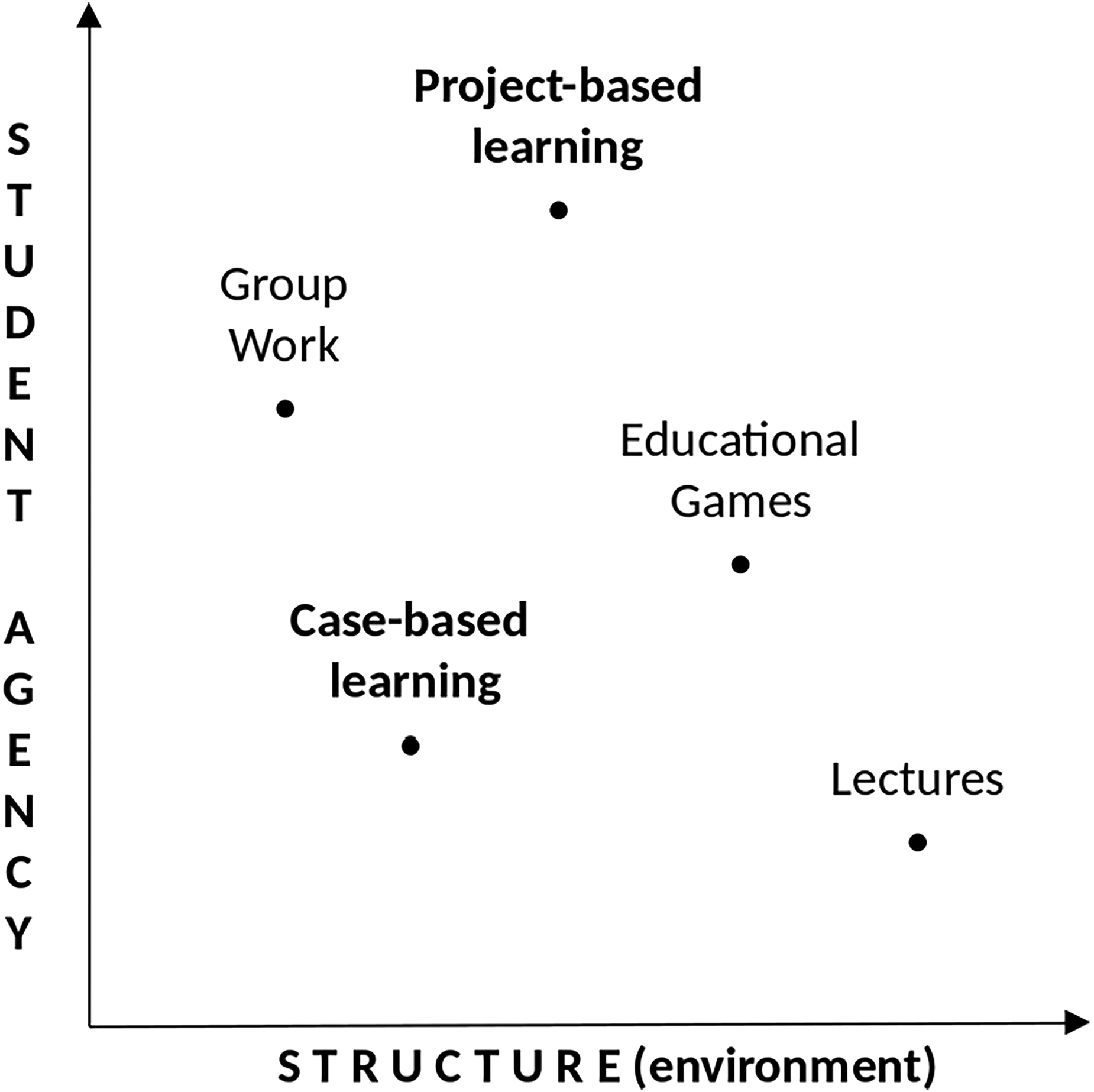
The balance of structure and agency as features of (experiential) learning environments (adapted from Duchatelet et al., 2019).
Generic Learning Outcomes in Higher Education
Generic learning outcomes refer to outcomes that are relevant across various professional contexts, such as critical thinking, communication, self-regulation, or motivation for learning (Male, 2010; Strijbos et al., 2015; Vermunt et al., 2018). Concepts related to generic learning outcomes are employability skills, transferable learning outcomes, or key competencies (Billing, 2003; Young & Chapman, 2010). However, although those skills and competencies are relevant across professional contexts, for acquiring and applying them, the professional context matters because they are highly integrated with domain-specific knowledge and skills (Tynjälä & Gijbels, 2012).
Vermunt et al. (2018) propose a framework for categorizing generic learning outcomes that consists of four distinct components: cognitive, affective, metacognitive, and socio-communicative. The cognitive component encompasses generic learning outcomes related to the management of information and cognitive processing strategies (Bennett et al., 1999; Vermunt & Donche, 2017; Vermunt et al., 2018). It also includes critical-analytical thinking skills, such as the ability to evaluate the trustworthiness and relevance of information, and to reason without judgmental biases (Hyytinen & Toom, 2019). The affective component includes attitudes toward learning and studying in general, as well as attitudes toward a specific topic or broader subject (Vermunt et al., 2018). The metacognitive component includes self-regulation and self-reflection, and refers to the ability to monitor and adjust the learning process as needed (Tynjälä & Gijbels, 2012; Vermunt et al., 2018). It also encompasses information-seeking behaviors and the ability to learn (Vermunt et al., 2018). Finally, the socio-communicative component refers to communication skills and social learning outcomes, such as belonging to and being embedded in a learning or professional network (Vermunt et al., 2018). Related outcomes concerning teamwork, communication skills, and management have also been found (Chernikova et al., 2020).
By means of a scoping review, this study aims to provide insight into which relationships between experiential learning environments and generic learning outcomes of a cognitive, metacognitive, affective, or socio-communicative nature emerge in the literature.
Method
Literature Search
A literature search in the electronic databases PsycINFO, Web of Science, and ERIC (Ebsco) was carried out to identify the relevant peer-reviewed journal articles, published up to and including the year 2019. In 2022, an update was conducted for the years 2020 and 2021 (Figure 2). A detailed overview of the systematic literature search can be found in Appendix 1. Three groups of search terms were combined. The first two search terms relate to the learning context central in this study: “experiential learning” and “higher education,” and a third search term “authentic” was added. To grasp the full richness of generic learning outcomes, no outcome-related search term was included. The final search results were as follows: PsycINFO 141 references, Web of Science 624 references, and ERIC 930 references. After removing doubles, 1,462 unique references were subjected to initial review.
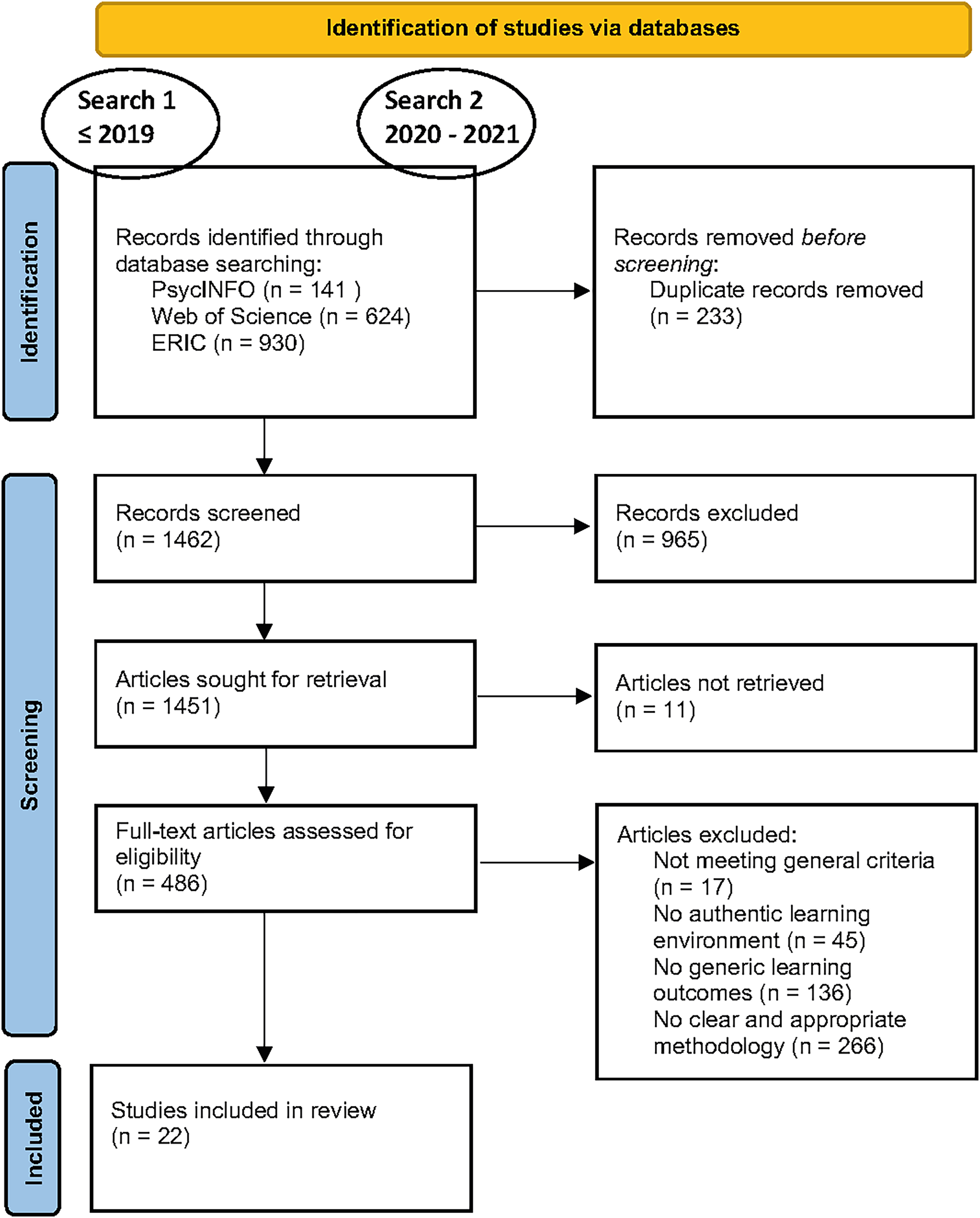
Selection procedure using the PRISMA 2020 flow diagram (Page et al., 2021).
Selection
To select studies for the synthesis relevant to the review questions, a specific set of inclusion criteria was used. Figure 2 visualizes the selection procedure using the PRISMA flow diagram (Page et al., 2021). With regard to the general criteria, studies were included when (a) conducted in higher education, (b) published in peer-reviewed journals, and (c) published in English.
This review specifically focuses on generic learning outcomes of authentic learning environments. Studies were included when (d) conducted in an authentic learning environment, in which experiential learning activities correspond to real-life professional situations (i.e., authenticity related to the task, physical context, and/or social context; Gulikers et al., 2008). Therefore, studies focusing on fictional games, co-curricular programs, or internships were excluded. Included studies also needed to (e) focus on generic learning outcomes. Studies that only focused on domain-specific knowledge and understanding, domain-specific skills, or student satisfaction were excluded. (f) Only empirical studies that described a clear and appropriate methodology were included. Studies were selected when including a clear statement of the research aims and/or research question, and an appropriate research design to address the aims of the research. Studies including purely anecdotal content, opinions, or validation studies were excluded. Also, studies that included general course descriptions or evaluations were omitted.
The selection was conducted in several steps. In each step, all studies that clearly did not meet one of the inclusion criteria were excluded. When in doubt about a study, the reference was retained until the next step. The first author screened all records. The data extraction form was pilot-tested during which each author independently screened five articles. This was followed by several peer-debriefing sessions with all authors involved in this study, discussing the appropriateness of the studies with regard to the inclusion criteria, and confirming or rejecting inclusion of studies (Pollock et al., 2023). After conducting all steps, the final selection consisted of 22 primary studies.
Procedure and Analysis
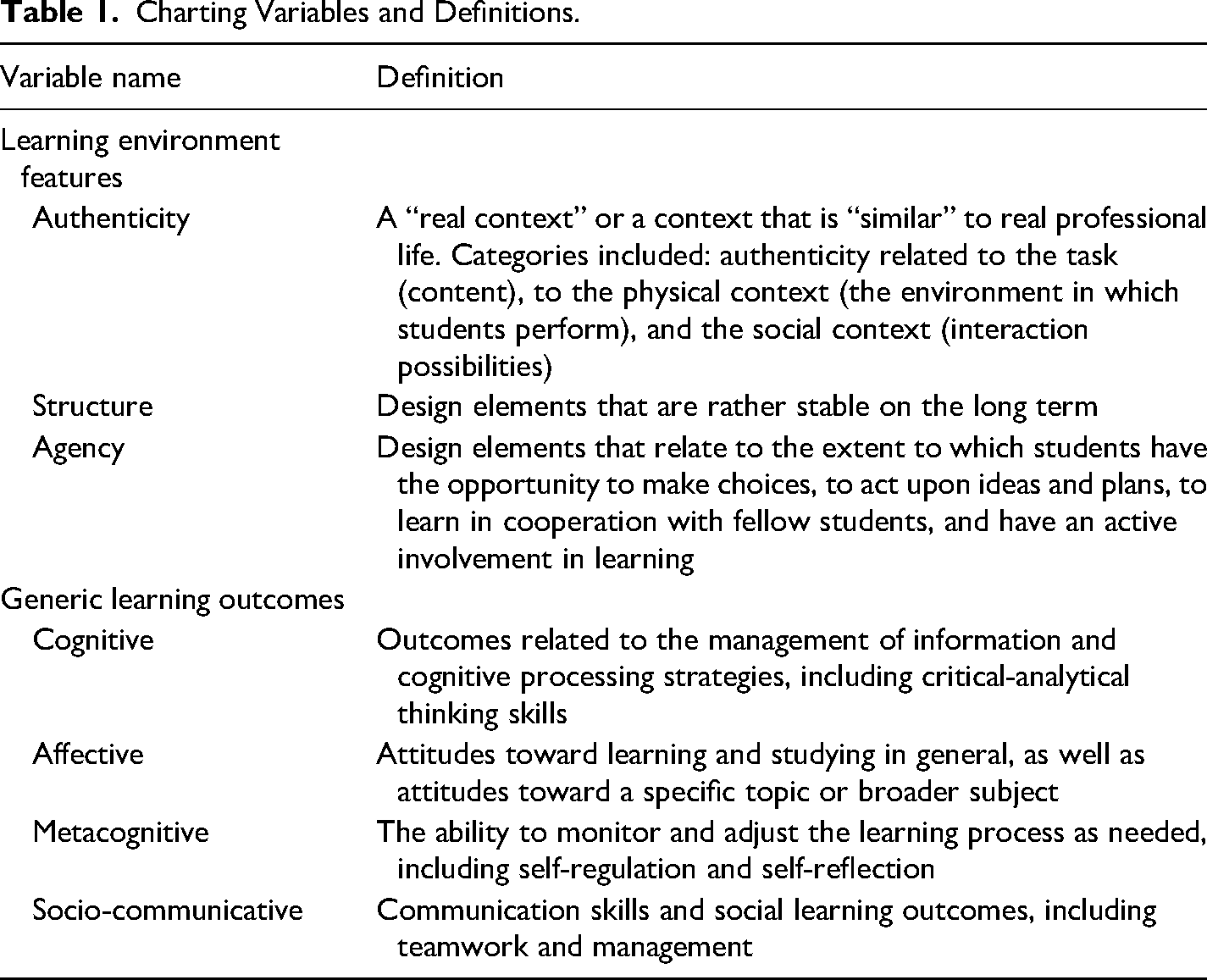
This review uses a narrative approach to analyze publications in the field. Following close reading, relevant paragraphs were subject to content analysis with NVivo 12. Coding was both deductive and inductive. Deductive coding followed the elements of the authentic experiential learning environment: authenticity, structure, and student agency. Also, learning outcomes were coded as cognitive, affective, metacognitive, and socio-communicative learning outcomes. Table 1 provides an overview of the variables we charted and definitions of those variables.
Charting Variables and Definitions.
Within these pre-defined groups, lines or paragraphs were further coded in an inductive way. Similarly, when groups of text did not match existing codes, new codes were added, which allowed detailed mapping of variation in generic learning outcomes. After having coded all studies, one coding query per study was conducted to evaluate the number of quotes that related to each code. This allowed a double-check by the first author on all cells with empty boxes to evaluate whether these studies indeed did not mention that specific design element or learning outcome.
Studies could be categorized as a specific type of experiential learning environment (case-based, problem-based, project-based, service-based, or simulation-based). Finally, to detect relations between design elements of authentic experiential learning environments and reported generic learning outcomes, several crosstabs were conducted. Results are discussed in a narrative format. Further, stacked bar charts and radar graphs are used as visual representations to support findings.
Results
After describing our sample, we subsequently probe into the characteristics of the authentic experiential learning environments in which research was conducted, and into the variation of generic learning outcomes. Finally, we address the main research question and elaborate on what relations between reported generic learning outcomes and features of authentic experiential learning environments were found.
Sample Descriptive
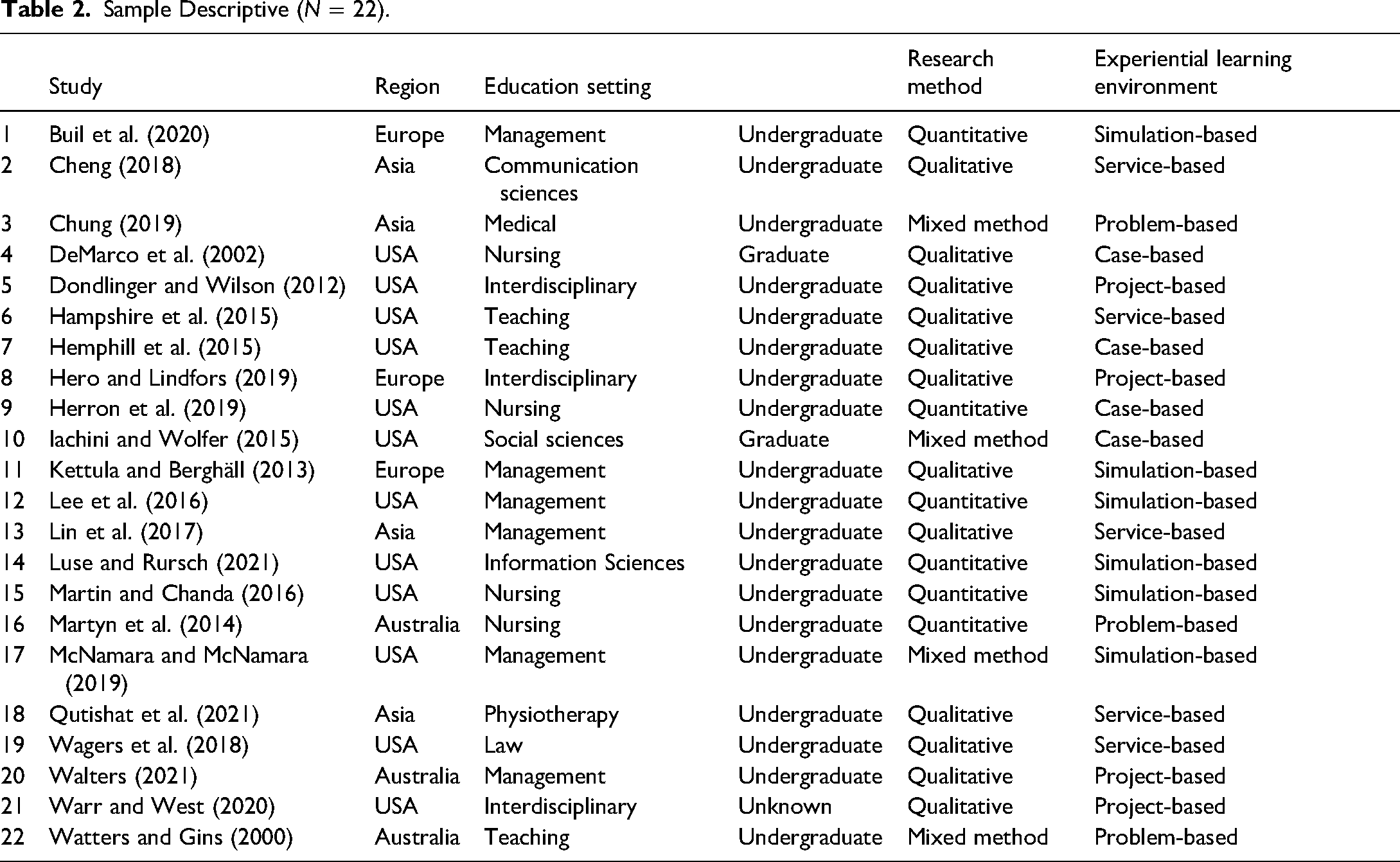
Although our search was not limited to a certain time frame, studies following our selection criteria were published after the year 2000, and thus our sample encompassed research conducted between 2000 and 2022. Our final sample shows a slight increase of the number of included studies over time with most studies published in 2019 and 2021. Most of the research was conducted in the United States (55%) and in undergraduate education (86%) in different fields of study. With regard to the study design, researchers mostly applied a qualitative method (55%). Quantitative research (27%) was less, and mixed method research (18%) was far less present. More detailed information about the studies is provided in Table 2.
Sample Descriptive (N = 22).
Features of Experiential Learning Environments
The studies investigated learning in five different authentic experiential learning environments (Figure 3): case-based learning, problem-based learning, project-based learning, service-based learning, and simulation-based learning. Appendix 2 shows a detailed overview of features of authenticity, structure, and agency in relation to the type of experiential learning environment in each study.
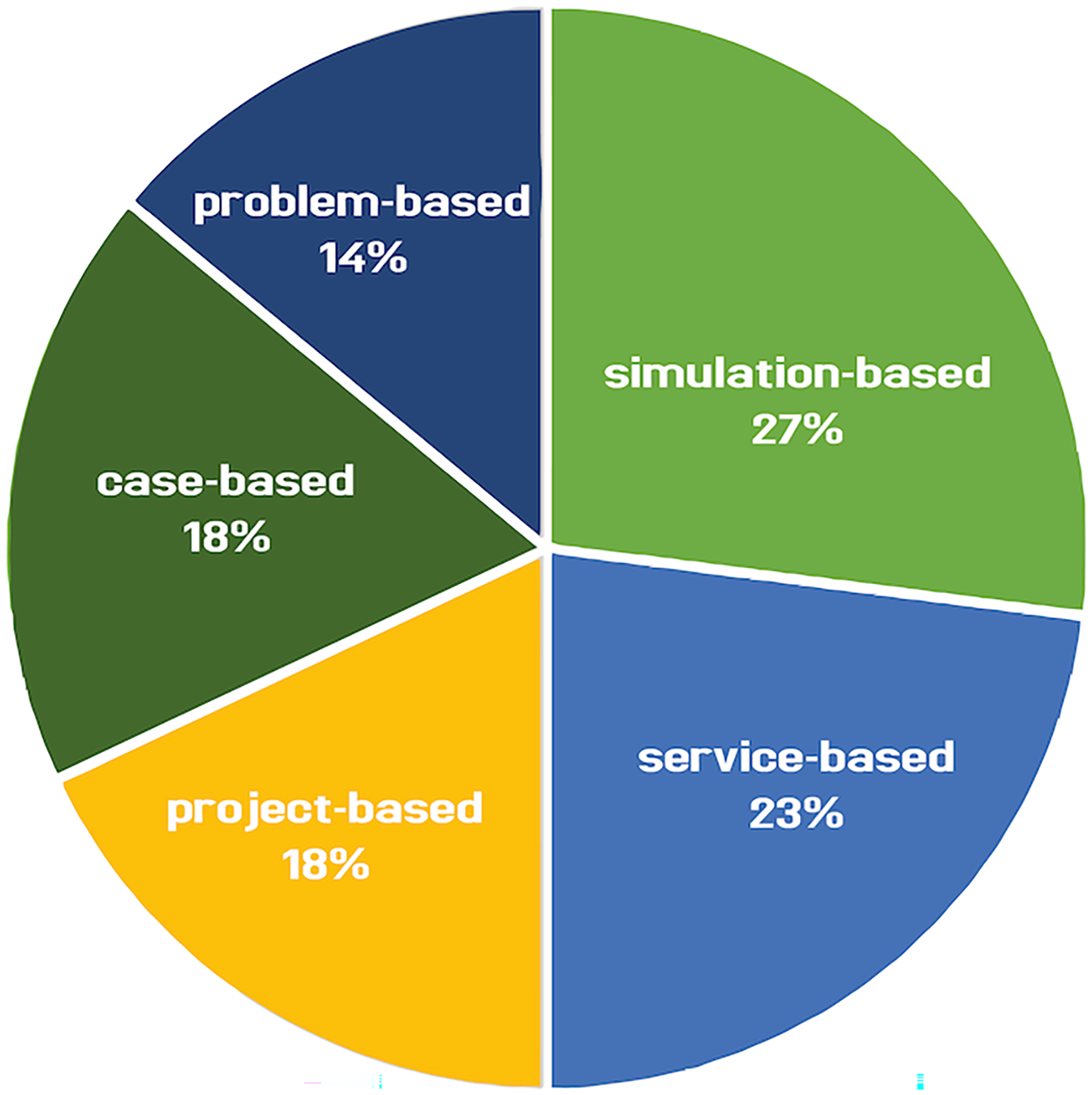
Percentage of types of authentic experiential learning environments (N = 22).
Authenticity was associated with the task, the context, and interaction possibilities (Figure 4). Case-based and problem-based learning typically incorporated tasks that reflected real-world scenarios, often developed by the instructor, which were undertaken in the classroom and involved interactions with both peers and teachers. In the case of project- and service-based learning, students often worked within a professional context and had the added benefit of engaging with professionals. Simulation-based learning included on-reality-based tasks in a simulated context, and occasionally integrated elements of role play or involved the use of actors to enhance authenticity (e.g., Martin & Chanda, 2016). Where interaction with the teacher is less present in simulation-based learning, interaction possibilities with peers are more equally spread across learning environments.
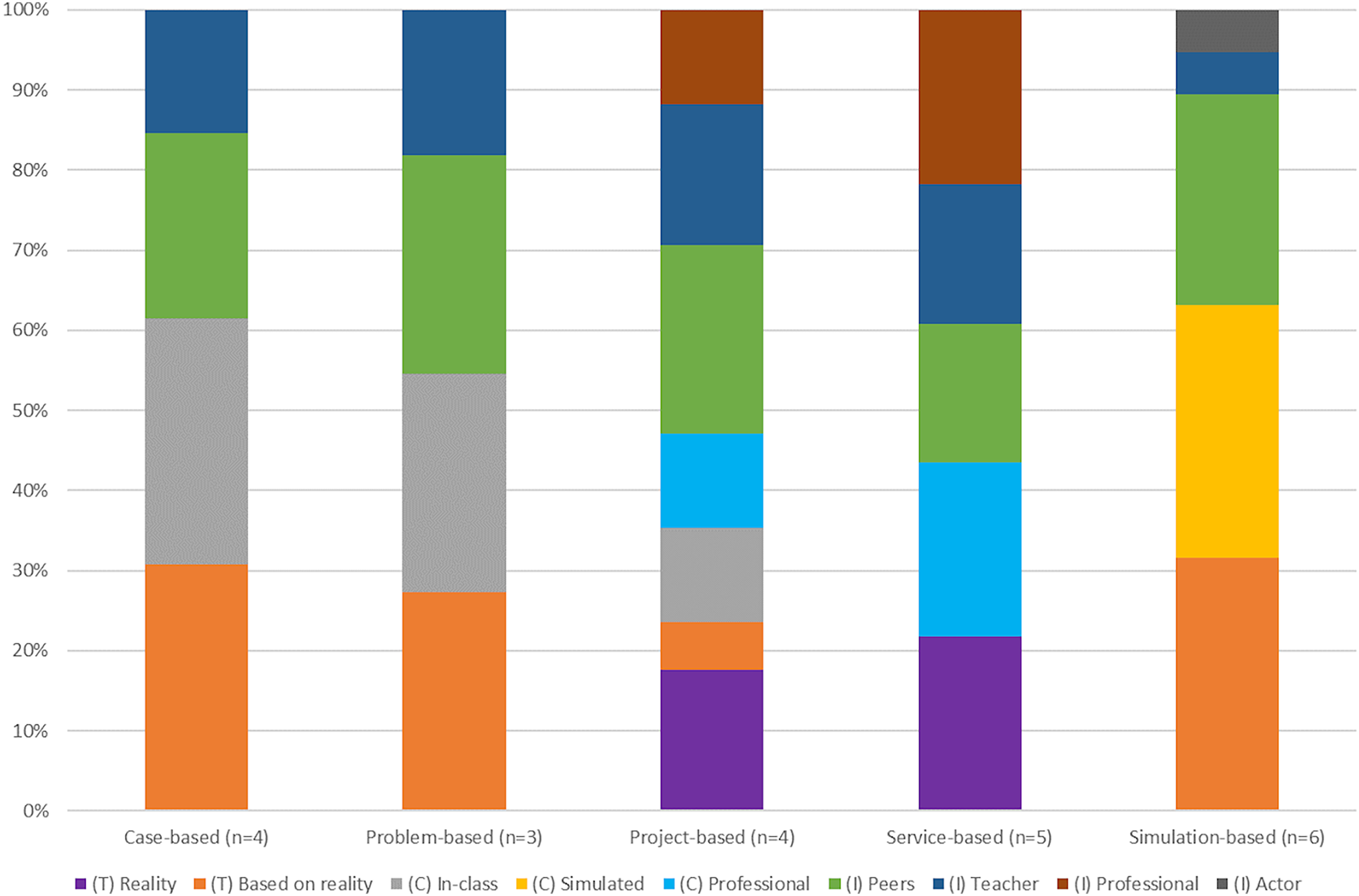
Percentage of learning environment features related to authenticity*.
Six design elements related to the feature of structure (Figure 5): teacher role, duration of the activity, preparation, reflection, activities, and feedback. With regard to the teacher role, research on case- and problem-based learning consistently referred to the teacher as facilitator. However, in other learning environments, the teacher's role could also be defined as coach, supervisor, or even collaborator. Studies that included case- and problem-based learning described the activity duration as a number of weeks. Simulation-, project-, and service-based learning environments also referred to the number of hours within a semester that students performed. All studies mentioned class meetings and/or lectures as general preparation for the activity. All learning environments, except for case-based learning studies, explicitly reported the design element of reflection, either in written activities or as part of discussions. Writing, reading, researching, presenting, and discussing were activities that were part of the learning environment. These activities were spread across different types of learning environments. In case-based learning, feedback was not mentioned at all, while in project-based learning environments, it was incorporated in diverse ways, including input from teachers, peers, and customers. Overall, service-based learning environments showed the most variety in structural elements.
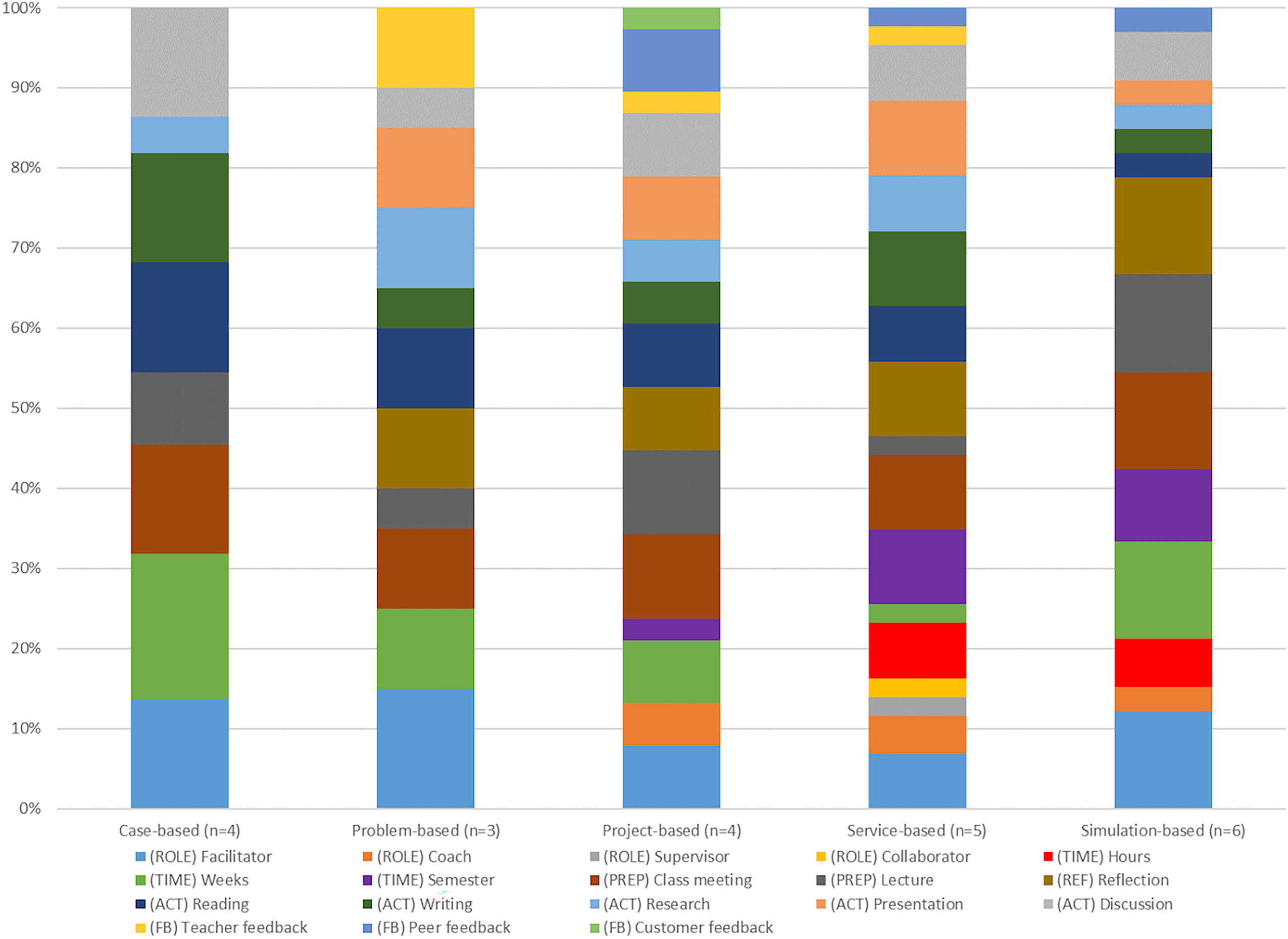
Percentage of learning environment features related to structure*.
We distinguished two categories of agency elements that relate to either individual assignments or to group work, which were present before, during, or after the activity. With the exception of one study on a simulation-based learning environment (Herron et al., 2019), all studies included agency elements. Individual agency before the activity may include the freedom to make choices, such as selecting the project that students will work on (Warr & West, 2020) or determining the composition of the group (Qutishat et al., 2021). Other examples of agency related to individual assignments including preparing case studies before class (Hemphill et al., 2015), keeping a learning journal during the service-learning project (Hampshire et al., 2015), and writing a reflection report after completing the project (Walters, 2021). In terms of agency in group work, it could involve preparing a literature review as a team before a service-learning project (Wagers et al., 2018), or during a simulation it could involve discussing team strategy (Lee et al., 2016). Finally, giving a team presentation after a service-learning project is an example of agency in group work after the activity (Cheng, 2018).
In general, case-based learning showed less variation in agency elements while service-based learning exhibited the most diverse range of agency aspects (Figure 6). Agency in group work was seldom present before the activity, although it was well-represented during and after the activity across various learning environments.
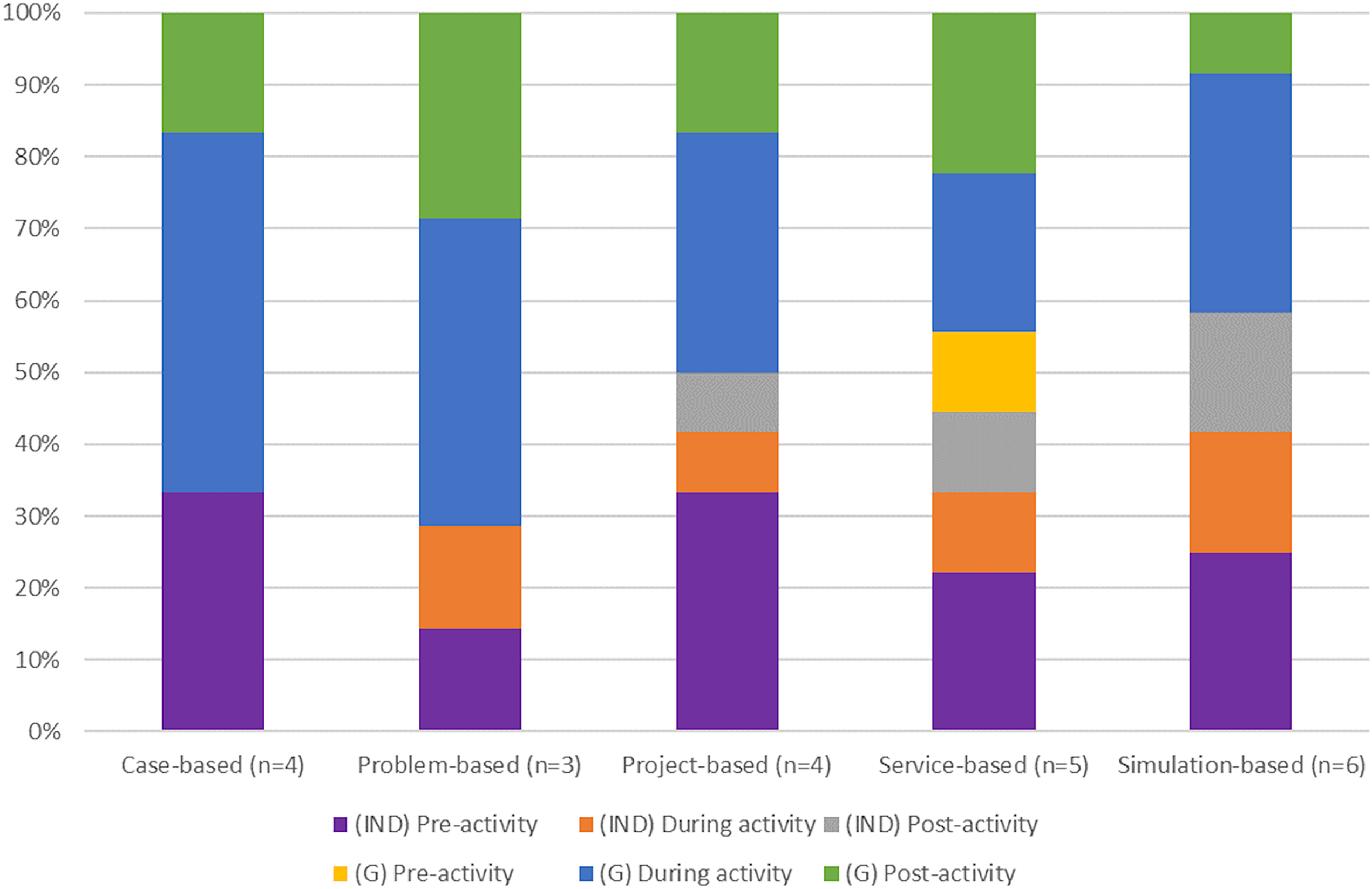
Percentage of learning environment features related to agency*.
Generic Learning Outcomes of Experiential Learning Environments
Most of the studies referred to more than one generic learning outcome (68%), of which an overview can be found in Appendix 3. All studies except four included affective learning outcomes (82%). The second most reported were socio-communicative learning outcomes (59%). Studies focused to a lesser extent on cognitive (45%) and to a far lesser extent on metacognitive learning outcomes (14%). Figure 7 shows the distribution across different generic learning outcomes.
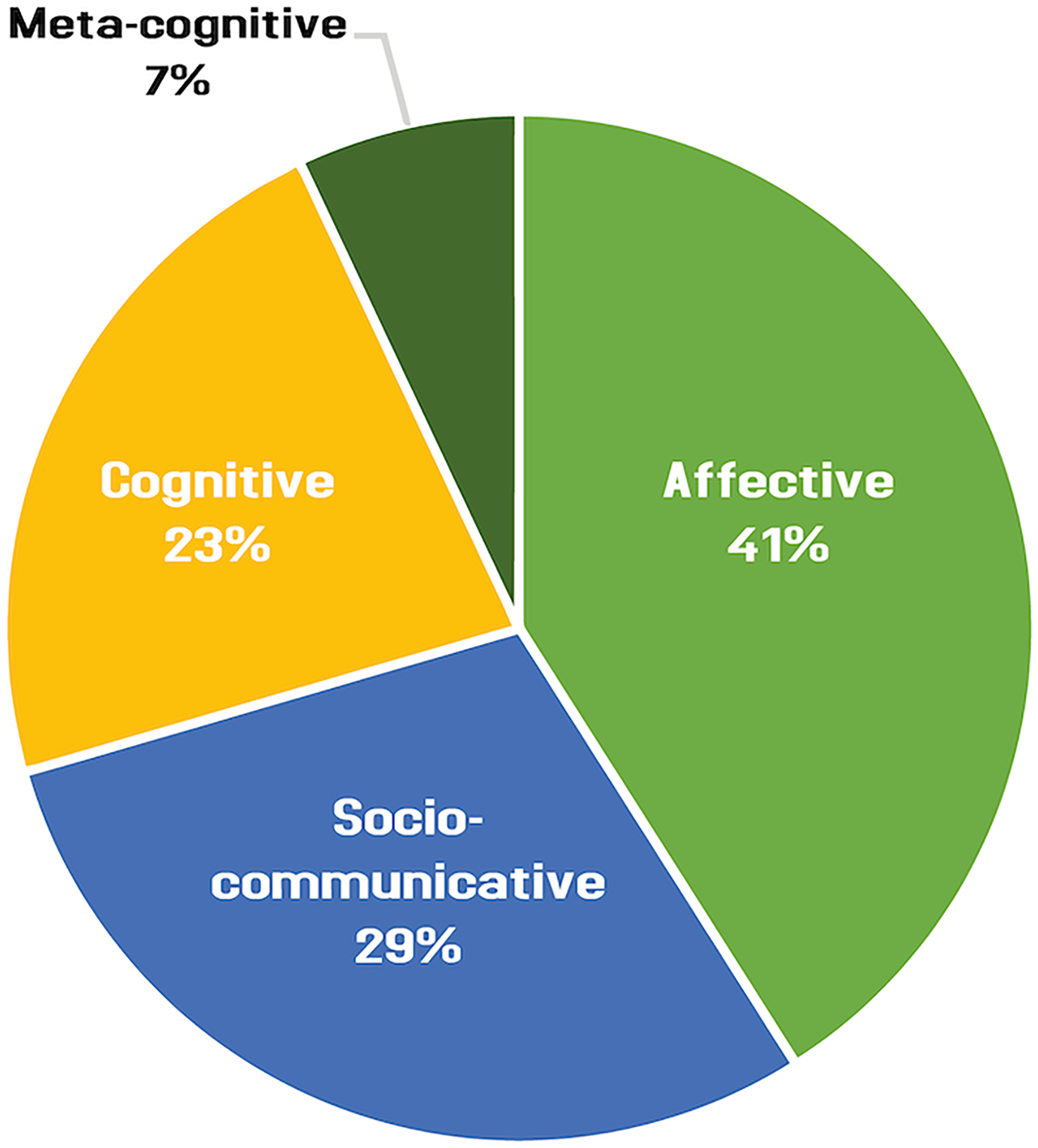
Percentage of types of generic learning outcomes (N = 22).
With regard to cognitive learning outcomes, two groups of learning outcomes could be distinguished: critical thinking skills and problem-solving skills. Examples include critical skills required to evaluate and adjust proposals and business plans to suit real-world situations during a service-learning project (Lin et al., 2017), and problem-solving skills acquired through participation in a role-play simulation, which prepares individuals to better cope with novel challenges (Kettula & Berghäll, 2013). Affective learning outcomes can be categorized into engagement, motivation, and confidence. For instance, engagement is manifested in the amount of time students spend on course material when preparing for a service-learning project (Wagers et al., 2018); business intelligence motivational beliefs are linked to a business simulation (Lee et al., 2016); and confidence is observed among physical education students following a community project (Qutishat et al., 2021). Regarding metacognitive learning outcomes, studies reported aspects related to self-regulation and information-seeking. For example, working independently and responsibly in an interdisciplinary innovation project (Hero & Lindfors, 2019), and actively seeking information during problem-based learning (Chung, 2019). In socio-communicative learning outcomes, communication skills were frequently mentioned, sometimes specified as presenting (e.g., Chung, 2019), public speaking (McNamara & McNamara, 2019), or negotiating (e.g., Dondlinger & Wilson, 2012). Additionally, teamwork was evident, with examples such as effective communication with staff during service-learning (Cheng, 2018), and teamwork skills developed in project-based learning (Walters, 2021).
In general, various types of learning outcomes were distributed across different experiential learning environments (Figure 8). Nevertheless, we were able to discern five trends:
Critical thinking skills were predominantly present in case-based and problem-based learning. Research on problem-based learning environments did not report on problem-solving skills as a learning outcome. Confidence and communication skills were the most frequently investigated learning outcomes, of which confidence was primarily observed in simulation-based learning environments. Metacognitive learning outcomes were underrepresented across each type of learning environment. Teamwork was more commonly reported in project-based and simulation-based learning environments.
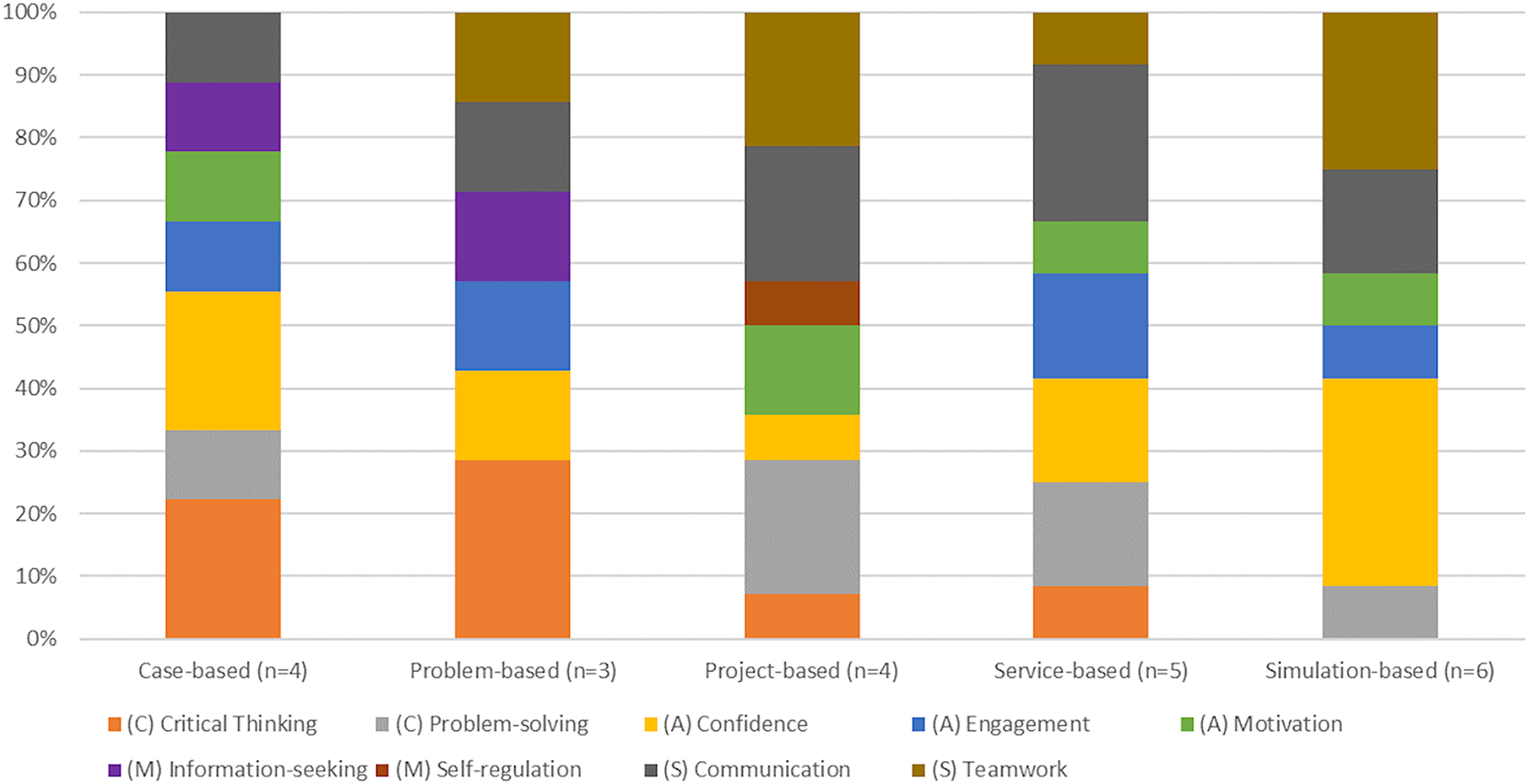
Percentage of generic learning outcomes in relation to learning environment*.
Relations Between Features of Experiential Learning Environments and Generic Learning Outcomes
A detailed overview of the extent to which generic learning outcomes are reported in relation to specific features of an authentic experiential learning environment is presented in Appendix 4. As an illustration, radar charts depicting the two most frequently reported learning outcomes (confidence and communication skills) demonstrate that the design elements supporting these distinguishable learning outcomes are not that different (Figure 9).
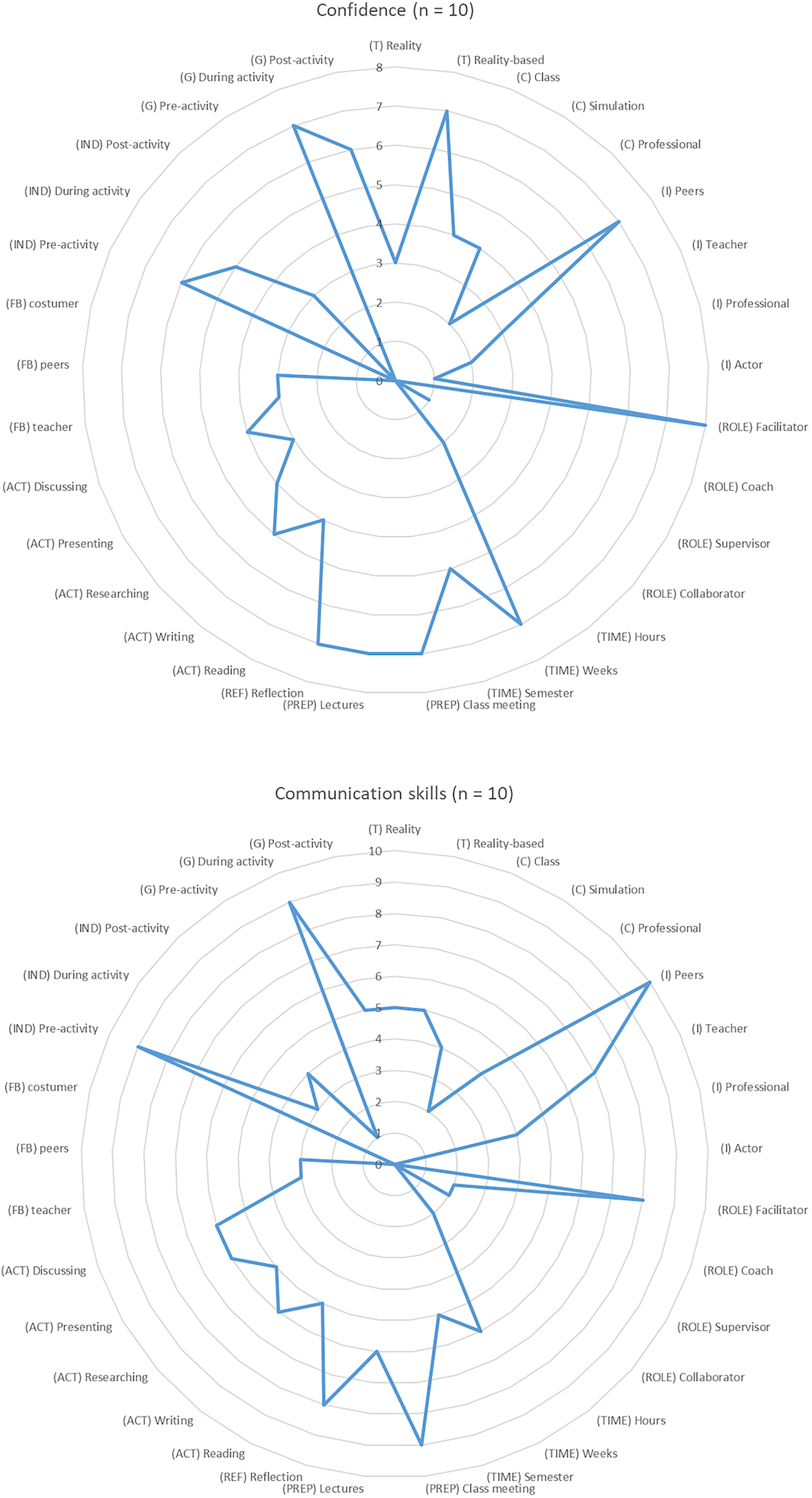
Radar charts of learning environment features related to confidence and communication.
However, we were able to identify seven patterns. Firstly, our findings reveal associations between design elements of authenticity and different learning outcomes. Specifically, reality-based tasks were more prevalent in relation to critical thinking skills and confidence. Meanwhile, both reality-based and real tasks were equally present in relation to socio-communicative learning outcomes. Regarding authentic contextual factors, we observed no pronounced differences except for critical thinking skills, which were predominantly linked to the classroom setting. In addition, our analysis showed that interactions with professionals were relatively infrequent, even in relation to socio-communicative learning outcomes. Secondly, besides the teacher's role as a facilitator, other roles were not explored as extensively, with the teacher as a collaborator only reported in relation to affective learning outcomes. Thirdly, with regard to general preparation, (guest) lectures were less frequently present and mainly related to problem-solving skills. Fourthly, reflective skills were not mentioned as metacognitive learning outcomes, despite reflection being a design element reported in relation to every learning outcome. Fifthly, the activity of researching was most commonly related to problem-solving skills, and a variety of activities were most often reported in association with communication skills. Sixthly, less than half of the studies that included a specific learning outcome explicitly reported feedback as a design element, with feedback being almost absent in outcomes of motivation and engagement; and customer feedback only included in relation to self-regulation and teamwork skills. Seventhly, in comparison to other learning outcomes, elements of individual and group agency were less frequently reported in relation to motivation and engagement.
Overall, it is noteworthy that 10 design elements, namely the facilitation role of the teacher, duration of several weeks, preparatory class meetings, reflection, reading activities, presenting activities, individual agency in assignments prior to the activity, agency in group work during the activities, interaction with peers, and interaction with teachers, were consistently associated with all learning outcomes.
Discussion and Conclusion
Aiming to narrow the gap between higher education and the workplace (OECD, 2019), more attention has been drawn to experiential learning environments, which bring the real world into the classroom in varying ways (Ellington et al., 1998; Roberts, 2018; Tynjälä, 2008). They provide students with an authentic learning context, which is considered beneficial for both the development of domain-specific knowledge and skills, and promoting generic learning outcomes (Chernikova et al., 2020; Radović et al., 2020; Tynjälä & Gijbels, 2012). However, insights into the variation of such learning environments and how these relate to specific generic learning outcomes are rather limited (Duchatelet et al., 2019; Radović et al., 2020; Roberts, 2018). Moreover, research about the benefits of experiential learning activities is scattered across several bodies of discipline-specific literature (Roberts, 2018). As such, this scoping review wanted to uncover the relation between design elements of authentic experiential learning environments across domains and generic learning outcomes.
In a first step, we connected design elements to the types of learning environments to gain insights into their variations. This exercise revealed certain recognizable patterns, such as authenticity being represented in the classroom context in case-based and problem-based learning, and project-based and service-based learning more frequently offering opportunities for interaction with professionals. However, the results also showed variations within and between types of learning environments. For example, service-based learning included the teacher's role either as a facilitator, coach, supervisor, or collaborator. Also, feedback was not frequently mentioned as a design element, but was most often included in project-based learning environments and not at all explicitly mentioned in case-based learning. In a second step, we looked into the variation of generic learning outcomes across different experiential learning environments. In general, various types of learning outcomes were studied in relation to different experiential learning environments. However, we were able to identify five trends. For example, critical thinking skills were predominantly present in case-based and problem-based learning, and confidence and communication skills were the most frequently investigated learning outcomes, of which confidence was primarily observed in simulation-based learning environments. In a final step, the exploration of the relationship between design elements and learning outcomes uncovered a fragmented overview of design elements that were present across different types of experiential learning environments. The patterns identified in the first stage were no longer evident. Nonetheless, the study identified seven patterns of relations. For example, with regard to authentic contextual factors, we observed no pronounced differences except for critical thinking skills, which were predominantly linked to the classroom setting; and besides the teacher's role as a facilitator, other roles were not explored as extensively, with the teacher as a collaborator only reported in relation to affective learning outcomes. Overall, 10 design elements were associated with all generic learning outcomes: the facilitation role of the teacher, duration of several weeks, preparatory class meetings, reflection, reading activities, presenting activities, individual agency in assignments prior to the activity, agency in group work during the activities, interaction with peers, and interaction with teachers.
In sum, although design elements were distinguishable across different types of learning environments, the pattern was less clear when approaching the design from the perspective of learning outcomes, and it did not clearly show which combination of design elements was most beneficial for which type of learning outcome. Our findings highlight the ongoing challenge facing the academic community in determining which aspects of learning environment design contribute to what generic learning outcomes. This raises questions about whether teaching practices and related research are still based on assumptions, such as the belief that case-based learning environments are less effective for fostering socio-communicative learning outcomes than service-based learning environments. If we want to be more efficient and goal-oriented, a more fine-grained level approach might be necessary to gain insights into how different generic learning outcomes are being fostered. Such an approach would also enhance comparability of research findings within and between different types of experiential learning environments.
Our findings also have implications for educational practice. The key takeaway is that the relationship between learning environment features and generic learning outcomes should be approached with a nuanced perspective; the relationship is intricate and challenges teachers to move beyond possible assumptions. The detailed analysis of learning environment features might inspire teachers about the elements to consider when designing experiential learning environments. Further, the results suggest that teachers may consider more diverse learning outcomes of experiential learning environments. For example, reflection is an essential aspect of experiential learning (Tynjälä, 2008). Notably, the design element of reflection showed to be present in relation to each type of generic learning outcome; however, reflective skills were not included as a learning outcome. This could be supported by future research that focuses on the design on a more fine-grained level, for example, on how reflection is included in the learning environment, such as through a written report, discussion or debate, or a diary that spans the time of the learning activity. Additionally, how teachers contribute to students’ reflective processes and the specific types of generic learning outcomes that result from these processes could also be explored in more detail to advice educational practice.
A clear set of inclusion criteria is beneficial for maintaining focus in a review study; however, such criteria may also impose limitations. Although we proceeded with utmost care and involved the entire team in the selection process, the role of the first author as the sole screener for title and abstract screening and full article screening may introduce some subjectivity and potential bias. We tried to prevent this by pilot-testing the data extraction format, implementing peer-debriefing sessions, and using a team approach as suggested by Pollock et al. (2023). However, for future review studies, it might be more appropriate to have a second reviewer independently screen the records to ensure consistency and minimize potential bias (Page et al., 2021). Further, the present review is based on how research studies have reported their research context. Consequently, the overview of design elements presented should not be considered exhaustive, and other relationships with learning outcomes may exist. Also, the relationships identified may reflect the researchers’ interests or the availability of instruments for measuring certain outcomes. This may explain the limited attention given to metacognitive learning outcomes, which are considered more complex to measure than, for example, motivational outcomes. Finally, during the selection process, a large proportion of studies were excluded due to an absence of clear and appropriate methodology. Also, the methodology of selected studies was not suitable for making statements about causal relationships. Therefore, it is important to acknowledge that our study serves an exploratory purpose and represents a preliminary step in revealing the learning design elements on a more detailed level.
Through this scoping review study, we have successfully demonstrated that the characteristics of authenticity, structure, and agency are well-suited for describing experiential learning environments. In fact, our findings may serve as a foundation for an evidence-and-gap map. Nonetheless, achieving this goal would require a broader scope in databases, ensuring a more comprehensive representation of the available literature (Campbell et al., 2023). By sticking to broader databases like PsycINFO and Web of Science, we could maintain a more comprehensive approach, capturing a diverse range of studies across various disciplines. However, we recognize the downside of this choice. To address this, future research may explore additional databases to gain further insights relevant to our findings, for example, CINAHL and PubMed, for further exploring areas like nursing, medical education, and related fields. Further, future research could consider non-English and unpublished manuscripts. Also, no studies from the field of social work were identified in our search. Considering this, the scoping review study conducted by Bogo et al. (2022) could serve as a promising starting point for future research, offering opportunities for more extensive and refined studies in this domain. Lastly, the application of identified design elements may also assist in identifying variations in internship practices.
The utilization of authenticity, structure, and agency features in experiential learning environments presents opportunities to delve deeper into the intricate relationship between these features and their impact on learning outcomes on a more fine-grained level. It also offers opportunities to expand research to a more detailed level of learning activities within an authentic experiential learning environment. Future research could take a more design-based approach to gradually unravel which structural or agency elements are more or less effective in relation to which learning outcomes. Experimental designs could also contribute to this. However, more valid measures for various generic skills are also needed to achieve this aim (Tuononen et al., 2022). Additionally, a stronger focus on intra-individual learning over time could increase insights into how different design elements contribute to which aspects of student learning (e.g., the design element of reflection). Furthermore, in this review, authenticity was defined based on characteristics of the learning environment, specifically its similarity to reality. However, it should be noted that authenticity is a subjective concept that may be perceived differently depending on factors such as professional experience and age (Gulikers et al., 2004, 2008; Roelofs & Terwel, 1999). This presents an interesting aspect to investigate further, such as exploring the relationship between real and fictitious cases or roles and students’ perceived authenticity of the learning activity, and how this might affect student learning outcomes.
Despite the aim of experiential learning environments to narrow the gap between higher education and the workplace, only few studies in our sample were conducted in graduate education. Overall, this literature review makes it clear that there is still much to explore when it comes to experiential education. The amount and strength of advocacy for this type of education in recent years contrast sharply with the extent of research that has been conducted to empirically support these advocacy efforts.
Supplemental Material
sj-docx-1-jee-10.1177_10538259231211537 - Supplemental material for Features of Experiential Learning Environments in Relation to Generic Learning Outcomes in Higher Education: A Scoping Review
Supplemental material, sj-docx-1-jee-10.1177_10538259231211537 for Features of Experiential Learning Environments in Relation to Generic Learning Outcomes in Higher Education: A Scoping Review by Dorothy Duchatelet, Frank Cornelissen and Monique Volman in Journal of Experiential Education
Supplemental Material
sj-docx-2-jee-10.1177_10538259231211537 - Supplemental material for Features of Experiential Learning Environments in Relation to Generic Learning Outcomes in Higher Education: A Scoping Review
Supplemental material, sj-docx-2-jee-10.1177_10538259231211537 for Features of Experiential Learning Environments in Relation to Generic Learning Outcomes in Higher Education: A Scoping Review by Dorothy Duchatelet, Frank Cornelissen and Monique Volman in Journal of Experiential Education
Supplemental Material
sj-docx-3-jee-10.1177_10538259231211537 - Supplemental material for Features of Experiential Learning Environments in Relation to Generic Learning Outcomes in Higher Education: A Scoping Review
Supplemental material, sj-docx-3-jee-10.1177_10538259231211537 for Features of Experiential Learning Environments in Relation to Generic Learning Outcomes in Higher Education: A Scoping Review by Dorothy Duchatelet, Frank Cornelissen and Monique Volman in Journal of Experiential Education
Supplemental Material
sj-docx-4-jee-10.1177_10538259231211537 - Supplemental material for Features of Experiential Learning Environments in Relation to Generic Learning Outcomes in Higher Education: A Scoping Review
Supplemental material, sj-docx-4-jee-10.1177_10538259231211537 for Features of Experiential Learning Environments in Relation to Generic Learning Outcomes in Higher Education: A Scoping Review by Dorothy Duchatelet, Frank Cornelissen and Monique Volman in Journal of Experiential Education
Footnotes
Declaration of Conflicting Interests
The authors declared no potential conflicts of interest with respect to the research, authorship, and/or publication of this article.
Funding
The authors disclosed receipt of the following financial support for the research, authorship, and/or publication of this article: This work was supported by the Dutch National Funding Agency for Educational Research (NRO) (grant number 40.5.18650.068).

Supplemental Material
Supplemental material for this article is available online.
References
Supplementary Material
Please find the following supplemental material available below.
For Open Access articles published under a Creative Commons License, all supplemental material carries the same license as the article it is associated with.
For non-Open Access articles published, all supplemental material carries a non-exclusive license, and permission requests for re-use of supplemental material or any part of supplemental material shall be sent directly to the copyright owner as specified in the copyright notice associated with the article.
