




Abstract
Coaching is becoming a common professional development support in early childhood settings. Effective distance coaching may provide more efficient or cost-effective methods of coaching and opportunities for practitioners unable to access in vivo coaching (e.g., rural programs). To determine the current evidence-base for distance coaching, a thorough search of the literature was conducted to identify experimental studies of coaching practitioners via distance methods. Twenty-seven studies were identified and coded for participant, intervention, and design variables. Results include information on how observations were conducted (e.g., video live and video recorded), how feedback was provided (e.g., video conferencing, email, and text), the characteristics of coaches and coaches participating in distance coaching, the rigor of studies included in the review, and the outcomes of distance coaching. Future directions for research on effective distance coaching are discussed.
Use of evidence-based practices (EBPs) is critically important in early childhood education (ECE) and early childhood special education (ECSE) to support children in meeting individualized goals and learning functional skills (Cook et al., 2012). Early childhood practitioners need to be supported in implementing EBPs through high-quality professional development (Boyd et al., 2016). However, research indicates that ECSE practitioners may not be provided with sufficient support to implement EBPs with fidelity (Hebbeler et al., 2012).
Reviews of the literature provide evidence that coaching is an effective professional development approach for ECSE and early intervention (EI) practitioners to support implementation of EBPs (Artman-Meeker et al., 2015; McLeod et al., 2021). In their meta-analysis of 60 coaching studies, Kraft et al. (2018) found large positive effects of coaching interventions on teacher practices (pooled effect size of 0.49 SD). While existing research indicates that coaching interventions include some common elements, such as observing, providing feedback, encouraging reflection, and setting goals, coaching varies widely in content focus and dosage (Artman-Meeker et al., 2015; Elek & Page, 2019). Further evaluation is needed to determine the salient features of coaching models for improved effectiveness, efficiency, and accessibility (Artman-Meeker et al., 2015; Elek & Page, 2019). Components of early childhood coaching that need to be delineated and explored to determine the most effective delivery methods include the process and structure of coaching (Elek & Page, 2019). There is a need to better understand how coaching can best be delivered to optimally impact ECSE/EI practitioners’ use of EBPs (Sugai & Horner, 2020).
Much of the literature demonstrating the promise of coaching in supporting EBPs has been focused on in-person coaching. However, the need for effective coaching in ECE settings is no longer restricted to onsite delivery, and further information is needed about how distance coaching, in which coaching activities occur offsite through virtual methods, can be leveraged to support practitioners to implement EBPs (Sugai & Horner, 2020). Distance coaching has been implemented with both preservice and inservice EI/ECSE practitioners to increase capacity for a variety of instructional practices (Artman-Meeker & Hemmeter, 2013; Barton et al., 2018; Coogle et al., 2015). For example, bug-in-ear (BIE) coaching has been used to provide performance feedback for developing a variety of EBPs focused on increasing communication and social-emotional skills (Artman-Meeker et al., 2017; Barkaia et al., 2017; Coogle et al., 2015, 2017; Ottley & Hanline, 2014). Similarly, email feedback has been used to support practitioner implementation of EBPs in early childhood classrooms (Barton et al., 2018; Gage et al., 2017; McLeod et al, 2019).
Distance delivery of coaching may reduce the amount of time, funding, and resources necessary to implement effective coaching, making coaching accessible to early childhood practitioners in rural and underserved regions (Artman-Meeker et al., 2015; Kraft et al., 2018; McDaniel & Bloomfield, 2019). Recent technological advances have allowed for a variety of platforms with which to implement coaching virtually, including synchronous and asynchronous delivery models (Snodgrass et al., 2017). These advances have provided opportunities for support and training using video recordings, video exemplars, video conferencing, web-based coaching platforms, BIE delivery, and coaching mobile applications (Bishop et al., 2020). In addition, the demand for distance coaching has rapidly increased because of the COVID-19 pandemic, since necessary distancing precautions have continued to restrict the accessibility of onsite coaching for early childhood practitioners (Zimmer & Matthews, 2022).
As with coaching generally, the process and structures of distance coaching vary across studies. Characterizing the features of early childhood coaching across distance coaching studies, including demographic information of participants, coaching models and strategies used, and delivery of coaching, as well as the rigor and outcomes of distance coaching, would provide insight into what works, for whom, and under what circumstances in distance coaching interventions. To date, there has been no review specifically focused on the extant distance coaching literature in ECE to provide guidance for its implementation. A systematic review of the literature provides important information about what research has been conducted, the conclusions that can currently be drawn, and what additional research is needed to identify effective strategies for supporting professional development. The current review adds to the literature by examining distance coaching practices across ECE contexts to characterize the practices that have been studied, their outcomes, and the quality of the studies. This adds to previous reviews of coaching in ECE/ECSE by examining the characteristics and effectiveness of distance coaching separate from coaching more generally or coaching exclusively delivered on-site. For the purposes of this review, distance coaching has been defined as a coaching practice with at least one primary delivery component occurring virtually from offsite (i.e., in a different location than the practitioner being coached). To better understand how distance coaching has been implemented with ECE/ECSE practitioners and the effectiveness of distance coaching as a professional development strategy, our research questions are as follows:
Method
To examine these questions, we reviewed the literature on distance coaching in EC settings. We first searched the literature to identify studies meeting the inclusion criteria. We then developed a coding schema to capture relevant information about the coaching, outcomes, and rigor of the included studies. Finally, we analyzed and summarized the coded data.
Search Procedures
In July 2020, a search was conducted of PsycINFO, ERIC (EBSCOhost), and Education Full Text (H.W. Wilson) databases using the terms distance OR web-based OR virtual OR bug-in-ear and coach* OR mentor* OR “performance feedback” OR consult* OR “follow-up support” and “early childhood” OR “preschool” OR “early intervention” OR “kindergarten” or “elementary” or “preK.” In addition, hand searches were conducted of the following early childhood journals: Topics in Early Childhood Special Education, Journal of Early Intervention, Early Childhood Research Quarterly, Early Education and Development, Early Childhood Education Journal, and Infants and Young Children. An ancestral search was conducted for additional articles that met inclusion criteria. Only studies published since 2000 in peer-reviewed journal articles were screened.
Included Studies
A total of 591 studies were screened using an initial screening protocol by reviewing the title and abstracts to identify those that met the following inclusion criteria: (a) the independent variable was coaching early childhood educators to improve practice via distance methods, (b) the study took place in setting serving children from birth to age 8, (c) the dependent variable included a measure of coachee implementation of practices, and (d) design was group experimental, group quasi-experimental, or single-case research design (SCRD). This review does not include studies that used virtual means to supplement on-site coaching (e.g., email feedback to reiterate in person coaching meetings). The studies included in this review were all published prior to the COVID-19 pandemic. Although additional research has been conducted related to distance coaching used during the pandemic, this body of literature is still emerging. Furthermore, with the research to publication timeline, it is unclear when this literature will provide a clear picture of the coaching that occurred during the COVID-19 pandemic.
Full texts were reviewed following a second screening protocol for 125 studies, and 27 studies from 25 reports were identified as meeting the inclusion criteria. All screening was recorded in Microsoft Excel. See Figure 1 for the Preferred Reporting Items for Systematic Reviews and Meta-Analysis (PRISMA) diagram of the screening process.
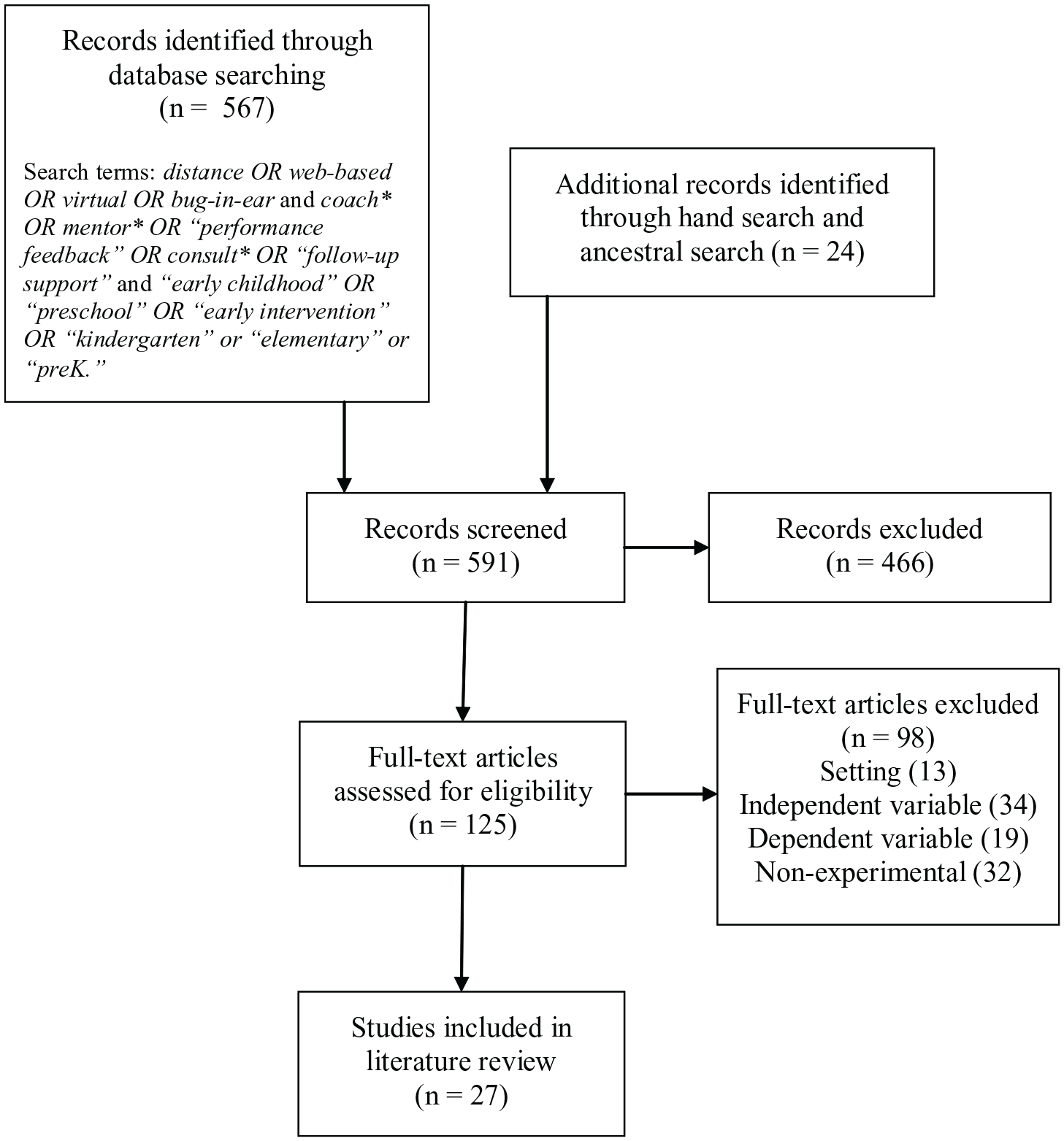
PRISMA Diagram
Search Reliability
During the review of title and abstracts and the full-text review, a second coder reviewed 27.48% and 22%, respectively, to determine interrater reliability. Reliability was 86.72% for the first screening and 91.76% for the second screening.
Data Coding and Analysis
Variable Coding
Coding Schema
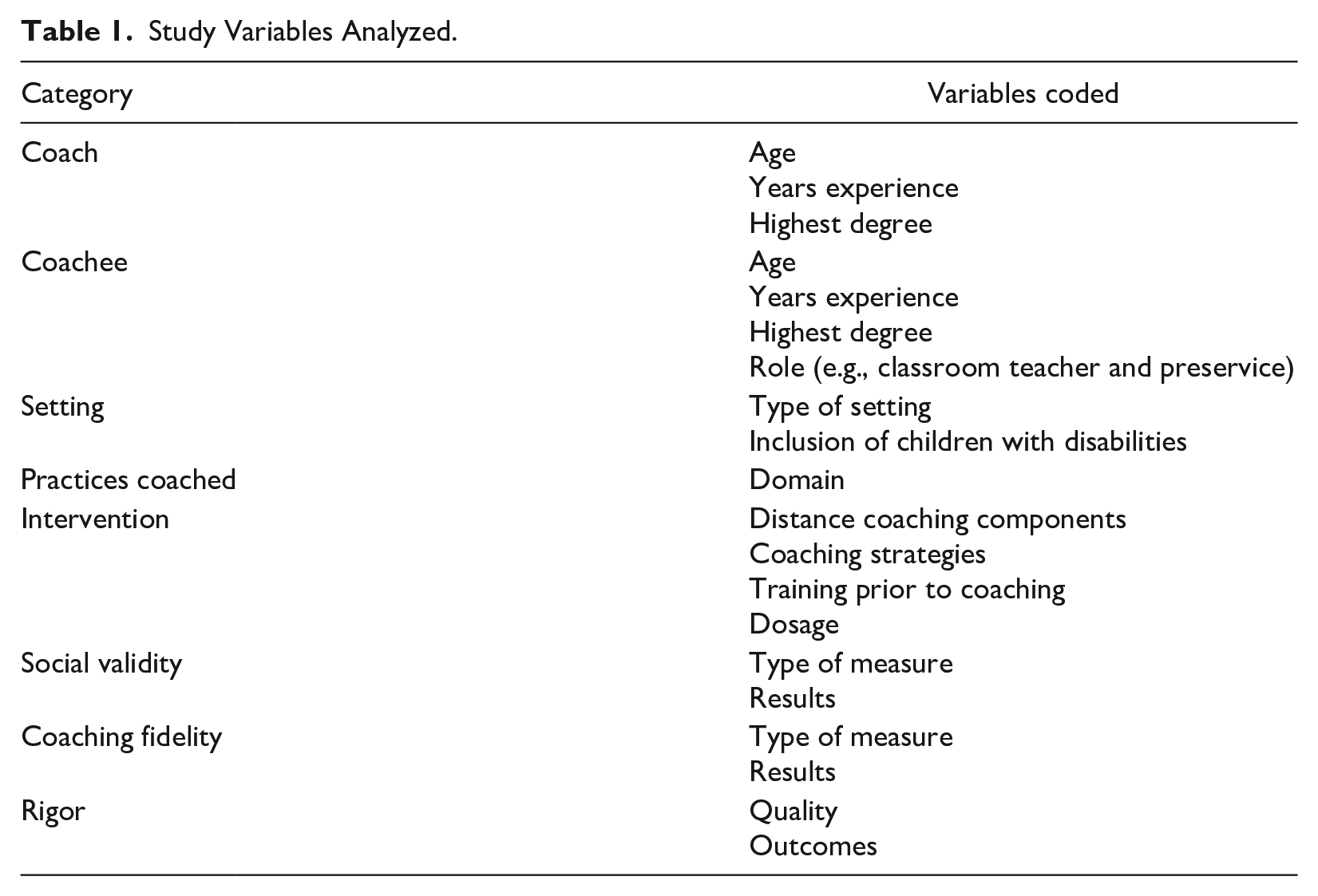
The coding schema was developed based on previous systematic reviews of coaching literature (Artman-Meeker et al., 2015; McLeod et al., 2021) and is available upon request from the first author. The schema included components from the previous coaching reviews, such as demographic information about coaches, coachees, and children; dosage; and commonly identified components of coaching (e.g., goal setting/planning, observation, reflection, and feedback; Artman-Meeker et al., 2015). To determine the generalization to ECSE settings, we coded studies to indicate if children with disabilities were included in the ECE setting. See Table 1 for information about variables coded and analyzed.
Study Variables Analyzed.
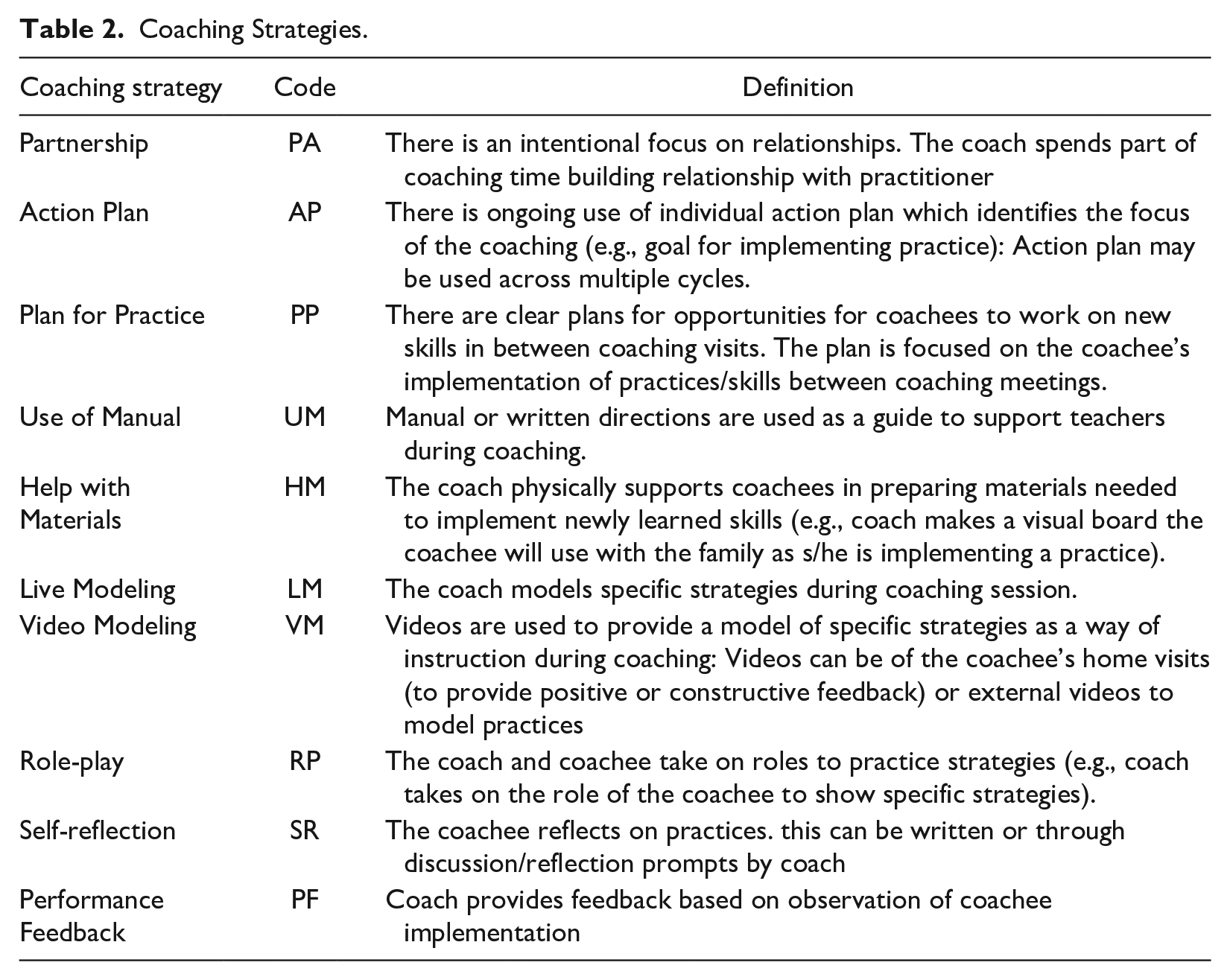
In addition to components included from previous systematic reviews, we also coded studies for the coaching strategies used as part of the intervention and the focus of practices on which coachees were coached. Coaching strategies were adapted from previous reviews of coaching literature (Artman-Meeker et al., 2015; Authors, 2021). Interventions could include multiple coaching strategies, and the strategy had to be explicitly identified in the intervention description in alignment with the definition for the coaching included in the coding. See Table 2 for definitions of coaching strategies. For each study, coders determined if planning, observation, and feedback were provided in-person, via distance, or both. Planning, or goal setting, observation, and reflection and feedback are components identified across coaching models (Artman-Meeker et al., 2015; Kraft et al., 2018). To be included in the review, the study intervention included at least one of these components conducted via distance. See Table 3 for information about coaching delivery across studies. In addition, we coded the practices that were coached on as focusing on one or more developmental domains (i.e., communication, cognition, social-emotional, adaptive, or motor) and/or focusing on caregiver training strategies (e.g., an early interventionist working with a caregiver rather than directly with the child).
Coaching Strategies.
Study Characteristics.
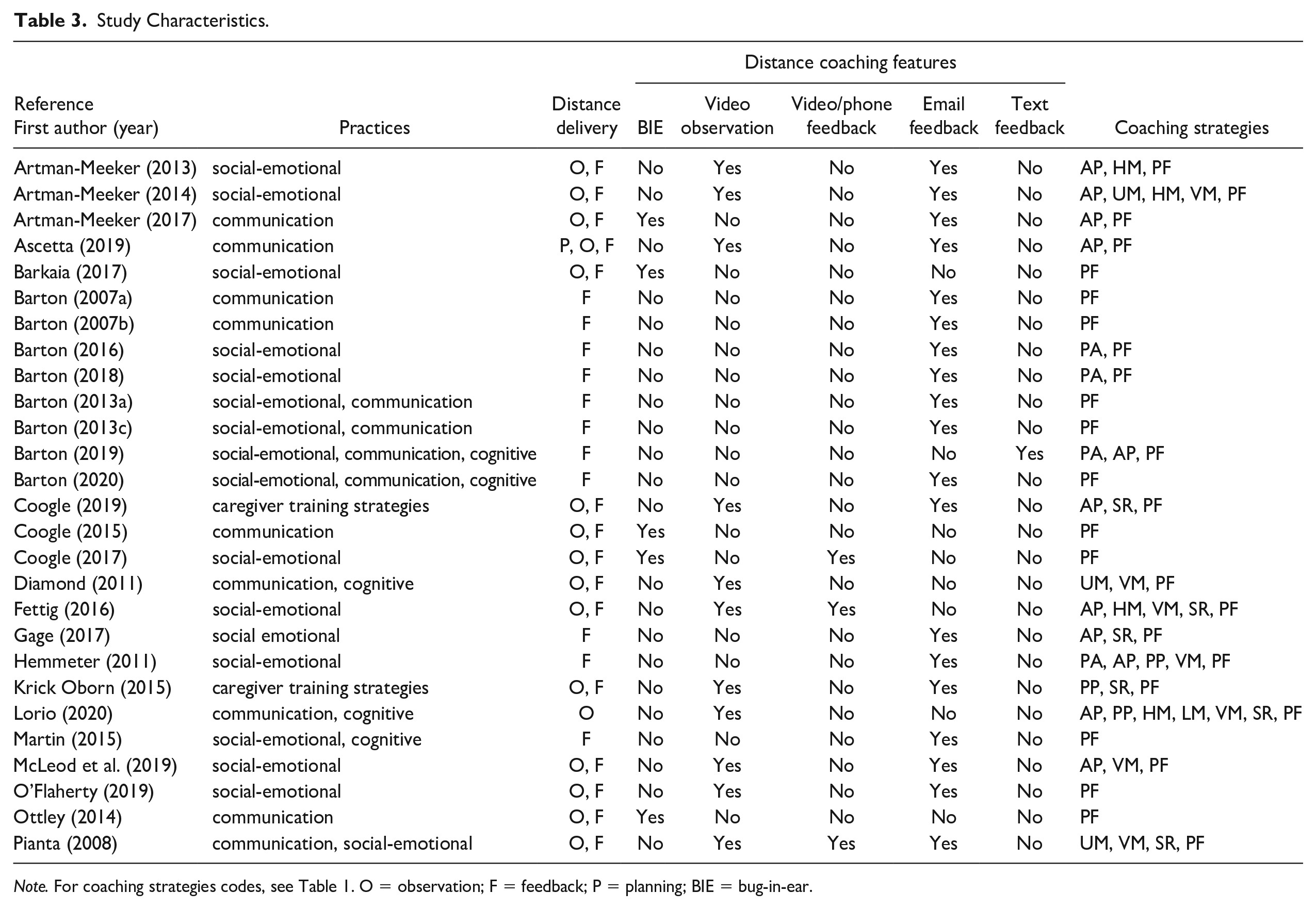
Note. For coaching strategies codes, see Table 1. O = observation; F = feedback; P = planning; BIE = bug-in-ear.
Social validity and fidelity of the coaching intervention were analyzed, as well. The presence of social validity and fidelity measures, the types of measures used, and the results were identified for each study. The presence and outcomes of these types of measures relate to the external validity and quality of the studies.
Coders
We co-developed the final coding schema by independently coding three studies using the drafted coding schema (Authors, 2021). We then reviewed the coded studies together to revise and finalize the code. All three authors have experience with distance coaching. The first and second authors have coached (including via distance delivery methods), trained coaches, provided feedback to coaches on their fidelity of coaching practices, and developed training materials to prepare coaches to support effective practices. Both have also conducted systematic literature reviews of effective practices and coaching. The third author has experience as a coachee through distance coaching for professional development and mentorship. She has also coached, including via distance delivery methods. Each author was randomly assigned one-third of the studies as primary coder and one-third of the studies as the secondary coder using the finalized code, so that all studies were coded by two of the authors. After coding was complete, we met and came to consensus on all codes for all studies.
Rigor and Outcomes Evaluation
Study rigor and outcomes for single-case research design (SCRD) studies were coded according to the What Works Clearinghouse (WWC) Single-Case Research Design Standards Version 4.0 (Kratochwill et al., 2013). Each study was assigned a rating of (1) meets standards, (2) meets standards with reservations, or (3) does not meet standards. This rating was based on six standards: (a) systematic manipulation of the independent variable(s), (b) measurement of the dependent variable(s) over time, (c) interobserver data collected for a minimum of 20% in each phase with a minimum average of 80%, (d) a minimum of three attempts at demonstrating treatment effect, and (e) at least three data points collected in each phase, and (f) at least five data points collected in each phase. Studies were coded as meets standards if all design standard criteria were met, meets standards with reservations if all other standard criteria except item f were met, or does not meet standards if any of items a-e were not met.
Visual analysis of results in SCRD studies was conducted to determine, according to WWC guidelines, if there was strong evidence of a functional relation, moderate evidence, or no evidence. To be identified as having strong evidence, at least three demonstrations of an effect and no demonstrations of a noneffect were present. If at least three demonstrations of an effect, but also at least one demonstration of a noneffect, were present, the results were coded as moderate. No evidence was coded when less than three demonstrations of an effect were present.
Group experimental studies were evaluated using an abbreviated version of the WWC Version 4.0 Group Design Standards, as a full WWC review was outside the scope of this study. The abbreviated version was based on a previous review of coaching studies in ECE settings (Artman-Meeker et al., 2015). Studies were coded for (1) evidence of random assignment, (2) evidence of low sample attrition, (3) measuring and reporting comparability of the experimental and control groups, and (4) measuring and reporting baseline equivalence. None of the studies included in the final review were quasi-experimental.
For group design studies, outcomes were determined through analysis of effect sizes reported by the authors. In addition, effect sizes were recorded to analyze the strength of the intervention in effecting outcomes.
Data Analysis
Coding was completed in an Excel spreadsheet. After coding was complete, the data were summarized within Excel. For numerical variables, data were summarized by calculating minimum, maximum, and mean values. For categorical variables (e.g., observation coded as distance, face-to-face, or no information) and yes/no responses (e.g., presence of coaching strategy), counts of each category were calculated.
Results
Participants and Settings
Coachees
A total of 179 participants received coaching across studies, within a minimum of one to a maximum of 61 per study. The average age of coachees across the 18 studies reporting age was 30.80 years (range 19–63 years). Twenty studies reported years of coachee experience with an average of 8.00 years (range 0–34 years). Eighteen studies reported degrees obtained by the coachees, with the majority (53%; 24 of 45) having a bachelor’s degree. Participants in seven (25.93%) studies were preservice practitioners, and in 18 studies (66.67%) were inservice practitioners. Two studies (7.4%) included both preservice and inservice practitioners.
Coaches
Across the 27 studies, 32 coaches were included, ranging from one to four coaches per study. Across studies, minimal data were reported on coach demographics. One study (3.70%) reported coach age, five (18.51%) reported coach years of professional experience, and four (14.81%) reported years of experience as either a coach or practitioner.
Settings
Twenty-three studies (85.19%) were implemented in classrooms, while four were conducted in home-based settings. Of the classroom-based studies, 17 (73.91%) were identified as inclusive of children with disabilities, while the remaining six did not report this information.
Coaching Characteristics
Distance Coaching Elements
Planning for coaching was conducted in-person in eight studies (29.63%) and via distance in one study (3.70%). The remaining studies (66.67%) did not report this information or did not include an identified planning component. Observations were conducted via distance in 10 studies (37.04%), in person in 15 studies (55.56%), and both in-person and via distance (across different observations) in one study. One study did not include information about the observational method. For those that conducted observation via distance, five used live video and 11 used recorded video. In the majority of studies (25; 92.59%), coaches provided feedback via distance. One additional study (3.70%) included in-person feedback and distance feedback. Distance feedback was delivered immediately through email feedback in 19 studies (70.37%), via BIE technology in five studies (18.52%), and through text messages in one study (3.70%). Of these studies, one study (3.70%) used distance methods for observation only, 14 (51.85%) for observation and feedback, and 11 (40.74%) for feedback only. One study used both distance and in-person delivery for both observation and feedback.
Coaching Strategies
Coaching strategies were used variably across studies. Coaching across all studies included providing performance feedback to coachees. Eleven studies (40.74%) also included action planning as a component of coaching. Seven studies (25.93%) included video modeling, while only one study (3.70%) included live modeling. Self-reflection was a component of the coaching in six studies (22.22%) and coaches helping with material creation was included in four studies (14.81%). Planning for practice between coaching observations and provision of a manual to coachees to guide practice were strategies each included in three studies (11.11%).
Practices Coached
Coaching strategies were implemented to support the use of a variety of practices. In many studies, coaching supported skills across multiple domains and so multiple practices could be coded for each study. Social-emotional-related practices, including those focused on positive behavior supports, were the focus of coaching in 17 studies (62.96%). Communication practices, including practices that support language skills, were a focus in 13 studies (48.15%). Coaching supported practices related to cognitive skills, including play, in four studies (14.81%). Caregiver training strategies, which could support skills across domains, were the focus of coaching in two studies (7.41%).
Dosage
Dosage information was coded for how often coaching occurred and the duration of the coaching intervention. The majority of coaching interventions included coaching more than once per week (15 studies; 55.56%). In six studies (22.22%), coaching occurred weekly, and in two studies (7.41%), coaching occurred every 2 weeks. Four studies did not report how often coaching occurred. The majority of studies (19; 70.37%) did not specify how long the intervention was implemented. In the remaining eight studies, the coaching intervention was implemented from a minimum of 4 days to a maximum of 1 year, including less than 1 month in two studies, 1 to 3 months in five studies, and 1 year in one study.
Rigor and Outcomes
Twenty-three studies used SCRD to analyze the effects of distance coaching on coachees’ uses of effective practices. Of these studies, six (26.09%) met the WWC Single Case Research Design Standards and an additional 16 met standards with reservation (16; 69.57%). Studies that met standards with reservation met all standards except inclusion of five data points in each phase. Only one study (4.35%) did not meet design standards. The study that did not meet design standards, met all requirements except including at least three data points in all phases.
Upon visual analysis, the results in 12 (52.17%) of the SCRD studies provided strong evidence, six studies (26.09%) provided moderate evidence, and five studies (21.74%) provided no evidence of a functional relation. Of 16 studies that provided email feedback as a distance coaching element, eight studies (50%) provided strong evidence, four (25%) provided moderate evidence, and four (25%) provided no evidence of the effectiveness of the intervention. Of the four studies that used BIE to provide distance coaching, two (50%) provided strong evidence, one (25%) provided moderate evidence, and one (25%) provided no evidence of a functional relation. See Table 4 for SCRD design standards and evidence outcomes.
Single-Case Research Design Standards and Evidence Outcomes.
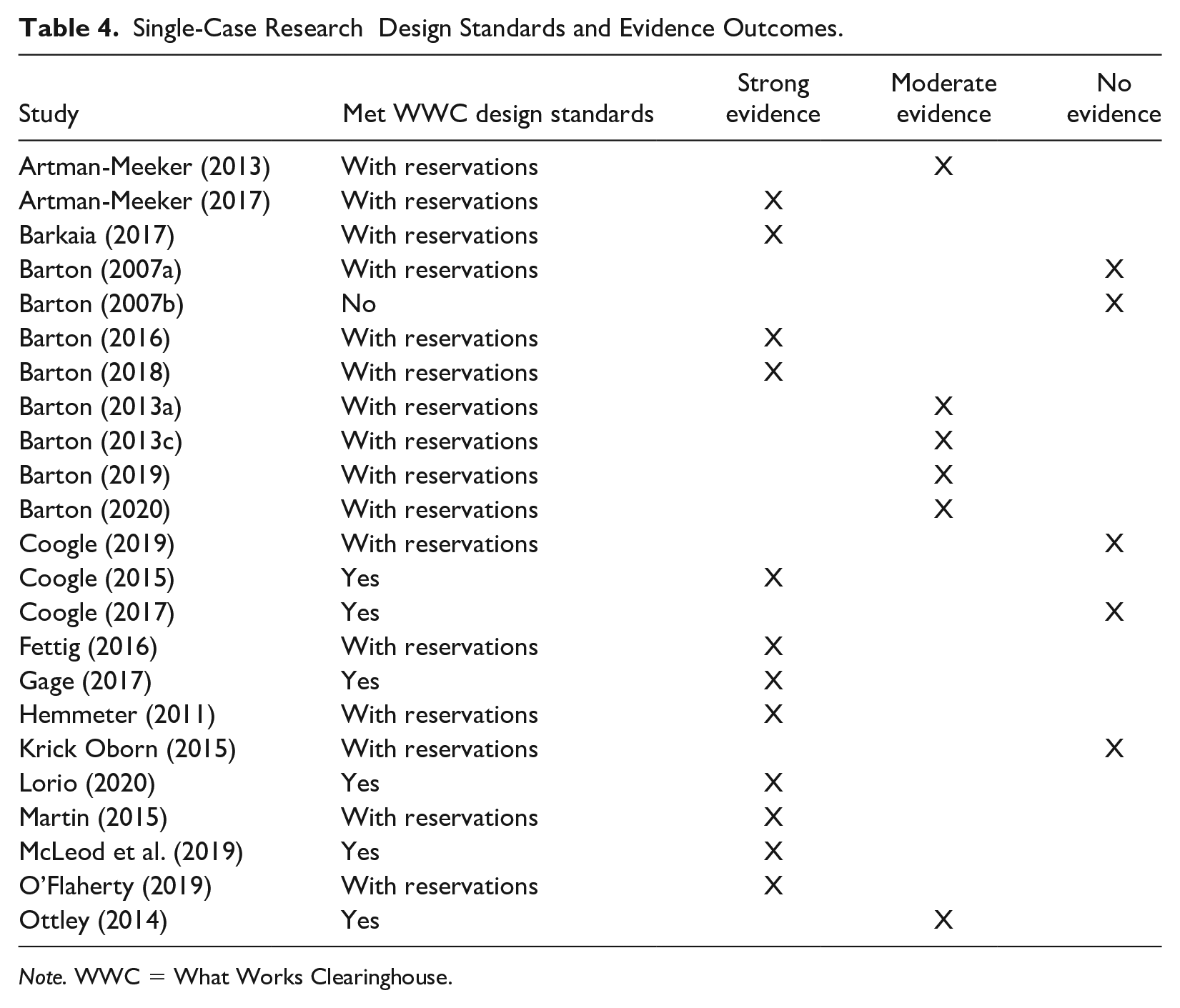
Note. WWC = What Works Clearinghouse.
Of the four studies used a group experimental design, one (25%) demonstrated all four markers of rigorous design—random assignment, low sample attrition, measuring and reporting comparability of groups at baseline, and establishing baseline equivalence. This study reported effect sizes of .01 and .20 for the two reported measures of coachee outcomes. Two studies (50%) included the use of random assignment and low sample attrition. Across these two studies, effect sizes ranged from .55 to .85 in favor of the intervention participants on coachee outcome measures. The final group design study (25%) only used random assignment of the four markers and did not report effect sizes of outcome measures.
Coach Training and Fidelity
Twenty-three (85.16%) of the studies included a coaching fidelity measure. Some studies reported more than one fidelity measure. Of the studies which reported coaching fidelity, 18 used a procedural fidelity checklist. One study scored video recorded coaching sessions for adherence to coaching protocol. Six of the 19 studies delivering email feedback reported coachee response rate as a measurement of fidelity. Two studies used frequency of feedback as a measure of fidelity, but one of those did not report a fidelity percentage. Twenty-one of the studies that included a fidelity measure reported fidelity percentages. Across these studies, the average fidelity was 98.92%.
Only two studies (7.41%) explicitly stated that training of coaches occurred. In both studies, it was indicated that coaches were trained on the practices being coached. One of the two studies also included training for coaches on coaching practices.
Social Validity
Twenty-two (81.48%) of the studies included a social validity measure. Of the studies which reported social validity findings, 19 used a survey, questionnaire, or interview of the participants to assess validity. Two additional studies assessed social validity by surveying nonparticipants regarding the intervention. One study included both surveys of participants and surveys of nonparticipants. Of the 22 studies reporting social validity data, all reported positive ratings.
Discussion
We reviewed the distance coaching literature to determine how distance coaching has been conceptualized and implemented and to characterize the rigor and effects of the extant research in ECE settings. This extends the current early childhood coaching literature, which includes a general literature review of coaching in early childhood (Artman-Meeker et al., 2015) and a review of coaching of home-based practitioners (McLeod et al., 2021).
In our first research question, we sought to elucidate the coach, coachee, and intervention characteristics in distance coaching research. Although the inclusion criteria stipulated that coaching occur in any early childhood settings, it is important to note that the vast majority of studies occurred in settings that were identified as including children with disabilities, and the studies that were not identified as occurring in inclusive classrooms did not provide this contextual information. Recommendations emerged related to reporting of intervention components, coach and coachee background and training, and dosage of coaching. These all impact the degree to which the findings of this research can be generalized to similar or different contexts.
Distance coaching can be implemented in different ways dependent on which components of coaching are delivered via distance. In our review, we found that planning for coaching (e.g., coach/coachee meeting to determine the coachee’s goal and/or action plan for implementing the practice) was typically not reported as part of the intervention. It is important that study authors specifically delineate their approach to coaching, including what types of coaching strategies they use and how distance coaching is used (or not) for each of those strategies to identify effective distance delivery combinations.
Similarly, reporting participant and study characteristics was an important issue that emerged from our review. The need for improved reporting of demographic and intervention information has been noted in other recent reviews (Brunsek et al., 2020). In many studies, there were minimal data reported on coaches’ demographic characteristics, experiences, and training. Reporting these data are essential for supporting replication of study results. Without information on how coaches are selected, trained, and supported, it is difficult to translate coaching research into practice. Scalability of coaching continues to be a challenge in the field (Kraft et al., 2018) and could be due, in part, to the lack of information provided about how coaches are prepared for coaching.
In addition, to translate research to practice, dosage information must be reported. Understanding how much coaching is required allows for a more thorough understanding of the intervention and the fidelity with which it is implemented. Given the variation in frequency (every 2 weeks to multiple times per week) and duration (4 days to 1 year) of coaching in the current review, it is clear that additional research is needed to determine the optimal dosage of coaching, which will also likely vary based on coachee characteristics and the complexity of the practices on which they are coached. Despite the importance of dosage reporting, in the current review, 11 studies did not report the number of coaching sessions, and 19 studies did not report the duration of coaching. Elek and Page (2019) similarly found reporting of dosage information lacking in the early childhood coaching literature. The frequency and duration of coaching should be explicitly reported and not require the reader to count data points on a graph.
In answer to our second research question, we reviewed the rigor and outcomes of the studies to determine if distance coaching is an evidence-based professional development strategy. There were mixed findings across the 27 studies. Of the 18 studies with moderate to strong rigor, 12 had strong effects, six had moderate effects, and five had no effects. Although this provides support for distance coaching as an effective professional development strategy, more research is needed. Exploring the specific delivery and characteristics of distance coaching will provide better guidance for the practices related to positive practitioner outcomes (Artman-Meeker et al., 2015).
In regard to our Research Questions 3 and 4, better measurement of fidelity and social validity are also warranted to determine the effects and feasibility of distance coaching. Although procedural fidelity was reported in most of the studies included in this review, there is a need to further study the methods used to measure fidelity to determine if they provide sufficient understanding of the degree to which distance coaching was implemented as intended and the quality of the distance coaching. Quality, which goes beyond adherence to a fidelity checklist, is a critical component of fidelity (O’Donnell, 2008), but it is often unmeasured.
Similarly, the social validity of the distance coaching research bears more in-depth examination. While the studies included in this review that measured social validity reported positive results, they largely relied on participant report. Additional measures of social validity could include evaluation by nonparticipants (Halle, 2019), which was used in three of the included studies, or unobtrusive (i.e., covert) observation of study participants to determine if they use the behaviors there were coached on when data are not, seemingly, being collected (Halle, 2019).
Contributions to the Literature
In this study, we found that distance coaching in ECE settings has mixed evidence supporting its effectiveness. Because of the equivocal results, it is important to continue studying distance coaching with early childhood educators to provide additional evidence regarding its effects. However, in future research, it is necessary for researchers to clearly report coach and coachee characteristics, dosage, coaching characteristics, and distance coaching components used. This will assist in supporting replicability and synthesis across studies. To facilitate this, we developed recommendations for reporting in future distance coaching research (see Figure 2). With detailed reporting, additional analyses and evidence can be amassed to guide stakeholders in choosing coaching delivery methods.
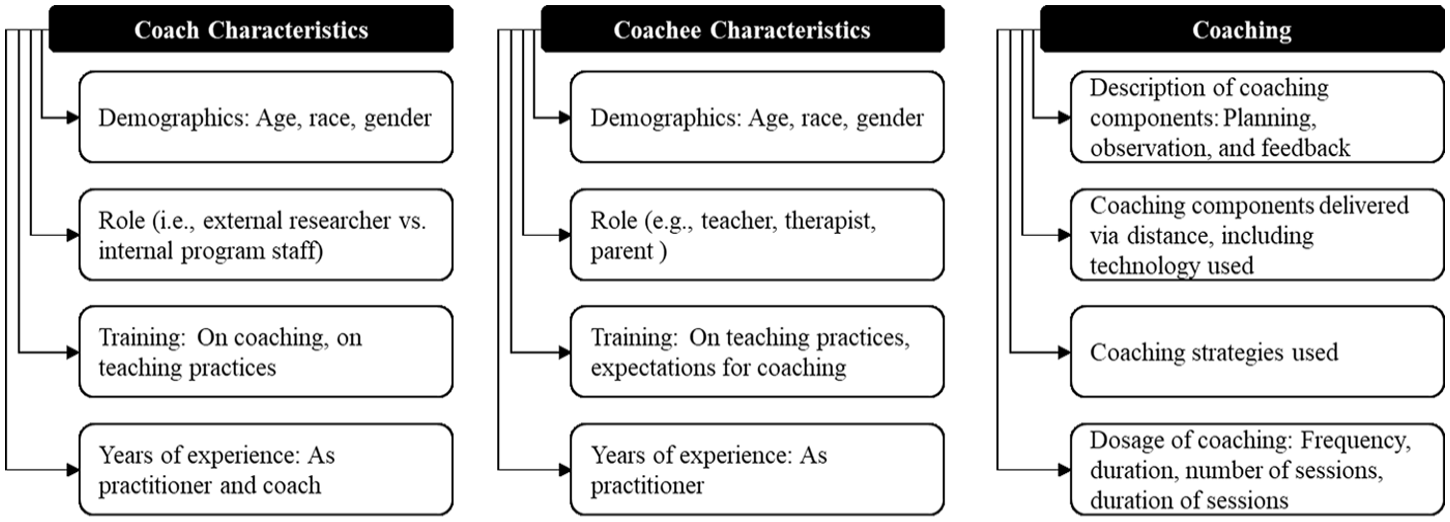
Distance Coaching Considerations for Design and Reporting
Limitations
This systematic literature review included studies that were published in peer-reviewed journals. As such, studies with nonsignificant results may not be represented in the results of the review, due to publication bias. With the variable ways in which coaching is defined and labeled in the literature, it is possible that studies that would meet inclusion criteria were not identified in the literature search and, thus, not included in this review. In addition, this search was conducted prior to the COVID-19 pandemic in which additional experimental research was likely conducted with distance coaching.
Implications for Research
Additional research is needed on distance coaching in ECE settings. First, researchers must carefully report how they engaged in distance coaching, as described above. Second, more work is needed to determine how observations can be provided via distance. Given the potential for distance coaching to support under-resourced communities and practitioners, it is necessary to develop effective and efficient methods of conducting distance observations. Third, there is a need to explore different methods of distance feedback. Particularly, additional research is needed on BIE feedback, and future research should be conducted to guide stakeholders in choosing distance feedback delivery mechanisms. For example, are there situations in which email feedback would be more effective or practical than BIE? We also must determine the relationship between participant characteristics, intervention complexity, distance coaching methods, and dosage. Determining sufficient dosage is a significant question yet to be answered by researchers. More diverse methods in distance coaching research could help address this question, including randomized control trials and mixed methods analyses, in which the perspectives of coachees are solicited in greater depth. Although social validity data were strong across studies included in this review, there is a need for more objective and nuanced understanding of stakeholder views about coaching. Comparison studies of distance and face-to-face coaching would provide additional evidence of effectiveness of coaching delivered via distance. In addition, there is a need to better understand how coach and coachee preferences (for coaching methods, dosage, etc.) can impact the effects of distance coaching.
Conclusion
Through a review of the early childhood literature, we identified 27 experimental studies in which early childhood professionals were provided coaching through some means of distance coaching. Overall, the research supports distance coaching broadly as an effective professional development strategy for early childhood educators. However, more research is needed to identify the most effective delivery and coaching characteristics for implementing distance coaching.
Footnotes
Declaration of Conflicting Interests
The author(s) declared no potential conflicts of interest with respect to the research, authorship, and/or publication of this article.
Funding
The author(s) received no financial support for the research, authorship, and/or publication of this article.
