




Abstract
Background
Rehabilitation for children with cerebral palsy (CP) often includes physiotherapy to enhance community participation and quality of life. Animal-assisted services (AAS) are a novel approach in physiotherapy to increase motivation, enjoyment and wellbeing. Our team conducted a study integrating a rehabilitation dog (Loki) into animal-assisted physiotherapy (AA-PT) for children with CP. This study presents the experiences and perspectives of children with CP who worked with Loki.
Methods
Interpretive Description approach with reflective thematic analysis was used. Semi-structured interviews were completed at two timepoints: T1) single timepoint walking with Loki; T2) after an 8-week AA-PT intervention with Loki (subset of participants).
Results
Ambulatory children with CP aged 7–16 years (n = 11 (T1); n = 4 (T2)) and their caregiver (n = 11 (T1); n = 4 (T2)) participated. Three themes describing the perceived impact of working with Loki were described: 1) Connection, Relationship and Bonding; 2) Being upheld: physical support and emotional safety; 3) Empowerment Through Participation and Confidence.
Conclusion
Children with CP and their caregivers reported immense enjoyment and value in having Loki present as part of the physiotherapy intervention. Centered around an immediate bond formed with Loki, the emotional and physical support children experienced improved willingness to participate in the AA-PT and in community following interactions with Loki.
Keywords
Introduction
Cerebral palsy (CP) is a pediatric neurological condition that causes primarily impairments in gross motor function.(Richards & Malouin, 2013; Rosenbaum et al., 2007) Ambulatory children with CP report that physical impairments impact participation which directly relates to improved quality of life (Omura et al., 2018), an important health outcome for children with CP. (Makris et al., 2021) A systematic review by Lindsay (2016) identified that healthcare providers should focus on enhancing participation and quality of life through interventions addressing social inclusion, physical impairments (e.g., pain) and improving independence for children and youth living with CP. Physiotherapy interventions for walking and balance can help improve gross motor function impairments, quality of life, and participation in meaningful life tasks for children living with CP.(Novak, 2014) Environmental and personal factors can also impact participation for children living with CP and their caregivers.(Earde et al., 2018) To maximize the benefits of PT interventions while minimizing external factors healthcare providers need to consider new approaches to delivering PT.
Animal-assisted services (AAS) such as animal assisted therapy (AAT) in healthcare settings can improve psychological wellbeing and motivation, decrease pain, and improve quality of life.(Allen & Blascovich, 1996; Braun et al., 2009; Elmacı & Cevizci, 2015; Rodriguez et al., 2020) AATs involve a trained professional who thoughtfully and intentionally incorporate a highly trained animal, such as a service dog (trained to assist people with disabilities in daily activities), into goal-directed treatment planning and delivery.(American Veterinary Medical Association, 2024) Rehabilitation dogs are a type of service dog specially trained and certified to work in rehabilitation contexts and provide physical support during functional mobility tasks and training. There is no research to date investigating the perspectives of children and families working with a rehabilitation dog in physiotherapy interventions (AA-PT) and how they might help improve independence and physical impairments.Work in other populations (e.g., stroke and ataxia) has shown that walking with a rehabilitation dog is often enjoyed and may be preferred over other gait aids, highlighting promising psychosocial benefits and the need for further exploration of its impact on physical outcomes. (Abbud et al., 2014; Rondeau et al., 2010) Similarly, Caron et al. (in press) showed a variable influence of a service dog on physical walking performance and spatiotemporal parameters while children reported increased confidence and enjoyment when walking with vs. without the service dog.
The perceived impact of working with a rehabilitation dog from the perspectives of children with CP and their caregivers is critical to inform and identify meaning beyond quantifiable outcome measures. Qualitative inquiry is vital for understanding the mechanisms and contextual factors that determine whether interventions are effective in practice and to inform future implementation. (Jette et al., 2019) Exploring the impacts and experiences described by participants may provide deeper insight to inform future programming and enhance integration of rehabilitation dogs into clinical care. The aim of this study was to explore the impact of working with Loki, a rehabilitation dog, for balance and walking from the perspectives of children living with CP and their caregivers.
Methods
Design
This qualitative analysis was completed as part of a larger study with three main components: 1) a single time point, repeated measures, evaluation of the acute impact of Loki on walking ability in children living with CP (Caron et al., in press); 2) a case series piloting the integration of Loki into an AA-PT intervention for four children living with CP (Caron et al., 2025); and, 3) a qualitative exploration of the experiences of the children and their caregivers who worked with Loki in both projects 1) and 2). For Part 1, children were assessed walking with and without Loki over one 90 min intervention session; for part 2, children participated in an individualized physiotherapy program once per week for 60 min over eight weeks and incorporated Loki into each aspect of training (AA-PT). The AA-PT is detailed in Caron et al. (2025) and was structured around three components: static balance and alignment, walking strategy and strengthening, walking endurance and community navigation where Loki was incorporated as a mobility/stability aid (e.g., holding harness in single leg balance) and motivation/reward (e.g., single leg standing with a dog cuddle). This study was grounded in Interpretive Description (ID), an applied qualitative approach combining perspectives from other traditional qualitative designs to meet the needs of clinical health scientists.(Thorne, 2016) The development, data collection, and analysis of this study were informed by key collaborators on an advisory group including patient partners with CP, practicing pediatric physiotherapists, rehabilitation researchers, and other rehabilitation dog handlers. This advisory group provided broad and diverse perspectives to inform a process relevant and meaningful to those most affected. The research team for this study consisted of two physiotherapist researchers trained in Canada [V.C., S.O.]and Australia [S.J.D.], a rehabilitation researcher [J.P.], an expert in sensorimotor control of balance [A.O.], a biomechanist [J.L.], a rehabilitation veterinarian[R.P.], a public sociologist with expertise in human-animal interactions and AAS [C.A.D.], and Loki, a three year old Labrador-Bernese Mountain Dog who was trained as a mobility assistance service dog, in French, by the Fondation Mira (Montréal, QC). Our advisory team also included a patient advisor living with CP, three pediatric physiotherapy advisors, and a physiotherapist with experience integrating a rehabilitation dog similar to Loki in an adult neurological population. We acknowledge that our ways of knowing are grounded in Eurocentric, ableist, colonizer/settler paradigms which will influence how we frame questions, engage with participants, and interpret findings, highlighting the need for reflexivity and openness to multiple ways of knowing throughout the course of this study. Also, the positionality of the interviewer as the interventionist and handler of Loki throughout the study timeline [V.C.] may have influenced how the interviewees interacted or responded during the interview. A biopsychosocial approach to care and research was integrated throughout this research project and conscious steps were taken to gain insight from patient, clinical and research advisors to inform data collection, analysis and presentation. This study was approved on ethical grounds by the Research Ethics Board of the University of Saskatchewan and obtained operational approval by the Saskatchewan Health Authority.
Participants
Purposive critical case sampling was used, aligned with Braun and Clarke's (2021) approach to reflexive thematic analysis, which emphasizes the generation of meaning through interpretation rather than relying on concepts like data saturation or redundancy, which may be less applicable in this context. All participants, children 6–18 years living with CP (n = 11) and their caregivers (n = 11) who participated in the acute assessment, and the case series (n = 4 children and n = 4 caregivers) were intentionally selected to participate in a semi-structured interview as part of every assessment (Baseline or “acute”, Pre-intervention, post-intervention and follow up). (Caron et al., in press, 2025) Including children with CP and their caregivers who directly experienced walking and working with Loki ensured that the voices of those most closely engaged with the intervention were central to addressing the research question. Included participants were ambulatory children living with CP, who were able to walk 10 meters six times, and were able to respond to verbal instructions and provide verbal or physical cueing to Loki independently. No children or their caregivers declined to participate in the interviews or reported difficulties in verbal communication that may have limited their ability to participate in the semi-structured interviews. An alias was attributed to each participant to protect their identity.
Data Collection and Analysis
Data collection was consistent with an interpretive approach: The research physiotherapy assessor [V.C.] kept field notes and journaled about each interaction. As data collection was inductive and iterative, minor modifications were made to the interview guide throughout data collection. Data were collected as part of a larger study including 2 parts: an acute, single time point comprehensive assessment of walking with and without Loki; and an AA-PT intervention. At each research assessment timepoint, a semi-structured interview was completed by the research physiotherapy assessor [V.C.], who had more than seven years clinical experience and three years mixed methods research experience, with participants and their caregiver. Consent was directly and separately obtained for interviews by the participants for their own participation and their consent for their caregiver's participation. Consent was then obtained from the caregiver to participate. Semi-structured interviews were conducted in the clinical research assessment space with the caregiver and the participant in the room together. A semi-structured approach was used, and questions were open-ended to allow the interviewed individuals to confirm and clarify responses as needed (Supplementary Material 1). Interviews were audio recorded and transcribed verbatim prior to analysis. Prolonged engagement for those participants in the intervention portion of the study allowed the interviewer to gain familiarity and deeper understanding of those participants’ experiences.(Patton, 1999)
Three researchers were involved in primary analysis [V.C., J.P., S.D.]. They independently reviewed the audio recordings and transcripts several times to ensure accuracy and nuances of wording. Reflexive thematic analysis was conducted as a robust exploration and interpretation of patterns where themes are directed by the content of the data.(Clarke & Braun, 2013) Themes are defined as patterns of shared meaning that underpin a central concept or idea in the data. (Clarke & Braun, 2013) Analysis was broken down into phases: 1) transcripts were independently reviewed by three separate researchers [V.C., J.P., S.D.], 2) preliminary coding and themes were discussed as a group when researchers met and labels were associated with the entire dataset; 3) researchers reviewed the dataset with preliminary codes and potential themes; 4) researchers met to collate codes, and themes were reviewed and defined; and, 5) researchers looked through transcripts for data that would refute or not fit into identified themes.
Results
Eleven children living with CP, between the ages of 7 and 16, and a caregiver for each child (n = 11) completed the interviews. Demographics of each child are outlined in Table 1. All children included were ambulatory and presented with a spastic form of CP; with six children classified as Gross Motor Classification Score (GMFCS) I and five as GMFCS II. Seven children and their caregivers completed the acute time-point only (Caron et al., in press); an additional four completed the entire AA-PT intervention timeline over 24 weeks. (Caron et al., 2025)
Demographic Data for Each Included Participant with Cerebral Palsy (CP).
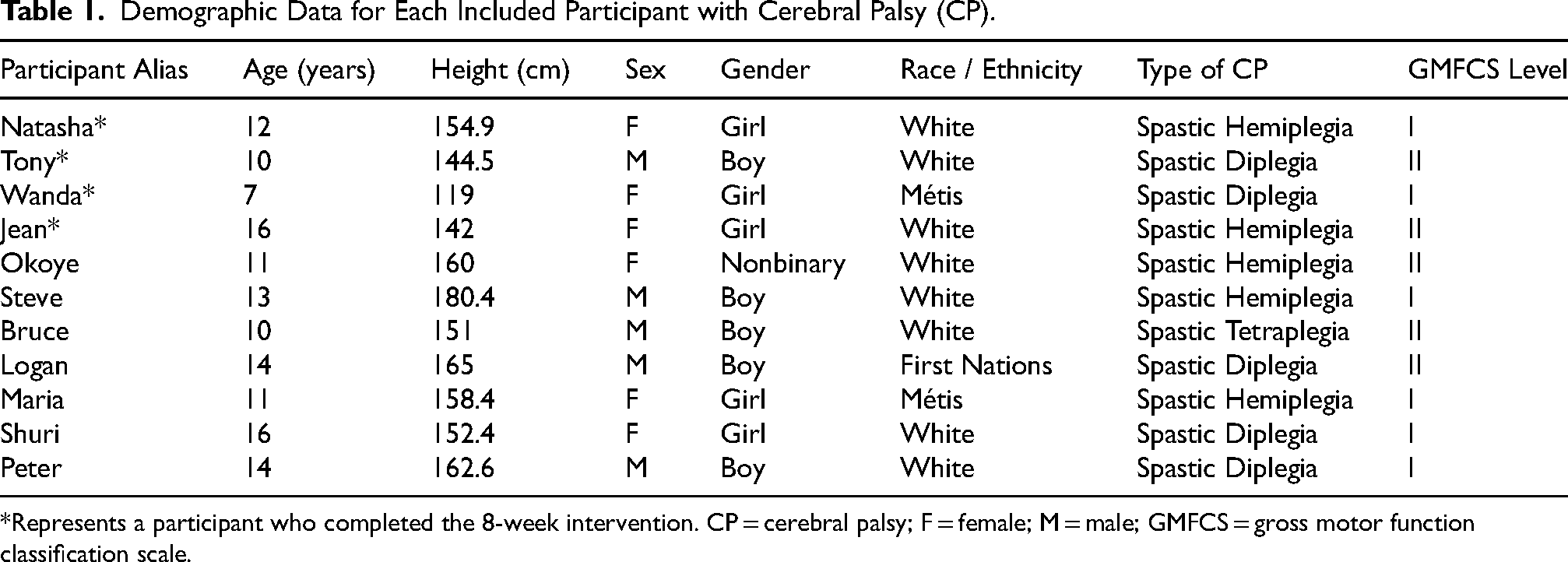
*Represents a participant who completed the 8-week intervention. CP = cerebral palsy; F = female; M = male; GMFCS = gross motor function classification scale.
Three interacting themes were identified, labeled, and described (Figure 1). The overlap of these themes highlights the interconnected impacts of working with Loki and the strong bond formed between Loki and each participant: 1) Connection, Relationship and Bonding 2) Being Upheld: Physical Support and Emotional Safety; 3) Empowerment Through Participation and Confidence.
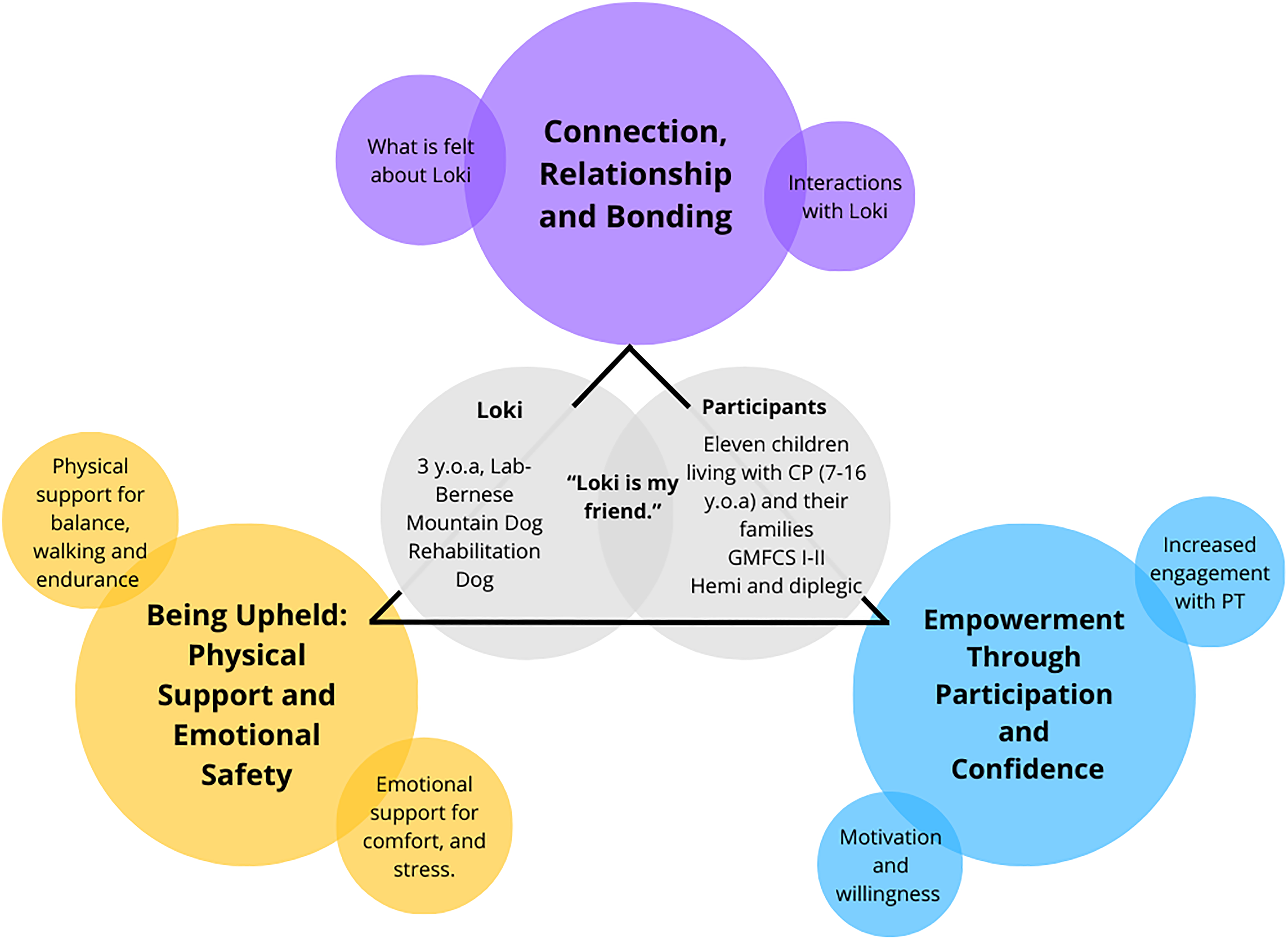
Three Interacting Themes Illustrate the Experiences and Impact of Working with Loki, a Rehabilitation Dog, for Children Living with Cerebral Palsy and their Families.
Theme 1: Connection, Relationship and Bonding
Children and their caregivers identified that there was an immediate relationship formed with Loki from the moment they met him. Upon entering the research space, children gravitated towards Loki and demonstrated enthusiasm at meeting him. All sessions began with an introduction and interaction between the child and Loki. Participants who worked with Loki over the course of the 8-week AA-PT further described this bond to broaden and deepen the longer they spent with him. Participants identified two important parts of developing a relationship with Loki: 1) what they felt or noticed about Loki; and, 2) how interactions helped develop the connection with Loki. Throughout the acute and intervention timepoints, participants indicated that they felt safer and more assured with Loki throughout their interactions with him. The following quotes are examples that articulate how participants felt about Loki (* indicates participants who completed the full AA-PT intervention).
“I feel like I developed a really strong bond with Loki! I wrote: “with Loki I feel safe and confident, happy, I was so sad to leave him he was the best, the end”. I don’t need to take breaks with Loki. I drawed four hearts, the hearts mean that I love him.”
“It feels good and more comfortable when I’m walking with Loki for me… it's my body that's like comfortable. I feel tiny bit more safer that I’m not going to fall.”
“He makes me feel better than always.”
No negative emotions or experiences were reported by participants describing their work with Loki. The emotional connection with Loki was distinct from the physical interactions each child experienced with him; however, these aspects were intimately connected, as the physical interactions supported the development of the bond as demonstrated through the following quotes:
“When I come, he runs to me and it makes me feel happy.”
“Favourite part…. Giving him belly rubs… he liked those.”
“yeah, I liked walking and petting him.”
Children and their caregivers identified that there was a learning curve when working with Loki that initially presented some challenges. Within one session (90-min acute timepoint assessment), children adapted quickly, demonstrating improved ability to navigate and respond to cues and feedback with Loki.
“I did notice at the beginning that the balance seemed to be lopsided, but as the confidence grew, getting used to the harness and the dog, um, the confidence in walking actually improved. [They] stood more upright didn’t lean forward as much during their walking and just seemed more confident once they got used to the dog. The first couple [walks] you could tell they were getting used to [walking with Loki], not super comfortable. Especially with the moving of the head and the eyes closed.”
Children mostly focused on the fact that Loki was trained in French, but they also mentioned challenges with using each cue correctly and maintaining his walking speed. At the acute timepoint, many children noted that Loki's slower pace sometimes made it more difficult for them to keep up
“… You find walking with Loki harder because of the French?”
“Yeah, that's right. He doesn’t know English…a bit of a learning curve…”
“It was a bit harder… Because Loki doesn’t walk fast.”
Theme 2: Being Upheld: Physical Support and Emotional Safety
Children and their caregivers perceived an increase in physical and psychosocial support from Loki. Physical support was described as beneficial for balance, walking ability, and endurance, as well as providing enhanced mechanical and sensory input. Emotional safety and psychosocial support was evidenced through consistent reports of feeling happier, safer, less stressed, or less nervous.
“I think that having dogs present is definitely almost, already a proven anxiety reducer. I’m not sure, well today's circumstances for us, coming in, anxiety was probably a little bit higher than normal… I didn’t realize how big he would be, and I think that's super beneficial. Like the size seems to be really great size for increasing [their] stability as [they] walk. So that was kind of cool to see.”
Caregivers and children noted that there was a difference between interactions with Loki and their own pets (i.e., other dogs) in that his service dog training created an enhanced therapeutic space. Specifically, participants identified that his training instilled an immediate confidence in Loki's ability to support them physically, leading to a stronger and more positive working relationship. Both children and their caregivers reported that Loki provided sensory support (e.g., through his handle or fur) and physical support (e.g., bracing during balance challenges) during the sessions (Figure 2).
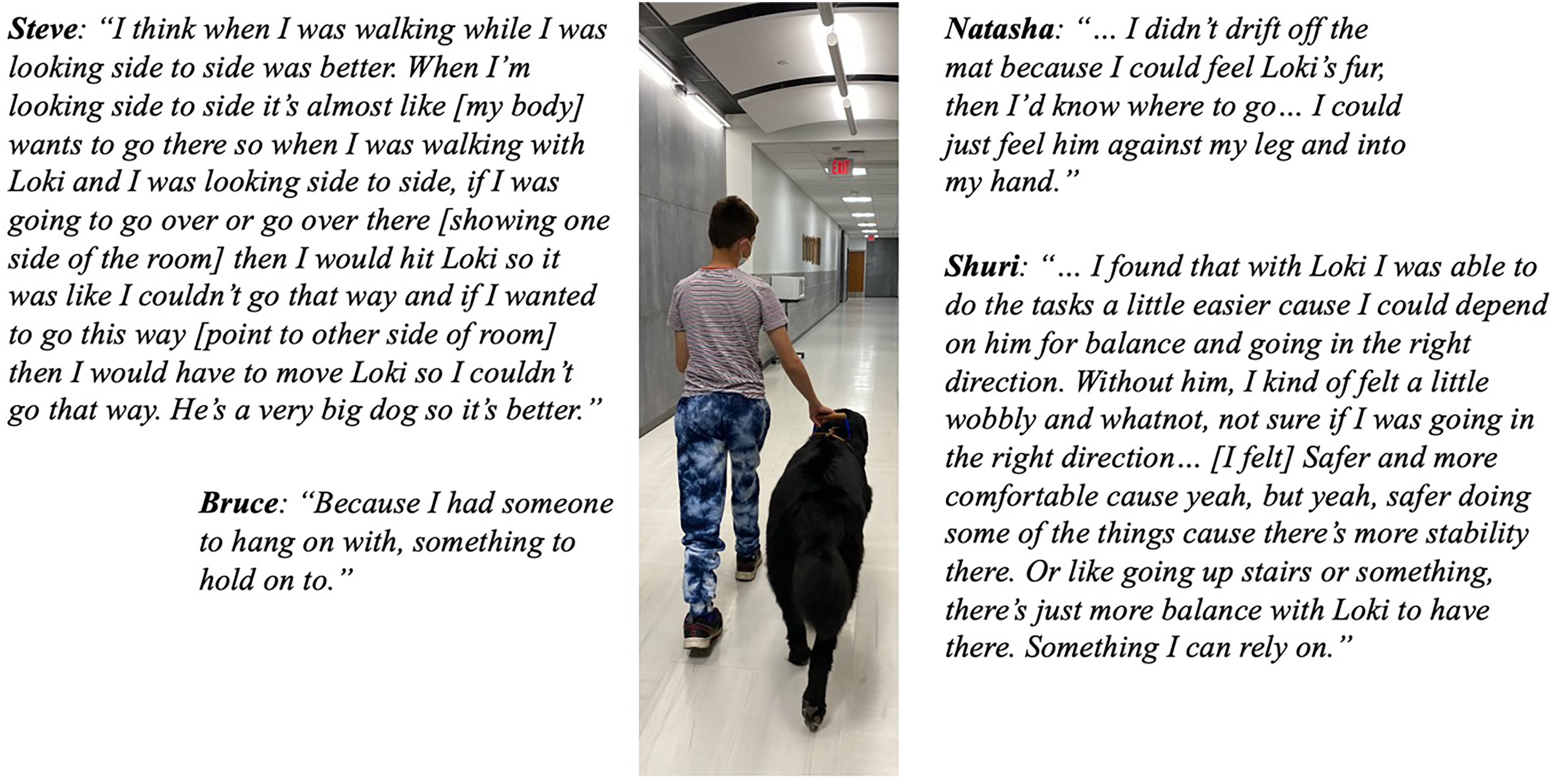
A Child Walking with Loki, the Rehabilitation Dog, Accompanied by Participant Quotes Describing the Physical Support Provided During Sessions. Photo Taken by the Researcher with the Child's Permission, Included to Visually Highlight Aspects of their Interaction.
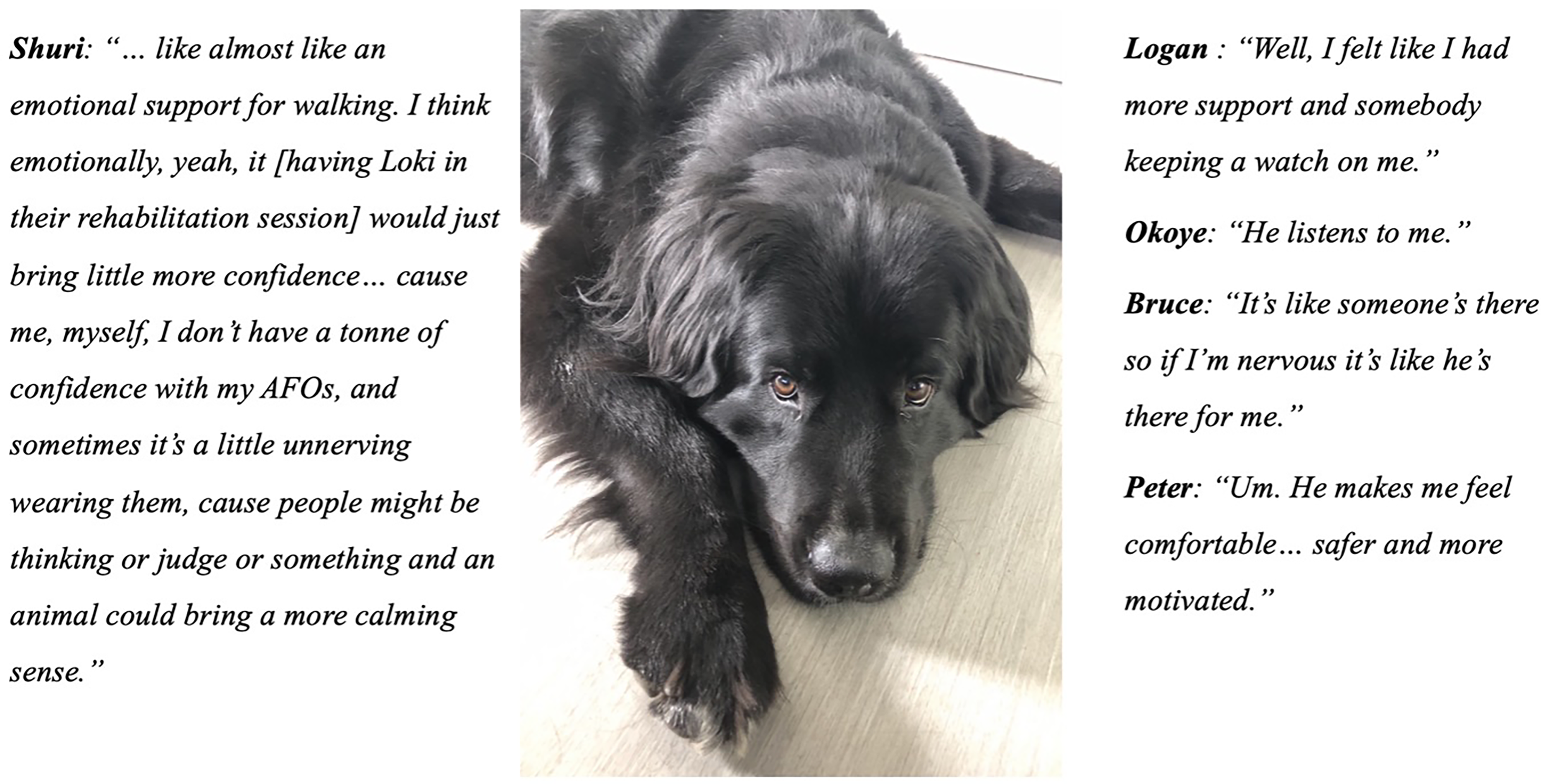
Loki, the Rehabilitation Dog, Pictured Alongside Participant Quotes Describing the Emotional Support Provided During Therapy sessions. The Photo was Taken by the Researcher and Included to Visually Highlight Aspects of the Child–Dog Interaction.
Participants also indicated comfort and confidence in knowing that Loki could prevent a fall and made them more stable when walking. Caregivers reported falls prevention as a key goal for their child and identified this as an important part of Loki's training and role in PT interventions.
“… it helps with the balance and it was a really easy way for her to challenge herself cause she can kind of brace herself on him and can kind of slowly let go and take her time with that… It's more challenge than I suppose holding onto a chair…it's more dynamic that way, so that, I think that's good.”
[They] seemed more steady and stable, was not falling over, was able to go in one direction. That's like one of the things that I’m always scared of is that he is going to lose his balance and fall.
“Yeah, I think so, I think there would be value to [having a specifically trained service dog in PT or in school], especially for kids that are more prone to falls, to have something there to hold on to and to trust, I think there is a lot of value there.”
“I was more balanced”
Children identified that Loki offered valuable emotional support during the sessions. Particularly, they felt comforted by his presence, which helped reduce stress and nervousness throughout the rehabilitation session. They also identified that having Loki present for the session improved their confidence and motivation to participate in their walking.
“Do you remember what you wanted to do when you started to get stressed?”
“um walk the dog further, and um yeah sit with him.”
“those [medical appointments] are stressful. It's stressful without him…I have someone to lean on.”
Theme 3: Empowerment Through Participation and Confidence:
This theme highlighted the interconnectedness and importance of developing a bond and the impact of the emotional and physical support that creates increased participation and engagement for these children. It was noted that working with Loki helped them to overcome feelings of frustration or dissatisfaction that were experienced with more conventional PT treatment. It was also discussed that they felt happier and were having more fun during the session when Loki was present (Figure 3).
“just cause actually two reasons, one is because I can get pretty upset and angry sometimes and dogs like Loki help me calm down like really fast and also if like I’m super stressed out I can just like hug Loki and I would be like feeling better.”
“I feel happy, …, I feel like I’m having more fun when I’m with Loki…More fun than just going for a walk cause I can walk with the dog, he's there for me.”
“…for her personally, cause I know she really connects with animals, especially dogs, having him around as an emotional support when she felt frustrated or overwhelmed, just to be able to take that break and get a little fur rub, uh was definitely helpful cause I’ve seen her shut down a lot trying to do hard things and I think I’ve seen her do more physically hard things in the last 8 weeks than I think I’ve ever seen her do or be willing to try. So, I think there's definitely some value to having him around whether he's physically involved in the balance or movement or just there as an emotional support. I’ve definitely seen her do more hard things and be willing to do them.”
Caregivers and children reported that working with Loki enhanced participation and engagement in meaningful activities within and outside of the rehabilitation sessions. They reported being more motivated to attend sessions and try new things with Loki and this translated to increased willingness to try those same tasks at home or school. This motivation and willingness appeared to foster exploration and curiosity around their own physical abilities. This was contrasted with caregivers reporting how challenging rehabilitation had been in the past for their children and expressing how much having a dog present might have altered those difficult and stressful appointments. Increased engagement in sessions with Loki provided an opportunity to practice skills and learn how to work with Loki.
“We spent a lot of therapy sessions just trying to coax [Bruce] to try therapy things when he was a little bit younger and having a service animal…that’ll be a um a motivator or almost like I’m not alone, I can do this. I remember trying every trick in the book just to try and get [them] to walk down the hallway. But if he was walking with a dog or a service animal in general I think it would be helpful in those kinds of situations where the kids don’t want to do anything or just to make them feel more comfortable. And sometimes it can shift that focus from [sighs] I don’t want to do the work to this is fun now. And it is a comfort thing, you know, sometimes when there's something like stretching, you know it's not fun, and it can be painful and sometimes that would be a distraction almost just to have an animal there that you can pet and not focus on the stretching or whatever is going on. So I think in that way that would be a big benefit.”
“She's less reluctant, um well she's actually excited to come instead of reluctant to come. I think when she walks with Loki she goes farther and doesn’t really think about it at all. Like she doesn’t say anything about being tired. Um she's more willing to participate than in typical physio or medical appointments, she does feel more comfortable and um I think that can be attributed to less anxiety, feeling more comfortable. And she complains less when she's doing something. Often she's not even holding onto him and she's still willing to do things and try them so just him being in the room is a good idea.”
Participants drew parallels between their increased willingness to participate in walking training activities and potential benefits of these activities. This was reported as added value to treatment sessions. Participants and their caregivers identified having Loki in their sessions as beneficial and valuable for the child not only to provide support but also to improve physical activity levels and promote movement-based treatments.
“I think he was much more willing to do walking having Loki with him. And think that would be something that would get him to do the activities. Because otherwise [they] are like no I want to sit on the couch and play video games.
“And uh and endurance wise, I think Loki is really beneficial for somebody like [them] to keep them motivated to keep going.”
“… it would be easier to walk with this big man [i.e., Loki]… He helped me get a lot of steps in today.”
“… I think that the value that service dogs bring to people, in general is grossly underestimated.”
He's just the best dog. He's the best dog for my walking.
Discussion
This study uniquely identified that the participants perceived value from working with a rehabilitation dog that extended beyond the physical training. Working with Loki increased enjoyment and desire to attend training sessions and helped children feel like the training sessions were for them. Our findings show that the children genuinely enjoyed the time they spent with Loki and perceived that their walking ability improved based on comfort, confidence, and sense of support. An increase in confidence and autonomy that came from connecting with Loki perhaps enhanced engagement in physical training (in addition to the physical support described) leading to a compounding beneficial effect. These findings contribute to the understanding of the role of integrating a service dog into physical rehabilitation.
An “active ingredient” of working with a rehabilitation dog from the children's perspective potentially centered around the added element of bonding with Loki. This connection appeared to increase confidence and autonomy and provide a sense of support. The importance of building rapport and creating a therapeutic alliance in conventional physical rehabilitation is well established.(Bamm & Rosenbaum, 2008; O'Keeffe et al., 2016; Rosenbaum & Gorter, 2012); however, integrating a dog with the potential of a human-animal bond (HAB) is perhaps another way to increase motivation and enhance training outcomes in physical rehabilitation. The American Veterinary Medical Association (2024) describes the HAB as “a mutually beneficial and dynamic relationship between people and animals that is influenced by behaviors essential to the health and wellbeing of both” (para. 1). Not all participants had a chance to work with Loki for more than one 90-min session, but it seems that even one session with Loki led to meaningful impact. The element of establishing a relationship and bond leading to a sense of support and increasing motivation and participation was described regardless of how much time participants spent with him. This immediate bonding has been described in other populations working with therapy dogs, where even a short amount of time proves to be beneficial for participants’ sense of mental wellbeing with decreased stress, improved sense of calm, and even improved pain.(Carey et al., 2022; Dell et al., 2022). This rapid connection may be attributed to the innate social and emotional intelligence of dogs, which allows them to sense human emotions and provide non-judgmental companionship, creating a therapeutic relationship that feels natural and immediate.(Fine, 2019; Fine et al., 2019; Friesen, 2010) Previous AAT/AAS have centered this therapeutic human-animal connection and has shown a direct influence on outcomes of these therapies (Allen & Blascovich, 1996; Elmacı & Cevizci, 2015; Rodriguez et al., 2020) and improved relaxation, interpersonal communication, and day to day function in children.(Braun et al., 2009) AAT research has primarily been focused on mental health-type interventions; however, there is a growing base of physical rehabilitation interventions incorporating AAS across different populations (e.g., ataxia, Parkinson's Disease and stroke).(Abbud et al., 2014; O’Neal et al., 2020; Rondeau et al., 2010) Although our AA-PT emphasized physical training, the therapeutic bond element described by participants should be further investigated. The HAB that was built in these interventions between the child and Loki is a dynamic and reciprocal relationship that contributes positively to the rehabilitation environment.
Children also identified that the sense of support they experienced from Loki added to their positive experience within the walking intervention. Physical support was an important part of children feeling safer when attempting more difficult tasks (i.e., walking with eyes closed); however, Loki's speed of walking was reported to occasionally challenge participants. Loki was trained to walk to the handler's speed and so it is possible that he was walking to the child's speed, and the child was trying to walk to the dog's speed and, overall, this may have accounted for a slowing of pace. Our findings showed this learning curve with Loki was improved as time progressed within one session and was potentially even more refined for children who completed the intervention. Rondeau et al. (2010) found that adults who were recovering post stroke improved their speed of walking when walking and training with a rehabilitation dog (Fondation Mira, Montréal, QC). Abbud et al. (2014) found that adults living with cerebellar ataxia found working with an assistance dog helped promote autonomy, improved confidence, and reduced the sense of judgement of others about using a walking aid. This was similar to our findings where children identified that working with Loki made them feel supported in the medical environment and that a dog might remove some of the stigma associated with wearing Ankle-Foot Orthoses or using a gait aid (Participant Shuri). Emotional support was also highlighted as improving psychosocial health for the children in their sessions. Rodriguez et al. (2020) highlight similar findings, where service dogs provide important psychosocial benefits through assistance and companionship. Interestingly, children described that having Loki there made them feel like the training sessions were actually “for them”. This emphasizes the continued need to advocate for an improved child and family-centered care approach to medical interventions.(Chiarello et al., 2010)
Participation and engagement are important aspects of promoting independence in community and peer-group activities.(Chiarello et al., 2010; Palisano et al., 2009) Our findings showed that Loki seemed to increase participants’ enjoyment and desire to attend physiotherapy and their willingness to try more difficult tasks. Creativity and motivation are necessary to encourage children to participate and practice to the level that they need to for improvement in walking ability; (Reedman et al., 2017; Reedman et al., 2021) integrating a service animal may be a unique way to do this in physical rehabilitation for some children with CP.
Limitations
The results are based on self-reported perceptions from children given in front of a researcher and their caregiver which may have led to respondents answering based on how they perceive they should answer rather than reporting their true perceptions. Although no verbal communication disorders were reported, some respondents did have some difficulty expressing themselves fully, and many caregivers would elaborate or broaden the child's response. There were also some moments where clarity of response may have presented as a limitation to interviewing children and their ability to describe what they were feeling physically and emotionally. Interviews alone may not be the best way capture a child's experience and expressions, particularly in verbal format given that many children living with CP (across GMFCS and types) may have associated communication disorders.(Pennington, 2008) Future research could include a multi-modal data collection approach with art-based expression or other visual capture methods such as photo elicitation or videos taken from the child's perspective. Using varying methodological approaches when working with children has been shown to improve depth and relevance in other areas (i.e., Sociology and Nursing). (Bartoli, 2020) It may also be of interest to evaluate the impact and effect of a rehabilitation dog in adult rehabilitation settings. There is the likelihood that findings may be biased by the fact that the participants who were recruited had self-identified as liking dogs. Future research should consider integrating a rehabilitation dog into a setting with a more varied population that includes individuals who are neutral or even dislike dogs to better understand the limits to the therapeutic role of integrating an animal into physical training.
Conclusion
Integrating Loki, a rehabilitation dog, into physiotherapy assessment and training for children living with CP enhanced enjoyment and motivation. There was an important role of developing an immediate relationship with Loki and its positive impact on their experience working with him. Participants noted that incorporating Loki into training provided essential support and companionship, boosting their confidence and sense of safety. Loki also acted as a unique mobility aid for individuals with CP, improving both physical and psychosocial outcomes by encouraging independent walking. This approach also led to increased confidence, autonomy, and participation in both training session activities and community walking outside of training. The additional value of a therapeutic HAB should be further explored for its impact on rehabilitation outcomes.
Footnotes
Acknowledgements
This research was conducted on Treaty 6 and Treaty 4 Territories and the Homeland of the Métis. We acknowledge and thank the First Peoples of this land and reaffirm our commitment to respectful relationships with one another. We would like to thank the children and their families who committed to and invested their time in this project. We are grateful to the Fondation Mira (Montréal, QC) for training Loki and supporting our research team throughout the study. Thank you to Jodi Walkner and Erin McCormick for their support in recruitment for this case series. Thank you to Dr. Kyra Kane and the team at Wascana Rehabilitation Children's Program for supporting this project. We would also like to acknowledge Dr. Elizabeth Condliffe and Dr. Gary Linassi for their input on this work. Thank you to all the members of our extended team for their immense contributions, particularly Loki, who always put his whole heart and self into bringing joy to everyone he met.

Ethical Considerations
This study was approved by the University of Saskatchewan's Human Biomedical Research Ethics Board (REB-Bio#1091) and the Animal Research Ethics Boards (AUP# 20190049).
Consent to Participate
Each participant and their family and/or guardian reviewed and provided informed consent for the research assessments and PT intervention.
Consent for Publication
Each participant and their family and/or guardian consented to images/media being captured during the data collection process and intervention and for these images to be shared in published materials.
Funding
The authors disclosed receipt of the following financial support for the research, authorship, and/or publication of this article: Funding for this project was provided by a Saskatchewan Health Research Foundation Collaborative Innovation Development Grant; the Branch Out Neurological Foundation Graduate Scholarship; the Saskatchewan Centre for Patient Oriented Research PhD Scholarship; and the College of Medicine, Health Sciences Program at the University of Saskatchewan.
Declaration of Conflicting Interests
The authors declared no potential conflicts of interest with respect to the research, authorship, and/or publication of this article.
Supplemental Material
Supplemental material for this article is available online.