




Abstract
Dr. Peter Leone is an internationally renowned researcher and advocate for incarcerated youth. Throughout his almost four decades at the University of Maryland, his expertise and research have influenced lawsuits related to the provision of education and special education services in juvenile corrections and paved the way for changes in policy and practice. Dr. Leone shared his reflections on his career, progress that has been made in juvenile justice education, urgent matters, future directions, and recommendations for future juvenile justice educators and researchers.
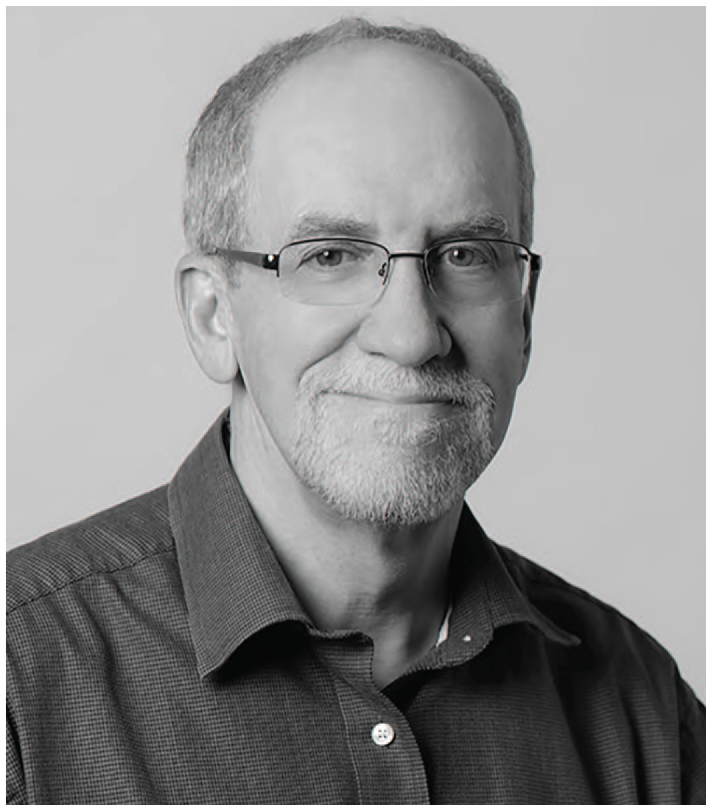
For over 39 years, Dr. Peter E. Leone is a name that has immediately come to mind when discussions turn toward the education of incarcerated youth with and without disabilities. Since receiving his PhD from the University of Washington in 1981, Dr. Leone has carved out a unique approach to advocacy wherein he leverages his expertise in special education law to serve in various roles, such as special master, expert, and court-appointed monitor. Over the years, he has worked on high-impact lawsuits, including Handberry v. Thompson, Andre H. v. Sobol, Johnson v. Upchurch, Donnell C. v. Illinois State Board of Education, and Alexander v. Boyd. His work has given rise to observable changes in juvenile correctional facility policies and practices throughout the United States.
Dr. Leone’s teaching, research, and service are also targeted at improving understanding, promoting action, and affecting positive change in the services provided to these troubled youth. His research and publications have tackled issues such as the school-to-prison pipeline and school violence, as well as ensuring youth safety and the provision of education/special education services within juvenile correctional settings. Dr. Leone is widely known for his leadership of the National Center on Education, Disability, and Juvenile Justice (EDJJ).
Over the years, Dr. Leone has further impacted the field via service activities. Of particular note is his work on the Board of Directors for the See Forever Foundation and Maya Angelou Public Charter Schools.
After 3 or 4 years, I decided that I needed to move because I’d been in Iowa for 12 years.
I read this great article in the Atlantic about the Pacific Northwest and what a cool place it was. It was about Washington, Oregon, and, I think, Idaho. I said, “Yes, I’m going to move to the Northwest.” I applied to one graduate school, and I applied to the Seattle Public Schools simultaneously. They both came through. I said, “No, I think I’ll do graduate school,” because there was federal money for tuition and internships and things like that, so I moved to Seattle.
I can’t remember how I learned about the process, but I think I contacted public interest law firms, the Center for Law and Education in Boston, and groups like that, and I just asked about it. When I learned about a hearing, I would write to someone, and they would mail me the results of the hearing. I did an independent study paper on due process hearings in special education. I do not think any of them had to do with juvenile justice as much as what are the limits of the law, and what do parents have to do versus what do school districts have to do. It really whetted my appetite and my interest in the law.
There was [also] a faculty member named Tom Lovitt, who was a single-subject researcher at the University of Washington. He was not my advisor and he was not even on my [dissertation] committee. I did some early research with him on kids who had been seen at the Experimental Education Unit at The University of Washington. Tom was an amazing writer and a very methodical researcher. I just learned so much from him. It was just phenomenal. I’ve tried, at least early in my career, to emulate the care that he put into what he wrote, how he considered evidence, and how he presented himself. He was, I would say, like Mr. Rogers. He was soft-spoken. He opened his mouth and everyone listened because they had such respect for him. Tom was a major influence in my professional career.
There were others as well. There’s another faculty member, Gene Edgar, at The University of Washington, who became a friend and colleague. What was cool about him was he was an early childhood special educator who decided he was interested in older kids and just flipped the switch and started studying older kids. At the time he retired, that was what he was known for. It made me think about how we organize information. How we decide who studies what? What gives you the authority to study anything? Gene’s approach to life and to just careful inquiry was influential, as well.
On the justice side, you had Shay Bilchik, who was the head of OJJDP (Office of Juvenile Justice and Delinquency Prevention in the Justice Department). He embraced the importance of this, as well. You really had a number of things like that coming together. Mike Nelson, Rob Rutherford, Bruce Wolford, and I early on anticipated that there was going to be an RFP (request for proposal). We didn’t know the dates and all the timing and the like, but we really thought about what it would look like. We decided that it needed to involve an element of service, some kind of teaching or staff development components, and then, of course, some research activities. We also believed that we needed to support the development of the next generation of scholars and advocates who would come along.
There have been other initiatives. After Shay Bilchik left OJJDP, he spent time at the Child Welfare League before coming to Georgetown University to set up the Center for Juvenile Justice Reform. It was much broader than education issues—disproportionate minority confinement, education, conditions of confinement. Then, they would bring teams together from different jurisdictions for 5 days of training. They published several monographs. I think they’ve been very successful at what they do, particularly in raising awareness of the issues.
The other thing I came across was kids being pushed to graduate early using a credit recovery program. No one is going to argue, I think, with the importance of helping kids earn academic credentials. Some of the credit recovery programs and some of the ways in which they operate are not much more than—just keep on guessing until you come up with what’s the right answer, and if you fail the quiz three times, just ask your teacher, she’ll reset it for you. Credit recovery online can also be compromised when students can talk to someone sitting next to them, “You took this quiz, help me out here”; that happens.
The more pernicious side is that kids get their diploma or their certificate of completion, and in many systems if they’re still incarcerated, they have no educational services. In some states by law, if you have a high school diploma, the educators in juvenile corrections are not allowed to continue to serve you. So, you have 85%, 90% of kids in a facility going to school each day. The kids who are graduates? They’re in the day room watching TV, playing cards, or they’re locked in their cells.
My most memorable experiences have been working with students in higher education who get excited about serving kids with EBD and understanding the systems in which those kids get entangled. I’ve never thought that everybody needs to do what I do and not everyone needs to go on to get a PhD and do research. However, I believe that what people all need to do, if they’re interested in these kids, is to figure out where their niche is. Working in the system, making sure that they serve kids well, and making sure that they’re not afraid to raise their voice and say, “Look at our agency or school’s mission. Here’s what it says, here’s what we’re telling everyone we’re doing, but here’s what we give kids. Here’s what they experience.”
I would hope that students that I’ve come into contact with would appreciate the value and the importance of keeping data on some phenomenon so that they are able to move beyond, “This is bad and here’s why,” but rather, “We’ve kept track over the last 3 months of how much actual education time kids have. We’ve kept track of how long kids sit in intake after being detained before they get into classrooms.” You have some data that you build on. Or academically, “Here’s the profile of the kids who come in here, and here’s what they need for graduation. Here’s a group of kids that need some intensive literacy support,” and we’re not doing anything, or what we’re doing is not adequate for their needs. Let’s figure out how to do that.
I’m not aware of where all of my former students are, former graduate students, but I’m aware of where most of them are and what they’re doing. It’s really gratifying to see what folks are doing, what they’re interested in.
Also, there’s some good evidence that suggests that the younger that people first go to juvenile corrections, the more likely they are to experience a whole host of negative outcomes, involving health, employment, education, poverty, and possible reincarceration. I think we need to think about all kids as the future, and the potential that all kids have. Clearly, we want everyone to be productive, self-fulfilled individuals that have agency and choice.
One of the underlying frameworks that I have and that finds its way into my language when I’m being deposed, when I’m testifying, when I’m working with folks around these issues is the idea that education is crime prevention. More highly educated kids who are more literate, who have earned certificates, and who feel good about their abilities have hope for escaping a destructive cyclical path that too many are on. Providing a high-quality education makes facilities safer, it decreases the likelihood that kids will be living in poverty as adults, it decreases the likelihood of them graduating from juvenile to adult corrections, it decreases the likelihood of them reoffending and coming back into the penal system. What we need to do is make self-interest arguments and help people understand that a strong educational program is in their best interest and it’s in the best interest of their communities.
I think kids who’ve been disconnected, kids who’ve experienced school failure, and kids with a history of special services, often they’re caught in this remedial loop. Certainly, they need to develop new skills and become more proficient, but they also need to experience the joy of learning and discovering. Those kids, the kids that are marginalized and incarcerated, they need to have that experience, too.
Footnotes
Declaration of Conflicting Interests
The author(s) declared no potential conflicts of interest with respect to the research, authorship, and/or publication of this article.
Funding
The author(s) received no financial support for the research, authorship, and/or publication of this article.
