




Abstract
Addressing Grand Challenges requires innovative pedagogical approaches that equip future leaders with the skills to navigate complex, systemic, and dynamic global issues. This article presents international innovation camps as an instructional innovation for preparing business students to address Grand Challenges. We present insights from two three-week international innovation camps held in 2023 and 2024, a collaboration between business schools in Finland and Mexico focused on the pressing issue of overweight and obese populations—a systemic and structural problem that links individual-, organizational-, and societal-level challenges. These camps aim to develop in students the competencies and mindsets required to address this particular Grand Challenge, namely: (1) critically analyzing dominant problem framings, (2) navigating governance structures to identify collaborative opportunities, (3) engaging in iterative problem-solving through design thinking, and (4) developing systemic, context-sensitive solutions. To achieve these pedagogical objectives, the camps immersed students in real-world problem-solving environments grounded in an experiential learning framework that emphasizes cross-contextual immersion, multivocal stakeholder engagement, and intercultural collaboration to develop innovations tackling the Grand Challenge of mitigating the individual, social, and economic impacts of being overweight or obese.
Keywords
Introduction
Tackling Grand Challenges requires an integrated approach that combines diverse disciplinary perspectives to address issues that are complex, systemic, and global in scale. Grand Challenges, as defined by George et al. (2016, p. 1881), necessitate “coordinated and sustained effort from multiple and diverse stakeholders toward a clearly articulated problem or goal,” involving, for instance, technological, social,
Among the most urgent of these challenges is addressed within the United Nations Sustainable Development Goals (SDGs), particularly SDG 3, which aims to “Ensure healthy lives and promote well-being for all at all ages.” This goal underscores the global imperative to tackle the obesity and overweight epidemic—a pressing public health crisis highlighted by the World Health Organization (2024), which forecasts a dramatic increase in global obesity, with significant economic, social, and health ramifications. The economic impact alone is projected to reach $4.32 trillion USD annually by 2035—2.9% of global GDP (Lobstein et al., 2023)—stressing the urgent need for comprehensive strategies, including policy reforms, community initiatives, and individual lifestyle changes, to mitigate the epidemic’s widespread effects. The standard definition of overweight and obesity is based on Body Mass Index (BMI), which is a measure of body fat calculated as a person’s weight (kg) divided by the square of their height (m²). According to WHO recommendations, overweight is a BMI greater than or equal to 25, and obesity is a BMI greater than or equal to 30. In 2022, 2.5 billion adults around the globe were overweight, and of these, 890 million were obese (World Health Organization, 2024). A key target of SDG 3 is to reduce premature mortality from non-communicable diseases (NCDs) by one-third through prevention, treatment, and the promotion of mental health and well-being by 2030. Being overweight or obese is a major risk factor for NCDs and increased mortality (Murray et al., 2020). Research indicates that being overweight shortens disease-free life expectancy by approximately 0.5 to 1.5 years in men and 0.6 to 1.5 years in women, while obesity results in a greater reduction—2.9 to 9.8 years in men and 1.5 to 8.8 years in women (Nyberg et al., 2018).
While the overweight and obesity epidemic is a major public health issue, it is also a complex social problem, as its underlying dynamics are often shaped by locally contextualized factors, such as food and health behaviors (Hofmann, 2016; Williams et al., 2015), which remain less globalized than other consumption choices. However, despite these local variations, the epidemic exhibits strikingly similar patterns across many countries, highlighting its global dimension. Addressing this Grand Challenge, which we frame as mitigating the individual, social, and economic impacts of overweight, obesity, and their associated health complications, requires innovative, cross-border collaboration to develop effective solutions that account for both local and global dynamics. In response, we have developed an instructional innovation that leverages international innovation camps to engage students in tackling the obesity crisis. This initiative, a partnership between Finnish and Mexican business schools (hereafter referred to as F-BS and M-BS, respectively), integrates short-term student mobility and design thinking methodologies. By bringing together Finnish and Mexican students with stakeholders from diverse fields, including food, medical science, and technology, these camps foster a dynamic learning environment where students critically analyze, contextualize, and co-develop solutions to this complex global issue.
Through this immersive, intercultural experience, students interact with a diverse range of stakeholders to explore and address the multifaceted dimensions of the obesity epidemic. This interaction provides a real-world context that enhances their understanding of the global scale of the problem, enriched by the local nuances and diverse perspectives that characterize different regions. Moreover, the camps emphasize the necessity of tackling such Grand Challenges through cross-sectoral, multi-stakeholder engagements that cut across geographical and disciplinary boundaries. The obesity epidemic, with its rapid global increase and severe implications (Cassi et al., 2017; Phelps et al., 2024; Samaras, 2016), serves as a prime example of a problem that, while globally pervasive, requires locally contextualized solutions. This educational innovation prepares students to assume leadership roles and responsibilities in addressing critical global issues.
This article addresses two key questions: What competencies and mindsets should students develop to tackle global Grand Challenges, and what instructional innovations can help achieve this? We explore these questions through the illustrative case study of our international innovation camps, which aimed to mitigate the individual, social, and economic impacts of overweight and obese populations. This case illustrates how international collaboration, cross-sectoral interaction, and experiential learning can be combined to develop the competencies and mindsets necessary to address Grand Challenges. Specifically, the camps align with the pedagogical objectives required to tackle the curation, governance, sensemaking, and adaptation obstacles inherent in such challenges (Dorado et al., 2022). They also illustrate how these instructional innovations, by creating an immersive, collaborative learning environment, can be designed to meet these objectives. Moreover, the case highlights the important role of academic, technological, and organizational partnerships in addressing Grand Challenges. Through these efforts, students are prepared to act confidently and competently as leaders, equipped to address complex and dynamic global challenges.
Developing a Pedagogy for Addressing Grand Challenges
In their examination of how businesses engage with Grand Challenges, Dorado et al. (2022) identify four sets of obstacles that define Grand Challenges, upon which business actions can exert influence through framing (or reframing), reinforcing, modifying, or alleviating. These are: curation obstacles, governance obstacles, sensemaking obstacles, and adaptation obstacles. Curation obstacles relate to the processes and structures that determine whether, when, and how a social system problem rises to the definition of a Grand Challenge in the social consciousness. Governance obstacles relate to social organization and coordination of the multitude of different actors who affect or are affected by Grand Challenges. Sensemaking obstacles relate to how Grand Challenges and their potential solutions are framed, including underlying norms and assumptions. Finally, adaptation obstacles relate to the contextual factors that affect curation, governance, and sensemaking obstacles, taking into account the complex, interconnected dynamics that link these obstacles to broader socio-ecological systems. As such, a management pedagogy designed to equip students with the skills and knowledge necessary to tackle Grand Challenges should aim to develop students’ abilities to meet the business challenges associated with these different kinds of obstacles. We provide an overview of the pedagogical objectives relevant to each obstacle and related business challenge in Table 1, with examples of how we achieved these pedagogical objectives by way of the international innovation camps that we will elaborate on in this article.
Management Challenges and Associated Pedagogical Objectives for Overcoming Obstacles to Grand Challenges.
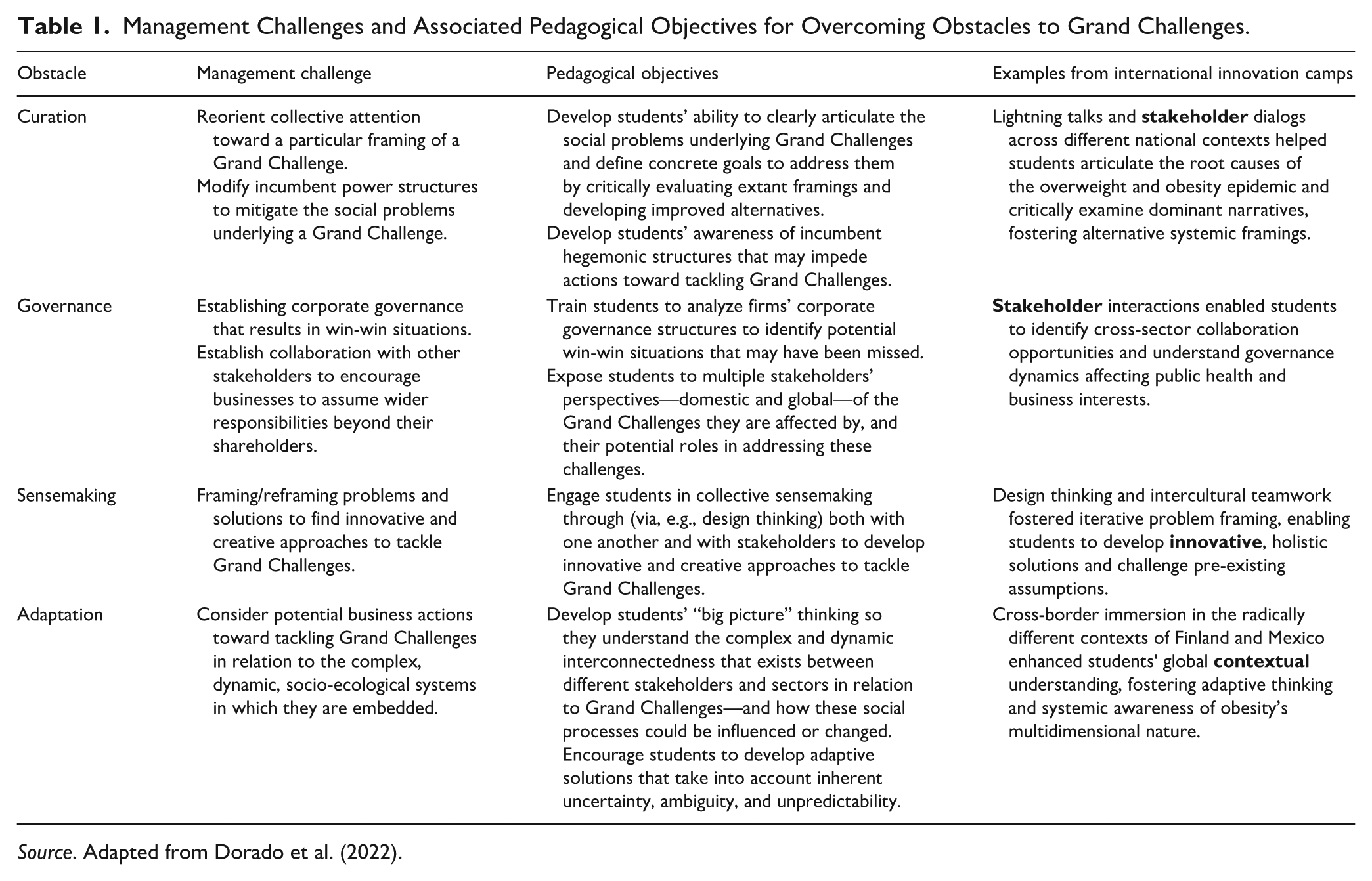
Source. Adapted from Dorado et al. (2022).
Developing a pedagogy to tackle the Grand Challenge of mitigating the individual, social, and economic impacts of overweight and obese populations requires equipping students with the skills and knowledge necessary to create innovative business solutions that address the key curation, governance, sensemaking, and adaptation obstacles associated with the problem. The causes of obesity and being overweight are complex and multifactorial, encompassing genetic, psychosocial, and environmental factors (World Health Organization, 2024). Genetic and metabolic factors influence an individual’s propensity for weight gain and loss, while psychosocial factors—such as eating habits, lifestyle choices, mental health, and addiction—are further shaped by social influences, cultural norms, stigma, and the spread of misinformation. Environmental factors also play a critical role, particularly the food environment (e.g., the affordability and availability of healthy vs. calorie-dense, unhealthy foods, often termed an “obesogenic environment”) and the built environment (e.g., access to spaces for physical activity; Giskes et al., 2011; Swinburn et al., 1999).
Curation obstacles to this challenge determine how the social problem of overweight and obese populations is framed, often emphasizing individual responsibility rather than recognizing it as a systemic issue driven by food environments, corporate influence, and socioeconomic disparities (Temmann et al., 2021). This framing is shaped by industry efforts to downplay the role of ultra-processed foods while shifting attention away from regulatory interventions. Governance obstacles arise from conflicts between public health goals and corporate interests, weak international regulatory frameworks, and fragmented policies that hinder coordinated action (Park et al., 2022). The food industry’s resistance to regulations, such as sugar taxes, advertising restrictions, and stricter labeling laws, further complicates governance efforts.
Sensemaking obstacles hinder the development of effective, systemic solutions, as obesity is often addressed through oversimplified interventions (e.g., calorie counting and exercise promotion) rather than comprehensive changes (e.g., reforming how healthcare is provided, improving urban planning, and rethinking working life). Cultural norms and cognitive biases also influence public perception, slowing innovation and policy implementation (Brewis et al., 2018). Lastly, adaptation obstacles create inertia within social, economic, and institutional systems, making large-scale change difficult. The global food system, urban design, and economic reliance on processed food industries reinforce unhealthy behaviors, while bureaucratic delays prevent timely action (Rose et al., 2022). Adding to the overall complexity of this Grand Challenge, obesity and overweight do not affect all populations equally. The prevalence is rising more rapidly among lower-income groups and in developing countries, illustrating the paradoxical relationship between obesity and poverty (Żukiewicz-Sobczak et al., 2014).
To achieve the pedagogical objectives outlined in Table 1, any management education tool designed to prepare students to tackle Grand Challenges—like mitigating the individual, social, and economic impacts of overweight and obese populations—must develop their skills and knowledge in three interconnected areas. First, students must understand the needs and goals of the diverse stakeholders who are either affected by or have the power to influence the central problem. Second, they need to recognize how both the problem itself and its potential solutions are shaped by local and global contexts. Third, they must develop the ability to innovate solutions that integrate these diverse stakeholders and contexts. In our view, one pedagogical approach is particularly well-suited to fulfilling these objectives: international innovation camps.
Innovation Camps as an Instructional Innovation for Addressing Grand Challenges
In this section, we describe how international innovation camps are ideal for achieving the pedagogical objectives we outlined in Table 1, necessary for tackling Grand Challenges. This is achieved through exposure to a range of cross-sectoral stakeholder perspectives, which generates awareness in students of the various ways these stakeholders frame the problem underlying the Grand Challenge and the role they envisage they play in contributing to and/or resolving it. Combining this multivocal understanding with the cross-cultural awareness they gain through intercultural teamwork and immersion in radically different international contexts enables students to directly observe and experience the social dynamics and corporate governance structures at play in those contexts. Engaging the intercultural teams in innovation processes using a design-thinking methodology, with cycles of interaction between the students and the different stakeholders, challenges the preconceptions held by the students and stakeholders alike, and paves the way for the kind of radical creativity in the innovative solutions produced that are necessary for tackling Grand Challenges (Ferraro et al., 2015).
There is little extant literature on innovation camps or international innovation camps (cf. Milner, 2020; Nisula & Kianto, 2016; Silva et al., 2012), and therefore the concept is not well-defined. For our purposes, we define international innovation camps as intensive, non-virtual group innovation events held across multiple national contexts, during which participants are tasked with developing novel commercial solutions to complex problems. Although participants can be from a single education institution, and the problems can relate to a single company, an international innovation camp aimed at addressing a Grand Challenge is best organized with collaboration from institutions and multiple diverse stakeholders in each locale. The basis of international innovation camps as a pedagogical instrument is experiential learning theory (ELT), where “Knowledge results from the combination of grasping and transforming experience” (Kolb, 1984, p. 41). These innovation camps create intensive learning spaces that enable students to “touch all the bases” of the ELT model: Concrete Experience, Reflective Observation, Abstract Conceptualization, and Active Experimentation (Kolb, 2015; Kolb & Kolb, 2005; Figure 1).
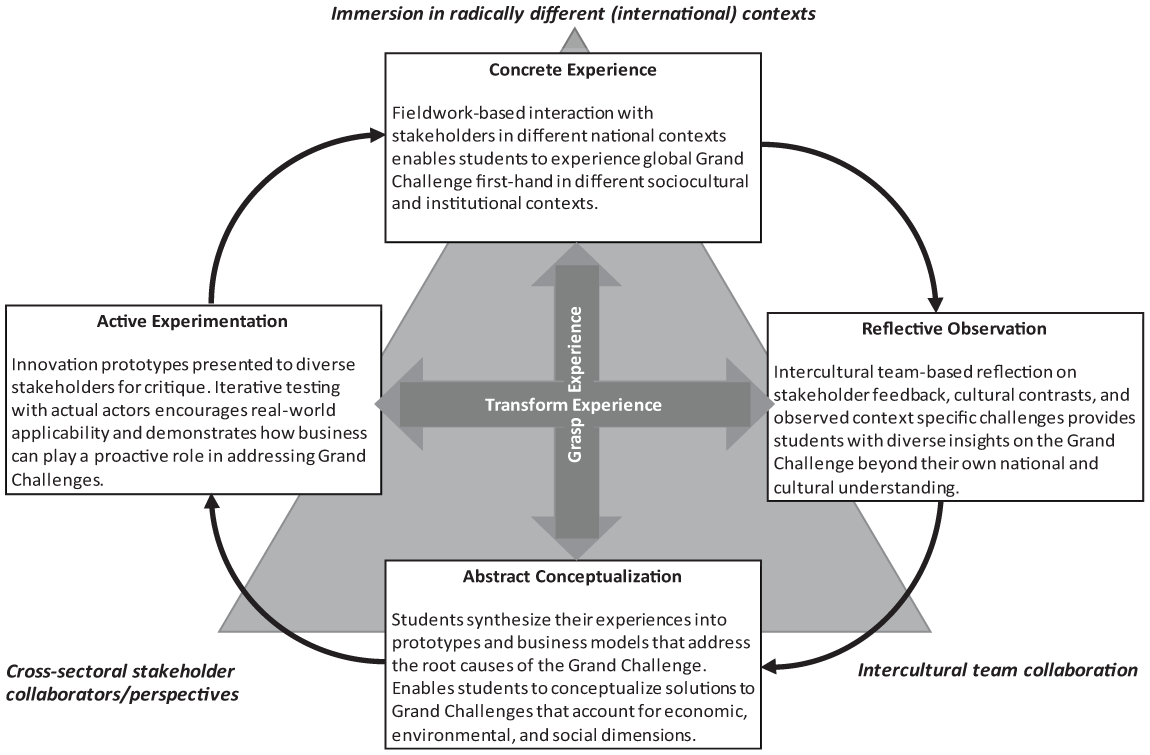
D. A. Kolb’s (2015) cycle of experiential learning adapted to international innovation camps for addressing Grand Challenges.
We argue that international innovation camps are particularly well-suited to fostering students’ learning for addressing the complex problems underlying Grand Challenges. This is because, as we define them, these camps are built around three core components: (1) immersion in radically different international contexts, (2) engagement with multiple cross-sectoral stakeholders involved in the Grand Challenge, and (3) collaborative innovation work in intercultural teams. Together, these elements create a distinctive experiential learning cycle, purposefully designed to help students overcome key obstacles associated with Grand Challenges—as we shall explain below.
Developing Global and Local, Contextual Understanding Through Immersion
While Grand Challenges are global in scope, their impact and influence on various people and places are highly dependent on the specific context. As noted by Coenen et al. (2015, p. 490), “Responses to grand challenges require the development and diffusion of innovations, which . . . is tightly coupled to characteristics of the local environment.” For example, obesity and overweight are challenges faced by both Finland and Mexico, with the most recent OECD data showing that in Finland, 72% of men and 63% of women were overweight, including obese, and in Mexico, the figure is 72% for men and 76% for women (OECD, 2023). Furthermore, health expenditure due to an overweight population is estimated to account for 9% of total health expenditure per year in both countries (OECD, 2019). However, in terms of national context, these two countries are highly dissimilar—Finland, a small, highly developed country in the Global North, and Mexico, a large developing country in the Global South.
As such, there is unlikely to be a one-size-fits-all solution that would work in both Finland and Mexico due to significant differences in contextual factors. Therefore, to tackle Grand Challenges on a global level, a management pedagogy needs to facilitate students in developing an intimate understanding of how different spatiotemporal and institutional contexts contribute to or affect the relationships between different actors. This will provide students with a broader, big-picture awareness of the various ways that global Grand Challenges may manifest in time and space, as well as challenge any preconceptions they may have. When combined, this understanding of actors and contexts will enable students to formulate and clearly articulate their own framing of the central problem and identify clear goals.
International innovation camps constitute field-based learning experiences that provide students with concrete first-hand experience of global Grand Challenges in different sociocultural and institutional contexts. More so than class exercises such as case studies, field experiences enhance experiential learning by allowing students to encounter the phenomena being investigated personally (McCarthy & McCarthy, 2006) and to develop the cultural competencies required to tackle global problems (Hull et al., 2016). In particular, immersing students in radically different contexts from those with which they are familiar facilitates a deep contextual understanding of societal issues (Viswanathan et al., 2011). Blasco et al. (2022) find that short-term field-based learning experiences of this nature, that immerse students in an extreme and radically different context and set them a challenging collaborative task with local students, trigger “disruptions” to their learning habits, including intense sensory impressions and sensations, loss of predictability and control, and learning interdependency. This combination of “top-down orchestration and bottom-up experiences” in turn triggers the ELT cycle and creates “a learning space conducive to acquiring the abilities needed to tackle unaccustomed, unpredictable and challenging contexts” (Blasco et al., 2022, p. 873).
By immersing participants in radically different sociocultural and institutional contexts, international innovation camps expose students to the lived realities of Grand Challenges such as overweight and obese populations, as they manifest in distinct national settings. These field-based encounters move beyond abstract learning, allowing students to engage with diverse stakeholders personally, experience the complexities of local environments, and confront unfamiliar conditions that disrupt their habitual ways of thinking. Such direct exposure offers the rich, sensory, and emotional engagement that Kolb and Kolb (2005) identify as vital for triggering deeper reflection and learning. In this way, international innovation camps cultivate the practical, embodied understanding that forms the foundation for subsequent stages of critical reflection, conceptualization, and active experimentation—ultimately preparing students to address Grand Challenges in nuanced and context-sensitive ways.
Developing Multivocal Understanding Through Engagement With Cross-Sectoral Stakeholders
Due to their scale and complexity, it is well acknowledged that solutions to Grand Challenges require the coordinated collaborative action of multiple diverse actors from both the private and public sectors (Allen et al., 2023; Ferraro et al., 2015; Griggs et al., 2013; Voegtlin et al., 2022; Whiteman et al., 2013). This poses several challenges, such as the conflicting needs and aspirations of various stakeholders (George et al., 2016), differing views on root causes and potential solutions (Holt Giménez & Shattuck, 2011), the difficulty of facilitating meaningful, multi-stakeholder dialog (Hamann et al., 2024), and the resistance to change within established governance structures, even when collaborative solutions are proposed (Allen et al., 2023). Here, the concept of multivocality becomes critical in navigating these challenges. Multivocality refers to the capacity of actions to sustain multiple interpretations among diverse audiences with differing evaluative criteria (Ferraro et al., 2015). In the context of Grand Challenges, multivocality enables the coexistence of diverse stakeholder perspectives without necessitating explicit consensus. This allows more inclusive and adaptable approaches to problem-solving (George et al., 2016), fostering innovation and facilitating engagement across sectors and cultures.
The challenge of mitigating the individual, social, and economic impacts of overweight and obese populations is no exception, involving multiple stakeholders who play a part in both exacerbating and mitigating the problem, and with business lying at the center of the issue. A great deal of research has been published on the relationship between the food industry and the prevalence of obesity and being overweight (see, e.g., Harris et al., 2009; Holsten, 2008; Jeffery et al., 2006; Popkin & Reardon, 2018). Of primary concern is the individual who, as a consumer and a member of society, experiences the direct effects of being overweight or obese. Surrounding them are their employers, food industry players, wearable technology manufacturers, pharmaceutical companies, food scientists, policymakers, physicians, and educators, among others. Collaborations, such as cross-sector partnerships, between these actors have the potential to yield solutions to the problem, but they are not without risks and challenges (Johnston & Finegood, 2015).
Therefore, an essential first step in preparing students to address Grand Challenges of this nature is to facilitate their developing an intimate understanding of the key actors who may affect, and who are affected by, the problem underlying the Grand Challenge, how they subjectively perceive the Grand Challenge, and how they relate to one another in the broader constellation of stakeholders. Incorporating multivocality through engagement with cross-sectoral stakeholders in the design and execution of these educational experiences enables students to grasp the complexities of Grand Challenges while fostering the adaptive and inclusive thinking needed to drive meaningful change in diverse real-world contexts.
When innovation camps are organized around devising new product ideas for a specific company (e.g., Silva et al., 2012), this narrow focus lacks the multivocality that is required for devising complex interdependent solutions for Grand Challenges. Instead, exposing students to a wide array of perspectives through engagement with multiple stakeholders, including businesses (i.e., large and small, domestic and multinational), government, and non-profit organizations, provides them with in-depth first-hand accounts of how the underlying problem is understood or framed by these different actors, and what kinds of governance structures may be involved. These perspectives are the inputs to cycles of sensemaking between and among students and stakeholders that characterize the innovating process that unfolds over the duration of the innovation camp.
The multivocal engagement with cross-sectoral stakeholders nurtures both abstract conceptualization and active experimentation. As students process the diverse perspectives encountered during the innovation camp, they move beyond simply recognizing difference to formulating integrative frameworks and conceptual models that account for the complexity of Grand Challenges. This abstract conceptualization enables them to synthesize competing narratives, governance structures, and stakeholder interests into more inclusive and adaptable problem-solving approaches. Yet learning does not stop at theory. Through the collaborative innovation process, students actively test and refine these conceptual insights by co-creating and prototyping innovative solutions with their peers and having them critiqued and evaluated by stakeholders. In this way, active experimentation enables them to apply their evolving problem framings in real-world contexts, iteratively adjusting their solutions based on stakeholder feedback and emerging insights. Ultimately, this experiential learning process equips students with the practical and conceptual tools needed to drive meaningful, collaborative action on Grand Challenges across complex and dynamic stakeholder landscapes.
Innovation Through Sensemaking in Intercultural Teams
The third and final key component of international innovation camps that makes them a powerful instructional innovation for tackling Grand Challenges is collaborative work in intercultural teams. Intercultural collaboration prompts students to reflect on the problems underlying Grand Challenges and, most importantly, enables them to develop innovations to address them collaboratively. In their discussion on finding solutions to climate change, Verweij et al. (2006) note that: “Only innovative combinations of bureaucratic measures, risky entrepreneurship and technological progress, as well as frugality and international solidarity, can be successful” (p. 829). This quote encapsulates the kind of creativity and innovation required to combat any Grand Challenge, as no single stakeholder is likely to have broad enough incentives to address the challenge alone, or even a wide enough perspective on the problem to devise a solution.
By first focusing on contexts and stakeholders, students can develop a multivocal (Ferraro et al., 2015; George et al., 2016) and contextualized (Coenen et al., 2015; Liu et al., 2024) understanding of the root problem, which is a necessary starting point for addressing Grand Challenges. Following this, it is essential to develop students’ skills to first deeply understand the problem from various stakeholders’ perspectives and then to conceptualize innovative solutions that engage different stakeholders across multiple sectors in new and potentially unexpected ways; innovations that individual stakeholders, given their narrower perspectives, would have been unlikely to be able to envisage themselves. As a result, students—who are often novices in the problem area—explore the issue from multiple perspectives while simultaneously fostering common sensemaking among organizational actors regarding the systemic interdependencies of overweight and obese populations. This requires iterative processes that redefine the problem through enactment of the problem context and through collective sensemaking practices (Weick, 1995).
Collaborative work in intercultural teams forms the basis for the students’ actual innovation process during international innovation camps. For the innovation camps we undertook, student teamwork was organized around a design thinking methodology: “an iterative, exploratory process involving visualizing, experimenting, creating, and prototyping of models, and gathering feedback” (Glen et al., 2014, p. 653). Design thinking can be an effective method for overcoming the sensemaking obstacles associated with Grand Challenges, as it facilitates rethinking of pre-existing assumptions (Dorado et al., 2022; Grimes & Vogus, 2021), thereby allowing for innovation that accounts for “vast differences in cultural and socioeconomic conditions” (Brown, 2008, p. 90).
For this reason, it is important that teams be culturally diverse and preferably comprised of students from different countries. Ensuring a diversity of perspectives among participating students helps avoid the kind of parochialism that can seep into imagined solutions, which may result if the teams were composed of individuals from a single cultural or national background. Moreover, this type of intercultural teamwork promotes learning outcomes related to social interaction, helping students understand how their own and others’ sociocultural backgrounds and experiences influence communication, as well as the organization of work, management, and leadership (Zettinig et al., 2021). This learning is essential for developing a better understanding of the relationship between the sensemaking and governance obstacles related to Grand Challenges.
Again, in terms of ELT and the experiential learning cycle, collaborative work in intercultural teams during international innovation camps facilitates reflective observation and abstract conceptualization. As students engage in design thinking processes alongside peers from diverse cultural and national backgrounds, they are prompted to step back and reflect critically on their own assumptions, the incumbent hegemonic structures, and the various perspectives that shape their innovation efforts. This reflective process enables them to observe not only the practical challenges of intercultural collaboration but also the broader socio-cultural factors influencing how Grand Challenges are framed and addressed. Through these reflections, students begin to distill key insights and patterns, leading to abstract conceptualization: the formulation of new problem framings, strategies, and frameworks for understanding complex global problems and designing potential win-win solutions. Thus, the innovation camps create an iterative learning space where students integrate concrete experiences with theoretical insights, advancing their capacity to make sense collaboratively and ultimately contribute to solving Grand Challenges. We now provide concrete examples of how international innovation camps aimed at tackling Grand Challenges can be implemented, using the illustrative example of two iterations of such a camp.
Illustrative Example: Finland-Mexico Innovation Camps 2023 and 2024
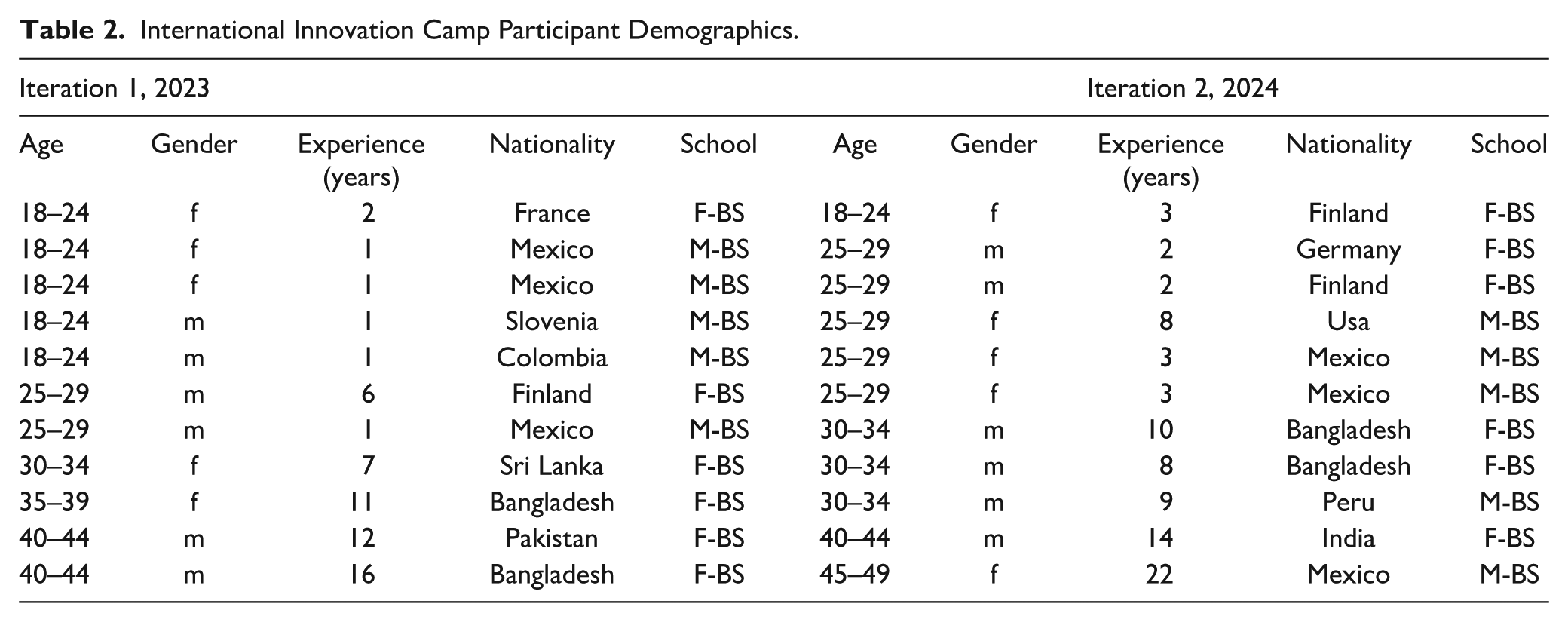
In March of 2023 and 2024, F-BS and M-BS jointly organized and implemented two iterations of a three-week business innovation camp, involving cohorts of ten to twelve students and two to four instructors from each business school travelling between the two countries; the first half of the innovation camp taking place in Finland, and the second half in Mexico. The student groups, composed roughly equally of students from an MSc in Global Innovation Management program and an MBA program with an international business focus, represented 13 nationalities and spanned a range of age groups and professional experience levels (see Table 2).
International Innovation Camp Participant Demographics.
The innovation camp followed on from an existing collaboration between the two business schools—a “learning laboratory”—as documented by Zettinig et al. (2021), in which multinational global virtual teams (GVTs) consisting of both universities’ students collaborate virtually in a series of consulting projects, in part on existing firms’ international challenges. Participants in these learning laboratories represent diverse nationalities, age groups, and professional stages, ranging from recent bachelor’s graduates to executive education students with years of experience managing multinational enterprises—reflecting the demographic makeup of the respective business schools’ master’s programs.
These learning laboratories simulate real-world practices in GVTs. Such teams are characterized by high levels of diversity, including differences in age, experience, professional background, gender, nationality, and career stage. This setup fosters a realistic team environment, where students learn to collaborate on tasks while developing effective team processes and structures. The laboratories thus trained participants to work effectively despite their differences, which was an essential overall learning objective.
Building on the lessons learned through these learning laboratories, the innovation camps provided an opportunity for exceptional students from both institutions to meet face-to-face and engage with a diverse range of key stakeholders representing different perspectives on the challenge posed by obese and overweight populations. The overarching task assigned to the students was to develop radical business innovation prototypes that address the challenge of mitigating the individual, social, and economic impacts of the overweight and obesity epidemic in an intensive, experiential learning environment.
Organizing the Innovation Camps
Each iteration of the innovation camp involved multiple phases of planning and preparation before implementation, followed by a follow-up phase at the end of each cycle, as illustrated in Figure 2.
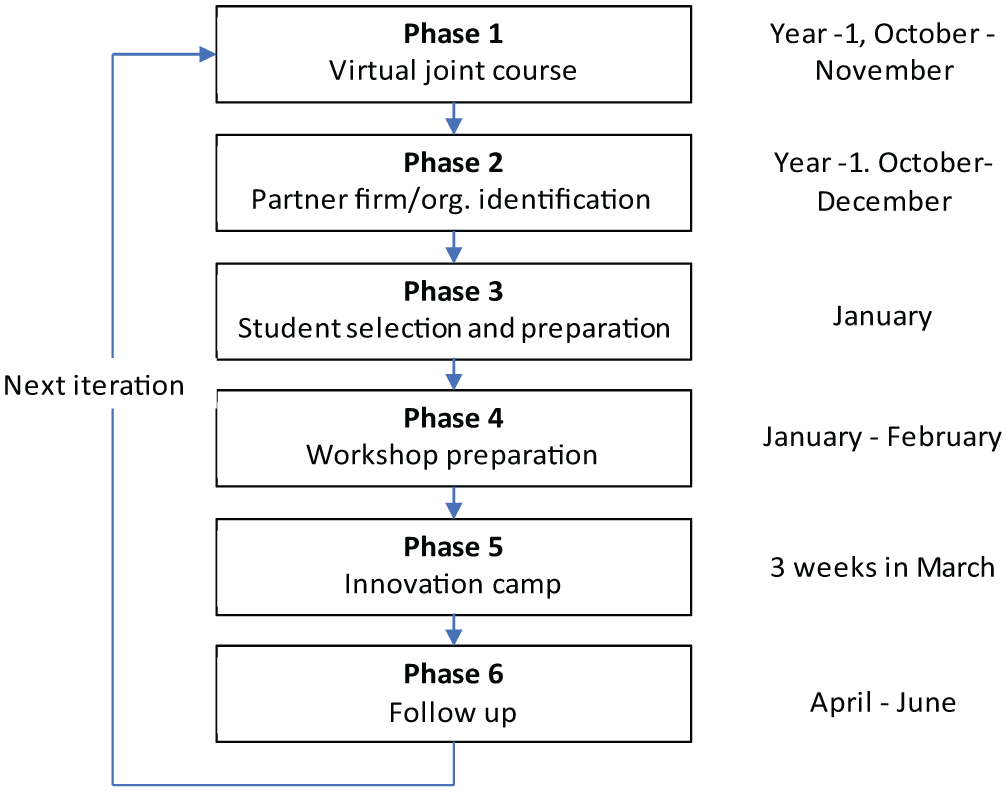
International innovation camp preparation and implementation phases 2023 and 2024.
Virtual Joint Course
The first phase of the innovation camps involves a virtual joint course in international business strategy held between the two business schools, the semester before the innovation camp. This learning laboratory comprises a commonly coordinated but locally delivered lecture series, commencing in September, which prepares students for the interactive, problem-based projects they subsequently undertake in four consecutive virtual team consulting projects. The objective is for students to learn from real business problems to form multicultural teams that can leverage their diversity (e.g., geographic, experience, gender, and contextual) to analyze and strategize at the group level, providing valuable solutions for stakeholders. One example of these real business problems was developing a business strategy for a company producing innovative renewable liquid fuels to support its mission of contributing to a fossil-free economy. The virtual joint course prepared students by introducing relevant conceptual frameworks and demonstrating their application to real-life contexts, while also fostering the competencies needed to generate shared ideas that could lead to solutions.
Partner Firm/Organization Identification
In the second phase, the topic for the current iteration of the innovation camp is developed in greater detail and decided jointly by the two business schools. Concurrently, potential partner firms, experts, and organizations for the innovation camp in Finland and Mexico are identified. Selected firms and representatives from both countries commit to forming a consortium for business innovation and development. This approach fosters synergies by connecting organizations within established and active “triple helix” research ecosystems—university, government, and industry collaborations—focused on the challenge.
Student Selection and Preparation
In the third phase, groups of around five to six students in each country are competitively selected based on their performance in the virtual course. The criteria for assessing the students were a combination of individual and team performance in the Learning Laboratory (50%:50%). Team assignments were consulting cases (3 cases) with different “task-based” assessment criteria (Knowledge and understanding; application and analysis; synthesis and evaluation; and presentation skills). Individual assignments were a learning reflection on their experiences working in a GVT and reflecting on these experiences, by creating a personally relevant framework drawing on teamwork literature, under the overall question: How to organize, manage, and lead successful global virtual teams? Another individual assignment asked students to develop a consulting concept for international organizational challenges. The program then invites students to enroll in a follow-up course: “Intensive Innovation Camp,” to conduct camps with the companies virtually in both countries to define common consortium objectives—the mission of the innovation camp. Further, adapt the method (design thinking methodology) to the problem setting of the innovation camp.
Preparation Phase
Students receive assignments to immerse themselves in the business context of the consortium, understand the industry and markets, and learn about the different dimensions of the Grand Challenge.
Implementation of the Innovation Camp
In Phase 5, students engage in the three-week innovation camp, 10 days in Finland and 10 days in Mexico. Participating firms engage their managers to serve (a) as experts providing context, insight into their business and technologies, their markets, (b) as coaches on their respective perspectives, and (c) as a validation board for innovation trajectories that are developed over time. The firms participate in different stages of the process (face-to-face and virtual). The result of the innovation camp is presented to the firms as “prototypes” (i.e., consortium-level business concept innovation proposals and service innovations).
Follow Up
After the innovation camps conclude, debrief meetings follow up on projects and reiterate the learning through feedback discussions. Participating firms are encouraged to hire students for longer international internships to further develop prototypes. Learning from the experiences of the current cycle is then used to develop the actions for the next cycle, phases 1 through 6.
A senior faculty member from F-BS led the overall project, coordinating between institutions and overseeing local implementation in Finland. He was responsible for designing and planning the innovation camps, integrating them into the joint International Business Strategy virtual course, and recruiting corporate partners in Finland. Additionally, he incorporated the camps into F-BS’s Global Innovation Management Master’s and Executive MBA programs while managing logistics for F-BS students. On the Mexican side, a senior faculty member from M-BS managed the local implementation of the innovation camps in Mexico and contributed to overall planning, with a particular focus on adapting activities to the local context. He integrated the camps into the joint virtual course at M-BS and facilitated partnerships with both private- and public-sector organizations in Mexico. Furthermore, he incorporated the camps into M-BS’s academic programs and coordinated logistics for M-BS students.
In addition to the two primary coordinators, responsibility for securing and managing stakeholder partnerships in Finland was assigned to a Project Coordinator specializing in nutrition and food research at the Finnish university affiliated with F-BS. She also facilitated a meeting with the Finnish consulate in Mexico City during the first iteration. Additional faculty members from both schools supported the innovation camps as facilitators, engaging directly with students. In the first iteration, this included one junior faculty member from F-BS and the MBA Director from M-BS. In the second iteration, two junior faculty members from F-BS and one from M-BS served as facilitators. Overall coordination among the business schools, funders, participating organizations, and other planning and organizational tasks was led from Finland, with responsibilities among five staff members shared pragmatically. The total cost for two iterations of the innovation camp amounted to €133,000. Of this, €63,000 was allocated to travel and mobility expenses for 11 students per iteration (22 students in total) and to five to six faculty members. Another €63,000 covered salaries, and €7,000 was designated for organizational costs, including local travel, food, activities, and materials.
Implementation of the International Innovation Camps
Although each innovation camp was approximately three weeks in length, allowing time for travel, the formal innovation activity was carried out over two business weeks, Monday to Friday, with the first week in Finland and the second in Mexico. Two to 3 days at the beginning and end of the innovation camp were set aside for the students to acclimatize, build rapport, engage in cultural exchange, and participate in other social and cultural activities (e.g., ice swimming in −17°C in Finland or a visit to pyramids in Mexico) in each country. At the start of each innovation camp, the students were provided with a design brief, for example, during the second innovation camp, the design brief was: Develop human-centric solutions to mitigate the individual, social and economic impact of overweight, obesity and their associated complications that affect health and wellbeing (see Appendix A for the full description of the design brief).
At the beginning of each innovation camp, the students were divided into two groups, each comprising students from both business schools. Throughout the innovation camp, each group would work on the design brief separately, only sharing their work with the other team during their presentations at the end of each week. The rationale for having each team approach the problem separately was to develop diverse perspectives and solutions, as well as to foster friendly competition. This enabled members of different teams to question the other team’s assumptions and critique their approaches. Allowing for independent problem-solving efforts, reducing the risk of groupthink, and allowing for the identification of potential issues or flaws in one team’s approach that the other team might catch. The constant interactions of facilitators throughout the process are another essential detail that enables the creation of alternative pathways to develop substantially different solution approaches.
Over the course of two weeks, the program featured presentations and “lightning talks” in which leaders and representatives from diverse stakeholders in both the private and public sectors articulated their perspectives on the challenge and offered distinct problematizations of it. The lightning talks, held on the first day in each country, typically lasted 40 to 60 min and were followed by a Q&A session. The participating stakeholders included organizations involved in developing products, services, and solutions related to the overweight and obesity epidemic (Table 3).
Participating Stakeholders.
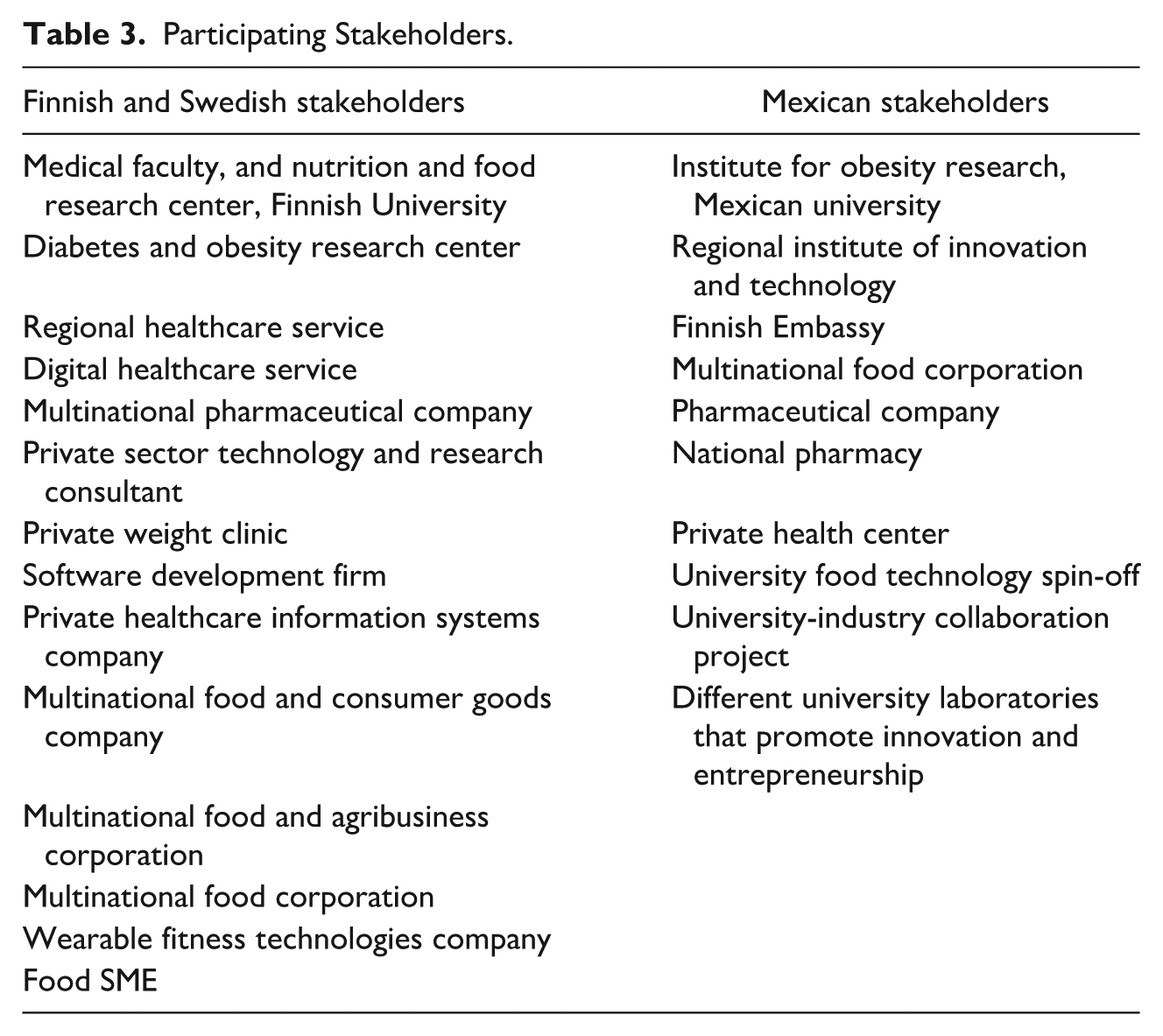
The stakeholders represented diverse perspectives, including those from the pharmaceutical industry, local and national governments, industry associations, small and entrepreneurial food-sector businesses, large multinational organizations, food and nutrition scientists, and companies specializing in wearable health and fitness technology. Between interactions with various stakeholders, the two groups would develop business concept innovation prototypes using a design-thinking methodology to tackle the design brief, continuously integrating the knowledge, expertise, and perspectives shared by stakeholders.
The innovation camps proceeded as follows (Table 4).
International Innovation Camp. Example Schedule.
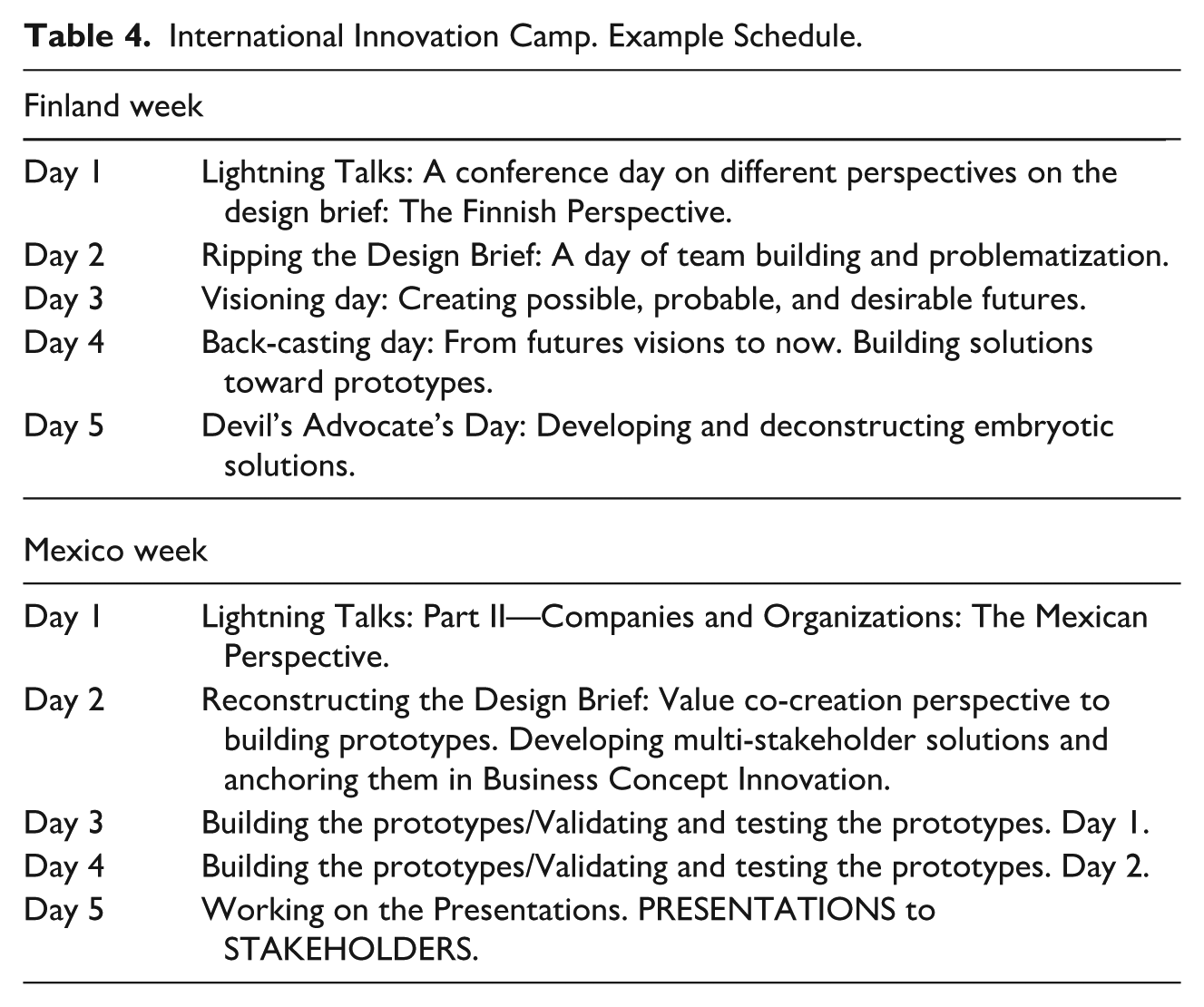
On the first day, participants were exposed to various perspectives from different sectors, including healthcare, food companies, and academic institutions. This provided them with a broad overview and understanding of the problem from multiple angles. On the second day, participants began by identifying their personal beliefs and supporting evidence to form a justified knowledge base. They then mapped these beliefs within their team and explored scientific knowledge using appropriate AI-based tools to inform their understanding in a focused, rapid way. The teams prioritized certain factors and created a team perspective on the problem, which they presented to facilitators for feedback. This step also involved creating a stakeholder map to understand who is affected by the problem and why. The goal was for each team to develop a well-founded understanding of the problem, which would form the basis for constructing solutions on the third day. On this day, teams would build possible, probable, and desirable future visions of solutions, identifying obstacles and enablers through a process of backcasting (Dreborg, 1996).
From the fourth day on, the process followed a design sprint approach, emphasizing actions that create structures and allowing students to learn how to develop novel ideas. The insights and inspirations gained were intended to support the development of a project application involving a consortium of over 20 organizations. At the end of the first week, the teams would present their initial prototype to a jury comprising the instructors and some of the stakeholders from earlier. Teams were encouraged to ask each jury member open-ended questions, such as What do you think about that? How does this make you feel? Why do you think that way? What else can you tell me? Teams were encouraged to focus on surprising details, and then each team had 15 min to draw conclusions from the interviews and present them to the others.
The second week, Mexico Week, began again with lightning talks from company and organization leaders and representatives, this time representing the Mexican perspective. Having students receive talks from industry and government representatives from two different countries provided them with diverse perspectives, cross-cultural insights, and a broader knowledge base. This exposure enabled a comparative analysis, revealing to the students that the assumptions they had developed in Finland may not hold in Mexico, in particular, or generally internationally. This helped students gain an understanding of diverse regulatory environments and industry trends. These insights enabled students to reevaluate and re-problematize their embryonic prototypes, emphasizing the importance of global perspectives and collaborative approaches. This ultimately led them to develop more adaptable and impactful solutions to business problems. Upon concluding the second week, the teams presented their final prototypes to the instructors and participating stakeholders in approximately one-hour presentations that included a back-and-forth discussion and critique. The strength of the prototypes produced was that they incorporated and integrated the diverse perspectives students had internalized over the course of the innovation camps, providing the stakeholders with a broader understanding of the challenges at hand, their role within them, and how their activities and rationales interrelate with those of other stakeholders with whom they often do not interact directly.
These prototypes are not intended to be fully functional or flawlessly operational; instead, they serve to elicit initial reactions and to reveal developmental trajectories upon which further work can build. In this sense, they function as roadmaps for innovation ecosystems, guiding subsequent development. The various components and ideas generated by the students also provided inputs with tangible organizational consequences. Some of these outputs were integrated into ongoing projects within companies, universities, and public funding agencies, informing the design of new initiatives and funding applications. Notably, the medical faculty in Finland institutionalized the innovation camp concept within its research institute and its consulting branch, establishing an annual Innovation Camp open to students from all eight faculties of the university. This initiative, developed as a direct outcome of the first iteration of the camps, has since become a recurring, multidisciplinary exercise offered in collaboration with industry partners, for which students are awarded ECTS credits.
A detailed outline of the procedure followed in the innovation camps is available in the Innovation Camp Handbook (Appendix B).
Methodology
Data Collection
The findings presented in this article were systematically derived from data collected through surveys administered via the Webropol survey platform (Appendix C). These surveys were administered to all participants immediately after each iteration of the international innovation camps, ensuring that responses were collected while participants’ experiences remained fresh and accessible.
The survey instruments were specifically designed to capture detailed insights into students’ perceptions and experiences related to both the pedagogical design elements of the camps and their perceived learning outcomes. The surveys included a range of question types, from Likert-scale items for quantitative assessment to open-ended questions for qualitative exploration, enabling the collection of rich, multi-dimensional data that illuminated both quantitative patterns and qualitative nuances of student learning experiences.
Data Analysis
The analytical approach employed was grounded in thematic analysis, as outlined by Braun and Clarke (2006). This methodological choice was strategic, as thematic analysis provides a flexible yet rigorous framework for identifying, analyzing, and interpreting patterns of meaning within qualitative data, making it particularly well-suited for examining student learning experiences in innovative pedagogical contexts. We implemented a deductive approach to coding and analyzing students’ survey responses. Specifically, the coding process was structured around the predetermined pedagogical objectives for overcoming obstacles to Grand Challenges, as outlined in Table 1. This deductive coding approach ensured that the analysis remained focused on the key theoretical constructs and learning objectives that formed the foundation of the camp design.
This methodological approach aligns with what Braun and Clarke (2006) characterize as theoretical thematic analysis; wherein pre-established theoretical constructs serve as the primary lens through which researchers identify and interpret meaningful patterns within the data. The coding process involved multiple stages: initial familiarization with the data, systematic coding according to the predetermined theoretical framework, and organization of codes into broader themes reflecting the pedagogical objectives. This preliminary analysis provides foundational insights that could be substantially expanded in future research through a comprehensive qualitative study employing both deductive and inductive analysis. This approach allows themes to emerge organically from the camp data, without the constraints of predetermined theoretical frameworks, thereby potentially revealing unexpected patterns and deeper contextual understandings of participant experiences.
Findings: Evaluation of Student Learning
This section presents findings from the theoretical thematic analysis (Braun & Clarke, 2006). The presentation of the findings follows the structure outlined in Table 1, which maps each identified obstacle to its corresponding management challenge and describes how the instructional design of the innovation camps addressed specific pedagogical objectives. Student quotes illustrate these connections throughout the discussion.
Curation Obstacles
Curation obstacles might be overcome by developing students’ ability to clearly articulate the problems and goals of Grand Challenges, critically examine extant framings, and develop new ones. The series of lightning talks introduced at the beginning of each innovation camp was particularly helpful in developing a deep understanding of overweight and obese populations, identifying their root causes, and mitigating the risk of plunging-in bias (Bhardwaj et al., 2018). As one participant noted:
Another key learning for me was the importance of obtaining a clear understanding of the problem and its root causes before ideation and solution-building.
The innovation camp engaged students in dialogs with multiple stakeholders, providing the opportunity to develop a holistic understanding of the phenomenon. This multivocal perspective helped students to reframe their understanding of the challenge:
From the cause-effect of obesity and statistical perspective, another presentation was very informative which was ‘Obesity and Public Policy’ by [Public Health Researcher]. Besides discussing the reason for obesity [from a social and medical perspective], he covered a major portion of his presentation on the economic impact of obesity which triggered us to think about obesity from a different perspective.
The multiple-stakeholder dialog at the start of each innovation camp was beneficial for achieving this pedagogical objective. The lightning talks, though to a lesser extent, were also useful for developing students’ awareness of incumbent hegemonic structures and socio-technological systems (Geels, 2004) that may impede actions to tackle Grand Challenges. One participant commented:
[Company] tries to solve [the problem of obesity] but also contributes to the problem.
The development of such critical awareness is important and should be more openly addressed during the initial talks with each participating stakeholder.
Governance Obstacles
Governance obstacles are addressed through two pedagogical objectives. First, to train students to analyze firms’ corporate governance structures to identify potential collaborative win-win situations that may have been missed due to the interdependent dynamics in Grand Challenges. Second, by exposing students to multiple stakeholders’ perspectives—domestic and global—on the Grand Challenges they are affected by, and their potential roles in addressing these challenges.
Regarding the first objective, the initial interactions with stakeholders were important for identifying points of connection among stakeholders, such as complementary resources and competencies that can be leveraged through an ecosystem approach. One participant expressed this as follows:
This exposure to different viewpoints not only broadened my understanding but also emphasized the importance of inclusive innovation.
Inclusive innovation, in this sense, refers to overcoming obstacles posed by social norms and institutional structures that hinder collaborative work on social challenges.
The second objective focused on exposing students to the perspectives of multiple stakeholders, both domestic and global, regarding the Grand Challenges they are affected by and their potential roles in addressing them. This was considered a key strength of our instructional design. The innovation camp served as a platform for collaboration, where multiple stakeholders contributed to solving obesity through the catalyst of the innovation context, with students empathizing with the challenge and stakeholders’ varied perspectives.
[A]ll the presentations were very informative and essential for building an understanding of the topic of obesity, its reasons, statistics, remedy, and reaction from different stakeholders.
This multivocal perspective led to innovative directions in designing holistic and inclusive business models. As one participant noted:
The richness of stakeholders almost left no other choice than to create a network/platform model.
Sensemaking Obstacles
Sensemaking obstacles are addressed by engaging students in collective sensemaking through design thinking iterations and the divergent and convergent phases (Brown, 2008) that oscillate between problematization and prototyping, both among themselves and with stakeholders, to develop innovative and creative approaches to tackle Grand Challenges. This pedagogical objective was central to our innovation camp activities, as reflected by a student:
I believe that the design thinking method we used during the innovation camp was the best part.
The hands-on approach in an intensive experiential learning environment provided students with the opportunity to actively engage in a problem-solving process applied to an important social challenge in a real-world setting. One of the participants stated as follows:
The innovation camp was a unique experience that engaged me in the design thinking process, problem-solving exercises, and research related to the focus topic of fighting overweight and obesity. Unlike a typical sit-back-and-solve problem, this innovation camp immersed me in real-world learning through a business case.
The iterative, exploratory design thinking methodology engaged students in experimentation to develop business model prototypes. The process of problematization, re-problematization, evaluation, and re-evaluation ultimately enabled the development of novel approaches to addressing obesity.
I think design thinking was an interesting approach to apply for this innovation camp including the forward and reverse method. Going through the process, we became confused, clueless, discussed, found a way out, and it continued throughout the two weeks.
The design thinking process facilitated the rethinking of pre-existing assumptions, which is crucial for addressing global Grand Challenges that span geographical borders and impact different cultural and socio-economic conditions. The intercultural team collaboration was especially relevant for identifying innovative solutions, as one participant expressed:
The diverse perspectives brought by team members allowed for a comprehensive understanding of the issues at hand. It fostered creativity and set a strong foundation for the solutions we later developed. The collaborative nature of the innovation camp was a key strength. Interacting with individuals from varied backgrounds & cultures enriched our understanding and provided unique insights.
Adaptation Obstacles
Adaptation obstacles are best addressed by developing students’ “big picture” thinking. Hence, they understand the complex and dynamic interconnectedness that exists between different stakeholders and sectors in relation to Grand Challenges—and how these social processes could be influenced or changed. The multiple stakeholder perspectives, the cross-border and intercultural team collaboration, and the immersion in two different country contexts were essential elements that helped students develop a comprehensive understanding of the complex, dynamic, and interconnected nature of obesity. Two students expressed this as follows:
Student 1: Academically, I leave this innovation camp with a broader perspective about global issues that I was not fully aware of previously. [. . .] I also believe the biggest takeaway of the innovation camp is the fact that this experience opens our eyes to what we as individuals can achieve individually but most importantly through the collaboration with others. Things that I thought of impossible once now seem a little bit more achievable after this experience. Student 2: Learning to untangle huge global issues, discovering many dimensions, learning from experts, discovering many perspectives. Finding how things stand and how our work can really contribute for a better future.
All in all, we believe that the design of our innovation camps is a fruitful way to address the obstacles that hinder engagement and solutions to Grand Challenges. The evaluation and student feedback affirm that the instructional design is an effective means for developing students’ ability to grasp global challenges, engage with them, and develop novel and creative business models for their solutions.
Implications, Limitations, and Future Opportunities for Grand Challenge-Based International Innovation Camps
This article addresses two key questions: What competencies and mindsets should students develop to tackle global Grand Challenges, and what instructional innovations can help achieve this? To answer the first question, we draw on Dorado et al.’s (2022) four sets of obstacles that define Grand Challenges and derive learning objectives that prepare students to overcome them. Specifically, students need to understand the needs and influence of diverse stakeholders across individual, organizational, and societal levels; recognize how local and global contexts shape problems and solutions; and develop innovative solutions that integrate these perspectives.
To address the second question, we propose international innovation camps as an ideal instructional innovation. By immersing students in radically different international contexts, facilitating dialog with diverse cross-sectoral stakeholders, and fostering intercultural teamwork on iterative business prototypes, these camps create powerful experiential learning environments. Such environments help students develop a deep, dynamic understanding of Grand Challenges and the competing perspectives, complications, and trade-offs they entail.
To illustrate this approach, we describe two iterations of a camp that brought together Finnish and Mexican business students to develop solutions addressing the individual, social, and economic impacts of overweight and obese populations. Through immersion in contrasting international contexts, cross-sectoral collaboration, and intercultural teamwork, the camps guided students through each stage of the ELT model. Fieldwork with stakeholders in different national contexts provided Concrete Experience of a global Grand Challenge; team-based Reflective Observation on stakeholder feedback, cultural contrasts, and context-specific challenges broadened students’ perspectives; Abstract Conceptualization enabled them to synthesize these insights into prototypes and business models addressing the challenge’s root causes; and Active Experimentation involved developing and presenting prototypes to diverse stakeholders, where iterative testing with real-world actors enhanced practical relevance and demonstrated the proactive role of business in addressing Grand Challenges.
Although these camps focused on overweight and obese populations, the instructional approach is applicable to a wide range of Grand Challenges. Whether in health, environmental sustainability, technology, or social inequality, such challenges share common features: complexity, diverse, and often conflicting stakeholder interests, cross-cultural and institutional variation, and the need for innovative, systemic solutions. The pedagogical design of international innovation camps—combining experiential immersion, stakeholder engagement, intercultural collaboration, and iterative problem-solving—builds competencies and mindsets transferable across domains. By guiding students through processes of problem framing, stakeholder analysis, and solution development, the camps cultivate essential capabilities for addressing complex societal problems. This aligns with experiential learning and design thinking pedagogies, which emphasize transferable problem-solving skills developed through situated learning. Thus, while our empirical focus is on a health-related Grand Challenge, the instructional innovation offers broad applicability to other contexts where complexity, stakeholder diversity, and societal impact intersect.
However, some caveats may affect the practicability and effectiveness of these international innovation camps as a pedagogical instrument. Firstly, these camps are expensive. Funding for our camps was provided by the Finnish National Agency for Education’s “TFK (Team Finland Knowledge) Program” and supplemented by contributions from the participating business schools. Without this external governmental support, the camps would not have been possible. As such, implementing international innovation camps on an ongoing basis remains challenging and requires significant effort by organizers to secure sustainable funding.
That is not to say that all such camps will necessarily be as expensive as those described in this article. Excluding staff salaries, the highest cost of the innovation camps stemmed from airfare between Finland and Mexico, given their considerable geographic distance. These costs were further amplified by the fact that airlines were still recovering from the COVID-19 pandemic. However, similar international innovation camps can be organized between countries located much closer to one another. What matters most is that the participating institutions come from home countries with markedly different sociocultural and institutional contexts. Such contrasts can often be found between geographically proximate, or even neighboring, countries—including, at times, across internal borders. Partnering with institutions in nearby but contextually different countries would reduce travel costs and increase scalability. It is also possible to conduct the camps virtually, thereby eliminating travel expenses. However, this comes at the cost of reducing much of the immersion that we have emphasized above. Virtual cross-border camps do offer other advantages: they can be extended over longer timeframes and accommodate significantly larger numbers of participants. The benefits of such virtual joint courses—including the one that constituted the first phase of the innovation camps discussed in this article—are examined in detail in Zettinig et al. (2021).
Future opportunities may come from eliciting financial contributions from participating stakeholders. This will require convincing stakeholders of the value of participation—through the insights they gain from the students’ work, the opportunity to interact with cross-sectoral partners they would not normally engage with, and the potential to identify promising future recruits among the student participants. Importantly, the broader public and private sector interest in addressing Grand Challenges creates fertile ground for such funding. Many public agencies and private organizations have strategic agendas focused on sustainability, social impact, and innovation, making them potential partners willing to invest in initiatives that build future talent and generate innovative solutions to complex societal problems. By aligning camp objectives with these agendas, organizers can tap into funding streams dedicated to advancing societal well-being and fostering collaborative innovation.
Secondly, as the innovation camps are short-term exchanges of no more than two weeks in a foreign location, getting the most out of them requires significant preparatory groundwork. Vital to the effectiveness of our innovation camps was the virtual joint course conducted in the semester before each iteration. This course, in which students collaborated in global virtual teams to solve international business problems, provided the students with the conceptual toolbox of international business and innovation theory they would utilize during the innovation camps. The global intercultural virtual teamwork not only familiarized students with the nuances of collaboration in diverse cultural settings but also introduced them to their future innovation camp teammates. This groundwork was essential for ensuring that the limited time of the innovation camps was used entirely to immerse students in the Grand Challenges, their contexts, and the innovation process, rather than on lectures and team-building.
Thirdly, as we have discussed, the effectiveness of international innovation camps in tackling Grand Challenges hinges on students hearing first-hand the voices of key stakeholders across diverse contexts. However, securing commitments from partners across a range of sectors can be a challenge. Many of the partners to our innovation camps were secured through pre-existing relationships, such as other university-level projects, or through the social capital of the organizers. Cold calling companies for the express purpose of participating in the innovation camps is somewhat less effective. As such, organizing innovation camps of this nature requires ongoing relationship and network building, meaning that the effort-to-reward ratio is less favorable for one-off innovation camps than for recurring ones or for innovation camps that connect to ongoing triple helix projects (projects involving the collaboration of academia, government, and industry) that research programs at universities are engaged in. Conversely, the intensive interaction with stakeholders required for the innovation camps opens many avenues for future interdisciplinary collaboration with partners, internal and external to the participating universities. Indeed, during our innovation camps, instructors from both business schools took the opportunity, when students worked in their teams, to explore collaboration opportunities with a range of potential partners involved in finding solutions for overweight and obese populations.
Notwithstanding the challenges and opportunities mentioned above, we believe that international innovation camps represent a promising instructional innovation for equipping future business leaders with the tools and knowledge to address Grand Challenges. These innovation camps created a systemic learning experience which provided knowledge, understanding, and opportunity for students to apply various knowledge to challenging contexts, perform analysis, and develop new knowledge in the form of synthesis and evaluation—in sum, from 20 respondents, 19 rated it as excellent and 1 as very good learning (Appendix B). By fostering cross-sector collaboration, intercultural teamwork, and real-world immersion, these innovation camps offer a robust framework for developing innovative solutions to some of the most pressing global issues of our time.
Footnotes
Appendix A
Appendix B
Appendix C
Any random feedback you want to give?
Rate the overall experience from 1 (poor) to 5 (excellent).
Declaration of Conflicting Interests
The authors declared no potential conflicts of interest with respect to the research, authorship, and/or publication of this article.
Funding
The authors disclosed receipt of the following financial support for the research, authorship, and/or publication of this article: Funding for the international innovation camps discussed in this manuscript was provided by the Finnish National Agency for Education, “TFK (Team Finland Knowledge) Program,” which funds cooperation between higher education institutions through mobility and collaboration projects in China, India, Southern Africa, Southeast Asia, and Latin America. The innovation camps were supported by the Institute for Obesity Research of Tecnologico de Monterrey and the Nutrition and Food Research Center (NUFO) of the University of Turku.
