




Abstract
Class-based privilege and inequality remain defining features of contemporary society, shaping access to employment and career progression. Business schools, as gatekeepers to elite professions, often reinforce these patterns through implicit meritocratic assumptions and limited opportunities for perspective-taking. This article introduces Equality of Life, a tabletop simulation game designed to raise students’ awareness of how unequal starting positions—rooted in Bourdieu’s (1986) theory of economic, social, and cultural capital—affect career opportunities. Grounded in experiential learning theory and structured as a consciousness-raising experience, the game simulates the cumulative effects of class-based privilege and disadvantage, beginning at birth and culminating in the competition for an elite graduate job. Unlike traditional educational games that promote merit-based progression, Equality of Life deliberately subverts these mechanisms to create a deliberately unfair playing experience that highlights structural inequality. Evaluation data from two quasi-experimental studies demonstrate that playing the game increases students’ recognition of structural barriers. The game offers a practical and theoretically grounded tool for prompting business students to question dominant narratives and consider the structural conditions shaping workforce entry.
Keywords
Introduction
Class-based inequality continues to shape access to employment (Friedman & Laurison, 2019), yet it remains under-addressed in management education (Moergen & Kish-Gephart, 2023). As business schools face increasing expectations to develop socially responsible graduates and foster positive social impact (Association to Advance Collegiate Schools of Business, 2020; Association of MBAs, 2023; EQUIS, 2023), they must prepare students to recognize and respond to the structural barriers that shape entry to and participation in the workplace. This includes equipping learners to engage critically with inequality (Dunn-Jensen et al., 2023), particularly the systemic advantages associated with class privilege.
Inequality is best understood as a dual process: the systematic disadvantaging of some groups and the corresponding advantaging of others (Malapally et al., 2025). These dynamics are structured across multiple intersecting dimensions—including class, gender, race, religion, sexual orientation, able-bodiedness, ethnicity, and age (Rocco & West, 1998)—which together shape life chances. This article focuses specifically on class-based privilege and inequality, which we define as systemic advantages and disadvantages associated with an individual’s social group membership, and their access to and control over key resources (Moergen & Kish-Gephart, 2023; Zulfiqar & Prasad, 2021). Drawing on Bourdieu’s (1986) theory of capital, we understand class-based privilege as operating through the accrual and transmission of economic, social, and cultural capital, which cumulatively structures individuals’ access to education, employment, and influence (Friedman & Laurison, 2019; van Dijk et al., 2020). The result is a global landscape where inequality is significant and worsening (Chancel et al., 2022; Colombo, 2023; Kumar et al., 2024), social mobility is rare (Moergen & Kish-Gephart, 2023), and most people end their life in the same income bracket they started it in (Friedman & Laurison, 2019; Rivera, 2015).
Within management education, there is a three-fold problem around teaching inequality. First, inequality often operates through subtle, everyday organizational practices that appear routine or neutral (Amis et al., 2020; van Dijk et al., 2020). For example, hiring decisions based on “cultural fit” or “polish” may seem merit-based, but frequently favor candidates from higher social classes who possess the implicit norms and behaviors aligned with elite institutions (Moergen & Kish-Gephart, 2023; Rivera, 2015). Second, ideological beliefs in meritocracy, efficiency, and positive globalization (Amis et al., 2020), can lead individuals to attribute unequal outcomes to individual effort rather than systemic advantage (Mijs, 2021). Finally, educational institutions often reproduce the very inequalities they seek to address (Fogarty & Zimmerman, 2019; Holmqvist, 2023), privileging students who already possess the economic, social, and cultural capital that aligns with academic and professional norms (Friedman & Laurison, 2019; Rivera, 2015).
We respond to recent calls for radical, reflective, and awareness-raising pedagogies that encourage learners to explore alternative perspectives (Colombo, 2023; Eisenman et al., 2024; Rabelo et al., 2023) by presenting our innovative tabletop simulation game, the Equality of Life. The game is designed as a consciousness-raising experience (Mirvis, 2008) grounded in experiential learning theory (Kolb & Kolb, 2005), helping students develop awareness of class-based inequality and engage in perspective-taking through the game’s experiences. It focuses on workforce entry, a critical juncture in the career pipeline where class inequalities become materially consequential—not necessarily through overt discrimination, but through the cumulative effects of unequal access to education, networks, and cultural capital that influence who gets considered and who feels they belong (Amis et al., 2020; Moergen & Kish-Gephart, 2023; Rivera, 2015). However, to illuminate how organizational outcomes are shaped long before candidates reach the hiring stage, the game begins at birth and progresses through childhood; illustrating how structural inequalities in family income, housing, education, and social networks accumulate and influence access to employment.
Although game-based learning is increasingly popular in management education (Schrier et al., 2024; Siala et al., 2025; Trinh et al., 2024), many games reinforce fairness and merit-based assumptions through mechanics like equal starting points, goal-based progression, and leaderboards (Krath et al., 2021). In contrast, Equality of Life deliberately subverts these norms by simulating elite reproduction—where structural inequality, rather than individual effort, determines outcomes. Players begin with unequal starting conditions (e.g., income, educational access, and available time), and those with privilege accumulate advantage more easily as the game progresses. Disadvantaged groups, by comparison, face restricted choices and often struggle to meet minimum thresholds. The result is a deliberately unequal outcome that provokes reflection on how success is shaped by inherited advantage. By modeling systemic dynamics rather than focusing on personal narratives, the game fosters critical discussion among students from diverse backgrounds and levels of privilege.
In the following sections, we examine how class-based privilege shapes access to early career opportunities and outline the challenges of teaching structural inequality in management education. We introduce consciousness-raising experiences and experiential learning theory as pedagogical frameworks, before presenting Equality of Life—a game-based instructional innovation designed to surface how structural advantage and disadvantage shape workforce entry. Drawing on evaluation data from two student cohorts, we assess the game’s short-term impact and offer practical guidance for implementation; advancing pedagogical scholarship by contributing a theoretically grounded and empirically evaluated method for teaching about privilege and inequality in business schools.
How Privilege Accumulates: Class, Capital, and Career Trajectories
Class-based inequality is deeply embedded in organizational life, shaping who succeeds, who stagnates, and who is excluded. We draw on Bourdieu’s (1986) theory of social class to conceptualize inequality as a multidimensional phenomenon rooted in access to economic, social, and cultural capital. Economic capital refers to wealth and financial assets; social capital to networks and connections; and cultural capital to tastes, habits, and competencies (Ho & Bauder, 2012; Moergen & Kish-Gephart, 2023). These forms of capital are shaped through “habitus”—the internalized dispositions developed via parental class, early socialization, and life experience (Bourdieu, 1994). Habitus influences how individuals carry themselves, how they are perceived, and what they imagine to be possible in their educational and professional lives (Bourdieu, 1990; Reay, 2004; Rivera, 2015).
Within the workplace, differences in capital and habitus shape individuals’ access to job opportunities, professional status, and long-term career progression (Adler & Kwon, 2002; Amis et al., 2020; van Dijk et al., 2020). Entry into the workforce marks the first of many hurdles. Hiring processes for elite professions often favor individuals from middle- or upper-class backgrounds who can: leverage financial resources to secure unpaid internships or prestigious degrees; activate social networks for referrals and insider knowledge; and draw on cultural capital and classed habitus to present themselves with fluency, confidence, and polish in interviews (Friedman & Laurison, 2019; Moergen & Kish-Gephart, 2023; Rivera, 2015; Rivera & Tilcsik, 2016). These advantages continue to accumulate throughout an individual’s career and are normalized through everyday organizational practices (van Dijk et al., 2020), resulting in further access to high-profile projects, influential mentors, and accelerated rewards such as promotions, salary increases, and symbolic recognition (Amis et al., 2020).
Challenges for Teaching Inequality in Management Education
Given their future roles as organizational leaders, business students must develop a critical understanding of inequality and its reproduction—particularly the dynamics of class-based privilege and disadvantage. Yet inequality remains significantly under-addressed in management education (Colombo, 2023; Fotaki & Prasad, 2015), and business schools have been widely critiqued for reproducing the very hierarchies they claim to challenge (Bourdieu, 1998; Holmqvist, 2023; Kumar et al., 2024). Business schools’ values and teaching approaches are often embedded in neoliberal and meritocratic ideologies that frame success as the product of individual effort, rather than structural advantage, and promote capitalist ideals with limited evaluation (Clarke et al., 2024; Klikauer, 2013; Young-Ferris & Voola, 2023). These ideologies are rarely made explicit but are communicated through hidden curricula (Hibbert & Wright, 2023), which emphasize merit-based values such as entrepreneurship, leadership, and competition, while neglecting the systemic forces that shape access and outcomes (Eisenman et al., 2024). Meritocracy—the belief that people advance through talent and effort alone—is one such narrative, widely referred to as a “myth” (Castilla & Bernard, 2010; Eisenman et al., 2024; Mijs, 2021). It presents inequality as the natural result of personal shortcomings rather than social barriers (Mijs, 2016), thereby discouraging students from interrogating how privilege contributes to professional success (Rabelo et al., 2023).
This problem is exacerbated by the often-invisible nature of privilege. McIntosh (1988) notes that privilege functions like an unseen knapsack—a set of unearned advantages that go largely unnoticed by those who carry them. Privileged individuals are particularly likely to underestimate their own advantage (Fernandez-Albertos & Kuo, 2015; Norton & Ariely, 2011) and to view their success as meritocratically earned (Mijs, 2021), while also reporting less awareness of systemic barriers faced by others (Wu, 2021). These inaccurate perceptions are most prominent among advantaged groups but are not exclusive to them. In many cultural contexts—such as the US, with its ideological attachment to the American Dream—such beliefs are held across demographic lines (Castilla & Bernard, 2010; Mijs, 2016). This widespread misrecognition makes it difficult for students to see inequality as systemic, and even harder to recognize their own positionality in these structures.
Although higher education is formally open to all, students from middle- and upper-class backgrounds are disproportionately more likely to access it and succeed within it, particularly in elite institutions (Friedman & Laurison, 2019; Holmqvist, 2023; Rivera, 2015). As a result, efforts to surface the dynamics of inequality in the classroom can be challenging. Students may respond with discomfort, defensiveness, or resistance, especially when invited to examine how they may personally benefit from systems of advantage (Bramesfeld & Good, 2015; Lund Dean & Forray, 2021). Research suggests that such discussions can even provoke diversity backlash, where efforts to raise awareness of inequality unintentionally reproduce and exacerbate the hierarchies they are attempting to disrupt (Amoroso et al., 2010; Dobbin & Kalev, 2016; Dorion & Picard, 2025).
Pedagogical Approaches for Revealing Inequality
In response to these challenges, educators have called for more transformative pedagogical approaches—ones that not only present critical content but actively surface implicit beliefs, challenge dominant narratives, and support meaningful engagement with inequality (Eisenman et al., 2024; Rabelo et al., 2023). One such approach is the use of consciousness-raising experiences (CREs), defined by Mirvis (2008, p. 175) as “activities that expand people’s consciousness of themselves, others, and the larger world around them.” CREs aim not only to increase awareness but to foster the development of a critical voice, where students move from passive reflection to active questioning and the potential for change (B. S. Edmondson et al., 2020).
In management education, CREs have been used to support students in interrogating social injustice and developing a capacity for action. B. S. Edmondson et al. (2020) describe how CREs can awaken students to racial injustice by prompting reflection and cultivating compassionate, socially conscious leadership. Similarly, Zulfiqar and Prasad (2021) use a CRE exercise about Pakistani toilet cleaners to help privileged business school students understand alternative perspectives and critically reflect on their own embeddedness in unequal systems.
While CREs are particularly powerful in surfacing political and ethical tensions, they also align closely with principles of experiential learning theory (ELT), which provides a pedagogical framework for how such learning can unfold in practice. ELT describes learning as a dynamic, cyclical process involving four stages: concrete experience, reflective observation, abstract conceptualization, and active experimentation (Kolb & Kolb, 2005). This cycle supports students in confronting and revising deeply held assumptions, making ELT especially valuable for teaching topics that challenge internalized beliefs about inequality, success, and fairness (Kolb & Kolb, 2017; Urquidi-Martin et al., 2019).
By engaging students in alternative perspectives through activity mechanics, ELT can deepen understanding (Williams, 2015) and reduce resistance to difficult content (Layth, 2023). However, when applied to topics like structural privilege, experiential methods also carry risks. Without adequate support or ethical safeguards, they may provoke emotional discomfort, trigger defensiveness, or inadvertently reinforce the very dynamics they aim to disrupt (Bradford, 2019; Lund Dean et al., 2020). ELT has also been critiqued for its individualist orientation, which can shift attention toward personal reflection rather than systemic analysis (Holman et al., 1997; M. Reynolds, 2002). These risks highlight the need for intentional design, skilled facilitation, and structured debriefing to ensure both psychological safety and critical engagement with structural issues.
ELT has been widely applied in management education (e.g., Galloway, 2024; Mooney & Cockburn, 2024), particularly in game-based learning approaches, such as board games and computer games (Memar et al., 2021; Schrier et al., 2024). Games offer structured micro-experiences that activate all stages of the learning cycle (Williams, 2015), allowing students to channel discomfort into gameplay rather than interpersonal confrontation and making it easier to engage with difficult content (Bramesfeld & Good, 2015, 2016). However, most business games have focused on developing technical or strategic skills (e.g., Gibbons et al., 2022; Memar et al., 2021; Schöbel et al., 2020), that rely on win-based mechanics, like leaderboards, equitable points allocation, and linear progression, and convey implicit messages about fairness and reward (Krath et al., 2021). For example, in Trinh et al.’s (2024) gamified statistics course, students who worked harder earned more resources and, consequently, higher grades—reinforcing the notion that success reflects effort alone. In the context of teaching inequality, these meritocratic framings risk obscuring how structural advantages shape life chances.
Consequently, Equality of Life intentionally subverts these conventional game mechanisms to communicate an alternative message: that the social world is fundamentally unequal, and those with privilege can accelerate their advantage far more quickly than others. This approach not only addresses a critical societal issue but also follows Eisenman et al.’s (2024) call to disrupt traditional pedagogies for greater impact.
Activity Overview
Game Introduction
Equality of Life is a tabletop simulation board game designed for small group teaching sessions (tutorials) of up to thirty students. The class is divided into six groups (with two to six students per group), which play against each other. Each group represents a family unit, and within the group, students make collective decisions about housing, education, and extracurricular activities. The goal is that the group’s eldest child achieves an entry-level job at an elite (fictional) firm called EPKD.
The game simulates systemic inequality by assigning unequal starting resources to each group, including income, time, education, and experience. These resources are distributed via scenario cards that reflect differing family backgrounds. Groups with fewer resources face constrained options in each round—unable to afford higher-quality housing or schooling, they accumulate fewer benefits as the game progresses. In contrast, groups with more advantageous starting points can access premium choices that compound their initial privilege, gaining further educational and experiential advantages through game mechanics such as network cards and favorable dice rolls. The game’s outcome is typically pre-determined: one of the privileged groups will generally always win, reflecting how cumulative advantage can secure access to elite career pathways regardless of individual effort.
The game is facilitated by a single tutor, who mentors participants through the rules of the game, controls the pace of play, reviews the decisions made, adjudicates the winner, and leads a reflective debrief discussion afterwards.
Background and Theoretical Context
Equality of Life was created by the second and fourth authors, along with an external learning partner, Dragon Learning, for a mandatory undergraduate business module on the sociology of work. Observing students’ disengagement with structural inequality content delivered through traditional methods (e.g., lectures and readings), the game became part of a broader module redesign incorporating experiential and transformative learning methods. The game was designed to follow experiential learning principles (Kolb & Kolb, 2017), as shown in Figure 1. Each round represents an experiential cycle: players receive information about the specific round context (concrete experience), reflect on the context in groups (reflective observation), come to a group decision (active experimentation), and experience consequences that carry into the next round. A final reflection session connects the game to broader content (abstract conceptualization).
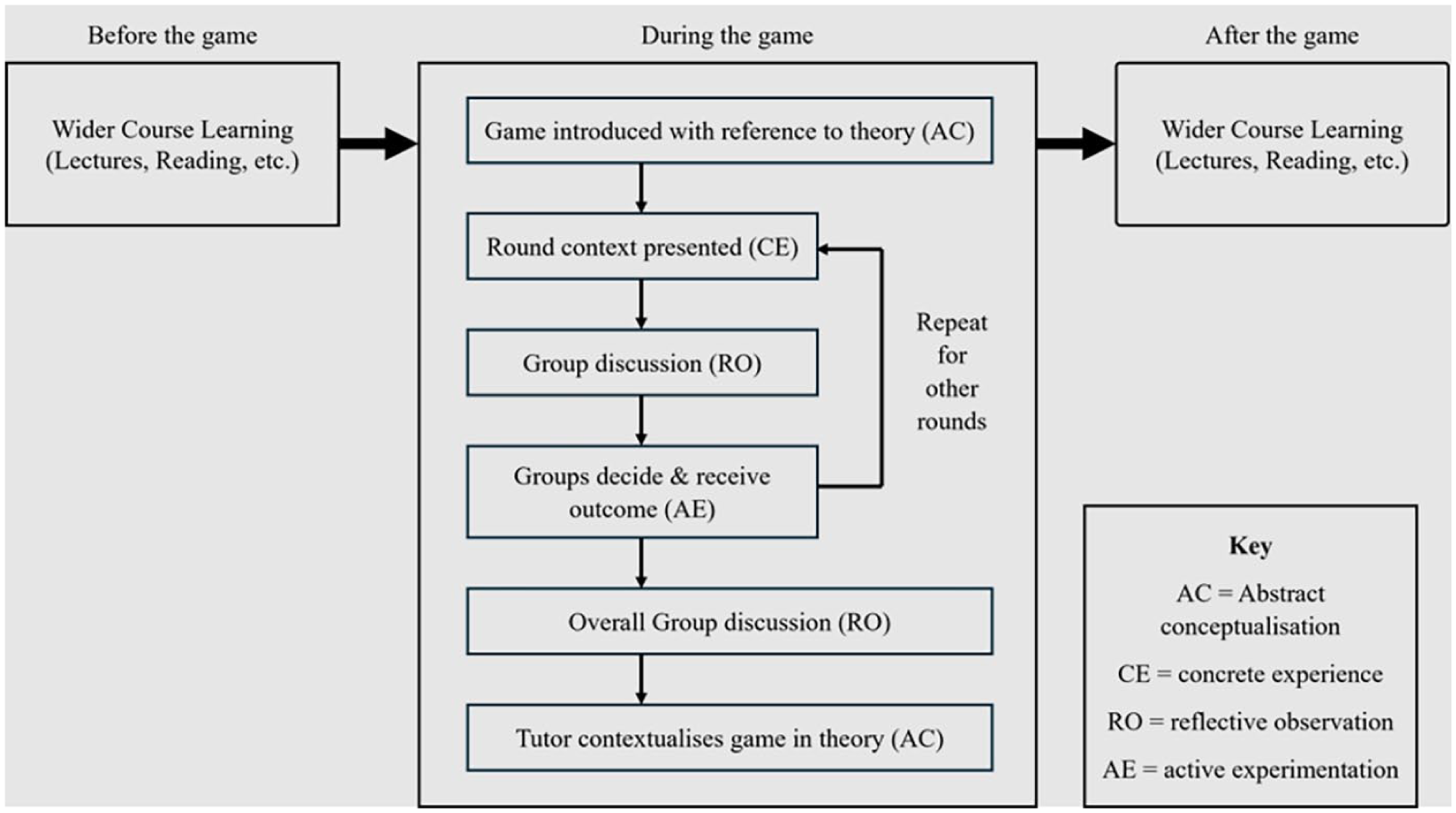
Equality of life gameplay and the experiential learning cycle.
Within this framework, the game fosters emotional and cognitive perspective-taking, as students navigate the consequences of unequal starting points. By symbolically simulating how capital accumulates and constrains opportunity, Equality of Life surfaces the mechanisms through which class-based privilege and disadvantage shape life chances. While the game is not intended to recreate lived inequality, it provides a structured learning experience for critical reflection on structural inequality in career pathways.
In designing the game, we were mindful of the pedagogical risks associated with experiential learning and sought to address these directly. One common critique of ELT is its individualist orientation and limited engagement with structural context (Holman et al., 1997; M. Reynolds, 2002). To counter this, the game embeds structural inequality into its mechanics, using Bourdieu’s theory of capital to show how life outcomes emerge from systemic advantage alongside individual choices.
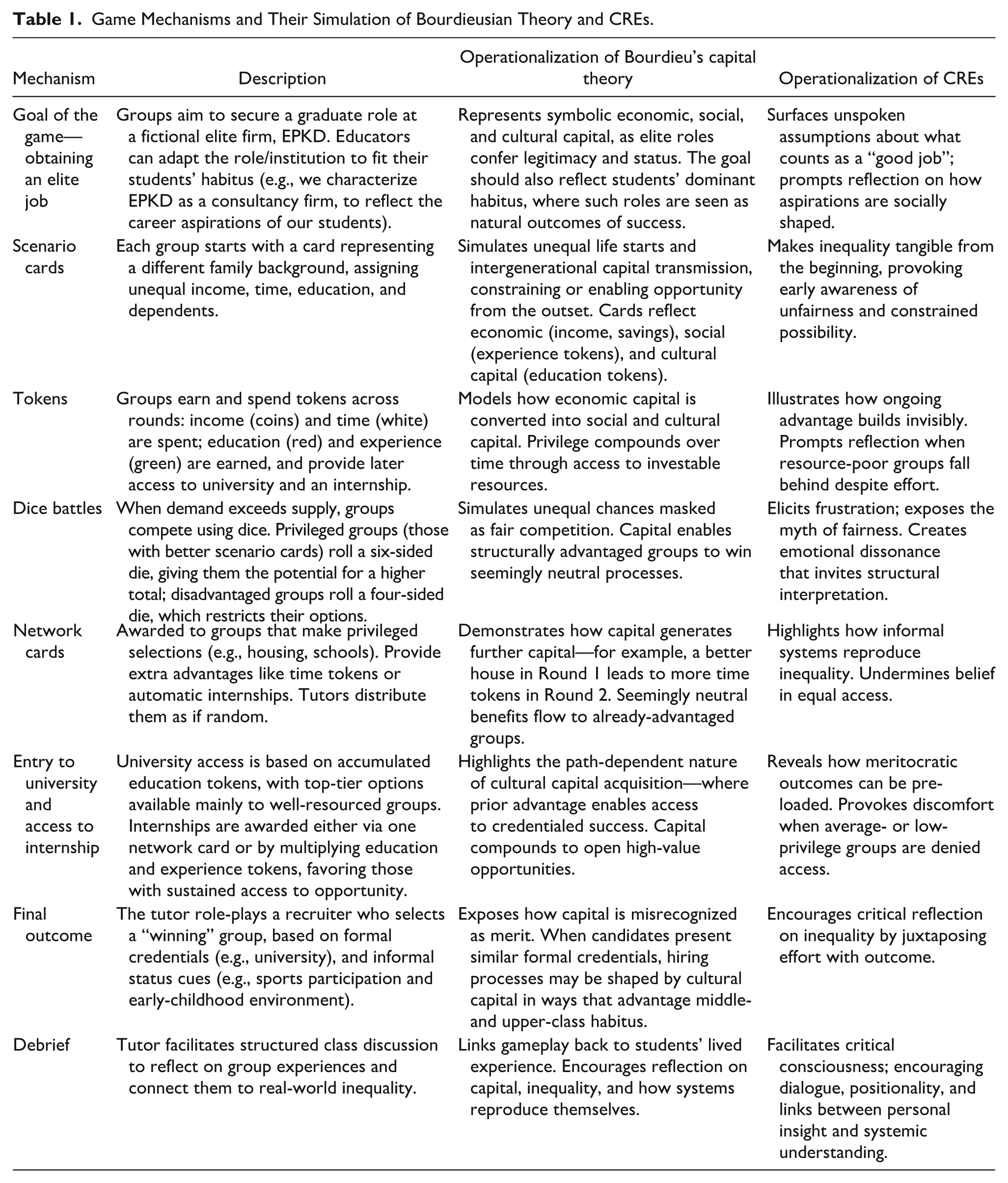
A second limitation is the assumption that experiences are self-evidently meaningful. As Mirvis (2008) argues, experience alone does not guarantee learning; instead, it is how learners process the experience that matters. To address this, the game draws on principles of consciousness-raising experiences (CREs), integrating emotional tension and constraint to prompt reflection on fairness, merit, and privilege. Table 1 summarizes how the game’s key mechanisms embed both Bourdieusian capital and CRE principles.
Game Mechanisms and Their Simulation of Bourdieusian Theory and CREs.
Finally, experiential approaches to inequality carry emotional and ethical risks (Bradford, 2019; Lund Dean et al., 2020). Equality of Life deliberately builds in frustration—such as encountering limited opportunities despite strong decisions—to surface the emotional weight of structural constraint. While this aligns with ELT’s emphasis on learning through conflict (Urquidi-Martin et al., 2019), it also has the potential to provoke disengagement, resistance, or backlash (Amoroso et al., 2010; Dunn-Jensen et al., 2023). To mitigate these risks, the game incorporates several safeguards: scenarios are based on random, non-identity-based stratification to reduce diversity backlash; students are informed in advance that they are playing an experiential game about inequality, and may opt out without penalty; tutors are trained in sensitive facilitation; personal disclosure is never required; and time is allocated for a structured debrief to process reactions (Amoroso et al., 2010; Bradford, 2019; Lund Dean et al., 2020). These considerations are discussed further in the Implications for Practice section.
Learning Outcomes
The game has four learning outcomes, relating to students’ attitudes and beliefs about inequality and privilege:
LO1. Identify structural inequalities that affect workforce entry: Students can identify at least one way in which class-based factors or institutional privilege shapes access to career opportunities.
LO2. Critically analyze limitations of merit-based narratives: Students can explain how narratives like meritocracy obscure the influence of inherited capital and systemic advantage.
LO3. Explain how capital shapes life chances: Students can distinguish economic, cultural, and social capital, and describe how these accumulate over time.
LO4. Reflect on how privilege shapes organizational recruitment and entry: Students can suggest at least one inclusive recruitment or hiring practice.
Target Audience
The game was originally designed for undergraduate business and management students and has also been used with postgraduate and executive cohorts. Its focus on inequality across the lifespan is relevant to broader social sciences programs, such as sociology and psychology, and adaptable for diverse audiences. We reflect further on potential adaptations for different learner contexts in the Implications for Practice section.
Exercise Preparation
The game requires a face-to-face format, as it uses physical materials such as a board, tokens, and scenario cards. It is designed for classes of 12 to 30 students, divided into six groups. Groups play against each other; within groups, members work collaboratively to make decisions. While all six groups are needed for gameplay to function as intended, group size can vary between two and six students.
The session runs for 90 min, with approximately 60 min allocated to gameplay and 30 min for structured reflection. Before the session, the tutor should arrange the room in a cabaret-style layout with six group stations. Once set up, the room configuration remains fixed for the duration of the session.
At each station, place one game board, one scenario card, a game piece, and a set of resource tokens. Tokens represent assets that groups spend during the game: red for education, green for experience, and white for time. Examples of game materials are provided in Supplemental Appendix A. Full game materials, including national and regional variations, are available via licensing by contacting the second author via e-mail (
The tutor should also set up a digital dice roller that distinguishes between a six-sided die (blue symbol on scenario cards) and a four-sided die (green symbol), such as the Google Dice Roller. Dice rolls are managed centrally by the tutor, rather than by students. Presentation slides are recommended to support facilitation; sample slide content is included in Supplemental Appendix B.
Running the Game
The tutor should facilitate the game from start to finish, using the following steps:
Assign students into six groups.
Introduce the game context, goal, and resources (see Supplemental Appendix B for detailed instructions).
Run the first round: a. Read the round instructions (see Supplemental Appendix B). b. Distribute income to each group. c. Present the round’s decision (e.g., for Round 1, selecting a house). d. Groups discuss options and make their choice. e. If demand exceeds supply, run a dice battle to determine allocation (see Supplemental Appendix C). f. Update resources (e.g., income, education, and experience). g. Award a network card to one group (see Supplemental Appendix C).
Repeat Step 3 for the remaining rounds: Round 2 (primary education), Round 3 (extracurricular activities), Round 4 (secondary education), and Round 5 (university and work experience).
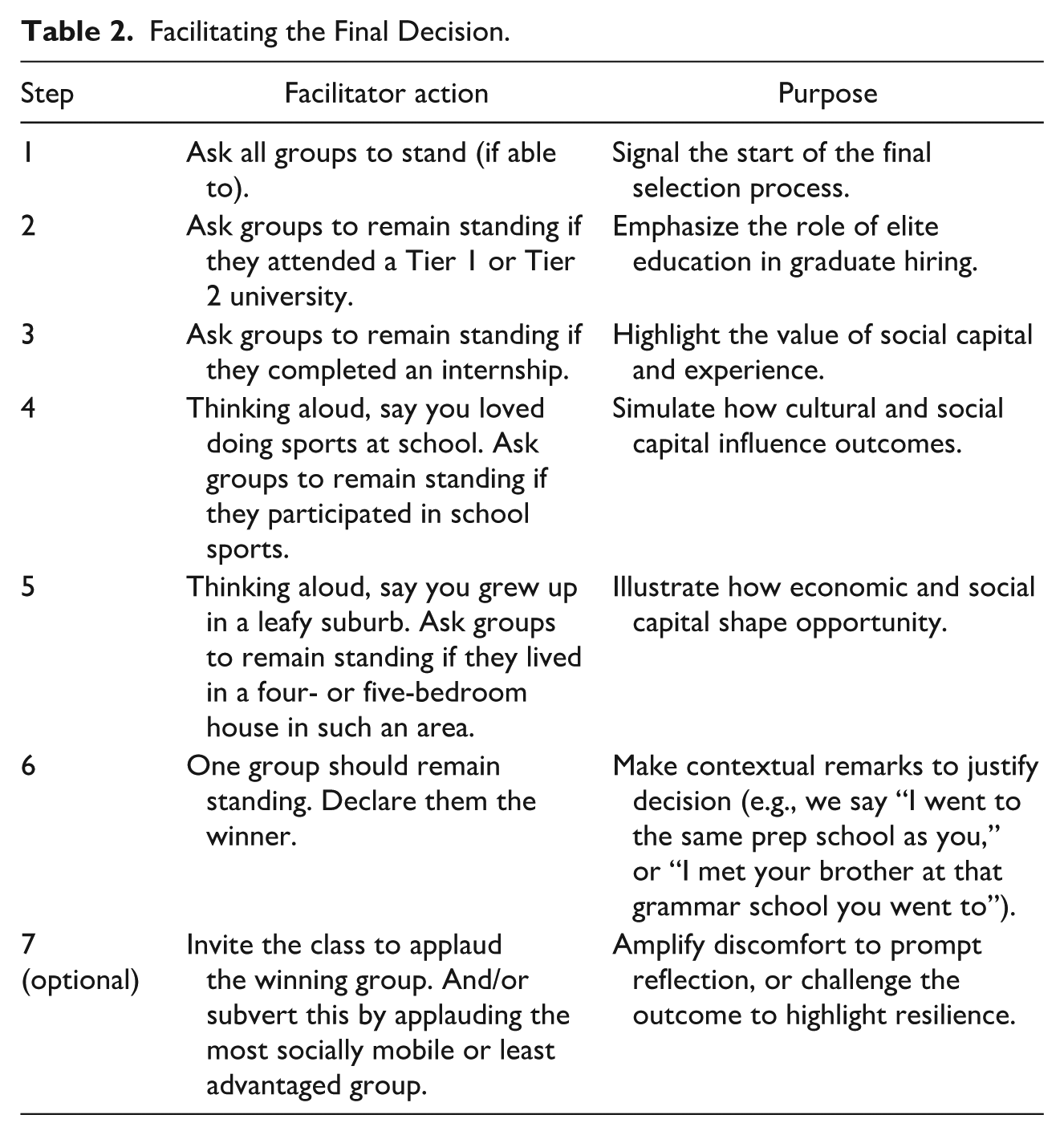
Decide which group wins Equality of Life (see Table 2).
Facilitate a reflective debrief (see Supplemental Appendix D for questions, and Implications for Practice section for facilitator notes).
Facilitating the Final Decision.
Contextualizing the Game
We typically run Equality of Life as part of a broader module, preceded by a 60-min lecture and course readings, and followed by an optional short assignment. The lecture introduces perspectives on inequality, meritocratic ideals (e.g., the American Dream), Bourdieu’s (1986) theory of capital, and intersectionality (e.g., gender, race, and class). Recommended readings in Supplemental Appendix E help contextualize the game within workplace inequality, offer broader evidence for students who want to explore further, and encourage reflection on their future roles. When used with an assignment, we ask students to write 500 words in response to: “To what extent do you think meritocracy exists in society?”
The game has also been delivered as a stand-alone session, primarily with executive cohorts. In these cases, we recommend extending the debrief to one hour, allowing facilitators to introduce key theoretical concepts and ensure the learning is fully embedded through discussion.
Implications for Practice
Development of the Game
Equality of Life has been run approximately sixty times over 5 years, engaging around 1,250 undergraduate business students. Early cohorts helped refine the game. For instance, in the first version, luck was a primary factor, with “chance cards” where benefits were truly random. We later adjusted these cards to benefit only privileged groups, to better reflect capital theory and illustrate how structural inequality amplifies opportunities for those with existing advantages.
We also optimized class size and session length. Initially, we had classes of over 30 students, but with such large groups, individual students often felt excluded from group decision-making. We now recommend 18 to 24 students (maximum six per group) as an ideal number for in-depth discussions. While we trialed different session lengths, ninety minutes is optimal for providing sufficient time for decision-making and an in-depth debrief.
Recently, we introduced the game to executive education cohorts. Although the game goal (obtaining a graduate job) was designed for student audiences, we find that working professionals still relate effectively to this goal, by drawing on both their personal experience as job seekers and their professional experience as hiring managers. These sessions often generate rich debriefs, with participants identifying concrete strategies to reduce class-based bias in recruitment and reflecting on how their organizations can implement them.
Student Experience During the Game
There are several challenging points where tutors should proactively support students. For example, students often misunderstand “Time” as a finite resource rather than one that resets each round. Tutors might clarify this concept by, for example, using a clock metaphor to show time as renewable. In addition, privileged groups may hesitate to spend resources early on, for example, choosing a three-bed rental property instead of purchasing a five-bed house. This tendency is particularly noticeable among students from cultures where home ownership is less prevalent. For an effective final outcome, at least one group needs to select a four-bed or five-bed house in Round 1. Tutors may need to prompt more privileged groups to take such decisions early.
Motivation levels vary throughout the game, with groups holding the highest and lowest advantage cards facing unique challenges. Those with high-privilege cards may disengage due to perceived ease, while those with low-privilege cards may find the game discouraging as they struggle to progress. In contrast, students with “average” cards are often the most engaged, experiencing incremental social mobility that later provides a strong, realistic lesson in the limits of meritocracy. For example, they might start in social housing but end up at a well-ranked university; however, this progress is revealed to be illusory via the game’s ultimate outcome, as these “average” groups will rarely win.
Facilitating the Debrief
The debrief is a crucial part of the session, helping students consolidate learning, process emotional responses, and reflect critically on their position within systems of privilege—core aims of both CREs and experiential learning (Edmondson et al., 2020; Kolb & Kolb, 2005). It also serves as a learning gauge: when students connect the game to personal experience, engage in comparative discussions, and explore responses to inequality, it signals deep engagement. Additionally, the debrief has an ethical function. Experiential learning can provoke discomfort (Bradford, 2019), especially in Equality of Life, where students often describe the game as “unfair,” particularly if they began with a disadvantaged scenario. A plenary debrief allows this reaction to be redirected into discussion—groups share details of their starting scenarios with each other, sparking a comparative discussion, and providing an entry point into broader conversations on the unearned advantages afforded to some and the cumulative impact of early life conditions.
Although we have not observed significant resistance or backlash when running Equality of Life, we recognize that discussions of inequality can provoke defensiveness or reinforce dominant narratives (Amoroso et al., 2010; Dobbin & Kalev, 2016; Dunn-Jensen et al., 2023). It is important to approach the debrief with sensitivity, acknowledging diverse lived experiences and validating student emotions (Bradford, 2019), so that students feel psychologically safe in the learning environment, and are comfortable to engage, question, or remain silent, without fear of judgement (A. Edmondson, 1999). Facilitators should be mindful that students’ reflections may be shaped by intersecting aspects of identity, such as race, gender, class, or ethnicity (Bramesfeld & Good, 2016). These intersections can intensify or buffer the effects of privilege, and not all students will experience inequality in the same way—either in the game or real life. While students may share personal experiences if they feel comfortable, there should be no expectation or pressure to disclose sensitive information (Bradford, 2019). Facilitators can use these discussions to explore how intersectional identities shape life chances and affirm the legitimacy of multiple, sometimes conflicting, experiences of privilege and exclusion.
Occasionally, students resist the game’s intended messages; for example, responding literally to the final outcome and stating, “Life is just about the house you grew up in.” In such cases, offering concrete evidence of inequality can help reframe the discussion. For instance, OECD (2018) data show it takes a poor family around five generations to reach the average income. Additional statistics to this end are included in Supplemental Appendix D. Similarly, some students retain strong meritocratic beliefs, especially in cultures that value individual effort and ambition. These narratives are often deeply internalized, even by structurally disadvantaged students (Castilla & Bernard, 2010). It is important to clarify that the game does not reject merit, but instead challenges the idea that merit alone explains success—by showing how systemic conditions shape who gets to demonstrate and be rewarded for merit. Framing the discussion this way can reduce defensiveness and foster a more critical perspective.
We recommend ending the debrief with a forward-looking discussion about how students might challenge inequality in their personal and professional lives. Scholars note that inequality education can unintentionally entrench hierarchical divisions (Amoroso et al., 2010; Dorion & Picard, 2025). For example, if a privileged group wins Equality of Life, some students may interpret this as reinforcing the inevitability of privilege. There is also a risk of pedagogical asymmetry, where privileged students leave with greater awareness of inequalities, but students from disadvantaged backgrounds, who already had this awareness due to their lived experience, may feel emotionally drained or disempowered, especially if the session ends without offering paths for action. To avoid reinforcing fatalism or uneven learning outcomes, facilitators should sensitively frame inequality not as fixed, but as produced through organizational systems that can be contested and changed. This includes helping students identify specific actions, however small, that challenge structural advantage in their future careers. Supplemental Appendix D includes examples of these actions that facilitators can draw on. This approach aligns with B. S. Edmondson et al.’s (2020) call for CREs to support meaningful social change, and with Lund Dean and Forray’s (2021) emphasis on speaking into “small silences”: taking individual responsibility to surface and challenge moments where privilege might otherwise go unquestioned.
Applying the Game Across Contexts
The game was developed in the UK—a class-based society within a liberal market economy (Friedman & Laurison, 2019)—but has been delivered successfully to international cohorts, including classes with up to 70% international students. While the language of class is most commonly used in the UK, the concept resonates more broadly across global contexts (Rivera, 2015), where related issues such as income inequality and social stratification remain highly relevant (Kumar et al., 2024). Tutors should consider how economic, social, and cultural capital operate in their own context and adjust the game accordingly. For example, in countries with generous welfare states and public investment in education, such as the Scandinavian countries (Nelson & Stephens, 2011), class divides might be less explicit, and some game decisions—such as renting versus buying a house—may require additional explanation.
The game was originally implemented at a highly ranked, research-intensive university, where many students come from elite or advantaged backgrounds. As such, the learning outcomes were developed with an implicit recognition of this privilege—focusing on raising awareness of structural inequality and interrogating merit-based assumptions. This does not reduce the game’s relevance in other contexts; rather, we encourage educators to critically reflect on the needs, assumptions, and lived experiences of their own students, and adjust aspects such as the learning outcomes and debrief questions accordingly. For example, in cohorts where inequality is already acknowledged or personally experienced, the learning focus may shift toward advanced strategies for challenging power structures or disrupting exclusionary workplace practices. Educators may also adjust the fictional firm EPKD by selecting an elite profession more aligned with their students’ habitus, using Friedman and Laurison’s (2019) list of elite professions as a guide.
Finally, the game addresses one aspect of inequality—workplace entry. It does not cover inequality issues within the workplace (e.g., in promotions and pay), nor does it address managerial structures that reproduce inequality from the top down (Klikauer, 2013). Educators may wish to incorporate these elements into broader course design, to support a fuller understanding of inequality at work.
Assessment of Student Learning
To assess student learning in relation to the game’s core topics, and students’ emotional reactions to the game, we conducted two evaluation studies.
Method and Sample
Study 1 was a quasi-experiment involving N = 42 first-year Business and Management students at a UK Russell Group university. All were enrolled in a compulsory sociology of work module and attended weekly tutorials (small group sessions of 20–30 students). Students first completed the T1 survey online. They then attended a tutorial, where some groups played Equality of Life and others discussed flexible working. A few days later, they completed the T2 survey. Due to absences, the experimental group comprised n = 25 students who played Equality of Life, and the control group combined n = 10 students who attended the flexible working tutorial and n = 7 students who missed the tutorial but still completed both surveys. Throughout the data collection period, all students had access to the course virtual learning environment, which included lecture slides, readings, and supplemental materials.
Study 2 was a lab experiment with N = 30 undergraduate and postgraduate students from the same university, recruited via a campus-wide research advertisement. The two-hour session began with the T1 survey, followed by a 20-min lecture on social inequality, meritocracy, and Bourdieu’s (1986) theory of capital to simulate traditional learning. Students were then randomly assigned to one of two conditions. The experimental group (n = 16) played Equality of Life; the control group (n = 14) played The Logo Game, a fact-based business game about logos and branding. Although experiential, The Logo Game has no conceptual overlap with Equality of Life and has been shown to support learner engagement and psychological flow (Khan & Pearce, 2015). All students completed the T2 survey immediately after gameplay.
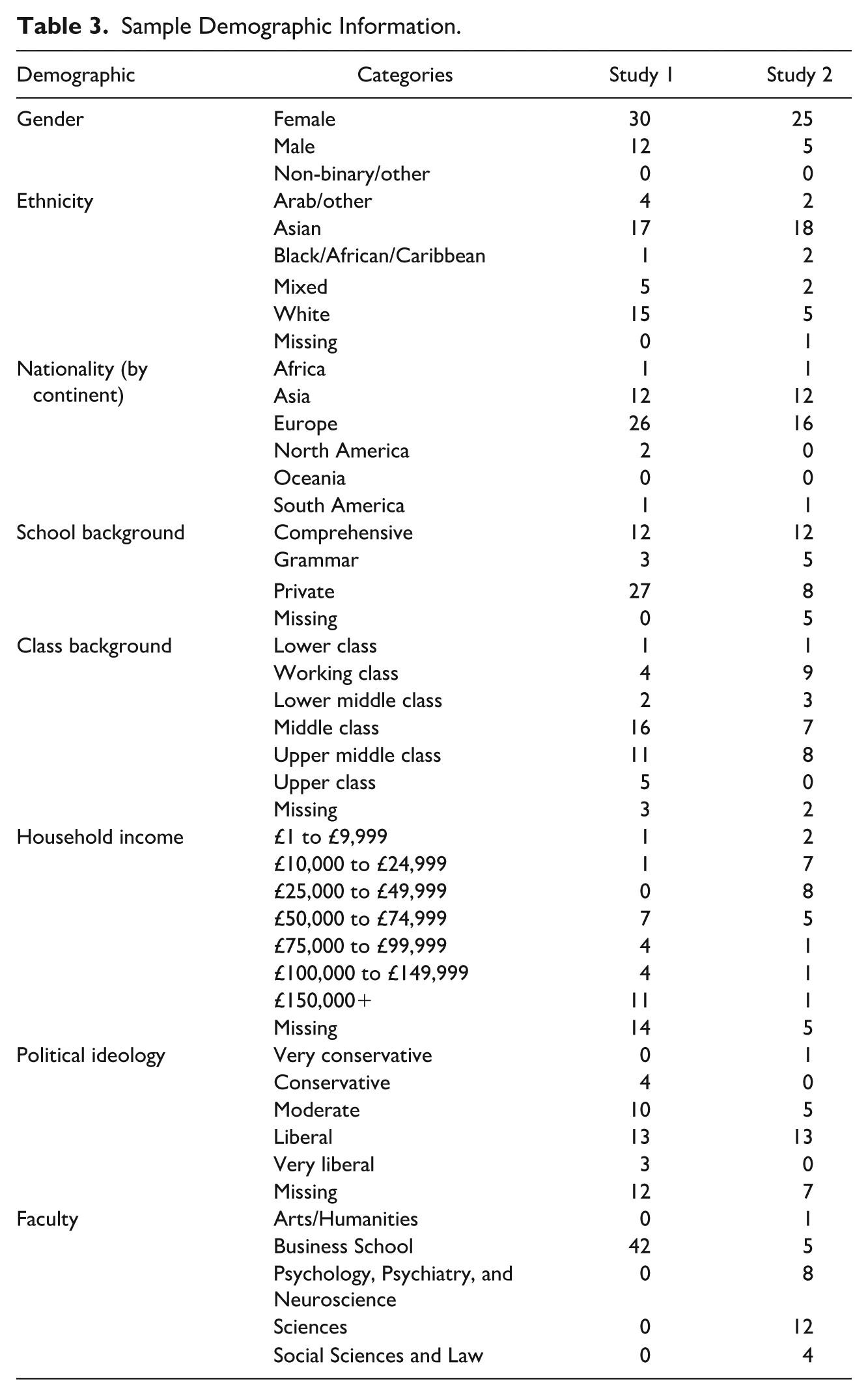
Both studies received ethical approval, participants gave informed consent, and all received vouchers in compensation for their time. Demographic information is presented in Table 3.
Sample Demographic Information.
Measures
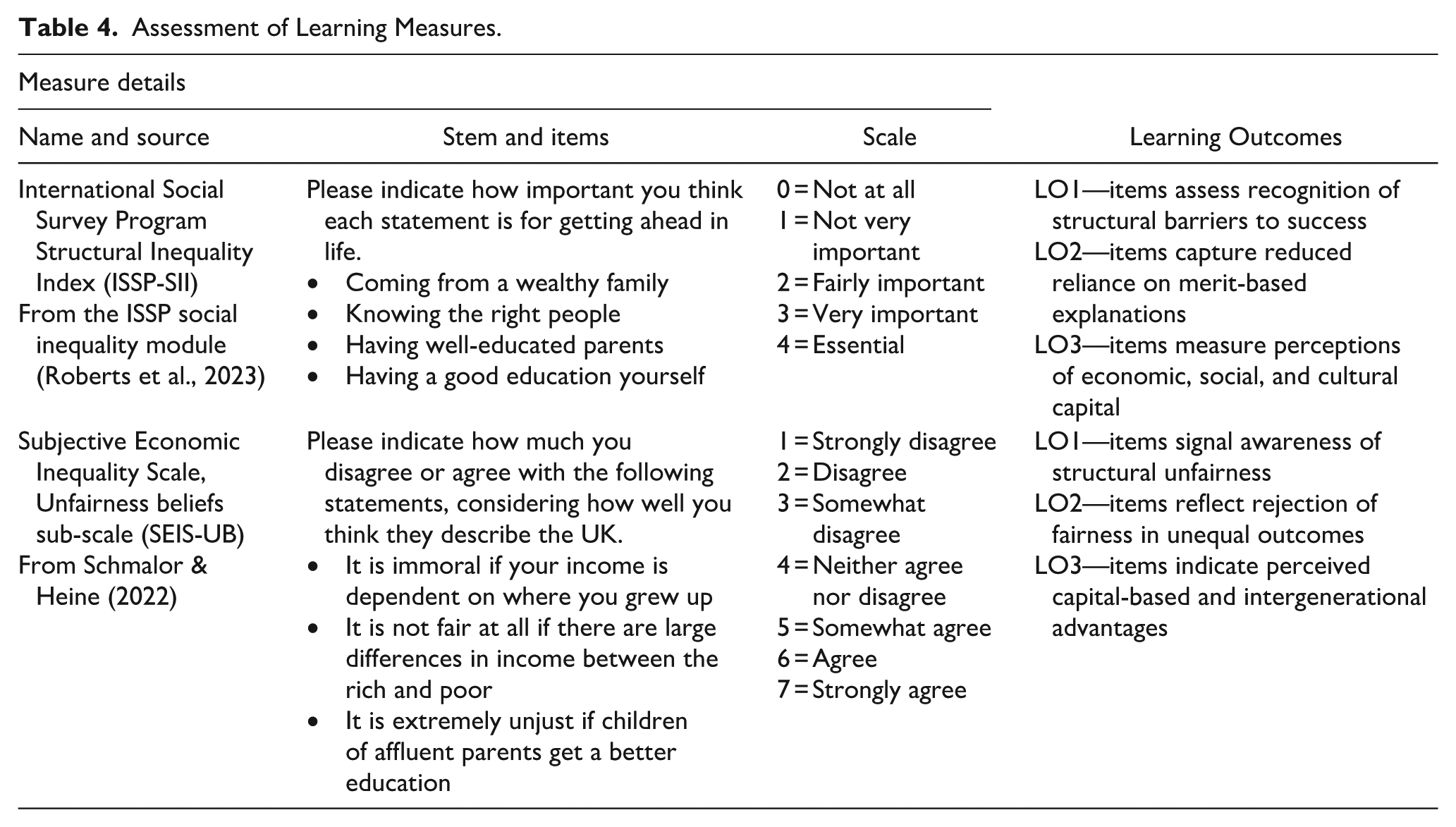
We used two quantitative scales to assess student learning in relation to the assigned learning outcomes—the International Social Survey Program Structural Inequality Index (ISSP-SII) and the Subjective Economic Inequality Scale Unfairness Beliefs subscale (SEIS-UB). The ISSP-SII was constructed from four items selected from the full ISSP (Roberts et al., 2023), following Mijs (2021). These items reflect structural advantages operationalized in the game, and were treated as a cumulative index, with items representing distinct dimensions of inequality beliefs (following J. Reynolds & Xian, 2014). The index ranged from 0 to 100, with higher scores indicating stronger beliefs in the role of structural factors in life outcomes. The SEIS-UB (Schmalor & Heine, 2022) assesses emotional responses to economic inequality, on a scale of 1 (strongly disagree) to 7 (strongly agree). We used economic inequality as a proxy for class-based inequality, due to their conceptual overlap (Rivera, 2015). Both scales were measured in the T1 and T2 surveys. Table 4 maps these measures to the outcomes and describes the items and scales.
Assessment of Learning Measures.
Results
The learning outcomes were assessed using two repeated-measures ANOVAs. Full results for all tests, including means, standard deviations, and test statistics, are presented in Table 5. In the first ANOVA, Time was the repeated factor, the condition (Equality of Life vs. Control) was the between-subjects factor, and the ISSP Structural Inequality Index was the dependent variable. In both studies, there was a significant interaction effect of time and game for the ISSP-SII index, indicating that students who participated in the game increased their beliefs in structural inequality relative to those in the control group. That is: after playing Equality of Life, students had a stronger belief in the role of wealth, networks, and education for getting ahead in life.
Means, Standard Deviations, and Test Statistics.
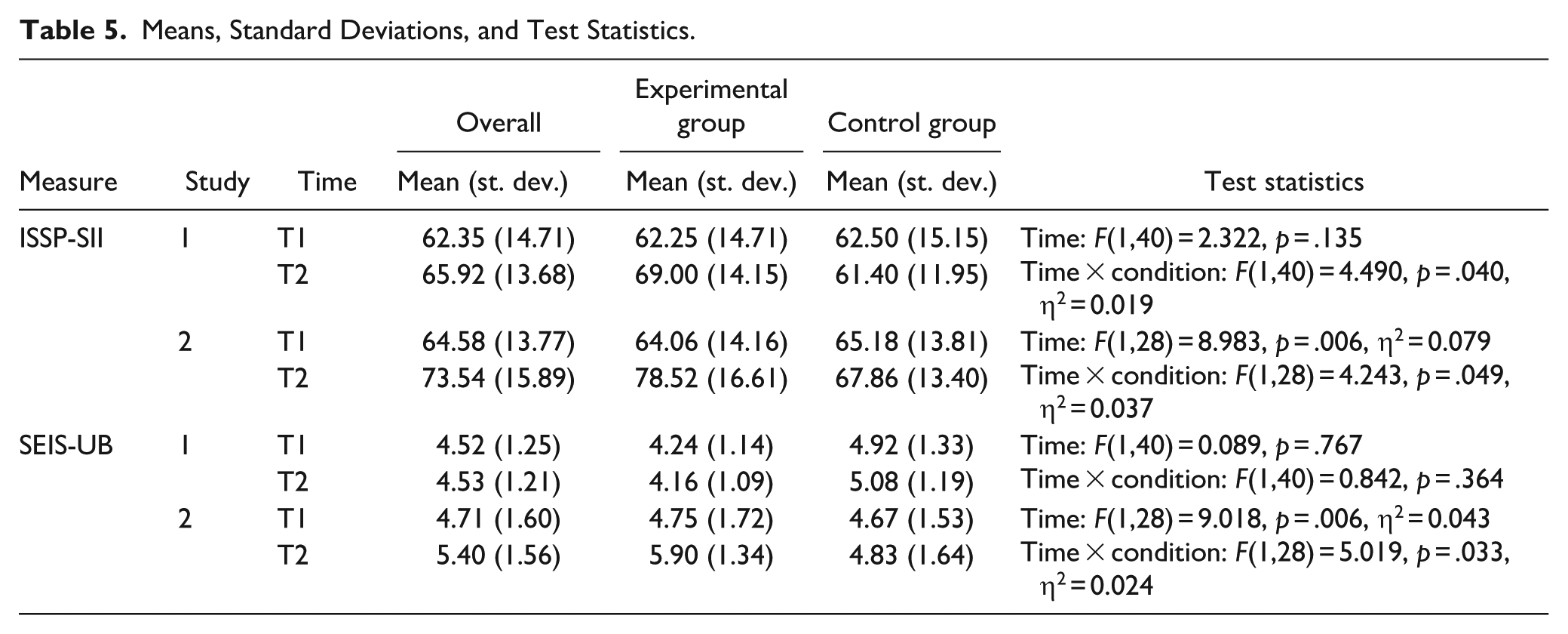
In the second repeated-measures ANOVA, Time was the repeated factor, the condition (Equality of Life vs. Control) was the between-subjects factor, and the SEIS Unfairness Beliefs subscale was the dependent variable. In Study 1, there were no significant effects; however, in Study 2, there was a significant interaction effect, where students who participated in Equality of Life reported a greater increase in unfairness beliefs than those who participated in the control group. That is: after playing Equality of Life, students had a stronger emotional reaction to the economic inequality in the world and felt it to be unfair.
Discussion
The findings demonstrate that the Equality of Life game effectively supports students in achieving the learning outcomes of critically reflecting on structural inequality, merit-based narratives, and capital. The results, while small, were statistically significant, indicating that participants in the experimental groups experienced meaningful short-term shifts in their cognition and emotions around inequality. In contrast, the control group, which received only didactic instruction on the topic, showed no changes in scores. To measure these shifts, the ISSP-SII assessed cognitive perceptions, and the SEIS-UB scale assessed emotional perceptions. Both measures were significant in Study 2, but only cognitive changes reached significance in Study 1. This difference may stem from two key differences between the studies.
First, Study 2 participants were volunteers who chose to engage in game-based learning on inequality, whereas Study 1 included students in a compulsory module. This voluntary participation in Study 2 may have heightened participants’ motivation, thus enhancing their openness to learning and resulting in greater change in perceptions. Second, in Study 2, the follow-up survey was administered immediately after the game, while in Study 1, it was conducted a few days later (with some students providing responses up to 10 days after). This gap may indicate that emotional reactions may diminish over time, while cognitive beliefs last slightly longer. To maximize the impact of the game, educators might enhance the learning experience by fostering students’ motivation beforehand and revisiting the game’s lessons later to reinforce insights about social unfairness.
Limitations and Future Research
Although the findings demonstrate statistically significant shifts in students’ beliefs about inequality, several limitations remain. First, the study captures only short-term change. Prior research suggests that attitudinal effects from diversity interventions often fade without reinforcement (Dobbin & Kalev, 2016). To support longer-lasting impact, educators might revisit the game’s themes later in the term, through reflective assignments, follow-up discussions, or applied learning tasks. Future research could build on this study by adding delayed post-tests (e.g., T3 and T4) to assess whether changes are sustained over time.
Secondly, while the ISSP-SII and SEIS-UB capture important shifts in attitudes, beliefs, and emotions, they offer no insight into how students might behave differently because of their learning. Embedding assessments that ask students to diagnose structural bias or design inclusive workplace practices could help bridge this gap in the classroom. Similarly, due to the small sample sizes, the evaluation did not explore explanatory mechanisms such as how intersecting identities (e.g., class, race, and gender) shape students’ engagement with the game’s content. Richer qualitative research—through interviews, journals, or group debriefs—could offer deeper insight into how intersectionality shapes learning.
Finally, the game was developed and tested in a UK business school context, with a relatively privileged cohort and a focus on elite workforce entry. As mentioned previously, this design may not translate seamlessly across different institutional or cultural settings. Educators are encouraged to adapt game elements to better reflect local realities and re-assess learning in their own contexts. Expanding the study across varied contexts could reveal how such adaptations influence learning outcomes and help refine the game’s broader applicability.
Conclusion
The Equality of Life game offers three key contributions to management education: it addresses the under-explored topic of class-based inequality and privilege (Lund Dean & Forray, 2021; Moergen & Kish-Gephart, 2023; Zulfiqar & Prasad, 2021); it responds to calls for innovative teaching tools that prompt critical reflection on inequality (Colombo, 2023; Eisenman et al., 2024); and it does so through a game design that both models and challenges the structures it critiques. As inequality continues to shape access to opportunity (Kumar et al., 2024), business schools face criticism for neglecting class-based inequality in the classroom (Moergen & Kish-Gephart, 2023), while often reinforcing privilege through merit-based narratives and elite institutional systems (Clarke et al., 2024; Eisenman et al., 2024). In this context, teaching about inequality and privilege, particularly through the lens of economic, social, and cultural capital (Bourdieu, 1986), is both necessary and difficult.
Equality of Life responds to these challenges by combining consciousness-raising pedagogy (Mirvis, 2008) with experiential learning theory (Kolb & Kolb, 2005). It provides a practical, engaging method for business school students to explore how structural factors shape workforce entry and consider their own future roles within these dynamics. Through game mechanisms—for example, scenario cards that simulate unequal economic starting points, and network cards that represent the compounding effects of social and cultural capital—students are encouraged to question how privilege accumulates and how inequality is reproduced.
Moreover, the game’s design subverts merit-based narratives that are common in game-based learning and gamification (Krath et al., 2021). Rather than rewarding effort equally, it exposes how capital shapes outcomes, demonstrating that success often reflects inherited advantage more than individual choices. Workforce entry is typically achieved by a group who were randomly selected to start the game from a more privileged position. These subverted mechanisms help learners confront how success is shaped by forces beyond individual control, challenging the meritocratic framing common in management education.
Our assessment of learning indicates that the game not only engages students but also shifts their short-term beliefs in structural inequality and their emotional responses to unfairness. These findings align with our learning outcomes, and suggest that experiential, theoretically grounded activities like Equality of Life can generate meaningful attitudinal change. In an increasingly unequal world, business schools have a responsibility to equip graduates with the ability to empathize with other perspectives, critically reflect on inequality structures, and sensitively challenge these. These challenges require sustained, systemic change—but Equality of Life provides a practical and impactful starting point for educators committed to that work.
Supplemental Material
sj-docx-1-jme-10.1177_10525629251374683 – Supplemental material for The Equality of Life Game: Examining Class-Based Privilege and Inequality in Workforce Entry Through Experiential Learning
Supplemental material, sj-docx-1-jme-10.1177_10525629251374683 for The Equality of Life Game: Examining Class-Based Privilege and Inequality in Workforce Entry Through Experiential Learning by Alison McFarland, Ian Hill, Wiebke Doden and Chiara Benassi in Journal of Management Education
Footnotes
Acknowledgements
We thank Dragon Learning, especially Richard Young, who helped us design and manufacture the game. Thanks also to colleagues who assisted in conceptualizing, testing, and evaluating the game: Madeleine Wyatt, Nicos Moushouttas, Alan Brejnholt, and Anisia Bucur. We are grateful for constructive feedback on early drafts of the manuscript, including comments received at the Academy of Management MED Division 2024 Writer’s Workshop, and a Journal of Management Education online manuscript development workshop. Finally, we thank the Associate Editor John Stark and the two anonymous reviewers for their thoughtful feedback, which significantly strengthened the final article.
Declaration of Conflicting Interests
The authors declared no potential conflicts of interest with respect to the research, authorship, and/or publication of this article.
Funding
The authors disclosed receipt of the following financial support for the research, authorship, and/or publication of this article: The authors received funding from King’s Business School Innovative Education Fund to support the design of the game and its evaluation.

Supplemental Material
Supplemental material for this article is available online.
References
Supplementary Material
Please find the following supplemental material available below.
For Open Access articles published under a Creative Commons License, all supplemental material carries the same license as the article it is associated with.
For non-Open Access articles published, all supplemental material carries a non-exclusive license, and permission requests for re-use of supplemental material or any part of supplemental material shall be sent directly to the copyright owner as specified in the copyright notice associated with the article.
