



Abstract
This research aims to examine the extent to which the way entrepreneurs learn is reflected in entrepreneurship education, highlighting the existing gap between the literature on entrepreneurial learning and the practice of entrepreneurship education. To explore entrepreneurial learning in-depth, we adopted an interpretivist-constructivist approach that involves participant observation at coworking spaces and semi-structured interviews with entrepreneurs. Data were subsequently analyzed using thematic analysis. Major findings indicate that social networks play a vital role in facilitating entrepreneurial learning, with context and network serving as essential learning mechanisms. However, these elements are often disregarded in traditional entrepreneurship education approaches. This study highlights a gap in the literature where the focus of entrepreneurial learning is primarily on entrepreneurs, while entrepreneurship education primarily focuses on students and educators. The study’s contribution is its emphasis on the importance of social networks in entrepreneurial learning and its potential for redesigning entrepreneurship education. By bridging the gap between entrepreneurial learning and entrepreneurship education, it is possible to create educational approaches that more closely mimic how entrepreneurs learn in real life, potentially leading to more impactful entrepreneurial activity.
Introduction
Entrepreneurship graduates are more likely to start businesses than non-entrepreneurship graduates (Wasim, 2019). However, there are concerns about the effectiveness of entrepreneurship education (e.g., Gibb, 2005; Neck & Greene, 2011). Experts in the field are urging for innovative frameworks that can accurately capture the intricate aspects of entrepreneurship in education (Binks et al., 2006; Gibb, 2002; Gibb & Haskins, 2013; B. Jones & Iredale, 2010; Nabi et al., 2017, 2018; Yu, 2013).
Entrepreneurship education necessitates innovative and experiential teaching methods due to its intricate and non-linear nature, making it unsuitable for generic approaches (Dwerryhouse, 2001; Gaddefors & Anderson, 2018; Pittaway & Cope, 2007; Rae, 2007; Steyaert, 2007). The complexity of entrepreneurship is influenced by contextual factors and social constructs, involving various actors and groups (Johannisson et al., 2002). The pandemic has amplified the demand for entrepreneurship courses; however, current teaching often centers around the “business plan” approach, criticized for its limitations in navigating the dynamic business landscape (Nabi et al., 2018). As a result, there is a disparity between how entrepreneurs learn and how universities teach entrepreneurship (Arthur, 1996). To address this gap, fostering collaboration and network building among students, mentors, industry professionals, and real entrepreneurs is essential for knowledge exchange and support in entrepreneurship education. Rather than relying on predetermined plans, a dynamic pedagogy that captures the genuine learning process is necessary (Chiles et al., 2007). Moreover, the emphasis should be placed on developing the crucial skills required to recognize opportunities and act on them (Ronstadt, 1988; Shane & Venkataraman, 2000). In the UK, entrepreneurship education often overlooks the experiential and social aspects of learning entrepreneurship (Wasim, Almeida, & Cujba, 2022). To offer a more realistic entrepreneurship education, universities must adopt a pedagogy that integrates real-life experiences and encourages interaction, allowing entrepreneurs to engage with society effectively.
The traditional business plan approach, historically prevalent in entrepreneurship courses, needs to evolve to better reflect the true essence of entrepreneurial learning. According to Mason and Stark (2004), the business plan often lacks relevance and practicality in the real world due to its reliance on assumptions and projections that may not align with dynamic market conditions. As a result, such an approach tends to prioritize planning and analysis over acting and implementing ideas. This overlooks the vital aspect of developing entrepreneurial skills and mindsets, including opportunity recognition, resilience, creativity, and networking, all of which are essential for entrepreneurial success (Gibb, 2002). Entrepreneurs themselves have expressed the need for a more practical and interactive entrepreneurship education, one that encompasses aspects of managing uncertainty, learning from failures, and fostering networking opportunities to share ideas and receive relevant support. To address this demand, formal entrepreneurship courses should be designed to provide interaction with the real-world entrepreneurial environment, and coworking spaces offer an excellent avenue for facilitating such engagement. This approach benefits both aspiring entrepreneurs and the coworking community, allowing entrepreneurs to learn from diverse social networks, develop problem-solving skills relevant to societal needs, and create innovative solutions for the benefit of society. Hence, our main research questions are:
How and what do entrepreneurs learn within social networks?
How can social network learning be embedded in formal entrepreneurship education?
Theoretical Background
Social Networks and Entrepreneurship
Entrepreneurship constantly evolves due to uncertainties in social contexts. It is a set of behaviors, attributes, and skills that foster change and innovation in all aspects of life (Gibb, 2005, p. 46). Innovation is a dynamic and emergent process, not a linear outcome (Petzold et al., 2019). Entrepreneurs identify and develop opportunities in niche markets, creating an economic process through future-oriented behavior and innovation (Chiles et al., 2007; Lachmann, 1986). Thus, the process approach of entrepreneurship reflects its dynamic and ever-changing nature. Entrepreneurship is a social driver, involving the exploitation of business opportunities to maximize social value creation (Ghazali et al., 2021; Montessori, 2016). For-profit and non-profit ventures share a common ground in exploring entrepreneurial opportunities, but their focus and objectives diverge, leading to differences in the approach to entrepreneurial education. Non-profit entrepreneurship centers around creating and managing organizations to address societal needs without a primary focus on generating profit or financial returns. In contrast, for-profit entrepreneurship is business-oriented and seeks financial gains, with social change being a by-product. The distinctions between these two forms of entrepreneurship necessitate tailored educational perspectives. For non-profit entrepreneurship, the curriculum should encompass topics such as social innovation, social enterprise models, fundraising, and stakeholder engagement. Fundraising is particularly critical for non-profit ventures, as they heavily rely on diverse funding sources, including grants, donations, sponsorships, and government support. Thus, education in writing grant proposals, cultivating relationships with potential funders, and ensuring financial sustainability is crucial. Stakeholder engagement is relevant to both forms of entrepreneurship but differs in focus. Non-profit entrepreneurship prioritizes collaboration with government agencies, foundations, community members, and volunteers, while for-profit entrepreneurship emphasizes engaging with investors, customers, suppliers, and strategic partners. It is essential to acknowledge that hybrid models exist, incorporating elements of both for-profit and non-profit entrepreneurship. Though some insights from traditional entrepreneurship education can benefit non-profit entrepreneurship, the focus of this article lies on the more business-oriented, profit-seeking form of entrepreneurship. Entrepreneurs in this domain face the challenge of balancing financial returns with social impact while seeking sustainable changes and innovations. This entails making strategic changes systematically, taking risks, and aligning social, commercial, and economic goals (Deng et al., 2020; Ebrashi, 2012; Haugh & Talwar, 2016; Hussein & Haj Youssef, 2023; Pinheiro et al., 2021). Successful entrepreneurship requires a delicate integration of financial and social values to achieve lasting impact.
Social value is achieved by addressing social challenges through innovative solutions (Bacq et al., 2015; Ebrashi 2012, 2013; Halberstadt, 2021), but its realization is affected by various factors such as financial, social, political, demographic, personal, situational, and economic contexts (Gedajlovic et al., 2013). Bacq and Eddleston (2018) analyzed the impact of interpersonal and inter-organizational relationships and culture on entrepreneurial social impact using the resource-based view (RBV), which highlights the importance of resources for organizational success. They suggest that forming social and political relationships is essential to facilitate the mobilization of resources, ultimately leading to positive gains. Creating social value requires the capacity to manipulate tangible and intangible resources (e.g., expertise, skills, etc.) to improve performance (Dwivedi & Weerawardena, 2018). The pandemic has stimulated a heightened interest in social impact, prompting the need to incorporate social and environmental considerations into entrepreneurship curricula to address challenges and foster socially responsible business ventures. Entrepreneurs pursuing social impact initiatives often encounter difficulties in mobilizing resources due to the dual focus on achieving financial prosperity and generating social gains (Bjørnskov & Foss, 2013; Gali et al., 2020).
Entrepreneurs need collaborative social relationships to make successful social contributions. Social networks and public interaction drive social and financial growth (A. L. Putnam, 2015, p. 207). Without relationships with stakeholders, entrepreneurs won’t benefit from resource facilitation, limiting their social gains. Building relationships with network actors like social clubs, communities, and other entrepreneurs is crucial for the scale of entrepreneurial social value, but also costly and time-consuming to form (Gedajlovic et al., 2013; P. Jones et al., 2019). Entrepreneurs should take advantage of social networks to gain support to achieve success and create social impact (Bacq & Eddleston, 2018). These networks can be internal or external and are crucial in creating opportunities and accessing resources. Incorporating mentorship into entrepreneurship education can significantly enhance students’ confidence in their entrepreneurial abilities by providing guidance, support, and industry-specific knowledge (Souitaris et al., 2007). Moreover, mentorship positively influences students’ emotional well-being, fostering a greater affinity toward entrepreneurship (Ahsan et al., 2018; Cardon et al., 2005). Establishing such relationships and connections represents invaluable intangible resources that empower entrepreneurs to increase their impact, with studies indicating a strong correlation between social capital and entrepreneurial gains (e.g., Brieger & De Clercq, 2018). Human capital also holds a pivotal role in aiding entrepreneurs in identifying the key benefits of their social value creation. Strengthening human capital through education motivates individuals to pursue social objectives and shapes their actions and resilience, leading to better decision-making for social benefit (Williams et al., 2017). This importance is magnified in the post-pandemic era, where entrepreneurship education should prioritize developing core competencies to navigate an unprecedented, uncertain, and rapidly changing environment (Y. Lee et al., 2023). Therefore, enhancing human capital is crucial when trying to improve the scale of social value from entrepreneurial activities. According to Birley (1985), examining the network context of an entrepreneur is necessary to understand entrepreneurship. Networks are essential for entrepreneurial development (Nijkamp, 2003), and an entrepreneur’s social network typically begins with their family, who they approach for assistance and support (Rosenblatt et al., 1985). Greve and Salaff (2003) found that social relationships play a vital role in the process of starting a company, and it was suggested that entrepreneurs need to build social networks. The relationship of entrepreneurs with others can provide the resources to start a business or overcome a problem. Taylor and Thorpe (2004) contend that there is evidence of a social dimension to entrepreneurial decision-making, which appears significant. This supports earlier studies that emphasize the importance of personal networks and networking. Thus, networking aids entrepreneurs in identifying opportunities, navigating through them, accepting certain things, and even creating an environment with the help of other people in the network (Nohria & Gulati, 1994).
Communities of Practice
The concept of a Community of Practice (CoP) is defined as a group of individuals who share common interests in a specific topic or domain and develop knowledge and expertise through regular interaction, known as the practice (C. Wenger, 2011). This collective and collaborative learning process involves the members of the network interacting with each other to share knowledge and is a useful framework for real learning where knowledge can be applied (Ardichvili, 2008; Târnăveanu, 2012; E. C. Wenger & Snyder, 2000). CoPs are essential in making learners active knowledge builders who engage in specific knowledge and skills formation, through a “need-to-know” approach (Hafeez et al., 2018).
An effective CoP is characterized by members who are motivated to deepen their understanding of the relevant subject matter and develop their skills and expertise (Bain et al., 2009; E. Wenger et al., 2002). According to E. Wenger et al. (2002), sharing resources is a critical component of a successful CoP, along with clearly defined roles and actions that align with the community’s shared goals. These shared beliefs and values of a networked community guide its work (Bain et al., 2009). In the context of education, CoPs can contribute to the creation and updating of curricula as knowledge is acquired. Cross-faculty collaboration can be particularly effective in this regard, as it allows for a wider range of skills and expertise to be brought to bear on the task (A. K. Morris & Hiebert, 2011). Faculty members can play a key role in promoting situated learning among their students, creating an environment that fosters joint enterprise and developing activities that support the CoP’s learning goals (Viskovic, 2006; E. C. Wenger & Snyder, 2000). To fully realize the potential benefits of the CoP approach in education, faculties should be willing to adopt innovative and non-traditional approaches.
Hence, communities of practice should encourage educators to evaluate what they do and how they do it. The hurdle is that the “typical working life of a university teacher does not lend itself to this” (Laurillard et al., 2013, p. 3). The primary limitation of a CoP is that it requires intense participation and interaction among the members of the network (E. Wenger, 2006), which sometimes is a challenging process because of the individual contexts involved. CoPs are a strong type of network, where knowledge sharing is more effective due to the common interests of its members. The creation of a CoP requires a space, either online or offline, where members can interact and deliberately share knowledge without any intermediaries. The knowledge gained through this interaction forms a shared stock of resources that can be used by entrepreneurs who are part of such CoPs. Our approach emphasizes social learning for entrepreneurial education, in contrast to the cognitive framework that views students as consumers lacking knowledge. Social learning prioritizes social engagement to create a conducive learning environment, emphasizing participation and interaction as the context for learning. This shifts the focus from administering information to facilitating social engagement (Howorth et al., 2012). By doing so, the educator would be mimicking the real environment, especially for entrepreneurs to provide a real-life experience of learning. For entrepreneurship this may be a bit challenging especially as most of them are working in isolation (C. Jones et al., 2007). Entrepreneurs usually work for themselves and do not have a full hierarchical format whereby they can benefit from the presence of an independent board to bounce-off ideas or share learning/knowledge with others. Most of the entrepreneurial learning is what is often referred to as “on the job” type of learning (Cope, 2005).
Entrepreneurship education involves knowledge exchange and decision making based on prior knowledge and experience within a specific context (Cope, 2011; M. H. Morris et al., 2010; Pittaway & Thorpe, 2012; Politis, 2005). Cope’s (2003) case study research finds that non-routine events play a crucial role in the learning process. In a subsequent study, Cope (2005) suggests that entrepreneurs need to learn from their “key network agents,” such as stakeholders, to create an entrepreneurial learning environment. Pittaway and Cope (2007) propose that creating a learning environment that mimics real-life entrepreneurial learning is possible, emphasizing the social, emotional, and experiential aspects of learning.
Similarly, Politis (2005) stresses the importance of social relations and learning techniques in fostering innovation and the adoption of new ideas and technologies in small and new ventures. Kadushin (2012) notes that social networks have been integral to human society and can be leveraged as needed. In a similar vein, Musteen et al. (2018) underlines that CoP are effective in facilitating students achieving learning outcomes. They explored an interesting experiential teaching technique, the Board Game, where students construct their knowledge through interactions with counterparts in different contexts. Such engagement fosters creativity, critical thinking, and problem-solving capabilities which are required to develop the entrepreneurial profile. This allows the development of students’ attitudes toward entrepreneurship. M. Granovetter (1985) records that social networks can be activated as required and play a crucial role in driving economic and political changes. Birley (1985) emphasizes that understanding the entrepreneurial process requires considering the networks in which an entrepreneur is immersed, as they are not only beneficial in acquiring relevant skills and resources, but also in shaping the opportunity and determining the nature of the business. These networks hold the potential to provide social capital, as highlighted by R. D. Putnam (2015). Burt (1992) identifies contacts that offer essential resources as the social capital of entrepreneurs. Within the entrepreneurship literature, social capital has been associated with learning, knowledge sharing, and collaborative development (De Clercq et al., 2013; Gibb, 1997; McKeever et al., 2014; Neergaard & Madsen, 2004). Gibb (1997) underscores the significance of social learning and social capital in entrepreneurship, advocating for the inclusion of social elements in formal entrepreneurship curricula. A community of practice (CoP) learning environment fosters social interaction and knowledge sharing, facilitating contextual learning, network and relationship building, and enhancing problem-solving skills. Recent studies, such as Rossignoli et al. (2023), emphasize the importance of social interaction and knowledge sharing within CoPs, as this creates opportunities for students to engage with peers, practitioners, and professionals to exchange ideas, experiences, and expertise. This immersive experience in authentic entrepreneurial activities positively contributes to the development of adaptability, practical skills, and an entrepreneurial mindset. Lastly, learning in a CoP environment opens doors to networking opportunities, providing access to new resources, industry knowledge, and potential business collaborations. The interplay of social capital, knowledge sharing, and networking within CoPs creates a fertile ground for entrepreneurial growth and success.
Methodology
The gap between real-life entrepreneurial learning and university-based entrepreneurship education is apparent. Merely imparting rote knowledge is insufficient for entrepreneurship education. Rather, it should prioritize developing entrepreneurial skills, behaviors, mindsets, and processes rooted in entrepreneurial learning and integrating social networks. Our aim is to close this gap by engaging with entrepreneurs, synthesizing their experiences and insights, and studying coworking spaces (CWSs) to create an entrepreneurship education framework that mirrors the real-world learning process. Therefore, coworking spaces (CWS) are considered to facilitate the participatory and collective learning environment for participants and create the perfect CoP approach to education on entrepreneurship (Wasim, 2019). We select CWSs as a location for data collection to observe entrepreneurial learning happening first hand, as it offers unique insights into entrepreneurial learning in networked settings.
Our research adopts a constructivist lens to better understand how entrepreneurs learn and how social networks can enhance entrepreneurship education. This perspective is necessary due to the complex, varied, and constantly evolving nature of entrepreneurship (Neck & Greene, 2011). A positivist epistemology, which has traditionally dominated entrepreneurship research, is not sufficient for understanding this phenomenon (McDonald, Chai, & Newell, 2015). In fact, the positivist approach has created a paradox for researchers attempting to analyze a concept that lacks a proper definition. Therefore, our research embraces the constructivist perspective, which focuses on how individuals construct their own understanding of reality through their experiences and social interactions (Bell & Bryman, 2015; Silverman, 2013). A. P. Pentland (1999) suggests that surface-level data is not sufficient for gaining a comprehensive understanding of the learning process, as it does not reveal the underlying generating mechanism or objective story. Rather than simply quantifying the percentage of Y affected by X, it is crucial to understand the narrative behind the connection between X and Y (B. T. Pentland, 1990). To gain a deeper insight into the learning process of entrepreneurs, it is necessary to analyze the context and background of their social interactions, which can only be accomplished using qualitative and narrative methods (Silverman, 2013).
Narrativity is an important aspect of our research as it enables us to better understand the complexity of the entrepreneurial experience. Through storytelling, entrepreneurs can construct narratives that help connect different events, experiences, and emotions, while also identifying patterns and establishing causal relationships (A. P. Pentland, 1999). This is very useful as it drives innovation. Sergeeva and Trifolova (2018) argue that storytelling is essential for innovation by presenting and sharing ideas and experiences which will help motivate others and gain their support. This is particularly valuable as it allows us to make sense of disparate experiences and to gain a more in-depth understanding of what entrepreneurship is about. Moreover, as humans are natural storytellers, narratives offer a powerful means of organizing and structuring complex experiences, providing us with a more nuanced representation of the reality of entrepreneurship (White, 1980). Entrepreneurship education helps students develop critical thinking skills, and adopting narrativity can aid in achieving this. By analyzing and interpreting stories they hear, students can gain a deeper understanding of the complexities and challenges of entrepreneurship, which better represents the actual entrepreneurial learning process. As Hambrick (1990, p. 251) argues, there is little chance to offer a proper representation of managerial practices “until our assumptions square with reality.” Hearing about the experiences of others from diverse backgrounds and industries in an entrepreneurial environment such as a coworking space (CWS) allows students to gain direct, new insights and ideas that they can apply to their own ventures later.
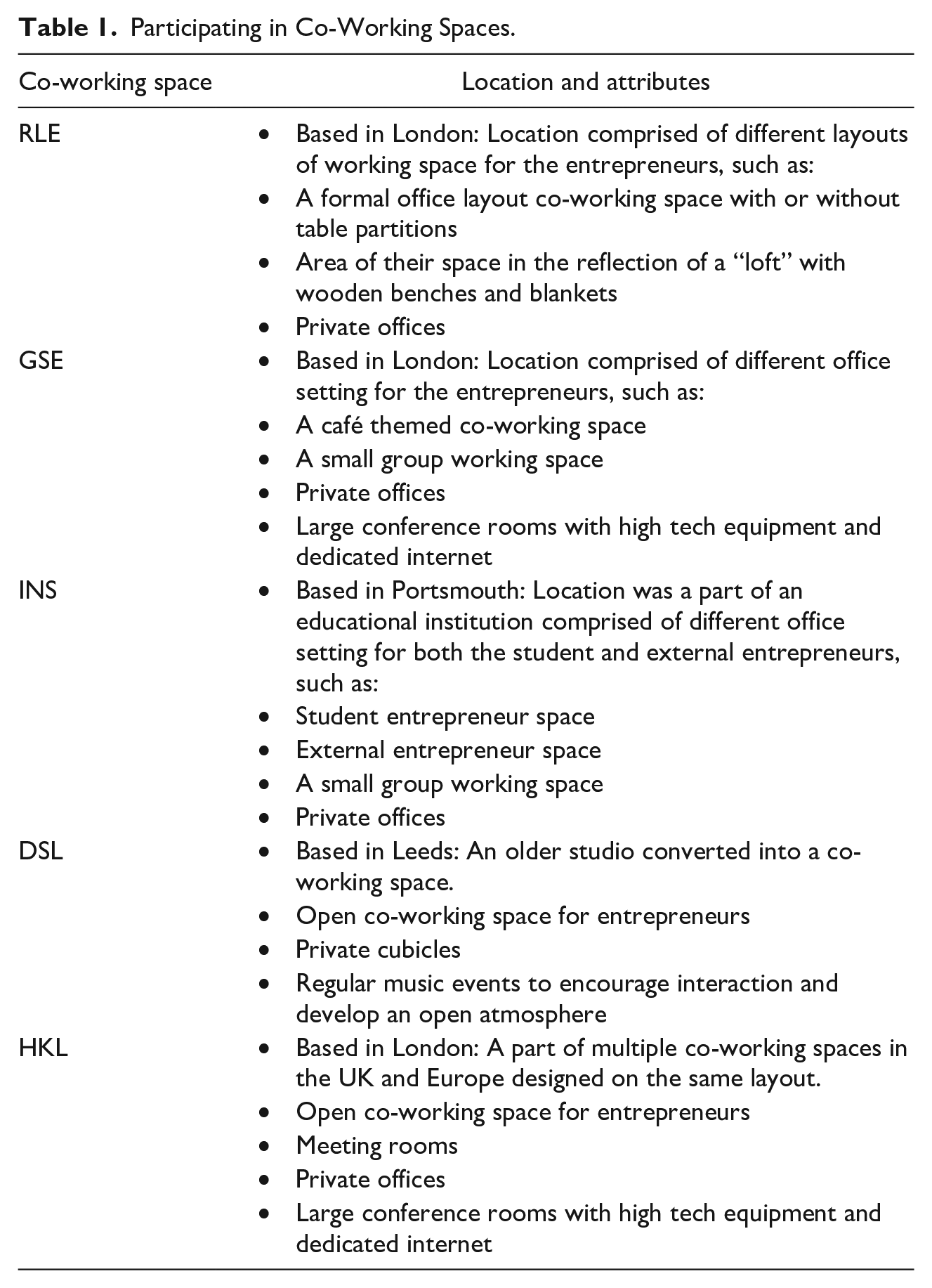
To better understand the interconnected and dynamic nature of entrepreneurship, we adopt a process-relational perspective. This approach allows us to appreciate the interdependence of factors and relationships involved in entrepreneurial learning, as well as embrace the uncertainty and change inherent in the process. To contextualize our research, we began with participant observations at five coworking spaces (CWSs) located in the UK. This first-hand experience provided a stronger and more robust foundation for the second stage of our work, which involved conducting semi-structured interviews. In total, we contacted 16 CWSs through an online search, selecting them based on their diversity in terms of location, industry focus, gender balance, and number of entrepreneurs using the spaces. Table 1 below presents the CWSs we selected.
Participating in Co-Working Spaces.
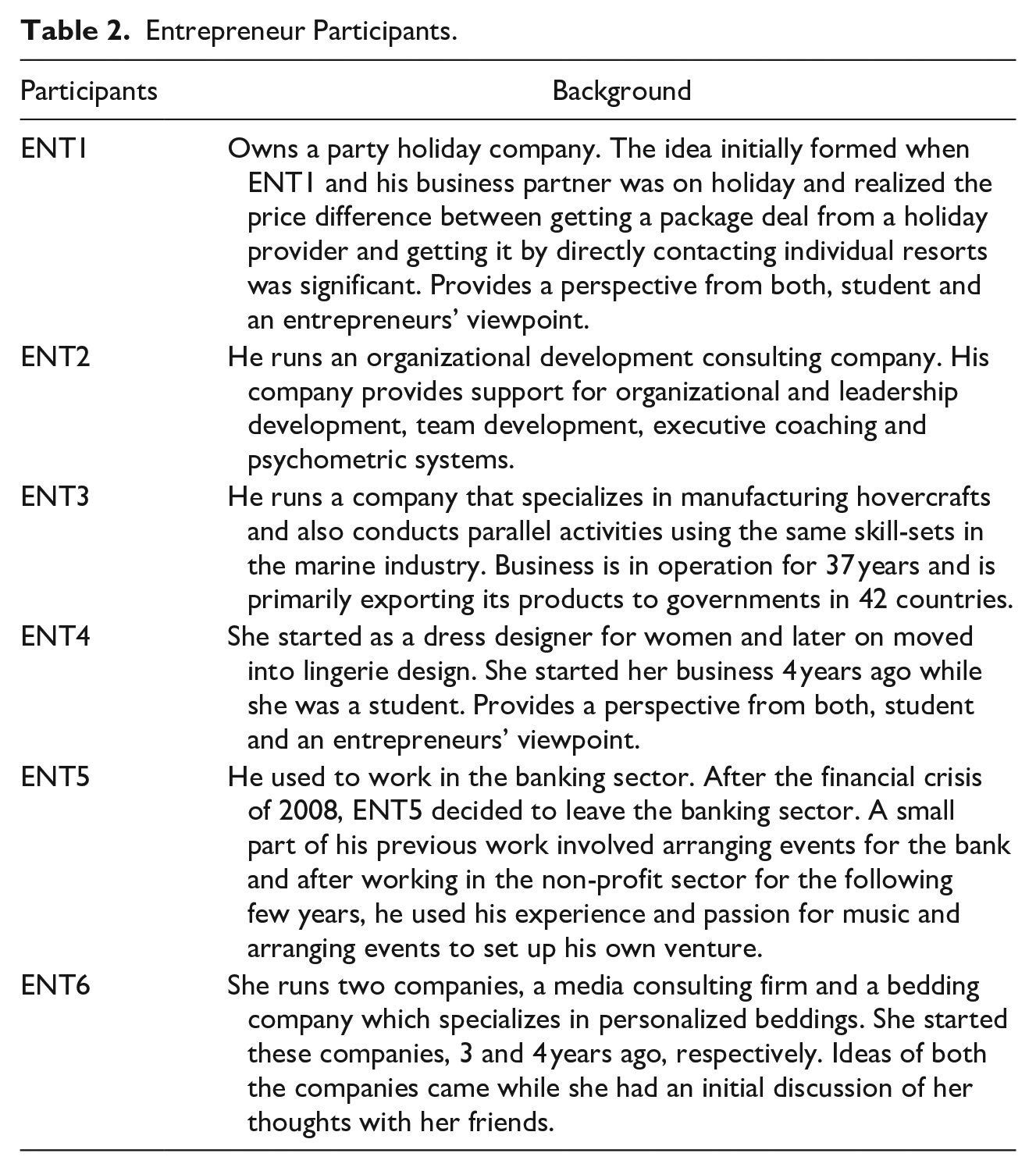
To gain an understanding of the learning that occurs within the entrepreneurial process, gatekeepers were used to recruit entrepreneurs and gather information about their entrepreneurial experiences. This approach allowed for an exploration of both the learning activities that take place within entrepreneurial networks and the evolution of these networks over time. The entrepreneurs involved in the study represented a diverse range of ages, experiences, and stages in their businesses. Table 2 outlines the details of these entrepreneurs.
Entrepreneur Participants.
The research methodology adopted for this study involved participant observation, which refers to fieldwork observations of entrepreneurs working in a socially networked environment. The observations were supplemented with informal discussions with the entrepreneurs to gain deeper insights into the phenomenon being studied. These conversations were not recorded to keep their context natural. We made notes during the conversations and afterward we typed the conversation into a short report and verified it from the participants to confirm the interpretation of the data. For example, “a participant at a CWS highlighted that he spent half a day to a day a week at that CWS, this allows him to disconnect from the day-to-day operations and focus on growth of the business.” This approach is considered less intrusive than other research techniques, as noted by Bøllingtoft and Ulhøi (2005, p. 277) in a similar study on networking at an incubator in Denmark. The literature also emphasizes the use of observational and ethnographic methods of data collection (De Bruin et al., 2007; McDonald, Gan, Fraser, et al., 2015). To gain an immersive understanding of the context, we spent 2 weeks at each of the five CWSs and had informal discussions with 41 individuals who were using the spaces regularly and provided verbal consent (See Appendix A for the interview guide). Following the observational stage, semi-structured interviews (in-line with prior research [i.e., Haj Youssef & Teng, 2021; Wasim et al., 2023]) were conducted with six entrepreneurs using a constructivist approach to explore how entrepreneurs learn through interactions with individuals in their networks.
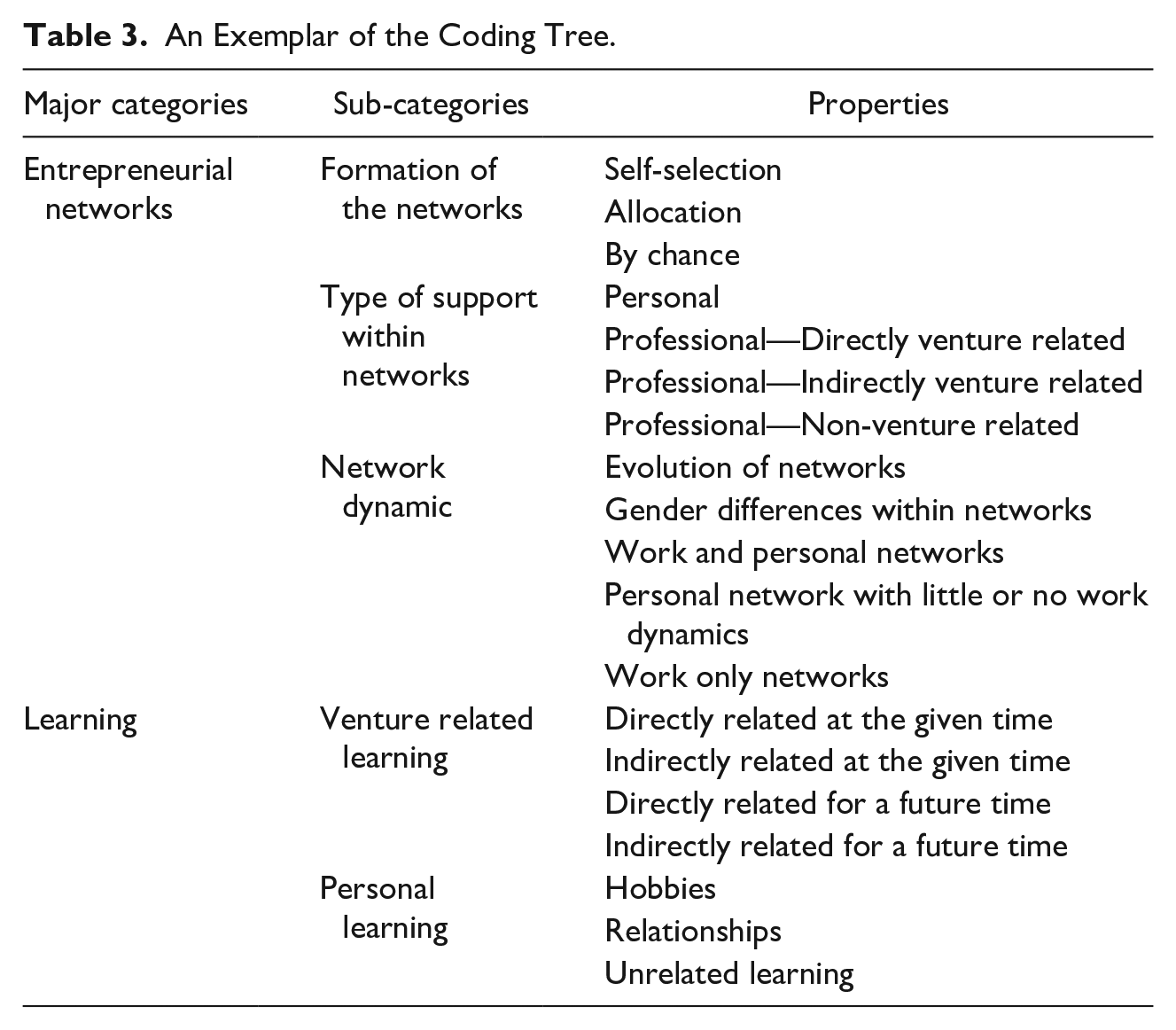
We follow an interpretivist constructivist stance (Mojtahed et al., 2014). We use NVIVO for coding and developing themes. At the outset, the data were analyzed without any relation to the existing literature. A thematic analysis approach was employed to analyze the data. A constructivist thematic method does not simply provide a window on reality but instead the reality discovered arises from the interactive process and its various contexts. The constructivist approach to the method has been recognized as a popular choice, particularly in the field of education. Mills and Francis (2006) highlighted the use of this approach in their study. To ensure that the data collected were not influenced by the literature, the research team first listened to the interview recordings at least twice before attempting any analysis. The coded data were then evaluated multiple times to ensure they were well-organized and ready for analysis. To illustrate an example of the thematic coding tree from the observational phase of the research, please refer to Table 3 below.
An Exemplar of the Coding Tree.
Findings
The entrepreneurial learning process in CWSs was found to be both tacit and explicit, with a focus on the social context for learning. CWS managers and users emphasized the benefits of working alongside like-minded individuals and having access to a community of peers for support and advice. One entrepreneur shared how being in space made them aware of how little they knew about starting a business, but watching others and networking helped them learn. They also recognized the value of getting fresh eyes on their work and learning to communicate and sell themselves better. “After that I decided to put myself out more, now I see how people talk and sell themselves or learn to do that just by communicating.”
Support and Entrepreneurial CoP
Working in a CWS provides a CoP where entrepreneurs can work, grow, and support each other. HLK’s entrepreneur stated that “connectedness with each other provides more intellectual support and opportunities.” Users who moved out of the CWS and returned found that their progress was better in the CWS environment. Most CWSs were dominated by tech entrepreneurs who collaborated on website and mobile application development. The second major field for entrepreneurs was arts and creative industries. However, the majority of tech and creative industries did not exclude other types of entrepreneurs from using the space.
Entrepreneurs in the CWSs were from diverse backgrounds, which created a unique atmosphere and enabled unexpected interactions. This diversity prevented a mono-cultural environment, which was considered crucial for innovation by both the CWS managers and users. The freedom and the understanding of like-minded people were also important to the entrepreneurs, who appreciated the knowledge-sharing opportunities provided by the CWSs. The manager of RLE mentioned that “. . .diversity of people is what burst the innovation, you can’t develop entrepreneurs and entrepreneurship in a setting where all people are the same.” Almost all participants cited knowledge sharing as the primary benefit of using CWSs.
Sources of Entrepreneurial Learning
After obtaining consent, interviewees were informed about the research’s purpose and background. ENT1, a business student, had limited formal entrepreneurship education but acquired business skills through their degree program. ENT2 learned primarily through personal experience and surrounding themselves with knowledgeable individuals and turned to online resources when necessary. ENT3’s military experience provided valuable leadership and problem-solving skills for their business. “In your early days of the army, you really try to extract every bit of information you possibly can before making an informed decision, and knowing that it is time-limited, as you grow and upgrade your depth of experience you develop an intuitive and become faster in that decision-making.” ENT4’s education in fashion and her placement with a major fashion designer played a vital role in her business start-up and development, as she gained experience in procurement and sales and developed her network in the industry. She continues to work with people she met during her placement, including her mentor. ENT5 did not receive any formal entrepreneurship education but pursued mentorship in his industry and learned from his network, which expands internationally and provides ongoing support and learning opportunities. “When we were about to start the photo-booths, I was a bit sceptical about it, I ended up having lunch with someone who runs a company in the States, very similar to ours but on a different level in terms of success . . . we talked a lot about photo-booths, and he convinced me that it was the right step to take. Now it’s the biggest side of our business.”
ENT6’s business education was limited to the general business curriculum at university, and she did not receive any formal entrepreneurship education or training. She believes that her entrepreneurial learning has come primarily from her experiences in business and discussions with others. If she is unsure about something, she will turn to online resources for answers. Books have played a limited role in her entrepreneurial learning. “I would come up with a ridiculous business idea and after discussing it with everyone I would have a more refined version of it. Business ideas are gemstones, you get them uncut and rough and by sharing and getting feedback, you shape them into a diamond.” ENT6 believes that her business is a product of her network and most of her learning about the business came from her close friends and parents. Her first business failed because she was an introvert and was not reaching out to people.
Entrepreneurial Learning in Social Networks
ENT2 mentioned that although networking is important, it is also very important to carefully choose people in your networks as well as select the networking events you attend. “I find some of the networking events of poor quality, a lot of people would just meet up and have coffee and talk about things but it’s not really business-related.” ENT2 learned several key things from observing the people around him, including what not to do. He also enhanced his networking capabilities by introducing his contacts to his clients and vice versa. Over time, ENT2’s network has evolved, with his wife being a key member of the network since the beginning.
ENT3 initially discussed his business with friends from the army who left and worked in the industry, as he trusted their honest advice over anything he would like to hear. “If they thought my suggestion or what I was discussing was mad they would tell me it’s mad.” ENT3’s network evolves every 3 years in line with his business development cycle. He values the advice from these people as he has developed both personal and working relationships with them, which eliminates any suspicion of ulterior motives in the advice they give. Initially, ENT4 relied on her mother, who works for a business consultancy, for advice and network development. Recently, she has involved her boyfriend more in work discussions, but still relies on her mother and her mother’s network the most. She also discusses her work with her best friend and remains in constant communication with her mentor from her placement. If she is unsure about a certain aspect of her business, ENT4 first tries to find a solution online and then discusses it with her close network. “At the start, I was very isolated and protective of my ideas. There was no threat of anyone stealing my ideas but at the same time I wasn’t getting anywhere either. . . After a year of trying and not making any significant success I started seeking mentorships and only then I realised that I can’t be in business while staying in my own bubble.”
ENT5 is a member of various CoPs and attends regular networking events and tradeshows to keep updated on the latest knowledge and trends. However, his primary source of advice and support is his wife, followed by a serial entrepreneur and a leading DJ in the industry. ENT5 used to be hesitant to share his ideas, but over time he has become more open and has found that the benefits of networking and sharing ideas far outweigh the costs. In addition to in-person networking, ENT5 also turns to social media for advice when needed. ENT6 is actively involved in various service communities, including the Chamber of Commerce, and regularly attends networking events to expand her network. However, she also focuses on building relationships with key figures in her industry to learn from them and gain instrumental support. Her go-to people to discuss her business with are her boyfriend, close friend, and boyfriend’s sister due to the high level of trust she has with them. She feels comfortable sharing all opportunities and ideas without fear of being “judged.” As she said, “I talk to them because I know they will not make fun of my ideas; well, they may do it at the beginning but then they will listen to me with all the attention.” With time, she also believes that their advice has become better. ENT6 mentioned that it is not a learning process for her only but for her network as well. “Over time I can see how the value of the information coming from all three of them has increased significantly, now that we understand each other at a different level it feels like we are interconnected brains.”
ENT6 was very strong on not taking advice from someone she did not like, and she mentioned that if she does not like someone it is based on the values that person holds and taking advice from someone with different values than her own was unacceptable to her. “I would rather make a loss than take help or advice from someone I don’t like.” With regards to network evolving, she mentioned that she had the same people in her network since the early days of her professional life. Before that, she would heavily rely on learning and taking knowledge-based support from a close network but because of work and relocation, she gradually lessened the interaction she had with her mother and now it is mostly personal apart from occasional comments. “If I need something, I try to see who might know that or know someone who would know about it and then I invite them for coffee and lunch. You would never understand the worth of buying people a coffee or lunch until you start doing it, it does magic, usually.”
Proposed Elements of Entrepreneurship Education
ENT1 recommended adding practical components such as brainstorming activities and industry and self-employment experience to higher-level entrepreneurship courses. ENT2 suggested an action learning environment where students work with others to bring in diverse skills and knowledge, while the university acts as an organizer and facilitator. Students should understand that failure is a possibility and build resilience against it to succeed in the long-term. They should be: “open-minded about how you network and who you have in your network and to see that you are always networking if you are at the gym and the guy you are sitting next to, and you don’t know what his job is and who is; find out. Get comfortable in connecting with strangers.”
ENT3 emphasized the importance of preparing entrepreneurship students to manage uncertainty, which is often not addressed in university curriculums. He believes that uncertainty and failure are interconnected, and both need to be taught to develop resilience. To achieve this, he suggests incorporating activities like role-playing in courses to challenge students to break down problems and approach them from different perspectives. By doing so, they can develop the skills necessary to manage uncertainty and build resilience against failure. While suggesting a model of entrepreneurship education, ENT4 suggested that universities should teach students to be more open with their ideas. Sharing ideas not only helps them develop them but also provides them with a vast range of possibilities. In addition to that, students should not be afraid to fail. “I know you might not want to tell that to a student who is full of ideas, but it is very unlikely that they’d succeed in their first launch, it sounds negative but it’s true. All my friends that are or were involved in starting up faced plenty of problems or complete shutdown of their ideas.” Proposing a model of teaching, ENT4 advised that universities should provide a platform where students can create a prototype as a part of their course and try to sell under the supervision of their lecturers. Students should be encouraged to share their ideas and be informed that they will have to trust people to a degree if they want to succeed.
Based on his experience, ENT5 thinks that universities should teach about resilience to the students and how they can learn from failure rather than being afraid of it, as failure is merely a part of the process. He further mentioned that we live in our own silos. However, to be successful students should realize that they need to put themselves out there. “One of the most successful entrepreneurs of our time are the people that are not afraid of standing up and failing, failure should not be seen as something that is bad. If you don’t start out trying you won’t be getting anywhere.” ENT5 also mentioned that networking is the key to the learning process and students must start practicing it from a very early stage. ENT5 learnt some of the most important lessons about his business only by interacting with the customers. “If you want to be the best in your business, get out there, see what the best people in the industry are doing, talk to them, learn from them and go to the conferences . . . there is nothing that can replace the value of a face-to-face conversation, you can send an online message, but it will not be the same as meeting someone in person.”
While suggesting a model of entrepreneurship education for higher education institutions, ENT6 mentioned that universities should teach people about developing a relationship with the core values of the business. “If you see any successful business, no matter how big it becomes it always has the same core values it had when it first started.” In ENT6’s opinion, sticking to the core values is what develops a loyal customer base and if a company keeps its values shifting to make someone happy, it would never be able to make everyone happy. “Universities need to teach people how to think small, there is a lot of emphasis on thinking bigger and achieving bigger, but it is not realistically possible for everyone to set up a company that would become a phenomenon. Many businesses that students would start and develop would be SMEs.” Finally, it was suggested by ENT6 that students need to learn how to resource their ideas and often they do not realize how many people their parents, lecturers or friends might be acquainted with, and they should learn to exploit that resource. They should not be afraid of sharing their ideas with others and asking for help.
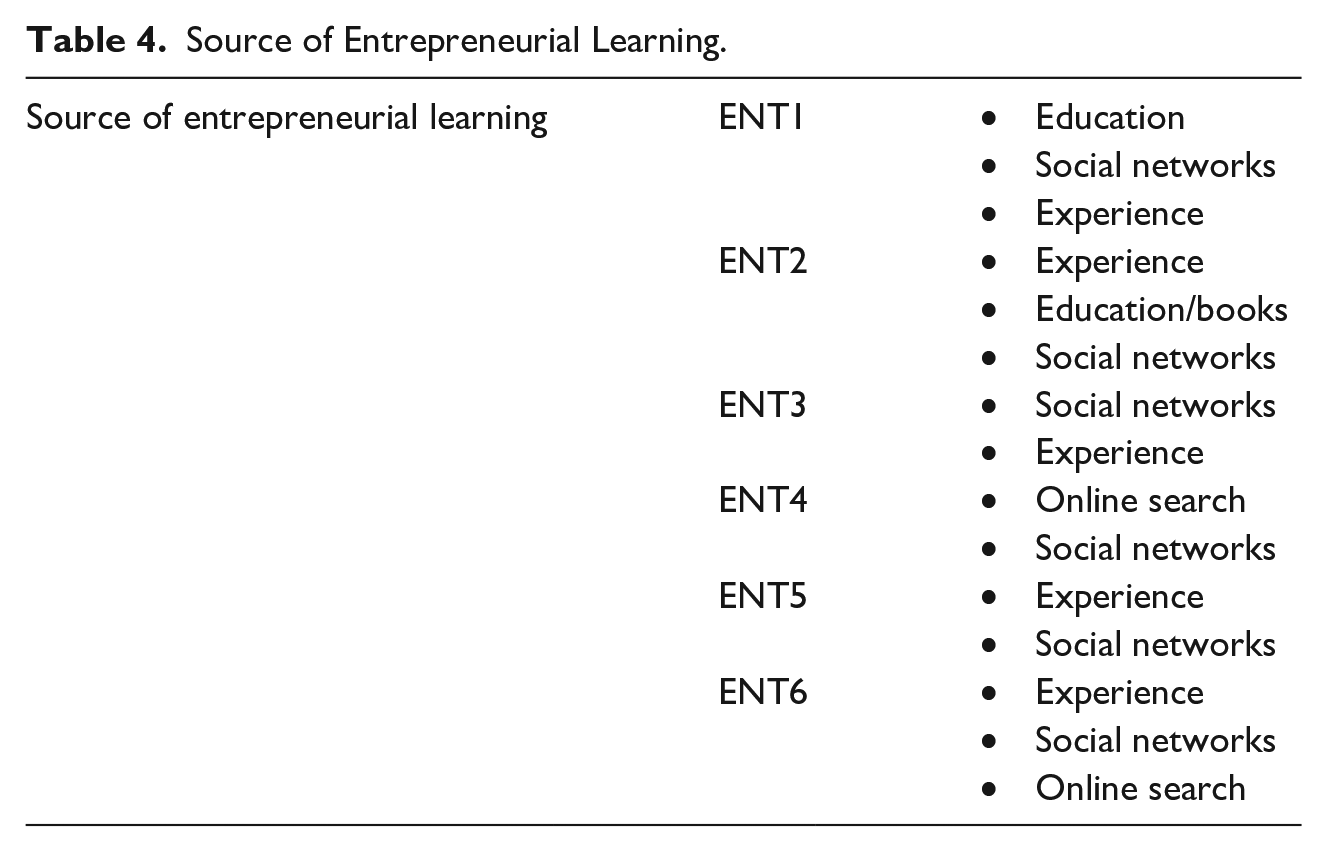
CWS users collaborated and learned from each other’s experiences, skills, and businesses due to their diverse backgrounds and ideas, supporting M. Granovetter’s (1985) findings on the strengths of weak ties in a network. Organizers of such spaces also played a role in creating a collaborative atmosphere. According to Kolb (1984), the diversity network provided entrepreneurs with a competitive advantage as prior experience and knowledge formed the starting point of any learning event. Entrepreneurs typically communicated most with a select few in their network for personal or professional reasons. Table 4 below highlights what is the source of entrepreneurial learning for each of the participants involved in the interview stage of the research.
Source of Entrepreneurial Learning.
Entrepreneurial Learning in Social Networks
Entrepreneurs rely on their network for information and learning opportunities, with trust being a critical factor in these relationships. ENT6 emphasized the importance of trust in testing new ideas with friends and family. While entrepreneurs are open to advice, they evaluate it based on their own experience and knowledge and may verify it with credible sources. Entrepreneurial experience also shapes how entrepreneurs share their ideas with others. Furthermore, context and resilience have been linked to entrepreneurial learning in networks.
Proposed Elements of Entrepreneurship Education
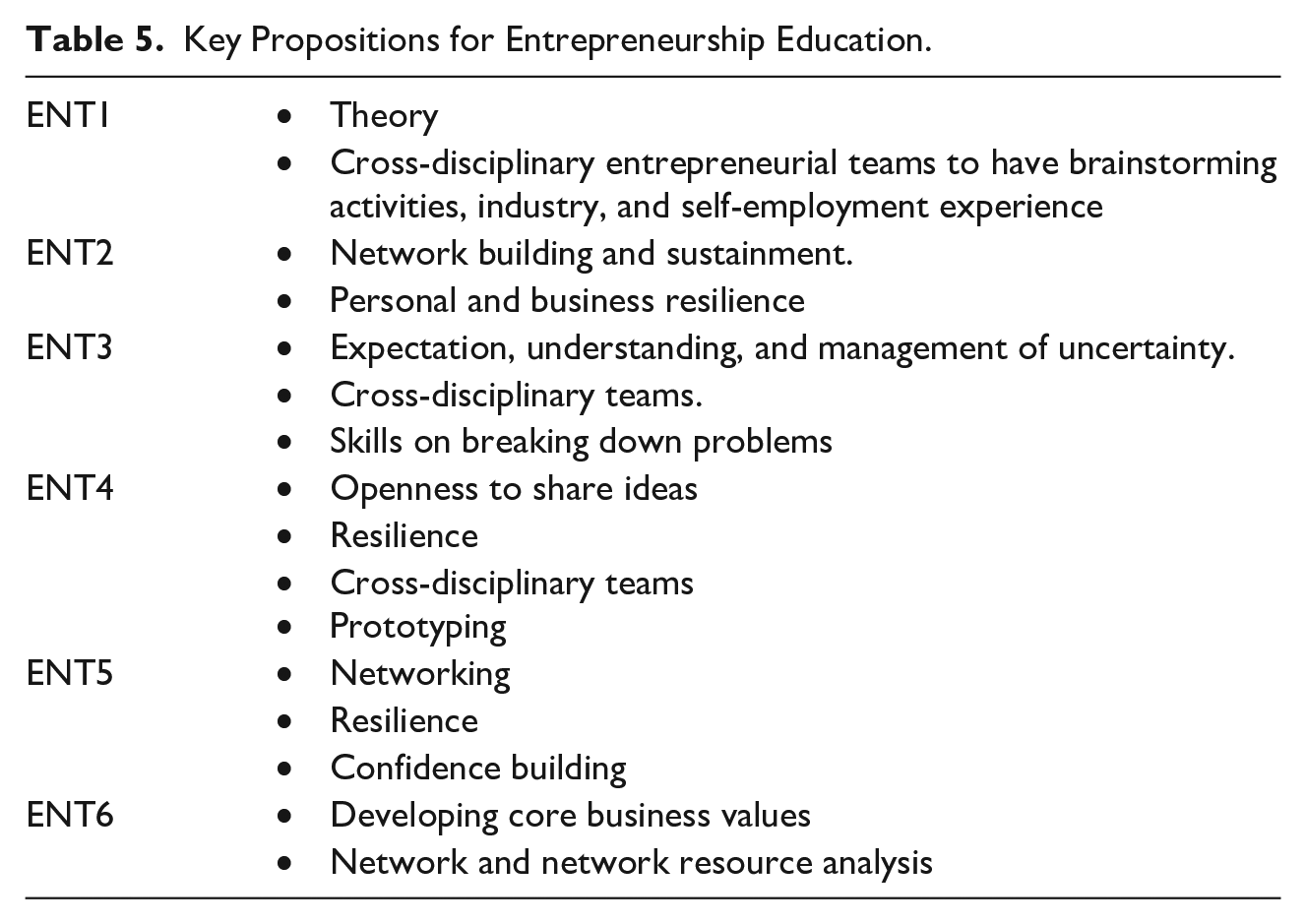
All participating groups that were involved in the research acknowledged the importance of social networks and their contribution toward the learning of entrepreneurs and in the entrepreneurial process, some more than others. However, the current review of the literature, as well as the primary data collected, does not show the presence of social networks and their use in formal entrepreneurship education. This is a vital gap between entrepreneurship education and entrepreneurial learning. As Table 5 below shows, social networks and resilience were two of the main elements that were highlighted from the data while indicating proposed elements of entrepreneurship education. Like the source of entrepreneurial learning, a disparity between different groups of participants on what should be included in entrepreneurship education can be seen.
Key Propositions for Entrepreneurship Education.
Discussion
Entrepreneurial learning is a complex and unique process, as evidenced by the empirical findings of this research. However, one consistent theme that emerged from the data was the significant role played by social networks in the learning process and the acquisition of valuable information for entrepreneurs. This finding is consistent with previous literature on the subject (R. Lee & Jones, 2008; Rae, 2006; Rae & Carswell, 2001; Taylor & Thorpe, 2004; Wasim, Vyas, et al., 2022). Nearly all entrepreneurs reported having a core group of individuals within their network who they communicated with frequently for personal and professional reasons. Additionally, half of the entrepreneurs reported that their education partially contributed to their source of learning. Overall, the results suggest that social networks are critical in the entrepreneurial learning process, and entrepreneurs should seek to develop and maintain strong relationships within their professional communities. The absence of formal entrepreneurship education among the participants raises questions about the role of traditional education in entrepreneurship. However, the sample size in this study is too small to draw generalizations, and the literature on this topic is divided. Some studies suggest that entrepreneurial education has no direct impact on entrepreneurial orientation or business success, while others suggest a relationship (Elmuti et al., 2012). Therefore, the effectiveness of entrepreneurial education programs may depend on how they are developed and delivered. As noted earlier, many entrepreneurship education programs primarily use business plan development as a teaching method (Nabi et al., 2018). Hence, there is a need to re-evaluate and develop such programs to align with the learning process of entrepreneurs, as highlighted in this research.
The CWSs observed in our study showed that several users collaborated and learned from one another’s experiences, skills, and fields of business, highlighting the importance of social learning. These findings contradict those of McAdam and McAdam (2006, p. 95), who conducted a longitudinal study at a university-based business incubator and highlighted several negative aspects, where people faced “inherent tensions of hostility and competitiveness resulting from close firm proximity within the incubator.” However, they did appreciate the practical support provided by the incubator. Our results could be different because the people working at the CWSs observed in our study came from diverse backgrounds with their own ventures and ideas, which mitigated the sense of rivalry even while working in close proximity. Moreover, it is important to note that there is a lack of research in entrepreneurial learning and education that considers the perspectives of entrepreneurs, educators, and students. Shane (2000) argues that an entrepreneur’s education and personal experiences are integral to their knowledge. Bøllingtoft and Ulhøi’s (2005) study at a Danish business incubator also focused on social capital and networking values, which aligns with the findings of this research. The results suggest that entrepreneurs have a diverse network that they rely on for information and learning opportunities, emphasizing the importance of trust within these networks. However, there remains a lack of research examining entrepreneurial learning and education from the perspectives of entrepreneurs, educators, and students.
Entrepreneurial learning is greatly influenced by the diversity of an entrepreneur’s social network. This diversity provides a competitive advantage as it offers access to a wider range of knowledge and experience. Previous experience and knowledge of the people in an entrepreneur’s network is considered the starting point of any learning event. When this is combined with new information, it results in fresh learning. Family and friends are often the first point of entrepreneurial learning in social networks, according to Kolb (1984). However, it was observed that nascent entrepreneurs are less likely to take advice from someone they do not like, while experienced entrepreneurs are more likely to do so. Entrepreneurs can benefit from learning through their social networks without any limitations. However, entrepreneurs should evaluate the relevance of the information they receive to retain the most valuable elements and avoid irrelevant information. It is argued that some information may not be useful immediately but can be beneficial in the future. It is also difficult to limit social networks, especially when considering the second and third degrees of connections. M. S. Granovetter (1973) and M. Granovetter (1983) emphasized the importance of weak ties in a network, where even loosely connected second-degree networks can be more beneficial than strong ties in a social network. Table 6 summarizes the emerging propositions on learning and social networks from the empirical data of this research and criticizes the current approach to teaching entrepreneurship.
Emerging Propositions on Learning and Social Networks.
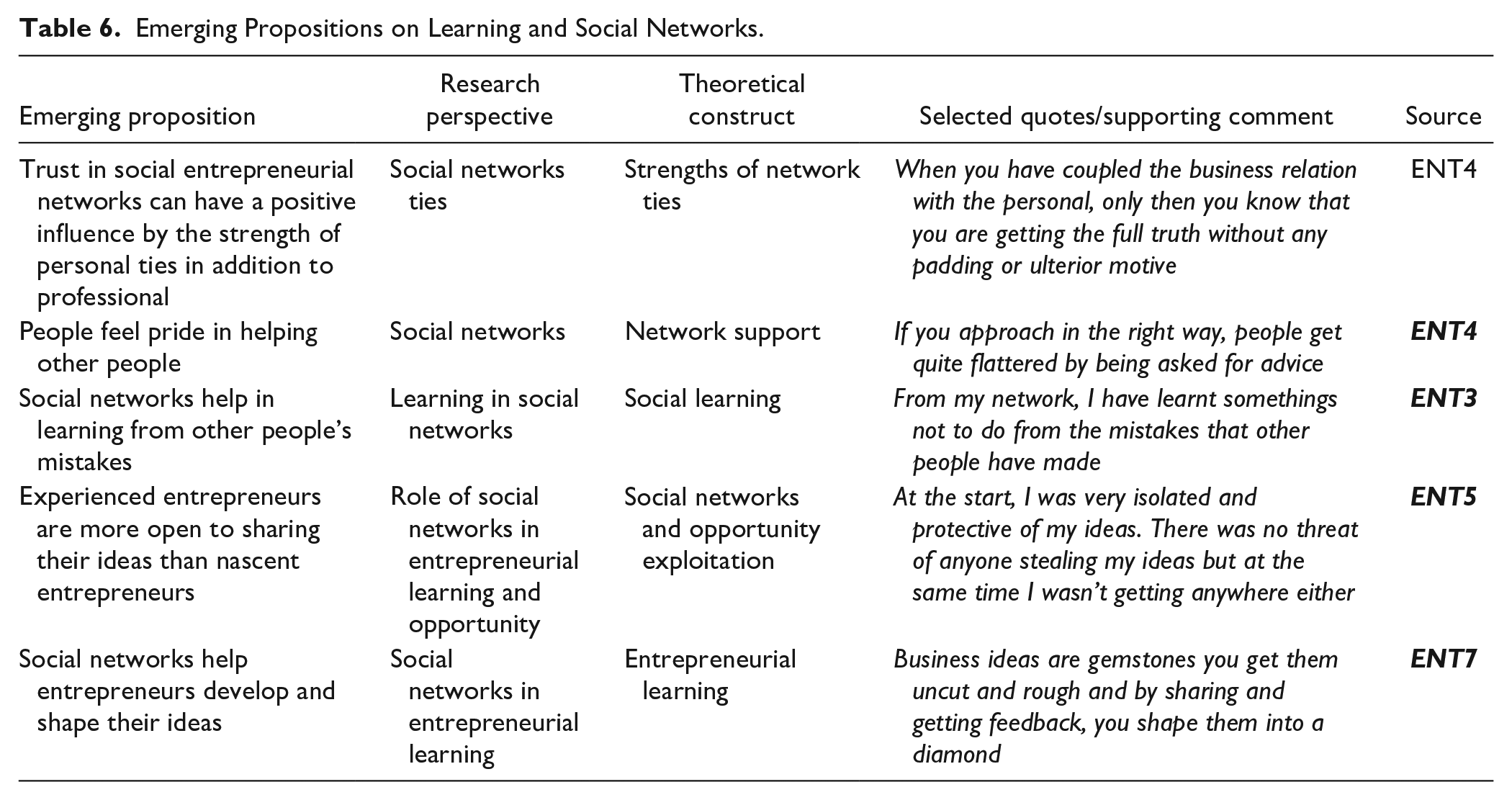
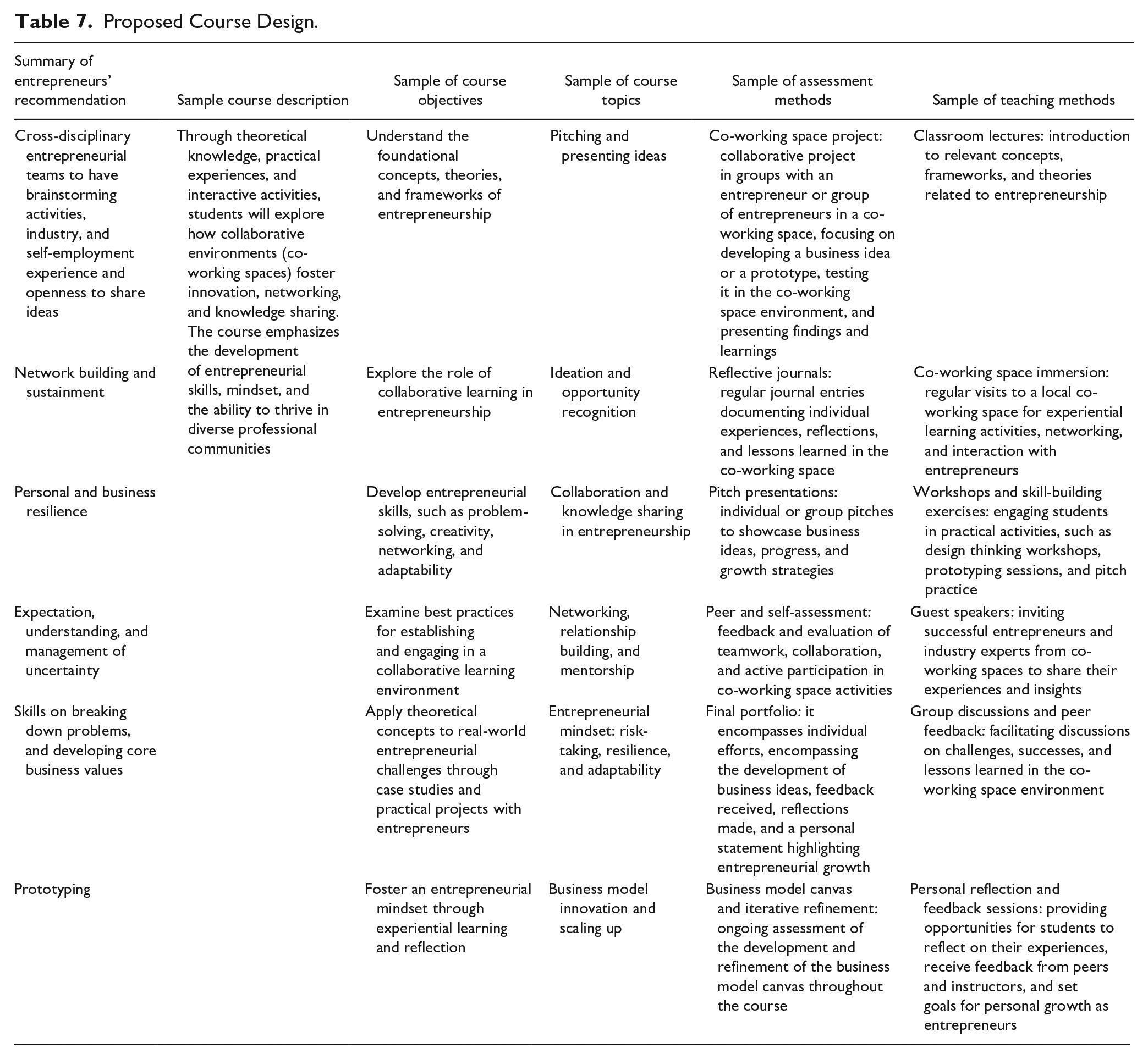
Rasmussen and Sørheim (2006) suggested an action learning model to develop entrepreneurship education. Another approach is to embed a practical element in the education, where students are prepared to become entrepreneurs, rather than just learning about entrepreneurship (Blenker et al., 2006). However, the literature lacks coverage on incorporating social and contextual elements of entrepreneurship into formal education frameworks. Our study results highlighted social networking as an essential component of entrepreneurial education. One of our key observations is that entrepreneurs often turn to their social networks to fulfill their intellectual and business needs, and people are most helpful when they are specifically asked for support. Social networks provide entrepreneurs with valuable knowledge and experience to make informed decisions and learn from others’ mistakes. However, experienced, and nascent entrepreneurs have different approaches to sharing ideas, with experienced entrepreneurs being more open to collaboration. The social network also forms the context in which entrepreneurs operate, highlighting the importance of understanding it. Therefore, including theoretical aspects of entrepreneurship, cross-disciplinary teamwork, and resilience-building exercises in entrepreneurship education can enhance students’ understanding of the role of social networks in the entrepreneurial process. A potential configuration option for entrepreneurship modules/courses is to adopt a new pedagogical approach that focuses on learning in co-working spaces rather than traditional classrooms, with an emphasis on social networks and storytelling aspects of learning. This approach would mimic the real-life environment that an entrepreneur operates in and provide students with valuable experience to develop entrepreneurial skills. In this configuration, students would work in cross-disciplinary teams and co-create their own learning environment by sharing their knowledge, skills, and experiences with each other. The curriculum would focus on developing practical skills and fostering a growth mindset by providing opportunities for students to fail and learn from their mistakes. In addition, there would be an emphasis on resilience-building exercises to prepare students for the challenges they may face as entrepreneurs. To facilitate this pedagogical approach, co-working spaces could be used as physical learning environments, providing access to resources such as mentorship, networking opportunities, and funding options. Furthermore, students could be encouraged to engage with local entrepreneurial communities to gain exposure to real-world scenarios and build their professional networks. This interaction would allow students to work on live projects and try to come up with a prototype or launch a new project or start a new venture with the help of an entrepreneur and the guidance and technical support from the academic staff. This would allow for the creation of ready-made entrepreneurs. We provide an example in Table 7 below, which gives a summary of our proposed framework. Overall, adopting a co-working space approach to entrepreneurship education would provide students with a unique and valuable learning experience that is tailored to the needs of future entrepreneurs. There is a need for a context where students explore the ins and outs of entrepreneurship by working in cross-disciplinary teams and learning from each other. This would help in developing unique interlinked ideas and processes, not just one’s own experiences but by merging and contextualizing their knowledge with the collective knowledge of the teams. This would also help students develop networks which can be tapped into when they require support and develop resilience. We propose that the assessments for entrepreneurial courses should focus more on the learning aspects and accommodating failures and setbacks. Teaching should follow a heutagogical approach with less directive teaching and a more immersive learning experience. Assessment should not be based on Business Plan development, and rather it should be based on reflective learning from the imitated entrepreneurial process. This research provides fertile ground to develop entrepreneurial education research by combining entrepreneurial learning with entrepreneurial education.
Proposed Course Design.
Conclusions
Social networks play a critical role in entrepreneurship, and their integration into formal educational processes is essential. While challenges exist in replicating the social and experiential aspects of entrepreneurial learning in formal education, it is possible to create courses that expose students to novel content and allow them to construct meaning from it in a socially constructive manner within an entrepreneurial context. To achieve this, constructivist approaches to learning and cross-disciplinary collaboration among students can be effective. Incorporating elements of theoretical aspects of entrepreneurship, teamwork, and resilience-building exercises in entrepreneurship education can also help students better understand the role of social networks in the entrepreneurial process. With these measures, entrepreneurship education can be made more impactful, relevant, and better equipped to prepare students for the challenges of entrepreneurial endeavors.
Methodological Contribution
Our study contributes to the field of entrepreneurship research by utilizing non-traditional methods of data collection, such as participant observation and ethnographic approaches. Typically, entrepreneurship research has relied heavily on quantitative and positivist methodologies, and there is a recognized need for more diverse approaches (Dana & Dana, 2005; De Bruin et al., 2007; McDonald, Chai, & Newell, 2015). By conducting participant observations at CWSs, this research provides valuable insights into the dynamics of networked entrepreneurial contexts, including the formation of social networks. Such alternative methods of data collection are necessary to provide a more comprehensive understanding of the complex and dynamic processes involved in entrepreneurship.
Limitations
Research is an ongoing process that leads to new questions and opportunities for exploration. Entrepreneurship is context-dependent, and differences exist in how it manifests in various countries. Likewise, entrepreneurship education may vary across societies. To enhance future research in entrepreneurial learning and education, it is necessary to study how entrepreneurs learn in different contexts and cultures. Furthermore, there is a need for more research to fill the gap in the literature on how entrepreneurial learning can be translated into entrepreneurship education.
The existing research on entrepreneurial learning mostly covers the experiences of entrepreneurs, while research on entrepreneurial education mostly involves students and educators. To have a comprehensive understanding of the topic, the perspectives of all stakeholders, including entrepreneurs, educators, and students, need to be considered. Despite this limitation, this study makes progress in the field by examining the topic from various perspectives. The exploratory nature of the research provides opportunities for future studies to expand on its findings and contribute to the field. It is recommended that entrepreneurship researchers explore innovative methods of data collection to gain a deeper understanding of this complex and context-dependent process, rather than relying solely on traditional interview and survey-based methods currently in use.
Footnotes
Appendix A: Interview Guide for Entrepreneurs
Declaration of Conflicting Interests
The author(s) declared no potential conflicts of interest with respect to the research, authorship, and/or publication of this article.
Funding
The author(s) received no financial support for the research, authorship, and/or publication of this article.
