




Abstract
Entrepreneurship is considered a critical factor in stimulating economic growth and creating employment. Entrepreneurship education is viewed as one of the key instruments for increasing entrepreneurial intention and activities. However, it remains unclear which elements of entrepreneurship education are most influential in shaping a participant’s intention to start a venture. This study aims to fill this gap by examining the impact of entrepreneurship education and the mediating role of alertness, inspiration, social networks and the acquisition of knowledge and skills (the rational “learning” component of entrepreneurship education) in a participant’s intention to start a venture. Drawing on entrepreneurship education theory, the author proposes that entrepreneurship education increases entrepreneurial intention if it induces a perceived increase in alertness, inspiration, social networks or knowledge and skills among participants. The empirical results of the multiple hierarchical regression analysis provide support for a full mediation effect of inspiration, social networks and knowledge and skills on the relationship between entrepreneurship education and entrepreneurial intention. These findings contribute to research in entrepreneurship education, enhance understanding of the main success factors in entrepreneurship education and offer useful insights for practitioners when developing effective entrepreneurship programs.
Keywords
Entrepreneurship education (EE) programs and the number of chairs in entrepreneurship have proliferated in universities worldwide (Fretschner and Weber, 2013; Martin et al., 2013; Nabi et al., 2017). By promoting entrepreneurship, governments hope to generate further economic growth and employment, and universities can play a pivotal role in stimulating entrepreneurship (Kuratko, 2005; Mwasalwiba, 2010; Rauch and Hulsink, 2015; Thomas and Wulf, 2021).
This growing interest in EE has resulted in a number of empirical studies evaluating its effect on a participant’s intention to start a venture (Fayolle et al., 2006a; Graevenitz et al., 2010; Lee et al., 2005; Liñán et al., 2011; Sánchez, 2013), on student start-up rates (Galloway and Brown, 2002) and on entrepreneurial aptitude and skills (Graevenitz et al., 2010; Lee et al., 2005; Oosterbeek et al., 2010; Sánchez, 2013). Ambiguous results from that research have led to doubts about the effectiveness of such programs (Fretschner and Weber, 2013). However, other meta-analytic results indicate, to some extent, a positive impact of EE on entrepreneurial intention (Bae et al., 2014; Martin et al., 2013). Nevertheless, the evidence remains unreliable, and the growing number of EE studies have not been accompanied by consistent and rigorous program evaluations (Fayolle and Gailly, 2009; Peterman and Kennedy, 2003). Lorz et al. (2013) have also emphasized that most empirical studies have simply investigated the direct link between EE and intention, and only limited research has identified the specific factors or components of EE that are most influential in shaping entrepreneurial intention among participants.
Clearly, this field of research is still at the exploratory stage, and significant knowledge gaps have been identified (Graevenitz et al., 2010). Furthermore, research has called for extending knowledge about the effects of EE on entrepreneurial intention by investigating mediation effects (Bae et al., 2014). More specifically, Rideout and Gray (2013) criticized research methods in previous EE studies and called for “more quantitative research that simultaneously examines the role of promising mediators like […] cognitive skills and knowledge, values and attitudes, social networks, and other contextual variables” (p. 348). In a similar vein, Nabi et al. (2017) proposed exploring the role of inspiration as a mediator in EE, pointing out that “despite its importance, inspiration from EE programs in higher education remains an under-researched phenomenon and warrants further research attention” (p.289).
To identify the most promising mediators of the relationship between EE and entrepreneurial intention, I performed the following selection process. First, I analysed the classic entrepreneurial learning framework by Johannisson (1991), which comprises different levels of entrepreneurial learning: know-why, know-how/know-what, know-who and know-when. I cover all four levels by choosing one potential mediator from each level. I identified relevant mediators by analysing the results of research into EE. I found a number of scholars proposing that EE leads to higher alertness (Tang et al., 2012; Westhead and Solesvik, 2015), to greater inspiration (Sánchez, 2011; Souitaris et al., 2007), to extended social networks (Kim et al., 2006; Ronstadt, 1987), and to improved knowledge and skills (DeTienne and Chandler, 2004; Gimeno et al., 1997; Liñán, 2008; Martin et al., 2013). Each of these factors can be linked to one of the entrepreneurial learning levels. Although previous research into entrepreneurship education has often included self-efficacy as a variable, it was not included in this research because it has already been intensively investigated (Barbosa et al., 2007; Zhao et al., 2005), and this study was more concerned with advancing the field by investigating new variables.
In this paper, I first analyse the impact of EE on a participant’s intention to start a venture. Second, following the research calls to investigate promising mediators, I examine the mediating effect of alertness, inspiration, social networks and the acquisition of knowledge and skills (the rational “learning” component of EE) on the relationship between EE and entrepreneurial intention. Multiple hierarchical regression analysis is used for all analyses. This approach helps to provide answers to the following research questions: Does EE increase a participant’s intention to start a venture? Do perceived benefits at an individual level (alertness; inspiration; social networks; knowledge and skills) mediate this relationship?
This study contributes to the EE research stream by investigating the most influential elements of EE in shaping participants’ entrepreneurial intention and revealing significant mediating effects. Furthermore, it contributes to the literature stream of entrepreneurial emotions and passion by revealing the mediating effect of inspiration (an emotional component). On a practical level, these findings enhance understanding of the key success factors of an entrepreneurship program and thereby offer useful insights for university managers and policymakers when developing effective EE programs.
The paper proceeds as follows. First, I summarize the relevant theory and develop the hypothesis related to the EE–entrepreneurial intention relationship. Then, I propose four specific individual-level benefits for participants and hypothesize that each of these factors mediates the relationship between EE and entrepreneurial intention. In the subsequent section, I present the methodology and results. In conclusion, I discuss the findings, present theoretical and practical implications and identify directions for future research.
Theory and hypotheses
Intention to start a venture
The intention to start a business venture may be viewed as the first step in the evolving process of business creation (Lee and Wong, 2004). Ajzen’s (1991) Theory of Planned Behaviour, which is particularly helpful for explaining behaviour in the entrepreneurial context, argues that behaviour is best predicted by observing intentions toward that behaviour. That is, intentions are the single best predictor of planned behaviour, especially in circumstances where the specific target (e.g. starting a venture) is rare, hard to observe or involves unpredictable time lags (Ajzen, 1991; Bird, 1988). Thus, intention models are valid models for measuring actual behaviour in entrepreneurship (Bird, 1988; Krueger et al., 2000; Krueger and Brazeal, 1994). Empirical studies have confirmed the validity of intention on actual behaviour in the entrepreneurial context. For example, studies conducted by Kim and Hunter (1993) and Sheeran (2002) found that intention explains around 30% of the variance in behaviour.
Intention is influenced by three general factors (Krueger et al., 2000). The first factor is an individual’s attitude towards a certain kind of behaviour; i.e. for this study, the degree to which one holds a positive or negative opinion about being an entrepreneur (Ajzen, 2011). That attitude, in turn, is determined by exogenous influences; for example, traits, competencies and situational variables such as time constraints and task difficulty (Ajzen, 1991; Krueger et al., 2000; Lee and Wong, 2004). EE is an example of such an “exogenous influence”, so it can be considered a determinant of entrepreneurial intention (Rauch and Hulsink, 2015; Sánchez, 2011).
Secondly, intention is determined by perceived behaviour control; i.e. the perception of the ease or difficulty of initiating a behaviour (e.g. starting a business). This determinant includes both the perception of being able to start a business and the perception of being in control of that behaviour (Ajzen, 2011). Perceived behaviour control can be increased by enhancing knowledge and skills, which can increase perceived feasibility (Krueger et al., 2000). EE improves knowledge and skills and, therefore, can be viewed as an influencing factor for perceived behaviour control (DeTienne and Chandler, 2004; Krueger and Brazeal, 1994; Liñán, 2008).
The third factor is subjective norms; i.e. the perception of a specific behaviour by significant others (e.g. family or friends). This factor measures the perceived social pressure to become – or not to become – an entrepreneur (Ajzen, 2011). In contrast to the other two determinants of intentions, subjective norms cannot be influenced directly by EE (Rauch and Hulsink, 2015) and so the factor is not considered in this study.
As will be laid out later in this section, two of the mediators from the second research question of this study, inspiration and alertness, can be linked to the first factor, an individual’s attitude. Two other mediators from the second research question, social networks and knowledge and skills, can be linked to the second factor, perceived behaviour control.
Entrepreneurship education
Research in EE frequently distinguishes EE according to its objectives in educating for, about, through and in entrepreneurship (Mwasalwiba, 2010). To educate for entrepreneurship means to create an entrepreneur; about entrepreneurship means to teach a general understanding about entrepreneurship as a phenomenon. Educating through entrepreneurship means to use new venture creation to help students acquire necessary skills and competences. Education in entrepreneurship aims to make people more innovative in their existing firm (intrapreneurship). In line with Mwasalwiba (2010), who reports that, for most scholars, the major educational objective of EE is start-up and job creation, this study focuses on entrepreneurship courses that educate for entrepreneurship.
The overall goal of EE is “to develop in the participants the intention to perform entrepreneurial behaviours, or some of the elements that affect that intention, such as entrepreneurial knowledge, desirability of the entrepreneurial activity, or its feasibility” (Liñán, 2004: p. 8). Researchers argue that there are many ways in which universities can support the creation of entrepreneurs, for example by influencing changes in “soft” outcomes such as awareness, attitudes or desirability, or by inducing changes in participants’ specific knowledge and skills (Liñán, 2007). Accordingly, empirical research on EE has evaluated its effect on various outcome variables.
The first line of research focuses on attitudes and perceptions as outcome variables. For example, Fayolle et al. (2006a) and Peterman and Kennedy (2003) found a positive effect of EE on participants’ perceived feasibility of starting a business. Another line of research focuses on venture creation and performance variables. These studies are usually conducted with actual entrepreneurs. For example, Kolvereid and Moen (1997) examined course alumni 8 years after graduation and found EE to be positively associated with creating a start-up. Friedrich et al. (2006) found a positive effect on venture performance, while Chrisman (1997) reported positive effects on a firm’s growth rate. The third line of research focuses on entrepreneurial competencies (e.g. entrepreneurial skills and the identification of business opportunities) as outcome variables. Results in this field are inconsistent. For example, Graevenitz et al. (2010) found a positive effect on participants’ entrepreneurial skills whereas Oosterbeek et al. (2010) reported insignificant findings regarding effects on entrepreneurial skills. DeTienne and Chandler (2004) evaluated the impact of EE on students’ abilities to identify opportunities and to generate business ideas, and found positive effects on these variables.
The fourth line of research focuses on entrepreneurial intention as the outcome variable. Studies in this field have not agreed on how to measure EE. Most studies take EE as a dichotomous variable; students either participated in an entrepreneurial program or they did not (Lorz et al., 2013; Thomas and Wulf, 2019). Most of those empirical studies have reported significant and positive effects on entrepreneurial intention (Boahemaah et al., 2020; Fayolle et al., 2006a; Galloway and Brown, 2002; Hassan et al., 2021; Kolvereid and Moen, 1997; Lee et al., 2005; Liñán et al., 2011; Sánchez, 2013; Thomas and Wulf, 2019). However, other researchers suggest measuring participants’ perceptions of the educational support they receive (Kraaijenbrink et al., 2010). I follow the latter approach and evaluate the effect of EE by measuring the participants’ perceptions of such education. Empirical studies using this approach have reported positive effects of EE on entrepreneurial intention. For example, Kraaijenbrink et al. (2010) found a significant and positive relationship between perceived educational support and their dependent variable – the plan to start a business. An empirical study by Saeed et al. (2014) also reported positive effects of perceived educational support on entrepreneurial intention. Furthermore, literature reviews conclude that EE has a slightly positive impact on entrepreneurial intention (e.g. Lorz et al., 2013). This finding is supported by other meta-analytic results, which report a small but significant relationship between EE and entrepreneurial intention (Bae et al., 2014; Martin et al., 2013), although the evidence is still not strong (Martin et al., 2013).
Overall, it is expected that EE will have a small but significant effect on the participants’ intention to start a venture. To replicate and confirm results in research, I therefore propose the following base-line hypothesis: • Hypothesis 1: Entrepreneurship education will have a small but significant positive effect on the intention to start a venture.
Mediating effect of individual-level factors
I contend that mediation effects influence the relationship between EE and a participant’s intention to start a venture. Revealing those mediating effects might help resolve the question of which specific elements of EE foster entrepreneurial intention among participants. For this study, potentially relevant mediators were identified using the following selection process. First, I analysed the entrepreneurial learning framework developed by Johannisson (1991). This taxonomic approach describes different levels of entrepreneurial learning: (1) the “know-when” (timing and opportunity management), (2) the “know-why” (attitudes, values and motives), (3) the “know-who” (awareness of social networks and ability to use them) and (4) the “know-how” (abilities and skills that can be used in action) and the “know-what” (specific knowledge about what needs to be done). Then, to consider all the aforementioned entrepreneurial learning levels, I included in the study one mediator for each level.
The mediators were identified following a review of the literature in EE. Earlier researchers found empirical evidence that EE leads to higher alertness (Tang et al., 2012; Westhead and Solesvik, 2015). Also, several scholars proposed that EE may lead to a greater level of inspiration (Sánchez, 2011; Souitaris et al., 2007) and can provide access to specific social networks (Kim et al., 2006; Ronstadt, 1987). Finally, some researchers have theoretically proposed and empirically demonstrated a positive link between EE and higher knowledge and skills (DeTienne and Chandler, 2004; Gimeno et al., 1997; Liñán, 2008; Martin et al., 2013). In the following sections, I outline how alertness connects with the entrepreneurial learning framework “know-when” (Johannisson, 1991: p. 71), how inspiration is part of the “know-why” (Johannisson, 1991: p. 72), how social networks can be connected with the “know-who” (Johannisson, 1991: p. 72), and how knowledge and skills connect with the “know-how” and “know-what” (Johannisson, 1991: p. 74).
Alertness
In Johannisson’s (1991) taxonomy of entrepreneurial learning, alertness and timing management are the “know-when” competences. Kirzner (1973, 1979), who initially developed research on alertness in entrepreneurship, defined it as an individual’s ability to identify opportunities that are overlooked by others. More recently, scholars (Tang et al., 2012) have argued that alertness also involves a proactive stance and have proposed an extended definition with three complementary dimensions: scanning and searching for new information, connecting previously disparate information and evaluating whether new information constitutes an opportunity.
Tang et al. (2012) proposed prior knowledge, training and exercises (such as EE) as determinants of alertness and examined this proposition empirically. They found evidence that prior knowledge was positively related to alertness and thus concluded that alertness is a skill that can be learned and improved to discover opportunities in uncertain situations. In the context of EE, Westhead and Solesvik (2015) empirically tested the relationship between EE and alertness and reported higher alertness among EE participants than among non-participants.
Furthermore, scholars have repeatedly proposed a link between alertness and entrepreneurial intention. Johannisson (1991) argues that the “know-when” competencies are “crucial to what is crucial to entrepreneurial venturing: opportunity management” (p. 72). Along similar lines, other researchers propose that alertness is linked with the ability to perceive and exploit business opportunities (Burke et al., 2002; Kirzner, 1973; Tang et al., 2012). Seeing the value of exploiting opportunities may change individuals’ attitudes, one of the three determinants of intention according to the Theory of Planned Behaviour (Ajzen, 1991; Rauch and Hulsink, 2015). Accordingly, opportunity orientation is an antecedent of entrepreneurial intention (Gimeno et al., 1997; Souitaris et al., 2007). An increased level of alertness can, therefore, be expected to lead to higher entrepreneurial intention. However, empirical alertness studies in entrepreneurship remained scarce, partly because the first validated measurement scale for entrepreneurial alertness was only developed in 2012 (Tang et al. (2012). The only empirical research on this topic was conducted by Westhead and Solesvik (2015), who found a positive relationship between alertness and entrepreneurial intention. In line with Fretschner and Weber (2013), who suggested introducing an entrepreneurial alertness concept into the design of an entrepreneurship course, and Westhead and Solesvik (2015), who concluded that entrepreneurship courses which focus on accumulating alertness could increase entrepreneurial intention, I derive the following hypothesis: • Hypothesis 2: The effect of entrepreneurship education on the intention to start a venture will be mediated by the perceived level of alertness derived from entrepreneurship education, such that entrepreneurship education increases the perceived level of alertness, which will lead to a greater intention to start a venture.
Inspiration
Inspiration as a psychological construct is characterized by three core properties (Thrash et al., 2014). First, inspiration involves epistemic transcendence, when one has gained an awareness of new or better possibilities, for example through a specific revelation, insight or seeing possibilities one had not seen before. Second, it is characterized by receptivity, when one is inspired by something particular and therefore does not attribute to oneself responsibility for becoming inspired. Finally, inspiration is characterized by approach motivation, when one feels compelled to bring a new idea or vision to a conclusion. In the context of an EE program, program-derived entrepreneurial inspiration is defined as “a change of hearts (emotion) and minds (motivation) evoked by events or inputs from the program and directed towards considering becoming an entrepreneur” (Souitaris et al., 2007: p. 573).
Several scholars have implicitly proposed a link between EE and inspiration but with no empirical proof. According to Johannisson’s (1991) framework, “know-why” competences include personal motivation and conviction about beginning an entrepreneurial career. Those “know-why” competencies for entrepreneurship, such as inspiration, can be taught. Sánchez (2011) brought that argument closer to the field of EE, arguing that EE “implicitly entails an inspirational component” (p. 250). However, he adds that this component largely depends on the academic lecturer taking a leadership role within the group of participants, so this “has to be the role of a charismatic leader” (Sánchez, 2011: p. 250). Similarly, Souitaris et al. (2007) argue that the inspirational part of EE has to be designed purposefully and that lecturers should be trained not only to teach the entrepreneurship curriculum but also to change “hearts and minds”.
Furthermore, entrepreneurship researchers (Sánchez, 2011; Souitaris et al., 2007; Thomas and Wulf, 2021) have argued that there is a positive relationship between inspiration and entrepreneurial intention. Sánchez (2011) argues that inspiration is what gives rise to attitude, thus the concept of inspiration can be seen as an antecedent of individuals’ attitudes; that is, the aforementioned determinant of intention according to the Theory of Planned Behaviour. He argues that inspiration increases students’ interests in trying out an entrepreneurial career and thus considers inspiration a crucial factor in EE.
Souitaris et al. (2007) conducted the only empirical study focusing on the effect of inspiration on entrepreneurial intention. They found significant results for this relationship and concluded that inspiration, rather than learning, was the most significant driver of entrepreneurial intention. However, Rideout and Gray (2013) questioned those results, pointing out that “their laudable attempt to assess whether program derived benefits like inspiration mediate the effect of EE on intentions should be tested by a mediational technique” (p. 343).
Based on the arguments presented above and research calls by Lorz et al. (2013), Nabi et al. (2017) and Rideout and Gray (2013), I hypothesize that the individual level factor “inspiration” will mediate the relationship between EE and the intention to start a venture. I therefore propose: • Hypothesis 3: The effect of entrepreneurship education on the intention to start a venture will be mediated by the perceived level of inspiration derived from entrepreneurship education, such that entrepreneurship education increases the perceived level of inspiration, which will lead to a greater intention to start a venture.
Social networks
According to Johannisson’s (1991) learning framework, the “know-who” competences are defined as the awareness of social networks and ability to use them. Relational embeddedness, such as having access to social networks, can be a valuable support for potential entrepreneurs as it may supplement the effects of education, experience and financial capital (Coleman, 1988). The concept of social networks is linked to social capital theory, which refers to individuals’ abilities to extract benefits from their social structures, networks and memberships (Lin et al., 2001). Social networks can be divided into personal and broader social networks (e.g. contact with other entrepreneurs or alumni networks).
Researchers have repeatedly suggested a positive effect of EE on participants’ social networks. Kim et al. (2006) argue that formal education, such as an academic entrepreneurship program, can provide access to specific social networks, such as alumni networks. Ronstadt (1987) proposes that the success of EE depends not only on imparting knowledge but also on the network ties established. He argues that an effective EE program should introduce students to people who might be able to facilitate their success (Ronstadt, 1987). In a similar vein, Johannisson (1991) argues that a “know-who” competence (i.e. social networks) is fundamental to success in the learning and practice of entrepreneurship. In this line of thought, Kraaijenbrink et al. (2010) argue that universities offering resources such as a network of individuals who can provide specific expertise in areas like marketing or accounting may give some people the confidence to initiate their own business.
Furthermore, a number of scholars have hypothesized a positive link between access to social networks and the intention to start a venture. Davidsson and Honig (2003) argue that social networks facilitate the discovery of opportunities, which in turn leads to new and different business ideas as it provides a broader frame of reference, both supportive and nurturing, to the new potential business idea. An enhanced social network may lead to the perception of being able to start a business, which in turn can influence perceived behaviour control, one of the three determinants in the Theory of Planned Behaviour (Ajzen, 1991). Moreover, scholars argue that individuals who are embedded in an entrepreneurial environment are positively influenced in their decision to start a venture by their social network, especially at the beginning of this decision-making process (Davidsson and Honig, 2003; Minniti, 2005; Thomas and Wulf, 2021).
A further advantage of social networks is that they help individuals attempting to start a venture to obtain valuable resources needed in the early stages, such as access to capital and equipment, investors, consultancy and reputation (Mueller, 2006). Thus, social networks can influence an individual’s decision to start a venture (Xie, 2014). Empirically, a study conducted by Davidsson and Honig (2003) provided significant evidence that being a member of a business network has a positive impact on starting a business, advancing through the start-up process and achieving milestones such as the first sale or showing a profit. They suggest that entrepreneurs would be well advised to develop and cultivate networks of all types.
Rideout and Gray (2013) argue that social networks are a promising mediator for the EE–entrepreneurial intention relationship and have proposed this mediator should be tested empirically. Following this research call and the arguments presented above, I propose the following hypothesis: • Hypothesis 4: The effect of entrepreneurship education on the intention to start a venture will be mediated by the perceived level of social networks derived from entrepreneurship education, such that entrepreneurship education increases the perceived level of social networks, which will lead to a greater intention to start a venture.
Acquiring knowledge and skills
In line with Johannisson’s (1991) taxonomic approach, the term “knowledge and skills” in the context of EE can be defined as the “know-how” and the “know-what” competencies. They constitute the rational “learning” component of EE. Johannisson (1991) defines “know-how” as the skills that can be used in action. “Know-what” is defined as the knowledge needed about what needs to be done.
Many entrepreneurship scholars have theoretically proposed that EE leads to higher knowledge and skills (Bae et al., 2014; DeTienne and Chandler, 2004; Gimeno et al., 1997; Graevenitz et al., 2010; Kim et al., 2006; Liñán, 2008; Thomas and Wulf, 2021). Empirical evidence for this relationship was provided by Martin et al. (2013), who conducted a meta-analysis examining 17 EE studies and found a significant weighted correlation of 0.237 between EE and entrepreneurship-related knowledge and skills.
The link between knowledge and skills and entrepreneurial intention can be based on two arguments. First, human capital theory (Becker, 1975; Mincer, 1958) predicts that greater knowledge and skills will lead to more productive and efficient activities. Human capital acquired through education may provide the discipline, motivation, skills and knowledge that enable adaptation to new situations (Cooper et al., 1994). Scholars argue that, if profitable opportunities for new businesses exist, individuals with higher human capital will be better at perceiving them (Davidsson and Honig, 2003; Souitaris et al., 2007). Therefore, prior knowledge is associated with better opportunity-identification ability which, in turn, is a well-known antecedent of entrepreneurial intention (DeTienne and Chandler, 2004; Gudmundsson and Lechner, 2013). Second, scholars argue that an increase in knowledge and skills leads to an increase in perceived behaviour control, which also is an antecedent of entrepreneurial intention (Ajzen, 1991; Krueger et al., 2000; Liñán, 2008). The relationship between entrepreneurial skills and entrepreneurial intention through perceived behaviour control was empirically tested and confirmed by Liñán (2008).
Despite those theoretical proposals, empirical evidence about the mediating effect of knowledge and skills is scarce, and studies call for more research about the effect of education-derived knowledge and skills on entrepreneurial intention (Lorz et al., 2013; Pittaway and Cope, 2007). Thus, I hypothesize: • Hypothesis 5: The effect of entrepreneurship education on the intention to start a venture will be mediated by the perceived level of increased knowledge and skills derived from entrepreneurship education, such that entrepreneurship education increases the perceived level of knowledge and skills, which will lead to a greater intention to start a venture.
Methodology
Data collection and sample characteristics
Data collection for this study comprised several steps. First, by examining websites and reviewing course syllabuses, I identified universities in German-speaking countries that provided mandatory EE within a business administration program. Only courses focusing on educating for entrepreneurship were chosen. As described earlier, educating for entrepreneurship aims to support start-up and job creation and to stimulate the entrepreneurial process, providing students with the tools to start a business (Mwasalwiba, 2010).
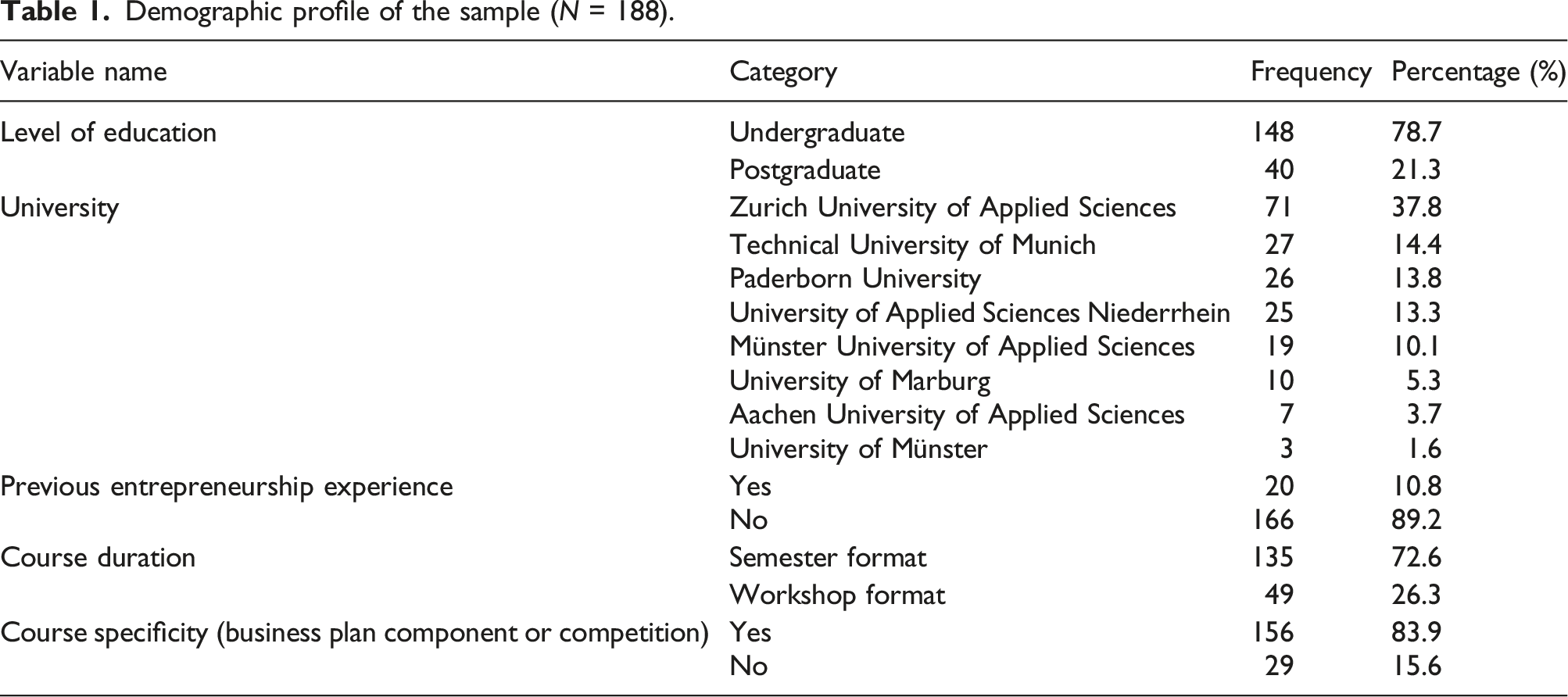
I then contacted the lecturers and asked them to canvass their classes at the end of the semester. This approach was chosen to ensure variety and representativeness in the sample. Eight universities agreed to participate in this study, seven in Germany and one in Switzerland. I pre-tested the questionnaire on a small sample of students for validation purposes. At the end of the semester, I collected responses from business administration students on the EE courses they had attended. I explained to respondents that the purpose of the study was to explore the impact of EE and emphasized voluntary participation and anonymity. I received 206 completed surveys.
Demographic profile of the sample (N = 188).
Operationalization of constructs
Intention to start a venture
The intention to start a venture was measured using Liñán and Chen’s (2009) “entrepreneurial intention questionnaire”, a validated standard instrument for measuring entrepreneurial intention (Fretschner and Weber, 2013). It consists of six statements indicating different aspects of intention, which were measured on a seven-point Likert scale ranging from 1 (total disagreement) to 7 (total agreement). For reliability analysis, Cronbach’s alpha was calculated to assess the internal consistency of all scales. The internal consistency of this scale was excellent, with a Cronbach’s alpha (ɑ) of 0.96. Furthermore, the composite reliability index (CR), which is similar to Cronbach’s alpha, was calculated (CR = 0.97). Additionally, I assessed the average variance extracted (AVE), which measures the fraction of the construct variance explained by its indicators and is used as an indicator of convergent validity. For this scale, AVE was 0.84.
Scale items.
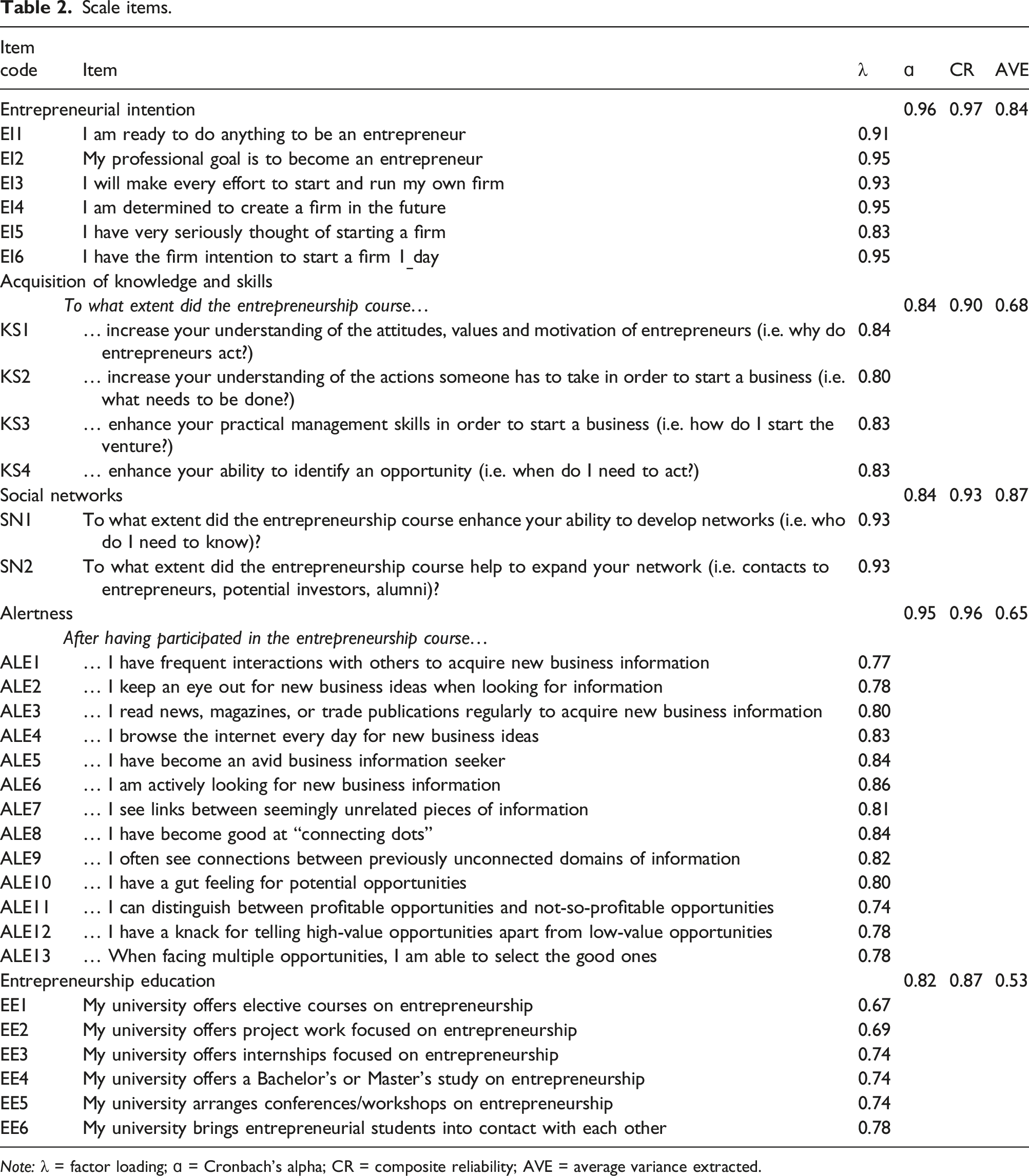
Note: λ = factor loading; ɑ = Cronbach’s alpha; CR = composite reliability; AVE = average variance extracted.
Entrepreneurship education
EE was measured using a six-item scale developed by Kraaijenbrink et al. (2010). Participants were asked to evaluate a set of statements related to what measures their universities took to stimulate entrepreneurship. Following the original scale, I used a five-point Likert scale (ɑ = 0.82; CR = 0.87; AVE = 0.53) anchored by 1 (strongly disagree) and 5 (strongly agree).
Alertness
To measure alertness, I adapted the “entrepreneurial alertness scale” developed by Tang et al. (2012). This consists of an extensive 13-item scale based on an extended definition of alertness, which refers to three complementary alertness dimensions: scanning and searching for new information, connecting previously disparate information, and evaluating whether new information represents an opportunity. Participants were asked to evaluate statements such as “After having participated in the entrepreneurship course, I keep an eye out for new business ideas when looking for information” or “After having participated in the entrepreneurship course, I have a gut feeling for potential opportunities” (seven-point Likert scale ranging from 1 = absolutely disagree to 7 = absolutely agree: ɑ = 0.95; CR = 0.96; AVE = 0.65).
Inspiration
I measured inspiration by following the approach according to Souitaris et al. (2007). Participants were asked “Do you remember any particular event or input during the entrepreneurship course that changed your ‘hearts and minds’ drastically and made you consider becoming an entrepreneur?” The participants were then asked to specify their answer from a list of potential triggers, from which they had to tick the ones that applied to them. For example, the list included the views of a professor, the views of an external speaker and the preparation for a business plan competition. The purpose of this list was to offer a set of potential triggers which would help respondents relate to the concept. Participants who answered “no” to the first question did not have to specify their answer. Finally, I asked participants to evaluate the extent to which such events made them seriously consider embarking on an entrepreneurial career (seven-point Likert scale ranging from 1 = not at all to 7 = to a large extent). The final score for this variable was calculated by multiplying the measure of the first question (“no” = 0; “yes” = 1) and the measure of the last question (1–7), thus resulting in a range from 0 to 7.
Social networks
Drawing on the taxonomic approach of entrepreneurial learning of Johannisson (1991), I asked participants to indicate the extent of their agreement with the following two questions on a seven-point Likert scale ranging from 1 (not at all) to 7 (to a large extent): “To what extent did the entrepreneurship course enhance your ability to develop networks (i.e. who do I need to know)?” and “To what extent did the entrepreneurship course help to expand your network (i.e. contacts to entrepreneurs, potential investors, alumni)?” (ɑ= 0.84; CR = 0.93; AVE = 0.87).
Acquisition of knowledge and skills
This construct was measured using four questions developed by Souitaris et al. (2007) and based on the Johannisson taxonomy (1991). Participants were asked to indicate their perception of increased knowledge and skills derived from the entrepreneurship course on a seven-point Likert scale (1 = not at all; 7 = to a large extent). They were asked to evaluate statements such as “To what extent did the entrepreneurship course increase your understanding of the actions someone has to take in order to start a business (i.e. what needs to be done)?” and “To what extent did the entrepreneurship course enhance your practical management skills in order to start a business (i.e. how do I start the venture)?” (ɑ = 0.84; CR = 0.90; AVE = 0.68).
Control variables
I included the following individual-level and course-related control variables associated with entrepreneurial intention: (a) gender, (b) level of education, (c) risk perception, (d) previous entrepreneurship experience, (e) course duration and (f) course specificity. First, I included gender as a control variable because previous studies have found that males have greater entrepreneurial intention than females (Bae et al., 2014; Zhao et al., 2005). Second, given that this study consists of participants in both Bachelor’s and Master’s programs, I included level of education as a control. Third, I included risk perception as a control variable because research has hypothesized that risk perception influences the decision to start a venture (Forlani and Mullins, 2000; Sitkin and Pablo, 1992). This variable was measured by providing the participants with a short business case study to evaluate, adapted from Keh et al. (2002). Participants were asked to indicate their level of agreement (seven-point Likert scale, 1 = strongly disagree; 7 = strongly agree) with four statements that captured the probability of loss, level of uncertainty in the situation, size of possible loss and overall risk of the venture. Cronbach’s alpha for this scale was 0.87. Fourth, research has found previous entrepreneurship experience to have a positive impact on entrepreneurial intention (Davidsson and Honig, 2003), so I included this variable as a control. Lastly, two course-related characteristics were included as control variables: course duration (i.e. a semester format or a workshop format) (Bae et al., 2014; Cepeda et al., 2006; Pruett, 2012) and course specificity (i.e. whether the course included a business plan component or competition) (Bae et al., 2014; Fayolle et al., 2006b; Lee et al., 2005).
Data analysis
Descriptive statistics and variable correlation.
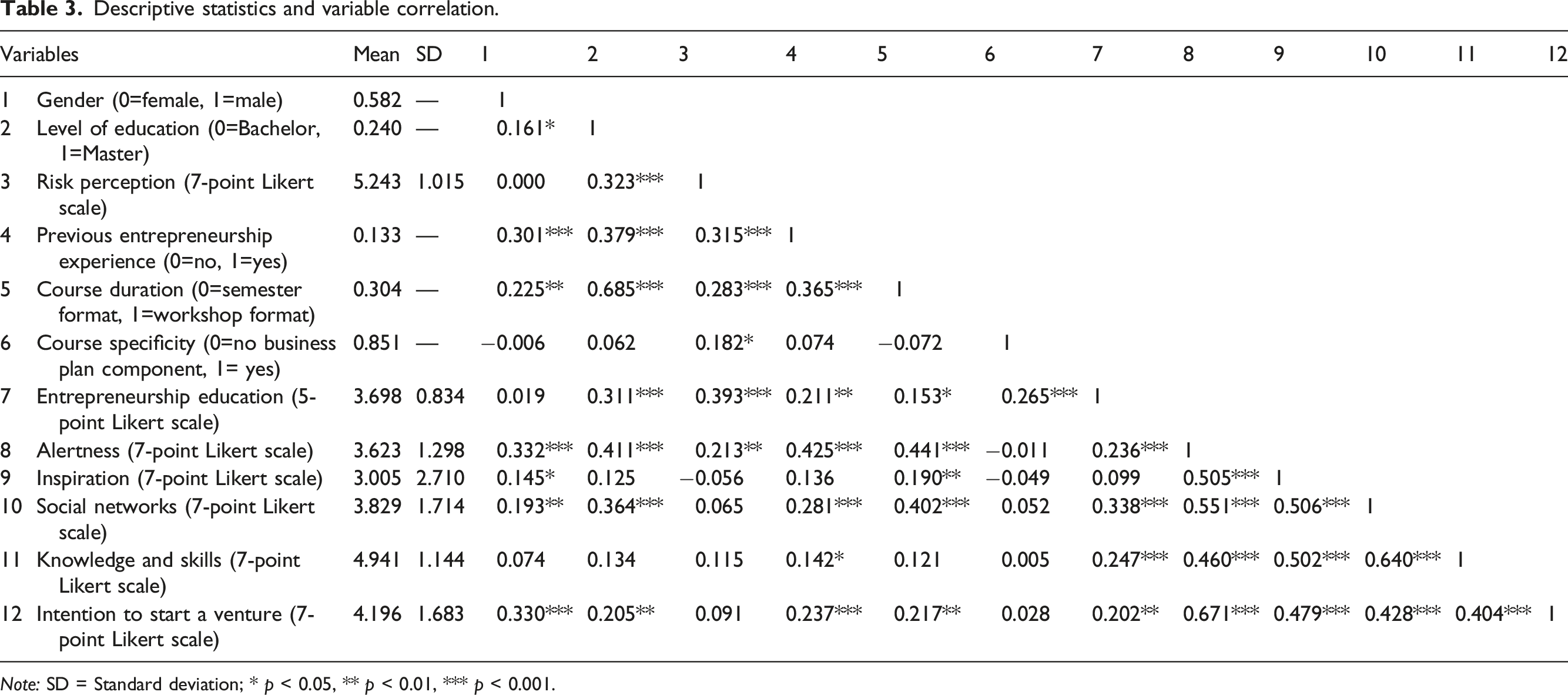
Note: SD = Standard deviation; * p < 0.05, ** p < 0.01, *** p < 0.001.
Hierarchical regression model results for alertness.
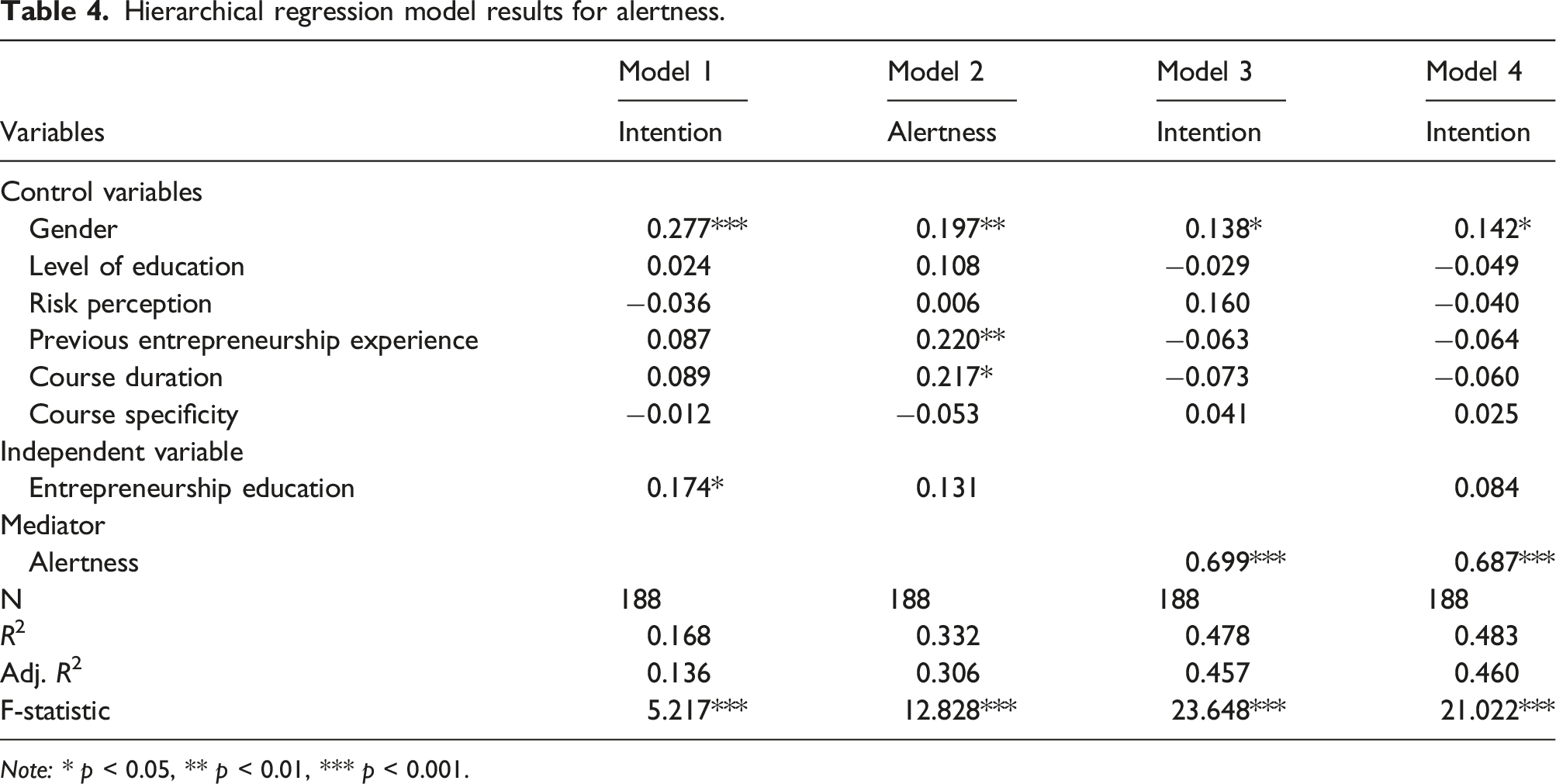
Note: * p < 0.05, ** p < 0.01, *** p < 0.001.
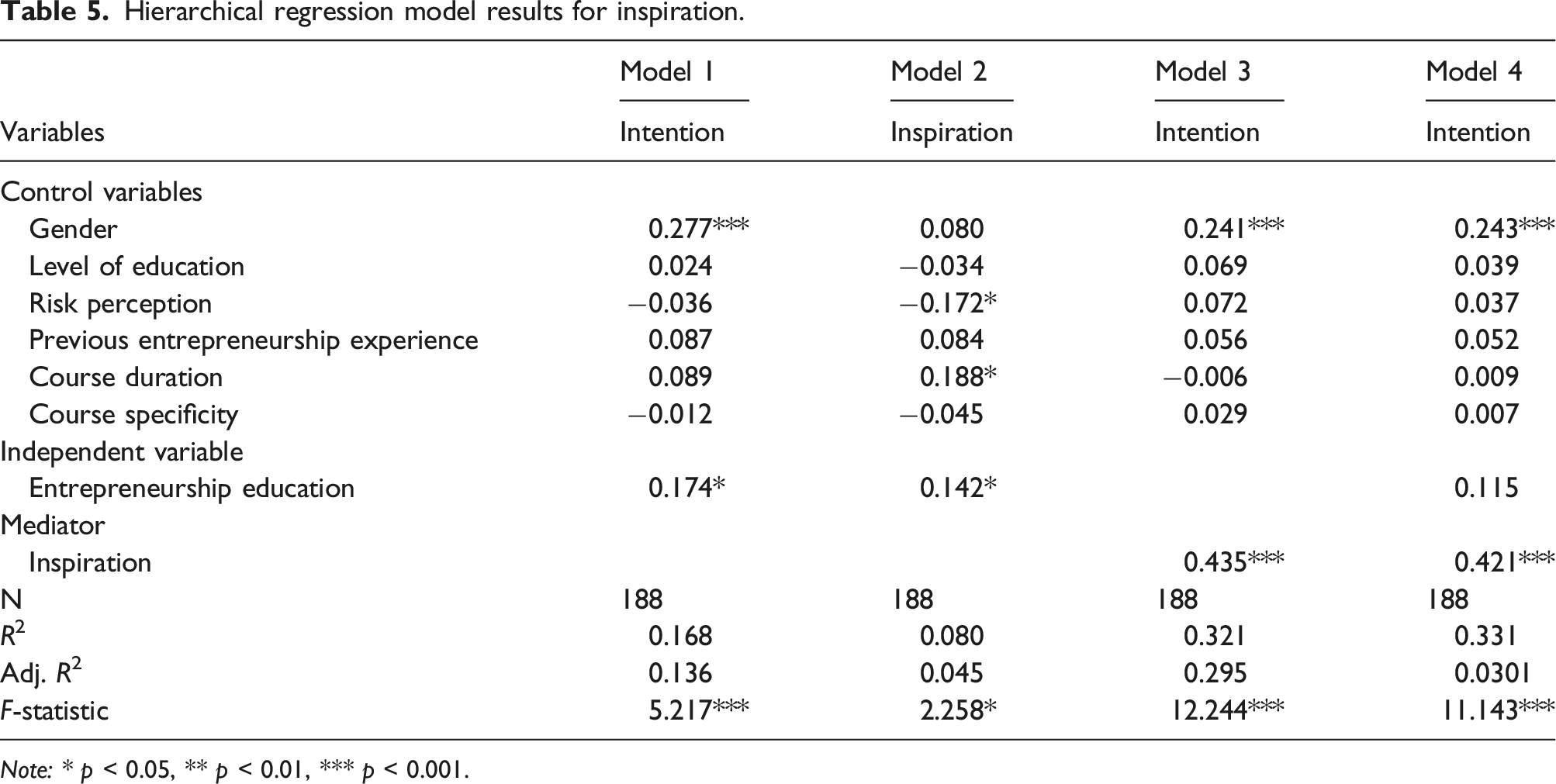
Hierarchical regression model results for inspiration.
Note: * p < 0.05, ** p < 0.01, *** p < 0.001.
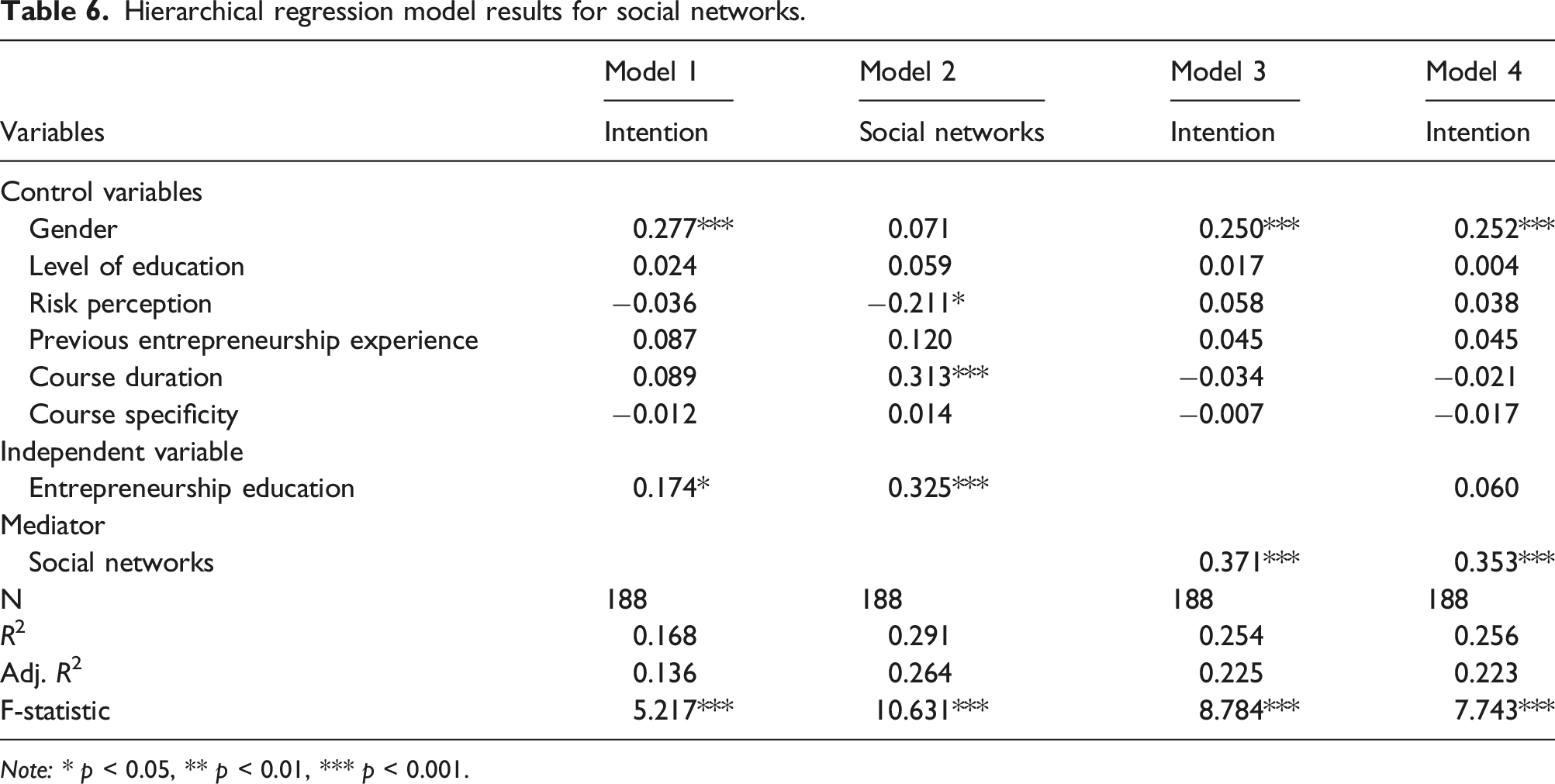
Hierarchical regression model results for social networks.
Note: * p < 0.05, ** p < 0.01, *** p < 0.001.
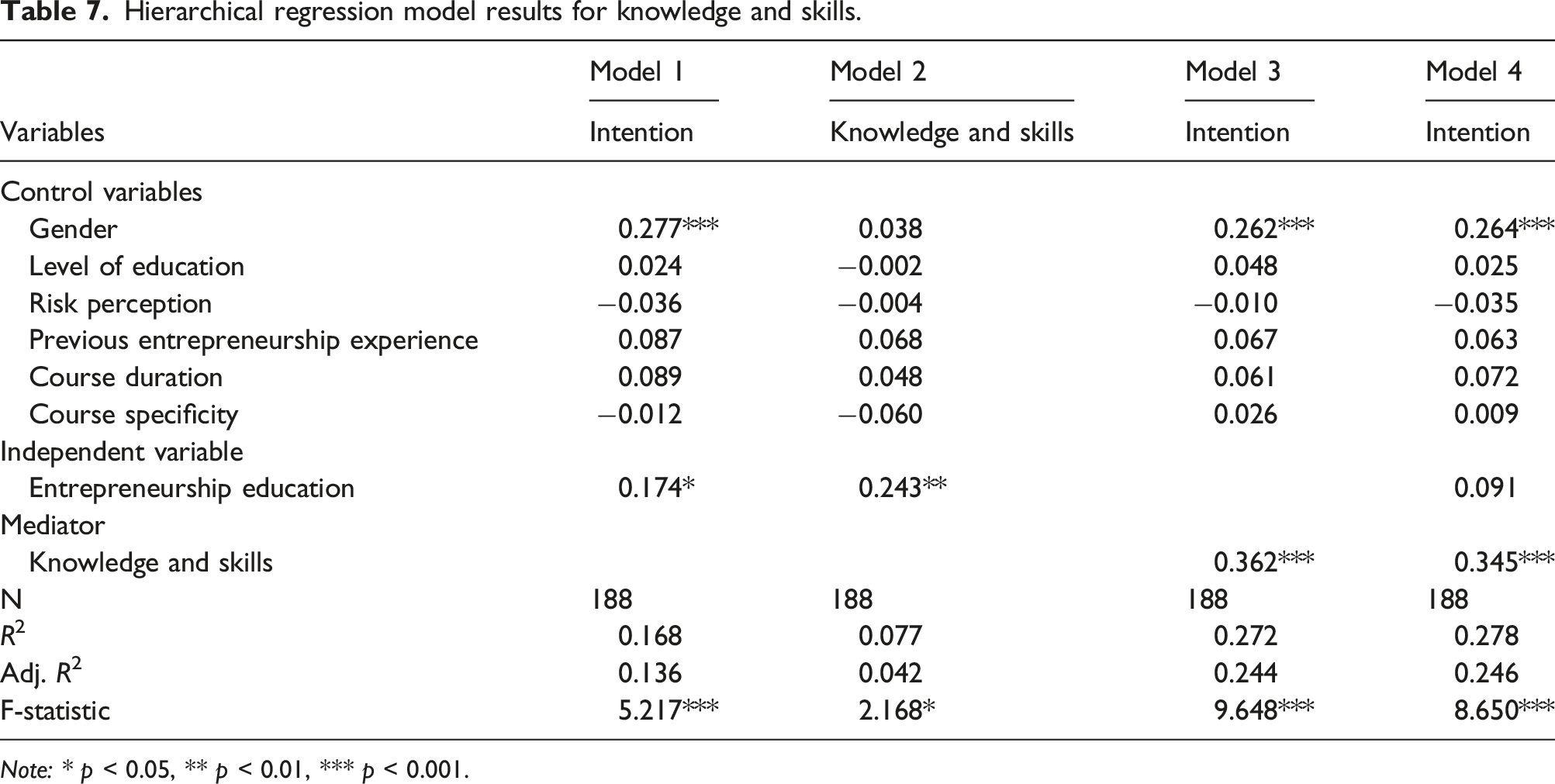
Hierarchical regression model results for knowledge and skills.
Note: * p < 0.05, ** p < 0.01, *** p < 0.001.
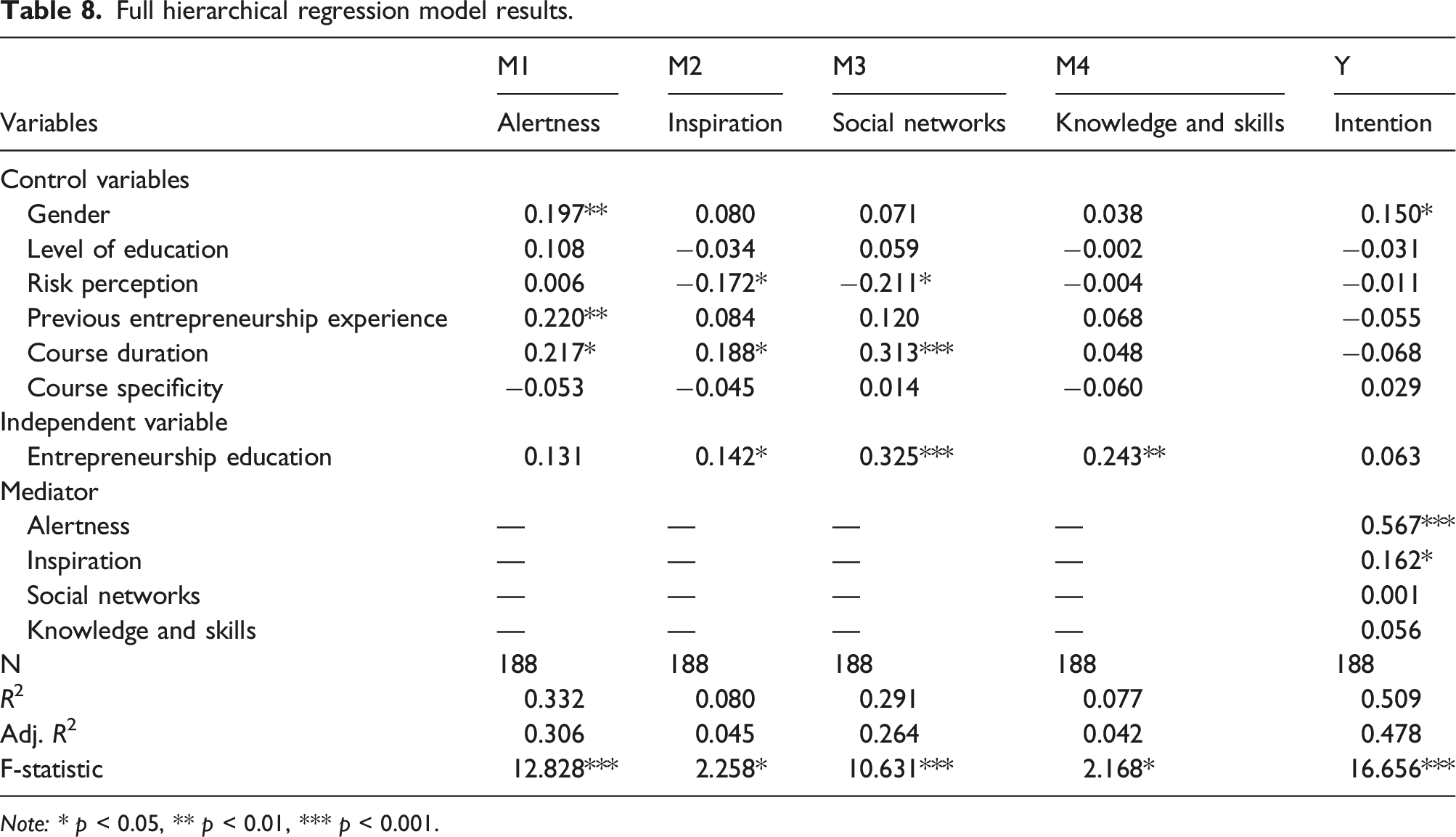
Full hierarchical regression model results.
Note: * p < 0.05, ** p < 0.01, *** p < 0.001.
Full mediation exists when the independent variable has no significant effect on the dependent variable with the addition of the mediators. Full mediation, thus, implies that the independent variable affects the dependent variable only via the mediating variable. Partial mediation occurs when the effect of the independent variable remains significant. Partial mediation, thus, implies that the independent variable affects the dependent variable directly, as well as indirectly, through the mediating variables.
Multiple analyses were conducted to test the assumptions made in the standard linear regression models. To control for multicollinearity, I calculated the variance inflation factors (VIF), which ranged from 1.07 to 2.20 and therefore did not indicate multicollinearity (Hair et al., 2014). I also tested for common method bias by conducting Harman’s single-factor test (Podsakoff et al., 2003). Four factors with eigenvalues greater than 1.0 were identified. The four factors together accounted for 67% of the total variance; the largest factor did not account for a majority of the variance (33%). Thus, there was no evidence of the common method bias (Podsakoff et al., 2003). Standard errors were corrected for heteroscedasticity (Hayes and Cai, 2007).
Results
The results of the correlation analysis presented in Table 3 indicate significant relationships between the independent/mediating variables and the dependent variable, with the four mediating variables alertness (r = 0.671, p < 0.001), inspiration (r = 0.479, p < 0.001), social networks (r = 0.428, p < 0.001), and knowledge and skills (r = 0.404, p < 0.001) relating most significantly to intention to start a venture. Intention to start a venture is also significantly correlated with EE (r = 0.202, p < 0.01).
Tables 4, 5, 6, 7, and 8 provide the results of the regression models used to test the hypotheses. The results shown for Model 1 support Hypothesis 1. As predicted, I found a small but significant positive relationship between EE and intention to start a venture (β = 0.174; p < 0.05). This result also meets the first criterion in testing for mediation (i.e. the independent variables must affect the dependent variable when the mediators are not included in the equation).
The second criterion of the mediation test states that the independent variable must affect the mediators. Model 2 in Tables 4, 5, 6, and 7 provides the results for this criterion. Model 2 in Table 4 shows that the relationship between EE and alertness is not significant (β = 0.131; p > 0.05), so Hypothesis 2 is not supported. Model 2 in Tables 5, 6, and 7 demonstrates significant positive relationships between EE and inspiration (β = 0.142; p < 0.05), between EE and social networks (β = 0.325; p < 0.001) and between EE and knowledge and skills (β = 0.243; p < 0.01). These results, therefore, suggest that conditions for the second criterion are met for Hypotheses 3, 4 and 5.
Model 3 in Tables 4, 5, 6, and 7 contains the results of the regression for evaluating the third criterion: the mediators must significantly affect the dependent variable. The results confirm this relationship, as significant effects on the intention to start a venture are found for alertness (β = 0.699; p < 0.001) (see Model 3 in Table 4), inspiration (β = 0.435; p < 0.001) (see Model 3 in Table 5), social networks (β = 0.371; p < 0.001) (see Model 3 in Table 6) and knowledge and skills (β = 0.362; p < 0.001) (see Model 3 in Table 7).
The fourth criterion requires that the mediators must mitigate the effect of the independent variable. Model 4 in Tables 4, 5, 6, and 7 provides the results for this criterion, which show that EE has no significant effect on the intention to start a venture when combined with alertness (β = 0.084; p > 0.05), inspiration (β = 0.115; p > 0.05), social networks (β = 0.060; p > 0.05) or knowledge and skills (β = 0.091; p > 0.05), while the mediators in each of the models remain significant (p < 0.001). Together, these results provide support for a full mediation through inspiration, social networks and knowledge and skills – and thus for Hypotheses 3, 4 and 5. Hypothesis 2 (the mediating effect of alertness) was not supported since the second criterion in testing for mediation was not met. Table 8 shows the results for the full model, with all four mediating variables included in the same regression model.
The results were tested using the bootstrapping method with 5000 case resamples and a 95% confidence interval (Preacher and Hayes, 2008). The test results provide support for the robustness of the mediating effect of inspiration (b = 0.709; CI = 0.498–0.920), social networks (b = 0.593; CI = 0.340–0.847) and knowledge and skills (b = 0.580; CI = 0.361–0.799). In conclusion, I find support for Hypotheses 1, 3, 4 and 5.
Discussion
Weak findings in the EE literature have generated debate about whether or not EE can affect entrepreneurial intention (Rauch and Hulsink, 2015; Rideout and Gray, 2013). Accordingly, earlier research has called for an examination of the role of promising mediators (Bae et al., 2014; Martin et al., 2013; Rideout and Gray, 2013). I have addressed this gap by examining four potential mediators. As expected, the results show that EE has only a small significant effect on the intention to start a venture (Hypothesis 1). These weakly significant results (p < 0.05) are in line with previous research and indicate the existence of mediators. Indeed, this study offers support that three mediators – inspiration, social networks and knowledge and skills – fully mediate the relationship between EE and intention to start a venture. However, I did not find support for a mediation effect of alertness, as EE did not significantly affect alertness. For this reason, I am unable to confirm the propositions suggested in earlier research (Fretschner and Weber, 2013; Tang et al., 2012; Westhead and Solesvik, 2015).
Theoretical and practical implications
Based on this study’s findings, I suggest that EE has a multidimensional nature with three different factors that influence entrepreneurial intention: an emotional component (inspiration), a social component (social networks) and a rational component (acquisition of knowledge and skills).
First, inspiration illustrates an emotional rather than a purely rational component of EE. External sources can trigger it (e.g. professors, external speakers or visiting entrepreneurs) as can practical components (e.g. group-based, practical hands-on exercises such as a business plan competition). These triggers can lead to a change of heart (emotion) and/or mind (motivation) and consequently lead to a greater intention to start a venture. These findings support earlier research by Souitaris et al. (2007), who suggested that “if our target is to increase the number of entrepreneurs from the student population, then the inspirational part of the program has to be designed purposefully” (p. 587).
Second, research has long argued that access to social networks can influence the intention to start a venture (Davidsson and Honig, 2003; Rideout and Gray, 2013; Ronstadt, 1987). From the results of this study, I suggest that universities can foster entrepreneurship by helping participants develop and expand their network, for example by arranging conferences and workshops on entrepreneurship or by offering internships focused on entrepreneurship in cooperation with start-up companies. These measures can help bring participants together with successful entrepreneurs, potential investors or alumni. This networking can create awareness of entrepreneurship as a possible career choice since meeting actual entrepreneurs may motivate students to start a new business and may also provide students with ideas from which to start a new business.
Third, “knowledge and skills” represents the rational “learning” component of EE, which is part of a university’s traditional role as a teaching institute. This role includes teaching students the general knowledge and skills needed to start a venture. The findings provide full support for a mediating role of perceived knowledge and skills as a mediator of the relationship between EE and intention to start a venture.
This study contributes to theory and research on three levels. First, it contributes to the Theory of Planned Behaviour by confirming the effect of an exogenous factor (EE) on the intention toward a behaviour (starting a business). Second, it contributes to the research stream on EE by revealing the effect of three potentially important mediators of the relationship between EE and entrepreneurial intention. As such, the results of this study also provide explanations for weak results in the direct link between EE and entrepreneurial intention reported in previous research. Third, by confirming the mediating effect of inspiration (an emotional component), I am also contributing to the literature stream on entrepreneurial emotions and passion (Cardon et al., 2009; Foo, 2011).
This study also has potentially important, practical implications for university managers and entrepreneurship program developers. Its findings suggest that an ideal-typical EE program should focus not only on imparting knowledge and skills conventionally, as may be common at most universities, but should also include an inspirational component and provide participants with opportunities to develop and enhance their networks. Consequently, academic lecturers should receive training not only in how to impart entrepreneurship-related knowledge and skills but also in how to inspire participants by changing their “hearts and minds” and how to help participants extend their networks. Developing EE programs which include these three components may be an effective way to foster entrepreneurial intention among participants.
Limitations and future research
This study has some limitations as well as offering avenues for future research. First, due to the time lag problem, the study addresses entrepreneurial intention only, and not actual behaviour. Although intention is a valid predictor of future behaviour, it would be desirable to repeat this study and measure actual behaviour.
Second, the study sample consists of business administration students in Germany and Switzerland, and the results may not be transferable to EE programs in other countries or other fields of study. Future research could replicate this study for other entrepreneurship courses outside the area of business administration and in other countries.
Third, the possibility cannot be excluded that people who want to become entrepreneurs intentionally choose to study business administration (i.e. endogeneity resulting from reverse causality due to the self-selection bias). However, I attempted to avoid this reverse causality by asking participants to indicate their primary interest in the entrepreneurship course and excluded those who responded that they wanted to start their own business. In addition, I selected participants from mandatory entrepreneurship modules. This setting allowed me to minimize the self-selection bias.
Lastly, although I have confidence in the variables I chose for this study, future researchers might address the question of whether other mediating variables play a role in the EE–entrepreneurial intention relationship apart from inspiration, social networks and knowledge and skills (for literature reviews, see for example Mwasalwiba (2010); Nabi et al. (2017); Thomas (2018)). Moreover, future research could examine how and why EE affects inspiration and social networks and might address questions such as “What types of emotions or triggers lead to a ‘change of hearts and minds’”? and “What types of social network lead to participants starting a business?”.
I would encourage future researchers to develop and research these aspects further in the context of EE. That research could then improve understanding of the effects of EE on the intention to start a venture.
Footnotes
Declaration of conflicting interests
The author(s) declared no potential conflicts of interest with respect to the research, authorship, and/or publication of this article.
Funding
The author(s) received no financial support for the research, authorship, and/or publication of this article.
