



Abstract
Drawing on three action research case studies involving several African universities, this article critically explores how academics converted their previously pure classroom-based courses for delivery through blended learning. The case studies reflect resource-scarce contexts where limited access to digital technology and the internet poses unique challenges to universities seeking to scale-up management education to the geographically distant and culturally diverse student population. Results from analyzing the case studies, through the concept of curriculum adaptation, were drawn upon to develop a theoretical framework for use by academics planning to transition from face-to-face to blended learning environments. The article uncovers the difficulties of, and opportunities for, creating learning communities that enable classroom-based, face-to-face teaching to be blended with online learning in ways that foster locally relevant, purposive interactions among academics and students, while scaling-up access to management education. The article concludes with a discussion of opportunities for management educators to introduce online learning in their existing classroom-based management courses.
Introduction
Blended learning, defined as “educational experiences delivered through the thoughtful combination of face-to-face and online activities” (Arbaugh, 2014, p. 788) is widely used in higher education institutions to complement, augment and, in some instances, replace classroom-based teaching (Hollyhead et al., 2012; Whitaker et al., 2016). This article addresses the dearth of management education research that theorizes how educators can convert their existing management courses, which are delivered through classroom-based environments only, to blended learning. This research gap is underpinned by externally triggered events that are outside the control of universities but for which universities must respond to adapting their teaching. Typical examples include developments in digital technology that are creating favorable conditions for online learning (Jensen et al., 2020; Ngoasong, 2018) and pressure to work online in response to government lock-down measures triggered by the COVID-19 pandemic (Bayham & Fenichel, 2020). To gain a full understanding how adaptation can produce desired outcomes (Errichiello & Pianese, 2016), while addressing ongoing challenges, requires theoretical, and empirically derived research.
The concept of curriculum adaptation, defined as “a purposeful effort to bring existing materials into alignment with new visions by adding to, adapting, or transforming those materials” (Debarger et al., 2017, p. 67) provides a useful theoretical lens for understanding the transition of a management course from being classroom-based, to delivery in a blended learning environment. In contrast to curriculum development, which is about creating entirely new materials, curriculum adaptation involves changes to the curriculum content and/or execution/delivery to enable “dynamic interactions among teachers, learners, subject matter, and settings” (Zhang et al., 2014, p. 253). Previous studies reveal how classroom discussions can be emulated using electronic bulletin board technology to create an online learning community (Arbaugh, 2014; Brower, 2003) where students learn in a flexible manner rather than being physically present in a classroom that is bounded in space and time (Ersoy-Babula & Babula, 2018; Warner, 2016). There is a research need to clarify not only the pedagogical purposes and processes of emulating physical classroom learning on online platforms (Arbaugh, 2014) but also how that adaptation might sustain the students’ engagement with learning (Zhang et al., 2014). This article addresses a key question: How does curriculum adaptation enable management educators to adapt management courses that are delivered through classroom-based environments to blended learning environments?
In addressing the above question, this study seeks to determine whether curriculum adaptation is essentially the process of transferring existing curriculum content online, or whether, to be effective, it involves more substantive changes in a university approach to learning at a strategic level. To begin with, the study develops three action research case studies (Allen & Simpson, 2019) and applies the learning to staff development workshops involving academics who had previously taught purely classroom-based courses, but who had been instructed by their respective universities to adapt their existing courses for a blended learning environment. The case studies consisted of a partnership between a United Kingdom university and a South African university (Case 1), business and management courses in a university in Sierra Leone (Case 2) and a partnership between a US-based, global network and African universities for management education in Sub-Saharan Africa (Case 3). Collectively, the results from analyzing the case studies were drawn upon to develop a theoretical framework for use by academics transitioning from pure classroom-based to blended learning environments.
The framework depicts how curriculum adaptation can enable the purposeful interaction in a physical classroom to be similarly achieved in an online learning community. It contributes to the existing literature on blended learning in management education that recognizes that “although blended formats tend to be viewed favourably relative to online offerings, researchers tend to present blended designs descriptively rather than as theoretically derived” (Arbaugh, 2014, p. 790). For management educators seeking to transition from pure classroom-based courses in a blended learning environment, a framework is necessary not only to achieve the appropriate blend but also to inform acceptance from academics and students (Debarger et al., 2017).
This is particularly relevant to the resource-scarce context of Africa (Ngoasong, 2018), where the growing demand for management education, which is not being met due to resourcing challenges (e.g., staff and infrastructure costs), combined with geographically dispersed and culturally diverse populations (Nkomo, 2015) restricts the creation of learning environments to those that contribute to poverty reduction (Glaub et al., 2014). Though online learning is already impacting education in Africa (Olson et al., 2011), the African context illustrates how late adopters of blended learning grapple with the opportunities and challenges of finding the right blend of classroom-based versus online learning, given the relatively low rates of adoption and use of digital technology among educators (Kok et al., 2018; Ngoasong, 2018). This article contributes practical evidence on how to undertake curriculum adaptation for blended learning in resource-scarce contexts.
Literature Review
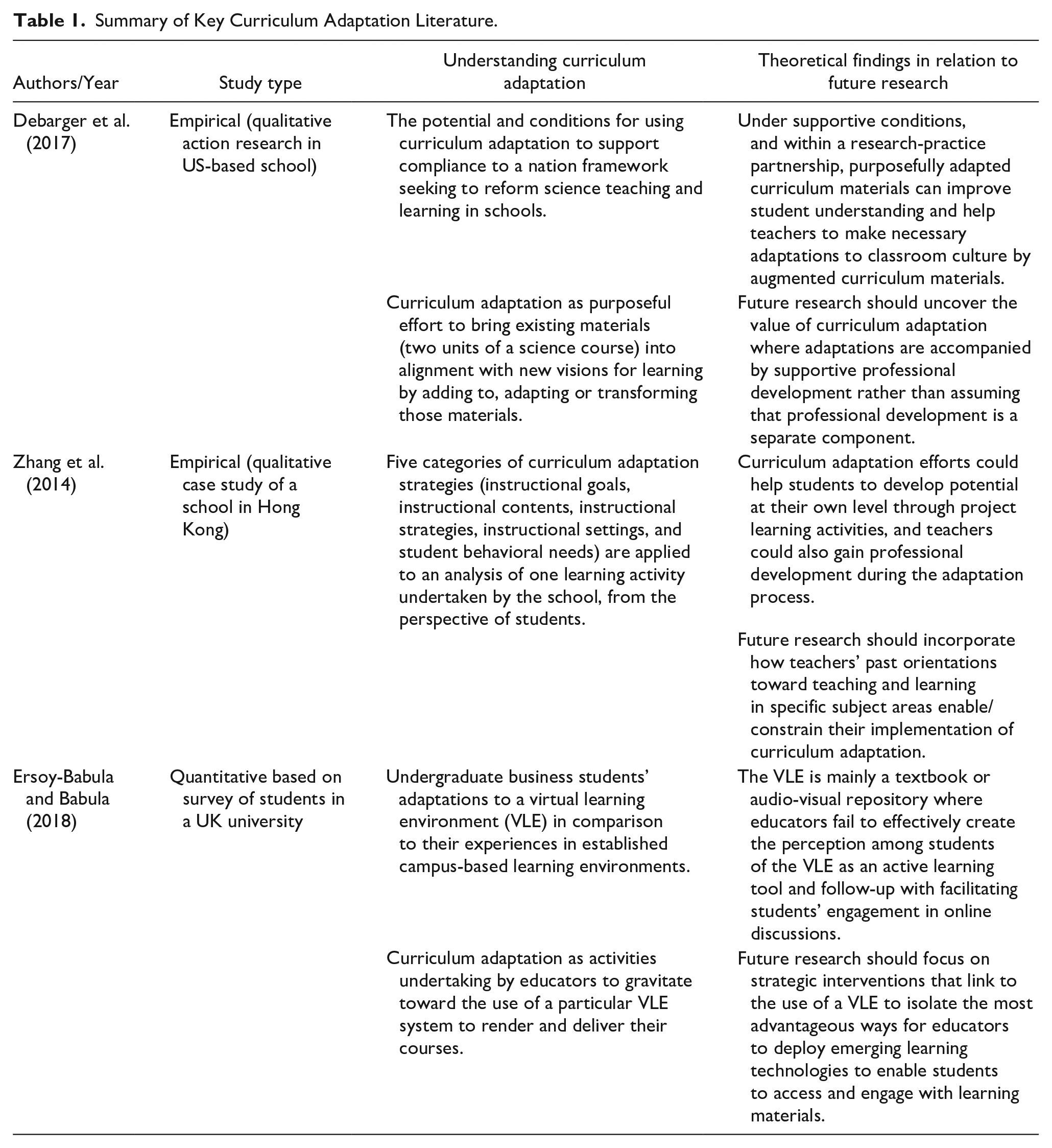
In order to address the main research question, an extensive search of the term “curriculum adaptation” was conducted using the author’s university library databases (ProQuest, Science Direct, Scopus, Jstor, Greenfile, and Sage Journals Online). The review led to the identification and review of key curriculum adaptation studies (Table 1) and studies related to blended learning approaches. The literature suggests that curriculum adaptation occurs as a strategy intervention (institutional level) that rely on a teacher’s prior orientation and professional development (course level). These enable institutions to deploy emerging learning technologies to enable students to access and engage in learning within their local context.
Summary of Key Curriculum Adaptation Literature.
A review by Cavanaugh et al. (2016) identifies a dilemma for academics who are increasingly adopting digital technology and the internet in their teaching; though digital technology may stimulate cognitive development (e.g., visual aptitudes gained through audio-visual material), this can come at the expense of deep learning (e.g., critical thinking and reflection). Cavanaugh et al. (2016) go on to suggesting how resolving this dilemma requires a deep consideration of the flexibility that is achievable, and deliverable, within a blended learning environment, including considerations of the curriculum content, course delivery, time, and the learning needs of students. These considerations reflect Kessler’s (2017) argument that the strategic and operational purpose of a university contains cognitive (theory and intellectual purpose), affective (the holistic and core skills development purpose), and conative (the practical and professional development purpose) dimensions that underpin the management courses it delivers. These dimensions are important for adapting to blended learning.
Ersoy-Babula and Babula (2018) suggest that adopting a Moodle learning platform and smart mobile learning devices in ways that refocus the students’ attention, can facilitate student engagement in online discussions, chatrooms, and podcasts (how students learn); while simply using Moodle as a repository for learning materials (what students learn) can defeat the purpose of active learning. This is because whereas students can download the learning material from Moodle for self-study, active learning requires teachers to create tutor-supported online discussion forums for students to actively engage with what they are learning. Other studies discuss how online tutoring can produce less communication among students due to reduced physical cues (body language or non-verbal communication), when compared to a face-to-face context where students and tutors are physically present and bounded in a classroom space and scheduled time (Richardson, 2009; Warner, 2016). The above discussion strengthens the argument that online delivery presents communication challenges that need to be addressed to realize the affective and conative outcomes suggested in Kessler (2017).
In a study of the use of a social media platform, Yammer, to cultivate conversations outside the normal class hours that capitalize on in-class work, Warner (2016) suggests that a community of inquiry can be developed where students feel that they belong to a similarly bounded learning context to the face-to-face class in which they can engage in deeper participation in theoretical discussions, as well as socially constructed knowledge, with more people than in a traditional classroom setting. Jensen et al. (2020) suggest that online learning designs are shaped by the teachers’ perceptions of their students’ learning needs, which are in turn drawn upon to adapt the teaching activities to online learning to enable the students to acquire the equivalent knowledge and skills that they would have developed in a face-to-face classroom-based environment. Thus, both course-level (cognitive, affective, and conative) and student-level (learning needs, preparedness) factors are critical to ensure engagement, retention, and completion of blended learning courses (Wladis et al., 2017).
Thus, as management educators constantly seek to upgrade or replace their existing LMS to keep pace with developments in digital technology and changing user needs, we are also witnessing emergency transitioning from classroom-based courses to a blended learning environment in response to externally-triggered events, for example, in the institutional responses to COVID-19. Such changes call for urgent research to address the theoretical gap that exists in our understanding of the extent of blended learning (Arbaugh, 2014) that is achievable within specific university contexts and how academics are grappling with the challenges of achieving a specified combination of classroom and online components within their blended learning offering. Research is crucial to unpack the dilemma identified in Cavanaugh et al. (2016) to create blended learning that achieves a similar purpose and outcome in management education as that achievable in classroom-based environments.
Thus, this study uses the concept of curriculum adaptation to analyze the transition from classroom-based to blended learning environments. In contrast to curriculum development, which involves the creation of an entirely new curriculum, curriculum adaptation consists of making essential changes to an existing curriculum. The term has been used to refer to the process of adapting courses to young students, immigrants, low-income students, or disabled students who require special adjustments to effectively learn in the United States (Debarger et al., 2017) and Hong Kong (Zhang et al., 2014). In Zhang et al.’s (2014) research, curriculum adaptation was applied to accommodate the needs of students with intellectual disabilities at special schools. Different learning tasks were assigned to appropriate student groups to match those students’ intellectual levels and stimulate active learning. Adapting the curriculum also involved adding or transforming existing materials to promote active learning. The authors found that adaptation not only helped the students to learn but also led to professional development of the staff. In general, curriculum adaptation can be usefully applied by educators to ensure that curriculum materials elicit questions and respond to student ideas as well as provide students with the authority to take ownership of their learning. Thus, it can encourage purposive teacher-student and student-student interactions (Debarger et al., 2017).
From the above literature review, we see that two important factors need to be considered when applying the concept of curriculum adaptation to uncovering the transition from classroom-based to blended learning environments by management educators. The first is related to Kessler’s (2017) arguments about the cognitive, affective, and conative dimensions of the strategic objectives of a university that inform their approach to management education. Kessler’s analysis recognizes management education as a dynamic process that allows teachers to reflect on changes in the geographic (country), institutional (university), and technology (infrastructure) contexts. It should also meet the needs of diverse student cohort. This is important for understanding the strategic purpose of a university in seeking to transition from pure classroom-based to blended learning environments. The second important factor to be considered when applying the concept of curriculum adaptation relates to categories of curriculum adaptation strategies around the curriculum content, teaching strategy/pedagogy, and student support (Debarger et al., 2017; Zhang et al., 2014). The strategies reflect the purposive modifications to activities that previously occurred within a bounded classroom to an online platform (Cavanaugh et al., 2016). These factors inform the empirical analysis in this article.
Research Method
Research Setting and Case Selection
The resource-scarce context for blended learning in Sub-Saharan Africa was chosen as the research setting for three reasons. First, the challenges facing management education providers are significant, for example: (i) scale-up access to education to improve student enrollment and graduation rates; (ii) attract and develop staff; and (iii) contextualize global knowledge for local relevance (Nkomo, 2015) by creating learning environments that contribute to poverty reduction (Glaub et al., 2014). Second, developments in information and communication technologies (ICTs) and digitization constitute incentives for extending access to essential services to poor and geographically distant communities. This is typified in studies such as e-learning in Tanzania (Olson et al., 2011), using digital platforms to increase access to financial services in Kenya (Ndemo & Weiss, 2017), creating and commercializing products in Cameroon (Ngoasong, 2018) and opening hospital-patient communication channels to increase adherence to treatment (Mbuagbaw et al., 2013). Finally, there is the challenging opportunity of being a late adopter of online learning; discussing African universities as late adopters, Kok et al. (2018) suggest that choosing the right blend of tutor-led and self-study materials for independent learning is a major challenge that needs to be addressed to increase access to affordable education. In the above context, understanding the interplay between institutions (universities), technology (for online learning), social/cultural (attitudes to learning), and geographic (classroom-based courses) factors is highly relevant to the process of curriculum adaptation.
A case study is a purposive “empirical inquiry that investigates a contemporary phenomenon within its real-life context, especially when the boundaries between phenomenon and context are not clearly evident” (Yin, 2003, p. 13). The three case studies for this research were selected for practical and theoretical reasons. In terms of practical, the case studies draw on the authors’ ongoing research and consultancy activities, as action research (Allen & Simpson, 2019), to demonstrate a transition from face-to-face, classroom-based education to blended learning in the African context. Case 1 was a partnership between a UK university and a South African university (SAU), Case 2 was a university in post-conflict Sierra Leone, and Case 3 was a program delivered through five business schools, one from each of the following five regions: English-speaking West Africa, French-Speaking West Africa, East Africa, Southern Africa, and Lusophone (Portuguese-speaking) Africa.
In terms of theoretical relevance, all three cases involved strategic interventions to change existing campus-based education to blended learning (Debarger et al., 2017). For Case 1, the approach and extent of blended learning was established by the UK partner and was a replication of the blended learning course of the UK university. Adaptation in this sense was limited to instructional settings and student behavioral needs (Zhang et al., 2014) within the South African context. For cases 2 and 3, the approaches and extents of blended learning were not decided at the strategic level; rather these emerged through changes to the learning processes through which curriculum adaptation was implemented. Thus, all five components of curriculum adaptation were considered (Zhang et al., 2014). The similarities and distinctions between the three case studies reflected theoretical sampling, in so far as the cases were selected to evidence theoretical reasons, such as to undertake cross-case analysis to inform theory development (Miles et al., 2014; Yin, 2003).
Research Design and Data Collection
This study applied an action research approach, defined here as a self-reflection enquiry, in which the researcher and the research participants inquired into issues of mutual concern (Allen & Simpson, 2019) to develop a framework for improving practices (Mansour, 2015). In university settings, this type of action research is typically based on academics self-reflecting while teaching and, then, analyzing, synthesizing, discussing, and sharing their knowledge and experience about their teaching practice with others (Allen & Simpson, 2019; Brower, 2003). This process often produces research outcomes that can be replicated in other settings. Although action research methods often include quantitative-oriented feedback from participants as research data, this study emphasizes the subjective realities of participants as demonstrating “commitment to the idea that people can, and should, reflectively think about their practice and look for ways to contribute to the improvement and ‘change’ within their organisations” (Mansour, 2015, p. 220).
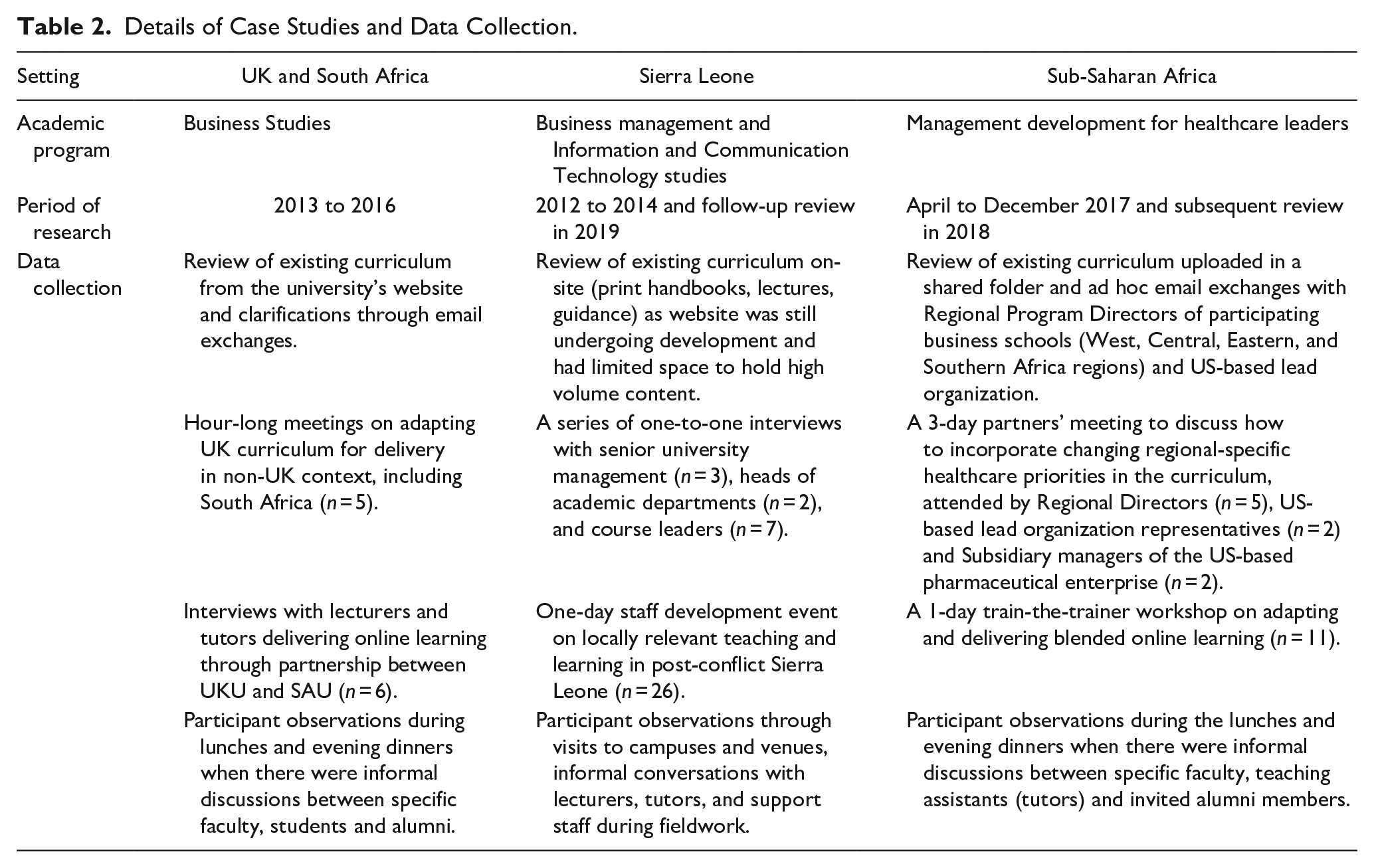
Data was collected from multiple sources, namely: document review, stakeholder interviews, and staff development workshops, participant observation of partner meetings and informal discussions (Table 2). The data collection was iterative and included ongoing review of documents provided by the university authorities, information on the course websites and email exchanges with senior managers and leaders of the universities. These sources provided background information that was helpful in uncovering the strategies and operational plans (Kessler, 2017) underpinning curriculum adaptation. Through the iterative process of data review, the author was able to clarify the existing approaches to management education, the status of management courses, and the extent of, or aspirations for, blended learning. These factors were then used to frame questions and themes for formal interviews and discussions at development workshops, and at meetings with staff and/or partners. For instance, for participants of Case 3, in designing and delivering a workshop on how to adapt the existing curriculum for blended learning, the partner universities that had delivered some blended learning were invited to share their experiences.
Details of Case Studies and Data Collection.
In all three case studies, the respondents were fully informed of the goals, nature of the study, purposes and processes of data collection, and were given guarantees of confidentiality. The interview respondents’ names were anonymized. Interviews with the academics included questions for them to reflect on the changes being made, or needing to be made, in the area of curriculum content, teaching strategy and student engagement to adapt to the blended learning environment. For staff development workshops, the questions and themes included the readiness, and aspirations, of the universities and their staff for adapting existing management courses to a blended learning environment. Key themes uncovered were the presence of overlapping curriculum with redundancies, the diversity of learners, the blend of learning environments, and the multiple languages used (English, French, and Portuguese). The multiple sources of data facilitated corroboration within each case study (Ramanau, 2016).
Data Analysis
This study adopted a qualitative content analysis of data (interview transcripts, documents, and field notes) through within-case analysis, cross-case analysis, and theory-building phases (Miles et al., 2014). The within-case analysis served to uncover codes related to curriculum adaptation in a resource-scarce context, when viewed from the perspective of case-specific participants. For this, the qualitative data gathered from interviews, responses to open-ended discussion questions, or e-mails, for each of the three case studies, were manually content-analyzed to identify descriptive categories from each case study as first-order codes. Then, by comparing the similarities and differences between the within-case analyses, the cross-case analysis enhanced transferability to other contexts and deepened our understanding, to improve the building of a reliable theory (Miles et al., 2014). The data analysis process followed the Gioia method, which consists in eliciting a data structure composed of first-order, second-order, and aggregate/theoretical dimensions (Gioia et al., 2013). Specifically, the transcribed data is categorized participants’ accounts (first-order), followed by second-order codes, and subsequently aggregate theoretical dimensions (Ngoasong et al., 2021).
Participants’ accounts are key words or phrases within entire responses captured in transcripts and fieldnotes (Gioia et al., 2013) and were content analyzed to create a data analytic structure of curriculum adaptation from a face-to-face to a blended learning environment at two levels, as summarized on Figure 1. First, the accounts of what was adapted (first-order) was grouped with respect to learning technology, curriculum content, teaching strategy/pedagogy, and student support/peer-interaction (second order) as constituting curriculum adaptation at course level (aggregate). Second, following Kessler (2017) accounts of the university level rationales for adaptations (first-order) were grouped into strategic objectives and operational plans, course production, and adjusting to blended learning environments (second-order) as constituting curriculum adaptation at institutional or university level (aggregate). Taken together, the analysis revealed the importance of curriculum adaptation that considers geographically distant and culturally diverse contexts, while changing the nature of student interaction, which reflects purposive interaction and building a community of learners (e.g., Debarger et al., 2017; Mansour, 2015). The case-specific findings followed by the emergent theoretical framework for curriculum adaptation in blended learning environments are presented below.
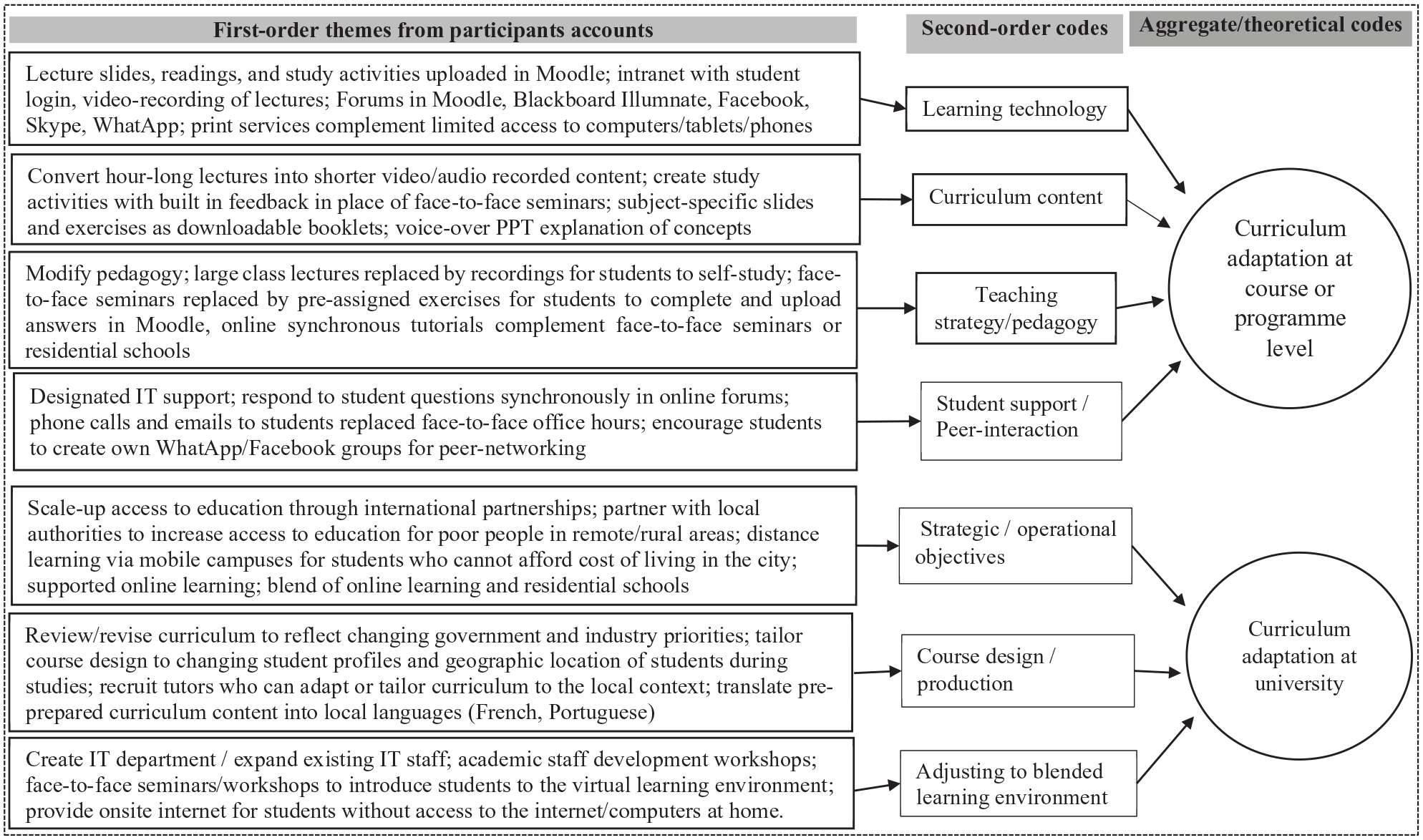
Data analytic framework.
Findings
Case Study 1: Curriculum Adaptation for Online Learning in Southern Africa
The context is a licensing agreement in which a South African university (SAU) adapted a number of management courses that had been produced for a blended learning environment in the UK, to be suitable for delivery to students in Southern Africa (South Africa, Botswana, Uganda, Zimbabwe, and Kenya). Staff at the SAU were going to teach the courses for the first time. Staff briefings and development events were organized for shared learning between UK and Southern Africa academics about the extent of adaptations.
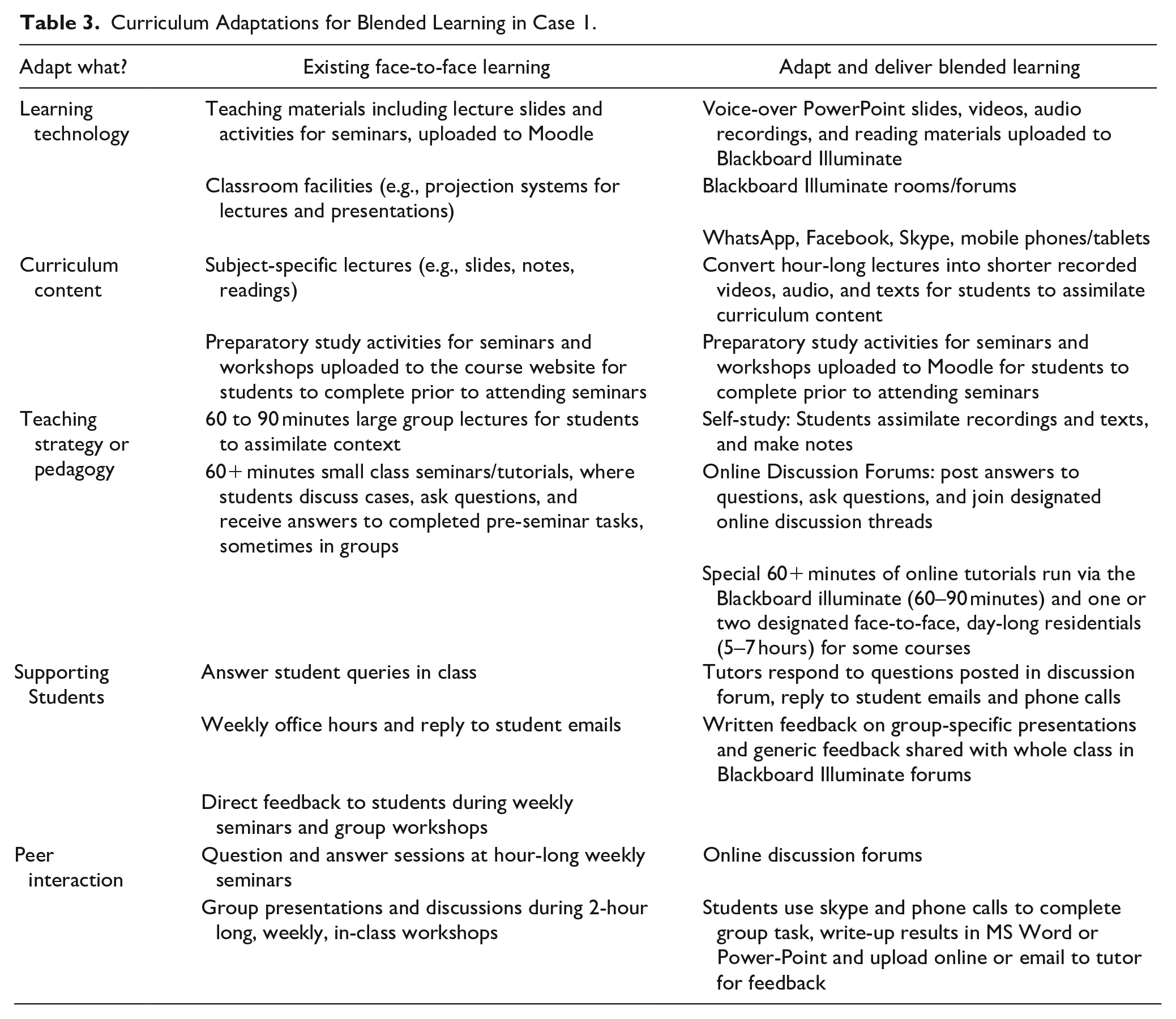
To gain a deeper understanding of how course-level, student-level, and learning technology factors (Wladis et al., 2017) were considered during adaptation to blended learning, the undergraduate degree course in business studies was examined in detail. To prepare students for the transition to online learning, face-to-face seminars are held to introduce students to the virtual learning environment, explain how online learning will be supported, clarify the expectations of the course and address student queries. The categories of curriculum adaptation (goals, contents, tuition, settings, and students’ needs [Zhang et al., 2014]) were aligned to the learning technologies (Richardson, 2009). Table 3 provides an example of the curriculum adaptations made, based on two, third year courses within the undergraduate business studies degree. The curriculum was presented as structured subject content, study activities, and audio-visual assets (audio and video recordings). These were uploaded to the Blackboard Illuminate platform. For each course, students were allocated to separate online rooms for small class seminars, each of which was moderated online by tutors.
Curriculum Adaptations for Blended Learning in Case 1.
Where there were campus-based tutorials, online alternatives were created such that students who, for whatever reason, could not attend the face-to-face tutorials were able to study the online alternative. Moreover, students could contact their tutors directly via emails or phone call if they needed help. Most IT issues were resolved as soon as possible by a dedicated IT team based in the UK. Exam scripts were set in the UK and shipped to SAU where students sat their exams. Sample exam scripts were scanned and uploaded for markers to discuss, moderated by the course leaders and approved in the UK, in consultation with the quality assurance representatives in South Africa. Agreed quality assurance visits were undertaken to ensure adherence to quality assurance procedures. To promote active learning (Ersoy-Babula & Babula, 2018), the tutors provided sample answers/feedback to designated online forum threads and encouraged students to use those as cues to ask further questions or to provide responses to questions asked by other students; thereby contributing to, and encouraging, online discussions.
The diversity of students, the environment that a student is in when studying online and different tutor mind-sets, were all identified in the data as important considerations when undertaking curriculum adaptation. Diversity was captured in terms of the students’ exposures to western-style education, English language, and ICT skills. For example, as seen in the following quotation, the students had limited exposure to an international learning context, which challenged their expectations of what and how to learn (Ersoy-Babula & Babula, 2018): There was a concern that many students were failing in their assessments. A university degree may not be for everybody. The fact that 75% got through was incredible. We sent out tutors [from the UK] who had some understanding of the local situation to run tutorials and contextualize the learning. Some of the students said: ‘No, don’t. Our job is to be able to deal with international businesses, including western businesses operating in Africa. We must talk their language.’ (Course Leader and Tutor, Case Study 1)
When asked about the nature of learning between faculty members who produced online learning material in the UK and the tutors in South Africa who taught the African students, the educators spoke about understanding the cultural environment in which the students were studying and identifying how to support and encourage online learning: The most obvious difference is cultural. I always find myself having to say to students: ‘You are dealing with [a UK University], you’re not dealing with the natural leniency that we sometimes associate with, in South Africa’, like a student in a township in South Africa or Zimbabwe, where there is hardly any opportunity to isolate yourself and study with focus. What happens if they are late for the online forum discussions as is the case with face-to-face learning? You need to understand their challenges. It prompts us to do some extra support, extra phone calls. (Regional Director, South Africa)
In the above quotation, formal regulations at UKU conflicted with a culture of leniency in the African context. This affected the perceptions that students might have had, for example, about the extent to which they would be penalized for exceeding the word limits in assessments, the ways they structured answers to assessment questions and their expectations for requests for extensions of submission deadlines. These points all relate to curriculum adaptation in terms of creating additional guidance for how curriculum content is delivered and assessed in a blended learning environment (Debarger et al., 2017). A combination of face-to-face and online learning was found to be useful in addressing specific student support needs; one tutor described how a student at a day-long, face-to-face school was passive, but not because of a lack of interest or commitment, and how this was detected through facial expressions: I asked a student whether he was following what was being discussed and he said, ‘Yes I can follow but I don’t know how to contribute’. Apart from all the cultural differences, they may not be used to debating or challenging other people’s opinions, especially the authority of the lecturer or the writer of the text. [Tutor, SAU].
The above quotation relates to the argument that face-to-face interactions remain crucial in enabling tutors to directly engage students in critical thinking (Cavanaugh et al., 2016) by providing appropriate guide-on-the-side support (Ngoasong & O’Neill, 2014). In this first case study, the fact that students were located at a distance from their tutors, in online learning environments with limited asynchronous activities, reduced the extent to which tutors could sense-check the student learning and provide such guide-on-the-side support.
Case Study 2: Curriculum Adaptation for Distance Online Learning in Sierra Leone
This case illustrated how Sierra Leone University (SLU), a private university in Sierra Leone, attempted to overcome the challenges of delivering blended learning in a post-conflict context. Established in 1990, SLU provides academic and professional training in healthcare, business management and economics, and, from 2014, also in mining and petroleum engineering. SLU was very successful early on in sourcing computers, IT equipment and teaching materials from foreign universities through franchising agreements. However, the school was shut down in 1996 due to the decade-long civil war (1991–2002) in Sierra Leone; the consequences of which the country is still recovering from. The civil war destroyed most educational structures, literacy rates fell to one of the lowest in Africa and many productive activities came to a halt across the country (World Bank, 2012).
The post-war reconstruction policies of the current government attracted international support. This support was evidenced by donor funding for educational development targeted at primary and secondary education. By 2010 there were tens of thousands of high school leavers who could not afford the costs of relocating to the main cities to attend university studies; more than 66.4% of the population were living under the national poverty line in 2003 (World Bank, 2012). However, the senior management of SLU saw this as a market opportunity and developed a business case for using distance education to increase access to education for young people who would otherwise not have access to high-quality university education. When asked to describe how blended learning was initiated at the university, the senior leaders of SLU referred to the operational enables (Kessler, 2017), as captured in the following quotation: Our CEO put a team of academics and operations staff to visit local chiefs, community groups, secondary and high schools in five regions of the country, telling them how we can provide university education to their children without the need for them to travel and live in Freetown, which would be too costly for parents. The buy-in from community leaders and local councils was more than we expected. Some local councils even allowed us to use council buildings part-time for seminars and office hours so that we could start to provide training sooner to many high school graduates who might otherwise never have realised their dreams of higher education. [Deputy Vice President, SLU]
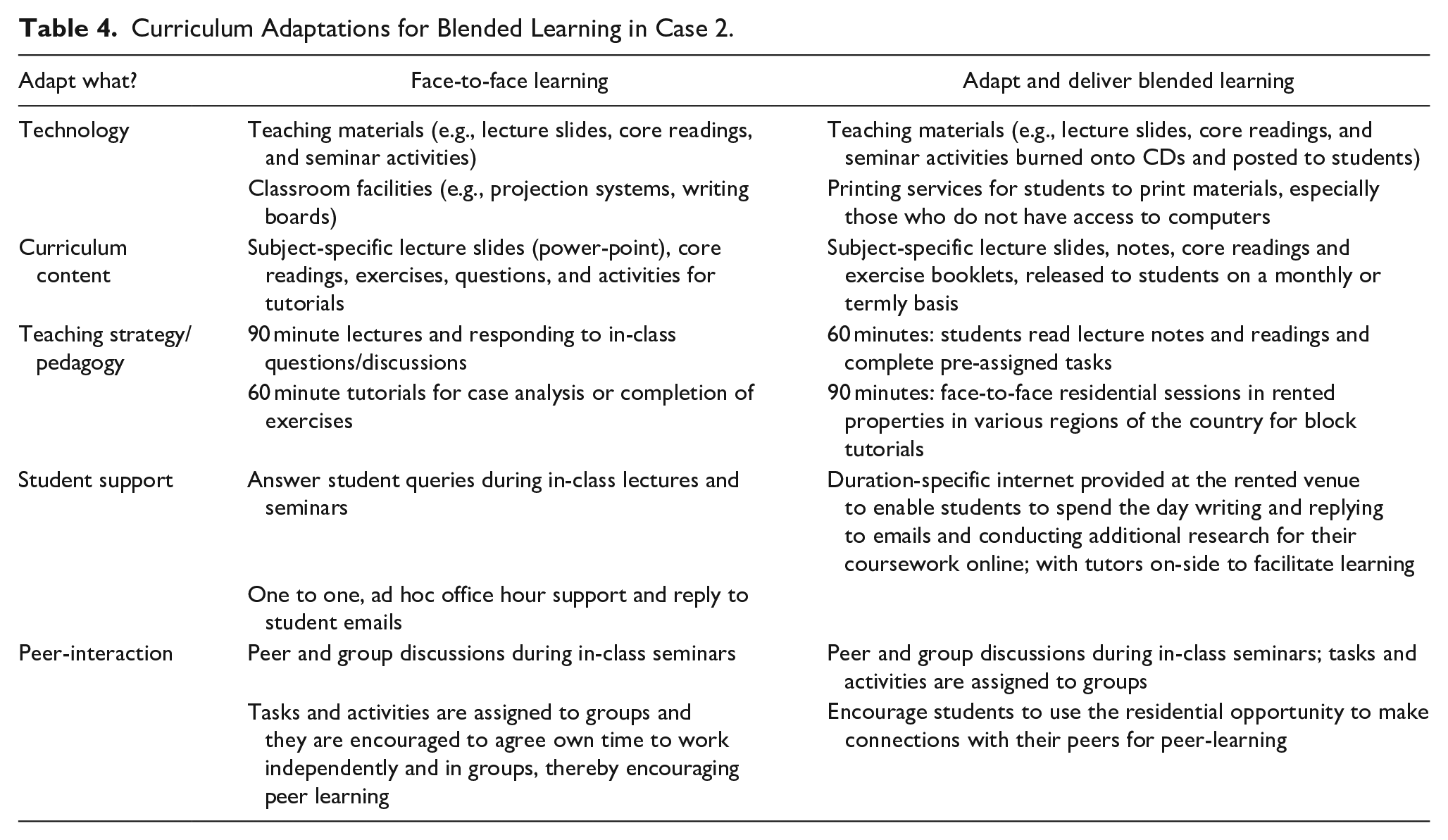
The quotation reflects how SLU negotiated a win-win partnership with the local councils and parents to setting up cost-effective access to venues for residential teaching as well as, what Zhang et al. (2014) would call, the dynamic interactions between key stakeholders necessary for successful curriculum adaptation. Table 4 provides a summary of how the SLU curriculum was adapted and delivered via blended learning (Brower, 2003). Curriculum adaptation included revising and uploading existing course content and lecture notes on to memory sticks/drives. These were then transported to donated, and/or rented, venues in the regions at dates announced through local media. Printing facilities at the venues enabled those students who did not have access to computers to print the materials and take them home for self-study. A lecturer in charge of one of the management courses provided the following account of the teaching strategy, for this type of distance learning: Before the start of a term, we visit the sites to communicate with parents and distribute information leaflets. Students attend 2-3 day block sessions at the venues that are nearest to where they live. I usually have four hours. I introduce the course, run a tutorial to explain course activities that have been prepared and uploaded on the websites for self-study. I visit once or twice per month. Students come in to receive face-to-face feedback or phone-in, especially when preparing for mid-term in-class tests and end of term exams. [Lecturer of a management course, SLU]
In the above account, we start to see a limited blend of face-to-face and online learning emerging from the initial focus on distance learning that was based on printed materials delivered via post for students to study. Through this method of education, hundreds of students received Higher National Diplomas and undergraduate degrees, and they are now working in Sierra Leone and beyond. Based on early successes and further developments in digitization and the internet, SLU began to offer mobile internet access and leverage the resources and expertise of its IT department to train staff and students on the use of the internet for blended learning. This was a challenge for online learning in Africa (Olson et al., 2011). When asked to describe how SLU overcame this challenge, the following quotation was provided: From 2006 we started providing mobile internet. On days when lecturers travel to regional venues for teaching, they set-up a modem to provide internet. Students are made aware of days when the internet is available. They can come in to browse, reply to emails or interact with students and tutors alongside attending tutorials. By 2014, we had five regional campuses and three rented venues where the internet was accessible all day. [Director of Studies in one of the three Faculties at SLU]
The above quotation relates to creating a learning community (Warner, 2016) because the physical venue allowed those students who had limited access to the internet, computers or smart phones, for online interactions, to engage in direct tutor-student, and student-student interactions. Additionally, by providing options for students to study closer to their homes, versus having to travel into Freetown, SLU overcame the resource constraints around living costs and internet connectivity that restricted access to education (Olson et al., 2011). It is worth noting, however, that this type of learning community is different from the online learning community suggested in Warner (2016), where peer interactions were entirely online. While the latter constitutes a higher component of online learning, the former has a limited blend, due to internet and connectivity challenges that resulted in academics relying on email communications and text messaging to deliver the online learning components.
Curriculum Adaptations for Blended Learning in Case 2.
Case Study 3: Management Development for Healthcare Leaders in Africa
This case involved a management development program delivered as a partnership between a US-based business school network and five leading business schools, drawn from English-speaking, French-speaking, and Portuguese-speaking (Lusophone) African countries. During 2010 to 2017, the program was structured as an 8-day, intensive face-to-face training course and a practical project that participants were required to complete prior to, during and following on from the in-person. The students were professionals drawn from hospital administrators, healthcare practitioners, surgeons, pharmacists, nurses, support staff, community healthcare workers and care providers. Over 1,000 health care leaders and managers across 32 African countries completed the program.
In 2017, a strategic decision was made by the US-based funder/sponsor for the program to be adapted for blended learning. The rationale for blended learning was outlined in an internal report by the US-based organization. First, there was an increasing recognition that many healthcare leaders could not travel to the business school campuses in other African countries to take advantage of sponsored training, which limited take-up of the program. Second, the observed shift in healthcare priorities from HIV/AIDS and tuberculosis, previously seen as high priority diseases to a recognition of other types of diseases (e.g., mental health and diabetes) created a need to revise to the healthcare curriculum. This is related to the instructional or curriculum content components of adaptation (Ngoasong & O’Neill, 2014; Zhang et al., 2014). Third, the aspiration of the US-based organization to scale-up access to the program by taking advantage of developments in digital technology in Africa. These reasons are consistent with Kessler’s arguments in that they reflect the strategic purpose of a university (the business schools) when viewed through its (their) management course(s) (Kessler, 2017). The author was hired to act as an online education consultant to support the curriculum adaptation, specifically, the incorporation of online learning components that would be complementary to the existing face-to-face learning program. Adapting the existing in-person training course into blended learning had the potential to increase access across Sub-Saharan Africa, a region where access to healthcare management training was a major challenge (Ngoasong & Groves, 2016). Table 5 provides an illustrative summary of blended learning for a typical course in the program. The program was delivered as blended learning, through the program website and the Moodle platform.
Curriculum Adaptation for Blended Learning in Case 3.
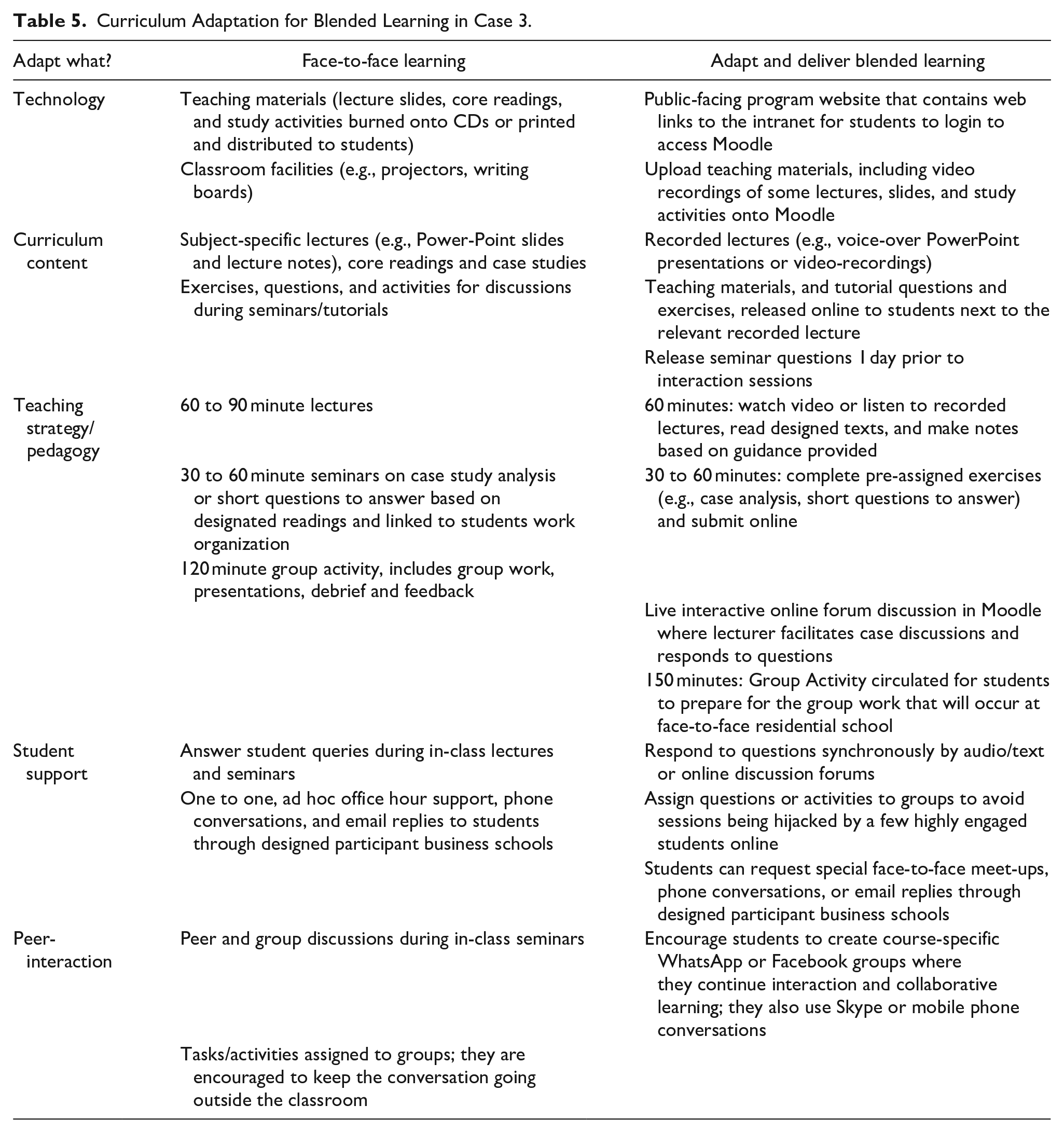
To explain how curriculum adaptation was undertaken within a specific course, the academics that produced and taught the courses within the program were asked during a staff development workshop to describe their existing classroom-based curriculums and teaching strategies. The workshops then interrogated how they could subsequently make the changes necessary to emulate (Brower, 2003) all, or components of, their curriculum in a blended learning environment (Arbaugh, 2014). Their responses reflected the example description below of a 4-hour classroom-based course in social marketing: A large group lecture is followed by a case-based marketing seminar and group activity linked to the workplace projects that students will have been working on. For this, a case study example, sourced from the media is explained to students and they are asked to think of a similar or related scenario in their organisation. The students then work in groups to produce a social marketing plan using a template provided by Faculty, and thereafter group presentations. Finally, a debrief and feedback on all the presentations takes place. [Course Leader for Social Marketing, Southern Africa]
The above quotation typifies face-to-face learning that is to be adapted for blended online. For this case study, the curriculum adaptation then consisted of revising and uploading the curriculum online for students to assimilate, and, also, creating study activities in which the students could interact in online forum discussions, before attending shorter residential schools for classroom-based teaching. The courses were accessible on the website. Those students without reliable access to the internet could request material to be emailed to them from a shared folder. At the 1-day workshop, participants reflected on how best to adapt and deliver the course online. As illustrated in the following quotations, key issues revealed were the limited access to ICTs/internet, limited familiarity with their use and language barriers: Students who work in hospitals and pharmacies in semi-urban and rural areas require IT support to study the online programme. We had three participants from Mauritania who had little ICT skills. They can access a computer for one hour per week at an internet café. We make phone calls to provide them with support and follow this up at the face-to-face residentials. [Regional Director, West Africa] The curriculum contents are prepared in English, the Regional Directors recruit tutors who are proficient in the main languages of the regions and understand local health priorities to run the residential face-to-face schools [Regional Director, Lusophone Africa].
The above factors are critical for emulating face-to-face learning (Kok et al., 2018) and facilitating purposive interactions between tutors and students (Warner, 2016; Zhou, Jindal-Snape et al., 2008). During the partners’ curriculum review meeting, there surfaced a range of issues including overlapping curriculums with redundancies, and problems with leadership and organizational planning, both of which required revisions to ensure local relevance. Alumni healthcare practitioners, who were invited to share their experiences, provided useful examples of healthcare activities that were amenable to online learning. For instance, the financial management course was revised to incorporate an information management software for interactive learning, replacing the paper-based workbooks that were previously completed by students. Thus, both course-level (curriculum content), and student-level (how to learn) (Wladis et al., 2017) dimensions came into play in the curriculum adaptation process.
Toward a Theory of Curriculum Adaptation for Blended Learning
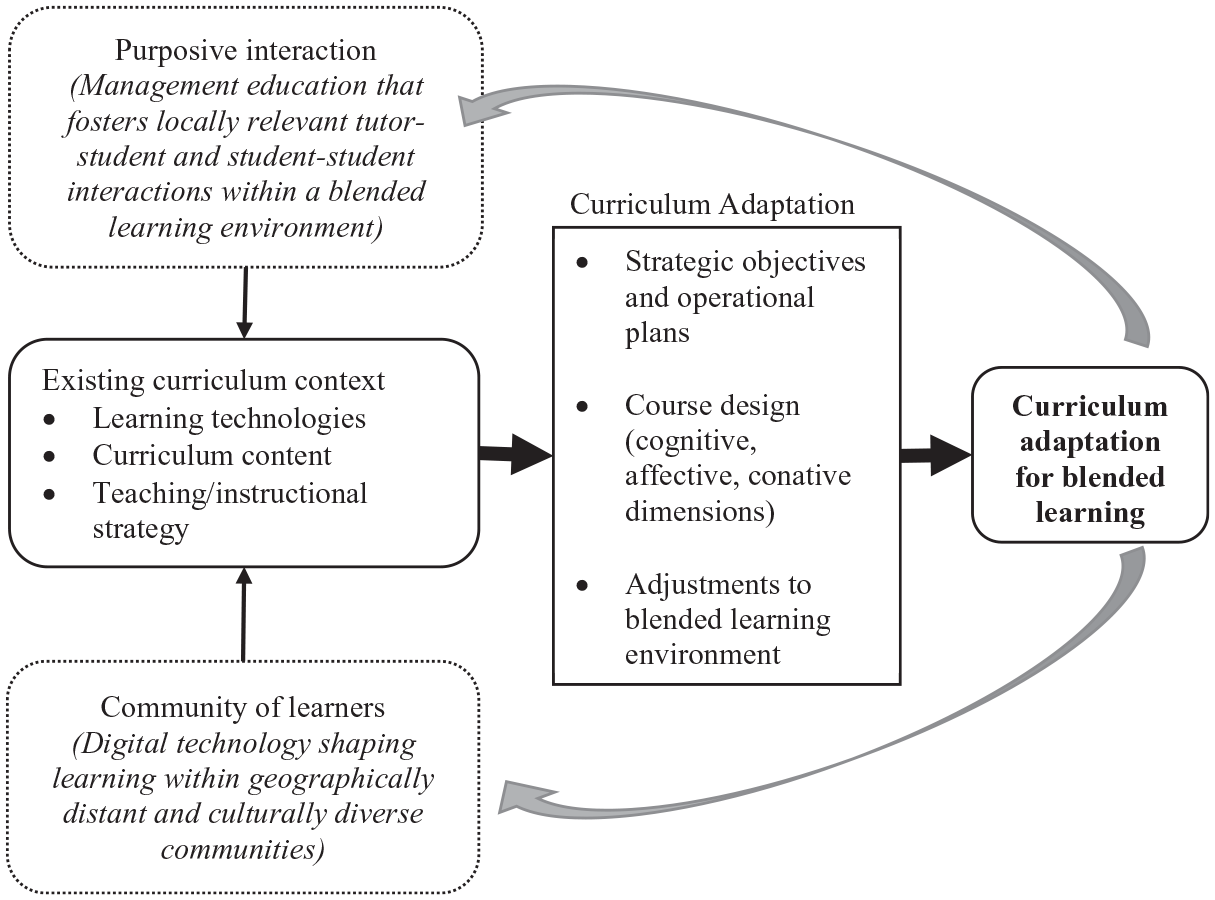
By applying the concept of curriculum adaptation (Debarger et al., 2017; Zhang et al., 2014) to the analysis of how universities in African countries have adapted their existing classroom-based management courses for blended learning, this study has derived a conceptual framework for curriculum adaptation (Figure 2). The figure depicts a framework for adapting the curriculum of an existing, classroom-based course so that it is suitable for a new context in which the same course is delivered in a blended learning environment. The framework contributes to the existing literature by demonstrating the application of curriculum adaptation to blended learning in management education. It recognizes the need to move beyond descriptions of blended designs to theoretically derived understandings of blended learning (Arbaugh, 2014). The framework helps to explain how the blend of classroom-based and online activities that achieves the strategic purpose of a university (Kessler, 2017) and promotes student learning (Arbaugh, 2014) was decided and implemented in each case. In all three case studies, the university authorities, staff, and external consultants started with a review of their existing curriculums and the learning contexts.
A theoretical framework for curriculum adaptation in blended learning environments.
Case 1 demonstrated how relatively small, but purposeful curriculum adaptations, can make a significant difference in student learning. The purpose was strategic, in the sense that the South Africa university’s decision was to adapt a blended learning environment developed in the UK to the South African context. Adjustments were made in the area of student support (instructional strategies) and student engagement to develop a community of learners. For Case 2, the Moodle environment served a limited purpose as a repository for course materials (Ersoy-Babula & Babula, 2018) with face-to-face learning seen as a preferred environment for achieving purposive interaction given the inadequacy of the digital infrastructure. Case 3 demonstrated a more detailed consideration of Cavanaugh’s dilemma when choosing the right blend of online and face to face learning that was fit for purpose and adapted to the local need (Arbaugh, 2014). The business schools chose a learning management system suitable for local relevance, mobilized financial, and staff resources (Hollyhead et al., 2012) and undertook curriculum adaptation to create a new blended learning environment.
In a resource-scarce context of the three case studies, limited internet connectivity and access to personal computers restrict online learning and challenge academics to consider direct SMS messaging, phone calls or even emergency mobile internet to realize limited online learning. This was considered in decided the extent of blended learning that was feasible within the local settings and then identified, and justified, what curriculum adaptations were necessary to deliver it. For case 3, limited access to the internet for students in Sierra Leone led to the authorities setting up emergency mobile internet, but this was used for sending emails and downloading content rather than online forum discussions. The curriculum adaptation was focused on instructional goals, strategies, and students behavioral needs (Zhang et al., 2014). For cases 1 and 2, online tutorials and online discussion forums. Thus, curriculum content, instructional strategies, instructional settings, and student behavioral needs (Zhang et al., 2014) were also adapted and supported provided to enable students and teachers to make to make the transition from a café-to-face to online learning (Debarger et al., 2017).
The framework articulated in this paper advances knowledge about curriculum adaptation, by going beyond the consideration of curriculum adaptation that accounts for diverse learning needs (Zhang et al., 2014) and strategies for improving teaching and learning (Debarger et al., 2017) to include a two way, interlinked relationship between the existing curriculum and the new curriculum adapted for blended learning. Figure 2 depicts a feedback loop from agreed curriculum adaptation for blended learning to considerations about how to achieve purposive interaction and build a community of learners (Warner, 2016) through ongoing review and, thus, to continuous enhancements of the blended learning offering. These are important considerations for ensuring that appropriate support is in place, ongoing, for staff and students to continually facilitate adjustments as they move toward improved blended learning environments. Purposive interaction in the African context can be achieved by ensuring that management education that has developed in partnership with, or has been accredited by, universities in the UK and USA is adapted for local relevance (Nkomo, 2015). Without local relevance, the peer-interaction that can enable students to develop affective skills in working with others (Kessler, 2017), as a community of online learners similar to that which is achieved in a face-to-face context (Warner, 2016), may be limited and/or ineffective.
Discussion and Conclusion
Implications for Management Educators
The findings of this study demonstrate how to adapt an existing classroom-based course to be delivered in a blended learning environment. The study draws on accounts from three case studies involving African universities and elaborates a generalized theoretical framework for curriculum adaptation in the context of blended learning environments (Arbaugh, 2014). This study appears to be the first to consider a resource-scarce context for management education, where the resource-scarce enables or challenges (Ngoasong, 2018) the optimal mix of classroom-based and online learning in a blended learning environment. The context as enabler is the opportunity to use digital technology and the internet to reach geographically distant learners. The challenge is the costs involved, for example, financial, human resources, and logistics. Incorporating cross-case comparisons of partnerships among universities based in Africa, the UK, and USA provides new insights into blended learning in management education in the resource-scarce context of ongoing struggles to adapt western management education for local relevance in Africa (Kok et al., 2018; Nkomo, 2015). The findings suggest an emerging convergence as African universities grappling with the challenges of embracing blended learning through collaboration with western universities.
In choosing an appropriate blend of classroom-based and online learning, curriculum adaptation is not simply about transferring existing curriculum content online. It involves essential changes aimed at achieving cognitive, affective, and conative purposes agreed between a university’s authorities and its management educators (Kessler, 2017) to underpin the approach to blended learning. Studying online can be equivalent to studying in a physical classroom in that both have a requirement to keep to a schedule, produce outputs, and engage with academics (student-faculty interaction) and peers (student-student interaction). Recognizing this equivalence enables staff to clarify the strategic and operational requirements for transition to a desired mix of blended learning and the appropriate learning management system (LMS). The operational requirements include staff development, conversion of existing content, creation of new audio-visual material, and the embedding of digital tools within the chosen LMS, which requires upfront investment in internet connectivity and information technology capabilities. Given the resource-scarce context of Africa, these requirements make collaboration with international partners an important consideration (Kok et al., 2018).
The findings of this study provide useful lessons for course teams seeking to undertake curriculum adaptation for blended learning. It is important to distinguish those components of a course that can effectively be delivered through classroom-based versus online platforms, considering strategic, and operational factors (Kessler, 2017) as well as course-level and student-level factors (Wladis et al., 2017). Our results show digital tools such as Moodle-based discussion forums enable academics to create teaching materials that facilitate problem-based learning because they promote peer-to-peer collaboration, and they motivate and empower learners with authority to create and share knowledge without the need to wait for face-to-face meetings (Hollyhead et al., 2012; Jensen et al., 2020). Educators should be aware that this only works well with appropriate internet connectivity, which is a challenge for African universities.
Though online learning enables cognitive development, such as visual intelligence in thinking, reading, and paying attention to simplified information, there is a risk of partial attention and limited deep learning. This has been recognized as a dilemma to academics (Cavanaugh et al., 2016). To resolve this dilemma, management educators should understand and work with appropriate pedagogies and be prepared to adjust to LMS requirements without compromising the learning needs of students. For the case studies in this article, students gain an internationally recognized UK or US management degree, while remaining located in their African countries. In addition, many students who cannot afford the costs of living and studying in African cities remain located in their semi-urban and rural settings.
It has been argued that Africa-based academics and students are likely to have different assumptions about student and teacher roles. Whereas students from developing countries, such as those in Africa, are perceived as having high respect for teachers and learn by receiving (Nkomo, 2015; Olson et al., 2011), British students are expected to actively critique not just theories but also the application of these to specified or self-selected contexts (Ramanau, 2016). Thus, management educators should guide against potential mismatches between the cultural contexts of students and the management curriculum by emphasizing purposive interaction (Zhou, Jindal-Snape et al., 2008) in the practical activities they incorporate in their courses (Gielnik et al., 2016; Glaub et al., 2014). Moreover, they should re-create the community of learners that would exist in a face-to-face classroom in the online environment. A useful approach is to incorporate learning outcomes about how to work with others in online settings toward this becoming a common goal as a critical skill for graduates in a competitive workplace. This can be translated into team-based, online activities that encourage peer-interaction among students (Olson & Kalinski, 2017). Social media platforms offer useful discussion forums for students to work on assigned tasks (Warner, 2016). Such activities can facilitate the building of a community, compared to simply recording and uploading material online for students to assimilate at their convenience. Tutor-facilitation of the interactions is crucial to enhancing student engagement (Ersoy-Babula & Babula, 2018).
Limitations and Future Research Opportunities
The action research method has been criticized for the inherent difficulties of distinguishing between the researcher’s actions (as a participant) and the research conducted (Allen & Simpson, 2019). This weakness makes it difficult to repeat a specific approach in other settings. In addition, in this study, the use of purposive sampling led to case studies of universities that were already undertaking curriculum adaptation, but this article does not argue that this is a necessary condition for blended learning (a university can create an entirely new course for blended learning). Future research can either repeat this study with a nonprobability sample or use a probability sample to increase the credibility of the findings, and the emergent theoretical framework, beyond the participants and cases studied herein (Bernard, 2012). Quantitative research applying the proposed theoretical framework can provide indicators of the successful transition from classroom-based to blended learning environment.
Finally, this article examines the perspectives of senior university leaders and academics. Though this approach reveals good practices that can inform national or university-specific interventions, the identification of good practice should also consider perceptions of students (Ersoy-Babula & Babula, 2018). Future research can examine the experiences of students before and after curriculum adaptation as complementary to the study findings.
Footnotes
Declaration of Conflicting Interests
The author declared no potential conflicts of interest with respect to the research, authorship, and/or publication of this article.
Funding
The author received no financial support for the research, authorship, and/or publication of this article.
