




Abstract
Background
The Workforce Innovation and Opportunities Act (WIOA) aims to enhance employment outcomes and career advancement for teenagers and young adults with disabilities through pre-employment transition services.
Objective
This study assessed the relationship between pre-employment transition services and employment outcomes, focusing on wages, credential attainment, and co-enrollment in partner employment programs.
Method
Researchers analyzed federally required data submitted by states to the Rehabilitation Service Administration (RSA) to examine the impact of pre-employment transition services on wages, considering variations by demographics, lived experiences, and location.
Results
Pre-employment transition services, credential attainment, and co-enrollment in partner employment programs were associated with increased wages. Wage outcomes varied based on demographics, lived experiences, and state-level differences in service delivery.
Conclusion
Findings highlight the importance of pre-employment transition services, connecting youth to postsecondary credential attainment opportunities, and improving collaboration with partner employment programs. Researchers emphasize the use of data to inform service delivery for diverse youth with varying lived experiences.
Keywords
Introduction
Since the passing of the Workforce Innovation and Opportunities Act (WIOA) in 2014, pre-employment transition services for youth with disabilities continue to draw a fair amount of attention in published research (Taylor, 2021; Wehman et al., 2016). In the WIOA legislation, State Vocational Rehabilitation Agencies (SVRAs) are required to set aside a minimum of 15% of their funding needs on pre-employment transition services to youth with disabilities who are eligible, or potentially eligible, for SVRA services (Harvey & Kemp, 2017). Eleven years have passed since the passage of WIOA, providing a robust timeline to examine this relationship with existing administrative data on participant characteristics, services, and wages after exit.
Pre-Employment Transition Services
Pre-employment transition services refer to a set of federally mandated services and supports designed to assist youth with disabilities 14 to 24 years of age in preparing for, obtaining, and maintaining competitive integrated employment. These services are provided under WIOA and are aimed at facilitating the transition of youth with disabilities from school to post-school activities, including the workforce or higher education (Alsalamah, 2024; Whittenburg et al., 2024). The primary goal of pre-employment transition services is to empower youth with disabilities to make informed decisions about their education and career paths, develop essential job skills, and ultimately achieve meaningful and sustainable employment outcomes (Frentzel et al., 2021; Taylor et al., 2019). WIOA defines employment outcomes through three performance measures, employment rates two and four quarters after exit and median wages.
Pre-employment transition services include five required pre-employment transition services under section 113 of the Rehabilitation Act and 34 C.F.R. 361.48(a):
Job exploration counseling: Helping youth explore various career options based on their interests, skills, and abilities. Work-based learning experiences: Providing opportunities for youth to gain real-world work experience through internships, job shadowing, or work-based learning programs. Counseling on postsecondary education: Assisting youth in exploring and preparing for options such as college, vocational training, or other postsecondary education opportunities. Workplace readiness training: Teaching youth essential skills for employment success, such as resume writing, interview skills, workplace etiquette, and job search strategies. Instruction in self-advocacy: Empowering youth to advocate for themselves in educational and employment settings, including understanding their rights under disability laws such as the Americans with Disabilities Act (ADA).
In arranging and providing pre-employment transition services, there are four transition coordination activities deemed essential in arranging and providing the pre-employment transition services (section 113(d) of the Act and§361.48(a)(4)):
Attending Individualized Education Program (IEP) meetings, when invited. Working with the local workforce development boards, one-stop centers, and employers to develop work opportunities for youth with disabilities. Working with schools to coordinate and ensure the provision of pre-employment transition services. Attending person-centered planning meetings for youth with disabilities receiving services under Title XIX of the Social Security Act, when invited.
In addition to the five required pre-employment transition services and pre-employment transition services transition coordination activities, pre-employment transition services may also include instruction on independent living skills and other supports necessary for successful employment (Rowe et al., 2024; Wehman et al., 2024). By providing early and comprehensive support, pre-employment transition services help to address barriers to competitive and integrated employment, promote greater independence, and promote self-sufficiency among youth with disabilities (Carlson et al., 2020; McCormick et al., 2021).
It is important to note that pre-employment transition services are coordinated through state vocational rehabilitation agencies (SVRAs), local educational agencies (LEAs), and other community-based organizations (Carter et al., 2021; Miller et al., 2018; Patnaik & Honeycutt, 2024). Eligibility for pre-employment transition services typically depends on a variety of factors that include age, disability status, and involvement in the educational system (Carlson et al., 2020; Cheatham & Randolph, 2022). Schools, state vocational rehabilitation agencies, and other service providers collaborate to ensure that youth with disabilities receive the support they need to successfully transition to adulthood and the workforce (Challenger et al., 2025; Taylor et al., 2019).
Individual Characteristics and Lived Experiences
Dealing with the influences and challenges related to employment that youth with disabilities encounter can significantly affect both their job prospects and their eventual outcomes (Almalky, 2020; Wood et al., 2018). Youth with disabilities might encounter difficulties stemming from elevated healthcare expenses, specialized equipment requirements, and restricted access to job opportunities. In contrast to their non-disabled peers, they often necessitate extra support services and accommodations, placing strain on both their own financial resources and those of their families (Krahn et al., 2015; Pilapil et al., 2017). Some youth with disabilities may also experience deficits in basic skills (e.g., literacy, numeracy, communication) that affect their ability to become employed. To better match youth's skills to local job opportunities, and to better address potential deficits and preparing youth for the workforce, it is essential to look at SVRA services that provide access to educational resources and support services that are tailored to disability-specific needs (Cai & Richdale, 2016; Noel et al., 2017).
Youth with disabilities are also more likely to encounter other life experiences that can further affect employment outcomes. For example, youth living in poverty are more likely to have a disability than youth in families with higher income (Young & Crankshaw, 2021). Youth living in poverty have less resources and opportunities to access education, training, and networks that lead to better employment opportunities and wages. Another example of a life experience that may influence employment outcomes is incarceration, and incarcerated youth are more likely to have a disability (Hester et al., 2024; Mallett et al., 2023; Snydman, 2022). Youth with disabilities who have a history of involvement with the criminal justice system may face stigma and discrimination from employers, limiting their job prospects and long-term employment (Raphael, 2023; Sveinsdottir & Bond, 2017). Since 2014, mitigating these challenges to facilitate successful reentry into the workforce has been a priority for youth with disabilities who have criminal records (Belkin, 2020; Hector et al., 2018). Research also suggests that skills training addressing cultural barriers (e.g., asking for help, responding to feedback, requesting accommodations, negotiating conflicts, ability to present one's qualifications) and self-advocacy skills are correlated with successful employment outcomes (Iwanaga et al., 2021; Lu et al., 2021, 2023).
Additional factors influencing employment outcomes for youth with disabilities encompass their living circumstances, such as residing in foster care or experiencing homelessness (Baker Collins et al., 2018). These individuals may encounter extra hurdles due to disruptions in their education, unstable housing situations, and restricted access to support systems (Harwick et al., 2020; Ocasio, 2022). Tailored interventions like mentorship initiatives, educational advocacy efforts, and transitions planning are often helpful to assist them in transitioning into adulthood and securing employment (Hall et al., 2020). Other living situations may affect youth with disabilities. For example, being a young single-parent adds more challenges in juggling household responsibilities with their educational and employment pursuits. Migrant seasonal farmwork is another living situation that may influence employment for youth with disabilities. Youth with disabilities who are or part of family with migrant seasonal farmworkers face unique challenges due to language barriers and the physical demands of the work (Rivera-Singletary & Cranston-Gingras, 2020).
Addressing the support needs for youth with disabilities with different characteristics and lived experiences requires a holistic approach that includes education, vocational training, job placement services, access to accommodations and support services, and advocacy for policies that promote inclusion and accessibility in the workforce. By addressing these challenges comprehensively, youth with disabilities have a greater likelihood to achieve their full potential and participate fully in the workforce and society (Pérez & Zarate, 2017; Rivera-Singletary & Cranston-Gingras, 2020).
Services
SVRAs and other community-based organizations have provided employment services to enhance the educational obtainment and work performance of youth with disabilities (Tansey et al., 2023). Research can better inform what employment services lead to successful, long-term employment for youth with disabilities. To enhance the employability of individuals with disabilities, vocational rehabilitation services have offered a wide range of services for youth with disabilities to utilize including career counseling, skills assessment, job training, and placement assistance (Morningstar et al., 2017).
Purpose
The aim of this study is to explore what variables predict wages after youth with disabilities complete SVRA services. It underscores the significance of linking youth with disabilities to quality employment opportunities and pathways for career advancement.
Research Question
For transition age youth (ages 14 to 24 at application), what individual characteristics, training, and pre-employment transition services predict median wages two quarters after exiting VR in program year (PY) 2021?
Method
Participants
Data were collected through the Rehabilitation Services Administration (RSA)-911 quarterly reports (https://rsa.ed.gov/performance/rsa-911-policy-directive). Researchers merged program data into a national data set, and then selected youth participants who were 14 to 24 years old and exited in PY2021. This PY was selected to ensure sufficient time to include wages two quarters after exit, accounting for at least two quarters after exit plus the typical six-month data lag found in most state unemployment insurance (UI) wage files. The sample included 153,586 youth who had data on demographics, individual characteristics, disability type, as well as an indicator of the presence or absence of credential attainments and/or pre-employment transition services.
Predictor Variables
Demographics
Age, gender, and race/ethnicity data were pulled from the RSA-911 dataset. Age at application was calculated based on the application date and birthdate. Gender was coded as “1” for individuals who reported female as their gender (39%) and “0” for individuals who reported their gender male or did not report gender. Participants were coded as “1” if they identified with a specific race or ethnicity, and “0” if they did not. Participants could have been coded with a “1” to multiple race categories if they identified as multi-race. Individuals could self-report as many race and ethnicity options that they identified with. Race and ethnicity categories included in this study were American Indian (2%), Asian (2%), Black (22%), Hispanic (19%), Native Hawaiian Pacific Islander (1%), and White (74%).
Disability
With the focus on transition age youth, disability types were chosen based on disability categories that are identified in both SVRAs and schools. Disability is identified differently across the two different programs, as schools focus on disability that affects education performance, whereas SVRAs focus on disability that may affect achieving employment goals. Evaluators from NTACT:C and VRTAC-QE identified disabilities categories in the RSA-911 dataset that would be of most interest for both schools and SVRAs.
Some disability categories were pulled from the RSA-911 primary disability code type, including: physical (combing mobility orthopedic/neurological disabilities, manipulation/dexterity orthopedic/neurological disabilities, both mobility and manipulation/dexterity orthopedic/neurological disabilities, other orthopedic disabilities, respiratory disabilities, general physical debilitation, and other physical disabilities into a single category), sensory (combing blindness, other visual disabilities, deafness primary communication visual, deafness primary communication auditory, hearing low primary communication visual, hearing loss primary communication auditory, other hearing disabilities, and deaf-blindness into a single category), and psychological (combining psychosocial and other mental disabilities in a single category). The other disability categories were pulled from the primary disability code source, including attention-deficit hyperactivity disorder (ADHD), autism, intellectual, and learning disabilities. Based on all included disability categorizations, youth in this sample had the following disabilities: psychological (27%), learning (21%), ADHD (11%), autism (17%), intellectual (12%), physical (8%), and sensory (5%). Disability variables were coded as “1” if they met the disability specific criteria specified above and “0” if the criteria were not met.
Individual Characteristics and Lived Experiences
In addition to the demographic information, researchers also pulled a variety of individual characteristics from the RSA-911 dataset. Youth in this sample were reported to be low income (32%), basic skills deficit (27%), English language learner (8%), cultural barrier (3%), ex-offenders (2%), foster care youth (2%), single parents (2%), homeless (1%), and migrant seasonal farm workers (0.3%). In addition, youth were also enrolled in the WIOA Title I Youth program (2%) and in Job Corps (0.3%). Variables were coded as “1” if they met the RSA-911 definition and “0” if they did not meet the definition or if the state reported this as unknown (https://rsa.ed.gov/performance/rsa-911-policy-directive).
Based on the RSA-911 case service report definition, an individual is considered low income if they received public assistance (e.g., SNAP, TANF, SSI, other) in the last six months, have a family income lower than federal poverty line or 70% of the lower living standard income level, or is a youth who is eligible for free or reduced school lunch. An individual is considered to have a basic skills deficit if they have limited ability in speaking, reading, writing, or understanding. Youth were categorized as an English language learner if it was determined they are unable to compute and solve problems, or read, write, or speak English at a level necessary to function on the job. A cultural barrier was identified when an individual perceived themselves as possessing attitudes, beliefs, customs, or practices that influence their way of thinking, acting, or working that may influence their employment. Ex-offenders were identified if youth had either been subject to any stage of the criminal justice process for committing a status offense or delinquent act or required assistance in overcoming barriers to employment resulting from a record of arrest or conviction. Foster care youth were in foster care at the time they received SVRA services or aged out of the foster care system. Youth were identified as a single parent if they had the primary responsibility for one or more dependent children under age 18 (or were pregnant) and were not married or were separated. Homelessness was identified if youth lacked a regular residence, had a regular residence that is not designed as a residence (e.g., car, park, abandoned building, bus or train station, airport, camping ground), or were a runaway youth. Migrant seasonal farm workers were identified when the youth or their parents traveled to do farmwork and were unable to return to their place of residence within the same day.
Credential Attainment
One focus for transition age youth is to connect them to postsecondary training opportunities, which can lead to higher paying jobs (Mazzotti et al., 2021). For this reason, the data model included RSA-911 recorded credential attainment date that occurred after the youth's application to the SVRA. Youth had a variety of credential attainments identified, including associate degrees (2%), bachelor's degrees (3%), masters (0.3%), vocational technical license (0.4%), vocational technical certificate (2%), and other credentials (1%).
Pre-Employment Transition Services
Finally, the data model aimed to determine if youth who received pre-employment transition services had improved employment outcomes, specifically higher wages. Youth who had a pre-employment transition service start date in the RSA-911 dataset were identified to have pre-employment transition services with a code of “1”. If they didn't have a pre-employment transition service start date, they received a code of “0”. In this sample of youth (14 to 24 years old) who exited in PY2021, 39% of youth had pre-employment transition services.
Outcome Variable
Employment Wages
Employment wages were based on wages two quarters after exit reported by the SVRA and reported as part of the RSA-911 dataset. Wages for this analysis included total wages for a single quarter two quarters after the participant's VR case closes. Often SVRAs collect this information both through a case management system and a data sharing agreement with their state unemployment insurance (UI) agency and the state wage interchange system (SWIS; for UI wages recorded in other states). State UI agencies receive quarterly wages for employees from employers who participate in the state UI program. SVRAs are required to report wages two quarters after exit as part of federal mandatory performance measures (https://rsa.ed.gov/wioa-resources/wioa-annual-reports).
Statistical Analysis
National VR Data Linear Regression Analysis
IBM SPSS Statistics (Version 29) was used for data analysis. A stepwise linear regression analysis was used to examine the relationship between the predictor variables and wages two quarters after exit. Researchers tested for statistical significance and variance accounted for with each step of the model. Step one included demographic variables (age, gender, and race/ethnicity). Step two included the demographic variables and individual characteristics (basic skills deficit, low-income status, cultural barriers, English language learner, homeless, foster care, ex-offender, single parent, migrant/seasonal farm worker, WIOA Title I services, and Job Corp). Step three included demographics, individual characteristics, and disability types (ADHD, psychological, autism, intellectual, learning, and physical). Step four included demographics, individual characteristics, disability type, and credential attainment (associates, bachelors, masters, vocational technical license, vocational technical certification, and other credentials). Step five included demographics, individual characteristics, disability type, credential attainment, and pre-employment transition services. All variables were included in the final model because each step increased both F statistic of the regression model and the variance accounted for as determined by R squared.
State VR Program Data Linear Regression Analyses
The final linear regression model was then repeated for each state. Researchers also examined consistencies and differences in coefficients to determine if trends were consistent or varied across states.
Results
National VR Data Regression Analysis
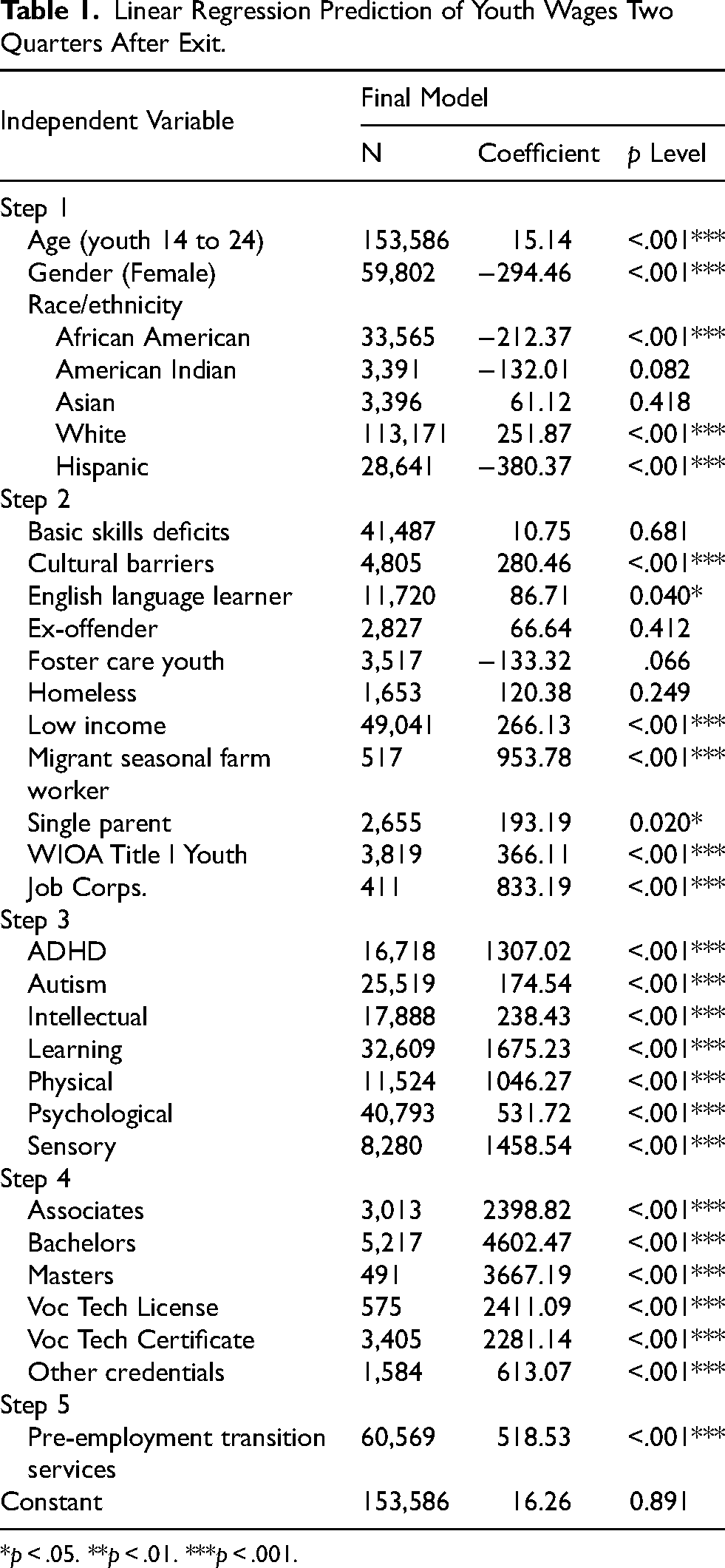
Step one of the linear model only included demographics, had an F(8, N = 153,586) = 85.678, p < .001, and R2 was .004. Step two of the linear model included demographics and individual characteristics, had an F(19, N = 153,586) = 65.657, p < .001, with an R2 of .008. Step three of the linear model included demographics, individual characteristics, and disability type, had an F(26, N = 153,586) = 197.360, p < .001, with an R2 of .032. Step four of the linear model included demographics, individual characteristics, disability type, and credential attainment, had an F(32, N = 153,586) = 475.351, p < .001, and an R2 of .090. F values and R2 values had the largest increases when credential attainments were added to the model. The final step of full linear model added pre-employment transition services as a predictive variable and included demographics, individual characteristics, disability type and credential attainment. The final linear model was found to be statistically significant with an F(33, N = 153,586) = 475.508, p < .001, and the R2 was computed to be .093, explaining almost 10% of the variance.
Demographics
Age was positively related to youth wages two quarters after exit. For each additional year of age at enrollment, the youth's predicted earnings two quarters after exit increased on average by $54.14. Female youth had lower predicted earnings two quarters after exit, $294.46 less than male youth. Wage two quarters after exit also varied by race and ethnicity, with White youth earning an average of $251.87 more in quarterly earnings, Black youth earning an average of $212.37 less in quarterly earnings, and Hispanic youth earning $380.37 less in quarterly earnings compared to youth with other race and ethnicities (see Table 1).
Linear Regression Prediction of Youth Wages Two Quarters After Exit.
*p < .05. **p < .01. ***p < .001.
Individual Characteristics and Lived Experiences
The relationship between individual characteristics and youth wages varied. Reported basic skills deficits, ex-offender status, being homeless, and being a foster care youth was not statistically significantly related to differences in wages two quarters after exit. In contrast, higher average wages two quarters after exit were observed for youth who identified as migrant seasonal/farm workers (averaging $953.78 more in quarterly earnings), participated in Job Corp (averaging $833.19 more in quarterly earnings), co-enrolled in WIOA Title I Youth program (averaging $366.11 more in quarterly earnings), identified cultural barriers (averaging $280.46 more in quarterly earnings), low-income (averaging $266.13 more in quarterly earnings), single parents (averaging $193.19 more in quarterly earnings), and English language learners (averaging $86.71 more in quarterly earnings).
Disability
All disability types included in the model were associated with higher quarterly wages two quarters after exit. To put these predicted higher wages in perspective, it is important to understand the model's constant. The model's constant is $16.26 and not statistically significant (p = 0.891), essentially indicating the predicted wages two quarters after exit starts at $0. This may help explain the statistically significant coefficient amounts for each disability type included in the model, indicating an average starting quarterly wage for each disability type that varies. Average quarterly wages two quarters after exit was $174.54 for youth with autism, $238.43 for youth with intellectual disabilities, $531.72 for youth with psychological disabilities, $1,046.27 for youth with physical disabilities, $1,307.02 for youth with ADHD, $1,498.82 for youth with sensory disabilities, and $1,675.23 for youth with learning disabilities.
Credential Attainment
Highest wages two quarters after exit were observed when youth received a credential after applying for VR services. Youth who earned an associate degree averaged $2,398.82 more in quarterly wages two quarters after they exited from VR. Youth who earned a bachelor's degree had even higher quarterly wages, averaging $4,602.47 more in quarterly earnings two quarters after exit. Increases were also found for other credentials averaging an increase of $3,667.19 for youth obtaining a master's degree, $2,411.09 for youth obtaining a vocational technical license, $2,281.14 for youth obtaining a vocational technical certificate, and $613.07 for youth obtaining other credentials.
Pre-Employment Transition Services
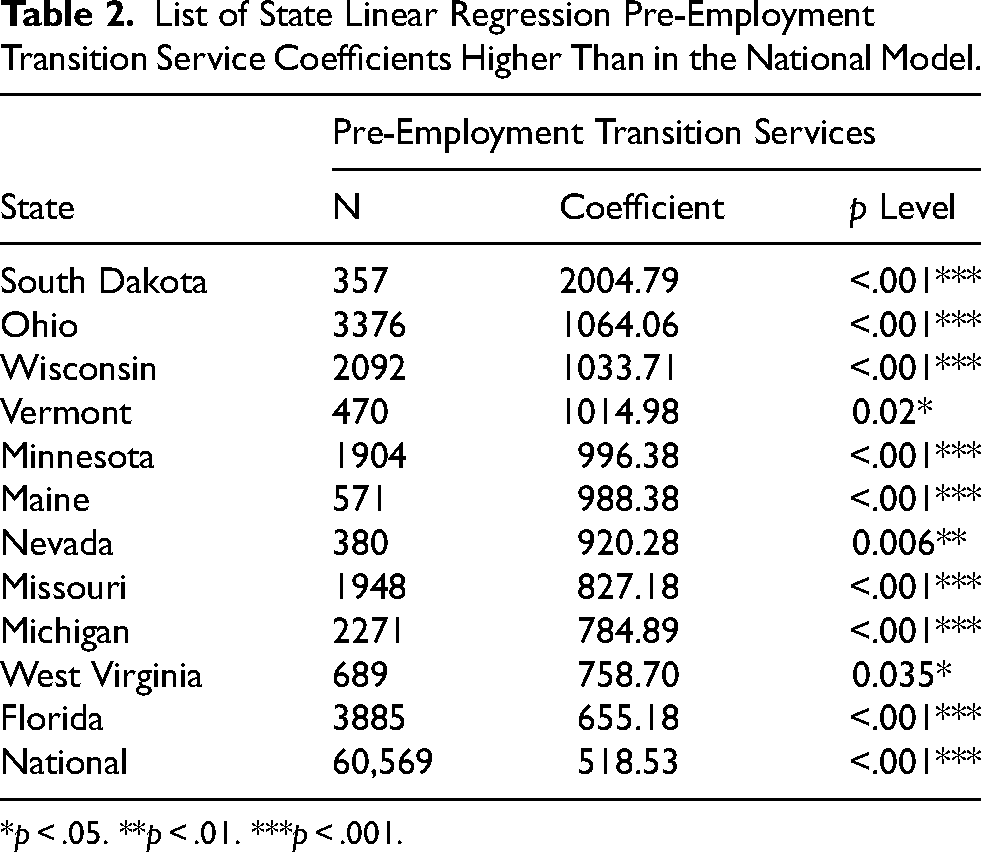
Youth with pre-employment transition services averaged $518.53 more in quarterly wages two quarters after exit than youth who did not receive pre-employment transition services. While this increase was statistically significant in the national model, the relationship between pre-employment services and wages did vary by state. Looking at the state regression models, 21 of the state models included a positive statistically significant (p < .05) association between pre-employment services and wages. Youth with pre-employment transition services had higher predicted wages two quarters after exit than youth who did not receive pre-employment transition services. Eleven of these 21 state models had quarterly wage coefficients higher than predicted in the national model (see Table 2). In contrast, only one state model had statistically significantly (p < .05) lower predicted wages for youth who received pre-employment transition services.
List of State Linear Regression Pre-Employment Transition Service Coefficients Higher Than in the National Model.
*p < .05. **p < .01. ***p < .001.
Discussion
In this study, the authors sought to identify key predictors affecting employment for youth with disabilities receiving public vocational rehabilitation pre-employment transition services in Program Year 2021. Through the analysis of the national RSA-911 database, linear regression models were applied to explore the influence of the five predictor variables of student demographics, disability type, individual characteristics, credential attainment, and pre-employment transition services on employment wages two quarters post service exit. Through linear regression, the predictor variables were validated and suggested variables had a significant influence upon employment wages earned for transition age youth two quarters post exit. Credential attainment was found to make the largest contribution to the model followed by disability type. Several study findings deserve highlighting and further exploration.
Credential attainment was statistically significant in predicting higher employment wages. Credential attainment has been reported to be related to increased employment opportunities and higher earnings (Baird et al., 2021; Minaya & Scott-Clayton, 2020; Stevens et al., 2019). Having a credential can inform employers that youth have specific skills and are qualified for the job. Youth with higher levels of credential attainment are more likely to increase earnings (Mazzotti et al., 2021). This finding highlights the importance of ensuring that youth with disabilities have access to inclusive educational opportunities and resources that support their academic and training success.
In looking at types of credentials, youth averaged over $2,200 quarterly earnings with an associate's degree or vocational technical license or certificate. An increase in earnings was even higher for youth who obtained a bachelor's (over $4,600) or master's (over $3,600) degree. Youth with a bachelor's degree had higher quarterly earnings than students who earned a master's degree despite the increased requirements for a master's degree. More youth obtained their bachelor's degree than master's degree, which may be due to the younger age of this cohort, or maybe because the bachelor's degree was more directly related to the youth's career goals in their Individual Plan for Employment (IPE). Future research is needed to explore the interaction between degree level and major to better understand this difference.
Disability type was also a statistically significant predictor of higher earnings two quarters after exit. Youth with learning disabilities achieved the highest quarterly earnings ($1,675.23) while youth with autism had the lowest ($174.54). Notably, youth with learning disabilities represented 21% of the sample and youth with autism represented 17% of the sample. These results are consistent with past research on the variance of employment rates and hours worked across disability groups. Smith et al. (2021) found that among transition age youth receiving special education and pre-employment transition services, compared to youth with other disabilities, youth with a specific learning disability were 57% more likely to have been previously employed whereas youth with autism are 47% less likely to have been employed. Looking at current employment, they found youth with a specific learning disability, compared to youth with other disabilities, are 82% more likely to be currently employed. Regarding hours worked, youth with autism worked fewer hours per month compared to youth with other disabilities (Smith et al., 2021).
The discrepancy in earnings between these two populations highlights the need for additional supports for individuals that have disabilities that are more likely to affect education and employment. Individuals with more high-severity disability, as compared to their peers reporting low-severity disability, were reported as less likely to be a high school graduate, enrolled in postsecondary education, and/or working (Cheatham & Randolph, 2022). The current study results support the significant need for robust services and resources to adequately identify and support youth with specific types of disabilities (e.g., autism) through public vocational rehabilitation programs. Further research is needed to explore the type of service programs provided to youth with disabilities (e.g., Individualized Education Program, 504 plan) the source of service provision (e.g., rehabilitation counselor, employment service provider), the training venue (e.g., academic training/textbook, hands-on/vocational training program), industry sector (e.g., self-employment, agriculture, goods-producing, service producing), and exploring those state agencies that have been successful with the provision of pre-employment transition services for youth with a variety of disabilities, including learning, autism, physical, and psychological disabilities.
In the current study, pre-employment transition services emerged as a strong predictor of increased earnings. Transition age youth who received these services earned a national average of $518.53 more in quarterly wages two quarters after exit than youth who did not receive pre-employment transition services. This finding reinforces previous research (e.g., Carlson et al., 2020; Carter et al., 2021), that suggests that pre-employment transition services are an important component in developing career and earning potential among youth with disabilities. The pre-employment transition services of job exploration counseling, instruction in self-advocacy, workplace readiness training, and work-based learning experiences were reported as significantly associated with employment outcomes (Taylor et al., 2024). Additionally, Neubert et al. (2018) reported vocational rehabilitation counselors have rated all pre-employment transition services as important, but their rating of preparedness to provide pre-employment transition services was reported significantly lower. Common barriers reported by vocational rehabilitation counselors included case management challenges, reporting a lack of employment opportunities in the geographical area, and lack of transportation. In the provision of pre-employment transition services, vocational rehabilitation providers and lead education agencies are both key partners throughout the transition process.
Previous research has focused on identifying key components of pre-employment transition services. In one study, researchers received feedback from 253 parents of transition age youth with disabilities, and more than 80% agreed that the development of independent living skills, job training, and meeting with mentors would benefit their child. However, they reported that a major barrier was the opportunity for employment in their community (Schutz et al., 2022). Further, Dalun et al. (2023) reported challenges to providing pre-employment transition services, including collaborations and communication between SVRA counselors and lead education agencies, limited capacities for resources, family capacities and concerns of losing social security supplemental security income (SSI), and the need for additional training and education for all stakeholders. Despite these challenges research has shown that paid work experiences while in high school, as well as career and technical education are strong predictors of postsecondary employment outcomes (Mazzotti et al., 2021). Therefore, it stands to reason, that using limited resources and training for pre-employment transition services in these areas, might lead to higher wages for transition age youth.
Although nationally pre-employment transition services were related to higher earnings, this finding varied by state. In 2022, Taylor and colleagues reported the variance in the delivery of pre-employment transition services by states may be related to how services are defined by a state (e.g., specific skills offered, settings and environments, formal partnerships, strategies for student engagement with community stake holders) (Taylor et al., 2022). The state variation in wages two quarters post exit among youth receiving pre-employment transition services provides further opportunity to research the service models, policies, and collaboration among systems and partners in these states to better understand what works well and share this information for replication elsewhere. Further research could also study if wage amounts vary across each of the five pre-employment transition services (job exploration counseling, instruction in self-advocacy, counseling on postsecondary education opportunities, workplace readiness training, work-based learning experiences) and how the states define these services. State systems and vocational training programs are not universally designed and rather vary by state program. While this often reflects the nuances and cultural considerations of individual states, it may also limit the consistency of impact.
Gender, race, ethnicity, and age were significant predictors of earnings among youth with disabilities. Specifically, earnings increased modestly with each year in age; males earned more than females, and those identifying as white earned more than African American or Hispanic youth. Past research has found young men were more likely to be competitively employed than young women (Battle et al., 2024). In contrast, female transition age youth, compared to male transition age youth, were reported to be more likely to receive services related to higher education rather than employment (Friedman et al., 2023). Regarding race and ethnicity, non-Hispanic youth, compared to Hispanic youth, were 31% more likely to successfully enter competitive employment (Battle et al., 2024). Researchers found the opposite among transition age youth with visual impairments and blindness, reporting that transition age youth of Hispanic origin, compared to white transition age youth, were more likely to achieve competitive employment (Cimera et al., 2015). When looking at the employment outcomes comparing white and black youth, researchers found white youth receiving SVRA services, compared to Black youth receiving VRS, were 34% more likely to successfully enter competitive employment. (Battle et al., 2024).
These demographic disparities reported in the current and past studies are not unique to individuals with disabilities and reflect long-standing patterns within society at large (BLS, 2023; Gould & Kandra, 2022; U.S. Census Bureau, 2020). The Vocational Rehabilitation Technical Assistance Centers (VRTACs) serve as resources to enhance the delivery of vocational rehabilitation services and could be utilized to reduce these disparities. The VRTAC:QE surveyed rehabilitation professionals, representing a total of 229 state vocational rehabilitation services (e.g., general, blind, combined) and American Indian vocational rehabilitation services. Professionals rated African American communities and Hispanic/Lantin(x) communities as focus groups to improve outreach, technical assistance, and training to increase capacity to achieve quality employment outcomes for diverse consumers (Tansey et al., 2023).
The current study findings also suggest that age has a positive correlation with wages earned two quarters after exit. This may be because older youth are more likely to have completed high school. Among transition age youth with intellectual disabilities, those with a high school diploma or higher, compared to those who completed less than high school, were more likely to enter competitive employment (Battle et al., 2024). The U.S. Bureau of Labor Statistics (2024) reported lower median weekly earnings employed fulltime among workers 16 to 19 years of age, compared to workers 20 to 24 years of age. Even though age is correlated with higher wages, it is important to note that paid work experiences in high school are strong predictors of improved employment outcomes after high school (Mazzotti et al., 2021). Researchers have found that having a job between the ages of 16 and 18 years of age has been correlated with having higher job quality in adulthood and higher wages at age 23 (Ross et al., 2018).
In looking at participant characteristics, youth who had cultural barriers, were low income, single parents, English language learners, and those who were migrant workers, had significantly higher wages. These findings deserve further exploration to understand the variance in wages. Research suggests the students with different cultural backgrounds, compared to other students with disabilities, may come from disadvantaged socioeconomic backgrounds, have lower academic achievement (Liu et al., 2017; Trainor et al., 2019). These factors may increase the need for students with disabilities to find a job and work more hours and/or find a job with higher income, so they can better help support their family. It is important to note the coefficients for these variables varied with English language learners averaging $86.71 more in quarterly earnings, youth with low-income $266.13 more in quarterly earnings, youth who are single parents earning on average $193.19 more in quarterly earnings, youth with identified cultural barriers $280.46 more in quarterly earnings, and migrant seasonal farm workers with $953.78 more in quarterly earnings. The lower earning gains may not have practical significant, but the higher quarterly earning increases, might be worth further exploration.
After observing higher wages for migrant seasonal farm workers, researchers explored if these higher wages were observed in specific states. Follow-up analysis revealed four states had more than five youth participants who identified as migrant seasonal farm workers and had statistically significant higher wages two quarters after exit compared to student participants in their state who were not migrant seasonal farmworkers. These states were Texas (n = 86; average higher wages = $1,969.04); New York (n = 61; average higher wages = $951.96); Florida (n = 23; average higher wages = $1,564.89); and Iowa (n = 19; average higher wages = $2,026.74). More research is needed to better understand these higher observed wages. A focus on these states might help better understand these findings.
Finally
Policy and Practice Implications
The findings from this study have several important implications for policy and practice. First, given the strong association between credential attainment and earnings, policymakers should prioritize inclusive education and training policies that promote the success of youth with disabilities in pursuing and achieving their career goals. This includes expanding awareness and promoting co-enrollment across WIOA employment and training programs for youth with disabilities in SVRA. Additionally, attention to ensuring that SVRA programs have the strategies, tools, and supports needed to effectively identify, engage, and serve marginalized and under-represented populations in achieving significantly increased earnings comparable to other populations is key.
A value of this study is using the results to bring research to practice. The study results suggest that transition age youth receiving credential attainment and pre-employment transition services earned higher wages two quarters post exit compared to transition age youth without these experiences, varying based on disability type, gender, race, and ethnicity. Paramount to the provision of pre-employment transition services is securing well-defined pre-employment transition services, collaborations among SVRA and communities (e.g., local education agencies, community rehabilitation providers, parents). Because of the effect of gender, race, ethnicity, and disability on wages earned, continuous cultural competency training for vocational rehabilitation professionals is warranted to enhance equity of service provision and better meet the needs of transition age youth. Study findings could be presented to the Council of State Administrators of Vocational Rehabilitation Services, regional and national professional conferences, and to vocational rehabilitation counselors, community rehabilitation providers, and lead education agencies. To enhance pre-employment transition service awareness, the presentations could involve active engagement of professionals to review the key findings from which to share successes and exploration of barriers to pre-employment transition services from which to implement pre-employment transition services policy and practice changes. Future research could examine the specific pre-employment transition services that transition-age youth receive, as well as the barriers they face. This research should consider different youth demographics-such as disability type, gender, race/ethnicity, age, and SSI status. It could also explore how being in states under order of selection affects outcomes, the role of parent engagement, and the current state of community collaborations related to pre-employment transition services.
Limitations and Future Research Directions
In this study, although several significant findings were reported, there are several limitations. The study was based on existing data collected through the RSA-911 quarterly reports addressing youth 14 to 24 years of age who exited in PY2021. Analysis was restricted to the data elements states are required to report to RSA, and data quality may vary by state. This said, the RSA-911 reports are well-respected and provide opportunity for research addressing the relationships among data elements by and across states and U.S. territories. When utilizing the RSA-911 data, the user must consider that pre-employment transition services may be defined similarly yet also differently among states and that pre-employment transition services provision may be dependent upon available resources (e.g., time, caseload size, vendors, etc.), order of selection, and geographic availability of employment opportunities for transition age youth. This difference is likely why the pre-employment transition service coefficients varied in the state specific models. Future research should further explore why some states have higher predicted wages after pre-employment transition services.
The variance across SVRAs probably helps to explain the limited variance accounted for in this study. Other factors likely also influenced the variance in wages. For example, youth exited in between July 2021 and June 2022. COVID could have influenced youth wages, especially for youth who exited earlier in this program year. Service delivery across different groups could also vary, as might access to training services that support credential attainment. Follow-up research should further explore what additional factors might enhance the predictability of wages after exit.
Conclusion
In conclusion, this study contributes to the growing body of literature by identifying credential attainment, receipt of pre-employment transition services, WIOA co-enrollment, and disability type as key predictors of earnings among youth with disabilities. These findings emphasize the importance of ensuring that SVRA personnel have adequate knowledge and access to evidence-based practices specific to supporting individuals with varying disability types in identifying and pursuing career goals. While vocational rehabilitation services remain an important component of employment supports, further research is needed to optimize earnings outcomes in combination with other WIOA resources and programs. By addressing these factors, policymakers and practitioners can work to create more inclusive and supportive career pathways opportunities for all youth with disabilities and reduce earnings gaps among groups.
The study examined the potential influences on wages earned by transition age youth, contributing to a more comprehensive understanding of employment outcomes and wages earned leading to meaningful employment and economic self-sufficiency. These influences also assist in further understanding the overall inclusion and integration of transition age youth individuals into both the workplace and society. The study findings suggest that transition age youth obtaining credential attainment and receiving pre-employment transition services have higher wages two quarters past exit; although earnings varied based on disability type, age, gender, and/or race/ethnicity. When providing pre-employment transition services to transition age youth, it is important for vocational rehabilitation professionals to consider the work/employment history/needs of the transition age youth and ways in which counselor cultural competencies could be enhanced. This study also suggest that the inquiry and application of successful credential attainment should be further explored and utilized within vocational rehabilitation services and, that while pre-employment transition services is valued, U.S. states and territories could further explore how these services and collaborations are defined and actualized within underserved communities to ensure equitable services to all transition age youth with disabilities. This study adds to the pre-employment transition services and employment outcomes/wage research addressing pre-employment transition services to seek to empower youth with disabilities to maximize employment and economic self-sufficiency, independence, and inclusion and integration into society.
Footnotes
Acknowledgement
The authors declare no further acknowledgments.
Ethical Considerations
The study was determined exempt by the co-author's respective universities as it fell under the purview of program evaluation.
Informed Consent
Not applicable.
Funding
The authors disclosed receipt of the following financial support for the research, authorship, and/or publication of this article: The contents of this article were developed with support from the National Technical Assistance Center on Transition: The Collaborative (NTACT:C) under a grant (H326E200003) and the  VRTAC-QE) under grant (H264K200003) from the U.S. Department of Education. The contents do not necessarily represent the policy or views of the U.S. Department of Education nor of the Wisconsin Department of Workforce Development, and you should not assume endorsement by the federal or state government.
Declaration of Conflicting Interests
The authors declared no potential conflicts of interest with respect to the research, authorship, and/or publication of this article.
Data Availability Statement
The publicly available Case Services Report (RSA-911) dataset was used for this study. To request data collected through the RSA-911 related to the State VR Services and State Supported Employment Services programs, please email RSAData@ed.gov.