




Abstract
Background
Neurodivergence, which includes conditions such as autism, ADHD, and dyslexia, is increasingly recognized in workplace diversity discussions. Despite this, neurodivergent individuals face numerous barriers to accessing and retaining employment, often influenced by stigma and inconsistent inclusion policies.
Objective
This systematic review aims to organize the literature on neurodivergent individuals and their interaction with the work environment, identifying key challenges and opportunities for improvement.
Methods
A systematic search of multiple databases was conducted to gather peer-reviewed articles on neurodivergence and employment. Studies were selected based on predefined criteria, focusing on hiring processes, workplace inclusion, and long-term retention.
Results
The findings reveal significant challenges, including the impact of stigma and ineffective inclusion policies. While some organizations have begun adapting hiring practices, inconsistencies in defining neurodivergence versus neurodiversity complicate policy implementation. Key gaps remain in understanding career development and job retention for neurodivergent employes.
Conclusions
The review highlights the need for standardized terminology, evidence-based inclusion practices, and further research into long-term career outcomes for neurodivergent individuals. Addressing these gaps is crucial for promoting a more inclusive and supportive work environment that values neurodiversity.
Introduction
In the workplace, the inclusion of neurodivergent individuals remains a persistent challenge, despite efforts to implement inclusive policies. For Khan et al. (2022), their high unemployment rate may be due, in part, to a lack of understanding of how to design and manage an inclusive work environment that supports positive employment outcomes. In addition, stigma and discrimination continue to exist despite the best intentions (Wen et al., 2024). A more in-depth analysis of the barriers and opportunities in workplace inclusion for neurodivergent individuals is therefore necessary.
The current literature on the subject often uses the terms neurodiversity and neurodivergence interchangeably, leading to an imprecise usage of these terms. According to Legault et al. (2021), this is a mistake, since neurodiversity refers to the neurological variability across the population, and neurodivergence indicates differences from a norm.
In more detail, according to Ali et al. (2022), a neurodivergent person is one whose cognitive functioning differs from what is considered typical. For their part, Szulc et al. (2021) cited by Coffey and Lovegrove (2023), consider that this term refers to the different ways of thinking and brain functioning in people with disorders such as ADHD, autism, dyspraxia and dyslexia, among others. Finally, another definition is presented by Pryke-Hobbes et al. (2023), who considers neurodivergent individuals as those whose neurology is different from that of the majority of the population.
Thus, neurodivergence reflects the diversity of the human brain, recognizing the variety of neurological differences across individuals (Mallory, 2024).
Therefore, it is used as a broad and widely debated concept that includes conditions such as autism, ADHD, dyslexia, dysgraphia, dyspraxia, dyscalculia and Tourette syndrome. This has traditionally led it to be interpreted from a disability or impairment perspective (Ali et al., 2022), but recently a shift has emerged that challenges the medical and deficit perspective of neurodivergence. Although the connection between psychosocial disabilities and neurodiversity is contested, more researchers and activists recognize now that cognitive and behavioral variations, whether congenital or acquired, are natural features of humanity that do not require medical treatment or normalization (Das et al., 2021).
Regarding their characteristics, Das et al. (2021) argues that neurodivergent individuals tend to have specific communication needs and preferences, increased sensory sensitivity, and problems in executive functioning, including metacognitive processes related to inhibitory control, attention management, cognitive flexibility, and goal-oriented task planning.
On the other hand, for Allen et al. (2023), neurodiversity is an evolving concept that may vary in meaning depending on the person, the time and the circumstances. Therefore, any study on this topic must specify how researchers understand it. In their case, it is considered an expression of human diversity that is subject to the same social dynamics as other forms of diversity.
Szulc et al. (2021) and Szulc (2024), indicates that all human beings are different in terms of their neurocognitive capacity. Therefore, the term neurodiverse is used to refer to a group of people that includes both neurodivergent and neurotypical individuals (Ali et al., 2022).
After analyzing both concepts, it is clear that neurodiversity refers to the natural variations in brain function that exist across the entire population, encompassing both neurotypical and neurodivergent individuals. These variations influence how people process information and interact with their environment. However, while neurodiversity includes all forms of cognitive functioning, the term neurodivergent is used to describe individuals whose neurological characteristics differ significantly from what is considered the predominant or typical cognitive pattern within a given society or context (Gottardello and Steffan, 2024). This distinction does not imply a deviation from an absolute norm, but rather reflects how certain cognitive profiles have been historically categorized within medical, educational, or occupational frameworks that prioritize specific ways of thinking and behaving. Some researchers mainly focus on the management of neurodiversity in the workplace. For instance, the study by Rollnik-Sadowska and Grabińska (2024) reveals that the effective neurodiversity management in the workplace faces significant challenges, including limited career development opportunities and inadequate supervision quality, both of which impact on the retention of neurodivergent employes. It also emphasizes the importance of implementing more integrated approaches that increase employment rates and job satisfaction for these individuals.
The present systematic review aims to organize the literature on neurodivergent individuals and their interaction with the work environment. This analysis is essential to gain a comprehensive understanding of this aspect of modern life, from work readiness to job permanence. By consolidating these studies, we aim to provide a detailed assessment of the multiple dimensions of the relationship between neurodivergence and employment, thus contributing to a better understanding of this concept and the promotion of inclusion of neurodivergent people in the labor market (Khan et al., 2022; Legault et al., 2021; Rollnik-Sadowska and Grabińska, 2024; Wen et al., 2024).
Materials and Methods
This systematic review was conducted following the PRISMA (Preferred Reporting Items for Systematic Reviews and Meta-Analyses) protocol established by Urrútia and Bonfill (2010). Moreover, the Joanna Briggs Institute evaluation criteria were used to ensure the quality, transparency, and generalizability of the results (Lockwood et al., 2015).
Search Strategy
For this review, we consulted the Scopus, EBSCO, and Web of Science databases. The articles included cover the period from 2018 to 2024 and were published in international scientific journals.
The research question that guided the review was: What does the scientific literature indicate about neurodivergent individuals and their interaction with the work environment?
The descriptors used were based on the UNESCO Thesauri, according to the ISO 25964 standard, and included terms such as “work”, “job”, “employment”, “occupation”, “professional”, “career” and concepts such as neurodiversity and neurodivergence.
Based on these descriptors, two search equations were created because of the use of the Boolean operator NOT and the syntaxes required by each database, but the same keywords were kept in both equations.
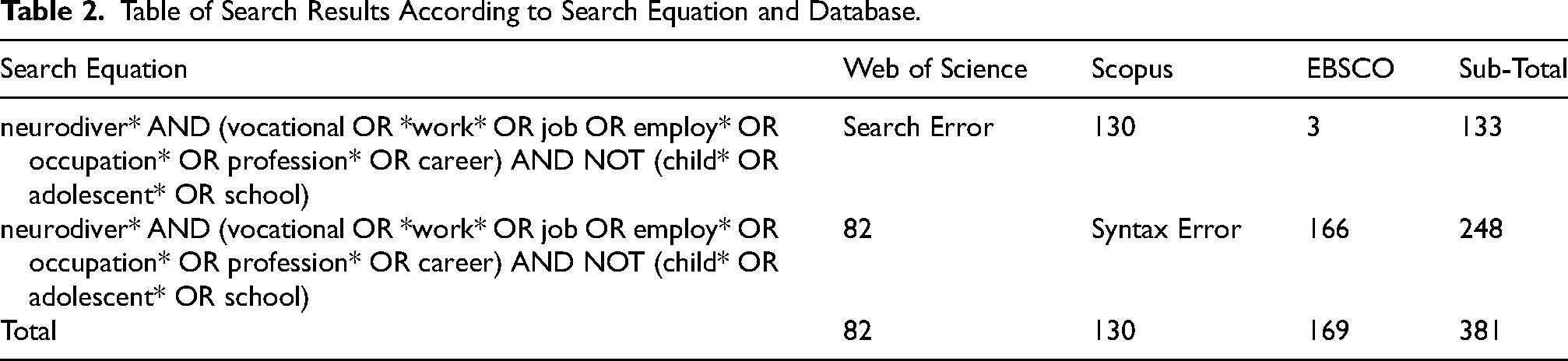
The search equation formulated for Scopus is: neurodiver* AND (vocational OR *work* OR job OR employ* OR occupation* OR profession* OR career) AND NOT (child* OR adolescent* OR school).
Simultaneously, for EBSCO and Web of Science it is: neurodiver* AND (vocational OR *work* OR job OR employ* OR occupation* OR profession* OR career) NOT (child* OR adolescent* OR school).
Inclusion and Exclusion Criteria
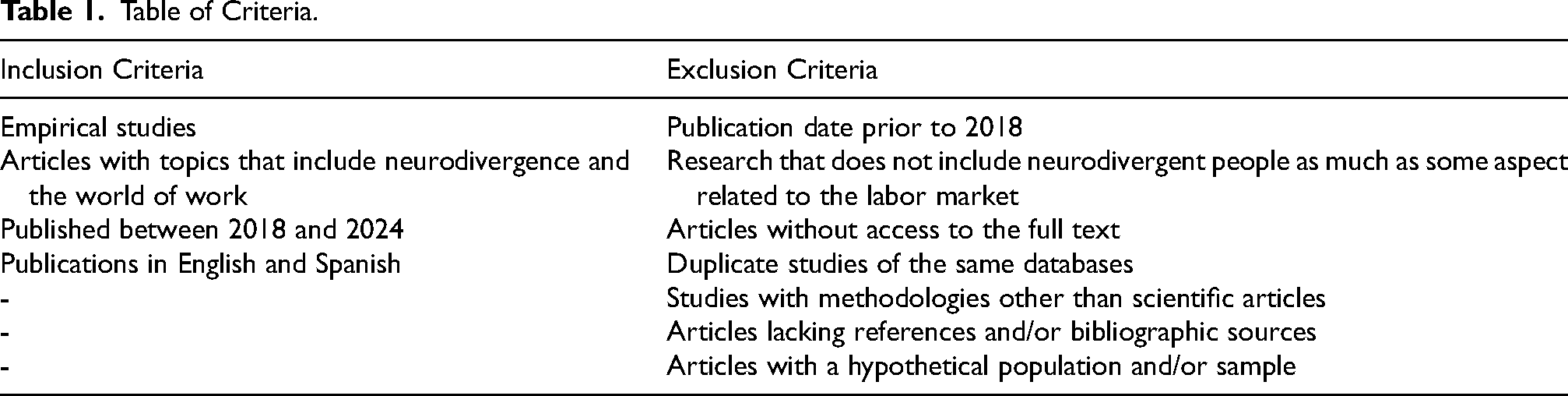
See Table 1 for the inclusion and exclusion criteria.
Table of Criteria.
Item Selection Procedure
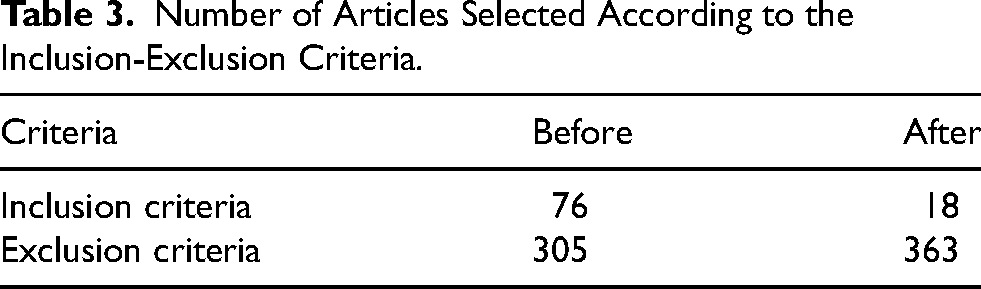
To write this article we conducted a careful selection and evaluation of articles in several phases. In the first phase, 381 articles were retrieved from the databases. In the second phase, accessibility, age and duplicity criteria were applied, which reduced the number to 76 articles that met these criteria. Finally, in the third phase, the thematic relevance of the articles was evaluated, selecting 18 that met the review criteria.
Data Analysis
To satisfy the need for more detailed information in this review, we made a comparative table that includes the year of publication, research source, theoretical framework, type of study, instrument used, perspective adopted, population studied, objectives, conclusions, and language of publication of the texts reviewed.
Results
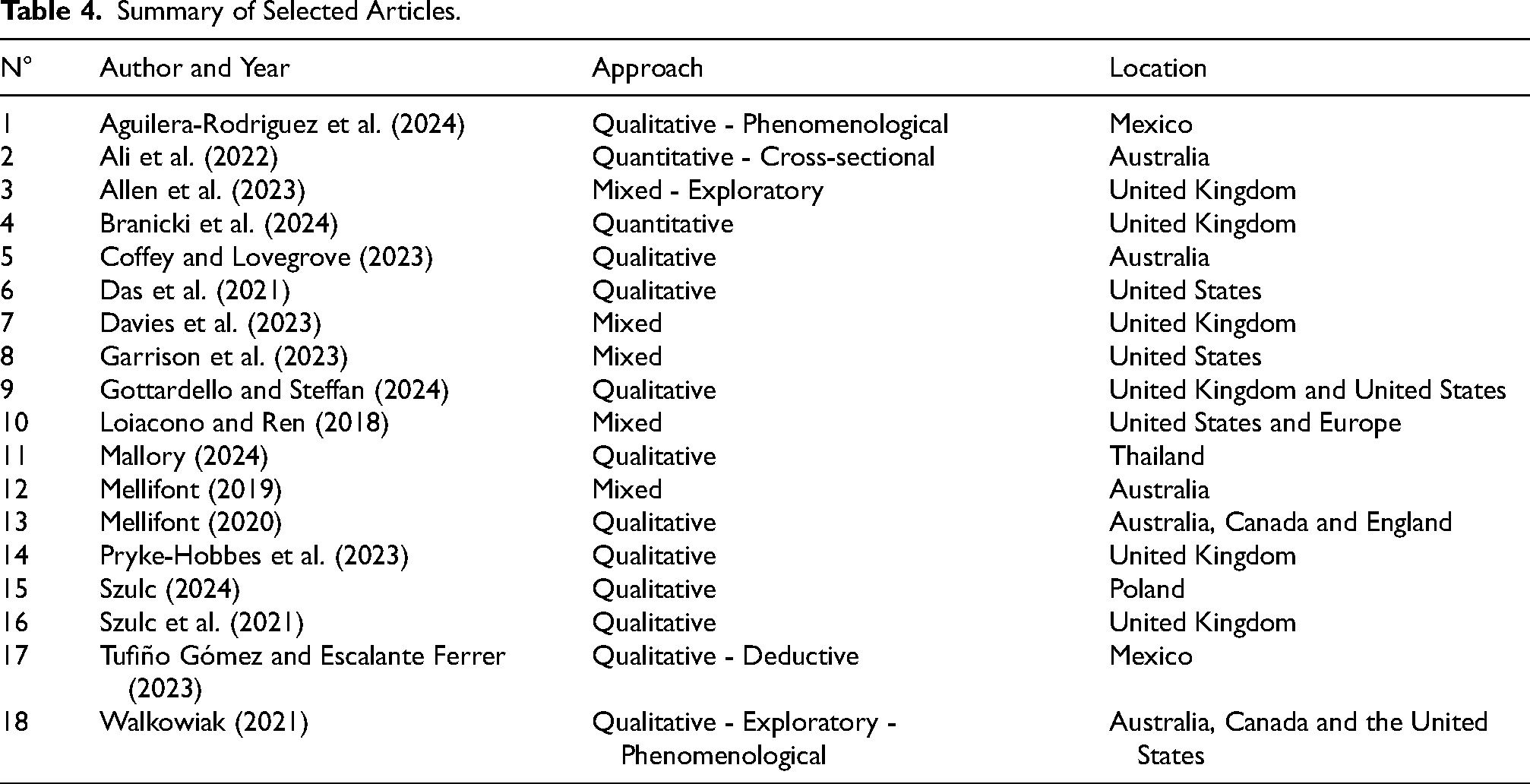
In relation to the search strategy, the databases used are presented in detail together with the results obtained in Table 2. Then, we applied the established inclusion and exclusion criteria (Table 3). The table shows that, after applying the defined methods, eighteen articles were selected. Afterward, these articles were summarized, considering the following aspects: author, year, research focus and location (Table 4).
Table of Search Results According to Search Equation and Database.
Number of Articles Selected According to the Inclusion-Exclusion Criteria.
Summary of Selected Articles.
Description of the Publications Included
After applying the inclusion and exclusion criteria, 18 publications were selected. The databases contained 130 articles in Scopus, 82 in Web of Science and 169 in EBSCO. Of the selected articles, 17 were in English and one in Spanish.
In terms of location, the studies originated in the United Kingdom (7), Australia (5), the United States (5), Canada (2), and Mexico (2), plus one article from Continental Europe, Poland, and Thailand.
The studies are distributed by year as follows: 2023 (7), 2024 (5), 2021 (3), and one article each for 2020, 2019, and 2018.
Regarding the person who provided the information in each article selected for review, we have the following data: people with neurodivergence (8), neurodivergent and neurotypical persons (2), people with a work relationship with neurodivergent individuals (1), companies (1), caregivers (1), employment data for neurodivergent individuals (1), information guides (1), leaders in neurodivergence initiatives (1), people with neurodivergence and others interested in the profession of neurodivergent people (1), and people with neurodivergence and two Human Resources (HR) professionals (1).
The review of these 18 articles showed similarities, which led to classifying the objectives into the following four categories:
Identifying barriers and challenges to occupational inclusion of neurodivergent individuals: Allen et al. (2023), Branicki et al. (2024), Aguilera-Rodriguez et al. (2024), Mallory (2024), and Tufiño Gomez and Escalante Ferrer (2023) investigate the difficulties and barriers faced by neurodivergent individuals in the labor market. These studies examine the difficulties that increase the exclusion of certain groups, such as neurodivergent veterans, neurodivergent college graduates, and those trying to adapt to a work environment without adequate support. Exploring neurodivergence experiences in the workplace: Davies et al. (2023), Pryke-Hobbes et al. (2023), Szulc (2024), and Szulc et al. (2021) focus on the experiences of neurodivergent individuals in a variety of work contexts. These studies investigate how neurodivergence affects hiring processes, relationships between neurodivergent employes and neurotypical leaders, and specific experiences during remote or adapting behaviors in the workplace. These analyses are crucial to understanding how neurodivergent individuals cope with the work environment and what adaptations might improve their experiences as workers. Analyzing programs and strategies to support the occupational inclusion of neurodivergent individuals: Coffey and Lovegrove (2023), Das et al. (2021), Garrison et al. (2023), Loiacono and Ren (2018), Mellifont (2019), and Walkowiak (2021) examine a variety of programs and initiatives aimed at improving the workplace inclusion of neurodivergent individuals. These studies discuss the implementation of pilot programs, the development of neurodiverse workforces in large technology companies, and how digital transformation can complement the skills of neurodivergent workers. Regarding neurodivergence, occupational health and well-being: Ali et al. (2022), Gottardello and Steffan (2024), and Mellifont (2020) focus on the relationship between neurodiversity and a variety of occupational health and well-being factors. These studies investigate how stigma, psychosocial disabilities, menopause, and mental health issues affect the work experiences of neurodivergent individuals. The focus on work wellness allows for the identification of critical areas where support must be improved to ensure a healthy work environment.
In terms of their methodological approach, 11 qualitative articles, 5 mixed and 2 with a quantitative approach were identified. Given that the review covers the topic of neurodivergence, most of the articles used neurodivergent persons as the population or sample. However, we also included studies that sampled people who maintain some kind of professional relation with neurodivergent individuals such as Human Resources personnel and adult caregivers.
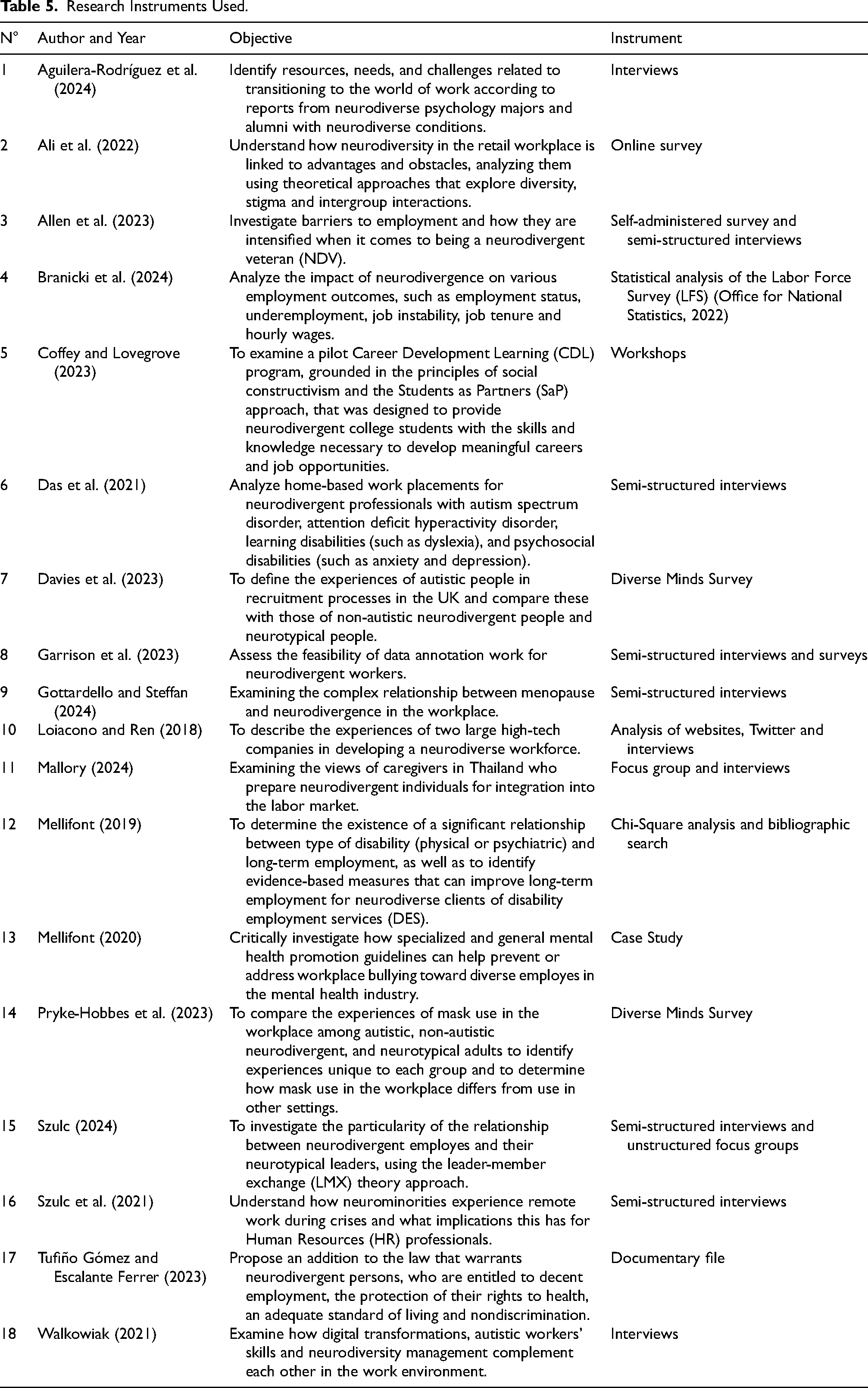
Regarding the research instruments used, we identified several, which are summarized in Table 5.
Research Instruments Used.
Theoretical Framework
Employment and Neurodivergence
Transition to Employment and Dependence on Caregivers
The transition from education to paid employment is a major milestone that often generates uncertainty and anxiety. Graduates must have professional skills in addition to being adaptable, self-reliant, curious, and confident to manage this process (Coffey and Lovegrove, 2023).
In Mallory's (2024) view, neurodivergent individuals often struggle to find employment as adults, relying heavily on caregivers who manage various responsibilities, including medical, social, and financial care. As support declines with adulthood, caregivers, especially mothers, face social isolation and health issues. Negative societal attitudes toward neurodivergence can further hinder employment success. However, when caregivers are supportive, transitions to employment are more successful. To improve outcomes, caregivers need support in financial planning, behavior management, and job exploration, though resources like vocational programs are often limited.
Advantages and Challenges of Neurodivergent Workers
A neurodivergent worker is a person who, with full capacity to perform, offers his or her intellectual or material services to a person or entity in exchange for a salary, and has been diagnosed with a disorder within the neurodivergence spectrum (Tufiño Gómez and Escalante Ferrer, 2023).
Neurodivergent individuals often have unique characteristics that can be extremely advantageous. Using these skills in the right context can improve a company's productivity (Ali et al., 2022). To name a few advantages, individuals with autism spectrum disorder (ASD) often excel in systematization, mathematical and analytical skills. Adults with dyslexia often show a higher cognitive level than neurotypical adults. Likewise, people with ADHD are often particularly good at multitasking and generating original creative ideas, skills that are highly valued in the work environment (Allen et al., 2023).
Furthermore, according to the value-in-diversity perspective, the inclusion of neurodivergent workers improves organizational performance by rich variety of skills, knowledge and understanding of market needs. This notion has been applied to racial and gender diversity, demonstrating advantages such as higher profits and increased market share. Similarly, neurodivergence is likely to offer significant advantages because the cognitive differences of neurodivergent employes can foster innovation and creativity, giving organizations that hire them a competitive advantage in sectors where this potential is not widely recognized (Ali et al., 2022).
In terms of the challenges they face, Garrison et al. (2023) find difficulties such as problems with transportation, communication difficulties, problems relating to the experiences of others, and problems adapting and concentrating in the face of rapid changes in work tasks, which ultimately negatively affect the chances of getting and keeping a job for a neurodivergent person.
Finally, other complications can be added due to the lack of proper diagnosis and conception of neurodivergence as a condition that is not necessarily disabling. In addition, low schooling levels and the lack of an inclusive educational model in higher education also limit employment opportunities. In addition, poverty restricts access to diagnosis, treatment, and essential resources, perpetuating a cycle of vulnerability and exclusion (Tufiño Gómez and Escalante Ferrer, 2023).
Factors Contributing to Low Employment in Neurodivergent Individuals
For Ali et al. (2022), unconscious biases of hiring managers, systemic biases in recruitment and selection processes, and exaggerated perceptions about high adaptation costs are the main factors contributing to the low employability of neurodivergent individuals.
In contrast, Davies et al. (2023) argue that there are difficulties in finding suitable employment due to limited social networks and job descriptions that prioritize generic skills over specific competencies, which may discourage them from applying. Also, the initial job application can be challenging due to a lack of previous job opportunities and the inability of automated systems to consider their individual experiences. Job interviews represent another significant hurdle, as autistic individuals may have problems with communication and impression management and might require more time to process information. They also face practical barriers, such as anxiety about changing their routine and sensitivity to sensory stimuli during interviews. Interviewers’ lack of understanding of autism and the specific needs of autistic candidates can compound these challenges.
From another perspective, employer attitudes and unpreparedness regarding disability issues significantly hinder neurodivergent individuals’ employability. Emphasis on adaptability and teamwork, combined with conventional hiring practices, often excludes them. Interviews, challenging due to socio-cognitive barriers, highlight this gap. Educational institutions should support graduates by addressing discriminatory hiring practices (Coffey and Lovegrove, 2023).
Beyond systemic barriers in hiring, neurodivergent individuals may also underestimate their own skills, discouraging them from applying for suitable jobs. A key question arises: is the main challenge the hiring process, with its structured interviews and social expectations, or is it job performance and retention? While interviews can be difficult due to biases and unstructured communication, workplace adaptation and long-term retention also pose challenges due to limited support and rigid environments. A truly inclusive approach must address both entry into employment and sustained success in the workplace.
Stigma and Masking of Neurodivergent Characteristics in the Work Context
Stigma theory is central to the study of diversity in the workplace because it analyzes how negative connotations associated with certain characteristics can discredit a person's social identity. These connotations are generally based on pervasive stereotypes present in society, yet often inaccurate. Stigma thus impacts how employes perceive and interact with stigmatized individuals, which can result in conscious discrimination or unconscious bias (Ali et al., 2022).
In line with the above, Pryke-Hobbes et al. (2023) state that stigma remains a major barrier to gainful employment, even though employers and employes recognize the positive qualities of autistic people at work, such as reliability and creativity. Consider that more than half of autistic employes have experienced some form of discrimination, which explains why many people are afraid to disclose their diagnosis. Additionally, differences in the communication style of autistic people contribute to stigma and hinder social relationships in the work environment.
As during the hiring process, stigma may arise from self-disclosure or observation by other employes. Branicki et al. (2024) argue that neurodivergent individuals are often stigmatized and stereotyped in the workplace, where what is routine for neurotypicals can be particularly challenging for them. For example, autistics may be seen as rude because of their atypical use of affective expressions, which can lead them to become socially isolated and therefore negatively impact their job satisfaction. Consequently, neurodivergent individuals must hide their condition because of these stereotypical beliefs.
According to Allen et al. (2023), this process of hiding is called masking. This refers to how neurodivergent individuals hide their natural characteristics to adapt to more acceptable social norms. Some resilient individuals choose masking to cope with the social environment, although this strategy may involve forgoing reasonable adjustments and have personal costs.
Although common in the work environment, neurodivergence masking can be mentally taxing and, over time, impair individuals’ mental and physical health, causing discomfort, stress, and burnout (Gottardello and Steffan, 2024; Pryke-Hobbes et al., 2023).
Harassment of Neurodivergent Employees in the Workplace
According to Mellifont (2020), workplace bullying includes covert actions like rumors and unfair criticism, as well as physical or verbal abuse, often involving repeated patterns aimed at controlling vulnerable individuals. This behavior harms victims’ mental health, causing stress, anxiety, and depression, and undermines job performance and morale. Group bullying, or mobbing, can also damage both individuals and organizations. Companies should address these issues by implementing mental health plans that support neurodivergent and neurotypical employes, fostering an inclusive and respectful work environment that prevents harassment.
Another suggested strategy to mitigate workplace mistreatment of neurodivergent individuals is the use of intergroup contact theory, although its specific efficacy in this context requires further empirical validation. This theory states that interaction between members of different groups can decrease differences and improve relationships. Empirical studies have supported this hypothesis, showing that contact increases knowledge and empathy and reduces anxiety. The theory has expanded to include virtual, vicarious, and imaginary forms of contact, although it originally focused on face-to-face interactions. This suggests that while structured efforts to create inclusive environments can enhance understanding and reduce bias, meaningful progress can still occur in less-than-ideal conditions. Even informal interactions, exposure through media, or shared virtual spaces may contribute to breaking down stereotypes and fostering more inclusive workplaces (Ali et al., 2022).
Impact of Employment on the Wellbeing of Neurodivergent Individuals
The importance of economic inclusion for people with mental diversity should not be underestimated, as integrating them into the labor market has a profound impact on their overall well-being. Employment not only improves their physical and mental health, but also contributes to greater security and quality of life. For neurodivergent adults, work offers a sense of purpose that is crucial to their personal well-being and professional development (Mellifont, 2019; Pryke-Hobbes et al., 2023).
Consequently, to ensure the well-being of neurodivergent individuals, their work experiences must be influenced by a variety of factors. These include organizational characteristics such as policies, practices, type of work, norms, and values, as well as individual characteristics of both individuals with disabilities and of their supervisors and coworkers. Furthermore, environmental characteristics, such as current legislation, also impact those experiences by shaping workplace policies, accessibility standards, and legal protections against discrimination. Laws that mandate reasonable accommodations, inclusive hiring practices, and anti-harassment measures can foster more equitable work environments. Conversely, inadequate or poorly enforced regulations may leave neurodivergent employes vulnerable to exclusion, bias, or a lack of necessary support (Branicki et al., 2024).
Adaptations, Policies and Practices of the Business Sector Towards Neurodivergent People
Inclusive Leadership
According to Szulc (2024), leadership is defined as a social process of influence in the context of an interaction between two or more people. Leaders play a crucial role in fostering inclusive work environments, which directly impact employes’ work experiences and overall well-being. An inclusive leader not only sets the tone for workplace culture but also ensures that policies and practices support diversity, equity, and accessibility. In addition, leaders should have neurodivergence awareness, i.e. an understanding of how neurodivergent individuals experience the workplace and what support they may require. Because neurodivergent conditions are often invisible and not always disclosed due to fear of stigma, supervisors play a key role in recognizing and addressing potential barriers. Through access to confidential information and diversity training programs, leaders can implement reasonable accommodations, advocate for flexible work arrangements, and promote open communication that fosters psychological safety (Ali et al., 2022).
Role of the HR Area in the Inclusion of Neurodivergent Employees
Szulc et al. (2021) asserts that, the evolution of work and employment was already changing before the COVID-19 crisis due to technical disruption, demographic changes, and increased diversity, which increased the role of human resources. This transformation was accelerated by the pandemic, which emphasized the importance of HR adapting to current changes to address inequalities and foster a more humanistic perspective that focuses on respect for diversity and individual needs.
In this regard, Ali et al. (2022) argues that implementing neurodiversity practices can help organizations better understand neurodivergent conditions and reduce exclusion and discrimination. These practices disseminate accurate information and demonstrate the value of neurodivergent employes and help fight stigma. In addition, awareness campaigns and actions aimed at eliminating mistreatment have been shown to be effective in reducing prejudice and improving perceptions towards neurodivergent individuals, which benefits the organization.
Therefore, to employ a neurodivergent workforce, it is important for companies to create an inclusive environment that accommodates neurodivergent workers. Thus, seven key elements are identified to integrate neurodiversity in the workplace: collaborate with neurodiversity experts, design non-stereotypical recruitment processes, train employes and employers, customize the supervisory ecosystem, manage the career path, and develop methods to scale and integrate the program (Walkowiak, 2021).
However, these elements are general guidelines that should be adapted to each sector. Thus, the emphasis in this review is on remote work and the IT sector because these areas have been studied more extensively in relation to neurodivergent employment strategies.
Remote Work for Neurodivergent People
Branicki et al. (2024) highlight how organizational policies and practices, such as flexible work schedules and configurations, are essential to the inclusion and success of employes with disabilities, including neurodivergent employes. These accommodations help balance responsibilities and enhance work participation without the need for stigmatizing disclosures, especially benefiting those who face specific challenges in the work environment.
One of these practices to be considered by organizations is remote work. Das et al. (2021) indicate that remote work, also known as telecommuting, involves using telecommunications technologies to work outside a conventional office. The advantages of this model include greater flexibility and better work-life balance. However, it also presents challenges, such as the tendency to work longer hours to demonstrate dedication and a decrease in social interactions, which can make the individual feel lonelier. Still, many employers are reluctant to offer remote work to people with disabilities because of liability and performance issues, despite the benefits, such as avoiding commuting and accommodating schedules.
With regard to neurodivergent individuals, telework is often considered a useful solution because it can alleviate cognitive load and avoid crowded work environments. Also, telework may offer neurodivergent individuals a more suitable work environment, reducing noise and the challenges of commuting. However, it has been shown that working from home can limit the type of tasks as well as opportunities for interaction and social development for people with disabilities (Branicki et al., 2024).
Neurodivergence in the IT Sector
The management of neurodivergence has been particularly focused on the IT industry, where skill shortages are a frequent problem due to rapid technological advancement. This situation encourages the adoption of initiatives to integrate neurodivergence into the industry. However, some experts suggest that the skills shortage is not an external phenomenon, but is instead caused by the companies themselves, as they fail to provide adequate training and are biased in their selection processes (Walkowiak, 2021).
For Loiacono and Ren (2018), neurodivergent people bring useful skills to high-tech environments. They often excel in skills such as concentration, creativity, logical and visual thinking, and problem solving from different points of view. For instance, people with ADHD are particularly creative, while people with dyslexia are excellent in spatial reasoning and dynamic situations. In fields such as programming and cybersecurity, where innovation and creative problem solving are essential, these skills are particularly useful (Walkowiak, 2021).
In light of these important skills, employment opportunities for neurodivergent workers emerge, such as work on digital platforms or crowd work. This type of work, which often involves data annotation tasks, allows employes to work remotely and select the tasks they wish to perform (Walkowiak, 2021). In these types of tasks, the strengths of neurodivergent workers, such as attention to detail, memory, and information processing, may be particularly useful. However, studies have discovered legitimate concerns about underpayment and lack of interaction on these platforms. Many workers earn less than minimum wage and have difficulty finding and completing the tasks they need to do. So, although these platforms may contribute to lowering unemployment for the neurodivergent population, it is necessary to improve working conditions and adapt digital environments to their demands (Garrison et al., 2023).
Discussion
A review of the literature on the interactions between neurodivergent individuals and the world of work has yielded significant findings that provide a comprehensive view of the problem. The analysis of existing studies reveals that there is a clear understanding that adaptations and personalization in the work environment are crucial to improving outcomes for neurodivergent employes. Several studies, including Branicki et al. (2024), Das et al. (2021), Garrison et al. (2023), Szulc (2024), Szulc et al. (2021) and Walkowiak (2021), highlight that flexibility, task customization and remote work can reduce barriers and improve work performance. This is in line with the theory of value in diversity and universal design, which support inclusive environments that consider diverse needs (Ali et al., 2022).
Another point of consensus is the negative impact of stigma and masking on the work experience of neurodivergent workers. According to Ali et al. (2022), Davies et al. (2023), Mallory (2024), and Pryke-Hobbes et al. (2023), neurodivergent-related stigma can lead to a hostile work environment and the need to hide skills and behaviors to avoid discrimination, often resulting in significant emotional exhaustion. Masking has been linked to decreased job satisfaction and overall well-being. This finding highlights the need for cultural and organizational changes to create a more welcoming and inclusive work environment.
Despite these similarities, the literature presents notable disagreements that confirm the complex nature of the subject. The most significant discrepancy is found in the definition of both neurodivergence and neurodiversity. These terms have been erroneously used as synonyms. Studies such as those by Aguilera-Rodríguez et al. (2024), Loiacono and Ren (2018), Mellifont (2019), Tufiño Gómez and Escalante Ferrer (2023) and Walkowiak (2021), refer to a concept of neurodiversity that would rather fit within the definition of neurodivergence. Also noteworthy is the introduction of a new term, neurominories, used by Szulc et al. (2021).
Among other differences, there are differences in the effectiveness of the suggested solutions and modifications. For example, some studies, such as Garrison et al. (2023) and Walkowiak (2021), highlight the effectiveness of certain adaptations such as remote work and crowd work, while others, such as Mallory (2024) and Mellifont (2020), find that legal, cultural, and social barriers may limit the impact of these adaptations in particular contexts. This variability demonstrates that adaptations may be highly dependent on the cultural and organizational environment, while at the same time necessitating specific regulation for neurodivergent individuals, and fostering their inclusion and respect in society, recruitment processes, neurotypical managers and employes (Allen et al., 2023; Loiacono and Ren, 2018; Mellifont, 2019; Tufiño Gómez and Escalante Ferrer, 2023).
Despite the topics covered in the selected articles, there are several other areas that require attention. First, there is a need to examine the existence and effectiveness of government employability policies on neurodivergent people, as they mostly focus on people with disabilities or, exclusively, on autistic people. Second, it is critical to address the lack of data on the work experience of neurodivergent people in other industries, as part of the studies reviewed focused on highlighting the strengths of neurodivergent workers in the technology sector. Third, one of the least discussed aspects of the neurodivergence and employment literature is the process by which employers identify neurodivergent candidates in hiring. In most countries, disclosure of neurodivergence is entirely up to the candidate, as legal frameworks prevent employers from asking direct questions about medical or cognitive conditions during the screening process. However, it cannot be concluded that recruiters infer based on the candidate's behavior or it is the candidates themselves who make this information known.
Regarding the limitations found, we may begin by mentioning that the results of the studies reviewed may be affected by the organizational and cultural diversity that surrounds them. In addition, most of the studies focus on short-term interventions, which limits the understanding of long-term effects. These limitations highlight the importance of additional research to improve understanding of the interaction between neurodivergent individuals and the world of work.
Conclusions
It is clear that social and structural barriers hinder the interaction of neurodivergent individuals with the workplace. Studies show that lack of awareness and the presence of stigma remain significant obstacles, despite organizational accommodations and policies to promote inclusion. Reasonable accommodation and job integration methods have been shown to be effective in some cases; however, inconsistent application and variability in the support provided often limit their impact.
In contrast, this study confirms that best practices and strategies for workplace inclusion of neurodivergent individuals can benefit both employers and employes. Diversity and innovation in the workplace can increase with effective implementation of inclusive policies and appropriate awareness. However, to move forward, it is critical to overcome the barriers that have been identified and to promote a more inclusive environment that accommodates the specific needs of neurodivergent individuals. Current evidence indicates that the relationship of neurodivergent people to the workplace can be significantly improved with a combination of thoughtful policies, inclusive practices, and ongoing support.
While this review highlights the role of workplace policies and leadership in fostering inclusion, it is also essential to recognize the importance of self-determination among neurodiverse individuals. Equal access to employment is a shared responsibility, requiring not only organizational adjustments, but also initiatives that empower neurodiverse employes to navigate the workplace with confidence. Developing strategies for self-advocacy, career readiness, and professional growth is a crucial complement to inclusive workplace practices. Thus, further research could explore how training programs, mentoring, and peer support networks contribute to improving the self-determination and long-term career success of neurodivergent individuals.
We also recommend additional studies that address the gaps identified in the current literature. It is crucial to conduct long-term research that investigates the experiences of neurodivergent individuals throughout their career trajectories, from job preparation to retention and development in the work environment. In addition, case studies that analyze the effectiveness of various inclusion policies and practices in a variety of sectors and regions should be encouraged. Later, the need for future research comparing the relative impact of interview difficulties versus challenges on job performance and retention arises. Understanding which of these factors represents a greater obstacle would allow the development of more effective strategies for the inclusion of neurodivergent individuals in the labor market. Finally, we urge the scientific community to reach a consensus on the definitions of the terms neurodivergence and neurodiversity, thus avoiding their interchangeable use and ensuing confusion and harm to the promotion of neurodivergent individuals.
Footnotes
Acknowledgments
The authors have no acknowledgments.
ORCID iDs

Ethical Considerations
The systematic review of the literature did not include the collection or analysis of individual data; therefore, ethical approval was not required.
Funding
The authors received financial support solely for the publication of this article from the Universidad Catolica de Santa Maria.
Declaration of Conflicting Interests
The authors declared no potential conflicts of interest with respect to the research, authorship, and/or publication of this article.
Informed Consent
The systematic review of the literature did not include individual data collection and analysis; therefore, informed consent was not required.