



Abstract
Background
The COVID-19 pandemic has driven a global shift in teleworking, serving as a real-world experiment in remote labor. As workplaces advance toward technologically mediated environments, including avatar-based systems for remote interaction, understanding the health implications of teleworking is crucial for future occupational health standards.
Objective
This review examined the health-related outcomes of teleworking during the pandemic, comparing Japan and other countries to inform health-supportive remote work systems.
Methods
A structured narrative review was conducted using MEDLINE (PubMed) and IEEE Xplore through January 9, 2026. Studies were included if they examined teleworking in adult workplace environments and reported physical, mental, behavioral, or performance-related outcomes. Data from 67 eligible studies (12 from Japan and 55 from other countries) were analyzed for the physical health, mental health, lifestyle factors, and work performance domains. Cultural and institutional factors were examined to understand the regional differences.
Results
Telework has been linked to musculoskeletal discomfort, sedentary behavior, psychological stress, and unhealthy lifestyle choices. Japanese and international studies have identified these challenges, although the manifestations vary by context. In Japan, inflexible teleworking, inadequate home infrastructure, and an office-centric culture exacerbate negative outcomes, particularly for women and caregivers. International studies have highlighted the benefits of flexible scheduling and organizational support. Cultural norms and institutional readiness mediated these effects.
Conclusions
This review demonstrates the need for evidence-based health standards for next-generation remote work environments including avatar-based systems. We propose recommendations incorporating ergonomic design, health monitoring, organizational flexibility, and cultural adaptation. As remote work technologies evolve, policy frameworks must prioritize worker well-being.
Key points
Prior research on the health impacts of teleworking during the COVID-19 pandemic remained fragmented. Cross-national comparison, particularly between Japan and Western countries, was limited, and little attention was given to implications for emerging technologies such as avatar-based remote work.
This review addresses this gap through a comparative analysis revealing context-specific challenges: in Japan, inadequate ergonomic infrastructure and limited institutional support; internationally, outcomes shaped more by organizational factors and demographic variables.
These findings inform the design of longitudinal and intervention studies addressing cultural adaptation in remote work health, while providing an evidence base for health and safety standards applicable to both conventional telework and avatar-mediated work environments.
Introduction
The rapid evolution of communication technologies and robotics is transforming how people interact across distances. Among these innovations, the use of avatars—ranging from physical robots to virtual agents—has enabled emerging forms of mediated interaction that extend beyond traditional video conferencing or telepresence tools. These innovations align with the concept of an “avatar symbiotic society,” wherein individuals are freed from physical, spatial, and temporal limitations, as illustrated by Japan's Moonshot R&D program, which aims for realization by 2050. 1 Within this framework, avatars are conceptualized not only as communication tools, but as work-enabling interfaces that allow individuals—including those with physical limitations or geographic barriers—to participate meaningfully in the workforce. This societal shift underscores the growing need to anticipate and address the health implications of evolving remote work environments—particularly those mediated by avatar systems, which are emerging as realistic platforms for future labor participation.
Avatar-based work can be defined as a form of remote labor mediated through digitally embodied agents or robots, enabling a heightened sense of spatial presence, embodiment, and interpersonal interaction. Unlike conventional 2D teleconferencing, avatar-mediated systems offer immersive environments where users interact via customizable representations, allowing decoupling of physical identity from professional function. Examples include remote hospitality services using avatar robots in retail environments, 2 or the use of persistent spatial virtual offices to foster informal communication among remote teams. 3
As these technologies continue to develop, the COVID-19 pandemic provided an unexpected opportunity to study remote work at scale. This global pandemic prompted an unprecedented global transition towards teleworking, serving as a large-scale natural experiment in remote, digitally mediated labor. While traditional telework lacks many features of avatar-based systems, both share structural characteristics: limited physical co-presence, reliance on digital devices, and the blurring of work–life boundaries. Accordingly, the widespread adoption of telework provides a valuable lens for anticipating both the benefits and risks of emerging avatar-mediated work. Unlike traditional telework, which is often task-oriented and constrained by the ‘Zoom fatigue,’ avatar-based work allows for identity decoupling—the ability to engage in labor without being limited by one's physical appearance or condition. However, such systems also introduce new health considerations, including cybersickness and the psychological effects of mediated embodiment—issues not fully addressed by conventional telework standards.
Previous research has highlighted the diverse impacts of telework. Benefits include reduced commuting time and increased autonomy, which may enhance work-life balance and psychological well-being.4,5 At the same time, concerns have been raised regarding ergonomic strain, sedentary behavior, blurred work-life boundaries, and psychosocial stressors.6–8 These outcomes are influenced by contextual factors, such as the quality of the home workspace, information and communication technology (ICT) equipment utilized, family dynamics, and institutional support. 9
This review aims to synthesize health-related findings associated with teleworking during the COVID-19 pandemic, with a comparative emphasis on studies conducted in Japan and internationally. We categorized outcomes into four domains—physical health, mental health and well-being, lifestyle and behavioral factors, and work performance—and examined key mediators such as workplace design, device usage, and psychosocial stressors. By extrapolating from these findings, we propose preliminary health-related considerations for the development of culturally adaptable, ergonomically sound, and psychologically supportive avatar-based work environments.
Methods
Review design
This study was conducted as a structured narrative review to synthesize and compare the research findings on the health impacts of teleworking during the COVID-19 pandemic. Particular emphasis was placed on cross-cultural perspectives, notably between Japan and other countries, to inform future development of health policies and standards for avatar-based remote work environments. This review focuses on four domains of health-related outcomes: physical health, mental health, lifestyle, and work performance.
Search strategy
A systematic literature search was conducted in MEDLINE (via PubMed) and IEEE Xplore from database inception to January 9, 2026. Database-specific search strategies were used due to differences in indexing systems and available controlled vocabulary.
For MEDLINE (PubMed), we used the Medical Subject Heading (MeSH) descriptor “Teleworking” and searched using the following query: (teleworking [MeSH Terms]) OR (virtual work [Title/Abstract]). The MeSH descriptor “Teleworking” includes Entry Terms such as “Telework,” “Flexible Workplace,” “Flexible Workplaces,” “Workplace, Flexible,” “Telecommuting,” “Hybrid Working,” “Working, Hybrid,” “Hybrid Work,” “Work, Hybrid,” “Remote Working,” “Working, Remote,” “Remote Work,” “Remote Works,” and “Work, Remote.” Therefore, “virtual work,” which is not listed among the Entry Terms for “Teleworking,” was added as a free-text term (Title/Abstract) to capture potentially relevant records using this terminology.
For IEEE Xplore, where MeSH is not available, we used a free-text keyword strategy: ((((teleworking) OR (remote work)) OR (telecommuting)) OR (virtual work)) AND (health). The term “health” was added to increase specificity toward health-related outcomes because IEEE Xplore broadly covers engineering and technology literature. Although no restrictions were placed on publication year, only studies written in English were included in the final analysis.
Eligibility criteria
For inclusion in this review, studies were required to satisfy the following criteria: (1) they examined remote work or teleworking in workplace settings, explicitly excluding those that concentrated solely on education, gaming, or virtual schooling; (2) they were published in peer-reviewed academic journals; (3) they were composed in English and were available in full text; (4) they reported at least one outcome related to health or a factor relevant to the workplace; and (5) the study population consisted of adults aged 18 years or older. Studies were excluded if they focused on pediatric populations, addressed technology development without evaluating health outcomes, or were non-empirical in nature, such as conference abstracts, editorials, or protocols lacking primary data. To prevent redundancy, original studies that were part of the systematic review were excluded.
Screening and selection process
All retrieved records were independently evaluated by two reviewers (S.O. and T.H.), based on their titles and abstracts. In instances where eligibility could not be ascertained from the abstract alone, the full text was obtained and examined. Any discrepancies in the inclusion decisions were resolved through discussion, and when necessary, a third reviewer (T.M. and A.N.) was consulted to achieve a consensus.
Data extraction
For each study included in the analysis, the following data were extracted: year of publication, country of origin, study design, and sample characteristics, including the sample size and demographic profile. Additionally, the reported health-related outcomes included and workplace factors. The outcome measures included indicators related to workload management, work-life balance, ergonomic conditions, mental health support, communication practices, physical activity and general well-being, digital well-being, organizational characteristics, and cultural or societal considerations.
Categorization and analytical framework
Each study was categorized based on two analytical dimensions: geographic context (i.e., studies conducted in Japan versus those conducted in other countries) and the thematic domain of outcomes. Thematic domains were organized into four primary categories. The first category, physical health, includes musculoskeletal pain, ergonomic strain, and sedentary behavior. The second category, mental health and well-being, encompasses outcomes related to stress, anxiety, depressive symptoms, job satisfaction, and work-life balance. The third category, behavioral and environmental factors, comprises variables such as physical activity, alcohol consumption, digital device usage, screen fatigue, family dynamics, and communication patterns. The fourth category, work performance, comprises absenteeism, presenteeism, work engagement, and productivity. Where available, contextual information such as industry type, housing environment, institutional support, and cultural characteristics was also documented to facilitate a more nuanced comparison between Japanese and international studies.
Results
Study selection
A total of 1467 records were identified through searches of MEDLINE (PubMed) and IEEE Xplore (697 and 770 records, respectively), with no duplicates between the two databases. This search focused on peer-reviewed articles on teleworking and health outcomes during the COVID-19 pandemic. Following the screening of titles and abstracts, a review of the full texts was conducted based on predefined eligibility criteria. The study selection process is illustrated in the flowchart (Figure 1).
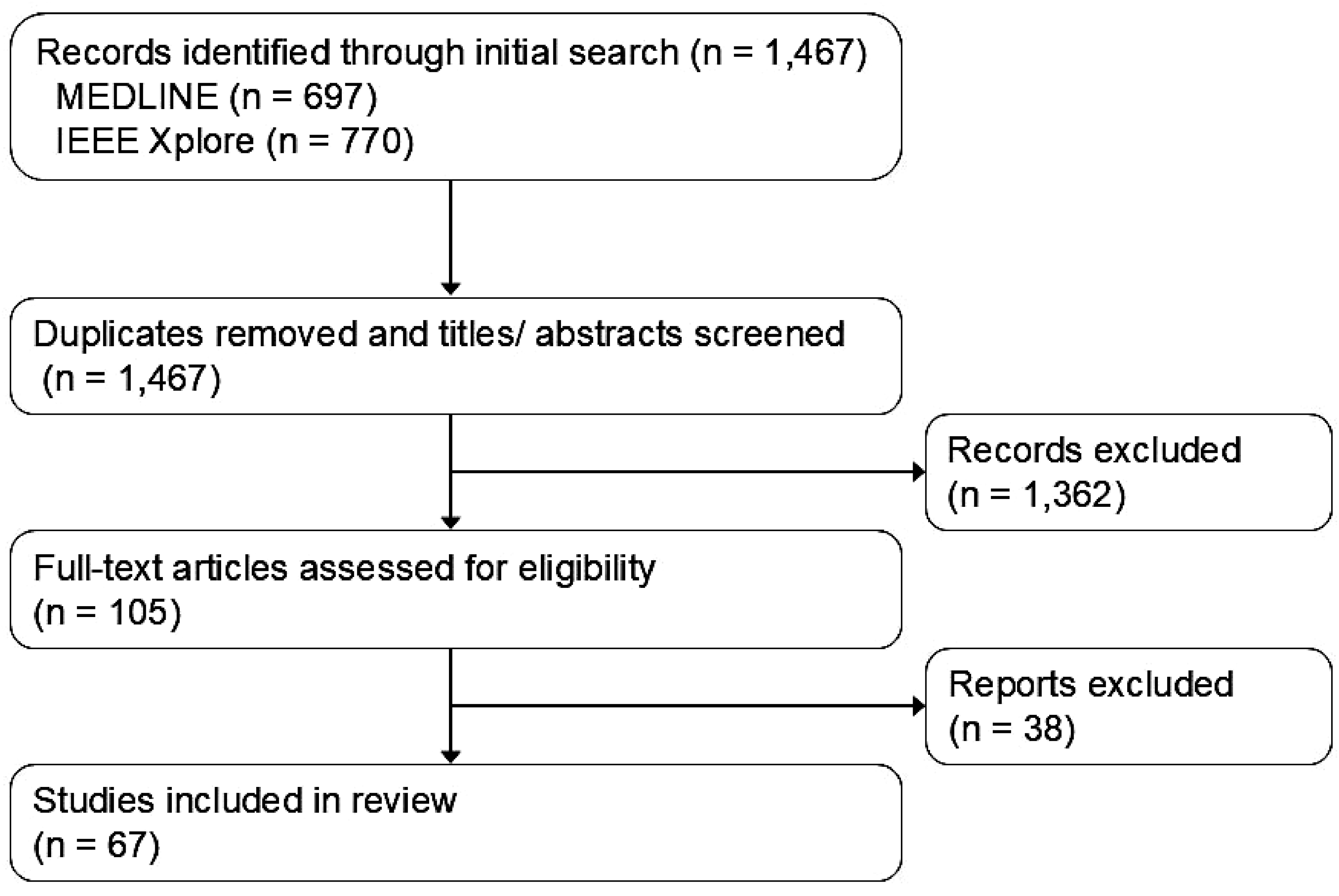
Flowchart of the selection process.
Overview of included studies
The dataset comprised 67 studies published between 2020 and 2026. Of these, 12 studies were conducted in Japan,10–21 while the remaining 55 originated from other countries,22–76 including the United States, Canada, Brazil, European Union member states (e.g., Germany, Italy, Portugal), and several Asian nations. Most of these studies utilized cross-sectional designs; however, longitudinal and mixed-methods approaches were also used, particularly in the international research context.
The study population exhibited considerable diversity and included office workers, healthcare providers, educators, and IT professionals. Research conducted in Japan has frequently concentrated on white-collar employees in urban environments, with a specific focus on domestic environmental constraints such as limited living spaces and psychosocial stressors. By contrast, international studies encompass a wider range of occupational, institutional, and policy contexts, facilitating a comparative analysis of health effects across different sociocultural settings.
Comparative findings across domains
The principal findings of the included studies were synthesized and categorized into four domains: (1) physical health, (2) mental health and well-being, (3) lifestyle and behavioral factors, and (4) work performance. These domains were selected based on recurring themes identified in the literature, reflecting the multifaceted impact of teleworking on individuals’ health. Thematic patterns and representative studies are referenced below to illustrate cultural and institutional influences on the observed health outcomes.
Physical health
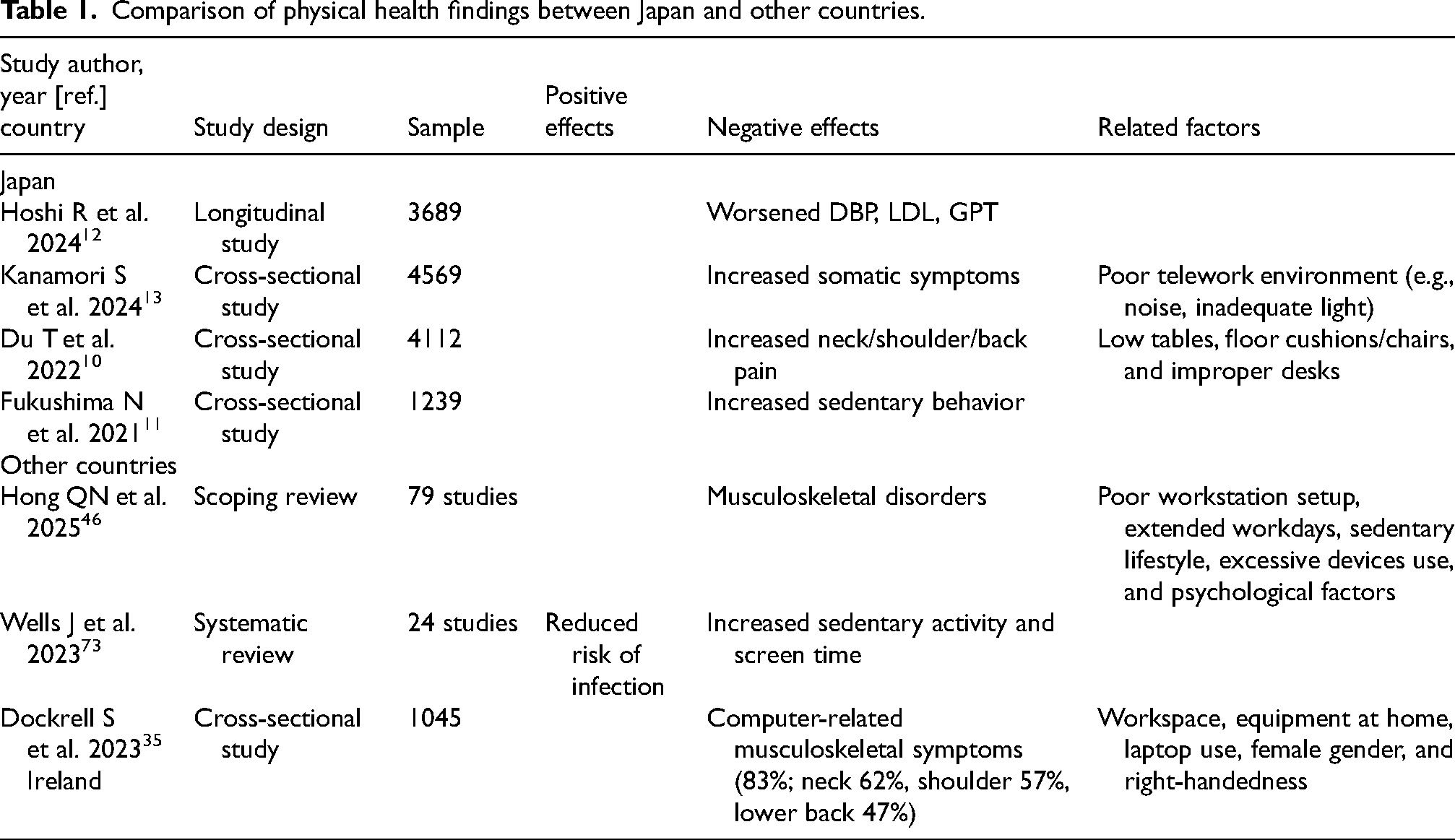
Table 1 presents a comparative summary that elucidates both the common challenges and the contextual differences between studies conducted in Japan and those in other countries. In both Japanese and international contexts, teleworking has been consistently linked to increased sedentary behavior and musculoskeletal discomfort,10,11,13 particularly low back pain. Japanese studies have underscored the impact of inadequate home workstation ergonomics and frequency of teleworking on exacerbating pain symptoms.10,13 Conversely, international findings have also highlighted that prolonged sitting, 73 lack of fitness, 57 and musculoskeletal discomfort 46 are more prevalent among females and right-handed individuals, along with work environment factors. 35
Comparison of physical health findings between Japan and other countries.
Mental health and well-being
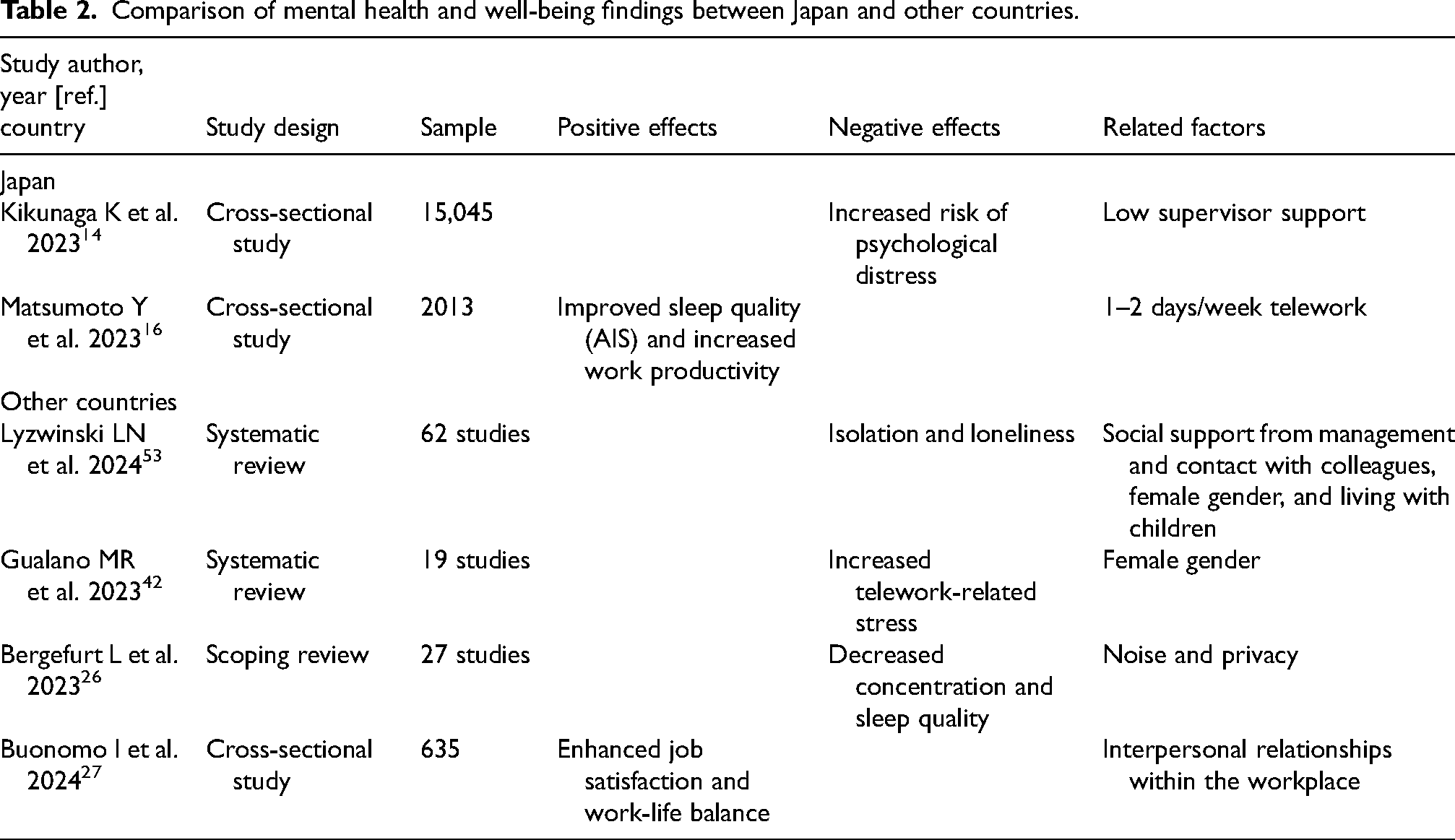
Table 2 presents the key comparative data. In studies conducted in Japan, low levels of supervisor support have been linked to an increased risk of psychological distress. 14 In contrast, engaging in telework for one–two days per week is associated with improvements in sleep quality and productivity. 16 Some international studies have identified negative effects such as isolation and loneliness, 53 whereas others, particularly those incorporating flexible work arrangements and organizational support, have reported improvements in job satisfaction and work-life balance. 27 Notably, female sex and cohabitation with children42,53 have also emerged as demographic factors in both sets of literature, although their effects varied.
Comparison of mental health and well-being findings between Japan and other countries.
Lifestyle and behavioral factors
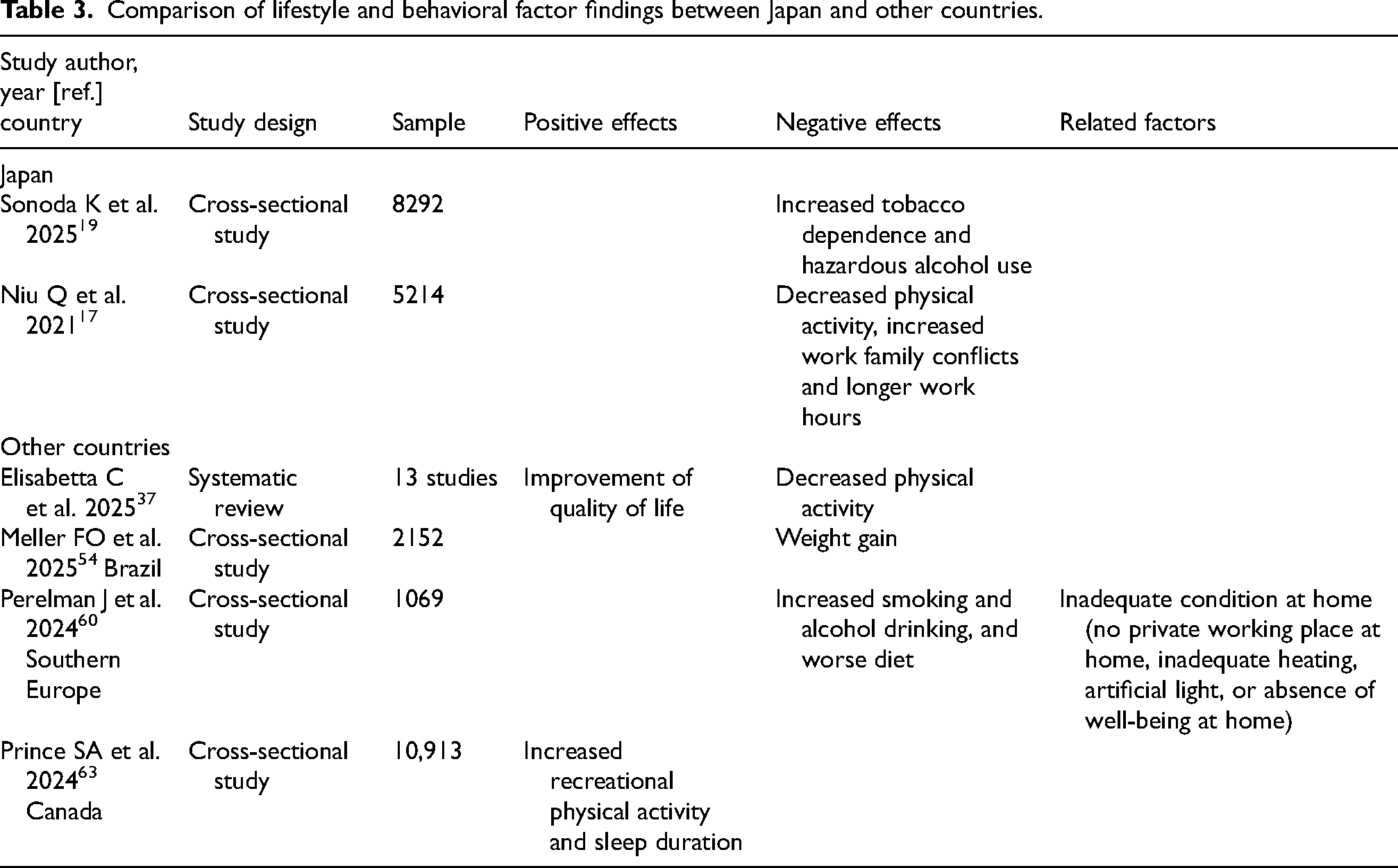
Table 3 presents the results of the comparative analyses. Telework has been frequently linked to behavioral modifications, including reduced physical activity, increased screen time, tobacco dependence, and hazardous alcohol consumption.17,19 Studies conducted in Japan have highlighted constraints such as heightened work–family conflict and extended work hours. 17 International literature has underscored issues such as physical inactivity, 37 weight gain, 54 and unhealthy behaviors, including increased smoking and alcohol consumption. 60 Nonetheless, a subset of international studies has also identified positive changes, such as enhanced recreational physical activity and prolonged sleep duration, 63 thereby illustrating the dual nature of behavioral responses to telework.
Comparison of lifestyle and behavioral factor findings between Japan and other countries.
Work performance
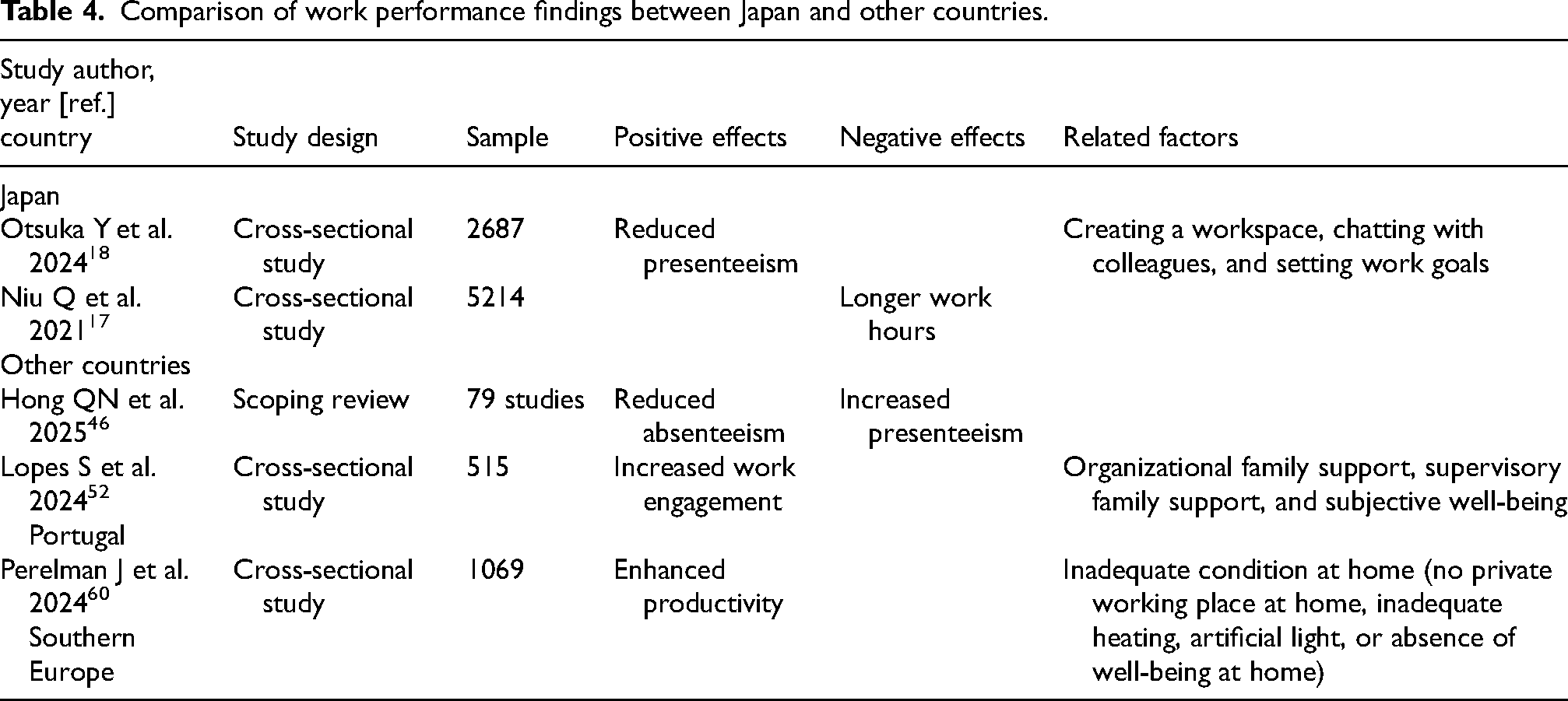
Table 4 provides a comparative analysis of the work performance outcomes associated with teleworking in Japan and other countries. In Japan, telework is linked to a reduction in presenteeism, 18 particularly when employees establish dedicated workspaces, maintain social interactions with colleagues, and set clear work objectives. However, an increase in working hours has been identified as a negative consequence. 17 Conversely, studies from other countries have documented both positive and negative effects, including reduced absenteeism, increased presenteeism, 46 and enhanced work engagement and productivity.52,60 These advantages are frequently attributed to factors such as organizational and supervisory support as well as improved subjective well-being. 52 Nonetheless, inadequate home environments, characterized by the absence of private workspaces and insufficient lighting or heating, have been identified as impediments to productivity. 60
Comparison of work performance findings between Japan and other countries.
Cultural and institutional context
Cultural expectations and institutional preparedness substantially impact teleworking outcomes. Studies conducted in Japan frequently highlight presenteeism, which may persist or even intensify in remote settings because of inadequate boundaries between work and rest. In addition, inflexible work structures and insufficient home infrastructure have been identified as major obstacles to effectively telework.10,13,17 By contrast, international contexts often report adaptive measures such as employer-supported ergonomic setups, 39 mental health programs,41,53 and flexible scheduling.23,61,69 A frequently cited advantage is the ability to save time and money, 75 which contributes to enhanced job satisfaction and work efficiency.23,27,52,59
Discussion
This structured narrative review synthesized findings from 67 studies that examined the health impacts of teleworking during the COVID-19 pandemic, with a comparative analysis of outcomes between Japan and other countries. The results identified both common and context-specific patterns across four domains: physical health, mental health and well-being, lifestyle and behavioral changes, and work performance, with particular attention to cultural and institutional influences.
Common health effects and their implications
In various global contexts, teleworking has been consistently linked to increased sedentary behavior,11,73 musculoskeletal discomfort10,13,46—particularly in the lower back and neck 35 —and lifestyle disruptions. 17 Common adverse outcomes included reduced physical activity, 37 weight gain, 54 poor dietary habits, increased alcohol consumption, 19 and tobacco use. 60 These findings underscore the urgent need to integrate ergonomic education, the proactive promotion of physical activity, and behavioral health guidance into teleworking policies and practices.
Notably, several studies, particularly from Japan, have emphasized the significance of environmental design elements such as desk height, lighting, and workspace noise in influencing both physical and psychological health.10,13 These ergonomic factors have emerged as modifiable determinants, suggesting that improvements in the physical work environment can yield broad cross-cultural benefits.
Additionally, some international studies have reported positive lifestyle adaptations, such as increased recreational physical activity and improved sleep duration, 63 particularly when telework schedules are moderate and flexible. This highlights the importance of tailored teleworking arrangements to optimize health outcomes.
Building on these insights, it is plausible that similar health determinants will influence future remote work systems mediated by avatars, making the current telework findings an essential foundation for anticipating their implications.
Divergence shaped by cultural and institutional factors
Significant differences were identified between the Japanese and international findings, particularly regarding the role of institutional support and cultural norms in mediating health outcomes of teleworking. In Japan, a higher frequency of teleworking without corresponding flexibility, coupled with limited home-office infrastructure and an office-centric culture in which physical presence is equated with commitment and productivity, has been linked to increased stress, 14 musculoskeletal strain, 10 and work–family conflict. 17
Conversely, studies from other countries have often highlighted the positive effects of flexible work arrangements,23,61,69 organizational health programs,52,53 and supervisor support on mental health and work-life balance.41,52 Some studies also reported reduced absenteeism 46 and enhanced productivity 60 when adequate home environments and psychosocial resources were available. In addition, demographic factors such as female gender35,42,53 and childcare responsibilities 53 have been reported as modifiers of telework-related health outcomes, suggesting that telework effects are not uniform across populations.
These patterns suggest that telework outcomes depend not only on individual conditions but also on broader socio-cultural logics. Country-level evidence from the Global Survey of Working Arrangements (G-SWA) supports this interpretation, indicating that cultural individualism predicts national work-from-home prevalence. 76 In more individualistic societies, remote and hybrid work typically entail less in-person managerial oversight and greater personal autonomy, which align with the norms in many English-speaking and Northern European countries. In contrast, collectivist cultures like Japan emphasize hierarchy, group harmony, and implicit communication, often prioritizing visible commitment to the organization through physical presence.
To clarify the mechanisms underlying these cross-national differences, Hofstede's cultural dimensions theory provides a useful lens. Specifically, Japan's high score in Uncertainty Avoidance (UA) and its collectivist orientation 77 suggest a preference for clear structure, in-person supervision, and high-context communication style. The abrupt shift to telework during the pandemic disrupted these expectations, creating what may be described as a “presence deficit"—a gap between traditional organizational signaling norms and new, disembodied ways of working. In this situation, Japanese workers may have experienced psychological distress due to the inability to signal reliability and loyalty through physical presence, contributing to negative outcomes such as reduced well-being, presenteeism, and overwork.14,18
From this cultural perspective, avatar-based work may offer a culturally congruent bridge, particularly in high-context societies. Avatars can facilitate a sustained digital sense of “social presence”, 78 potentially reintroducing visual and behavioral cues that are often attenuated in conventional telework. By re-embedding social rituals and informal communication in remote spaces, avatar-mediated systems may reduce the cultural friction experienced in collectivist, high-UA contexts such as Japan.
Therefore, effective implementation of avatar-based work environments should not only focus on technology or ergonomics but also integrate culturally adaptive strategies that reflect communication norms, status signaling, and workplace expectations. These insights provide a foundation for designing avatar-mediated systems that are culturally resilient and psychologically supportive.
Toward health standards for avatar-based remote work
The shift towards avatar-based work environments signifies not only technological progression but also a redefinition of human interaction within the workplace. Such environments, which rely on virtual representations and nonphysical presence, inherit many structural characteristics from the telework models examined in this review. Challenges commonly associated with traditional telework, such as physical inactivity, suboptimal ergonomics, digital fatigue, and psychological isolation, are anticipated to persist or potentially intensify in virtual settings, unless they are proactively addressed.
Moreover, as highlighted in section 4.2, the ability of avatar systems to restore social presence and non-verbal signaling may help culturally align remote work environments with local norms—particularly in societies where physical presence is strongly associated with professional identity and commitment. Accordingly, cultural adaptation should not be treated as a peripheral concern, but rather as a core component of avatar work design.
As illustrated in Figure 2, the formulation of health standards for avatar-based telework should encompass four interconnected domains: (1) ergonomic and behavioral design, (2) digital health monitoring, (3) organizational support, and (4) cultural adaptation. These components address both individual and systemic determinants of health in remote work contexts.
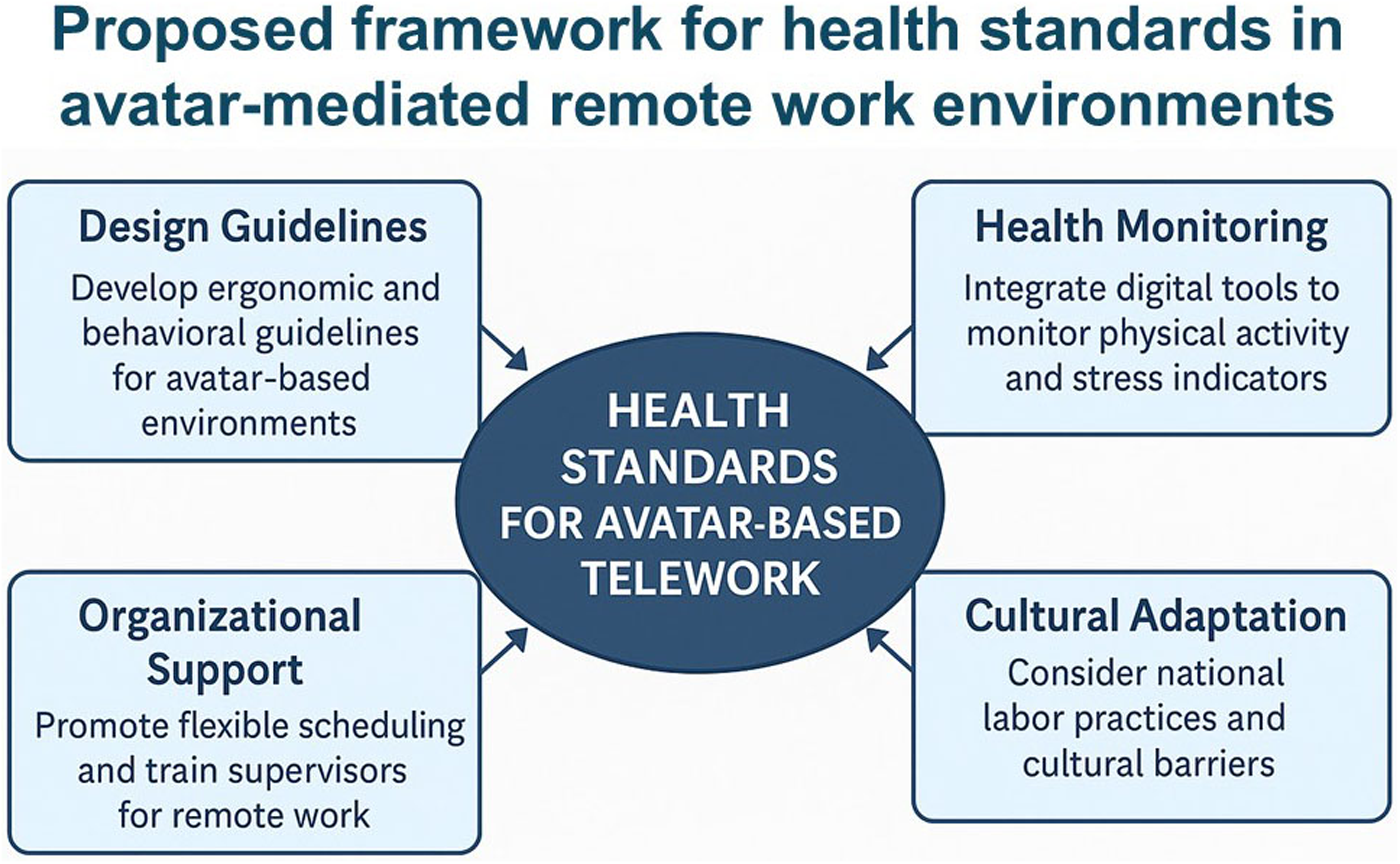
Proposed framework for health standards in avatar-mediated remote work environments. This conceptual model illustrates four core components for developing health standards in avatar-mediated remote work environments: design guidelines, health monitoring, organizational support, and cultural adaptation. These components collectively address the physical, mental, and contextual factors identified in this review.
These findings from pandemic-era telework provide actionable insights for avatar-based systems. To mitigate the identified risks and foster sustainable engagement, we propose the following recommendations:
Design guidelines: Establish ergonomic and behavioral guidelines for virtual work environments encompassing aspects such as screen positioning, posture, lighting, acoustic conditions, and scheduling structured movement breaks. Health monitoring: Incorporate digital tools to evaluate stress levels, physical activity, and digital well-being in real-time within avatar systems. Organizational support: Implement flexible scheduling and provide training for supervisors in digital leadership, remote team management, and mental health awareness. Cultural adaptation: Develop avatar-based systems that reflect context-specific labor norms, communication practices, and social expectations, using frameworks such as Hofstede's cultural dimensions to guide localization and design.
These principles should guide collaborative development of avatar-mediated work standards that emphasize health, equity, and adaptability across various social contexts.
Limitations and future directions
This review is constrained by its dependence on studies published in English and its concentration during the early- to mid-pandemic period. As teleworking continues to develop, further longitudinal and intervention-based research is necessary to establish causal relationships and to identify effective mitigation strategies. Future research should also investigate underrepresented populations, including non-office workers and individuals with disabilities, to ensure inclusive standards for avatar-based labor.
Conclusion
This review highlights the significant health implications associated with teleworking during the COVID-19 pandemic, including musculoskeletal discomfort, sedentary behavior, and psychological stress, as observed both in Japan and globally. Although these effects have been widely observed, their manifestations vary according to cultural norms, workplace practices, and the home environment. Given the structural parallels between teleworking and emerging avatar-mediated work, we advocate establishing flexible and culturally sensitive health standards for future avatar-based remote work environments. These standards should incorporate ergonomic design, mental health considerations, and institutional support systems to ensure that evolving work styles do not compromise worker well-being but rather foster sustainable and inclusive labor systems.
Footnotes
Acknowledgements
The authors would like to thank Wei-Chuan Chang and Chie Kishimoto for their dedicated assistance with the literature search and collection process for this study.
Ethical approval
Not applicable.
Informed consent
Not applicable.
Author contributions
The study was conceptualized by all the authors (A.N., T.M., T.H., S.O., H.O., H.K., K.S., and H.S.). T.H. and S.O. conducted the article screening and selection. A.N., T.M., T.H., and S.O. synthesized and critically reviewed the findings. A.N. and T.M. led the drafting of the manuscript. All authors approved the final version of the manuscript and agreed to be accountable for all aspects of this study.
Funding
The authors disclosed receipt of the following financial support for the research, authorship, and/or publication of this article: This research was supported by JST under Moonshot R&D Grant No. JPMJMS2011-65.
Declaration of conflicting interests
The authors declared no potential conflicts of interest with respect to the research, authorship, and/or publication of this article.
Data availability statement
All data generated or analyzed during this study are included in published articles and/or references.