




Abstract
This study examines how metadiscourse resources are used to achieve persuasiveness in Apple's earnings conference calls from 2013 through 2022. Adopting a corpus-assisted discourse study approach, the study reveals that self-mentions, transitions, and boosters are the three most frequently used metadiscourse resources by Apple executives. The authors detail how different types of metadiscourse contribute to the construction of three interactive roles that enhance persuasiveness. The study contributes to current studies of persuasion as a form of strategic communication. Business practitioners may benefit from learning the language practices of leading companies in order to optimize their own corporate communication strategies.
Keywords
Innovations in information and communication technology (ICT) have significantly influenced how the global financial community interacts. Financial disclosure communications such as traditional written reports and oral presentations have given way to new ICT-driven formats (Camiciottoli, 2010). Technological advances have revolutionized the business community's discursive practices and rhetorical objectives, particularly in terms of image building (Reinsch & Turner, 2006). Companies that successfully meet stakeholders’ desire for unique communication experiences likely create enhanced perceptions of their company itself. Further, to achieve the best business results, companies increasingly need to have a fruitful strategic-communication plan to persuade the general public (Mitrović, 2019).
Earnings conference calls (ECCs)—that is, the periodic reporting of a corporation's financial performance through teleconferencing with prospective investors or business partners (Cho & Yoon, 2013)—are common ICT-driven events in the worldwide financial sector. ECCs help to reduce information asymmetry between managers and investors (Price et al., 2012). The globalization of ICT has made the ECC a critical financial communication tool for international companies because it is more adaptable, cost-effective, and far-reaching than a face-to-face encounter (Pan & Chen, 2018). During an ECC, teams of business executives present quarterly financial statistics to professional investment analysts (Camiciottoli, 2018). These analysts specialize in certain business areas and frequently monitor the same firms. A question-and-answer (Q&A) session follows the presentation, allowing the analysts to communicate directly with the executives.
From a linguistic perspective, ECCs use two distinctive types of discourse: (a) highly formal, planned, and monologic language in executive presentations and (b) relatively casual, spontaneous, and dialogic language in Q&A sessions. Thus, ECCs have a dual communication function: to convey financial performance updates (an informational purpose) and to persuade listeners, as possible investors, of the company's soundness (a promotional purpose; Camiciottoli, 2013). Speakers on ECCs do more than just report on the company's finances; they actively use a variety of discursive tactics to frame their arguments and assertions and persuade the audience of what they are reporting (Pan & Chen, 2018). These discursive strategies also represent strategic communication at the level of corporate concerns and goals (Mitrović, 2019). Strategic communication can be understood as “communicating purposefully to advance (the organization's) mission,” and the term “implies that people will be engaged in deliberate communication practice on behalf of organizations, causes, and social movements” (Hallahan et al., 2007, p. 4). The objective of strategic communication in an ECC is to build trust and attract investors by creating a favorable picture of the firm (Cho & Yoon, 2013). Therefore, in ECCs, speakers are likely to employ multiple persuasive linguistic strategies to aid in their promotional function.
But ECCs continue to be understudied in terms of their persuasiveness. These persuasive strategies are worth investigating and generalizing because they would enable business professionals who attend these events to use and comprehend persuasive language more successfully. Understanding these strategies would also help investors who watch ECC webcasts make more informed investing decisions (Camiciottoli, 2018). Further, by constructing interpersonal meanings successfully, speakers in business communication settings can flexibly use and manage various interactive roles, improving the audience's comprehension and acceptance of the content (Zhang et al., 2021). The evolution of communication technologies and development of ECCs over the past 10 years have made it more vital than ever to observe and analyze how top executives create multiple interactive roles at these events. Ideally, they must act as authoritative leaders and companions to the audience in order to persuade more effectively (Zhang et al., 2021).
The public has multiple language options for interacting, and interactivity is achieved via metadiscourse (Hyland, 2005), which Hyland (1998b) defined as the interaction between speakers and listeners. In this study, we investigate how metadiscourse resources are used to achieve interactive persuasiveness in Apple's ECCs from 2013 through 2022. Previous studies indicate that metadiscourse devices can serve as an important linguistic resource to achieve persuasiveness (Ho, 2018; Hyland, 1998a). Although a substantial amount of research has been conducted on the persuasive function of metadiscourse (Liu & Zhang, 2021), few studies have explicitly examined the use of metadiscourse in ECCs. Given the popularity and significance of this genre, further explorations are worthwhile.
We chose Apple's ECC for this study because of the company's reputation. Apple is representative of the companies that rank at the top of the Fortune Global 500 list. But more important, the speaking skills of Apple executives have been widely acknowledged by both experts and the general public ever since Steve Jobs successfully presented his iPhone 1 product launch (Zhang et al., 2021). Apple, as an industry leader in computer and electronics manufacturing and services, has been listed on the stock market and is required to update their stakeholders about their most recent advancements. Consequently, the company uses ECCs as a crucial channel of strategic communication to persuade stakeholders and other interested parties.
Literature Review
In this section, we review the literature on ECCs in the fields of accounting and finance and business communication.
Studies on ECCs in Accounting and Finance
In accounting and finance, ECCs have been a topic of research since the late 1990s (Camiciottoli, 2018). The majority of research on ECCs in these fields has concentrated on analyzing how language affects trade volume, analyst forecasts, and information asymmetries (Bowen et al., 2002; Brown et al., 2004; Frankel et al., 1999). In recent years, content and textual tone analyses have been common in disclosure research (Price et al., 2012). Scholars have identified the tone of quarterly earnings press releases and connected it to indicators such as stock returns, volatility, and business performance (Davis et al., 2007; Demers & Vega, 2008; Henry, 2008). These textual analyses identified statistically significant correlations in how language is used in disclosure documents, demonstrating that managers carefully and effectively communicate information through word choices. Moreover, Price et al. revealed that language tone is a strong predictor of abnormal returns and trading volume. Similarly, Davis et al. (2015) explored the tone of ECCs, concluding that manager-specific elements such as early career experiences and engagement in charity organizations are substantially correlated with tone. And Burgoon et al. (2016) demonstrated the importance of vocal and linguistic characteristics in spotting potentially fraudulent statements in ECCs.
The vast majority of ECC disclosure studies have been undertaken in the field of accounting and finance. These studies have largely used quantitative approaches to focus on “who” reports “what” and “how much” is concerned (Tregidga et al., 2007). But such research has rarely employed a detailed textual examination and offers little information on the linguistic strategies used to achieve corporate persuasive aims. Although language itself is significant, it is generally regarded as a measurable unit that can be linked to numerous company attributes in order to statistically assess the impacts of disclosures on business performance and vice versa (Jaworska & Nanda, 2018). More recently, Tregidga et al. have argued that discursive methods in ECCs should be given more weight and that quantitative research methodologies are excessively reductionist. Additionally, accounting academics have asserted the necessity of building on methodological techniques by exploring the linguistic aspect of ECCs (Berger, 2011; Beyer et al., 2010). Following this advice, recent studies in accounting and finance have produced intriguing results pertaining to how participants at ECCs use language persuasively to attain their aims (Camiciottoli, 2018; Larcker & Zakolyukina, 2012; Price et al., 2012).
Studies on ECCs in Business Communication
In business communication studies, discourse analysts are increasingly interested in ECCs as a channel for voluntary disclosure. This field of study has been established by performing a corpus-assisted analysis of English ECCs (Camiciottoli, 2006, 2010, 2013). Camiciottoli (2010) defined the ECC's macrostructure as consisting of seven moves and characterized ECC earnings presentations as a hybrid genre of reporting and promotional discourses. Camiciottoli (2013) also analyzed the macrostructures and microrhetorical strategies of ECC presentations and earnings releases. In addition, by examining the relationship between persuasive language and ethical stances in earnings presentations, Camiciottoli (2011) found that firm leaders employ a range of explicit lexicons to emphasize their devotion to progress.
Cho and Yoon (2013) conducted a computer-assisted contrastive study to compare the corporate ECCs of Korean speakers and native-English speakers, suggesting that the ECC provides a perfect venue for studying non-native speakers’ business English proficiency. And Palmieri et al. (2015) examined argumentation in ECCs, defining the types of positions that companies take in the Q&A sections following their presentation as “descriptive, predictive, evaluative, practical, and explanatory” (pp. 125–126). That is, the researchers found that company speakers frequently used reasonable and compelling arguments to defend their evaluative and predictive positions when responding to analysts’ questions. But previous business communication studies on ECCs have only investigated a few persuasive linguistic features and are limited by the small scale of their data sets (e.g., reports from only one or two financial years). Thus, large-scale systematic examinations of the linguistic strategies used for persuasive purposes in ECCS are still lacking. In addition, as Beattie (2014) proposed, future research on financial disclosures would benefit from methodological diversity, particularly the use of computer-aided tools created in corpus linguistics that do not rely on a predetermined word list.
Corpus linguistics methods have been used outside mainstream accounting and finance to examine financial discourses, including CEO letters (Hyland, 1998a), corporate press releases (Maat, 2007), CEO presentations (Rogers, 2000), corporate social responsibility reports (Lischinsky, 2011), and investment fund managers’ reports (Bruce, 2014). But ECCs have not yet attracted similar attention from corpus linguists, and only a few studies have employed corpus methods to investigate ECCs. For instance, using a key semantic domain analysis, Pan and Chen (2018) examined the use of the English language in the ECCs of Chinese and other international companies. The researchers concluded that Chinese corporate speakers diverged notably from the speakers in other international companies in their parameter and word choices, possibly due to the greater genre awareness and cultural influences of the Chinese speakers. But this project was based solely on the results of traditional corpus tools, which lack qualitative insight into the context of language use.
Recent scholarship has paid greater attention to methodological innovations. Accordingly, linguists have begun to note the relationship between corpus linguistics and discourse analysis. For instance, McEnery and Wilson (2000) found that corpora have been utilized sparingly in discourse studies, a finding that agrees with Biber et al.'s (1998) conclusion that discourse studies “are not typically corpus-based” (p. 106). This lack of corpus-based discourse studies has motivated several linguists to endorse a new synthesis of discourse-analysis approaches and corpus linguistics methods—that is, a corpus-assisted discourse study (CADS) approach (Baker, 2006; Stubbs, 1996). CADS is defined as the research and comparison of properties of certain discourse types, including the methodologies and tools created within corpus linguistics (Partington, 2010). The use of CADS as a linguistic methodological synergy is now widely acknowledged (Ancarno, 2020). A CADS may provide more insight into corpus studies of organizational discourse because it pays special attention to the context in which language is used (p. 175), making it a particularly appropriate method for analyzing a large-scale ECC corpus. For this study, then, we use a CADS approach to examine the persuasive strategies in ECCs, thereby addressing the lack of literature on large-scale systematic examinations of this topic.
Analytical Framework
The strategic communication of organizations represents their efforts to articulate their mission as fully as possible by using the most effective methods of addressing their target publics (Mitrović, 2019). Put differently, the central goal of strategic communication is to use purpose-driven and persuasive communication to influence or have an effect on public opinion (Hallahan et al., 2007).
Persuasiveness, which is related to the effectiveness of communication, has been widely addressed by scholars (Pounders et al., 2015; Wilson & Lu, 2008), and it has been explored in different fields (Hashmi et al., 2023; Pounders et al., 2015). For example, people use rhetorical appeals to credibility, logic, and emotions to enhance their persuasiveness (Varpio, 2018). Current research offers a new theoretical perspective on the relationship between power and persuasion by exploring how people employ different linguistic resources to persuade depending on their relative power (Dubois et al., 2016). According to Dubois et al., powerful people are more independent and therefore more likely to convey information related to their competence, confidence, and skillfulness in order to persuade others. In contrast, people with less power tend to use empathetic resources associated with warmth, sympathy, and friendliness in order to seek solidarity with the audience. This finding implies that interactive roles in communication are affected by different forms of power and can directly influence the communication's persuasiveness. If corporate leaders can manage these interactive roles by skillfully switching between different levels of power, they will be more likely to succeed in being persuasive in their strategic communication. Further, the construction of interactive roles to influence persuasiveness can largely be achieved by employing metadiscourse, which offers a way of understanding the interpersonal resources that speakers use to present information (Hyland & Tse, 2004). Given that metadiscourse can help organize speakers’ stance toward either the content or the audience in an interaction (Hyland, 2000), it is recognized as an important means of building an interpersonal relationship with the audience (Hyland & Tse, 2004).
This study primarily concentrates on Q&A sessions in ECCs because these sessions are more akin to a live interrogation between company leaders and financial analysts. More important, Q&A sessions are an important opportunity to manage interpersonal relationships. The interaction between top executives and analysts in these sessions allows managers to create a favorable business image to investors (Koller & Wu, 2023). Also, prior research has demonstrated that Q&A sessions provide more relevant information than do planned speeches delivered by corporate officials (Burgoon et al., 2016).
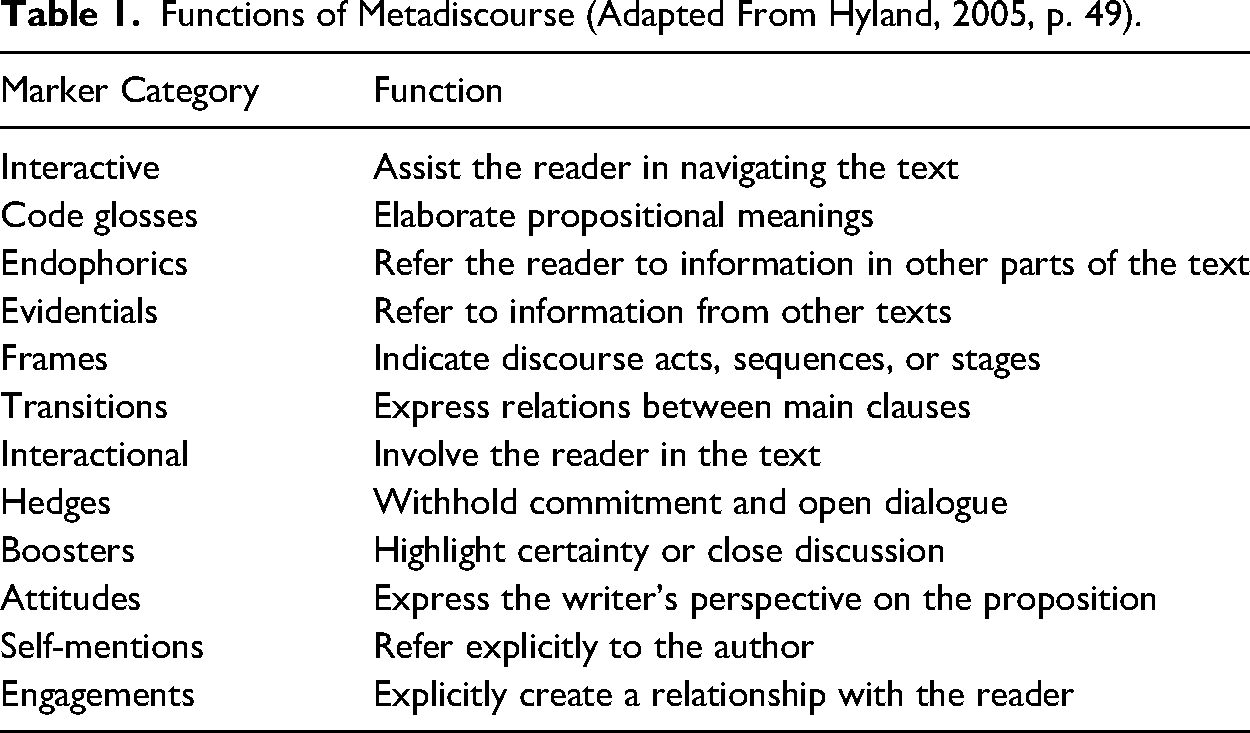
Hyland's (2005) interpersonal model of metadiscourse as a set of devices functioning as a crucial language resource for achieving persuasion in business communication serves as a theoretical underpinning for this study (Ho, 2018; Hyland, 1998a; Liu & Zhang, 2021). Metadiscourse in a text is the self-reflective expression that writers (or speakers) use to negotiate interpersonal meanings, which helps them to present a point of view and engage readers (or listeners) as members of a certain community (Hyland, 2005). Hyland presents an interpersonal model of metadiscourse that can be divided into two major categories: interactive and interactional (see Table 1).
Functions of Metadiscourse (Adapted From Hyland, 2005, p. 49).
Metadiscourse has been noted to be effective in corporate communication practices, such as workplace emails (Ho, 2018), company annual reports (Hyland, 1998a), and job postings (Fu, 2012). Although Hyland's (2005) framework has been adopted in some previous research projects, metadiscourse in spoken business genres is less studied (Hyland et al., 2022), and there has not yet been a thorough investigation of how metadiscourse is used to attain persuasiveness in ECCs. Thus, the goal of this study is to answer two research questions:
What is the pattern of metadiscourse used in ECCs? How does metadiscourse in ECCs help speakers to achieve persuasive purposes?
Methodology
We obtained Apple's ECC transcripts via Seeking Alpha, an internet platform that delivers information and documents to the worldwide financial community, including some transcripts of ECCs that can be freely accessed. The corpus of Apple's ECCs (2013–2022) consists of 121,444 tokens. All transcripts fall within a period of Tim Cook's leadership as CEO of Apple. Selecting a period with one consistent CEO decreases variability in the results. Because the transcripts contain portions of the planned presentation speeches that we are not interested in, we manually extracted Q&A sessions from each transcript and saved them as simple text files in order to acquire more naturally occurring data. In these sessions, there are usually three participating company executives—the Chief Executive Officer, Chief Financial Officer, and Senior Director of Investor Relations. There are usually about 10 analysts that are connected via telephone, but the number of analysts varies. This variation is also reflected in the word count of each transcript.
We adopted a CADS approach to the metadiscourse employed in ECCs because of its capacity to integrate a close linguistic analysis with a broader analysis made feasible by corpus linguistic methods (Ancarno, 2020). Before this analysis, we used TreeTagger to process the texts. It automatically annotated part of speech (POS), which helped to filter out expressions that would not fall into metadiscourse categories, reducing the amount of text for human coders to evaluate and thus dramatically lowering the expenses for manual categorization. Later, we carefully read and coded ECC transcripts with POS annotated by using Hyland's (2005) interpersonal model of metadiscourse. During this coding process, we did not depend entirely on Hyland's list of potential metadiscursive expressions for two main reasons: (a) the list is far from complete and (b) the determination of whether a linguistic utterance is metadiscursive should be made in context (Ho & Li, 2018). As a result, we did not include the model's accompanying list of potential metadiscursive expressions. We coded expressions that performed a metadiscursive function in their respective metadiscourse categories, achieving an interrater reliability of 92%. After resolving and correcting any discrepancies in this coding, we searched for codes using the Text Search function of AntConc 3.5.8, retrieving and automatically calculating all occurrences of metadiscourse from the corpus. Here is an extract from our coded data that illustrates our coding and labeling system (metadiscourse markers are italicized).
Our [self] growth rates are good, really [booster] good by most [booster] people's expectations, maybe [hedge] not mine [self] as much. And so [transition] we [self]’re putting a lot of energy in, just like we [self] have in other geos that eventually wound up producing more and more. So [transition] I [self]’m very [booster] excited [attitude] about it.
Results
In this section, we present our findings regarding the overall trend of the use and distribution of metadiscourse based on category. Then we discuss and provide examples of how metadiscourse resources are employed to construct three interactive roles—a competitive company, a caring corporation, and a close friend—in order to persuade the audience.
Overall Trend
Figure 1 shows the trend of the normalized frequencies (per thousand words) of metadiscourse use in Apple's ECCs from 2013 through 2022. As Figure 1 shows, the highest three frequencies of metadiscourse use occurred in 2020 quarter (Q)2, 2020 Q3, and 2022 Q4—all during the COVID-19 pandemic. The average frequency of metadiscourse use occurring after the outbreak of COVID-19 is notably higher than it was in the preceding period (158.41 versus 150.29, respectively). Company executives may have felt the need to employ additional metadiscourse markers in order to persuade and reassure stakeholders during this uncertain time.
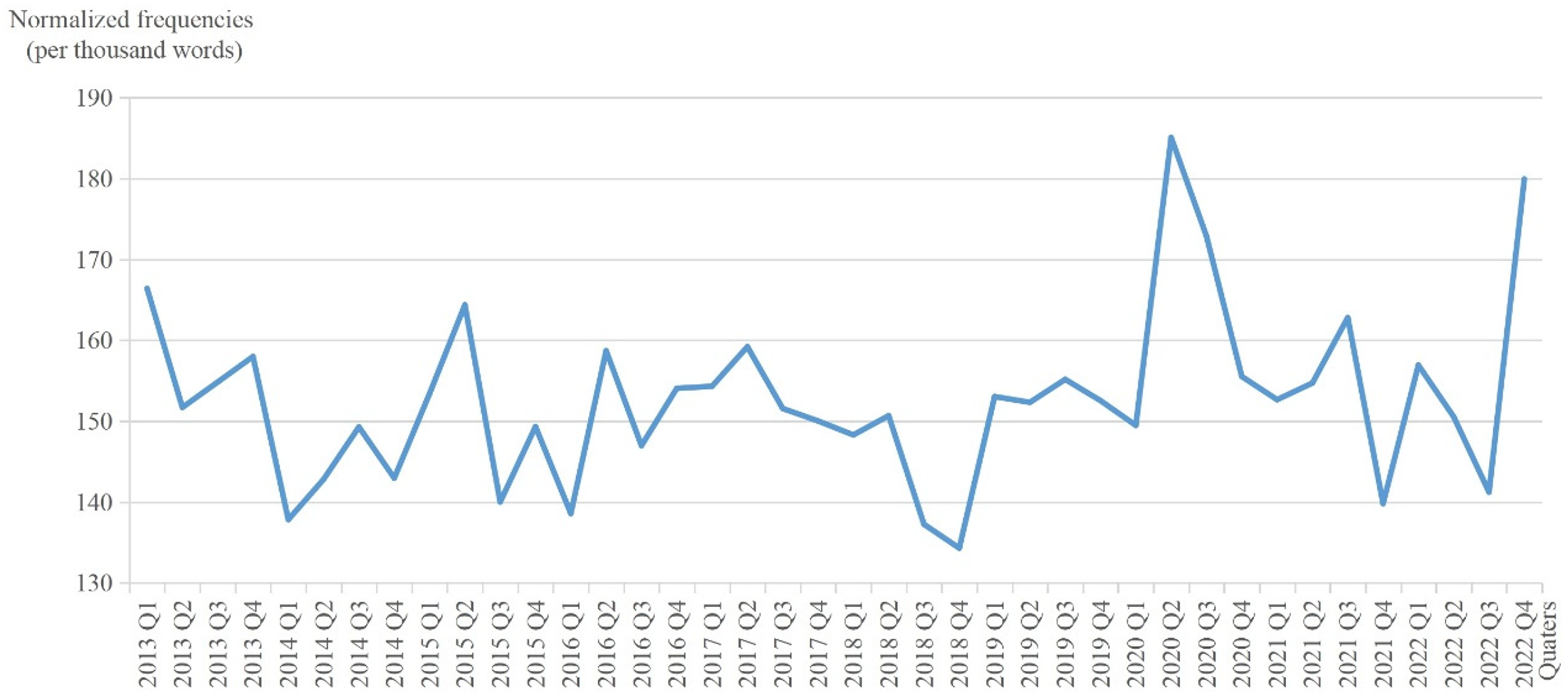
Normalized frequencies of the metadiscourse employed in Apple's ECCs (from 2013 through 2022).
Distribution Patterns
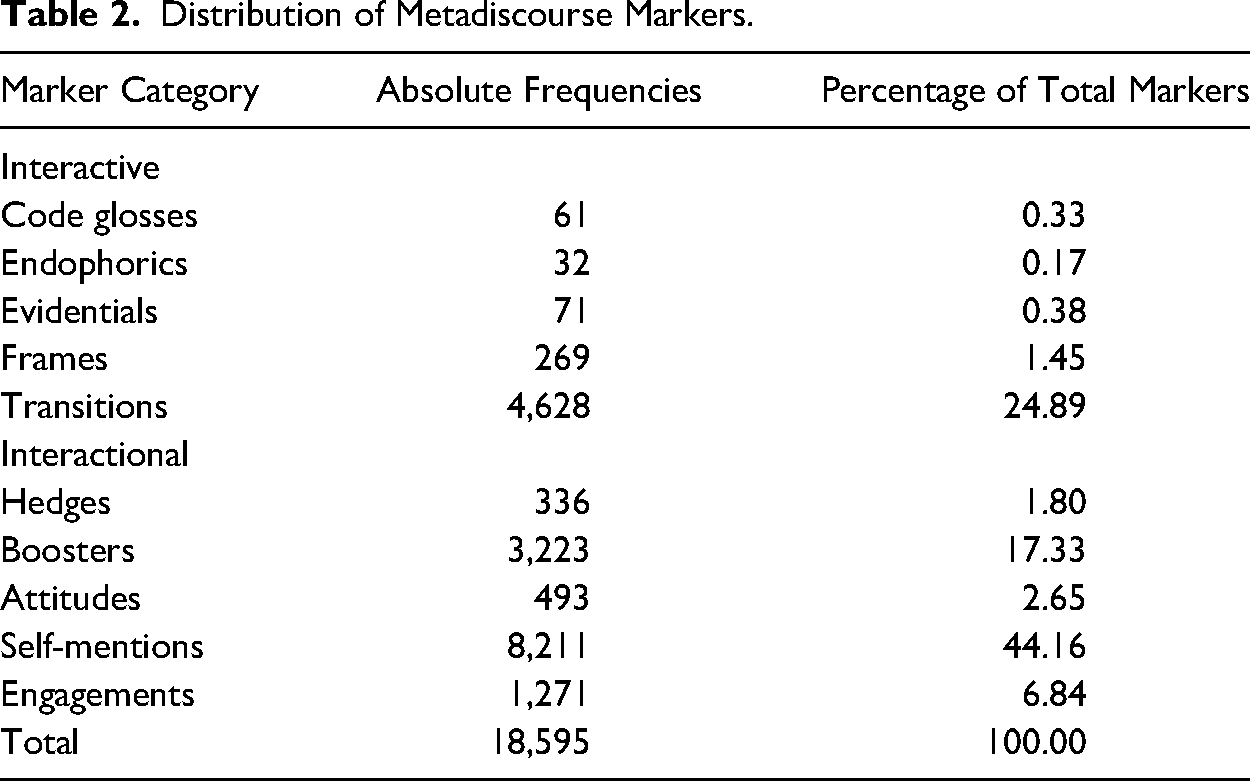
Table 2 lists the distribution of metadiscourse markers in the ECCs. The company executives employed more than twice as many interactional as interactive metadiscourse markers (13,534 versus 5,061, respectively). Of the interactional categories, self-mentions were used the most (44.16%), followed by boosters (17.33%), engagements (6.84%), attitudes (2.65%), and hedges (1.80%). Of the interactive categories, transitions were used most frequently (24.89%). Frames and evidentials constituted a much lower percentage of the markers used (1.45% and 0.38%, respectively). And code glosses and endophorics were used the least (0.33% and 0.17%, respectively).
Distribution of Metadiscourse Markers.
Metadiscourse helps to construct credible, affective, and rational arguments in discourse (Hyland, 2005), performing a persuasive function. We will now examine the top-three most frequently used metadiscourse markers in the corpus: self-mentions, transitions, and boosters. The targeted metadiscourse markers are italicized in each example.
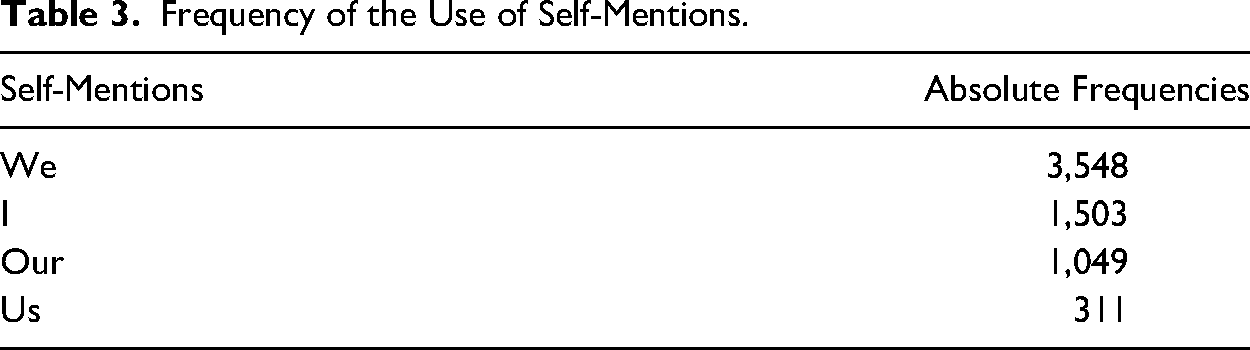
First, self-mentions are the most frequently used metadiscourse markers, accounting for 44.16% of all metadiscourse markers. These markers include but are not limited to first-person pronouns in plural (“we,” “our,” and “us”) and singular form (“I”). Table 3 lists the four self-mention markers that are used most frequently in the corpus. The use of “I” in these self-mentions commonly refers to CEO Tim Cook himself, emphasizing his leading position in this presentation, as in Example 1:
Frequency of the Use of Self-Mentions.
Example 1: And so I [self] would look at those things and when I [self] look at those things, I [self] would as an investor, I [self] feel great, as a personal investor I [self] feel great. (2014 Q4)
CEO Cook uses “I” to express an individual point of view, which reinforces his leading role within the organization (Skorczynska, 2020). In contrast, “we,” “our,” and “us” are used to refer to the corporation and its institutionalized voice as well as the Apple team, showing the expertise of the firm and its excellent design team, as in Examples 2 and 3: Example 2: And we [self]’re very optimistic that this too shall pass and that the market and particularly us [self] will grow again. (2016 Q2)
Example 3: Our [self] objective is to make great products, provide the best customer experience, and get our [self] customers satisfied, engaged, and loyal to our [self] ecosystem. (2018 Q4)
The use of self-mention expressions in the corpus contributes to the establishment of company devotion and accountability, serving as credible appeals or ethos—a means of persuasion (Hyland, 2005). The collective pronouns “we,” “us,” and “our” designate a single agent and suggest to the audience that the corporation is accountable and reliable (Liu & Zhang, 2021). That is, the use of the collective form indicates the solidarity of the Apple team. This aura of reliance and dependability is extended by connecting the plural pronoun with explicit statements of the company's aims—to make outstanding goods and provide the greatest customer experience—making the audience confident in the company by demonstrating that all members of the team will work hard to achieve the same goal. This finding aligns with Skorczynska's (2020) suggestion that by increasing the dialogue between audiences and speakers, the interplay of first-person voices likely increases the effectiveness of persuasion.
Second, transitions are the most common type of interactive resources. As a crucial source for achieving text cohesion and coherence, transition markers indicate an intricate and logical relationship between clauses, making the text more persuasive. Of the three types of transition markers—“addition, comparison, and consequence” (Hyland, 2005, p. 50)—the Apple team favored additions (e.g., “and”), followed by consequences (e.g., “so,” “because”) and then comparisons (e.g., “but”; see Table 4).
Frequency of the Use of Transitions.
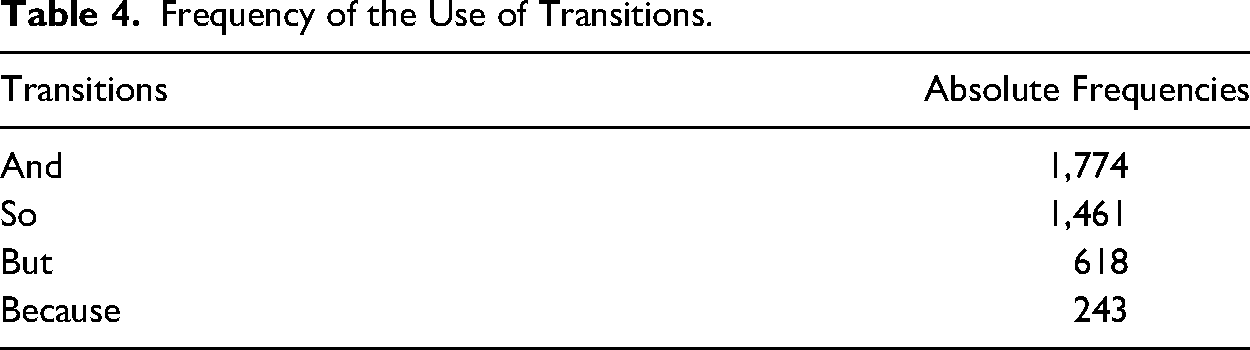
In Examples 4 and 5, the addition marker “and” serves as a transition to information that supplements the previous clause, thereby enhancing the text's persuasiveness: Example 4: We have the strongest hardware portfolio that we’ve ever had. And [transition] we have a great product pipeline for the future, both in products and in services. (2021 Q1) Example 5: The fact that, obviously, that installed base is growing, that's a positive and [transition] it's a great foundation for the future. (2022 Q4)
These examples both refer to the future in the information added by the transitions. The corpus shows that the Apple team makes frequent “futurological” predictions (Fairclough, 2003, p. 167) that follow the transitional word “and.” These predictions are relevant, targeting major interest groups such as financial stakeholders and government regulators in order to build their trust and support.
Fairclough (2003) emphasized the link between such future projections and social power. Being able to generate futurological predictions is crucial for firms because these future claims can legitimize, justify, and persuade present actions. For futurological predictions to be legitimized, they require the authority of the issuing organization. In Examples 4 and 5, the clause preceding the “and” transition builds perceived authority and helps to legitimize the futurological prediction in the clause following it, a clause that in turn establishes authority by making a prediction. Thus, the Apple team shapes the opinion of other parties to be favorable toward Apple's corporate perspective by employing this strategic communication tactic.
Example 6 demonstrates how the Apple team uses transitions of consequence: Example 6: We’re now planning to expand our channel before the holiday because [transition] we’re convinced that the Watch is going to be one of the top gifts of the holiday season. (2015 Q3)
In Example 6, the word “because” is a transition to a clause that explains the reason for the consequence in the clause that precedes it. That is, the transition “because” helps listeners to understand the logic (Hyland, 2005) behind Apple's decision to expand its “channel before the holiday.” In this way, consequence transitions help to make rational arguments in order to persuade audiences.
Examples 7 and 8 demonstrate how the Apple team uses transitions of comparison: Example 7: I feel like we are reasonably well positioned in China. I’m sure we can do better, but [transition] I think we are doing fairly well there. (2015 Q4) Example 8: They are obviously tough competitors, but [transition] we feel that we have the best products by far. (2013 Q2)
In these two examples, the transition marker “but” is employed to highlight declarations of discrepancy or counterclaim. Such counterclaims emphasize how the present situation makes up for previous inadequacies or varies from previous situations (Kim & Lim, 2013). The employment of a comparison transition, then, helps speakers to position themselves in response to listeners’ objections (Hyland, 2004). In Example 7, the speaker wants to convince the audience that although “we can do better,” what “we are doing” now is already good. In Example 8, the speaker is claiming that despite having “tough competitors,” “we have the best products.” Thus, the Apple team's use of the transition marker “but” makes for a successful persuasion technique by gaining sympathy or acceptance from the listeners (Hyland, 2004).
And third, boosters significantly contribute to promotional discourse. The nature of ECCs as a hybrid genre determines the high frequency of the boosters. Because a corporate ECC is both descriptive and promotional, ECC presenters employ boosters in order to develop a favorable business image and increase the audience's confidence in the company (Pan & Chen, 2018). Table 5 presents the top 10 boosters employed by the Apple team.
Frequency of the Use of Boosters.
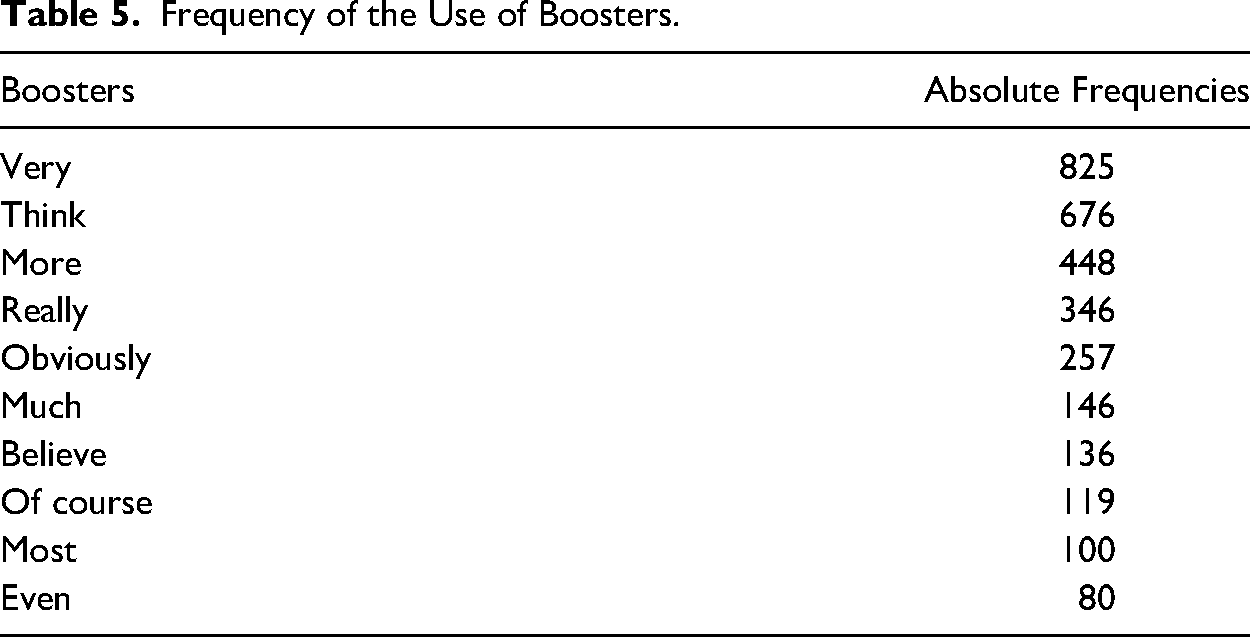
Example 9 shows how the Apple team uses boosters descriptively: Example 9: The next thing is with the iPhone SE, we have seen our ability to attract even [booster] more [booster] customers into the platform with an incredible [booster] product that is at a new price point for us with the latest [booster] technology, and so we’re optimistic about attracting even [booster] more [booster] customers with that. We also look at our pipeline, and we’re very [booster] excited about what's in our pipeline. (2016 Q2)
Example 9 contains several boosters referring to the iPhone SE, a new product released by Apple in 2016, such as a commendatory adjective (“incredible”) and various expressions of comparison (e.g., “even more,” “latest”). Such comparative and superlative word forms are boosters for adjusting the strength or force of assessments, which are classified as graduation (Martin & White, 2005). Further, according to Hyland (2000), employing boosters can help sharpen the value of the information presented. In this example, the use of boosters emphasizes the company's technological brilliance in order to persuade stakeholders and potential investors that the company is trustworthy and authoritative. Thus, this example represents the team's successful perception management that aligns with Apple's institutional and corporate goals.
Example 10 shows how the Apple team uses boosters promotionally: Example 10: We are also broadening the scope of many of these services. If you take Apple Pay as an example, it started off as the most [booster] convenient, most [booster] private and most [booster] secure way to make a payment in a store or in an app. (2019 Q1)
The use of superlative adjectives in this example helps the speaker to persuade listeners of the excellence and superior quality of Apple's service Apple Pay. This glowing description of Apple Pay makes this appear to be more of a promotional piece than an objective explanation of the service. Value-laded evaluations impact audiences by persuading or even misleading listeners to perceive things in a certain way (Hunston & Thompson, 2000). The booster “most” is carefully selected to increase emotional engagement. When a well-known brand portrays a service as the “most convenient,” “most private,” and “most secure,” it becomes harder for the audience to reject it (Liu & Zhang, 2021). Apple's use of boosters in this example parallels its use of superlative adjectives when it presented its new iPad Air (Liu & Zhang, 2021). An essential strategic communicative objective of ECCs is to enhance the company's image because reputation, brands, and corporate culture represent the nonmaterial assets that are the basis of sustainable long-term success (Zerfass & Viertmann, 2017). The use of boosters in this example emphasizes certainty, closes down options (Hyland, 2005), and increases the effectiveness of affective appeals, contributing to the persuasive effect and furthering strategic communication.
Discussion
In the following discussion, we use examples to demonstrate how Apple strategically adopts different metadiscourse markers in the ECCs to construct three interactive roles—a competitive company, a caring corporation, and a close friend—to achieve effective persuasion.
A Competitive Company
Apple employs metadiscourse resources in the ECCs to portray itself as a competitive company in terms of its current state and the quality of its unreleased products and services. Examples 11–13 show how these metadiscourse markers are strategically employed to increase persuasiveness: Example 11: We [self] are very [booster] excited [attitude] by the level of customer response that we [self]’ve got for our [self] current portfolio. We [self]’re super [booster] confident [attitude] about the pipeline of products and services that we [self] have, and therefore [transition], we [self] believe [booster] that there is great value in our [self] stock. (2015 Q2) Example 12: We [self] believe [booster] that it's the best [booster] smartphone in the world. Our [self] customers are telling us [self] that. The market is telling us [self] that. We [self]’re doing well in virtually [booster] every [booster] corner of the world. And so [transition] we [self]’re very [booster] bullish [attitude] that it does have legs. (2015 Q1) Example 13: And we [self] are continuing to invest in innovative products and feel really [booster], really [booster] confident [attitude] about our [self] product pipeline in both hardware, software and also our [self] services. We [self] have the best [booster] ecosystem by far, and [transition] we [self]’re just going to keep augmenting it, and making it better and better, and [transition] that shows up in both our [self] royalty ratings and our [self] customer stat and [transition] I [self] feel very [booster] good [attitude] about our [self] competitive position. (2013 Q2)
The frequent use of boosters (e.g., “very,” “super,” “really”) with attitude markers (e.g., “excited,” “confident,” “bullish,” “good”) expresses the speaker’s confidence in the subject. The combination of self-mentions, boosters, and attitude markers makes announcements more persuasive by demonstrating that the speaker is responsible for the content of the statement. Boosters indicate a high level of certainty in the statement made (Hyland, 2005) whereas attitude markers address the present view of the company or shape how the quality of products and services is perceived. When the CEO presents the state of the company and introduces new products in these examples, he acts as an authoritative leader—a powerful figure. Accordingly, he employs boosters and attitude markers to stress the Apple team's skillfulness and the company's competence. This finding echoes Dubois et al.'s (2016) finding that when a powerful corporate leader presents information related to competence, the persuasive effect is more likely to be achieved. Thus, these examples show that by employing metadiscourse, Apple establishes a confident and competitive company image to enhance persuasion.
A Caring Corporation
As Examples 14–17 demonstrate, Apple employs metadiscourse resources in the ECCs to portray itself as a caring corporation that always puts its customers first: Example 14: And so [transition] market shares are important [attitude] and unit volumes are important [attitude], but [transition] these other things for us [self] are extremely [booster] important [attitude], because [transition] we [self] are all about customer experience and enriching lives. (2013 Q2) Example 15: We [self] started the product because [transition] we [self] believe [booster] that the most [booster] important [attitude] saying is that our [self] customers love [attitude] the products and want them. (2013 Q3) Example 16: And so [transition] what we [self]’ve done with that is and [transition] we [self] started last quarter is we [self]’ve made the iPhone 4 even [booster] more [booster] affordable and which has made it more [booster] attractive to first time buyers. (2013 Q2) Example 17: We [self]’ve made that very [booster] elegant and very [booster] easy. (2013 Q2)
In Examples 14 and 15, the use of a combination of boosters and attitude markers such as “extremely important” and “most important” clearly indicates that Apple considers and understands its consumers’ concerns, empathizing with their beliefs and judgments. These markers influence consumers’ attitudes about and relationships with corporations. The high frequency of the combination of boosters and attitude markers such as “extremely important” and “most important” may be attributed to the genre characteristics of the ECC (Catenaccio, 2008). Thus, an important communicative purpose of such markers in these examples is to promote a good image of the company by letting customers know that they are valued.
Examples 16 and 17 describe products and services offered by Apple, which are common topics in ECCs. Adjective boosters in the phrases “even more affordable,” “more attractive,” “very elegant,” and “very easy” are linked to values that can shield the presentation from debate or dispute (Van Leeuwen, 2008). Because the introduction of new products may suggest a legitimacy crisis in organization management (Kostova & Zaheer, 1999), the CEO again presents himself as the leader of a caring corporation in order to demonstrate the high quality of Apple's products and services and make a powerful emotional contact with the audience.
A Close Friend
As Examples 18 and 19 demonstrate, Apple employs metadiscourse resources in the ECCs to portray itself as a close friend who shares the feelings of customers: Example 18: If you [engagement] look at the absolute number of upgraders, it was the highest [booster] that we [self]’ve seen in any quarter. And [transition] if you [engagement] look at the switcher number, it's the highest [booster] that we [self]’ve seen in any quarter. If you [engagement] look at the upgrade rate, it's similar to last year. (2017 Q1) Example 19: It also, obviously [booster], you [engagement] can also do things with HomePod like use it as a speaker phone. And so [transition] if you [engagement]’re talking to your [engagement] parents or [transition] they’re talking to their grandkids, it's unbelievable audio quality for speaker phone. You [engagement] can also have Siri call for you [engagement], you [engagement] can send messages, you [engagement] can get an Uber car or a Lyft car. And so [transition] there is just a whole variety of things. (2018 Q1)
In these two examples, the CEO employs the engagement marker “you” to background his authoritative identity as a leader and foreground a new identity as a close friend with the same status as the audience. By using the engagement marker “you,” the CEO implies that the audience perceives the product as he does and shares his sentiments and feelings, creating a common understanding that increases persuasion. There are numerous modes of address in English that can cultivate this kind of familiarity (Baker, 1992). The use of second-person rather than third-person plural forms suggests a greater degree of closeness in the context. In Examples 18 and 19, the engagement marker “you,” which addresses the audience directly by using second-person pronouns, improves the interactive effect by closing the distance between the speaker and the listener. The use of “you” and “your” also has the interlocutory effect of implying a close and harmonious interaction (Fu, 2012). When the CEO tries to reduce his power by putting himself into the audience's shoes, he adopts engagement markers that demonstrate friendship and closeness, echoing Dubois et al.'s (2016) finding that low-power communicators can use warmth to persuade the audience.
In sum, companies’ desire to persuade present and future shareholders drives their ECCs. These Apple ECCs employ metadiscourse resources strategically to construct positive interactive roles that vary in power—a competitive company, a caring corporation, and a close friend—in order to enhance persuasive effectiveness. Such strategic communication can be explained by legitimacy theory, which is used as a main paradigm for explaining organizations’ social disclosure practices (Bebbington et al., 2008). According to this theory, legitimacy is a resource that businesses require in order to operate and survive. Legitimacy is granted to institutions that adhere to social standards and expectations. Strategic communication, then, is critical in closing the legitimacy gap between how an organization wants to be viewed and how it is actually viewed (Campbell et al., 2003). Such communication can create trust, develop relationships, and build legitimacy that in turn secures room for an organization to operate and maneuver (Zerfass & Viertmann, 2017). Suchman (1995) analyzed numerous ways for maintaining legitimacy. One tactic entails communicating certain personal characteristics in order to evoke a favorable attitude from receivers. Apple employs this tactic in order to persuade and maintain its legitimacy by using metadiscourse resources to successfully manage different interactive roles that construct it as a competitive company, caring corporation, and close friend.
Conclusion
The results of this study reveal how metadiscourse resources contribute to the portrayal of different interactive roles in order to make interpersonal communication persuasive. These findings contribute to recent studies of persuasion as a form of strategic communication and provide new insight into how power is exercised and revealed linguistically in organizational discourse. This study also broadens the purview of metadiscourse analysis to include spoken financial communication. Further, by implementing the CADS approach, the study demonstrates that a high-quality manual analysis supplemented by corpus tools can comprehensively reveal the persuasive nature of ECCs and achieve wide generalizability of findings in a cost-effective way. Practically, the study emphasizes the significance of promoting awareness of the genre specificity of ECCs. Business practitioners may profit from the details of interpersonal communication presented in the findings and discussion by learning from the language practices of a notable corporation and incorporating its effective communication strategies in their own enterprises. On a pedagogical level, these findings can be used in financial communication courses for teaching how to employ metadiscourse resources when finely calibrated forms of persuasion are necessary.
But this study has limitations due to practical restrictions. First, the analysis was limited to Apple's ECCs. Incorporating additional ECCs from other well-known organizations will enhance the generalizability of the findings and provide more insights into the discursive strategies utilized by top managers to achieve persuasion. Second, future research could use larger data sets to measure audience perception in order to determine the success of persuasion in ECCs and conduct follow-up interviews with audiences to obtain more relevant data. Finally, we did not investigate correlations between the persuasive communication tactics used in the ECCs and performance metrics such as stock returns. Future studies could use a larger number of speech samples to examine the economic consequences of a corporation's use of discursive communication strategies.
Footnotes
Acknowledgments
The authors would like to thank the editor and the anonymous reviewers for their insightful comments and suggestions. We are also grateful to Lori Peterson for her meticulous copyediting.
Declaration of Conflicting Interests
The authors declared no potential conflicts of interest with respect to the research, authorship, and/or publication of this article.
Funding
The authors disclosed receipt of the following financial support for the research, authorship, and/or publication of this article: This work was supported by the Shanghai University of Finance and Economics, (grant number 2020110925, 2024120073).
