




Abstract
Management practices are changing globally due to rapid workplace digitalization. The COVID-19 pandemic has created new demands for management and affected how information and communication technology and communication channels are used in everyday work. Despite the centrality of competent communication in the workplace, little is known about how managers can conduct technology-mediated communication appropriately and effectively. This article presents a problematizing review that develops and articulates a theoretical framework of managers’ technology-mediated communication competence (TMCC). The framework is based on business, management, and communication research that presents managerial TMCC as a critical process influencing individual, group, and organizational outcomes.
Keywords
Digitalization is a megatrend that is expected to have a global influence on all business fields and workplaces in the postpandemic period and beyond (Sneader & Singhal, 2021). Societies across the globe are becoming increasingly mediatized (Couldry & Hepp, 2013), and new technologies are changing how people interact (Spitzberg, 2019) and work (Wang et al., 2020). This revolution, known as Industry 4.0, presents an opportunity to reimagine how people will work (Lund et al., 2021), and it is enabled by robotics, artificial intelligence (AI), the Internet of Things (IoT), and other “technological developments in information and communications technology (ICT)” (Marnewick & Marnewick, 2020, p. 942). These developments represent a major technological evolution and the advent of a digital paradigm (Fu & Barbour, 2024).
Since the sudden occurrence of the COVID-19 pandemic in 2020, reliance on and investments in digitalization have increased because restrictions and lockdowns made it difficult for people to meet in person. When a much broader proportion of the workforce had to work from a distance and conduct virtual teamwork, organizations had to innovate and implement new remote work and electronic leadership (e-leadership) practices (Contreras et al., 2020; Cortellazzo et al., 2019). In contrast to traditional leadership, e-leadership emphasizes integrated face-to-face and mediated communication, applying ICT tools to lead virtual teams in dispersed organizations (Cortellazzo et al., 2019; Salin & Koponen, 2023). In e-leadership, communication between managers and employees is mostly technology mediated even though in-person meetings might sometimes occur.
Another technological trend is the increased use of AI in the workplace (Bankins et al., 2023; Bharadiya et al., 2023; Cazzaniga et al., 2024; Deloitte, 2024; Huang et al., 2019; McKinsey & Company, 2023). In many organizations, routine tasks are now performed by software and machines (Huang et al., 2019), and work conducted by humans has shifted to tasks involving interpersonal service and creative thinking (see Huang & Rust, 2021). The demand for AI-related professional skills is increasing across industrial sectors in the United States (Stanford University Human-Centered Artificial Intelligence, 2023). Working with different AI-systems, however, requires constant learning and skill development both from employees and managers.
Management communication is different from other forms of workplace communication in digital spaces because managers’ roles, duties, and responsibilities are different from those of employees. The purpose of managerial communication is to achieve the expected results of the organization (Kansal & Singhal, 2018) and enable both task-related and relationship-related communication in the digitalized workplace (Elyousfi et al., 2021), the latter of which is often considered the more challenging part of leading remote workers (Jämsen et al., 2022). Managers are responsible for adopting and applying ICT for both personal and organizational purposes (Van Wart et al., 2019). They are expected to use ICT to build trust and relationships with employees, organize and lead virtual teams, and be clear in their communication (Elyousfi et al., 2021; Kothakota & Lutter, 2023; Van Wart et al., 2019; Yu et al., 2023).
Although people are increasingly acclimated to technology-mediated communication and the use of multiple media in their work, reliance on ICT has instigated a host of challenges for managers (Brynjolfsson, 2023; Faulconbridge et al., 2023; Van Wart et al., 2019; Vial et al., 2022). Because organizations are constituted and sustained by information and communication, these challenges are primarily communicative in both cause and effect. For instance, limited bandwidth and network coverage, users’ technological incompetence, and the lack of nonverbal presence often result in miscommunication, impaired leader support, insufficient trust in leaders, poor team motivation and cohesion, and problematic management of process and change (Van Wart et al., 2019). Workers worldwide have been feeling increasingly disconnected from their workplace, leaving their jobs at much higher than normal rates, and quietly quitting by diminishing their engagement in work (Fletcher & Thornton, 2023; Lund et al., 2021). Also, like all major societal crises, the pandemic exposed workers and their organizations to an infodemic of distorted, false, and malicious information, which continually undermined sound decision-making (Matusitz, 2022; Spitzberg, 2024). Thus, adapting to a more technological and digital workspace brings new communication challenges for managers. To navigate the challenging digitalized workplace, managers need communication competence.
Communication competence refers to communicating both appropriately and effectively in a given context (Spitzberg, 2013). Despite extensive research and theory on interpersonal and communication competence in general (e.g., Hannawa & Spitzberg, 2015), there is a dearth of scholarship on the changing requirements regarding managers’ communication competence in the digitalized workplace. And managerial research is still relatively scarce on how Industry 4.0 affects managerial tasks such as leading teams or decision-making (Bankins et al., 2023; Gladden et al., 2022; Marnewick & Marnewick, 2020). According to Vial et al. (2022), “there is a paucity of guidance on how organisations arrange tasks, people, and resources to leverage AI to deliver value” (p. 671). Therefore, researchers have called for research and theory on technology-mediated communication competence (TMCC; Koponen et al., 2023). This study is our response to this call.
In this review study, we explore a body of prior work related to managers’ communication competence in the workplace in order to develop a theoretical framework of managers’ TMCC. Management and leadership are complementary, so organizations need managers with leadership skills (Henderikx & Stoffers, 2022; Toor & Ofori, 2008). The process of digitalization brings challenges for managers at all levels in an organization (Gladden et al., 2022; Henderikx & Stoffers, 2022; Vial et al., 2022). Both top and middle managers need competencies to support successful organizational change through both routine and disruptive contexts such as pandemics in which managerial uncertainty was experienced globally (Doshi et al., 2021). Thus, we address this research question: What communication competencies do managers need to manage employees appropriately and effectively in the evolving digitalized workplace? Implicit in this question is the subordinate question: How can such competencies be organized theoretically?
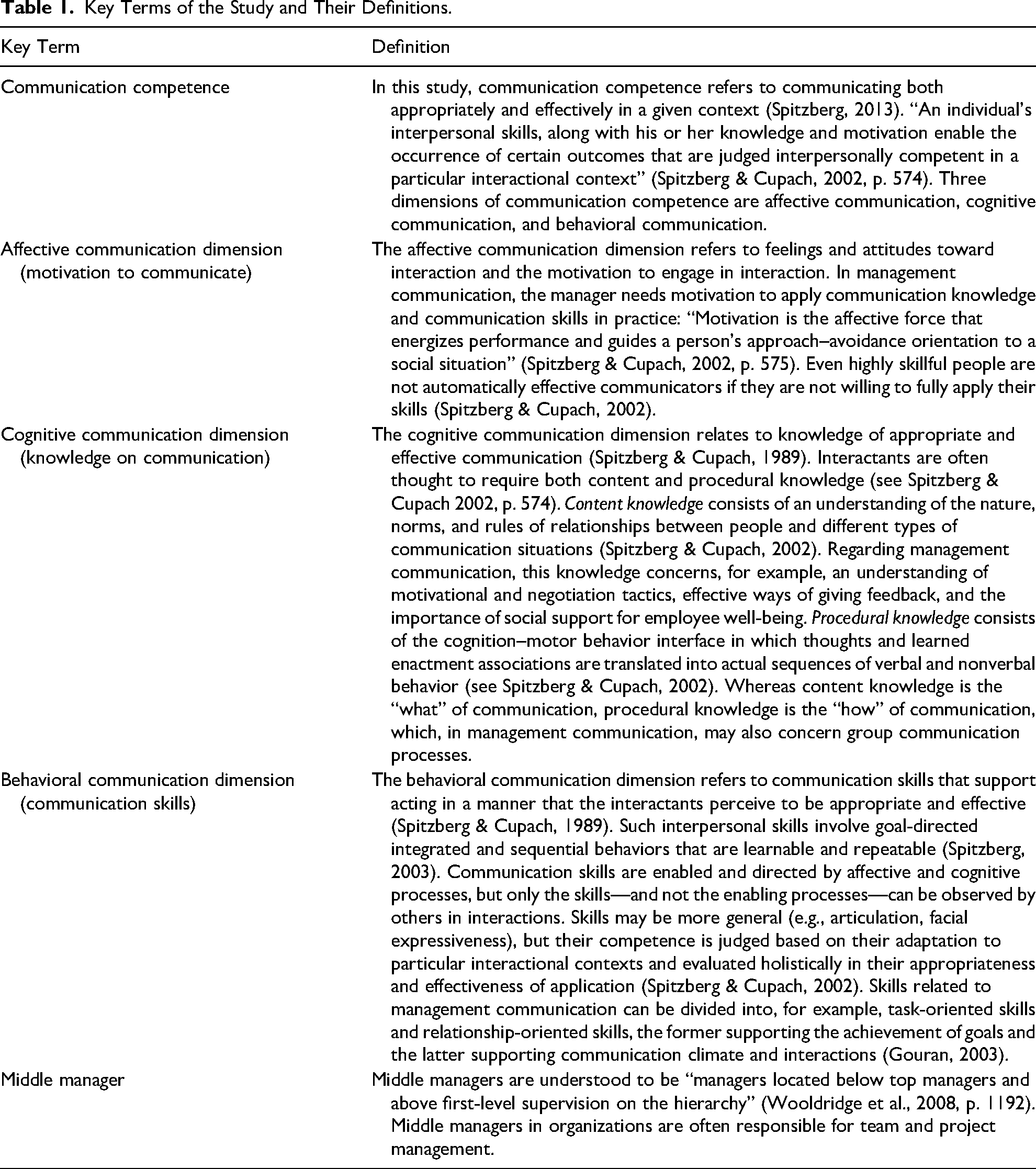
In this problematized review (Alvesson & Sandberg, 2020; Patriotta, 2020), we conduct a thematic analysis of the relevant literature on communication competence in the context of managing the digitalized workplace. Based on our findings, we propose a theoretical framework that represents the key components of TMCC in the digitalized workplace. Table 1 lists the key terms of the study and their definitions.
Key Terms of the Study and Their Definitions.
Changes in Workplace Communication and Management
Workplaces are always evolving along with cultures, societies, regulatory regimes and institutions, and technologies (Brynjolfsson, 2023; Gladden et al., 2022). Although long-term predictions have historically been fraught with error, historical trends and short-term projections have yielded important insights. Research on the future workplace anticipates that work will be organized more dynamically to adapt to an accelerating pace of change in markets (De Bruyne & Gerritse, 2018). Automation will lead to a continuous reduction in administrative processes, resulting in more complex, knowledge-intensive workplaces. Digitalization and technology-based activities will result in new ways of working—both in workplace communication and in management—requiring new capabilities within organizations (De Bruyne & Gerritse, 2018; Wiesenberg et al., 2017).
Changes in Workplace Communication
The increased use of AI is also changing workplaces. In many organizations and industries, routine tasks (e.g., transforming data, documenting information, inspecting equipment, scheduling work and activities) are now performed by machines (Huang et al., 2019; McKinsey & Company, 2023). Work conducted by humans has shifted significantly to focus more on interpersonal service (e.g., consulting) and creative thinking tasks (e.g., analyzing, processing, and evaluating information; formulating and implementing policy). One implication of these trends is that future employees will need to be more people-oriented than data-oriented (Huang et al., 2019). Thus, they will need to possess “soft skills” (Chaka, 2020; Fletcher & Thornton, 2023; Succi & Canovi, 2020; Teng et al., 2019). Moreover, as the use of AI in the workplace becomes more prevalent, future teams will include nonhuman coworkers, such as avatars and robots (Marnewick & Marnewick, 2020). Therefore, for effective team collaboration, new communication practices are needed to enable the integration of human and nonhuman communication.
Given the accelerated global shift from location- to home-based office work due to the COVID-19 pandemic, many employees and managers have had to adjust to technology-mediated means of communication with their coworkers. And given this increased access and acculturation to remote work, it is not surprising that employees have reported that they want a more flexible working model (Lund et al., 2021).
Changes in Management
With routine work increasingly being performed by machines, managers have needed to put more effort into communicating and coordinating with people (Huang et al., 2019). This trend has been amplified by the global pandemic as restrictions and regulations have spatially restricted proximal, dense, and colocated workplaces. These changes have significantly disrupted markets and highlighted the need for adopting more extensive e-leadership (Contreras et al., 2020). Avolio et al. (2000) provided an early definition of e-leadership as “a social influence process mediated by AIT [advanced information technology] to produce a change in attitudes, feelings, thinking, behavior, and/or performance with individuals, groups, and/or organizations” (p. 617). Over a decade later, they refined their definition by highlighting the importance of the context in which e-leadership occurred (Avolio et al., 2014).
More recently, Roman et al. (2019) redefined e-leadership as “a set of technology-mediated social influencing processes intended to change attitudes, feelings, thinking, behavior and performance.” They considered that these social-influencing processes depend on a leader's “ability to communicate clearly and appropriately, provide adequate social interaction, inspire and manage change, build and hold teams accountable, demonstrate technological know-how related to ICTs, and develop a sense of trust in virtual environments” (p. 862). Furthermore, Van Wart et al. (2019) defined e-leadership as “the effective use and blending of electronic and traditional methods of communication. It implies an awareness of current ICTs, selective adoption of new ICTs for oneself and the organization, and technical competence in using those ICTs selected” (p. 83). Therefore, the latest definitions of e-leadership emphasize managers’ communication competence, which is required when helping employees transition to remote work environments (Mikkelson et al., 2023).
Previous studies have shown that competent communication helps create, maintain, and deepen social relationships at work and advance psychological, social, and occupational health and workplace productivity (e.g., Forrest & Swanton, 2021; Shockley-Zalabak, 2015). Research has highlighted that managers must have communication competence in order to guide expert work, manage leader–follower relationships, and lead teams and organizations toward successful outcomes and performance (Castro et al., 2022; Elyousfi et al., 2021; Rouhiainen-Neunhäuserer, 2009). Furthermore, previous research has consistently shown that motivation, satisfaction, and commitment are connected to higher quality work performance and productivity in the workplace (e.g., Mikkelson et al., 2015). Managers’ appropriate and effective communication is also related to employee outcomes across remote, hybrid, and in-person work experiences (Mikkelson et al., 2023). But there is a lack of a coherent conceptualization and understanding of the nature of communication competence in the digitalized workplace, which is problematic because “over time, prominent theories and perspectives may no longer adequately describe current managerial realities and challenges” (Post et al., 2020, p. 358). New knowledge is needed because technological trends, such as digitalization, cause fundamental changes in the business environment, which in turn affect its management (Post et al., 2020).
Problematizing Review
In this study, we conduct a problematizing review, which is a distinct type of review based on “the ideal of reflexivity; reading more broadly but selectively; not accumulating but problematizing; and the concept that ‘less is more’” (Patriotta, 2020, p. 1273). In contrast to an integrative review (e.g., Chaka, 2020), a problematizing review pursues new ways of thinking (Alvesson & Sandberg, 2020; Patriotta, 2020), focusing on selecting core readings instead of considering the entire body of research related to the phenomena under study (Patriotta, 2020). This selective review leaves room for the authors’ critical voices to emerge, to re-evaluate existing research, and to start new conversations rather than consolidate and synthesize existing knowledge (Alvesson & Sandberg, 2020; Patriotta, 2020; Post et al., 2020).
We began by conducting a search using multiple Boolean conditional terms related to the digital workplace (e.g., “digital*,” “Industry 4.0,” “IT,” “AI,” “artificial intelligence,” “robot*,” “ICT or information communication technolog*,” “manage*,” “leader*,” “organization*,” “AND communication OR competen* AND/OR model*”). Browsing over 30 search engines (e.g., Business Search Premier, PsycINFO, and Google Scholar), we restricted the search to scholarly periodicals. One or more of us examined the results to identify the most recent studies focused on the intersection of workplace digitalization, communication, and managerial challenges. We also examined relevant book chapters. From the hundreds of results, we selected core research papers from the business, management, and communication literature on communication competence involving technological issues (e.g., AI, robotics, computing, algorithmic management). We also wanted to explore what kinds of models of managers’ communication competence in digitalized workplaces already exist and how other researchers have identified managers’ most important competencies in this context.
To focus our problematized review, we set the following selection criteria: articles that (a) contained two or more of the search terms in the title or abstract; (b) were relatively recent (i.e., published after 2000); (c) directly considered the intersection of communication, leadership or management, and the challenges presented by digitalization, AI, robotics, or ICTs; and (d) proposed a formative model integrating the concepts or principles put forward. We excluded studies focusing on employee competencies needed in Industry 4.0, general skills required in the digitalized workplace, and competencies at the organizational level. Our data, then, consisted of 21 articles meeting these criteria.
We conducted a thematic analysis (Braun & Clarke, 2006) in which each article was read by at least one of us. Next, three of us independently identified the focus of each article, confirming that it was relevant to AI–Robotics–Technology, and determined whether the article included a theoretical model related to communication competence. Then, after tabulating the key concepts and theoretical models, the three of us each independently analyzed the main themes related to TMCC. Table 2 presents the results of this analysis.
Analysis of the Reviewed Articles (N = 21), Including Their Focus, Model, and Main Themes.
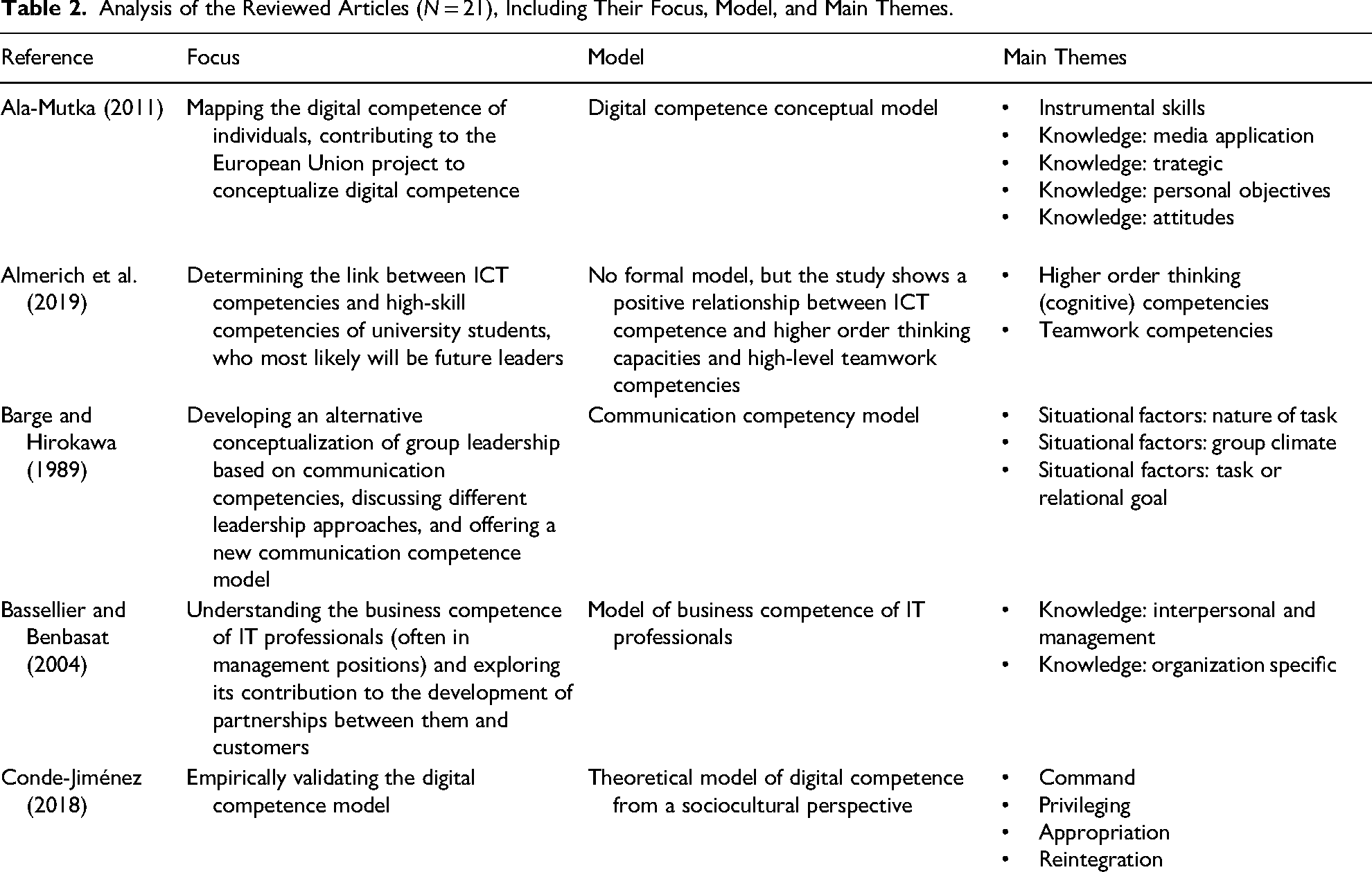
We tabulated all the competencies and concepts as main themes (see Appendix), resulting in a list of 200 main themes. Three of us individually analyzed the similarities and differences between the themes and identified the main thematic components of managers’ TMCC. We then cross-checked our results by calculating the number of instances in which the same theme was connected to the same main thematic component, achieving 92% agreement. Then we resolved the remaining discrepancies through collaborative negotiation and assigned a single label (Creswell, 2009). If a concept did not match any of the components, we labeled it as an outlier. We found four outliers, which were related to personality and resilience (see, e.g., Magano et al., 2020). Finally, we formed our theoretical framework based on the identified components.
Theoretical Framework of Managers’ TMCC
A long-established model of communication competence specifies three fundamental families of enabling concepts: motivation (affective), knowledge (cognitive), and skill (behavioral; Spitzberg & Cupach, 1989). Most subsequent theoretical approaches to communication competence have included these three components (e.g., Deardorff, 2006; Morreale et al., 2007; Spitzberg, 2006; Spitzberg & Changnon, 2009), and integrative approaches to social expertise and performance identify similar components (i.e., motivation, intelligence for knowledge, skills/ability; Wild et al., 2023). Although affective and cognitive processes cannot be fully observed, communication skills (i.e., behavioral components) are observable (Spitzberg, 2006). This tripartite model evolved into a model with five components: motivation, knowledge, skills, context, and outcomes (Spitzberg, 2013).
But an important yet often overlooked point is that competence is itself conceptualized as a subjective judgment of an interactant's appropriateness and effectiveness, which is, in turn, a partial function of that interactant's motivation, knowledge, and skills. No given behavior or skill will always be perceived as appropriate and effective. Thus, theoretical claims must examine what factors increase the likelihood of such judgments rather than what behaviors or skills are definitionally competent. Effectiveness, then, refers to the degree to which communication achieves its goals in a relatively advantageous manner whereas appropriateness refers to the degree to which communication is legitimate in a given context and according to socially regulated contextual norms (Spitzberg & Cupach, 2011). The communication competence framework (Spitzberg, 2013; Spitzberg & Cupach, 1989, 2002, 2011) is concerned with the essence of competent communication and how it is linked to the outcomes of competence.
This theoretical understanding of communication competence, which has been applied in various fields of communication—such as interpersonal (Spitzberg & Cupach, 2002), marital (Spitzberg & Cupach, 2011), intercultural (Spitzberg & Changnon, 2009), and media literacy (Spitzberg & Record, 2020)—is a heuristic for organizing research on competent communication in the management context. The three core communication components (i.e., affective, cognitive, and behavioral) provide the basis for our theoretical framework of TMCC. We have adopted the tripartite concept because it provides a more comprehensive understanding of this complex phenomenon than would be possible by focusing on communication skills alone (see e.g., Hargie, 2010) and because it has inspired a considerable amount of empirical (e.g., Koponen et al., 2019; Laajalahti, 2014; Spitzberg & Cupach, 1989) and theoretical research (Spitzberg, 2013, 2015).
Understanding Competent Communication as a Contextual Phenomenon
Competent communication is contextual (Graves, 2021; Spitzberg & Brunner, 1991) and varies according to cultural, chronological, environmental (situational), relational, and functional factors (Spitzberg & Cupach, 2011). For example, the behavioral component (skills) has been assessed differently in various contexts (Spitzberg, 2006, 2013). Moreover, the observers’ and the participants’ perceptions of the context determine the diverse expectations regarding communication competence (Spitzberg, 2000, 2013). Therefore, a context-specific approach is warranted for studying competent communication.
In this study, we focus on leading or managing employees in a substantially digitalized workplace context and approach communication competence as multimodal communication (i.e., verbal, nonverbal, and technology mediated). In e-leadership, management communication is mostly technology mediated but may also involve in-person face-to-face meetings. And a hybrid mode of working (working some days per week at the office and some days remotely) has become common (Jämsen et al., 2022), requiring managers to master communication in both in-person and technology-mediated settings.
After face-to-face interaction, video is currently the second-richest communication medium for transmitting verbal and nonverbal messages (Bharadwaj & Shipley, 2020) and pursuing the feeling of social presence. Thus, use of video tools (e.g., Skype, Microsoft Teams, Zoom, GoTo Meeting, and Google Meet) has become typical in the digitalized workplace. Video enables visually seeing and almost synchronously interacting with another person (see Okabe-Miyamoto et al., 2021), as do many online chat tools with video capabilities (e.g., Messenger and WhatsApp with video). On the other hand, asynchronous interactions are enabled, for example, via email, websites, text messages, and online text-based chats. Various different digital technologies have their own special characteristics as well as pros and cons, and managers need to consider the dark side of digital communication, such as Zoom fatigue (see Bailenson, 2021), Zoom anxiety (see Okabe-Miyamoto et al., 2021), and technostress (Banerjee & Gupta, 2024), when they consider what kind of communication channel is the most appropriate for the task at hand (task–media–fit model; Leek et al., 2016).
The increased use of AI and robotics (AIR) at the workplace also sets new expectations for managers. For example, routine tasks are increasingly performed by software and machines (Huang et al., 2019), work processes are automated, and algorithms help in managerial tasks (Sumitra et al., 2021). Thus, managers constantly need to reorient (i.e., motivation) and learn (i.e., knowledge) and apply new routines (i.e., skills) related to the advanced technology that the workplace has adopted.
Key Components of Managers’ TMCC
Based on our thematic analysis, we identified seven components related to managers’ TMCC: affective communication, cognitive communication, general communication skills, team communication skills, e-communication skills, technical leadership skills, and outcomes. The affective and cognitive communication components are the internal processes in an individual's communication behavior that cannot be directly observed by others (Spitzberg, 2006). The general communication skills component comprises the abilities needed across a variety of managerial communication situations. The team, e-communication, and technical leadership components consist of contextual communication skills that are vital for managers in the digitalized workplace. Team communication skills facilitate working in relatively small, interdependent, task-oriented groups whereas e-communication skills facilitate interaction via communication technologies. And technical leadership skills represent a specialized understanding of the technical aspects related to work. Finally, the outcomes component consists of results in different management levels: self-management, dyadic, group and team, organizational, and interorganizational. Next, we elaborate on each component of our theoretical framework of TMCC (see Figure 1).
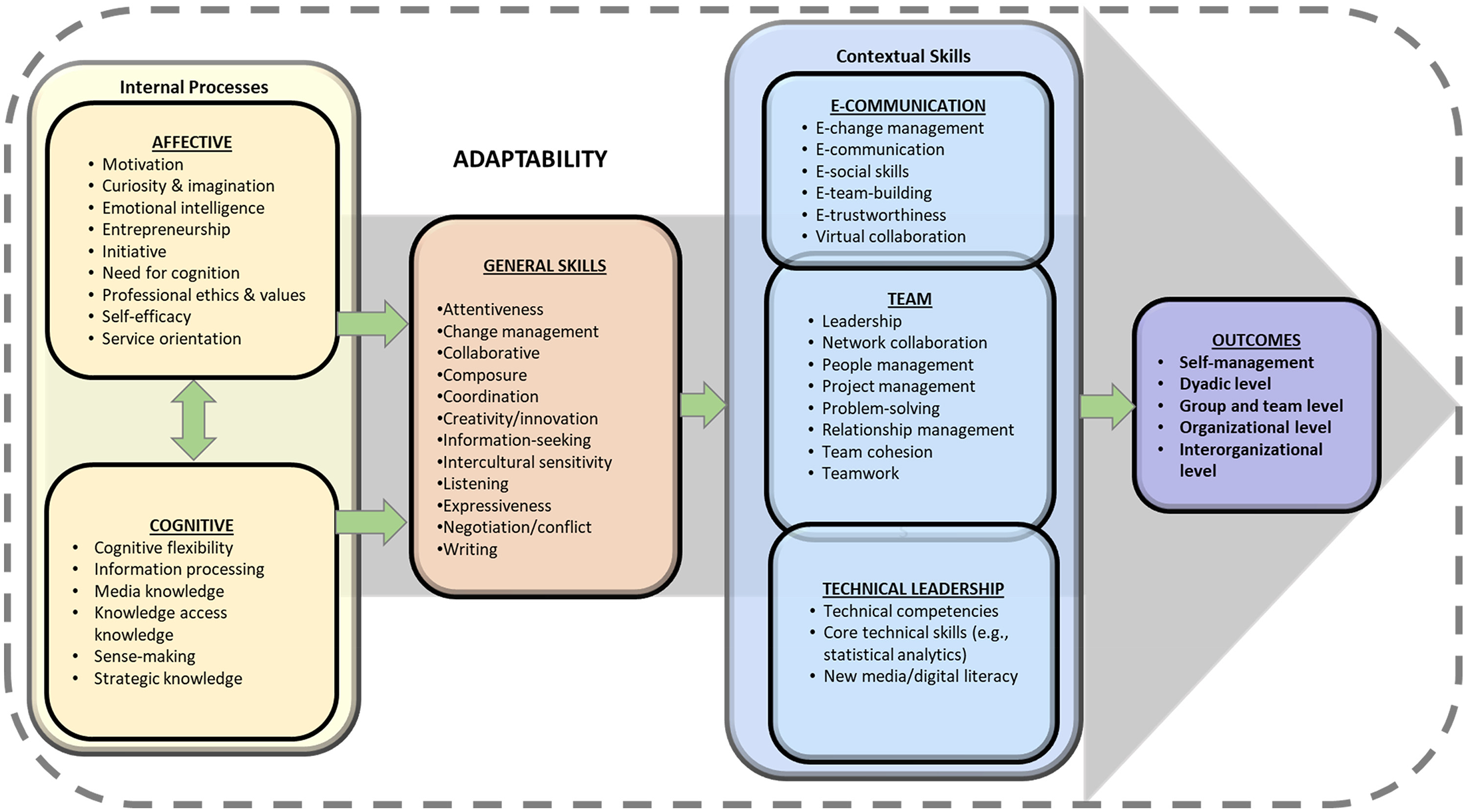
A theoretical framework of managers’ technology-mediated communication competence.
Internal processes: Affective communication
The affective communication component is an internal process that involves feelings and attitudes toward interactions and the goals of, aversions toward, and motivations for engaging in interaction (Spitzberg & Cupach, 2002). Motivation is a crucial element of competent communication because even highly skilled people may not be competent communicators if they are unwilling or too anxious to apply their skills (Spitzberg, 2006).
Motivation has been a central concern of management since at least the 1970s (see Latham & Pinder, 2005) and continues to occupy an important place as industry 4.0 faces significant cultural shifts in the workforce and workplace. Furthermore, the importance of motivation is evidenced by the recognition that managers need to motivate their staff to adapt to frequent work-related changes (e.g., increasing remote work, constantly changing ICTs; Sumitra et al., 2021). Our review shows that a number of studies highlight motivation (Spitzberg, 2006; Spitzberg & Record, 2020) and other elements of the affective communication component, such as emotional intelligence (Lee & Meng, 2021; Magano et al., 2020; Marnewick & Marnewick, 2020; Moldenhauer & Londt, 2019), curiosity and imagination, initiative and entrepreneurship (Sousa & Wilks, 2018), and service orientation (Moldenhauer & Londt, 2019). For example, a manager with a service orientation anticipates, recognizes, and meets others’ needs before these are articulated (Moldenhauer & Londt, 2019).
Leading project teams in a digitalized workplace also requires emotional intelligence (EI; Marnewick & Marnewick, 2020): the “ability to perceive, appraise, and express emotion; to access and/or generate feelings when they facilitate thought; to understand emotion and emotional knowledge; and to regulate emotions to promote educational and intellectual growth” (Mayer & Salovey, 1997, p. 10). EI has significant overlap with the cognitive component because managers with EI can increase the motivation of employees by facilitating their interpretations of others (sense-making), thereby increasing the likelihood that they will have rewarding interactions with them. Furthermore, previous studies have found that EI correlates with transformational leadership (Palmer et al., 2001), which suggests that leaders with EI are able to effectively observe and respond to their subordinates. As managers at all levels will increasingly need to adapt to the use of AI in the workplace, they will need EI to complement the digital context and compensate for its affective deficits (Moldenhauer & Londt, 2019).
Internal processes: Cognitive communication
The cognitive communication component (Spitzberg & Cupach, 1989) is an internal process that involves knowing what and how to communicate appropriately and effectively. According to Spitzberg (2006), this “knowledge can be operationalized through such constructs as self-monitoring, planning, cognitive complexity, and experience” (p. 638). In the communication literature, interactants are often perceived as requiring both content and procedural knowledge (Greene, 1997; Herde et al., 2019; McIlroy et al., 2012; Spitzberg & Cupach, 2002).
Several studies we reviewed suggest that content and procedural knowledge are vital (see Spitzberg, 2006; Spitzberg & Record, 2020). For instance, Spitzberg (2006) defined computer-mediated communication (CMC) knowledge as “the cognitive comprehension of content and procedural processes involved in conducting appropriate and effective interaction in the computer-mediated context” (p. 641). A distinction between content and procedural knowledge can be found in the knowledge component of the competence model developed by Spitzberg and Record (2020)—the Media Expertise Dynamic Integrated Activity (MEDIA) model. And some of the studies emphasize the ability to gather, process, analyze, assess, optimize, and remember information (Devece, 2013; Moldenhauer & Londt, 2019; Sousa & Wilks, 2018; Spitzberg & Record, 2020; Sumitra et al., 2021). For instance, managing massive amounts of data (Moldenhauer & Londt, 2019) and evaluating and analyzing information (Sousa & Wilks, 2018) are important for the competent management and success of small- and medium-sized enterprises.
Knowledge related to strategy, business acumen, management, and leadership was highlighted by some of the studies (Ala-Mutka, 2011; Bassellier & Benbasat, 2004; Kansal & Singhal, 2018; Lawson, 2019; Lee & Meng, 2021). Leaders need to be skilled in strategic thinking to set roadmaps (Kansal & Singhal, 2018), plan and set goals (Lawson, 2019), report and control actions (Lawson, 2019), and engage with stakeholders (Kansal & Singhal, 2018). Moreover, critical thinking, creative problem solving, outside-the-box thinking, and continuous learning are considered important aspects of the cognitive communication component of leadership (Lee & Meng, 2021; Marnewick & Marnewick, 2020; Moldenhauer & Londt, 2019; Spitzberg & Record, 2020; Sumitra et al., 2021).
But leaders should also have knowledge about the professional ethics, values (Lawson, 2019), and attitudes (Ala-Mutka, 2011) associated with leading people in the digitalized workplace. In that respect, the affective and cognitive components overlap. Lee (2009) argued that ethical e-leadership in virtual teams is crucial because it improves employees’ effectiveness and job satisfaction. Managers who are ethically competent, then, are likely to develop a set of institutional ethical principles, nurture a corporate culture of ethical decision-making, establish conditions under which ethics need to be involved, and attend to the ethical implications of adopting new technology (see, e.g., Airos, 2009; Gal et al., 2020; Lynn, 2021; Martínez et al., 2021; Rice & Young, 2023).
General communication skills
The general communication skills component refers to the interpersonal communication skills that enable a leader to act in a manner that interactants perceive to be appropriate and effective (Spitzberg, 2013). Although researchers have acknowledged that skills are also tied to affective and cognitive processes, only a person's manifest behavioral skills can be directly observed by other interactants (Hargie, 2010; Spitzberg & Cupach, 2011). In other words, cognitive and affective processes influence outcomes only when they are enacted in behaviors that are observable to other communicators in a given context.
Previous studies have identified over 100 communication skills from the communication competence literature (see Spitzberg & Changnon, 2009; Spitzberg & Cupach, 2002, 2011). Of course, there are more skills. For example, Upwork (2023), an online freelance network, claims that it has identified more than 10,000 skills across its “client community.” As new technologies are adopted, new skills and adaptations of existing skills will be required; however, core communication skills (e.g., speaking, listening) will still be fundamental. In general, as Spitzberg put it (2006), “it appears that skills in the nonmediated context are relatively translatable to the mediated context” (p. 643), which seems increasingly likely as media become richer and more synchronous in their signal representation. In our review, we found several skills that are generally needed for interpersonal communication competence. One of the conceptual components with which these skills are sometimes aligned is the macro–mezzo–micro, or molar-to-molecular, component of abstraction (Spitzberg, 2003, 2015) because the skills range from macrolevel skills (e.g., being able to speak well; Sousa & Wilks, 2018) to highly specific microlevel skills (e.g., being able to ask relevant questions in order to obtain a clear understanding; Van Heugten et al., 2017). Fundamental communication skills, such as listening (Van Heugten et al., 2017) and writing (Sousa & Wilks, 2018), are also discussed in the data.
Instead of listing all possible skills, we grouped interpersonal skills into skill clusters (see Spitzberg, 2006, 2015) that together represent a comprehensive typology of face-to-face interpersonal skills. Such clustering has the advantage of allowing antiquated skills (e.g., faxing) to be removed and new skills (e.g., virtual reality) to be added over time without invalidating the cluster itself. Many studies identify attentiveness (e.g., showing interest in and concern for others and paying attention to them), composure (e.g., showing confidence and assertiveness and being in control), coordination (e.g., managing topics and the timing, initiation, and closure of conversations), and expressiveness (e.g., using vivid nonverbal and verbal expressions) as basic general communication skills (Engstrom & Helens-Hart, 2023; Spitzberg, 2006; Spitzberg & Changnon, 2009; Spitzberg & Cupach, 2002, 2011). Also, many studies emphasize the importance of skills in negotiation and conflict management (Lawson, 2019; Moldenhauer & Londt, 2019; Spitzberg & Record, 2020), change management (Lawson, 2019), collaborative communication (Moldenhauer & Londt, 2019; Spitzberg & Record, 2020), creativity (Moldenhauer & Londt, 2019), information seeking, and the production and conveyance of messages (Spitzberg & Record, 2020). Finally, some studies highlight intercultural communication skills, such as the capacity to use language effectively in different cultural and professional settings (Marnewick & Marnewick, 2020; Van Heugten et al., 2017).
As Figure 1 indicates, adaptability is vital for competent communication. Adaptability, the most commonly used concept in communication competence research and theory (Spitzberg & Cupach, 1989), broadly refers to the ability to optimize the selection and performance of communicative behaviors according to contextual norms, constraints, demands, and resources (Klarner et al., 2013). In this sense, adaptability is “the ability to initiate or respond to change” (Johnstone & Wilson-Prangley, 2021, p. 1), which involves cognitive and affective skills to be able to choose the most appropriate and effective skills for a given context. Because adaptability involves applying various other abilities, it is a meta-ability for all the action-assembly processes involved in interaction (Greene, 2021). Our review revealed that adaptability is considered particularly important for managers in certain situations, such as when they need to adapt previous strategies to face new and unexpected environmental conditions (Moldenhauer & Londt, 2019), and studies emphasized agility, flexibility (Lee & Meng, 2021; Sousa & Wilks, 2018), novel and adaptive thinking (Marnewick & Marnewick, 2020), and adaptive facilitation (Endersby et al., 2017) as important skills for managers to have in such situations.
Contextual skills: Team communication skills
The team component is a contextual skill that will likely become even more important in the Industry 4.0 context, in which the amount of teamwork, virtual teams, and project work will likely increase (Magano et al., 2020; Marnewick & Marnewick, 2020). Leaders in the digitalized workplace will need team communication skills (Almerich et al., 2019) to develop and facilitate team cohesion (Kansal & Singhal, 2018) and collaboration (Lawson, 2019; Sousa & Wilks, 2018), foster relationships between people (Lawson, 2019; Moldenhauer & Londt, 2019), solve complex problems (Moldenhauer & Londt, 2019), and set and deliver goals (Barge & Hirokawa, 1989; Kansal & Singhal, 2018). These skills relate to the two dimensions of organizational life: socioemotional relations and task orientation (Jämsen et al., 2022).
Contextual skills: E-communication skills
The e-communication component is a contextual skill of e-leadership. As e-leadership practices are increasingly required, researchers have begun to explore new competencies associated with e-leadership. Van Wart et al. (2019) identified six e-competencies that e-leaders should possess: e-communication skills (in communicating clearly, not conveying unintended messages that confuse the receiver, and managing communication flow), e-social skills (in providing leader support), e-team-building skills (in motivating teams, holding teams accountable, and recognizing teams and team members), e-change management skills (in managing changes), e-technology skills (in being familiar with relevant ICTs, being able to blend traditional and virtual methods, and having a basic knowledge of technology and technological security), and e-trustworthiness (being trustworthy in a virtual environment, maintaining a work–life balance, and managing diversity).
Digital experience will help managers in developing appropriate messages for digital channels (Lee & Meng, 2021). Furthermore, virtual communication skills (Sumitra et al., 2021), virtual collaboration with humans, and integration of human and nonhuman communication are important for managers (Marnewick & Marnewick, 2020). Due to the increased remote work and virtual work environment, managers need flexibility in work location and work time (Sumitra et al., 2021).
Contextual skills: Technical leadership skills
The technical leadership component is a contextual skill that refers to technical competencies (Marnewick & Marnewick, 2020), such as core skills related to statistical data analysis techniques (Lee & Meng, 2021), simulation and modeling (Kansal & Singhal, 2018), automated processes (Sumitra et al., 2021), and data mining (Lee & Meng, 2021). A nuanced understanding of technology (Endersby et al., 2017), analytics (Lawson, 2019), and algorithms and data security (Lee & Meng, 2021; Sumitra et al., 2021) is crucial for leaders who are managing via technological applications and technology-mediated communication. Therefore, future managers will need competencies and digital literacy in using new technologies, artificial intelligence, and algorithms (Lee & Meng, 2021; Marnewick & Marnewick, 2020; Sumitra et al., 2021). They will also need skills in identifying value-creation opportunities for their customers (Sumitra et al., 2021).
Outcomes
The outcomes component refers to the purpose of managerial communication—that is, to achieve the expected results (Kansal & Singhal, 2018). As Figure 1 illustrates, managers’ TMCC facilitates outcomes related to self-management, dyadic relationships (between the managers and their subordinates), teams and groups in the workplace, and organizational (within the organization) and interorganizational (outside and between organizations) contexts; however, no competency guarantees or directly causes outcomes for two reasons. First, the meaning of any given interaction partly depends on how all participants intentionally and unintentionally respond. And second, causal processes are mediated at least in part by factors that are external to and beyond the organization's control (e.g., pandemic, recession). But identifying the competencies that are most highly associated with the desired outcomes makes it possible to determine the actions that are most likely to optimize those outcomes (Spitzberg, 2013). In sum, when managers increase their TMCC, they are more likely to achieve their preferred outcomes.
Discussion
To build a new theoretical understanding of the communication competence that managers need in the digitalized workplace, this study has analyzed selected articles from the fields of business, management, and communication that explore communication and management in the digitalized workplace. We will now elaborate on the theoretical and practical implications of the study.
Theoretical Implications
First, this study contributes to the existing management literature by answering the calls to consider the impact of digital transformation on management (Henderikx & Stoffers, 2022; Marnewick & Marnewick, 2020; Torre & Sarti, 2020) and to develop research and theory on TMCC (Koponen et al., 2019; 2023; Laitinen & Valo, 2018; Spitzberg, 2006). Although previous studies have explored the competencies required of managers in the digital workplace (see, e.g., Lawson, 2019; Van Wart et al., 2019), no comprehensive theoretical framework has been proposed for the communication competencies that these managers need. As far as we know, we are the first to formulate an inclusive, integrated, and inductively generated theoretical framework of TMCC that synthesizes existing theoretical and empirical research results and provides a foundation for advancing managers’ TMCC.
Second, we contribute to the existing literature by showing how the managers’ communication competencies that have been identified in previous studies can be organized coherently and theoretically. Instead of simply listing some vaguely defined soft skills (Fletcher & Thornton, 2023; Magano et al., 2020; Succi & Canovi, 2020; Teng et al., 2019), such as people orientation (Huang et al., 2019), we have synthesized our analysis of these competencies with extensive research and theory on communication competence (e.g., Spitzberg, 2013, 2015; Spitzberg & Cupach, 1989). Our results indicate that managers’ TMCC consists of multiple components, including affective communication, cognitive communication, general communication skills, contextual communication skills, and outcomes. We found that affective and cognitive communication components are related to internal processes, general communication skills are needed for adapting to a variety of communication situations, contextual communication skills are specifically tied to technology-mediated communication, and outcomes can be categorized according to level (self-management, dyadic, group and team, organizational, and interorganizational).
While some of these findings fit within existing conceptual frameworks, much of the content of our theoretical framework is new because it reflects the changing information and media ecology of the workplace. Managers appear to be acutely aware that they need more than just soft skills in order to adapt to an increasingly digital, virtual, algorithmic, platform-dependent, and technologically mediated communication environment. While the specific competencies required for such contexts will undoubtedly vary from one industry to the next, our framework suggests that both traditional and new competencies are necessary.
And third, our conceptual framework is one of the first to combine existing understandings of leaders’ communication competence (e.g., Johansson et al., 2014; Lawson, 2019; Mikkelson et al., 2015; Pichler & Beenen, 2013; Riggio, 2013a, 2013b), digital competence (Ala-Mutka, 2011; Conde-Jiménez, 2018), ICT competence (Almerich et al., 2019; Devece, 2013), CMC competence (Beattie et al., 2020; Bunz & Montez, 2015; Spitzberg, 2006), media competence (Spitzberg & Record, 2020), virtual leadership competence (Endersby et al., 2017), and e-competencies (Van Wart et al., 2019). Thus, in contrast to the findings of previous studies, our findings provide a comprehensive theoretical understanding of TMCC.
Furthermore, our theoretical framework explicitly recognizes a disjunction between the literature on interpersonal communication and that on management. Specifically, the interpersonal communication literature often recognizes the mediating role of competence attributions whereas the management literature tends to conflate the concepts of skill or ability and competence. This major conceptual distinction has widespread implications for how competence is defined and operationalized. Skills are repeatable, goal-oriented behavioral performances that a manager can intentionally enact. Whether such enactments are perceived as competent in a given context and application determines the impact of such actions. Conceptually and operationally separating skills from perceptions of competence requires a retooling of many approaches to managerial assessment (Spitzberg, 2003).
Researchers can apply our study's findings when developing quantitative measures for assessing managers’ TMCC. We recommend further research that collects qualitative data from managers who work in technology-intensive industries (e.g., IT, financial) in order to examine the validity of the components that we found and build a measure for managers’ TMCC. The measure could be used for self-assessment and other evaluation purposes. A valid TMCC measure could test whether managers’ TMCC has an impact on employees’ work motivation, job satisfaction, and organizational commitment (see Mikkelson et al., 2015, 2023). Also, this measure could be applied to businesses that are comparable except on their AI integration in order to develop templates of the management contexts that would benefit most from adopting AI. Technology advances rapidly, and new forms of ICT, AI, and robotics will be applied in managerial work in the future (Salmon-Powell et al., 2021). Therefore, longitudinal research could be used to test and refine the components of the TMCC framework. With a valid TMCC measure, changes in managers’ TMCC could be analyzed over time.
The TMCC framework could also assist in testing other models. For example, the technology acceptance model (Or, 2023) has components relating to motivation (e.g., performance expectancy, effort expectancy, social influence). These components could be investigated to determine how they are complemented by knowledge components (e.g., technological self-efficacy, digital competence) and skills (e.g., digital, AI).
Practical Implications
Our findings can inform practice because we have identified the key components of TMCC to consider for human resource management training. When implementing and utilizing new technologies, managers need to secure employee engagement and establish a supportive culture in order to overcome internal resistance. For example, managers should proactively address employees’ fears of technological displacement by AIR (Brock & von Wangenheim, 2019; Koponen et al., 2023). But managers should also reinforce the positive effects of digital transformation. For instance, Contreras et al. (2020) showed that organizations with effective e-leadership consider flexible or hybrid remote work a positive opportunity that is advantageous not only for the organization's productivity but also for the environment and employees who work remotely. Our findings, then, can help organizations recognize the important TMCC components to consider when evaluating and training to enhance managers’ competence.
Furthermore, our findings can be applied when reforming and updating management curricula in higher education or executive MBA programs. Changes in the workplace have highlighted the need for more extensive e-leadership (Contreras et al., 2020). Because remote working will likely continue to be prevalent in the future (McKinsey, 2021), managers need to be able to adapt to remote and hybrid work contexts as well as communicate in appropriate and effective ways (see Mikkelson et al., 2023). Therefore, our findings help to determine what content should be covered in management communication education and training in order to equip future managers with current and relevant competencies. That is, the components of managerial TMCC (affective communication, cognitive communication, general communication skills, team communication skills, e-communication skills, and technical leadership skills), should be taught and practiced during communication studies. The rapid technological changes in industry 4.0 will require more realignments of business schools’ curricula with industries’ skill needs (e.g., Brink & Costigan, 2015, 2023; Engstrom & Helens-Hart, 2023; Fletcher & Thornton, 2023; Schartel Dunn & Lane, 2019). Management communication courses should advance students’ competence in working on digital platforms, selecting and using appropriate ICTs and AI-systems during their studies, and leading and working in virtual teams (Brink & Costigan, 2015, 2023; Engstrom & Helens-Hart, 2023; Frei et al., 2023).
Future Research, Limitations, and Conclusions
Managers typically appear to believe that the successful digital transformation of their industries primarily depends on the technical and digital skills of their employees (Brock & von Wangenheim, 2019). A key implication of this view, then, is that greater investments should be made in staffing and fostering the digital skills required for working on digital platforms and incorporating these competencies into organizations’ training and development, internship, and consulting functions (Engstrom & Helens-Hart, 2023; Fletcher & Thornton, 2023). Ironically, the increasing adoption of AIR technologies may make traditional interpersonal and face-to-face competencies even more important. As AIR technologies supplant the more cognitive and group-based competencies that required direct human input, employees’ remaining interpersonal and interaction tasks are likely to become more essential. This trend has already begun. As Huang et al. (2019) put it, “The feeling tasks of jobs, such as communicating/coordinating with others and establishing/maintaining interpersonal relationships, are becoming more important for human workers than the thinking tasks of jobs” (p. 44). Thus, “similar to what we see for personal financial advisors and financial managers, many jobs that have traditionally emphasized thinking intelligence are becoming more feeling-oriented” (p. 57).
With digital technologies increasingly handling managers’ core function of decision-making, “the role of managers is changing” as “they need to make decisions with the technology and about the technology” (Berente et al., 2021, p. 1439). Managers may still need many of their traditional interpersonal competencies, but the interrelations, compatibility, and relative advantages and disadvantages of these competencies are likely to change as human interactions are increasingly mediated by new technologies. Thus, as “technologies become more autonomous, the interactions between humans, AI, and with each other, take on a variety of different configurations” (Berente et al., 2021, p. 1439). Developing trust in employees’ conjoined agency with AIR technologies will require managers to facilitate the predictability, error reduction, digital affinity, digital expertise, and comprehensibility of such technologies (Saßmannshausen et al., 2021). For example, when failures occur in the workplace, managers will need to diagnose how much responsibility to attribute to the worker and how much to the technologies that the worker depends on and that are a product of prior managerial decisions (Douer & Meyer, 2022). As such, “the interaction between humans and autonomous AI is perhaps the key managerial issue of our time” (Berente et al., 2021, p. 1440). Consequently, it is essential for researchers to comprehensively conceptualize and investigate how interpersonal and communication competencies interact in increasingly digitalized workplaces.
Another important avenue of future research relates to the neuropsychology of workplace digital transformation. The work-from-home, social distancing, and lockdown policies adopted during the COVID-19 pandemic constituted a naturalistic experiment on displacing face-to-face interaction with mediated interaction (Fletcher & Thornton, 2023). This enforced mediated interaction has had significant negative effects on many people (Banerjee & Gupta, 2024; Okabe-Miyamoto et al., 2021). “Zoom fatigue” has become an issue for many as a result of “excessive amounts of close-up eye gaze, cognitive load, increased self-evaluation from staring at video of oneself, and constraints on physical mobility” (Bailenson, 2021, p. 1). In addition to feeling forced to be reliant on technology, many people experienced a sense of loss, increased meeting disruptions, and technical problems (Nesher Schoshan & Wehrt, 2021). Successful digital transformation of workplaces, then, will require the management of such issues.
One way to address Zoom fatigue is to restrict virtual meetings to specific purposes. Compared with face-to-face meetings, virtual meetings appear to be less suitable for complex social interactions (e.g., creating and starting up projects, allocating tasks), negotiation seminars, and workshops (Lindeblad et al., 2016). As employees increasingly rely on media and AIR for their work, specifying the conditions under which interpersonal skills and face-to-face interactions are optimal has become a vital managerial task.
Future research focusing on managerial positions and communication competence could investigate how the requirements for managers’ TMCC would vary depending on their position in the company. Compared to middle or line managers, C-suite, or senior-level, executives are far more likely to be oriented toward the broad future and focus on macrolevel concerns and policies of interest to multiple parties (e.g., stockholders, regulators). Researchers need to examine, then, how such senior managers might conceptualize competencies differently from how middle managers would. Furthermore, a 360 assessment (i.e., one that gathers feedback from multiple sources) of managers’ TMCC would enhance their awareness of their own TMCC. Such a measure could be used, for example, at the beginning and the end of communication training to assess learning outcomes. Also, researchers could apply this measure in their work so that their findings would compare more directly with those of other researchers in order to avoid issues with contradictory findings.
This study has limitations, however, because the findings are based on only published research. Therefore, the findings lag behind recent technological developments such as ChatGPT, which has already changed how work is done (Burger et al., 2023). While AI programs such as ChatGPT are also likely to face many of the technological challenges of prior media (e.g., affective insensitivity, lack of expressiveness), such AI programs will no doubt present their own disruptions and demands for skill adaptation (Salmon-Powell et al., 2021). Empirical studies focusing on technology-intensive industries are needed to understand how managers’ TMCC requirements are changing in the future.
To conclude, this problematizing review enabled us to develop and articulate a conceptual framework that represents the key components of managers’ TMCC in the digitalized workplace. It presents managerial TMCC as a critical variable influencing individual, group and team, organizational, and interorganizational outcomes. Our findings will help business professionals, human resource managers, and communication educators to focus on the most important components when training managers and students so that they will have the communication competence necessary in today's constantly changing digitalized workplace.
Footnotes
Declaration of Conflicting Interests
The authors declared no potential conflicts of interest with respect to the research, authorship, and/or publication of this article.
Funding
The authors disclosed receipt of the following financial support for the research, authorship, and/or publication of this article: This work was supported by the Research Council of Finland, Kulttuurin ja Yhteiskunnan Tutkimuksen Toimikunta (grant number: 342265).
