




Abstract
Digital technologies are now firmly ingrained in our daily lives and have become inevitable tools for interacting with a romantic partner. Beyond helping partners feel connected when apart, technology-mediated communication (TMC) is also widely used to discuss conflictual issues within romantic relationships. Given that managing conflicts efficiently is central to relationship maintenance, couple satisfaction, and intimacy, it is important to understand whether TMC facilitates this process, or whether it introduces additional challenges. The aim of this systematic review was to summarize empirical research that statistically compared TMC and face-to-face (FtF) conflict management with respect to conflict-level outcomes (e.g., emotions, perceived conflict resolution) and broader relationship-level outcomes (e.g., satisfaction). More specifically, it sought to determine whether managing couple conflicts through TMC leads to better, worse, or similar outcomes compared to traditional FtF conflict management. A systematic literature search across various databases identified 15 quantitative studies that met the inclusion criteria. Overall, findings suggested that using TMC to discuss conflicts is linked to similar outcomes as FtF interactions. However, some studies highlighted potential moderators such as attachment style, self-esteem, and relationship satisfaction, indicating that the effect of TMC in conflict management is not universal and depends on individual and relational factors. The review also addresses methodological considerations as well as directions for future research.
Keywords
Introduction
With the rapid advancement and widespread adoption of digital technologies—most notably the smartphone—romantic partners now engage in technology-mediated communication (TMC) daily (Kashian, 2023). From text messages to phone calls and video chat, the accessibility of these communication tools has led to a significant shift in relational maintenance, allowing romantic partners to remain continuously connected even when physically apart. Studies suggest that, overall, the frequency of mediated communication within couples is linked to positive relationship outcomes (e.g., relationship satisfaction, disclosure, closeness; see Tammisalo & Rotkirch, 2022 for a review). However, this does not imply that greater use is always beneficial, as relying primarily on TMC at the expense of face-to-face (FtF) communication may be associated with lower relationship satisfaction (Caughlin & Sharabi, 2013). The content of mediated communication also varies widely, from expressing affection and sharing sexual content (i.e., sexting) to discussing instrumental topics, managing conflicts, and even hurting the partner (Coyne et al., 2011; Lefebvre et al., 2024; Pew Research Center, 2020). To better understand the impact of digital technology on relationship maintenance in couples, it is important to account for the different contexts of their use (High et al., 2024). This systematic review focuses specifically on conflict management, with the goal of providing a comprehensive overview of studies that compared the outcomes of discussing conflicts through TMC and FtF. Specifically, it seeks to clarify whether conflictual interactions between partners through TMC lead to better, worse, or similar outcomes than traditional FtF conflict management. Given that the effectiveness of conflict management has important implications for relationship maintenance, satisfaction, and intimacy (Whitton et al., 2018; Woodin, 2011), it is valuable to examine whether TMC promotes or hinders this process for couples in the digital age.
Technology-mediated couple conflicts
Findings from a representative U.S. sample indicate that 23% of young adults aged 18–29 years and 9% of adults of all ages have already relied on TMC to resolve an argument with their romantic partner (Pew Research Center, 2014). In a recent daily diary study (Kashian, 2023), 54% of reported conflicts were discussed through a mediated channel (e.g., text messages, phone, video chat). While technology-mediated conflict management has become common, its implications for relationship functioning remain unclear, as empirical findings (Frisby & Westerman, 2010; Perry & Werner‐Wilson, 2011) and theoretical perspectives on mediated communication (e.g., Short et al., 1976; Walther & Burgoon, 1992) suggest both potential benefits and drawbacks.
Theoretical and empirical support for the negative implications of technology-mediated conflicts
On the one hand, an array of theoretical models highlights characteristics of TMC that can impede effective communication, reduce warmth, and promote disinhibition and hostility (Kashian, 2019; Walther & Parks, 2002). The Reduced Cues Theory (Sproull & Kiesler, 1986) suggests that the absence of cues about aspects of the physical environment and the interlocutor’s nonverbal behaviors, which usually define the nature of social interactions, can excite and disinhibit communication through TMC. This would favor self-absorption over other-orientation and promote more hostile exchanges compared to FtF communication. Similarly, the Media Richness Theory (Daft & Lengel, 1986) posits that richer media (e.g., video call) that afford more non-verbal cues, immediate feedback, personalization of messages and adaptation of language are more appropriate for complex interpersonal (vs. task-oriented) interactions. These richer media would reduce the risk of misunderstandings when managing complex and emotionally charged topics, in comparison to leaner media (e.g., text messages). In addition, the Media Synchronicity Theory (Dennis et al., 2008) suggests that synchronous interactions are superior for communication requiring a shared understanding. Finally, the Social Presence Theory (Short et al., 1976) posits that means of communication that carry more social and contextual cues are perceived as warmer, more personal and more sensitive. According to these theoretical perspectives, text-based modes (i.e., text messages, emails, text features of instant messaging), especially when used asynchronously, would be the least appropriate for managing couple conflicts. As the availability of nonverbal cues and synchronicity increase–from the voice feature of instant messaging and phone calls to video chat–the caveats decrease, with FtF interactions being the ideal context for managing conflicts.
These theories have received some empirical support with respect to couple conflict, indicating that arguments with a romantic partner are considered most often resolved during FtF conflict discussion, followed by phone conversations, text messaging, and emails (Wardecker et al., 2016). Qualitative research also shows that people report a desire to know how the partner feels by having access to more nonverbal cues such as their facial expression and tone (Frisby & Westerman, 2010), and that a lack thereof, as well as the reliance on short messages, can lead to misinterpretation (Rueda et al., 2015). When using TMC for conflict management, some partners report lacking connection, having more difficulty reaching closure, and finding this mode to be less personal than FtF communication (Frisby & Westerman, 2010).
Theoretical and empirical support for the positive implications of technology-mediated conflicts
On the other hand, some communication theories argue that communicators actively attempt to decrease relational uncertainty through TMC and progressively adapt to the reduced cues by exploiting available features (e.g., content, style, or timing of messages) to achieve effective communication (Walther & Parks, 2002). For example, the application of the Social Information Processing Theory to mediated communication (Walther & Burgoon, 1992) suggests that the lack of nonverbal cues in TMC is problematic only in initial interactions, especially among unacquainted partners, and will be overcome gradually as communicators develop their relationship and adapt their communication to the mediated environment. TMC could even yield benefits in preventing people to be exposed to non-verbal cues that could be upsetting and promote the escalation of negative exchanges. The Hyperpersonal Theory further posits that TMC allows communicators to control their self-presentation by editing, deleting and rewriting messages, which would contribute to heightened levels of intimacy and desirability (Walther, 2015). In sum, these theories suggest that TMC is likely to convey as much information as needed to effectively handle conflict management, even though some cues may be missing, and could even yield advantages over FtF communication.
Qualitative studies have empirically highlighted these theorized affordances of TMC in the context of couple conflict management. Some partners report that unlike the rapid flow of FtF exchanges, the relative asynchrony of email, texting, or instant messaging applications provides a space to step back, gain perspective, and edit messages to articulate clearly what ones want to say (Perry & Werner‐Wilson, 2011). This control over the pace and the nature of the exchange may in turn prevent escalation of conflicts (Frisby & Westerman, 2010; Zhuo, 2016). The prevention of interruptions from the partner, which ensures that both parties have opportunities to express themselves, is another reported advantage of TMC over FtF communication (Frisby & Westerman, 2010; Perry & Werner‐Wilson, 2011).
The role of individual and relational factors
Other theoretical models have moved beyond a narrow focus on TMC’s affordances to emphasize how its advantages and potential drawbacks depend on its interaction with relational and individual characteristics. The Rational Actor Theory (Markus, 1994) posits that the outcomes of communication do not arise from the technology itself but rather from the choices a person makes about how and when to use it. In other words, individuals consider the benefits and costs of using a mode for communicating a particular message as well as other situational or personal factors such as their needs, goals, the relational context, and the message being sent (Frisby & Westerman, 2010). Similarly, the Sociotechnological Family Model (Lanigan, 2009) addresses the combination of characteristics of the technology, individual traits of the users, family factors, and extrafamilial influences that shape communication. Therefore, these models suggest that TMC conflict outcomes can vary widely across couples, depending on a plethora of factors.
Empirical support for these theories comes in part from studies that examined how channel choice and preferences for discussing conflicts relate to individual and relational characteristics. Evidence suggests that individuals with greater attachment anxiety (i.e., heightened concern about rejection and a desire for reassurance) and avoidance (i.e., discomfort with dependence and closeness) tend to prefer text-based communication for handling couple conflicts and perceive less intimacy and conflict resolution in FtF interactions (Wardecker et al., 2016). In addition, more socially anxious individuals report a preference for text-based over FtF interactions with their partner, especially when engaging in threatening and difficult discussions. The importance placed on editability of messages would explain this preference for text-based communication (Chen & Toma, 2024). Individuals’ general style of conflict management is also linked to their preference for specific modes, with partners with integrating (i.e., open communication and concern for both parties) or avoiding conflict styles reporting a preference for FtF, and partners with a dominating conflict style favoring TMC conflict management (Frisby & Westerman, 2010). While these studies shed light on partners’ perceptions of, and preference for one communication mode over another, it is worth noting that they do not explicitly inform on the actual outcomes of managing conflict through these modes.
Taken together, theoretical models and empirical findings regarding technology-mediated communication provide a complex set of affordances, limitations, and communication preferences regarding couple conflict management. These are in turn likely to shape partners’ emotions, thoughts, and behaviors during specific conflict episodes (Fox & McEwan, 2017), influencing both the interactions themselves and broader relationship well-being. Given that the potential benefits and drawbacks of mediated communication are diverse, a systematic review is warranted to clarify the patterns of actual outcomes associated with conflict management via TMC, beyond couples’ mode preferences or perceptions. Such insights could inform efforts to support healthy relationship functioning in an increasingly digital world.
Current study
The overall goal of this systematic review was to synthesize studies comparing couple conflicts occurring through TMC and FtF with respect to conflict-level outcomes (e.g., emotions, perception of conflict resolution) as well as broader relationship-level outcomes (e.g., relationship satisfaction). This comparative focus helps identify whether TMC produces similar, more positive, or more negative outcomes than FtF communication. To achieve this, the review focuses on quantitative research that included and statistically compared both TMC and FtF conflicts, in contrast with studies focusing only on TMC conflict outcomes. A secondary goal was to synthesize findings on the moderating role of individual and relational characteristics. In doing so, attention was paid to factors that can mitigate the effect of communication mode on conflict outcomes. Finally, the current review aimed to identify existing gaps in knowledge and provide future directions for research on the implications of TMC conflict management in couples.
Method
Search strategy
A computer search of the PsycInfo, Pubmed, Web of Science, and Google Scholar databases was conducted in December 2024. Each search involved a combination of key words referring to the concepts of TMC (i.e., “Computer-mediated communication,” “Electronic communication,” “Communication technology,” “Mediated communication,” “Mobile devices,” “Text messages,” “Internet,” “Technology,” “Mobile Phones,” “Online Social Networks,” “Social Networking Sites”), conflict interaction (i.e., “Conflict*,” “Problem solving,” “Conflictual discussion,” “Disagreement,” “Observed conflict,” “Marital conflict,” “Argument,” “Conflict resolution”), and couple relationships (i.e., “Couples,” “Romantic relationship,” “Intimate relationship,” “Marital relations,” “Marriage,” “Spouses,” “Romantic Partner,” “Romance”). The computer search resulted in 5862 abstracts from published articles, master’s theses and dissertations, book chapters, conference proceedings, and research reports. Further relevant studies were identified through the reference lists of studies included in the review. Figure 1 presents a flowchart of the complete literature search and study selection process. PRISMA flow diagram of study selection.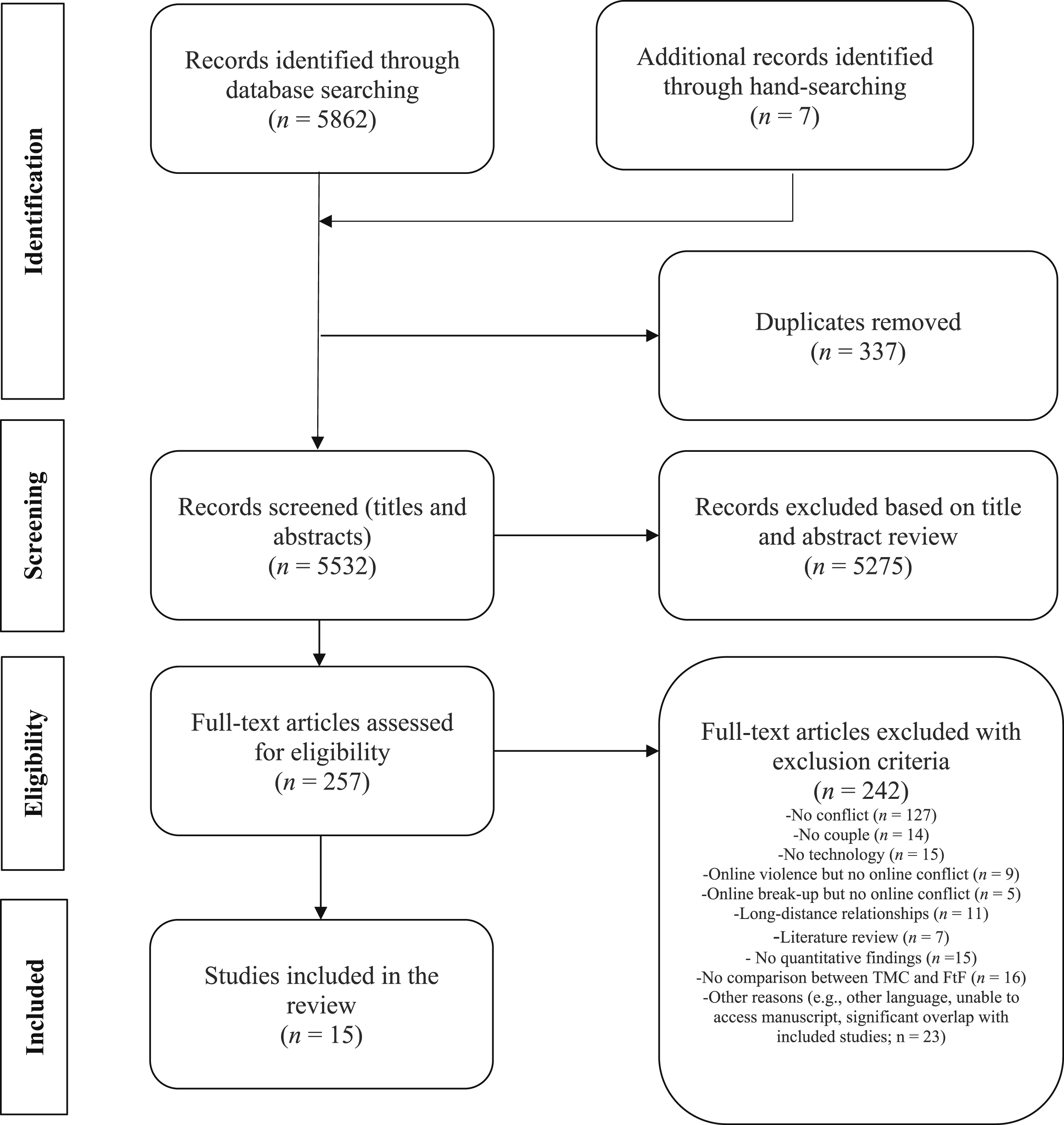
Study selection
Studies were included if they (1) explicitly compared the outcomes of FtF and TMC interactions for conflict management in (2) couple relationships. As a result, studies focusing on the predictors of channel choice, in contrast to the outcome of channel choice for conflict management, and studies focusing on channel switching or integration were excluded. No restrictions were imposed regarding the specific outcomes or modes examined (e.g., instant messaging, emails, phone). Studies were excluded if they (1) were not written in English or French, (2) examined the use of TMC with a romantic partner without addressing conflictual interactions, (3) did not focus explicitly on couple relationships (e.g., relationships in general including friends and family, workplace conflicts, or interactions between strangers), (4) examined conflict management in couple relationships without addressing the use of TMC to handle such interactions, (5) focused on the particular contexts of long distance relationships, relationship breakups, or divorce, (6) had no quantitative findings. There were no restrictions regarding year of publication and population studied. When a study could not be accessed through our institutional database, the first author was contacted to request a copy of the manuscript. Following the Cochrane collaboration guidelines (Higgins et al., 2024), we included dissertations and research reports in order to reduce publication bias.
Review process
The process of study selection followed the Preferred Reporting Items for Systematic Reviews and Meta-Analyses (PRISMA) guidelines and is detailed in Figure 1. Titles and abstracts were screened for eligibility by three of the co-authors. When meeting inclusion criteria, full texts were retrieved to ensure eligibility. This led to a final sample of 15 studies (published studies = 8; grey literature = 7) included in the review. Results for each study were retrieved by two of the authors (agreement rate = 93%), and disagreements were resolved through discussion. Findings are organized under sections that correspond to specific outcomes, based on the studies included in the systematic review. Studies can therefore be listed in multiple sections.
The studies included used various terms to refer to communication through technologies (e.g., computer-mediated communication, technology-mediated communication). In the current review, we refer to these various types of communication technologies through the term technology-mediated communication (TMC), unless a study focuses on a specific mode (e.g., text-based).
Results
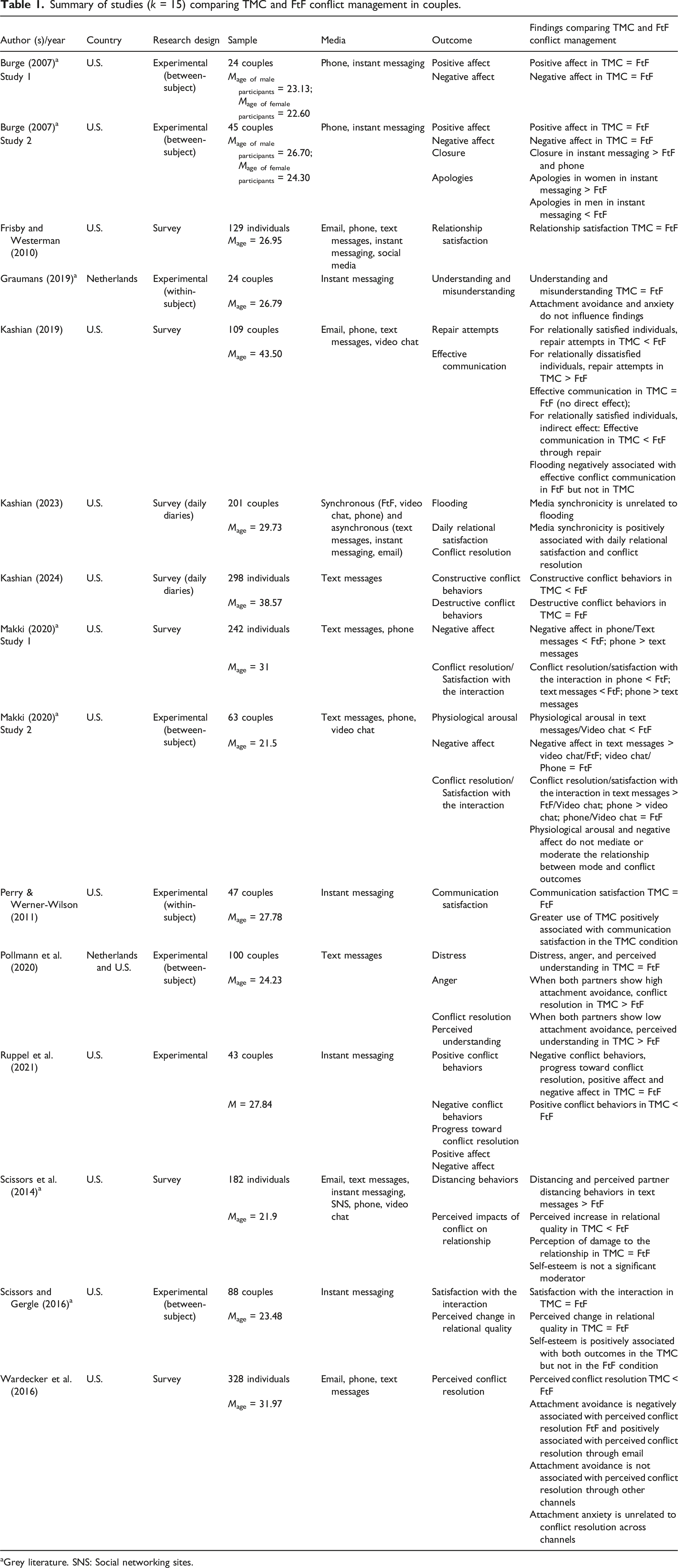
Studies were published between 2007 and 2024, and most were conducted in the United States. Sample sizes ranged from n = 24 to n = 328. Research designs included experimental studies (k = 8) and surveys (k = 7). The most studied modes were text-based (i.e., instant messaging, text messages and email), which were examined in all studies, followed by phone (k = 9), video chat (k = 5), and social media (k = 1). Most studies (k = 9) examined more than one mode and among them, modes were either combined and broadly considered as TMC (k = 4) or considered independently and compared with one another and with FtF conflicts (k = 5).
Summary of studies (k = 15) comparing TMC and FtF conflict management in couples.
aGrey literature. SNS: Social networking sites.
Conflict-level outcomes
Behaviors
Five studies (three surveys, two experimental studies) compared behavioral outcomes between TMC and FtF modes of conflict management. Using daily diaries among 298 individuals, fewer constructive conflict behaviors (e.g., support) were reported through text than FtF, but no difference in destructive conflict behaviors (e.g., hostility) was observed between the two modes (Kashian, 2024). Similarly, in an experimental study in which 43 couples were randomly assigned to a text-based or a FtF conflict condition (Ruppel et al., 2021), positive conflict behaviors (e.g., humor, acceptance) were significantly lower in the text-based condition while negative conflict behaviors (e.g., hostility, withdrawal) did not differ across the conditions. Yet, in a survey conducted among 182 individuals, own and perceived partner distancing behaviors (i.e., delaying responses, ignoring the partner) were more likely to be reported through recalls of text-based than FtF conflicts (Scissors et al., 2014). Although the contribution of self-esteem was examined, no moderating effect was observed in the association between modes and distancing behaviors.
Other studies reported more nuanced findings according to moderating factors. In one survey conducted among 109 couples (Kashian, 2019), relationally satisfied individuals reported more repair attempts, i.e., actions that prevent conflict escalation, during FtF conflicts, whereas relationally dissatisfied individuals reported more repair attempts during TMC conflicts. Using an experimental design in which 45 couples were assigned to an instant messaging, phone, or FtF conflict condition (Burge, 2007; Study 2), sex differences were observed, with men making more apologies in the FtF condition and women making more apologies in the instant messaging condition.
Across designs, studies overall highlighted some differences in TMC and FtF interactions with respect to conflict behavior, including more distancing behaviors, less positive and constructive conflict behaviors, fewer repair attempts in relationally satisfied individuals and less apologies in men during TMC conflict management. However, two studies suggested that TMC conflict management may elicit more apologies among women and more repair attempts among relationally dissatisfied individuals.
Emotions
Seven studies (two surveys, five experimental studies) examined emotional arousal during FtF and TMC conflict discussions. In a daily diary study conducted among 201 couples (Kashian, 2023) and examining daily conflicts through synchronous (i.e., FtF, phone conversations, and video chat) and asynchronous modes (i.e., text messages, instant messaging, and emails), media synchronicity was unrelated with flooding (i.e., being overwhelmed by negative affects). Similarly, in an experimental study in which 100 couples were assigned to either a text-based or FtF conflict discussion, distress and anger did not differ between the conditions, and attachment insecurities (anxiety and avoidance) did not moderate the findings (Pollmann et al., 2020). Other experimental studies (Burge, 2007, Study 1 and 2; Ruppel et al., 2021) also reported no difference in positive and negative affect between TMC and FtF conflict management. However, Makki (2020) found a conflicting pattern of results across indicators of emotional arousal and methodologies. First, using survey data among 242 individuals, higher recalled negative affect was found during FtF conflict interactions, followed by voice call, and text messages (Makki, 2020; Study 1). Conversely, using an experimental design in which 63 couples were randomly assigned to FtF and TMC conditions, negative affect was higher for partners in the text-based condition than in the FtF and video chat conditions, but physiological arousal was significantly higher for participants in the FtF condition compared with those in the video chat and text-based conditions (Makki, 2020; Study 2). Taken together, most surveys and experimental studies (k = 5) found no difference in positive and negative emotions between TMC and FtF conflict management, and the two studies (one survey, one experimental) that suggested differences provided mixed findings.
Conflict resolution and closure
Conflict resolution and closure were examined in seven studies (three surveys, four experimental studies). Across studies, this outcome was defined as the extent to which the conflictual interaction was perceived to have progressed toward resolving the issue or reaching an agreement. In a daily diary study, media synchronicity (FtF, phone, and video chat vs. text-based communication) was positively associated with conflict resolution (Kashian, 2023). Similarly, in the survey portion of their study, Makki (2020; Study 1) observed that greater perceived conflict resolution was reported for FtF conflict discussions, followed by voice call and text-based conflict discussions. This finding is also consistent with another survey conducted among 328 individuals (Wardecker et al., 2016), in which conflicts with a partner were perceived to be resolved to a greater extent through FtF interactions, followed by phone conversations, text messages, and email. In this study, however, attachment avoidance was associated with lower conflict resolution for conflicts discussed FtF, and greater conflict resolution (although marginally significant) for conflicts discussed via email. Attachment anxiety was unrelated to perceived conflict resolution across all modes.
Different findings emerged from experimental studies. In two studies, partners in text-based conditions reported greater perceived resolution than those in the FtF and video-chat conditions (Makki, 2020; Study 2), and more closure than partners in the phone and FtF conditions (Burge, 2007; Study 2). In contrast, two other experimental studies found no difference in perceived progress toward conflict resolution between text-based and FtF conflict conditions (Pollmann et al., 2020; Ruppel et al., 2021). However, examining the joint influence of both partners’ attachment, Pollmann et al. (2020) observed that when both partners showed high levels of attachment avoidance, conflict resolution was greater in the text-based condition compared to the FtF condition.
All in all, three surveys suggest that more synchronous modes of communication are more effective regarding conflict resolution. The pattern of results is mixed for experimental studies, with two of them reporting better conflict resolution and closure in text-based conflicts and two other reporting no difference across modes. In addition, two studies suggest that TMC could lead to greater conflict resolution than FtF interactions for individuals and couples with high attachment avoidance.
Perceived communication quality
Perceived communication quality was examined in five studies (one survey, four experimental studies). This outcome encompasses a set of constructs reflecting individuals’ appraisal of the communication process itself, such as effectiveness, satisfaction, and perceived understanding. Using survey data, discussing conflicts through TMC was found to buffer the negative effect of flooding on effective communication (Kashian, 2019), defined as the degree to which partners accomplished their communication goal. Specifically, flooding was associated with less effective conflict communication for FtF conflicts whereas this association was not significant for TMC conflicts. In addition, no direct association was found between using TMC (vs. FtF) during conflict and effective communication, but a significant indirect association was observed through repair attempts. This indirect effect was further moderated by relationship satisfaction. Specifically, relationally satisfied individuals were more likely to display repair attempts during FtF conflicts, whereas relationally dissatisfied individuals were more likely to display repair attempts during TMC, which in turn was associated with more effective communication.
In an experimental study in which 47 couples engaged in both FtF and text-based conflict discussions, Perry and Werner-Wilson (2011) observed that satisfaction with the communication, conceptualized as the extent to which the interaction was enjoyable, allowed effective communication, and promoted understanding, did not differ significantly across conditions. However, within the text-based condition, participants’ greater use (i.e., familiarity and frequency) of TMC in their life was positively associated with communication satisfaction. Another study in which 88 couples were randomly assigned to a FtF or text-based conflict condition (Scissors & Gergle, 2016) showed that satisfaction with the conflict interaction did not differ across conditions. However, within the text-based condition, higher self-esteem was associated with higher satisfaction with the interaction. In a study in which 24 couples engaged in both text-based and FtF conflict discussions, understanding and misunderstanding (i.e., the extent to which participants felt understood during the discussion) did not differ across the conditions, and attachment anxiety and avoidance did not influence the findings (Graumans, 2019). Although Pollmann et al. (2020) similarly found no difference in understanding across text-based and FtF conflict conditions, they observed a moderating effect of avoidance when accounting for both partners’ attachment. Specifically, when both partners showed low attachment avoidance, understanding was greater in the text-based condition than in the FtF condition.
In sum, all the studies reviewed found no evidence of a main, or direct effect of communication modes on perceived communication quality. However, potential moderating factors were identified in four studies, suggesting that text-based conflict management may be associated with greater communication quality than FtF conflict management for individuals with greater self-esteem, more familiarity with TMC, and lower relationship satisfaction, and for couples in which both partners show low levels of attachment avoidance.
Relationship-level outcomes
Among the studies reviewed, four (three surveys, one experimental study) examined a relationship-level outcome, all of which focused specifically on relationship satisfaction or perceived change in relationship quality following a conflict interaction.
Relationship satisfaction
In a survey conducted among 129 undergraduate students, no association was found between the use of TMC (combining email, phone, text messages, instant messaging, and social media) vs. FtF conflict management and relationship satisfaction (Frisby & Westerman, 2010). Similarly, in an experimental study, perceived change in relational quality following a conflict interaction did not differ across the text-based and FtF conflict conditions (Scissors & Gergle, 2016). Self-esteem, however, was positively associated with perceived change in relational quality in the text-based conflict condition, but not in the FtF conflict condition.
Findings from a survey conducted among 182 individuals suggest that recalls of conflicts through TMC (combining email, text messages, instant messaging, SNS, phone, and video chat) vs. FtF were less likely to be associated with a perceived increase in relational quality (Scissors et al., 2014). However, resolving conflict through TMC was not associated with perceptions that the conflict was damaging to the relationship. The moderating effect of self-esteem was also examined but no evidence of an interaction with mode was found. Finally, in their daily study comparing daily conflicts through synchronous (i.e., FtF, phone conversations, and video chat) and asynchronous channels (i.e., text messages, instant messaging, and emails), Kashian (2023) found that using more synchronous channels to discuss conflict was related to greater relational satisfaction.
In sum, two studies indicated no difference between TMC and FtF conflict management with respect to relationship satisfaction, while the other two studies reported that conflicts through TMC and more asynchronous modes of communication (e.g., text-based) are negatively associated with relationship satisfaction. These two diverging patterns do not seem to be related to differences in methodology. Findings regarding the role of self-esteem were mixed, with one study suggesting no association, and one study reporting a positive association with relationship satisfaction for text-based conflicts.
Discussion
With the landscape of digital tools available for interpersonal communication having expanded rapidly in the last two decades, the use of TMC for managing couple conflict is now a common phenomenon. This systematic review synthesized the body of quantitative studies that compared the outcomes of managing conflict through TMC and FtF interactions. Overall, the existing empirical evidence provided mixed findings across a range of conflict outcomes, with either better, worse, or no difference in outcomes between the modes. This evidence reflects the range of communication theories (e.g., Sproull & Kiesler, 1986; Walther & Burgoon, 1992) that collectively emphasize both the affordances and caveats of TMC, and suggests that no mode is inherently superior to another for managing couple conflicts. In addition, a few individual studies identified moderating factors such as attachment and self-esteem, providing preliminary support for the idea that the effectiveness of TMC for conflict management may depend on individual and relational characteristics. All in all, this systematic review shows that existing data come in large part from unpublished work and that most studies are limited in several ways. These methodological considerations will be discussed, but the conclusions drawn from this body of research should be interpreted in light of these limitations. Recommendations and directions for future research are provided.
Comparing technology-mediated and face-to-face conflict outcomes
Most of the studies reviewed focused on conflict-level outcomes that are related to the conflictual interactions, such as behaviors (e.g., distancing behaviors, apologies), emotions (e.g., flooding, negative affect) and subjective appraisal of the conflict (e.g., conflict resolution, perceived communication quality). While overall findings do not support a systematic difference between TMC and FtF conflict management, some specific trends can be observed for certain conflict outcomes. It should be kept in mind, however, that the following conclusions are based on a small number of studies.
With respect to behaviors, conflicts discussed through TMC, whether examined through in-lab discussions (Ruppel et al., 2021), reported in daily life (Kashian, 2024) or recalled retrospectively (Scissors et al., 2014), were generally found to be marked by more distancing and fewer constructive conflict behaviors (e.g., Kashian, 2024; Ruppel et al., 2021). This is consistent with the Reduced Cues Theory (Sproull & Kiesler, 1986), which posits that the lack of nonverbal cues and contextual information from the physical environment can lead to greater disinhibition and more negative behavioral exchanges through TMC. It is also compatible with the Synchronicity Theory (Dennis et al., 2008) by suggesting that asynchrony may accommodate more distancing behaviors during complex interactions.
Findings regarding perceived conflict resolution reveal a more complex picture. Although studies examining daily or retrospective recalls of conflicts found that TMC and less synchronous modes of communication are associated with poorer resolution (e.g., Kashian, 2023; Makki, 2020, Study 1; Wardecker et al., 2016), four experimental studies based on in-lab conflicts reported either comparable (Pollmann et al., 2020; Ruppel et al., 2021) or occasionally better conflict resolution through TMC (Burge, 2007; Makki, 2020, Study 2). Methodological considerations may help explain these divergent findings. As surveys assess perceived conflict resolution with respect to past conflicts, they may in part capture attitudes and beliefs about modes of communication. Therefore, the surveys reviewed could indicate that TMC are generally perceived as less appropriate for resolving conflict. This aligns with the Social Presence Theory (Short et al., 1976) and qualitative findings (Frisby & Westerman, 2010; Wardecker et al., 2016) indicating that FtF interactions are perceived as being more personal and as better to promote connection and closure than TMC.
In contrast, experimental studies assess perceptions of conflict resolution immediately after a conflict interaction, which is likely to reduce the influence of general attitudes and more directly capture the immediate experience of the interaction. These studies suggest that TMC do not impair conflict resolution and sometimes even promote it. This is consistent with communication theories (Walther, 2015; Walther & Burgoon, 1992), which propose that individuals progressively adapt to the mediated environment and that the reduction in potentially triggering nonverbal cues could be advantageous in preventing negative escalation.
Regardless of the study design, the evidence reviewed generally revealed no difference with respect to positive and negative emotions (e.g., Kashian, 2023; Ruppel et al., 2021), as well as perceived communication quality (Graumans, 2019; Perry & Werner‐Wilson, 2011) between FtF and TMC modes of conflict management. These findings are coherent with the Social Information Processing Theory of mediated communication (Walther & Burgoon, 1992), which suggest that partners adapt their communication to the reduced cues and achieve level of effectiveness comparable to their FtF communication.
Finally, a few studies focused on relationship-level outcomes of using TMC for conflict management, essentially examining links with relationship satisfaction or perceived changes in relational quality following conflict interactions. These studies also provided mixed findings, with either no difference between modes of communication (Frisby & Westerman, 2010) or lower relationship satisfaction for TMC (Kashian, 2023), compared with FtF conflict management. The focus on in-lab, daily, or retrospective recalls of conflicts did not appear to explain the discrepancy in results. While the increasing role of mediated communication in overall relationship maintenance has been underscored (Hertlein & Blumer, 2013), the specific mechanisms through which discussing conflicts through TMC is linked to relationship quality remain unknown and will need to be formally examined.
Taken together, the literature provides a largely inconclusive picture regarding the outcomes of TMC in conflict management, with no definitive conclusion as to whether it is more or less appropriate than FtF interactions. Preliminary trends suggest that TMC may be associated with less favorable behavioral outcomes, while affective outcomes (emotions) appear largely equivalent across modes. Findings for attitudinal outcomes, whether conflict-level (perceived conflict resolution, perceived communication quality) or relationship-level (relationship satisfaction), are more mixed. In addition, several studies uncovered potential moderating factors that indicate that TMC conflict management may be beneficial for some individuals, while potentially challenging for others.
Individual and relational characteristics moderating conflict outcomes
In line with the Rational Actor Theory (Markus, 1994) and Sociotechnological Model (Lanigan, 2009), the studies reviewed highlight individual and relational factors that appear to modulate the impact of TMC on conflict management. First, and although such effects have not be consistently replicated across studies, TMC could promote conflict resolution for couples in which partners show high attachment avoidance (Pollmann et al., 2020; Wardecker et al., 2016). For avoidantly attached individuals, having time to think and space to reflect through asynchronous communication may provide a comfortable distance with their partner during challenging interactions (Wardecker et al., 2016). Similarly, individuals with more frequent general use of TMC report more effective conflict communication through mediated modes (Perry & Werner‐Wilson, 2011), supporting the claim that the lack of nonverbal cues can be overcome as familiarity with TMC increases (Walther & Burgoon, 1992).
In contrast, lower self-esteem was linked to less effective communication and lower relationship satisfaction following TMC conflict management (Scissors & Gergle, 2016). In mediated environments with reduced nonverbal and contextual cues, individuals with low self-esteem may be prone to negatively interpret ambiguous information and perceive greater rejection (Downey et al., 1998; Murray et al., 2000), leading them to evaluate the interaction less favorably regardless of actual behaviors. Finally, relationally satisfied individuals were found to show less repair attempts, and in turn, less effective communication when discussing conflicts through TMC (Kashian, 2019). The leaner nature of TMC might be more noticeable to relationally satisfied partners and experienced as impoverished compared to FtF interactions, potentially reducing the expression of affiliative and repair-oriented behaviors during conflict.
Keeping in mind that these findings remain preliminary and need continued examination, they point to complex interactions between partners’ characteristics and modes of communication in shaping conflict outcomes. As others have emphasized (Burleson, 2009; High et al., 2024), theory and empirical research at the intersection of technology and communication need to account for the interplay of a myriad of factors related to relationships, interactional context, and technological affordances to understand the role of technology in relationship maintenance. From a practical and educational perspective, these mitigating factors underscore the importance of a deliberate use of TMC that is compatible with one’s characteristics and relational context.
Methodological considerations
Some methodological aspects of the studies reviewed should be considered when drawing conclusions based on the available knowledge. With respect to study design, studies either relied on self-reported surveys or experimental designs in which couples engaged in real-time conflict discussions in the lab. Because they capture the appraisal of past conflicts, self-report surveys may be more useful to assess attitudes and beliefs that are likely to shape channel choice, while experimental studies might better capture the conflict outcomes resulting from the actual use of TMC for conflict management. However, it is important to note that most experimental studies simulate text-based exchanges within limited time frames. This differs from how TMC interactions typically unfold in daily life, where responses often occur with deliberate delays or external interruptions. The reduced asynchrony of in-lab TMC exchanges may partly explain the absence of differences between TMC and FtF conflict management observed in some experimental studies, highlighting limitations in ecological validity and the extent to which these findings generalize to real-life conflicts. Moreover, studies were heterogeneous in terms of their operationalization of TMC. Some studies focused on one specific mediated channel (e.g., text messages; Pollmann et al., 2020) or multiple mediated channels (e.g., text messages, phone, video chat; Makki, 2020) and compared them with one another and with FtF interactions. These studies allowed for a clear comparison between channels with different features and affordances (i.e., availability of non-verbal cues, synchronicity). Other studies, however, combined multiple channels into an undifferentiated TMC mode (Scissors et al., 2014), potentially obscuring meaningful differences in conflict outcomes across individual mediated channels. Another consideration concerns the quality of the studies reviewed. Seven (out of 15) studies were sourced from the grey literature (e.g., dissertations, conference proceedings), and many were conducted on very small samples (e.g., n = 24), especially those with experimental designs (Burge, 2007; Graumans, 2019), which limits the statistical power to detect meaningful differences in conflict outcomes between TMC and FtF conditions. While reviewing grey literature helps minimize publication bias and provides access to a broader pool of research, it may also involve studies of lower methodological quality. The limited availability of high-quality empirical studies to date reflects the early state of this field of research. Next, all studies were based on convenience samples of relationally satisfied individuals with generally low scores on negative conflict outcomes (i.e., floor effect; Kashian, 2024; Ruppel et al., 2021). Examining technology-mediated conflicts in distressed or at-risk couples, including those with violent dynamics, may increase variance in conflict outcomes and uncover meaningful differences between TMC and FtF conflict management. It could also allow identifying processes that are more salient among at-risk couples (e.g., greater disinhibition in TMC). Finally, the year of publication of the studies included in this systematic review ranged from 2007 to 2024. Technology evolves rapidly, and our accumulated collective experience is likely to shape both our familiarity with these tools and our attitudes regarding their acceptability for managing serious relationship issues such as conflict. This, in turn, is likely to influence TMC conflict outcomes. Because individuals may now relate to technology differently than they did in previous decades, the validity of earlier findings may be diminished in the current context.
Directions for future research
To advance our understanding of technology-mediated conflict management, future research should aim to identify the specific mechanisms through which communication modes shape conflict outcomes. In particular, attention to the affordances of various mediated channels (e.g., editability, asynchrony) may help explain how TMC can either facilitate or hinder conflict management (Chen & Toma, 2024; Huang & Yao, 2024). Moving forward, research on the affordances of TMC could help circumscribe important mechanisms underlying different conflict outcomes (McEwan, 2021; Ronzhyn et al., 2023).
Future investigations should also examine how the nature of the conflict itself shapes technology-mediated exchanges. Conflicts vary in topic, solvability, and severity, and these contextual features likely influence how partners communicate and regulate emotions during disagreements (Baker & McNulty, 2020; McNulty, 2016; Meyer & Sledge, 2021). These variations may, in turn, affect the effectiveness of TMC for conflict management. For instance, it is plausible that TMC is better suited to managing minor or less emotionally charged issues, whereas more serious conflicts may require the richer social cues and immediacy afforded by FtF interactions. Research comparing the outcomes of TMC and FtF conflict management has yet to directly address this question.
Further, research should move beyond mode comparisons to consider mode integration. In fact, in daily life, couples do not use these modes in isolation. While it has been proposed that transitioning between modes can support relational closeness (Caughlin & Sharabi, 2013), findings show that mode integration may sometimes disrupt conflict resolution, depending on the behaviors and contexts involved (Kashian & Sharabi, 2023; Pusateri et al., 2015). Additional work is needed to better understand how modes are integrated across ongoing conflicts and how this integration relates to conflict outcomes (Caughlin et al., 2016).
Finally, the emergence of AI-mediated communication presents a novel frontier for this field (McDaniel et al., 2025). As AI tools increasingly assist or generate interpersonal messages (Hancock et al., 2020), it will be essential to examine their implications for conflict management in close relationships. AI involvement could yield benefits, for instance by assisting partners in optimizing their messages and achieving greater communication effectiveness. However, AI-mediated communication may also introduce a perceived lack of engagement and authenticity in this emotionally charged process, and in the long run, even diminish partners’ sense of agency and auto-efficacy in communicating spontaneously FtF, without relying on AI. These assumptions should be empirically examined in future studies.
Conclusion
Digital technologies have become a central feature of the communicative landscape within romantic relationships. Existing research underscores that TMC presents both opportunities and challenges with respect to conflict management. Faced with this nuanced portrait, research must bridge the fields of technology and relationship science to enable a deeper understanding of how technological affordances, user characteristics, and relational context interact to shape conflict dynamics and outcomes. The heterogeneity in operationalization and methods across studies creates gaps in our understanding and highlights the need for more conceptually integrated research. Clarifying these foundations will be essential to accumulate comparable evidence and establish a coherent understanding of how TMC shapes conflict processes. Such efforts are particularly timely, as digital communication continues to evolve rapidly and permeates various facets of relationship maintenance. Efforts to promote relational well-being must now integrate an understanding of how technology-mediated communication is involved in conflictual interactions between partners, in order to support couples in navigating the contemporary digital world.
Footnotes
Declaration of conflicting interests
The authors declared no potential conflicts of interest with respect to the research, authorship, and/or publication of this article.
Funding
This work was supported by the Fonds de recherche du Québec – Santé (Daspe, PI), https://doi.org/10.69777/281447.
Open science statement
As part of IARR’s encouragement of open research practices, the author(s) have provided the following information: This research was not pre-registered. The data used in this systematic review comes from available studies.
Ethical considerations
There are no human participants in this article and informed consent is not required.
