



Abstract
Empathy competence is considered a key aspect of excellent performance in communication professions. But we lack an overview of the specific knowledge, attitudes, and skills required to develop such competence in professional communication. Through interviews with 35 seasoned communication professionals, this article explores the role and nature of empathy competence in professional interactions. The analysis resulted in a framework that details the skills, knowledge, and attitudinal aspects of empathy; distinguishes five actions through which empathy manifests itself; and sketches relationships of empathy with several auxiliary factors. The framework can be used for professional development, recruitment, and the design of communication education programs.
Keywords
A quick glance through job postings or academic literature will reveal that empathy is a highly desired competence for professionals and that being empathetic improves performance in the workplace (Fuller et al., 2018; O’Boyle et al., 2011). Empathy is critical for understanding people, which in turn supports typical communication tasks such as developing effective communication tools, promoting attitudinal change (Bartsch et al., 2018), and boosting audience engagement (Yang et al., 2010). But research suggests that empathy skills, however sorely needed, are in decline (Konrath et al., 2011). Professional writers, for instance, have difficulty using perspective-taking and empathy skills and often make assumptions about readers based on merely their own personal preferences (De Jong & Lentz, 1996, 2007; Lentz & De Jong, 1997, 2009). Empathy seems an important, if not necessary, skill for communication professionals (e.g., those tasked with internal or external communication, public affairs, or public relations) because effective interpersonal interactions are intrinsic for reaching organizational goals. Ample research has been conducted on the role of empathy in other professional settings, such as health care and social work (Gerdes & Segal, 2011; Pedersen, 2009), but research is sparse in the professional communication context. Recently, Calloway-Thomas (2018) urged communication scholars to develop a “pedagogy for empathy” to ensure that future professionals will develop this competence. An important first step in this direction is to analyze what empathy competence entails for a communication professional. In this article, we use interviews with prominent communication professionals to explore the role and nature of empathy in oral professional communication.
Theoretical Framework
Competencies can be seen as the factors “needed to effectively perform a role in the organization and help the business meet its strategic objectives” (Lucia & Lepsinger, 1999, p. 5). Competence models often include three aspects (Lizzio & Wilson, 2004): knowledge (understanding of the concept), attitude (internal drivers of behavior), and skills (specific abilities to show behavior). Research has pointed out that empathy competence is important for communication professionals (DeKay, 2012; Seeger, 2006) and in the workplace in general (Cherniss et al., 1998; Lamm & Kirby, 2002; Weisinger, 1998; Young et al., 2000) and that organizations should consider emotional skills as an important factor when making decisions for hiring and promotions (Goleman, 1998). Empathy has been found to be an asset during negotiations and to increase creativity in teams, enhance cooperation, raise employee commitment, and strengthen leadership abilities (Carmeli, 2003; Galinski et al., 2008; Gentry et al., 2010; Hoever et al., 2012; Morelli et al., 2014; Ruderman et al., 2001). It is especially crucial for professionals working in intercultural settings, conducting difficult workplace conversations, or working in turbulent environments such as organizations in times of crisis (Alon & Higgins, 2005; Bradley & Campbell, 2016; Claeys et al., 2013; Roebuck et al., 2016). But even in routinely short-term interactions between customers and call centers, empathy plays an important role (Clark et al., 2013). For instance, Clark et al. (2019) showed that communication efficiency (conversational control) can be best combined with creating rapport (solidarity building). Design-thinking methodology, implemented widely in various professional contexts including professional and technical communication, stresses empathizing as a vital first step in creating user-centric products and services (Pope-Ruark, 2019). Research also suggests that emotional communication skills can be beneficial for employee well-being and interemployee relationships (Jia et al., 2017), but when professionals’ management of emotions is codified or prescribed, it could cause personal tensions and stress (Hoch-schild, 1983).
Defining Empathy
To the layperson, empathy might seem to be a simple concept: the ability to understand what someone else feels, thinks, and believes. But scholars’ perspectives on the concept remain divergent and conflicting, and there is no consensus in the literature on a definition (Verducci, 2000). As far back as 300BC, Chinese scholars debated the role of empathy in human interactions, and since then, references to empathy can be found in the work of many philosophers (Nowak, 2011). Early 20th century psychologists debated whether to see empathy as a predominantly affective or emotional construct (Lipps, 1903; Titchener, 1909) or as a more cognitive one (Kohler, 1929; Piaget, 1932).
Cognitive empathy refers to the intellectual processes a person uses to ascertain another person’s emotional state. These processes help us to assign meaning to the information we receive from others and can be learned through observation and experience. One aspect of cognitive empathy is “perspective taking,” or the ability to perceive a situation from someone else’s viewpoint (Davis, 1983). Using perspective-taking skills, people are able to imagine beyond their own frame of reference or experience and do so without bias or judgment based on how they would see the situation themselves (Moore, 2005; Parker et al., 2008).
Affective empathy refers to a person’s involuntary, internal responses to the emotional state of another person. Research suggests that many aspects of affective empathy are “built in” from birth as neurological functions (Rizzolatti & Craighero, 2005), aspects of personality (Baron-Cohen & Wheelwright, 2004; Eisenberg, 2007), biophysical reactions (Decety & Moriguchi, 2007; Iacoboni, 2005), biological dispositions (Hoffman, 1984), or motor skills (Blair, 2005).
Both cognitive and affective aspects of empathy focus on individuals’ understanding of another person through their own internal experiences or assessments. But as a relational process, empathy also involves individuals’ behaviors in demonstrating this understanding to the other person (Hojat, 2009) and the interactions that influence this understanding (Zaki et al., 2008). Some conceptualize empathy as part of the communication process, for example, as an aspect of developing a connection to or feelings for another person (Miller, 2007; Rogers, 1975). But developing a connection with another person involves more than just empathy; it also involves, for example, compassion, congruence, resonance, and sympathy, traits that might or might not be appropriate to apply in professional situations. Schrooten and De Jong (2017) drew attention to a gap in the literature between the cognitive and affective aspects of empathy and the expression of empathy, arguing that empathy as a mental state does not automatically lead to empathetic communicative behaviors. They also argued that authors focusing on the expression of empathy sometimes seem to advocate tips and tricks for professionals to use in order to express empathy but that these tips do not necessarily help professionals to truly experience it.
Despite the lack of a conclusive definition, researchers generally agree that empathy encompasses a variety of processes, skills, and behaviors and that empathetic behavior consists of both trait and state aspects (Batson, 2009). To investigate empathy competence in terms of knowledge, attitude, and skills, our research used a broad view on empathy, including affective, cognitive, and relational aspects.
Training Empathy Competence in Professional Contexts
Empathy competence is essential for job performance within organizations (Parks, 2015), and an increased number of organizations would like to train employees to have empathy (Cherniss & Goleman, 2001). Although practical conceptualizations of empathy can be found in medical, counseling, clinical, social work, and teaching professions (Gerdes et al., 2011; Kruijver et al., 2000; Riess et al., 2012; Singh, 2014; Stepien & Baernstein, 2006) and are emergent in the fields of design and engineering (Kueh & Thom, 2018; Walther et al., 2017), we have not found a comprehensive conceptualization of empathy for communication professionals.
Research has demonstrated that empathy can be learned (Shapiro, 2002). According to Kelm et al. (2014), successful empathy training could include the development of facilitative listening skills and the ability to ask probing questions and identify nonverbal cues, as well as behavior modification. Studies have demonstrated significant increases in the empathy skill levels of students based on traditional lectures and simulation methods (Bearman et al., 2015; Beattie et al., 2012). Didactical approaches such as role-playing could be particularly useful, allowing students to practice improvisation, manage their own emotions, and respond verbally and nonverbally in different contexts (Morgan & Krone, 2001). Other experiential teaching strategies that have been used in business schools include emotional vocabulary development, service learning, journaling and case analysis, and games (Sigmar et al., 2012). Research has also suggested that communication educators should integrate live experiences to actively and reflectively engage students in the development of relational and emotional skills (Tracy et al., 2015). Suchman et al. (1997) suggested that medical interviews can be sources of empathy training by modeling ways to recognize, explore, and acknowledge patients’ needs.
There is ample literature regarding empathy training in the medical, clinical, or “helping” fields (Kelm et al., 2014). But it is unclear whether the pedagogy used in these settings would be effective for communication professionals as well, as there might be differences between how clinicians or counselors use empathy and how professionals in nonclinical settings use it. Thus, further research is needed that explores possible variations in the use of empathy in different professional settings (Wittenberg-Lyles et al., 2012).
To be able to appropriately design empathy education for communication professionals, we need to know what specific skills we need to train in this professional context. Therefore, in this study, we focused on professionals working in the fields of internal or external organizational communication, communication consulting, public relations, and marketing communication in order to investigate how experienced communication professionals make sense of the role and nature of empathy in their professional interactions. To do so, we asked the following research questions: How does empathy competence relate to successful professional communication? Which specific skills, knowledge, and attitudes does empathy competence entail? How is empathy competence enacted during professional interpersonal interactions? Which auxiliary factors might enable or disable empathy competence?
Method
Our overall research strategy was to interview seasoned professionals and elicit meaning from their professional experience. Although we used current literature to develop our interview topics, this research was exploratory: intended to collect and examine professional perspectives on empathy rather than test a specific theory or prove predetermined hypotheses. Our research approach, then, was inductive, an approach in which “the researcher begins with an area of study and allows the theory to emerge from the data” (Strauss & Corbin, 1998, p. 12). Using this approach, common patterns and dominant themes emerge from participants’ accounts. Our goal was to use evidence found in the data in order to generate a rich conceptualization of empathy competence and any relevant auxiliary factors. Approval for this study was granted by the Ethics Committee of the University of Twente (190928).
Participants
This research aimed to explore the individual experiences of communication professionals who have extensive backgrounds working in a variety of sectors and organizations, so it was important for us to interview participants who have made communication their profession and not those who execute communication tasks sporadically. We purposefully selected our participants from a Dutch communication association’s database of professionals using the following criteria: Participants needed to have (a) more than 10 years of professional communication experience; (b) a position in internal or external organizational communication, communication consulting, public relations, or marketing communication; and (c) involvement in a wide variety of communication projects, both on operational and on strategic levels. Our selection process resulted in a list of 95 potential participants, who we approached, five at a time, via email. Scheduling continued until the content of the conversations became saturated with repetitive answers that provided little new information concerning our four research questions. Eventually, our study sample consisted of 35 professionals who represented a wide variety of positions and organizations (see Appendix).
Procedure
Prior to the interviews, each participant received a letter explaining our research objective. For this research we used a fairly broad definition of empathy, namely, the capacity to recognize, comprehend, and suitably respond to the thinking, feeling, and perspective of another person. We then asked participants to ponder two questions: Think about the communication projects you have been closely associated with that were considered either a success or a failure. To what extent did empathy play a role in the outcome of the project? When you think about the communication professionals involved in these projects, what specifically can you identify that confirms that they have or display empathy?
All interviews were conducted in private locations at or near the workplace of the participants and were recorded and then transcribed. The data were anonymized prior to analysis to protect the participants’ privacy and to respect the potentially sensitive nature of the cases discussed. All participants signed a letter of informed consent allowing their data to be used for this study.
Instrument and Analysis
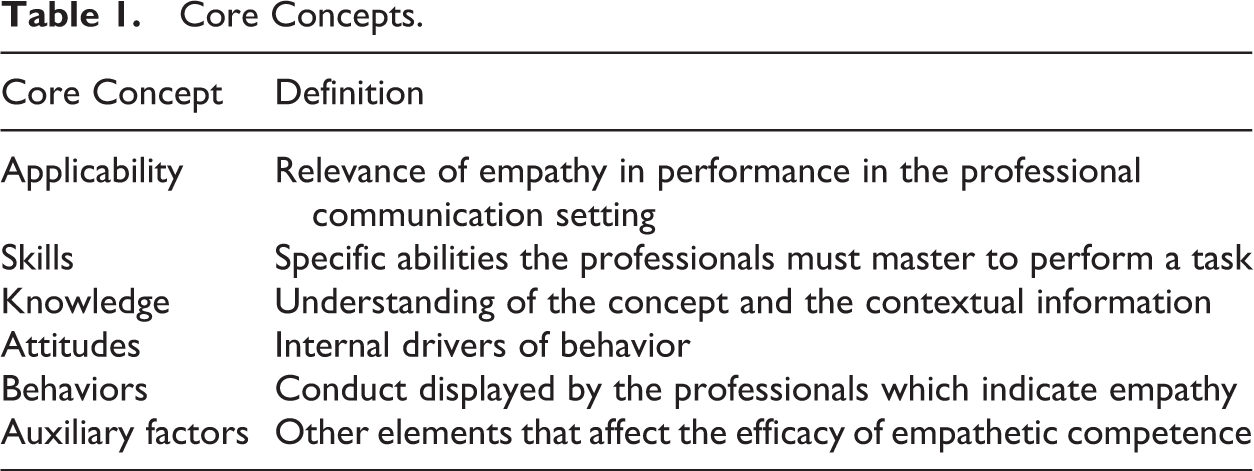
During the interviews, we used a topic list to ensure that we obtained a response to each of the four research questions. Although we developed the topics with the aforementioned theories of empathy and professional performance in mind, we did not use them to validate or steer answers toward a particular theory, as the goal of the interviews was for the participants to reveal their own experience. We analyzed the data in Atlas.ti using a structured inductive coding process. The first author, Fuller, closely read the transcripts and labeled phrases with codes relevant to the research objectives—specifically, to highlight relevant aspects of competence, empathy-enacting behaviors, and auxiliary factors related to the interactions. The resulting codes were compared to eliminate redundancy and overlap. To establish reliability, two additional researchers independently coded a random sample of transcripts. Their results were compared with Fuller’s results to check for consistency in interpretation. We discussed the differences and amended the code list. We then read the transcripts a second time to check for any additional relevant data and grouped the coded data into core concept areas (see Table 1).
Core Concepts.
Results
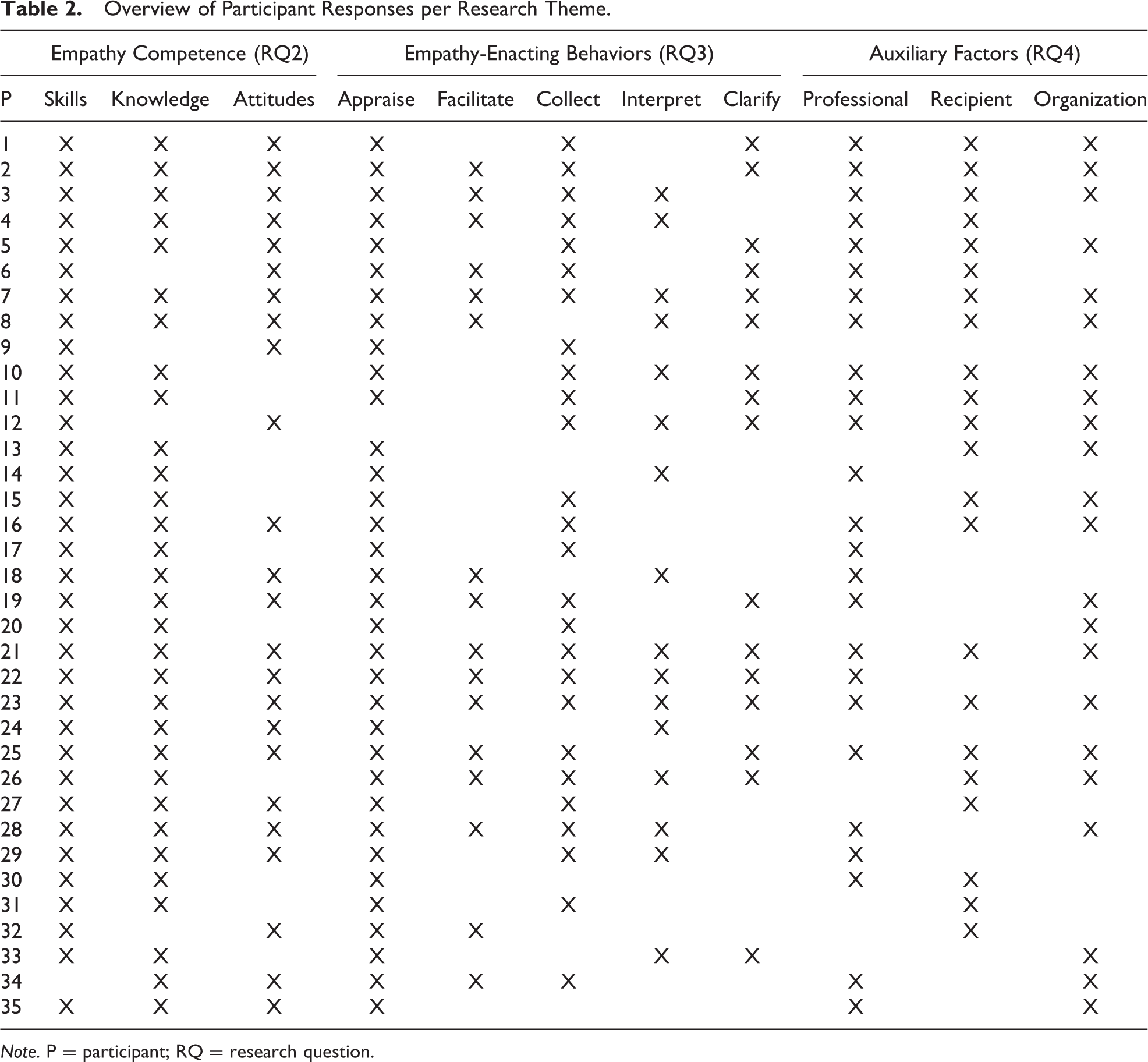
We first discuss our results regarding the applicability of empathy competence in professional communication and then detail the various aspects of empathy competence (skills, knowledge, and attitudes). After that, we provide an overview of empathy-enacting behaviors. Finally, we discuss auxiliary factors that influence communication professionals’ ability and willingness to empathize. Our references to data or quotes from individual participants’ transcripts are indicated by listing the participant (P) number. Table 2 provides an overview of which participants provided information regarding our various research themes, showing the degree of each theme’s saturation in our data. Although not all participants mentioned all elements of our empathy framework, we found ample support for each category contained in it.
Overview of Participant Responses per Research Theme.
Note. P = participant; RQ = research question.
Research Question 1: Empathy Competence and Professional Performance
Participants concurred that empathy is a critical professional competence and that communication professionals’ level of empathy is foundational to their professional success. Participants felt that the role of a communication professional is “more than just operational…. The reality is not that the client thinks up something and the communication professional just summarizes it. That is a very limited view of our profession. It’s about real connection and relationships” (P32). A participant mentioned that empathy competence is what sets apart a good communication professional from a great one: “Knowledge of the theory and tools is just a small part…. Ability to empathize is essential” (P3). Another participant stated that a key task of communication professionals is “to put themselves in service of another…. Communication professionals need to be empathetic because they need to be able to connect, to get to the depth of someone’s perspective, to put their finger on what isn’t being said. And then find words for that, a picture, a story” (P19). As P32 put it, a communication professional must “know and feel what [the other] wants. That can only happen if you have ‘feeling-sensors’ for the undercurrents. What is deeper than what is being said.” Empathy is especially critical, according to P16, because communication professionals are often tasked to explore contexts in which conflict, competition, or change factors are evident, in which stakeholders “are not always transparent…and find it uncomfortable that a communication professional digs into their emotions.”
Research Question 2: Components of Empathy Competence
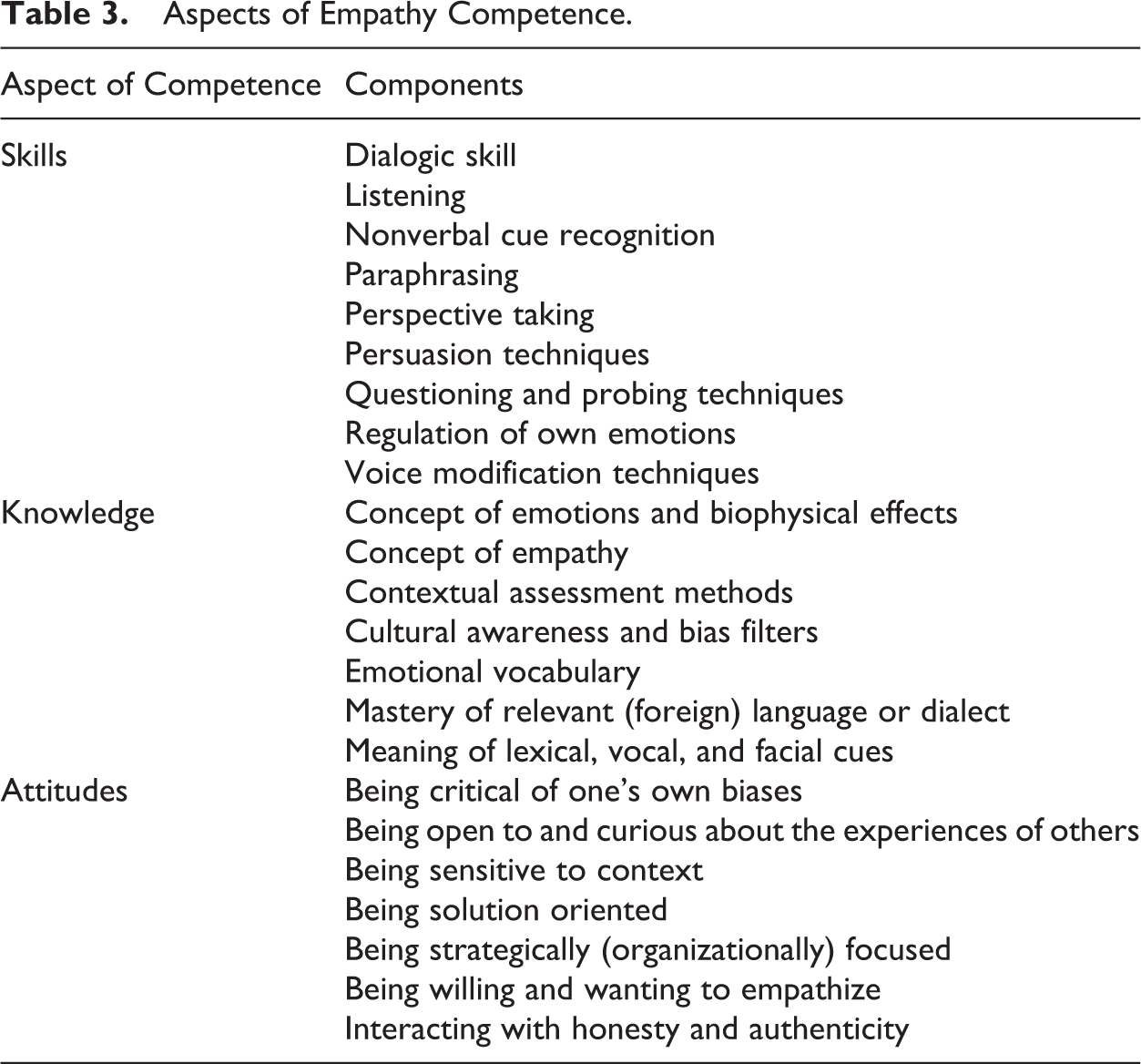
Participants commented that demonstrating empathy competence requires a complex of specific abilities and dispositions at different moments of an interaction. We categorized these components of empathy that participants mentioned in the interviews into the three aspects of competence: skills, knowledge, and attitudes (see Table 3).
Aspects of Empathy Competence.
Skills
The data revealed several skills necessary for empathizing. A fundamental skill is the ability to listen attentively to the vocal expressions of other persons (P10) and respond appropriately to the information received (P16). “Listening actively, listening to understand and offering room to let someone tell their story,” (P21) creates a feeling of trust that is integral to information sharing (P8). But participants noted that communication professionals often find listening difficult (P22) because “communications people are often big talkers” (P19) who tend to dominate the conversation in their desire to provide solutions and look for results (P35). Data revealed that identifying emotional cues involves more than just understanding what the other person is saying. Being able to recognize nonverbal cues is critical because people rarely verbalize all that they are feeling and reveal much of their emotional state through facial expressions and other nonverbal behaviors. As one participant noted, “You can tell a lot about someone by studying their posture…. You’ll know if they don’t want to tell you something or don’t feel comfortable. But at the moment their posture is open and they look you in the eye, you’ll know they feel safe and trust you” (P8).
In addition to being able to recognize these cues in another person, communication professionals need to be adept at applying this skill to their own communication processes. Having dialogic skill, participants often stated, is key for doing so. One aspect of dialogic skill is the ability to paraphrase, continuously checking “whether what has been said is what was heard” (P21) and thus opening the door for elaboration. According to one participant, “after they speak, you summarize what they said, then the other person can confirm or sharpen your understanding” (P8). Furthermore, communication professionals must be attune to how they speak in terms of tone, speed, and intonation (P2). Listening and responding take place in the context of an interaction, and keeping a conversation active is important to the empathizing process. Several participants mentioned that applying techniques related to dialoguing, questioning, interviewing, and persuading is necessary in empathizing and integral for achieving organizational goals.
Knowledge
Although many of the aspects that participants mentioned focused on skills, they commented that knowledge of several topics is also important in developing empathy competence. Foremost is an understanding of the basic constructs of empathy, including the physiology, experience, and expression of emotions and the repercussions of applying empathy. For example, an understanding of nonverbal expressions is needed to identify these expressions during interactions (P7). Also important to developing empathy competence is an understanding of the nature of emotions, including their physiological and expressive effects, and of how neurological processes involving mirror neurons can influence emotional behaviors (P14). Having a strong vocabulary of emotional words helps a person to accurately express perceived emotions. One participant noted, “You really have to be able to modify your word choices based on the level of the people sitting in front of you” (P8). Further theoretical areas mentioned as relevant to developing empathy competence include having (inter)cultural awareness and making use of various contextual assessment methods, including observations made within stakeholder organizations (P28).
Attitudes
Empathy competence also comprises the aspect of attitudes. Communication professionals—even those with strong empathy skills—must genuinely want to empathize and not only use empathy as part of an analytical checklist. As one participant added, “You have to be prepared to really want to know: What is it about? You can only do that if you are actually willing to understand that other person” (P25). Nearly all participants mentioned that being able to interact with honesty and authenticity—by “knowing one’s self”—critically influences communication professionals’ empathetic competence. If a communicator does not approach an interaction with authenticity, the other person will soon develop resistance and consider the communicator to be phony, untrustworthy, and difficult to believe. One participant suggested that being inauthentic was akin to “wearing a professional mask” and that “by hiding behind a mask of inauthenticity, people become suspicious and won’t share their thoughts with you anymore” (P6).
Communication professionals must also be wary of allowing the other person’s feelings to influence their own emotions. Rather, they should attempt to understand what the other person means without interpreting or filtering that meaning through their own biases. As one participant put it, “At the moment I start to interpret, then there is my judgment. Interpretation is naturally a judgment…. Instead I try to just relay back what I heard and what I saw” (P6). On the other hand, they must not let the other person’s emotions affect their own opinions. As one participant said, “If I assume their standpoint, I wouldn’t be able to do my job” (P23). Communication professionals often speak with persons who do not share their professional opinion or goals. Despite this, they must attempt to be nonjudgmental in order to obtain deeper information and incur less resistance from the other. “We’re there to find information…. Nothing said is right or wrong…. We don’t hang a judgment on it. Something that’s unimportant for me could be very important to them, so I have to make sure not to be judgmental” (P9). Suppressing judgment is especially relevant in intercultural or interdisciplinary settings. Having a solution-oriented mind-set was also noted as important because not only does someone want to be heard, ultimately “a client doesn’t want endless conversations. They want to feel heard and feel that you are working toward a solution” (P34). Keeping the strategic focus in view during interactions was also considered to be key: “Regardless of the people they are with, they are like chameleons who capitalize on a situation by knowing how to modify themselves and their behavior based on the people they are with. And always thinking three steps ahead” (P34).
Fundamental to empathy competence, then, are skills, knowledge, and attitudes that facilitate a communication professional’s ability to elicit and identify cues through language, expressions, gestures, and inferences and consequently to process and communicate this understanding. These items thus form the core of empathy competence, so they should be taught to communication professionals in order to help them demonstrate empathy in practice.
Research Question 3: Enactment of Empathy Competence in Practice
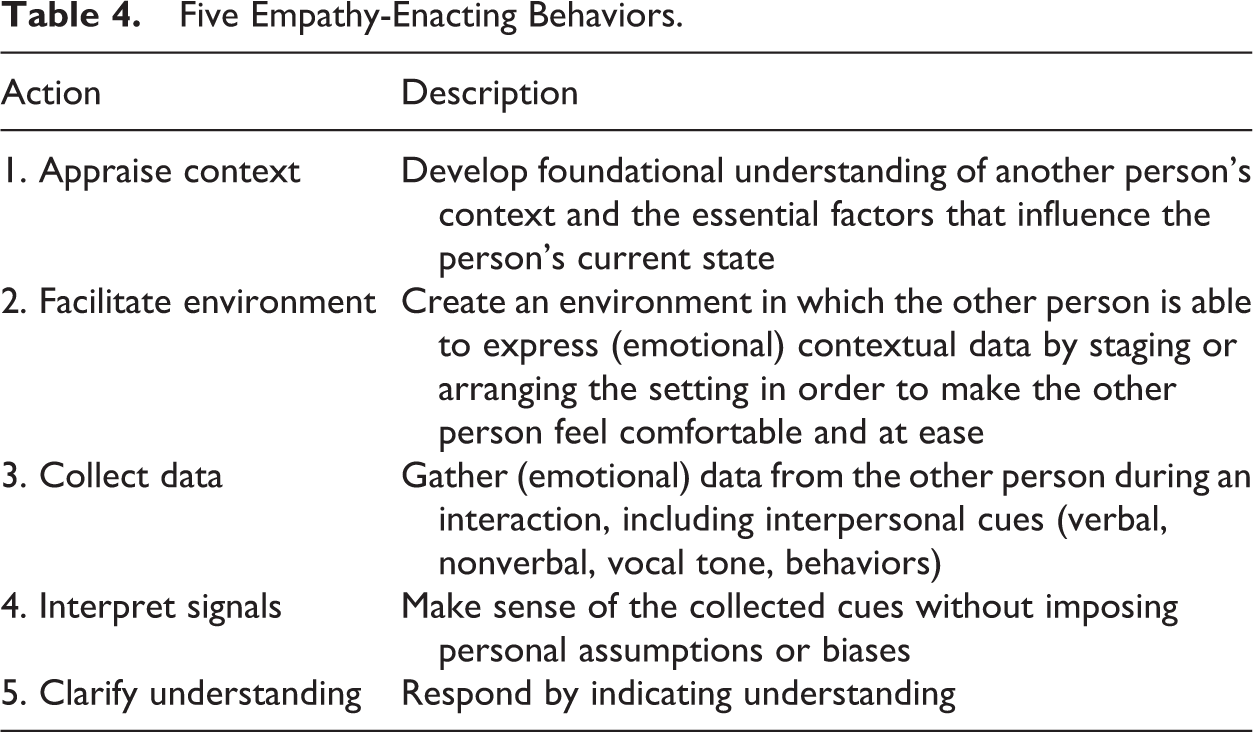
After stipulating that empathy indeed plays an integral role in their job performance and which aspects make up the competence, participants offered many examples of behaviors that enact empathy in practice. Data suggest that empathy competence manifests itself in several different actions before and during interactions, some of which can co-occur or alternate. In our analysis, five such actions emerged (see Table 4).
Five Empathy-Enacting Behaviors.
Action 1: Appraise context
Prior to any conversation, a communication professional is expected to appraise the other person’s context by developing an awareness of the other person, which includes overthinking earlier contacts (relationship history) with that person and reflecting on the person’s positions, viewpoints, and emotions. The empathetic communication professional tries to understand the other person as much as possible before the interaction takes place. Communication professionals often think of their work in problems “and that communication is about attending to that problem” (P19). Therefore, the ability to “define the problem properly,” to “find the red line through all the complexity” (P15), to imagine the problem from the perspective of the other person prior to contact is crucial: “It is…the bridge, the curiosity towards the other” (P1). Developing this perspective can even involve such a specific task as mapping “who is friends with whom, on what level do they operate, with whom they have alliances” (P1). It also requires communication professionals to reserve their own judgments or biases before fully understanding the other person. This suppression of judgment is hard because people tend to “fill in the gaps in knowledge with their own assumptions” (P17). Raising contextual awareness does not have to take place days before an interaction occurs: Even moments before an interaction, communication professionals can gather information to inform their understanding of the other person’s culture and context. This action involves more than forming a stereotype or developing a persona; it involves preparing an accurate precursory understanding from within. In the words of one participant, “What kind of person is this? How do they want to be spoken to? What is the best way to work with this person?…I really have to pay attention to the person sitting across from me” (P4).
Action 2: Facilitate environment
Participants stated that communication professionals should be trained to facilitate a comfortable environment for the interaction. That is, they should select, if possible, a suitable physical environment and make appropriate choices in how they present themselves. Many seemingly small decisions—such as removing mobile phones from the table or choosing the location where all persons will sit—could affect the degree to which the others will feel comfortable and recognized during the interaction. Participants found such staging to be very important because it puts others at ease, creating a comfortable environment in which they are able to express themselves openly. Communication professionals must be aware of “how you can make someone feel comfortable” (P33) because being able to do so will influence the efficacy of their empathy competence in interactions. One participant noted that “it is really dependent on what kind of space you hold the conversation in, maybe at someone’s home or in a more clinical setting. That has an effect on the ultimate outcome of the conversation” (P10).
Staging is also important to ensure that any contact prior to the interaction is suitable (e.g., any information sent to a recipient prior to a meeting). One participant explained that during interactions with people at different levels in an organization, he purposefully changes into the same clothing that the others would wear: uniform, suit and tie, or work overalls. By doing so, he believes that he “fits in” (P15) with others better and that he is creating a more fertile environment for interaction. Before he decided to dress like the others, the conversations were, according to him, noticeably less detailed. Another participant offered that doing so is a “form of respect” (P28), which another participant saw as a sign of recognition, leading to more open conversations.
Participants argued that facilitating an interaction also includes deciding how it will take place. Many participants noted that face-to-face interactions are preferrable to online meetings because face-to-face interactions enable them to “see if you’ve touched someone or not or if they are distracted. How someone is, angry or tense, and then you can play into that” (P34). This facilitation continues during the interaction, as a communication professional must constantly attend to making the other feel as comfortable as possible.
Action 3: Collect data
From the beginning to the end of an interaction, whether face-to-face or mediated, a communication professional collects data in order to understand the other person. These data can be verbal (the actual words and their meaning) or nonverbal (intonation or body language). The communication professional collects information as objectively as possible and uses dialogic skills to elicit detail and depth. Such information is “not only about what is being said, it is also about how you say things and also how much room you give the other to express themselves” (P10). Communication professionals often sense that information is withheld or unspoken that could give a more accurate understanding of a person’s affective state. A communication professional should be able to “make the undercurrents open for discussion. Then you have a completely different conversation, and the other person thinks, ‘Oh yes!’ So bringing feelings out in the open, I find that the strongest aspect of communication” (P32). To uncover this unspoken information, communication professionals need to pay sincere attention to the other person. They must authentically want to listen to others and learn about their experience. “It has to be sincere, people feel if it is. If I overdo it, that scares people away. They think, ‘This person is trying to sell me something.’ They have to get the feeling that you mean it, that you are seriously paying attention” (P25).
A communication professional must also be able to “switch gears quickly” (P13) in response to others. While collecting emotional data, communication professionals move back and forth between collecting or receiving data and the following two actions, interpreting signals and clarifying understanding.
Action 4: Interpret signals
Once they receive information, communication professionals must process it internally in order to make sense of what they have heard and observed. Participants said that information can be tainted easily by their own prior experiences, biases, or judgments; thus, communication professionals should be versed in objectivity. According to one participant, “there is nothing as difficult as being objective, but in the end, this is very important. Reserving judgment, your own opinion” (P23). Internal physiological processes affect the sensemaking process. Communication professionals might experience emotional reactions to what another person says. Such reactions are often beyond the control of the communication professional, but they can influence interpretation. Therefore, communication professionals must recognize these reactions in order to temper their effect on the sensemaking process.
Action 5: Clarify understanding
In the participants’ view, empathy competence requires not only understanding the other person but also “acting upon that understanding” (P23). Participants distinguished three aspects of this action: First, it includes verifying your interpretations of the words and behaviors of others to avoid overinterpretations and imposing your own viewpoints on them. Communication professionals, then, must have the “courage to question” (P4) their interpretation of others by testing it with them. They must try to paraphrase what they see and hear. One participant compared this paraphrasing to acting as a “translator verifying if they correctly understood the translation” (P20). Second, this action includes making the other person feel understood: “People want to see that you live through them, they want you to show them that you really understand them” (P25). This aspect is essential because “the increase of trust leads to revelation of more, deeper information relevant to help solve project goals” (P14). Third, this action includes modifying your own verbal and nonverbal behavior based on what you receive as feedback from the other person.
These five actions constitute the behaviors that communication professionals should demonstrate to show empathy competence in their interactions with others. They should not be seen as a linear process—or as steps to follow—but as five interdependent and often simultaneously occurring actions.
Research Question 4: Auxiliary Factors That Influence Empathy Competence
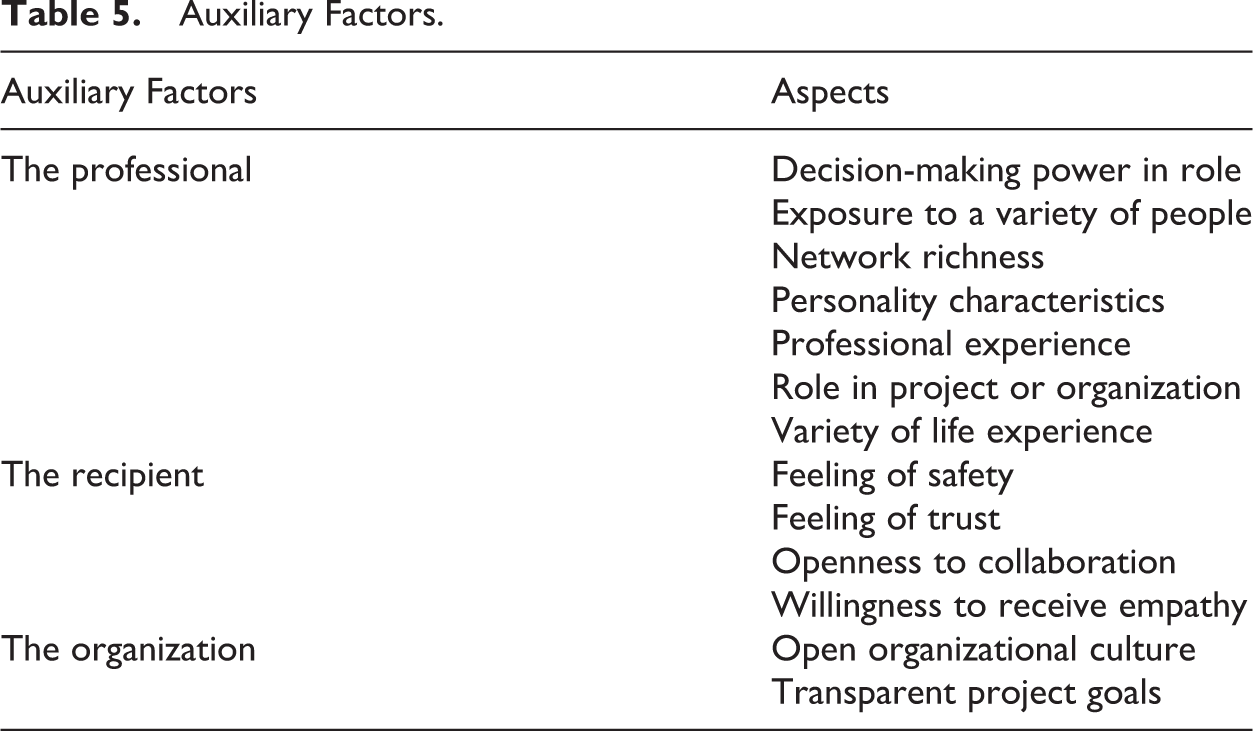
Beyond these competencies and interaction behaviors, participants mentioned auxiliary factors that influence communication professionals’ ability to empathize. These factors involve the professional, including personality characteristics, professional experience, and decision-making power; the recipient; and the organization. Table 5 summarizes these factors.
Auxiliary Factors.
The professional
According to the participants, the amount of professional experience that communication professionals have is directly related to their capacity to empathize, as “recent graduates are mostly busy with themselves” (P8) or see issues as “too black and white” (P16) and need more “practice with different types of people” (P8) in order to understand more of the nuances and subtleties of situations (P16). Participants viewed gaining experience as having less to do with growing in status than with developing depth of professional understanding and self-assurance leading to increased situational ease and authenticity (P17). The decision-making power of communication professionals in their role within a project or organization was also seen as critical in the interaction. A communication professional often “communicates from their place in the hierarchy” (P15) and can be at a different hierarchical level than that of the conversation partner. Because one facet of the interaction involves gathering and interpreting essential data, communication professionals who grow and maintain a diverse, rich network have access to more people who can help them develop an understanding of issues from multiple perspectives. As one participant put it, “a rich network is vital” (P17)—not only because of its strategic value for gathering data but also because experiencing people with different backgrounds helps communication professionals to practice empathetic competence, especially their skills in recognizing their own biases, expressions, and critical thinking (P8, P22, P24).
Sometimes it was difficult for the participants to distinguish specific attitudes from more general personality traits. They mentioned several personality traits that professionals might have that would help them to empathize, including charisma, charm, confidence, humor, self-control, and warmth. Several participants, however, noted that both introverted and extroverted personality types can be equally competent at empathy.
The recipient
Empathy is a relational construct, so the context and characteristics of the other person, the recipient, strongly affect the empathetic interchange. Therefore, attributes of the recipient of empathy also affect the interaction. First and foremost, recipients should be willing to receive empathy. If they are not, their resistance to sharing is too great, and communication professionals’ attempts to empathize effectively will be thwarted (P2, P34). Participants noted that the level of trust and safety that a recipient feels with the communication professional can facilitate or impede the professional’s ability to empathize during an interaction. As their feelings of trust and safety increase, recipients will concede more information and allow deeper access to their emotions, and if their feelings wane, recipients will yield less (P6, P11). Furthermore, recipients who are open to collaboration, who view an interaction as a “team event, something that is happening with a communication professional together” (P5), provide more integral information that helps communication professionals to understand their perspective in more depth.
The organization
Not only do characteristics of both the communication professional and the recipient influence the effectiveness of communication professionals’ use of empathy, auxiliary factors relating to the project or organization also play a role. The values and missions of an organization have significant influence on the course of a communication project and therefore the mandate of the communication professional in acting as the organization’s representative. Participants noted two main aspects of the organization factor: Having an “open” organizational culture and having transparent project goals were both found to affect communication professionals’ ability to empathize. As explained by one participant, “We have to be transparent about the interests of the organization, what we share and what we reserve. You have to lay that on the table. Sometimes decisions are made that aren’t in favor of a (recipient) but serve the greater organizational good. That’s important—if they find out you’re not being transparent, doing things behind closed door, you’ll never get the information you need to do your job” (P6). So if an organization does not value openness in its culture, its communication professionals will have difficulty empathizing effectively.
Thus, the participants highlighted three sets of auxiliary factors, indicating that factors relating to the professional, the recipient, and the organization could influence the effectiveness and use of empathy competence in practice.
Discussion
Professional communication is an interactive process of human understanding, and the manner in which people interact in professional settings influences the outcome of their work. This study explored the role and nature of empathy competence in the interactions of professional communicators. Participants described aspects of empathy competence and how these aspects were applied in the process of empathizing. They also described auxiliary factors that influence both empathy competence and the empathizing process. In answer to our research questions, we found that empathy competence is an integral aspect of excellent performance in professional communication. empathy competence consists of many specific types of skills, knowledge, and attitudes. empathy competence is enacted through five distinct actions. empathy competence is affected by three auxiliary factors: the communication professional’s personality characteristics, work experience, and decision-making role; characteristics of the recipient of empathy; and the organizational context.
After reviewing these findings, we have proposed a framework of empathy competence for communication professionals (see Figure 1) in order to clarify the relationship between empathy competence (skills, knowledge, and attitudes), empathy-enacting behaviors, and auxiliary factors that affect the efficacy of empathy competence. This framework depicts a core set of components that make up empathy competence—relevant skills, knowledge, and attitudes—that can be demonstrated in practice. Although empathy-related skills, knowledge, and attitudes might be distinguished from each other, they also affect each other in practice. Empathy competence manifests itself in five distinct actions. These actions suggest that putting empathy into practice is a more comprehensive activity than the previous literature suggests, encompassing preparation as well as actual communicative behavior and a mental state as well as an expression of empathy. For each action, a mixture of knowledge, skills, and attitudes is required. The demonstration of empathy is not necessarily a linear process, as the communication professional might alternate between actions or demonstrate multiple actions concurrently. For example, a communication professional can simultaneously collect data (listen) and appraise context (respond nonverbally). The interaction process and, on a deeper level, communication professionals’ ability and willingness to employ their empathy-related knowledge, skills, and attitudes are affected by several auxiliary factors.
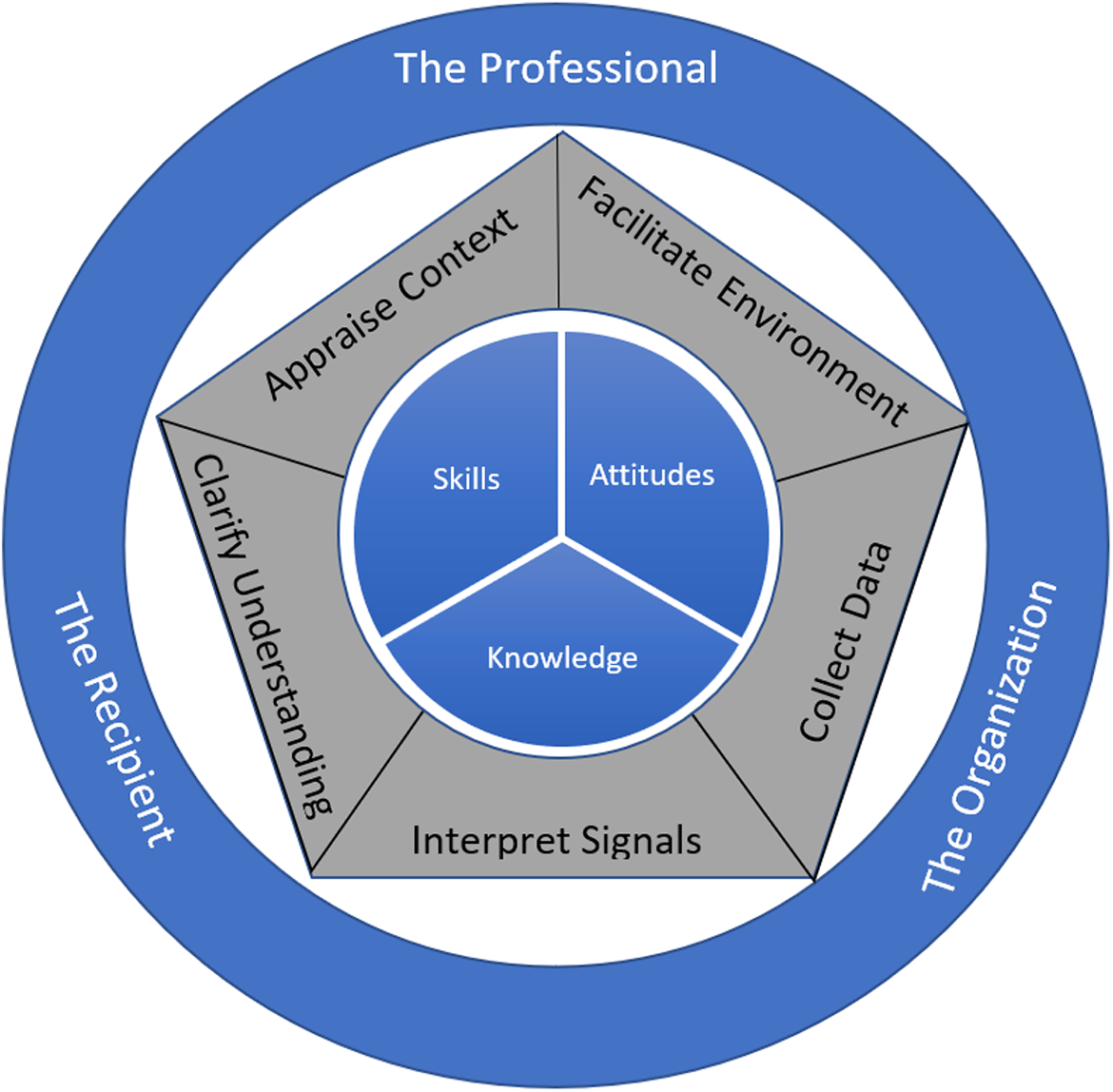
Framework of empathy competence for communication professionals.
Theoretical Contributions
First and foremost, our findings support the assertion that empathy is a foundational competence for communication professionals (Fuller et al., 2018; Seeger, 2006) and underline the notion that empathetic competence consists of a broad set of skills, knowledge, and attitudes that can be developed to demonstrate competence. In line with the literature, we found that listening actively is key to the empathetic process (Drollinger et al., 2006) and that people have more trust and are more willing to cooperate when they feel understood (Morelli et al., 2014). Improving skill in empathetic listening will also help communication professionals focus on the experiences of others instead of their own judgments, biases, and perspectives (Myers, 2000). Having knowledge of and being able to interpret nonverbal behavior—including facial expressions, body language, vocal tone, accent, pitch, and so on—can provide clues to a person’s feelings, attitudes, and intentions and help communication professionals to empathize (Ambady & Weisbuch, 2010; Besel & Yuille, 2010; Burgoon et al., 2011). In accordance with the literature, we found that empathy competence includes the ability to paraphrase, adjust your own voice and tone, and select appropriate nonverbal responses in response to another person’s emotional cues (Chartrand & Lakin, 2013; Manson et al., 2013; Shapiro & Gottman, 2004).
Attitudes are important in the context of communication professionals’ vocation as their attitudes influence their choice of action (Ajzen, 1991). Baartman and De Bruijn (2011) explained that professionals’ attitudes in a vocational setting should be seen in relation to their specific tasks in professional contexts. This approach helped us to clarify which aspects could be seen as attitudes and which ones were closer to personality characteristics and therefore more akin to an influencing factor in this context. We found that communication professionals must have a desire to empathize in order to be effective empathizers. In other words, it is one thing to be able to empathize and another thing to want and know how and when to use it. Our finding that having a favorable attitude toward being empathetic is a precursor to acting empathetically is in line with Ajzen’s theory of planned behavior (1991), which asserts that behavior selection depends on whether a person feels positive about executing an intended behavior. Furthermore, participants mentioned that having an attitude of open-mindedness is important to empathy competence. Our research supports the notion that approaching interactions with an attitude of curiosity about others’ perspective can facilitate more favorable professional outcomes (Suchman et al., 1997). To be empathetic, one must be able to remain as neutral and nonjudgmental as possible in making sense of the other’s culture and context, a sentiment that Myers (2000) echoed. Self-knowledge and self-empathy were often mentioned as additional key components. This view connects to earlier work asserting that until we learn to have self-empathy, we cannot have empathy for others (Block-Lerner et al., 2007).
The five empathy-enacting behaviors (see Table 4) illustrate how and when empathy competence manifests itself during interactions. Participants concurred that having a high level of empathetic competence is relevant only if that competence is displayed during an interaction with another person. Empathy is more than intellectually knowing and understanding another’s perspective and must include an interactive component to validate understanding of others. Scholars have presented sequential, stage-oriented empathy models in literature (see e.g., Davis, 1983). In contrast, our research highlights that empathetic actions are not necessarily linear events but can occur concurrently. For example, communication professionals could simultaneously collect emotional cues and clarify their understanding in their response. Furthermore, our results indicate that empathy competence is demonstrated not solely through “affective mentalizing” (Mitchell, 2009), processing feelings (Coplan, 2011; Miller, 2007), or expressing feelings (Suchman et al., 1997) but rather through all five empathy-enacting behaviors.
Our framework can be seen as an extension of more coarse-grained empathy frameworks suggesting that enacting empathy consists of merely listening attentively and tailoring responses to meet the other’s needs (Clark et al., 2013). We have found that empathy already starts before the interaction takes place (by appraising context and facilitating the environment) and that listening attentively consists of collecting data and interpreting signals. In contrast to the elaborate overview of activities offered in Clark et al.’s (2019) study—which describes how effective call-center communication is facilitated by strategies to build solidarity and control the conversation and how empathy and communication strategies are entangled—our framework offers an exclusive perspective on empathy. But all five empathy-enacting actions in our framework correspond to activities in their overview. Appraising context and interpreting signals correspond to their activity of anticipating the caller’s needs. Facilitating environment corresponds to their activity of soliciting the caller’s collaboration. Collecting data is related to their activity of identifying the caller’s preferences. And clarifying understanding corresponds to four of their activities: showing attentiveness, offering emotional support, paraphrasing the caller’s statements, and summarizing the conversation. Our approach is different from theirs, however, in that it is (a) less context-bounded; (b) more coarse-grained, comprising five actions that center on the purpose of the action rather than the content of the communication; and (c) more empathy-focused, setting aside the role of other purposeful communication strategies. Still, the two approaches support and complement each other.
The five empathy-enacting behaviors broaden empathy competence and erase boundaries between empathy as a mental state and empathy as overt behavior (cf. Schrooten & De Jong, 2017), suggesting that both aspects of empathy are strongly intertwined. Empathizing entails both gathering data about the emotional perspective of others and confirming or displaying this understanding to them while also considering the “interpersonal nature” of both partners in an interaction (Zaki et al., 2008).
This study focused strongly on oral communication processes, but a similar picture could be drawn for document designers, technical communicators, and copywriters. By analyzing formative evaluation results of public information brochures, De Jong and Lentz (2007) drew attention to the relevance of empathy for writing communication professionals. The five actions in our framework seem to apply to writing contexts as well, especially when writing processes are seen as document-design processes, including formative evaluation and revision. De Jong and Lentz (1996) and Lentz and De Jong (1997) showed that the action of appraising context is problematic for professional writers, who have trouble predicting readers’ perspectives, needs, and preferences in documents. The action of facilitating environment might be seen as writers’ disposition toward (formally or informally) collecting readers’ feedback, including their choice of formative evaluation methods (cf. De Jong & Schellens, 1997). The process of conducting a formative evaluation, making sense of the results, and revising connects well to the actions of collecting data, interpreting signals, and clarifying understanding. Lentz and De Jong (2009) and Schellens and De Jong (1997) showed how professional writers struggle to make sense of reader feedback, which can be seen as a process of practicing empathy.
Thus, our findings concur with literature indicating that empathy competence is made up of many types of trainable skills, knowledge, and attitudes. Our framework provides a novel addition to this literature by organizing our data into the three specific areas of competence, behavioral actions, and auxiliary factors and by analyzing how these factors are interdependent.
Practical Implications
This study makes clear the specific aspects and related factors of empathy competence in order to design relevant vocational training for communication professionals. With its list of components, our framework serves as a foundation for educators to develop specific and suitable initiatives for teaching empathy competence. Again, much of the current literature around teaching empathy competence centers on the “helping” professions, so the framework’s effectiveness in this professional context needs further testing. Comparing these pedagogy initiatives to a competence framework could be an important step in assessing their efficacy. Further, we recommend that close attention be paid to assessing empathy. Communication professionals could use this framework to assess their own competence level and where they might improve it. This framework could also help in the recruitment process to identify particular aspects of desired behavior. In addition, it could help show how empathy competence specifically influences project outcomes, through studies that examine interactions between professionals and their clients and measure the effect of empathy competence on professional outcomes. Follow up studies could measure potential differences in applying this competence in various intercultural settings, the sustainability of training, and the effect of empathy competence on professional achievements throughout the career.
Limitations and Suggestions for Future Research
Despite the unique nature of our study in that it includes in-depth interviews with prolific and seasoned communication professionals and a thorough analysis based on grounded theory and clearly saturated results, it has several limitations that should be taken into account when interpreting our findings. First, our results are based on retrospective self-reports, so they reflect the perceptions of communication professionals regarding the aspects and role of empathy. Observational research or interviews with their counterparts in the interactions could provide new and complementary insights that nuance or detail the results of our study.
Second, although our framework adequately reflects the experiences of our study participants, it is not yet validated. We can see two directions of validation research. One is to confront new groups of professionals with the framework and ask for their feedback. Do they recognize the image of empathy emerging from the framework? Do they have any amendments? The other direction is to conduct a survey or observational study that investigates whether communication professionals with strong empathy competence (based on a scale of self-reported empathy or, preferably, on observation) also have high scores on all the elements in the framework (i.e., the knowledge, skills, and attitude aspects of empathy or the five actions of empathetic behavior). An important asset of our framework, then, is that it makes empathy competence more teachable and researchable.
Third, all participants were Dutch professionals working mainly in Dutch contexts. Further research might explore whether similar results would be obtained in different national and cultural contexts or investigate the relationship between empathy and cultural sensitivity in cross-cultural and intercultural communication contexts.
Fourth, the communication professionals participating in our study all worked in the areas of internal and external organizational communication, public relations, and public affairs. Further research might investigate how our findings extend to communication professionals with fewer strategic responsibilities as well as to communication professionals in different subfields, such as document designers or copywriters, who were the main focus in De Jong and Lentz’s (2007) study, or technical communicators, who are increasingly seen as user advocates (Johnson-Eilola & Selber, 2013).
Finally, our research did not address how the personal emotions of communication professionals are affected by their enaction of empathy in their professional interactions. In some of the interviews, participants mentioned that their professional interactions affected their personal emotions, but we did not explore this relationship systematically. Their situation differed from that of the professionals who participated in Hoch-schild’s (1983) study, who experienced emotional tensions because they had to show prescribed emotions. Future research might focus more on the relationship between personal emotions and viewpoints and professional empathy.
Conclusion
Empathy as a professional competence is lacking in the academic literature of the various communication disciplines and does not seem to get the attention it deserves in academic communication programs. In this article, we used interviews with seasoned communication professionals to examine empathy competence. The professionals confirmed that empathy plays a crucial role in oral communication processes. Based on their input, we developed a framework, highlighting the transparency of the competence and its complexity. At the core of this framework are specific types of skills, knowledge, and attitudes that constitute communication professionals’ empathy. In addition, it includes five actions of empathetic behavior. Finally, our framework includes auxiliary factors that might affect communication professionals’ ability and willingness to behave empathetically—aspects of the communication professional, the recipients, and the organization. This framework can serve as a starting point for highly needed academic research on empathy within the communication professions. It can also support the curriculum design of academic communication programs. Understanding not only the components of empathy competence but the behavioral instances through which they are demonstrated in practice is important for developing a vocational pedagogy and didactical interventions.
Footnotes
Appendix
Acknowledgments
We would like to thank the interview participants who took part in this research for their time and valuable input.
Declaration of Conflicting Interests
The authors declared no potential conflicts of interest with respect to the research, authorship, and/or publication of this article.
Funding
The authors disclosed receipt of the following financial support for the research, authorship, and/or publication of this article: This work was made possible with the financial support of the Netherlands Organization for Scientific Research, Doctoral Grant for Teachers, under Grant #023.005.094.
