




Abstract
Background
Home-based palliative care (HBPC) programs are proliferating across the U.S, yet face significant, documented challenges in promoting uptake of services and sustaining sufficient patient referrals. There is a huge need to understand effective methods for engaging physicians, patients, and caregivers in palliative care. Thus, the purpose of this study was to elicit successful practices on how to best communicate about HBPC to both healthcare providers and patients/caregivers.
Method
Focus groups with nine California-based HBPC organizations were conducted between January and April 2020. Discussions lasted approximately 54 minutes, were guided by a semi-structured protocol, audio-recorded, and transcribed verbatim. Thematic analysis was used to identify themes and codes from the data.
Results
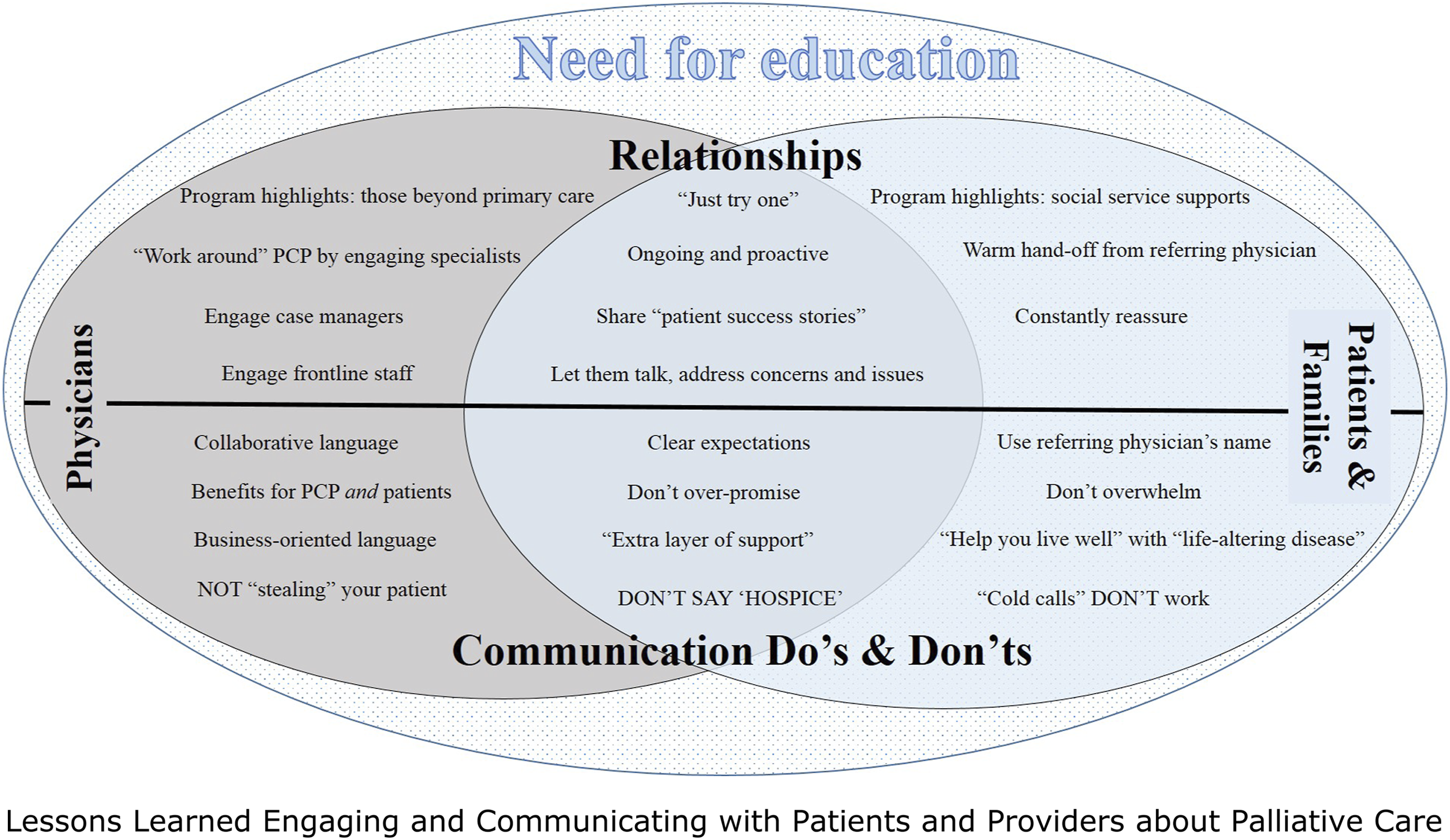
Twenty-five interdisciplinary HBPC staff members participated in a focus group. Most identified as white (76%), female (76%), and working in their current position for 5 years or less (56%). Three themes were identified from the data: (1) value of relationships; (2) communication do’s and don’ts; and (3) need for education. Participants discussed actionable recommendations for each theme.
Discussion
Study findings highlight several successful practices for HBPC programs to communicate- and foster relationships with healthcare professionals and patients/families about palliative care, with education at the crux. Lessons learned about key words and phrases to say and to avoid are particularly valuable for budding HBPC programs. Our results suggest that HBPC providers exert enormous efforts to increase patient referrals and enrollment through strategic, continuous outreach and education to physicians, patients, and their caregivers; however, palliative care educational interventions are needed.
Get full access to this article
View all access options for this article.